Tag Archives: Books

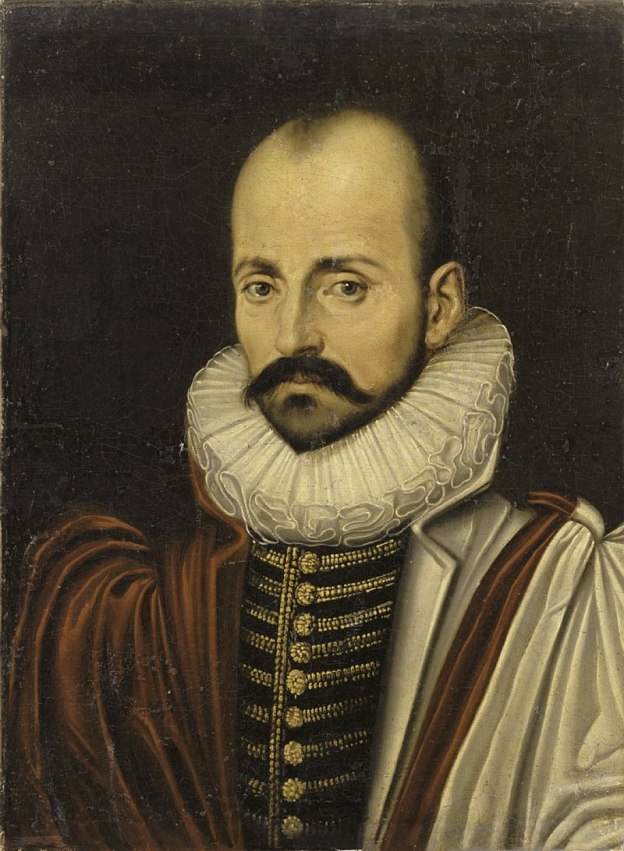
Montaigne and the Ages of Life

Montaigne and the Ages of Life Wednesday Blog by Seán Thomas Kane

This week, reflections on Michel de Montaigne’s perception of his changing character throughout his life.—Click here to support the Wednesday Blog: https://www.patreon.com/sthosdkane


This week, reflections on Michel de Montaigne’s perception of his changing character throughout his life.


I’m currently reading Philippe Desan’s biography of Michel de Montaigne, the French philosopher and statesman and the father of the essay. Montaigne is an influence for me in how the Wednesday Blog has developed over the last four years that I’ve been writing this weekly. He is also one of the figures on the orbit of my dissertation, and one of the most important sources for critical analysis of the events which I describe in that doctoral work. Philippe Desan in turn is one of, if not the most prolific Montaigne scholar of our time. So, it’s been a delight to read his biography of this man who I’ve gotten to know however faintly through the frame of his Essays in my research.

Most of my work deals with his famous essay “On the Cannibals” found in Volume 1 of that three volume collection. “Des cannibales,” as it’s known in its original French, was published in the first collection of Montaigne’s essays in 1580, and it’s this collection with which I’ve been the most invested in my work. The cannibals of Montaigne’s focus speak to questions of humanity and human dignity which I pose in my dissertation, which is titled “Understanding the Sauvage in André Thevet’s Brazil: 1555-1590.” 

Yet it is in the third volume of Essays where Desan established a crucial connection between Montaigne the man and Montaigne the humanist of the late Renaissance preserved in the amber of his words. In the essay titled “On Vanity” Montaigne poses a fascinating self-reflection looking back at his life as he remembered it and who he was at the time he wrote that particular essay near the end of his days. Quoting here from Donald Frame’s 1965 translation, Montaigne wrote that in the years since he published his first edition of essays in 1580 “I have grown older by a long stretch of time; but certainly I have not grown an inch wiser.” Here whether out of humility or in refutation of Aristotle’s maxim that age and experience begats wisdom, Montaigne sees himself as the same light as before. Despite this, Montaigne continued to observe that “myself now and myself a while ago are indeed two; but when better, I simply cannot say.”[1] This struck me that the essayist could see such a simple yet profound difference between himself as he was when first he wrote and published his magnum opus and the man he later was publishing his third and final volume of essays nearly a decade later.

From my earliest days of extensive writing in my high school years I found myself looking ahead to a time late in my life when I would return to the places of my teenage youth and reflect on what once was and who I’d become. I suppose there’s some vanity of my own in having this profound sense of legacy even from what was then quite an early point in my life. Still, in recent weeks I’ve been reintroduced to younger versions of myself as my family carries out a Spring cleaning and we’ve found decades old boxes of photographs and postcards that I still remember taking and sending yet which haven’t seen the light of day since their capture. I was humbled and heartened to see in particular how loved was the boy I once was, and how inventive and imaginative he could be. Looking at these photos, especially from around my family’s great move from Chicago to Kansas City in 1999, I remember each and every one of them being taken. I remember the sights and sounds, the smells, the prairie winds and the things I was thinking in those first days of my life in Kansas City. These memories have always been there in my mind, yet the subsequent quarter-century has piled many more atop them so that they are now rendered foundations for the memories that comprise me today.

I suspect these days spent pouring over decades-old photos removed some sort of mental block I’d put up out of stress that’s kept my imagination in check in recent months. I longed to have the same expansive dreams and wandering thoughts that’ve populated so much of my consciousness, and now again I find it easy to tap into that deep reservoir which too is built into my memories yet also grows out from them into things which are wonderous and extend beyond the limits of reality toward the possible. Am I then wiser than I was when first I began writing essays in my adolescent and early teenage years? I’d like to think so, at least in some respects. I have a sense of calm today which was lacking in earlier years, and while the stresses of my life are great, as they are for all of us, I know how to accept them and tamper down some of their effects.

Yet in so many ways I do feel that I too am a different person from the kid who moved west all those years ago. Likewise, I see a clear distinction between the student starting high school in the years after the turn of the millennium and imagining his future in the last decades of this century. I’ve learned to live more in the moment in which I find myself, to influence that moment to fit what I aspire it to be. A complex turn of this answer is to consider all the potential lives I might have led, a thought experiment which I’ve considered developing into a short story with some sort of science fiction shenanigans. In one version of this, a broken-down elevator occurring simultaneously across parallel realities as a sort of mirror image resulted in contemporary alternative versions of myself ending up stuck in the same elevator all at once. I could see it either being a bit of a laugh-fest as one version of myself attempted to out-wit the others, or a simmering cauldron of irritation. 

What all this speaks to is the complexity of our personalities. We are all multifaceted with so many different competing thoughts and desires and inclinations and perceptions. I’ve thought more recently that perhaps my academic career would be further along if I limited myself to only focusing on my research, yet then again, I’ve always had multiple hats in the ring so why would I stop doing all these different things now? The Wednesday Blog for one remains a sort of release-valve for me to write about things which I’m curious about yet don’t directly relate to my research. I look to my colleagues, and I see people with similar interests and in some cases similar paths they’ve taken to get to where they are today. Several days ago, when I was dwelling in a particular bout of melancholy thinking about the long winter that has grayed the skies over my own doctoral candidacy when compared to my peers, I felt a sense of pride at noticing just how I’ve persisted in my efforts and my work in spite of all the challenges which the last six years have brought. Perhaps it is this combination of trial and hope which forms a person; it’s what formed me into the historian I am today.

When I started writing the Wednesday Blog in March 2021 I did so because I felt such a profound sense of nostalgic hope at one particular memory that surfaced after a sleepless night amid my comprehensive exam studying that I felt compelled to share it with the world. I know for a fact that I am a different person today than I was four years ago when I wrote that blog post about an Air France commercial I remembered seeing on ITV and Channel 4 five years before when I lived in London. The difference lies in the added layers of experience laid by all the trials which I’ve endured and the hopes which’ve kept me going. When I had such tremendous trouble unlocking my imagination and letting myself daydream in the latter months of 2024, I recognized that I am happier when I allow my mind to wander and craft stories that no one else will ever know. These are often stories of the future I hope I might live and the wonders I might come to know and explore. That imagination, that connection with my own consciousness, is the thread that runs all throughout my life and connects these different versions of myself that I’ve grown into and out of with the passing of time.

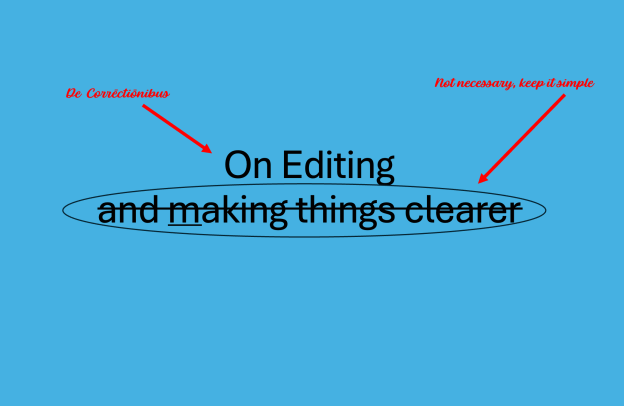
When Montaigne picked up a copy of the 1588 edition of his Essais, containing all three volumes of musings, he took a pen to it and steadily began correcting things he found beneath the standards he’d developed at that late moment in his life. I don’t often read my own writing after I’ve finished editing a document. I’ll occasionally return to an old blog post when I’m referencing it in a newer one, and even more occasionally if I’ve cited a source before in a previous paper, I’ll open that paper to aid me in citing the same source again in the research project of the moment. Yet, I rarely sit down just to read my own writing. The last time I did I ended up switching from a PDF file back to the Word document version so I could edit as I read. In fact, when I was moving into my apartment in Binghamton in August 2019, I found an essay I wrote in my sophomore year of high school when I was 15 years old. It was a near 20 page essay that attempted to summarize the history of religion in Britain and Ireland from the Stone Age to St. Patrick. Reading it then at the start of my doctorate and thinking about it as an essay that I might grade, I would’ve given it a low B- or maybe a C+.

I need to remember that my old writing fits into a particular time and place in my life and ought to remain in that setting for as long as I can muster the strength to not try to refine it further. These ages in my life mirror those in everyone else’s, and I hope that as I dream about the ages to come, I will be able to share them and live them to their fullest potential. Montaigne died in September 1592, almost 400 years before my own birth. At that point, he’d made his name in politics and in philosophy. The Wednesday Blog is essentially my collection of essays of varying length and quality. I hope that when I wander off in my own time that my life in all its ages will have been as fulfilled and prolific as the great essayist.


[1] Montaigne, Essais (EB) 3.9.433r, Frame, 736.


On Translation

This week, how I take nuance and particularity into account in my efforts as a translator.—Click here to support the Wednesday Blog: https://www.patreon.com/sthosdkane


This week, how I take nuance and particularity into account in my efforts as a translator.


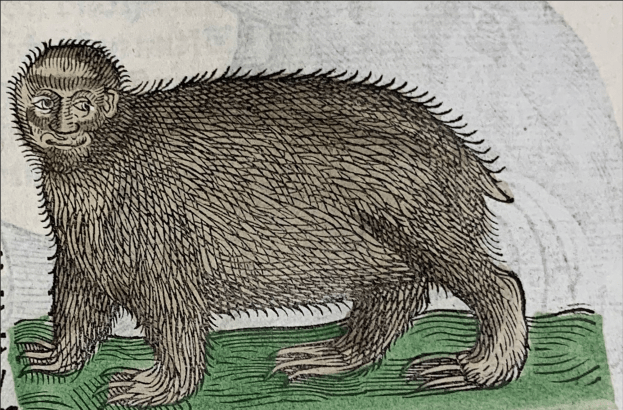
When I chose to study André Thevet (1516–1590) and the three-toed sloth in August 2019 I did so because I already knew French and the need to learn a new language was less pressing than if I’d chosen to study another source in the history of natural history. I chose Thevet because it was practical, and I chose the sloth because the thought of being a sloth historian made me laugh. From the first day working on Thevet, I found that my understanding of his books was heightened when I took the time to type out my own translations of his text. Thevet wrote in Middle French that is native to the middle decades of the sixteenth century. I arrived at this project very familiar with Early Modern English, the contemporary form of this language to Thevet’s time, as my history master’s thesis delt with sources in that chronological variety of English from Thevet’s generation and the one just before. I’ve never had much trouble understanding the most prolific author of Early Modern English literature, Shakespeare, but I think I’ve had a tolerance for varieties in speech that’s allowed for me to try to think beyond my own millennial Midwestern metropolitan American English and be willing to understand the likes of Shakespeare from a young age.

So, when I began translating passages from Thevet’s Singularitez de la France Antarctique for my own professional use in my dissertation, I decided that as long as I was translating that book I might as well translate it with the intention of sharing Thevet’s words beyond the scholarly analysis and critique which lie at the heart of my work as a historian. This first draft is built around the 1558 French edition published by Christophe Plantin (c. 1520–1589) in Antwerp and contains footnotes drawn from the 1878 French edition by Paul Gaffarel published in Paris, two Brazilian Portuguese translations by Sergio Amado (1978) and Estêvão Pinto (1944, using the 2018 reprint), and the partial 1986 English translation by Arthur Stabler and Roger Schlesinger which contains only Thevet’s North American chapters.

I finished the first draft of this translation in Summer 2023 and am now looking ahead toward the second draft which is the next stage of the project, and I hope the last one before I feel confident in formally writing to the publishing editors whose press sales agents I’ve spoken with about this project at conferences over the last two years. The second draft will consist of two main stages. First, I will cross-reference my translation and the 1558 Antwerp edition on which it is primarily based with the 1557 first and 1558 second editions published in Paris by Maurice de la Porte, two Venetian editions translated into Italian by Giuseppe Horologgi and published by Gabriel Giolito de’ Ferrari (c. 1508–1578) in 1561 and 1584, and the 1568 full English translation by Thomas Hacket published in London by Henry Bynneman. Second, I will seek to make my translation more understandable for a 21st century English-speaking reader while endeavoring to preserve Thevet’s particular mannerisms and voice, a writing style with which I’ve become quite familiar in the last 6 years to the point that I can now confirm at least two French translated manuscripts in the Bibliothèque nationale’s collections in Paris are verifiably written by Thevet. He had a way of writing that’s unmistakable.

These two competing axes create a binary star system around which my translation revolves. On the one hand, I want to be true to the original text, to preserve the author’s voice and something of their spirit which remains in those words. On the other hand, I need to make my efforts readable for my own contemporaries. Thevet and his contemporaries are notorious for long run-on sentences that would make Hemingway shake his head in earnest frustration. Where do I break up a long sentence while preserving its overall integrity? Furthermore, at what point should I decided to remove the bracketed notations of page breaks in the original text? There the 1558 Antwerp edition is most fully evident as its pagination has several quirks that make it stand out from the 1557 & 1558 Paris editions. At this point, Plantin published books with folio numbers rather than page numbers, so the first two pages were in fact folios 1 recto (1r) and 1 verso (1v). These names refer to the custom that scribes traditionally started writing on the back side of the vellum (recto in Latin) and then flipped the skin over once ready to continue writing on the verso, or opposite side. In several instances the folio numbers actually decrease in the book, notably in Thevet’s chapter on the sloth, which makes the footnotes on that core element of my research particularly confusing if you’re paying close enough attention. So, in summation the inclusion of the page breaks with the folio numbers keeps my translation grounded in Plantin’s edition, however that may break up the text in an uncomfortable way for some readers.

Ultimately, I am not the author of this book, merely a herald relaying it on for our time. My voice is there in the handful of introductory chapters I’ve written to go along with this book. These chapters describe Thevet as a reader of travel literature and place his accounts of the Americas beyond what he himself saw in Brazil in the context of their French and Spanish sources. I see my efforts in this as a means of introducing the reader to Thevet, a man who today exists on the furthest margins of the popular imagination of the First Age of Exploration in the English-speaking world. Thevet remains present in academic circles, there were at least four papers presented at this weekend’s annual meeting of the Renaissance Society of America in Boston which discussed Thevet, mine included. I hope this book will be useful to fellow academics and perhaps will entice curious readers to learn more about this man who I’ve spent the last 6 years of my life getting to know.I find myself drawn as much to the effort of a translator as I do to the work of a historian these days. We live in such a fractious time when reasoned debate and earnest discourse is riddled with dangers and seemingly improbable to undertake. I feel as though I’m constantly translating my thoughts and character for others to understand me. It’s why I enjoyed my time in Boston because that city has a large enough Irish American population that when I’d tell my name to a cashier to put on a carry-out order they’d actually spell it in the proper Irish manner; this never happens in Kansas City. That said, I felt that I had to translate my expectations and personal limits to be able to live even for just a few days in a city as expensive as Boston where I was often paying double what I’d normally pay at home in restaurants. In translating I recognize that each of us think in slightly different ways and see the world in which we all live in just as unfamiliar terms to one another. Difference enhances our common humanity and elevates our manner to something greater than ourselves.


The Versatility of Storytelling

The Versatility of Storytelling Wednesday Blog by Seán Thomas Kane

This week, how the same tools can be used to weave a variety of different stories. — Click here to support the Wednesday Blog: https://www.patreon.com/sthosdkane


This week, how the same tools can be used to weave a variety of different stories.


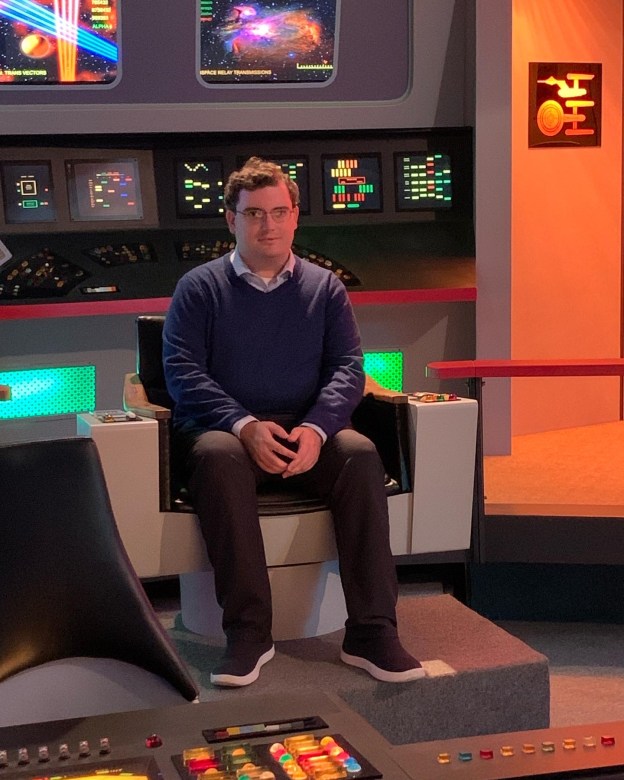
My favorite sorts of stories are the ones where I feel that I’ve gotten to know the characters and can relate to them on a personal level; that these characters are either real people who I’ll never meet or entirely fictional is beside the point. I often remember the stories I was reading, or watching, or listening to more than the experiences from my own life that surrounded new tellings of those stories. This potent relationship is heightened in moments when my own life is dull or foreboding, as in the height of the recent Pandemic when I passed the long days of isolation in my Binghamton apartment or at home in Kansas City watching and reading stories in the Star Trek franchise which I only really began to discover in February and March of 2020.

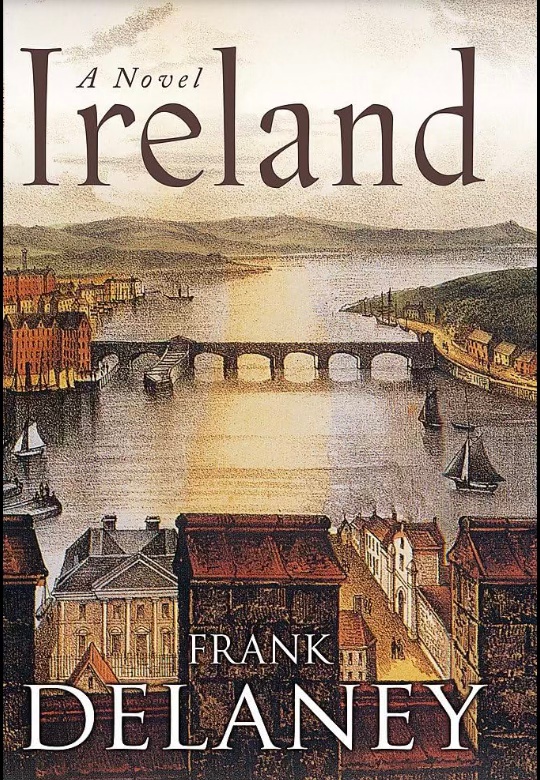
I wanted to be a storyteller from my youth. I read a book by the Irish journalist Frank Delaney called Ireland which followed a young man as he discovered his own passion for storytelling by listening to the seanchaí who often visited his family’s home. I began to write for myself around this time, though my efforts were focused more on poetry and plays at first. A decade ago, I built up the endurance to write a longer-form short story called “Abducted and Abandoned,” and around that time started writing what today is The Wednesday Blog. By the time I was working on my first master’s degree in 2015 and 2016 I’d begun writing a longer work, my book Travels in Time Across Europewhich I self-published in 2017. That one tells the stories I collected from my year living in London, stories of my own adventures traveling from the British capital to other cities across Europe. At the time I imagined that it could become a sort of valuable source for readers seeking to understand the world as it was in that last year before the Brexit referendum and the rise of Trumpism swept across Britain and the United States.

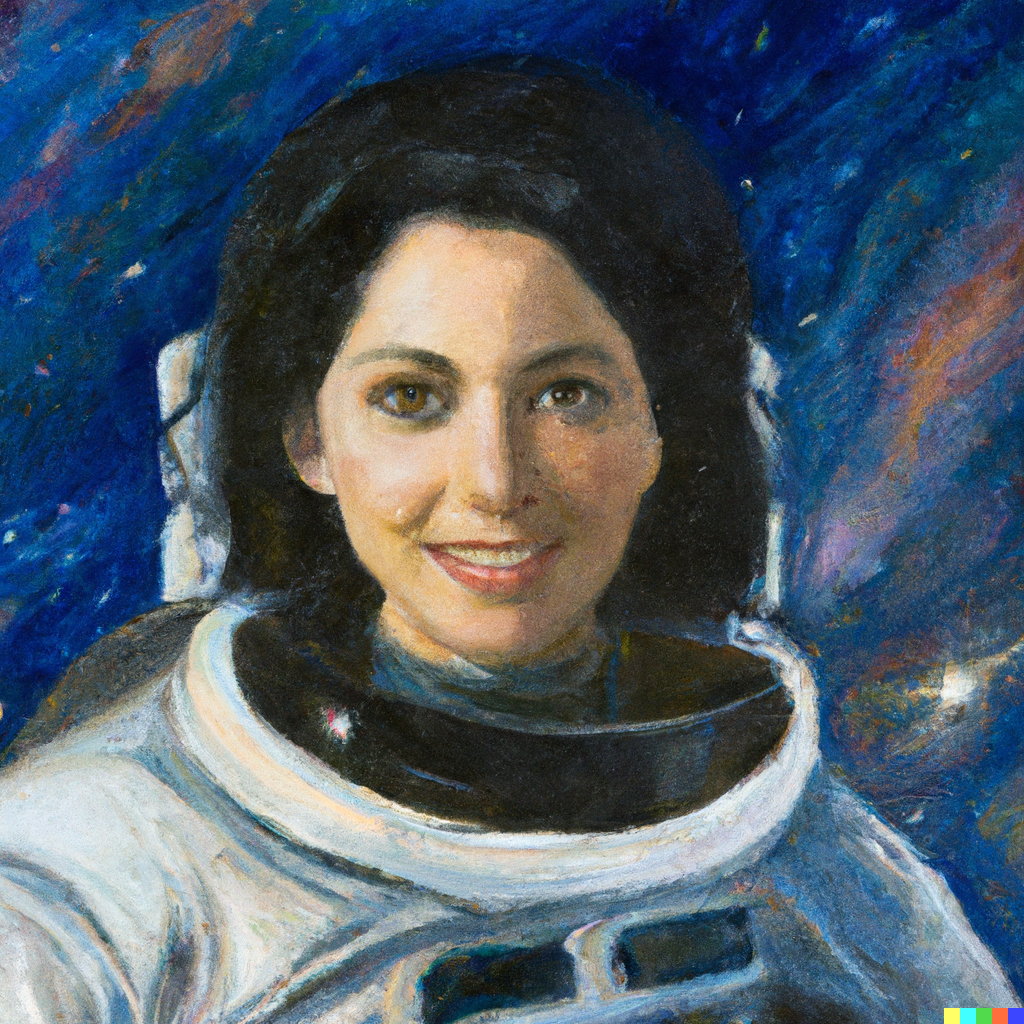
Dr. Olivia Stephens, the main character of “Ghosts in the Wind.”

Like the main character of Delaney’s Ireland, I too went to university to study history, to use my passion for storytelling, and as things came about, I’m now close to earning my doctorate in the field. Today, besides my efforts here with the blog I largely am just writing things related to my research. Alongside my dissertation I currently have one encyclopedia entry soon to be published, a book chapter and a scholarly article submitted for editing and am now writing another article related to my translation of André Thevet’s Singularitez. I still try to write the odd bits of fiction, like “Carruthers Smith’s Museum” which I released two weeks ago, or “Ghosts in the Wind” which I’m quite proud of. Yet I haven’t written anything to be acted in years. That’s striking to me, because my first big scribal efforts were for the stage and screen in my high school years. I do have an idea for a play that I might turn to someday in the next few years, yet even writing that here fills me with a sense of loss because it could well become another project that I’m excited about and have good ideas for yet don’t ever get to.

What I love most about writing for the stage and screen is that there’s a chance I’ll get to hear my words interpreted into lived experiences. Ideas that once only existed in my mind could be seen by many others played out before them and enlivened by the actors who utter those words & all the designers of sets, sound, lighting, props, effects, and music who flesh out that lived experience into something relatable and emotional in its truth. In short, to see my words brought to life in performance is to see a world created from what was once my thoughts, the smallest and most intimate of stages that I alone know.

To this end then, I am awed by the versatility of those storytellers who create these worlds in their performances. My erstwhile dissertation advisor Dr. Richard Mackenney, a man for whom I have the deepest respect and consider a friend, often talked about his own experiences on stage playing characters created by Shakespeare alongside many of the greats of the British theatre. In his lectures I saw a performance like any revival of King Lear or any of the Henrys or Richards that Shakespeare wrote. My own lecturing has taken on this same quality, yes at least in part in flattery, because I saw how he kept the rapt attention of most of the 150 or so students in the lecture hall with his art.

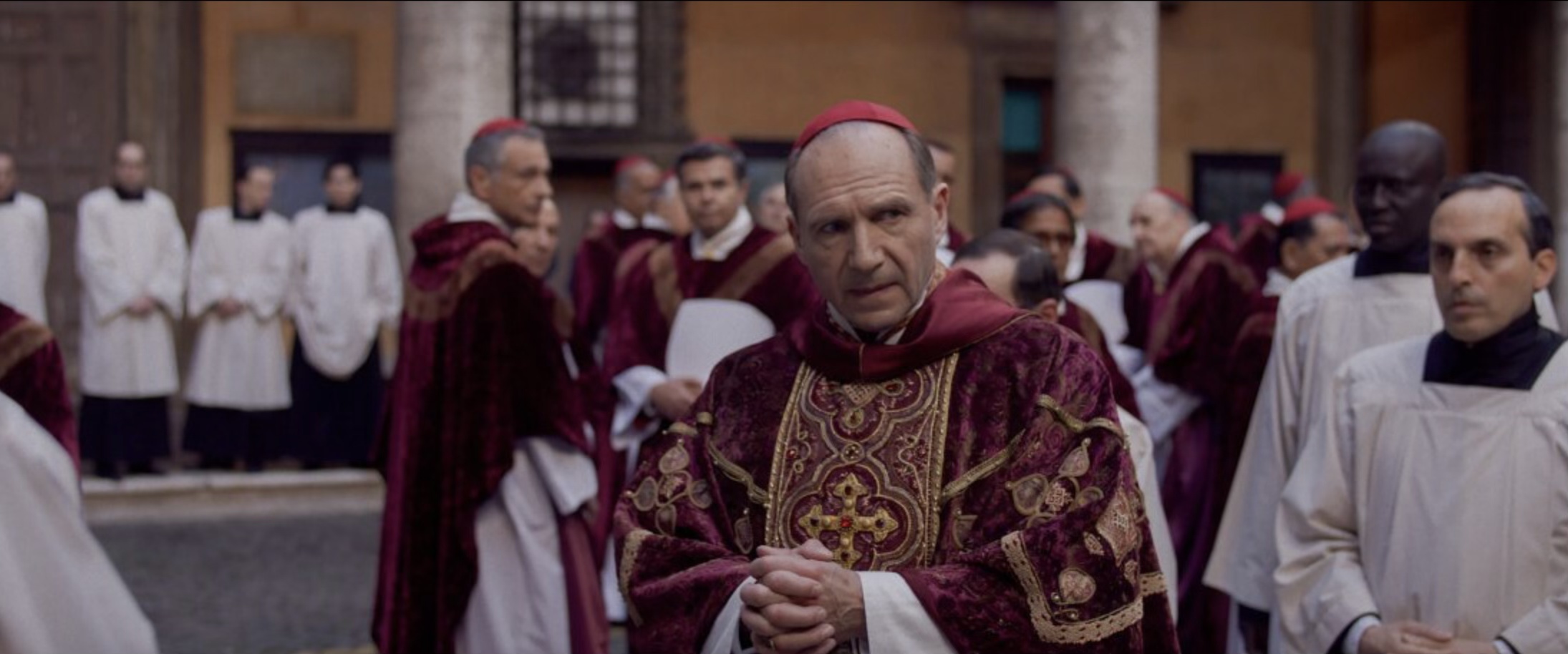
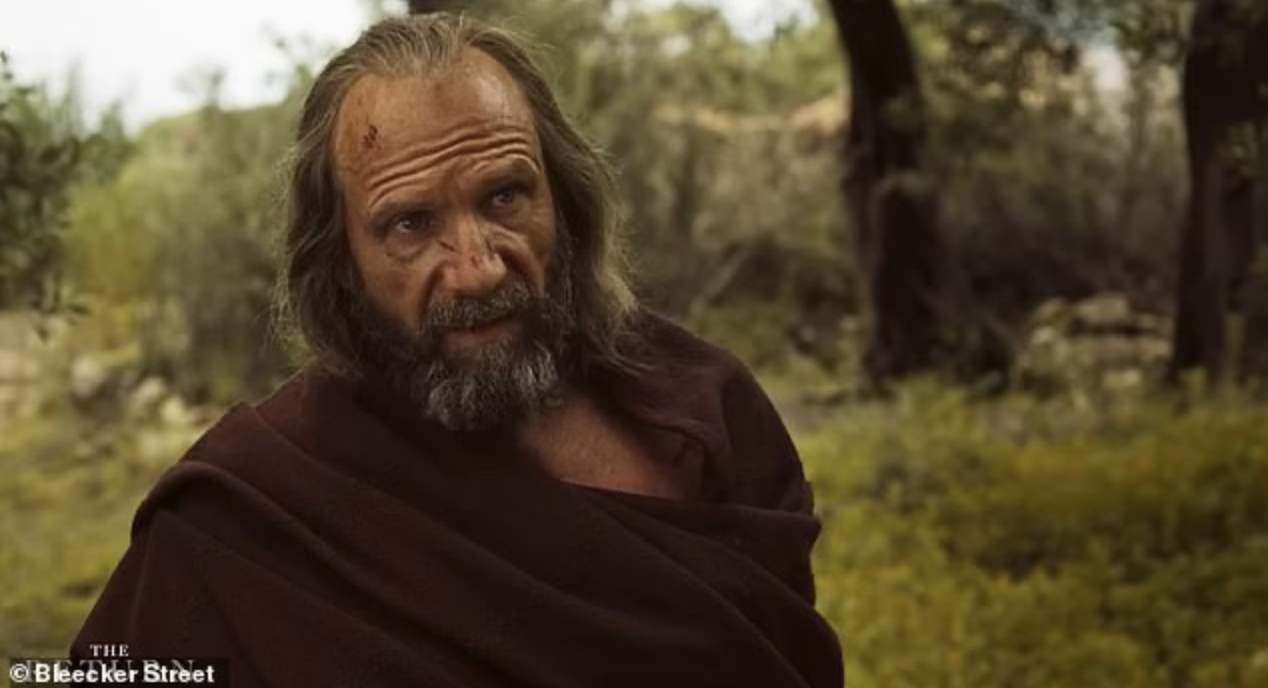
In recent weeks I had the pleasure to see the English actor Ralph Fiennes play two very different yet still akin parts in the films Conclave and The Return. In the former, Fiennes plays Cardinal Thomas Lawrence, the Dean of the College of Cardinals who is tasked with managing a papal conclave on the death of the Pope. In the latter, Fiennes returns to the screen a mere month after he appeared cassocked as an English cardinal this time dressed in rags as Odysseus returned to Ithaca after 20 years away at war against Troy. To see the same man inhabit two characters who on the surface could not be more distinct is a profound testament to the man’s mastery of his art. Both films are pieces of theatre imagined with the realism of a certain type of cinema that is more European than American, with less effects and a minimalist score that has its roots in the French New Wave. In the American context it’s reminiscent of the minimalism that we see in some of the television dramas produced recently for their streaming service by Apple.

I felt that I could instantly relate to Cardinal Lawrence in spite of his high office. The finest leaders I’ve met, whether cardinals and bishops or mayors, senators, and ambassadors are all people first and foremost. They acknowledge the trappings of their offices yet retain the everyman spirit that makes them relatable. I saw this in Cardinal Lawrence more than in many of the other characters who populate the halls of the Vatican in Conclave. That he is an English Catholic cardinal speaks to the post-Reformation moment in which we now live when the old sectarian wars of religion feel behind us and reflects on the Catholic Church in England and Wales that I know from my year living there and going to Mass in London. He speaks for a certain Anglophonic ideal that is democratic yet still upholding of tradition and custom.

Ralph Fiennes as Cardinal Thomas Lawrence and Odysseus, in performances which premiered within a month of each other.

Odysseus in contrast is a man who has seen much and endured much more than I ever hope to. His pain is written across his mostly silent face, and in this role, Fiennes says more with a tortured look than with words. That he only acknowledges his own identity verbally once in the film is telling. This is a man who fears that he won’t be the man that his family have waited for over these twenty long years that he was away. I can merely relate in that I’ve noticed time and again how my home and my city change each time that I’m away. On this most recent return of my own from Mérida on 10 November I was startled in the weeks that followed to see that the last vestiges of the long summer we had in this region at last faded away into a brief Fall before receding into the winter cold far sooner than I expected. Even more dramatic was the city I found on my return from London at the end of August in 2016. Kansas City wasn’t the same place it had been even 8 months before when I flew home for Christmas. There were plenty of stories I’d missed while I was away, one relative who’d been born and who I met for the first time at a far later date than any of her cousins in the youngest generation of my family. In that loss that comes with being far from home I can relate, yet in the pain he suffered and inflicted while he was away at war, I am thankful to lack that experience.

Yet the brilliant versatility of storytelling here expresses itself in Fiennes’s ability to say so much with so little about the war he fought and the trials he faced on his homeward voyage. Odysseus suffered for his efforts, and in his suffering, I see his humanity & feel that I can relate to him. At the end of the film, I felt that I got to know Odysseus for the man he’d become, and that in spite of the Bronze Age setting and the far looser garments, in a film whose costumes are marked by a combination of loincloth & cloak, than anything I would wear, I felt that I could see myself, my own humanity in that moment in time on the island of Ithaca in the second millennium BCE, perhaps the 12th century BCE as the polymath Eratosthenes of Cyrene (276–194 BCE) dated the fall of Troy to 1183 BCE.Where both Conclave and The Return succeed is in placing the lives of their characters in moments and settings which feel real. Odysseus’s Ithaca feels as lived in as Cardinal Lawrence’s Vatican, yet the former seems to be set in a far brighter and younger world with different morals and values than the darker and starker built world which succeeded it in the monumental edifices of the Vatican. Yet both are in my imagination places which I now have visited & seen, and both are places that I would recognize again if I ever returned to them in my memory of those films, or should I ever venture there in my own life to the Vatican or to the Ionian Islands and Peloponnese where the filmmakers created their vision of Ithaca. That stage is as lived in as any seemingly sparser platform that Shakespeare’s Muse might have evoked in Henry V; it is as alive as any other that can be imagined in our art.


Notes on Carruthers Smith’s Museum

Notes on "Carruthers Smith's Museum" Wednesday Blog by Seán Thomas Kane

This week, some notes on the story I released here last week, more about Carruthers Smith and the other stories who populate that tale. — Click here to support the Wednesday Blog: https://www.patreon.com/sthosdkane


This week, some notes on the subtext and background of my story “Carruthers Smith’s Museum” which I released in this blog last week.


            This story about Carruthers Smith was born out of a dream I had at some point between 5:00 am and 9:00 am on Saturday, November 23rd, 2024, after a late night working at the Kauffman Center for the Performing Arts. I often have quite thematic dreams like this one, and so when I woke from this particular dream, I knew I had a story to write. The dream itself only lasted as far as Part I of the story you will have just read, or perhaps heard if you prefer the podcast version. I began writing it shortly after waking and finished it close to 3:00 pm on that same Saturday. It proved therefore to be one of the quicker ones that I’ve written in quite some time, though one of the stranger ones at that. I wanted to write out several notes about the story, its characters, and its setting so you might better understand the subtext behind the story, and to preclude any other interpretations of what I’ve written.

            In my original dream none of the characters had names. I observed the action from the perspective of Agent Pat O’Malley, which is why in the first part of the story he is the narrator. In my original dream he was filing some sort of metallic slide rule for the character that became Carruthers Smith, a reversal of roles as in the dream I was initially there to interrogate Smith for some uncertain cause. The setting of the story, Carruthers Smith’s Museum, was there in the original, though now writing this nearly 18 hours after waking today I remember it looking more like an art gallery built on a platform above the sanctuary of some old Upstate New York church with a big square base to the bell tower and a more Victorian looking wooden exterior that I often saw in the small villages in Broome, Tioga, and Tompkins Counties on my drives between Binghamton and Ithaca when I lived in Binghamton between 2019 and 2022. Agent Penny Wilson’s character was in the dream yet taken off-stage by Smith’s accomplice, trapped somewhere, yet my character couldn’t prove they were so entangled and thus I had no reason to properly accuse Smith’s character. At that point of desperation, I awoke and began writing.

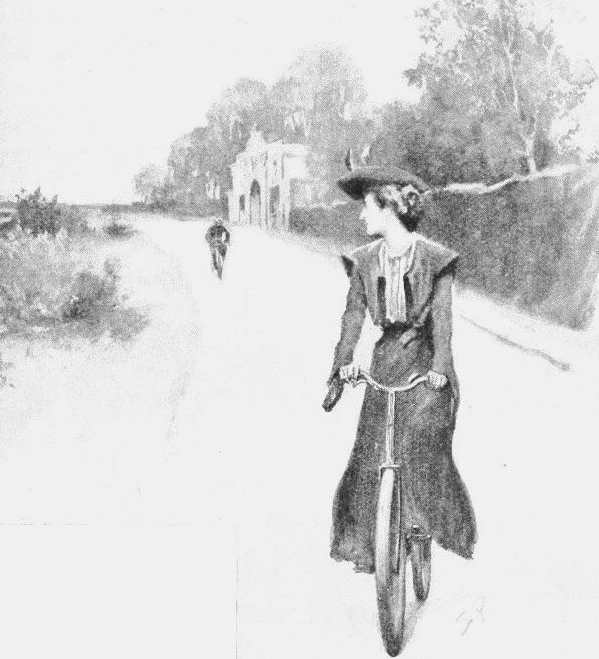
            My characters’ names are always quite intentional and tell more about the characters than their actions or dialogue in the story might convey. Carruthers Smith was the first character who I named in this story. I wanted the villain to be a looming WASPish figure, the last scion of the Gilded Age living a recluse in this vast museum he built for himself somewhere far from the great cities of the Northeast yet still within a day’s drive of any of them. I settled on Southeastern Delaware as the setting simply because it seemed most practical for the federal agents to drive there from Washington than if they were in New Jersey, on Long Island, or on Cape Cod. Lewes became the setting for the story because I’ve always liked that name and its connections to the county town of East Sussex in the south of England. I went back and forth for a minute between the names Smith and Jones; several weeks ago, I’d gotten the idea for a story about a man who is always wrong about everything named Erroneous Smith, which I haven’t written yet though I took aspects of his sketched character and took them into the less comical Carruthers Smith. As for his first name, I drew that from an old Sherlock Holmes story, “The Adventure of the Solitary Cyclist” published at the beginning of 1904 in The Strand Magazine in London and a month earlier in Collier’s in New York. The 1984 Granada TV adaptation of the story featuring Jeremy Brett as Mr. Holmes was my introduction to the story and remains etched into my memory from watching that series in the early mornings on PBS during my high school days. Carruthers is one of the two suspects in Conan Doyle’s story, and it’s a British-enough name that it felt fitting for the old colonial New York type of person I was looking for.

Sidney Paget’s art in The Strand edition of Sir Arthur Conan Doyle’s “The Adventure of the Solitary Cyclist” (1904). Public Domain.

            The federal agents were all named in quick succession. Bill Hardy is named to make him appear as non-descript and American as I could with a nod to the Hardy Boys. I know a lot of Bills, though none from Buffalo, and so it seemed a fitting name to use here without nodding to one in particular. Pat O’Malley drew from the idea that I can best write from the perspective of someone like me, that is a fellow Irish American. My family comes from the townlands around Newport, County Mayo a part of the country which before colonization was ruled by the O’Malleys and Burkes. Everyone around Clew Bay is related to some degree or another if you go far enough back, and I have a handful of O’Malley ancestors myself. Patrick was an easy choice, it’s the most accepted Irish name in the English-speaking world, with my own Seán in all its phonetically spelled variations reflecting each country’s version of English coming in second, though Liam, the Irish version of William, is quite popular now too probably thanks to the recently buried Liam Payne of One Direction. Penelope Wilson was a harder one to name. I’ve used the name Penelope in my long awaited second novel in my romantic comedy series which I dramatically call the Plumwoodiad and was hesitant to use it again. It’s in part a nod to Penny Hofstadter in The Big Bang Theory, one of my favorite TV shows, yet more so a nod to the original Penelope in Homer’s Odyssey. At one point when I stepped away from my desk yet was still engrossed in this story while making breakfast, I considered putting a line in there about her having to wait a long time to find a man who can string her husband’s bow. The name Penny was intended to give her a deep well of resilience and strength that she would call on to save everyone else from Carruthers Smith. Wilson was another choice of trying to make her sound as American as possible, and while I did have President Woodrow Wilson in mind a bit here, I also thought about Robert Sean Leonard’s character Dr. James Wilson in the Fox series House in mind with this name.

            I didn’t initially plan on making everyone else in this story Irish Americans. This is something which makes me laugh now thinking about it. I’ll make a small digression here, if you’ll permit me. When I was in elementary school, I remember one day my teacher brought out a stack of books for us to all read together as a class that was about a character who she said, “was from an ethnic group that aren’t often talked about in books.” I remember thinking then how the only book about Irish people or Irish Americans I could remember reading in my school was Tomie de Paola’s picture book about the life of St. Patrick, the namesake and patron saint of my elementary school, St. Patrick’s in Kansas City, Kansas. That’s nagged at me since, and I do think we Irish Americans tend to get forgotten because the Carruthers Smiths of this country have largely accepted us as white in the last sixty years since the first of our kind was elected President. It’s often forgotten today how we Irish Americans were reviled by the old English colonial population in this country for a long time. I heard some stories about this, and in the older histories of my alma mater Rockhurst University, there are stories of Rockhurst students in the 1920s and 1930s sneaking into Klu Klux Klan rallies to try and fight back against their banality. And yet, all that fit neatly into the background of Carruthers’s assistant, who I decided would be a first-generation Irish American, whose parents crossed the Atlantic during the big wave of migration among our people to this country in the 1890s. That character developed into Peter Dougherty. I had to be careful here, the first couple of names I gave him ended up being changed because I realized they were the names of actual people I know either in the Kansas City Irish community at large or nationally among my brothers in the Ancient Order of Hibernians. I imagined Peter was a sort of Bob Newhart type character who spent his early life trying to get by amid the shifting tides of the world around him, and once he found Carruthers Smith he was eventually willing and able to give up on trying to just survive and instead enjoy something more comfortable even if it meant sacrificing the woman he loved. That woman became the penultimate character I named in this story. At first her named was Bridie McGinty, Bridie being a pet form of the Irish name Brigid, yet that changed near the end of the story when I decided instead to name her after my great-great aunt Delia McDonnell who came to America from Ireland in the 1940s or 1950s. yet I had a mental image of her from the start. She was going to be a cross between Mamie O’Rourke in the 1894 classic song The Sidewalks of New York, Dorothy Day, and many of the women who I’ve known in my life who day in, and day out work in the schools and hospitals and for nonprofits trying to make life better for others. There’s a subtle yet profound truth in this: if you make life better for other people who’re worse off than you are, it’ll eventually make your own life better too. Call it trickle-up economics if you will. Lastly, there was the town doctor, who got the name Ronald out of a desire to find something that felt like it’d fit a character born in the 1940s or 1950s, and Yancey because it was the end of the story, and I was looking for something at the end of the alphabet.

From Ric Burns’s New York: A Documentary Film, sung by Robert Sean Leonard who already got a mention in this blog post.

            Let me say something briefly about the time in which this story is set. From the first moment I thought of this story taking place in 1990, thirty-four years ago. I felt this was far enough removed from the turn of the twentieth century to have much of the off-stage action feel removed yet still before the millennium which feels like a profound break in time in my own life. I did have aspects of the lived environment of the 1979 Peter Sellers film Being There in mind when I thought of the décor and technology that Carruthers Smith would have in his museum, where the building itself was largely designed forty years earlier in the first few years just after World War II, yet the technology kept getting updated to a certain point at which Carruthers no longer felt comfortable replacing things. I’ve seen this in people who prefer to stick with certain technology that they’re most familiar with even if many years or decades have passed since that technology has been commonly sold or can be repaired with replacement parts on hand with the manufacturer. Doing the math here, this places Carruthers Smith’s birth in 1914, Peter Dougherty’s in 1899, and Delia McGinty Dougherty’s in 1898. The agents meanwhile are largely children of the 1950s and 1960s, with Penny Wilson the youngest at around 25 years old. It seemed less important for me to settle their ages than it did the characters in Carruthers’s orbit. There is something of the nostalgic for me writing about characters in the seventies, eighties, and nineties who were born in the decades just around the turn of the twentieth century. These birthdates were the norm for the oldest generations when I was born in 1992, and today I do miss something of the expectation that my great-grandparents’ generation born between 1890 and 1918 would still be living in our world with us today. I in fact only met one of my eight great-grandparents, the last of them to be born, who died when I was three years old.

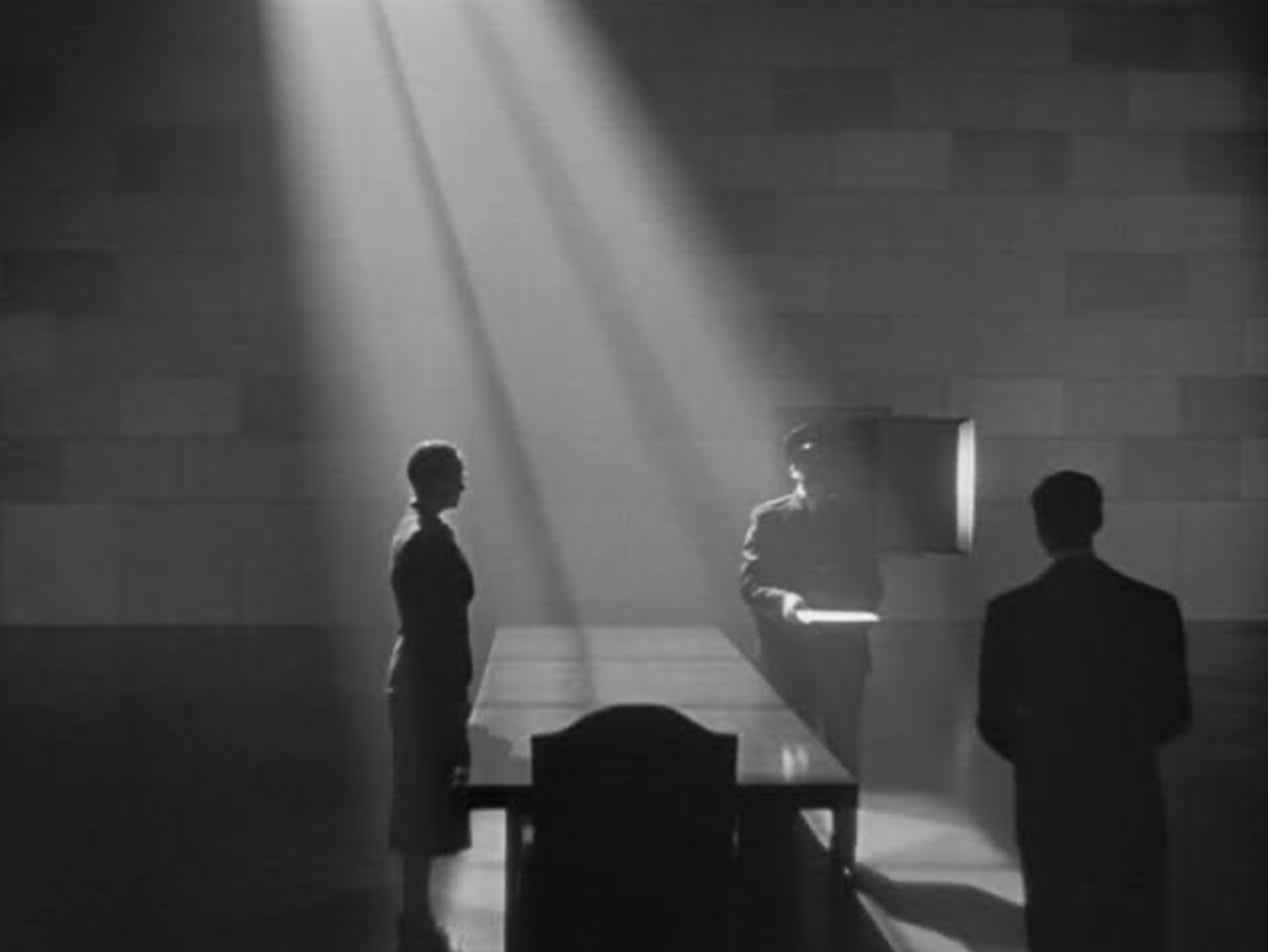
The Walter Parks Thatcher Archive in Citizen Kane

            Finally, I want to end by addressing the museum itself. I love museums, or musea as Carruthers would surely use the Latinate plural of that word, and so Carruthers Smith’s Museum was intended to be a twist on that happy place of mine as it was in my dream. The museum is made of one long gallery whose white walls and white marble floors match the place where I work yet whose shape is more akin to some of the galleries at the Corning Museum of Glass in Corning, New York, yet I often thought of how it appeared with its own internal lighting in a manner similar to the private archive of Walter Parks Thatcher in Citizen Kane with its long shadows and stark surfaces. That warm and welcoming space is twisted however when you remove all of the art from its confines except for something that seems eerily out of place. The great rubber artifact is a phrase that made me laugh the first time I wrote it, and yet what’s essentially a giant eraser-shaped blob of milky white goo became the unintended means of Carruthers Smith’s fall into depravity. Was he ever afraid of it? I think so at first, yet by the time we met Carruthers he’d lost any real desire to live and was happy to have something that could take his life at any moment be a constant presence in his life. He may have once loved another, he may have once been happy with his success, he may have once believed in being the patriotic good boss whose tires helped drive the Allied advances across North Africa and Europe, yet by the time we meet him he is so jaded about life itself that he sees no reason to cherish it. I imagined this rectangular piece of rubber standing atop a foot-tall podium, with the object itself reaching up to about six or seven feet in height, so it would tower over anyone who approached it, yet not by too much. Was the rubber alive? Perhaps in a sort of imagined monstrous way, yet only as much as a Venus fly trap is alive.

            The giant rubber monolith in the center of the room stands for the corruption at the heart of Carruthers, his willingness to sacrifice others for his own success. His two-faced approach to people like Peter who keeps the keys to his house, yet he still sees as little more than a servant speaks to just how morally bankrupt Carruthers is. Here is a man who was once on good terms with presidents for his wartime industrial service. In one line which I cut he admitted for the first time how on the morning of the 1948 election he voted for Dewey and then put a call to President Truman to wish him good luck because if Truman thought Carruthers Smith was a friend then maybe he’d sign another contract for more tires and tank treads for the impending war in Korea. Money for the sake of money alone is the corruption at the heart of this man, a heart that’s been hollowed out so he can hide away even more of his gains. He is the true face of an oligarch who puts on a nice mask for the sake of selling his wares in a democracy yet would rather all the nice people who buy those goods stay out of his way and leave the governing of society to the captains of industry and their cronies in government.

            Carruthers Smith then is a warning, a vision of the last echoes of the First Gilded Age at the dawn of its successor. All the successes for expanding suffrage, workers’ rights, and improving our education, healthcare, and overall quality of life are at risk if we allow the oligarchs of today try to return us to a limited regulation small government policy of the late nineteenth century. If we let the wolves into the henhouse the chances are good that they’ll turn it into a buffet for themselves to feast upon while everyone else is left out in the cold to fight over scraps or starve. Of all the federal agents who seek to bring Carruthers to justice, it’s Penny Wilson who is successful. Without her tenacity or her compassion for Peter Dougherty that reinvigorates his soul after decades of uneasy slumber in his boss’s shadow, Carruthers would have remained at large, a glowering menace on the far horizon of the seat of our democracy. The youngest of all the characters in this story is the one who saves them all.


Carruthers Smith’s Museum

Carruthers Smith's Museum Wednesday Blog by Seán Thomas Kane

This week, a story about excess and secrets all in a museum built by an old reclusive Gilded Age tycoon named Carruthers Smith. — Click here to support the Wednesday Blog: https://www.patreon.com/sthosdkane The episode artwork this week was generated by Dreamstudio. I really need to get back to sketching.


This week, we join a team of federal agents as they investigate a strange museum owned by a reclusive Captain of Industry that has never opened its doors to the public.


Part I.

            I arrived at Carruthers Smith’s Museum just after 4:15 in the afternoon after nearly a three hour drive out from D.C. and across the Chesapeake Bridge and most of Delmarva to Lewes, Delaware where the reclusive tycoon had taken up residence nearly fifty years before. My office began tracking his investments five years ago, when my colleague Bill Hardy was on the case, but just last week when he came out here to this beach town he never returned. My partner, Penny Wilson, joked when we were leaving the Hoover Building’s garage that Bill must’ve gotten distracted by the beach and stuck around for an unannounced vacation. Whatever the case, Smith’s file was dropped on my desk, and I was sent out to the Delaware Shore to see what became of Bill, and then to pick up where he left off investigating Smith’s Museum. There was something that didn’t make sense about a museum that had never opened to the public.

            Carruthers Smith was one of the titans of the rubber industry, his tires and tank treads had helped us win the War in Europe, for one, and he was lauded by every administration since Franklin D. Roosevelt for his service to our country as one of the good, charitable captains of industry. His father was a strong supporter of the Taft Administration, having had his wings clipped by Theodore Roosevelt’s trust busting, and his grandfather one of the great Wall Street investors that supported Republican nominees from Grant through McKinley. The Smith Company hadn’t started with rubber tires, first they were a shipping company that cornered the market for trade between Rio de Janeiro and New York. They even helped keep an eye on ex-Confederates who’d escaped to Brazil in 1865, reporting on their whereabouts to Union authorities. Thanks to their deep connections in Rio as well as New York, they were well placed to corner the developing rubber market when it appeared almost forty years before Carruthers Smith was born. All this is to say it took a lot for any federal agency to be willing to investigate a good tycoon when there were plenty of rotten ones out there who ignored their workers’ safety or were notorious union-busters or preferred to outsource their factories overseas and flood the American market with cheap goods that were easily breakable and commonly known among the public as generally worthless. Smith Tires were different, they were sturdy and dependable, far more so than any competitor. They were especially good traveling over sand, so much so that the Army still kept a contract with Smith for tires for any future desert operations.

            Still, Penny and I were there in front of Carruthers Smith Museum, our car parallel parked with the handbrake on Franklin Avenue. It was a very modern building, white walls that showed some of the characteristic curves of the Art Deco, yet it seemed less brutalist than the Hirshhorn and more akin in color to the Guggenheim in New York. There seemed to be no front door where you could queue to enter, but there was a smaller service door off Franklin Ave. that I could see from the driver’s seat. “Do you think that’s it, Pat?” Penny asked.

            “Yeah, that seems to be it. Let’s go ring the bell.”

            We got out of the car and walked into this small service driveway and up the five concrete steps that led to the service door. There was an industrial-type doorbell affixed to the wall at the top of the steps next to a door that on closer inspection turned out to be steel painted white to match the rest of the building, yet it had no window through which the respondent could see their visitors or vice versa. I rang the bell, holding down the button for a good two seconds. “Mr. Smith, this is Agents Patrick O’Malley and Penelope Wilson of the FBI, may we come in and talk to you?” We waited for another thirty before a buzzing announced to us that the metallic lock on the door was released, and we were allowed entry.

            We found ourselves in a sort of room that could be a back office, it had denim blue carpet, and high wooden walls around which were photographs of the museum under construction beginning from the laying of the cornerstone in 1942. An old wooden desk stood to my left; it reminded me of a smaller version of the Resolute Desk that sits in the Oval Office. Before us was a set of stairs that led three steps up to another door. This one had a window, yet it was high up in the door, and thus too high for either of us to see through it. Yet there was light beyond it that seemed to dance off the high white ceilings of the room beyond. I nodded at Penny, and she walked up the steps and opened the door. The room beyond seemed minimalist in nature, yet it was still quite large. “This must be the museum,” Penny said.

            “It looks that way,” I replied, scanning left and right as we entered the room beyond. There was a high angled white wall to our left in front of us, blocking our view beyond to whatever was to the south in that room. To our right the room continued for some uncertain distance, its white tile floors fading into the darkness at the far edge of the room. There didn’t seem to be any art on the walls of the museum, nothing here displayed. What could Carruthers Smith have been collecting these last 50 years? Beyond the angled wall in front of us light danced on the ceiling from something metallic. I proceeded cautiously, my gun still holstered, as was Penny’s, yet we both knew we could draw in 3 seconds at least and be on guard. The heavy sounds of our shoes clicked across the floor as we rounded the corner and found a small metallic box on a table in front of a large glass display case standing erect that housed a large rubber object, rectangular in shape, and standing at least 6 feet tall. It seemed taller being up on a podium. I looked up at it, confused what I was seeing, “maybe it’s the largest single piece of rubber the Smith Company has ever produced,” I quipped to Penny.

            “It is in fact,” came a voice from behind us. We turned to see Carruthers Smith standing there, a tall man who once might have been the eye of many a high society debutante. He was slim in frame, wearing a gray double-breasted suit of the kind not often seen since the early 1960s. “This is the largest single piece of rubber that my family’s firm ever acquired and sought to study. How do you find it, Agent Wilson?”

            Penny looked back at it, “it’s a little unsettling, how is it held up in the case?”

            “You are welcome to walk around the back and discover that fact for yourself,” Carruthers replied in a slow, tenor voice that betrayed hints of the Transatlantic accent he and his class used decades ago.

            Penny looked at me and I nodded approval, sending her around the case to its right to ascertain the supports for this piece of rubber. “How is it standing on its own?” she asked with incredulity seeping through their voice.

            I walked left around the case and found her behind it looking for where some sort of supports ought to be yet instead there was nothing. The rubber artifact instead stood erect inside the case, not leaning on it or putting any pressure on the glass that could shatter it. Carruthers appeared behind Penny, “it truly is a wonderous specimen, one that was brought to our office in Rio from deep in the Amazon in 1941, on the same day that the Japanese attacked our fleet at Pearl Harbor. My agent who ran the Rio Office then, a Senhor Dos Santos, said that anyone who touched it felt as though they were touching something that seemed alive.”

            “Alive?” I asked, quizzically raising an eyebrow.

            “Yes, Agent O’Malley, this artifact was alive when it arrived here in early Spring 1942. I had it shipped into our wharves in Jersey City where it was loaded onto a train and brought to Lewes where I could study it myself.”

            “Mr. Carruthers, I know your family’s connection to this town doesn’t go back very far, didn’t your father have a summer cottage here?”

            “No, most of the family would summer in Newport, Rhode Island with our friends, yet I was the one who enjoyed the waters further south here in Delaware and found Lewes a fine enough little town to build my summer cottage here,” Carruthers replied, never dropping his hint of a smile.

            “When did you first come here then?” Penny asked.

            “In 1932, an 18 year old looking for something profound and reclusive in life. I’d read Thoreau you see; Walden inspired me to seek new things beyond the family firm or society life in New York. The Depression brought land prices low here, and I thought I might be able to help the local people. I provided tires at a 33% discount to all residents of Lewes, which ingratiated myself to their company.”

            “Is that why you built this museum?” I asked.

            Carruthers looked around him at the cavernous space, its white walls and white tile floors made the space feel monochromatic and minimalist. “I built this museum to house the treasures I’ve collected in my years, things old and new, mundane and,” he gestured to the rubber artifact before us, “wonderous.”

            “But why haven’t you opened it to the public?” I asked, “Surely this would be a testament to your life and work like the Carnegie Museums in Pittsburgh or the Freer Gallery in Washington?”

            “I never felt that it was complete and ready for the public. There was always something missing, something which I couldn’t quite place. I’ve been collecting for this museum now for 58 years ever since I first arrived in Lewes, and still the museum is not yet finished. But you, dear agents, have come a long way, surely you have business to attend to?”

            I looked at Penny who nodded and walked back around the display case. We followed behind her to the metal table that stood beyond. “Mr. Smith,” she began, “we are here to ask two questions. An agent of ours, Bill Hardy, came here a week ago to inquire into the contents of this museum that has never opened and ensure they are all legally in the country, and he has yet to report back to the office since. So, we are here both to see if you know what might have happened to Agent Hardy and to complete his assignment.”

            “I met with Agent Hardy when he arrived here on the 10th, he seemed to be in a hurry to return to Washington, so I didn’t want to detain him too long. As to his investigation into this museum, you can find the effects of that effort on the table here,” Carruthers motioned downwards toward the metal table between them where a single silver box was placed in the middle.

            “Sir, are you here alone?” I asked.

            “In fact, I have one assistant here with me,” Carruthers motioned to a man who only just seemed to appear from the corner of my eye. He wore a dark green museum guard’s uniform, with a black necktie on a white shirt. “Have you met Peter Dougherty? He’s one of your tribe, a fellow Irish American born in Brooklyn.”

            I turned to see Peter more clearly and saw a wizened old man, at least 80, who looked back at me with tired eyes. “How long as Mr. Dougherty been working for you?” I asked.

            “Peter was hired by my father as a warden to keep watch over me in my youth, in 1929 I believe.”

            “That’s correct, Mr. Smith,” Peter replied in a low baritone voice.

            “And you’ve been with Mr. Smith ever since?” Penny asked.

            “That’s correct, Agent Wilson.”

            “Peter served in the first war in the trenches under my Uncle George’s command, and after the war when lost his job after Black Tuesday, my dear uncle asked my father to bring him on.”

            “So, this Peter has been working for the Smith Family for over 60 years,” I thought, “he’s loyal then, very loyal.” “Where did you serve, Mr. Dougherty?”

            “At St. Mihiel and in the Meuse-Argonne Offensive with the Fighting 69th,” he replied proudly.

            “We appreciate your service,” Penny smiled at him. Peter returned the smile, yet he seemed tired by the process.

            “So, you say that this box is what remains of Agent Hardy’s investigation?” I asked.

            “Yes, Peter collected the things he left here.”

            “And when did he leave?”

            “He left his investigation on the 10th,” Carruthers replied, his expression unchanging.

            “On the same day he arrived?” Penny confirmed aloud.

            “Indeed,” Carruthers affirmed.

            “Then you haven’t seen him since the 10th?” I asked, pulling a notepad and pen out of my jacket’s right pocket and opening it to a page titled “Carruthers Smith Museum.”

            “That is correct, he had a sudden change of mind and chose to end his investigation right here while he was looking over the financial records of my museum.”

            “May we see those records?” I asked, trying to understand why Bill would give up an investigation like that.

            “Certainly, Agent Wilson, will you follow Peter, he’s not as strong as he once was and could use the help lifting these boxes, unless you’d rather attend to it, Agent O’Malley.”

            I looked at Penny who gave me a glance, I knew she could do this well enough, “Go with him, you’ve got this.”

            “Understood,” she replied, before turning and following the aged soldier to the northeast across the large gallery in which we stood until they passed beyond the light and into a portion enveloped in darkness. I could still hear their footsteps as a door beyond sight opened and they passed through that portal to the collections’ storage beyond.

            “How long have you and Agent Wilson been together?” Carruthers asked.

            “She was assigned to be my partner fresh out of the academy two years ago.”

            “So young,” he pined, “but keen eyed still. Would you care to sit and inspect the effects of Agent Hardy’s investigation,” Carruthers motioned toward the box on the table.

            I sat, feeling as though the invitation was unavoidable and slid open the metal lid with my hands. Inside were several metal artifacts, a slide-rule, Hardy’s notepad, and a paper sheath for the instrument. I took the notepad out first, noting that it was closed and flipped open the cover. The first few pages were notes from other cases he’d worked recently, followed by a page with directions to Lewes from Washington. Yet after that the pages were just filled with what seemed like random numbers, ten full pages of random numbers. “Can you explain these numbers, Mr. Smith?”

            Carruthers looked down at the paper in my hand, “they refer to specific indices in my records, you can find everything you need in the documents that Agent Wilson and Peter will shortly be bringing to this table.”

            I looked back down at them, and began to mutter the numbers aloud, for no apparent reason, yet still to mutter them aloud all the same. “Seven, nine, six, five, three, one, nine, eight, two, five, three, one, eight, three, seven, six, nine, zero, seven, five, three, nine, zero, seven, two, one, six, five, three,” until I found my eyes drooping, an air of drowsiness coming over me. It seemed like a good long while since Penny and Peter had left my sight and gone into that distant room off in the dark, what could be taking them so long? “Seven, nine, six, five, three, one, nine, eight, two, five, three, one, eight, three, seven, six, nine,” I tried to stand from the table yet felt my body heavier than expected; it was a weight which felt less physical and more emotional. I could swear I saw the display case to my left open, how could that be opening?! The large rubber artifact was there before me, what a strange thing it was. I began to see the darkness consume the distant edges of my vision until all that remained was that artifact, which seemed to yawn before me. I thought I could hear Bill’s voice, “Pat! What are you doing?” but soon all was silent.

Part II.

Penny found the collections room to be far less impressive than the gallery beyond. It’s linoleum floors and light green walls seemed to be caught in a time loop going back to the late 1940s when this part of the museum was built. She followed Peter further and further back into the collections until they came to a locked metal cabinet on a nondescript back wall. Peter took a key from his coat and unlocked it, revealing nearly a century’s worth of documents behind the door. “This is everything,” he said, “everything from Mr. Smith and his father’s time leading the firm.”

            “Mr. Smith’s father retired in 1936, yes?” Penny asked.

            “Yes, he left the firm to Mr. Smith in that year.”

            “And how long has Mr. Smith been collecting for this museum?”

            “For as long as I’ve known him,” Peter replied.

            “You know, my grandfather served in World War I,” Penny said, trying to make small talk as she began to finger through the files.

            “Did he,” Peter seemed uninterested in the topic.

            “Yes, he was an ambulance driver from Kansas City, most of the guys on his crew became animators.”

            “We all have our own paths to take, Agent Wilson.”

            Penny kept looking through the files, moving fast between folders with handwritten dates and names on them. “Are you looking for anything in particular, Agent Wilson?” Peter asked.

            “Not yet just trying to get an idea of what’s in here,” she replied as she kept quickly flipping through the folders. “So then, if you won’t talk about the war, what did you do between then and when you started working for the Smith Family?”

            “I was an interpreter for a while at Ellis Island until the government closed that facility in 1922.”

            “Which languages do you speak?”

            “English, French, Spanish, and Portuguese.”

            “Oh wow, you’ve got a knack for language, then.”

            “I ran away from home when I was fourteen and took a job on the Smith Company’s ships going to Rio, learned Portuguese there and Spanish on their stopovers in San Juan and Havana. I learned my French during the war. Captain Smith put me on interpreting duty with our French allies when he heard about my work.”

            “That’s Mr. Smith’s Uncle George, right?”

            “Right.”

            “So, what’d you do after 1922, Mr. Dougherty?”

            “I tried going back to the Smith Company, but they weren’t taking as many sailors for the Brazil Route anymore, so I became a policeman.”

            “You were a cop?” Penny turned to look at Peter who stood behind her still looking as tired as before.

            “I served with the New York Police Department for five years until 1927.”

            “What happened then?”

            “My sergeant had us raid the wrong alderman’s office and we were all out of a job.”

            “That’s tough,” Penny paused a moment, “I’m glad you were a good cop. My dad is a cop in Kansas City, it runs in our family.”

            Peter was silent, he still seemed reluctant to share much more than was necessary, even if it was just to pass the time.

            Penny ignored this, “What about your personal life, did you ever marry?” she asked, trying to unlock the man behind her as she pried open the files before her.

            Peter was silent for a moment before she heard a sigh, the first sound he’d made other than the odd monotone words she’d heard from him before. “I did, a long time ago.”

            Penny smiled, “what was her name?”

            “Delia McGinty.”

            “I see you stayed in the community,” Peter made no response to that attempted joke. “How did you meet?”

            “At a party in 1924 at the Hotel Commodore on 42nd Street in Manhattan hosted by one of the big Irish organizations in the city. She was there with a friend, Mary Mulroney. They were both famous for standing up for themselves.”

            “What did they do?”

            “They were suffragettes during the war, and afterwards Delia worked as a schoolteacher on the Lower East Side. She wanted to give these new kids who’d just arrived the welcome that our parents’ generation didn’t get.”

            “She sounds like an amazing woman. So, what happened?”

            Penny could feel a darkness shift over Peter’s face even though her back was turned to the older man, “We were married for nearly twenty years, but she disappeared around the time we went to war with Germany the second time in 1942.”

            Penny turned and offered a compassionate look, “I’m sorry, Peter, that must have devastated you.”

            Peter returned her gaze with a weary look, “It was a long time ago. My cop friends couldn’t find her, there was no sign of her anywhere. Mr. Smith took me in and invited me to move here to Lewes with him. I left the city and the memories and started anew.”

            Penny had reached the bottom third of the files when she found one that caught her eye, she read the label, “1941,” and turned to Peter again, “Isn’t this the year that that rubber artifact came into the Smith Family’s possession?”

            Peter’s face seemed weary, yet sharp with a renewed purpose. He reached into his coat pocket and drew a pistol, pointing it at Penny who stood from her squatted position. “Peter, what’re you doing?” Penny asked, alarm in her voice as she reached for her sidearm.

            “Don’t move, Mr. Smith said no one is to inquire about the origins of the artifact.”

            “Peter, you need to lower your weapon and put it on the floor,” Penny commanded.

            “I work for Mr. Smith, not you,” Peter said with a cold steel in his voice.

            “Mr. Smith is hiding something, Peter, why else would he order you to put your life and freedom in jeopardy by threatening a federal agent to protect it?”

            Peter gave no answer, but his hand had begun to shake. Penny stepped forward, gingerly, eyes on Peter’s. “Peter, I’m not going to hurt you, just give me the gun. There’s a reasonable explanation for all this.”

            Peter’s hand lost its steadiness, and Penny closed the gap between them, taking the gun from his hand and resetting the safety. She looked it over, “whose gun is this, Peter?”

            “It’s my old service pistol, from my cop days.”

            Penny looked at the gun, it had to be at least 63 years old, before returning her gaze to Peter, “let’s start over again,” she held the 1941 file up to him, “why is this file so important, Peter?” Peter was silent, “You were a good cop, remember, going after corrupt officials, protecting your community. Is it worth going to prison in your nineties to stay silent about this?”

            “I’ve lived a long life,” Peter said slowly, “Mr. Smith is the only person I have left. You’ll get there someday, Agent Wilson, when everyone you’ve ever known is gone.”

            “Yeah, you’re right, but for now Peter I’m with you, and I want you to understand I’m not going anywhere until you explain why you pulled your gun on me.”

            “Mr. Smith said no one should ever know what that thing really is, what it does. It caused a big ruckus in Rio when they first brought it into the warehouse. He never said what happened, just that they had to handle a police investigation over it and that some workers died.”

            “Some workers died because of that thing?” Penny was alarmed at the thought. “Pat’s in there, right next to it.”

            She ran for the door, leaving Peter behind her, pulled it open and charged back toward the table where Carruthers stood. “Where’s Pat!” she shouted.

            Carruthers turned to meet Penny’s fierce eyes, “Agent O’Malley left his investigation,” he said in the same soft, dry voice he’d used when they met him.

            Penny looked at the display case, it wasn’t quite as she’d left it, instead the front plate of glass seemed to reflect the light just a bit differently. “Mr. Smith, when I collected this file from your cabinet, your man Peter pulled his gun on me. Would you care to explain?”

            Carruthers looked to the file in her hand, “1941” he read on the label. “That file is confidential, and without a warrant I see no reason why you must be aware of its contents. Please return it to me,” he held out his hand.

            “No.”

            Carruthers’ face lost the soft glow of friendliness it’d had since they arrived, “I believe the law is clear on this matter, you have a piece of my personal property which if I’m correct in assuming you have no specific warrant to search.”

            Penny opened the file, as the papers caught the light from above, yet at that moment Carruthers moved to slam it shut, “you will not read anything in that file, it is not yours to read!” he commanded.

            “If you don’t want me reading that file then you can tell me where Pat is. When I left you, he was sitting at that table. You were the last person to see him and now he’s not here.”

            “He needed a rest from his troubles.”

            “What do you mean, rest?” Penny gave Carruthers an interrogatory look, her eyes locked on his. She caught the smallest of a micro expression, his eyes glanced slightly to the left toward the display case behind him. Penny dropped the file, revealing Peter’s service pistol in her hand beneath it, pulled the safety back and fired a shot into the display case. A second shot shattered the glass. A third pierced the rubber artifact within. An oil began to ooze out of the artifact as the air entered a newly formed chasm in the bullet’s path. Penny drew her own service weapon from the holster at her hip and pointed it at Carruthers. “Explain,” her one word command.

            “You have no right,” he whispered in a seething, quiet, and deadly voice.

            Footsteps came from behind as Peter appeared from the darkened far end of the gallery, a shocked look on his face. “Mr. Smith, I tried to stop her,” his voice faltered as he looked to the shattered display case and the fast liquifying rubber artifact. A hand appeared from within, followed by the arm to which it was attached, and soon Pat’s face and body were restored to light and air. Penny ran forward, her gun still drawn toward Carruthers. She pocketed Peter’s service weapon and caught Pat at his shoulder.

            “Are you okay?” she asked.

            Pat looked around, and caught Carruthers in his sight, “what was that thing?”

            Yet before he could respond another body appeared from the case, someone who was placed below Pat, it was Bill Hardy. He hadn’t taken that unannounced beach vacation after all. Penny got Pat onto his feet and went to help Bill who’d been immobile for a week now. “That thing ate me!” Bill shouted; his eyes blurred by the sudden shock of the gallery’s artificial light.

            There was still a good half of the artifact left, yet it kept draining out of the case, a white liquid oozing down onto the white tile floor below. Another figure began to appear, someone crouched down, kept still by the weight of the prison in which they’d been enthralled. Penny heard a sob come from across the room, and unsteady feet run forward as Peter approached the milky pool, “Delia?!” he shouted.

            Peter saw as a frail woman appeared from within, she didn’t seem to have aged as much as would be expected. She was crouched over, in almost a fetal position, wearing the same blue dress she’d worn the last day he saw her. Her eyes were glazed over, surely, she hadn’t seen daylight in almost fifty years. Yet her hair still had mere whisps of gray. Peter helped her up, though unsteady he lifted her from what remained to the artifact and set her in a chair at the metal table. Ensuring she was safe, and wouldn’t fall from her chair, where she’d begun to rub her eyes, Peter turned to his employer. “What happened?”

            Carruthers looked at the man who’d stood by his side for the last half century and laughed, a cruel, heartless laugh. “She came to me to ask about the workers who’d died in Rio. She said that she wouldn’t let it slide, and that if I was a true patriot, I would be better to my workers. Yet while we spoke, she saw the artifact, and slipped in.”

            “I didn’t slip,” Delia spoke with a defiant voice. “You gave me a piece of paper with notes about the workers to read, you told me this would have all the information I needed. You said I should read it aloud to prove to me that what you read was the truth. I read it and was drawn into that monstrous thing of yours.”

            “That’s what happened to me!” Pat shouted.

            “You had me write those numbers in my notebook, I figured they were accounting figures,” Bill said groggily. “What do those numbers do?”

            Carruthers remained defiant, keeping his silence in spite of his situation.

            “Give it up, Carruthers, you’re done for,” Peter said, standing up to the man who’d commanded his loyalty.

            “How dare you speak to me that way,” Carruthers seethed.

            Peter raised himself before the man, “You’re no better than the rest of us, you and your captains of industry. You were born into riches, but do you really know what I had to do just to survive? I’ve been watching you for sixty-one years, I know who you really are you two-faced miser. You’d happily put on the red, white, and blue in support of the war effort and to make people feel proud to buy Smith, but any chance you got to denigrate Mr. Roosevelt or Mr. Truman you took. You’re one of the good bosses, that’s what you told everyone, but I know you for the weasel that you are, the wolf in sheep’s clothing. You don’t care for any of us, not a one. We could all be starving and dying of plague and all you’d do is pack up and leave us to die.”

            Carruthers was seething with rage now, “How dare you speak to your betters like that, you worthless Irish scoundrel! All of you should’ve been sent back on your ships with your agitators and your freedom fighters! And you, Delia McGinty, we had a name for you and your kind who upset the natural order of things in 1920. Insufferables you all were!”

            Penny stepped forward, “that’s enough of this,” she took a pair of handcuffs from her jacket pocket, “Carruthers Smith, you’re under arrest for kidnapping, and attempted murder.” She grabbed his wrists and placed them behind his back, cuffing him there. “Bill, do you want to help me get him to our car? This was your case first.”

            “Gladly,” Bill said.

            Pat turned to Peter, “do you have a phone? I should call the office for backup.”

            Peter pointed toward the darkened portion of the gallery where he and Penny had disappeared before Pat began to read Bill’s notepad. Pat nodded and walked to the collections room to place his call.

            Peter turned and looked back at Delia. He took the other chair at the table and brought it around to her side, sitting in it next to her. “Delia, do you remember me?”

            “How long has it been, my love?”

            “Forty-eight years, forty-eight long years,” he sobbed as he hugged her.

            She looked at his face, “you must be at least ninety by now.”

            “Yes, but you don’t look a day older than the last time I saw your face.”

            “I don’t understand it,” she said, “if it’s been forty-eight years then I must be at least ninety-five. Do you have a mirror?”

            Peter looked around and cautiously took a shard of glass from the floor and held it up for Delia to see her reflection. “How is this possible?”

            They looked down at the floor, at the milky white liquid that oozed from the fallen artifact, gobsmacked at this new lease on their life together.

Part III.

The following morning a story appeared on the newswires in papers nationwide, “Carruthers Smith Arrested on Kidnapping Charges,” the headline read. 

Carruthers Smith, of the Smith Import Company family, was arrested by federal agents at his home in Lewes, Delaware on kidnapping charges on Saturday. Among his victims were 95 year old Delia McGinty Dougherty of Brooklyn, New York, and Agents William Hardy and Patrick O’Malley of Washington, D.C. who were in Lewes investigating possible charges of art theft lodged against the accused. Mr. Smith began building the Smith Museum of Contemporary Art in Lewes a town of just over 2,000 inhabitants on the shores of Delaware Bay in 1941, yet the museum famous in Lewes for its Streamline Moderne architecture never opened to the public. 

Dr. Ronald Yancey, M.D. of Lewes inspected Agents Hardy and O’Malley, and the miraculously young suffragette Delia McGinty Dougherty, and concluded all were in good health despite the unusual circumstances of their captivity. Carruthers himself was taken by federal agents from Washington, D.C. for questioning and is being held in a detention facility in Wilmington pending trial before the United States District Court for the District of Delaware. No other arrests were made in the raid. Mr. Smith, age 76, was famous in his youth as the captain of industry who singlehandedly supplied the Allied forces in World War II with rubber tires that could traverse the deserts of the North African Campaign and the muddy fields of Northern France and Germany. For his service, he was awarded the Congressional Gold Medal in 1947 by Speaker of the House Joseph W. Martin, Jr. (R-MA).

One curiosity of the case is the vitality of Mrs. Dougherty, age 95, who Dr. Yancey wrote appears to be physically fifty years younger than her age. Dr. Yancey offered no comment when asked further about her condition. Mrs. Dougherty’s husband, Mr. Peter Dougherty, age 91, of Brooklyn, has lived in Lewes with Mr. Smith since 1942. When asked for comment on his wife’s health, Mr. Dougherty said “I am fortunate indeed to have these next few years to spend with my beloved.” No charges have been filed against Mr. Dougherty. Agent Penelope Wilson, one of the three federal agents who were investigating Mr. Smith told Sophie Fleming of the Daily Whale, the Lewes local newspaper, that Mr. Dougherty was unaware his employer had been imprisoning Mrs. Dougherty in the museum. Mr. Dougherty agreed to stand as a witness against Mr. Smith in the tycoon’s impending federal trial.

This is not the first missing persons case connected to Mr. Smith. In 1941 several workers from the Brazilian branch of the Smith Company disappeared on the job Rio de Janeiro. Brazilian authorities have said they are interested in questioning Mr. Smith.

A spokesman for the federal agency responsible for the raid said no objects were found in the museum’s galleries.

The Joy of Reading

This week, an odd sort of sorrow that explains my reading habits. — Click here to support the Wednesday Blog: https://www.patreon.com/sthosdkane


This week, an odd sort of sorrow that explains my reading habits.


On Sunday evening, I surprised myself by finishing reading Sebastian Smee’s new book Paris in Ruins: Love, War, and the Birth of Impressionism. I read a review of it in the New York Times several months ago in conjunction with the exhibition celebrating the 150th anniversary of the first Impressionist exposition which I saw at the Musée d’Orsay this summer and is now showing at the National Gallery of Art in Washington. I’ve long loved the works of Claude Monet, especially his choice and use of color, yet of all the impressionists in this exhibit the one who stood out to me the most was Berthe Morisot (1841–1895), one of the few women included in the 1874 exposition. This book tells the story of her life during the Second Empire, the Franco-Prussian War, the Paris Commune, and in the first three decades of the Third Republic at a time when France was a prosperous great power yet still politically unstable, something familiar to our own day. I’d first heard of the Commune as an underlying current of the macabre in Gaston Leroux’s 1910 novel The Phantom of the Opera, though this is the first time I’ve properly read about the Commune or its collapse during the Semaine sanglante, or Bloody Week of 21-28 May 1871.

“Berthe Morisot au bouquet des violets” by Édouard Manet (1872), Musée d’Orsay
“Pourtrait d’Édouard Manet,” by Henri Fantin-Latour (1867), Art Institute of Chicago

Over the months I read and listened to this book I felt that I got to know Morisot, her friend Édouard Manet (1832–1883), her sister Edma Morisot (1839–1921), her husband Eugène Manet (1833–1892), and her daughter Julie Manet (1878–1966). Early while reading this I went, as I often do, to the Internet to look at the paintings described and learn more about these people I was meeting on every page. It struck me that many of the children of these Impressionists lived well into the twentieth century, Julie died in 1966. I’ve been drawn to the Impressionists for how tangible their art is, as I’ve written here before in my early childhood in the 1990s the decades a century before, notably the Columbian Exposition of 1893, felt recent and quite tangible to me. That sense remains even as we now move toward the end of this first quarter of the twenty-first century, and so Morisot, Manet, and Monet feel more contemporary to me than perhaps they aught to. That their art began to be acquired for American museum collections in the first decades of the twentieth century makes them feel to me more contemporaneous with the 1893 World’s Fair, the Theodore Roosevelt Administration (1901–1909), or the earliest stirrings of silent film before World War I than with the American Civil War which erupted when these artists were first exhibiting their works. That their children lived into my grandparents’ and parents’ lives leaves people like Morisot who died nearly 130 years ago feeling like they were just here yesterday.

I think the setting of Paris also helps with this. The French capital has changed in some ways, for one the Métro was built after Morisot died, though after I finished reading Smee’s book on Sunday night it struck me looking at some of the addresses mentioned in the latter chapters of the book that she would have seen the Eiffel Tower rise over the Champs-du-Mars from her various homes just across the Seine in Passy. Again, these are all symbols of the Belle-Époque that marked the transition from the nineteenth to the twentieth centuries, and yet these are people whose lives began during the July Monarchy of Louis Philippe in the 1830s and 1840s, a decade which also saw the death of the Marquis de Lafayette (1757–1834) and some of the last great figures of the American and French Revolutions of the 1770s and 1780s. Do you see how time can seem to pinch when considering it on a personal level? Paris is a city that has changed in some ways yet in others it would still be recognizable to someone from the 1880s or 1890s. One of my favorite short stories that I’ve ever read is Andrew Robinson’s contribution to the Star Trek: Deep Space Nine anthology series Prophecy and Change, a story titled “The Calling” in which Robinson’s character from the TV show, Elim Garak, is sent by his planet’s government to seek assistance from the United Federation of Planets whose capital in the late twenty-fourth century is Paris, one of the great cities of Earth. Garak remarks that unlike most other Earth cities Paris feels ancient, and that the locals like to keep their particular sense of Frenchness in spite of all the interplanetary mingling going on at this point over 350 years from now.

Again, despite all the advances in technology from Robinson’s description of Paris in the late 2400s it sounds like it would still be recognizable to someone like me who knows it from the 2010s and 2020s or perhaps even to Morisot and Manet who knew it in the 1860s through the 1890s. That’s a bold claim that may be without much merit, but I’ll make it here because it speaks to something intensely Parisian, a city more modern in many respects than many of our great cities here in the United States with a constantly evolving transportation network, good healthcare, and some of the best educational institutions on the planet, yet still true to itself in its age. When I finished Robinson’s story, I was so moved that I considered trying to contact the author to tell him as much, though I haven’t built up the courage to do so yet. That’s something I’ve begun to do with fellow historians, at these conferences over the last three weeks I would often tell people whose books I’d read how much I enjoyed them. It’s something I hope people will say to me when I publish my own works later this decade.

If any book that I’ve recently read speaks to this sense of timelessness yet also is populated by such profoundly vibrant characters it’s Paula Lafferty’s new fantasy novel La Vie de Guinevere in which a woman named Vera living in early twenty-first century Glastonbury in the southwest of England discovers she’s a time-traveling Queen Guinevere and is brought back to the seventh century to fulfill her obligations as queen. I’ve known Paula for over a decade now, she’s one of the pastors of my Mom’s church, and I count her among my good friends, so I’ve been excited to hear progress of this book over the last few years when we’ve met for meals and crossed paths. I read this book during my trip to Toronto over Halloween weekend and finished it on the 6th of November in Houston and again this is one where I quickly began to feel familiar with the characters and where I looked forward to visiting with them again. Paula’s way of breathing life into them made them feel contemporary in a way that most stories set in the Early Middle Ages don’t. Glastonbury is a great setting for good portions of this story; it’s another one of these timeless places, one that I’ve yet to visit, yet it speaks to an element of maturity in the English countryside that seems foreign to our young society here in the American Midwest.

And yet, there is a degree of that agedness that you can find in my cousin Chelsea Burton Dunn’s series of books By Moonlight telling the story of a Kansas City woman named Vee. These books are set here in town, many of the main characters live in my neighborhood, yet things are not quite as they seem for most of the Brooksiders in question are werewolves. I read the first book over the course of one evening, during which time I met Vee and Shane, the werewolf pack leader, and his family. Knowing Chelsea I was able to recognize the story, its setting, and characters quickly and began to feel a sense of comfort around them. These were just more people I was meeting, albeit on paper only. Now when I drive or walk down the street where the werewolves are said to live in these books, I find my mind thinking of them. In this instance, having the story take place so close to home makes it easier for me to find joy in reading it. These are the furthest sorts of stories from my usual fare, especially from the history, anthropology, and zoology works I read for my studies, yet there’s still a place for them and their characters to flourish in the imagination.

I have a tendency of getting close to finishing a book and then setting it aside for a while and leaving it unfinished. I think this goes back to my sense as an only child that the characters in the books I read often feel far more familiar by the time I’m finished with the story, and so I don’t want to see them leave my regular daily life where I spend a good hour or so each day visiting with them and learning more about their lives and experiences. It’s silly in some cases, yet it’s truly a factor in my reading. I remember doing this reading Judith Herrin’s Byzantium in 2016 and 2017, building up a several month gap near the end of the book in part because I didn’t want the story to end. That may also be why my greatest attempt at fiction, my stories about Erasmus Plumwood, remain unfinished. That and that I’ve been translating Thevet’s Singularitez and writing my dissertation.

There is a special joy in reading that is lost in other media. The stories are projected from the page into our imaginations whence they come to life for us to see in our mind’s eye. I love watching television shows and seeing films, in fact I’m eager to go see Robert Zemeckis’s new film Here and Ridley Scott’s Gladiator II, yet reading is much more personal and intimate. It’s a story acted out on the perfect sized stage, a stage that can project just to the individual or to a group if the book is read aloud. At the moment both of the Morisot paintings at the Nelson-Atkins are off view, one is in Nice for a Morisot retrospective exhibit, yet I still chose to wander the Impressionist galleries of the museum this Monday to see the light and color and life which Morisot and her friends envisioned in the last decades of the nineteenth century and the first decades of the twentieth century. Their lives continue to recede into the past, like Eurydice’s eternal fall from Orpheus’s outstretched arms into the dark of Hades, yet for me there’s still a string tethering the Impressionists and me and all the generations in between. That’s a string I will leave bound as long as possible even as time pulls us further apart. It’s a string I will rejuvenate by going to see their paintings and reading more about their lives even as the distance between us continues to grow.


On Pauses

This week, some words about silence in communication. — Click here to support the Wednesday Blog: https://www.patreon.com/sthosdkane Photo: the poster for the new film "Lee" which is discussed in this episode.


This week, some words about silence in communication.


In my current job, one thing that is often challenging for new hires is learning how to operate our radios. In general, personal radios are the same no matter where you go, albeit with different features added to higher-end models like screens telling you which channel it’s tuned to. I found our radios to be one of the easier parts of the job to adapt to, I have experience working with radios from my time in the Boy Scouts for one. Yet I wish when teaching people how to use radios for the first time we would talk about how we communicate on a most basic level. We use all of our senses to communicate but especially our sight and hearing. 

Sound is the purest medium of communication for us humans: we talk with one another by emitting sounds from our mouths and receiving them with our ears. There’s a whole genre of performance these days called “spoken word” which annoys me because that’s the purest and most fundamental form of communication, let alone art, that we have. Rather, it should be called speakingtalking, or if you want to be fancier oratory. It’s only since we began to read silently that this distinction between speech and writing has grown. From what I remember hearing, the first significant reader to read silently was St. Augustine of Hippo, though that could be apocryphal.

Beyond sound there’s visual communication. In my job when we’ve talked about backup plans should our radios no longer be functional or useful I’ve suggested, perhaps a tad jocularly, that we should resort to semaphore flags, or some sort of similar if more rudimentary system. I have the semaphore Wuthering Heightssketch from Monty Python’s Flying Circus in mind when making this suggestion, but still, it’s always worth considering. In writing we are stuck having to express the full range of emotions and meanings in a manner that is limited by letters, words, and symbols on a physical surface. Emojis now help in more popular parlance to express the emotion behind our texts and social media posts, yet there again I often get annoyed when I see the bubbly and bucolic emojis used in places where they seem unfit, as though a contemporary expectation is that we all are using a string of emojis at the ends of our sentences because everyone else is doing it. I removed the emojis placed by default on a happy birthday message that Facebook suggested I send to a friend because they aren’t a necessary part of my communication. I use the period, or full stop for my non-American readers, at the ends of my texts because that’s how I end a sentence unless it’s interrogatory or exclamatory in nature.

As you can see, I have more to say about visual communication, especially the written word, because that is my own medium. I also dabble in photography, and have embraced Instagram for this reason, yet again I feel less need to take selfies everywhere I go because I can far more honestly demonstrate my presence in a place through writing. On my Instagram stories, I decided about a decade ago when I first opened my account that I would always format my captions with a highlighted blue background and white text as a way of saying, however subtly, to my readers that these are my words. I’ve kept to that, though this is the first time I’ve acknowledged that practice.

In either of these senses, hearing or sight, should we lack one we have to rely even more on the other to understand our surroundings and what others are trying to express. I’ve learned a hard lesson that my nonfiction writing benefits greatly from firm clarity over the opacity that I prefer as I unravel the story in my fiction. The same occurs when using radios: these are devices which allow an individual to communicate with others from a distance sight-unseen. The words we speak into our radios then need to be crystal clear for the people listening to understand what we are trying to say. I like to think of the mission controllers in Houston or Star City who have relayed intricate strings of numbers up to astronauts and cosmonauts beyond our planet to help them complete their missions and return home safely. It gives me a thrill to try to be that clear on my radio, and to be comfortable with that level of clarity when speaking into it.

Yet beyond these two senses, we have minds which are experiencing all of the things that our senses relay to it. We see more than just the messages other people display or transmit, and we hear more than just talk. Our minds are capable of parsing through all of this and making meaning out of it to orientate us in our lived worlds. This summer when I was back in London, I knew I was in a very public setting in close proximity to about 10 other people when I took the new Elizabeth line from the Docklands to the West End one Sunday afternoon, yet I also knew from experience and from seeing the people around me that no one would think anything if I pulled out the book I’d just bought, Michael Palin’s Erebus, and start reading it. Sure, everyone around me could see what I was reading if they wanted, but in that moment it was perfectly alright to do that because it was an unspoken part of life on the trains of the British capital that people pass the time by reading, so long as those readers don’t then share what they’ve just read with the strangers seated or standing about them.

On Friday afternoon last week, I went to one of the local cinemas to see the new film Lee staring Kate Winslet as Lee Miller, one of the great photographers and war correspondents of the last World War. I bought my ticket knowing it was going to be a stellar performance from Winslet, yet I was struck just as much by the dialogue as I was by the pauses written into the script. In one scene, one such pause propelled the story forward far more than any other moment in the whole film, connecting the postwar framing narrative together with the main story being told. That’s the beauty of theatre and film: it’s a medium where the written script is interpreted by actors who we see and hear, and so these two senses are unified to bring these characters and stories to life. This film, like its contemporary Freud’s Last Session which I saw earlier this year, had the feel of a play, and could probably work as such though the realism of Lee is that it takes the audience along with the photographer as she witnesses the destruction of Europe and the horrors committed by the Nazis in the wake of their fall from power in 1944 and 1945.

These silent moments are something that I find can be expressed more in my narrative writing, a style I usually use writing fiction, where I’m writing dialogue as well as the connecting tissue giving those words spoken by the characters their place in the world of the story. In real life we can express nearly as much with a look as we can with a word. This setting of Britain, Occupied France, and Germany in World War II is a potent one for telling stories, after all so many movies continue to be made about that war even as we move ever further from those years. I wonder if in the twenty-first century when we are so connected by our technology, how are our innate communicative abilities adapting to our newfound world? When I was little it was a big deal to see a copy of a foreign newspaper available for sale here in Kansas City; you could maybe buy a copy of the Sunday Times at Barnes & Noble in the magazine section, but they wouldn’t always have it available. Today though, we have people from all around the globe talking at once.

What is it we aren’t saying amid all the cacophonic chaos of our modern social media?


On Editing

This week, I want to write to you about the revealed joys found in the experience of editing. — Click here to support the Wednesday Blog: https://www.patreon.com/sthosdkane


This week, I want to write to you about the revealed joys found in the experience of editing.


I spent most of last Thursday editing a chapter I’m contributing to a new book about Shakespeare’s play The Tempest. My contribution argues that the bard was inspired in his descriptions of Caliban and the play’s island setting by André Thevet’s accounts of Tupinambá beliefs and the role of magic in their society, and the sense of Brazil as the archetype of the insular natural world across the sea at the turn of the seventeenth century. There’s a lot in its 32 pages, and it’s been a good effort on my part since I first saw the call for papers for this book two years ago. I wrote the first draft between March and June of this year both here at home in Kansas City, and while I was on my European trip this June; I spent most of my time in the San Francisco International Airport G Concourse United Club writing paragraphs for this chapter. 

Until last Thursday, I’d only edited it on my computer. This is a far faster way to edit text, it allows me to work as I’m reading through the draft. This method is still relatively new to me, I feel fortunate that I was taught to write by hand first and to edit with pen and paper. That’s been more challenging with my dissertation, in Binghamton I didn’t own a printer and because I could never figure out how to use the university printers, I relied heavily on the local print shop across the road from the University to print anything I needed. That meant then that up until the sixth or seventh draft I never saw it on paper, always on the computer screen for both economical and environmental reasons.

The week before last Thursday, when I returned to my Tempest chapter after finishing several other major projects, I found myself thinking that it could benefit my editing if I printed this document out at least for my last full read through before sending it off to the editor. So, returning to it just before noon on Thursday, I decided to print draft 4 of the full document, all 34 pages of it. As it turned out, there was something heartwarming about editing this chapter with pen and paper. Sure, I knew I’d save myself time by editing it while I was reading it on my computer, but I’ve found more and more that if I really need to work on a sentence, I’ll have to copy it out of the draft and into a separate document where I can look at it on its own separate from the rest of the text. This works, and this is what I often end up doing, but it’s not a problem I have reading lines on a printed page. I find I can read faster when reading something printed rather than something digitized, and now that I’m doing so many more things than just writing and editing my dissertation, moving towards these postdoctoral projects, I’m finding that I’m returning to how I read and wrote before I fully adopted all this technology.

Even though I now edit using more review bubble comments and review tracking on Microsoft Word or Google Docs than the old shorthand symbols that I learned in my elementary school English classes, I could still return to them with an ease that felt native to my sensibilities and origins as a writer and a reader. I even left the odd marginal note on draft 4 of my Tempest chapter should anyone else ever find this printed copy to see some of the things I was referencing in the additions and changes I made to this draft.

One of the greatest lessons I’ve yet learned about writing came from a policy writer who at the time worked for the offices of the European Union in Brussels. He came to the University of Westminster for a couple of days in March 2016 to run a policy writing workshop for all of us who were interested. I joined in and wrote a brief about a hypothetical crisis along the Danube between Hungary, Croatia, and Serbia (I think). While I’m less likely to become a professional political policy writer anytime soon, the most impactful thing he taught us was to leave whatever it is we’re writing aside once we’re done with a draft and return to it later. Like a good dough, our writing needs to rise for a while before we return to it and work on it some more. I took a week between finishing draft 4 and returning to it to complete the edits that make up draft 5 of this Tempest chapter, and I’m certain the finished draft benefits from that gap. It’s something I do here with the Wednesday Blog on those weeks when I’m able to write things in advance. The words you’re reading, or hearing, now were written on Thursday afternoon about an hour after I sent draft 5 off to the editor. I’ll return to them sometime on Tuesday, October 15th, and read through them again when I record them for the podcast.

The Wednesday Blog podcast actually grew out of my editing sessions for the blog. You see, I traditionally edit by reading my writing aloud; if it doesn’t make sense to my ear then it needs to be rewritten. Nearly three years ago then, at the end of November 2021, I decided one night after dinner to start recording those read-throughs and release them as a podcast version of my blog. Of course, the version you get in your podcast player each week is more polished than the first draft, but with these essays I usually don’t need to do as many edits. This is a different style of writing than my academic work, less formal, and more personal.

Editing also reminds me to express what I’m thinking in a clearer way. An early lesson in teaching that I received, and nearly all of my lessons in teaching have been on the job while I’m teaching, was to speak to my audience in their own language. This is a no-brainer when it comes to speaking French in Paris, or German in Vienna, yet what I mean here is speaking to your audience in a way that they’ll understand. I like to use the words they’ve just used in my answers. This is a grammatical thing in Irish where instead of having words for yes or no we instead say the positive or negative of the verb in question. I’ve begun doing this in my English too: responding not only with a yes or a no but with a yes, I do or yes, I can, or no, I don’t understand. Clarity is the best friend of writing and good communication. A common comment I get from editors is that what I’m trying to say is just under the surface or not quite clear yet. This is a symptom of how I developed my writing voice first in poetry and plays and later in short stories and now factual and highly researched non-fiction blog posts and academic essays. It’s been a weakness in my writing up until now that I’ve had a hard time getting over, but I think I may have figured it out by closely reading what I’ve already done with those comments up on a screen where I can clearly see them as I read.

Sometimes the thesis or plot of what I’m writing will change significantly in the edit. There are times where my original argument simply doesn’t work, and I need to adjust drastically to save the essay or story. This happened early on with this Tempest chapter, and I’m glad I saw the flaws in my original approach as early as I did because it made the chapter I’ve written in the five drafts since all the stronger. While that may be frustrating at first, I love the way that things work when all the pieces of the story or all the sources behind the thesis line up. I love how a good edit can inspire me to keep writing and get closer to my record average of writing 1000 words per hour. This is more possible outside of my academic writing where I often stop to consult a source to make sure I’m getting it right, but even there when I can write with a great fluidity, and I know what I’m trying to say it reminds me why I do what I do.


Correction: in my initial publication of this blog post I miswrote my average writing speed as “1000 words per minute,” when I meant to say “1000 words per hour.” I’m not Lt. Cmdr. Data.

On Exploration

This week, some words on two books about exploration that I’ve read this summer: Hampton Sides’s The Wide Wide Sea, and Michael Palin’s Erebus. — Click here to support the Wednesday Blog: https://www.patreon.com/sthosdkane


This week, some words on two books about exploration that I’ve read this summer: Hampton Sides’s The Wide Wide Sea, and Michael Palin’s Erebus.


I may well be one of a few millennials who regularly watch CBS Sunday Morning. I remember finding it a comforting and calming way to start Sunday when I was little, and now that they publish the stories from each week’s broadcast on YouTube, I tend to watch the program there. So, in April I was excited to see a storyabout Captain Cook was airing on the program. It was an interview with Hampton Sides, an award winning non-fiction writer whose new book The Wide Wide Sea tells the story of Cook’s third and final voyage into the Pacific which left England just days after the thirteen of Britain’s American colonies declared their independence, only returning home again four years later. On this voyage, Cook’s ships the HMS Resolution and HMS Discovery became the first European ships to reach the Hawaiian Islands, where Cook would meet his own demise in February 1779.

I’ve been fascinated by Cook’s voyages for a long time now; his was one of the great explorers whose names I’ve known since childhood. The notion of exploration is intrinsic to our American culture, as a settler society, and Cook’s third voyage was the last time that any of our countrymen participated on a British voyage of exploration as British subjects. Sides makes note that Dr. Benjamin Franklin lobbied his colleagues to provide Cook’s expedition special immunity, and if needed to provide them with safe passage as they conducted their business for the betterment of the scientific knowledge of all humanity. Cook’s voyages have a troubling legacy as they were the forebearers of the later colonists, merchants, and missionaries whose ships soon plied the waters of the Pacific from Arctic to Antarctic. We can learn a great deal then from Cook’s expeditions in how best to interact with other worlds, and what to avoid doing.

I started reading this book on my flight in June from San Francisco to London; I knew I wanted to bring this book with me even though it’s quite large and heavy, there was something about it that struck me as fitting for this trip. I began referring to it as the “Captain Cook Book” with the pun fully intended and when not watching Citizen Kane and The Donut King on that 11 hour flight I opened Hampton Sides’s new book and took in the story of the last full measure of one of the great explorers of the last age of exploration.

When I arrived in London, I tried to visit museums that I hadn’t walked through on my last trip in October. One of these was my old favorite, the National Maritime Museum in Greenwich. When I lived in the British capital in 2015 and 2016, I often would wander southeast towards Greenwich and take in the baroque architecture of the Old Royal Naval College, now the University of Greenwich, and explore the National Maritime Museum’s exhibits on the colonial and exploratory history of the British. This time, I was surprised to find the museum under renovation, and so the main entrance that faces toward the Thames was closed. Instead, I entered through the back of the building. Yet where I was left wanting more in past visits, this time I was pleasantly surprised at how the galleries were set up to tell the story of Britian’s maritime past. I acknowledged the portraits of Cook in the ground-floor Pacific gallery; yet I was more thrilled to see several uniform coats worn by Lord Nelson, including the coat he wore on his last day at the Battle of Trafalgar in 1805. Even more so, I loved seeing relics from the British Antarctic and Arctic expeditions which included Cook’s third voyage.

The Arctic held an appeal for British navigators because they hoped they might find the fabled Northwest Passage above the top of North America, which would be a quicker route for ships to reach China and Japan without passing through the Spanish and Portuguese controlled waters of South America and the fearsome currents and winds of Cape Horn on Tierra del Fuego at the bottom of South America. Martin Frobisher’s three expeditions to the Arctic between 1576 and 1578 were among the first English voyages to the region in search of the famed passage. Frobisher is known to have brought with him the 1557 second French edition of André Thevet’s Les Singularitez de la France Antarctique and Thomas Hacket’s 1568 English translation of that book The New Founde Worlde, or Antartike on at least one of his Arctic voyages. This, dear reader, is the book that I’ve translated as The Singularties of France Antarctique. (More there to come).

With the Arctic and Antarctic on my mind as I finished my tour of the galleries, I wandered into the gift shop, as one does, and saw they had copies of Michael Palin’s book Erebus, a history of the HMS Erebus which sailed to within both polar circles in the 1830s and 1840s only to disappear in the Arctic ice in the mid-1840s under the command of Sir John Franklin. When this book was first published in 2018, I remember being intimidated by the subject: I knew about the Erebus and her sister-ship the HMS Terror, yet in my mind this sounded more like a history written as a horror novel than anything else, and I’m not one for horror. So, I waited until this sighting of it to buy a copy. I started reading it later that afternoon while taking the Elizabeth line from Canary Wharf back into Central London to Bond Street and was immediately engrossed in the story.

There’s something funny to me about the settings where I start reading books: they become as much a part of my experience and memory of reading those books as the stories themselves. I began reading Judith Herrin’s history of Byzantium on the DLR in mid-summer 2016, and to this day when I glance at it on my shelves or when I’ve taught about Constantinople and the Eastern Roman Empire, I will think not only of that book but also of the DLR elevated line going into Tower Gateway station. In this instance, Palin’s Erebus is connected for me with the darkened-purple hue of the lighting in that Elizabeth line train as we rushed beneath Central London toward the West End.

Now with both books in hand, I proceeded to change my strategy for how I’d read them: I decided that as long as the course which Cook took between 1776 and 1779 mirrored the course that James Clark Ross, captain of the Erebus on its Antarctic expedition between 1839 and 1843, I would go back and forth between each book chapter-by-chapter. That lasted until about Tasmania, where the Erebus first encountered Sir John Franklin, then Lieutenant Governor of the colony, and where Cook and his men had a jolly shore leave before their monumental and historic crossing of the Pacific. What struck me most was how similar these stories felt despite the 70 year gap between their visits to Tasmania. By the time Ross and his crew arrived in Hobart in August 1840, sails were beginning to give way to steam as the main propulsion of ships, and when Erebuswas refitted for its Arctic expedition under Sir John Franklin in 1845, the ship was given an engine from a steam locomotive from the London and Greenwich Railway to help propel it forward into the polar north.

After the two books diverged in their stories I set aside Michael Palin’s Erebus for a while until I finished Hampton Sides’s The Wide Wide Sea, wanting to experience his retelling of Cook’s third voyage in its fatal fullness before reading Palin’s retelling of Franklin’s fateful and more mysterious Arctic expedition. This happened around the 16th of July, a mere six days after Hampton Sides gave a talk here in Kansas City about The Wide Wide Sea. As I switched gears from Cook to Franklin, I listened to as many podcasts as I could find about Cook’s third voyage from our local NPR interview with Hampton Sides in conjunction with his talk, to Melvyn Bragg’s episode of In Our Time from BBC Radio 4 about Captain Cook.

I then picked up Michael Palin’s book again and set off with him in the wake of the Erebus and Terror on their voyage north past the Orkneys and Greenland and into the Canadian Arctic. I came into these chapters with a different sort of prior knowledge about this expedition. On 2 September 2014, the CCGS Sir Wilfrid Laurier, a Canadian icebreaker, sent north by Parks Canada to search for the lost Erebus and Terror discovered one of the ships which a month later was confirmed to be Erebus. I remembered just before moving to London watching an episode of NOVA on PBS about the search, which after reading another article about this expedition in either National Geographic or Smithsonian earlier this year I watched again. So, now instead of a horror-themed history book, I found Palin’s chapters about the Arctic expedition to be a familiar and tragic history of an expedition gone awry.

It struck me in particular that the majority of the last section of his book is devoted to the aftermath of Erebusand Terror’s disappearance entering Baffin Bay in August 1845. Palin told the story as it was uncovered by British and American expeditions sent north to find the lost ships in the 1840s, 50s, and 60s. From all that I’ve read and watched about this voyage, it is likely that we will learn more of what truly happened to ErebusTerror, and their crews in the coming years as more evidence is found in Nunavut, the Canadian territory in whose waters the ships sank.

There is something to be said for how my fascination for exploration has informed my professional life. While I style myself a historian of Renaissance natural history, I am equally focused on exploration, for it was the explorers whose eyewitness accounts first described the animals about which I write. I’ve even considered trying out a voyage of my own just to see what an oceanic crossing by sail is like. What brings both of these books into being in my imagination is that both authors have experienced the places they’re describing and have spent copious time in the archives and libraries and talking to people connected even across the generations to those whose experiences they seek to describe. They truly bring these stories to life. They allow the reader to explore a world now fading, and perhaps even to see how close we are today to Cook, Ross, Franklin, and all their fellow explorers who lived in centuries now gone.


On Technology

Last week, I returned to Chicago, this time on a business trip to attend a conference, and on the way took time to slow things down and enjoy the lived experience. — Click here to support the Wednesday Blog: https://www.patreon.com/sthosdkane


Last week, I returned to Chicago, this time on a business trip to attend a conference, and on the way took time to slow things down and enjoy the lived experience.


On Wednesday last week I boarded Amtrak’s Southwest Chief at Kansas City Union Station bound for Chicago. This visit to the metropolis of my birth was less for family affairs and instead for business. I spoke on Friday at the Renaissance Society of America’s conference at the Palmer House Hotel about how toucans were seen by sixteenth-century French merchants as economic commodities first and foremost. It was an unusual topic, but one that fluttered enough feathers in the organizers to earn me a travel grant from the RSA and a matching grant from my own History Department back in Binghamton to cover about half of my overall expenses for the trip.

In recent months, as I’ve had this trip and all the other ones planned in 2024 in mind, I’ve found myself growing evermore tired of being in constant contact with people near and far. Our technology allows us to make wonders, and to inspire ourselves to newer and greater heights with those wonders, yet I’ve found myself asking more lately how much we really ought to rely entirely on our technology? Every so often throughout the year I will find myself with a physical book, whether a paperback or a hardcover, that seems appealing, and I’ll stop and read. I used to read constantly. 

When I was in elementary school my grandparents gave me their 1979 World Book Encyclopedia set that had gone through several moves with them over the years. That year, feeling the effects of insomnia for the first time that I can remember in my life, I often stayed up late in my room reading these encyclopedia volumes. My parents eventually gave that set away, admittedly now the knowledge contained in them is 45 years out of date, it still showed Jimmy Carter as the sitting President, yet I remain forever grateful for that gift in all its thousands of pages. I can still remember the smell of those books in particular, and the charming and sometimes funny black-and-white pictures they contained.

Later, when I was in middle school I read several large and complex books in a row, including Thomas Kinsella’s translation of the Táin Bó Cúailnge, an Irish epic set 2,000 years ago, and Frank Delaney’s book Ireland: A Novel, which my Dad bought for me at a Hudson’s in O’Hare on the way back from another trip up to Chicago to see family during my eighth grade year. Perhaps the last of these memories of endless hours reading for fun was in preparation for the release of the last Harry Potter book, the Deathly Hallows, when I read the other 6 books in 3 days.

All of this changed when I started high school. I chose St. James Academy for two main reasons: they offered Latin as a foreign language, and they offered MacBooks for all of their students. With easier internet access than ever before and the creation of YouTube around that time, I found myself hooked reading more things online and watching videos. Today, I’m often more likely to open YouTube on my computer during some downtime than I am to pull up a book on my phone. I’ve gone through waves of enjoying reading books on my phone here and there, yet these are again just waves.

I spoke to my friend, Carmelita Bahamonde, who I’ve known now for over a decade since we met as undergraduates at Rockhurst University. She gives up her social media accounts every year for Lent, and now during Holy Week is nearing the end of that technological fast for its 2024 occurrence. 

Seán: “I worry that because it’s how I connect with so many people professionally, and cousins in Europe and across the United States, that it’ll minimize how much I’m in touch with them.”

Carmelita: “Yeah, I do, and I do take time off during Lent, yet I take it further, so the longest I’ve gone was to the end of June and start of July. It’s hard to keep that up.”

Seán: “June or July! That’s a long time to keep that up.”

Carmelita: “Yeah, the first time I did it I think I made it through May, and I came back for my Masters, and I decided this was something to come back for.”

So, when I saw that I could afford to purchase roundtrip sleeper tickets on the Southwest Chief for this trip, I jumped at the opportunity to not only enjoy the best that Amtrak’s western services have to offer, but to also enjoy 7 hours of disconnection from my technology. I spent those 7 hours reading Megan Kate Nelson’s book Saving Yellowstone about the first federal expeditions to the Yellowstone Basin, the building of the Northern Pacific Railroad, the decline of the Lakota’s autonomy, and the foundation of Yellowstone National Park. I brought two other books, three magazines, and all the books downloaded on my phone with me on this trip, figuring I’d have a fair bit of time to read. (On the return trip, rather than reading the materials I brought with me I ended up reading a book I bought in Chicago at the Field Museum’s bookstore by Jay Kirk called Kingdom Under Glass: A Tale of Obsession, Adventure, and One Man’s Quest to Preserve the World’s Great Animalsabout Carl Akelely, the first Taxidermist-in-Chief at the Field Museum. I’m going off script here to say how wonderful it is.)

Seán: “And, I know people who have very full and happy and lovely lives and they’re not on social media, so it’s not necessary to be on it. Yet, it seems that’s how people connect nowadays, right?”

Carmelita: “Yeah, though I only post happy, lovely things, even when I’m at my lowest. So, I always see that so and so is travelling, and man I’m falling behind this year. Yet I wonder how much over time they’ve been doing this year that they can do that?”

Beyond even disconnecting to read, I feel a pull towards stepping back a bit from my complete adoption of all of this technology. I see myself looking more at the screens before me than at the world around me. A friend recently pointed me toward a book which considers that the decline in recreational bowling leagues in this country can be tied to an overall decline in a communal spirit and a deconstruction of our bonds of trust, which have contributed to the current sense of mass isolation, fear, and mistrust which have contributed in turn toward our present political paradigm. I haven’t read this book yet, to be clear, yet I see how the premise works. I love coming to conferences like the RSA to experience the community that these events foster. There are people here who I met last Fall at the Sixteenth Century Society Conference in Baltimore or last March at the 2023 RSA in Puerto Rico. I’ve had the opportunity to tell people here how much I appreciate their work, and to talk a bit about my own, to hear the affirmations that I so often miss in my daily life about the actual research I do.

Carmelita: “Yeah, you have both positives and negatives, you get to connect with family and peers who are far away, yet you also can lose yourself in our technology.”

We could certainly meet remotely using our technology to foster connections, yet those bonds would be far less strong than they are now that we’ve met and know some more about each other. Our technology allows us to instantaneously talk with people whole continents and oceans away, even to the astronauts orbiting our planet on the International Space Station. It has allowed us to even communicate with our furthest satellites that have reached far beyond where any human has gone before. Yet those connections are proxies for the real, physical connections we inherently desire by our basic evolutionary biology. I have trouble sometimes overcoming my own shyness in public settings, I certainly felt that at certain points on this trip, at times I’ve found conferences unbearable because I don’t feel up to talking to people I don’t already know, even when I’ve read and enjoyed their work. I do feel I would be more comfortable in these situations if I were less technologically connected and more connected to the human.

Seán: “What are some alternatives to social media that you’ve found useful?”

Carmelita: “I still have [Facebook] Messenger on my phone, so I use that to stay in touch with people. I sent a message this year to my friend in the Netherlands to say ‘Hey, just to let you know I’m taking my yearly break from social media,’ and she said ‘hey, no problem,’ and she’ll continuously text me and send me things, and my parents will show me things on social media if they’re really necessary. The people who, like you, really want to stay in touch will do so, and I really appreciate that.”

Seán: “It speaks to Robin Dunbar, who’s a primatologist and sociologist, who wrote about this idea called Dunbar’s number where there’s this maximum number that a human can have in their social circles, and I think it really speaks to that culling of that number. I’ve probably got 1700 friends on Facebook, and excluding family which is 30-40 people, there might be 10 people who I stay in touch with, and you’re one of them.”

Carmelita: “Yeah, and you are too. And I’ve actually had people reach out to me in the past and say ‘Hey, I haven’t seen anything from you, are you actually alive?’ and I’ll reply, ‘Hey, yeah I’m actually kind of better!'” (laughs)

My roomette on the Southwest Chief on the way up to Chicago.

I admire my friends and family who can give up some of this technology for extended periods of time. There are things to appreciate about the connectedness our technology provides to be sure, I appreciate seeing the social media posts of those who I care most deeply about, yet within that outer circle there are the few who I see on a daily basis, and I wonder how much I really pay attention to them, or them to me, with these screens in front of us all the time?

It strikes me that more often than not, when I’m mindlessly scrolling through YouTube on a given evening at home, I’m often finding the same music as I had the evening before, listening to the same songs or variations of those songs over and over again. Those songs evoke certain emotions for me, emotions tied to dreams and memories both. Yet I ought to really be focused on the people around me, for as much as our creations may have achieved a sense of immortality with their technological life spans far outpacing our own, those whom I love will only be with me for so long.

Carmelita: “It feels like if you didn’t post it, it didn’t happen; and so last year I went on a family trip, and at the end of the year I didn’t have any pictures and it feels like it didn’t happen, so that’s why I appreciate my social media. Yet like you said earlier today, you don’t have to post everything.”

There ought to be a balance between connection and relief, between all our noise and the silence, which is an acquired taste to be sure, yet is beautiful in its own way. I appreciate the assistance that my technology can provide in my work; it is far easier to do my research using PDF copies of these sixteenth-century books than having to rely on quickly written notes made during a rare research trip to a distant library. When I did my first research trip as an undergrad in 2013 to the Library of Congress, I actually took handwritten notes of the books I read. I quickly realized it was far more efficient to take notes by computer, to type things out at 70 words per minute than to write them by hand in my elegant if at times slow cursive script. This has meant that in the 11 years since I’ve found myself writing by hand less and less, even perhaps risking the loss of the art of penmanship, and calligraphy (if I may be bold to call it that).

Seán: “What’s the underlying purpose of posting? Is it self-gratification, is it to say ‘look what I did!’ is it say ‘look at how cool I am,’ or something like that? I always try to think of the underlying reasons for what I do.”

Carmelita: “I once had a friend who asked me why I post everything, and I said ‘well, I wanted to post pictures of this trip,’ and I think it’s a good way to show what I’m doing to more distant family who I haven’t seen in twenty years. I do sometimes wonder, ‘is this for showing off?’ I don’t like to post things that are show-offy. Several years ago, I got a promotion at work and I wanted to post about it but I sat on it for a while and ended up deleting it because I can’t brag, and so it is a double-edged sword, because you don’t want to brag but you should at the same time. It comes down to perspective: who do you want to know about your successes? Graduating from my Masters, I wanted everyone to know, ‘hey, look I worked my butt off!’ but a trip to Disney isn’t something for everyone to see.”

Let me close with this: I could have all the efficiency in the world with my computer and smart watch and smart phone and voice-activation software in my car and my headphones that connect wirelessly to my other devices so I can talk and take notes on my phone at the same time. I can learn so much from watching all the videos anyone has ever made on a subject and imagine wonders I might never otherwise consider with the invention of film, television, and the videos we upload to the internet. Yet none of it is as rewarding or as joyous as seeing a friend smile, and feeling the warmth of our interaction in that one specific moment in which we are living. Perhaps we need a little more of our human nature in our lives after all.

Seán: “Let me ask you one final question and then we’ll get back to lunch here, this meatball sandwich is giving me a look: do you think technology makes us more or less human? If you think about how we originally evolved in our nature as humans, as Homo sapiens, as wise people, as learned people, and yet do our creations diminish our base humanity if we’re too focused on them?”

Carmelita: “I think it depends on what you post on social media and if you’re fake about them. We talk about influencers who post amazing photos but are broke because of it, then it’s not worth it. Social media allows us to stay connected, and that’s a wonderful thing. So, as long as you’re being true to yourself then that’s the key.”

Seán: “Excellent, I like the connection between philosophy and real life there.”


Finally, for your viewing pleasure my view facing north crossing the Mississippi at Ft. Madison, Iowa.

Correction

Corrected on 28 March 2024 to reflect the correct spelling of Carl Akeley’s name. I’ve misread it now for 31 years as Akerely.