Tag Archives: British Museum

Two Cities

This week, a few words about the trip I just completed to London and Paris. — Click here to support the Wednesday Blog: https://www.patreon.com/sthosdkane


This week, a few words about the trip I just completed to London and Paris.


If there’s anywhere in Europe, I’ve visited more than anywhere else it’s London and Paris. 

When I was eight my Mom took me on a two week tour of those two cities which I found to be life changing for how they opened my eyes to a far wider world than what I’d previously known. My fascination for European history began on that trip; it’s a fascination that I’ve made into my career. I remember that February she put a “Learn French” cassette tape on while our family was driving through the hills of northwestern Illinois from Chicago to visit relatives at Mount Carmel, the Motherhouse of the Sisters of Charity of the Blessed Virgin Mary in Dubuque. I still think of that evening, watching the sunset over those hills, as the moment when I was first introduced to French, a language that I have come to define a great deal of my brand as a historian, writer, and translator by.

I remember thinking after our return from Paris in June 2001 that before that trip when I thought of what I was most excited about it was the Space Shuttle, dinosaurs, cowboys, and American history. Yet after that trip, while still thrilled by these things they still felt dulled somewhat by a new passion for medieval castles and far older history than what we had in our young republic. What’s funny to me about this is that these same thoughts returned in the days before I left for Europe. While normally Memorial Day wouldn’t have as much of an impact upon me, I think it’s pairing this year with the 80th anniversary of D-Day left me far more profoundly moved with pride in our republic, and what our people have accomplished across these generations. I returned to Europe then in much the same mindset that I had when I first visited London and Paris 23 years before, albeit with those 23 years of experience framing my thoughts.

London remains a home-away-from-home for me, having lived there for a time. Some of the optimism I remember feeling in that city in 2015 and early 2016 seemed to be renewed, if slightly, by the prospect of the upcoming General Election which will likely see a change in the governing party for the first time since 2010. I arrived there not entirely wanting to cross the Atlantic on June 6th. I always feel a hint of fear when I travel, especially overseas; this has been magnified since the pandemic when international borders were closed and for years afterward travel remained severely limited. The thought of being stranded somewhere away from my family leaves me shuddering, and has given me more pause when considering travel since 2020. Still, the flights, trains, lodgings, and some museum visits booked, I left home on the morning of June 6th and flew west to San Francisco, where I caught my transatlantic flight on United to Heathrow.

Why go west to go east? I tend to use my miles to fly international, and it was 30,000 miles cheaper to fly through San Francisco than my usual connections in Chicago, Newark, or Washington, or even through Toronto on Air Canada. Like last time, I felt a renewed sense of welcome when I arrived in London, and throughout my stay with friends in the Home Counties, I knew that this remained a place where I could build myself a home if the opportunity or need arose. One key difference from my last trip in October was that I was less concerned with visiting every single place I wanted to see from my time living there. I didn’t feel that desperation or passion to see and do everything that I’ve long known. Rather, I was content to be there again, and to enjoy what I was able to see and do. I prioritized seeing special exhibits at the museums alongside the permanent collections and was thrilled to visit the Tropical Modernism Architecture and Independence exhibit at the V&A, an exhibit on birds at the Natural History Museum, and two exhibits at the British Museum. 

The first of the British Museum exhibitions spoke to the initial field of study I wanted to pursue after finishing my MA in International Relations and Democratic Politics at the University of Westminster. It followed the life of a Roman legionary during the reign of Trajan, and provided a full introduction to the legions and auxiliaries of the Roman Army during the height of the Empire. In 2016, when I chose to return to History from Political Science, I wanted to study the expansion of Roman citizenship to provincial subjects either after the Social War during the late Republic or during the reign of Caracalla when in 212 CE the emperor extended citizenship to all free men in the Roman Empire. That initial interest eventually led me to where I am today studying the natural history of the Americas in the Renaissance, by admittedly a circuitous route. The second British Museum exhibition was closer to what I study today in its chronology as it covers the life and works of Michelangelo Buonarroti (1475–1564). It was inspiring to see his own self-portrait gazing out at us visitors, and to see his letters and sonnets in his own hand on paper there in the exhibit gallery.

After a weekend in London, I traveled south to Paris for a conference on collecting in early modernity that was held at the École des Hautes Études en Sciences Sociales (the School for Advanced Studies in the Social Sciences) in their building on Boulevard Raspail in the 6th Arrondissement. The building in question is important in the historical profession as it is where the French Annales school has been based since 1947, the Annalistes being quite influential in introducing new methods and theories of studying history to the profession globally in the postwar years. There, I presented my research into the provenance of two Tupinambá ritual artifacts today housed in the Musée du Quai Branly, also in Paris, which were likely brought to France by André Thevet in 1556 as gifts from the Tupinambá leader Quoniambec (d. 1555).

I’d intended to use the majority of my time in Paris to work in the various departments of the Bibliothèque nationale de France and Archives nationales to look at some sources I didn’t have online access to, but instead in the months leading up to the trip I was able to find and request several of these documents be emailed to me, while others were restricted due to their poor physical condition. As a result, I only viewed one document, Thevet’s 1553 French translation of the Travels of Benjamin of Tudela, a 12th century Sephardic traveler who toured the Mediterranean. I spent a lovely morning sitting in the ornate Department of Manuscripts in the BNF Richelieu site reading and photographing Thevet’s translation. It was the first time I’d ever seen Thevet’s handwriting in person and gotten somewhat of an unscientific sense of the man himself between the lines. Looking at the folios, I had a sense of familiarity in a man who started with elegant pen-strokes which with each turn of the page became quicker and impatient. The last significant work that I wrote out by hand, a play I wrote in 2011 titled The Poet and the Lamb, had the same feel to it. I enjoyed writing it by hand, but it proved to be more of a burden than the art I intended it to be when I eventually typed it all out after all.

My theory is that considering Thevet took the time to translate Tudela’s travels into French, all 56 folios (112 pages) of it, that he likely modeled his own Mediterranean travel account La Cosmographie de Levant and his later Atlantic travel account Les Singularitez de la France Antarctique on aspects of Tudela’s work. I found my efforts at reading his Tudela translation were aided by my deep knowledge of the Singularitez, which I’ve translated into English. Thevet has a particular style and verbiage that you get to know after translating an entire book of his, a project that for the first draft alone took me three years to complete.

Without any other archival visits scheduled, I spent the rest of the week enjoying a few days of life in Paris. I visited several museums each day, wandered about the city from bakery to bakery (it’s not just a joke I tell about the bakery crawl being my favorite type of walk), and looking around bookshops selling both general titles, specialized academic titles, and several antique bookshops selling volumes largely published in the 18thand 19th centuries, though there were several I browsed through printed in the 17th century.

All around, this was a pleasant trip. When I returned home to the United States on Bloomsday, the holiday commemorating Leopold Bloom’s day about Dublin on 16 June 1904, I was left with an unsettling feeling that both in climate and in history that I fit in better in Europe than in America. For one, none of the muscular or joint pains I often feel walking around Kansas City are present when walking similar distances in either London or Paris. For another, the pace of life and the dearth of car dependency is certainly better all-around than how we’ve built our cities and lives here in the United States. I’d happily take the bus around town at home, if the temperature dropped below 90ºF (32ºC) during the day, and if the bus schedule worked with my own.

In these two cities I’ve grown to become much of the guy who I am today. This was my sixth visit to Paris, and a return to an old hometown of mine in London once again. In them, to draw the Dickens analogy out further, I’ve seen some of the best of times, and yes some of the worst of times, yet I’ve learned now to go with the flow, to not worry too much, and to embrace the opportunity to travel to these places. Travelling has made our world far smaller than ever before, so that the 4,500 miles (7,242 km) between Kansas City and Paris seem not as far as it really is. After all, before aviation it would’ve taken close to 10 days to travel between these two cities, whereas now it’ll take only a day.

The Museum

This week, to round out Season 3 of the Wednesday Blog podcast, a few words about my love for museums. — Click here to support the Wednesday Blog: https://www.patreon.com/sthosdkane


This week, to round out Season 3 of the Wednesday Blog podcast, a few words about my love for museums.


I learned about our cosmos from visiting museums and reading books as a child. Where my books could thrill my imagination into creating whisps of wonders that would dance about my mind and keep me enchanted during the quieter moments, museums offered me the physical embodiments of many of those same wonders. The older Irish word for a museum is iarsmalann, or “reliquary.” Museums, the seat of the muses of the Ancient Greek cosmos, are where we house our greatest treasures today. They are places which the public can visit and learn about our human world and the natural cosmos it inhabits. Museums are seats of knowledge where we can wonder about a great many things that otherwise would not be accessible to us.

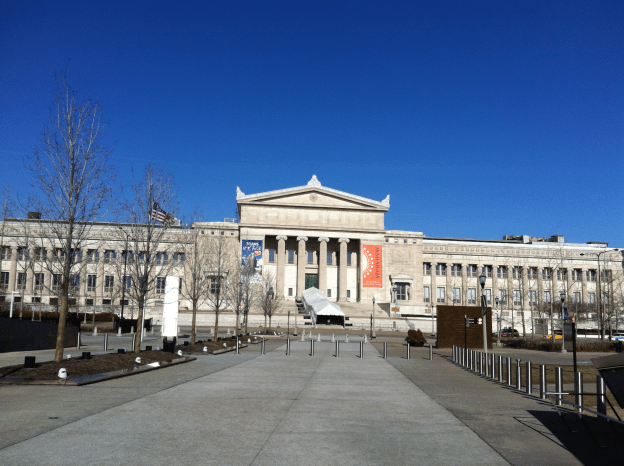
My favorite museums to visit are the ones I return to the most. From my youth, I loved wandering the halls of Chicago’s Field Museum and Art Institute most. In the acknowledgements of my dissertation, I will note that it was in the Field Museum as a small child that I first experienced wonder, and that that is where the passion, beauty, and joy that drives my career and my life today began. One of my last truly awe inspiring visits to the Art Institute was in January 2019 on the last day of the American Historical Association’s meeting at the Hilton on South Michigan Avenue. That afternoon as I wandered around the labyrinthine halls of the Art Institute, I was struck at how endearing I found the Early Republican galleries, rooms which previously I’d been frustrated by because I still have trouble finding my way out of them. I’ve returned to the Field Museum more in the following years both to wander the halls and to remember all the joyous times I’ve had in that building as a child, a teenager, and now an adult.

Here in Kansas City, my favorite museum by far is the Nelson-Atkins Museum of Art. When we first moved to Kansas City, 25 years ago this summer, my Dad took me to the Nelson in hopes of filling that role that the Field Museum had for me back in Chicago. As I grew and matured, I found myself returning to the Nelson more and more, seeing the same art each time sure, but more so appreciating the constancy of that art than anything else. In the last six years I’ve grown to love the Kansas City Zoo & Aquarium as well; perhaps the Zoo is a better equivalent locally to the Field Museum with its dominant focus on the natural world over anything else. I think of the Zoo like another sort of museum, a living and breathing museum situated in the expansive wooded grounds of Swope Park. One of my dreams is to contribute a museum to Kansas City, ideally a natural history museum where my own particular contribution would be in a History of Science gallery.

Elsewhere, during my year in London I fell in love with many of that city’s great museums. I became a member of the British Museum and would often walk there from class and spend my afternoons wandering and loving how much I could learn there. It was on these visits to the British Museum that I decided to do my doctorate in History or Classics; I settled on History as you know, though I ended up in the Renaissance in part because of my love for the Banqueting House on Whitehall and Hampton Court Palace, two expansive palaces now turned into museums by Historic Royal Palaces. Initially, I wanted to study Roman history and focus on how the concept of Roman citizenship expanded as the Republic’s and later Empire’s borders expanded outward from the City of Rome. Yet, I instead decided to settle in the Renaissance, a period that seemed to me to evoke some aspects of the idealized Rome that I thought of while still feeling closer to home. In London too I loved my visits to the Natural History Museum and Victoria & Albert Museum in South Kensington, two that I returned to on several occasions on this most recent, if brief, visit to the British capital in October.

The more I’ve traveled, the more museums I’ve visited. In many respects they fill certain roles which I set in my mind from early on depending on their focus. In Upstate New York, if I wanted to visit a natural history museum I would go to the Museum of the Earth in Ithaca or if I wanted to wander around an art museum for an afternoon, I’d go to the Rockwell Museum in Corning or the Everson Museum in Syracuse.

I’ve been fortunate to see so many of these places and experience the life we give them amid all the relics of our past. In more ways than I probably even recognize, these museums have inspired my career, and I hope that I may contribute a verse to their songs one day.


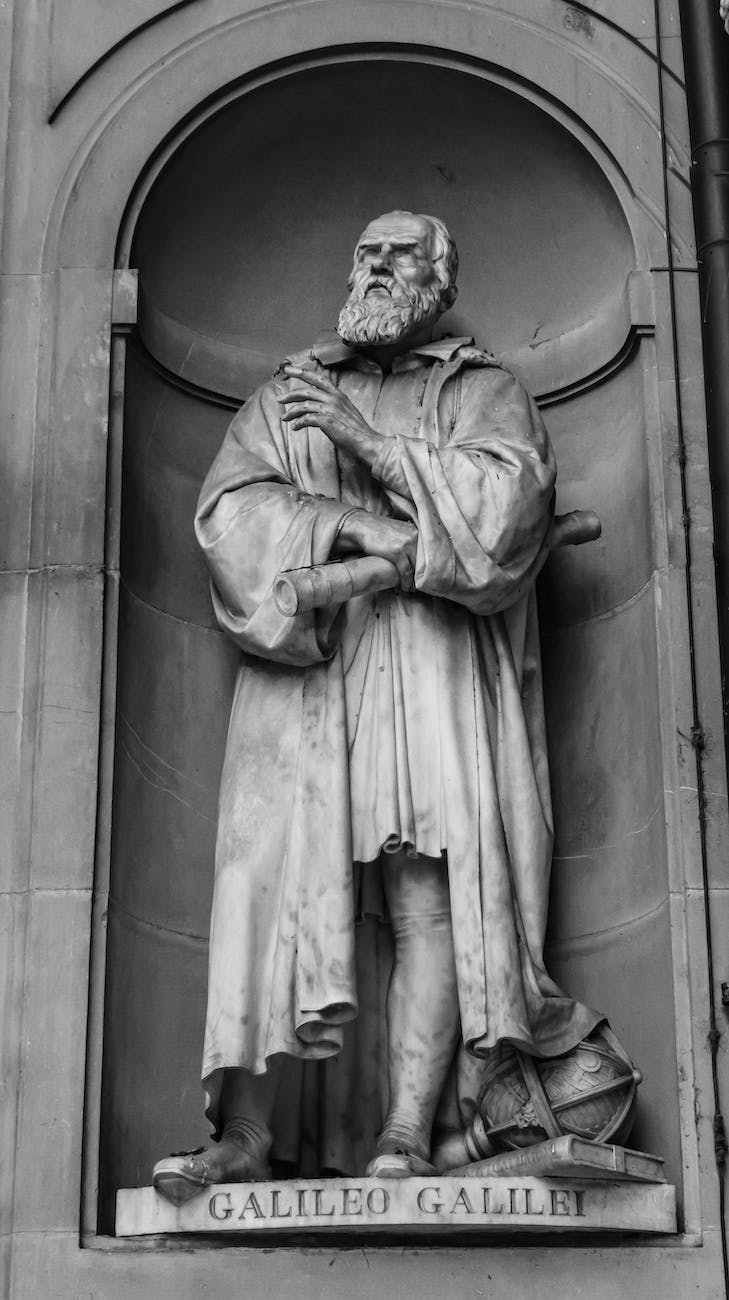
Galileo, Galileo

Photo by Juan Martin Lopez on Pexels.com

If there are any reasons why I find myself drawn to Galileo, this distant Italian astronomer who lived 400 years ago it’s that we have two things in common: we’re both stubborn and occasionally grumpy. I’ve known the basics of Galileo’s story for most of my life; he was an astronomer who was born in Florence and worked in the Venetian Republic at the University of Padua who was one of the first to use a telescope to look out into the night sky, making him the first to observe the Galilean moons of Jupiter, collectively named today for the man himself. His support of Copernicus’s heliocentric model––that the Earth revolves around the Sun––contributed to his falling out with the Papacy and his eventual arrest and trial by the Roman Inquisition who put him under house arrest for the last few decades of his life.

Of course, the real story isn’t quite that simple, after all many of his opponents agreed in principle with what he was arguing, they just didn’t like how he argued it. Still, Galileo’s contributions to science and to human knowledge of our cosmos overall are undeniable. In the last few weeks, I’ve thought about Galileo quite a bit as Jupiter has come the closest to Earth in its orbit for the first time in decades. I got a good look at Jupiter both through a telescope and with my own eyes on Friday night a few weeks ago up at the Kopernik Observatory and even was able to take a better-quality picture of it than I’ve gotten before with my phone.

Jupiter as seen with an iPhone camera on the 4th Friday in September at the Kopernik Observatory in Vestal, NY. Photo: Seán Kane.

I see in Galileo an inspiration of sorts because of the things he did. He was able to prove that the Moon wasn’t perfectly spherical by observing the shadows of the crater walls (what he called mountains) on the lunar surface. Using those shadows, the effects of the lunar geography, Galileo could prove the existence of something he otherwise wouldn’t have been able to see. It’s like how when it rains the best way to actually see the raindrops falling on your head is to look at them with a dark background like a tree or a darker-colored house. Otherwise, the water droplets will blend in with the ambient colors surrounding them. Likewise, we can see the Moon and the planets because it’s the light of our Sun shining on them that is reaching us here. The Moon doesn’t light itself up, nope, nor does the Earth, rather it’s the Sun that naturally does the job.

Here lies an interesting development in this story: the Sun lights up the Earth during the day, but the Earth is now still lit up at night. Only a few generations ago our ancestors figured out how to use electricity to light up our lives and turn the darkness of night into something new entirely. As long as I can remember I’ve been fascinated by this idea, that even at night some places are well lit. I wonder today if our cities might even be built with night in mind, if there’s more artistry in the architecture when the buildings are lit up by electricity rather than by the Sun’s rays? Certainly, we have more control over how our buildings are lit in this context rather than during the daytime. One of my favorite ways to experience a museum is after dark when all the lighting being done has been devised by an exhibit designer trying to control all aspects of how the exhibit is lit through their own lighting patterns. The British Museum does a really awe-inspiring job with lighting the Parthenon Marbles in such a way that their great shadows climb up the walls of their room making them seem even larger-than-life than they already are.

Still, in Galileo’s day before electric lighting they could see more of the night sky. It’s a sign of the world that we live in that it wasn’t until my 28th year that I actually saw the band of the Milky Way up in the night sky. Even in my youth growing up on the farm on the western edge of the Kansas City metro I never saw it. I think seeing the night sky in all its splendor gives us a chance to reconnect with our past before our industrialized modern world, to reconnect with the lights that illuminated our ancestor’s nights and memories. I’ve talked before here about how profound it seemed to me to be able to see light from Vega that had left that star when I was a child, well the same is true for seeing the same moons of Jupiter that Galileo first saw in 1610 from his telescope in Padua.

As winter approaches here in the Northern Hemisphere we’ll get to see a lot more of the night sky. The days are already here when the sun is setting in Binghamton during dinner time. The fall chill is in the air. It amazes me that October is already upon us, after all it feels like we were just in August; but then again, I probably say the same thing a few times every year. When I was little and first learning the names of the months in school, I remember being given worksheets that included pictures for each month to personify that time the better to remember it by. March was shown as a lion, April as a storm cloud, and May as a flower. In the Fall, September was a tree having reached its fullest bloom after the summer heat, and October was a collection of fallen leaves surrounding a Jack-o-Lantern.

I wonder how Galileo would’ve personified those months, or if he even would’ve thought of doing that? The month of my birth, December, is often associated with the beginning of the Holidays, in my tradition of Christmas specifically. Yet it’s also often thought of as the beginning of winter even though the worst of the winter cold and snows don’t come until January. Yet the seasons here in North America are different than those in Europe; in fact, I found that our months and seasons make more sense in Britain than they do in America where the weather changes at a more expected time than its fluctuations here in America allow. In my Midwestern home I’ve experienced Halloweens in the snow and Halloweens in summer conditions. In my year living in London though, admittedly now a heat island, when it got cold in October it stayed cold until March.

How different then is our world from Galileo’s? How much has our industry and development changed the world we live in? And how different will the world be at the end of this century from the world I knew as a child at the end of the last century? These are all questions I’m going to leave you with today.

Eschatology

Shoreditch, London – Well, the time has come. Just a wee bit less than a week ago I wrote about it being the dawn of the third week of my 2013 residency here in London, and the odd thing is that that little ferret called time just keeps slipping away. It’s like Tom and Jerry, no matter how far I chase after it, the mouse just slips from between my fingers.

Still, there are worse things in life, I mean it could really be the Eschaton, and then we’d all be in for it. But instead, it’s just the end of my time here in London with all these amazing new friends. And in some ways, it just doesn’t seem too terribly fair, more cruel in a way. To stick us all together for three weeks and then say, “Well, time’s up. Hope you all had a good time, and safe home.” It’s about as fair as the American education system is functional for setting up the next generation for a bright future (I’m looking at you, House Republicans…)

Of all the things that we have to go through in life, it’s the leave taking that’s the hardest for me. Perhaps that’s why I love history so much, and why I feel like my default grammatical tense is the past tense (yes, I’m a hopeless academic). Like one of my favourite fictional characters, the Doctor, I’m not very good at goodbyes. Still, sometimes they have to happen.

So, tonight is a farewell to all these new friends. True, we may have a reunion of sorts at some point, but at least for now it does seem quite terminal. Though at least we’re going out with a bang.

At 10.00, my friend Abby and I went to the British Library, which is near King’s Cross and St Pancras stations. There not only did we see the Magna Carta, but also handwritten notes of many great people, from Newton to John Lennon. There are some amazing works there, even an 11th Century copy (the oldest extant) of Beowulf, which thanks to a bit of study of Old English, I actually could read. One of the oldest manuscripts there was a Koine Greek codex edition of the Bible, which again thanks to Dr Stramara’s Intro to New Testament Greek, was also readable to my eye. However, sadly we couldn’t find the Babylonian cuineform copy of the Code of Hammurabi, which the Library does have in its collection, but wasn’t on display. To right this, both Abby and I got our very own British Library cards, but didn’t have enough time to use them. I was due at the British Museum, and she had business elsewhere to attend to as well.

I took the tube from King’s Cross to Holborn, and walked first to the O2 shop on High Holborn to sort out my mobile. It turns out that I actually bought the phone and the sim card, so they are now mine to keep. So, I guess I’ll just have two mobile numbers, one with a +1 and another with a +44 country codes.

After stopping off with my British telephone provider, don’t worry Dad I’m sticking with AT&T when in the States, I made the short walk through Bloomsbury, where someday I’d love to live, to the British Museum. My ticket for the Life and Death: Pompeii and Herculaneum was timed for 13.50, so seeing as it was 12.00, I had some time to kill, in a truly Tom and Jerry fashion. This was done by strolling through the Ancient Near East, Classical, Egyptian, and Japanese galleries before making my way down the stairway along the outside of the Reading Room (where the Pompeii exhibit is currently housed), when a rather loud bell started to ring all around me. I began to wonder just what was happening, at first thinking it was an alert for the people going into Pompeii at 13.30, but when I saw the security guards rushing to and fro with whistles blowing in their mouths, waving people towards the main entrance, I knew that something was rather amiss. I evacuated the museum calmly, figuring that if there was a bomb and it was to go off at anytime I’d rather be quite close to it or quite far from it, only stopping once I was at the far side of the North Colonnade standing in the shade with a few other people. For a while there was no news of what was happening, until the Fire Brigade showed up and began to search the massive building. After about 20 minutes we were all free to return to our favourite mummies and statues of long dead Greeks.

I made it as quickly as possible to the Pompeii entrance, considering that it was now 13.55, and my ticket was for 13.50. Thankfully, they let me through and into the exhibit. For the sake of the exhibit, and to help the British Museum with sales, all I will say about Pompeii is this: it was quite well done, and quite thorough. I left that exhibit at around 14.40, and ran to the tube station to once again meet Abby outside our hall.

We had a planned excursion from Central London to the world of green leafy suburbs. Our first stop was a nice house, 20 Maresfield Gardens in Hampstead. The house hadn’t changed all that much since its most famous owner and occupant had died in September 1939. That occupant, who died in the front room, where I did have a rather odd feeling, was a refugee from then Nazi controlled Austria. He and his family escaped to London via Paris, where they resettled, and where many of their descendants remain to this day. This fellow was none other than Dr Sigmund Freud, the father of psychoanalysis. The house was quite nice, and it did feel like Abby and I were house guests, personal visitors of the Freud family. Though there was a good deal of humour in the air (they sold Freud ducks in the gift shop).

After leaving the Freud’s to their peace, we walked back to Finchley Road tube and headed two stops south to St John’s Wood, where many a music lover journeys to on pilgrimage. This stop was none other than the beginning of a walk that led to the most famous zebra crossing in music history. It’s a bane for drivers, but a bloody good time for Beatles fans to get their photo taken crossing the zebra crosswalk at Abbey Road Studios, but oddly enough it’s still a public street! Abby and I didn’t actually get our photo on the crosswalk, but we did go and sign the fence outside the studio.

We then got back onto the tube, and found our way down to Earl’s Court, where a police box was standing just outside the station. It took us a few times passing it to actually see it though. But a quite nice German couple took our photo with it. For those of you who think I’m mad at wanting my photo with a police box, just watch Doctor Who on the BBC, PBS, or  Netflix.

After a long tube journey, we at last made it back home. A sort of farewell dinner began soon there after, comprising of pizzas from the nearby Pakistani owned Great American Pizza restaurant, and a lot of good conversation. So now, it’s to bid you all ado, as I have much still to do if I’m going to be ready to be out by 7.30 tomorrow morning for the hour plus tube journey to Heathrow.

I’ve really enjoyed London, and will be back in two years. Yes, I’m looking at, and with prior advice from a CLC-mate, will be going to graduate school here in London.

Learning in London – A Living, Urban Classroom

Image

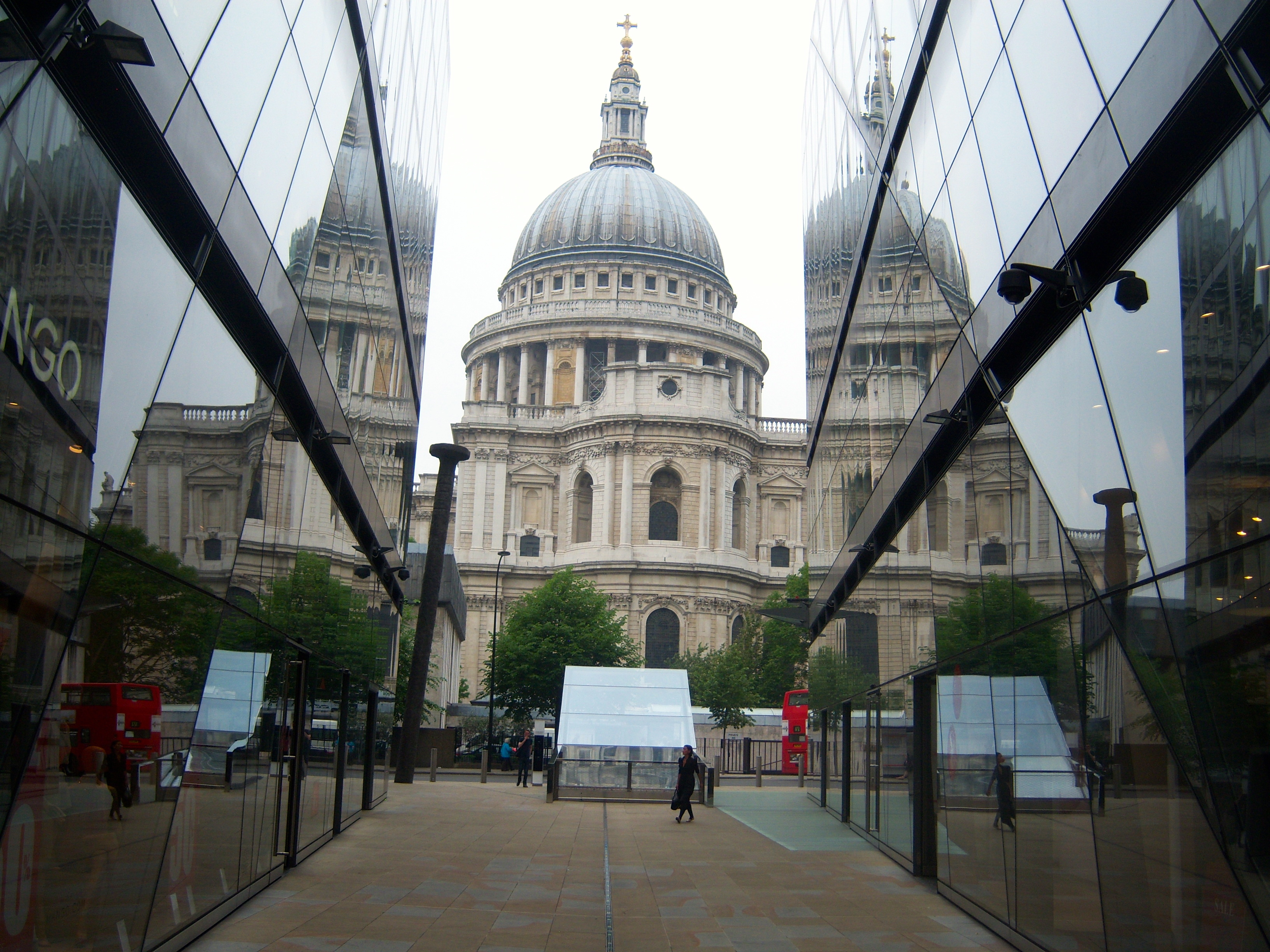
St Paul’s reflected by the face of One New Change.

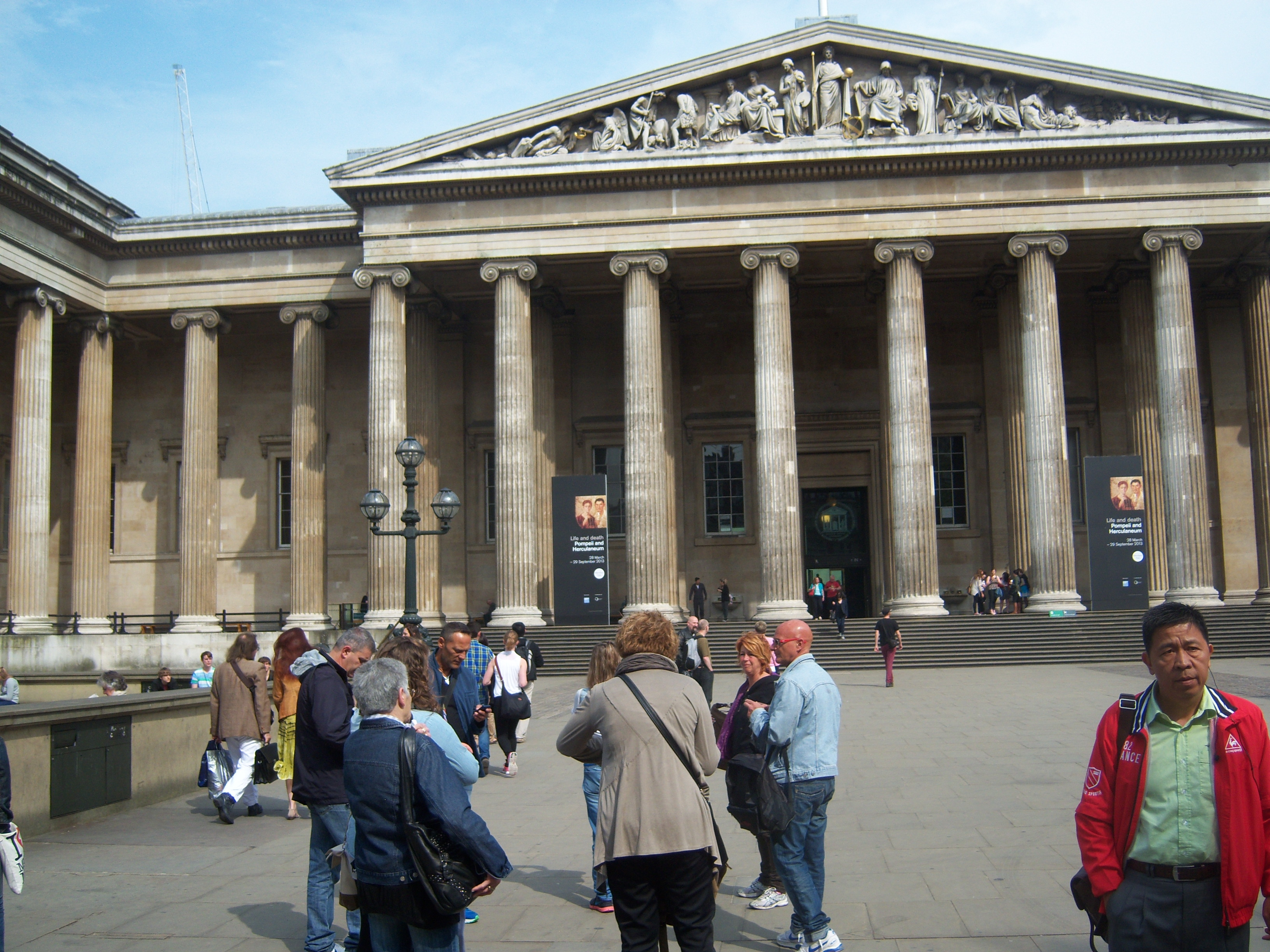
Shoreditch, London – If I ever wanted to study history, there are few cities in the world that are greater places to do so than here. Not only is my class studying the history of London in London, but we’re doing it by going around and actually seeing the history and how the present is presenting and re-presenting it through museums, galleries, plaques, and monuments. So far, this is the best way I’ve found to learn the history of a place, because it cuts out the Prof. Binns effect to use a Harry Potter reference, in that the class can just be a boring list of names, dates, and battles. Not that I’ve actually had such a class thus far in my academic career, of course. However, the class I’m in right now is by far at the extreme opposite end of the spectrum from such a Binns class. After all, how many history classes have you taken where your classroom for the day is the British Museum, or where your main project is to find something in the history of London that could be better represented or needs to be told in the first place.

Image

“…how many history classes have you taken where your classroom for the day is the British Museum…”

My paper and presentation is going to be on how the linguistic history of London could be better represented in the Museum of London. In particular, I’m going to be looking at how the languages and cultures of the past, whether Celtic, Roman, Saxon, Norman, Medieval, Tudor, or the more recent generations, impacted the landscape and life of London today. You can see the impact greatly in toponymy. For example, in London one can find a tremendous amount of Anglo-Saxon street and borough names, such as Aldgate, Cheapside, and Smithfield.

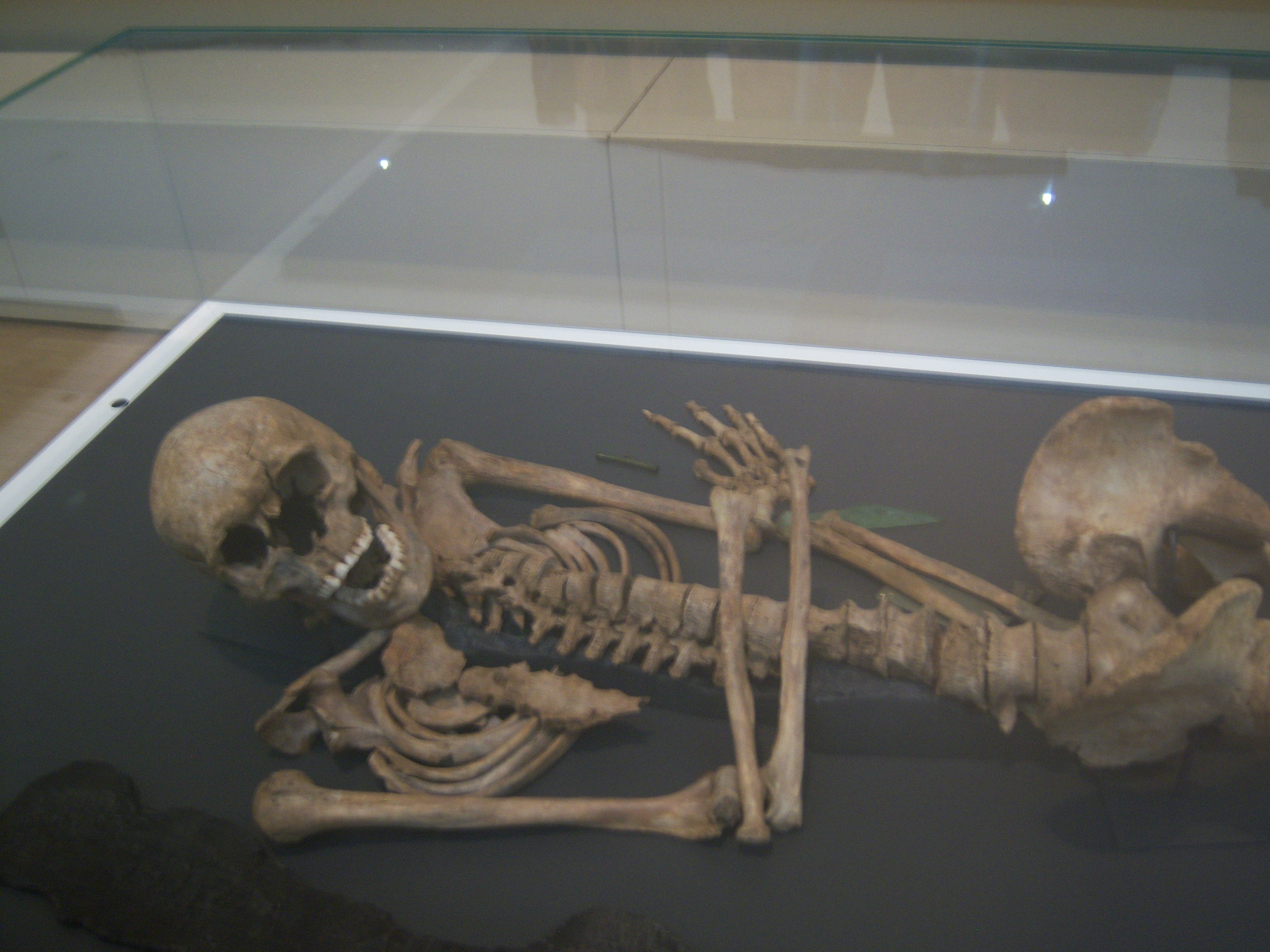
My first full day of class was at the British Museum. We spent the day wandering through it, first looking at how the museum told the story of humanity, and then in particular how it told the story of Britain. There were somethings in the museum that I found really interesting and exciting, particularly in the British sections, such as the Barnack Burial, which is a skeleton of a man who died between 2330 BC and 2310 BC. (Source: British Museum). The crazy thing about it is that when I thought about it, I realised that because he was a pre-Roman Briton (the ancestors more so of the modern Welsh than English), this skeleton is probably one of my ancestors. That realisation made the experience more personal, and much cooler for me.

Image

“…this skeleton is probably one of my ancestors.”

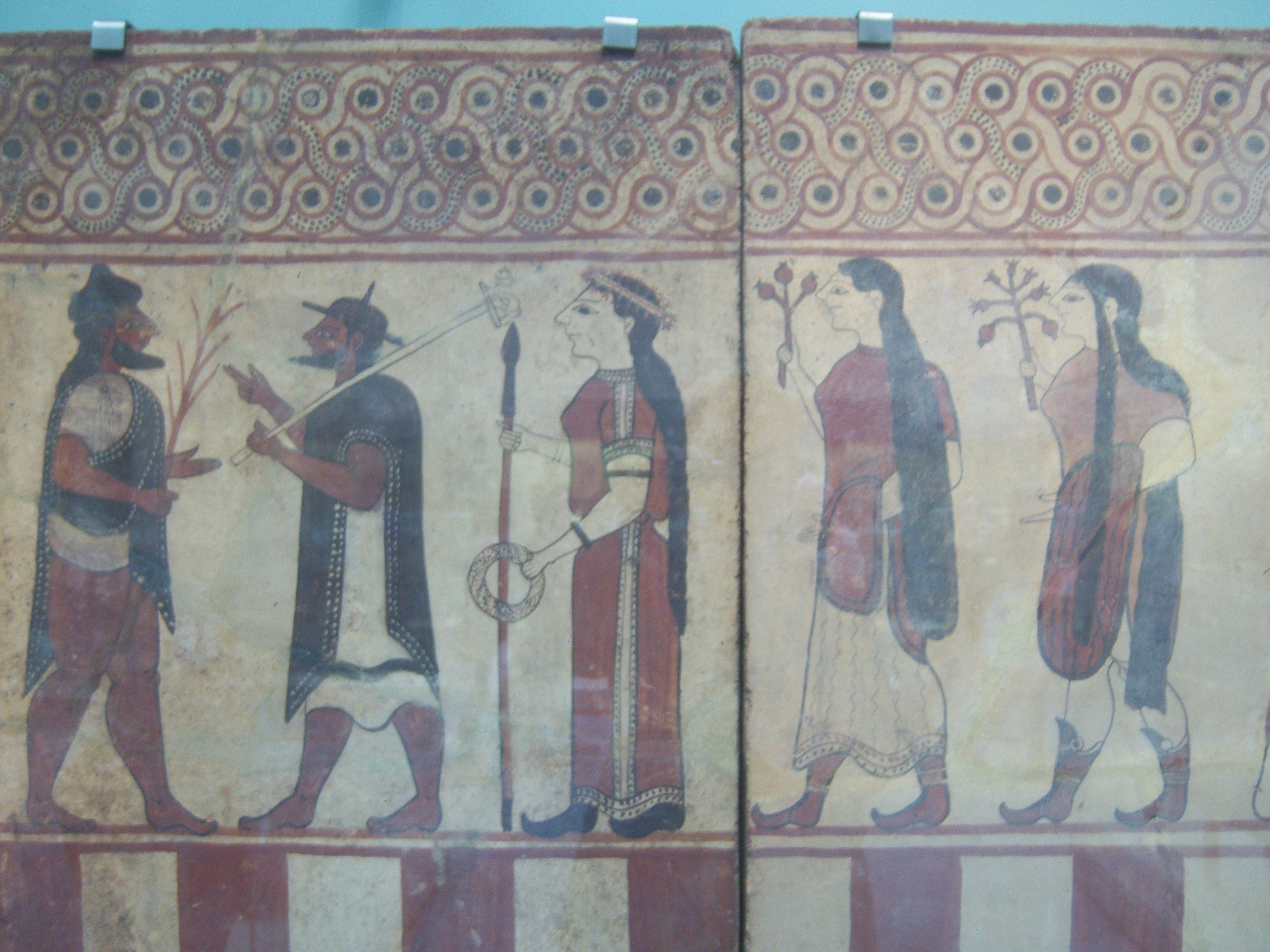
One area that I am most interested in, as can be seen by my mention of the aforementioned skeletal man, is in the peoples who came before the great civilisations and empires of Antiquity. Two such peoples are the Etruscans of Italy and the Minoans of Crete. The British Museum has a collection of Etruscan artefacts, which were a delight to see, as I don’t get to see much save Rome in Kansas City. Among them was a wall painting showing your normal Etruscans from the height of their civilisation. A lot of these ancient things are so eerie because I think about how when they were first made, that culture was probably not unlike our own in that it seemed stable, and ready to continue on into the future. But, they are no longer around, just as one day we will most probably not be around as well.

Image

“…that culture was probably not unlike our own…”

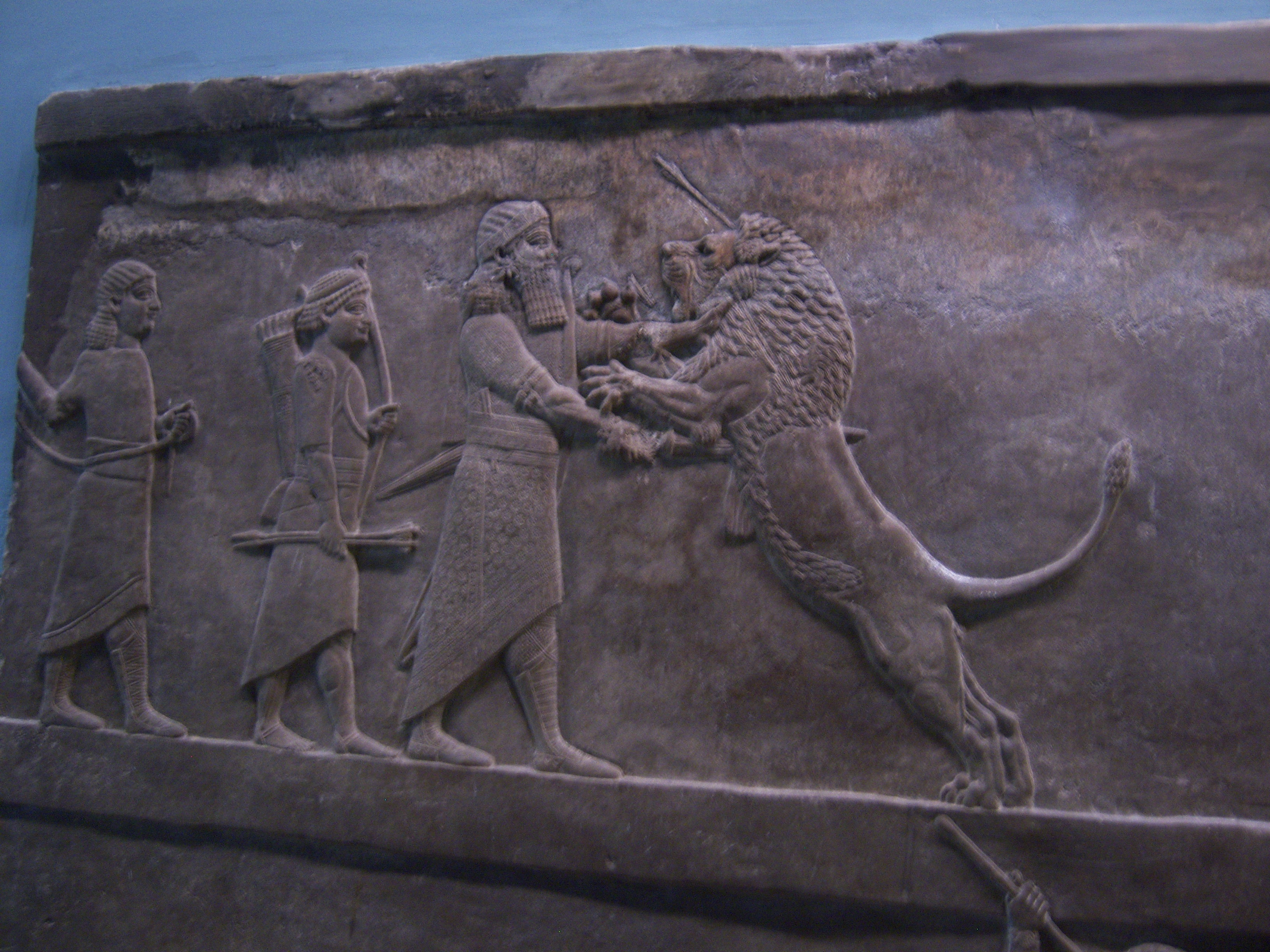
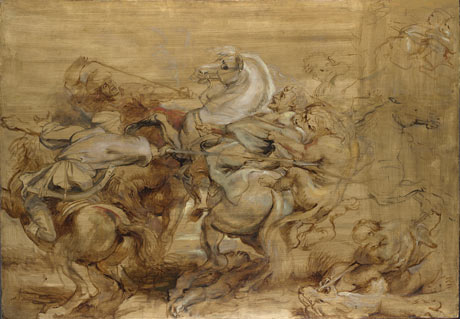
Another interesting thing that caught my eye was the Assyrian collection. Being a lover of Gilgamesh, I had to take a look at this section of the museum, which was as it should be: astounding. Again in the artefacts that we leave behind, the future can learn more about lost civilisations and cultures. So too, in things such as a wall carving of an Assyrian king wrestling and stabbing a lion, we are shown a particular image of their society, and the power of their kings, that could or could not be unlike our own. I had a good laugh later in the day when at the National Portrait Gallery, I came across a Reubens depiction of a Lion Hunt.

Image

An Assyrian King stabs a lion whilst throttling it.

Image

Peter Paul Rubens, A Lion Hunt, about 1614-15.

The thing to keep in mind is that despite the passage of time, the changing of language and culture from one to another, we always remain human. Just as a king in the 16th Century BC may have a fascination with hunting lions, to show his own power and prowess, so too a 17th Century painter would use that same image to depict the greatness of his subject. After all, what is the symbol of English Football than the 3 Lions of England? This is one of the great things about history that I love so much, that we learn so much about ourselves and our culture when we study others. In London, one can see this more so than perhaps in other cities. Here in the courtyard of the London Guildhall, one can see architecture from every period in the City’s 2000 year history from the Roman amphitheatre under one’s feet to the late 20th century buildings on of the Guildhall’s West Wing. This is truly a great place to study history, one of, if not the greatest there is. I am looking forward to next week’s class, as we continue on our walks through London, learning about the past, and how the present depicts it, while keeping a watchful eye on how the future may depict us when we too become the past.