Tag Archives: Brussels

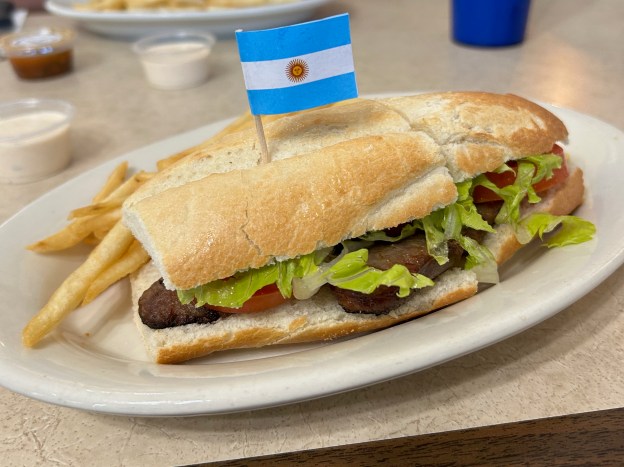
A choripán sandwich from Los Hornos Argentinian Flavors in Kansas City, Missouri photographed by the author just before it was eaten by the same.

On Language Acquisition

On Language Acquisition Wednesday Blog by Seán Thomas Kane

This week, how living in a culture is required to speak a language in depth.—Click here to support the Wednesday Blog: https://www.patreon.com/sthosdkane—Sources: [1] “A Letter from San Juan,” Wednesday Blog 3.29.[2] “The North American Tour,” Wednesday Blog 5.34.


This week, how living in a culture is required to speak a language in depth.


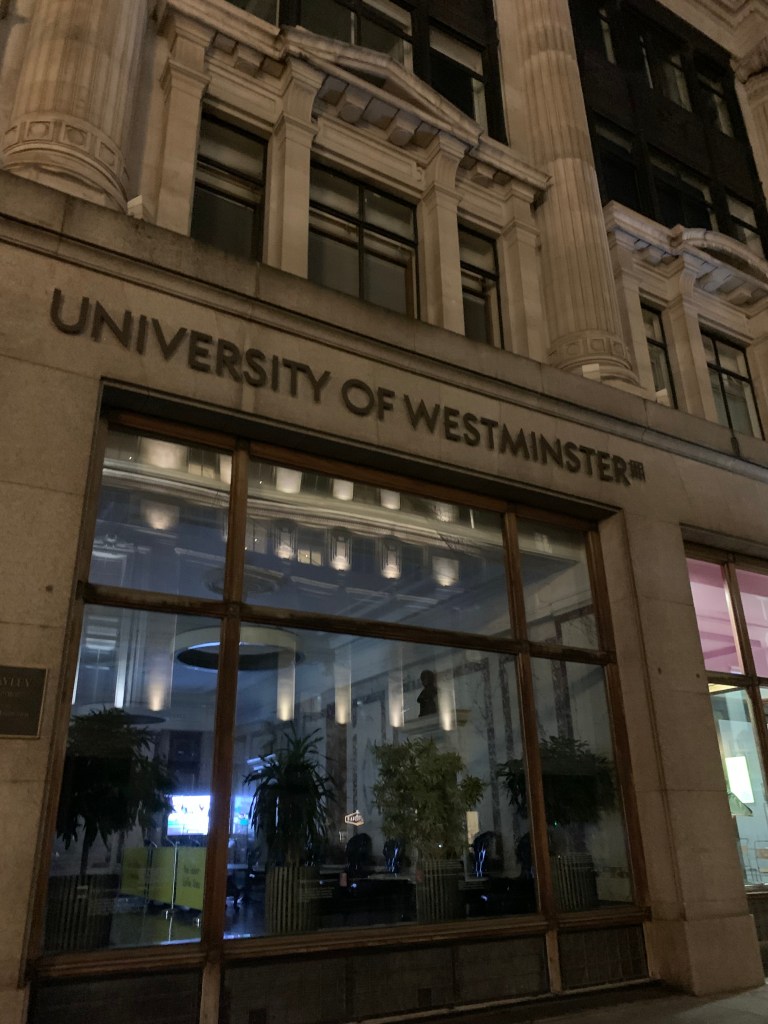
The languages which I speak are directly responsible for the ways my life has turned, its winding path a result of the words I use and the ideas they represent. Language is the voice of culture; it evokes the rich harmony of thought that comes from seeing things from certain points of view. At the University of Westminster, I was regularly in classes where there were maybe 10 or 20 languages spoken between each of the students, if not more. English remained our common language and the language of instruction, yet how many of us must have been switching between English and their own native language as they thought about the readings and topics in political philosophy and science which we discussed on a given day? Even then, my English is not the same as the King’s English, nor is it the same as the English I heard spoken when I drove through Alabama in July 2022. Language then reflects our individual circumstances of experience. Knowledge is gained through experience first and foremost, whether that experience be theoretical through books or practical through lived experience. I make this distinction because I often feel that when I’m reading a particularly well written book that I can actually imagine the characters as real people who I might meet in my life. The best TV shows and films are like that, their casts that we see regularly begin to seem like old friends who we look forward to visiting again and again.

Language acquisition is a lot like this for me. Today, I speak three languages: English, Irish, and French, and I can read Latin, Italian, Catalan, Spanish, and Portuguese and some Ancient Greek. I break my languages down into these two categories by their utility in my life. The handful which I can read are those which I’ve worked with in my historical capacity. I’ve spoken Italian and Spanish from time to time, yet those moments of elocution are few and far between. The same could be said for my German, though it’s now been five years since I last spoke that language in Munich, and at time of writing I can’t say that I’d be much use in remembering it today. This is even more true for my Mandarin, a language which I studied for a semester in between my two master’s degrees out of pure curiosity. I can remember the pronouns, a couple of verbs, and a noun or two but that’s about it. All this to say that I may know something about German and Mandarin yet it’s little more than a foundation for the future when I might be faced with a desire or need to learn the language properly.

I’ve been thinking lately that of any of these I need to work most on my Spanish, the most useful of these languages for me to speak here in the United States. I can understand Spanish fine yet speaking it remains a challenge. On Sunday evening after my shift I decided to reopen the Spanish course on the app Busuu––one which I used for Spanish before my March 2023 trip to the Renaissance Society of America’s annual meeting in San Juan, Puerto Rico––and try it out again.[1] That time I got through the A1 level before life got in the way, and I gave it up feeling frustrated with the process. I did not resume any online Spanish courses before my trip to Mexico last November for the History of Science Society meeting in Mérida, instead choosing the less preparatory method of winging it.[2] That worked with fits and spurts, my best Spanish conversations were in taxis with locals, though I was mostly thinking about how I would say things in French and then Hispanifying them based on my minimal knowledge of Spanish grammar. On Sunday, after I retired for the evening from my Spanish lessons on the app I realized what it was I missed so much in these apps: the human connection. Busuu prides itself on its crowd-sourced learning method; throughout the course learners are asked to submit spoken or written answers to the computer’s prompts which learners of other languages who speak the target language then correct. I like this system overall, and it does give this sense of community, yet I feel that it could go further.

After English, the second language I learned was Irish, my ancestral language. I started studying the Irish language when I was fourteen and have been focused on it to varying degrees for the last eighteen years. It really took until 2022 for me to connect with the language though, in spite of the fitful starts and stops because in that year I began to build a community around the Irish language. First on Zoom through Gaelchultúr, an Irish language school in Dublin, I met other speakers from across North America and beyond who like me were descendants of Irish immigrants old and new. I looked forward to seeing some of the same people term after term. Yet after returning to Kansas City, I began to look locally for Irish classes and came across the community that my friend Erin Hartnett has built at the Kansas City Irish Center. Through Erin I’ve met some really good friends and from our mutual appreciation for our ancestral language we’ve found a lot more in common from mutual histories to mutual appreciations for rugby. Without this community I would speak Irish but not terribly well. Now, not only do I speak Irish daily, but I also write in Irish every day. It has truly surpassed French as my second language, something I’m proud of yet not too concerned about when it comes to my Francophonic abilities.

French exists in a different sort of place for me than Irish. It’s not an ancestral language with deep family ties. Rather, it’s a language that I gravitated toward out of a fascination with French culture and history. I may have written here in the Wednesday Blog before that my first exposure to French came at sunset on a Sunday in February 2001 when my Mom put a “Learn French” cassette tape into the tape player in our family car when we were driving through the hills of northwestern Illinois toward Dubuque, Iowa. She and I were preparing for a trip to London and Paris that summer, the first European trip that I could remember, and she wanted to put in the effort for us to have some French before we arrived on the Eurostar from Waterloo Station at Paris-Gare du Nord. I didn’t like Paris much on that first visit, I found the language barrier to be too great for me to really feel a sense of connection with the place. On my next visit to France in March 2016 with three years of undergraduate French under my belt I found that I not only got the place more, but I appreciated the nuances of French culture more than I had as a child.

I owe a great deal to my undergraduate French professors M. Kathleen Madigan and Claudine Evans. It’s through their classes that I gravitated toward my career studying the French Renaissance. When I get asked why I chose to study the French I keep it simple and say it was a matter of pure convenience: I already spoke French, so I wouldn’t need to learn a new language (Spanish or Portuguese) to read my primary sources. That’s how I ended up studying André Thevet (1516–1590). I chose him because he happened to write about a sloth and for me the idea of being a sloth historian made me laugh. It’s as simple as that. I loved studying French in college, and even more teaching it with the online Beginner French course I built for the Barstow School in 2023 and 2024. I found that going through the same textbook I used a decade before I was not only teaching the students who in the future would go through my course, I was also renewing my own French education and learning things that I’d missed on my first go around. This is a critical point in language acquisition: few people are going to get a language on their first try, it’ll take multiple goes to understand what’s being said and to make oneself heard as well. It took me three tries to get Irish down, and the same is the case for Latin. Failure in the moment is merely a setback which can, and ought to be overcome in future endeavors. After all, remember that if we’re paying attention to our lives we’ll learn from our experiences.

I grew to really embrace a lot about the Francophonie to the point of paying Sling TV for access to TV5 Monde, France’s global TV channel which now broadcasts several different channels. I personally enjoy TV5 Monde Style, which tends to broadcast documentaries and cooking shows, though I don’t watch it as much as I might like. I read a lot of French books for my research, after all I work with source material that has largely only been written about in French and to a lesser extent in Portuguese. I am able to do what I do with those sources because I can read them and the secondary literature about them in French. All this made it all the easier for me to go to France and Belgium in the last several years and be able to switch from English to French as soon as I walked off the plane. I found when I was flying back to the United States in June 2024 after spending about a week speaking mostly French in Paris that I was consistently responding with the quick phrases “please, thank you, you’re welcome,” and the like bilingually with the French followed by the English as I’d heard so many people do in shops and the museums during that visit. It took me a while to get past doing this and just say things in English again after I returned.This then is why I think I’ve had so much trouble with learning Spanish. It’s the first language that I’ve given a big effort to learning outside of a classroom on my own. At least in the classroom you have fellow students around you to practice with. When you’re on your own you’re on your own, a wise-sounding craic which is to say that when alone you have no one else to talk with. I have friends here in Kansas City who speak Spanish, and I know all I have to do is ask, yet it’s finding the free time to sit down with them and work on it that I need to figure out. To truly gain a footing in a language one needs to immerse oneself in the culture. Apps and online learning will only take you so far. A classroom learner will blend into their own classroom idiolect of the language in that particular space where it exists in their life. Only if they move beyond classroom and begin to converse and live with people in places where that language is spoken will they begin to speak it in a manner which is more recognizable to native speakers.


[1] “A Letter from San Juan,” Wednesday Blog 3.29.

[2] “The North American Tour,” Wednesday Blog 5.34.

A Return

This week on the Wednesday Blog, some words about a trip just completed. — Click here to support the Wednesday Blog: https://www.patreon.com/sthosdkane

This week on the Wednesday Blog, some words about a trip just completed.


My world is one of open borders, the international scholarly republic of letters, and friends far and wide in this country and across the oceans. All of that shook to its core in 2020 when those borders closed, and friends grew apart with the pandemic we all experienced. I attempted to keep my life going in 2020, in those last few weeks before COVID-19 changed everything with a quick trip to Munich to see some university friends. Thereafter, for the last three years I kept to our own shores. A part of my wariness to travel far was a lingering worry that those borders could close again, that as I feared in 2020 so too even now there was a chance of getting stuck far from home.

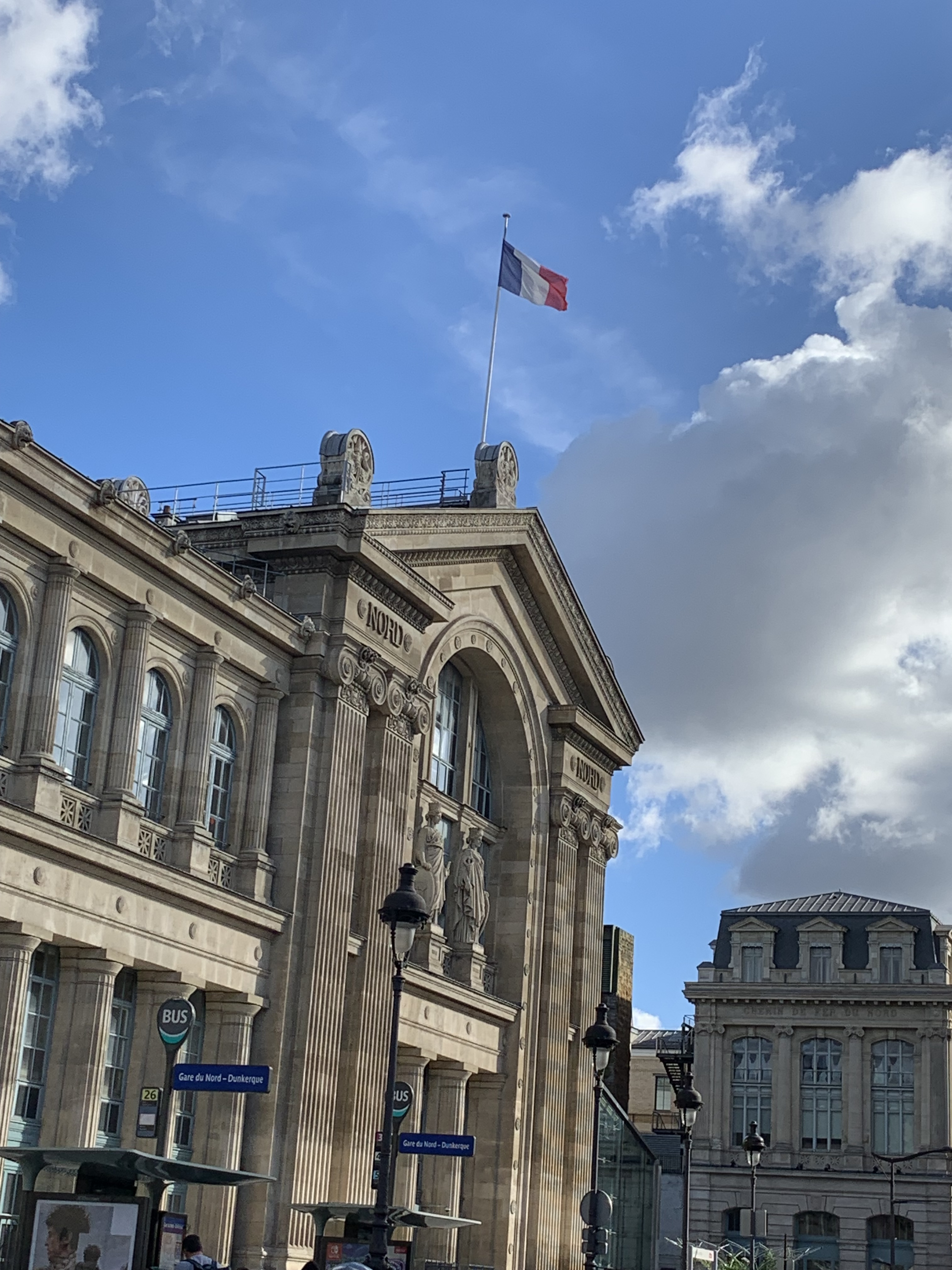
Paris Gare du Nord

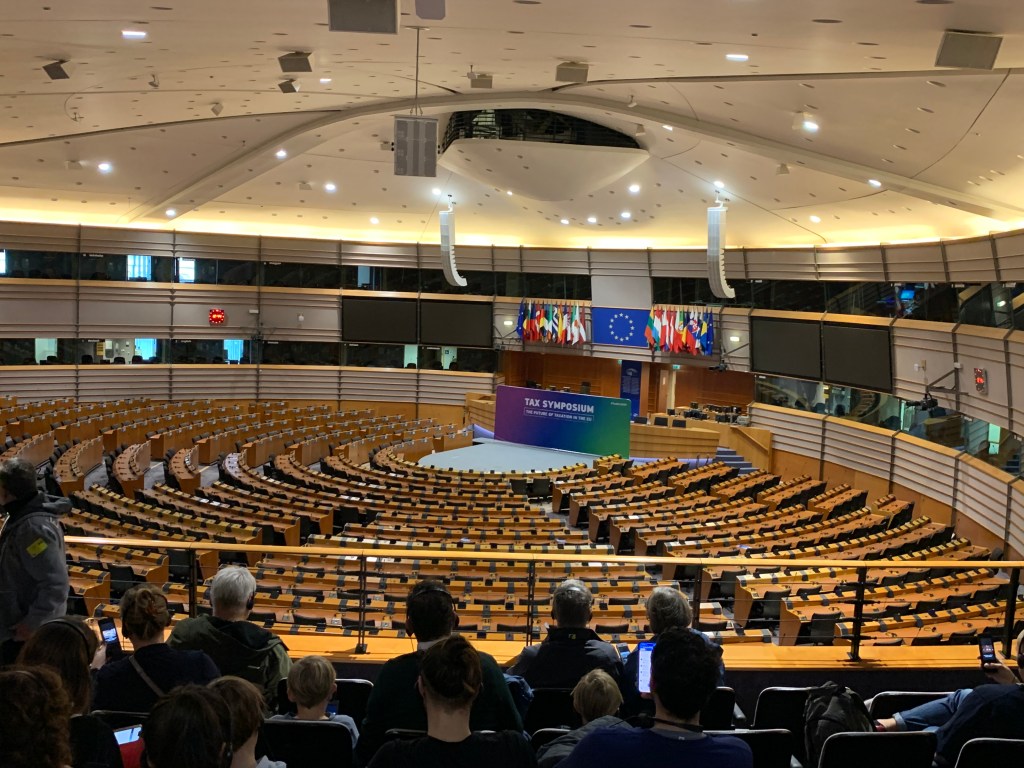
Over the last two weeks of October, I saw past that worry and made a joyous return to Europe, visiting Brussels, Paris, and London not just as an American tourist but as a historian hoping to realize dreams of walking the same streets as the humanists whom I study who lived at the end of the Renaissance 450 years ago. I arrived in Brussels on Sunday the 15th with an ease and lack of concern for doing or seeing everything I wanted to that betrayed a confidence that I’d return again in the future. And as I write this, I’m continuing with the research that will guide me back to Paris again. 

In the stress and emotions of my daily life, I’ve learned to embrace the quiet moments, in which the sonorous radiance of the most joyous resurrections can be heard. That silence makes a return to places so close to my heart as wonderous as hearing Mahler’s great Resurrection Symphony in person. Why limit myself with worry when there’s an entire world out there to experience?

One performance of the Resurrection Symphony that I enjoyed recently.

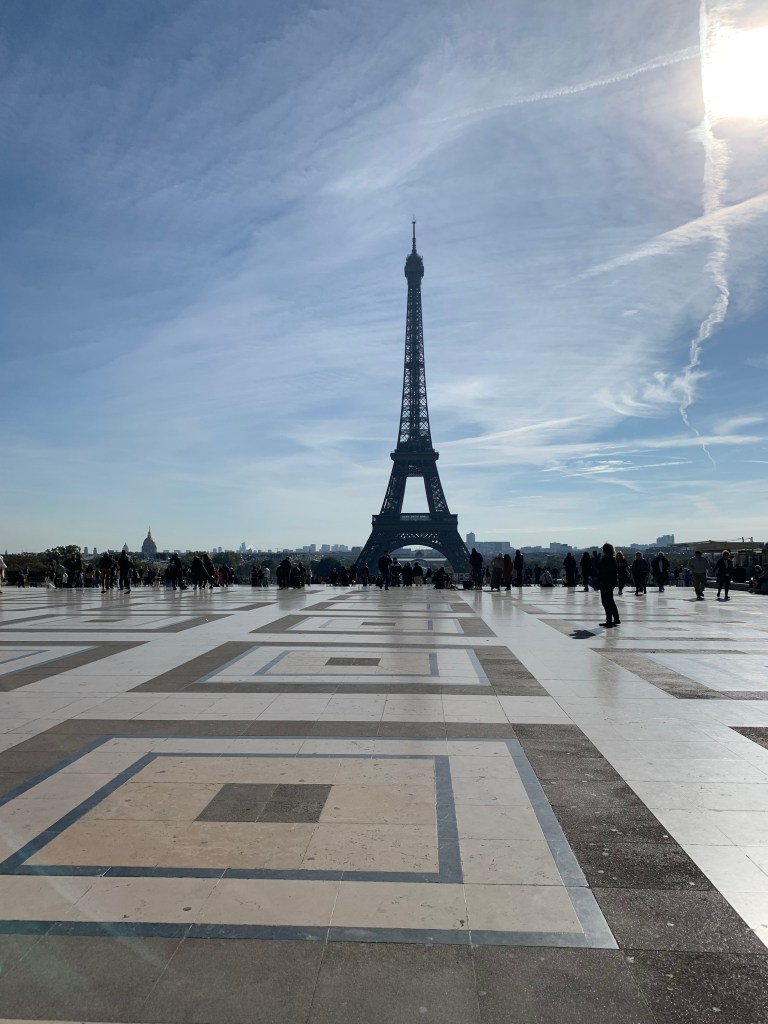
On this trip I found my favorite thing to do was to walk around and experience the city I was in. I did this most in Paris, when I arrived there around mid-day on Sunday, 15 October I ended up walking from Gare du Nord all the way to Notre-Dame, via Place de la République, the Marché Bastille, the Canal Saint-Martin, and Île Saint-Louis. The route took me about 6.4 km (3.7 miles) and lasted from around 11:30 until close to 14:30 when I descended into the Métro to make my way to the studio apartment I’d rented near the old Bastille. I loved returning to Paris in all its busyness, its sights, sounds, yes even smells. I was agog walking through the Marché Bastille and seeing whole fish lying on ice in the seafood stalls, there was even a shark with an apple in its mouth. If I lived in a place like this, I’d be sure to visit an open-air market every so often, if only for the experience of life that it offers. This entire walk, all 6.4 km of it, was done with a heavy backpack hoisted behind me as I didn’t think to look at Gare du Nord for the luggage lockers in the basement; use those, dear reader, if you have a long delay between arriving in a city and checking into your lodgings if the place where you’re staying doesn’t have a luggage room.

All in all, I walked 197 km (122 miles) on this trip across all 15 days. My feet are still sore, and my shoes need new insoles, yet I’d gladly do it again. Life on foot out in the open is much more personal than life behind the wheel of a car traveling at speeds at least 3 times my average walking pace. Whether in Paris, Brussels, or London, I took time to enjoy my surroundings, and to live as much in the moment as I could.

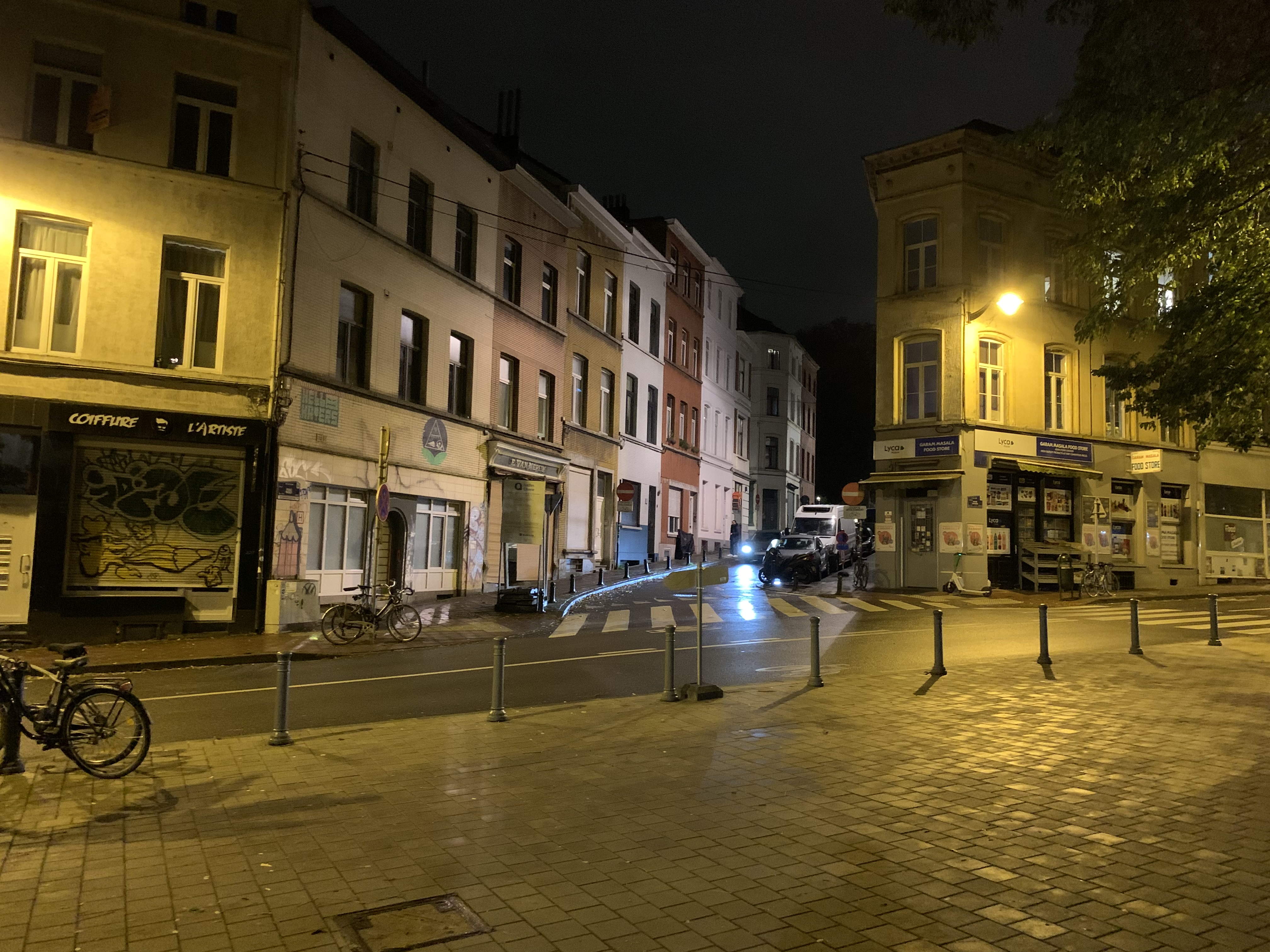
I found Brussels to be gloomier, the Belgian capital felt tired and like Paris well lived in. I was staying near the European Quarter in Ixelles, to the east of the city center and on my frequent walks back to my lodgings after dark I’d remark on how low the horizon felt walking those streets. Unlike many other cities I’ve visited, the high apartment buildings seemed to block off the lowest reaches of the night sky and the overhead glow of the city lights which illuminated the streets shaded my eyes from seeing up towards the heavens. It was like some of the stories I remember seeing as a child, stories told on the screen which were set in this sort of world where the mysteries of the skies above are darkened by a radiant yet feeble attempt at letting there be new light which makes the world all seem smaller and more confined. Far from utopian, for this light tells me I am somewhere, it still left me wanting for more and grander visions of the Cosmos far from those streets.

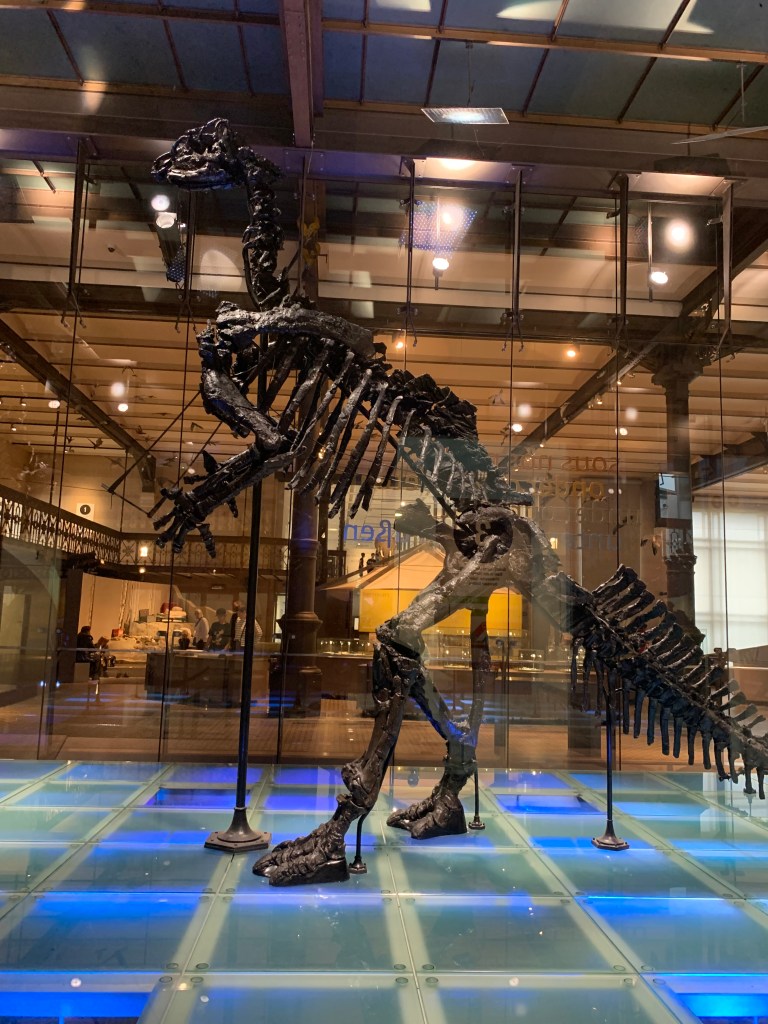
A junction in Ixelles from the steps of the Museum of Natural Sciences.

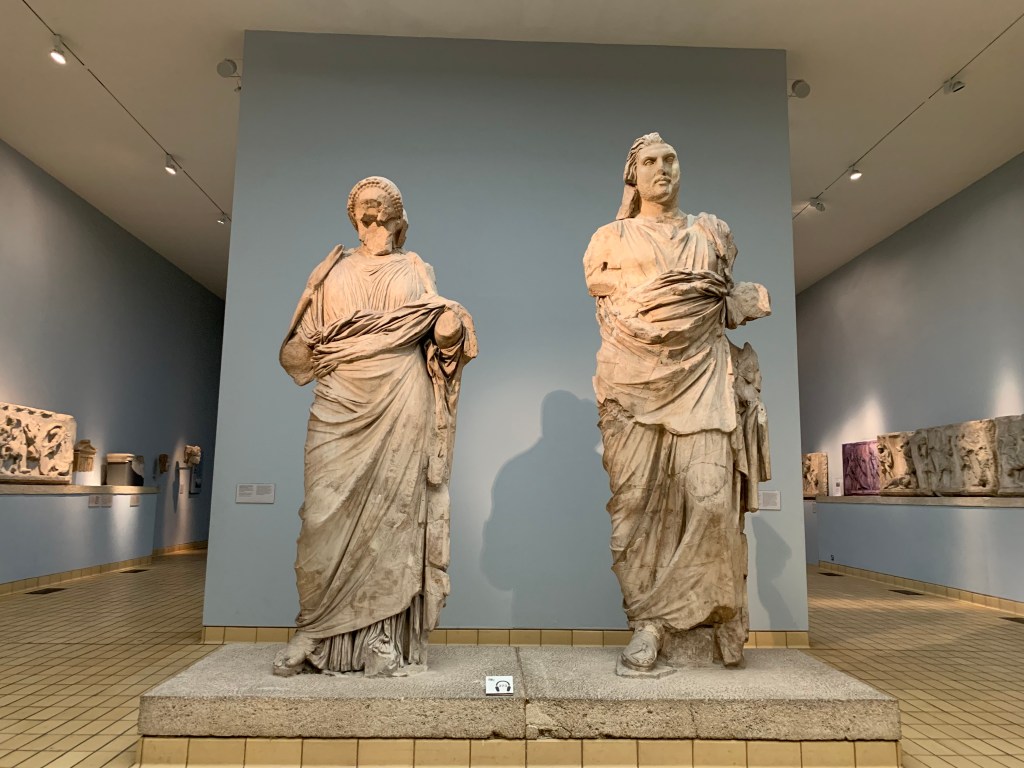
Returning to London felt as though I was returning to a long lost home. I strolled down the platform at St Pancras when I arrived beaming a broad smile after days unsure what I’d find or think arriving in that city. I soon found my way around the capital with ease, much of what I’d known during my life there in the middle of the last decade was as it had been. I returned to most of my old favorite places––the museums, the streets & squares of Fitzrovia, Bloomsbury, and Mayfair––and to the place where I once lived on Minories just beyond the old city walls. On my last evening there I sat for a while in the garden behind my old flat, the one my window looked out onto, and thought about all that had happened since last I was there.

I returned to Europe a different person from who I was when last I crossed the Atlantic. The Pandemic and my years of doctoral study shaped my youthful optimism just as it sculpted my ever-receding hairline. I returned to Europe less worried about losing something I had in the present and more appreciative of that moment I was in, of the places I was walking, the people I was seeing, whether for the first time ever or for the first time in years, and still hopeful that one day again I will return to these places. I do hope it’ll be sooner, whether just to visit or to live remains to be seen.

As much as this trip felt like a return to a life I once knew well, it also felt different from my past when I lived across the water because I’m a different person now. If any experience in my life could feel like a “return to normalcy” to quote Warren G. Harding’s campaign slogan of 1920 it would’ve been this; yet there is no real returning to an old normal, for we are never the same. I felt this when I returned to Kansas City after living in Europe; I was gone for just under a year, yet it felt like I had missed so much. Some things remain yet eventually all things must change. For the first time in my life, I’m happy to accept that, and to embrace that change as a good friend.


The Dawn of Summer

What follows is an excerpt from my upcoming travelogue, whose working title is The Great American Basset Hound. No basset hounds were harmed, or have even at this point been involved in the writing of this excerpt, or indeed any other part of the upcoming volume. Enjoy!

                   -Seán Kane.

Friday 8 April 2016 came about two hours later than the previous day, as my alarm was set for the much more leisurely hour of eight rather than its far more rushed predecessor of six. I breakfasted with Kristiina in the empty hotel dining room, as the majority of our group had already left for their first meeting of the day at the International Crisis Group. Kristiina had chosen to not attend that particular talk, as she wanted to get some rest and get the most out of the main event of the day, a visit to the European Parliament. We had a quiet breakfast of waffles, frankfurters, and croissants, passing the time with small talk, the very nature of which seemed to be our way of avoiding thinking about our respective journeys that day: hers to London in the afternoon and mine to Annecy just before eleven.

I had everything well planned, and at the chosen time was ready to leave our hotel at Place de Sainte-Catherine for the journey across Brussels to Zuidstation/Gare du Midi. At around 09:45 I said goodbye to Kristiina, turned in my room key, and headed out the door, pulling my suitcase with briefcase mounted atop behind me, as the cobblestones did not work well with all four wheels. I felt a sense of excitement, a sense of anticipatory joy at seeing my parents again for the first time in four months. This was the longest stretch of time that I had been away from them in my life, the longest since we had hugged, or sat together, or ate together. Yet also I felt a pang in my heart, a longing for my friends who would be returning to London that afternoon. Perhaps the perfect possibility would have been if both my parents and my friends could be together, but at least in this instance that was not to be.

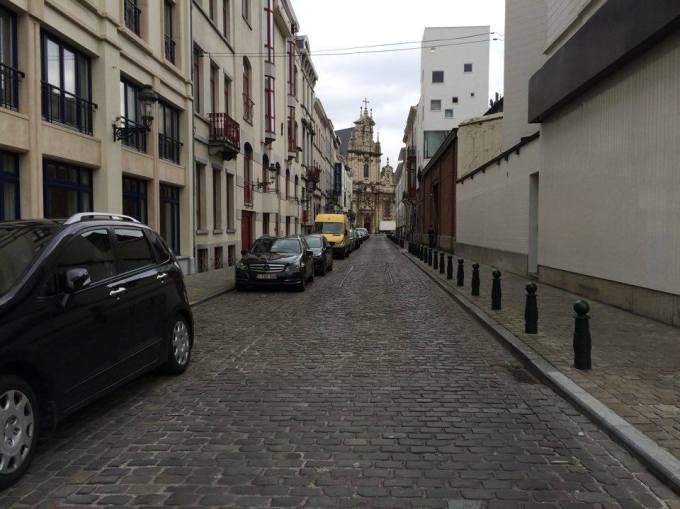
Sainte-Catherine Bruxelles

Looking towards Place de Sainte-Catherine in Brussels.

I walked through Place de Sainte-Catherine towards De Brouckère metro station, where I descended down the steps quite clumsily with my suitcase, briefcase, and umbrella in hand. At first I tried to use the fancy larger ticket gates, which are intended for those who have luggage and the handicapped, but I could not figure out how to make them work. Instead, I turned to the normal gates, and passed through fairly easily into the station proper. I was quite surprised to not see any soldiers in De Brouckère station that day, as there had always been at least two or three on patrol there every other time I had gone through that particular station. Soon though I was faced with a problem, as I had forgotten which metro line was the one to take to Zuidstation/Gare du Midi. Remembering that I had taken a direct train going to De Brouckère the day prior, I knew that I would find the proper train eventually, but still I was faced with a bit of an odd conundrum. Eventually though I came upon a bit of luck, and was soon on the T3 prémetro tram heading southbound.

To digress briefly, the public transport system in Brussels is a good model for what my city, Kansas City, could do. A system made up in part of trams (streetcars in American English), but equally reliant on buses and commuter rail could do wonders for Kansas City, bringing more people and business into the city itself, and quite possibly reducing the need for parking in places like downtown. The prémetro idea, namely having the trams move underground for part of their route and operate as a part of the metro alongside the subway lines is a smart way to better connect one’s varying modes of public transport, while saving money by allowing the local transport authority to avoid having to pay for heavy rail services like a subway. This will also reduce the need for private cars along the tram routes, equally leading to both more pedestrians and lower rates of road congestion within the city.

I quickly descended on the escalator, and went down a further set of stairs onto the platform, where the Tram 3 arrived about three minutes later. Boarding, I soon found myself hoping beyond hope that no one else would board and try to sit around me, as my bags were so big that I feared they would only cause trouble between my fellow passengers and I. Thankfully for me, that did not happen, and in large part due to the recent terror attacks in Brussels, the three stations (Bourse, Anneessens, and Lemonnier) between De Brouckère and Gare du Midi were closed. As a result, the journey only took a mere eight minutes, and as we passed along the single track between the darkened platforms at Lemonnier, I began to prepare myself mentally and physically for the journey up from the metro and into Gare du Midi. Then a sudden lurch came as the tram suddenly, and forcefully stopped in its tracks in the tunnel, whose darkness penetrated the hearts of all on-board, leaving everyone still, fearful of what was to come to pass. After a minute we started on our way again, with no reason given to what I assumed must have been some sort of animal moving across the tracks in front of the tram’s headlights, startling the driver into his sudden cessation of travel and apparent use of the emergency brake.

About two minutes later we arrived at Gare du Midi. I stood as the tram entered the station, taking my suitcase, briefcase, and umbrella firmly in hand, nearly falling over in the process as we came to a halt and the doors opened. I passed the people on the platform waiting to get on-board and walked up a short flight of stairs towards an escalator which took me into the shopping centre attached to Gare du Midi. I was surprised to find the ticket gates open, and anticipating that this crevice might merely be temporary, I slipped through, removing myself from the Brussels Metro into, as P.T. Barnum put it “The Land of Egress.” Having egressed into the mainline railway station, I began searching for a signboard which would tell me which platform I needed to go to to catch my first train, a Thalys train to Paris Gare du Nord, which was due to depart in about thirty minutes at 10:43.

Soon I found a screen hanging just above a large doorway leading onto the main concourse, which showed my train as departing from Platform 5B. Looking around, I found another sign, which pointed towards the international ticket office and Eurostar security lines as the site of the otherwise elusive Platform 5B. I walked down another long, dark corridor, which seemed to have been built with an antagonistic spirit towards the Sun above, yet hidden by the thick concrete of the platforms above. As I walked along my way I saw one final police checkpoint with two armed officers standing guard on the platforms above. My mind began to plan ahead, considering that it was entirely possible they would ask for my papers, thus I reminded myself where my passport and ticket were. In front of me was a man carrying two oversized suitcases, which attracted the attention, though only slightly, of the guards. However after a couple words they let the man pass, and it was my turn to step forward. To my surprise they completely ignored me, and I walked swiftly and smoothly through the checkpoint, heading up the ramp to the platform above.

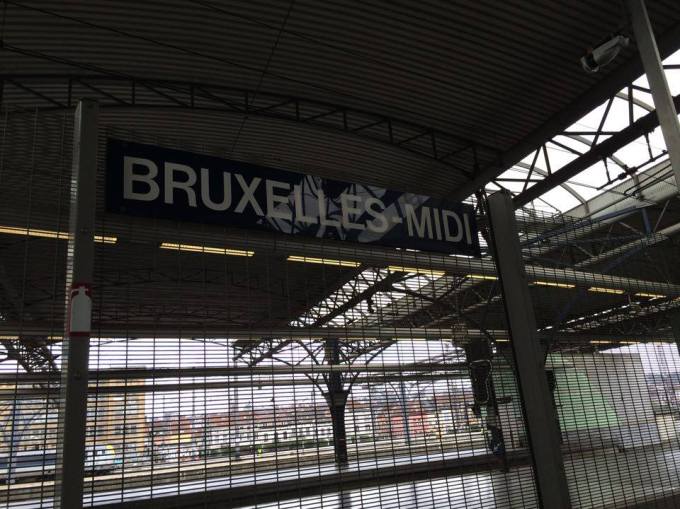
Bruxelles-Midi

Brussels-Midi Railway Station

The architecture of Brussels-Midi is quite interesting, different from some of the grand old railway stations in London and Paris, but truly a hub of activity for the railways of Belgium, the Netherlands, northwestern Germany, and northeastern France. Rather than have a grand long arched glass roof that is suspended between the two side walls of the platforms, the glass roof at this particular station is more like that at Kansas City’s Union Station, one which is made up of many smaller arches, thus giving the station ceiling more of a wave-like feel. The station itself does not necessarily have the charm of Paddington or Gare de Lyon, but it does have the practicality and methodical feel of much of post-war Brussels. At 10:23 on the dot my train arrived, its deep red paint matching the equally luxurious opera red interiors. I was surprised to see the train already filled with passengers, having not realised that Brussels was not the first stop on its route. Rather, this particular train had started in Cologne, then travelled through Aachen and Liège before arriving in the Belgian capital.

Initially I was scheduled to fly from Brussels to Geneva, meeting my parents in at the Swiss airport only two hours after their own flight from London had arrived at that lakeshore alpine city. However on Holy Tuesday, the 22nd of March, I awoke to some of the worst news one can ever wake up to. Two nail bombs had gone off at Brussels Airport in the departures hall, while a third bomb was detonated in Maelbeek metro station in the European Quarter of the city. In total, thirty-two people were killed by the ruthless barbarity of these extremists. As I readied myself for that day’s class, I kept a close eye on my TV, watching as more and more information arrived in London from the Belgian capital. Immediately, I began to reconsider my route from Brussels to Annecy, knowing that if the airport itself was bombed then the odds were pretty high that I would not be able to fly through that same airport two weeks later.

As it turned out, my intended flight did go out of Brussels, however I was not on it, and my ticket was cancelled. I did not want to step foot in that same hall where a mere two weeks prior such violence and sorrow was wrought. I did not want to walk amongst those ghosts of people who by right should still be warm to the touch, still laughing and smiling, playing and singing. I did not want to stand there and take in the macabre spectacle. I chose a different road to France, one with less sadness, with less pain.

After allowing for those passengers getting off in Brussels to do so, I boarded the train and took my place: Car 26, Seat 76. The seats on Thalys are perhaps the most comfortable seats on any train that I have yet travelled on, and I was in second class. At 10:43 on the dot our train began to move out of Brussels, heading south at high speed towards Paris. I spent the hour and twenty-two minutes that it took for us to arrive at Paris Gare du Nord writing the second half of my account of my previous two days in the Belgian capital, finishing the majority of the work in about an hour and ten minutes, thus giving me ample time to be ready to jump off the train and run to the metro station beneath Gare du Nord.

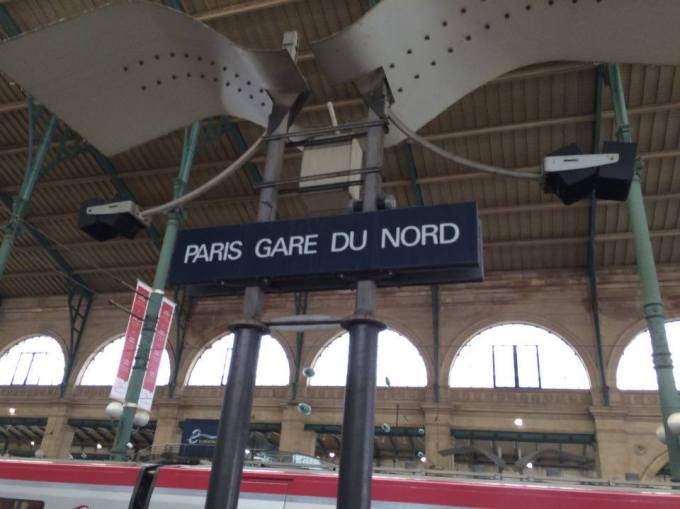
Paris Gare du Nord

“… run to the metro station beneath Gare du Nord.”

While I greatly appreciate the excellent service provided by SNCF, the French national railway company, I spent the better part of the next hour in a panicked rush. I had a mere forty-five minutes to transfer between Gare du Nord and Gare de Lyon. While this would not have been much of an issue had I been using one of the normal metro lines to get from A to B, I had to take the RER D line, a double-decker suburban line that only runs through Gare du Nord about once every twenty minutes. In short, I made it to my train on Platform 7 at Gare de Lyon with two minutes to spare, having just barely gotten on board the train before they closed the doors.

I had requested a seat on the upper level of the train, wanting to have a good view of the French countryside as I traversed that country from the plains around Paris in the north to the Alps in the south. I soon found my seat, No. 105 in Car 7, and soon met the gentleman sitting in No. 104. I figured he had a reservation for that seat, and forgetting my French, I somehow convinced him to get up and move to another seat about two rows back; though I have a feeling he simply wanted a row to himself. I quickly set my briefcase down on the seat next to mine, took out my iPad, portable keyboard, and headphones, and ticket, before removing my overcoat and placing it, my umbrella, and briefcase in the racks above my seat. As I sat down I realised my huge mistake, as I had originally intended to drop off my suitcase in the luggage racks at the end of the car, then drop off my briefcase, overcoat, and umbrella above my seat, then without taking anything out of my briefcase walk up to the café car and get lunch. However, with my iPad, keyboard, and headphones out in the open I figured I had might as well just bring them with.

I first walked towards the front of the train, but soon found myself at a dead end. Turning around, I walked through Cars 6, 5, and 4 before coming upon the Café in Car 3. By this point we were ten minutes out of Paris, and the line in the Café were at least ten people long with only one person working behind the counter. I took my place at the back of the line and waited for a good thirty minutes before ordering a Croque Monsieur and a bottle of Vittel water. Now walking back towards the front of the train, my sandwich on its plate balanced atop my electronics, the bottle and plastic cup in my right hand, whose fingers also had the highly important job of opening all of the doors between my seat and the café, I was stopped by a conductor who asked to see my ticket. “Il est à ma place,” I said, still slightly shaky on remembering my French.

“Comment?” he replied.

“Parlez-vous anglais?” I asked, accepting linguistic defeat. He nodded. “My ticket?” He nodded again. “It’s at my seat. voiture sept, place cent-cinq,” I said, switching back to French for the bit that I knew for certain how to say in that moment of intense hunger and mindlessness caused by the anxiety of my fast transfer.

“Ah, d’accord,” he said nodding and moving onto the next person. I breathed a sigh of relief and moved on through the three cars that were between my seat and I, at last returning to that place I sought out most of all at that point in time: my seat, where I enjoyed a delicious sandwich and watched three hours of a new BBC documentary on the House of Stuart’s time on the thrones of the Three Kingdoms of England, Scotland, and Ireland in the Seventeenth Century. It was at this point that I suddenly remembered that it was Friday, a day when I usually decline to eat meat, partially out of religious observance, partially out of consideration of my usually meat-filled diet and an attempt at improving my health. By this point I had had a frankfurter at breakfast, and a Croque Monsieur, which includes ham, for lunch. In that minute of realisation I thought of a new interpretation of the argument which I had used the Friday prior, that because it was the Liturgical Season of Easter, I could rejoice the Resurrection by eating meat on a Friday. Recognising the fact that this was quite a stretch of reasoning, I moved on and spent the next three hours moving my eyes back and forth between the documentary on my iPad and the fields, hills, and mountains that the TGV flew by at 300 kph (186 mph).

At 16:29 I at long last arrived in Annecy, a city, which to me appeared to still be in the Waterloo of its winter. I left my seat ten minutes prior to our arrival, and was down at the train door, ready and waiting our arrival at the platform when we at long last came to a halt and the door opened. I jumped out of the train, letting my suitcase and briefcase go ahead of me. Then rushing along the platform with the crowd, I soon saw my Mom’s red hair and my Dad’s old Cubs hat in the distance, standing behind a pillar out of the wind. I rushed up to them with a huge, broad smile on my face, and at long last was able to give them that much needed hug, that long sought-after embrace. Our Alpine Reunion had come. I was with my parents again.

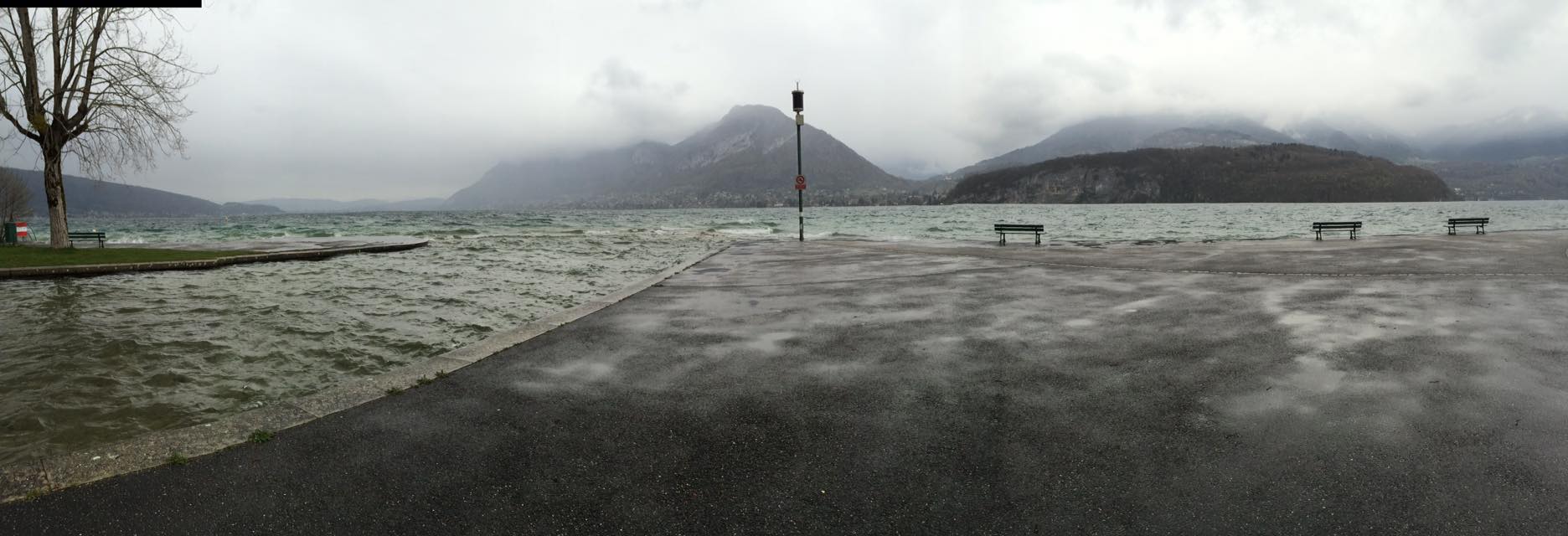
Lake Annecy 8 April 2016

Lake Annecy, “which to me appeared to still be in the Waterloo of its winter.”