Tag Archives: Catholicism

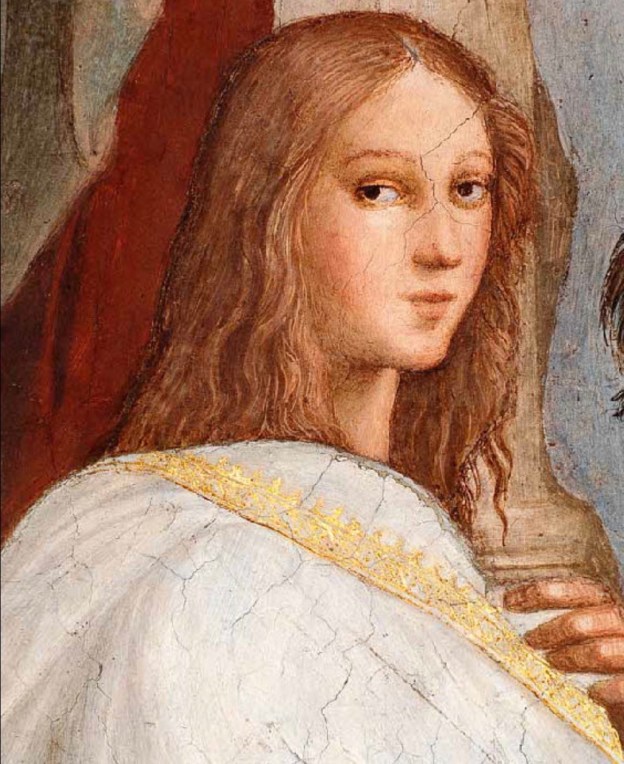
A figure from Raphael's "The School of Athens" variously identified as Francesco Maria della Rovere, Pico della Mirandola, or Hypatia of Alexandria.

On Knowledge

This week, I want to address how we recognize knowledge in comparison to the various fields of inquiry through which we refine our understanding of things.—Click here to support the Wednesday Blog: https://www.patreon.com/sthosdkaneArtRaphael, The School of Athens (1509–1511), Apostolic Palace, Vatican Museums, Vatican City. Public Domain.Sources“On Writing,” Wednesday Blog 6.27.Surekha Davies, Humans: A Monstrous History, (University of California Press, 2025).Marcy Norton, The Tame and the Wild: People and Animals After 1492, (Harvard University Press, 2024), 307.Dead Poets Society, (1989) "What will your verse be?" Video on YouTube.


This week, I want to address how we recognize knowledge in comparison to the various fields of inquiry through which we refine our understanding of things.


Lately my work has been dedicated to a thorough review of the historiography within which I’m grounding my dissertation. I wrote about this two weeks ago in an essay titled “On Writing.”[1] My research is historical, yet it touches on secondary literature which operates within various fields within the discipline of history. These include Renaissance history, and its larger sibling early modern history, the history of cartography, the history of animals, the history of botany, and more broadly the history of early modern science. Methodologically, I owe a great deal to two great twentieth-century Francophone anthropologists, Alfred Métraux (1902–1963) and Claude Lévi-Strauss (1908–2009). While Métraux and Lévi-Strauss aren’t considered directly in the historiographic section of the new introduction that I’m writing for my dissertation, which is limited to sources published since the millennium, they nevertheless stand tall in the background of my history.

Today we often talk within academia about a desire for interdisciplinarity in our work and our research. We’ve found ourselves too narrowed by our ever shrinking fields and seek greener common pastures for grazing as our intellectual and pastoral ancestors alike once knew. In my case, this interdisciplinarity lies more in my efforts to incorporate historical zoology into my work, a methodology which seeks to use zoological methodology and theory to explain historical animals. I have friends who study many things. Among them is one whose passion for history, classics, and mathematics has come together to craft a dissertation which seeks to demonstrate the intersections between those three to better understand the great transitions in human inquiry. Another seeks to follow the medical connections across oceans between disparate regions in the Americas and Europe that nevertheless existed even if they seem remarkable today. Still more, I have a friend who applies basic economic need to explain a complex diplomatic situation that once existed between the Venetian Republic and the Ottoman Empire in the Adriatic Sea. All of these historians of whom I write are applying a degree of interdisciplinarity to their work that reflects their own disparate interests and curiosities. In early modern history we talk about curiosities as objects which were collected from disparate and exotic lands into cabinets to display the erudite collector’s prestige and wealth. I say our curiosity is something to be collected by those worthy archives, libraries, museums, or universities that will employ us in the near future and for us to feed with new ideas and avenues of investigation that we will never be bored with life.

In all of these things, there is an underlying genre of knowledge which I am addressing. I’ve written thus far about history alone, yet it is the same for the anthropologists, astronomers, planetary scientists, and physicists who I know. Likewise for the literature scholars and the linguists. Our fields of inquiry all grow on the same planet that comprises of our collected knowledge. In English, this word knowledge is somewhat nebulous. To me, it says that we know things broad or specific. In London, for instance, the Knowledge is the series of tests which new cabbies must complete in order to learn every street within a certain radius of Charing Cross. The Latin translation of this word, scientia, makes things even more complicated as that is the root of the English word science. Thus, when we refer to Renaissance science, there is always a caveat in the following sentence explaining that “this is not science as we know it but a sort of protoscience.” I was advised, similarly, after a particularly poorly received presentation at a workshop at the Museum of Natural Sciences in Brussels in October 2023 that I shouldn’t refer to “sixteenth-century conservation” because no such concept existed at the time; instead, it would be better to discuss a “genealogy of conservation.” This sense that modern terms, in use since the Enlightenment of the eighteenth century, ought not to be pulled further back into the past I think loses some of the provenance of those terms and how the Enlightenment philosophes first came across them. 

I find it telling that the Ancient Greek translation of knowledge, γνῶσις (gnôsis), is a word with which I’m more familiar from theology and the concept of Gnosticism whereas scientia reminds me of philosophy and the other fields of inquiry which grew from that particular branch of the tree of human curiosity. One might even say that philosophy and theology are a pair, siblings perhaps? They seek to understand similar things: on the one hand an inquiry into thought, and ideally wisdom, and on the other a search for the nature of the Divine, which at least in my Catholicism we can know because we are made in the Image of God. The division here between the Ancient Greek term being affiliated with faith and the Latin one with reason I think speaks to the Latin roots of my own education in Catholic schools and at a Jesuit university, where I learned about Plato and Aristotle, yet I recognized Aristotle’s Historia animalium (History of Animals) by its Latin name by which it was generally known in Western Europe for centuries before the rise of vernacular scholarship rather than by its Greek original Τῶν περὶ τὰ ζα ἰστοριῶν (Ton peri ta zoia historion). Note that the English translation of this title, History of Animals reflects better the Latin cognate of ἰστοριῶν rather than the better English translation of that Greek word, Inquiry.

Added onto these classical etymologies, in my first semester Historiography class at Binghamton University I was introduced to the German translation of scientiaγνῶσις, and knowledge. Wissenschaft struck me immediately because I saw the German cognate for the English word wizard in its prefix, and because I knew that the -schaft suffix tends to translate into English as -ship. Thus, my rough Anglicization of Wissenschaft renders Wizardship, which is rather nifty. Yet this word Wissenschaft instead was seen in the nineteenth century as a general word which could be translated into English as science. This is important for us historians trained in the United States because our own historiographic tradition, that is our national school of historians traces our roots back to German universities in the early and middle decades of the nineteenth century. I remember long sessions of my historiography class at UMKC discussing the works of Leopold von Ranke (1795–1886), the father of research-based history. I felt a sense that this concept of Wissenschaft seemed relatable, and as it turned out that was because Irish has a similar concept. 

Whereas in English we tack on the suffix -ology onto any word to make it the study of that word, in Irish you add the suffix -ocht. So, geology is geolaíocht and biology is bitheolaíocht. Yet note with the second example that the suffix is not just -ocht but an entire word, eolaíocht. This is the Irish word for science, added onto the end of bitheolaíocht to demonstrate that this word refers to the study of bith- a prefix combining form of the word beatha, meaning life. So, biology then is the science of life itself. Powerful stuff. I appreciate that Irish linguists and scholars have sought overall to preserve our language’s own consistency with its scientific terminology. It means that these fields of study, these areas of knowledge, can exist purely within the purview of the Irish language without any extra need to recognize that their prefixes or suffixes come from Latin, Greek, or English. There are some exceptions of course: take zó-eolaíocht, the Irish word for zoology, which effectively adopts the Greek word ζῷον perhaps through the English zoo into Irish. Would it not have been just as easy for whoever devised this hyphenated word to instead write ainmhíeolaíocht, translated into English as the science of animals? Here though I see more influence from English because this language adopts as much as it can from other languages out of prestige and a desire for translingual communicability. As an English speaker, I find scholarly works often easier to read because we share common etymologies for our words relating to knowledge. English’s sciencegeology, biology, and zoology are French’s sciencegéologie,biologie, and zoologie. In English, we drop any pretense of Englishness to clothe ourselves in a common mantle familiar to colleagues from related cultures around the globe. In academia this is to our mutual benefit, after all so much of our work is international. I’m regularly on webinars and Zoom calls with colleagues in Europe for instance. I believe this is the lingering spirit of the old scholarly preference for Latin as a lingua franca which at least to me seems close enough in the past that it’s tangible yet realistically it’s surely been a very long time since any serious scholarly work beyond classics was published in Latin for the benefit of a broad translingual readership?

I for one admire the Irish word eolaíocht and its root eolas, which translates into English as knowledge, that is an awareness of things because eolaíocht represents a universal concept while retaining its own native nature. So often in my research I am discussing the early assimilation of indigenous cosmovisions, to borrow a Spanish word put to good use by Surekha Davies in her latest book, into the nascent global world centered on Europe.[2] I see how these cosmic conceptions faded until they were rendered in Gothic or Latin letters on the voluminous pages of encyclopedic Renaissance general and natural histories which remain among the most often cited primary sources for these indigenous cultures who Marcy Norton argued in her 2024 book The Tame and the Wild: People and Animals After 1492 had their own classical past made remote from their colonial present by European contact, conquest, and colonization.[3] Seeing these indigenous perspectives fade into their categorized and classified statuses within the cosmos defined by Europe’s natural philosophers I feel fortunate that my own diaspora (which was also colonized) has retained this element of our individual perspective. I first came across the -ocht suffix in the word poblacht, the Irish word for republic. A famous story from the birth of the Irish Free State during the Anglo-Irish Treaty negotiations in 1921 tells of British Prime Minister David Lloyd-George, a Welsh speaker, remarking to Michael Collins, an Irish speaker, that their choice of a republic was unusual because none of the Celtic languages naturally have a word for republic. That word evokes its Roman roots in the ancient Res publica Romana, the Roman Republic, whose northward expansion across the Alps led to the gradual death of the Continental Celtic languages, whose speakers’ descendants today are largely the Western Romance speakers of French, Romansh, Occitan, Catalan, Spanish, Galician, and Portuguese, among others. Romance languages are noted for their common descent from Latin, whence they all derive variations on the Latin word scientia; English gets science through Old French. “How are you going to name your new government in the Irish language?” Lloyd-George asked. Collins replied something along the lines of “a kingdom is called a ríocht, so this government of the people (pobal) will be called a poblacht. Thus, the Republic of Ireland is named in Irish Poblacht na hÉireann. Naturally, this word pobal derives from the Latin populus, so the shadow of Rome hovers even over unconquered Hibernia. Yet that is another topic for a different essay.

Let me conclude with a comment on the difference between knowledge and wisdom, as I see it. The former is far more tangible. We can know things through learning embodied best in living and in reading. I know for instance to look both ways before crossing a street because plenty of people in the last 140 years have been hit by cars, buses, and trucks, and you can never be too careful. Likewise, I know everything I do about the things I study through reading what others have written about these topics. It’s my job then to say what I will. In Whitman’s words made immortal by our recitation, the answer to the eternal question, “that the powerful play goes on, and you may contribute a verse.” That’s history, people! Reading the powerful play of what others have written and summoning up the courage to take the podium and have your say. I first heard this particular poem, as did many in my generation, recited by Robin Williams in the 1989 film Dead Poets Society. Knowledge is the recitation of these facts we’ve learned. Wisdom is understanding how these facts fit together and speak to our common humanity. What makes us human? I believe it’s as much what we know as what we remain ignorant of. Our ignorance isn’t always a curse, rather it’s another foggy field we’ve yet to inquire about, a place where someone’s curiosity will surely thrive someday. It is another evocation of eolas still to come in our long human story. How wonderous is that?


[1] “On Writing,” Wednesday Blog 6.27.

[2] Surekha Davies, Humans: A Monstrous History(University of California Press, 2025).

[3] Marcy Norton, The Tame and the Wild: People and Animals After 1492, (Harvard University Press, 2024), 307.

The Divine Essence

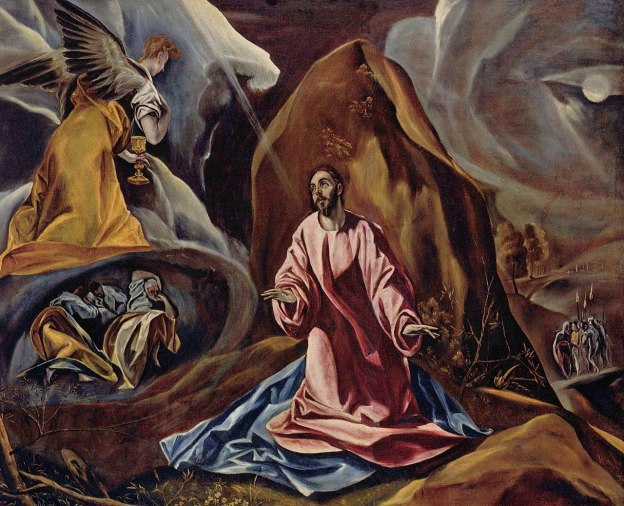
Art: Studio of El Greco, “Agony in the Garden,” (1590) oil on canvas, 102 x 131 cm, Toledo Art Museum, Toledo, Ohio, USA, ⁠National Gallery, London⁠.

This week, a meditation on the Name of God.—Art: Studio of El Greco, "Agony in the Garden," (1590) oil on canvas, 102 x 131 cm, Toledo Art Museum, Toledo, Ohio, USA, National Gallery, London.Click here to support the Wednesday Blog: https://www.patreon.com/sthosdkane


This week, a meditation on the Name of God.


At the start of Advent last November, I picked up a little blue book after Mass as an Advent lectio divina guide for the coming weeks. I’d done this several times before in Advent and Lent, the two holy seasons of preparation in Christianity, yet this time I actually read that little blue book and kept up with it each day through Christmas. By the end of it I was looking forward to being done with this one part of my nightly routine before bed, the time when I was able to sit and read the daily reflection. I wasn’t sure then if I would pick up the little black book when it appeared at my parish the weekend before Ash Wednesday, and yet when it was there, I took a copy home.

This year’s little black book offers reflections on St. John’s Gospel, the most spiritual in focus of the evangelists. Several aspects of the readings have caught my attention, usually out of a curiosity concerning the grammar or translation of the biblical text. On one early day, the reflection was on John’s recounting of the arrest of Jesus in the Garden of Gethsemane. This recounting contradicts the three other Gospels in that Jesus asks the soldiers to let his disciples go, rather than the disciples taking flight in fear of the soldiers. It is more self-sacrificial, following the prophetic undertones of the Gospel overall. Not only does this vital moment of arrest in the Passion narrative take place in a Garden, akin to the Garden of Eden where humanity’s fall into sin occurred, but it is also here where Jesus revealed Himself as God the Son. Quoting here from the New American Bible:

[4] Jesus, knowing everything that was going to happen to him, went out and said to them, “Whom are you looking for?”[5] They said to him, “Jesus the Nazorean.” He said to them, “I AM.” Judas his betrayer was also there with them. [6] When he said to them, “I AM,” they turned away and fell to the ground. [7] So he again asked them, “Whom are you looking for?” They said, “Jesus the Nazorean.” [8] Jesus answered, “I told you that I AM. So if you are looking for me, let these men go.”

(John 18: 4–8)

In this passage the omniscience of God is first revealed, followed by the humility of God the Son as merely one among them, “the Nazorean.” Here though the omnipotence of God as the Divine Essence, existence in its purest form as “I AM,”[1] before showing such mercy toward the soldiers at making it clear he was in their power and would surrender to them yet asking for mercy from them for his friends, his disciples who not being omniscient were very much afraid as any of us would be. It is the third part of this passage, the identification of God that I wish to focus on here.

The Name of God is known as the Tetragrammaton after the four Hebrew letters which comprise that Name. These are the four holiest letter combinations out there. The Name of God is too sacred to write in Judaism, and considering Hebrew is an abjad lacking written vowels it’s not entirely certain how this Name was originally pronounced before that prohibition.[2] This prohibition extends in some traditions to not even writing the word God, as it is capitalized as the common Name of God in regular parlance. I grew up capitalizing this word in reference to the Abrahamic God, who I do believe is the Creator and One True God, I don’t just recite the Nicene Creed every week at Mass to do it; and yes, this capitalization is in line with the tradition of capitalizing proper nouns in all of the languages I speak and write. Yet I’ve never really thought of God as a name, rather it’s a title in the same way that Christ is a title and Jesus the name. I’ve had some students over the years who won’t write God out, instead writing “G-d” out of respect for this title, which I think is fair. For the sake of my readers, I won’t include the Hebrew Tetragrammaton here, you can look it up on your own.

What I’m more interested in is how the Tetragrammaton was translated from Biblical Hebrew into the other languages in which I’ve read the Bible. There are really four such languages: English, Latin, Koine Greek, and Irish. 

I was first introduced to the Bible and to my Catholic faith through English, I was born in the second generation after the vernacular Mass was allowed largely replacing the older Tridentine Mass said in Latin. The New American Bible (NAB) which I read from a few paragraphs back is the translation that I grew up with, and the one which I use in all aspects of my life. It was also developed during Vatican II as the approved English biblical translation for the United States. In Ireland, Australia, and New Zealand the Jerusalem Bible (JB) is the translation used, while in Great Britain the English Standard Version – Catholic Edition (ESV-CE) is used. 

I was introduced to the Latin Vulgate and Greek New Testament and Septuagint in high school and college and today I own a copy of the Greek New Testament published by the German Bible Society (Deutsche Bibelgesellschaft). Both are key sources for the English translations that I grew up with, alongside the Hebrew Tanakh itself. I chose St. James Academy for my high school years largely because they offered Latin, and while the fact that Latin remains the official language of the Roman Catholic Church, I was more interested in reading classical Roman literature. Likewise, the first of the two Ancient Greek classes I’ve taken was at St. James under the direction of our Latin teacher Bob Weinstein. That class was focused on Classical Attic Greek from democratic Athens of the 5th century BCE. In college at Rockhurst I made the 5 century leap forward to the Koine Greek of the 1st century CE when I studied Biblical Greek under Professor Daniel Stramara. I wasn’t the best student, yet I was fascinated by that class and would love someday to study Latin and Greek more fully. It would certainly be a benefit to my research.

Finally, while I’ve known of the Bíobla Naofa, the approved Irish translation of the Bible, for a long while, I only bought one in the last year. Irish is an odd language for me that feels untouched by the embrace of vernacular piety for me as by the time the Vatican II Council occurred between 1962 and 1965 my family largely spoke English, though the last generation of native Irish speakers were still around. For me then the Bíobla Naofa is as much a study tool as it is an aspiration of piety. I keep mine on my desk the easier to reference when I’m curious how a particular word or phrase is translated into Irish. The Bible is a good source if you want to see how common biblical names are translated from one language to another. It’s how I know that the Irish biblical tradition predates the Anglo-Norman invasion of 1169 because St. John is called Naomh Eoin, not Naomh Seán. My name is an Irish rendering of the French name Jean, while Eoin is an older rendering of the Latin and Greek name Ioannes, which is also the parent of the French Jean. The Evangelist is thus known by the same name today as the Celtic monks knew him in the early medieval period when the Irish cultural influence on Europe was at its peak.

Returning then to the Tetragrammaton, when I read this passage from St. John’s Gospel that evening, I was curious to see how it was translated from the original Koine Greek into Latin and Irish. Translation is a funny business, it’s not ever as simple as going word-by-word and replacing the original language’s text with the target language’s equivalent. There’s far more nuance to each language and its dialects to allow for this. I’ve learned this in my efforts to translate André Thevet’s 1557 book Les Singularitez de la France Antarctique from Middle French into Modern English. The last English translation was written in 1568 and is thus in Early Modern English from the generation just before William Shakespeare. Thanks to the bard Early Modern English is still fairly familiar to many of us, myself included, yet it is still different from how this language sounds and is written today. To make the first draft of my translation I brought together a composite of the 1558 Antwerp French edition, the 1568 London translation, the 1878 Paris French edition, and the 1944 and 1978 Brazilian Portuguese translations to create an accurate and modern English translation fitting for the 21stcentury.[3] All this is to say that translation is far more complicated than just taking the original text and interpreting each word on its own. The words work together within the ecosystem of the phrase.

I was curious then to see if the English “I AM THAT AM” was perhaps clunkier than the Greek. This full phrase is familiar to me especially from the Burning Bush story in the Book of Exodus (Ch. 3), in which Moses meets God in a burning bush. This scene is beautifully retold in the 1998 animated film The Prince of Egypt which is a classic from my childhood. The four words we have mirror the four letters of the Tetragrammaton in the original Hebrew, yet these four words are reduced to two in Greek. In John’s telling Jesus’s response “I AM,” is written in the original Koine Greek as “ἐγώ εἰμι,” (John 18:5) with the full phrase in the Septuagint’s retelling of the burning bush story written as “ἐγώ εἰμι ὁ ὤν,” (Exodus 3:14) or I am the Being. I feel this final word ὤν is essential here. It is the present active participle of the Greek copular verb εἰμι. In a sense, it is saying that God is existence itself, the essence behind the Cosmos and all Reality itself. One translation of ὤν in the Liddell, Scott, Jones Ancient Greek Lexicon (LSJ) is the English word fact.

This is adopted into Latin somewhat, as the Vulgate is drawn so much from the Greek Bible, where the Name of God is rendered as “Ego sum qui sum,” whence we received the English “I AM THAT AM.” Yet because Latin doesn’t have a similar present active participle for the copular verb sum, the reuse of the indicative present active form sum is necessary. The English present participle of be is being, yet replacing the second am in the name with being doesn’t work grammatically in this language.

I was pleasantly surprised to see the Irish translation of this phrase for how simple it is. The Greek ἐγώ εἰμιwas translated as “Is mise é,” a phrase which I’d usually translate back into English as “I am he.” On an immediate level this is profound in its everyday character. This is something I’d say when someone asks “An bhfuil tú Seán?” Yet on a deeper level it speaks to Irish’s ability to express emphasis in a manner unfamiliar to English. The first person pronoun in Irish is , this is the translation of both the English I and me. Yet the -seending tacked onto it expresses extra emphasis on the pronoun. The closest we can get in English, or at least in my American English, to this is saying “me too,” or perhaps capitalizing ME and adding an exclamation mark behind it (or several if you’re one of those people who are overly fond of exclamatory sentences). So, God’s existence is expressed in Irish in the emphatic, as something to be shouted from the rooftops in wonder all while reflecting the priority Irish gives to all of us to be worthy of emphasizing no matter how mighty or small we may be. The Irish translation of the full Name from Exodus is “Is mé an te atá ann,” which is closer in meaning to the Greek ἐγώ εἰμι ὁ ὤν, translating into English as “I am the one who is.” Again, this speaks to the ability of Irish to interpret the existence of God as the essence of reality.

In my undergraduate years when I started to think deeply about the Tetragrammaton & the Name of God, I settled on the idea that the best way to describe God without limiting God in human terms was to focus on God as the essence of life. In this way, I began to refer to God in my theological studies as the Divine Essence, in an attempt to better reflect this truth that God is omniscient, omnipotent, and omnipresent. The Divine Essence rises above any limitations of human terminology or senses of gender that weigh down even the word God, which is traditionally masculine in English and its fellow Indo-European languages. I’d rather see God in God’s fullness existing beyond gender, the better “to see the Face of God,” to quote Jean Valjean’s last words in the musical adaptation of Victor Hugo’s Les Misérables.I’ve had trouble with this thinking in the last few years, because how should I begin to approach God in these terms in prayer? How can I seek any sort of personal connection to God when I’ve devoted such effort to seek to understand God in such abstract terms by stretching language as far as it will go without breaking? This Lent that is where I stand, and where I am uncertain. Looking at the story of the Garden of Gethsemane told in John’s Gospel in this year’s little black book, I noticed that while Jesus revealed His true Nature, he also identified himself as mere “Jesus the Nazorean,” a human and God all the same. That human nature is approachable, personable. I remember how in the Ignatian Examen one is called to think of one sitting with Jesus while one reflects on their day. This is a starting point, and a good point of departure for reflection this Lent.


[1] In my Catholic tradition we capitalize this phrase as the name of God.

[2] See Richard Elliott Friedman, The Exodus: How it Happened and Why it Matters, (New York: HarperOne, 2017) for more on this. I really enjoyed reading this book a year ago.

[3] NB: I used a 2018 reprint of the 1944 Brazilian Portuguese translation.


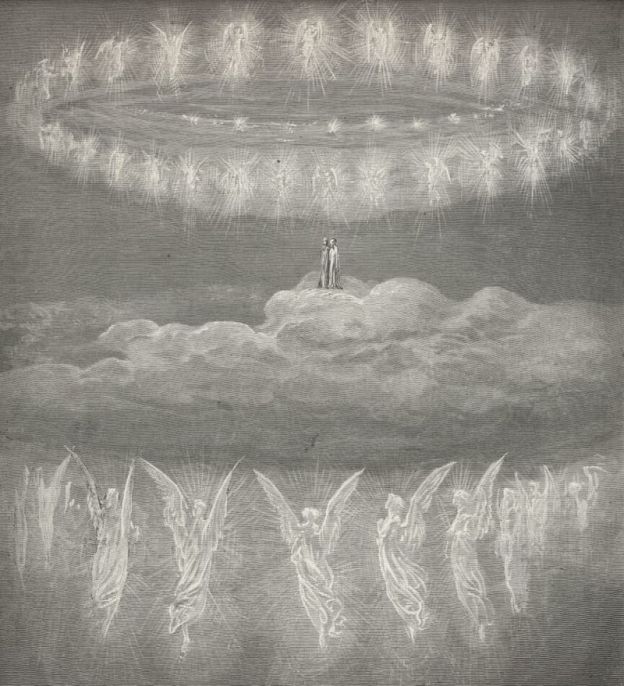
Gustave Doré's depiction of Dante and Beatrice beholding the circles of Paradise.

Paradiso

This week, I conclude my three-part reflection on Dante’s Divine Comedy with the Paradiso. — Click here to support the Wednesday Blog: https://www.patreon.com/sthosdkane


This week’s edition of the Wednesday Blog is dedicated to Micah Holmes.


This week, I conclude my three-part reflection on Dante’s Divine Comedy with the Paradiso.


I’ve long wondered about the nature of the heavens, both scientifically through my passion for astronomy, and theologically drawing from my Catholic education and faith. In the Spring of 2011, I staged a one-act play of my own writing called The Swansong of the King which I wrote in the spirit of the scene in John Boorman’s 1981 film Excalibur where Merlin’s ghost appears to Arthur in a circle of standing stones to reassure him before his great final battle at which he would surely die. I wrote Merlin lines that told the story I’d imagined of the soul’s voyage to Paradise, an island amid a deep blue sea where in a valley in the middle surrounded by lush forests, there stands a city of white stone houses and public edifices. Each house is a garden in its own right, looking like an ancient Roman atrium more than anything else, and when the soul arrives, they find the people they always loved waiting for them there for one last great party.

My vision of Heaven draws from other sources than Dante’s; his is the child of a medieval Italian world with deep and still living Roman roots, while mine has in equal amounts classical and Celtic antecedents, the island in essence being the Irish Tír na nÓg, the Land of Eternal Youth. There’s also a bit of Tolkien in there, with the speech that Gandalf gives to Pippin during the Battle of Minis Tirith in The Return of the King that was so wonderfully acted out by Sir Ian McKellen in the film adaptation. Yet upon reading Dante’s cantica of his travels from the summit of Mount Purgatory to the ultimate light at the apex of all Creation, I can understand where he was coming from even if I found my understanding of his verse fading in and out at times.

Early in the Paradiso, Dante writes in Canto 5 about acknowledging one’s mistakes, in Beatrice’s words “Better for him if he had said: ‘I’m wrong,’ / than to do worse doing it.”[1] So, the vision I’ve held onto since childhood of Paradise may well be lacking, while it makes sense in my understanding I could still very well be wrong in my assessments, and in that I would be joyous to be proven wrong so for that would mean that this affirms one of the greatest truths that I believe in: that there is always more out there for us to learn.

All things that we know exist within creation, Beatrice describes in Canto 7 how all things “come to decay and last no time at all,” on Earth, yet in them something greater can be seen. In Paradise, Dante meets many saints and holy men and women. There too, he lives out the genealogist’s dream by speaking to one of his ancestors, Cacciaguida (c. 1098 – c. 1148), a knight who left Florence to join the Second Crusade during which he was knighted by Emperor Conrad III (r. 1138–1152). When asked who he was, the knight responds to Dante, “My branch and leaf (in whom I was well pleased, / waiting until you came) I was your root.”[2] Yet when Dante asks the question I’ve long wished I could ask my own ancestors from whom I inherited my family name, “Tell me my earliest, my dearest growth / who were your own progenitors? Also, / what years were marked for you as boy and youth?”[3] Cacciaguida replies that his ancestors lived in Florence as did he and Dante, concluding “that’s all you need to hear of my great sires.”[4] Among my own Kane ancestors––the name is variably spelled Keane, Kane and Caine in English but consistently as Ó Catháin in our native Irish––the unbroken recorded link only reaches as far back as my great-grandfather’s great-grandfather who is identified in Griffith’s Land Evaluation in the 1840s as Thady Caine. I’ve surmised that he was likely born at the earliest in the 1790s. The memories of these people who in worldly affairs had little impact yet still existed as a part of our history deserve to be remembered as we still exist as a part of their legacy.

As Beatrice leads Dante higher and higher through the celestial spheres, he notices how her laughter and joy evokes the spirit of their surroundings. In Canto 18, Dante writes that upon turning to Beatrice he:

            “saw the light within her eye so clear,

            so full of laughter that her look and air

            defeated all that these, before, had been.”[5]

One passage, in Canto 19 that struck me as needing particular note concerned the salvation of those who are born outside of Christendom and live good and worthy lives. In Dante’s verse:

            “’A man is born,’ you’ve said repeatedly,

            ‘beside the Indus. And there’s no one there

            Who speaks of Christ, or reads or write of Him.

            And all he does and all he means to do ––

            As far as human minds can tell –– is good,

            sinless alike in living and in word.

            Then, unbaptized, beyond the faith, he dies.

            Where is the justice that condemns him thus?

            Where is his guilt, if he does not believe?”[6]

Here, I feel that Dante is asking about the salvation of his first guide through these three realms, Virgil, who is condemned to eternity in the First Circle of Hell for the fact that he was born and died just too early to have encountered Christianity. It’s a question that I certainly have, having known many people who do not practice this faith yet have lived good and true lives. I don’t have an answer here, like many questions of faith this is something that remains a mystery to me, for I can see both sides of this question. What I can do is hope in love, which Dante writes is the purest and truest emotion evoked from God’s Essence:

            “Love, which in laughter sweetly clothes itself,

            how ardent in those piercing pipes you burned,

            voiced by the breath of holy thoughts alone.”[7]

In that essence of love, Dante sees Beatrice slowly immerse herself into the orbit of God, beginning in Canto 21 and continuing through to the end of the Paradiso in Canto 33. In the first of these two canti, Beatrice warns Dante that he is not ready to see her in her full beauty enhanced by the presence of God:

            “’If I were to smile,’

            so she began, ‘you would become what once

            Semele was, when she was turned to ash.

            For if my beauty (which, as you have seen,

            burns yet more brightly as it climbs the stair

            that carries us through this eternal hall)

            were not now tempered, it would shine so clear

            that all within your mortal power would be 

           a sprig, as this flash struck, shaken by thunder.”[8]

Here Dante drew from the classical inheritance, evoking the story of Semele, daughter of Cadmus of Thebes, the founder of Tyre, who was one of Jupiter’s lovers and was tricked by the jealous Juno to ask to see Jupiter in his full majesty only to be reduced to ash by seeing him.[9] I’m reminded as well of the Irish legend of the return of Oisín to Ireland after spending 200 years in Tír na nÓg with his wife Niamh only to turn to ash when he fell onto mortal soil again, but not before having a long discussion of faith with a certain Christian missionary named Patrick. In both Dante’s use of the myth of Semele and this clear Christianization of the death of Oisín, the one ancient hero who by all druidic accounts still lived in the Irish Paradiso of Tír na nÓg, the new faith could incorporate the old worlds into which its light flooded over the last two millennia.

At long last though, Dante is able to see the “sacred light” in its purest form, and to look again at the face of Beatrice illuminated by this light as one of the righteous. Later again in Canto 21, he proclaims with the exuberance of the Magnificat:

            “O sacred light,

            how love – the freedom of this holy court –

            is all one needs to trace God’s providence.”[10]

Dante can see the truth of Paradise because of the caritas, the charity, “on high that makes us serve / so readily the wisdom of the spheres.”[11] This light overwhelms Dante, even then. This is something that I fully can relate to, having felt much the same throughout my life yet magnified in recent months. In the first lines of Canto 22, the poet writes:

            “Astounded, overwhelmed, I turned to her

            my constant guide, like any little boy

            who’ll run to where his greatest trust is found.

            And rushing there, as mothers always do,

            her shocked, pale, sobbing son, she said to me:

            ‘Do you not know that you’re in Heaven now?

            Or know the heavens are holy everywhere,

            and all here is done is done from zeal?”[12]

Even in this moment when Dante ought not to be afraid, he still felt that most human of instinct at beholding something otherworldly and so beyond what he had seen before then. The immensity of Paradise alone would make anyone of us cower in fear. These verses more than any other spoke to me directly, as something that I could see myself doing in Dante’s place. It reminds me of Moses’s first reaction to realizing whose voice spoke to him from the burning bush:

“I am the God of your father, he continued, the God of Abraham, the God of Isaac, and the God of Jacob. Moses hid his face, for he was afraid to look at God.”[13]

This, dear Reader, is a human experience of the Divine, of something greater than ourselves. I’ve long pondered how best to express my own beliefs concerning these questions, how best to refer to God. Dante sees God as a light emanating from the core of all things, and in my best effort at understanding the inherent paradox of God, for nearly a decade now I’ve come to think of a Divine Essence, as the best metaphysical expression of the Tetragrammaton which in its best English translation is rendered I am that Am. The Latin infinitive of the copula verb is essere, and this is the root of the noun essentia, so it seems prudent to me to write then of this Divine Essence, even if that Essence may seem impersonal. That’s where the three persons in one of the Trinity comes into my own faith.

At the end of Canto 22, Beatrice offers one of her last encouragements to Dante, the man who had loved her since first he saw her when they were children:

            “’You are so close,’ Beatrice said,

            ‘to your salvation here that you must keep

            the light within your eye acute and clear.

            And so, before you further ‘in’ yourself,

            look down and wonder at how great a world

            already you have set beneath your feet,

            so that your heart may show itself, as full

            as it may be, to this triumphant throng

            that rings in happiness the ethereal round.’”[14]

Dante here has a moment to look down on the Earth, on his home, what the great humanist astrophysicist Carl Sagan called the Pale Blue Dot and admire just “how small and cheap it seemed.”[15] I admire how Dante is able to imagine the Earth in one view, to see our entire planet as one common body made up of many separate parts.

Dante’s Paradiso concludes the three cantiche of his Divine Comedy, one of the great works of epic poetry in the western canon. It offers many things to many people; to my medievalist friends it is a window into the cosmology and theology of an Italian at the dawn of the fourteenth century. I would add here my own question of how different this Commedià would be had it been written just a few decades later when the Black Death swept across Europe in the 1340s? To the believer today, it evokes a vision of the afterlife in all its nuance and promises what might become of us once our lives have ended and our souls are weighed for their actions and deeds while living. I see both of these visions in the Commedià and also a poet, someone with whom I share the vocation to craft stories and enrich the human experience with our words, trying to make sense of his own life in exile far from his beloved Florence.

Reading this work has enriched my experience of Dante and reawakened some of that spirit of imagination and faith which I’ve long sheltered from the harsh winds and tempests of these recent verses that I’ve written in the last few years of my life. As much as I look forward to that great garden party in my vision of Tír na nÓg, Dante’s celestial spheres leave me with a warm sense of hope for something better to come.


[1] Dante, Paradiso 5.66–67.

[2] Dante, Paradiso 15.88–89.

[3] Dante, Paradiso 16.22–24.

[4] Dante, Paradiso 16.43.

[5] Dante, Paradiso 18.55–57.

[6] Dante, Paradiso 19.70–78.

[7] Dante, Paradiso 20.13–15.

[8] Dante, Paradiso 21.4–12.

[9] Ovid, Metamorphoses 3.253–86.

[10] Dante, Paradiso 21.73–75.

[11] Dante, Paradiso 21.70–71.

[12] Dante, Paradiso 22.1–9.

[13] Exodus 3:6.

[14] Dante, Paradiso 22.124–132.

[15] Dante, Paradiso 22.135.


Inferno

A while ago, I began reading Dante's Divine Comedy. So, over the next three weeks I will be writing my own reflections on each of its three parts. This week then, I begin with the Inferno. — Click here to support the Wednesday Blog: https://www.patreon.com/sthosdkane — Dante: Inferno to Paradise, https://dantedocumentary.com The Blues Brothers, "Everybody Needs Somebody to Love and Sweet Home Chicago," https://youtu.be/FrLZoQUl2mQ?si=g9rLDM6ZPM7tXJ97 Molly Fischer, "The Tyranny of Terrazzo: Will the millennial aesthetic ever end?", The Cut: New York Magazine, (3 March 2020), https://www.thecut.com/2020/03/will-the-millennial-aesthetic-ever-end.html Ian McKellen's performance in Macbeth "Tomorrow, tomorrow, and tomorrow" speech (5.5.17–28): https://youtu.be/4LDdyafsR7g?si=3qgAmsaKW6oKJKXq


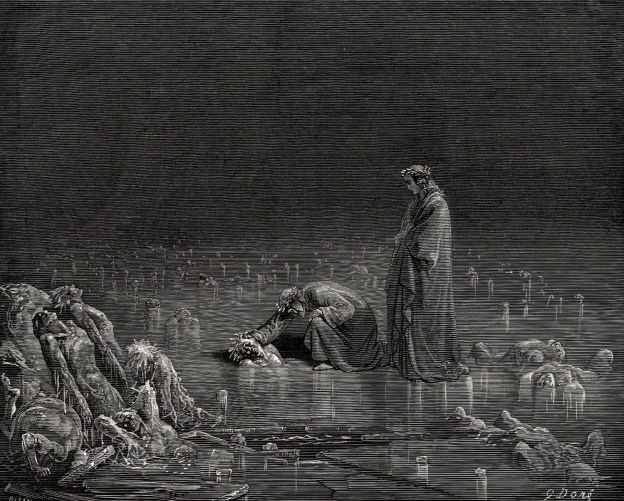
A while ago, I began reading Dante’s Divine Comedy. So, over the next three weeks I will be writing my own reflections on each of its three parts. This week then, I begin with the Inferno.


Three years ago marked the 700th anniversary of the death of the great Italian poet Dante Alighieri, the author of the Divine Comedy, whose Tuscan dialect is widely regarded as foundational for the modern standardized Italian language taught today. I will write at length about language standardization in the future, if I haven’t already, yet today, dear Reader, I wish to address his Commedià itself. Around the time of his great anniversary, the Center for Medieval and Renaissance Studies (CEMERS) at my university held a variety of lectures concerning Dante. In one such instance, I became critically self-aware of the fact that I was likely one of the few people in the room who had not read the work.

I finally got around to reading the Commedià in the last month when a new two-part documentary on the life of Dante aired on PBS. I realized then that even though I hadn’t read his magnum opus, I still knew a great deal about it because of how closely tied it is to my Catholic culture. The concepts of Hell, Purgatory, and Heaven as I grew up understanding them have clear support from Dante’s vision of these three realms. Yet like Dante, my own vision of these three is just as drawn from far older classical and biblical sources. He recognized the importance of connecting the beliefs of his own age with those that they replaced.

This is a point I made in conversation with a friend and fellow historian: Dante was a man of his own time. In his moment, it is fitting to see the great classical heroes, philosophers, and poets resting on the outer most layers of the Inferno because they had no introduction to God during their lives. Even more unsettling is his placement of the Prophet Muhammad within the eighth circle’s ninth bolgia as one of the “Sowers of discord.” Again, this fits in Dante’s own time and place, living at the same time as the Crusaders lost Acre in 1291, nine years before when the Commedià is set.

The Inferno is proof of four great truths which I wish to discuss in the remainder of this week’s post. The first of these is that faith often requires trust in more tangible things that one can see and touch and most importantly imagine. This past weekend on Trinity Sunday, I was moved by how my pastor––Fr. Jim Caime, SJ––described his relationship with the Trinity in his own prayer life. I believe in the Trinity, though what draws me towards that belief at this moment in my life is an appreciation for the mystery of the Trinity. It’s funny there, I appreciate the mystery of the most important doctrines of the faith yet when it comes to things that are more tradition than anything else, my faith is still built on a foundation that is strikingly tangible in its nature. At times I’ve thought that superstition might stick with me more because it’s something that is more tangible and everyday than some of the more metaphysical elements of my Catholic faith. Faith needs to be lived in “to live, thrive, and survive” in the words of the great Elwood Blues.

Second, I’m not a fan of iconoclasm. Culture is built by individuals yet adopted by communities. We live in a present moment which is layered upon the past. In those layers we can see bygone moments, years, decades, generations, centuries, millennia, and ages when our past thought something they made was worth cherishing even for a moment. Everything from the eternal grace of the great monuments of human endeavor, and our striving for greater truths is just as central to these ringed layers that form our culture as are the passing fads that come and go year by year. An article I read over the weekend in New York Magazine‘s style outlet The Cut about the millennial aesthetic that has defined the tastes of my generation in the last decade asked if “the tyranny of terrazzo” will ever end. The article concludes with a foreboding of the dominance of bright yellow among the style choices of our successors, Generation Z. I for one felt a similar sense of dread the last time I went clothes shopping at Target only to discover everything in the menswear section was geared to younger generations than my own. I continue to shop at Macy’s when I’ve gotten a nice paycheck and Costco when my parents are around with their membership.

If you’ll pardon that digression, the iconoclastic spirit would burn down the terrazzo of my generation’s invention and inspiration and would replace the soft hues with new and reactive bright colors. It would respond to decades of slow burning negotiation and working within the status quo with a fierce clamor to fight and resist even if the odds aren’t in your favor that your resistance will do you any good in the long run. I’ve been there and found that sort of thinking didn’t accomplish much and so settled for Dr. Franklin’s approach to change, make friends with as many people as possible and nudge them to do things you think important. In this light, my vote tends to be cast for more moderate candidates than my own views, and I’ll freely admit my own views on issues have changed with my own changing sense of frustration and irritation towards others whose voices are perhaps projected louder than necessary through social media.

So, I appreciate how Dante kept the voices and spirit of the pre-Christian past alive in his Inferno, that he was guided by the great poet Virgil, whose Aeneid I became quite familiar with in my senior year Latin IV class (Grātiās tibi agō, Bob Weinstein). It never seemed strange to my faith that the old faiths of Europe or any other religions could also exist within our understanding of Heaven, Hell, and all the rest. Again, Dante was a man of his time and his place, so to fit in the great heroes of Ancient Greece and Rome into his vision of the afterlife is only natural. Iconoclasm only harms us and our posterity by robbing all of us of the riches of our past and the finest parts of the great human inheritance. The iconoclast’s tradition to destroy what came before will only lead to their own destruction in turn by their posterity. Third, as powerful some may be in life it is the writers who will preserve their memories for eternity. Chaucer and Dante both preserved the memories of their enemies in a way that has led to the survival of those men’s names. Yet their names are not spoken kindly, so the world would do well to heed the power of the pen. They can live long beyond their memory ought to have otherwise. While more ancient stories began and lived for generations told orally and remembered from that recitation, we now in our learned state require things be written if they are to be remembered. In Shakespeare’s words, written for the Scottish King to utter upon news of his wife’s death:

She should have died hereafter;

There would have been a time for such a word.

— To-morrow, and to-morrow, and to-morrow,

Creeps in this petty pace from day to day,

To the last syllable of recorded time;

And all our yesterdays have lighted fools

The way to dusty death. Out, out, brief candle!

Life’s but a walking shadow, a poor player

That struts and frets his hour upon the stage

And then is heard no more. It is a tale

Told by an idiot, full of sound and fury

Signifying nothing. (Macbeth 5.5.17–28)

The writer helps human memory survive long after each generation is gone. Before our carbon dating or genetic coding of the remains of beings now dead, writing remains the original technology by which we recorded our nature and taught our learning, and dare I say our wisdom, to those who come after us.

Fourth, I admired how Dante cast himself as both observer and listener to the plight of the damned. In every circle he chose to stop and ask the souls he encountered their names and to tell him about their lives and why they were where they ended up. This more than anything else is a model we ought to emulate, as I’ve written before here, we ought to listen to each other more. I believe this would solve a fair number of the problems we face in our lives. Pope Francis’s message from the balcony after his election eleven years ago echoed this sentiment when he simply asked that we pray for him as he began this new ministry in his life. This is something that I want to get better at; I am so used to my own solitary company that I often have to consciously remind myself to make smaller gestures of gratitude toward the people around me.

Dante often offered to speak to the loved ones of those who he recognized on his journey through Hell or to pray for their souls. Yet where I saw the greatest pity was at the bottom circle when he beheld the three great traitors of his world being devoured by the heads of the Devil: Judas Iscariot, Brutus, and Cassius. After reading this Canto, I wondered if the Inferno were to be written by an American who might be our three great traitors? Yet here my own beliefs divert from Dante’s, as I find it distasteful to say with any authority what the spirituality of anyone else might be.

I recently finished listening to the most recent Star Was anthology book From a Certain Point of View: Return of the Jedi which is a collection of stories told from the perspectives of minor characters who appear in the film in question. One of the last stories was the main one I was looking forward to the most. It was from the eyes of Anakin Skywalker after his redemption from 23 years living under his evil alter ego as Darth Vader. What struck me here was that despite everything Anakin did in his life, the Force and his best friend Obi-Wan Kenobi, whose force ghost beckoned him into the next life, forgave him. I don’t claim to have any authority over whether one person or another ended their life in one state or another because of the power of forgiveness. Forgiveness is a deep expression of love that we ought to express and inhabit more. Forgiveness it isn’t something that necessarily came naturally. Most of the bullies I faced in my childhood got a silent response from me later in life. I’m not proud of how I’ve reacted to certain people and situations in a way that echoes my own fear and anger, because I know I can do better. Fear isolates us from love, after all.

As I continue reading, I’m eager to see how Dante grapples with forgiveness and with the love that fuels it. I for one am eager to climb from the depths of Hell alongside Dante and Virgil onto the slopes of Mount Purgatory, a cantica which I expect I might allow myself to read in my usual pre-bedtime hour. I chose to spare my dreams of the Inferno, figuring I give myself enough nightmares of my own invention as it is.

Next week then, I will write to you about the Purgatorio and Dante’s climb towards the climax of his literary life.


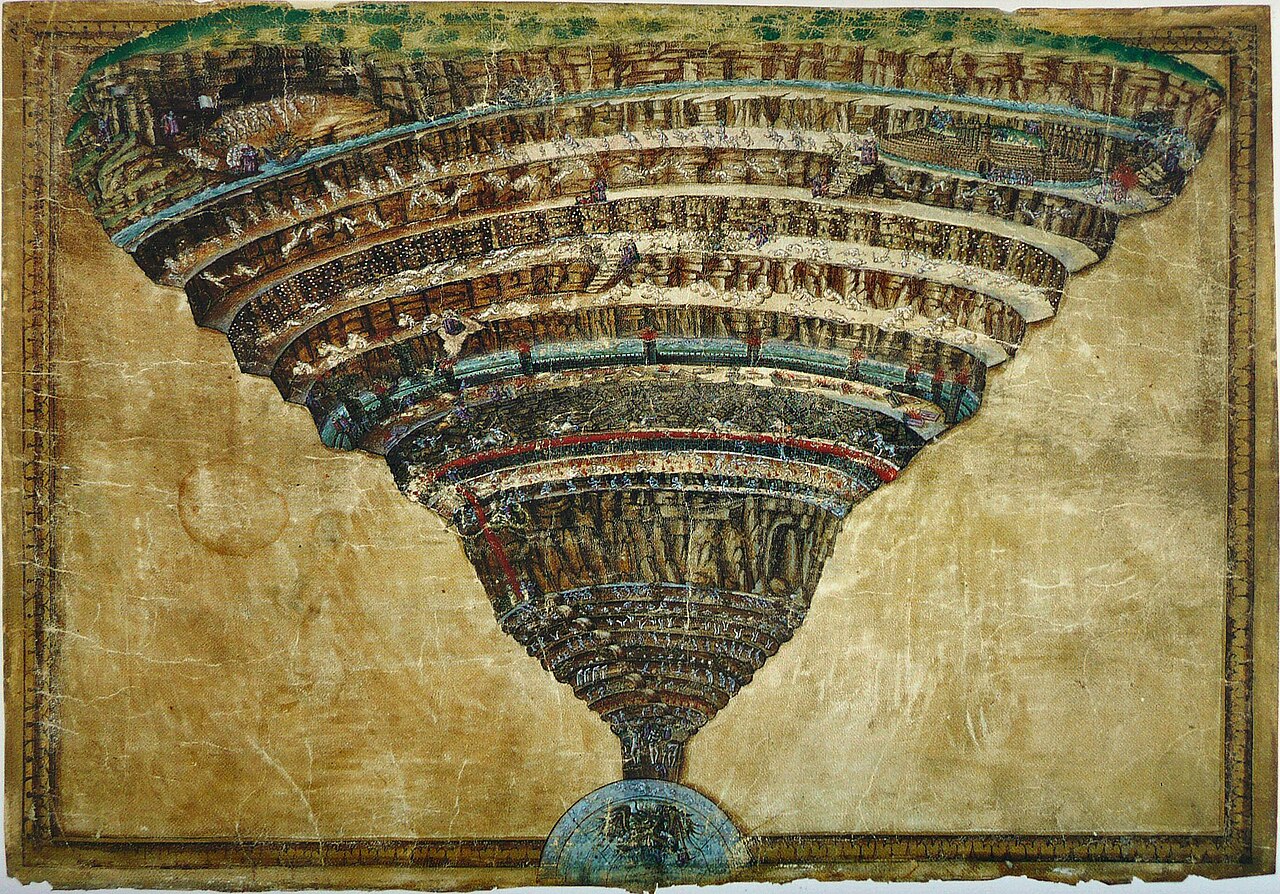
Dante’s vision of the circles of Hell.

Ash Wednesday

Today is Ash Wednesday, the start of Lent. Some thoughts about that. Click here to support the Wednesday Blog: https://www.patreon.com/sthosdkane

In past years when I’ve written columns and devotionals around this time of year recognizing the beginning of Lent, they’ve been on some levels joking (I once referred to this season as the past tense of to lend) while on others they’ve been overly serious and solemn. There’s certainly room for both angles. This year, I feel a little less strongly moved by the whole experience, yes, I know we’re approaching a time of great meaning and purpose, yet in my mind that’s overwhelmed by the onset of what hopefully will be better Spring weather this week. 

As I’ve gotten older, I’ve found that the passing of the seasons impresses me differently than it used to. When I was first learning the names of the months and seasons in school, I noticed the changes quite profoundly. The first of each month was a moment of regard. Today though, month by month passes as one after another in a parade ever blending with its compatriots into one great cyclical mass of the year. I notice today more so the changing of the weather than I do the months or even the seasons. I notice the waves of warm air coming out of the southwest fighting against the cold air pushing down from the northwest. I notice now how each passing rain and snow leads either towards the warmth of summer or the cold of winter. For me the year is far more a day-by-day affair now than anything else.

So, where does that leave the liturgical year, the cycles around which my faith orbits? Honestly, I’m not sure. Perhaps because I had the opportunity to attend Catholic schools for much of my life the Catholic feast days and holidays stood out to me more at one time than they do now. The highest holy days, the Easter Triduum, Christmas, and of course the Irish feast days of Saints Patrick, Brigid, and Columcille stand out the most for me today, days when I can imagine my present moment lining up neatly with memories of my past and of the generations who came before me.

If Ash Wednesday has any potency for me today it’s in its reminder that we’re all mortal, and yes, at some point our lives are going to end. It’s a reminder of our limits, in body if possibly not in mind. I’ll go to Mass and get the ashes on my forehead as I’ve done for as long as I can remember, and yes, I’ll do the Catholic fasting (one large meal with two small meals, no meat), and I’ll likely be a bit grumpy about the whole affair. Ash Wednesday is a reminder of our lives on this Pale Blue Dot, to blend Carl Sagan’s humanism with Catholic theology. We’re all a part of this our home planet, forever tied to it, no matter how far we and our descendants might travel from its surface.A holy day like Ash Wednesday is a reminder of our worldliness, and how that world which we cherish and which we have helped build is as fragile, as mortal as we are. The ashes of the palm branches from last year’s Palm Sunday are from this same world that we are. It’s an honesty that can’t be beat or diluted, we are who we are. That’s what I’ve got this week.

Beethoven’s Ghost

Ludwig van Beethoven, Piano trio in D Major, op. 70, no. 1, musical autograph.

Over the weekend I took a break from my usual work and TV schedule and decided to watch something on the PBS streaming app. I ended up choosing the latest episode of Scott Yoo’s series Now Hear This which has been airing as a part of PBS’s long time arts show Great Performances. I wrote about Yoo’s episode on Mozart a few months ago, and this iteration’s focus on Beethoven likewise did not disappoint. The premise of the episode was essentially Yoo and friends renting out an old Gilded Age mansion in the Berkshires and recording Beethoven’s Ghost Trio (op. 70, no. 1). At the same time, in the Halloween spirit of the weekend when this episode aired, the ghost of Hr. Beethoven himself appeared to listen to his music being played once again. Yet alongside the great composer also appeared the ghost of Dr. Sigmund Freud, who it turned out, had been offering psychoanalysis to the ghosts of dead composers since his own demise in 1939.

At first, I have to admit, I laughed at the idea that Freud interviewing Beethoven would fill the biographical aspect of this episode. It made sense, but it seemed like a silly idea. But as the show went on, I found the premise not only believable but it made Beethoven himself seem more endearing and modern. Now for both of these to occur, I have to admit that I do tend to believe in the possibility of the supernatural. Writing as a Catholic, I believe in an afterlife, and that likely both gentlemen in question are currently in residence there. What’s more, I’ve always thought that one of the things I’d love to do after I died would be to sit down and talk to some of these famous people: Beethoven, Lincoln, Frederick Douglass, among all my own relatives I’d be dying to meet.

By the time the episode ended I really liked the idea of having the ghosts of historical figures interviewing each other as a way of describing their biographies. Sure, it’s corny, but it works. I remember a few years ago KCPT (Kansas City PBS) had a program that they ran with the KC Public Library where Crosby Kemper, then the library’s director, would interview figures from Kansas City’s past: whether they be President Truman, Buffalo Bill Cody, some of the great jazz band leaders, or Boss Tom Pendergast. In many ways, the format that Yoo and friends came up with having Freud’s ghost interview Beethoven’s ghost fits that same model.

Then again, one final question arises from the grave: are they Freud’s ghost and Beethoven’s ghost, or are they just simply Freud and Beethoven? What’s the difference between a potential remnant of a deceased soul and the person they once were? And if there is a difference, does that mean that experience makes all of us who we are?

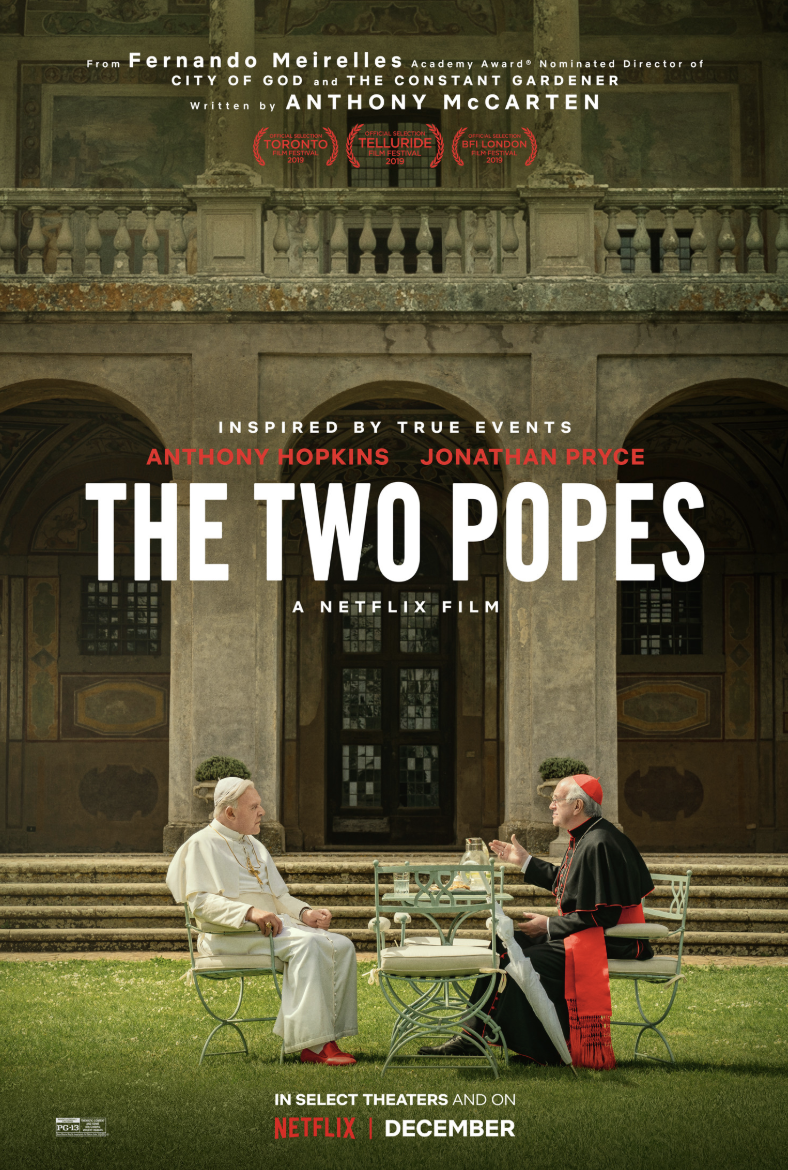
Why I enjoyed Netflix’s “The Two Popes”

Two Popes posterNetflix’s new two-hour film The Two Popes starring Jonathan Pryce as Pope Francis and Sir Anthony Hopkins as Pope Emeritus Benedict XVI is theatre, pure and simple. It falls into one of the most classic sorts of plays, a dialogue between two men with similar positions yet very different experiences. While not all the conversations that make up The Two Popes may have happened, according to an article in America, the story that they tell on the screen is beautifully rendered and exceptionally human in its content.
The film begins with the Papal Conclave of 2005 at the death of Pope, now Saint, John Paul II, when then Cardinal Josef Ratzinger was elected as the new Supreme Pontiff, taking the name Benedict XVI. The conflict between Benedict and the reformist cardinal Jorge Maria Bergoglio, the current pope, is made clear from the first moment. Moreover, the two characters are framed as foils for each other: Benedict is removed from the world while Francis is fully a part of it; Benedict is traditional while Francis is less keen on pomp and grandeur of the Papacy and the Church in general; Benedict says he is disliked when observing how Francis seems to make friends with just about anyone he meets.

It is important to understand that while this film tells a story inspired by the recent events of the lives of two of the most important men in our lifetimes, it is nonetheless a story meant to entertain and give the audience a message of hope for redemption, peace, and a willingness to accept change even if it may not be the change we expected. In that sense The Two Popes has a bit of the same spirit that has enriched many a story down the centuries. There’s a sense in this film that if two people with opposing perspectives sit down and talk about their disagreements, that eventually they’ll reach some sort of common understanding, or at least mutual respect. Both Popes come to respect each other out of a mutual understanding of their imperfect humanity, that both men have made mistakes in their lives, yet they still have striven to do good.

The Two Popes does not hold back on the problems facing the Catholic Church today. It acknowledges the scandals and errors that continue to plague the Church now at the start of the 2020s. Yet it takes those scandals, those errors, those misjudgments, and it uses them to breath even more life into these two characters. I enjoyed this film because it’s a well written bit of theatre, depicted beautifully on the screen. The Two Popes, and in particular Pryce and Hopkins’s performances, do what any good bit of writing is supposed to do: make the audience think.

Optimism and Belief

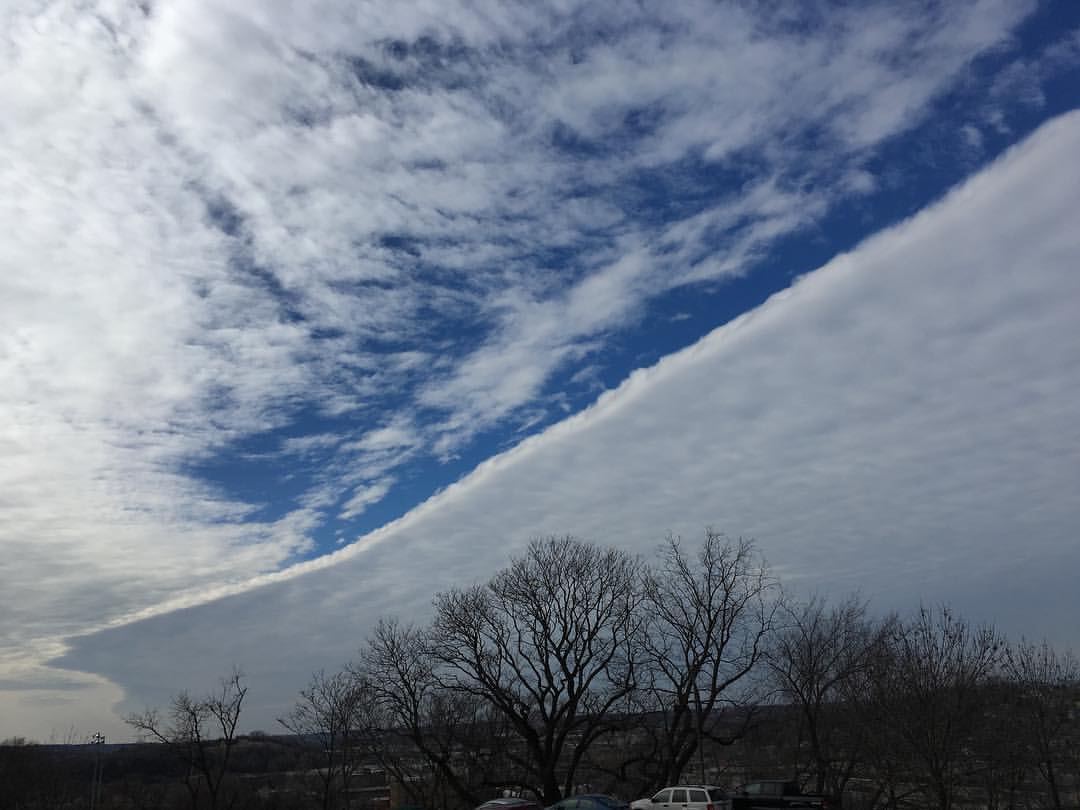
Cloud-line

In my life, there have been two things standing as constants: optimism and belief. I have embraced these two guiding principles, and striven in due course to live a better life as a part of the wider human community through them. For me, my faith as a Catholic and as a Christian is an inherently positive one; it is a faith in Resurrection, in Union with the Divine Essence, in the fulfilment of the circle and restoration of humanity to paradise.

Yet to allow this faith to persist I have found myself inherently optimistic, always expecting the best from people, and looking at even the darkest of situations with the hope that is required to believe in something greater than Reality. True, this is blind faith, something entirely counter to the principles of our scientific age, yet in the end is not blind faith equally necessary in a scientific setting? After all, we have yet to learn all that there is to know about nature, our sciences are as of yet unfinished in amassing the totality of reality. Therefore, if we are to accept science as an effective and prosperous measure of nature, then we must also accept that that measure is man-made and limited in its scope.

I see those things measured by science each and every day, and I am in awe of their wonder. I see how the Sun rises in the east and sets in the west, how the stars circle in the sky as the year passes. I hear the wind bristling through the leaves of the trees, and across the tall grass prairies. I have known what it means to be caught on the beach at high tide, and to be at the mercy of the awesome tempestuous power of lightning. Past generations might well have worshiped these forces of nature, seen them as gods like Zeus, Taranis, or Ukko, yet I see them as terrestrial, as natural, as real. The true force, the veritable essence to be worshiped is far greater than even the rolling thunder or bristling lightning.

In these circumstances I am reminded of the American hymn How Great Thou Art, yet in the smallest of moments too I am reminded of God’s coming to Elijah on the softest breath of wind in the cave. Divinity and the essence that made all that we know and love is so far beyond our own understanding, yet in that realisation I find my peace.

Often it can be said that I find my belief renewed through music, through that purest, most mellifluous of sound. Some of the most sacred moments of my life, the most moving moments in the story of my belief have come in moments of music, from operas like Mozart’s Die Zauberflöte to the Pilgrim’s Chorus in Wagner’s Tannhäuser to great orchestral outbursts of emotion as in Stravinsky’s Firebird and most all of Mahler’s symphonies; yet equally spiritually potent for me are the more recently composed naturalistic Mass settings that I sang with the Rockhurst University Chorus while an undergraduate student there from 2011 to 2015. Music has long been said to be the Voice of the Heavens, and certainly it has appeared to be so to me.

Yet what I find the most fulfilling to my belief in the Divine is humanity. In the Christian tradition we believe that humanity was “Created in the Image and Likeness of God.” For me, this means that our souls particularly were made in the Divine Image, but that our bodies also have Divine inspiration. When I see humanity, with all our faults, all our problems, all our pain and anguish, I can’t help but be swept off my feet in grief. Yet at the end of the day I always remember the old adage echoed by Little Orphan Annie, “Tomorrow will be a brighter day.”

I believe that one day that will come true, that one day all will be sorted out in our capitals, our courts, our executive palaces. I believe that one day we will march through our cities, not in protest or in anger, not out of anguish or to alleviate our suffering, but because we are celebrating that most essential characteristic of our humanity: liberty. I believe that someday all humanity will walk together, singing in unison, a multitude of voices, of languages, of cultures and creeds making one song. I believe in optimism, and I am optimistic about my belief.

The Pope and the President

Embed from Getty Images

Today a rather oddly stacked meeting took place in the splendid halls of the Apostolic Palace in the Vatican. It was a meeting between two men who could not have possibly been more ideologically or culturally opposed to each other. Yet there they were, Pope Francis and President Trump standing side-by-side. Their meeting was a diplomatic affair, in part to appease the conservative Catholic base that had aided Trump in winning the presidency in November 2016.

I was unsurprised when a few weeks ago the news broke that Trump would be visiting Pope Francis in the Vatican, after all every American president since Eisenhower had made a visit to the Holy See to meet with every pontiff since Pope Saint John XXIII. Yet I found myself hoping, even praying, that Pope Francis would bend traditional diplomatic protocol ever so slightly and arrange for his meeting with the new president not in the splendour of the Apostolic Palace where all the temporal power and wealth of the Church is to be found. Rather, I hoped the Holy Father would invite the President to meet him in one of the Vatican’s charitable centres, perhaps in the homeless shelter that Pope Francis opened in January of this year, or in one of the city-state’s soup kitchens.

If there is one trait that the current United States President does not understand, let alone practice, it is humility. During his visit to the Eternal City he should take the time to visit the Basilica of Saint Lawrence outside the Walls (San Lorenzo fuori le Mura). It was here in the third century that Saint Lawrence, a martyr of the Early Church, was buried. When asked by the Prefect of Rome to hand over all the riches of the Church to the Imperial Treasury, Lawrence responded by gathering all of the poor and destitute who had benefited from the Church’s charity and brought them together to line the street leading to the centre of the old Christian Quarter.

When the Prefect returned, Lawrence announced that he had gathered the riches of the Church together in one place for the Prefect to view. Lawrence then led the Prefect down the street, showing him the great mass of people before him, announcing, “These are the riches of the Church.” For his efforts, Saint Lawrence was grilled alive, yet his message rings just as resoundingly now as it did eighteen centuries ago.

Donald Trump is a fairly successful man. He’s done well for himself crafting a business empire based primarily on his name brand. Yet his brand of gaudy luxury cannot compare to that which is truly worthwhile in life. I have found that as much as wealth, power, and prestige can bring me happiness in the short term, it does not bring me long-term fulfilment. I have found some other qualities, love, charity, compassion, and a general sense of goodwill to be the true key to happiness.

I have seen what power can do to people, and know all to well that I want as little as possible to do with it. All I want in life is to be with the people I love, to see that they fare well, and to ensure that the generations to come have a better life than I could possibly imagine. While having some wealth can certainly contribute to this, enough to ensure that in the confines of our economic system my family will not have to worry, that money ought to always be of secondary importance to all of us. We need money to live, but we should not live for money. Unfortunately for him, and for the rest of us it seems that President Trump has yet to figure that out.

Embed from Getty Images

Odysseus in Ithaca

Kansas City – Let me begin with a brief confession: today was the first time I had gone to Mass since my first Sunday in London exactly 2 months ago! What’s even worse about it is that I’m writing this in my blog even before heading to the confessional to admit my failure at keeping the Sabbath to my parish priest. So, today seemed like a good day to break the drought. Happy Assumption Day!

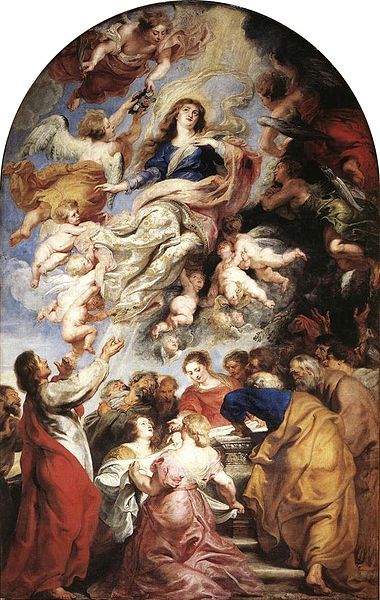
Assumption of Mary - Reubens.

Happy Assumption Day!

Assumption Day is one of those odd holy days of obligation that usually doesn’t fall on a Sunday. For my non-Catholic readership, a holy day of obligation is a day when all Catholics are required to attend Mass. The big ones are Christmas, Easter, the Triduum (Holy Thursday, Good Friday, Easter Vigil/Sunday), Pentecost Sunday, Corpus Christi, Palm Sunday, Ash Wednesday, and Annunciation Sunday. Then there are the Marian feasts. Assumption Day (15 August) is the feast which marks the event when the Blessed Virgin Mary was assumed, that is carried up into Heaven following the Ascension of Christ. The other big Marian feast is Immaculate Conception Day, which marks Mary’s being immaculately conceived (that is conceived without sin), which falls in early December.

The reason why Assumption Day is so memorable for me is that it also falls in the middle of a sort of temporal anomaly, not in the Doctor Who or even in the physical sense, but rather in the sense of timekeeping. See, I don’t follow the seasons as they are set down based upon the Equinoxes and Solstices. Rather, I use the older Gaelic calendar, which has the aforementioned solar events placed as the middle of the seasons. So, Winter begins on All Saint’s Day (1 November), Spring on St Bridgid’s Day (1 February), Summer on Bealtaine, May Day, (1 May). However, Autumn is the problem maker. The problem arises when one looks at the traditional Gaelic start of Autumn: Lúnasa (1 August). However, this doesn’t work very well with the social calendar, which in the Anglosphere usually has Autumn beginning with the start of the academic year, which falls usually around the start of September, Labour Day Weekend here in the States. So, to mend this problem in my calendar-keeping, I decided instead of observing the start of Autumn quite early on Lúnasa, or rather late on Labour Day, I’d observe it in the middle: Assumption Day (15 August.) So, Happy Autumn!

All this being said, the coming of Autumn means the coming of another academic year. This, for me, 18th annual instalment of the start of a new school year, comes at quite an interesting time in my life. I’ve had some troubles adjusting to living here in the States again after spending those three weeks living in London. I found it hard to get the will power to leave the house on Sunday mornings and drive the short way up to my parish church for Mass. On top of that, I also find myself quite irked by the politics of this country, and of the Church in this country, after experiencing the British political system firsthand. Let’s face it, I don’t get the reasoning behind all these people screaming and shouting about how they don’t want affordable health care, as our good President has enacted, or how they’re wanting to shut down the government by blocking every possible legislative measure that is proposed by the White House or the Democrats. I mean, seriously people, grow up! It reminds me of a pair of little kids playing in a sandbox, one of the two refusing to give the other the pail and shovel with which to build a sandcastle. It’s bloody infantile!

So, when Assumption Day came around, I found myself resolved to get out of the house and go back to Rockhurst to attend the Noon Mass, as a way to end the streak of skipping, and to give myself a fresh start with the new season. In a way, it was like Odysseus returning to Ithaca. I was leaving all the suitors, all of the emotions, that had kept me away for two months behind, and faced my community once again. True, it was an odd thing seeing these people after having travelled halfway around the world, but there I was.

However, I returned with more experience, more maturity. On the 14th, I had an interview on Skype with one of the Global Ambassador coordinators at ISA, the company who I went over to England with. By the end of that 20 minute conversation, I was one of those very Global Ambassadors working as an intern for ISA! This is a job that I am looking forward to, and one which I know I will love doing.

So then, the proper return to Ithaca will take place on Saturday. To all of my Rockhurst readership, I look forward to seeing you guys soon! The packing has begun, and the great migration up Rockhill Road shall soon commence!