
Tag Archives: Chico Marx

Dalí and the Surreal

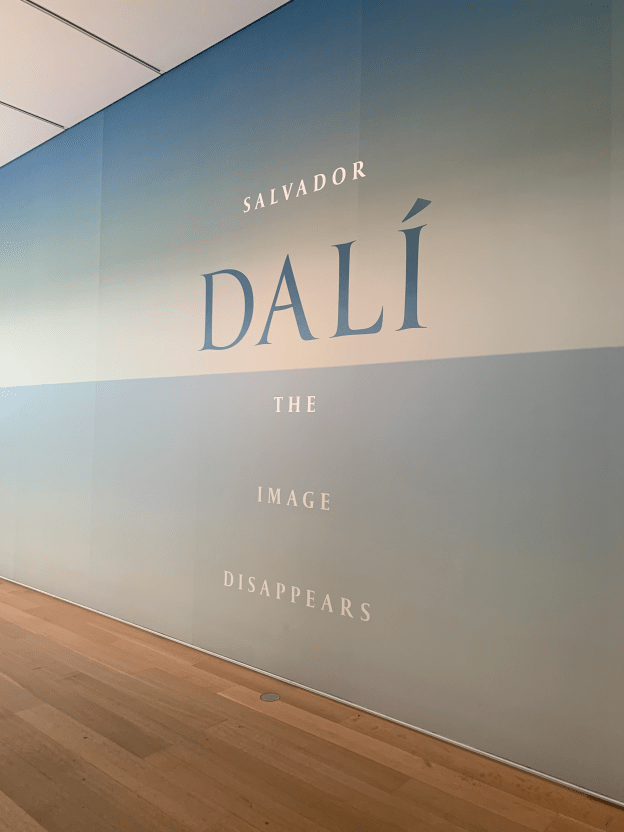
Over the weekend I was in Chicago to see a special exhibit at the Art Institute called Salvador Dalí: The Image Disappears. It got me thinking about the appeal of the surreal. Click here to support the Wednesday Blog: https://www.patreon.com/sthosdkane

Over the weekend I was in Chicago to see a special exhibit at the Art Institute called Salvador Dalí: The Image Disappears. It got me thinking about the appeal of the surreal.

I for one really like Dalí’s art, it captures something of the subconscious possibility in the way it bends and transforms nature. Surrealism creates a mirror universe governed by its own laws, inhabited by a cast of characters that are just familiar enough to us to warrant closer inspection and intense curiosity. When developed to its fullest extent with sound and movement, the color and light of the surreal comes to life in a truly radiant and radical fashion. I’m talking of course of Dalí’s collaboration with Walt Disney, which became the short film Destino, a gorgeous film that is available today on Disney+. The Spanish guitar and drums, and singer’s voice pair well with Dalí’s images that find themselves unlocked from the monumental stone edifices they were built into upon their creation, the permanence of place and pose in painting.

The Dalí paintings at the Art Institute reflected the opposite of the great monuments of Destino, and more the impermanence and fragility of life itself. Crafted and devised throughout Dalí’s life, in particular during the troubled years of the Spanish Civil War, these images tell their own stories of paranoia and chaos. They show how Dalí expressed his emotions and innermost thoughts in his art. When world events on his doorstep forced him to contemplate horrors that pulled him from his passions, those horrors showed themselves in his work.
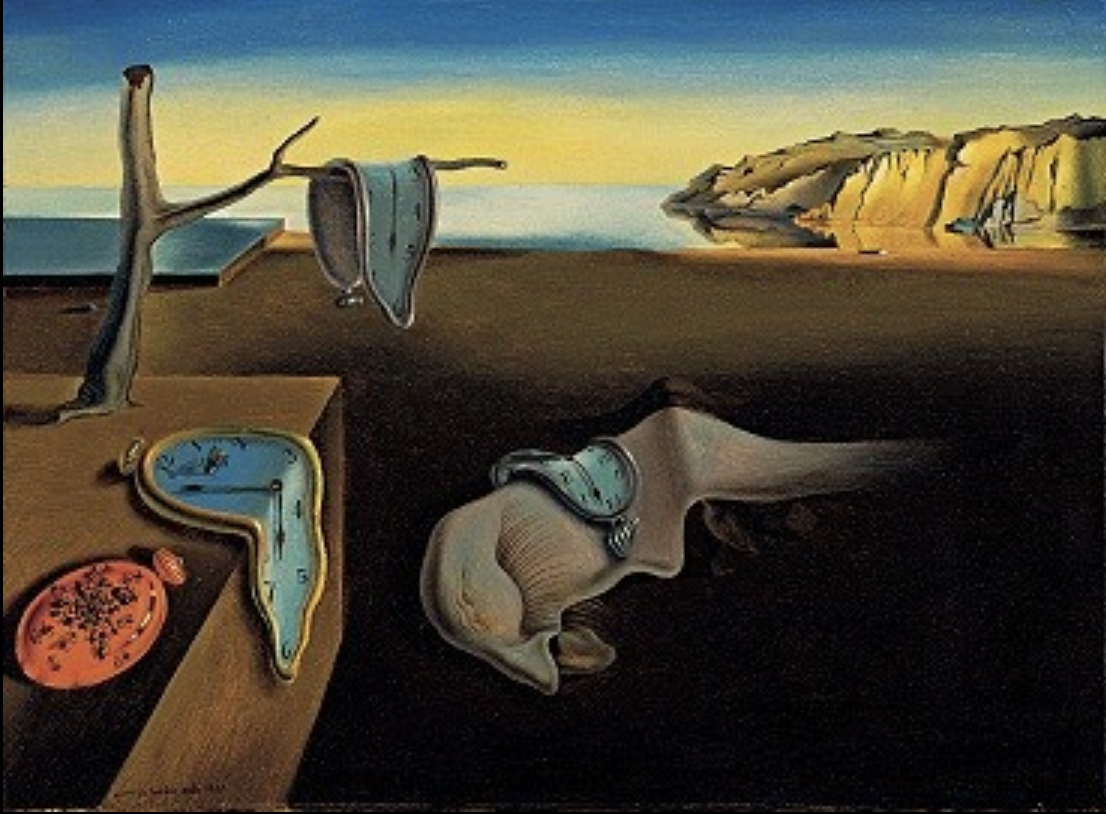
The Persistence of Memory

I’m drawn to Dalí’s most classic examples of surrealism, The Persistence of Memory being the type painting of these. They remind me with their distant hazy horizons of a book of labyrinths that I was given for Christmas one year in the early 2000s that had the same eternal yet present horizon line which stretched out from the central object echoing the idea of infinity yet not quite reaching that point itself. About a decade ago I was lucky enough to get to see another Dalí exhibit, this one in the Hallmark Headquarters at Crown Center here in Kansas City, where several Dalí images commissioned by Hallmark in the 1950s for a new line of greeting cards were on display for employees and their families. I remember Dalí’s interpretation of Santa for a Christmas card was fascinating, though not what Hallmark, the Norman Rockwell of American companies, necessarily wanted.

On Monday, I decided to compliment the Dalí exhibit with a visit to the Nelson-Atkins Museum of Art here in Kansas City to see Alberto Giacometti: Toward the Ultimate Figure, a collection of sketches, paintings, and sculptures by the Swiss master artist whose work spanned the first six decades of the twentieth century, and was in many ways Dalí’s contemporary. Yet where Dalí sought to interpret the human form through distortion imbued with a great sunny sense of Catalan romance, Giacometti’s works narrowed down their focus to the purest and ultimate human figure, which he crafted throughout his life’s work into sculptures notable for their roughness, slenderness, and height. I for one prefer Dalí’s vision over Giacometti’s, though I respect both artists for what they were trying to create.

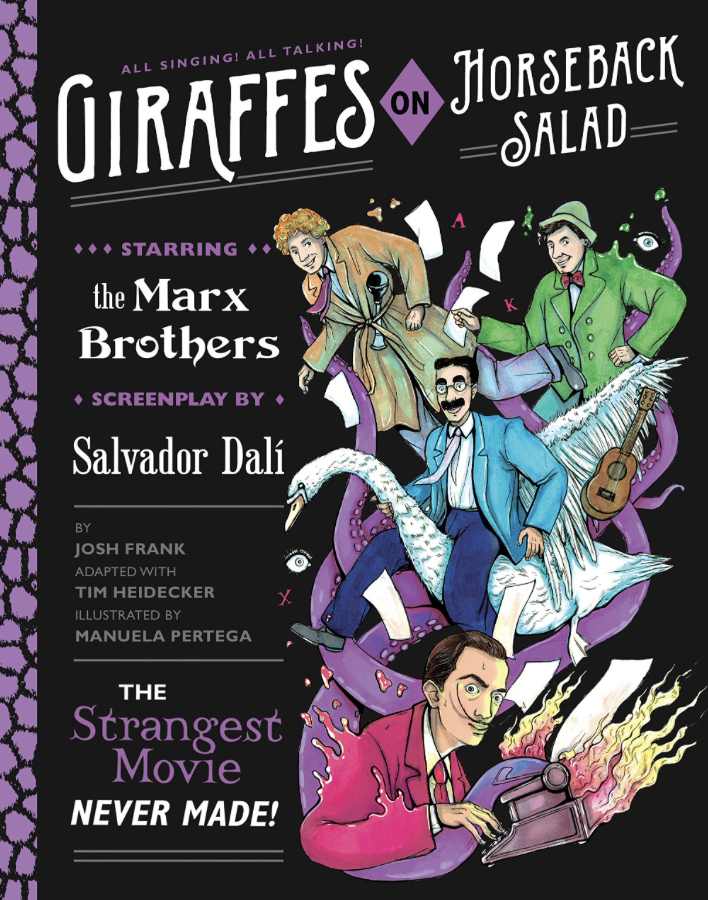
The surreal appeals to me because it echoes the disorderly world of my own dreams, the images that dance through my mind when I sleep are best described as surreal. Dalí collaborated with one of my favorite comics of his day, Harpo Marx, to create a film which ultimately was dropped by MGM for being too strange and finally in the last decade adapted into a graphic novel called Giraffes on Horseback Salad. Neither man spoke each other’s language, yet they both knew how to approach the language of the surreal, and so crafted a story that is the definition of weird and silly, that proved to be too strange even for Harpo’s brother Groucho. It’s good for us to have this alternate to our own world to turn to, this dreamlike fantasy realm where things don’t quite add up to how we expect. We humans are too imaginative to really fully be the normal people we make ourselves out to be. We have dreams, all of us, and rarely do they turn out to meet our expectations of what is normal.
Christmas and the Passing of the Seasons

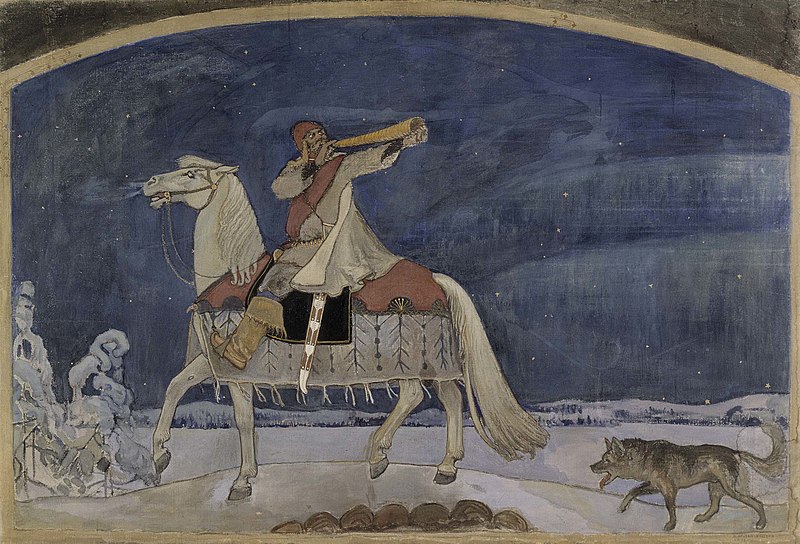
Akseli Gallen-Kallela, Kullervo Sets Off for War, 1901, tempera, 89 x 128 cm, Ateneum, Helsinki, Finland.

Christmas and the Passing of the Seasons Wednesday Blog by Seán Thomas Kane

This week I'm discussing what Christmas has meant to me throughout my life, and how it fits into the mythos of the seasons overall.

I think the general feelings I get at different times of the year were instilled very early on. I remember in first grade being told that if the weather in March came in “like a lion” it would surely go out “like a lamb,” meaning if the month started with bad weather, snow, ice, or even thunderstorms in a warmer year, then we’d end up with a quiet end to that month. Likewise, I can’t remember quite when I first heard it, that the Winter Sun always shines with the wolf’s teeth. This to say that as bright and warm as the Sun’s rays appear in Winter, you’ll still feel the biting cold of Winter if you go outside in that time of the year.

To me, Christmas has always been a bright light on a wine-dark sea, a moment of celebration, of seeing family and friends, of hearing the triumphant hymns at Midnight Mass and reaffirming how much we all really do care for each other. Christmas has its traditions, both sacred and secular: not only is Midnight Mass, now often celebrated at 21:00 or 22:00 on Christmas Eve a part of the schedule, but so too traditionally are the big family parties, unwrapping gifts on Christmas morning next to our tree, and watching any number of Christmas specials, especially Charlie Brown, and occasionally Die Hard too. The week before Christmas always includes my birthday, the 20th, which has its own traditions and things I look forward to every year.

Yet as I get older, now in the last year of my twenties, I can understand what C.S. Lewis meant in The Last Battle when he said that the eldest Pevensie sibling, Susan, didn’t return to Narnia because she had grown up and didn’t believe in it anymore. I still believe in the fact that there’s something special at Christmas, even if I’m more the skeptic about any sort of “Sanity Claus”, as Chico Marx put it, but it doesn’t have the same impact on me as it did when I was a wide-eyed child. Last Christmas … (I’ll give you a minute to sing that Wham! song) … Last Christmas, our first during the COVID pandemic, my parents and I decided to take a firmly defiant stance: we were going to go all out with the decorating and try to force the point that it was Christmas as much as possible, lest we remember we wouldn’t be going to any services or hosting any big family parties. It ended up being a melancholy affair, sure there were wonderful moments, but by and large I found myself longing for Christmases of yore when we’d be so exhausted come bedtime on Christmas night that we’d drift off into wonderful dreams, perhaps “visions of sugar-plums” dancing in our heads.

This year though, now in our second year of the pandemic if anything the three of us are exhausted by it all. The constant fear of infection, the usual work-induced weariness, and life in general. 2021 has been a hard year. We’ve struggled through it, through every season as the calendar rolls along, but I think it’s fair to say 2021, like 2020, is a year we’ll be happy to leave. This Christmas feels like Christmas, just as my birthday this week felt like my birthday usually does, but with a shrug instead of a smile. Winter even seems harder to tolerate this year. 

I was in high school when I first saw a Finnish painting that to me spoke of the nature of Winter. It shows a horseman mounted, wearing a slightly medieval garb, turning around to look up into the stars that carpet the purple night sky, illuminated as much by the snow below as the lights in the heavens above. In his hand he holds a hunting horn, which he blows to announce his ride onward as his trusty hound follows behind. The image there, of the rider in the snow beneath the stars in the purplish Winter’s night sky always seemed to speak to me of Winter, meagre and cold, yet suggestive of some magic that might exist in those long dark nights. 

It was only later, when I visited Finland for the first time in May 2016 that I learned that this painting, first created in 1901, is one by Akseli Gallen-Kallela (1865-1931), called Kullervo Sets Off for War. It depicts Kullervo, a tragic character from the Kalevala, the Finnish national epic compiled by Elias Lönnrot in the 19th century. The story behind the painting, while different from how I imagined it, reminds me nevertheless of the mystery of Winter, the unknown quality that those long dark nights hold, and the stories I’ve heard and come up with myself to give character, voice, and song to what might otherwise be a quiet, dark, and lonely time for us all.

For those of you who celebrate it, I wish you a most Merry Christmas, and for all the rest of you, Happy Holidays.