
Tag Archives: Childhood

Anniversaries

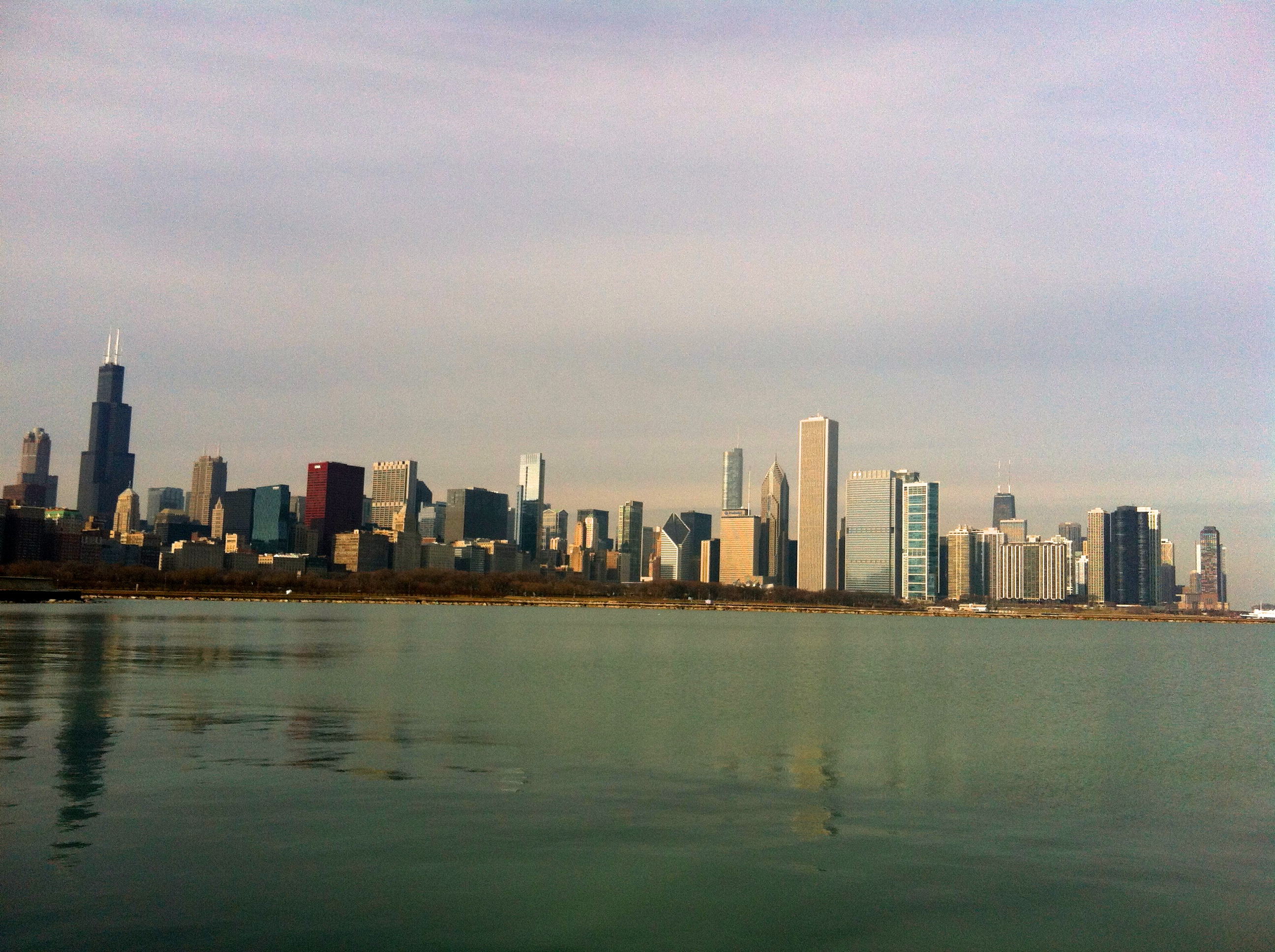
The Chicago skyline as seen from the Museum Campus in January 2013
This week, I feel a bit sentimental about the biggest anniversary in my life to date.

23 years ago this week, my parents and I packed up our house in the Chicago suburbs and moved about 500 miles southwest to a farm on the western edge of Kansas City, Kansas. There were so many different aspects to that move from an opportunity for a different sort of life to the chance that I could grow up with my maternal cousins. In the years since we’ve had all that and more. Still, for the first 20 years I approached this anniversary with a bit of a sour attitude. 

I was excited at first at the prospect of moving to a farm, to a place where we’d have horses and all sorts of pets (back then I was really into cowboys as well as dinosaurs like your typical 6-year-old). But as time passed and I began to realize what it meant to be living on a farm on the outskirts of a metropolitan city away from so many of the things I’d come to know and love back in Chicago, I developed a sense of gloom about the whole story.

It took until my mid-twenties for me to fully appreciate how wonderful a city Kansas City is, and how much it had really become my home. As the twentieth anniversary of the big move approached in 2019, I was back in Chicago for a week for probably the first time as an adult returning to my original hometown for business rather than on a family trip. At that point I seemed to be on the verge of securing a position back in that city and felt like all my hopes of the previous two decades were finally coming true. That job didn’t end up panning out, and besides a quick overnight stop in the suburbs on a long drive west to Kansas City from Upstate New York in October 2020, I haven’t been back to the city of my birth yet this decade.

When I was there in January 2019 attending the American Historical Association’s annual conference, I paused here and there between things to reflect on the life I might have had if we’d stayed. Now as an adult having gone through academia I wonder if I might be in a more advantageous position today professionally if I’d gone to high school and college up there rather than down here. Don’t misunderstand me, my education at St. James and Rockhurst was wonderful and something I’ll always treasure. Still, the opportunities of things to study, especially in the sciences, are far greater there than here. In fact, I wonder if I would be in a different field today if we had stayed there than here: planetary science, paleontology, geology, who knows, maybe even anthropology.

It’s curious to me that my interest in history didn’t really begin until after the move to Kansas City. In Chicago we were members of the Field Museum, a cultural icon that we visited easily once or twice every month. My fascination with the past was born in those hallowed halls, first for dinosaurs and in more recent years for the ancient megafauna of the Pleistocene and for anthropology. Without that steady anchor in the natural sciences to keep my interest I began to turn to other things like Roman and later medieval history as well as linguistics.

The Field Museum in its Winter splendor

In many ways, that move impacted me far greater than any other event in my life so far. I became the guy I am today because of it. The guy in the classroom with more complicated loyalties and interests, the one with two favorite baseball teams (the Cubs and the Royals). Yet I’ve realized in recent years that I accentuated the fact that I’m not a native Kansas Citian for a good long while because it was something I could use to stand out from the crowd. Though rather than it being just a bunch of grandstanding, that fact of my life is one of the deepest and most personal parts of my story. Loyalty is something I treasure above all, and my own loyalty to my original hometown, even after 23 years, remains strong. To me, for example, abandoning the Cubs would be like turning my back on a core part of my identity.

That passion is helped by the fact that those first six years contain many of my best memories, like the April Fool’s Day when my Mom woke me up to a clear sky and said, “I took the day off work, and I’m keeping you out of school today. Let’s go to the Brookfield Zoo.” Or the time when some relatives were visiting, and I rode with my Aunt Kay in the back of my parents’ Ford Explorer down the Eisenhower Expressway so all of us could go see the then brand-new Michael Jordan statue outside the United Center. There are the times when I got to go visit my grandparents with my Dad up in Mt. Prospect, or the times when he took me on the Metra downtown to go to the Field Museum (again, that old museum). There are all the summer days we spent on our sailboat, the Arctic Tern, out on Lake Michigan up and down the Chicago lakefront and out to where the skyline fell below the western horizon.

You can understand why then for 20 years I felt like I was missing something from my life. After we moved to Kansas City we went from the big towers and expansive museums and endless suburban streets to big open skies, beautiful sunsets, and days spent remembering what we had before we left the place that to me still felt most like home. I think the farm wasn’t ever really going to feel like home to me, it was too quiet, and as an only child out there I was pretty lonely. Only after we moved into Brookside, the neighborhood where my Mom grew up, did Kansas City really feel like a place where I belonged.
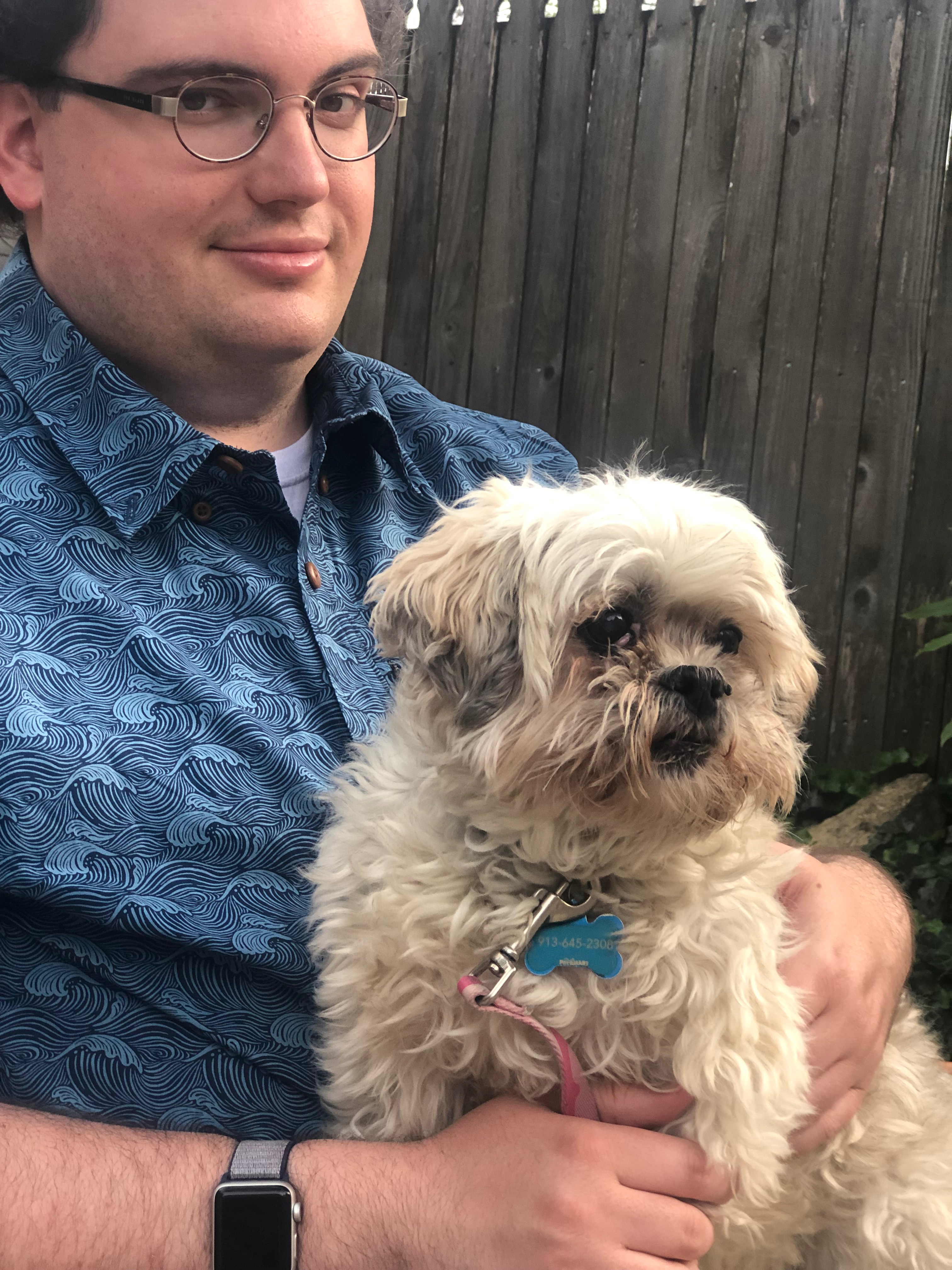
Still, as much as I may grumble about the move it has also brought so many wonderful and dear people into my life. I got to know most of my family after moving to Kansas City, all my aunts, uncles, and cousins on my Mom’s side. I also made many dear friends in school and in daily life, including some who have been a part of this podcast so far and my brothers in the Donnelly Division of the Ancient Order of Hibernians in Kansas. I would not have gotten to know my dogs and cats and other pets if it weren’t for the move. I learned to love my best friend Noel, departed a year ago this month, and became a far better, kinder, and gentler person because of her presence in my life. Kansas City has given me so much, and made me who I am today.

Now as an adult I can see many different paths ahead of me, some of which lead back to that great lakefront metropolis, the beating heart of the Midwest. Others lead me back here to the Fountain City that I’ve adopted as home after a long and sometimes begrudging trial period. Some see me keep working out in the East in one of those great cities, and still more see me move out West to California or stay closer to home in Colorado. Nevertheless, today I could conceivably decide to fly up to Chicago for the day and go walk around those museums and streets that I remember so fondly from my youth. For me the Field Museum today is as much a place of scientific wonder as it is a place of wonderful memories. I’m still a member there, even though I haven’t actually visited in three years. (Thanks, COVID!)The Ancient Greeks had an understanding of time that we are always facing backwards to the past with the future still over our shoulders. I like that idea both as a historian and as a passionate person with a still young life filled with memories. What can I say, I’m always in a sentimental mood.
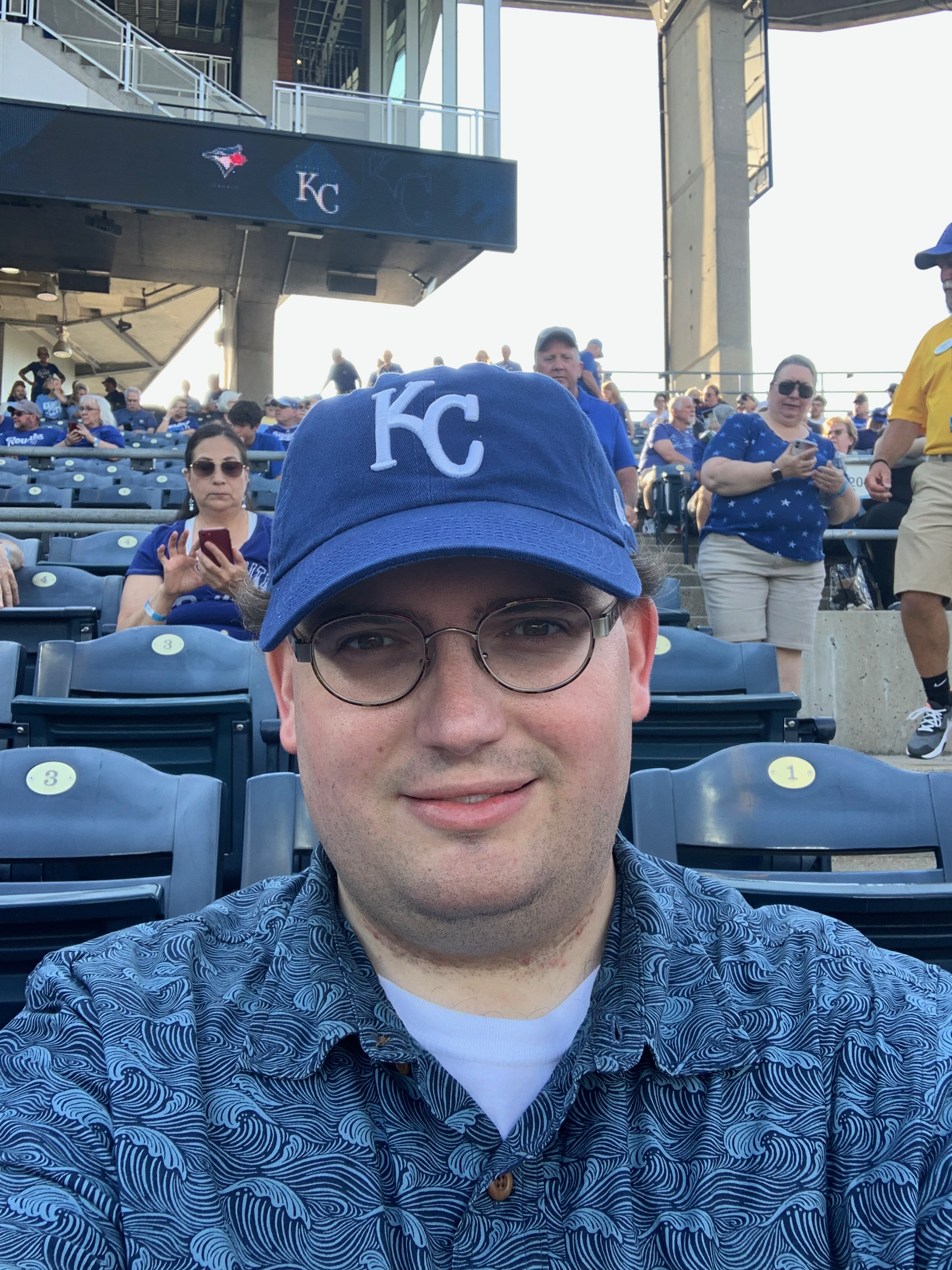

23 Years Later and I finally bought my first Royals hat.

Childhood

My Mom and I, Thanksgiving 1997
This week, reflections on childhood, from my own personal experience.

One of my favorite types of daydreams is to imagine my current self talking to my younger self. It could be me as a junior in high school or me watching off to the side as my three- and four-year-old self began to conceive of the world around me. I can remember what my younger self was thinking in any given time so the “script” if you want to call it that is one of the easiest ones to write. And in the past, as is still the case today, I often wonder about my future self, who I’ll become as I continue in my life, who I’ll meet, where I’ll live, who I will be in my future. 

A couple of weeks ago I found myself thinking about all this for a good three hours while I was flying east from Kansas City to Newark on my return trip to Binghamton from a wonderful Easter weekend at home. As I watched the prairies of the Midwest give way to the deep cloud covered Appalachians, I kept thinking about who I dreamed I would become when I was at varying stages of my life. Would my six-year-old self whose life changed dramatically when he moved with his parents from Chicago to Kansas City be proud of how my 29-year-old self has found a way into a career where he still looks back at what he loved to think about as a kid? Would my moody teenage self be happy knowing that he was still going to be single at the end of the following decade? And what about my more recent past? Would the Seán who lived in London for a year and learned so much about the world in those months abroad, would he be proud or scared at how tough the next seven years of his life were going to be?

I wonder, and maybe this is a conversation better posed to psychologists, are we still the same people who we were as kids? Or do we transform or change the shape of our personality through our lived experiences, through our joys and sorrows? I remember thinking about myself more simplistically as a child, a time when the things that I was proud to be a part of conjured up images like the Space Shuttle or other marvels of the modern world. As I learned more about myself, I found more and more things that were new to me that I could attach myself to, that I could find some connection to. My interest in Ancient Rome was born out of a conversation with my Mom when I first remember hearing my Church called Roman Catholic. I knew where Rome was (I memorized the globe at a very early age) so the idea that I was a part of something so rooted to something so ancient was thrilling. 

Similar things happened at a time that I can’t pin down when I began to understand and listen to the stories about my Irish ancestors. It’s funny, I remember only one person from that generation, my grandfather’s Aunt Catherine who died in 2000 when I was seven. I remember her accent puzzling me, but I bet if I sat with her today, I’d be able to understand her perfectly well now that I’ve got nearly 30 years of listening to people from Mayo under my belt. On my Mom’s side I have only one memory of my great-grandmother, my GG as I always called her. I must have been very young, but I remember waking up from a nap in what’s now the computer room in my grandmother’s house in Kansas City and going out into the living room where she was sitting with my grandmother. All I remember her saying was “Hi, Seán.” When I told my Mom about this memory recently she said she must have carried me out because my GG died before I could walk, meaning this could well be one of my very first memories.

Still, when I think back to all those moments as if looking down the long string of a double bass, I wonder if the guy whose eyes saw those moments, whose ears heard those sounds, whose nose smelled those smells (for good or bad) was the same guy who I am today? If I can say anything definitive, it’s that the one constant among all those memories isn’t necessarily how they were framed or what I was thinking or feeling in each moment. It’s that the same internal monologue was going in the same voice that I still think in today. A few weeks ago, I wrote about the first time I recognized my conscious thoughts, something that a lot of people said was a profound idea. I asked if that for me was the moment best described as “In the beginning” for me, with everything else I ever have come to know or will come to know happening afterwards in the order that I discovered those things? Today I want to add onto that dogpile of a question and ask, which part of my past is most influencing my present, and by extension my future? I think the best way to look at answering this question is through the lens of nostalgia.

The truth is I’m not sure which reflections of my past that live on in my memory is the one that I’m most nostalgic for. There are echoes of all of those shadows in my life and my work today, the deep passion for natural history and the natural world in general that drove my six-year-old self whose favorite places in the world included the Field Museum and the Brookfield Zoo, or the teenage reflection who loved his Latin classes more than any other and really wanted to be doing better at it but just didn’t have the patience to stop overthinking things. I think those teenage loves drove me into my adulthood, after all as much as I loved spending my time in London’s Natural History Museum it was the British Museum that I dreamed working at when I decided to do either a Classics or a History PhD in 2016. It took me a few years to get into a program, by which time I’d settled not on Ancient Rome but on the Renaissance, before building my own field from the ground up, as a kid with my childhood would tend to do, to become a Historian of Renaissance Natural History.

As it happens, this whole idea of a hyper-individualized vision of a historical timeline, beginning with a person’s first consciousness about something could be useful in my work. After all, one of the great debates in the history of how the Americas were approached by Europeans during the Renaissance is whether it’s right to say they “encountered” or “discovered” these continents. I usually prefer to say “encountered” seeing as there were already generations of people reaching back into the Ice Age who had called these continents home. Still, if we think about this question less in the scope of all of human experience and more in the limited view of how one set of humans, one branch of the family isolated from others by circumstance understood the Americas when they reached those shores in 1492 then the word “discover” coming from the Latin “discooperiō” meaning “to expose” or “to lay bare” then the word does fit the experience of the many peoples of Europe in first learning of the existence another series of worlds across the Ocean Sea that they came to call America. But our history is the history of the creation of our modern world, a global world defined by shrinking borders and a growing sense that we’re all in this together, and for that world this isolated story of one perspective “discovering” the fact that other people had already made it to first base merely makes the discoverer a shortsighted pitcher. Without all the caveats and framing, the idea doesn’t work. It speaks to the warning that it’s best not to think of whole groups of people in the same context that we’d use to think of just one guy.

So, with that out of the way, do I think my younger self would be proud of who I am today? In some ways, yes, after all I’m sticking to doing something that I love despite a great deal of the odds and the circumstances of our world in 2022 seeming to be stacked against me making a living out of being a Historian of Renaissance Natural History. I may not be working at the Field Museum or at one of the other wonderful natural history museums in this country or beyond, but I’d say that’s still a possibility. Nonetheless, I imagine that teenage Seán would be a bit more forlorn knowing he’d still be single all these years later. Teenage moodiness can cast a shadow even from the confined distance of your memories. I think the moral here, if there is one, is that there’s always room for improvement, right? And at the end of the day, as my undergrad self the triple major in History, Philosophy, and Theology with double minors in French and Music would like to say, “Anything is possible.” So, if I could go for three and a half years without a lunch break trying to earn 3 majors and 2 minors in 4 years then I can get a job doing something I love and maybe figure out the personal life while I’m at it too.