Tag Archives: COVID-19

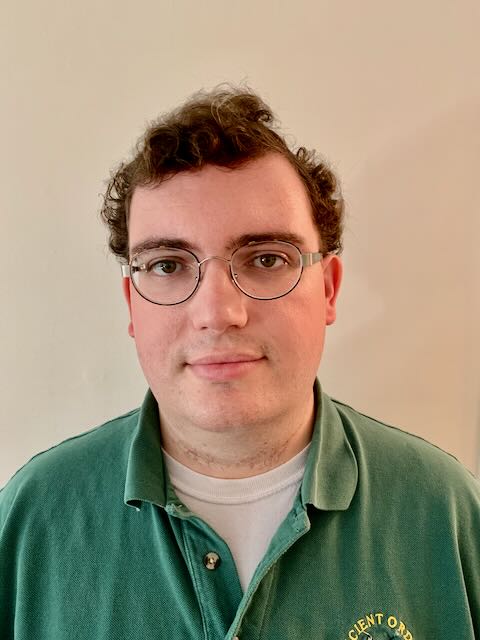
The author pulling a face at the camera.

On Writing

This week, some words about the art, and the craft, of writing.—Click here to support the Wednesday Blog: https://www.patreon.com/sthosdkane—Links in this episode:Patrick Kingsley, Ronen Bergman, and Natan Odenheimer, “How Netanyahu Prolonged the War in Gaza to Stay in Power,” The New York Times Magazine, (11 July 2025).John McWhorter, “It’s Time to Let Go of ‘African American’,” The New York Times, (10 July 2025).Bishop Mark J. Seitz, D.D., “The Living Vein of Compassion’: Immigration & the Catholic Church at this moment,” Commonweal Magazine, (June 2025), 26–32.“On Technology,” The Wednesday Blog 5.2.“Artificial Intelligence,” The Wednesday Blog 4.1.


This week, some words about the art, and the craft, of writing.


In the last week I’ve been hard at work on what I hope is the last great effort toward completing my dissertation and earning my doctorate. Yet unlike so much of that work which currently stands at 102,803 words across 295 U.S. Letter sized pages inclusive of footnotes, front matter, and the rolling credits of my bibliography I am now sat at my desk day in and day out not writing but reading intently and thoroughly books that I’ve read before yet now find the need for a refresher on their arguments as they pertain to the subject of my dissertation: that André Thevet’s use of the French word sauvage, which can be translated into English as either savage or wild, is characteristic of the manner in which the French understood Brazil as the site of its first American colony and the Americas overall within the broader context of French conceptions of civility in the middle decades of the sixteenth century. I know, it’s a long sentence. Those of you listening may want to rewind a few seconds to hear that again. Those of you reading can do what my eyes do so often, darting back and forth between lines.

As I’ve undertaken this last great measure, I’ve dedicated myself almost entirely to completing it, clearing my calendar as much as I see reasonable to finish this job and move on with my life to what I am sure will be better days ahead. Still, I remain committed to exercising, usually 5 km walks around the neighborhood for an hour each morning, and the occasional break for my mind to think about the things I’ve read while I distract myself with something else. That distraction has truly been found on YouTube since I started high school and had a laptop of my own. This week, I was planning on writing a blog post which compared the way that my generation embraced the innovation of school-issued laptops in the classroom and the way that starting next month schools and universities across this country will be introducing artificial intelligence tools to classrooms. I see the benefits, and I see tremendous risks as well, yet I will save that for a lofty second half of this particular essay.

I’ve fairly well trained the YouTube algorithm to show me the sorts of videos that I tend to enjoy most. Opening it now I see a segment from this past weekend’s broadcast of CBS Sunday Morning, several tracks from classical music albums, a clip from the Marx Brothers’ film A Night at the Opera, the source of my favorite Halloween joke, and a variety of comic videos from Conan O’Brien Needs a Friend to old Whose Line is it Anyway clips. Further down are the documentary videos I enjoy from history, language, urbanist, and transportation YouTubers. Yet in the last week or so I’ve been seeing more short videos of a minute or less with clips from Steven Spielberg’s 2012 film Lincoln. I loved this film when I saw it that Thanksgiving at my local cinema. As longtime readers of the Wednesday Blog know, I like to call Mr. Lincoln my patron saint within the American civic religion. As a young boy in Illinois in the ‘90s, he was the hero from our state who saved the Union and led the fight to abolish slavery during the Civil War 130 years before. Now, 30 years later and 160 years out from that most horrific of American wars I decided to watch that film again for the first time in a decade. In fact, I’m writing this just after watching it so some of the inspiration from Mr. Lincoln’s lofty words performed by the great Daniel Day-Lewis might rub off on my writing just enough to make something inspirational this week before I return in the morning to my historiography reading.

Mr. Lincoln knew what every writer has ever known, that putting words to paper preserves them for longer than uttering even the longest string of syllables can last. What I mean to say is they’ll remember what you had to say longer if you write it down. He knew for a fact that the oft quoted and oft mocked maxim that the pen is mightier than the sword is the truth. After all, a sword can take a life, as so many have done down our history and into our deepest past to the proverbial Cain, yet pens give life to ideas that outlive any flesh and bone. I believe writing is the greatest human invention because it is the key to immortality. Through our writing generations from now people will seek to learn more about us in our moment in the long human story. I admit a certain boldness in my thinking about this, after all I’ve seen how the readership and listener numbers for the Wednesday Blog ebb and flow, and I know full well that there’s a good chance no one in the week I publish this will read it. Yet I hold out hope that someday there’ll be some graduate student looking for something to build a career on who might just stumble across my name in a seminar on a sunny afternoon and think “that sounds curious,” only to then find some old book of my essays called The Wednesday Blog and then that student will be reading these words. 

I write because I want to be heard, yet I’ve lived long enough to know that it takes time for people to be willing to listen, that’s fair. I’ve got a growing stack of newspaper articles of the affairs of our time growing while my attention is drawn solely to my dissertation. I want, for instance, to read the work of New York Times reporters Patrick Kingsley, Ronen Bergman, and Natan Odenheimer in a lengthy and thorough piece on how Israeli Prime Minister Netanyahu “prolonged the War in Gaza to stay in power” which was published last Friday.[1] I also want to read John McWhorter’s latest opinion column “It’s Time to Let Go of ‘African American’”; I’m always curious to read about suggestions in the realm of language.[2] Likewise there are sure to be fascinating and thoughtful arguments in the June 2025 issue of Commonweal Magazine, like the article titled “’The Living Vein of Compassion’: Immigration & the Catholic Church at this moment” by Bishop Mark Seitz, DD of the Diocese of El Paso.[3] I’m always curious to read what others are writing because often I’ll get ideas from what I read. There was a good while there at the start of this year when I was combing through the pages of Commonweal looking for short takes and articles which I could respond to with my own expertise here in the Wednesday Blog. By writing we build a conversation that spans geography and time alike. That’s the whole purpose of historiography, it’s more than just a literature review, though that’s often how I describe what I’m doing now to family and friends outside of my profession who may not be familiar with the word historiography or staireagrafaíocht as it is in Irish. 

Historiography is writing about the history that’s already been written. It’s a required core introductory class for every graduate history program that I’m familiar with, I took that class four times between my undergraduate senior seminar (the Great Historians), our introductory Master’s seminar at UMKC (How to History I), and twice at Binghamton in courses titled Historiography and On History. The former at Binghamton was essentially the same as UMKC’s How to History I while the latter was taught by my first doctoral advisor and friend Dr. Richard Mackenney. He challenged us to read the older histories going back to Herodotus and consider what historians in the Middle Ages, Renaissance, Enlightenment, and Nineteenth Century had to say about our profession. Looking at it now, the final paper I wrote for On History was titled “Perspectives from Spain and Italy on the Discovery of the New World, 1492–1550.” I barely remember writing it because it was penned in March and April 2020 as our world collapsed under the awesome weight of the Coronavirus Pandemic. Looking through it, I see how the early stages of the pandemic limited what I could access for source material. For instance, rather than rely on an interlibrary loan copy of an English translation, perhaps even a more recent edition, of Edmundo O’Gorman’s The Invention of America, I instead was left working with the Spanish original that had been digitized at some point in the last couple decades. Likewise, I relied on books I had on hand in my Binghamton apartment, notably the three volumes of Fernand Braudel’s Civilization and Capitalism, in this case in their 1984 English translations. I wrote this paper and then forgot about it amid all the other things that were on my mind that Spring, only to now read it again. So, yes, I can say to the scared and lonely 27 year old who wrote this five years ago that someone did eventually read it after all.

What’s most delightful about reading this paper again is I’m reminded of when I first came across several names of fellow historians who I now know through professional conferences and have confided in for advice on my own career. The ideas first written in the isolation of lockdown have begun to bear fruit in the renewed interactions of my professional life half a decade later. What more will come of those same vines planted in solitude as this decade continues into its second half? Stretching that question further back in my life, I can marvel at the friendships I’ve cultivated with people I met in my first year of high school, now 18 years ago. That year, 2007, we began our education at St. James Academy where many of us were drawn to the promise of each student getting their own MacBook to work on. I wrote here in March 2024 about how having access to that technology changed my life forever.[4] So, in the last week when I read in one of my morning email newsletters from the papers about the soon-to-be introduction of artificial intelligence to classrooms across this country in much the same way that laptops in classrooms were heralded as the new great innovation in my youth I paused for a few moments longer before turning to my daily labor.

I remain committed to the belief that having access to a laptop was a benefit to my education; in many ways it played a significant role in shaping me into the person I am today. I wrote 14 plays on that laptop in my 4 years in high school, and many of my early essays to boot. I learned how to edit videos and audio and still use Apple products today because I was introduced to them at that early age. It helps that the Apple keyboard comes with easy ways to type accented characters like the fada in my name, Seán. Still, on a laptop I was able to write much the same that I had throughout my life to that point. I began learning to type when I was 3 years old and mastered the art in my middle school computer class. When I graduated onto my undergraduate studies though I found I could take notes far better that I could remember by hand than if I typed them. This is crucial to my story: the notes that I took in my Renaissance seminar at UMKC in Fall 2017 were written by hand, in French no less, and so when I was searching for a dissertation topic involving Renaissance natural history in August 2019, I remembered writing something about animals in that black notebook. Would I have remembered it so readily had I typed those notes out? After all, I couldn’t remember the title of that term paper I wrote for On History in April 2020 until I reopened the file just now.

Artificial intelligence is different than giving students access to laptops because unlike our MacBooks in 2007, A.I. can type for the student, not only through dictation but it can suggest a topic, a thesis, a structure, and supporting evidence all in one go. Such a mechanical suggestion is not inherently a suggestion of quality however, and here lies the problem. I’ve read a lot of student essays in the years I’ve been teaching, some good, some bad. Yet almost all of them were written in that student’s own voice. After a while the author’s voice becomes clear; with my current round of historiography reading, I’m delighting in finding that some of these historians who I know write in the same manner that they speak without different registers between the different formats. That authorial voice is more important than the thesis because it at least shows curiosity and the individual personality of the author can shine through the typeface’s uniformity. Artificial intelligence removes the sapiens from we Homo sapiens and leaves our pride in merely being the last survivor of our genus rather than being the ones who were thinkers who sought wisdom. Can an artificial intelligence develop wisdom? Certainly, it can read works of philosophy both illustrious and indescribably dull yet how well can it differentiate between those twin categories to give a fair and reasoned assessment of questions of wisdom?These are some of my concerns with artificial intelligence as it exists today in July 2025. I have equally pressing concerns that we’ve developed this wonderous new tool before addressing how it will impact our lived organic world through its environmental impact. With both of these concerns in mind I’ve chosen to refrain from using A.I. for the foreseeable future, a slight change in tone from the last time I wrote about it in theWednesday Blog on 7 June 2023.[5] I’m a historian first and foremost, yet I suspect based on the results when you search my name on Google or any other search engine that I am better known to the computer as a writer, and in that capacity I don’t want to see my voice as soft as it already is quieted further by the growing cacophony of computer-generated ideas that would make Aristophanes’ chorus of frogs croak. Today, that’s what I have to say.


[1] Patrick Kingsley, Ronen Bergman, and Natan Odenheimer, “How Netanyahu Prolonged the War in Gaza to Stay in Power,” The New York Times Magazine, (11 July 2025).

[2] John McWhorter, “It’s Time to Let Go of ‘African American’,” The New York Times, (10 July 2025).

[3] Bishop Mark J. Seitz, D.D., “The Living Vein of Compassion’: Immigration & the Catholic Church at this moment,” Commonweal Magazine, (June 2025), 26–32.

[4] “On Technology,” The Wednesday Blog 5.2.

[5] “Artificial Intelligence,” The Wednesday Blog 4.1.

Doctoral Study

Photo by Ricardo Esquivel on Pexels.com

I was 27 when I arrived here in Binghamton at the start of August 2019. I made a big move out here, with immense help from my parents, and set up shop in a good-sized one bedroom apartment that’s remained my sanctuary in this part of the country ever since. I’d wanted to continue my education up to the PhD since my high school days, and it’s a plan I’ve stuck with through thick and thin. After a false start in my first attempt to apply to PhD programs in 2016, which led to two wonderful years working on a second master’s in History at the University of Missouri-Kansas City (UMKC), I applied again, now far better positioned for a PhD program and ended up here through the good graces and friendly insight of several people to whom I’m quite grateful.

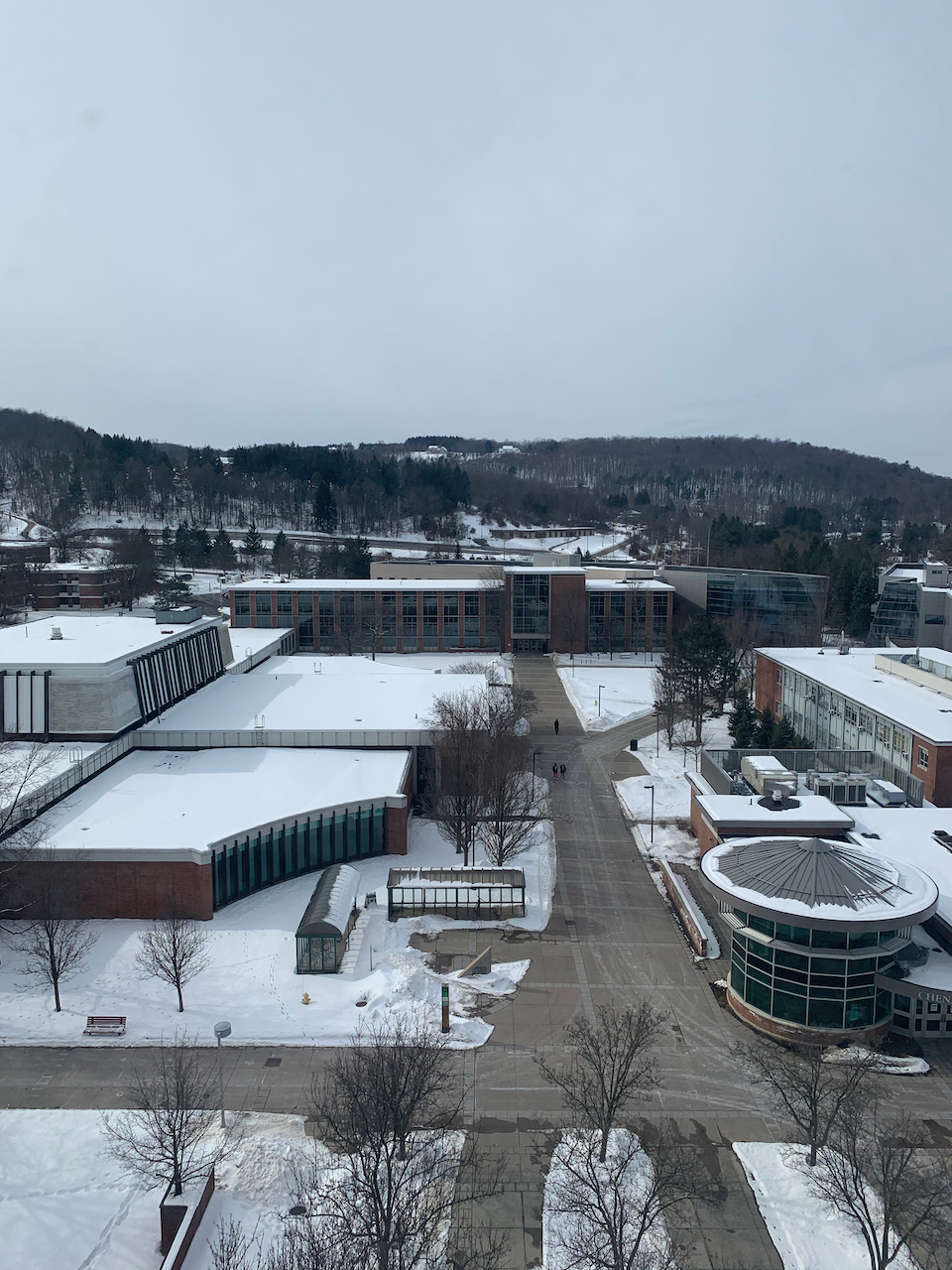
Arriving in Binghamton though I found the place very cold and quite lonely. In recent months I’ve begun to think more and more about getting rid of some of my social media accounts only to then remember that Facebook, Instagram, and Twitter were some of my greatest lines of communication with friends and family back home in Kansas City and elsewhere around the globe throughout these last three years. That first semester was tough, very tough, and while the second semester seemed to get off to a good start it was marked by the sudden arrival of the Coronavirus Pandemic and the end of my expectations for these years in Binghamton. 

I spent about half of 2020 and 2021 at home in Kansas City, surrounded by family and finding more and more things to love about my adopted hometown with each passing day. When I was in Binghamton it was to work, in Fall 2020 to complete my coursework and in Spring 2021 to prepare for my Comprehensive Exam and Dissertation Prospectus defense. I still did a good deal of the prospectus work at home rather than here, though the memories of those snowy early months of 2021 reading for the comps here at this desk where I am now always come to mind when I’m in this room.

As the Pandemic began to lessen in Fall 2021 and into the start of this year, I found myself in Binghamton at a more regular pace. There was something nice about that, sure I wanted to be home with my family, but I also felt like I was getting a part of the college experience of going away for a few years to study that was reminiscent of the year I spent working on my first MA at the University of Westminster in London. I started to venture further afield in the Northeast again, traveling to Boston, New York, Philadelphia, Baltimore, and Washington again. When I first decided to come here one of the things, I decided was I’d take the opportunity of being in the Northeast to see as much of this region as possible.

2022 saw another transition, I wasn’t in one of the newer cohorts in my department anymore. Now, in Fall 2022 I’m one of the senior graduate students. It’s a weird thing to consider, seeing as it felt like 2020 and 2021 evaded the usual social life of the history graduate students here, thanks to the ongoing pandemic. I also began to look more seriously at my future, applying for jobs in cities across this country, and even looking again at some professorships, something I doubted for a while would be an option for me. If there’s anything about life that I’ve learned over the past three years spent here, it’s that you always need to have things beyond your work to look forward to. Whether that be a long walk in the woods on the weekends or a day trip to somewhere nearby, or even the latest episode of your favorite show in the evenings. Doing this job without having a life beyond it is draining. 

For me the best times here in Binghamton were in Fall 2021 and Spring 2022 when I truly began to feel like I had a place here that I’d made my own. I was confident in my work, happy with how my TA duties were going, and really enjoying my free time as I began to spend my Friday evenings up at the Kopernik Observatory and Sundays at the Newman House, the Catholic chapel just off campus. I was constantly reading for fun as well, something I’d lost in 2020, even falling behind with the monthly issues of my favorite magazines National Geographic and Smithsonian. There were many weeknights I’d spend out having dinner alone reading natural history, science fiction, anthropology, and astronomy books. 

It’s interesting looking back on myself from six years ago when I was in London, the months that summer when I decided I wanted to get back into history after a year studying political science. My motivations were to earn a job working at one of the great museums I’d spent countless hours in during that year in the British capital. While I studied for my MA in International Relations and Democratic Politics, I was still spending my free time looking at Greek and Roman statuary and wandering the halls of Hampton Court or watching the hours of history documentaries on BBC 4 in the evenings. And now that I’m back in History as much as I do appreciate and love what I do, I find my free time taken up by science documentaries and books.

It’s important if you do want to get your PhD in the humanities and social sciences to figure out why it is you want to do this before you start. Have a plan in mind, have a big research question in mind, and focus your attentions onto that question. My own story has many twists and turns from an interest in my early 20s in democratic politics to a brief dalliance with late republican Roman history before settling into the world of English Catholics during the Reformation. I ended up where I am today because of another series of events that led me to moving from the English Reformation to the French Reformation, and from studying education to natural history. So, here I am, a historian of the development of the natural history of Brazil between 1550 and 1590, specifically focusing on three-toed sloths. In a way there are echoes of all the work I’ve done to date in what I’m doing now, thus as particular as this topic is it makes sense in the course of my life as a scholar.

A month from now will be my 30th birthday, a weird thing to write let alone say aloud. My twenties have been a time of exploration of both the world around me and of myself. When I look at my photo on my Binghamton ID card, the best way to describe my appearance would be grumpy yet optimistic. Just as I was a decade ago, a sophomore in college, so now I am today, looking ahead to the next decade with excited anticipation of what it’ll bring, and hopeful that all the work I’ve done in this decade will find its reward in the next.

Me upon arrival in Binghamton, August 2019.

Christmas and the Passing of the Seasons

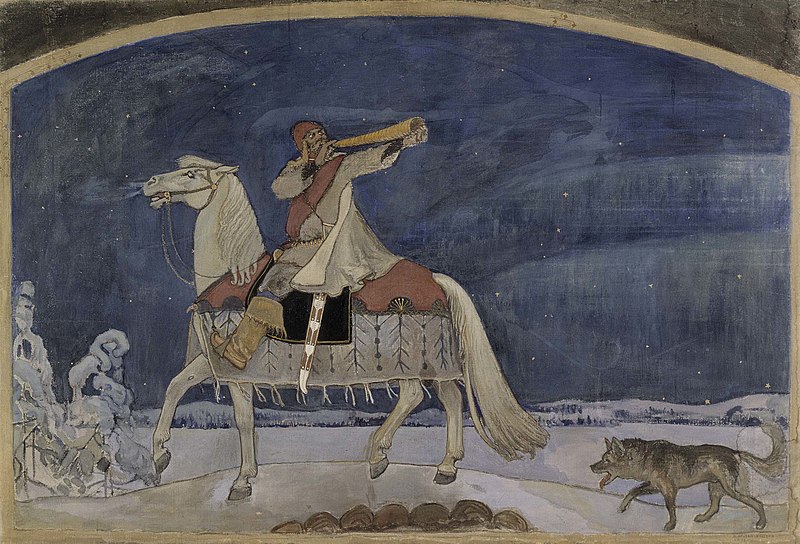
Akseli Gallen-Kallela, Kullervo Sets Off for War, 1901, tempera, 89 x 128 cm, Ateneum, Helsinki, Finland.

Christmas and the Passing of the Seasons Wednesday Blog by Seán Thomas Kane

This week I'm discussing what Christmas has meant to me throughout my life, and how it fits into the mythos of the seasons overall.

I think the general feelings I get at different times of the year were instilled very early on. I remember in first grade being told that if the weather in March came in “like a lion” it would surely go out “like a lamb,” meaning if the month started with bad weather, snow, ice, or even thunderstorms in a warmer year, then we’d end up with a quiet end to that month. Likewise, I can’t remember quite when I first heard it, that the Winter Sun always shines with the wolf’s teeth. This to say that as bright and warm as the Sun’s rays appear in Winter, you’ll still feel the biting cold of Winter if you go outside in that time of the year.

To me, Christmas has always been a bright light on a wine-dark sea, a moment of celebration, of seeing family and friends, of hearing the triumphant hymns at Midnight Mass and reaffirming how much we all really do care for each other. Christmas has its traditions, both sacred and secular: not only is Midnight Mass, now often celebrated at 21:00 or 22:00 on Christmas Eve a part of the schedule, but so too traditionally are the big family parties, unwrapping gifts on Christmas morning next to our tree, and watching any number of Christmas specials, especially Charlie Brown, and occasionally Die Hard too. The week before Christmas always includes my birthday, the 20th, which has its own traditions and things I look forward to every year.

Yet as I get older, now in the last year of my twenties, I can understand what C.S. Lewis meant in The Last Battle when he said that the eldest Pevensie sibling, Susan, didn’t return to Narnia because she had grown up and didn’t believe in it anymore. I still believe in the fact that there’s something special at Christmas, even if I’m more the skeptic about any sort of “Sanity Claus”, as Chico Marx put it, but it doesn’t have the same impact on me as it did when I was a wide-eyed child. Last Christmas … (I’ll give you a minute to sing that Wham! song) … Last Christmas, our first during the COVID pandemic, my parents and I decided to take a firmly defiant stance: we were going to go all out with the decorating and try to force the point that it was Christmas as much as possible, lest we remember we wouldn’t be going to any services or hosting any big family parties. It ended up being a melancholy affair, sure there were wonderful moments, but by and large I found myself longing for Christmases of yore when we’d be so exhausted come bedtime on Christmas night that we’d drift off into wonderful dreams, perhaps “visions of sugar-plums” dancing in our heads.

This year though, now in our second year of the pandemic if anything the three of us are exhausted by it all. The constant fear of infection, the usual work-induced weariness, and life in general. 2021 has been a hard year. We’ve struggled through it, through every season as the calendar rolls along, but I think it’s fair to say 2021, like 2020, is a year we’ll be happy to leave. This Christmas feels like Christmas, just as my birthday this week felt like my birthday usually does, but with a shrug instead of a smile. Winter even seems harder to tolerate this year. 

I was in high school when I first saw a Finnish painting that to me spoke of the nature of Winter. It shows a horseman mounted, wearing a slightly medieval garb, turning around to look up into the stars that carpet the purple night sky, illuminated as much by the snow below as the lights in the heavens above. In his hand he holds a hunting horn, which he blows to announce his ride onward as his trusty hound follows behind. The image there, of the rider in the snow beneath the stars in the purplish Winter’s night sky always seemed to speak to me of Winter, meagre and cold, yet suggestive of some magic that might exist in those long dark nights. 

It was only later, when I visited Finland for the first time in May 2016 that I learned that this painting, first created in 1901, is one by Akseli Gallen-Kallela (1865-1931), called Kullervo Sets Off for War. It depicts Kullervo, a tragic character from the Kalevala, the Finnish national epic compiled by Elias Lönnrot in the 19th century. The story behind the painting, while different from how I imagined it, reminds me nevertheless of the mystery of Winter, the unknown quality that those long dark nights hold, and the stories I’ve heard and come up with myself to give character, voice, and song to what might otherwise be a quiet, dark, and lonely time for us all.

For those of you who celebrate it, I wish you a most Merry Christmas, and for all the rest of you, Happy Holidays.

Twelve Hours of Mask Wearing

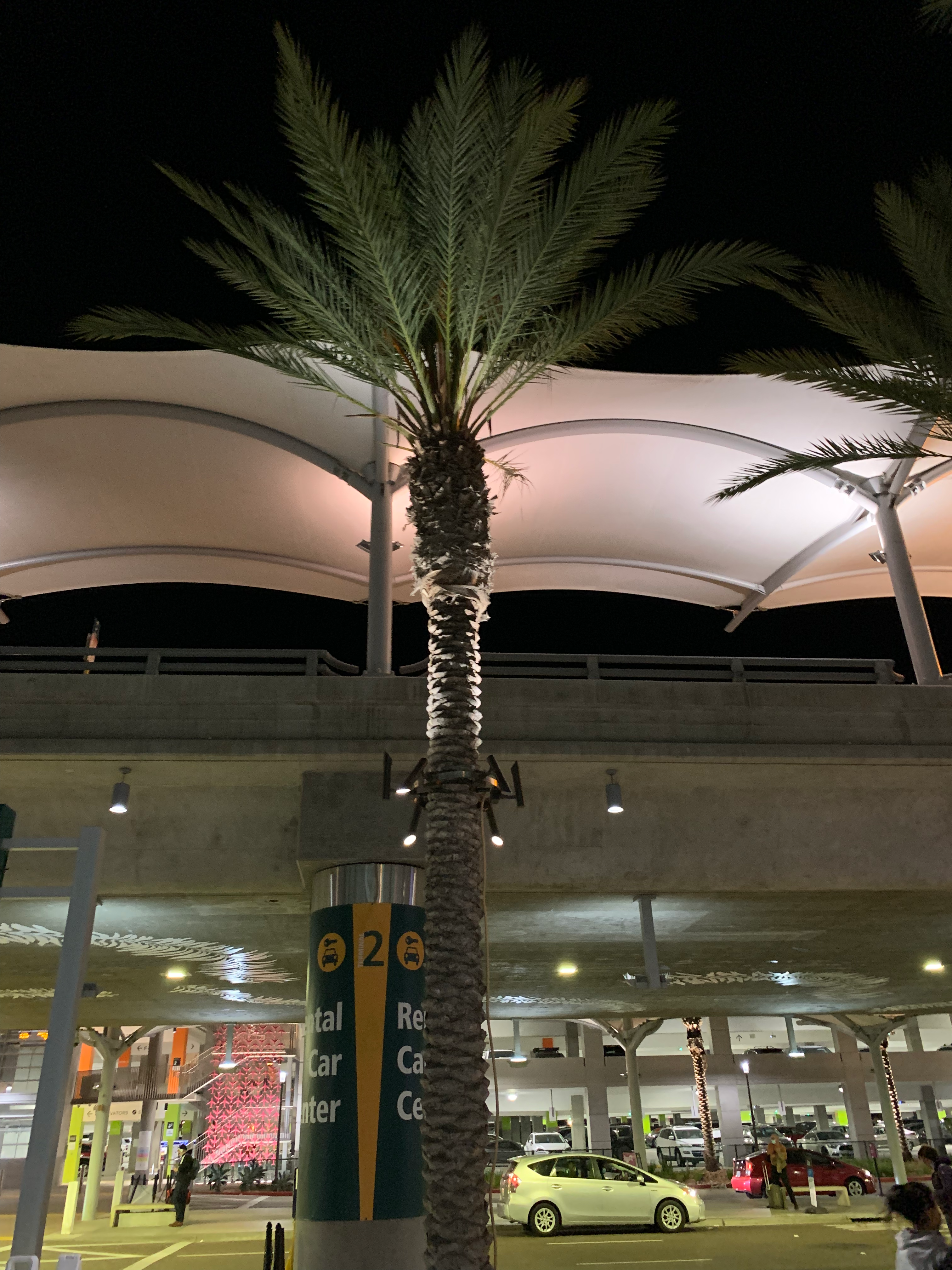
This evening I had the opportunity to travel from my usual place of business in Binghamton, NY to the sunny port city of San Diego on the far side of the country and this continent. It was my first time flying on a full transcontinental route; coming from the Midwest I’ve benefitted from living almost halfway between Atlantic and Pacific until now. The experience was largely uneventful, though I’m humbled by the fact that this continent across most of which I’ve now driven (as far to the east as Boston, as far to the west as the Great Salt Lake) could be crossed in the same amount of time it would normally take me to drive west from Kansas City to that place in western Kansas where I’ve found myself within sight of the tallest clouds rising off the Rockies just west of Denver. I spent the flight reading a compelling story, checking my preferred flight tracking app, and listening to Planetary Radio. 

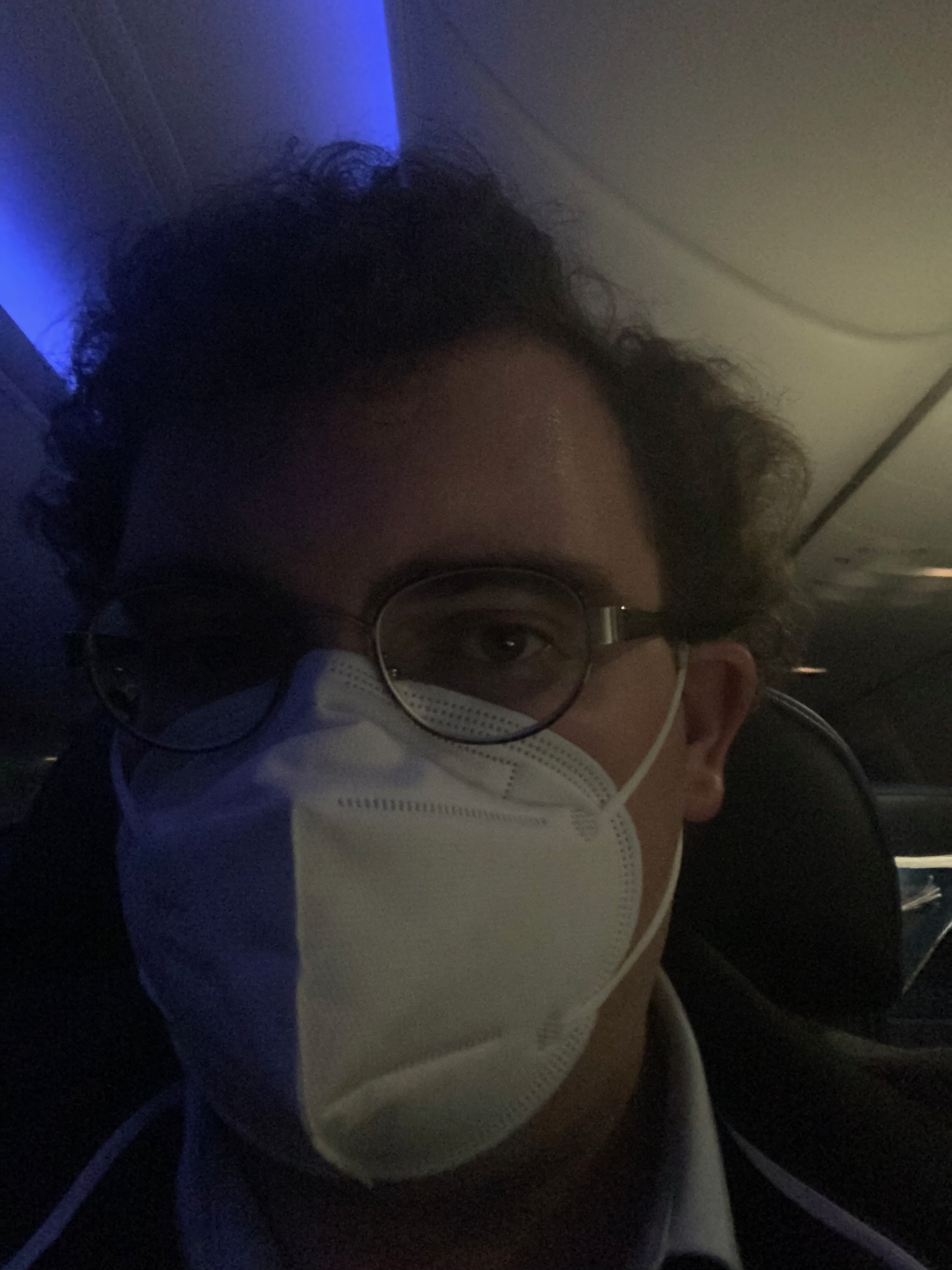
But the greatest physical reminder of this flight and this entire day will be the pain in my ears and the sides of my head from wearing this KN95 face mask for so long. I dearly hope we climb out of this hole of a pandemic we’ve dug ourselves into, and that my fleeting escapes from mask wearing as I took a drink of water would be signs of a future when we won’t have to wear these masks to travel. And yet, I worry that our relatives and neighbors who cry wolf about these masks so forcefully that events meant to be dull, like school board meetings, become events rife with danger, that these our fellow Americans are the ones whose actions will only keep these mask mandates in place longer. After all, we’d be further out of this continuing crisis if we were as a country more fully vaccinated. Being triple-vaccinated against COVID-19 myself, I know I’m probably safe, but the best way to ensure that is the case both for myself and for all the people around me on this plane from the oldest passenger to the youngest infant are safe as well.

I worry that in the fear-mongering of the last decades we’ve lost a sense of communal spirit. We’ve become suspicious of our neighbors who once we could trust. Any statement deserves to be questioned, so I ask you now: what went wrong? When did we choose to fear others before learning to appreciate them? And why don’t we lower our pride for even a minute and let ourselves lower our guard?

We have a lot of problems facing us today. Step one clearly will mean that we’ll have to at least start by looking each other in the eye and at the very least saying hello. It’s a start.

I don’t think I’m in New York anymore.

One Year In

By the time this is published, 1 March 2021, St. David’s Day for all my Welsh and Welsh American readers out there, we will have very nearly reached the first anniversary of the beginning of the lockdown. For me, that anniversary is on 13 March, the last day that I reported to my university for normal teaching duties. It was a Friday, an unlucky Friday the 13th. I only kept my students in class for maybe 20 minutes a piece, just long enough to explain how we were going to continue the class online going forward. I said my usual “Good luck,” and “Hope to see you on the other end of this,” and that was that. The rest of the day was filled with meetings, half of which were wrapping things up that my colleagues and I had been working on, the other half planning for the uncertain future to come. 

We figured the storm would pass by Memorial Day, echoing many a voice from many a war in history, and quickly found our predictions far too brief for what would actually happen. Now, one year later, with 512,979 dead in the United States, 2.5 million or more dead globally at the time of writing this, we have seen our world forever changed by the pandemic of 2020-2021. How do we move past the past year, that annus horribilis to borrow a phrase from the Queen, and begin to live our lives again while remembering to take account for all that has happened? One thing that we absolutely should not do is try to “return to normalcy” to borrow another phrase, this time from President Harding, whose presidency a century ago was marked by scandal in ways that are painfully familiar to us now. 

A century ago, our ancestors didn’t forget the horrors and sacrifices of the Spanish Flu of 1918, but that pandemic would always be overshadowed by the four-year nightmare that was World War I. After four years of brutal war and two more years of pandemic, Americans along with the rest of humanity wanted to move on, to enjoy life again. Once this pandemic is over, we should enjoy life to the fullest, but we should never allow ourselves to forget what has happened in the last year. By now, everyone of us ought to have figured out that there is no such thing as normal in this everchanging world of ours, except of course for a town in Downstate Illinois. Saying “things will be normal again” disincentivizes us from working to better ourselves and our world.

There will be more crises to come throughout this century and into the next. More hurricanes, polar vortices, wildfires, weeks of constant thunderstorms, flooding, and tornadoes, and yes even pandemics. After millions of years of evolution and tens of thousands of years of civilization you’d think we would’ve figured out that as much as we can control our own lives, we can’t control nature. Influence it, absolutely, but we’ll never be able to control it, to keep ourselves safe from the disasters that mark our lives. The best we can do is be prepared for them, winterize our power grids, and invest in green energy among other things, to leave a stable, prosperous, and healthy world for our future to enjoy. 

The children of the 2020s will more than likely live into the 22nd century. Our dreams of a better tomorrow can be their today, but only if we do our part to make it. Let’s not allow ourselves to make today’s crises and stubborn inability to change the normal of tomorrow. We owe it to them and to ourselves. I’m not fond of dystopian fiction, it encourages pessimism and helps convince us that trying to improve things is a futile task. We should always be optimistic, after all we have the power and ability to make things better, to ensure there is a future for humanity.

Let that be the lesson of the Coronavirus Pandemic.

Visions and Dreams in 2020

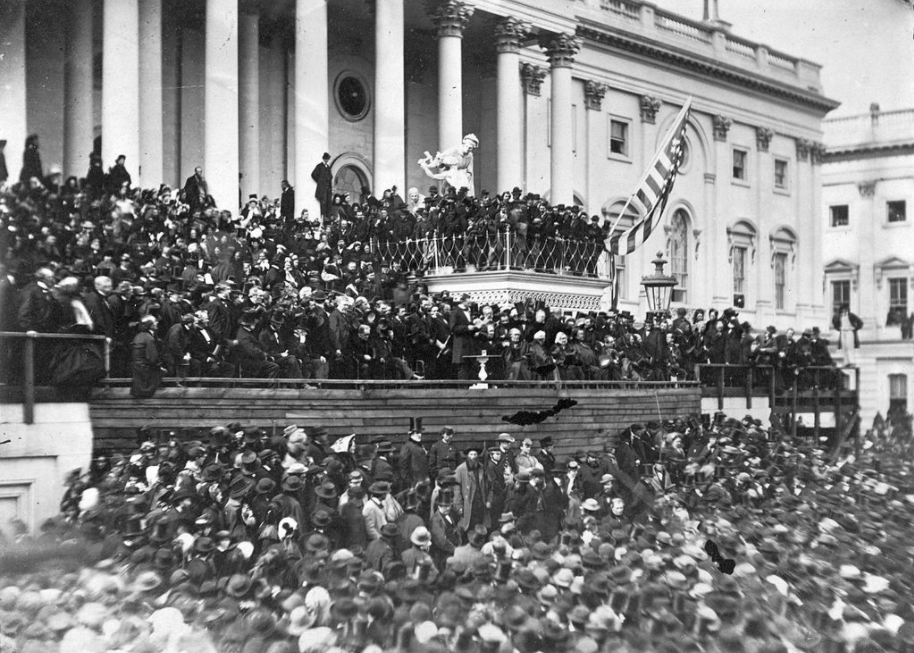
I’ve been thinking a lot lately about Lincoln’s Second Inaugural Address. I first heard perhaps the most famous and impactful line in any of his speeches as a child during the final episode of Ken Burns’s magnificent The Civil War documentary series. Spoken on 4 March 1865, a month before the end of the Civil War and a few days further removed from Lincoln’s assassination, the lawyer from Springfield, Illinois concluded his address calling on all Americans to feel “malice toward none,” and “charity for all.” After all the pain caused by the war, many of Lincoln’s goals still seeming far too distant from reality, he called on our forebearers to: 

“strive on to finish the work we are in, to bind up the nation’s wounds, to care for him   who shall have borne the battle and for his widow and his orphan, to do all which may achieve and cherish a just and lasting peace among ourselves and with all nations.”

Lately, I’ve wondered how best to categorize the year we’ve been living in. Could the upheaval of 2020, a combination of general public dissatisfaction with government, a global pandemic, and social and economic tensions boiling over after generations of bubbling, could all these combined be called a revolution of sorts? Could we be living through so consequential a time that in fifty or a hundred years, school children will place 2020 in the same column with the most recent global revolutionary years of 1989, 1968, 1918, 1848, 1789, and perhaps even 1776? I’ve also wondered, if we are living through a time which rhymes with Lincoln’s, are we in 1861, at the start of our national nightmare, or in 1865 at the moment of waking from that horror?

Yet when I think about Lincoln’s words again, one thing in particular strikes me. We are at our weakest as a country when we are divided. Today, when each side sees the other with such contempt, it’s hard to see how we could heal these divisions and sow back together these wounds that have cursed our country from its very inception with the conquest and colonization of this continent. Yet heal these divides we must. Someone is going to have to take the first step at reconciling the many factions and camps in this country, someone is going to have to reach across the chasm and offer a hand of friendship to someone on the other side. We need to learn to recognize the innate humanity in those we disagree with before we see their faults. We need to learn to grow past our hate.

Even a person who has committed the worst acts imaginable, people whose names live on in the darkest infamy, were still people like you and me. There are people out there who seek to divide us even further, to sow distrust among us until we are unable to bear the mere thought of one another anymore. Their power is fueled by our hatred, their lies take on the sense of truth only when so smelted by the fire of our hate. As long as we let our hate guide our actions and principles, as long as we make choices great and small based on that darkest emotion, they will win. 

Listen to the voices that offer us a message of unity and hope, to the ones who offer us a future that doesn’t seem bleak, to the ones who offer solutions instead of just spewing bile and denouncing their rivals as the enemy. I fundamentally believe that all things are created good, if I know anything for certain, it’s that. Look at it this way, why would a God who wished for evil to be the only option give us free will? It is up to us to choose how we act and react, think and feel. Another thing that I fundamentally believe in is that it’s up to us to make our world as we want it. God made this reality, it’s up to us as citizens of this reality to decide its future. 

True love, what many would say is the anthesis of hate, depends on free choices for survival. It’s up to us to decide which emotion our future will be shaped by: hate and its offspring distrust, fear, and bigotry, or love and its offspring hope, kindness, justice, and mercy. Let’s finish Mr. Lincoln’s work, and make 2020 the year when we began to at long last heal our nations wounds, care for each other as equals, and do what we must to earn that “just and lasting peace” for all of us, the oppressed and their erstwhile oppressor too. After all, if we leave even a single person behind, hate’s cold song will still be there for yet another generation to hear.

It’s up to us to live up to our forebearers’ visions and to build the foundations for our descendants’ dreams. Hope and pray for those visions and dreams all you want, but if you want them to come true, you and I, each and every one of us, must act on them. 

I’ve had my say, now it’s your turn.

The Luxury of Stress, or the Adrenaline Rush of Fear

2020 began for me with a long drive east: Kansas City to Pittsburgh to New York. I drove the first leg in 15 hours, arriving just before midnight on a Friday, and spent the next day wandering through the Carnegie Museums of Art and Natural History in Downtown Pittsburgh, which was the main reason for that particular stopover. That Sunday however was characteristic of how the year that this would become. I woke up around 4 am on Sunday, early enough that I hoped I could be in Manhattan for lunch. As I made a quick donut stop near Pittsburgh Airport, I checked the travel updates for the Pennsylvania Turnpike, and was shocked to discover that it was blocked in both directions just east of Pittsburgh due to a fatal multi-vehicle accident that had happened about an hour before. So, realizing that I’d have to take an alternate route, I plugged one into the navigation system in my car and made my way into one of the most eventful days of driving in my lifetime.

The route on that snowy Sunday morning in January

For the first 3 hours of the 6 that I’d have to drive that day, I was largely on US-22, a smaller rural highway, which heads east out of Pittsburgh across Pennsylvania toward the Jersey Shore. Normally I prefer to stick to the interstates for the lack of stoplights, and at that hour of the night for the lack of traffic. In this instance though I quickly found myself crawling my way across the Appalachians in a blizzard with next to no visibility. I passed semitrucks that were sliding backwards down the inclines on this normally reasonable, yet now snow-packed, highway. I’m pretty sure I passed a plow or two even, continuing onward, only really able to see where I was going thanks to the car’s navigation. Only after 7:30 am or so did the snow clear and I was able to enjoy an otherwise uneventful drive to the long-term parking garage that I frequent near Newark Airport when I drive to New York City.

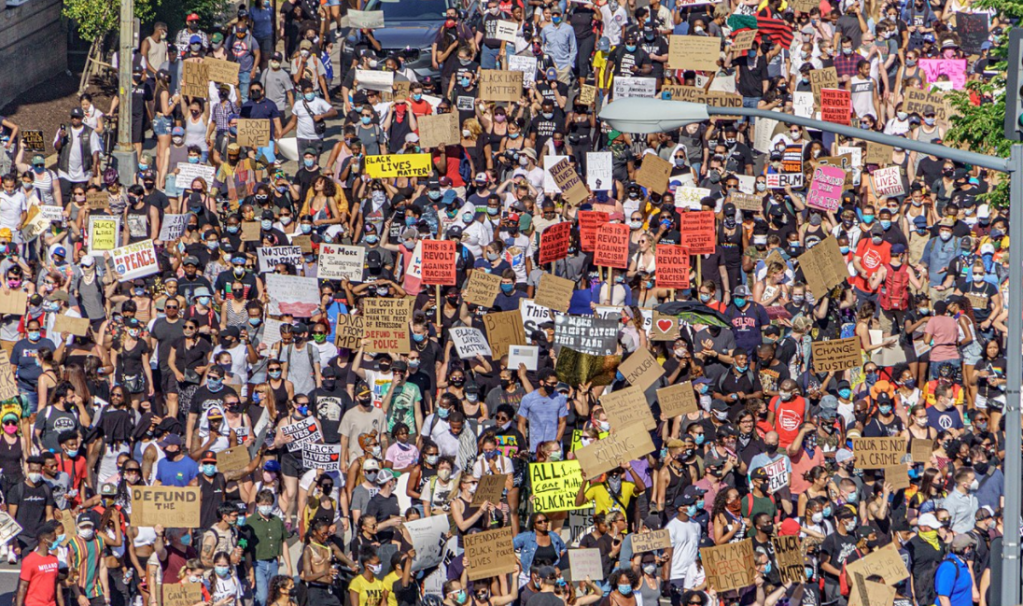
Like the rest of 2020, thus far, I was nearly stressed to my limit in the early hours of that morning. This year has been one for the record books, a right old annus horibilis to borrow a term from the Queen. At the same time that I was dodging stuck semis in the Pennsylvania mountains, this country’s leaders were saber-rattling and threatening war with Iran. We were lucky to have missed that cataclysmic fiasco of a war, though I doubt we’ll know the full details of how we missed it for a few years to come. Since then we’ve seen the rise of the greatest pandemic in a century, a near economic depression, irate armed citizens occupying government buildings over their economic and social fears, the murders of many other citizens of this country by authorities, and the largest protests this country has seen in a long time. Throughout all of this, the response of those in charge hasn’t helped to ease tensions one bit, both publicly and privately for a great many of us.

Yet unlike that early morning in January, I now feel like I have the luxury to think about it, and to stress about it. That morning, I did not have that luxury, or perhaps I had too strong of a fear-driven adrenaline rush to stress about it. After all, if I thought too hard about how terrifying of a situation I was in, I would’ve made a mistake and gone off the side of the road, not knowing what that’d bring: a field, a hill, a house, the edge of one of the mountains? If I’d let my stress take over then, I can’t be sure I’d be able to write this today. Yet in the months since I’ve been largely secluded from the world, first in my apartment in Binghamton, NY, and for the last two months in my parents’ house in Kansas City, MO. Like all of us, I’ve had a lot of extra time on my hands to think, to consider how I want my life to go forward, and to stress and worry about our world, and how it’ll either improve or wreck our future.

The stress has certainly got to me, and there have been more occasions than usual of late where I’ve had real trouble working through it. It’s left me irritable, quick to anger, and generally in a sour temper. I could probably take all this sour stress and make one of those sourdough starters that so many people started doing this Spring. I’ve always found it hard to hear the memories and feel the emotions of the best days of my life over the obnoxious clamoring of the worst memories. Lately it’s been harder than ever, but I’ve tried my best to cherish the best moments of my life and my time at home. 

This past weekend in particular had so many wonderful moments. On Friday, the executives at my Mom’s company decided to give all of their employees Juneteenth off. So, that morning for the first time in at least 21 years my parents and I together went to the Zoo. When I was little, I loved going to the Brookfield Zoo near our home in suburban Chicagoland with them and have cherished those memories ever since. Now, after living in Kansas City for 21 years, we finally went as a family to the Kansas City Zoo, a place that I usually visit at least once a week on my own when I’m home. We didn’t see everything we wanted to see, but we left truly happy. 

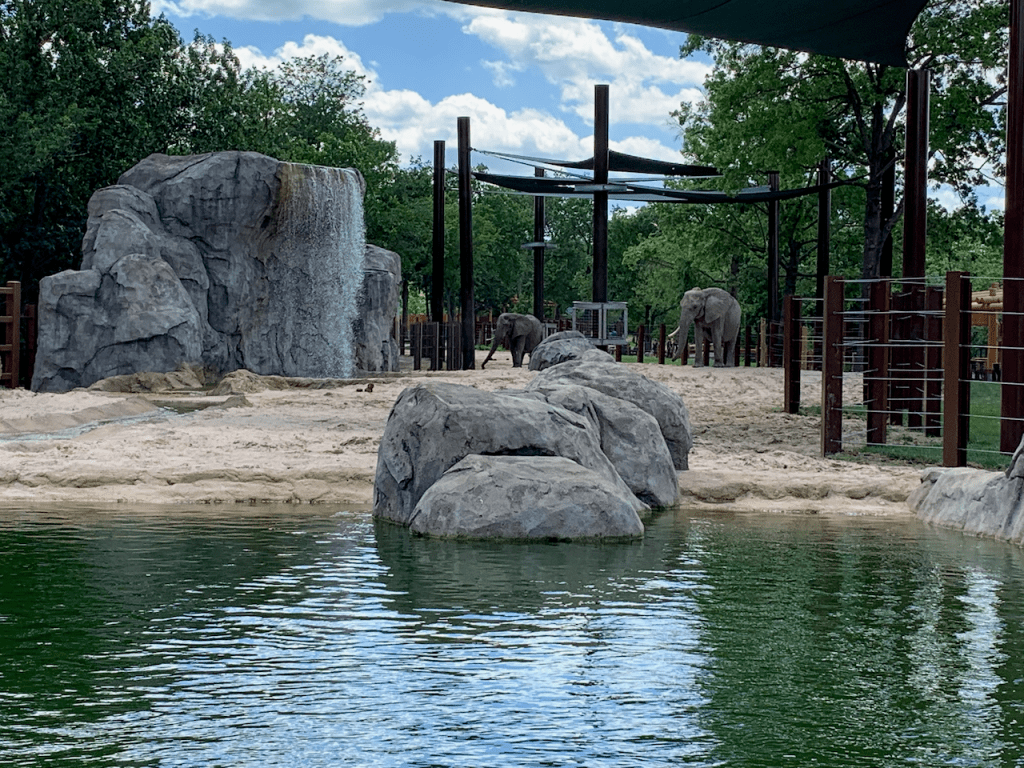
The Kansas City Zoo’s new Elephant Expedition Enclosure. The photo is my own.

Later that evening after dinner we drove up to my alma mater Rockhurst University at 52nd & Troost and took part in the Juneteenth Prayer Service that stretched for 10 miles all along Troost. This was a prayer service like no other, less silent meditation, or communal rosary, and more a celebration of the hope that our community on both sides of the dividing line feels that change is in the air. I sat there on a stone wall for an hour and watched as countless cars drove by, their drivers honking their horns, people waving, children singing from the back windows.

On Saturday we went to one of my aunt’s houses for a small backyard gathering. I always treasure the times that I have with my family, the whole crowd. Just sitting there with people whose company I enjoy, people who I’ve known my whole life, and experiencing the madness of our current world from the perspectives of their stories, jokes, and worries made everything seem better for a little bit. Sunday was similar, Father’s Day, a quiet celebration this year at home with my parents. My Mom and I made brunch for the three of us, brioche French toast and eggs, before spending the afternoon watching soccer and reading June’s National Geographic. This was followed by a quiet small gathering in Roanoke Park.

I was reminded of all of this, and in particular of that terrifying snowy morning on US-22 east of Pittsburgh on Sunday evening when we watched last year’s release A Beautiful Day in the Neighborhood, starring Tom Hanks as Mr. Rogers. In part, the film’s Pittsburgh setting triggered those memories, and my thoughts on that January Saturday evening that I’d live in Pittsburgh if I got a job there, and how much fun I had at the Carnegie Museums. Yet more than that, the kindness which Mr. Rogers exuded in his life and work reminded me that this stress doesn’t have to be permanent, and that the best of memories should be the ones I treasure. I can still vaguely remember seeing him on WTTW in Chicago in the ’90s, and even a little bit on KCPT after we moved here to KC at the turn of the millennium. At the time I don’t really remember knowing what to make of the guy. Yet today, as an adult with far more responsibility to my community, our future, and to myself, I feel like if I were to try to learn from anyone in my own work as an educator, it’d be him.