Tag Archives: Dublin

On Servant Leadership

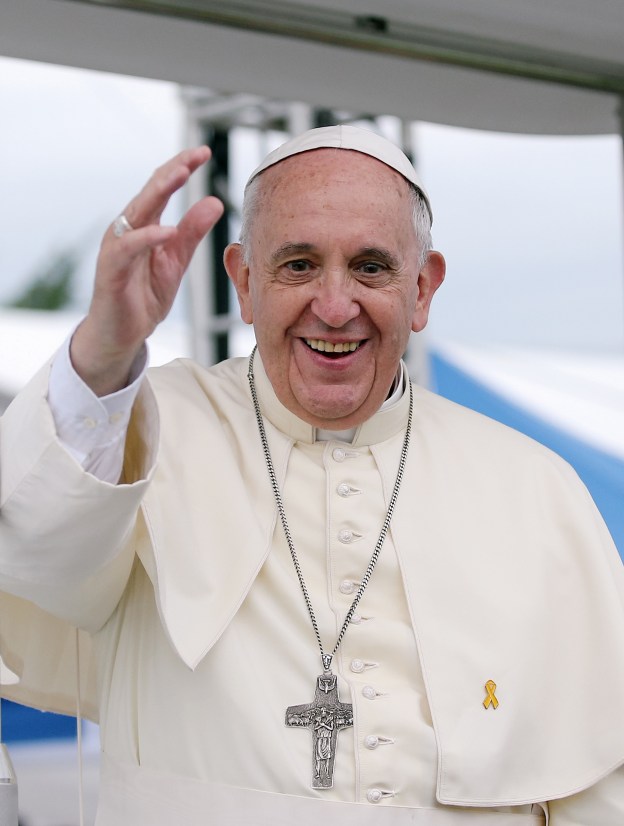
This week, in memory of His Holiness Pope Francis and of the revolutionary anniversaries in America and Ireland this week, some words on the humility necessary for the best sorts of leaders.—Click here to support the Wednesday Blog: https://www.patreon.com/sthosdkanePhoto: By Korea.net / Korean Culture and Information Service (Photographer name), CC BY-SA 2.0, https://commons.wikimedia.org/w/index.php?curid=34828249

Photo Credit: By Korea.net / Korean Culture and Information Service (Photographer name), CC BY-SA 2.0, https://commons.wikimedia.org/w/index.php?curid=34828249


This week, in memory of His Holiness Pope Francis and of the revolutionary anniversaries in America and Ireland this week, some words on the humility necessary for the best sorts of leaders.


Over the past weekend as we marked the 250th anniversary of Paul Revere’s Ride, the Battles of Lexington and Concord, the Siege of Boston, and the beginning of the American Revolution, I started to think about writing this week about that anniversary. I partook in the Veterans’ Rally on the Plaza here in Kansas City, which was part of the National Day of Action against Kings. During the hour walk to and from the event in Mill Creek Park I thought long and hard about what I would say, of my fascination with Paul Revere as a child, or about my first visit to Boston in 2002 when my parents & I walked the Freedom Trail with a family friend who I reconnected with on this most recent trip. Normally, at this point in April I’m more focused on the more recent revolutionary anniversary of the Easter Rising which began with the reading of the Proclamation of the Irish Republic in front of the General Post Office in Dublin. Perhaps I could blend the two revolutionary touchstones into something profound for our own moment; of the unrealized dreams and aspirations of both sets of revolutionaries.

Yet events of the following days have changed all that. I’m writing this now close to two hours after I heard the sad news of the death of Pope Francis. After a half an hour replying to messages from my parents and various friends who texted me the news over the night, I wrote my own brief message which appeared on my social media accounts:

This one feels different to me. Papa Frank was our pope: from the Americas, a Jesuit, and more open minded to the world. His Universal Synod will remain a testament to the man and his twelve years of service to our Church.

Francis’s pontificate marked my early adult years. He was elected at the height of my time as a student at Rockhurst University, when I was surrounded by Jesuit philosophy and spirituality, at a moment when his election seemed to match the optimism I felt in our world. Pope Francis remained a rock amid the tempestuousness of the years that have followed. His humility and humanity shone beyond either of the other two popes of my lifetime. Last summer, my European tour originally included nearly a month in Italy on the way to a dear friend’s wedding party. I’d planned to be in Rome for one Wednesday in the hopes of going into the Paul VI Audience Hall to see Pope Francis in person, even if I was way in the back of the room and wouldn’t be able to meet him. The Swiss & Italian portions of that trip didn’t end up happening, and I regret not getting to see the man in person.

Despite this, I felt that I knew Pope Francis on a personal level. He always struck me as another guy trying to make the best out of life. I’ve heard many people refer to him as the grandfather of the Church away in the Vatican keeping us in mind and in good humor. I like this image; it matches what I saw when he was interviewed by the American television networks. Like Voltaire, my mental image of Pope Francis is him with a smile on his face, an earnest and caring smile and perhaps with a joke in mind. Pope Francis was a leader I was willing to follow because he did so with intense humility. I was standing in the lobby of the Campus Ministry, Counseling, and Career Counseling offices at Rockhurst that afternoon of 13 March 2013 when Cardinal Tauran delivered the Habemus papam announcement from the balcony of St. Peter’s Basilica and announced that Cardinal Jorge Mario Bergoglio of Buenos Aires was our new Pope, Francis, a name chosen to commemorate the humblest of saints. That he asked us to pray for him, to help him in his pontificate was for me the first sign that this man was different.

The Catholic Church exists in a very different world today than it did a century ago. Then when only 150 years had passed since the eruption of the American Revolution and even less since the anticlerical outbursts of the French Revolution the relationship of the Church to democracy was more fraught. A century ago, fascists in Italy claimed they were acting in defense of tradition and of the Church to attacks from communism. We saw where that road led in the Second World War. A century ago, the Church emerged from the ashes of the Irish Civil War in a dominant position in the new Free State, a position it would hold through the founding of the Republic in 1949 and into my own lifetime. Here in America, Catholic voices led the chorus of the most extreme and anti-democratic factions in this country railing against anyone who opposed them, even their fellow Catholics.

I worried twelve years ago as we neared the end of the first decade of Pope Benedict XVI’s reign that the disconnect between the Church and our world would only continue, and that locally the voices of we liberals and progressives in the Church would remain a hushed minority. We received two new bishops in Greater Kansas City that were appointed by St. John Paul II in 2004; in January Archbishop Fred Naumann was appointed to lead the Archdiocese of Kansas City in Kansas where I grew up, and in May Bishop Robert Finn was appointed to lead the Diocese of Kansas City-St. Joseph, which covers the Missouri half of this metropolis. Both were far more conservative than their predecessors, and far more dogmatic. Bishop Finn closed a great many of the social justice ministries of the Diocese and alienated at least a quarter of the local Catholics. My own parish, St. Francis Xavier, often stood in sharp opposition to his leadership as the Jesuit parish remained welcoming and open to all. By the time Pope Francis was elected Finn’s leadership was crumbling under the weight of his inaction and obstruction with the abuse scandals, though Archbishop Naumann was only replaced in the last two weeks with the far more synodal and open Bishop W. Shawn McKnight, who previously led the Diocese of Jefferson City in central Missouri. I for one am hopeful that Archbishop elect McKnight will prove to be a better listener to the Catholics of his new archdiocese.

I remember the sun shining on the day when Pope Francis was elected. It was actually very similar to today, Monday, 21 April 2025, and my sense of a new dawn for our Church. The Sun was shining overhead, and the Spring birdsong was resounding around campus. I experienced many of the same things today. It’s profound to me how similar those two days are.

It did feel revolutionary in many ways when he was elected. He was the first Pope from the Americas, an Argentinian by birth. He was the first Jesuit pontiff, the first pope in a long time to be the child of immigrants. Pope Francis felt like he was one of us. Over the weekend I thought a great deal about what it takes to enact change and restore optimism and hope to a society such as ours which is so bereft of it. Pope Francis brought hope because he was one of us. The minutemen who stood up for their communities and their rights as citizens of a democracy 250 years ago at Concord were like us. The Irish Volunteers like so many of my great-grandparents’ siblings who stood up to British colonial rule a century ago and for better or worse kept fighting even after some liberty had been attained were like us. The people I saw on Saturday were mere ordinary people standing up not just for themselves but for all of us.

The true merits of a servant leader lie in their willingness to help everyone, not only their friends or fellows. Pope Francis was the Papa for all Catholics, especially those who disagreed with him and so loudly denounced his efforts at reform. He was the Pope who listened to us even when the bishops receiving his messages didn’t always heed them. I participated in the Synod on Synodality in the initial parochial stage when I was still in Binghamton; I spent an evening writing my own lengthy and heartfelt answers to the questionnaire, and when my parish’s report was published, I was excited to see some of my comments appear amid the harmonious chorus of like-minded people at my parish. Yet when the diocesan report was published, I was saddened to see how little of that chorus was heard, and at the one listening session I was able to attend several years into the Synod process I felt that as much as we in the laity heard each other that our local clerical leadership kept their ears closed.A servant leader listens to the people. They are approachable, open, and honest about their decisions. I’ve known many leaders who fit this bill: from the late Pope to many of my pastors down the years, to our Mayor Quinton Lucas, a man who I consider to be a friend. Servant leaders do great things as ordinary people. During my walk home from the rally, I remembered a scene from the second episode of the 2008 HBO miniseries John Adams, one of the touchstones of all millennial history buffs in this country. That scene showed a team of men and oxen pulling the cannons from Fort Ticonderoga past the Adams farm to the Dorchester Heights to the south of Boston. I rewatched this episode that afternoon and felt a upswelling of emotion at seeing something akin to what I saw on the Plaza that afternoon: ordinary people working together for a common cause to make life better for all of us. These are the extraordinary acts of ordinary people. That, dear reader, is servant leadership.
On Numbers

This week, how numbers are both a universal language and symbols representing deeper meaning.—Click here to support the Wednesday Blog:https://www.patreon.com/sthosdkane


This week, how numbers are both a universal language and symbols representing deeper meaning.


Consider, if you will, what meaning a number holds if unaffixed to an object for calculation or counting? What does six mean if disassociated from the rest of its sentence? Some numbers are recognizable for their meanings due to the broader cultural connotations held by those definitions. A learned reader who sees 3.14 written on a page will recognize that as the first three digits of the value of π, yet without the decimal a Midwesterner will recognize 314 as the telephone area code for the City of St. Louis. Similarly, while 23 holds significance as Michael Jordan’s jersey number to millions if not billions of us who remember the greatest Bull play around the millennium, to others 23 is just another prime number.

Numbers in themselves can only exist beyond the abstract if they account for something. The life is blown into the Music Man’s best known song by the “76 Trombones”; Professor Harold Hill’s exhortation to the people of River City, Iowa would’ve fallen flat if he called on them to raise the funds and enthusiasm for “76” alone. Perhaps the patriotic connotation of that number, 1776 was the year of this country’s birth, might’ve stirred some hearts, but a number alone cannot bring a parent to tears quite as well as hearing their child blow the life out of a trombone for the first time.

It generally annoys me to hear numbers be used with minimal context. I don’t always know what the speaker is referring to when I hear a given number, and in that instance while mathematics may be the universal language the way we use it requires greater linguistic framing. Language can readily transform numbers that otherwise would be subordinated into defined objects of their own. Consider the penny; on the one hand it is merely 1/100th of a dollar in this country or 1/100th of a pound in the U.K. Yet a penny saved is a penny earned, and if Poor Richard’s maxim is to be believed a penny in itself is something beyond its diminutive status in hard currency. The value of the penny has shrunk a tremendous amount in the last century to the point that for the last quarter-century it’s cost the U.S. Mint more to make an individual penny than the value of the penny itself.

The penny is in a less stable place today because of inflation and our society’s transition toward digital currency. How often do you see products priced at 1¢ in stores anymore? With all electronic payments for things, no coins or banknotes are needed to complete the transaction. The unfortunate incident of coming up a few pennies short when paying for something is no longer a problem unless your card is denied. Yet for the cash-users among us losing the penny means they can no longer aim for exactness when paying for things. If a product is priced at $4.99 and you give the cashier a $5 bill you won’t get that penny back. I’d probably shrug it off, but still, I’d feel a twinge of unfulfillment and a residual sense that that shop now owes me money, even if it’s practically worthless. There lies the one great flaw in this plan: the penny is so ingrained in our culture; it’s been one of our coins since independence and even before then pennies go back to Charlemagne’s denarius (thus why in pre-decimal Britain and Ireland the penny was abbreviated d.) The Carolingian denarius of the 8thcentury CE was in turn borrowed from the Roman denarius which was introduced during the Second Punic War (218-201 BCE). So, the penny has been around far longer than most other coins we use here in the United States, and its name transcends this country where it represents 1 cent. The penny still gets used in Britain as the 1 pence coin, there even that word pence is another plural which is synonymous with our pennies.

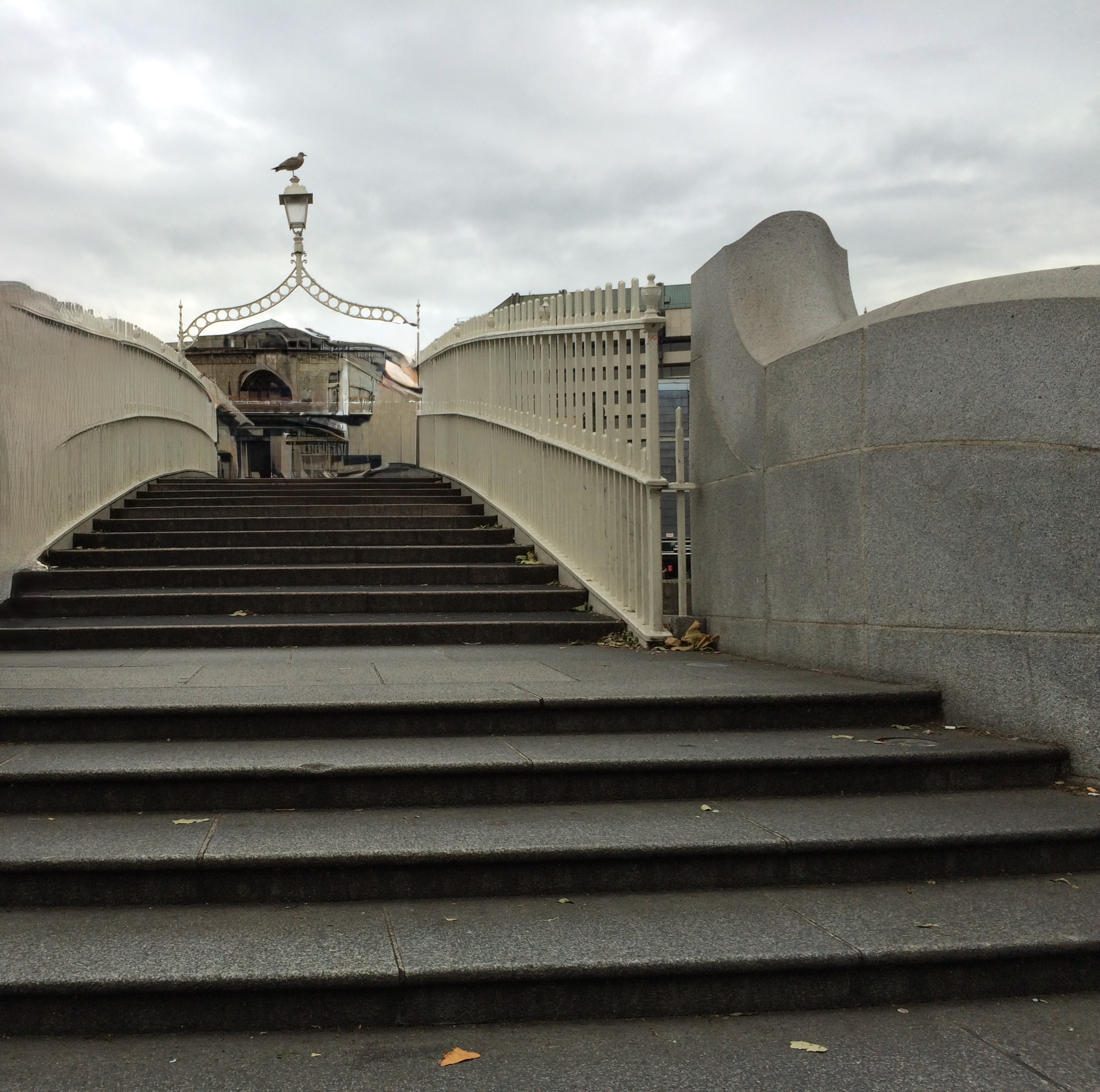
My photo of the Ha’penny Bridge from August 2016.

In older songs and stories, we still remember when the penny was valuable enough to be subdivided into ha’pennies, or half a penny. At that time, the British penny was worth 1/240th of a pound, in a pre-decimal system that was replaced in 1970 with the current pound-pence system. Dublin’s Ha’penny Bridge is named for the tolls that used to be collected to cross it. Even smaller denominations of the pre-decimal pound such as the farthing (1/4d.), and half farthing (1/8d.) were also minted. Clearly then the penny had more value in the past than it does today. I was struck when I moved to London in 2015 how you could still find goods for sale in the groceries priced less than £1, especially bread. That is almost unheard of in my own country anymore. I think this also speaks to a broader transition in the way we think away from older pre-decimal systems toward ones that work better for computers. After all, the primary method by which we interact with numbers anymore is through our computers who tend to do most all of the calculations for us.

One effect of that shift is that fractions now feel less practical. I was taught fractions in school well before being taught about decimal places in what now feels like one of these pre-decimal holdovers. To an extent I still think in fractions, perhaps thanks to our continued use of the quarter (1/4th) among the coins of the US dollar or the weighing of meat in fractions of a pound. Fractions on their own require that they represent a portion of another number, they cannot exist independently. ¾ is three-quarters of something, yet again here context is key. A musician will look at that fraction and read it as ¾ time, or a 3 beat measure where the quarter note gets the beat. Yet again there: this refers to a quarter note. That musical note may be the default note that gets played, with the ascending and descending scales of note length from that point, yet it still is ¼ of the length of a whole note. I love how in English we’ve mixed Latin and Germanic terms together to describe quarters, halfs, wholes, and such. This word quarter is Latin in origin, coming from the ordinal number fourth in that language: quartus. A quarter then is a fourth of an object.

I remember learning my fractions in school, and I still use them a great deal in my daily life. They’re practical when I know the total number of objects I’m dealing with and when I need to subdivide those objects to ensure maximum efficiency or spread. If I have 4 slices of bread left and I know I won’t be able to make it out of the house for a day or so because of snow, I’ll portion those slices out, so I don’t run out until I have the next loaf in hand. For tangible things that exist in the physical world comparing them as fractions (that is dividing the portion by the whole) helps me understand the numbers I’m dealing with.

Yet again, the quotient produced by that division, the result of that fraction is almost always written in decimals. I think of decimals as a product of the development of the metric system in the late eighteenth century. They are fundamentally more rational, and easier to program into a computer. Rather than asking a computer to translate from the more human fraction one can instead speak to the computer in its own language and let it do its computations faster and more efficiently. Today then, I use decimals far more than fractions. What’s more, each decimal number can exist independently of any other figure. 0.25 is simply 0.25, it’s not inherently a quarter of something else. When I see that price tag of $4.99 in the shop, I think of it as just a hair below $5, and am willing to hand over a $5 bill despite that being worth more than the product I’m buying. If I get my penny back or not is less of a concern, after all in this decimal mindset the penny is almost worthless, so what’s the bother if I lose a few cents here or there? Consider that sentence again though: a penny is a cent, or 1 percent of a larger number, namely $1. Even here when contemplating the penny as 1 cent or $0.01 it is still 1/100th of a dollar. Sure, eventually losing those pennies in every transaction will add up, but it’s going to take long enough that it doesn’t register as a problem for me.

Percentages are another sort of number that’ve grown in importance in my thinking in recent years. We mostly encounter percentages in tipping these days. There’s a tender balance here between tipping a percentage digitally or a whole dollar depending on the initial value of the bill of sale. When doing my own mental math, if I get a rough idea of what 20% of something will be I might decide to round up to the nearest whole dollar when writing a tip on a receipt. Yet those tip screens we see at nearly every business changes the dynamic slightly. Instead of leaving room for that rounding up they offer us the exact sum of 20% of the total bill down to the nearest cent. There’s something lifeless yet efficient about this. This is a number to be sure, yet it represents something human and social that ought to be seen in that light rather than just numerically.Mathematics is the purest language, it’s the one most often looked to as a solution for how we might communicate with other intelligent life who surely wouldn’t know how to speak any of our human languages. Yet all numbers are infused with emotion and have a myriad of deeper meanings than the sum of their parts. In balancing budgets, we could just look at the numbers and cut where seems fitting, yet there is always a human side to every budget line. Each cut is something taken away from someone, a potential line of funding removed that otherwise would’ve contributed to someone’s livelihood and helped them make something new and exciting. Numbers can and do reflect people, and they always have. They can exist in both the abstract as just numbers and the real as representations of people and objects. More often than not, we see them in the latter context. The mathematician is warranted to consider the human in their calculations, lest they clip one cent too many and leave too many of us people without the values we need to survive and thrive in this world we’ve built for ourselves.