Tag Archives: Education

On Sources

This week, the fourth in several scribblings about my research: borrowing from Oscar Wilde, the importance of being earnest with one’s sources.—Click here to support the Wednesday Blog: https://www.patreon.com/sthosdkane—Sources:Ologies Podcast: https://www.alieward.com/ologies"Metropolis," Wednesday Blog 3.20: https://wednesdayblog.org/2023/01/11/metropolis/.Marie V. Alessandro, "The Workers of Metropolis" in Cinema at UMass Boston, (6 November 2020), https://blogs.umb.edu/cinemastudies/2020/11/06/workers-of-metropolis/Surekha Davies, “Here be black holes: Like sea monsters on premodern maps, deep-space images are science’s fanciful means to chart the edges of the known world,” Aeon (13 July 2020), https://aeon.co/essays/how-black-holes-are-like-sea-monsters-at-the-edge-of-our-vision.Chicago Manual of Style, 18th Ed., Notes-Bibliography System Quick Guide, https://www.chicagomanualofstyle.org/tools_citationguide/citation-guide-1.html.Jacob Burckhardt, The Civilization of the Renaissance in Italy, trans. S.G.C. Middlemore, (London, 1878): https://www.gutenberg.org/ebooks/2074.


This week, the fourth in several scribblings about my research: borrowing from Oscar Wilde, the importance of being earnest with one’s sources.


Over the weekend when I was chatting with some friends in my parish choir about the rallies and political protests ongoing in our city and around this country, I made a joke that I went about making my own protest sign, something I’ve been slower to do. I said the sign fit my temperament and was useful for a wide range of protests. This sign, conceived for the sake of a joke, reads “I am rather miffed.” One of my friends retorted that she expected any protest sign of mine would include citations. I laughed and retold one of my favorite stories from my History Master’s program when I wrote a footnote that traced the historiography of a particular concept back through at least four generations of the scholarship to the early nineteenth century; I described this particular citation as a footnote within a footnote within a footnote within a footnote, much to the bemusement of my friends.

This got me thinking more about citations, something I often tend to think about anyway with my work. I do honestly love writing footnotes, it’s one of the more technical aspects of my work that gives me a great sense of pride at accomplishing manually, that is to say without the help of any extra software built to keep track of citations. One of our professors at UMKC introduced my cohort to Zotero, for example, and I flatly refused to consider using it saying, “I memorized the basic formulae in the Chicago Manual of Style in my undergraduate, I don’t need a computer to help me with this.” That’s been my take on this kind of software since. I see the benefit of it, yet I don’t feel the need to adopt it in my own work. I’ve seen so many student essays that copied & pasted text into their footnotes where something went wrong with the formatting that I’d rather just type the text out character by character. There’s something delightfully personal about taking this slower approach because it means I’ve considered every character in the document, and by and large I can avoid typos and errors as a result.

The format of my citations will vary slightly depending on the publication. A proper peer-reviewed article or book chapter will get the full treatment, sort of like the top of the line all-inclusive package they offer at a high price at my local car wash. In contrast, my book reviews rarely include citations beyond those to the book being reviewed, and in that instance, they are mere in-text citations with the page number listed alone. That could be seen as the quick and cheap package at my car wash. Here on the Wednesday Blog, I endeavor to include hyperlinks in all of my citations and in the text of the blog where I first reference a given source. I’ve begun to see more hyperlinks included in peer-reviewed journals as I suspect the vast majority of us who read Isis or Renaissance Quarterly do so on their computers as I do, and thus can click on those links, rather than reading the journal in print when it’s mailed out with each issue. I make an effort to include any citations in the text description box on each of the Wednesday Blog podcast episodes as well, for the benefit of listeners who access this publication through any of the podcast platforms where it is found. I’ve seen the likes of Ologies do this as well, in fact I was inspired by Alie Ward’s thorough efforts at citing her sources on Ologies to do the same on the Wednesday Blog. In my case, it was a question of whether I needed to have the same rigor in this publication as I do in my scholarly writing. I concluded that it was not only needed but that it would be something that could set my work apart from my peers.

My footnotes are the hard workers of my writing, the double-checked cross-references that populate the bottom of my work yet add such vitality to it all the same. Without the footnotes the rest of the essay would lack the depth of meaning that they provide. They root my sentences in a rich soil of past scholarship which can enlighten even the densest lineage. Yet the footnotes require clarity in the text which they elaborate. For them to work I need to ensure that my own text makes sense and is readable, something which often needs a bit more thought after the first draft. I think of the relationship between the text and footnotes in a manner similar to the stratified society in Fritz Lang’s 1927 science fiction masterpiece Metropolis; the footnotes are the hands to the text’s head, the evocation of thought that elaborates on the essay’s thesis.[1] Yet without the footnotes’ deeper connection to the human experience the world above soaring high into the heavens with the foolhardiness of the biblical Babel would awaken to find its words meaningless.
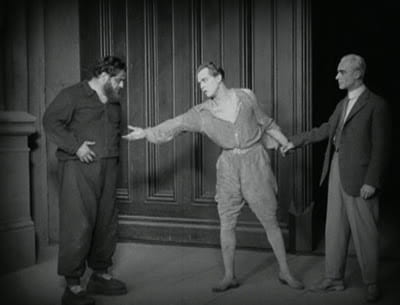
“The Mediator Between the Head and the Hands Must Be the Heart.” Photo source (and a good blog on the workers of Metropolis).

Citations are a form of cross-referencing that was engrained into me from even my elementary school years. I remember seeing footnotes in some of my favorite childhood books, in particular in Watership Down and I believe in The Lord of the Rings trilogy. I wanted to use them on my stories from as early as elementary school but didn’t have a proper need for them until I was an undergraduate writing essays that needed full and clear sources for their work. It’s funny to me now because I do often read peer-reviewed articles that don’t have the same rigorous citation systems in place as the one that I committed myself to over a decade ago now. My rule is that if I make a fact-based claim then I cite it, regardless of how important it is to the argument. I know from my own experience scouring academic databases for secondary sources on André Thevet (1516–1590) and his contemporaries that even the smallest off-hand mention of the man in a source that may have very little to do with him could nonetheless lead me to another source that has a great deal more to offer the Thevet scholar. It made me laugh earlier this week reading one such book that made a fairly large claim about its subject without providing sources for all of the historical figures mentioned in a given sentence, just the ones the author clearly thought were more important.

The way I think of citations resembles how Surekha Davies, one of the leading experts in the field of Renaissance monster studies, described the category of the diagram in a 2020 essay for Aeon. Like Davies’s diagrams, citations “are devised by interpretative communities made up of readers, makers, and practitioners. Each interpretative community has its own distinct pictorial language.”[2] In this context, that language is the style guide for citations in use. Access to the information contained in my citations is eased by using an accepted and standard style, in this case the notes-bibliography system set by the Chicago Manual of Style, which just published its 18th edition last NovemberThere lies the rub of this: citations embed a strong sense of subjective importance in their nature. I try to cite anything and everything that goes into my work, while others will only cite those things which they deem to be the most valuable to their reader. I’ve always looked toward a wider readership, maybe hoping to catch the eye of my colleagues, graduate students, and the odd bookshop aisle walker alike who happens to see my work on the shelf. My more liberal use of footnotes reflects this preference for a wider readership; I try to have enough information in my citations to go around for anyone who may be curious about the connections between my work and its peers and ancestors. I understand the argument that older secondary literature often has less to contribute to contemporary conversations, my dissertation committee for instance asked me to write a new historiography document that only focused on the literature that I’ve used which was published since the millennium. Yet in the twin magnetic poles between which lies my field, Renaissance Studies and the History of Natural History, my historiography begins in the former with Jacob Burckhardt’s 1860 The Civilization of the Renaissance in Italy and in the latter with the likes of Linnaeus adapting new understandings of the natural world from the sixteenth and seventeenth-century perceptions of it which include Thevet’s own cosmography. This is to say that my historiographic timeline begins far earlier than many, and I have to take the full scale as well as the particular scope of it into account.

The earnestness with which I approach my sources is reflected in the quality of my work. I’ve long heard words of warning about particular institutions as places that promote competition between graduate students and between faculty in order to keep the flow of a high level of research and writing. I for one initially heard this and felt a sense of trepidation, why not if I couldn’t keep up with the best of my colleagues. And yet, when I’m in the flow of my writing, things are magnificent. I wrote the first draft of an article of mine that’ll be coming out in the December special issue of Terrae Incognitae in the period of about a week last summer; it uses sources that I’m very familiar with, in fact an expert on, and it makes an argument I’d been thinking about for some time when I sat down to write it. That article’s gone through several rounds of revision since, yet from the beginning one area that needed minimal rewriting were my citations. Today I have another paper I plan on writing in the next few weeks that I initially conceived of in a proposal to another journal special issue, yet I decided to go ahead and write anyway; after all, if that first journal rejects my proposal, I can always send the finished manuscript to somewhere else.

The rub of all of this is that by getting my citations down early, I’ve started my work in a strong place that’s only grown stronger and more resolute with each essay that I write.


[1] S.T. Kane, “Metropolis,” in Wednesday Blog 3.20, (11 January 2023).

[2] Surekha Davies, “Here be black holes: Like sea monsters on premodern maps, deep-space images are science’s fanciful means to chart the edges of the known world,” Aeon (13 July 2020), https://aeon.co/essays/how-black-holes-are-like-sea-monsters-at-the-edge-of-our-vision.

Distractions

How distractions can be beneficial or detrimental, from a certain point of view.—Click here to support the Wednesday Blog: https://www.patreon.com/sthosdkaneI recommend you now listen to: On PausesA link to the WBEZ Chicago story referenced in this episode.


How distractions can be beneficial or detrimental, from a certain point of view.


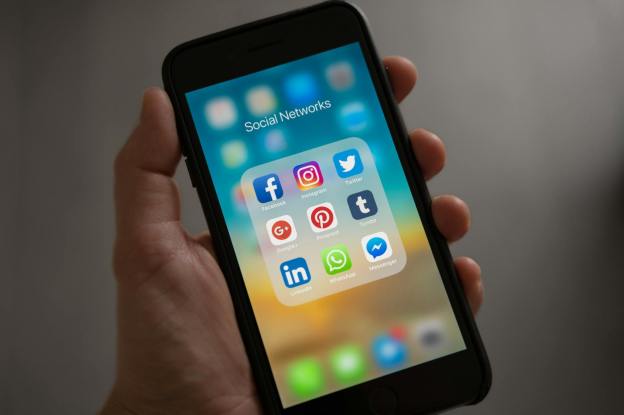
On February 21sta story appeared on the WBEZ Chicago website with reactions to Illinois Governor J.B. Pritzker’s proposal to restrict cellphone use in all public and charter school classrooms. Mine was the first generation of students to have access to cellphones, and from day 1 it was a noticeable distraction for everyone in the room when someone brought their phone to class. Whether looking at the teacher who was trying to do their job in spite of a new topic to chide students over, or to the other students who see that one of their fellows is challenging the classroom’s authority so brazenly, to the student carrying the phone who now had a ready means of ignoring the teacher and missing out on the lesson, phone use is a problem for all.

In all honesty, I’ve been that student from time to time. In some classes it wasn’t a cellphone as much as it was a computer or a tablet that distracted me from the lesson or lecture at hand. In other cases, it was the unavoidable glow of the screen in the row in front of me shopping for shoes or looking at Spring Break trip ideas that drew my attention away from the topic at hand. Looking back, I recognize a noticeable drop in my attention and focus when these technologies began to enter the classroom, just as I notice now how I stopped reading nearly as many books once I discovered YouTube.

The idea of the distraction is often subjective; sure, in the classroom the student is supposed to be paying attention to the instructor, yet beyond that setting what are all the trappings of life but distractions from other facets which to varying degrees we ignore? This isn’t inherently a bad thing. Considering how troubled our times are fast becoming I have made a point of trying to find happy things to look at every day, and in some instances, I send these along to friends who I hope will benefit from smiling at something no matter how inconsequential.

In WBEZ’s report on student reactions to the Governor’s proposal to ban phones from classrooms the reactions were mixed. Some reactions speak to concerns about staying in touch with parents during the school day, especially in case of safety issues. I understand this point, it speaks to the reality that we’ve allowed ourselves to live in an increasingly dangerous society, and to that danger we need resources to mitigate it all while ignoring the underlying problems. We can distract ourselves from addressing gun violence, yet the shootings will continue all the same.

In my own experience the best classroom settings were those where the students either were mature enough to not pull their phones out in class or where they didn’t have their phones with them at all. In a recent substitute teaching job, I found that I was not only competing with student apathy toward following a sub’s instructions but that I also had to compete with students watching all manner of videos on their phones from Netflix and YouTube to TikTok, Instagram, and Snapchat. I simply can’t compete with these bright screens, and as most schools don’t inform their substitutes of any school policies (which allows students to abuse those policies when a sub is in the room), I’m at a tremendous disadvantage in that position.

Today, as I write this blog post I have one conference presentation I need to write and an article submission that I need to revise. The former needs to be done in the next month and the latter by June 1st. In short: I have things I need to be doing right now, yet I can be more flexible with these extended deadlines and keep the Wednesday Blog going for another week. This publication of mine may seem like a sort of distraction to some of my colleagues, yet I feel it is a tremendous opportunity for me to write about topics that I have ideas about which my research doesn’t cover. After I write and record this blog post I will take full advantage of the good weather today (sunny with a high of 65ºF / 18ºC) and go for a long walk this afternoon. After that, I might look at these two projects again. As I said earlier in this paragraph: I have time to wait on both of them.

Returning to the topic at hand: whereas in my teenage years I found it empowering to have a school-issued laptop which I could use in class, today I yearn more for the days before that technology became so accessible to me for the sole reason that I could focus more on the moment at hand. Perhaps the greatest distraction that we’ve created for ourselves is our indefatigable busyness that keeps us moving at full speed whenever we’re awake. We fear boredom because we haven’t allowed ourselves to spend enough time surrounded by the silence that it brings. I wrote about this in October in the context of pauses in the dialogue of the Kate Winslet film Lee. I don’t know if I have any suggestions for systemic change this week, merely advice that each of us ought to look at what we think is most important for our lives and our enrichment. We only have so much time around, so the best thing we can do is to use it wisely.


Travel as the Great Educator

Travel as the Great Educator Wednesday Blog by Seán Thomas Kane

As we end the coldest month of the year and I think ahead, I want to share with you my thoughts on the joy of travel. — Click here to support the Wednesday Blog: https://www.patreon.com/sthosdkane

As we end the coldest month of the year and I think ahead, I want to share with you my thoughts on the joy of travel.


For most of my life my mother traveled for her work to offices and customers near and far here in North America and in Europe. I then early on learned to love travel from her and my father, and in the process of venturing far from home I learned a great deal about our world. Travel remains for me one of the great educational resources we have available, yet the purposes of our traveling will have a clear impact upon where we go and for what reasons.

Because of these frequent forays beyond my childhood home, and our grand move west from Chicago to Kansas City when I was six years old, I learned to read maps quite quickly. I distinctly remember loving to tune the family television to the Weather Channel as a young child just to see the big colorful maps that made up most of that network’s broadcast schedule in the late ’90s (it was Channel 58 on our TV by the way). With family in both Midwestern metropolises, we often drove or flew between each city for Christmas, Easter, and big family events, and on these road trips when I could still read in the car without getting motion sick, I would spend hours engrossed in the maps and road atlases to the point that now as an adult I can navigate from memory across most of the United States.

Today of course I have a computer in my car which does most of the navigating  for me, and I love having all the detailed information that it provides: distances to the next turn, estimated times of arrival (ETAs), and an overall route suggestion, yet I just as often ignore the computer’s suggestion and go whichever way feels right to me as I actually follow it. I feel that I’ve been formed to be the person I am today just as much by the places I’m from as by the places I’ve visited and the experiences I’ve had as a guest in someone else’s city.

When I was eight years old my mother took me on a grand European adventure. It was my second time crossing the Atlantic, I’d visited relatives stationed with the U.S. Air Force in Germany when I was very little, yet the first that I really experienced and can remember. Before that trip, I remember thinking that the things I was most proud of were the great American achievements of the late twentieth century which for me included the space shuttle, the great skyscrapers of Chicago, the idealized memory of cowboys, the dynastic Chicago Bulls, and of course Sammy Sosa. The two weeks that followed opened my eyes to a far wider world than I had yet imagined. I knew about Europe, but to me England and France were places more suited to a medieval and ancient past than to a vibrant present. I laugh now when I look back at the journal we kept on that trip and scrapbook that resulted from all our photos. Returning to the two great cities we visited on that trip––London and Paris––time and again afterward I’ve grown to appreciate the childish wonder that filled me in my first visit there now 23 years ago.

In the last few months, I found myself looking back at that first overseas trip and trying to recapture some of the spirit of it as I felt it so early in my life. As it turned out, after I took my parents to see the latest Indiana Jones film The Dial of Destiny last summer, I found my way into that corner of Disney+’s catalog that contains the old Young Indiana Jones Chronicles created during my first decade and recaptured some of that youthful spirit I was seeking. While not as grandiose or adventurous as Young Indy’s own childhood voyage across the Atlantic, mine was just as strong a gateway into a whole host of new stories, ideas, and possibilities that have led me to the career I enjoy today.

One thing I regret about how my teaching has gone so far is that I haven’t been able to take people on field trips to some of these great monuments to human ingenuity that mark the globe’s tourist trails. I’ve had an idea for a while of starting a freelance tour guide service, after recommendations from friends and relatives, and while this isn’t an announcement of anything grand, it’s still a suggestion of something that could come. Some of the wisest people I’ve met and read like to say that the best way to describe a setting is to visit it. My long time readers will note how specific I made the locations in my first published novella Abducted and Abandoned, something I tried to do in Erasmus Plumwood as well.

Learning on the road offers the student more than a classroom can because one is having to learn not only about the sights and sounds around them but how to interact with other people who may have very little in common with them. I always make an effort to learn the local language as best I can before I travel somewhere, something that I’m currently working on for an upcoming trip. I’ve rarely felt more embarrassed than when I don’t get the joke or understand what people are saying around me. This goes for English as well as other languages. On my second night in Finland, my phone died as I was walking back to my lodging from the tram stop and without a dictionary, I felt too embarrassed to ask the clerk in the corner market what was Finnish for ham and Swiss cheese, resulting in me buying a loaf of bread and eating that dry and alone for dinner. Last March too, during my visit to San Juan in Puerto Rico I could understand what the people were saying around me but still couldn’t quite get the confidence to reply in Spanish despite thinking up the right things to say.

Travel is a great teacher of humanity. There’s a sense of accomplishment that I feel when I make it to a waypoint or destination. I cheered the first time I drove my car within sight of the towers of Manhattan in November 2019 and sighed with relief after hours of bumper-to-bumper traffic when I made it all the way south to the Gulf of Mexico in the Florida panhandle in August 2022. On this most recent European trip I was proud with how most of the time I was finally able to converse in French without too much trouble, though I still have room to grow.

I love wandering through cities and experiencing the ordinary daily life continuing on as it would had I not been there. I love wandering into grocery stores and bookstores and seeing what familiar and foreign is for sale. I love meeting people in random places who have vague commonalities with me like the woman in the Erasmus House Garden in Brussels who joined me in a curious stroll among the medicinal herbs and asked me many questions about my research.

Today I’m traveling more than my mother for work. I tend to go to two or three academic conferences per year to present my research and will usually try to fit in another trip or two for fun. Yet even my traveling is at a low now compared to just a few years ago when I was driving four times a year on my Long Drive East to Binghamton. So much of how I travel is informed by how my parents travel, and the stories they’d bring back of their own experiences. Increasingly, while I will take photos and videos and post them to my social media accounts or save them for future editions of this Wednesday Blog, I appreciate more now the simple pleasure of being there. 

I read over the weekend an argument that play is necessary among all animals and that we adult humans have a way of stripping out our playtime in exchange for more “productive” work. The author of that now lost piece suggested that one thing we could do was to create something that would be impermanent and be sure to not take a photo of it so it lasts only in our memory. I think travel fills that role for me in a way, it’s my time to be looser and play with living in a different place if only for a short while. It helps make my world feel much larger than just my neighborhood, city, state, region, or country. In travel, I to try to recapture some of my childlike wonder at seeing the richness of this our world for the first time. That, dear reader, is what makes traveling a great educator.


The End of Handwriting?

I still remember my first ever school assignment. It was in March 1999, my second semester of Kindergarten. The job was to learn how to write the number “1”, which in the U.S. is normally just written like a vertical line (|). I didn’t listen to all of the instructions, and brought my work back to my teacher, who was flabbergasted to see I had written slashes (/) across the page. It was not only my first assignment, but also my first F. Now, 22 years and eight schools/universities later, it’s interesting to me to look back at the early years in my life when I was learning to write my letters, first in print, and later starting in second grade in cursive.

I grew to be fairly proud of my handwriting, for how fluid it steadily became, but especially for how much it seemed to reflect back on my own personality. Yet in the last few years I’ve found myself writing things by hand far less than ever before, and since starting my first MA in London six years ago, handwritten notes have become a hassle to transport back and forth to Kansas City.

For me, of any of the essential skills I learned in my elementary school years, cursive was the one that seemed the most validating. Everything official, proper, or grown-up that I knew about that wasn’t printed by a press or typed on a computer was written in cursive. I even tried to emulate my favorite cursive handwriting, that being Thomas Jefferson’s on the Declaration of Independence, which after seeing it on the wall in so many classrooms over the years was almost as familiar an image to me as any classic and often replicated picture, like George Washington Crossing the Delaware or the shot of Sammy Sosa hitting a home run that I had up on my bedroom wall as a kid (Go Cubs!)

As a result of my interest in emulating that older style of cursive, I quickly moved past the standard style of cursive script that we were taught at my parochial school, the D’Nealian style, with its regimented curves and extra humps on the n and m, to something that was all my own, yet still mostly legible for my teachers, except of course for when I tried reintroducing the old long s character among the double-s in my handwriting, making Congress appear as it did in the 18th century as Congreſs. I was quick to decide that it was better to keep the long-s out of homework, lest it lose me credit, and use it for fun though.

When I started my college years, now a full decade ago, my experience with handwriting seemed to undergo a sort of flowering. I quickly found that I could remember more information if I hand-wrote it, and developed a very particular style of note-taking that was entirely my own. What’s more, I insisted on taking all of my notes on a type of yellow legal paper that worked perfectly for what I was trying to do. In 2010 and 2011, at the end of my high school years, I’d expanded my writing to include the Greek and Cyrillic alphabets, and often found it fun to try and write down names and other important notes in English but using those alphabets rather than the usual Latin one, just to see how things would work out.

Over the four years that I was an undergrad, and briefly during my two years working on my History MA at UMKC (2017-2019), I used this system to its fullest extent, and really grew to enjoy the process of putting the ideas being discussed at the front of the room down on paper, always imagining that someday I’d go back and look at those notes. In all honesty, I actually have done that from time to time, but usually when I’m looking for something specific in those notes.

My experiences moving across the water to do my first MA at the University of Westminster in International Relations and Democratic Politics (2015-2016) spelled the first end for my use of handwritten notes. I took my yellow legal paper with me, but as I discovered, it seemed less useful to take regular notes in my classes when I wasn’t being graded on the material covered in the lectures, and overall any documents I created while in London would have to be brought back with me to Kansas City when I finished my degree there. That simple need to conserve space, and the benefit of having a computer that’s perfectly capable of recording writing made my handwritten note taking fairly untenable.

Today, as I’m working on my doctorate, I still occasionally take notes by hand, though usually only in the form of edits to typed documents and even more specifically only when I’m in Kansas City where I have easy access to a printer. Like my experience in London, the need for the things I’m taking back and forth across the eastern half of the U.S. to fit in my Mazda means that it’s more helpful if I don’t have a big set of file folders full of handwritten notes in tow. Plus, today I have everything filed away digitally on my computer, meaning every set of notes I have on a specific book or a specific article, or on a lecture I heard is easy to find with my computer’s search tools. Today, if I can have a book or an article available for me to digitally take notes on it, then I’ll take that option a thousand times over having the physical paper document or paperback in front of me any day.

I don’t know how much I’ll use my handwriting in the future, now that I don’t use it for work. I’ve never been too fond of writing my fiction by hand either, it usually takes much longer than typing it, and my thinking through a story often happens much faster than my hands can write with pen and paper. I still try to send handwritten letters and cards to people when I can, though again when the ease and utility of computers and smartphones is brought into the discussion it quickly becomes evident that any “snail mail” is almost as much of an antique as using an old fashioned typewriter; while those older technologies work, they fall short of the efficiency of the new in many ways.

So, is this the end of handwriting for me? Maybe. I certainly think cursive should still be taught in schools, but I concede the fact that my own experience has shown that with the rise of so much still fairly new digital technology, including every device that you are reading this on, has made a fair deal of handwritten communication redundant.