

A Letter from San Juan – Wednesday Blog by Seán Thomas Kane
Puerto Rico is an island caught between two waves, one originating in Spain and radiating throughout the Americas, the other originating in the United States whose influence is out of place here yet established enough to be present beneath the surface. I was uncertain what I’d find here amid the palm trees and verdant greenery, the bustling streets and amid the lives of 3 million people who have seen tremendous troubles over the recent past. After a week here I’m still unsure of some questions I came to this island pondering: what would be best situation for the Puerto Ricans themselves, what is it that they generally want of their relationship with the United States, and how can I, an Estadounidese, contribute positively to answering these questions?
It is strange for me spending time in a place like Puerto Rico. I’m familiar with travelling overseas, leaving the comforts of my Midwestern home for distant shores in Europe, but this week was my first spent in Latin America. What’s more, this was also my first time traveling to one of the US territories that are a part of the United States but lack full representation within our federal government. On Saturday, I texted my friend the political journalist Luis Eduardo Martinez that it was strange for me, an Irish American, to be the colonizer in someone else’s homeland when the most central tenant of our Irish American culture and identity is that we are the descendants of exiles who sought refuge from British colonialism in our own ancestral homeland. I felt uncomfortable in San Juan knowing that while I was in the United States, I was still a guest whose presence was perhaps not entirely welcomed considering that the American conquest of Puerto Rico in 1898 came at a moment when arguments for Puerto Rican independence from Spain were growing and quite outspoken.
At the end of the day this question of whether Puerto Rico’s status as a Commonwealth, or Free Associated State in Spanish, of the United States among its territories should change, either towards independence or towards statehood must be decided by the Puerto Ricans themselves. All we in the 50 states can and should do is encourage that decision be undertaken democratically, so it reflects the will of the Puerto Rican people and not just their leaders. I’ve been a bit more glass-half-empty of late, so while I was here on a working vacation, I still found these questions weighing on my thoughts for much of the trip.
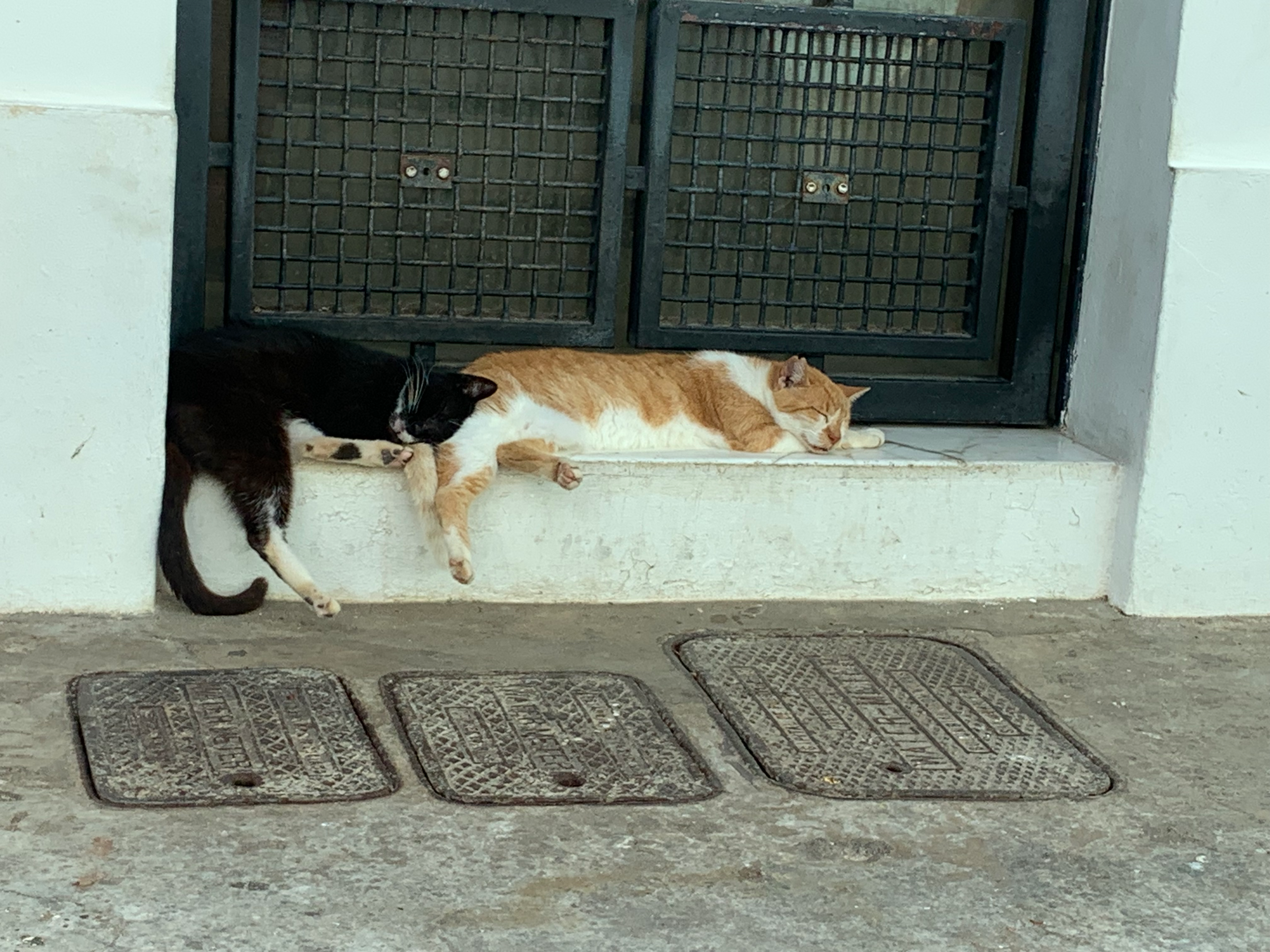
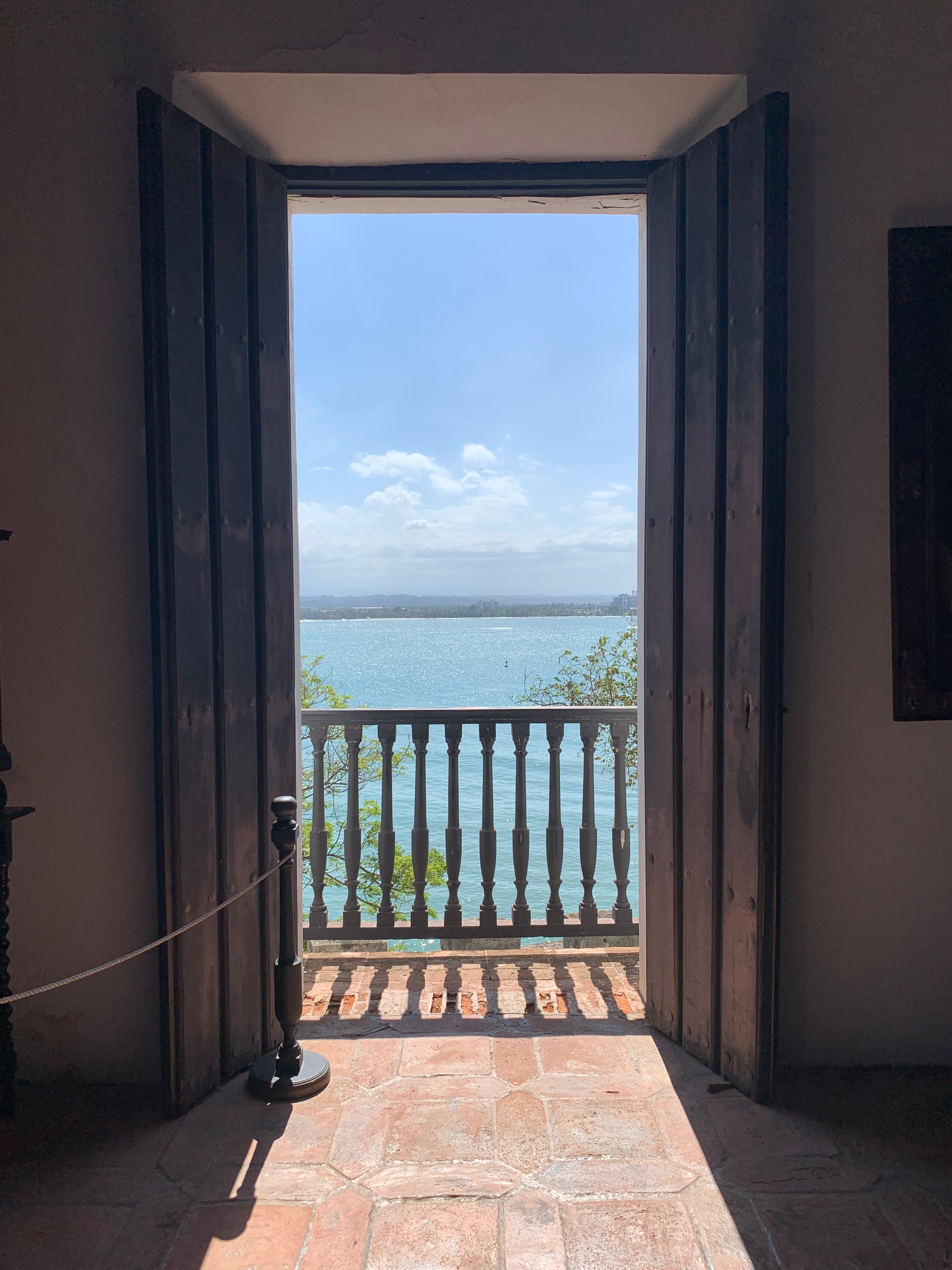
When I learned the Renaissance Society of America would be meeting in San Juan this March, I invited my parents to come along with me. We were also joined by one of my best friends from Binghamton, the Italian historian of Italian-Ottoman trade relations in the Adriatic, Marco Alì Spadaccini, who joined us a few days later. Initially we were going to stay in a Marriott property within walking distance of the conference location, the Caribe Hilton, but in between the initial planning and when things finally were booked at Christmas, rooms at that hotel were quite a bit more expensive. So, I ended up finding a couple places on AirBnB around the Caribe Hilton in Santurce and Old San Juan and proposed each of them to my parents and Marco. The one we picked, a large apartment on Calle de San Francisco near la Fortaleza, the governor’s palace in the heart of Old San Juan turned out to be a wonderful decision. I’m writing this now listening to the tropical birds chirping away as the Sun sets on our final evening here in San Juan, in a fine old, terraced room with a balcony looking out over the street, palm trees in view, street cats prowling below.
San Juan is not the oldest city I’ve spent time in by far; when they were building my basement flat on the edge of the old walled City of London, they found a Roman grave dating to the start of the second century CE. Still, it is the oldest city on this side of the Atlantic that I’ve yet visited. At the time of writing this I haven’t left the Islet of San Juan in nearly a week, and if I lived here, I probably could spend most of my life on this islet here in the old city. It is a beautiful place with vibrant buildings painted many colors and blue cobblestone streets that tend to be run by pedestrians more than drivers, unlike our Midwestern cities, San Juan was built at a time before cars when we were all still pedestrians. The sound of joyous music ringing from bars and restaurants in the evenings did a great deal to cheer me up.
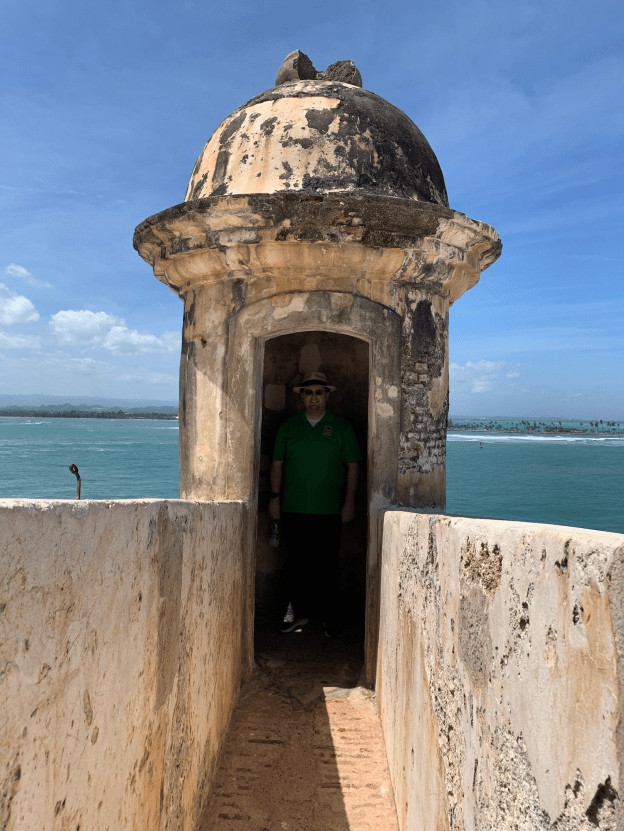
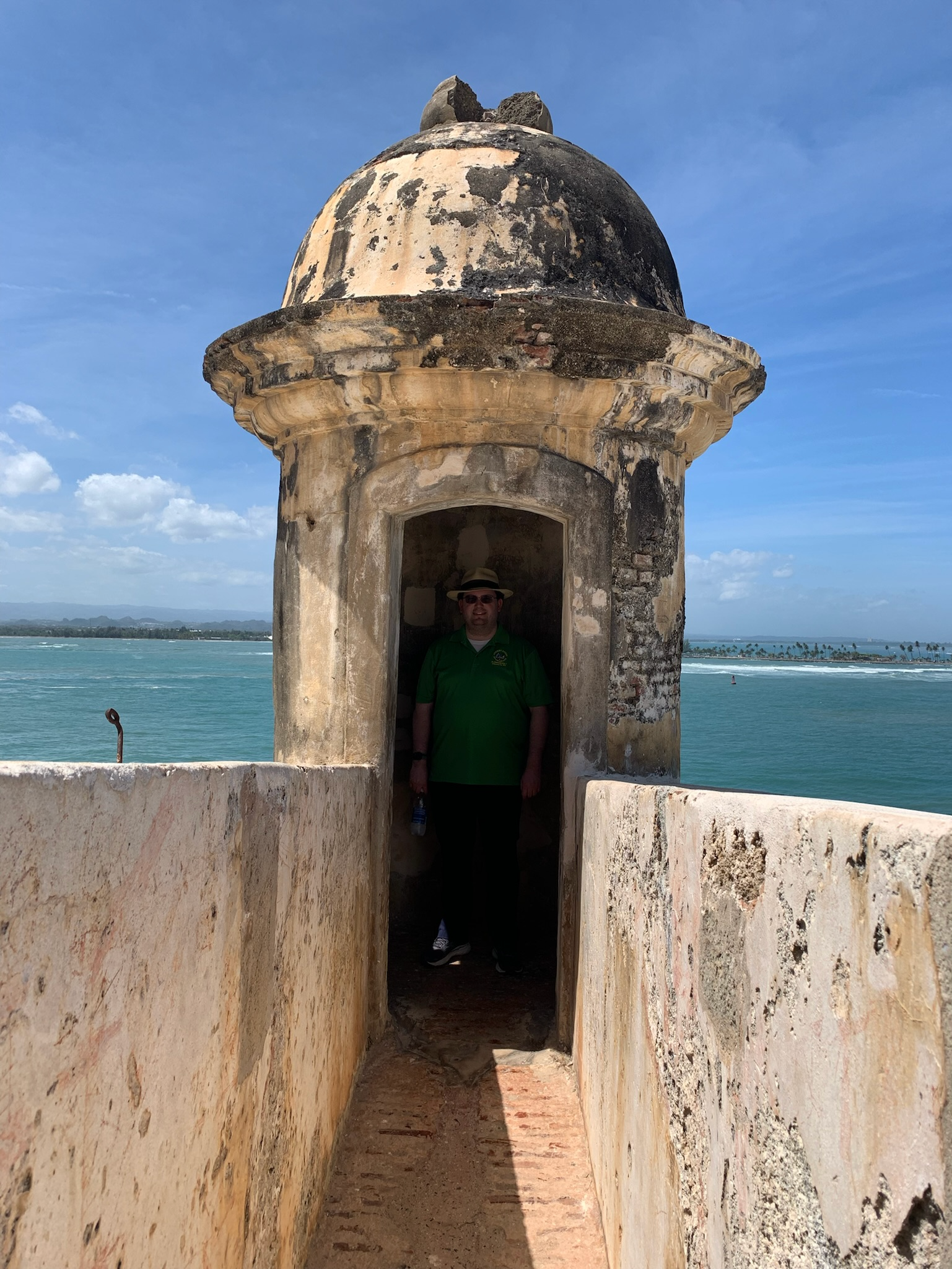
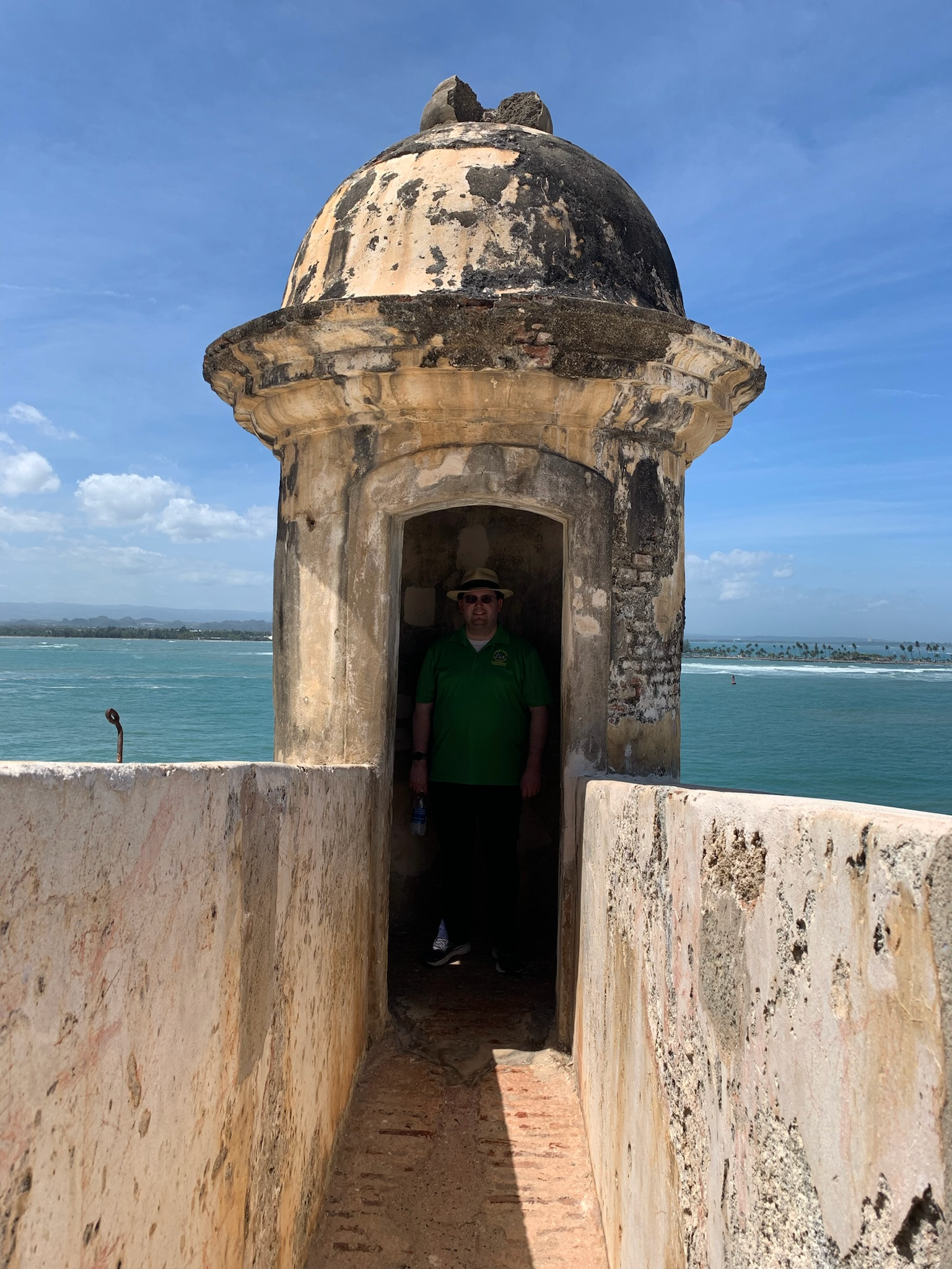
Old San Juan’s history is one of the great draws for me. It makes sense that the Renaissance Society of America would hold their conference in a city such as this that was built during the Renaissance. Names that I’ve known for as long as I can remember like Ponce de Leon come to life in this city, where he and his family built their home, the Casa Blanca on a hill just to the north of where I stayed along the western edge of the city walls. To the north of Casa Blanca stand the mighty fortresses of San Felipe el Morro and San Cristóbal who guarded San Juan for centuries from attackers sailing into Puerto Rican waters from the open Atlantic to the northeast. El Morro is impressive in the sheer scale of its battlements, which reminded me of some of the citadels that Vauban built for Louis XIV in France that I’ve visited in Besançon and Lille, and of Fort Ticonderoga on Lake Champlain in Upstate New York. San Cristóbal is a younger fort, its construction largely took place between 1766 and 1783 under the supervision of a couple of Irish nobles exiled into Spanish service named Alejandro O’Reilly and Tomás O’Daly. Still, San Cristóbal is impressive in its scale and in its continued use by the Spanish Army and later the US Army through the Second World War.
Of all the things I’ve done in the last week here in Old San Juan perhaps my favorite has been simply wandering this city’s streets, seeing both the busy shops and restaurants, walking by local places crowded with Puerto Ricans cheering on their team in the World Baseball Classic, yet even more wonderful were my wanderings down Calle del Sol, Calle de la Luna, and around the Casa Blanca along the old city’s residential streets. I often find myself thinking when I travel about whether I could live in the place I’m visiting. In general, as much as I’ve enjoyed this week in San Juan, I’m not sure it would be a place where I could settle down full time. Yet walking along these residential streets I did find the idea becoming more appealing. Still, while I hear it’s going to be quite cold this week in Kansas City, I am looking forward to getting back home.
¡Gracias, mis amigos sanjuaneros!
 Wednesday Blog by Seán Thomas Kane