

The Joy of Reading – Wednesday Blog by Seán Thomas Kane
This week, an odd sort of sorrow that explains my reading habits.

On Sunday evening, I surprised myself by finishing reading Sebastian Smee’s new book Paris in Ruins: Love, War, and the Birth of Impressionism. I read a review of it in the New York Times several months ago in conjunction with the exhibition celebrating the 150th anniversary of the first Impressionist exposition which I saw at the Musée d’Orsay this summer and is now showing at the National Gallery of Art in Washington. I’ve long loved the works of Claude Monet, especially his choice and use of color, yet of all the impressionists in this exhibit the one who stood out to me the most was Berthe Morisot (1841–1895), one of the few women included in the 1874 exposition. This book tells the story of her life during the Second Empire, the Franco-Prussian War, the Paris Commune, and in the first three decades of the Third Republic at a time when France was a prosperous great power yet still politically unstable, something familiar to our own day. I’d first heard of the Commune as an underlying current of the macabre in Gaston Leroux’s 1910 novel The Phantom of the Opera, though this is the first time I’ve properly read about the Commune or its collapse during the Semaine sanglante, or Bloody Week of 21-28 May 1871.

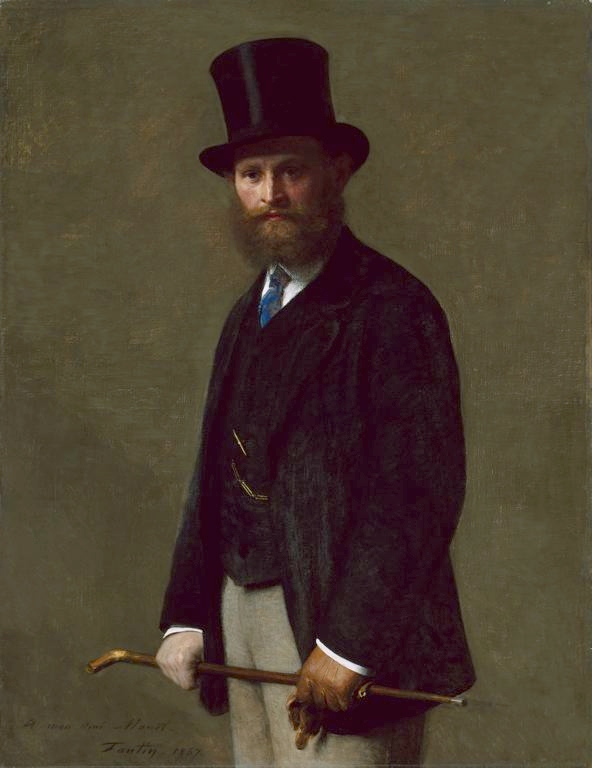
Over the months I read and listened to this book I felt that I got to know Morisot, her friend Édouard Manet (1832–1883), her sister Edma Morisot (1839–1921), her husband Eugène Manet (1833–1892), and her daughter Julie Manet (1878–1966). Early while reading this I went, as I often do, to the Internet to look at the paintings described and learn more about these people I was meeting on every page. It struck me that many of the children of these Impressionists lived well into the twentieth century, Julie died in 1966. I’ve been drawn to the Impressionists for how tangible their art is, as I’ve written here before in my early childhood in the 1990s the decades a century before, notably the Columbian Exposition of 1893, felt recent and quite tangible to me. That sense remains even as we now move toward the end of this first quarter of the twenty-first century, and so Morisot, Manet, and Monet feel more contemporary to me than perhaps they aught to. That their art began to be acquired for American museum collections in the first decades of the twentieth century makes them feel to me more contemporaneous with the 1893 World’s Fair, the Theodore Roosevelt Administration (1901–1909), or the earliest stirrings of silent film before World War I than with the American Civil War which erupted when these artists were first exhibiting their works. That their children lived into my grandparents’ and parents’ lives leaves people like Morisot who died nearly 130 years ago feeling like they were just here yesterday.
I think the setting of Paris also helps with this. The French capital has changed in some ways, for one the Métro was built after Morisot died, though after I finished reading Smee’s book on Sunday night it struck me looking at some of the addresses mentioned in the latter chapters of the book that she would have seen the Eiffel Tower rise over the Champs-du-Mars from her various homes just across the Seine in Passy. Again, these are all symbols of the Belle-Époque that marked the transition from the nineteenth to the twentieth centuries, and yet these are people whose lives began during the July Monarchy of Louis Philippe in the 1830s and 1840s, a decade which also saw the death of the Marquis de Lafayette (1757–1834) and some of the last great figures of the American and French Revolutions of the 1770s and 1780s. Do you see how time can seem to pinch when considering it on a personal level? Paris is a city that has changed in some ways yet in others it would still be recognizable to someone from the 1880s or 1890s. One of my favorite short stories that I’ve ever read is Andrew Robinson’s contribution to the Star Trek: Deep Space Nine anthology series Prophecy and Change, a story titled “The Calling” in which Robinson’s character from the TV show, Elim Garak, is sent by his planet’s government to seek assistance from the United Federation of Planets whose capital in the late twenty-fourth century is Paris, one of the great cities of Earth. Garak remarks that unlike most other Earth cities Paris feels ancient, and that the locals like to keep their particular sense of Frenchness in spite of all the interplanetary mingling going on at this point over 350 years from now.

Again, despite all the advances in technology from Robinson’s description of Paris in the late 2400s it sounds like it would still be recognizable to someone like me who knows it from the 2010s and 2020s or perhaps even to Morisot and Manet who knew it in the 1860s through the 1890s. That’s a bold claim that may be without much merit, but I’ll make it here because it speaks to something intensely Parisian, a city more modern in many respects than many of our great cities here in the United States with a constantly evolving transportation network, good healthcare, and some of the best educational institutions on the planet, yet still true to itself in its age. When I finished Robinson’s story, I was so moved that I considered trying to contact the author to tell him as much, though I haven’t built up the courage to do so yet. That’s something I’ve begun to do with fellow historians, at these conferences over the last three weeks I would often tell people whose books I’d read how much I enjoyed them. It’s something I hope people will say to me when I publish my own works later this decade.
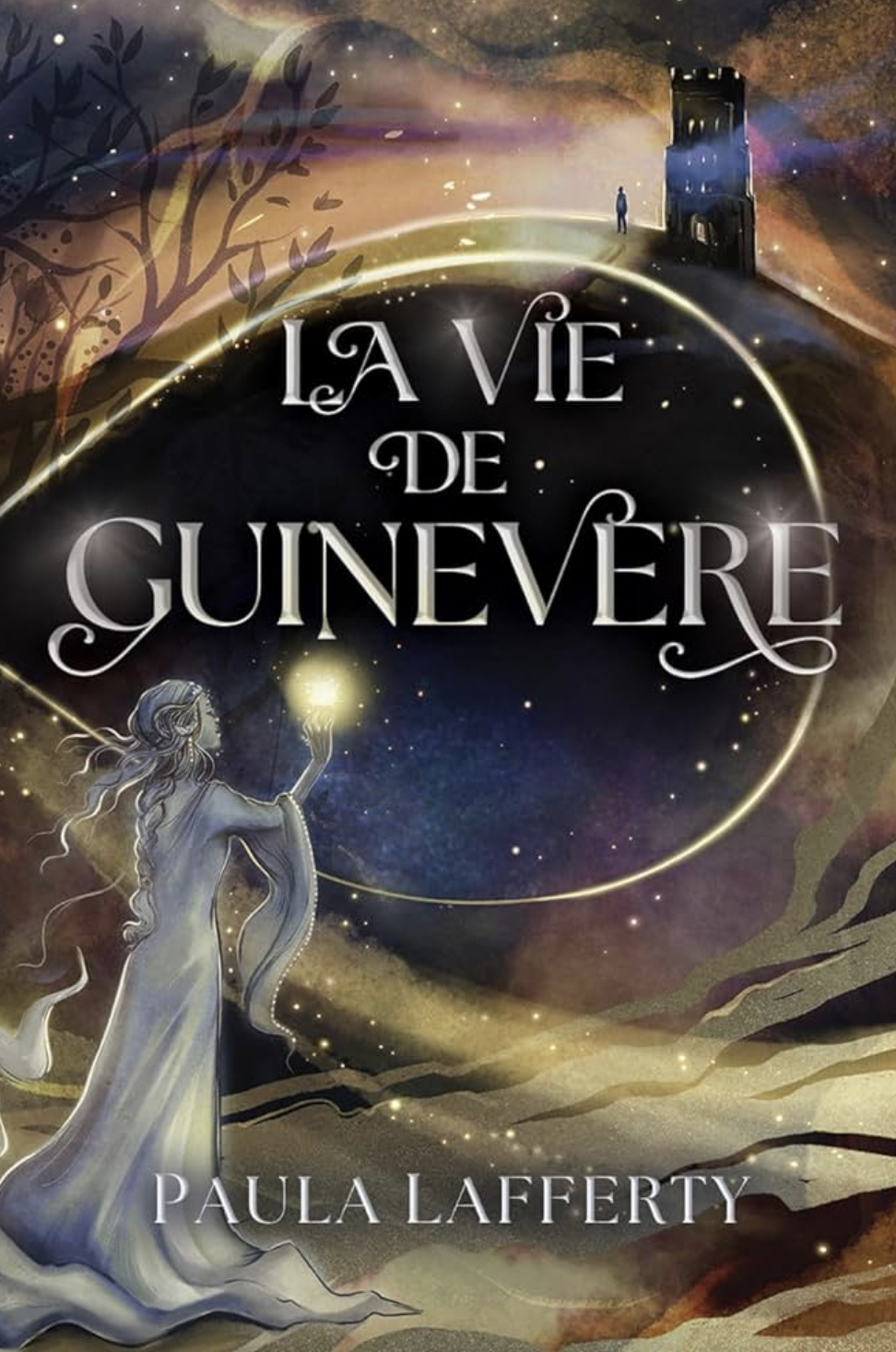
If any book that I’ve recently read speaks to this sense of timelessness yet also is populated by such profoundly vibrant characters it’s Paula Lafferty’s new fantasy novel La Vie de Guinevere in which a woman named Vera living in early twenty-first century Glastonbury in the southwest of England discovers she’s a time-traveling Queen Guinevere and is brought back to the seventh century to fulfill her obligations as queen. I’ve known Paula for over a decade now, she’s one of the pastors of my Mom’s church, and I count her among my good friends, so I’ve been excited to hear progress of this book over the last few years when we’ve met for meals and crossed paths. I read this book during my trip to Toronto over Halloween weekend and finished it on the 6th of November in Houston and again this is one where I quickly began to feel familiar with the characters and where I looked forward to visiting with them again. Paula’s way of breathing life into them made them feel contemporary in a way that most stories set in the Early Middle Ages don’t. Glastonbury is a great setting for good portions of this story; it’s another one of these timeless places, one that I’ve yet to visit, yet it speaks to an element of maturity in the English countryside that seems foreign to our young society here in the American Midwest.
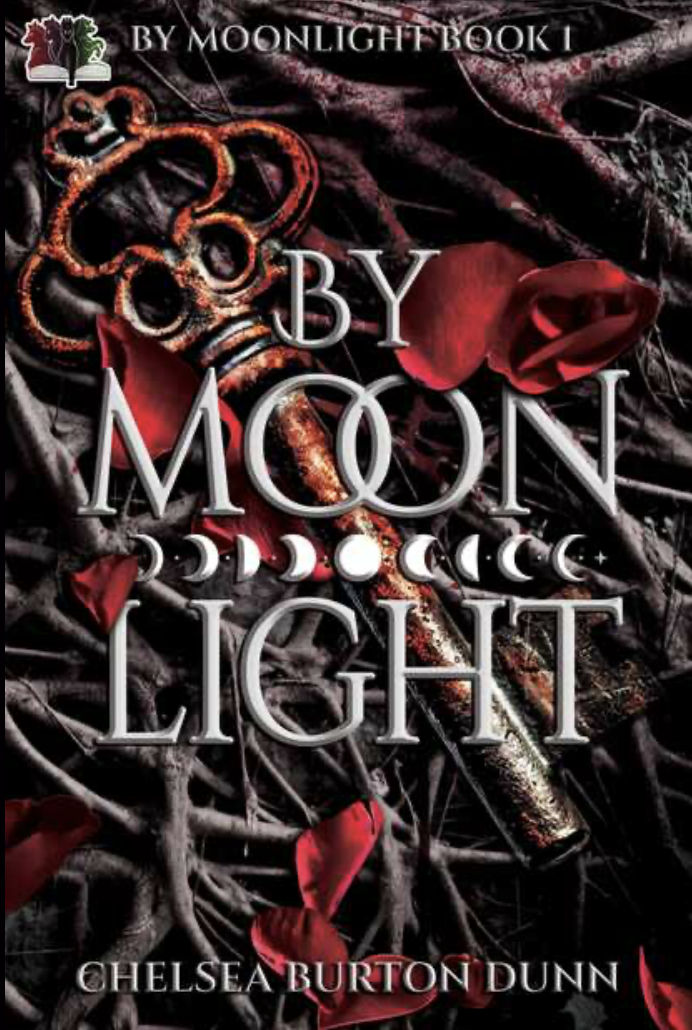
And yet, there is a degree of that agedness that you can find in my cousin Chelsea Burton Dunn’s series of books By Moonlight telling the story of a Kansas City woman named Vee. These books are set here in town, many of the main characters live in my neighborhood, yet things are not quite as they seem for most of the Brooksiders in question are werewolves. I read the first book over the course of one evening, during which time I met Vee and Shane, the werewolf pack leader, and his family. Knowing Chelsea I was able to recognize the story, its setting, and characters quickly and began to feel a sense of comfort around them. These were just more people I was meeting, albeit on paper only. Now when I drive or walk down the street where the werewolves are said to live in these books, I find my mind thinking of them. In this instance, having the story take place so close to home makes it easier for me to find joy in reading it. These are the furthest sorts of stories from my usual fare, especially from the history, anthropology, and zoology works I read for my studies, yet there’s still a place for them and their characters to flourish in the imagination.
I have a tendency of getting close to finishing a book and then setting it aside for a while and leaving it unfinished. I think this goes back to my sense as an only child that the characters in the books I read often feel far more familiar by the time I’m finished with the story, and so I don’t want to see them leave my regular daily life where I spend a good hour or so each day visiting with them and learning more about their lives and experiences. It’s silly in some cases, yet it’s truly a factor in my reading. I remember doing this reading Judith Herrin’s Byzantium in 2016 and 2017, building up a several month gap near the end of the book in part because I didn’t want the story to end. That may also be why my greatest attempt at fiction, my stories about Erasmus Plumwood, remain unfinished. That and that I’ve been translating Thevet’s Singularitez and writing my dissertation.
There is a special joy in reading that is lost in other media. The stories are projected from the page into our imaginations whence they come to life for us to see in our mind’s eye. I love watching television shows and seeing films, in fact I’m eager to go see Robert Zemeckis’s new film Here and Ridley Scott’s Gladiator II, yet reading is much more personal and intimate. It’s a story acted out on the perfect sized stage, a stage that can project just to the individual or to a group if the book is read aloud. At the moment both of the Morisot paintings at the Nelson-Atkins are off view, one is in Nice for a Morisot retrospective exhibit, yet I still chose to wander the Impressionist galleries of the museum this Monday to see the light and color and life which Morisot and her friends envisioned in the last decades of the nineteenth century and the first decades of the twentieth century. Their lives continue to recede into the past, like Eurydice’s eternal fall from Orpheus’s outstretched arms into the dark of Hades, yet for me there’s still a string tethering the Impressionists and me and all the generations in between. That’s a string I will leave bound as long as possible even as time pulls us further apart. It’s a string I will rejuvenate by going to see their paintings and reading more about their lives even as the distance between us continues to grow.
 Wednesday Blog by Seán Thomas Kane