This week, I discuss how my experience working with genealogy databases helped prepare me to be a professional researcher.
—
Click here to support the Wednesday Blog: https://www.patreon.com/sthosdkane
This week, I discuss how my experience working with genealogy databases helped prepare me to be a professional researcher.
One of the things that struck me about the history that I liked to read as a child was that few of my own ancestors’ names appeared in those books. I remember sitting up late at night in my elementary school years reading these fifty or sixty year old children’s histories of the Vikings and the Romans and imagining the illustrations to life. I could convince myself that I could hear, even on the softest level, the oars of the longships pushing with the current of the Thames as the ropes that tied their sterns to the pillars of the old Roman London Bridge grew taught. I’d return to my regular school day the following morning, to Mass and eight hours of classes introducing me to everything from basic mathematics to orthography and English grammar to music, yet when we had our hour in the school’s library the books I knew to search for were the histories.
My elementary school, St. Patrick’s in Kansas City, Kansas, was founded in 1949 and most of the history books dated from the late ‘40s and early ‘50s, by modern standards they were historical artifacts in themselves. Moving forward I didn’t have access to the same kind of library after my middle school years, my high school had a “media center” that functioned like a library, yet I never remember finding books to read there. So, one of the first places that I went on arriving at Rockhurst University in August 2011 was the upper floor of the Greenlease Library to wander around with my new friends and see what books lived there. I made great use of that library during my four years at Rockhurst, and before the pandemic continued to occasionally check books out with my alumnus privileges.
Yet when I was probably 8 or 9, on one trip back to Chicago my grandmother Mary Lou Kane gave me a book about Irish folklore, and I began to hear stories about my family’s history from her and other relatives. I’d known our ancestors were Irish for as long as I could remember, I was 7 when my grandfather’s aunt Catherine McDonnell died; she was one of the last immigrants and probably the last native Irish speaker in our family. Just before my 10th birthday on a trip to England I met my Welsh cousins who introduced me to that side of my maternal family. We kept in contact writing letters back and forth every now and again.
This all led to my formal introduction to genealogy when I was 13. At that point I talked my way into starting as a volunteer at the institution then known as the Irish Museum and Cultural Center, now the Irish Center of Kansas City. The director at the time thought I was 16 but let me stay after I showed I could be responsible. There were days where I was the only one in the little office we had in the lower level of Union Station, and among my responsibilities was to help the frequent visitors with genealogy questions about their own Irish ancestors. I became familiar with the different genealogical databases around then and steadily built up a good knowledge of where to look for what sorts of records and had the occasional success finding a long-lost relative for someone. I continued volunteering at the Irish Center until around my 19th birthday, when now an undergraduate at Rockhurst with a growing list of clubs on top of my three majors and two minors I stopped volunteering at the Irish Center.
I’ve had a fair bit of luck with researching my own family history. My own database is built upon the work of several relatives on both my paternal and maternal sides who did a lot of the initial research. What I’ve done is to fill in some of the gaps and to elaborate on the circumstances of these people’s lives. This has come into handy here and there, I was fortunate enough to visit the building where my Finnish 4th great grandfather worked as the town judge in the southwestern port town of Rauma in the mid-nineteenth century. Moreover, my Dad wouldn’t have his Irish citizenship through descent were it not for the research done by myself and several others that helped find his grandparents’ birth certificates.
My one genealogy position as an adult that I undertook was as a volunteer in the genealogy reading room of the National Archives’ Kansas City regional office. I regularly attended to this position for a good year and a half while I was beginning my M.A. in History at UMKC. It was fun at times, though in many other occasions it could become quite dolorous as the cases I was often presented with were unsolvable or restricted in some ways or another. I left that position as my work at UMKC began to grow, around the time I started writing my second M.A. thesis in fact.
All this research that I’ve undertaken for myself and others in genealogy helped prepare me for my work as a professional historian where so much of what I do is search through databases looking for archival sources that will offer the glimpses into the past that I need to write my work. At some point once I feel confident that I’ve done enough historical research to earn my first professorship I intend to turn to the boxes of family papers collected by long-time Wednesday Blog reader Sr. Mary Jo Keane, one of my grandfather’s cousins, whose research is the foundation of what I know about my paternal family in Mayo. When she died, I took those boxes with me with the intention of writing some sort of family history like the one she intended to write in her last years.
We often talk in the historical profession about history from below as one of the newer genres of history-writing. I’ve liked this idea since I first heard about it, and in some sense, I’ve tried writing from the perspective of the animals which are at the heart of my professional research to varying success. Genealogy is often history from below because as much as we may hope to find some famous ancestor––at one point Ancestry.com claimed to prove my relations to several famous people––it really ought to be a recognition of who our family has been in the generations that we can still find. It is a supplement to memory even as that living memory of our past fades. At Kane family funerals I would often learn something new about the immigrant generation in my family, my great-grandparents, that would explain their lives just a bit more. Those stories turn these people from just being figures on paper into memories that have some of the color and life of those illustrations in my childhood history books. I want to know more about my family’s past to understand how I fit into our world today with its progress and troubles all the same. In the first half of the last century that generation lived through world wars, the Irish War for Independence and Civil War, the Great Depression, and a global pandemic. And through it all they took the bold step of leaving home and starting a new life for our family in Chicago. That life was the one I was born into at the end of the last century, and even after my parents & I moved to Kansas City that life in Chicago still forms the bedrock of my life and perception of things today. None of this would be nearly as personal or as impactful if I knew nothing about the ancestors I never met. It’s thanks now to all this research in genealogy that they live on in my memory today.
This week, I take you along on an investigation I undertook recently into a family heirloom from World War II.
—
Click here to support the Wednesday Blog: https://www.patreon.com/sthosdkane
This week, I take you along on an investigation I undertook recently into a family heirloom from World War II.
Of all the bad things that came out of the flood which struck my family home two weeks ago, there were several intriguing finds in old boxes, chests, and crates that hadn’t been opened in several years. Two days after the flood, I finally got around to opening my Donnelly great-grandparents’ blanket chest, which held most of the surviving physical records of their lives. It was deeply dolorous to lose these pieces of their memory, and to know that while we will have photographs of these artifacts going forward, most of the artifacts themselves were ruined by the sewage that flooded into our basement.
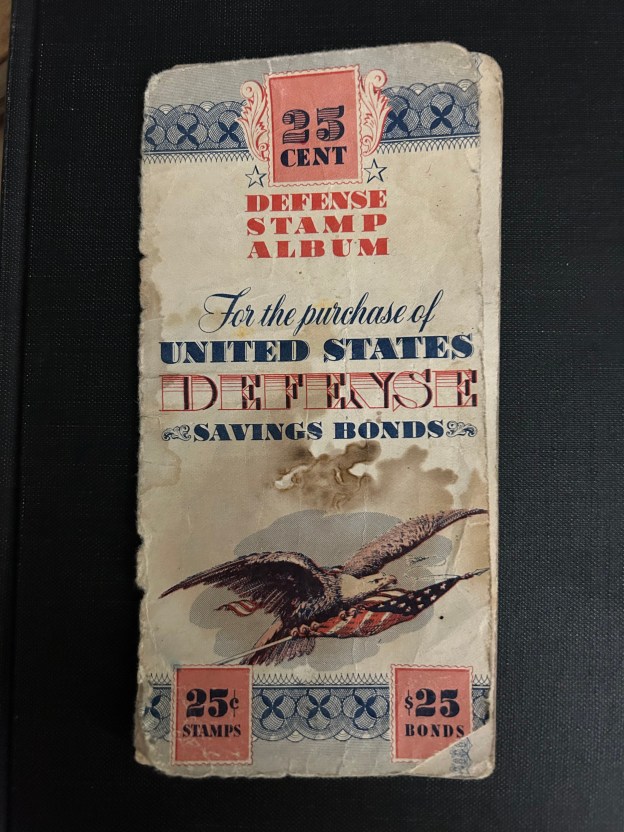
One of these artifacts that caught my eye was an album of United States Defense Savings Bond Stamps dating from likely 1942. These were printed for civilians to purchase and collect 25¢ stamps which they could then turn in after the war at their local post office for savings bonds which could then accrue value over time. My great-grandmother Ruth Donnelly bought this stamp album when she was living in Glendale, Arizona where my great-grandfather was stationed when the Imperial Japanese Navy attacked Pearl Harbor. He was a cavalryman, just a few years out of Rockhurst College, my alma mater as well. When the war began, the U.S. Army decided to not send the cavalry overseas with their horses, seeing how poorly the Polish Cavalry fared against the German Wehrmacht in 1939, and being too tall to serve in the tank corps he was reassigned to the infantry.
I’ve often wondered what it was like for my Donnelly great-grandparents when he was away in the Army during both World War II and Korea. When I used to volunteer at the Kansas City Irish Center at its old location in the lower level of Union Station, I’d often find myself in that grand old building later in the evening and would walk up into the great hall and think about them there when he deployed. That was during my high school years when the Afghanistan and Iraq Wars were at their height and reports & stories of deployments, reunions, and the planes returning fallen servicemen and women were a frequent fixture on NPR and on the morning & evening news.
Of all the artifacts that we recovered then, I decided it would be good to see if I could turn in the stamps my great-grandmother, or G.G. as my cousins & I called her, for anything today. Surely, over 80 years they would have gained some monetary value. My first stop was to my local bank branch, where I took them to the counter and with a smile explained my unusual visit. The tellers who were working that afternoon gathered at the window to look at the album, having never seen its kind before. One read the fine print and suggested that I needed to go to the local post office first and see if the Postal Service still would collect these stamp albums in exchange for savings bonds. After all, if the coins and bills of the U.S. Dollar don’t expire, then why should this stamp album that could be exchanged for savings bonds expire?[1]
With this in mind, I drove from my bank branch to the nearest post office and joined the queue. The postal clerk there was just as surprised to see this album as the bank tellers were. She had never seen an album like this before and suggested I should go to the Kansas City Main Post Office at Union Station where there might be some veteran postal workers who would have possibly exchanged these albums for savings bonds near the turn of the millennium. That made sense to me, and following the trail further I drove downtown to Union Station. At the moment there is a major exhibition from the Walt Disney Company honoring the studio’s centenary, so Disney music is echoing from the loudspeakers all around the building where once they would have announced arriving and departing trains. The Main Post Office moved about 20 years ago across Pershing Road to its current place in Union Station after the old post office building was converted into the Kansas City IRS regional offices.
My last visit to the Main Post Office for more than just buying stamps or dropping off letters was in the hot summer of 2012 when I got my passport photo taken there. It was at the same time that the Opening Ceremonies of the Summer Olympics were underway in London, though they weren’t televised live in the U.S., instead being shown in primetime later on NBC. I always laugh when I look at that passport photo: I wore a suit and tie and between the over-exposure of the image and the buckets of sweat on my face I looked quite silly.
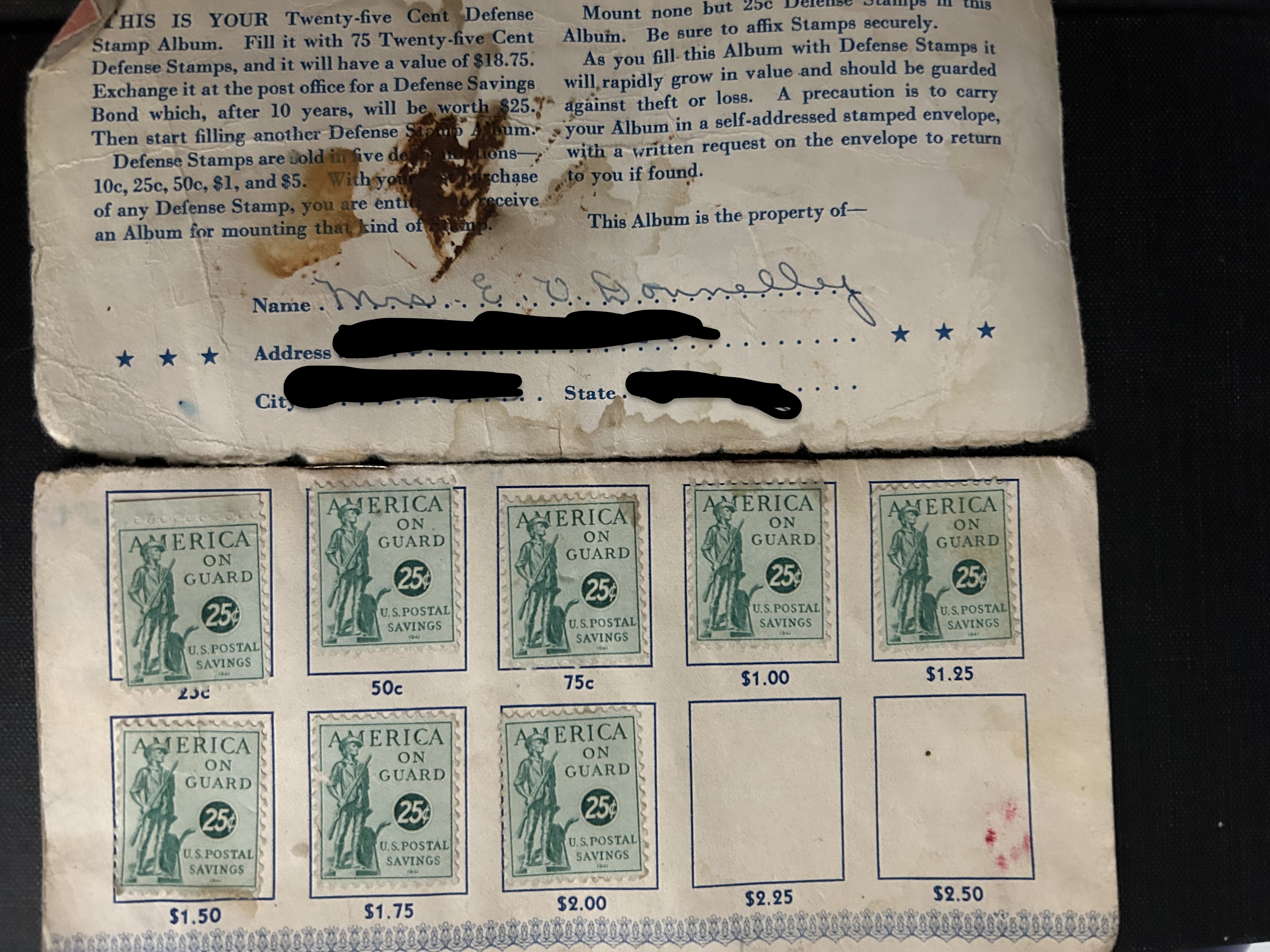
This visit to the Main Post Office was greeted by the same voice of surprise from the clerk as the three other people who I’d taken this album to so far. I explained what I knew about it, that it was likely 80 to 82 years old, and that I wanted to see if the stamps inside could be exchanged for savings bonds still. I opened it to show the clerk that my G.G. had only collected $2 worth of stamps, so it wasn’t a full album. He wasn’t sure what was the best answer and retreated to the offices behind the counter, returning a few minutes later with the name, address, and phone number of a stamp auction house in town that I could consult for a better answer.In short, I could not exchange these stamps for savings bonds anymore. The people who would know how to do that were long since retired from the Postal Service. After three stops, I was ready to hear this, and returned home, where I called the auction house and spoke with its owner. He explained that these stamps have some collectable value, but nothing of any real significance. At the end of the day, while the capitalist in me was disappointed, I was overall pleased with the result of this research. I called my grandmother to tell her the news, saying that this stamp album would make a nice keepsake for future generations to find again, and if this Wednesday Blog is also lost, to research again. Who knows, maybe in another century it might end up on Antiques Roadshow.[2]
This week on the Wednesday Blog, recognizing the sixtieth anniversary of the assassination of President Kennedy.
—
Click here to support the Wednesday Blog: https://www.patreon.com/sthosdkane
This week on the Wednesday Blog, recognizing the sixtieth anniversary of the assassination of President Kennedy.
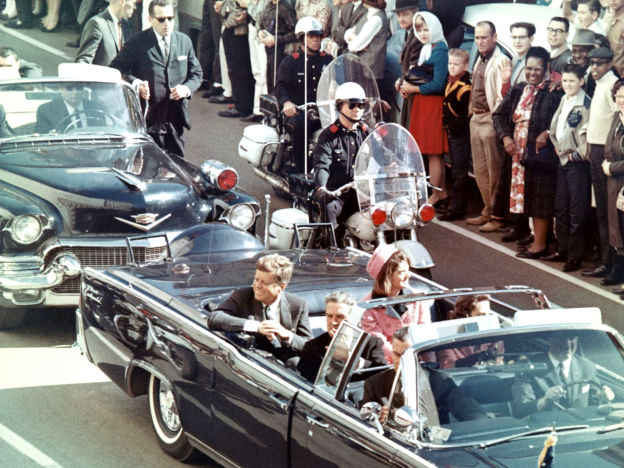
Bill Clinton was the first president who I can remember, and like many other millennials my perspective on the Presidency is shaped by his two terms in office. Yet beyond the immediate I always knew several other presidents: Lincoln (as I often write), Washington, Truman, and Kennedy. Of all of these, John Kennedy is the most complicated; he was the first Irish American Catholic to be elected to the White House and his picture was still pretty common in houses even into the turn of the millennium. His term is remembered most nostalgically of all the presidencies of recent memory for how short it was and abruptly it ended.
As much as I always knew who the Kennedy brothers were, I also knew that Dallas was the city where President Kennedy died. When I first visited in my adolescent years, I made a point of going to visit Dealey Plaza and see where it all happened. Every year on this day I find myself thinking of what happened there 29 years before I was born. It’s strange how much events that are relatively removed from my own lifetime still have such an impact on how I see things. For me the recent past still goes back to the turn of the twentieth century when the world that I was born into in the Midwest was being created. So, as far as the assassination of President Kennedy is from my own life, those 29 years still have never felt that distant.
Today, this particular anniversary is striking to me because it is becoming more distant. 1963 is now a full 60 years removed from our own time, and as I look ahead the middle of this century seems closer than I ever imagined before. The passage of time could well drive people to fear for their own mortality, and to a certain extent I find those thoughts enter my mind now and again. Yet when I worry about my future it’s less that I will lose something of myself with the passing years and more that the memories I’ve grown up hearing and those I’ve written for myself will become ever more remote from my lived experience.
For the last several years I’ve found myself caught by a faint memory of a sort of reddish glow. I’ve known it originated at some point in the early 2000s, about 20 years ago for those who are counting, yet beyond that I could only speculate. I figured there might’ve been some phase of interest in Renaissance Italy in the books or documentaries my parents were reading or watching around that time, yet I couldn’t remember any specifics. Then, several weeks ago, I remembered some faces along with that red glow and it occurred to me that what I’ve been longing for was a particular day, Thanksgiving Day 2003.
That year, my Kane grandparents and great-aunt Sr. Therese came down to Kansas City to attend my Webelo bridge-crossing ceremony when I graduated into the Boy Scouts. They patiently followed my parents and I around town, attending a weeknight fencing lesson of mine (I used to fence saber), and joining all of my maternal Kansas City relatives for Thanksgiving dinner at the farmhouse that my parents built. We lived on 34 acres of land in western Kansas City, Kansas and one thing we all miss about that house is the view to the west out the back windows. The sunsets were gorgeous. That Thanksgiving was a clear day with light clouds in the sky and as dinner was nearing completion, I remember sitting with my grandparents and Sister (that’s what we all called my great-aunt) in the living room with something on the TV, but our eyes were drawn to the sunset out the window.
The backside of our house was all one big room, to the right was the kitchen, in between the kitchen table, and to the left the living room, and in the kitchen, we had these beautiful imported red Italian wooden cabinets which my parents saw on This Old House and bought in a stall at the Merchandise Mart before we left Chicago. The beautiful shades of red that I remember are of the sunset shining off of those cabinets, a true marriage of nature and craft that I hope I will never forget.
My Kane grandparents and Sister are all gone now, the only ones in the room at the time that memory occurred who were alive when President Kennedy was killed, yet for all of us that moment marked our time as one of uncertainty. Now, as an adult I appreciated Jack Kennedy still, yet I would’ve rather voted for his younger brother Bobby. I see more of the nuance in those colors even when as a child on Thanksgiving 2003 all I saw was bright light that made me uncomfortable.
Sixty years isn’t that long, and yet to an extent it really is. Sixty years before President Kennedy’s assassination the country was recovering from President McKinley’s assassination, a bleak start to the twentieth century in a moment of triumph and seeming progress. It’s all about where we stand in the great cycle of years. I like the old adage that the Greeks saw time differently from us, that they stood looking towards the past with the future behind them. We don’t know what will happen in the future and our pasts and those of our parents and grandparents really shape our worlds in far greater ways than we can often imagine.
As Irish as my name is, I’m still very much an American, and a central part of this country and its population is the fact that we are all a mix of different ethnicities and races. There are competing visions of American diversity. There’s the melting pot of assimilation which sees new immigrants enter the pot and get boiled down until they blend in with everyone else to rise from the water newly minted Americans. Then there’s my favorite, the salad bowl which sees us as a healthy mix of different cultures, heritages, and traditions that come together to create something new whose history and roots stretch deep into a variety of different soils from around the human world.
My own salad bowl is made up of English, Swedish, Finnish, Flemish, and Welsh parts as well as an Irish majority. It means that when I think of indigeneity as a universal human concept I’m left wondering where I might be considered indigenous. I’ve been to several of my ancestors’ hometowns in Ireland and Finland and while they were lovely places, I was very much the tourist there, a stranger in a somewhat strange land. I felt even more foreign over these last three years spent living and working in Upstate New York, a place where I couldn’t quite get the pulse of the people and never fit in with their way of living.
I knew little of my Welsh heritage until one Sunday in November 2002 when my Aunt Mary Ruth, who was then doing a teaching exchange in England at Canterbury’s Christ Church University took my parents and I up to Surrey to meet our distant Welsh cousins, my cousin Glenys and her husband Cyril along with their children Carys and Gareth. I wasn’t quite sure what to make of the whole situation at first but quickly found them welcoming and genial. Glenys’s grandfather was a younger brother of one of my 3rd great grandfathers, making us 2nd cousins 3 times removed. By the time I met her she had retired from her work as a science teacher and devoted herself to her family and her beloved garden. We kept in touch after that by mail, she sent me lots of stuff about Wales, its history, and culture, and so I began to think of my Welsh heritage as an integral part of who I am. It takes knowing someone with a common passion for something to really embrace it, and that passion is something Glenys instilled in me.
I didn’t visit the house in Surrey again for another decade, next returning in June 2013 when I was in London for a study abroad session at my graduate alma mater the University of Westminster. Ten years made a huge difference, everyone had grown older, wiser, and in my case I left them a little kid and returned in my early 20s. Glenys told me many stories on that visit about her own life, her connections with her American cousins, some of whom I know and others I’ve yet to meet, and of course about Welsh culture. I even made an effort to learn Welsh at one point, what little I remember has proven useful to my Irish studies.
Glenys always talked with a smile about St. David’s Day, the 1st of March, when Welsh pride is at its height. It reminded me somewhat of the celebrations I grew up with a few weeks later on St. Patrick’s Day but with a different set of memories baked into the celebrations. Each year then, as March arrived, I’d think of her, Cyril, Carys, and Gareth and occasionally even write a letter wishing them well. In the last decade we’ve begun to communicate digitally more, Gareth even is one of my regular readers here on the Wednesday Blog, and with each passing year when I’d think about making a trip over to London one part of it would always be to pay Glenys and family a visit.So, I was saddened to hear how her health was failing over the past few years and then a few weeks ago to receive the news from Gareth that she’d died. Glenys was one of a kind, a true joy of a person to meet. She touched so many lives both among her students, her community, her friends, and those of us in her extended family. With this in mind I thought for this St. David’s Day I’d use my soapbox here to remember her.
On Sunday morning, 31 July, I awoke to my first sights and sounds of the Emerald Coast. This particular stretch of Florida’s Gulf Coast along Santa Rosa Island and Choctawhatchee Bay is famous for its rich green waters and white sandy beaches. The sight of the bay out my window was one of the first reminders of where I was, that I was not in fact back home in Kansas City nor in that modern hotel room in Nashville. No, I was now in the Gulf Coast, the southern seaboard, of the United States.
I spent the better part of the first day on our balcony attending to a series of morning Zoom calls, before heading out to the beach around lunchtime. In preparation for the beach, I replaced my usual slip-on shoes and black socks for a pair of brown leather sandals that I bought for a day-long float trip down the upper reaches of the Colorado River back in the Summer of 2018. Still, I retained my usual khaki trousers and summer golf shirt, lest I move entirely out of the realm of comfort.
I quickly found that I had arrived at the beach well after much of the seashore fun had passed. The majority of my relatives had had their fun in the ocean waters that morning and were now returning to their rooms to beat the worst of the afternoon sun. So went most of that week in Destin. I found myself caught up in my own over-thinking more than in enjoying the moment, and never did go for that swim in the ocean that everyone kept talking about. The complexity of the idea left me hesitant and wandering that far from a place where I could dry off and change back into my normal clothes without potentially expanding the reach of the ocean or its sandy shores even further was my limit.
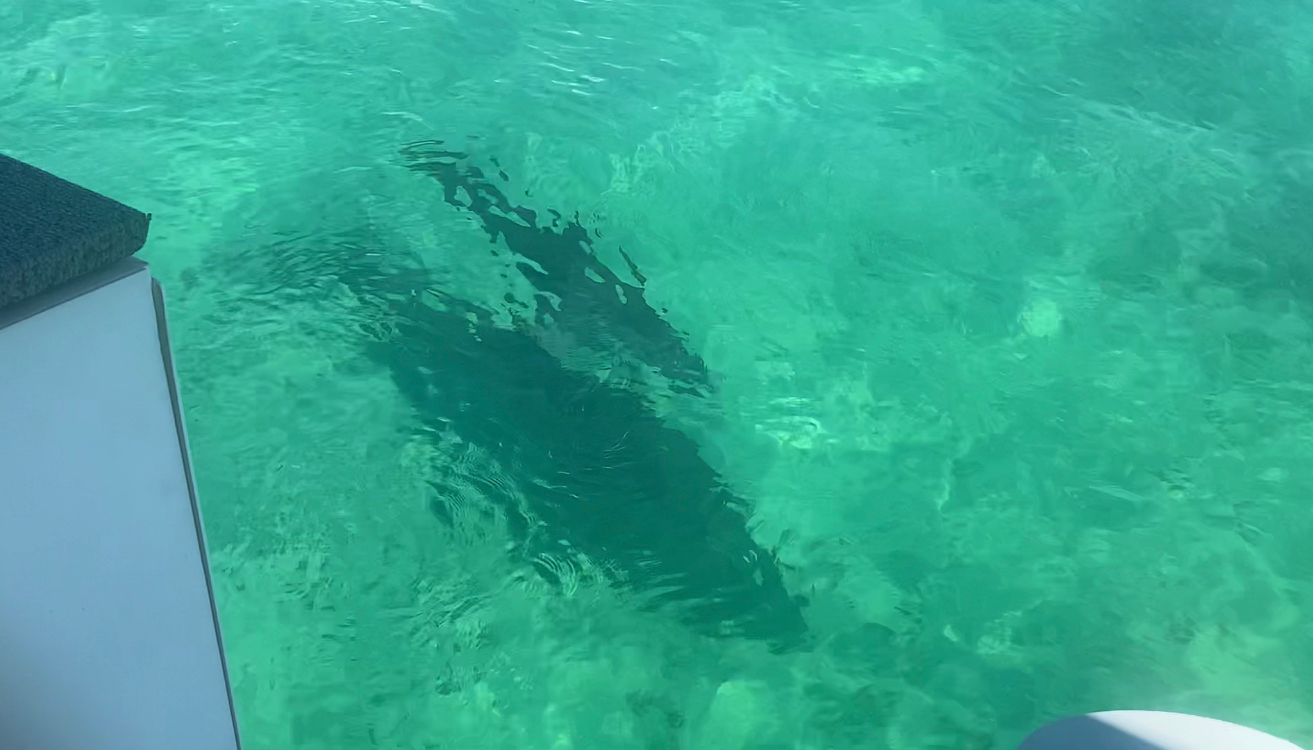
A dolphin cow and her calf swam up next to our boat.
On Monday I boarded one of two pontoon boats that carried the 24 of us from my family who made the trip to the seaside and traveled from Destin Harbor out to an apparently famous local haunt called Crab Island. I imagined it would be a large rock tethered to the ocean floor that would be just big enough to be a curiosity for all the tourists flocking to the emerald waters there and was pleasantly surprised to find that Crab Island was actually a shallow part of the bay which allowed for people to walk with ease through the water without much risk of drowning. As with my thoughts on Sunday, I did not join in the aquatics and remained firmly on the boat, but I still enjoyed the time out on the water.
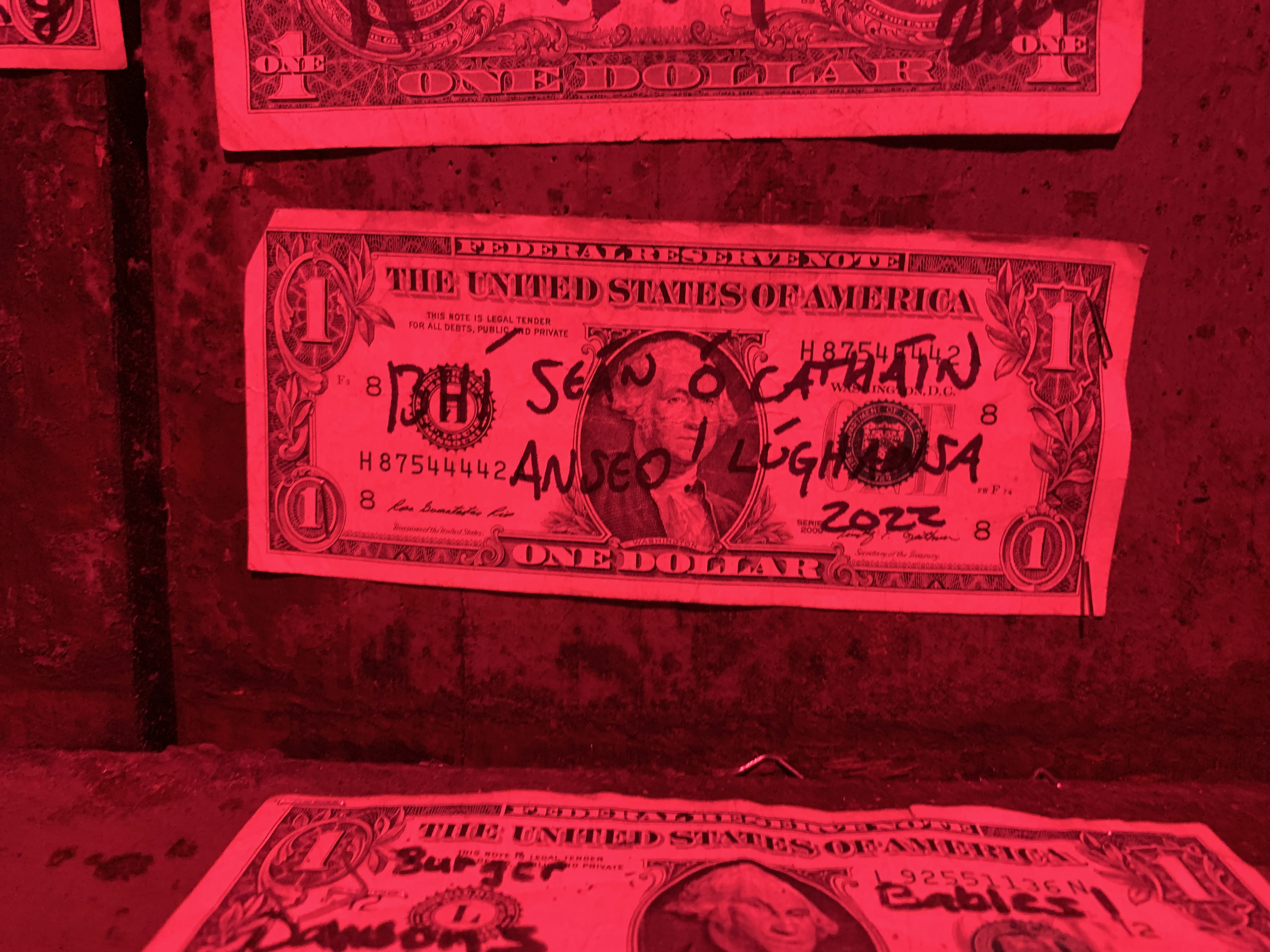
That evening several from our group went to a local pub in the area called McGuire’s that reportedly has some of the best steaks in the country. I considered it but ended up trying their bangers and mash, which were so wonderfully memorable. While I was there, I participated in an unusual custom local just to that establishment of signing dollar bills and stapling them to the walls of the pub. In my own case, my dollar bill was signed “Bhí Seán Ó Catháin anseo, 1 Lúnasa 2022.” After the fact I kicked myself realizing I forgot a key part of the verb, which should have been written “Bhí Seán Ó Catháin anseo é, 1 Lúnasa 2022.” Still, should you be in the area and want to see it, my dollar bill is likely there stapled onto the lid of a very large barrel (I thought of it as a hobbit door) in the room behind the gift shop.
My dollar bill at McGuire’s Pub in Destin, FL.
On Tuesday I got to experience the power of the thunderstorms that build up on the Gulf of Mexico. Most of Tuesday the skies remained cloudy and gray, with various stages of rain from sprinkles to showers falling down on the barrier island that we were staying on. The island in question is the easternmost reaches of Santa Rosa Island, a long and skinny barrier island stretching from Pensacola Harbor in the west to Destin Harbor in the east. Yet as a great many cases in this country’s long history longstanding naming conventions couldn’t be allowed to get in the way of a good marketing opportunity, and in 1950 at the urging of a local developer the eastern 1/3rd of Santa Rosa Island was transferred from Santa Rosa County to Okaloosa County and renamed Okaloosa Island, the name you can buy on keychains, t-shirts, and tag on your Instagram stories when you visit.
We stayed in a beach resort on Okaloosa Island called Destin West. The resort is split between a bayside horseshoe and a beachside block. Our condo in the middle of that bayside horseshoe was a 7th floor penthouse with a neat rooftop balcony that provided marvelous sunrise and sunset views over both the Gulf of Mexico and Choctawhatchee Bay. What’s more, I was delighted by the visions of the night sky that flickered into view each night from that rooftop. On Sunday night my parents and I ventured up onto our rooftop and spent a good hour gazing up at the stars. The sky was first illuminated by the pinpoint of light that is Arcturus, roughly 36.7 light years distant from Earth. Thereafter we gazed up, me laying in a sun-bathing chair, as more and more stars greeted us as the light of our Sun faded further below the western horizon. My Dad and I saw an even better view of the night sky a few hours later when we wandered down to the beach to try and get some wave recordings for this podcast, seeing then the band of the Milky Way arc over our heads in all its nebular glory.
I’m sad to report the wave recordings came out as static. I guess I needed a better microphone.
The other great highlight from the week in Destin was all the time I got to spend with my family: parents, cousins, aunts, uncles, grandparents, and the young children of my cousins. Many of you are listening or reading this week, and I hope this makes my appreciation for all of you very clear. On Tuesday night, I went out on the town with some of my cousins, going towards Destin’s Harborwalk where we enjoyed some of the local music, some good food and drink, and for several of my kin a nice jump off a perfectly good tower. A few days later I returned with more relatives, this time parents and kids included, and got to rediscover that Harborwalk all over again in the daytime.
One of the more fascinating experiences that I had while on the Emerald Coast was visiting first the Native American mound located in downtown Fort Walton Beach, and secondly a sea turtle conservation center in Navarre Beach. The mound was likely built around 850 CE by a people identified archeologically as the Pensacola Culture (fl. 1100–1700). The mound builders in Fort Walton Beach were among a wider culture of mound builders extending throughout the interior of North America called the Mississippian Culture who dominated the Mississippi Basin from around 800 to 1600. Among the most famous Mississippian mounds is Cahokia, located just across the Mississippi from St. Louis in Illinois, which remains one of the top archeological sites I still want to visit. The Mississippians mysteriously disappeared just before the arrival of the Europeans in North America without much certainty as to why. I for one would love to learn more about them.
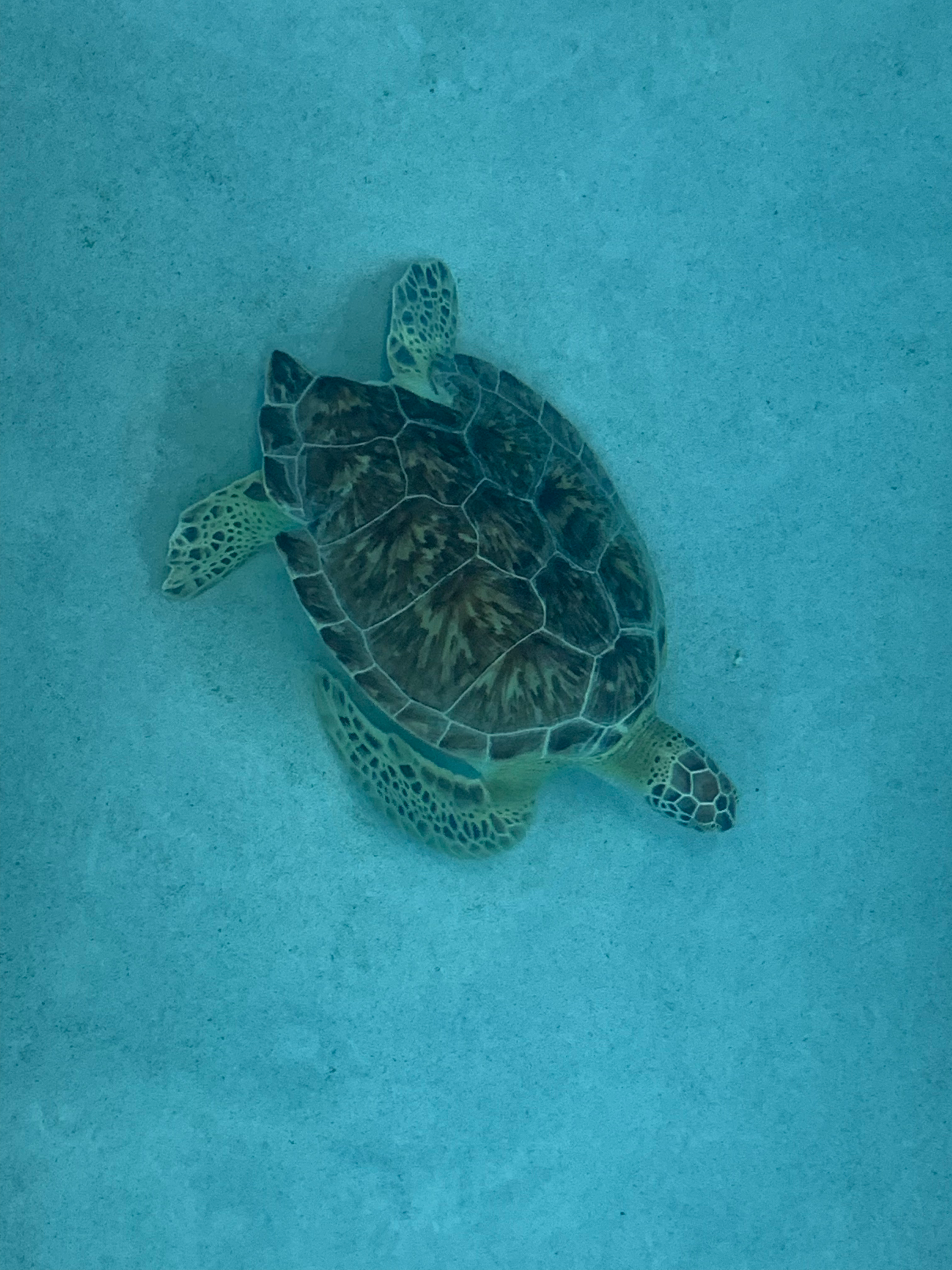
The Navarre Beach Sea Turtle Conservation Center has a lot in common with many a local science center that I’ve visited, including Broome County, NY’s Kopernik Observatory. It’s staffed by locals who clearly are not only dedicated to the center’s mission but are also themselves keeping the lights on, and it seems to be a focal point of a local advocacy message within the community. The Gulf Coast is home to a wide range of animals and plants, among which are several species of sea turtles. We got to see one green sea turtle named Sweet Pea who lives in the pool located inside the Conservation Center. Sweet Pea was found in Gulf Shores, Alabama with fishing wire stuck far down her throat and wrapped all around her body. In the veterinarians’ efforts to save her they ended up having to amputate one of her front legs, and she’s also missing a piece of her shell, but now she lives a happy life in her pool. Sea turtles are increasingly threatened by human activities along the coast, including fishing, littering, and the use of white flashlights on beaches at night which keep the sea turtles from laying their eggs in the sand out of fright. This is one area where sea turtle conservation and astronomy intersect, as in both cases red flashlights are far better to use than white or blue ones, as red is a cooler color and less blinding to the eyes of either a human or, clearly, a sea turtle.
Sweet Pea the Green Sea Turtle.
Over the last few days of my time in Destin I got to know the roads leading out of that resort town quite well, volunteering to drive a parade of relations to the local airport for their own flights home. On Friday morning, 5 August, I made my own departure from Destin, driving north toward Interstate 10 which I took east. I first stopped in Tallahassee, the state capital, with the sole intention of seeing the Florida State Capitol and then returning to the highway to finish my drive southeast to Orlando. As it turned out, I ended up getting lunch at a local Whataburger, refueling, and making a very brief stop at the State Capitol to photograph it, resulting in an hour delay in Tallahassee. This pushed my arrival in Orlando back from late afternoon to early evening, yet that was only the first delay.
One of the things I noticed foremost about driving on Florida’s highways is how aggressive the drivers in the Sunshine State are. In the Midwest if the speed limit is 70 mph the traffic might flow at around 75-79 mph, yet here with a similar 70 mph speed limit the traffic was staying steady if forceful at a grander 85 mph. I quickly caught on and kept up with the traffic, finding I was getting cut off and being honked at less by the locals and tourists alike, and after a few hours of driving I merged off I-10 and I-75 and onto Florida’s Turnpike, a tollway which runs northwest to southeast across Central Florida and then down the Atlantic coast until terminating near Miami. I was excited to see what this turnpike would be like, as every state tends to like to give their tollways their own particular flair. Massachusetts for one has grand signs arching over their turnpike at every service plaza, and Illinois––the state of my birth––used to have a network of toll oases that were glass bridges over the tollways, most of which are now gone, though they’ve kept the very large circular oasis building on I-88 in DeKalb. Florida’s Turnpike proved to be about as overstated as I expected, with its grand service areas that were advertised nearly once every mile.
I wasn’t planning at stopping at any of them but ended up pulling over at the first one I came across because of a warning sign I saw almost as soon as I’d merged onto the turnpike: “All lanes blocked at US-27 due to wreck, find alternate route.” I checked my map and confirmed that US-27 was between where I was and Orlando. So, I turned to my car’s navigation system and found an alternate route that would take me off the turnpike before the wreck and back on again just after it. “Great!” I said, pulling back onto the highway. It was only a half an hour later when I was pulling off the turnpike and onto my alternate route that I began to realize how frustrating this would be, as that alternate route took me from a 70 mph highway onto a series of rambling backroads that led to the northernmost suburbs of Orlando where farm traffic mixed with the Mercedes and Volvos going to and from the new neighborhoods and resorts that were being built in those farm and swamp lands.
Finally, finally after another hour of meandering through the backroads of Central Florida I returned to the turnpike well past the wreck that had shut down “Florida’s Main Street” and into one of Central Florida’s famous summer thunderstorms. Now, I’m from Tornado Alley so I know a thing or two about thunderstorms, but I can swear to you now that these Florida thunderstorms are nothing like the ones that build up off the eastern face of the Rockies and rain down on the Great Plains. Oh no, these are tropical downpours that build up as the cold Atlantic air meets the warm Gulf air over Central Florida, itself a barely-above-sea-level peninsula and proceeds to dump all the water the heavens can muster onto anyone below. It reminded me of what the Ferengi on Star Trek: Deep Space Nine say about the rains on their home planet Ferenginar, “No, it never rains, it only pours!” As a matter of fact, the hyper-profit hungry Ferengi may well be a good model for understanding Florida, or what I saw of Florida, a state that has a noticeable government bureaucracy (just look at all the tollways around Orlando) but maintains a strong “Survival of the Fittest” attitude about life. I even argued on multiple occasions during my time in the state that they ought to change their state motto to that: “Florida, the Sunshine State. Survival of the Fittest.” The remainder of my time in Florida was marked by the threatening clouds of its immense thunderstorms.
I stayed in the tourist area south of downtown Orlando near International Drive with the idea that if I was close to a couple major highways, I’d be able to get to my two main destinations on that part of the Longest Commute easier. Still, I was overjoyed to discover that I was effectively staying in a part of town that could be called Chicago South, for no sooner had I gotten there than I realized there was a new Portillo’s location just a few minutes’ drive from my hotel. For those of you who aren’t aware, Portillo’s is a chain of Chicago restaurants serving local favorites from the city of my birth like Chicago hot dogs, Italian beef sandwiches, Maxwell St. Polish Sausages, Italian Sausages, as well as burgers, salads, and Mrs. Portillo’s famous chocolate cake. And yeah, I may have eaten there a few times while I was in the area, seeing as I haven’t gotten back to Chicago since 2020 yet.
On Saturday, 6 August I decided to go into Orlando and see what there was to see in a city famous for its theme parks that wasn’t actually in a theme park. I was kind of interested to go to Disney World again, 25 years after my last visit at the age of 4, in large part because there was a rumor (I could never confirm it) that they have a toco toucan (Ramphastos toco), which is the one that’s at the center of the action in Chapters 5 and 6 of my dissertation. Yet with all that said it turns out that the Orlando theme parks are far too expensive to visit on a TA stipend, especially when you’re just going as an individual and not with a significant other or a group. So, instead I went to visit my two usual haunts in a new city: the local science museum and the local art museum.
A vertical farming demonstration
The Orlando Science Center is located in a large round building on the edge of a city park that was built in the 1990s. It houses a lot of wonderful science exhibits aimed at introducing children to the main topics of the STEM fields, and it’s clear the children of Orlando get a lot out of that museum, which is wonderful. The one hall that I spent a fair bit of time in, the one hall that was the closest to what I’ve come to expect in a science museum, was the dinosaur hall, where a series of casts of famous fossils were found, including a cast of Stan the T. Rex. That said, I was out of the Orlando Science Center in just over 30 minutes, having seen pretty much the entire place. Thankfully, my ASTC membership got me in there for free.
From the Science Center I decided to walk across the park to the Orlando Museum of Art, a pretty building set into the far edge of the park from the Science Center. I paid my admission fee and began to stroll around their limited galleries, finding one on Ancient American art especially fascinating, but the rest of it, a collection of contemporary art from around Florida, was not really my style. I do love some types of contemporary art, especially contemporary architecture and the smooth lines that evoke it in paintings and sculpture, but I’m not as fond of the imperfections that seemed to be glorified in the art on display in that museum. It’s just not my taste. A bit let down by that experience, on the walk back to the car I searched on my phone for another museum I remembered seeing when I was researching this trip, and while I thought I found it I instead ended up at the art museum on the beautiful campus of Rollins College, one of the top liberal arts colleges in the South, and somewhere based on what I read and saw of the place I wouldn’t mind teaching at someday, perhaps.
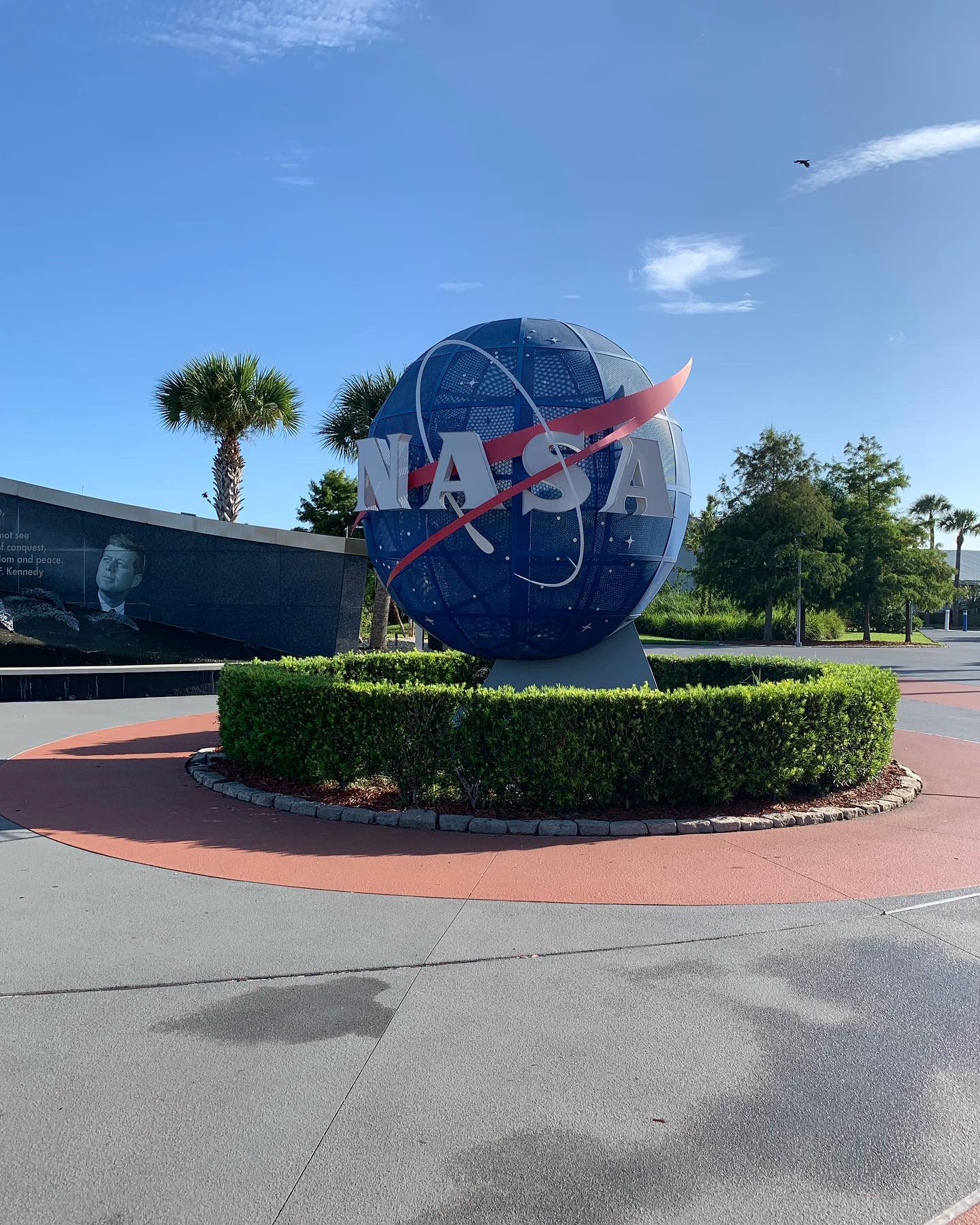
The main reason why I chose to go to Orlando was to use that city as a launching off point for a day trip east to the Kennedy Space Center at Cape Canaveral. Some of my earliest memories are of pictures from the Apollo program and of the space shuttles in books and on TV. Those of you who have read and listened to the Wednesday Blog (thank you!) will know that I’m a space nerd. So, when I heard we were doing a family trip to Florida, I first looked up how far our vacation spot was from the Cape.
I arrived at the Kennedy Space Center’s Visitor Complex at 8:15 am, a full hour and 15 minutes before the gates opened, which meant I was also one of the first in line to go through those gates when they did open at 9:30 am. The opening of the Visitor Complex every day is announced by the playing of the national anthem over the PA system, in a rousing and triumphal manner that proved to be a sign of things to come. I began my tour of the KSC by catching the tour bus to go out to the Apollo-Saturn building a few miles northeast from the main Visitor Complex near the Vehicle Assembly Building, where NASA’s spacecraft are put together and stored before launch) and launchpads 39A and B where both the Apollo missions of 1969–1972 and the Artemis missions of my generation have and will launch from. At the time that I visited, 7 August 2022, Artemis 1 was housed inside the Vehicle Assembly Building awaiting its launch to orbit the Moon. The launch window is scheduled for 29 August at the earliest, a few days after this episode is scheduled to be released. So, fingers crossed that it works!
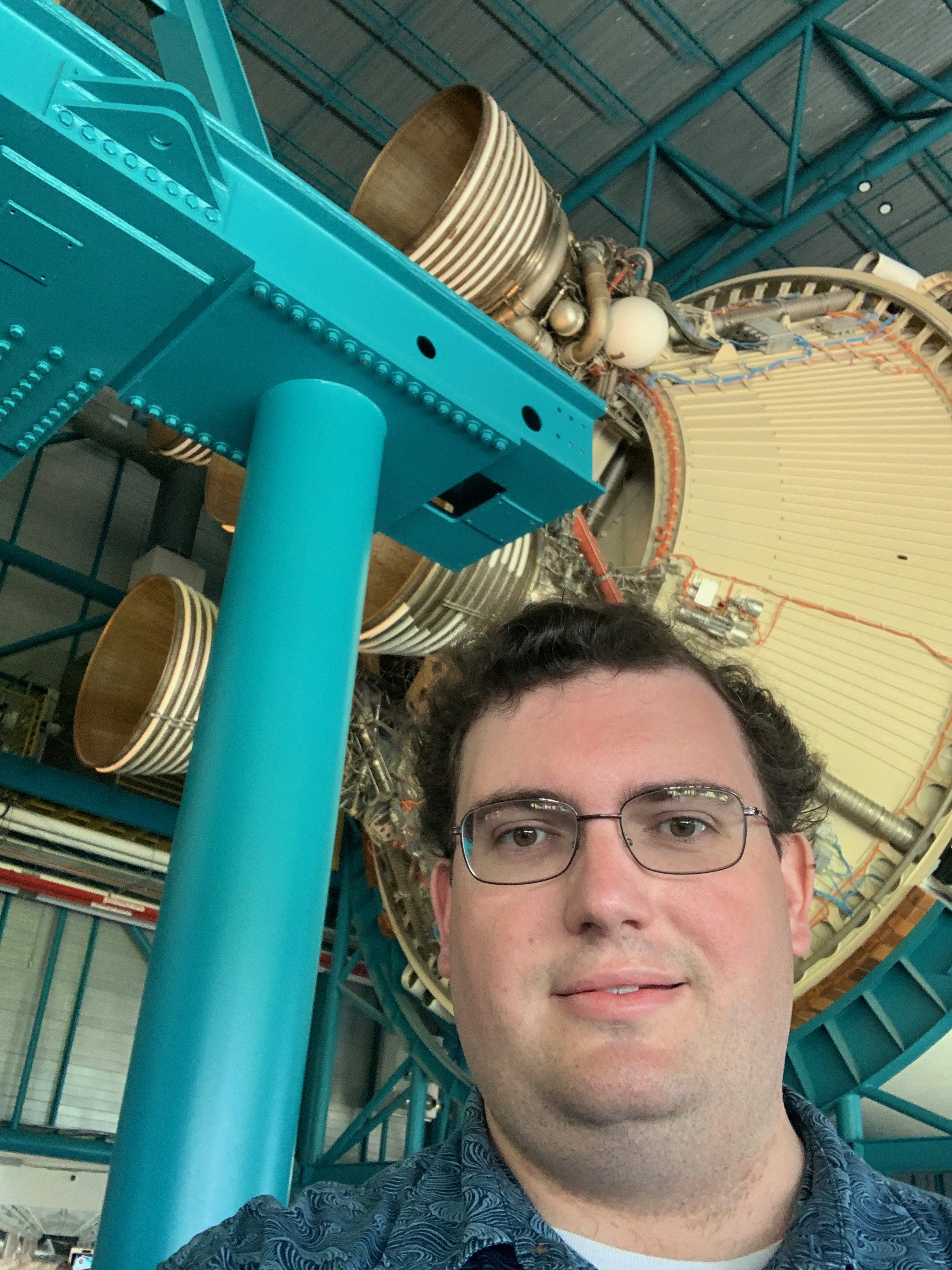
In the Apollo-Saturn building I got to see a mockup of the Apollo mission control, a Saturn V rocket, and an inspiring half-video, half-staged performance telling the story of Apollo 11’s landing on the Moon in the summer of 1969. I found all the videos that greet you when you enter each building at the KSC to be quite triumphant and grandiose in their tone and music. It’s actually quite fun, though a bit jarring in our current climate of division and fear in this country.
A Saturn V rocket in the Apollo-Saturn Building.
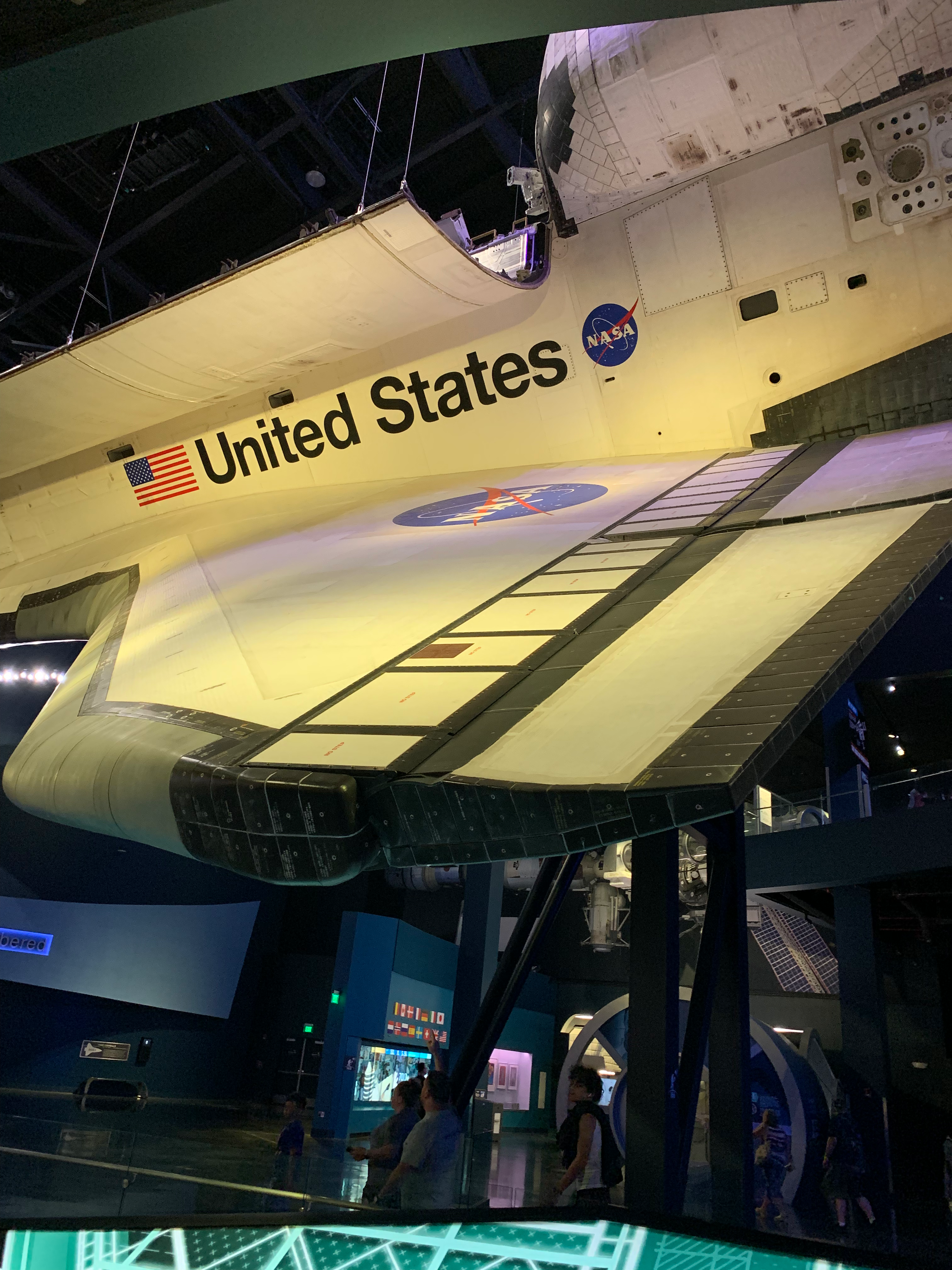
The building I liked the most was the Atlantis building, which houses the Space Shuttle Atlantis and honors the space shuttle and ISS programs all together. As much as Apollo and Sky Lab were the space programs of my parents’ youth, so the Space Shuttle and ISS were the space programs of my youth. It was quite moving for me to finally see a space shuttle up close, and the feelings of bitter sadness that I felt when the shuttles were retired in 2011 returned ever so slightly. I was almost moved to tears seeing the memorials in that building dedicated to the Challenger and Columbia crews who lost their lives in 1981 and 2003 respectively. Many people in my parents’ generation have said that they stopped watching space launches after Challenger broke up upon liftoff, and as for myself I can remember when the news bulletin came in on NPR announcing that Columbia had broken up upon reentry into the atmosphere on that warm Sunday, 1 March 2003.
The Space Shuttle Atlantis
My Dad and I were out in the fields on our farm, doing what I can’t remember, and he kept the radio running in his truck that time. As I heard the news I remember looking up to the south and seeing a jet trail far up in the sky. Now, I know that Columbia broke up over Texas, not Kansas, but in my memory that jet trail was Columbia in its last moments. It’s a memory that will always stick with me.
After a nice lunch in the Cosmic Café, I returned to my touring, visiting the Mars building to see the end of an inspiring video telling us “The first human to walk on Mars is living among us today!” with a NASA employee up on the stage pointing out into the audience saying proudly “and that person could be one of you!” I for one am curious about the idea of going up into Space, maybe someday I’ll do it, but for now I don’t think I’m healthy enough for it. From there I walked over to the new Gateway building, which houses a collection of new and newly proposed spacecraft from NASA’s commercial partners including SpaceX, Boeing, and Lockheed Martin, among others. One example from a company whose name I can’t remember was an expandable space habitat which at its full size is 3-storeys tall and can serve as a home, workplace, and laboratory for the astronauts onboard whether in orbit, in transit, or on the surface of another world.
My final stop at the KSC was in the Heroes building, an exhibit which honors the NASA and allied astronauts who have ventured up into Space over the last 60 years beginning with the Mercury 7. The building culminates with the NASA Astronaut Hall of Fame, at the center of which stands a fine statue of astronaut Alan Shepard, the first American to leave our home planet in 1961.
I left the Kennedy Space Center at 3 pm, a good 6 hours after I first passed through the entry gates, having fully enjoyed my day. The one thing, after leaving and now writing about that experience that I wish I’d done is bought a pack of NASA themed playing cards that were for sale in the gift shop.
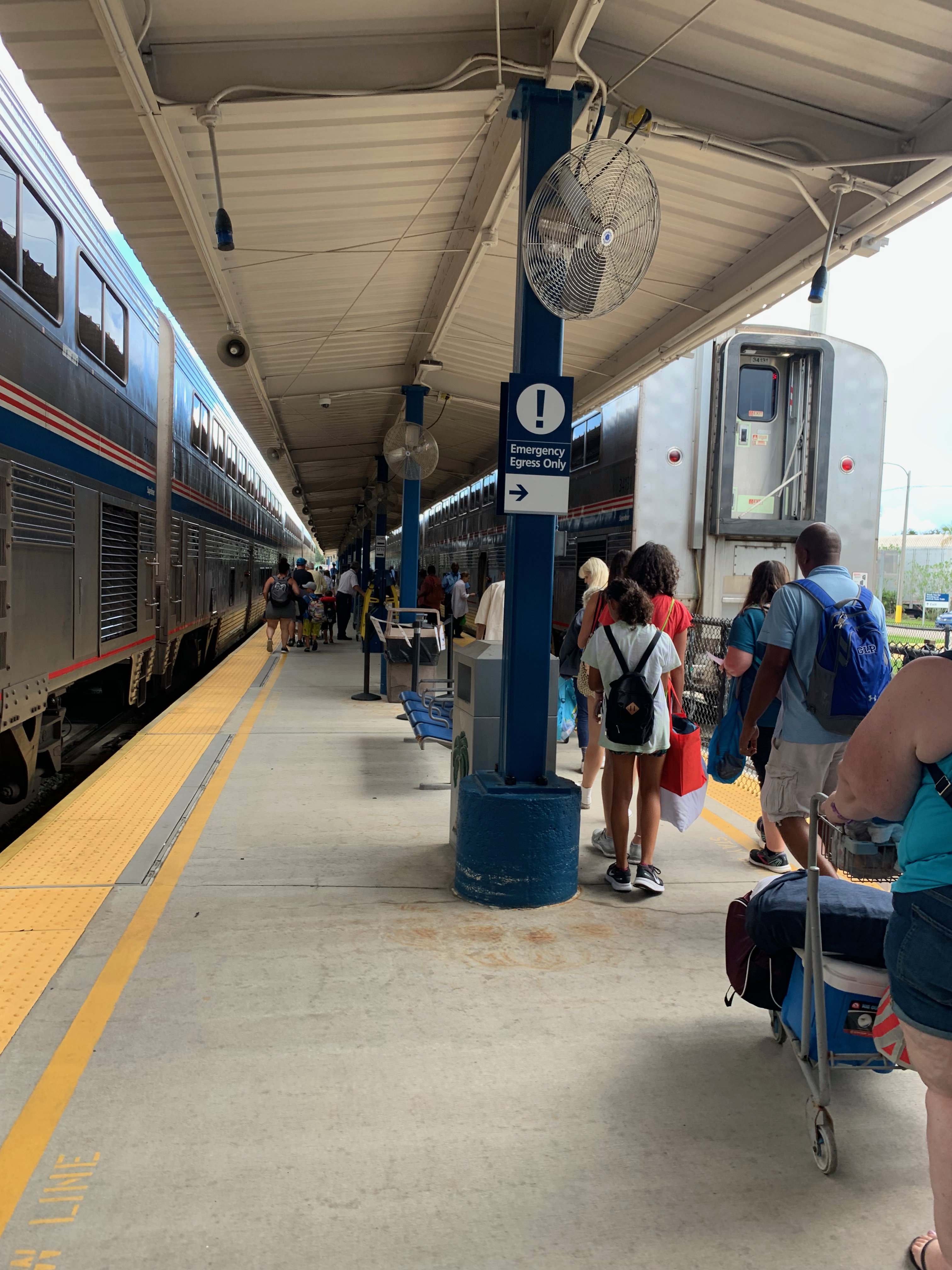
The following morning, I was up at 9 and out of my hotel by 10:45 for one of the most memorable legs of any trip to date. I was leaving Florida not by road but by rails. At 12:30 I had the Mazda Rua loaded onto the car-carriers attached to the rear of the Auto Train and boarded it myself at 15:30, sitting happily in my sleeper compartment, my roomette, when we pulled out of Sanford, Florida at 5 ‘o clock that evening. I enjoyed the complimentary dinner service in the dining car, choosing the Amtrak Signature Flatiron Steak with green beans and a baked potato, along with a starter salad with Newman’s Own Light Italian dressing, a dinner roll, and a glass of Chardonnay. The 3-course meal was finished off with a slice of cheesecake, a sign of where I was headed, back to the Northeast after an overnight stop in the DC area.
I fell asleep on the night of Monday, 8 August somewhere in southern South Carolina to the gentle sound of the rails beneath me, the soft swaying of the Superliner sleeper car an old and comfortable feeling to me, having experienced it a handful of times on the Southwest Chief between Kansas City and Chicago. Sleep came late, with dreams of an old Mozart tune floating in my head. “Bona nox …”
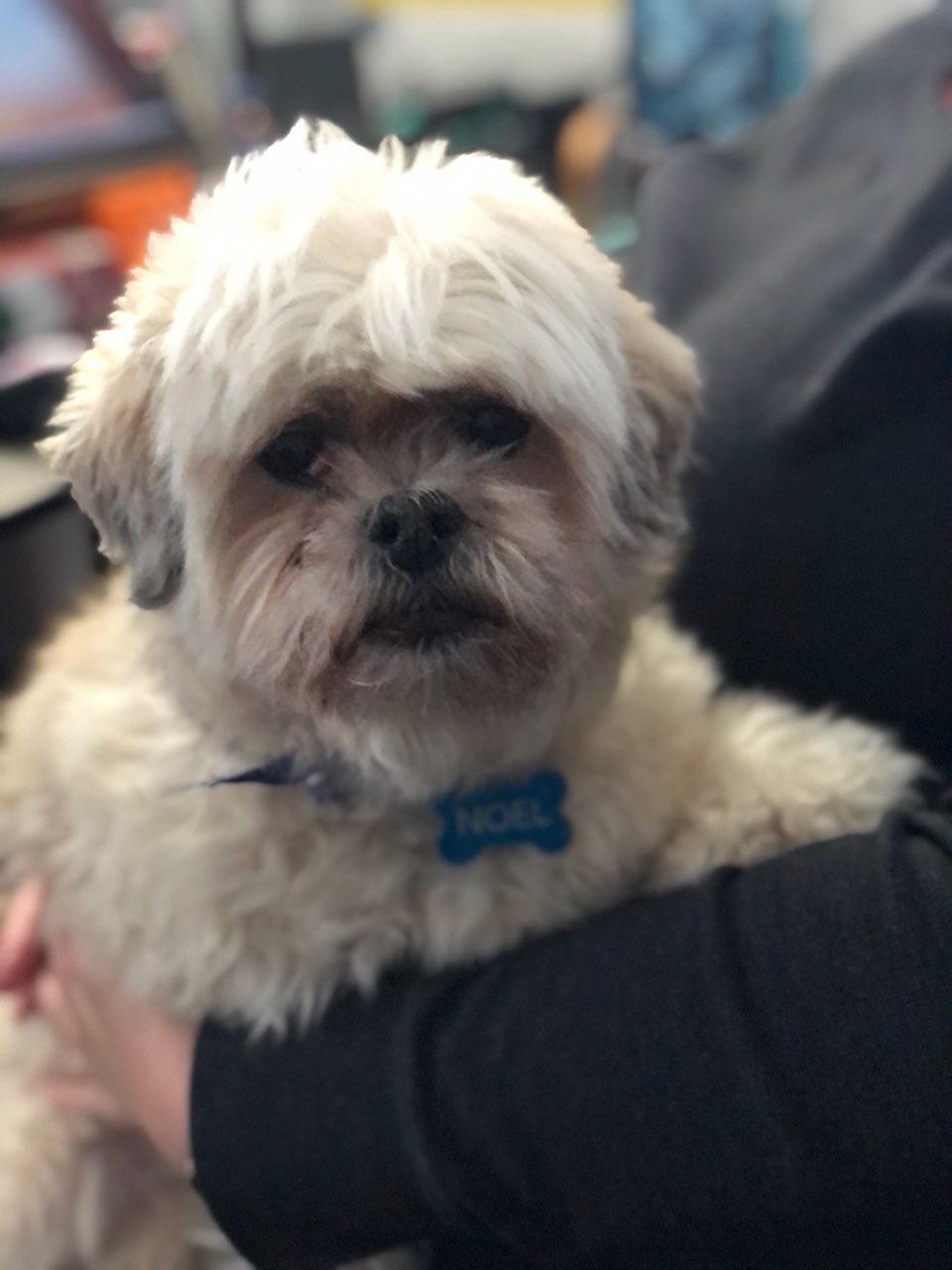
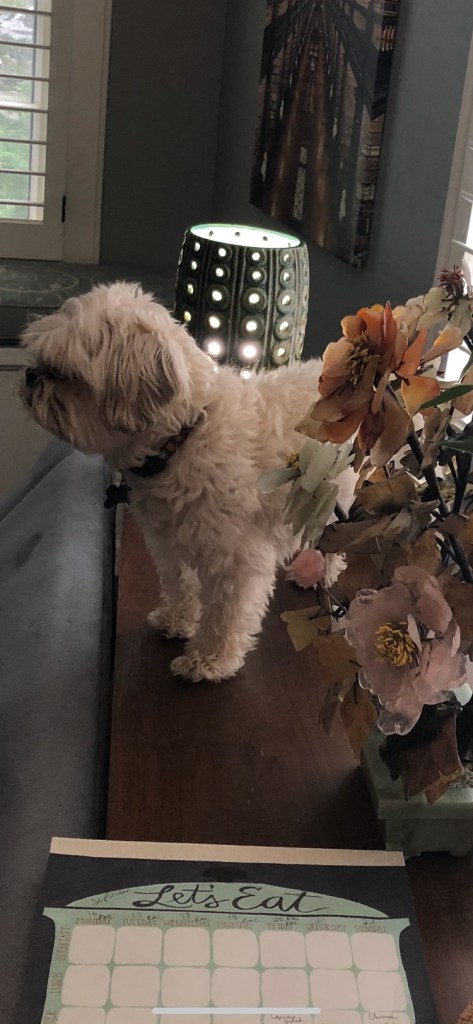
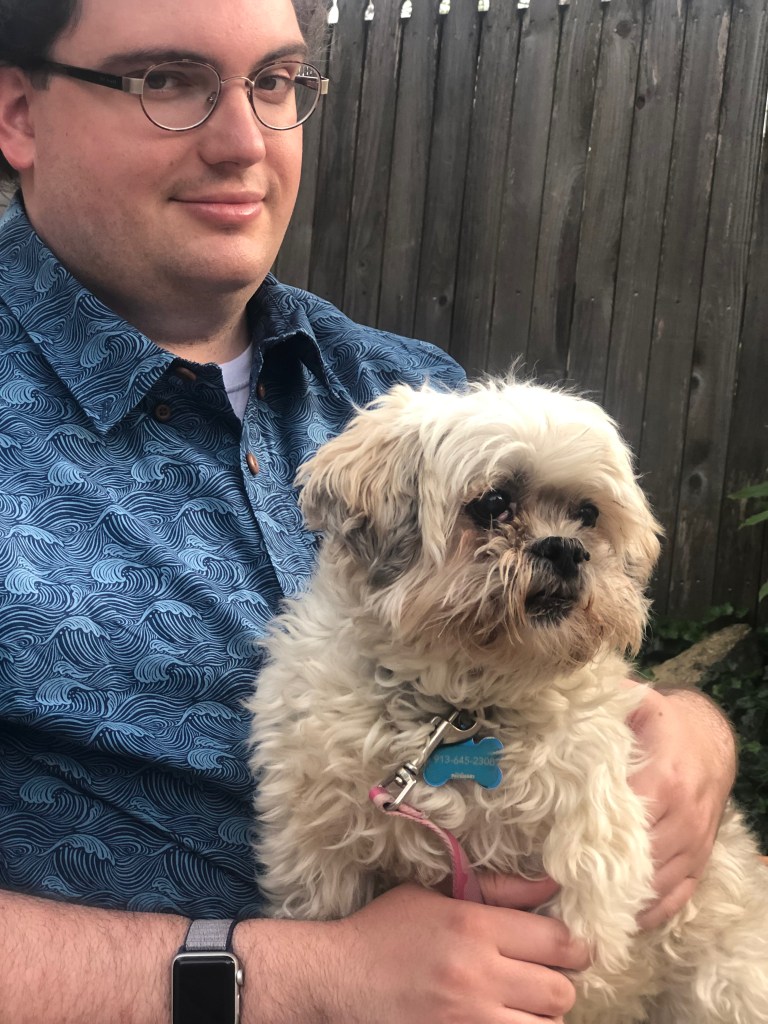
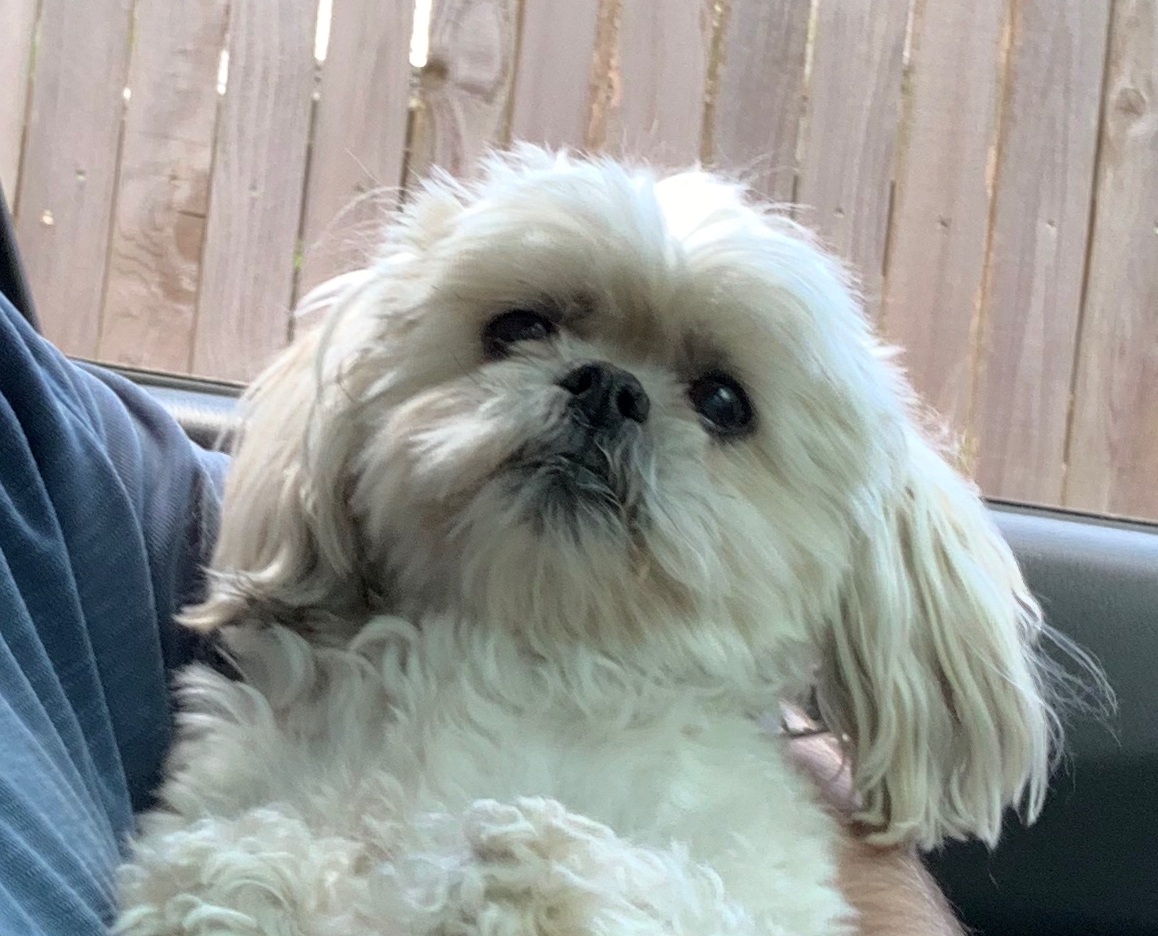
I remember when I first met you sixteen years ago on a warm summer’s day. You were little more than a month old, and more excited than anyone can fathom at new people coming to your front door. For those first two years you lived with my cousins, until your first sickness, when you came to recover with my parents and I. Living with you over these past fourteen years has taught me so much. I have learned the patience to live with someone with as boundless energy as you, to accept the fact that you are going to need my help from time to time, but more than anything else, I’ve learned that unconditional love exists. I learned that from you, little Noel.
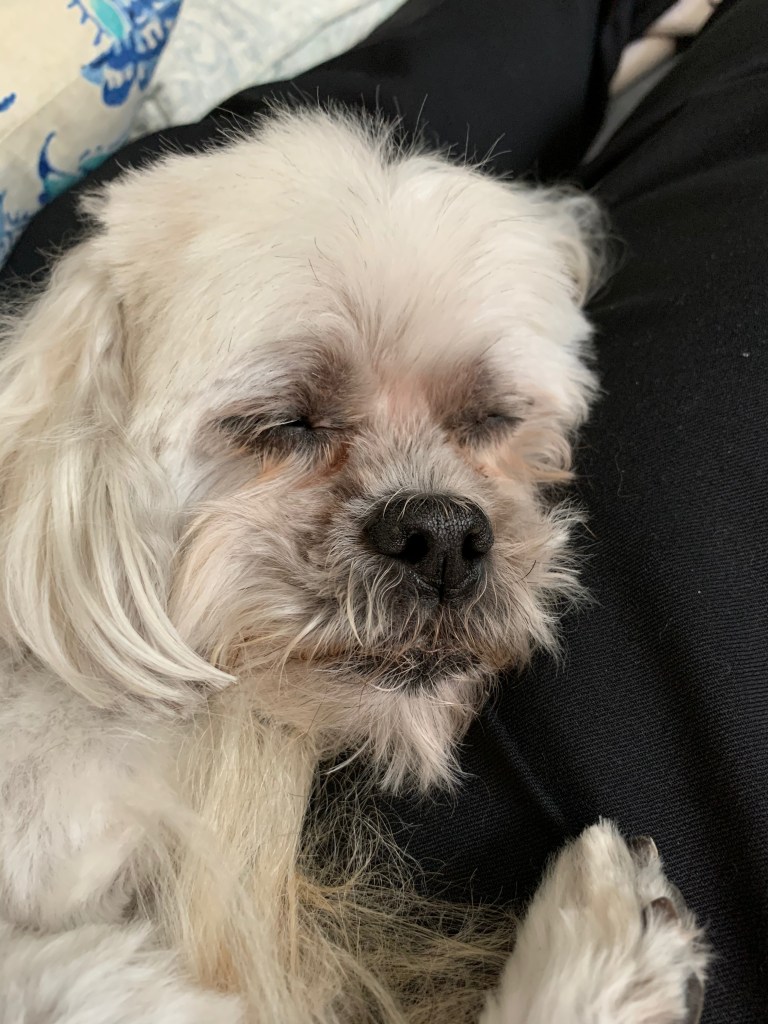
The years have gone by and we’ve grown closer than I thought possible. I don’t remember exactly when you moved full time from sleeping in your box to sleeping on my bed with me, but that’s been something that every night both of us have looked forward to. I remember many fond moments laying there next to you, listening to you snore, hearing you bark in your sleep and run in your dreams, your legs moving about as you lay on your side. I remember one night in the summer of 2014 or 2015 when you were so happy that you rolled over onto your back and began to sing into the darkness.
As my life has taken me away from home over the last four years, I’ve treasured every moment that I’ve had with you. My friends and family from places that you might well have never heard of know your name and your face, and everyone who I’ve spoken to about you has smiled when I’ve told them stories of your life. My silly dog, you’ve had your moments when you’ve caused my parents and I grief, but you’ve truly become a member of the family, so I guess it’s fair to say that comes with the territory.
Every time I’ve had to leave you to go back to London or Binghamton it’s been hard. I wanted so badly for you to come with me when I left for my doctorate this past August, but it seemed better for you and your health that you stayed behind with my parents at home. Some of my sweetest memories of you, sweet pup, have been those first days after I’ve returned home after a long trip. Perhaps the best was my first morning waking up in our bed after moving back from London when I opened my eyes to find you laying there a nose-length away staring back at me. If dogs can smile, you were smiling then.
I’ve loved every one of your kisses, regardless of hygiene. My days were made whole when I’d walk through our front door in the afternoons to be greeted by you. I hope I’ve matched your affections as best I can, though I know they could never reach the levels which your heart ascends to every day. You, dear Noel, have walked with me from my youth to my adulthood, you’ve been there to comfort me when I’m sad, always jumping up next to me and offering reassuring wet dog-kisses on my chin.
But now as your health wains, I find it so very hard to say goodbye. You are a treasure who always has a place deep in my heart. I don’t know if it’ll happen, but I hope I will see you again one day, my darling little girl. Slán go fóill, goodbye for now, my sweet Noel.
Kansas City – After all the fun and adventure of this past summer, you’d think I’d take this semester a bit slower, a bit quieter, to recuperate and ready myself for the coming year. But then again, I’m not that sort of person. I started the semester with a bit of a bang – one month with event after event.
First there was Irish Fest on Labour Day weekend. Then there was a day of volunteering at the Irish Centre (Cúltúrlann Éireannach). This was followed by a 60+ hour week of academics, work, business, and other fun events. Then there was the wedding of two good friends in Lenoir, North Carolina. I returned to Rockhurst from the wedding exhausted, and ready for the quiet weekend to come. That came after another 60+ hour week, and at first it looked promising. But then something rather unfortunate happened. Saturday 21 September 2013 will always be one of those days that just didn’t have to happen – and yet in a big way it did. I woke that morning to an early alarm as I was going to be filming the Classroom scene for my film Sisyphus that day. However, none of the extras showed up to film – so I ended up having to postpone the shoot until this past Sunday 6 October. I left Rockhurst for my parents’ house, where my Mom was home alone getting ready for the Lyric Opera of Kansas City’s opening night premiere of Bellini’s I Capuleti e i Montecchi. The day before I drove my Dad up to the airport to fly to Chicago to see my Granddad, with plans of sorting out the plans to move him into hospice care by Sunday.
That, unfortunately didn’t happen. I was at 59th and Rockhill, heading back to my parents’ house after getting a shirt for the opera when my phone rang. My Dad was on the other end, at my Uncle Bill’s house in Suburban Chicagoland – my Granddad had died at about 16.30 CDT. From then on out, the entire world seemed to flip on its head. My Mom and I did go the opera that night, but the next morning I found myself driving her up to the Airport so she could fly up to Chicago to meet my Dad and work with the rest of their generation in the Kane family on the funeral arrangements. I stayed behind in Kansas City for a while longer, so that I wouldn’t miss too much class. That, as it turned out, didn’t really work so well. I missed my first class on Monday morning, Western Civilisation II, because I was taking the dogs to the vet for boarding for the time that I’d also be in Chicago. Then I skipped out on my Modern Political Philosophy class because I just didn’t feel like I could take it just then. Finally, I threw in the towel on school for the week when the power of what had happened to my family hit me like a bag of rocks in choir, when we were rehearsing the Jesuit hymn These Alone are Enough for the Family Weekend Mass.
I flew up to Chicago on the evening of the 23rd – weary, and ready to be with my parents, aunt, uncle, and cousins. It was a short flight, and considering that I had no bags to bring with, as my Mom had already packed everything I’d need – I flew up in the first row on Southwest! The time in Chicagoland was very emotional for me. Between facing the fact that now both of my Kane grandparents are dead, and experiencing all of these places again that I remembered from my early childhood, a time which I cherish quite dearly, I found it hard sometimes to face the facts. Thus, when we were driving from place to place, especially in the traffic on the Tristate Tollway and with that awful construction traffic on Dempster at the Tollway, I slept. The wake and funeral were nice. It was especially great to get to see all of the more distant cousins on my Dad’s side, many of my grandparents’ friends, and some college friends of my parents (including my Godparents). But in the end, I was just ready to go back to Kansas City and sleep for a long time.
After that second exhausting trip, I was in no mood for work. I ended up being a fair bit behind in my work, especially when it came to French. I’ve only just caught up. My classes on Thursday and Friday were a blur, and to be honest I probably wouldn’t have even had any will to go to them if it weren’t for the fact that I had nothing else to do at that point. By Friday 27 September, I had gone for at least 20 days with sleep worth only about 15 normal nights, and was in no mood for any more misadventures.
Thankfully, that weekend was anything but a misadventure. My cousin Ashley, who I’ve known for my entire life, got married! It was a very nice wedding, and a fantastic reception. That wedding was a good way to balance out the stress and grief of the month in which it occurred, as it showed me that even though all sorts of dour things happen in our lives, there’s still room for happiness and jolliness. Which on that note: Middlesex County Cricket finished 3rd in the County Championship! O, and the USA Men’s Team (the Waldoes as I call them) qualified for the ’14 World Cup in Brazil!
So, as I write this, safe and sound, now 7 days removed from that dreadful month, I have to say “Buíchos le Dia!” that it’s over. Less than 24 hours ago, I was able to shoot that scene that originally was intended to be shot on the 21st – and this time no one that I know died on the same day! September was about as poor at its’ game as Chivas USA is at soccer, which is saying something really sad about that month. But, on the plus side – I got paid at the end of it all, thanks to that week and a half of French tutoring that I did in August!
Hopefully I’ll be able to update a bit more in the future, as things may be settling down. We’ll have to see.




 Wednesday Blog by Seán Thomas Kane