

On Democracy, Part II – Wednesday Blog by Seán Thomas Kane
This week, on the current round of redistricting sweeping through Missouri.
When I wrote my essay “On Democracy” last December, I anticipated that it would be the only thing I wrote concerning the most recent Presidential election.[1] I wanted to say more, in fact I went back and forth on saying something stronger and more forceful, yet what I ended up with turned out to be just right for the moment. It remains one of the essays I’m most proud of from the Wednesday Blog. The first half of 2025 was marked by a series of essays which followed up on “On Democracy” and commented on the growing number of political crises blowing across this country and here in Missouri and Kansas especially.[2] I even found that the usual low readership numbers on my political essays was mitigated somewhat with these essays; I attribute that in part to my choice to stay positive and focus on the extraordinary acts of ordinary people that have proven essential to the course of American democracy in the last 250 years and remain vital to the continued survival of our Republic today.[3]
All that said, and as much as I am a political animal, I would much rather write about my research and about my English translation of André Thevet’s 1557 book Les Singularitez de la France Antarctique which I’m currently editing. Those are the things which make me happy today because when I’m engaged in my historical work, I feel connected to my friends and colleagues who I’ve met in academia over the years. I want to be known a historian first and a writer second. I’m learning things everyday about Thevet and his worldview that I only barely noticed when I was deep in the effort of translating his book in the first place.
Yet current affairs in Jefferson City are pressing enough that I feel it is my duty to speak up. I know there are very real risks to publishing, saying, or writing anything political today. I’m in a precarious place now as a Ph.D. candidate approaching my dissertation defense and looking at a job market that feels smaller and more threatened than it did a year ago. I know that saying anything political could make me a harder sell for many hiring committees to accept. I take this risk because it is the right thing to do.
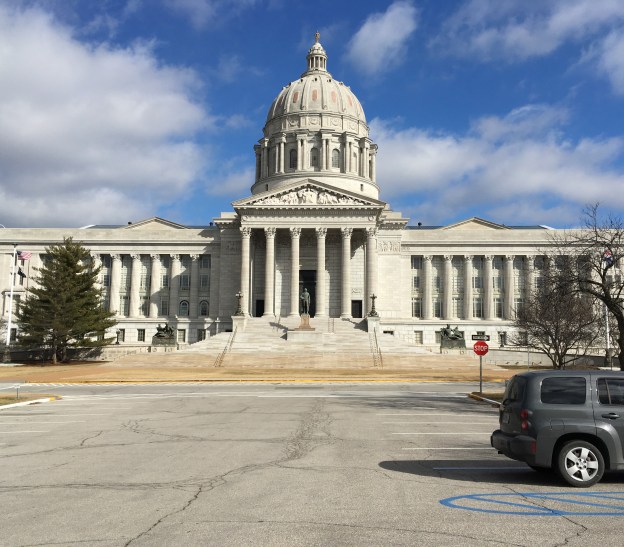
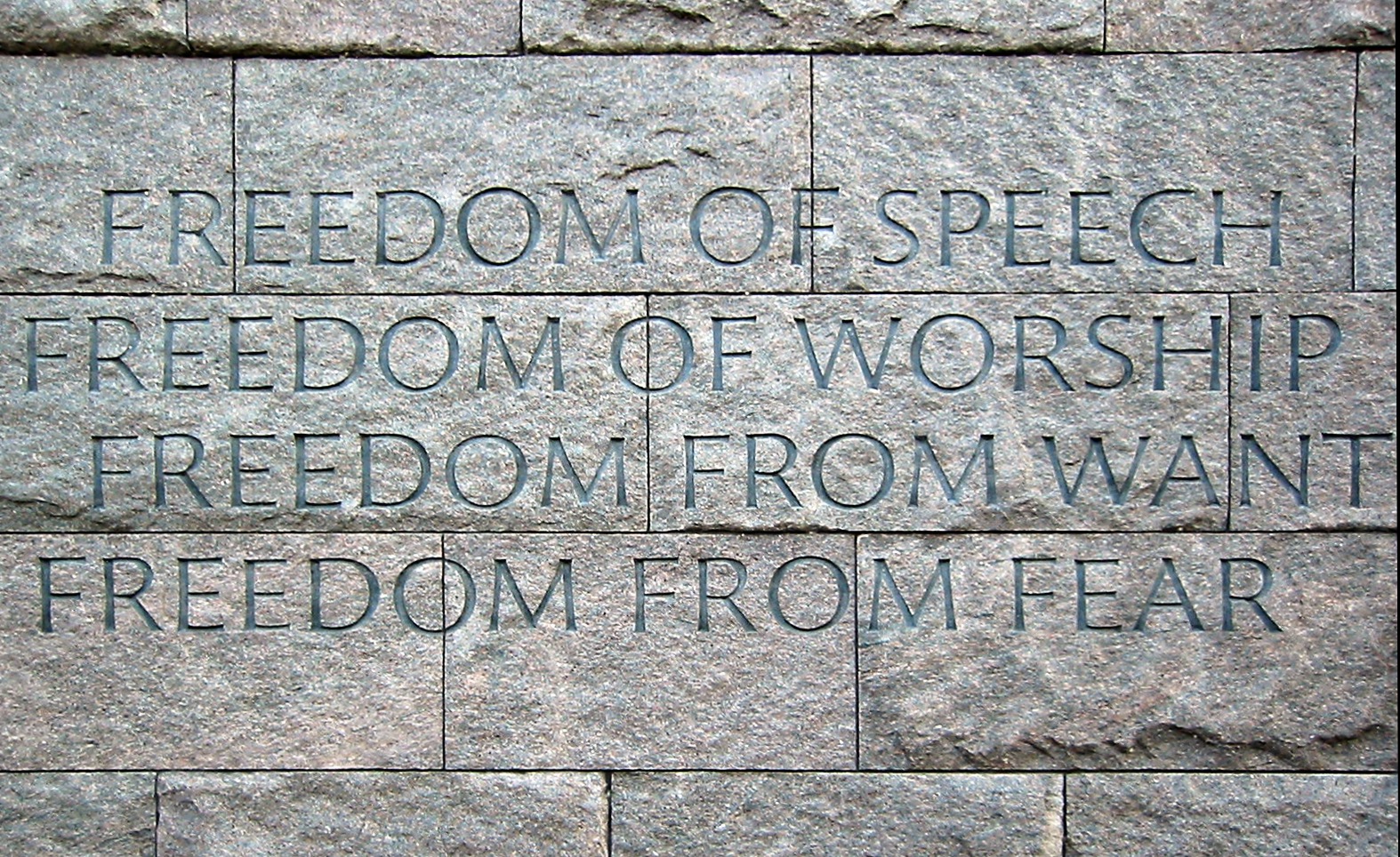
Today, 10 September, the Missouri Senate is set to vote on a new congressional map drawn by an uncertain cartographer, possibly in Jefferson City, possibly in Washington, with the intention of ensuring that the Republican Party secures a clear electoral victory in the 2026 congressional midterm elections in spite of learned expectations that the president’s party always loses seats in the midterms after they assume office, and the living reality of our moment in which the majority party is acting to preserve its own power and the wealth of a few at the expense in the political rights of everyone else. I’ve written time and again here that my America in its purest form is embodied in the New Deal and Great Society, and in FDR’s Four Freedoms speech.[4] Sure, we haven’t gotten there yet, all that means is we should keep working for it. America is a shining beacon of democracy for all the world to see, even if that beacon’s shadow often also shows our flaws played out before it like hand-puppets on a screen. Democracy requires participation; it’s the greatest form of government we’ve yet invented because it requires the most of the governed to understand how government works and to participate in their own government for the common good.
This new congressional map is not democratic. In fact, it is the anthesis of democracy. In his statement announcing the Republican supermajority’s push to force this map through the Missouri General Assembly, Governor Mike Kehoe openly stated that this map is intended to protect “Missouri’s conservative, common-sense values should be truly represented at all levels of government, and the Missouri First Map delivers just that.”[5] This was expected, yet still bold by a sitting governor to be so openly one-sided. On Thursday, 4 September, the window to submit written testimony on the redistricting bill opened on the Missouri House of Representatives’ website. I sent in the following statement:
In his statement announcing this new mid-decadal redistricting effort, Governor Kehoe explicitly said this was to preserve “conservative values.” With that out in the open, I want it to be known that if this map is intended to support conservative party politics in Missouri, then it impedes on the rights of all of us moderate, liberal, and progressive Missourians. It is a blatant abuse of power that targets us Kansas Citians in particular. I want to see Missouri create a nonpartisan independent board which draws the electoral maps, so they are fair for all Missourians. I ask the committee to reject this redistricting map for its blatant partisanship and the fact that this redistricting process is costing the taxpayers’ money that could and should be spent elsewhere.
This is the sum of it. I do not think it is hyperbole to say that my own political rights are under threat by this bill. Rather, what was once extreme is today expected because any rules we had for electoral fairness have been thrown out the window. It’s true that both parties gerrymander their congressional maps, but the Republicans do it far more. It’s also true that the Democrats are gerrymandering congressional maps in the states that my party controls. I want independent redistricting maps in all 50 states, the District of Columbia, Puerto Rico, and every territory. That should be our goal. Yet in this moment we need to fight for democracy to save it. This is a struggle here in the United States, yet it is being felt around the globe. Who else is as influential in world geopolitics today who could take up the mantle of democracy if we discard it? What keeps striking me about what the Republicans are doing is that it is all for short-term goals that masquerade as solutions to the country’s problems. What I and many like me want are long term solutions that will actually resolve many of those problems.
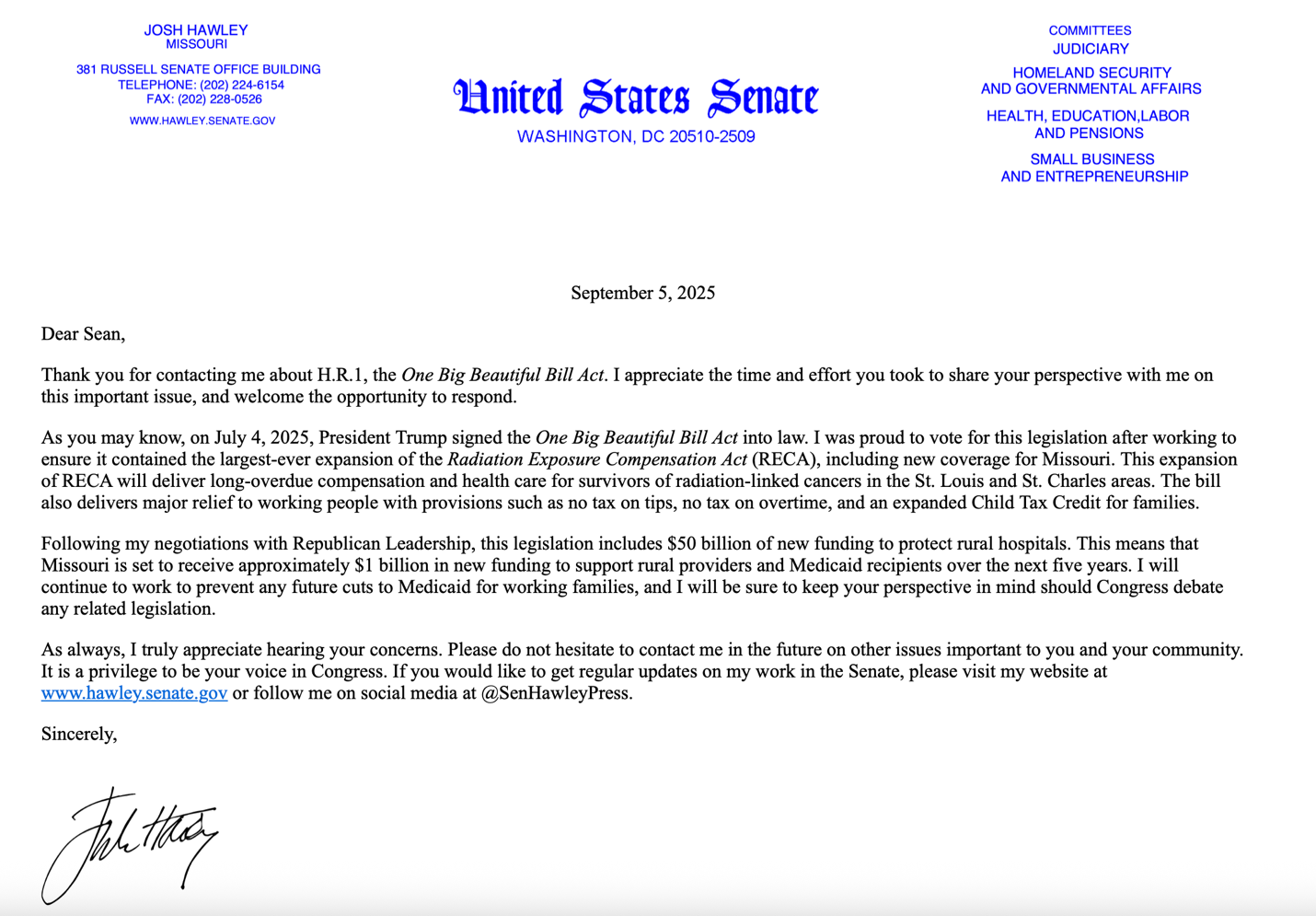
With this new congressional map, I and every other moderate, liberal, and progressive on the Missouri side of Greater Kansas City will lose all federal representation. We currently are represented in Congress solely by Congressman Emmanuel Cleaver II, who has served this city for many decades. I regularly send emails to our senators, Josh Hawley and Eric Schmitt about a variety of issues that I care about from restoring funding to the National Endowments for the Arts and Humanities (NEA, NEH) and the National Science Foundation (NSF), to my fears of presidential overreach with so many executive orders which seek policy changes that by law can only be made through acts of Congress. In every instance, the response I receive has nothing to do with what I wrote. In the case of an email I sent to Senator Hawley concerning my fears over my profession’s long-term viability in this country as federal funding to universities and research institutions is threatened for political reasons, I received an email back lauding the Big Beautiful Bill and all the good it will do for America. A screenshot of that email is included below.
Meanwhile, Senator Schmitt’s office only responds with campaign emails pretending to be official senatorial correspondence. This ought to be illegal in my opinion, and a version of the Hatch Act of 1939 should be passed for the Legislative Branch to keep Members of Congress from using their official correspondence to actively campaign for their offices. I have a folder filled with all of the emails I’ve received from his office since April 2024 and normally they will go directly into that folder. Yet there was one email his office sent me in response to my concerns over cutting funding to the Corporation for Public Broadcasting which was such a blatant example of his dismissive approach to his constituents who disagree with his views that I became pretty angry.
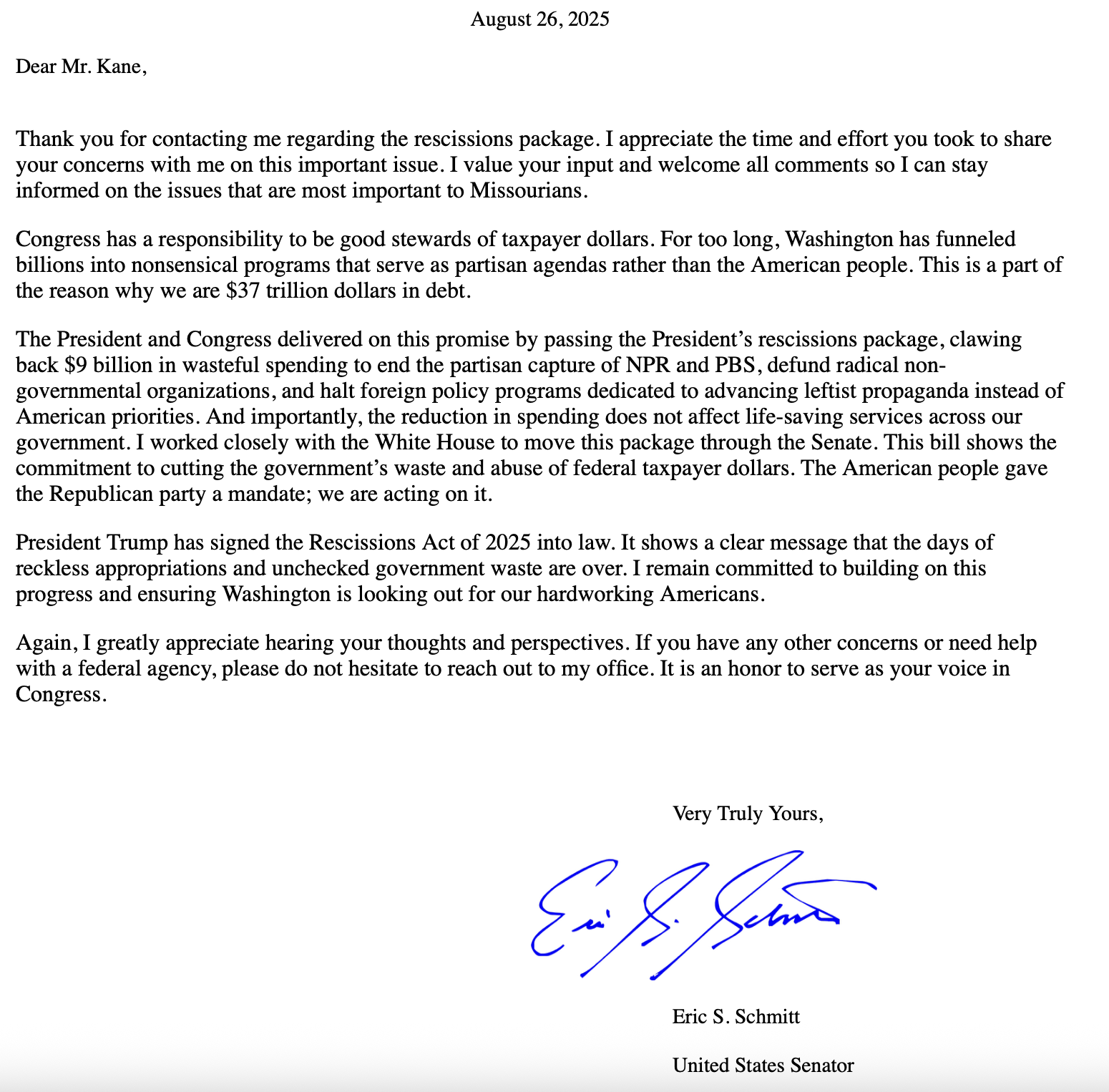
So, I called his Washington office, realizing as the phone was ringing that it was after business hours in the East, and left a voicemail. In summation, I challenged him to actually address his constituents’ concerns. I borrowed what I imagine is the lingo of the manosphere, a foreign corner of the Internet to me and challenged him “man to man to stop being a coward and do his job for all Missourians, not just those in his own party.” I haven’t gotten a response to that one, whether by email, phone, or letter. This is not how I like to talk to people, let alone write to them. I would rather find ways to speak to people in their own language to lift them up. I’m my worst when I lose that sense that I can say or do something that will make the lives of the people around me better.
It’s in this spirit that I decided to write again this week about democracy. Any form of representative government requires that we trust in each other for it to function. This is one of the central tactics of the current majority party. The President recently called the city of my birth a “hellhole,” something that I take personal offence to. I appreciated Stephen Colbert’s response, especially the heartfelt final two words of it.[6] In my essay “A Defense of Humanism in a Time of War” I wrote that I don’t want to be known as a pacifist because there will always be schoolyard bullies to contend with.[7] The people in power today here in Missouri and the slim governing majority in Washington are the biggest bullies this country has seen in a long time. They evoke the worst aspects of America, the greed that embodied both the First Gilded Age and the garishness of this Second Gilded Age in which we live. Not content with letting the democratic process that brought them into office work as it has for over two centuries, they insist on doing what they’ve accused their opponents of doing: rigging the electoral process in their favor. They clearly do not trust us, so why should we trust them?
Democracy is nourished by a love of neighbor. American democracy in particular is built upon a bedrock of idealism that we are still trying to achieve. That is what we need to work on. Robert Reich, the former Secretary of Labor, argues that we are on the verge of a second Progressive Era, a time of tremendous political reform. We who oppose the Missouri supermajority and the thin ruling majority in Washington need to remember that end goal. We need to sustain the democratic spirit through this time of trouble so that we can have a better tomorrow. I’m writing this knowing the risks because I feel it’s my duty as an American. I will always stand up for my neighbor regardless of if we agree or disagree on a given topic just as I will stand up for my colleagues, students, friends, and family because it’s the right thing to do.
[1] “On Democracy,” Wednesday Blog 5.39.
[2] “We, Irish Americans,” Wednesday Blog 6.10.
[3] “On Servant Leadership,” Wednesday Blog 6.15.
[4] “Freedom from Fear,” Wednesday Blog 2.6; “Embodied Patriotism,” Wednesday Blog 6.26.
[5] “Governor Kehoe announces special session on congressional redistricting and initiative petition reform,” Office of the Governor of the State of Missouri, 29 August 2025.
[6] “A Scary Time For Chicago | Trump Gets FOMO Over China’s Military Parade | Donald’s Life Lessons,” The Late Show with Stephen Colbert (3 September 2025), YouTube.
[7] “A Defense of Humanism in a Time of War,” Wednesday Blog 6.24.
 Wednesday Blog by Seán Thomas Kane