


The Power of Hope – Wednesday Blog by Seán Thomas Kane
This past weekend, history was made when President Biden dropped out of the 2024 presidential race. The next 48 hours inspired tremendous hope again.
During my senior year at Rockhurst, now a decade ago, the BBC released the first of two seasons of a new series of Shakespearean adaptations called The Hollow Crown. These films were realist adaptations of the Henriad plays Richard II, Henry IV Parts I and II, and Henry V. This first season seized my attention and enthusiasm with a tremendous rush of emotion and energy. I wrote my undergraduate capstone in History on Richard II partially because of how these films brought these medieval kings to life for me. Shakespeare’s plays have tremendous power because they speak to common human emotions and experiences, it’s why they’ve been adapted by Akira Kurosawa from their original settings to feudal Japan, and why contemporary adaptations of these plays can work even if they can also leave something to be desired.
Yet the greatest power that Shakespeare’s plays have is in their quotability. William Shakespeare was one of the greatest writers to use the English language to tell his stories, and to breathe life into his characters and settings that the most fantastical magic of The Tempest can seem just as believable as Richard II’s grief at losing his crown. For me, one of the most readily quotable lines in Richard II comes not from the deposed king but from his uncle John of Gaunt, Duke of Lancaster, who in a speech which Jeremy Irons described as one coming from a medieval Brexiteer, offered the truism “small showers last long, but sudden storms are short.” (2.1). I think of this often in many different situations. Our politics of these last 8 years have been somewhere in the middle, an 8 year on-going rain that may seem tempestuous throughout but that has merely brought together several of these sudden storms in quick succession.
For most of my life I’ve heard the argument that ordinary people like us cannot do much to change our politics, and that we are better off leaving politics to the politicians who are going to do whatever they want anyway. I’ve grown up surrounded by this apathy, yet my parents instilled in me from my earliest memories a duty to vote, to speak up, and to play my part as a citizen. I’ve been frustrated in the last year in particular hearing so many people express a distaste in our electoral system because the two candidates running for President this year were men who seemed so out of touch and disconnected from the rest of us that we felt little need to participate. For myself, by the time the Missouri Primary came around for my party, our candidate had already secured enough delegates to claim victory in the primaries, and so this was one rare election when I didn’t vote.
All of that changed on Sunday at 12:46 Central Time when our sitting President, my party’s candidate, Mr. Biden announced he would no longer seek reelection to the Presidency this November. I was out at lunch with my parents when I got the news, and my first reaction was akin to many: fear at what would come next. I was on the fence whether President Biden should drop out of the race, unsure of what the result might be; and today writing this 48 hours later I’m still afraid of what could happen.
Yet my fears have been assuaged somewhat at the sight of how much the tone of this election has changed in my party. Where so many were going to vote for the President in order to keep his opponent out of power, in the last 48 hours our new candidate, Vice President Harris, has received more than 28,000 offers from ordinary people to volunteer for the Harris campaign. In the last 48 hours the Harris campaign and the Democratic Party have raised about $250 million in donations and pledges; of those donations more than 888,000 were from ordinary people wanting to pitch in. The tone has changed, where before last month’s debate we hoped that President Biden could lead the campaign to eke out enough moderate and undecided voters to support the Democratic side and defeat his opponent, now we have a campaign that is built less on fear of the opposition and more on the hope of what our new candidate has promised to do and could do if elected President.
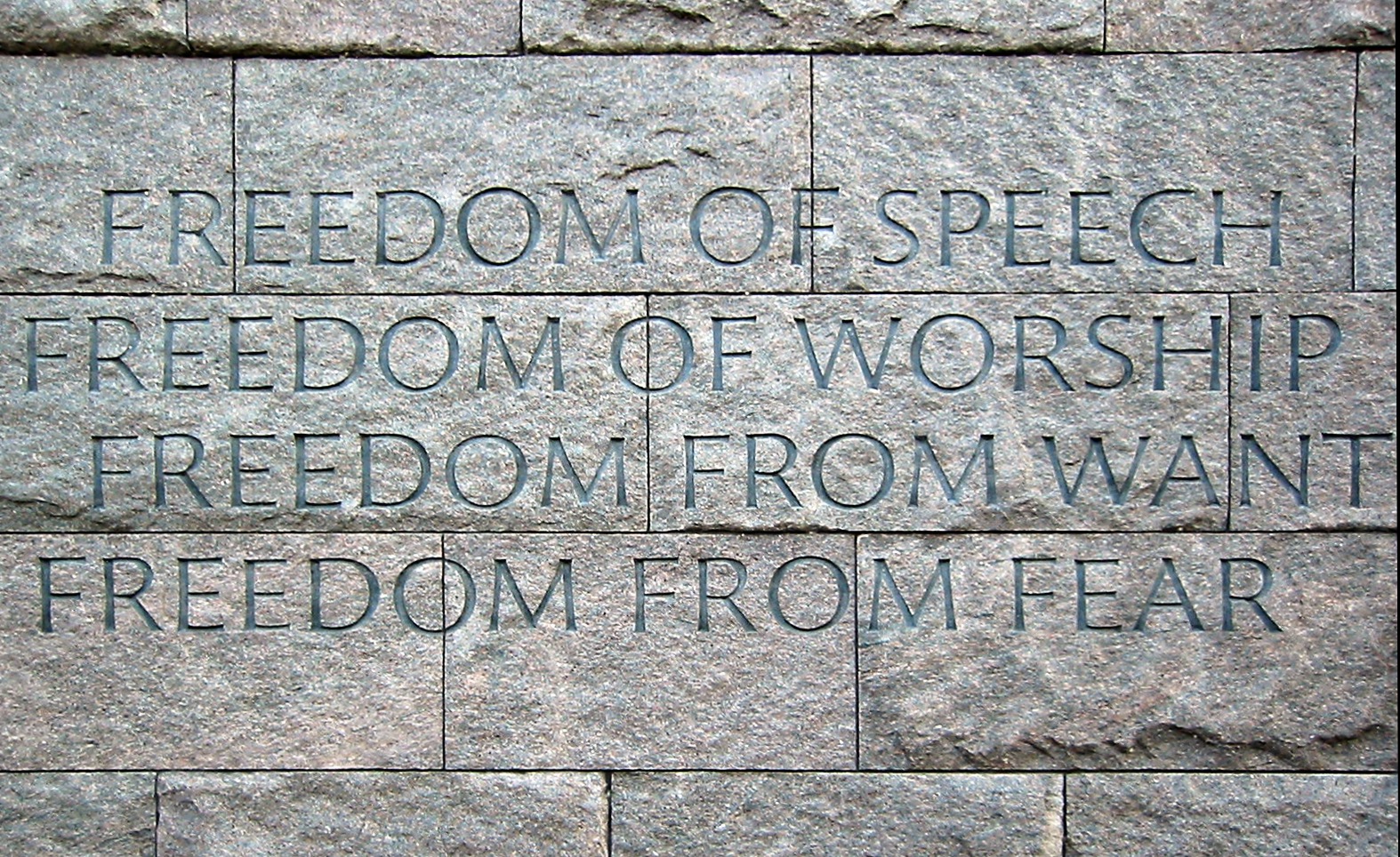
Hope is far stronger than fear because it offers us a chance to aspire to something greater than ourselves. The most successful President of the twentieth-century, Franklin Delano Roosevelt, ran on a platform of hope and reform that would pull the country out of the Great Depression, and in his later campaigns defend liberal democracy from the growing tides of authoritarianism around the globe. All Democratic Presidents since Roosevelt have been judged on what FDR accomplished, and few have risen close to his level. The two that initially come to mind are Lyndon Banes Johnson, who served as President from President Kennedy’s assassination in November 1963 until January 1969, and our now outgoing President Biden. In spite of a staunch and illiberal opposition built around the premise that any and all legislation proposed by the Democrats must be blocked at all costs, even at the expense of the country, the Biden-Harris Administration has passed several landmark pieces of legislation which have been notable in the good they’ve done while being overshadowed by claims to the opposite from the clamoring gallery in the opposition.
Most of the Biden-Harris Administration’s major legislation occurred when the Democrats had a majority in both houses of Congress through the end of 2022. These included in 2021:
- The American Rescue Plan Act, which injected $1.9 trillion into the economy to help ordinary people during the hard times of the recent pandemic.
- The Bipartisan Infrastructure Investment and Jobs Act, which is funding infrastructure improvements and new projects across the country.
In 2022, Biden signed:
- The Inflation Reduction Act, which included elements of his failed Build Back Better Act offering significant investment in climate and energy production and a three-year extension to the Affordable Care Act.
- The Bipartisan Safer Communities Act which is the first major federal gun control law passed in the last three decades.
- The CHIPS and Science Act which bolstered American semiconductor manufacturing.
- The Honoring our PACT Act, which expanded health care for US veterans.
- The Electoral Count Reform and Presidential Transition Improvement Act which adds procedures to the Electoral Count Act of 1887 to avoid a repeat of the stalling measures to keep President Biden’s election from being certified during the January 6th attack on the Capitol.
- The Respect for Marriage Act which codified same-sex and interracial marriage.
And finally, in 2023, Biden signed:
- The Fiscal Responsibility Act which restrained federal spending during fiscal years 2024 and 2025, and suspended the debt ceiling until the beginning of 2025.
- In September 2023, he established the American Climate Corps, in a Rooseveltian manner to help facilitate the national response to the climate crisis.
What is striking about Biden’s presidency is both how much he accomplished in four years, and how little most people seem to know about it. He could not fully live up to FDR’s legacy because he lacked the majorities in Congress throughout his term that would have allowed him to continue to pass legislation. In the last month, it’s become clear that what new policies his Administration announces will be intended less as viable things to be accomplished in what remains of his term, but rather as signs of hope of what his party would do if they retain the Presidency and win back a majority in the House of Representatives.
That hope now has a face and a name in the Democratic presumptive nominee for President, Kamala Harris. The Democrats would do well to recognize that the power of hope for the things she and her Administration and the congressional party can accomplish together are far more powerful than all the fears we have of what would happen should the opposition regain the Presidency and retain its majority in the House. Hope is stronger than fear because it builds on the idea that there’s something better to be had than what we now have. I believe that hope is what will unite us together in the Democratic big tent this year to win this election. The circumstances aren’t great, President Biden’s withdrawal was far later in the race than I would have liked, and in the coming weeks I want to write here about the flaws in our electoral systems that his withdrawal lays bare.
This week though, let me leave you with what I believe to be true: the Harris campaign is in a strong place with its grassroots enthusiasm, fundraising, and organizing, and has the legislative accomplishments of the Biden-Harris Administration as a strong foundation for a successful, if unexpected, campaign. It’s up to all of us to hope that she can provide better promises than her opponents, and to act on that hope and vote in November.
 Wednesday Blog by Seán Thomas Kane