

On Pauses – Wednesday Blog by Seán Thomas Kane
This week, some words about silence in communication.
In my current job, one thing that is often challenging for new hires is learning how to operate our radios. In general, personal radios are the same no matter where you go, albeit with different features added to higher-end models like screens telling you which channel it’s tuned to. I found our radios to be one of the easier parts of the job to adapt to, I have experience working with radios from my time in the Boy Scouts for one. Yet I wish when teaching people how to use radios for the first time we would talk about how we communicate on a most basic level. We use all of our senses to communicate but especially our sight and hearing.
Sound is the purest medium of communication for us humans: we talk with one another by emitting sounds from our mouths and receiving them with our ears. There’s a whole genre of performance these days called “spoken word” which annoys me because that’s the purest and most fundamental form of communication, let alone art, that we have. Rather, it should be called speaking, talking, or if you want to be fancier oratory. It’s only since we began to read silently that this distinction between speech and writing has grown. From what I remember hearing, the first significant reader to read silently was St. Augustine of Hippo, though that could be apocryphal.
Beyond sound there’s visual communication. In my job when we’ve talked about backup plans should our radios no longer be functional or useful I’ve suggested, perhaps a tad jocularly, that we should resort to semaphore flags, or some sort of similar if more rudimentary system. I have the semaphore Wuthering Heightssketch from Monty Python’s Flying Circus in mind when making this suggestion, but still, it’s always worth considering. In writing we are stuck having to express the full range of emotions and meanings in a manner that is limited by letters, words, and symbols on a physical surface. Emojis now help in more popular parlance to express the emotion behind our texts and social media posts, yet there again I often get annoyed when I see the bubbly and bucolic emojis used in places where they seem unfit, as though a contemporary expectation is that we all are using a string of emojis at the ends of our sentences because everyone else is doing it. I removed the emojis placed by default on a happy birthday message that Facebook suggested I send to a friend because they aren’t a necessary part of my communication. I use the period, or full stop for my non-American readers, at the ends of my texts because that’s how I end a sentence unless it’s interrogatory or exclamatory in nature.
As you can see, I have more to say about visual communication, especially the written word, because that is my own medium. I also dabble in photography, and have embraced Instagram for this reason, yet again I feel less need to take selfies everywhere I go because I can far more honestly demonstrate my presence in a place through writing. On my Instagram stories, I decided about a decade ago when I first opened my account that I would always format my captions with a highlighted blue background and white text as a way of saying, however subtly, to my readers that these are my words. I’ve kept to that, though this is the first time I’ve acknowledged that practice.
In either of these senses, hearing or sight, should we lack one we have to rely even more on the other to understand our surroundings and what others are trying to express. I’ve learned a hard lesson that my nonfiction writing benefits greatly from firm clarity over the opacity that I prefer as I unravel the story in my fiction. The same occurs when using radios: these are devices which allow an individual to communicate with others from a distance sight-unseen. The words we speak into our radios then need to be crystal clear for the people listening to understand what we are trying to say. I like to think of the mission controllers in Houston or Star City who have relayed intricate strings of numbers up to astronauts and cosmonauts beyond our planet to help them complete their missions and return home safely. It gives me a thrill to try to be that clear on my radio, and to be comfortable with that level of clarity when speaking into it.
Yet beyond these two senses, we have minds which are experiencing all of the things that our senses relay to it. We see more than just the messages other people display or transmit, and we hear more than just talk. Our minds are capable of parsing through all of this and making meaning out of it to orientate us in our lived worlds. This summer when I was back in London, I knew I was in a very public setting in close proximity to about 10 other people when I took the new Elizabeth line from the Docklands to the West End one Sunday afternoon, yet I also knew from experience and from seeing the people around me that no one would think anything if I pulled out the book I’d just bought, Michael Palin’s Erebus, and start reading it. Sure, everyone around me could see what I was reading if they wanted, but in that moment it was perfectly alright to do that because it was an unspoken part of life on the trains of the British capital that people pass the time by reading, so long as those readers don’t then share what they’ve just read with the strangers seated or standing about them.
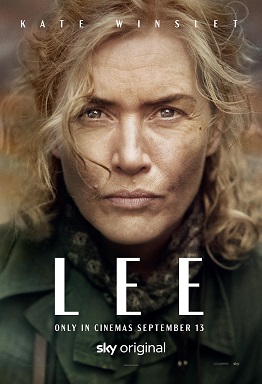
On Friday afternoon last week, I went to one of the local cinemas to see the new film Lee staring Kate Winslet as Lee Miller, one of the great photographers and war correspondents of the last World War. I bought my ticket knowing it was going to be a stellar performance from Winslet, yet I was struck just as much by the dialogue as I was by the pauses written into the script. In one scene, one such pause propelled the story forward far more than any other moment in the whole film, connecting the postwar framing narrative together with the main story being told. That’s the beauty of theatre and film: it’s a medium where the written script is interpreted by actors who we see and hear, and so these two senses are unified to bring these characters and stories to life. This film, like its contemporary Freud’s Last Session which I saw earlier this year, had the feel of a play, and could probably work as such though the realism of Lee is that it takes the audience along with the photographer as she witnesses the destruction of Europe and the horrors committed by the Nazis in the wake of their fall from power in 1944 and 1945.
These silent moments are something that I find can be expressed more in my narrative writing, a style I usually use writing fiction, where I’m writing dialogue as well as the connecting tissue giving those words spoken by the characters their place in the world of the story. In real life we can express nearly as much with a look as we can with a word. This setting of Britain, Occupied France, and Germany in World War II is a potent one for telling stories, after all so many movies continue to be made about that war even as we move ever further from those years. I wonder if in the twenty-first century when we are so connected by our technology, how are our innate communicative abilities adapting to our newfound world? When I was little it was a big deal to see a copy of a foreign newspaper available for sale here in Kansas City; you could maybe buy a copy of the Sunday Times at Barnes & Noble in the magazine section, but they wouldn’t always have it available. Today though, we have people from all around the globe talking at once.
What is it we aren’t saying amid all the cacophonic chaos of our modern social media?
 Wednesday Blog by Seán Thomas Kane