
Welcome to Season 2 of the Wednesday Blog Podcast!
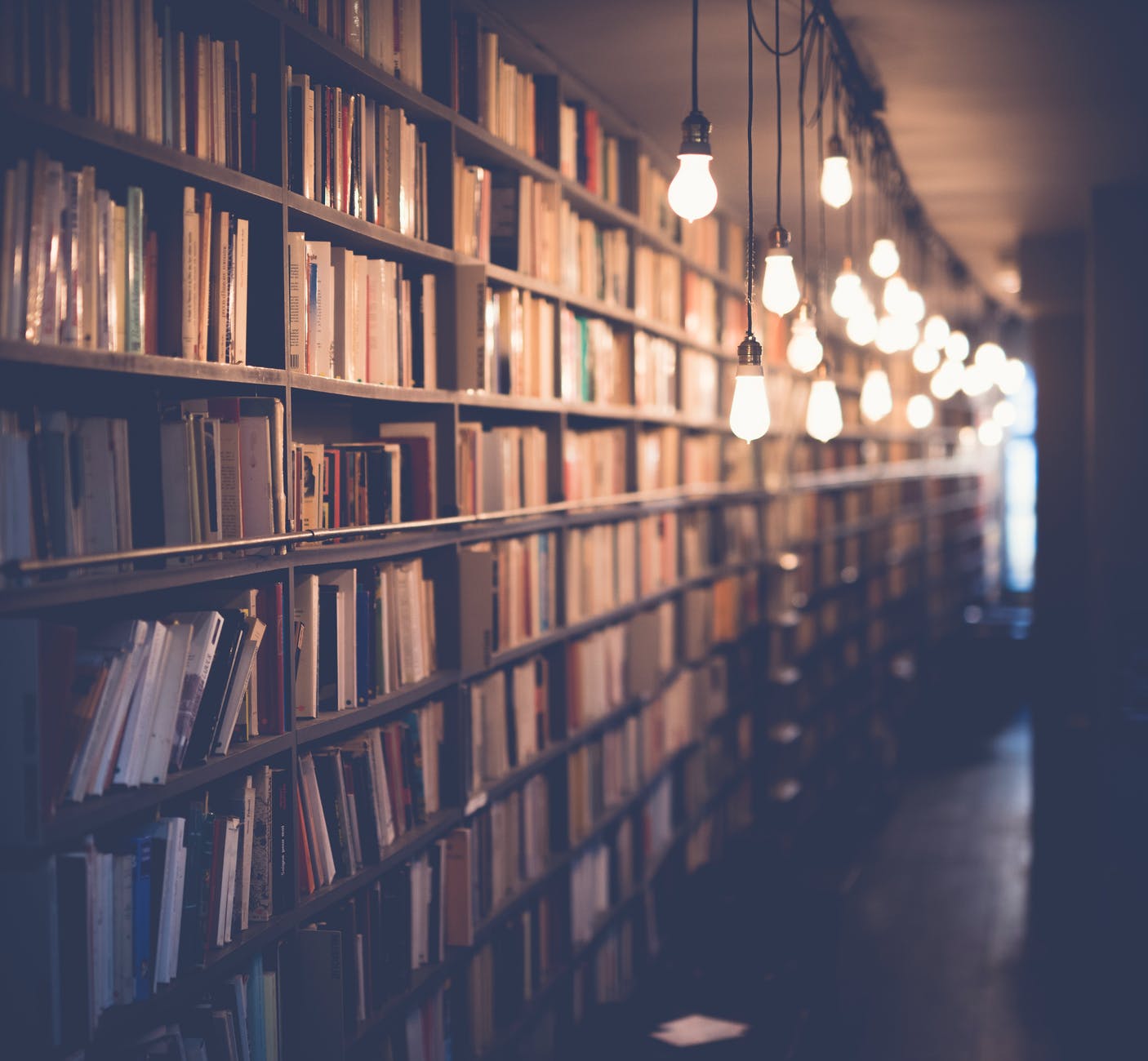
There’s a Thomas Jefferson quote that has stuck with me since the first time I saw it in the room at the Library of Congress that houses his first donation to that institution: “I cannot live without books.” It’s something I think of from time to time, looking around the office here in my apartment at the tall bookshelves lined with volumes covering topics from astronomy to ancient literature in Latin and Greek to Catholic theology to history, politics, and fiction. I collect books, largely to read but also because I love the potential that books hold; all the stories they have waiting to be revealed page by page.
Over the last few years, I’ve found myself more and more gravitating towards electronic books on Kindle, Google Play, and all the academic e-book hosting sites that I use for my research and teaching. E-books are just easier to carry. I can have an entire library right there on my phone for me to choose from when I’m having dinner alone in a restaurant here in Binghamton or when I’m tired of listening to podcasts or reading magazines on a long flight. E-books also make stories more accessible. There’s a now rare novel written by the actor Andrew Robinson about his character Elim Garak from Star Trek: Deep Space Nine called A Stitch in Time that I often see people complaining about how hard to find it is in paperback. Yet I was able to download it in just a few minutes on Google Play and read it cover to cover in a few days.
Kindle now even has a feature where if you have the book on their app and the recording of it on Audible you can listen to some segments of it when you’re driving and then your location in the e-book will update with your progress in the audiobook. I haven’t used it yet, there’s a biography I’m listening to now about the explorer and scientist Alexander von Humboldt (1769–1859) that I could probably also be reading on the Kindle app on my phone when I have a free minute during office hours or at dinner, but I’m also enjoying just listening to it while driving around the hills here in Broome County, New York.
As an author, at least with the three books I’ve self-published to date (all available on Amazon) I usually prefer people buy the paperback versions because I’ll get more in royalties out of those than out of the e-book copies. Still, as a reader I admit I would often choose the e-book on a given day over the paperback solely for the convenience.
One thought that keeps coming to mind for me returns me to my own childhood and those wonderful mysterious days spent in the small library that my parents collected in our house in Wheaton when I was little. That same library came with us down to Kansas City and consumed our then-unfinished basement. At one point we had probably around 10,000 books in that collection of all sorts and stripes. Today, though I also picture not only my younger self but my own future children, if I’m so lucky, and ask “if I choose to go with e-books over physical ones, will my children have the same experiences I had pulling the odd book from the shelf because it looks interesting and flipping through it?” Those experiences of lounging around just flipping through books as a young child was instrumental in making me who I am today. There are so many stories that I read that way. Even now I sometimes like going into a library just to wander and see what I’ll find.
On a recent visit to the Bartle Library at my university I had a specific book in mind that I was looking for, Gerald of Wales’s 1188 book the Topography of Ireland, which has been useful for my dissertation. Yet after I found it, I noticed another book next to it that seemed intriguing. It was bound in a blue cover, and called the Annals of Connacht, the westernmost of the four ancient provinces of Ireland, my ancestors’ home province. I pulled it off the shelf and flipped it open, quickly figuring out how to navigate its pages. Soon then, I looked up first my ancestors’ old parish, Burrishoole in County Mayo, and secondly, I looked up my own family name, Ó Catháin, to see what was in there. Both Burrishoole and Ó Catháin had entries, the former was less insightful to me than the latter, for it turned out there was a guy with my exact name who lived in Connacht in the 1520s, another Seán mac Tomás Ó Catháin. Maybe he was an ancestor of mine, it’s possible even though there are big gaps in the records during the height of the colonial period.
I could have stumbled upon that same collection of annals online and have done just that many a time with old books such as the Annals of Connacht, yet it doesn’t have quite the same feeling of accomplishment as finding that book in the flesh, holding it in my hands. I’ve joked that I deal with my primal desire as a human to hunt in two ways: firstly I hunt for food in the grocery store, and secondly I hunt for books in the library. Yeah, I know, it’s pretty corny. And while hunting for books in a library surely wouldn’t compare to hunting for a living animal in a forest, matching your wits against its own, I can say that hunting for books online can be more frustrating than hunting for books in person. When on foot in a library all you really need to worry about is that the library’s catalog system is accurate, when online you also have to figure out how to communicate with the various computer systems that are making your e-book hunt possible.
Earlier this year when I was searching for import records and ships logs from the French port of Rouen between 1500 and 1567 for my research I found myself dealing with a third layer of complexity: a computer system that can’t actually read the original 500-year old handwritten documents, meaning you just have to hope that whoever imported the document into the system typed enough information into the computer that you can find what you’re looking for. On that one count: the easier legibility of e-books over printed ones, the easier transmission of their stories and information, and the fact that we can now share knowledge around the globe as fast as our data streams will carry that information gives me good reason to prefer e-books. But still, I want my future kids, if I’m so lucky, to have that experience of pulling books from my shelves and wandering through them, discovering that same love of reading that I’ve had all these years.
The voice of Thomas Jefferson was provided by Michael Ashcraft, voice actor extraordinaire. You can learn more about his work by visiting his website here.
 Wednesday Blog by Seán Thomas Kane