Tag Archives: Ghosts in the Wind

The Second Quarter-Century

The Second Quarter-Century Wednesday Blog by Seán Thomas Kane

This week, looking ahead to the next 25 years here are three things that I hope we see become ordinary things by 2050. — Click here to support the Wednesday Blog: https://wwww.patreon.com/sthosdkane


This week, looking ahead to the next 25 years here are three things that I hope we see become ordinary things by 2050.


Last week I started the New Year off in this publication with a reflection on the technologies that I remember looking forward to in the first quarter of the twenty-first century. Today then, I want to look ahead to the next quarter, to the years leading up to 2050. On New Year’s Day of that year, I will be 57 years old, well into my career with hopefully a good wind in my sails from successes and contributions to society in the decades previously built upon the work that I am doing now. Perhaps by then I will watch the New Year’s ball drop in Times Square with my wife and children to be, though that’s one dream that remains more elusive to imagine than any professional triumph. 2050 feels like a strange milestone to me, in part because 1950 feels far more tangible to me growing up surrounded by people who were beginning their own lives in that middle decade of the twentieth century. Yet as much as I feel a bond to the century of my birth, my own legacy will likely be numbered among the figures of the current century rather than the last.

Our century has tremendous potential to be one of the most consequential in the long history of humanity. We’ve already seen dramatic changes in the first 25 years which have defined the break in our current moment from the century we left at the millennium from new wars and economic recessions to the COVID-19 pandemic and dramatic advances in technology and global interconnectedness. A significant cause for discomfort in this century is the rift between those who see globalization as a threat to individual, local, regional, and national identity and the increasing interconnectedness of our world. At the beginning of this century the easiest and most affordable way for us in the United States to be in touch with relatives in Britain and Ireland was by letter, whether handwritten or typed, and sent by air mail to arrive within the next two weeks at its destination. We could place international phone calls, I remember doing this in early 2001 when my Mom was in London on a business trip, but those were far more expensive. The expense of international calling over regular phone networks remains an annoyance, yet today we have other options of placing voice and video calls over the internet that have existed since near the beginning of the century which fill this role.

The increasing ease of global communication is one clear sign of the advances of this century that I applaud. Just before writing this, I spent a delightful hour watching a live public lecture from the Linnean Society of London over Zoom in which I was able to pose a question in the Q&A box that was read by the moderator at her desk nearly 7,000 km across the Atlantic and answered soon after by the speaker. Throughout my undergraduate I often heard the maxim that I should earn my doctorate in the country in which I wish to teach, yet the little islands of national academies that we’ve built in the last two centuries are fast growing into each other’s back gardens to the extent that in my experience there isn’t so much an American and a Canadian academy but a North American academy which also has close links with the republics of letters in Britain, Ireland, and across Europe with more disparate connections in East Asia, Australia, and New Zealand or even South Africa. I’ve yet to present at any conferences on the far side of the Pacific though I have attended conferences held at the Universities of Auckland and Sydney over Zoom that were held the following day, or thanks to the disparity of time zones late in the evening here in North America.

The lecture in question

Yet again, these are technologies which already exist and even if they have room for improvement, they fit better into that first of these two entries about the technological innovations of the twenty-first century that I am most excited by. This week then, I intend to discuss three technologies which I hope will see fruition in the next 25 years that would have a noticeable influence on all our lives for the better. All three of these technologies are already being developed, and in some cases merely need implementation here on this continent as they already are elsewhere. We seem to be in a moment of reaction when the parking brake is firmly grasped in the hands of those who fear any further forward motion on the part of our society whether for their own portended loss of power or their general fear of the unknown. Both are understandable, yet as Indiana Jones learned in his last great challenge in The Last Crusade there comes a point in life where each of us needs to take a leap of faith and trust in ourselves and our future.


The first of these three technologies which I’ve read a great deal about in the last several years and which is proven in a laboratory setting is the use of nuclear fusion to create a new source of energy and ideally power to keep our lights on. One great worry I have among many others about the incoming administration which will take office next week in this country is that they will slow or even stop the construction of new renewable energy facilities: solar and wind farms in particular without any significant scientific foundation for that decision. We ought to be developing ways that solar panels can be integrated into the shingles and tiles atop our roofs so that they aren’t an extra addition to any edifice. Likewise, wind farms in places like the deserts, the Great Plains, and off our coasts (ideally still out of sight of the beachgoers) where the wind is strongest and most usable would help to eliminate our use of fossil fuels including natural gas and coal which are still in use in parts of this country.

A drawing of the ITER Tokamak and integrated plant systems now under construction in France. CC by 2.0 Oak Ridge National Laboratory.

The prospect of nuclear fusion to be downsized from its current necessary laboratory dimensions to something that can be implemented on a local level in cities and towns around the globe is what I look forward to most. The effects of human influenced climate change are well and visible around us. Look no further than the extreme shifts in weather year round, or the prolonged droughts across much of this continent. Look at the winter wildfires that burned around Boulder, Colorado and west of Kansas City in Central and Western Kansas in December 2021. Look at the wildfires burning down neighborhoods in the Los Angeles area today! We need renewable and clean energy sources that will continue to power our civilization if we’re going to survive in this brave new world that we’ve created for ourselves. We’ve already reached the threshold of a 1.5ºC increase in mean global temperatures, and we only seem to be letting things get worse. I’m reminded of the beginning of the story of the Flood in Genesis and how “the wickedness of human beings was on the earth” and “[corrupted] the earth” itself. Are we not doing the same thing by not wedding our continued innovation and progress with a heart for preserving the Earth that has nurtured us to which we too contribute? If we can develop technologies from our own invention which will cultivate a stronger relationship with the rest of nature on this planet in whose cradle we evolved as every other living thing we today know did then what are we doing?


Secondly, one of my great passions outside of academia is the promotion of high speed rail here in the United States. The YouTuber Alan Fisher recently released a video which spells out the utility of high speed rail as a realized technology in contrast to the fantasized options like the Hyperloop that caught our national attention several years ago and even resulted in a thorough study by the State of Missouri to build a hyperloop line between Kansas City, Columbia, and St. Louis. I’ve had my fair share of experiences on high speed rail in Europe and having that option alongside air travel would go a long way to building a far more equitable society in this country. Today, unless you choose to drive the 3.5-4 hours it takes to get between Kansas City and St. Louis, you have the choice of 2 daily flights on Southwest, 2 daily trains on the Missouri River Runner, or 8 daily bus services provided by Greyhound and Flix Bus. While the flight itself is quite short, rarely more than 45-50 minutes from takeoff to landing though including travel to & from each airport and waiting time this option grows closer to 4-5 hours in length. Meanwhile, the train takes 5.5-6 hours and the bus usually 4.5 hours to cross the state. With high speed rail we could certainly cut the travel time either along the Missouri River Runner or a new route along the I-70 corridor with one intermediate stop in Columbia for a service that could well be faster and more convenient than driving. The Missouri state high speed rail proposal from the High Speed Rail Alliance, of which I am a member, calls for 10 daily roundtrip services between KC and St. Louis at least making it possible for residents of either city to make day trips to the other, something that is very difficult to do by any option today.
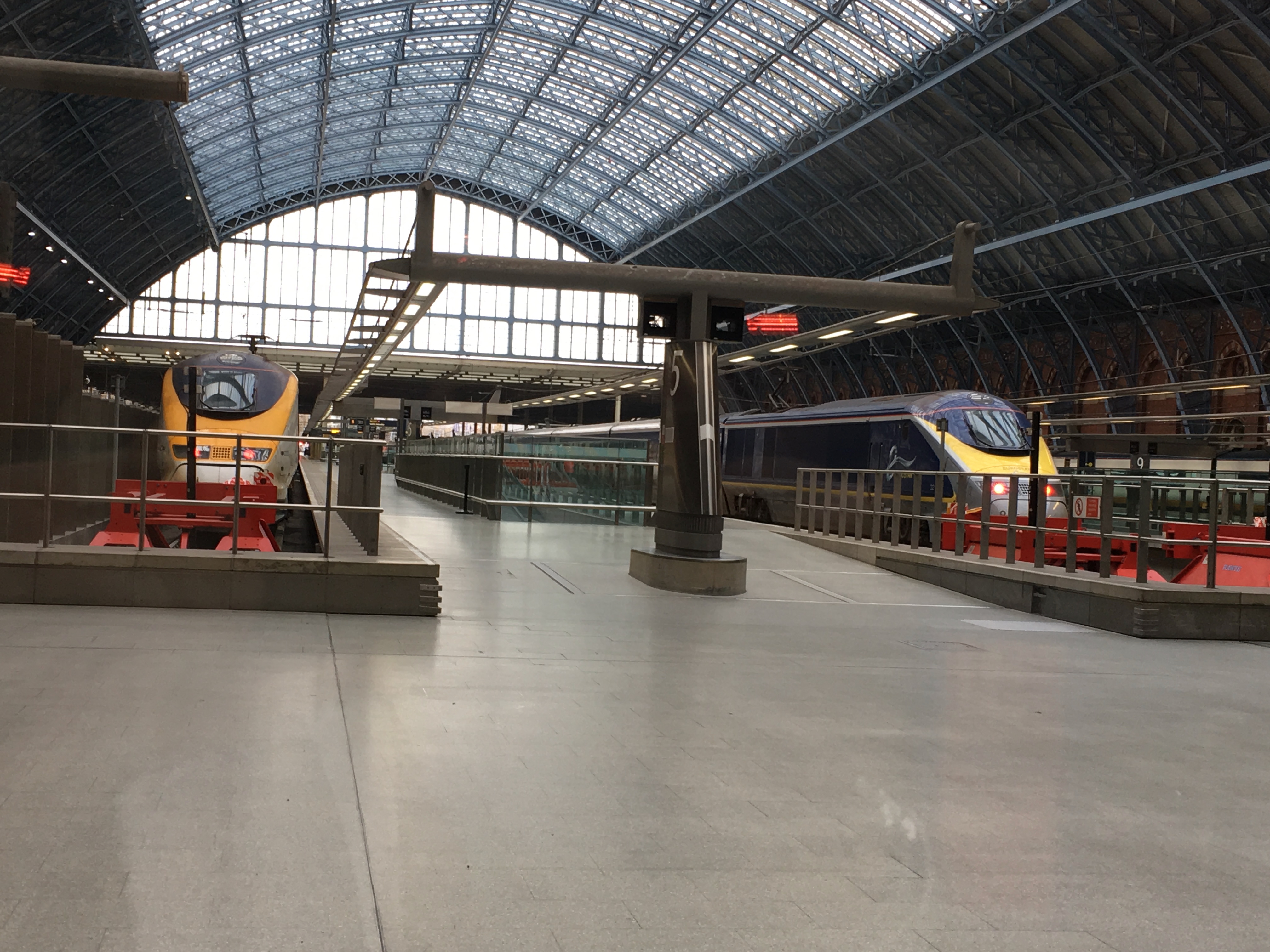
The Eurostar hall at St Pancras International in London. Photo by the author, 2016.

In Kansas we have a more tangible possibility for high speed rail thanks to the work of a YouTuber who goes by the channel name Lucid Stew. He released a video this summer theorizing what a High Plains HSR line between Denver and Kansas City would look like. The total travel time largely following I-70 would take 3.5 hours compared to the 4 hours it takes to fly between the two cities with airport transfer times included. There are currently on average 7 flights per day between these two cities offered by Frontier, Southwest, and United and there is at least 1 daily bus between the two cities. The drive across Kansas is a dull one, the Great Plains really do get to seem flat once you get west of Salina until essentially the Denver Airport exit. I remember falling asleep in the passenger seat on my last drive from Denver back to Kansas City in June 2021 in a trip featured in the Wednesday Blog two-parter “Sneezing Across the West” and dreaming that there was a high speed train running between the two cities that ran frequently enough (a minimum of 10 trips per day each way) that allowed your average Kansas Citian the opportunity to get off work on a Friday afternoon and go spend the weekend in Denver or up in the Rockies with enough time to come back on Sunday evening to make the start of business on Monday. It was one of those dreams that really sat with me, and made me wonder whether it could be possible to build this line in the future? I think the key feature that would make this happen would be if it were the primary transcontinental link between a Midwestern high speed rail network centered around Chicago and the easternmost node in a Western network that included lines reaching as far as the Pacific Ocean. While it’s far less likely that most travelers would take high speed rail from Kansas City to Los Angeles, San Francisco, Portland, Seattle, or Vancouver, we should still think on a continental scale because there could be travelers leaving from Denver who might want to make that trip, putting the High Plains HSR line into the broader North American network.
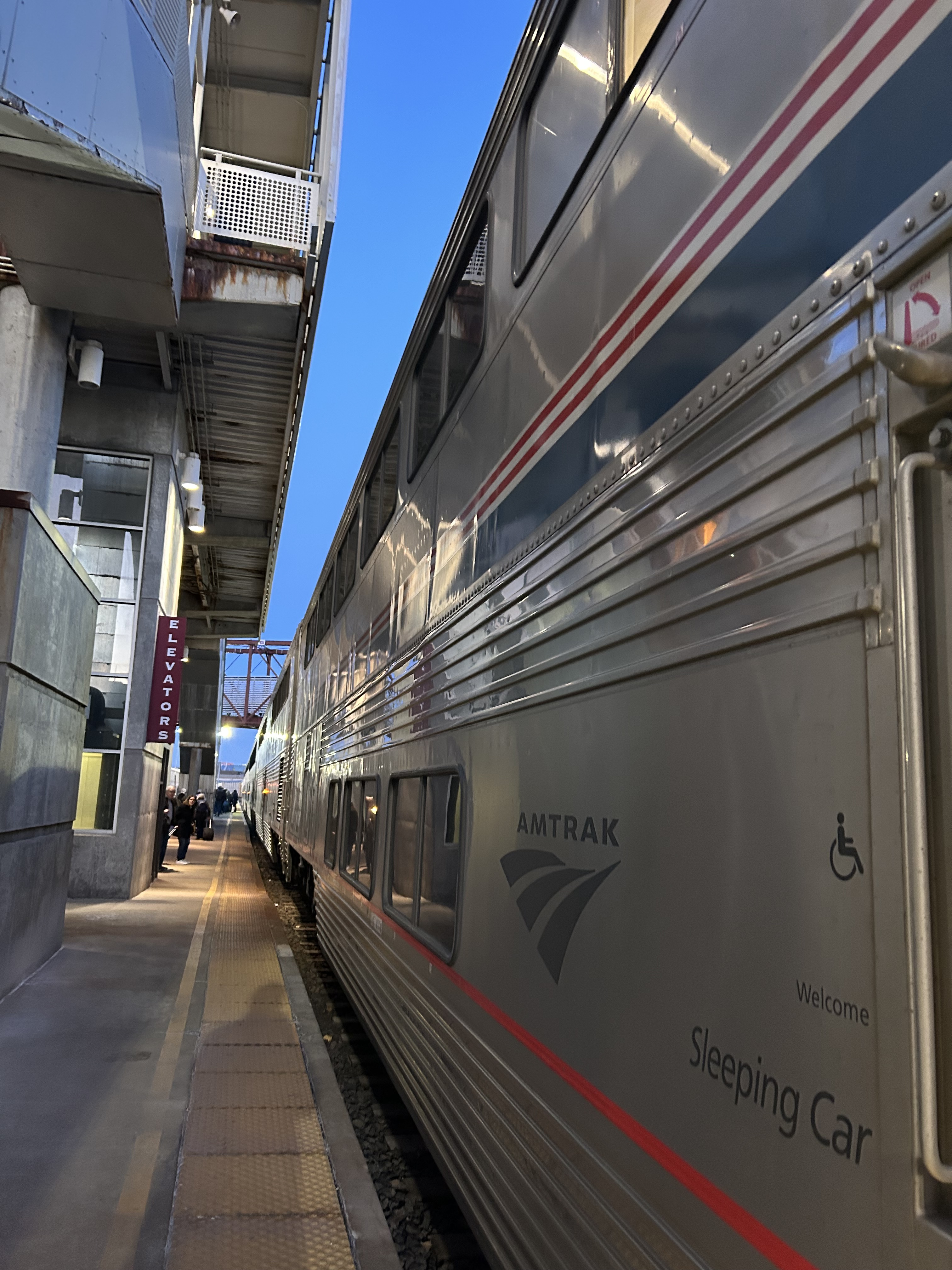
The Southwest Chief in Kansas City, photo by the author 2023.

I for one would gladly take a high speed train to Chicago over flying or driving. I already enjoy taking the Southwest Chief, though I was lucky the last time I took it that we arrived on time. Our current passenger rail network is hampered by the lack of enforcement of the federal law which says that Amtrak should have the right of way over freight, yet the host freight railroads now run trains so long that it’s much harder to manage Amtrak schedules in the face of mile-long freight trains that take up much more of the space along these lines. This is a problem for both the long distance routes like the Chief, which runs on BNSF tracks between Chicago and Los Angeles, as it is for the state-sponsored routes like the River Runner which runs on the old Missouri Pacific line now owned by Union Pacific. With the same sorts of amenities as the current trains, the option for private compartments (roomettes, rooms, and bedrooms), sleeper capabilities, a fully stocked dining car, and the observation & café car, I’d happily spend a couple hours more traveling by train on a high speed line between Kansas City and Chicago via St. Louis rather than take the more direct, if slower, route on the Chief. It seems more likely that the Missouri River Runner will get the high speed upgrade than the Southwest Chief because it’ll serve more people: the Southwest Chief’s primary metropolitan areas east of the Great Plains are Kansas City and Chicago alone. If we had an express train that ran just between those two cities along the Chief route that could be another good option that’d cut the journey down from 7 to closer to 5 hours.

RideKC’s Streetcar service at Union Station, photo by the author 2016.

All of this would need to be complimented by better public transportation on the regional, metropolitan, and local levels. We will soon see the opening of the southern extension of the Kansas City Streetcar down Main Street from Union Station (23rd Street-ish) to UMKC (51st Street). This will get the Streetcar right to the top of my neighborhood, Brookside, and just within reach that I will probably begin to take it when I’m going downtown for work or a day out. Yet our local transit agency, RideKC, needs to expand bus service south of 51st Street now to feed people onto the extended streetcar line. Currently we have 20 minute frequencies on the Main Street Max line south of the Country Club Plaza (47th Street), which have been the case since the Max line opened in 2005. I for one want to see at least 10 minute frequencies all the way to Waldo (75thStreet) if not even further south to 85th Street or even to the I-435 loop around 103rd Street. This is a problem that needs to be addressed nationwide. I firmly believe that no one in an urban or suburban area should live further than a half a mile from a transit line, whether that be a bus, streetcar, light rail, metro, or regional rail. When I worked at the Nativity Parish School at 119th Street and Mission Road in Leawood, Kansas the closest bus line to the school was the 57 bus stop at the intersection of Minor and Wornall Roads just north of Avila University (Minor Road becomes 119th Street at State Line Road, aka the Kansas-Missouri border). The walk from there to the school is 2.1 miles (3.38 km) in length and according to Google would take about 45 minutes to complete and while there’s a sidewalk for most of the way on the north side it does end at the property of the Church of the Nazarene just 528 feet shy of the border. Here the pedestrian can cross the street and continue on the south side of the street, but that’s not always the safest prospect on what is a fairly major street on both sides of the border.

In Kansas City we need more streetcar lines and a robust regional rail network that can connect the disparate suburbs together as a supplement for our existing highway network. Thinking about this over the weekend I came to the thought that perhaps if we had a strong enough passenger rail network it could leave more space on the highways for freight traffic which already makes up a fair share of the interstate network’s users. Here if we had a system of through services connecting at Union Station on the tracks of the Kansas City Terminal Railway (KCTR) we could have north-south routes running from St. Joseph to Gardner or Lee’s Summit that would connect points in between including KCI Airport, suburbs in the Northland, Downtown, and neighborhoods and suburbs on the southwest and southeast sides of the urban core. Likewise, an east-west line ought to run as far west as Topeka and as far east as Grain Valley or beyond along the I-70 corridor would do a great deal to connect this region.


I’ve digressed a great deal here about transportation, and rail in particular. So, let me finish with something that’s on a smaller scale yet seems to be growing into something far more robust. In the last decade 3D printing has really developed into a new art form that has a great deal of utility to offer. My parents have developed a hobby of 3D printing with both uses. I’m quite proud of the one print that I’ve completed with my Mom’s help. Just before Christmas we made an old World War I biplane with red filament leading to my declaration that this year the Red Baron would be visiting the Baby Jesus in our manger scene. I’ve seen newer models of cars and trucks, the Ford Maverick in particular, which have interior parts that are 3D printed. 
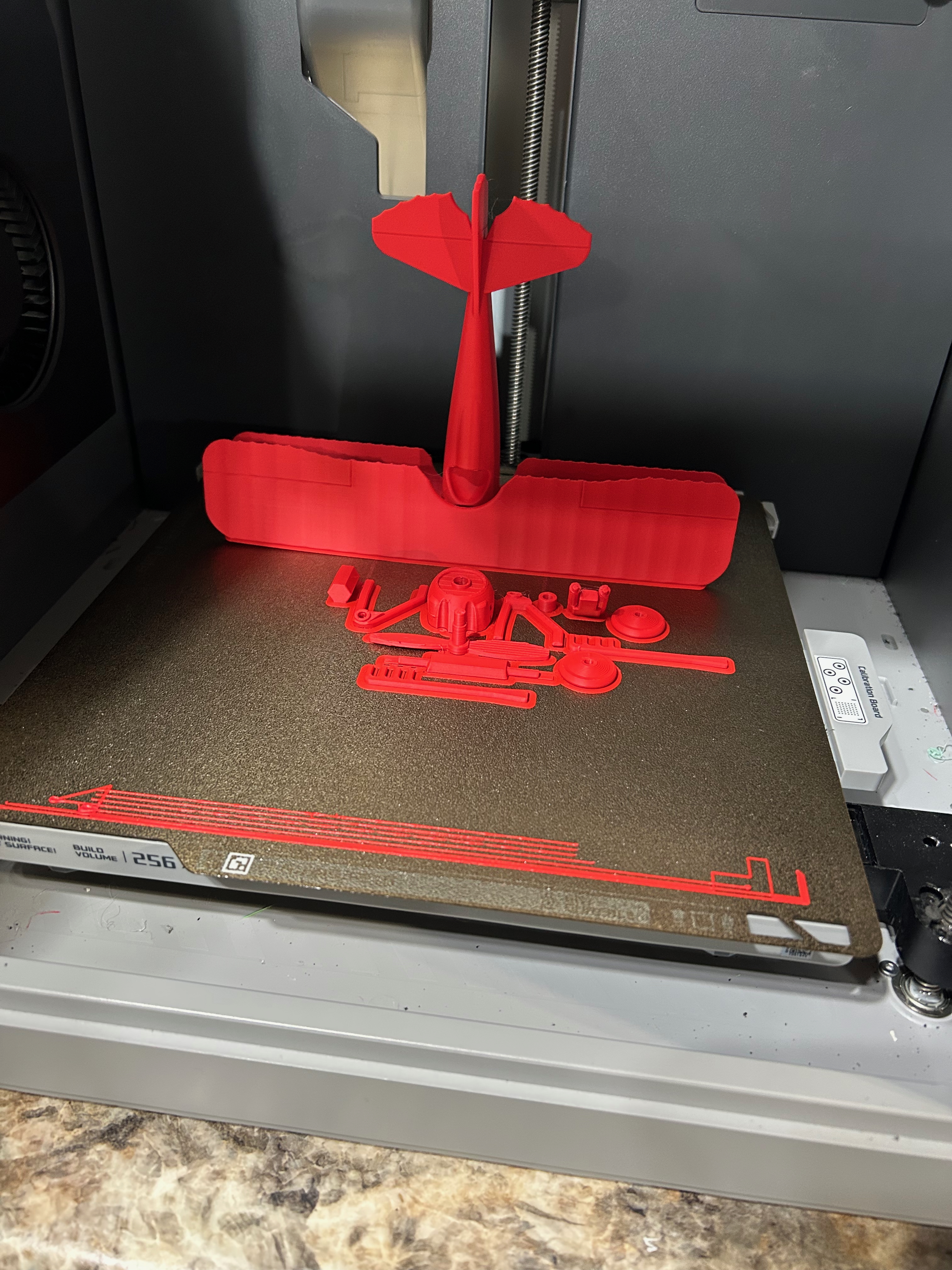
The Red Baron biplane as it appeared when it finished printing. Some assembly required. Photo by the author, 2024.

In October 2016, NASA launched Phase 2 of its 3D printed habitat challenge to see what could be designed as homes “where future space explorers can live and work.” One of the problems to be solved here is that for every kilogram of mass which is carried into Space whether for a Lunar or Martian destination the spacecraft will need to carry more fuel. So, why not bring lighter materials that can be assembled on arrival? The advent of 3D printing technology will allow this to happen with the understanding that the technology will continue to advance in the coming years as the Artemis program brings humanity back to the Moon in the 2020s and 2030s and a future program takes astronauts to Mars for the first time. I don’t know if we’ll see humans on Mars by New Year’s 2050. It’s possible, but with all the delays that the Artemis II launch has faced it seems like the days of rapid-fire launches from the Apollo era are more a distant memory than a part of the present moment.
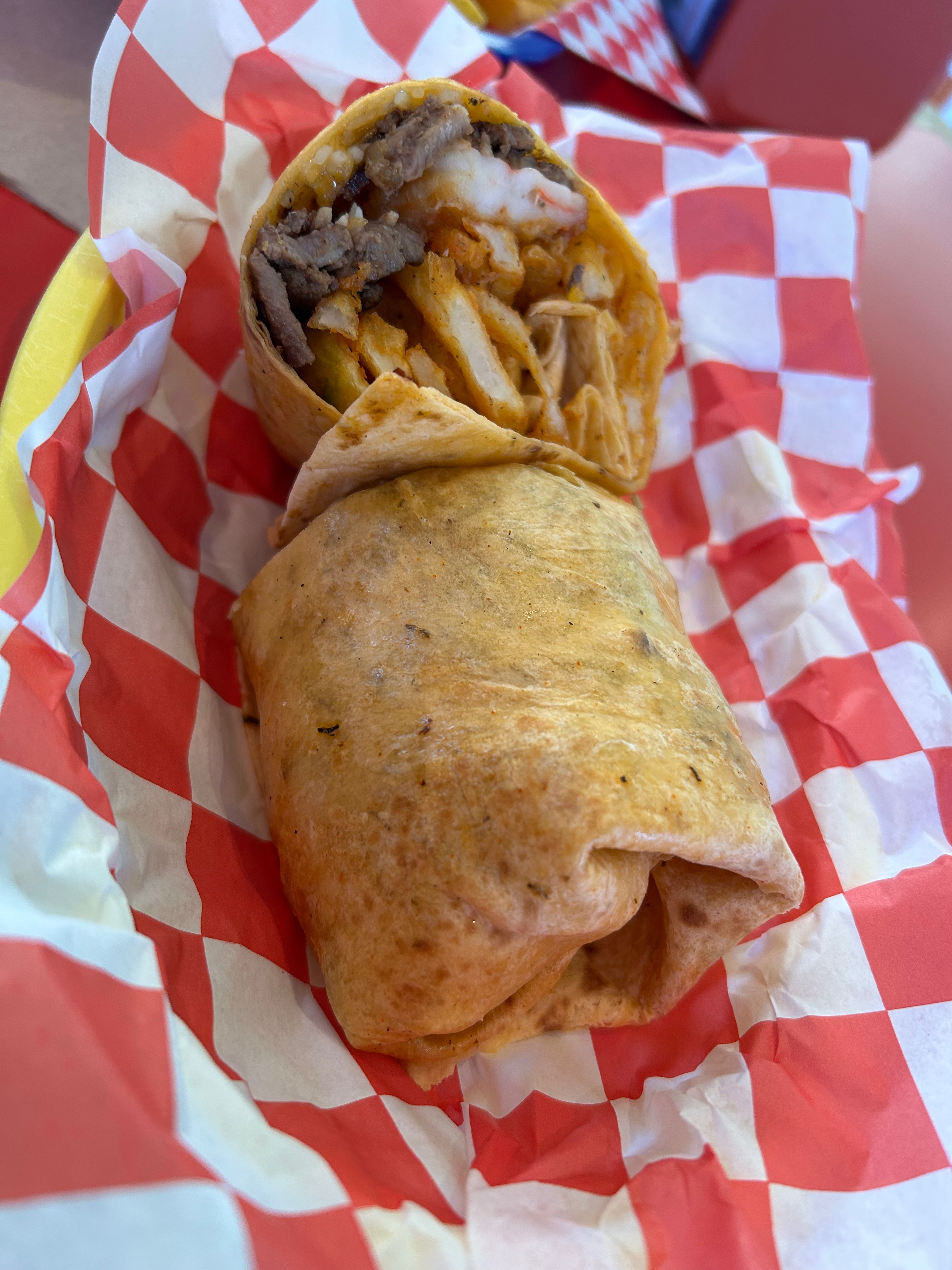
The Tiki Taco Surf & Turf Burrito, not 3D printed. Photo by the author, 2024

Other innovations in 3D printing stand as challenges to be faced: ghost guns made from 3D printed parts are a new threat to public safety, and the fact that these filaments are largely plastic concerns me from an environmental standpoint. I’m curious however about the prospect of 3D printed food. A long term vision I have for this technology is that it may lead to some sort of device like the replicator we see on Star Trek, and should my preference for beef over other meats become unsustainable and too expensive for me to continue in the next 25 years then I’d be open to considering an artificial alternative that is less taxing on the Earth and its environment alongside eating other meats: bison, chicken, lamb, and pork as well as the varieties of seafood. Yet with this last one there’s the problem of over-fishing. By any natural measure we in Kansas City shouldn’t have as easy access as we do to saltwater fish, shrimp, and the like. I’ve recently discovered the surf & turf burrito at Tiki Taco, a Kansas City Cali-Mex chain with 3 locations. This burrito’s main ingredients are shrimp, steak, with either rice or fries and several other fillings, and yes, I do love it. Yet again, if cattle produce more methane than is safe for our climate and if industrial shrimping is bad for the long term viability of shrimp populations and the oceans in general, shouldn’t we look for alternatives, even ones that have their origins in laboratory experiments?


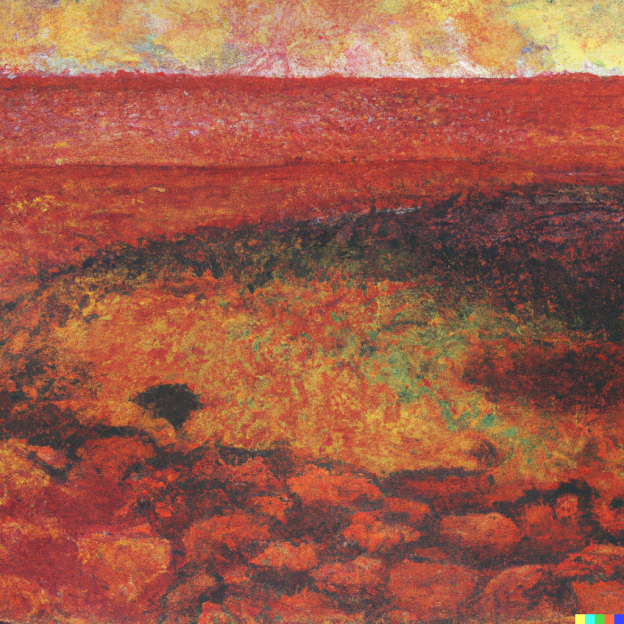
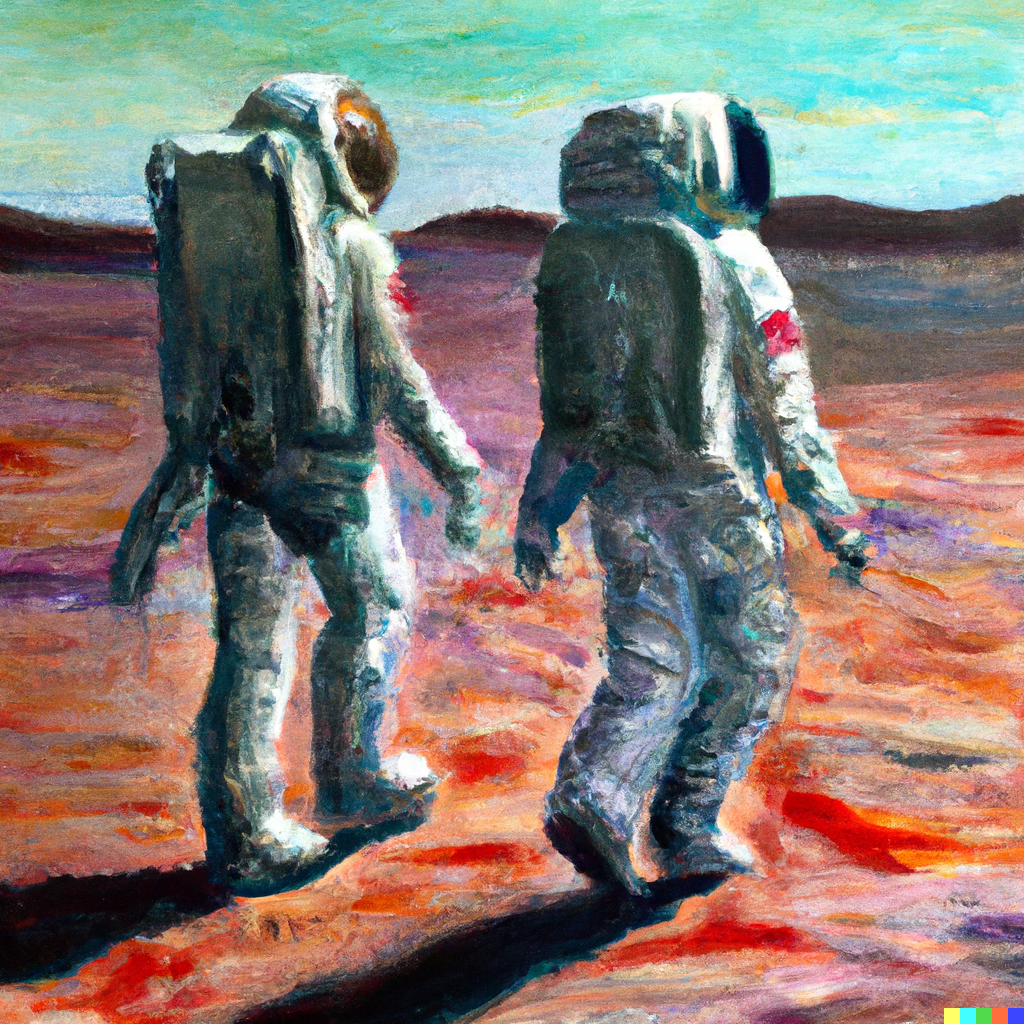
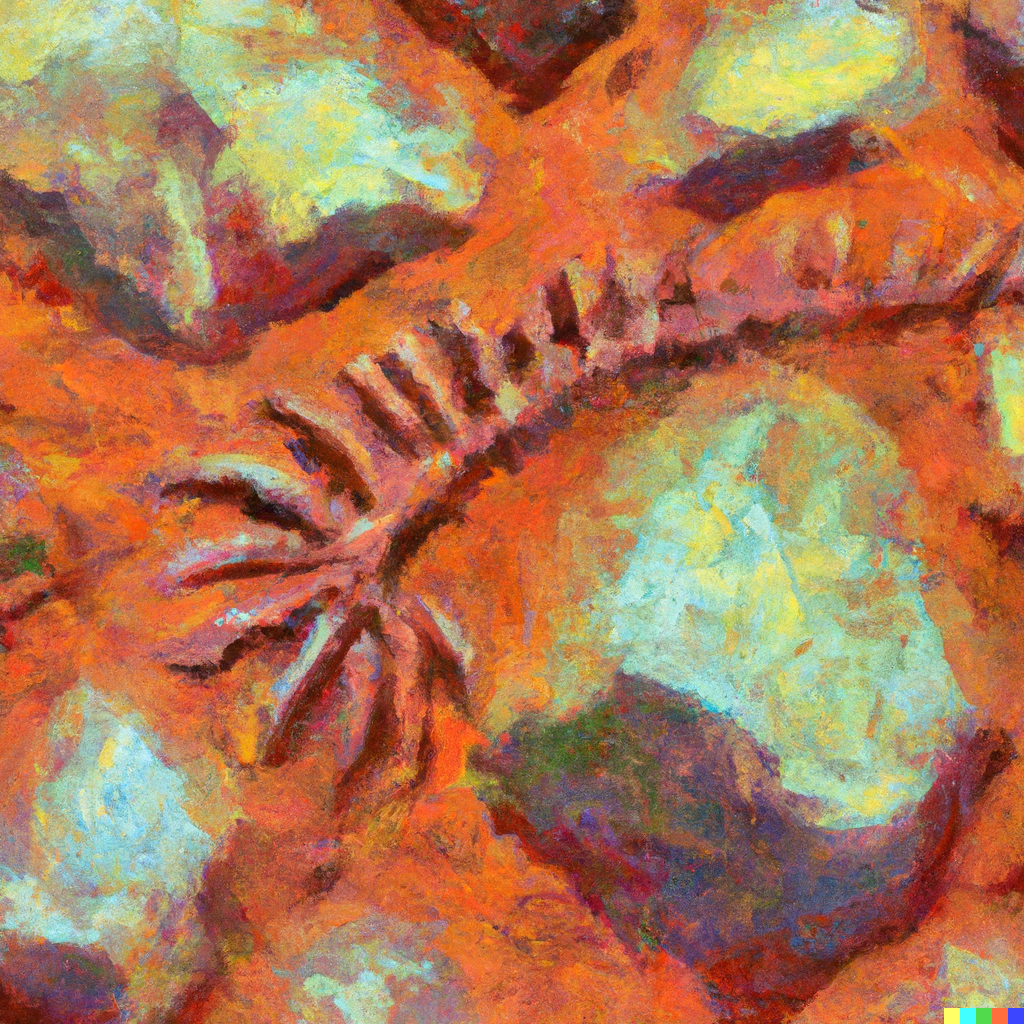
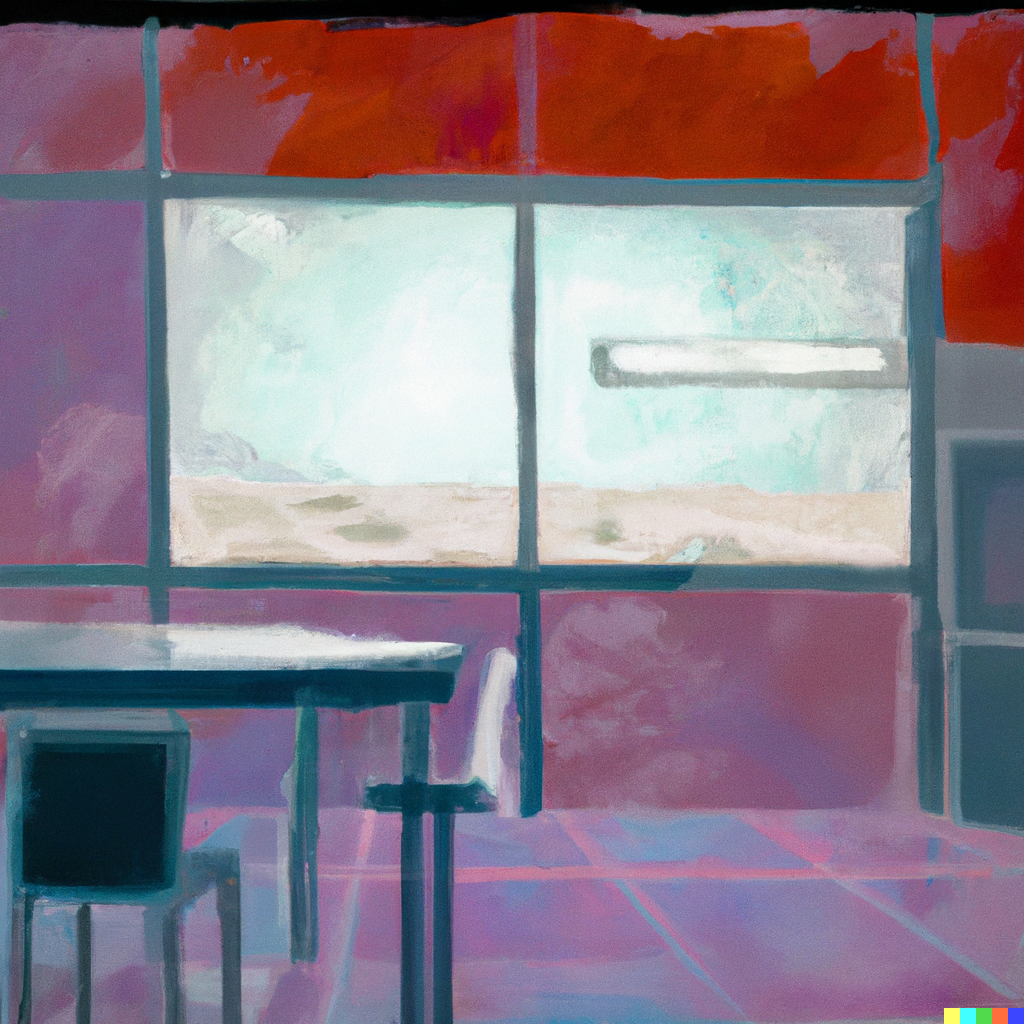
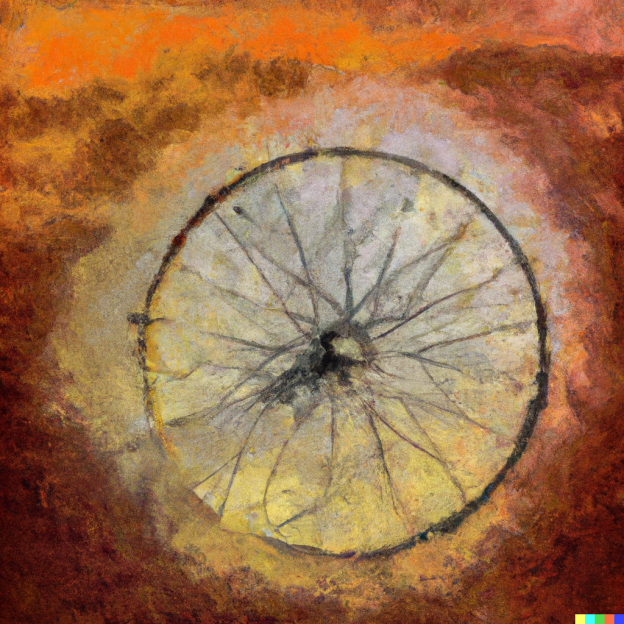
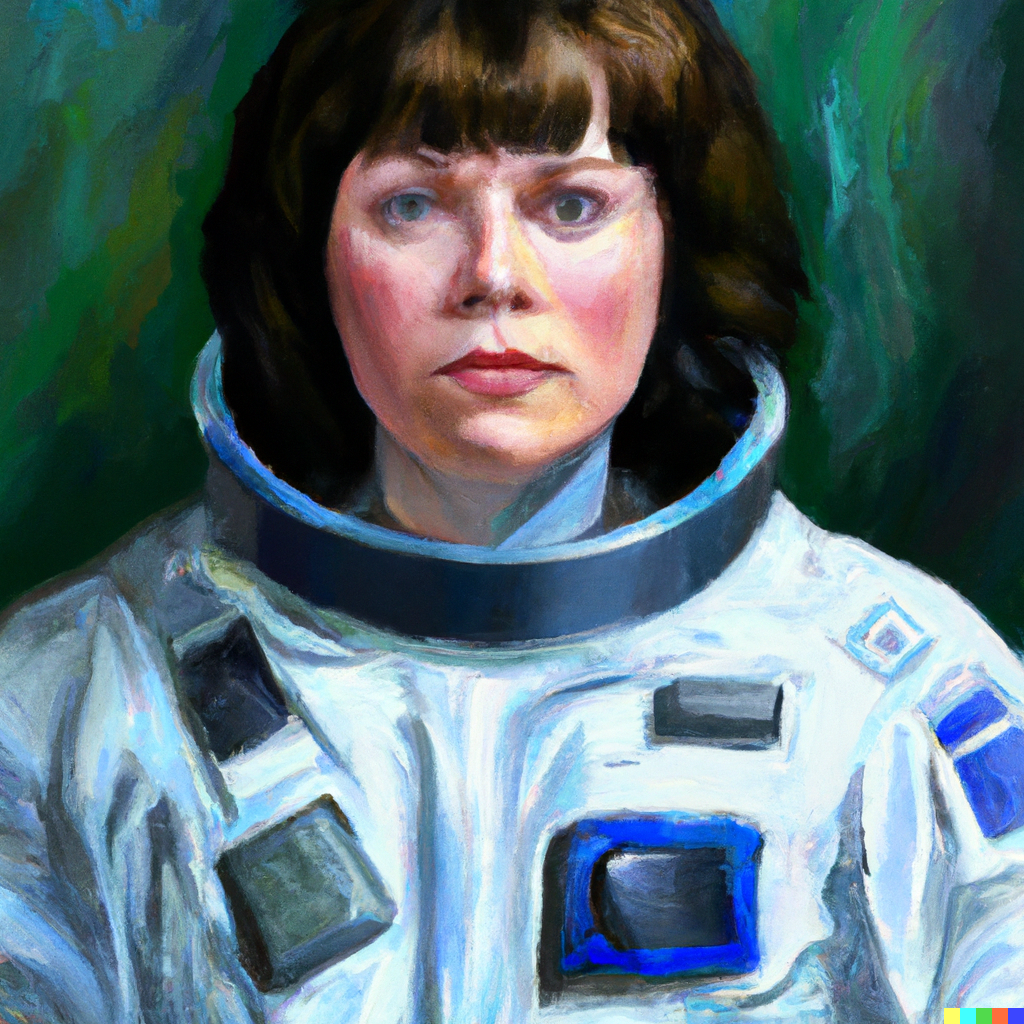
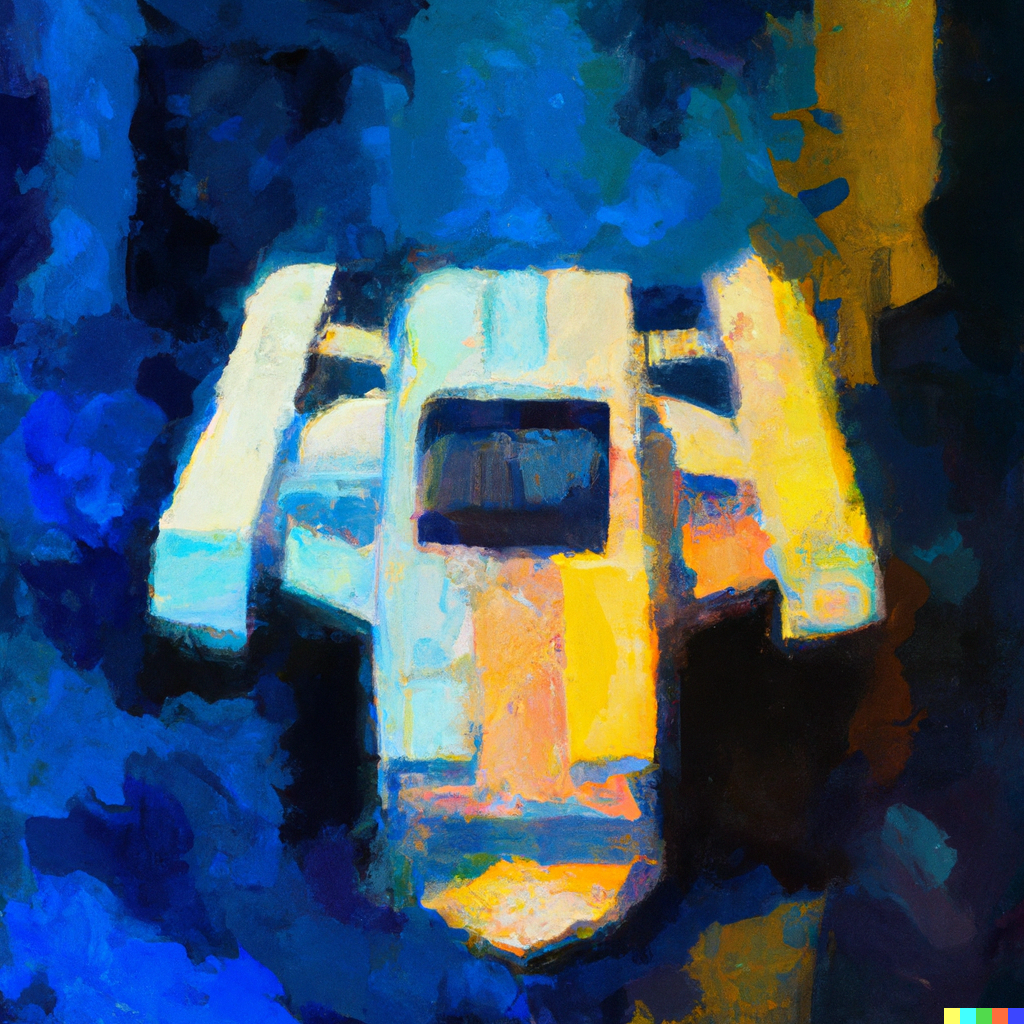
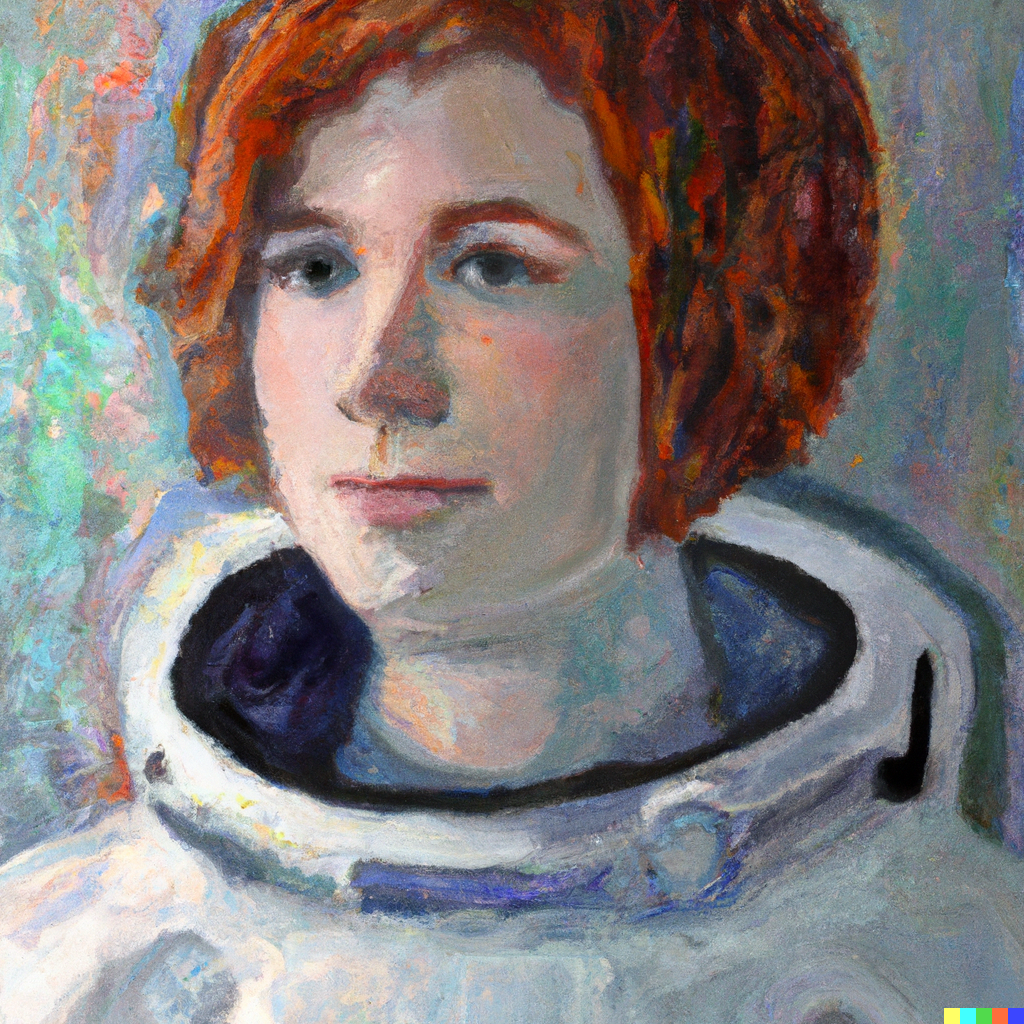
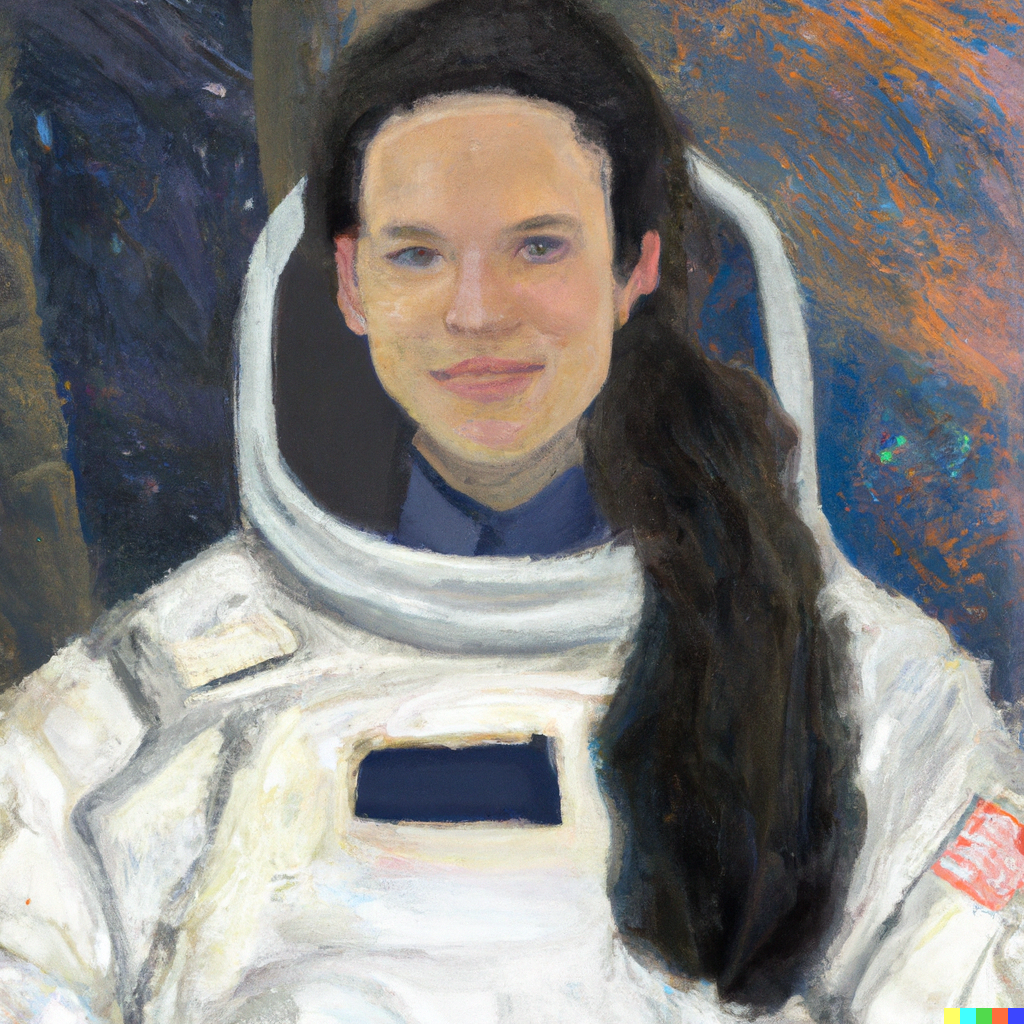
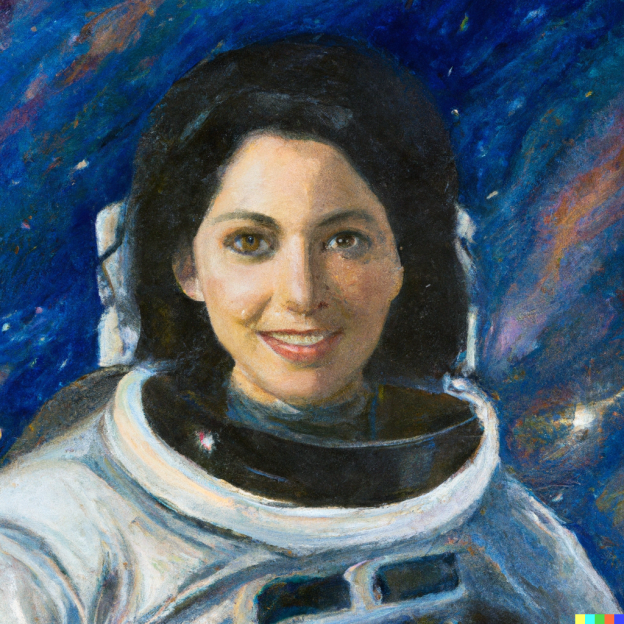
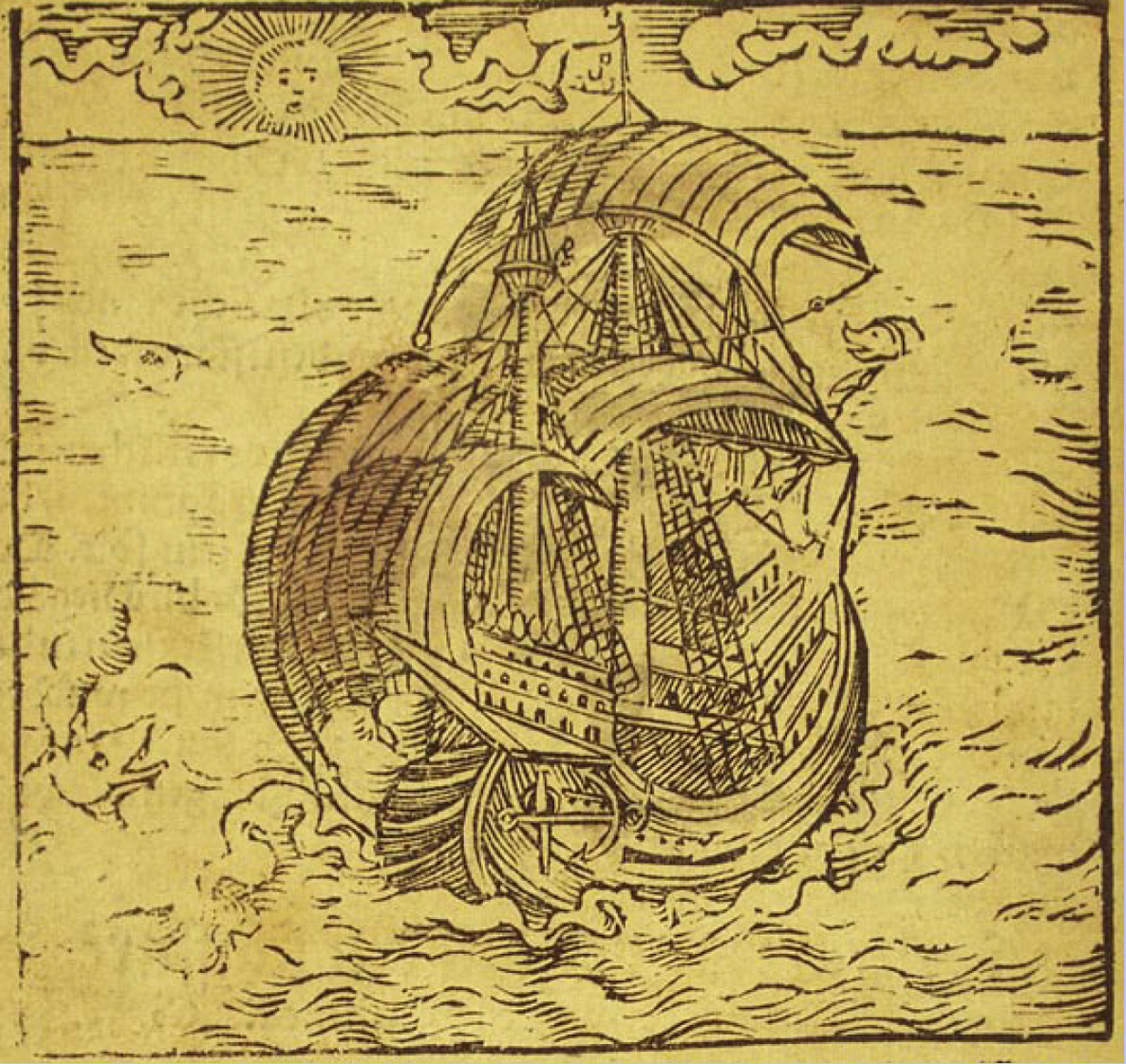
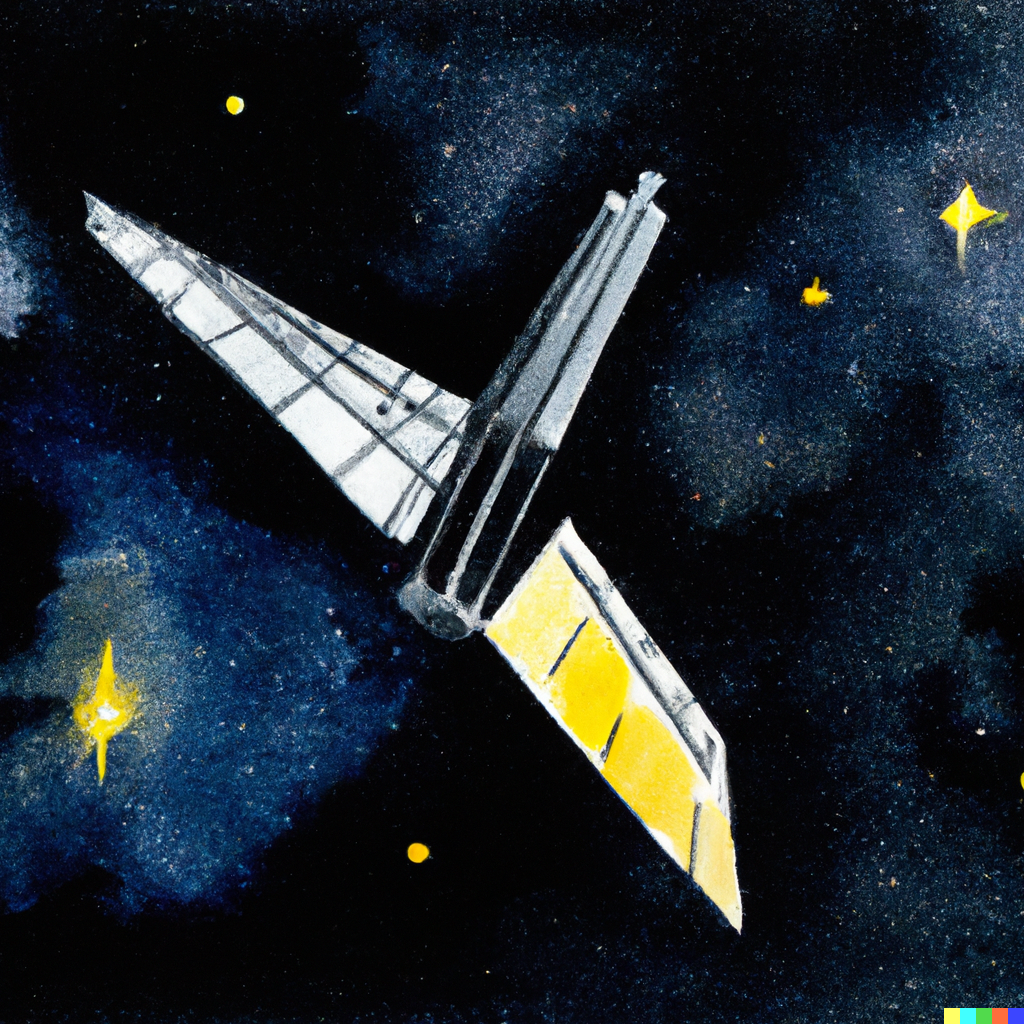
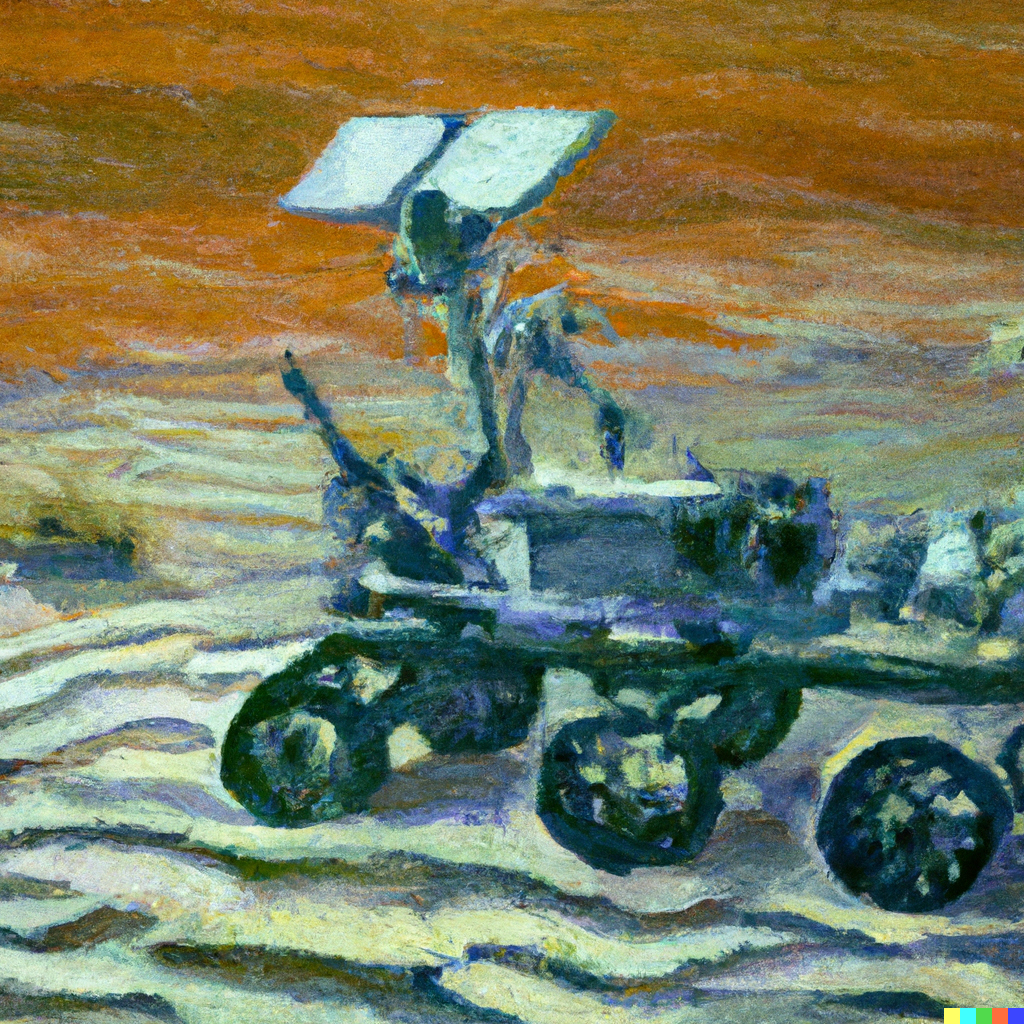
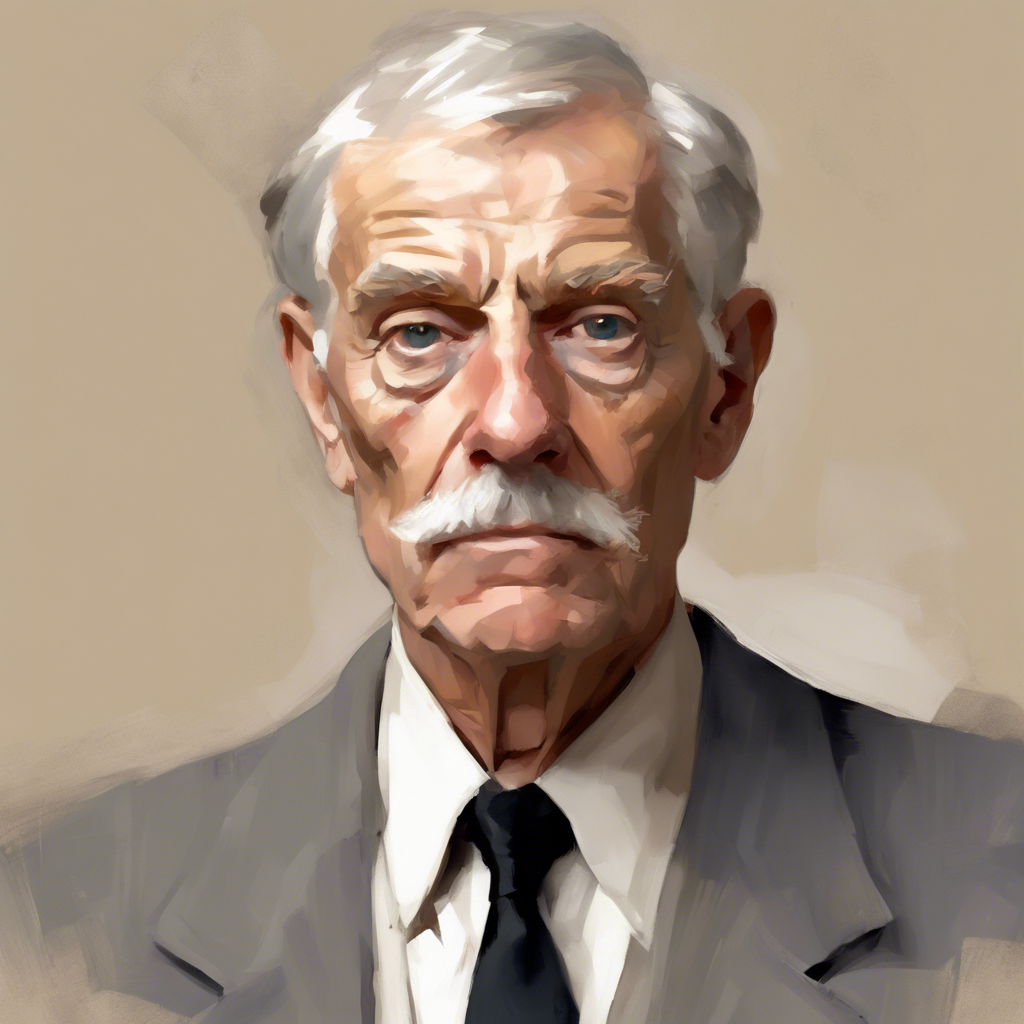
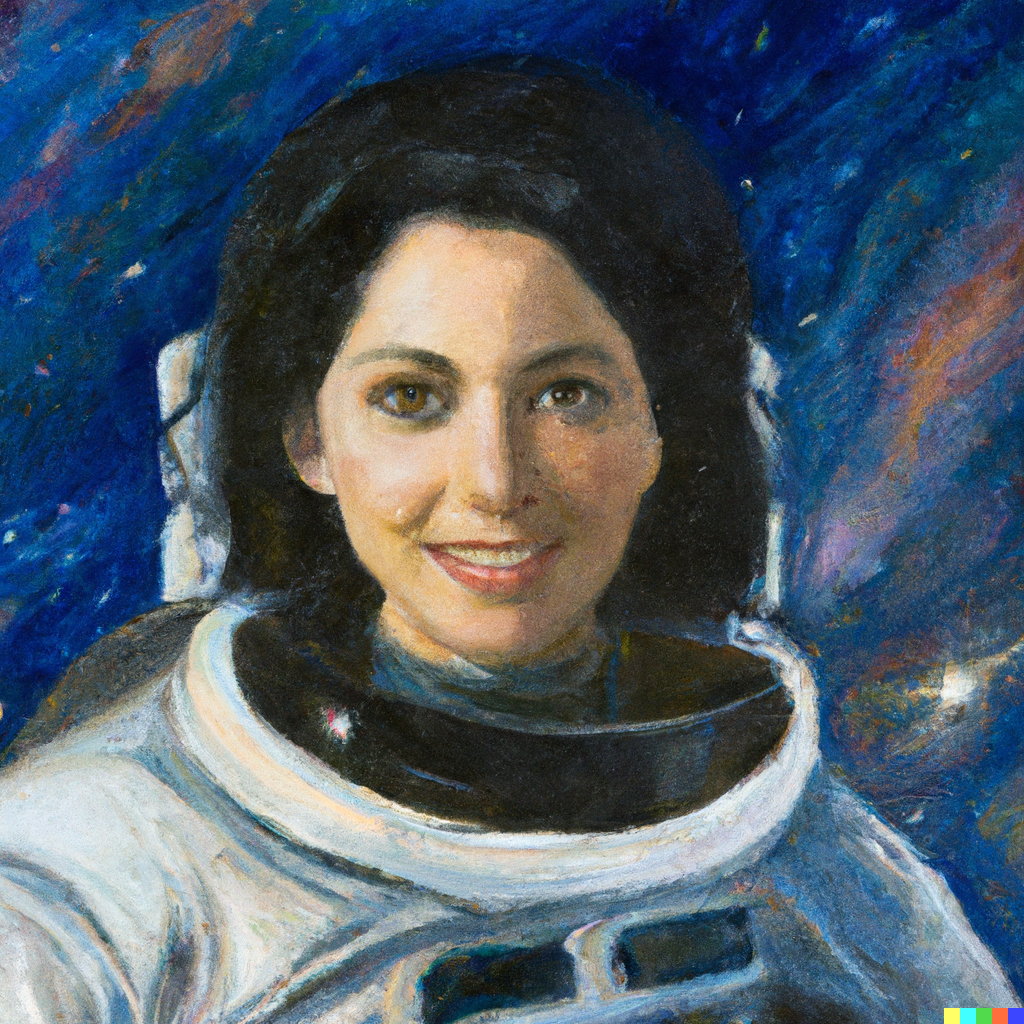
Finally, I don’t quite know what to make of advances in artificial intelligence quite yet. The means in which it’s become most visible in our lives is through crafted sentences and generated images. I’ve seen some examples of good AI and many of AI that is obviously computer generated. I freely admit to using an AI program, DALL-E 2, to create the images I used in my story “Ghosts in the Wind” from the Season 2 finale, and again I used a separate AI program to create the portrait of Carruthers Smith which appears at the top of my story “Carruthers Smith’s Museum” and its follow-up appendix. I’ve taken advantage of the vast database behind Chat GPT to confirm it’s not aware of more secondary sources in projects where I’m less familiar with the scholarship, a sort of streamlined version of the databases I’ve used throughout my career to find peer-reviewed articles and books. Yet I have too much pride in my own scribblings to use an AI program to write for me. If I want to find a fancier way of saying something, I’ll turn to my trusty thesaurus instead and decide for myself which of the synonyms I like best.
I do think we can find examples of computerized systems that work well to enhance the lived human experience of all three of these technologies. Computers with human supervision will be one of the better ways of monitoring nuclear fusion reactors to ensure their safe operation. Driverless trains already operate in cities like London and Paris, and while it’s disconcerting when you first board the front carriage of a DLR train or a Line 1 train in their respective cities you get used to it. On a less labor-pinching model using automatic train signaling systems and AI driven algorithms to determine schedules and monitor bus & train maintenance will help streamline things. Meanwhile in the world of 3D printing the flaws in current printers certainly can be ironed out with assistance from artificial intelligence to build things in regular patterns and to warn the operators if the machinery involved needs to be fine-tuned or replaced. As a comparison: Teslas have sensors in each wheel which keep track of individual tire pressures. These sensors are accessible on the central display screen. My own Mazda Rua has similar sensors, but they don’t differentiate between each of the four tires and so there’s the one light that will illuminate when there’s a problem. To find which tire has the low pressure I need to leave my car and check each one manually, which really isn’t a problem, yet it’s become an annoyance on my long drives when I’ve had to stop repeatedly to check tire pressures because of the poor quality of road surfaces on our older highways in this country.

As I’m writing this, I’ve been watching the notifications pop up on my computer from new emails coming in. A recent software update from Apple introduced Apple Intelligence to my computer, and now I get brief summaries of each email as they arrive. This means that the pop ups appear a second or two slower than before, and so if I’m not busy as I often check the email before the pop up appears. However, one that did appear while I was finishing the last paragraph announced several new books for sale at a local bookshop. One category of these was “Dystopian fiction.” I for one don’t care for dystopias, I’d rather spend my days thinking of utopias. Sure, the word utopia is St. Thomas More’s way of saying “nowhere is perfect,” but isn’t the human ideal that we’re foolhardy enough to strive for things that seem impossible only to find we actually got close to making those things happen?

Today, high speed rail is slowly being developed in this country. The Central Valley leg of the California High Speed Rail line between Los Angeles and San Francisco continues its slow march, even as its detractors try to see it shut down. At the same time, Brightline West’s efforts to build a separate high speed line between the eastern LA suburb of Rancho Cucamonga and Las Vegas seems more likely to open in this decade. Once we see those lines open in California, will the rest of the country begin to take notice and start planning their own high speed lines? By the time we reach the middle of the century it’s possible our energy sources will come from nuclear fusion generators as well as solar and wind farms, hydroelectric dams like the ones around Niagara Falls, and some as yet unknown or unfamiliar technologies that will help our civilization to progress further in communion with nature rather than in contrast to it. This could well be done using the descendants and successors of our current 3D printers. This technology will likely be instrumental in the establishment of the first permanent human settlements on the Moon and Mars and could prove just as useful here at home. Maybe the interiors of those trains will largely be made from 3D printed materials and parts not unlike the prefabricated houses that’ve been built now for generations. I remember seeing a news story in 2019 or 2020 about a company building prefabricated homes that didn’t require air conditioning because of strategic window placement near the roofline which allowed for the wind to naturally cool the space.

There are a great many prospects to look forward to in the next 25 years, and I hope come New Year’s 2050 that we will be living on a far healthier planet and will have worked through the gridlock that keeps us held back today. I hope that 2050 will beckon in a happier time in a way that 2025 doesn’t seem to be.

So, Happy New Year!

The Versatility of Storytelling

The Versatility of Storytelling Wednesday Blog by Seán Thomas Kane

This week, how the same tools can be used to weave a variety of different stories. — Click here to support the Wednesday Blog: https://www.patreon.com/sthosdkane


This week, how the same tools can be used to weave a variety of different stories.


My favorite sorts of stories are the ones where I feel that I’ve gotten to know the characters and can relate to them on a personal level; that these characters are either real people who I’ll never meet or entirely fictional is beside the point. I often remember the stories I was reading, or watching, or listening to more than the experiences from my own life that surrounded new tellings of those stories. This potent relationship is heightened in moments when my own life is dull or foreboding, as in the height of the recent Pandemic when I passed the long days of isolation in my Binghamton apartment or at home in Kansas City watching and reading stories in the Star Trek franchise which I only really began to discover in February and March of 2020.

I wanted to be a storyteller from my youth. I read a book by the Irish journalist Frank Delaney called Ireland which followed a young man as he discovered his own passion for storytelling by listening to the seanchaí who often visited his family’s home. I began to write for myself around this time, though my efforts were focused more on poetry and plays at first. A decade ago, I built up the endurance to write a longer-form short story called “Abducted and Abandoned,” and around that time started writing what today is The Wednesday Blog. By the time I was working on my first master’s degree in 2015 and 2016 I’d begun writing a longer work, my book Travels in Time Across Europewhich I self-published in 2017. That one tells the stories I collected from my year living in London, stories of my own adventures traveling from the British capital to other cities across Europe. At the time I imagined that it could become a sort of valuable source for readers seeking to understand the world as it was in that last year before the Brexit referendum and the rise of Trumpism swept across Britain and the United States.

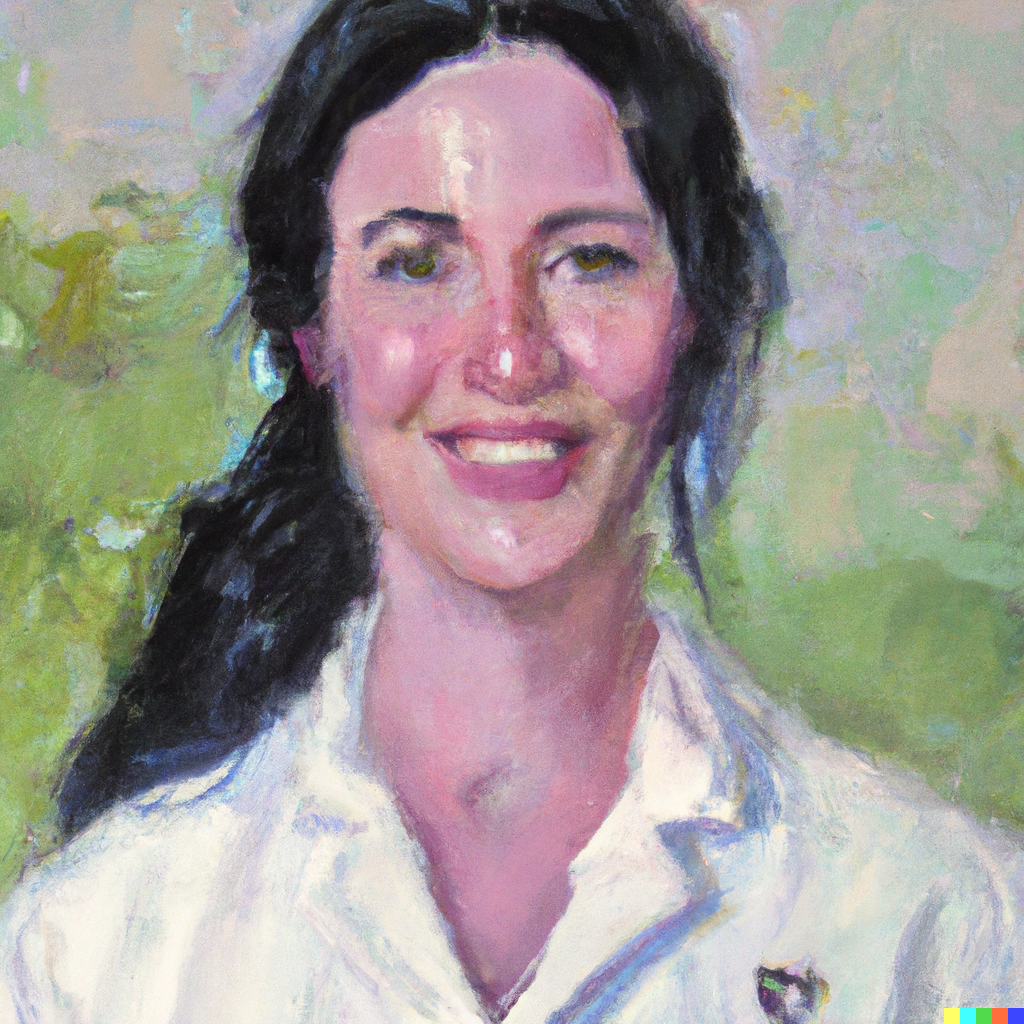
Dr. Olivia Stephens, the main character of “Ghosts in the Wind.”

Like the main character of Delaney’s Ireland, I too went to university to study history, to use my passion for storytelling, and as things came about, I’m now close to earning my doctorate in the field. Today, besides my efforts here with the blog I largely am just writing things related to my research. Alongside my dissertation I currently have one encyclopedia entry soon to be published, a book chapter and a scholarly article submitted for editing and am now writing another article related to my translation of André Thevet’s Singularitez. I still try to write the odd bits of fiction, like “Carruthers Smith’s Museum” which I released two weeks ago, or “Ghosts in the Wind” which I’m quite proud of. Yet I haven’t written anything to be acted in years. That’s striking to me, because my first big scribal efforts were for the stage and screen in my high school years. I do have an idea for a play that I might turn to someday in the next few years, yet even writing that here fills me with a sense of loss because it could well become another project that I’m excited about and have good ideas for yet don’t ever get to.

What I love most about writing for the stage and screen is that there’s a chance I’ll get to hear my words interpreted into lived experiences. Ideas that once only existed in my mind could be seen by many others played out before them and enlivened by the actors who utter those words & all the designers of sets, sound, lighting, props, effects, and music who flesh out that lived experience into something relatable and emotional in its truth. In short, to see my words brought to life in performance is to see a world created from what was once my thoughts, the smallest and most intimate of stages that I alone know.

To this end then, I am awed by the versatility of those storytellers who create these worlds in their performances. My erstwhile dissertation advisor Dr. Richard Mackenney, a man for whom I have the deepest respect and consider a friend, often talked about his own experiences on stage playing characters created by Shakespeare alongside many of the greats of the British theatre. In his lectures I saw a performance like any revival of King Lear or any of the Henrys or Richards that Shakespeare wrote. My own lecturing has taken on this same quality, yes at least in part in flattery, because I saw how he kept the rapt attention of most of the 150 or so students in the lecture hall with his art.

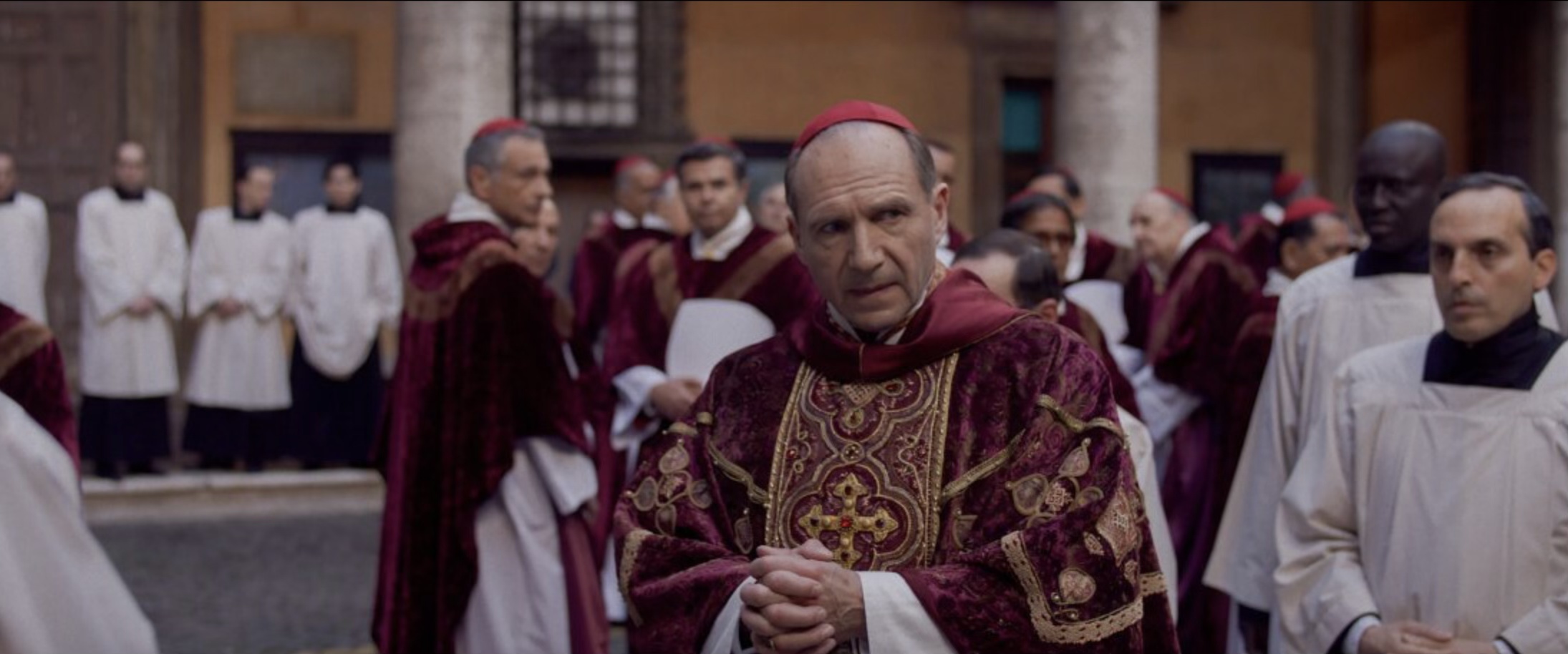
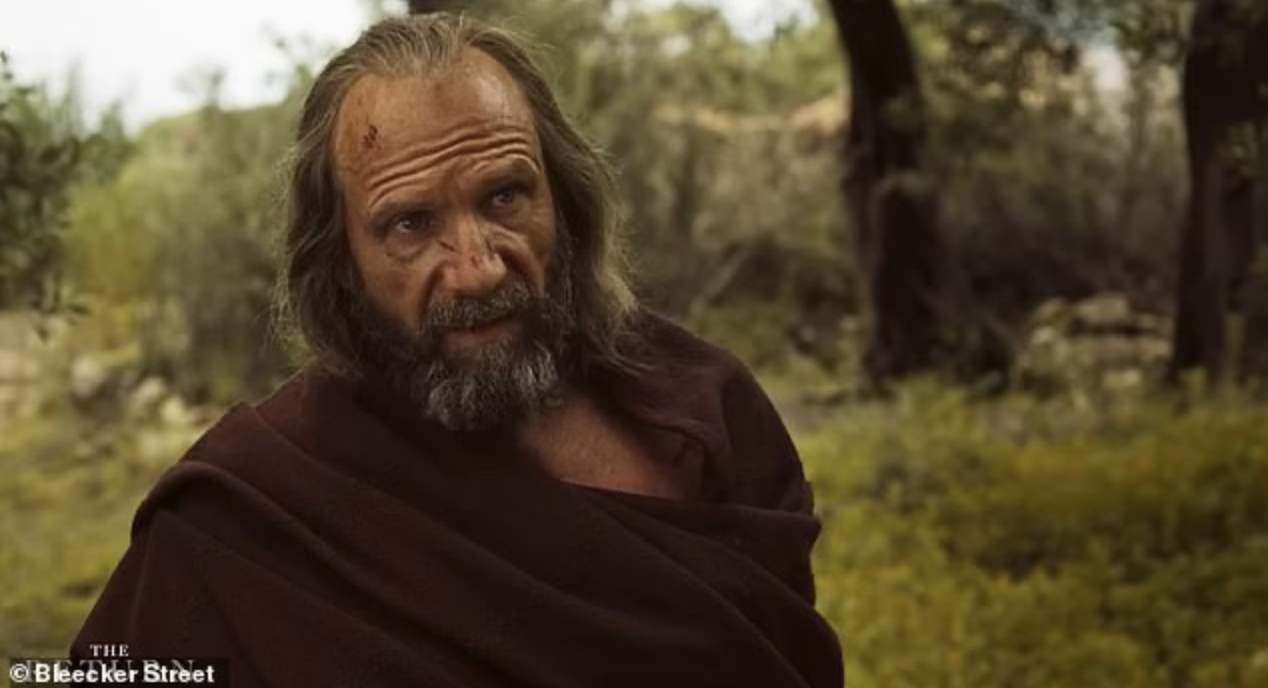
In recent weeks I had the pleasure to see the English actor Ralph Fiennes play two very different yet still akin parts in the films Conclave and The Return. In the former, Fiennes plays Cardinal Thomas Lawrence, the Dean of the College of Cardinals who is tasked with managing a papal conclave on the death of the Pope. In the latter, Fiennes returns to the screen a mere month after he appeared cassocked as an English cardinal this time dressed in rags as Odysseus returned to Ithaca after 20 years away at war against Troy. To see the same man inhabit two characters who on the surface could not be more distinct is a profound testament to the man’s mastery of his art. Both films are pieces of theatre imagined with the realism of a certain type of cinema that is more European than American, with less effects and a minimalist score that has its roots in the French New Wave. In the American context it’s reminiscent of the minimalism that we see in some of the television dramas produced recently for their streaming service by Apple.

I felt that I could instantly relate to Cardinal Lawrence in spite of his high office. The finest leaders I’ve met, whether cardinals and bishops or mayors, senators, and ambassadors are all people first and foremost. They acknowledge the trappings of their offices yet retain the everyman spirit that makes them relatable. I saw this in Cardinal Lawrence more than in many of the other characters who populate the halls of the Vatican in Conclave. That he is an English Catholic cardinal speaks to the post-Reformation moment in which we now live when the old sectarian wars of religion feel behind us and reflects on the Catholic Church in England and Wales that I know from my year living there and going to Mass in London. He speaks for a certain Anglophonic ideal that is democratic yet still upholding of tradition and custom.

Ralph Fiennes as Cardinal Thomas Lawrence and Odysseus, in performances which premiered within a month of each other.

Odysseus in contrast is a man who has seen much and endured much more than I ever hope to. His pain is written across his mostly silent face, and in this role, Fiennes says more with a tortured look than with words. That he only acknowledges his own identity verbally once in the film is telling. This is a man who fears that he won’t be the man that his family have waited for over these twenty long years that he was away. I can merely relate in that I’ve noticed time and again how my home and my city change each time that I’m away. On this most recent return of my own from Mérida on 10 November I was startled in the weeks that followed to see that the last vestiges of the long summer we had in this region at last faded away into a brief Fall before receding into the winter cold far sooner than I expected. Even more dramatic was the city I found on my return from London at the end of August in 2016. Kansas City wasn’t the same place it had been even 8 months before when I flew home for Christmas. There were plenty of stories I’d missed while I was away, one relative who’d been born and who I met for the first time at a far later date than any of her cousins in the youngest generation of my family. In that loss that comes with being far from home I can relate, yet in the pain he suffered and inflicted while he was away at war, I am thankful to lack that experience.

Yet the brilliant versatility of storytelling here expresses itself in Fiennes’s ability to say so much with so little about the war he fought and the trials he faced on his homeward voyage. Odysseus suffered for his efforts, and in his suffering, I see his humanity & feel that I can relate to him. At the end of the film, I felt that I got to know Odysseus for the man he’d become, and that in spite of the Bronze Age setting and the far looser garments, in a film whose costumes are marked by a combination of loincloth & cloak, than anything I would wear, I felt that I could see myself, my own humanity in that moment in time on the island of Ithaca in the second millennium BCE, perhaps the 12th century BCE as the polymath Eratosthenes of Cyrene (276–194 BCE) dated the fall of Troy to 1183 BCE.Where both Conclave and The Return succeed is in placing the lives of their characters in moments and settings which feel real. Odysseus’s Ithaca feels as lived in as Cardinal Lawrence’s Vatican, yet the former seems to be set in a far brighter and younger world with different morals and values than the darker and starker built world which succeeded it in the monumental edifices of the Vatican. Yet both are in my imagination places which I now have visited & seen, and both are places that I would recognize again if I ever returned to them in my memory of those films, or should I ever venture there in my own life to the Vatican or to the Ionian Islands and Peloponnese where the filmmakers created their vision of Ithaca. That stage is as lived in as any seemingly sparser platform that Shakespeare’s Muse might have evoked in Henry V; it is as alive as any other that can be imagined in our art.


Ghosts in the Wind, Part 3

Ghosts in the Wind, Part 3 Wednesday Blog by Seán Thomas Kane

Season 2 Finale: This week, the conclusion of "Ghosts in the Wind" as Dr. Olivia Stephens and her team make a groundbreaking discovery on Mars. — Click here to support the "Wednesday Blog": https://www.patreon.com/sthosdkane

Act 5

         The Peregrine spent the two hour flight out to the source abuzz with active anticipation. The crew of four knew how much was riding on the results of this journey. Olivia kept her eyes on the monitor that showed their distance from the source, worried that everything she’d staked her career on was about to go up in a great cloud of dust like the carbon traces she’d chased all the way from Earth. “Still, something’s out there,” she kept thinking, “Something’s out there.”

         “We’re approaching the source,” Anneli announced to the crew, “Prepare for landing.”

         Every urge in her body wanted to make Olivia jump from her seat and go stand behind Anneli as they landed but she knew that wasn’t safe for any of them. Instead, she stayed in her place and buckled up. This time they boarded the Peregrine in their E.V. suits and as they approached the landing coordinates they merely needed to lock and seal their helmets. All four dutifully did so after one last lecture from Lieutenant Commander Quillen about how this mission would be closely watched by every allied space agency back on Earth and so needed to be conducted in the best manner possible. Olivia looked across the way at her fellow scientists Dr. Rosalind O’Brien the chemist and sometimes geologist, and Dr. Viola Penelope, M.D., whose medical knowledge was backed up by enough biology expertise to keep all the Elysians occupying the base alive and well enough to complete their missions and return home to Earth when their time came. Both were as determined as Olivia to see this mission through, whatever the outcome, and if possible, to prove conclusively that there had once been life on Mars.

         Anneli and Jo sat at the front of the shuttle, the Finn at the helm and the American in the co-pilot’s seat monitoring the shuttle’s engines and structural integrity. The Martian weather had begun to change again, ever fickle as it was, to which end neither they nor the meteorologists in Elysium or back on Earth could determine yet. Jo earned a scolding stare from Quillen when she quipped that the forecast of “it could either be the biggest dust storm we’ve ever experienced or nothing at all,” was “just like our daily forecast in Kansas City.” Durante laughed at that, as did Viola, Jim, Anneli, and Olivia. The engineer’s shrugging can-do attitude was what Olivia appreciated most about her. Jo McGonigle knew weird things could happen at any moment that would throw a mission right off track, but she was ready for whatever nature, humanity, or technology threw at her.

         Olivia soon felt the landing gears descend and make contact with the ground below. “Elysium, this is Peregrine, we have landed at the source of the dust storm. Proceeding to disembark and collect further samples,” Anneli said into her radio.

         “Peregrine, this is Elysium, you are cleared to egress,” came the call back from base.

         “Jim’s voice” Olivia thought.

         Olivia and the team unbuckled themselves and stood from their seats, making their clumsy way to the rear of the shuttle where a ramp lowered that led them out to the surface. Olivia led the way as usual, after all she was in command of this mission. Anneli was the most qualified security officer, but she also was needed to fly the Peregrine back to base if anything happened to them. So, Olivia was the one who led them outside.

         The first thing she noticed was the haze that glowed over the sunshine, blocking some of the light that would’ve been helpful in closely analyzing anything on the surface that matched the carbon traces they were looking for. Rosalind and Viola shortly followed Olivia down the ramp, while Jo and Anneli stayed aboard, monitoring the on-board sensors and keeping things ready for launch should any of that ever-considered trouble arise. Olivia pulled out her tablet and began following the carbon sensor forward and to the left, turning to pass the shuttle until the three scientists were visible to Anneli and Jo from the forward windows. They continued walking for another 200 meters until the sensor stopped calling for forward motion. 

Olivia & Rosalind walking on the surface in Terra Cimmeria.

         Olivia took in a deep breath and looked down at the rocks below her. There wasn’t too much sand that she was slowed down by it, it wasn’t as though she were walking on a beach, the sand covering her feet. Instead, she found just enough that she began to try to move some away as she took steps about. The sensor in her tablet clearly showed the carbon was right below her. She turned to Rosalind, “Do you have the brush?”

         “Yes,” came the reply over their comms. Rosalind was carrying a bag of tools. She set it on the ground half-a-meter away from Olivia and pulled out a paleontologist’s brush, “Here it is, Olivia.”

         “Thanks,” she replied, taking the brush in her gloved left hand, and letting herself kneel down onto the ground, a challenging task in her E.V. suit, yet something she’d practiced enough times in Houston, on the Moon, and here on Mars that it wasn’t as much of a challenge as she still expected it to be. Olivia began brushing around where the carbon sensor was beeping and began to see more of the dust move.

         “Are you seeing anything?” Viola asked, leaning to get a better look.

         “Careful, you’re blocking my light,” Olivia replied. Viola stepped away and around, so she wasn’t eclipsing the Sun.

         “There’s something there,” Rosalind peered from the side opposite Viola, on her knees as well next to Olivia.

         Olivia kept brushing away as the rockface began to reveal itself further and further. At first, she thought she saw the impression of some ancient water or water ice reveal itself with a spindly impression, but that later gave way to something more defined, for there wasn’t just one spindle but several that kept growing in number. “They’re connected together!” she shouted through the comms, “Look at this! There’s some sort of a central core to it!” She seemed to have uncovered the entirety of the rock’s surface and saw what looked like something, though frankly she wasn’t sure what she was seeing yet at all. “What would you call it, Viola?” Olivia asked.

         “Well, it looks like a complex structure, um, those could be the branches or spines of a plant, or they could be the limbs of an animal coming off of its main body, like some sort of arthropod.”

The fossil

         “What do you think, Rosalind?”

         “I’ve never seen anything like it, I just don’t know what it could be.”

         “Olivia, you better get your samples and pictures as quickly as you can, that haze is a dust storm after all. This whole place is going to be flooded soon,” Jo said over the comms from the Peregrine.

         “How long do we have?” Olivia asked.

         “An hour at best before it hits us, but that’s as long as the wind doesn’t pick up any further to the east.”

         “Got it, we’ll get what we need and be out of here,” Olivia said. She turned to Rosalind and Viola, “Okay, can we get an etching of this?”

         “Not in this wind,” Rosalind replied. 

         Olivia turned to the northeast and noticed the wind was picking the dust up more than it had just a minute before. If she couldn’t get an etching to study, then she’d have to get a few pictures. She pulled out her camera and began snapping, but no sooner had she extracted the device then the dust began to get into the camera and damage its gears. She knew she should’ve left this camera back in the lab, but it was a gift from her father, a hobbyist with old analog film cameras. She thought he’d be so proud to know the first photograph of an alien lifeform was taken with his camera. She put it back in its bag and turned to Rosalind, “Give me a shovel, we’re taking this fossil with us.”

         “Understood, Doctor.” Rosalind turned back to the bag and grabbed the shovel out of it, unfolding it and letting some of the dust fall away from it as she did so. She handed the shovel to Olivia who set it on the ground next to her and began to brush away more dust to reveal any seams that might show her where this fossil finished, and the other rocks began. She just noticed a crack when Anneli’s voice sounded over the comm, “I need to start the engines if we’re going to keep them dust free enough to take off.”

         “Understood, we’ll be back on board in just a minute,” Olivia said as she began to work at that crack with the shovel. The fossil began to slowly pry away from the other rocks and Olivia removed the shovel from one side turning it towards the far side of the fossil, trying her best to force it free. It began to move, but the cracks started to creep closer to the thing encased inside of it, too close for anyone’s liking. “Go back to the first side and see if you can get underneath it,” Rosalind hurriedly suggested. Olivia obliged, returning to the first side. She was able to get the lip of the shovel underneath the rock and slowly, gently, over what seemed to everyone involved on the ground and in the Peregrine to be well over an hour yet what was merely five minutes free the fossil from the rockface.

         Olivia held the fossil up in the Martian air, gently placing her gloved hands beneath it. She turned to Viola, “place the bag around my hands.” Viola obliged with a carefully handled thick plastic bag, which was then placed into a rectangular box big enough for the fossil to fit into. “Okay, Peregrine, we’re coming back in,” Olivia said, as she held the fossil gently ahead of her, “like a pizza box” she thought, catching herself laughing.

         “What’s so funny?” Viola asked walking beside her.

         “We put the first evidence of Martian life into a glorified carry-out box,” Olivia replied. The three scientists stopped at the foot of the Peregrine‘s ramp and laughed, looking at each other. 

         Viola put her hand on Olivia’s arm and leaned in with her belly laugh before Rosalind shouted, “No, stop! You could damage it!”

         Viola stood upright, looking down at the box in Olivia’s hands, “Sorry,” she said, looking up into Rosalind’s eyes, a big smile on her face, “Let’s get this thing back to base.”

         They ascended the ramp, which quickly closed behind them. Olivia took her seat first, “Viola, could you buckle me up? I’m not putting this box down until we get back to the lab.”

         “You’ve got it,” came the reply as Viola gently moved the seat belts around Olivia’s outstretched arms and buckled her in. She returned to her seat across the shuttle and sat, buckling herself next to Rosalind who was already ready to go. “Alright, Anneli, get us out of here!”

         “Elysium, this is the Peregrine, we’re ready for launch and on our way back,” Anneli called out over the comms.

         “Get in the air now, Captain, you’re almost out of time, that wind is really picking up out there!” Jim shouted over the comms.

         Anneli engaged the vertical thrusters, and the Peregrine took flight, turning in a gentle but assertive arc and heading back towards Elysium.

         “Can we outrun the storm?” Olivia asked.

         “At our usual speed, no,” Jo said, “but I’ve got our fuel efficiency up to 105%, which should get us into the shuttle bay just in time before the storm hits Elysium.”

         The Peregrine raced ahead, far and fast, making the return trip 30 minutes quicker than usual and landing into Shuttle Bay 1 with a minute to spare before the dust hit the bay doors that closed as soon as the Peregrine was clear.

         Olivia waited for the pressurization light to turn green and she nodded to Viola whose hands went to the locks on her helmet, “No, I need to get this to the lab, just unbuckle me.” Olivia commanded, a rare order from her that Viola followed without question. Now released, Olivia ran out of the Peregrine, her crew following after her and towards the shuttle bay doors where Durante, Quillen, and Jim were waiting. “Move, move!” Olivia shouted, running straight for the doors which glided open upon sensing her presence. The command crew stood aside as she passed, still in her E.V. suit. “Follow me to the science lab!” she shouted as she turned left and headed around the circle quicker than she’d ever moved before in that suit. Some residents were in the corridor as she passed, quickly moving out of the way to let the sudden appearance of the suited astrobiologist through. She turned left at her lab’s door and ran in, setting the box down on the center table and stepping back, unlocking, and removing her helmet, gloves, and then reaching back to press the button that would unzip the rest of her suit. It fell to her feet revealing her jumpsuit as Durante, Quillen, Jim, Anneli, Jo, Viola, and Rosalind entered the room together, the Peregrine crew out of breath for their own E.V. suit run. “Lock the door behind you, Rosalind,” Olivia gave one more command, she hoped it’d be her last of the day. The lock sounded.

Olivia’s Lab

         “Okay, Doctor, what’ve you got?” Durante asked.

         “Something.”

         “Something?” Quillen asked, eyebrow raised.

         “Yeah, something,” Olivia said, taking the lid from the box and pulling the bag out of it, placing it gently on the desk. “I’m just not sure what that something is yet.”

         Durante looked down at the fossil that lay on the desk, the soft light glowing from underneath the opaque surface gave the fossil a sort of sanitized feel, like something brought in from out in the open for the first time. “Do you have pictures of it where you found it?” he asked.

         “Yes, I need to get them developed, but I got a few,” Olivia replied.

         “Developed?” Jim asked.

         “Yeah, I decided to take my Dad’s old camera out there with me, take some film pictures of it.”

         “Did you use flash?” Jo asked.

         “Of course not, that would’ve damaged the fossil.”

         “So, it’s a fossil, then?” Quillen puzzled over it, a look of genuine curiosity crossing her face.

         “It seems to be one. I need to do more work on it. Can we talk about this with command in the morning?” Olivia asked, “There will be silence from this lab to everyone from here until I’ve got your go-ahead.”

         “You do your research, figure out what this is in two hours. I want an answer by 14:00. You got back fast enough we might be able to send something back to Earth about this once the storm passes,” Durante said, “Good luck!” he turned, taking one last look at the fossil, and heading out the door. 

         Quillen followed, but Jim held back for another moment staring down at the fossil before him. “You did it, Olivia, you found the proof!” he looked up at her, eyes watery, a glowing smile on his face.

         “Thanks, Jim,” she was still shocked at the moment she found herself in and so couldn’t say more. He turned and left, letting the door close behind him.

         Silence filled the room as Anneli, Jo, Rosalind, and Viola walked up to the table from each side and looked down at it. “Things were moving so fast down there on the surface it feels like we haven’t been introduced yet,” Viola said.

         “Well, before it really introduces itself, we need to figure out what it is,” Rosalind replied.

         “Any initial thoughts?” Olivia asked.

         “Well, let’s get a digital photo of it and put that into a search engine, see what comes up,” Jo suggested.

         Olivia turned to her fallen E.V. suit and pulled the tablet out of its pocket, aiming it above the fossil and snapping a photo of the rock below. “Running a search on the image now,” she announced. Several suggestions came up, but one seemed closest to this in the fossil record, “has anyone ever heard of Hallucigenia?” she asked.

         “That’s a sort of worm from the Cambrian Period, right?”

         “The what?” Jo asked.

         “The Cambrian Period was the first period of the current eon in Earth’s geologic history. I think it started around 530 million years ago and ended 485 million years ago,” Olivia replied.

         “Close, it started 538 million years ago,” Rosalind corrected.

         “Thanks,” Olivia nodded to her colleague.

         “So, you’re saying this fossil resembles that Hallucigenia that existed on Earth over 400 million years ago?” Viola asked.

         “Yes, though I doubt it’s necessarily related, after all life on Earth had 4 billion years to evolve after planetary formation. Life on Mars would’ve already been well and truly extinct by then. The Martian Noachian Period corresponds to Earth’s Hadean and Archean Eons, which ended 1.9 billion years before the Cambrian Period began,” Rosalind explained.

         “So, not only is this the first alien life ever discovered,” Olivia began, “it’s also the oldest lifeform ever discovered.”

         “What have we done?” Viola asked.

         “We’ve changed how we understand the very nature of life itself,” Anneli said, looking down at the fossil, “there are so many things we don’t know that could still be out there.”

         “We need to go back out there, to search further, see what more we can find!” Olivia shot back, the excitement was all-consuming. She hurried over to her E.V. suit on the floor and took the camera case from its belt, pulling out her father’s old film camera from within and raising it to her eye, opening the shutter and snapping a photograph of the fossil.

         Jo looked up at Olivia who stood there staring at the fossil, camera absent mindedly being fiddled with in her hands, “You got it, the photo. That could be the one on the front page of every newspaper, every television station, every news site on Earth.”

         “I, I don’t know what to say, what to do,” Olivia stammered, she felt her confidence drain away, “could it really be possible? Is this really an alien?” She looked down at her feet, “what do we need to do to confirm that this fossil is real, Dr. O’Brien?”

         “If we can date the carbon molecules then that’ll be a start, but radiocarbon dating has rarely been used on fossils that predate the end of the Cretaceous 66 million years ago, so I don’t know if it’d work.”

         “What else?” Olivia asked sharply. When no answer came, she added, “We need options to prove that this is a genuine Martian fossil.”

         Rosalind spoke up again, “Well, Martian geology is dated using impact crater density, so what we can say for sure is the area where we found this fossil, Terra Cimmeria, has more impact craters than other areas. There’ve been geological charts of Mars that show that area’s rocks are definitely Noachian in origin for almost eighty years now, so we have proof that the rocks in that area date to the Noachian.”

         “I think we need to go back out there and find another fossil to confirm this theory.”

         “That dust storm will have covered the entire source area in meters of debris by the time it’s safe to go back out there,” Viola sighed.

         “Then we need to try radiometric dating, though we don’t have that equipment here at Elysium,” Rosalind offered with some reluctance.

         “So, in order to prove it we need to contact people on the outside, but in order to get clearance to contact people on the outside we need definitive proof first,” Olivia said, tapping her left index finger to her lips, her thumb and middle fingers resting on her chin as she paced about the lab. “Rosalind, what can you do in your own lab here at Elysium?”

         “I can try radiocarbon dating a small piece of the rock around the fossil, though I don’t know what we’ll find. Most carbon is hard to date after the lifeform has been deceased for around 60,000 years.”

         “Do it, go get your tools and collect your sample. We need something more to show to command at 14:00.”

         “I’ll go get that drill now,” Rosalind replied, turning, and running out the lab door. Her own lab was two doors down still in the Science Section, but she nevertheless felt a strong sense of urgency, after all everyone’s careers hung on this discovery. Collecting a dental drill that she used on rocks she returned to the fossil and began working, taking a small sliver of the rock edge off, and letting it fall into a vial that Olivia had provided. The extraction done she turned back to the corridor and returned to her lab, extracting the sample with a pair of tweezers, and putting it onto a petri dish, into which she released several drops of a liquid scintillator which combined with the carbon to convert it to benzene, drawing out the carbon-14 from the sample which she could then attempt to date.

         After an hour Rosalind returned to Olivia’s lab. Jo was looking at some of Olivia’s equipment, no doubt trying to increase its efficiency and range, while Anneli sat by the door, unsure of how she, their pilot, could help. Rosalind and Olivia were sitting at her desk analyzing pictures and negatives they’d taken of the fossil intently. Rosalind announced her presence by clearing her throat, then saying “I’m sorry, the carbon is too old to date using radiocarbon dating.”

         Olivia turned from the monitor and looked at the fossil from across the room, the weariness of the whole experience showed on her face. “Okay, if that’s what we have to do then let’s go to Command and tell them.” She rose and walked over to the door. “Rosalind, Viola, could you come with me?” The scientists obliged, Viola joined Olivia and Rosalind at the door. Olivia turned to Anneli and Jo, “The rest of you, please stay here with the fossil. Let no one but us into this room, understood?”

         “Understood,” Anneli said, finding a purpose for her at this stage in the mission. She would guard the fossil, the only known evidence of life from another planet from the rest of Elysium Base until Olivia returned with a decision about its next steps.

         Olivia walked with Rosalind and Viola into the Command Console and approached Quillen, “We have results we need to share with Commander Durante.”

         “You’re thirty minutes early,” Quillen replied, looking Olivia in the eye. The two women were the same height and shared a common determination to see their missions through.

         “It’s urgent, Commander,” Olivia said with all the strength her tired voice could muster.

         Quillen turned, waving them forward, “This way.” She led the trio into Durante’s office where he sat reading something on his monitor that made him frown.

         Durante looked up, leaning forward in anticipation, “Dr. Stephens, what have you found?”

         “Commander, the fossil is too old to be accurately dated with the equipment that Dr. O’Brien has here at Elysium, but based on the geological dating of the surrounding area where it was found in Terra Cimmeria, we argue that it is in fact a Noachian fossil and is at least 3.7 billion years old.”

         “That’s something at least then,” Durante replied, leaning back in his seat. “Dr. O’Brien, your radiocarbon dating didn’t work?”

         “No, sir. Radiocarbon dating is less accurate if a sample is more than 60,000 years old. The time scale is off the charts, this fossil is too old to be dated using that method. However, radiometric dating will be more accurate, and is far more likely to confirm the age of the fossil. If it is Noachian then it could be contemporaneous with the earliest known life yet found on Earth, which dates to the Archean Eon, but those are microorganisms that are dwarfed by the complexity of this fossil.”

         “So, Martian life was more evolved than Earth life?” Quillen asked.

         “Is that genuine curiosity I’m hearing, Quillen?” Durante asked, looking up at where she stood to his right.

         “Skeptical curiosity. Martian geological chronology isn’t as defined as Earth’s. We still just don’t know enough about how old the rocks on this planet are, thanks to this same problem that O’Brien is bringing up.”

         “Then what do you want to do about this fossil, Dr. Stephens?”

         “Sir, we need to take it back to Earth to have it radiometrically dated. It can stay in an allied government lab under tight security. We don’t have to announce why one of my team is going home early, whoever it is will have a sudden need to return––”

         “They’re too ill to remain on Mars, perhaps?” Viola suggested.

         “Yes, and they need to return for better medical care. The work on the fossil will take whoever goes back out of the public eye for long enough to recover before the news breaks back home.”

         “Finally, you’re thinking less like a scientist and more like a strategist, Stephens,” Durante said, leaning further back in his chair and putting his hands behind his head. “Alright, it’s your fossil, so you’re the one going home. The Australians are going back in four months. I’ll alert Jack Collins, their mission commander, that you’re coming along for the ride.”

         “Jo will be on that flight too,” Olivia said, smiling at the thought of getting a ride home with her friend from Opportunity III.

         “Jo?” Durante asked, “Oh, yes McGonigle, the JPL Engineer. Yeah, that works out pretty nicely, doesn’t it.”

         “It’s settled then,” Quillen said, “I’ll adjust your mission parameters and put you on the Endeavour heading home.”

         “Thank you, Commander. This discovery means the world to me,” Olivia smiled meekly, her energy restored however slightly by the commander’s decision to let her return to Earth with the fossil.

         “Go to your team, Doctor,” Durante said gently, “And give them a well-earned rest. In the meantime, we need to keep that fossil in your lab with limited access. I’ll have McGonigle install added security measures so only your team will have badge access to the lab. No one goes in or out without your approval, and that includes command staff.”

         “Thank you, sir,” Olivia replied, nodding, and turning to walk out of the Command Console. Jim was standing at his station, waiting expectantly to hear what she had to say. She turned to him as she walked past and whispered, “I’m taking it home.”

~

         That evening in their quarters Olivia lay back in her bunk while Viola, Rosalind, and Jo chatted away about everything they’d discovered. By this point word of the fossil had spread throughout the base, no secret was safe in a place so small as Elysium anyway, that Commander Durante had to make an announcement over the P.A. system to everyone there that Olivia’s lab would only be accessible to her team, and everyone else was to stay clear of it. He posted several security officers in four shifts outside her lab, day & night. She’d get used to the idea of having a guard standing outside. Still, she found herself drifting off to sleep, the stress and weariness of it all had worn her down more than usual. It really had been a long day. Yet one thing that Viola said from across the way in her bunk caught her attention just enough for her to open her eyes and listen, “Olivia’s going to be famous though, I mean we all are, but she’s the one who came all this way to look for it, who tracked it down, and who found it. The first alien life we’ve ever known! When she announces the results, she’ll be on TV, in books, the whole nine yards!”

         “Maybe,” Olivia said, pulling back her bunk’s curtain just enough to see Viola’s face, “But at the end of the day I’m still just a scientist. I don’t care for the fame, hell, I don’t even think I want it. I came here to prove a theory, and so far, it’s still just a theory. Who knows whether we’ll be able to radiometrically date it. No one’s ever tried that on a Martian rock before.”

         “It’s still a new frontier, Olivia. Something to be proud of.”

         Olivia thought of her brother’s kids, going to school telling their friends that their aunt the astronaut had actually found an alien on Mars. Well, a dead alien, but an alien, nonetheless. She smiled, closed her eyes, and drifted off to a much earned sleep. The rocky ground of Terra Cimmeria filled her imagination, and she saw it begin to turn back in time, to fill with liquid water, until she herself was submerged beneath the waves. Then there before her the fossil broke free of the rock into which its remains had been encased billions of years before and began to swim about in the waters of this its prehistoric ocean home. She had found it, had traced a ghost on the wind and found its grave on this rocky planet six months from home.

Dr. Olivia Stephens, Ph.D., discoverer of the first Martian life.

Ghosts in the Wind, Part 2

Ghosts in the Wind, Part 2 Wednesday Blog by Seán Thomas Kane

This week, the story continues as Dr. Olivia Stephens settles down on Mars with her colleagues at Elysium Base, making new friends and continuing her search for evidence of past Martian life. — Click here to support the Wednesday Blog: https://www.patreon.com/sthosdkane

All images included in this story were produced using DALL-E 2, an Open AI service.

Act 3

            “Hi Mom, Dad, Seb, I’m on Mars!” Olivia said to the camera in her new office in the science lab of Elysium Base. She had set herself up with a base computer as soon as she cleared the initial arrival medical scans and began recording a message home. By now the half an hour communication lag had passed and surely her parents as well as everyone else on Earth would’ve had the chance to see the images of their landing and to hear her own celebratory cry over the comms. Olivia blushed thinking about it, “Neil Armstrong had his ‘It’s one small step for man, one giant leap for mankind’ when he first set foot on the Moon almost 90 years ago, and now Dr. Olivia Stephens, Canada’s leading astrobiologist greets Mars with a chipper ‘I made it!'”

            Olivia looked at the monitor and imagined her parents receiving the message, their faces glowing with joy. “Mars is quite a different place,” she continued, turning to look out the window of the science lab. The vista was filled with a clear sky and red soil as far as the eye could see. In the distance Elysium Mons rose majestically over the plains surrounding it. “You should see the big mountain here,” Olivia said to the monitor, “Elysium Mons is bigger than anything we’ve got on Earth by a long shot. There are something things about being out here that you just can’t believe until you’ve arrived, and seeing a 12,600 meter tall volcano is one of them. Imagine it on Earth, it would dwarf Mount Everest, and yet it’s just outside my office!”

            The monitor chimed at her, her personal calendar reminding her of an appointment she had with the base commander. “I need to go,” she said, looking hurriedly at the screen, “I love you all so much! And I can’t wait to see you here on the screen soon. Bye!” she ended the recording and sent it out, beginning its half-hour journey through Space back to Earth, where it would be picked up and forwarded onto her parents in Toronto. She looked at the digital clock on her desk, it was just after noon there at Elysium Base and just after 13:30 back in Toronto. She hoped she wouldn’t confuse her own local EPT for Elysium Planitia Time with her native EST for Eastern Standard Time for however long she ended up staying there on Mars.

            She was due in the command center for an arrival briefing, scheduled to start then at exactly noon local time, meaning she was late for her first assignment on Mars. “Great!” she thought, moving away from her desk and rushing to the lab door. Elysium Base was one of a newer generation of Martian bases that had such refinements as automatic sliding doors, like the ones all of its residents had known from science fiction, so it was a tad disconcerting for Olivia at first getting used to not having to open the door she was passing through, yet so far she hadn’t run into a less cooperative one. The corridor beyond the lab was angled slightly, connecting the disparate labs, offices, mess halls, and quarters throughout the modular base. Each piece of Elysium Base had been brought separately from Earth, and while most of it was 3-D printed there on site, several pieces retained older building styles that saw their components brought piece by piece from Earth and reassembled here on Mars. She figured that command wouldn’t be too difficult to find, after all it was in the center of Elysium, an octagonal structure that had been the first to appear on the Martian surface twenty years before. Still, she knew she had to walk a ways around the exterior ring corridor before she’d reach a tube that would take her in towards command.

            Each module she passed had its own particular function. Beyond her own astrobiology lab were laboratories devoted to geology, climatology, chemistry, and stellar cartography. The science section was then on the outside of Elysium, along the northeastern quadrant of the base with imposing vistas of Elysium Mons out their windows. The location of Elysium Base was chosen in the late 2020s and early 2030s because it had been the landing site of the earlier InSight Rover that arrived on Mars on 26 November 2018 and thus NASA knew what to expect of the local geography and environment. Walking along the interior tube made of metal with glass windows she could see the other portions of the base proceed closer and closer together until they all converged on the panopticon that was the Command Console. At her arrival there were forty people living and working at Elysium Base, each from a four-person crew that had launched from Earth at some point in the last five years. With the arrival of Olivia’s Opportunity III the European crew of Metis Vwould be returning home. Olivia had read through the schedule of her first day on planet, this briefing would serve as the base commander’s welcome to Jim, Anneli, Jo, and her, and that evening’s dinner would mark the farewell of the Metis V crew, commanded by Isabella de Orellana, the Spanish astronaut who made history by being one of the first to take a crew in a Mars buggy around Elysium Mons and into Utopia Planitia looking for a way to easily mine into the surface to reach that region’s underground ice. Reaching the command module’s doors she stopped herself from striding through as she had every other doorway, this being the command module after all. Instead, she pressed the button next to the door that sounded a chime.

            “Somebody’s ringing the bell,” she could hear an incredulous voice say from behind the door. It opened and an officer from the command staff stood there with an eyebrow raised at the situation. “Can I help you?”

            “I’m Dr. Stephens, here for the command briefing,” Olivia said somewhat sheepishly, realizing she didn’t need to ask permission to enter.

            “You’re the new scientist from Opportunity III, right?”

            “Yes.”

            “This way,” the officer turned and began walking back into the central operations ring, a series of stations surrounding a central table that had a digital map of Mars on it. Olivia caught the snickering glances of the command crew surrounding her, at their stations, all bemused at the idea that she thought she needed to ask permission to enter, something no one with scheduled permission ever did. “Your crew is meeting with Commander Durante in his office,” the officer gestured towards the glass-walled room on the far side of the command console, slightly elevated from the rest of the module. “You might want to chime here though,” she laughed, watching as Olivia cautiously approached the commander’s office where she could see Jim, Anneli, and Jo sitting with a gray haired man behind a desk. The commander looked up, caught Olivia’s eye, and gestured for her to enter.

            “You must be Dr. Olivia Stephens!” he burst with joy, standing to greet her as she entered through the sliding doors, “Welcome to Elysium Base. Please, take a seat, we were just getting to know each other a little better.”

Commander Nick Durante

            “Olivia,” Jim said, looking towards the new arrival as she took her seat next to Jo, “let me introduce Nick Durante of NASA, the current Commander of Elysium Base.”

            “It’s a pleasure to meet you,” Olivia said, nodding as she sat, smiling with relief at the warm welcome.

            “I heard about your work on microbes in water ice, promising stuff,” Commander Durante said taking his seat again while turned toward Olivia.

            “My colleagues back on Earth think they might have a breakthrough in that area soon.”

            “So now you’re moving from water ice to dust, you really think there might be something out there?” he asked, his hands raised, fingers forming a triangle. His index fingers rose to meet his upper lip.

            “I’m not sure what I’ll find if anything, Commander, but I guarantee you I won’t give up until I’ve exhausted all of my options.”

            “Well, you’ve got three years here to try every trick you can think of.” Durante turned from Olivia to Jim who sat furthest to the left, “Jim, you’ll be taking over for me next year once my mission is over, I’m not sure what I think about a Space Force man taking over from a sailor like me, but I want to have you here in the command console learning the ropes of running this base. Captain Korhonen will shadow my security chief, Lieutenant Barras, until his tour out here is up in a year.”

            “Understood,” Anneli replied.

            “I think I can do this job,” Jim looked around Durante’s office, “about as well as any Navy man can.”

            Durante laughed, “Yeah. Now, as for our engineer, Ms. McGonigle, your mission is likely going to be shorter than anyone else’s from Opportunity III. You’re here to repair the Odyssey Rover, get it back up and running, perhaps even improve its efficiency, and that’s it. Any suggestions you have for the improvement of this base would also be welcome, just say the word. You’re the first rover engineer we’ve had up here, which is honestly surprising.”

Colonel Jim King

            “I’m honored, Commander, to be here and ready to work,” Jo said, beaming with excitement.

            “Have you worked in a spacesuit before?” Durante asked.

            “I ran some drills back at JPL and at Johnson when we did our orientation,” Jo replied. Olivia remembered that orientation, Jo did a fair job maneuvering in her bulky spacesuit, though she still found it difficult to lay down on her back and crawl under the rover safely without someone standing there to help her down, let alone get back up again afterwards. “But it’ll be different here with the Martian gravity,” she continued confidently, “so I want to run a few more drills before I get to work to make sure I can fix the rover with minimal assistance.”

            “Good on you,” Durante smiled, “but remember no one goes beyond the base’s walls alone. We don’t need any one person going missing out there without any trace of where they’ve gone. Their footprints could well disappear with that wind, as Dr. Stephens here knows all too well, so even if you alone fix Odyssey, you’ll have another engineer there with you to help.”

            “Okay,” Jo replied feeling somewhat bruised, “but I need to review the person who’s going out with me, see if they can do the job.”

            “You have a week to review the other engineers’ records, but you’re going out there next Friday,” Durante looked at his monitor, “the 28th.”

            “Understood,” Jo affirmed, “I’ll be ready.”

            “Alright, well, you have your missions to complete. Good luck, and please don’t hesitate to call if you need to. I’ll probably see you in the mess,” Durante ended the briefing, rising from his chair with the four sitting on the opposite side of his desk. They turned and filed out the sliding doors and into the command console’s central room again.

            “Colonel King,” the officer who led Olivia into command approached the four, “I’m Lieutenant Commander Quillen, Commander Durante’s executive officer, if you’ll follow me, I’ll take you to your station. Same goes for you, Captain Korhonen.”

Lieutenant Commander Quillen

            The two followed Quillen as she led them around the command console. Olivia noticed Anneli stopping at a station occupied by a dark-haired man wearing French and European flags on his shoulder, Lieutenant Barras, before Jim found his place at Quillen’s station at the center table overseeing the operations of the entire base.

            “I think that just leaves us,” Jo said meekly, standing beside Olivia outside Durante’s office door. “Have you been to your quarters yet?”

            “No, I went straight to my lab to send a message home.”

            “Come on, I’ll show you where we’re sleeping,” Jo said, leading Olivia out a door adjacent to the one she entered through. They left command and walked down a corridor that extended at a 45 degree angle out from the one that led to the science section. “Crew quarters are located along the northern perimeter of the base. They’ve got us as neighbors. I think your bunk is below mine.”

            “Sounds good,” Olivia replied, “I was worried I’d have to get to know an entirely new neighbor after six months.”

            Jo laughed, “It’s interesting being here now. With all the changes coming to the Mars programs and Elysium Base I hear they’re considering offering crew quarters that are proper rooms, not just bunks along the corridor.”

            Olivia knew about the bunks; it’d be like her time on the Moon. If there was anything she really missed while she was up there it was the privacy of her own room. She had that here, but in her lab rather than in her bunk, but at least she had a place where she could get away from everyone else. “So, with Jim & Anneli staying behind does this mean that Opportunity III‘s mission is over? After all, it got us here.”

            Jo looked into Olivia’s eyes, “I guess so. We can still wear our Opportunity III patches on the station, but I’m going back with the Australians in six months, so I suppose we’re just Elysians now.”

            “Elysians, what a fine field we’re in here. Do you think Achilles would approve?”

            “I mean, what better place for a great warrior than on Mars?” Jo offered.

            “It’s no garden of paradise, that’s for sure.”

            They left the arterial corridor and entered the perimeter corridor, turning right and finding a series of bunks built into the walls of the passage, two levels on each side. The names of the occupants could be found by each bunk. “They were ready for us when we got here,” Jo said, leading Olivia two-thirds of the way down the corridor to a set of bunks that seemed less lived in than the others. “Here we are!”

            Olivia looked at the bottom bunk and saw her name, “Olivia Stephens, Ph.D., C.S.A.” written on a sign next to it. Above it was Jo’s bunk, labeled “Josephine McGonigle, M.S., J.P.L.” She looked across the corridor for their neighbors and saw two unfamiliar names “Viola Penelope, M.D., N.A.S.A” in the top bunk and “Rosalind O’Brien, Ph.D., E.S.A.” in the lower bunk. Out of the top a voice suddenly called out, “Jo McGonigle, is that you?!”

            Jo and Olivia turned to see a rosy face beaming with joy poking out from the drawn curtains of the bunk. “Viola!”

            Viola rose from her bunk still in her pajamas and the two friends hugged.

            “Viola, this is my friend Dr. Olivia Stephens from Toronto, we arrived together this morning on the Opportunity.”

            “Dr. Stephens, I’ve heard so much about you,” Viola said, offering her new friend a hug.

            “Please, call me Olivia,” was the surprised reply, “um, how do you two know each other?”

Dr. Viola Penelope, M.D.

            Jo laughed, “We went to high school together back in Kansas City. I left home for engineering and Viola stayed home and went to med school.

            “What kind of medicine do you practice?” Olivia asked.

            “Back home I’m a family physician, but up here I’m the local doctor for every cut, scrape, or depressurization that I get called upon for.”

            “Good for you, that’s quite the task,” Olivia was impressed at Viola’s duties.

            “Thanks, what an opportunity though, to spend a few years out here on Mars!” Viola segued, “I hear you’re out here looking at that dust storm. Something about broken down fossilized carbon fragments?”

            “That’s the theory, if I follow the dust storm back to its source, I’ll be able to find where the carbon came from and possibly then evidence of what it came from too.”

            “Or who,” Viola added, letting the awkward silence spread between the three of them standing there in the corridor.

            “I can’t guarantee anything,” Olivia replied cautiously. She didn’t want to get her hopes up, let alone anyone else’s hopes up either.

            “Well, I’m excited no matter what you and your team find,” Viola replied, turning to look back at her bunk. “I’m needed in sickbay in 30 minutes, thought I’d get a nap in after lunch. It’s good to see you again Jo, I want to hear everything you have about home. Good to meet you, Olivia, let’s talk some more!” Viola turned, drew a pair of boots out of the shelf that pulled out from beneath her bunk, pulled them up over her feet and made her way along the corridor away from where Olivia & Jo had come toward sickbay.

            “She’s nice,” Olivia said, smiling at Jo.

            “One of my best friends back home,” Jo replied, “I love what I do but it’s people like Viola who I miss the most moving away to California.”

            “Well, you’ve got six months to catch up with her.”

            Jo pushed herself up into her bunk, its sterile features needed a bit of work to feel like home to her, which meant logging into the bunk’s monitor and pulling up Odyssey‘s designs. “She never stops working” Olivia thought, though that reminded her she needed to meet the rest of the science team.

            “Thanks for showing me here, Jo,” Olivia began, “I should be getting back to my lab. I need to brief the science team on our mission.”

            Jo waived from her bunk, “see you in the mess for dinner later, 18:00!”

            Olivia turned and started down the curved corridor past the arterial tube that she’d taken to the bunks from command and towards the science section once again. Like Jo she was there to do a job, and while she didn’t want to get anyone’s hopes up, she was sure she’d find something out there amid all that dust.

~

Act 4

            “So, you want to take a shuttle,” Quillen repeated back what Olivia had requested.

            “Yes, it’ll be the easiest and safest way to follow the dust trail back to its source. It’s all the way out in Terra Cimmeria over 1,000 km away.”

            “The shuttles are for security and medical uses only, your science team will need to follow it on land with a buggy,” Quillen’s air of authority sounded the end of discussion.

            “Who do you want on this team again?” Durante asked.

            “Dr. Penelope, Captain Korhonen, and Jo McGonigle.”

            “A proper Ride of the Valkyries,” Jim used the same joke he’d made countless times on board the Opportunity.

            “Why those three?” Quillen asked, clearly bemused at Olivia’s entire mission.

            “Dr. Penelope is familiar with the DNA sequences of carbon-based life. I want her to test any samples we collect with her tablet. Captain Korhonen will be able to protect us should we encounter any trouble, and McGonigle is the best engineer we have here. Her mission is done, the Odyssey rover is not only back up and running but is operating at 150% of its efficiency standards set when it left Earth. She’ll be helpful in this buggy if we need to improvise a way to get back.”

            “Good, you can have all three, if they agree to come along. Dr. Reed will take over for Dr. Penelope in her absence.”

            “Thank you, Commander.”

            “Get your team back in one piece, and if you have to camp out there overnight be sure to radio back where you are and how far you think you are from the source of that dust storm.”

            “Understood, sir.”

            “Good, then go get your team ready.”

            Olivia left Durante’s office with a spring in her step. Instead of making her usual b-line out of the command console towards the science section she went around the bend to where Anneli stood at her station, “Captain, could I have a moment? she asked.

            “What do you need, Doctor?”

            “I’m looking for a security officer to come with me on my wild dust chase. Care to come along?”

            Anneli smiled, and leaning in muttered, “Sounds more fun that standing around this console all day.”

            “Glad to hear it. Meet me in my lab at 19:00 tonight.”

            Olivia left command through the tube that led to the bunks, walking past all the rows as she’d done for the last month to where Jo and Viola sat together on their opposite bunks, Viola’s legs dangling down so that her heels rested against the top of Dr. O’Brien’s bunk while Jo sat cross-legged.

            “So?!” Viola asked, “are we going?”

            “Yes, and Anneli is coming along.”

            “In a shuttle?” Jo asked, nigh begging.

            “No, in a buggy, Lieutenant Commander Quillen wouldn’t part with one of the shuttles for scientific purposes.

            “Even when those scientific purposes could be the discovery of past life on Mars!”

            “Even then. They’re for medical and security purposes only.”

            “Hang on a minute,” Viola said. She went to her monitor and called Durante.

            The Commander’s face soon appeared in the screen. “How can I help you, Doctor?”

            “Nick, are you serious about us not using a shuttle?”

            “That’s Lieutenant Commander Quillen’s decision.”

            “And not only does Lieutenant Commander Quillen report to you but I say this is a good medical use of a shuttle.”

            “Explain.”

            “It’s preventative medicine. Should one of us be injured or worse out there, we’ll have our pressurized shuttle to retreat to, and it’ll be far quicker for us to return to the base in any case.”

            “Good point, Doctor. Alright, tell Dr. Stephens that you can have your shuttle. Take the Peregrine. You leave at 07:00 tomorrow.”

            “Thanks, Nick. I owe you one.”

            “And don’t you forget it!” he winked, ending the communication.

            Viola turned from the monitor in Olivia’s science lab towards her colleagues, “Alright, let’s go see what’s out there.”

            “Lead the way, Viola, you know this place better than I do,” Olivia replied, making her way to the door which slid open to let the four out into the corridor and onto their expedition.

            They walked in the opposite direction from the bunks, toward the southern side of Elysium’s rounded outer corridors where the shuttle bays had been built. Pieces of Elysium had been constructed with 3-D printers, a more efficient method of construction that had been theorized as possible decades before but only really proven practical on Mars. After passing 115 degrees around the outer ring, they arrived at Shuttle Bay 1 where the Peregrine sat waiting. It had been on standby, one of the regulations of the Elysium Treaty that governed the operations of the base stipulated that at least one shuttlecraft needed to be ready to launch at any moment in case of accident or emergency.

The Peregrine

            “Can I help you?” the officer in charge of the shuttle bay asked, approaching the crew as they entered through the sliding doors.

            “We’re here to take the Peregrine out on a mission, per Commander Durante’s orders,” Viola announced.

            “There are no launches scheduled,” the officer said, looking at his tablet to confirm.

            “The commander just issued the orders a few minutes ago, perhaps you should check with him,” Anneli added, encouragingly yet forcefully.

            The officer turned back to his monitor and called the Command Console. He stood there waiting for a few moments before Commander Durante’s face appeared on the screen.

            “How can I help you, Lieutenant Zollmann?” the Commander asked.

            “I have Captain Korhonen, Drs. Penelope & Stephens, and Ms. McGonigle here saying they have orders to take the Peregrine out on a mission. There’s nothing on the schedule, sir.”

            “That’s right, Lieutenant, I just added it to the schedule. Last minute change of mission plan. Is the Peregrineready for launch?”

            “Yes, sir. It’s on standby now.”

            “Good, then tell the crew that they are cleared to board and launch,” Durante commanded.

            “Understood, sir,” Zollmann said as the transmission ended. He turned to the crew waiting expectantly, “Well, it seems you are cleared for launch. Have a safe flight.”

            “Thank you, Lieutenant,” Olivia said, as Anneli led Jo and Viola onboard. Olivia followed, taking one last look around the shuttle bay.

            “Find your seats and strap in, this could be a bumpy ride,” Anneli said, taking the helm.

            Olivia saw Jo and Viola were already seated and buckled, ready to go in the parallel seats that ran along the sides of the Peregrine facing each other. Olivia took a seat next to Jo facing Viola. “All ready to go whenever you are, Anneli,” she shouted up to the helm.

            “Understood,” came the reply before Anneli activated the radio, “Shuttle Bay 1, this is the Peregrine, we are ready for launch.”

            “Opening the bay doors,” came Zollmann’s voice over the radio.

            A claxon sounded in the shuttle bay as it depressurized with the opening of the overhead shuttle bay doors. This was one of the first such shuttle bays built for vertical take-off and landing, and likely the way things would go in the future.

            Anneli slowly began to lift the Peregrine off the bay floor and let it rise out into the Martian air where the wind sounded on the bulkheads surrounding the crew. She then engaged the forward engines and set off, looping around Elysium Base once to head in a southwesterly direction while Olivia checked her own data which was providing coordinate information to the helm directly for navigation controls.

            They flew further from Elysium than they could have gone in a day by buggy, following the ghostly trail of a dust storm that blew across Elysium Planitia a full Earth year ago. After two hours of flight Olivia noticed changes in the chemical signatures the Peregrine’s sensors were reading. “I think we found it,” she said, waking up Viola who had dozed off and rousing Jo from her own study of the shuttle’s schematics. “Carbon traces in the rocks ahead. 550 km further to the south. Do you see that on your readings, Anneli?”

            The Finn looked down at the monitor built into the helm controls, “I see it, Doctor. That looks promising, I’ll begin descent now, we can get a closer look.”

            Olivia felt the shuttle begin to turn its nose downward, toward the red hue of the Martian surface again. Flying over it at 5,000 feet, just high enough to get a good view of the surface yet low enough to be able to track the chemical traces with her sensors, Olivia was reminded of her childhood flights in her cousin’s propeller plane over the Golden Horseshoe and as far north as Lake Simcoe. There, unlike the higher altitudes flown by commercial jets, there was far more influence from the weather to be felt.

            “How close can you land to the traces?” Olivia asked.

            “I can get us right on top of them, if you’d like,” Anneli said, aligning the craft downward as she spoke.

            “100 meters will do nicely,” Olivia said, “Once we land, everyone needs to suit up, E.V. suits out there, got it?”

            “Understood,” Viola replied.

            “Can do,” was Jo’s answer.

            “Yes,” said Anneli.

            “Good. Anneli, what’s our ETA?”

            Olivia felt the craft gently touch down on the ground.

            “Now,” came the reply.

            Olivia looked around; Viola was quieting a subtle laugh. “Alright, let’s suit up,” Olivia commanded.

            The four of them moved quickly to the lockers in the back of the shuttle, and donned their extra vehicular suits that would protect them from any solar radiation and the lack of oxygen outside, sealing their helmets which activated the internal oxygen flow, and after ten minutes they were descending the ramp from the shuttle and walked out under the Martian sunshine. It was colder than Olivia expected, colder than it looked. Still, she didn’t waste long but began walking forward southeast following the traces in the sand as her scanner kept beeping louder and with ever more frequency until at last it transformed into a steady pitch.

            Olivia looked down as best she could in her suit, which had a big collar keeping many of her life-support systems functioning. There were impressions in the rock at her feet, she held her tablet up to them and had the sensors read the carbon molecules in the rock. “Carbon,” she whispered.

~

            “All the evidence points to it being the remains of a fossilized carbon-based life form!” Olivia shouted, exasperated at what had now become a two hour debriefing upon her return.

            “You don’t need to raise your voice with us, Dr. Stephens,” Durante said, coolly.

            Jim and Lieutenant Commander Quillen sat on either side of the base commander as he questioned the returning science team leader. She had looked to Jim, the one of these three she’d known the longest, for some sign of compassion but he seemed shocked into silence by what she’d said she’d found in the rocks near the origin of the dust storm. Evidence of past Martian life.

            “Any claim like this needs verification, you can’t just go telling people outside of this base what you found out there without peer review,” Quillen chided sternly, “and yet that’s exactly what you did as soon as the Peregrine returned. Do you realize what headlines are running rampant back on Earth right now?! ‘Little Green Men found in Martian dust!’It’s the last thing we need.”

            “Commander,” Durante said, quieting his executive officer. “She’s right, Doctor. You should have waited to have a second expert confirm your findings before sending any transmission home about them.”

            Olivia was incensed, “but how am I going to keep funding my mission up here, how am I going to convince the allied space agencies to send another astrobiologist out here if I’m not able to tell them what I’ve found? All I did was send a message back to my lab in Toronto telling them that I’d made progress.”

            “You shouldn’t have said anything,” Quillen’s words were icy cold.

            Olivia felt betrayed. Only a few hours had passed since Durante had gladly granted them access to the Peregrine rather than follow Quillen’s suggestion that they take a buggy all the way out there. It had likely saved their lives when they went further out by air than they could’ve returned by land before nightfall. She turned to Jim, “Colonel, Jim, what do you think?”

            Jim raised his eyes towards Olivia, she saw tears in them, “I’m sorry, Olivia, but this time they’re right. You should’ve waited.”

            “So, what does this mean for my mission? For Elysium Base?”

            “It means hearings back on Earth, Congressional hearings in Washington, parliamentary investigations in Brussels, London, Ottawa, Canberra, and Tokyo. It means the next time Elysium’s budget needs to be renewed by each national government that some will see us as nothing more than alien hunters looking for the next tabloid story,” Quillen shot back.

            “And what if my claims are proven true?”

            “Then they will be explained in the best possible way for the most people to understand the facts of the matter back on Earth. We want to avoid the discredit you could face for making wild unproven claims. Would you agree with a paper published in your field yet in a non-peer-reviewed journal?” Durante asked.

            Olivia’s cheeks burnt red in embarrassment, “No. I would do my best to confirm the results.”

            “And that’s all we ask of you, Dr. Stephens,” Durante sighed.

            “I understand, but trust me, I only sent the message to fellow professionals who have the discretion that you expect. They wouldn’t leak it, they just wouldn’t!”

            Quillen took a tablet from Durante’s desk and handed it over to Olivia. Not a word was spoken, yet the screen said all. It was a social media thread, from an account that looked like it came from someone who worked at the university where Olivia’s team was based:

            “Evidence found of extinct Martians in fossil record! I’ve seen it fresh from Mars!

            $10 million and I’ll let the media publish these pictures!”

            “Do you know who that is?” Durante asked. Olivia scrolled up to the top of the social media feed and saw the username Toronto Alien Hunter. She recognized it immediately, knew who it was, and how single-minded the poster was about finding proof that aliens had once existed.

            “Yes, I do. And so does my team back in Toronto. Let me talk to them,” she headed off another protest from Quillen, “with your supervision if you’d prefer. And in the meantime, maybe I can have Dr. O’Brien run a preliminary analysis of the carbon samples we brought back. She’s a chemist, and sure, astrobiology isn’t her specialty, but she’ll be able to compare these carbon traces to ones found in terrestrial fossils.”

            “That’ll work,” Jim said, “I think it’s a fair option, Commanders.”

            “Alright, but after this one transmission to your people in Toronto I need complete radio silence from you until we have proof either way. Understood?” Durante commanded.

            “Yes, Commander.”

            Olivia set up the connection back to Earth there in Durante’s office with the base commander, Quillen, and Jim looking from off camera.

            “Hi, Andy, there’s been a situation involving the Toronto Alien Hunter, you know who I mean. He saw my last message telling you I had found possible evidence of past Martian life forms in some carbon traces at the source of the dust storm out here and he’s started posting about it on social media. I need you to talk to him, get him to take those posts down. Find a way to get him on our side this time, okay? It’s imperative that we get this fixed before the message spreads too widely beyond his conspiracy circles.” She looked over at Durante, “In order to manage the messaging I need to focus on confirming my results with some of the other scientists out here. Do what you can to double-check my claim based off the last message I sent, whether it makes sense. I’m pretty sure of it, but for something this important I want to be more than just pretty sure. I’ll be in touch soon, I hope.”

            She ended the recording and sent it out. The 16 minute journey it would take to Earth meant there was still 16 minutes of more possible damage from the post, any replies to it, or any other posts one of her more confrontational students will have made since then.

            “So, this Andy knows who the Toronto Alien Hunter is?” Jim asked.

            “Yes.”

            “And you won’t tell us who he is because…?” Quillen questioned.

            “Frankly, Commander, because he’s a young man who has a lot of wild ideas about the universe but he’s brilliant and has a lot of potential. If possible, I want him to realize what trouble he’s in without provoking him into thinking anyone’s after him and making things even worse.”

            Durante nodded, “Your compassion is laudable, Doctor. But if he doesn’t back down, we and our superiors will need to know who he is. In the meantime, if we need to, we can request that your government or the site he posted these claims on, shuts down his access to his account.”

            “I don’t want to censor him, no matter how outlandish the things he’s saying may be,” Olivia protested.

            “So, what do you think it might be? How sure are you of your findings?” Jim asked.

            “I saw what I saw, there were traces of fossils out there.”

            “At the end of the rainbow?” Durante asked, a slight smile coming to his lips.

            “You could say that,” Olivia shot a brisk laugh.

            “Ghosts in the wind,” Jim said, staring off into the distance.

            “What’s that, Colonel?” Durante asked.

            “That’s what Olivia’s found, the remnants of life, long gone life. And she was brought there by the dust that was blown off of them, fossils worn down by centuries of strong winds that blew particles away so far that in her lab on Earth, Olivia and her team took notice, like a message sent from well beyond.”

            “Were they floral or faunal?” Durante asked.

            “It’s too soon to tell. I need to examine the photos I took more closely in my lab first,” Olivia said, her hands fidgeting with impatience.

            “I think we’ve kept the good doctor long enough, eh Colonel?” Durante asked.

            “No harm was intended; no foul should be awarded.”

            “Commander, what do you think?”

            Quillen looked sternly straight into Olivia’s eyes, “If you’re wrong then I want you to go back out there and double check the fossils themselves. Bring them back even. If you’re right, however, then everything will have changed. Everything back to Genesis. So, you’d damn well better be sure before you even so much as say anything to anyone not assigned to your team.”

            “In that case, then do you mind reassigning Dr. O’Brien to my team?” Olivia asked Durante and Quillen.

            “Yes, she’ll work with you until you have a verifiable result, but we need her working on her own mission as well as soon as you’re able to let her go.”

            “Understood,” Olivia said. She wanted to get up and leave Durante’s office, but after the lecture she’d just had from the base commander and in particular his second-in-command she didn’t feel like she could budge and risk any further ire.

            Durante recognized this, offering a curt “Dismissed,” to which Olivia rose, turned, and walked straight out of command and down the tube that led to the science section. When she opened the door to her lab, she found four people waiting in there, images strewn across the monitor in the top of the central table. She felt like crying but instead strode in and said to every last one of them at once, Anneli, Jo, Viola, and her bunk neighbor Dr. Rosalind O’Brien, “okay, let’s get to work.”

The Crew of the MSS Peregrine

            “I’ve tested the samples further,” Viola began, walking to the table at the center of the lab, “and they are conclusively carbon traces that we found.”

            “So, it’s the right material,” Olivia replied, “how can we improve the efficiency of our microscope?”

            “Well, what we’ve got here in Elysium is the best you’ll find anywhere,” Jo said. “Sorry to disappoint,” she added seeing the surprise on the three faces facing her.

            “We could take a shuttle back out there and spend more time at the source,” Anneli suggested. “Commander Durante will be more readily able to justify letting us take a shuttle this time with the reputation of the whole Elysium program in the balance here.”

            “What do you think?” Olivia asked Viola.

            The doctor thought about it, “I think Durante is less opposed to any of this than Quillen is. She’s the one we have to really look out for.”

            “Okay, so it’s 21:30 now, let’s call Durante again, see if we can get permission to take the Peregrine out in the morning,” Olivia said, walking to her desk where she activated her monitor and began a call to Durante’s office.

            The screen was soon filled by the commander’s image, he clearly had just returned to his desk on his way out the door to take this call. “Any progress, Doctor?” he asked wearily.

            “Commander, we’ve done all we can with the few samples we were able to retrieve today. We have the coordinates of the source and with your permission can take the Peregrine back out there in the morning at sunrise to collect better samples.”

            “Be ready to go at 07:00, good night, Doctor.” The transmission ended as quickly as it began.

            “This had better work,” Jo said, looking at the group.

            “I have a feeling it will,” Olivia replied, turning to her team. “Alright, we have 9.5 hours until we leave, so Anneli and Jo, I want you out there in the shuttle bay working on improving the Peregrine‘s sensors and seeing what you can do to increase the range and scope of any equipment we can take out on the ground with us.”

            “Understood,” Anneli replied.

            “Can do,” Jo responded.

            “Be sure to give yourselves time to sleep, okay. Anneli, you’ll have the helm, so I need you alert tomorrow. Return to quarters no later than 23:30, understood?”

            “Yes, Doctor.”

            “Good,” she said, watching the officer and engineer leave the lab. Olivia turned to Viola and Rosalind, “Now, can you stay here with me for a few hours, I want to work out what it is we’ll do once we get to the source.”

            “Sure, are you thinking of collecting more chemical traces?” Viola asked.

            “I think we need to collect whatever we can, even whole rocks if needs be.”

            “I’m not foremost a geologist, more a chemist,” Rosalind began, “but I’ll do what I can out there. Are you thinking we’ll be bringing back fossils?”

            “I don’t know how to describe what we’ll find out there,” Olivia pondered aloud. She looked Rosalind in the eye, “honestly, this is a new frontier in science.”

Come back next week for the finale of Ghosts in the Wind, when Olivia and the crew of the Peregrine make a startling discovery.

Ghosts in the Wind, Part 1

Ghosts in the Wind, Part 1 Wednesday Blog by Seán Thomas Kane

This week I'm beginning the three part Season 2 finale titled "Ghosts in the Wind" which follows the astrobiologist Dr. Olivia Stephens in the year 2055 as she tracks down traces of past life on Mars. Click here to support the Wednesday Blog: https://www.patreon.com/sthosdkane

All of the images used in this story were generated by Open AI’s DALL-E 2 software. For more information see: https://openai.com/product/dall-e-2.


Act 1

            Olivia had always preferred to read over watching TV or movies, her whole life a book worm, yet here on board the Opportunity she found reading wove itself the smoothest into the routines aboard and the constant hum of all the computers and machinery that were central to their mission. Opportunity had made the six month outbound voyage three times now, yet each trip was a daunting challenge, the crew all settled their affairs before boarding in case they never returned. Olivia had a tearful goodbye with her parents and siblings the day she entered quarantine to prepare for the mission. It was a moment which had rested in her memory for the last four months as they continued ever further from home into the dark unknown.

            Opportunity III was a mere relief mission, bringing new astronauts to replace the crew already stationed at Elysium Base, ending their three year mission out on Mars, the furthest of all human outposts in the Solar System. Still, every flight of Opportunity brought the same jitters for while the spacecraft had shuttled astronauts back and forth between Earth and Mars, the allied astronaut corps still had new astronauts allocated to the Mars missions. There were some prerequisites, among which they had to have served a shift at the Shackleton Crater Station on the Moon in the Artemis program, and they had to undergo extensive psychological screenings to ensure they would survive the four years in total they would spend away with Opportunity III. Olivia went to the Moon with Artemis XVI in 2052, a mission that seemed odd to some, considering her specialties in astrobiology and anthropology, yet she proved her merit in the station greenhouse and as a regular contributor to several Space related publications back on Earth with her “Life in the Cosmos” column. That same column was expected to continue throughout Opportunity‘s voyage, and while Olivia was on Mars, yet at this moment her own voyage was far from her mind.

            Reading allowed Olivia to forget her troubles in the present if only for a short while. She could imagine herself living in the stories she read, interacting with the characters, living in the places, and experiencing all these stories had to offer firsthand. She especially loved stories about exploration, from the great races to the South Pole of 150 years before to the biographies of mountaineers like Sir Edmund Hilary and the Artemis II astronauts who preceded her own first lunar mission 28 years previously. Whereas her crewmates had brought along playing cards, small musical instruments, and drives filled with movies to pass the voyage, Olivia brought a veritable library on her tablet, a near-endless supply of books. In the first four months she had already made it through seven stories, mostly comedies by Douglas Adams, an old favorite in her family, yet she was unlikely to run out of things to read anytime soon with hundreds more titles stored on her tablet. 

            She’d grown a bit tired of the comedy though, and turned to a far older book, written 500 years before by another explorer who ventured out from home into the dark unknown of the Atlantic far to the south in Brazil. He was a cosmographer, a sort of anthropologist, biologist, and geographer all wrapped into one, the kind of interdisciplinary skills that would be useful on a mission to Mars where your survival depended on your ability to think fast and outside the box when all the protocols failed. Olivia was fascinated by these older stories; they were written at a time of change when visions of monsters on the edge of the map slowly gave way to a realization of the true diversity of life on Earth. There had been a resurgence of interest in this particular book, the Singularites of France Antarctique by André Thevet since its translation into English twenty years previously, fueling renewed interest in Thevet and France’s attempt at colonizing Brazil in 1555 among English-speaking readers that had previously only been so vibrant in Brazil and France where memory of Thevet’s books had survived. He had many ideas that to Olivia seemed bizarre, such as the idea of giants dwelling in Patagonia, yet she could see the potential in Thevet’s words about the variety of life in Brazil. He had seen a world unlike his own where he observed so many curious things which would redefine life, just as Olivia hoped to do on Mars. Martian life had likely died out millions if not billions of years ago, but she still hoped to be the one to find more evidence of it than just chemical traces of carbon and hydrogen in the Martian rocks. While Thevet devoted his book to a study of the local Tupinambá in Brazil, Olivia had so far used her column to write about life among the small crew heading to Mars. 

            The mission commander was an American Space Force veteran, Colonel Jim King, who had made the move from active military service to the Astronaut Corps after the last war and had in the last decade served on four Artemis missions and on Opportunity II five years previously. Colonel King was the figure of the old Astronaut corps from the Apollo era, strong jawed, crew cut blond hair, reaching 6 feet tall, with a resolve instilled in him from his cadet days at the Academy in Colorado Springs. Olivia knew some of his service during the war, that he flew missions over hostile territory and engaged in fire on several occasions. Much of his service had been limited to protecting air convoys over the Pacific between Guam and the American forward bases to the northeast. Alongside Jim was his executive officer, a Finnish astronaut named Anneli Korhonen, herself a veteran of the war as well, albeit in the European front where she served as a captain in the Finnish Army with NATO’s forces. Anneli was about 5 ft 6 in tall, strong, with blond hair that had begun to show signs of white. During their prelaunch orientations and training on Earth she quickly became known for her determination and steely resolve to complete her mission, yet always with a deep-rooted passion for serving others. Anneli could be equally stern but had a dry sense of humor, and often enjoyed talking with Olivia about her science and what she hoped to find on Mars. Their other Mission Specialist officer was a younger astronaut, too young to have served like Jim and Anneli, named Jo McGonigle. An American like Jim, Jo came into the astronaut corps after having proven herself in NASA’s robotics division at JPL in Pasadena. She had moved to JPL straight out of her undergraduate years, having earned top place in her class with a B.S. in Engineering at Cal Tech and earned her M.S. while working on the latest Mars rover, Odyssey, that had been sent to the red planet aboard Opportunity II yet had run into trouble with a dust storm in Utopia Planitia that, like the Opportunity rover before it, had covered its solar panels with a film of dust and drained its batteries until it could no longer move. Some quick thinking by Jo caught the attention of the NASA Astronaut Office and she was offered a seat on Opportunity III to work on Odyssey there on the Martian surface. The four person crew was rounded out by Olivia, the mission’s scientist. Before they left Earth several reporters at their last press conference asked Jim what he thought about commanding a mission made up of him and three women, “would it be a flight of the Valkyries?” the newspaper man asked.

The Odyssey Rover

            Jim chuckled, “It will be a mission to explore with three of the most capable people alive today, and I’m honored to serve alongside them.”

            Olivia wasn’t as sure about Jim before that moment, like Jo she wasn’t a veteran, she was a schoolchild during the war, she remembered the fear that her parents radiated, no matter how hard they tried to conceal it for the sake of her brother and her. She grew up knowing war, just as her parents had after 9/11, and her grandparents had during the Cold War. She thought back through her family history one Christmas after dinner with the whole big family and it occurred to her that every generation as far back as she knew had experienced war in some way or another. That was one of the reasons why she was resolved to study astrobiology and anthropology, she wanted to find ways to use science to bring people together, to stop the fighting just long enough for enemies to think of each other as humans. The allies who signed the Artemis Accords in the 2020s at the start of the new generation of lunar exploration closely mirrored the allied countries who fought side-by-side in the last war, and whose common experiences had brought them closer together than ever before. In her lifetime Olivia had seen greater movement toward a global sense of human identity than ever thought possible. Her own country was among the smaller ones in population, yet Canada proved decisive in the Arctic front, protecting the Americas from attacks by air and sea, building a missile defense network that brought Canada onto some much-needed equal footing with the Americans militarily. The kids in her school would gossip and wonder aloud about possible bombers coming over the North Pole to hit the gleaming towers of Toronto, but she always felt safe there. That safety gave her the chance to explore questions that intrigued her about life, space, and human nature. When she was 18, she earned a full scholarship to study biology at the University of Toronto where she stayed for much of the rest of the decade, earning her B.S. and M.S. there, along with a B.S. in Evolutionary Anthropology. While working on her Master’s, she undertook an exhilarating internship at the Royal Ontario Museum in their Natural History Department, and was even offered a full-time position there while she worked on her Ph.D. 

            It was at this moment that the Canadian Space Agency first contacted her. They were looking for scientists with biology backgrounds who would want to look for evidence of past life on Mars. Olivia had mused about becoming an astronaut like every other schoolkid had since the days of Yuri Gagarin’s first flight, yet that childhood dream hadn’t developed the same way as her interests in terrestrial life. She would need to apply to join the Canadian astronaut corps, complete her Ph.D. in Biology, which if accepted into the program the CSA would willingly fund, and then undergo her astronaut training with her American counterparts in Houston. Olivia took the weekend and began working on her application the following Monday. After a lengthy application process, several interviews, including a board of review, she was accepted into the Canadian Astronaut Corps Class of 2042 as a Science Officer, and given orders to report to Houston for further astronaut training.

The Launch of Opportunity III

            By the time she boarded Opportunity III in December 2054 on Launch Pad 39A at NASA’s famed Kennedy Space Center in Florida she had become one of Canada’s more experienced astronauts. Her service aboard Artemis XVI, working to prove a theory that life could exist in microbial form in zero-gravity environments like on the surfaces of comets, had made headlines on Earth, and made her a minor celebrity in Canada. So, the announcement in 2053 that she would be assigned to the crew of Opportunity III was met with a series of talk shows, awards, and honorary doctorates across her home country. More would come, she was warned, when she returned from Mars, especially if she became the one to confirm evidence of past life on the red planet.

            Olivia always admired the way that Thevet talked about the diversity of life he encountered that was known around the Atlantic World in his day. His ideas were based on older visions of life and diversity born out of the eyewitness observations of naturalists going back to the days of Aristotle and Pliny in antiquity. Thevet had a way, no matter how outdated it was, of capturing the wonder of experiencing finding unknown life for the first time. The proof that there were things out there still to discover was all the motivation Olivia needed to buckle herself into her seat on the Opportunity and be launched with the power of a pair of next generation SLS rockets out of the atmosphere and beyond Earth orbit on her six month voyage to Mars. Thevet traveled to Brazil in 1555 onboard an old wooden ship powered with sails by the wind. The Opportunity was largely driven by its engines, yet a pair of solar sails inspired by the Planetary Society’s Light Sail 2 mission of the 2020s also helped propel the Opportunity starship on its voyage, carried by the power of the solar winds. She marveled at this technology, which was expertly managed and maintained by Jo at her engineering station. The sails had to be kept at just the right degree of exposure to the Sun to work, and needed monitoring for space debris to ensure they would not get torn or picked apart by the untold numbers of microscopic particles floating about in Space, pieces of comets and asteroids broken apart in collisions or by the gravitational pull of the planets and their moons. Thevet and his fellow Frenchmen had to be ready not only for natural dangers in the open Atlantic and along the European, African, and South American coasts, but for Portuguese ships who patrolled the South Atlantic waters between their colonies in Brazil, East Africa, and India. Luckily for Olivia and her crewmates, they would not need to worry about attack from a hostile vessel on their own voyage, “unless someone is out there who doesn’t want us going to Mars,” Jim joked on one occasion, so in at least one aspect her own voyage had remained safer, and by all accounts more uneventful, than Thevet’s had been.

            She saw something of a common link between herself and the cosmographer, a bond that stretched across five centuries between explorers venturing out into what was only recently explored territory for the both of them in their own time. They weren’t the first to arrive on their respective alien shores, yet even on these later voyages in the first generations of travel between worlds a certain amount of danger was ever present. During Artemis XVI she proved that water ice frozen in zero gravity had the potential to hold microbial life, so finding the fossilized remains of some ancient Martian seemed possible, though Olivia didn’t want to get her hopes up with the whims of luck. There was some evidence of water ice on the Martian surface, the many probes and rovers that’d been sent from Earth to investigate Mars had been sending data about that ice back for decades, yet Olivia would be the first astrobiologist to set foot on the Martian surface. They had a mere month left until their arrival when she could set to work.

Shackleton Crater

            Five months aboard the Opportunity had given her ample time to comb through all the rover data collected since Sojourner, the first of the rovers, arrived in the Chryse Planitia in July 1997. With 58 years of information available to her, Olivia had done her homework and began her survey of Martian water ice, with a particular focus on the later rovers, CuriosityOpportunity, and Perseverance. In the 15 years since Opportunity I first brought humans to the Martian surface and established a base on Elysium Planitia, a broad equatorial plane where the InSight rover landed in 2018. It was a region that once had the geological activity necessary to facilitate life, the plain was dominated by Elysium Mons, a 41,000 foot tall volcano, the third highest peak on Mars. The Alliance’s leaders chose Elysium Planitia as their Martian base of operations figuring that its recent geological activity (as recent as 50,000 years ago) could make it a strong candidate for terraforming in the distant future. 

            The Elysium Base had stood firm against all odds for 15 years, and its latest crew was ready for their five year rotation on the planet to be at an end. Olivia worried that she wouldn’t be able to stand living on Mars for a full five years. It was a very long time to be away from home, from her family. She chose to keep her lakefront condo near Sunnyside Beach, her brother’s family could use it while she was away, and it gave her somewhere to think about going home to when she became tired of living in the Elysium Base. Resupply missions to Elysium arrived every 18 months from Earth, a new spacecraft launching from either NASA’s Kennedy Space Center or ESA’s Guiana Space Center carrying new crews to Mars every two and a half years. This meant there was always a new crew overlap, so NASA’s Opportunity crews were not alone up there, instead joined by ESA’s Metis crews. When Olivia and the Opportunity III crew were going into quarantine at Kennedy there were reports that the Australians and Japanese were interesting in adding their own series of joint missions to Elysium’s resupply schedule alongside their individual missions, meaning the base which normally could house up to 20 astronauts would need to be expanded to meet the needs of new missions arriving every year rather than every two and a half years as it stood.

            A voice came from the engineering station of Opportunity, “Dr. Stephens,” Olivia turned at hearing her family name, “can you come up here and take a look at these readings?”

            “Sure,” she took a hold of one of the hand bars that were strategically placed along the length of Opportunity‘s central corridor, propelling herself in zero gravity forwards to where Jo sat at her station on duty occupied with some atmospheric readings they’d taken a few weeks before of Mars following the dust storm that drained Odyssey‘s batteries. Olivia reached engineering with only a few passing breaths and found Jo gazing intently at a screen on which appeared a three dimensional image of the Martian surface and atmosphere around Elysium Planitia. “What’d you find?” Olivia asked, peering over Jo’s shoulder.

            Jo turned away from her monitor, “The rover appears to have kicked up some dust from the surface that has traces of carbon in it, which leads me to wonder if this could be evidence that something once lived down there.”

            “Can you tell by the wind speed and direction where the dust came from? How far it might’ve traveled across the surface?” Olivia asked, recognizing an opportunity to realize her own mission.

            “Well, windspeeds of at least 18 to 22 meters per second are needed for these dust storms to form, and this was a doozy, so I’d guess we’re looking at winds around 25 m/s that got kicked up by and funneled around Elysium Mons, so honestly it could’ve come from anywhere.”

Jo McGonigle

            Olivia sighed. On Earth she would be able to follow well-tracked weather patterns to see where dust originated. In North America, the continent she was the most familiar with, summer winds came from the southwest and winter ones from the northwest. The one wild card out there were the lake effect weather patterns that made winters snowier in her part of the continent around Lake Ontario. Yet on Mars the climate was still only just being explored and understood, and not enough data existed to use these same models to make sense of where this dust originated. Yet if she could track it, somehow, someway, then she might be able to follow the breadcrumbs to the rocks where it originated, and if those rocks had traces of carbon in them then it was possible there could be fossils.

            “Do we have any satellite data from the Mars orbiters on that storm?” Olivia asked, looking Jo in the eye hoping the engineer might be able to surprise her yet again with some ingenious work-around.

            Jo turned back to her monitor and ran a search on Mars satellites for six months previously, the storm was first recorded in the mission control centers on Earth in October last year. “One of India’s Mars Orbiter satellites was in orbit over Elysium Planitia at the time of the storm’s impact,” Jo replied.

            The Indian Space Agency was not a part of the alliance, yet they also had stayed out of the big confrontations between the various allied space agencies and their rivals, preferring to let those organizations open a clear path for India to become a viable third power in the latest round of the Space Race.

            “What do you say we give Houston a call?” Olivia said.

            “It wouldn’t hurt, the Indians have nothing to lose in helping us,” Jo replied, locking her monitor and moving out of her station. Olivia let her pass, and Jo floated forward toward the helm where Jim and Anneli sat, the mission commander and his executive officer at their posts. Jim was operating the helm when they arrived, while Anneli did her duty of making sure nothing went awry until her own duty shift at the helm began in five hours.

            Jo reached the helm first, turned to their commander asking “Jim, can we add an item to our next transmission back to Houston?”

            “What’s on your mind?” he asked, turning to see both the engineer and science officers at his door.

            “We think we might have a way to trace the origins of that dust storm that hit Elysium Planitia in last October, but the only satellite that saw it was Mangalyaan-4,” Jo replied in her usual earnestness.

            “So, we need Houston to request the data and possible video from the Indians,” Olivia continued, “If we can trace the origin of that storm then we might be able to find the source of those carbon traces in the dust–”

            “Which might lead to evidence of past life,” Anneli finished Olivia’s thought. “It’s a reasonable request, I imagine the Indians would be okay with that.”

            Jim turned to his monitor, “I’ll add it to the list. Our next transmission window is at the end of my shift here in five hours. We’ll see what Houston can do.”

            “Thanks, Jim,” Olivia said, smiling as she turned back toward her own science station near the rear of the craft.

            “On the Moon you chased ice, and on Mars it sounds like you’ll be chasing dust,” Jo said as the pair floated back to their stations. “If they ever send you out any further maybe they’ll have you chasing shadows or ghosts on the Jovian moons.”

            Olivia laughed, “That’s Space for you, you never know what you’re going to find.”

            Olivia left Jo at engineering and soon found her way back into her own station. Her science station was small, as was engineering. It consisted of a monitor hoisted onto the bulkhead, a microscope, and a keyboard to control it all. Until some engineer could figure out how to create artificial gravity there was little reason to try to bring desk chairs let alone desks on board a starship like the Opportunity, the occupant and anything else left on that desk or in that chair would just float away. 

            Olivia went back to her own monitor, pulling up what little data she had on the dust storm already. Most of it was collected by the Emirati Hope orbiter and NASA’s MAVEN orbiter, the two oldest spacecraft still in operation over Mars and uploaded to the computers aboard Opportunity while they were still on the launchpad in Florida. She could see this storm was not as violent as some had been, it hadn’t ensnared the whole planet for one thing, but it did enough damage regionally around Elysium Planitia that even the Elysium base on the far side of Elysium Mons went into lockdown, its crew relocating to their bunkers carved deep into the Martian rock. The NASA reports talked about winds rising out of the north and driving dust up onto the Nepenthes Mensae, burying areas of exposed rock that had previously been considered possible locations where a geologist currently stationed at Elysium named Dr. Rosalind O’Brien might be able to study a wide range of Martian strata, yet now those rock layers were buried under meters of dust and soil. She met Dr. O’Brien once at a SETI conference in 2050 held in the Bavarian mountain town of Garmisch-Partenkirchen, where the geologist presented a paper arguing that further study of Martian strata could prove greater nuance in the accepted geological chronology of the planet, that there was more of a nuance to the early few million years of the current Amazonian Period, named after the Amazonis Planitia located to the west of Elysium Base.

            There was another month of space travel ahead for Olivia and the other three members of the Opportunity III mission, another month of staring at outdated sensor data, hoping the Indian Space Agency would grant their request of data from Mangalyaan-4, and wondering about what five years of life on Mars would truly be like for her.


Act 2

            The final month seemed to take far longer to pass, yet with each day the red hue of Mars grew larger and larger in the Opportunity‘s forward windows until at last it dominated the horizon. Jim directed the spacecraft into a low orbit that would three days after their arrival over Mars position them just rightly to begin their descent to the surface. There had been some considerations among the NASA engineers to hold Opportunity III for another year until a new prototype landing shuttle could be loaded onto the ship but there remained too many issues. As it stood, the Opportunity would need to successfully descend through the Martian atmosphere to the surface and then upon its return mission ascend back up through the atmosphere and into orbit to begin its long voyage home to Earth. Olivia was told of the dangers of landing the spacecraft on the surface and that if she wanted to, the CSA would happily hold her ticket to Mars for the next mission, likely the next Metis mission to be launched from French Guiana, that would use shuttles for all atmospheric flying and keep the spacecraft in orbit, but she was too eager to take to Space at the earliest moment. Her return trip would use the new shuttle system, by that time in two years the Opportunity would never leave Space, the remainder of its services would be conducted in orbit of either Earth, Mars, or the Moon where it would be refueled, restocked, and where its crew would come aboard. The allied space agencies were even in the early stages of discussing orbital space docks like Olivia had come to know in science fiction, “but surely,” she thought “those are decades away.”

            For the first few orbits she found it hard to focus on her work for she was drawn to the port windows that looked out over Mars. She had lived in Earth orbit on the space station and briefly stayed in lunar orbit on Gateway Station, but looking down at Mars was a wonder to behold for how alien the planet seemed below her. Sitting down at dinner with Jim, Anneli, and Jo at the end of their first day in orbit Jim called her out on it, “aren’t you supposed to be packing for the trip down?”

            Olivia blushed, “Sorry, Colonel, I mean Jim,” she stumbled over her words, “I just can’t help but look down there at all that red, all that dust.”

            “You’ll be there for two years,” Anneli said, “take more time to look out into the blackness of Space, that’s what you’ll end up missing. You have years of the red planet ahead of you.”

            “If you’re going to miss anything,” Jim had stopped eating and stared out towards the bulkhead behind Olivia, “it’s the blue and green of Earth. You don’t really realize just how beautiful home is until you’ve seen it from above. I remember my first time flying over the Bahamas on my way to Puerto Rico, seeing all that blue and those stretches of sand they call islands in the middle of the Caribbean. Gorgeous!” Jo laughed, smiling at the thought of the warm blue waters of the Caribbean. Jim continued, “You don’t realize it until you’re gone how much you miss home. I think that’s really why you’re entranced by Mars down there, Dr. Stephens,” he winked at her prior formality, “it’s because subconsciously you think of Earth as the poster child of planets, it’s the one you expect to see out your window in orbit. But here instead of all that blue and green with deep white clouds all you see is red and occasional white ice gleaming on the surface. If Earth is the poster child of a planet, then Mars is our most cherished example of an alien world, familiar yes but foreign still.”

            Olivia leaned back in her chair, catching her tear of baguette that threatened to float away through the mess, “I guess I do miss home.”

            “We all do,” Jim sighed, “it’s one of those things we all feel but rarely talk about. For some it’s just too painful to admit how much they miss home.”

            Anneli nodded, “there’s nothing quite like being there with my family, hearing the tram bells rolling down the streets of Helsinki.”

            “Even stoic Anneli misses home” Olivia thought, she could swear she hadn’t seen as much as an emotion on the Finn’s face before now, but there she was brow furrowed, imagining herself walking along the boulevards of her Nordic hometown.

            “What about you, Jo?” Jim asked, turning to his right to look at the youngest member of their crew.

            Jo’s eyes betrayed what she’d been feeling all along, “I love being out here, I love the work, but it’s different for me. I left home almost 20 years ago to go to school, to become an engineer at Cal Tech and to work for JPL. There are a handful of other Kansas Citians who work there, but not many. Normally, I’d see my family maybe twice or three times a year at Christmas and Easter, and maybe for 4th of July but that’s about it. I followed my passion but left a part of my heart behind.”

            Olivia was taken aback hearing that from Jo. She knew Jo back on Earth before they were assigned to Opportunity III from different NASA-JPL events. Jo was the one who tinkered with any sort of computers or machinery. She became well known for her practicality in every aspect of her life, she kept her hair short so it wouldn’t get stuck in any of the computers, gadgets, or other machinery that she worked with. Jim had done his commander’s duty by inspecting Opportunity on the launchpad in Florida before they took off but was happily one-upped by the meticulous and eternally curious Jo who was already halfway through examining the ship atop its SLS rocket when Jim arrived for his inspection. Olivia and Anneli were there with Jim, pre-flight inspections were something they both heard Jim liked his crews to do with him, and Olivia could swear she saw a grin on Jim’s face that could only be described as pride in Jo’s attention to detail and to the crew’s safety. To Olivia then, Jo was the model hard worker, unflinching in her attention to duty, and passionate about the things she’d designed and built. So, hearing that Jo was homesick, even on the ground in the labs and workshops at JPL in Pasadena was a surprise. She came from a big Irish Catholic family, that much Olivia knew, after all the few McGonigles she knew in Toronto were very proud of their origins in Derry, so she imagined Jo’s family was probably from around there too, though how many generations removed Jo was from Ireland Olivia wasn’t sure.

            Despite her tears Jo showed a toughness in her eyes that only bonded her with her crewmates even more. They’d been together now for nearly eight months, two on Earth at Johnson and Kennedy Space Centers preparing for their mission and the long six months there on their long way out to Mars. Now that the red glow of the planet’s surface shone in their windows and on all their monitors and screens, they each let their guard down, these four knew each other better now than nearly anyone else alive knew them after all the time they’d spent together in this isolation.

            Jim broke the silence, announcing “we’re scheduled to descend into orbit tomorrow. This’ll be Opportunity‘s third time going down to the Martian surface. I think she’ll hold up; she hasn’t failed us yet. Be prepared for a delay in case of any bad weather on the surface. We have enough fuel remaining here to maintain our present orbit for another two days if we have to but trust me it’ll be better for all of us if we land on schedule and stretch our legs in Elysium Base.”

            “We all know the backup plan,” Anneli said, finishing her own meal.

            Jim looked at Olivia and Jo who both nodded in agreement. “Good,” he said, setting his hands down on the table with finality, “then let’s get some sleep. Be sure to have your things packed and ready to disembark one hour before we enter the descent stage. I don’t want anything floating about that could rediscover gravity floating over the wrong buttons on each of our stations as we descend.

            “Understood,” Olivia said nodding.

            “Well, good night then. Sleep well, it’s going to be one hell of a day tomorrow.”

            The four turned away from the table and floated to their respective bunks. Jim and Anneli slept in a pair of forward bunkbeds near the helm while Jo and Olivia took a pair closer to their own stations near the middle of Opportunity‘s long cylindrical hull. As they had every night for the past six months Jo and Olivia took turns in the midships lavatory with Olivia taking to her bunk first. She laid her head back on her pillow, the same old pillow she’d used now since leaving Earth. She’d grown so used to the texture and smell of it and the sleeping bag she used, as well as the straps that kept it from floating away mid-sleep that she felt a pang of sorrow at leaving them. “That’s not right, you’re an explorer Olivia, you should be excited for the new adventure down there, a new bed even!” she thought. As her eyes closed, she found herself imagining home, her condo looking out over Lake Ontario, her family gathered around celebrating her nephew Georgie’s birthday party. “Georgie’s turning three soon,” she thought, “I need to record a video outside on the surface for him” to send home. Tears came to her eyes as she thought of yet another birthday she’d miss all for Mars.

            The next morning came fast, Olivia awoke to her alarm thinking she’d only just closed her eyes maybe a half hour ago to discover it’d been seven long hours, seven hours like every other night’s sleep she’d had on the Opportunity. She pulled the curtains of her bunk back and saw Jo was already up, floating horizontally above the floor tinkering behind a wall panel with some wiring. “Morning,” Olivia said groggily.

            “Morning,” Jo waived a hand that held some tool in it that Olivia couldn’t make out at her. Jo was a kind and gentle person, but when she was in the zone, she never really noticed others around her; her work was all-consuming.

            Olivia unstrapped her sleeping bag, rolling her legs out of her bunk in the bag and letting it drop to the floor below. She caught it in her left hand and placed it up onto her bunk, buckling the strap over it to keep it from floating away. She caught her reflection in the lavatory mirror, the door just ajar ahead of her. Her hair was a mess, bedhead, she learned, was still a thing even in the zero gravity of Space. Pushing herself into the lavatory she opened the metal cabinet behind the mirror and took her plastic hair brush out, doing her best to get a handle on her locks so she could put them up into a ponytail as she so often had done during this voyage. Zero gravity made water float rather than settle, making hair washing a tremendous challenge that even the finest engineers and scientists had yet to solve. She’d once heard Jo mutter something from the lavatory about gravity plating and figured if anyone could solve the problem of generating artificial gravity without building a massive rotating space station like Sir Arthur Clarke’s Clavius Base in 2001: A Space Odysseyor Gerard K. O’Neill’s The High Frontier then it’d be Jo McGonigle and the JPL team she’d certainly lead after her successful mission to repair the Odyssey rover.

            Feeling ready to move on with the morning, Olivia floated into the mess and took yet another dehydrated packet out of the breakfast compartment, settling down to some cereal. “You know, I hear they have real food in Elysium,” Jim said, sitting at the table legs crossed reading something on his tablet. Olivia laughed at the sight, “You look like my dad reading the Star at the breakfast table.”

            Jim looked up at her and his momentary uncertainty melted into a beaming, laughing smile. “I met your dad at Johnson, right?”

            “Yeah, my parents came down from Toronto to see me before we went into quarantine.”

            Jim remembered the couple in their late sixties, hair grayed, faces beaming with pride at their daughter’s accomplishments. “You know how proud they are of you, right?” he asked, lowering his tablet ever more slightly.

            Olivia smiled, “Yeah, they want me to send them a message as soon as we’re able to walk on the surface of all those red rocks. Dad joked, as he does, that it’ll be just like the Garden of the Gods only without a breathable atmosphere.”

            “Just like it, indeed,” Anneli entered the mess from behind Jim, taking a seat next to the colonel. “I just heard from Elysium, they say ‘clear skies and an empty space for us to park on Landing Pad Charlie.”

            “Good to hear,” Jim replied in a tone that was both formal and hopeful, “so maybe we won’t have to orbit for another night after all.”

            “What time are we entering descent again?” Olivia asked.

            “10:42 if all goes to plan, but that depends on if we’re ready. What’s Jo working on now?”

            “I’m not sure,” Olivia said, “she’s behind one of the wall panels midship by our bunks. I’ll go ask her, you enjoy your paper,” Olivia smiled at Jim and turned pushing off the walls of the mess and out the door into the hallway back toward where Jo still floated above the deck at midships. She seemed to be near the end of her tinkering based on how many tools were now strapped to various parts of her belt. “Is everything okay with the circuits here?” Olivia asked.

            Jo looked up, smiling, “oh yeah, everything’s fine here. I just had an idea of how we could boost our communications signal enough to use Opportunity as a relay for signals coming from Elysium back to Earth to clear up some of the pixelation they’ve been getting down on Mars.”

            Olivia thought more about it now and remembered seeing that some of the communications lines ran through the bulkhead at midships, which made sense considering the engineering and science stations were the ones that needed the greatest bandwidth to send and receive transmissions from Earth, the Moon, Mars, and all the orbital stations they’d been in communication with. On some of the earlier Mars missions that the Allies sent they’d included a communications security officer whose job was in part to defend the ship from any potential threats that the old adversaries from the war had left in Earth and lunar orbit and on the Moon, as well as to keep all external communications encrypted while decrypting potential rival transmissions when Earth’s superpowers were still racing to be first to establish bases on Mars. The Allies: Australia, Canada, the European Union, Japan, the United Kingdom, and the United States made it there first and now twenty years after the war ended their Elysium Base remained the only human outpost on Mars. Still, in those early days of crewed Martian exploration in the 2030s the allied space agencies were directed by their governments to protect their communications from interception at all costs.

            The rest of the morning went quickly, Olivia finished packing up her station, putting all of her equipment and personal belongings into their places in her bags before the call came back from Jim, “suit up, we’re preparing for the descent.”

            Olivia hadn’t put her spacesuit on over her flight suit in a good while, possibly since they’d left Earth orbit, but she still remembered the drill. She and Jo climbed into the backs of their suits, zipping each other up before putting on their helmets and sealing them. Both wore mobile oxygen tanks that were spread across their backs that could provide up to 10 hours of breathable air, enough to get them onto the surface and into the oxygenated internal atmosphere of Elysium Base. Olivia felt the excitement rise in her, the moment reminding her of descending through clouds towards a new country she’d never visited before. She followed Jo up to the seats just behind the helm and strapped herself in, ready for what was sure to be a memorable descent.

            In order to enter the Martian atmosphere and safely land on the surface Opportunity would need to angle itself with the helm facing upward toward the sky and its engines downward. Landing struts would protrude from the bottom of the spacecraft’s cylinder hull and take the force of the landing. It was a system that’d been in use for forty years at this point, since just before the start of the Artemis program, but it was practical for the technology they were still using. The shuttlecraft in development would be able to land like the old Space Shuttles of the late twentieth century facing forward on wheels or skis like airplanes do on Earth, though Jo had mentioned one design that allowed for vertical takeoff and landing that would make the whole process even easier than ever imagined outside of the dreams of science fiction writers.

            “Opportunity to Elysium, we are ready to begin our descent,” Jim said over the comms.

            There was a short pause. “Elysium to Opportunity, we read you. You are cleared for descent. See you soon!”

            Jim turned to Anneli, “Okay, Captain, begin the rotation sequence.”

            Anneli flipped several switches and pressed several buttons on the monitor in front of her, “rotation sequence underway. 3 minutes to descent positioning.”

            “Good. Jo, Olivia, you two keep an eye on our telemetry, make sure our fuel and heat levels stay within safety parameters.”

            “Understood,” the pair sitting behind the helm said in unison. Olivia wanted to look over at Jo, but she knew she had a job to do, a job that if done carelessly could cost the four of them their lives.

            Olivia felt Opportunity turn on its axis and watched as the Martian surface rotated in the helm’s windows before disappearing from view. Anneli called the moment, “rotation sequence complete. Switching to descent thrusters.”

            Olivia felt a jolt as the ship began to move backwards, or rather downwards. Mars still remained out of view, Anneli and Jim were controlling the trajectory of the ship with their monitors only. She was glad she was sitting where she was with Jo, not up front. Sure, she’d trained to pilot the Opportunity, should its commander and helmswoman be incapacitated, but she had hoped that moment would never come, especially during the descent stage into a planetary atmosphere.

            “How’re you two doing back there?” Jim called over the comms.

            “All systems are nominal,” was Jo’s reply.

            Jim shook his head, a chuckle sounded over the comms “Olivia?”

            “I’m okay, but I’ve just got one question.”

            “What’s that, doc?” Jim replied.

            “When will Mars be in view again?” Olivia shouted back over the sound of the engines behind her.

            Jim laughed, “It takes some getting used to, falling like we are into a planetary atmosphere without being able to see where we’re going. What do you think, Captain?”

            Anneli looked at her monitor, “We should be able to see the outer atmosphere pass by the helm in 30 seconds.”

            Olivia counted down the seconds in her head, “one and two and three and,” as she was taught in the Scouts as a kid. Back then it was to measure more mundane things like the amount of time it took to run from one cabin to another up at Haliburton Camp, but now it was all she had to find some comfort in the moment of falling down to the Martian surface backwards without being able to see where she was going.

            “twenty-six and twenty-seven and twenty-eight and twenty-nine and thirty, oh!” she caught her breath in her throat, coughing, as the heat began to build up behind her, rising along the hull as the glow of the Martian atmosphere came into view, by which point they were descending through the carbon dioxide rich layers toward the surface. Olivia looked down at her monitor and saw readings from the hull thermometers, things were looking normal, if 1377 degrees Celsius felt anything but normal to her. She tracked their distance from Landing Pad C in the upper left corner of the monitor, they fast approached the 230 km mark at the upper edge of the Thermosphere, where the temperature readings hit a chilly -98.15 degrees Celsius or 175 degrees Kelvin, the two units of temperature that Opportunity’s computers displayed.

            “We’re close to terminal velocity,” Anneli called.

            “Hold on!” Jim shouted as Olivia looked down to see that they’d reached the Mesosphere about 100 km above the surface. “Elysium, we’re getting closer, get ready for us.”

            “Roger,” the Elysium mission controller called back.

            Olivia began to feel more at ease as she saw the red dust of the Martian surface reflect off of the planet’s atmosphere, it did remind her of the American West, but more of the desert rocks in Utah than the Garden of the Gods in Colorado.

            “Entering the Troposphere,” Anneli announced, “prepare for landing.”

            Olivia stole a glance over at Jo who had a strange mix of terror and joy on her face, their eyes locked for a moment before they returned to their monitors.

            Anneli’s voice returned over the comm, “Impact in ten, nine, eight, seven, six, five, four, three, two, one.” Olivia felt the landing struts meet their mark on Landing Pad C. “Colonel, we have landed.”

            Jim leaned his head back, a clear sigh of relief fogging up his helmet visor for a moment. “Elysium Base, this is Colonel James King, Commanding Officer of Opportunity III, requesting permission to come aboard.”

            “Permission granted, Colonel. Welcome to Mars!”

Olivia felt herself speaking before she realized it, “21 May 2055, I’ve made it!”

Come back next Wednesday for Part 2, when Olivia begins her work on Mars.