

Dalí and the Surreal – Wednesday Blog by Seán Thomas Kane
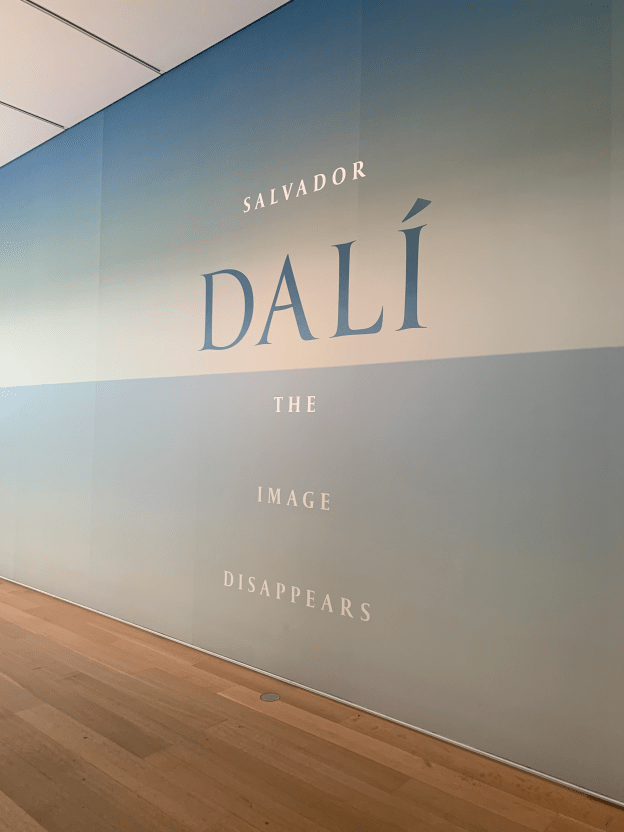
Over the weekend I was in Chicago to see a special exhibit at the Art Institute called Salvador Dalí: The Image Disappears. It got me thinking about the appeal of the surreal.
I for one really like Dalí’s art, it captures something of the subconscious possibility in the way it bends and transforms nature. Surrealism creates a mirror universe governed by its own laws, inhabited by a cast of characters that are just familiar enough to us to warrant closer inspection and intense curiosity. When developed to its fullest extent with sound and movement, the color and light of the surreal comes to life in a truly radiant and radical fashion. I’m talking of course of Dalí’s collaboration with Walt Disney, which became the short film Destino, a gorgeous film that is available today on Disney+. The Spanish guitar and drums, and singer’s voice pair well with Dalí’s images that find themselves unlocked from the monumental stone edifices they were built into upon their creation, the permanence of place and pose in painting.
The Dalí paintings at the Art Institute reflected the opposite of the great monuments of Destino, and more the impermanence and fragility of life itself. Crafted and devised throughout Dalí’s life, in particular during the troubled years of the Spanish Civil War, these images tell their own stories of paranoia and chaos. They show how Dalí expressed his emotions and innermost thoughts in his art. When world events on his doorstep forced him to contemplate horrors that pulled him from his passions, those horrors showed themselves in his work.
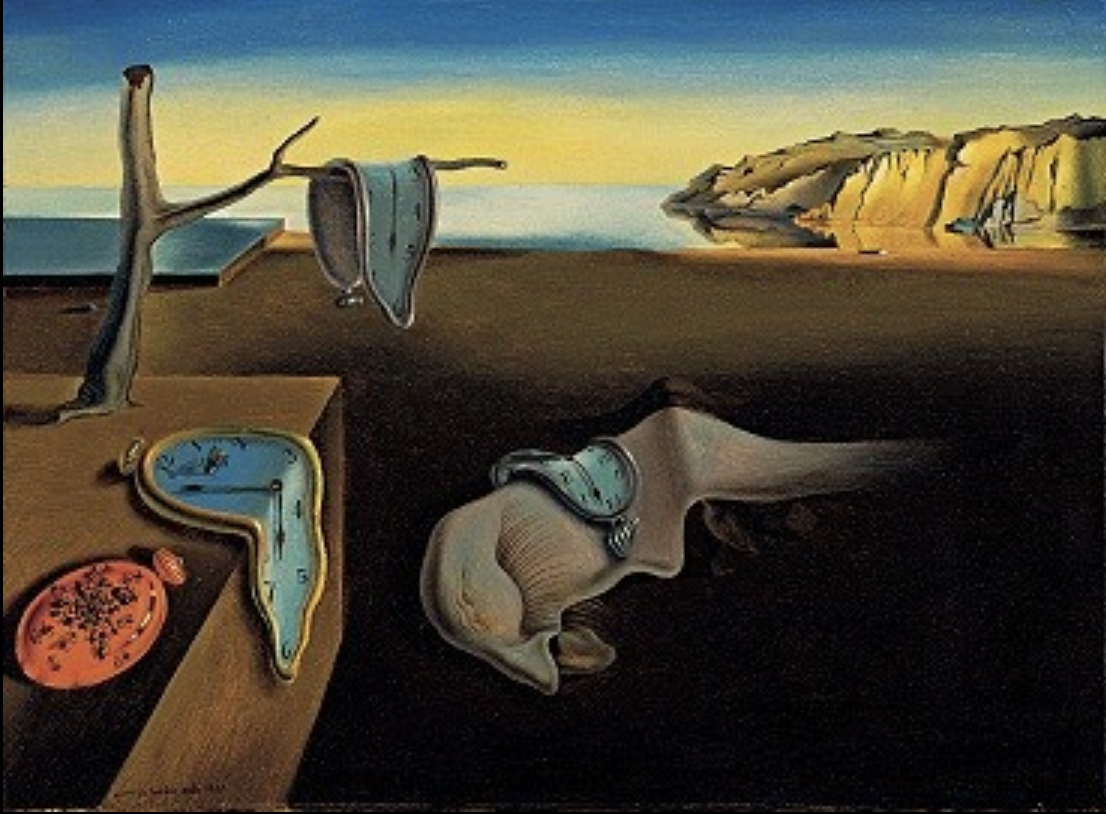
I’m drawn to Dalí’s most classic examples of surrealism, The Persistence of Memory being the type painting of these. They remind me with their distant hazy horizons of a book of labyrinths that I was given for Christmas one year in the early 2000s that had the same eternal yet present horizon line which stretched out from the central object echoing the idea of infinity yet not quite reaching that point itself. About a decade ago I was lucky enough to get to see another Dalí exhibit, this one in the Hallmark Headquarters at Crown Center here in Kansas City, where several Dalí images commissioned by Hallmark in the 1950s for a new line of greeting cards were on display for employees and their families. I remember Dalí’s interpretation of Santa for a Christmas card was fascinating, though not what Hallmark, the Norman Rockwell of American companies, necessarily wanted.
On Monday, I decided to compliment the Dalí exhibit with a visit to the Nelson-Atkins Museum of Art here in Kansas City to see Alberto Giacometti: Toward the Ultimate Figure, a collection of sketches, paintings, and sculptures by the Swiss master artist whose work spanned the first six decades of the twentieth century, and was in many ways Dalí’s contemporary. Yet where Dalí sought to interpret the human form through distortion imbued with a great sunny sense of Catalan romance, Giacometti’s works narrowed down their focus to the purest and ultimate human figure, which he crafted throughout his life’s work into sculptures notable for their roughness, slenderness, and height. I for one prefer Dalí’s vision over Giacometti’s, though I respect both artists for what they were trying to create.

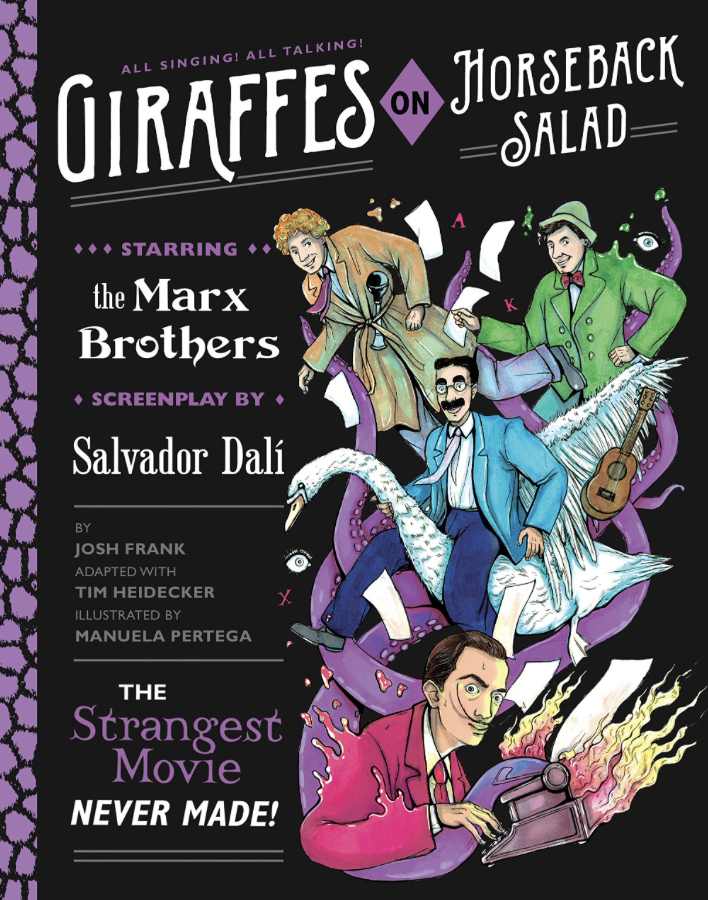
The surreal appeals to me because it echoes the disorderly world of my own dreams, the images that dance through my mind when I sleep are best described as surreal. Dalí collaborated with one of my favorite comics of his day, Harpo Marx, to create a film which ultimately was dropped by MGM for being too strange and finally in the last decade adapted into a graphic novel called Giraffes on Horseback Salad. Neither man spoke each other’s language, yet they both knew how to approach the language of the surreal, and so crafted a story that is the definition of weird and silly, that proved to be too strange even for Harpo’s brother Groucho. It’s good for us to have this alternate to our own world to turn to, this dreamlike fantasy realm where things don’t quite add up to how we expect. We humans are too imaginative to really fully be the normal people we make ourselves out to be. We have dreams, all of us, and rarely do they turn out to meet our expectations of what is normal.

 Wednesday Blog by Seán Thomas Kane