Tag Archives: History

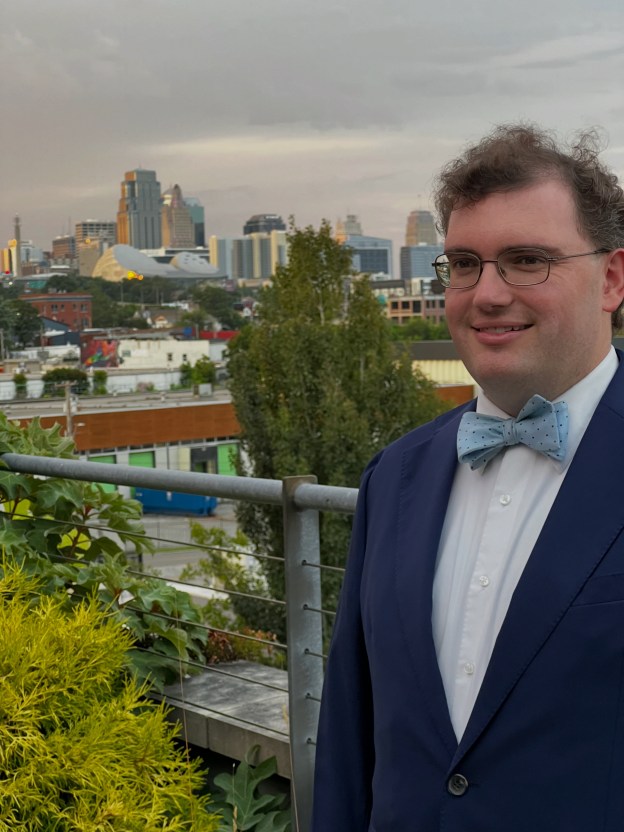
The author posing in front of the Kansas City skyline in July 2025.

The Wednesday Blog

This week, to conclude what I’ve been saying.—Click here to support the Wednesday Blog: https://www.patreon.com/sthosdkane—Sources:%5B1%5D “Signs,” Wednesday Blog 1.10.[2] “On Servant Leadership,” Wednesday Blog 6.15.[3] Percy Bysshe Shelley, “Ozymandias,” Poetry Foundation.


This week, to conclude what I’ve been saying.


I’ve said over the four years that I’ve been writing the Wednesday Blog weekly that I would stop writing this when it ceased to be fun. That’s a good rule for life overall that I’ve found: devote your life to things you love doing and keep them fun in the process. I tend to put on a very dry public face; a friend recently commented that I didn’t seem like one to scream or cheer at a concert, I affirmed that statement and demonstrated my own gentle “hurray!” to great amusement. This blog has changed with the times. It began as a project for me to write about things I enjoy outside of my research. I like to point to an early blog post all about my favorite state highway signs as a good example of this.[1] Yet I’ve found the topics I write about are changing, they’re becoming more academic, outlets where I can introduce some of the ideas I’m working on in my professional life and workshop them in a public forum. It’s a bald faced way of getting more readers to the Blog, I admit, yet so far, it’s worked.

I continue to cover politics here when I feel there’s a need to say something. Yet I’ve tried to balance what I’m writing to keep it positive, or at least to ensure that what I end up publishing suggests ways we can move forward out of the current crises we face. After all, there are enough writers out there pointing out the crises of the moment, some of us should be looking to the future to offer a light ahead that we all can reach for. This Spring, I was inspired by the commemorations in Boston of the 250th anniversary of the start of the American Revolution and the rallies for democracy here in Kansas City to focus that positive attention on popular action, the root of any good political system. I believe that government must act with the consent and full participation of the governed, and that through our elected representatives at all levels we ought to consider ourselves both governed and government. It sounds paradoxical, I know, and to an extent I believe that paradoxes are often a good thing. I devised one of my favorite phrases, “the extraordinary acts of ordinary people” to express this sentiment, that it is people acting out of the ordinary, out of what is considered ordered, which propels political change and keeps our politics fresh.[2] In 2023 one of the fads of the year on the internet was women asking men how often they think of the Roman Empire. I was asked this by one of my colleagues over lunch at the Nativity Parish School and remarked that because I was teaching the Romans at the time they were front of mind. Beyond this however, as much as I am familiar with the remains of the Empire, I am more drawn to the Republic and its ideals of popular government, even if they were never realized. The founders of the United States sought to model this federal republic on Roman models, yet they kept the Constitution they framed fresh for its day, an American constitution living in its ability to be amended to fit the changing times and passage of each generation rather than a Roman one deemed sacred through association with the old Republic’s gods and ancient institutions. Our republic is secular because for it to be sacred is to make it inviolate and unchanging, a monolith which will grow ever more distant from the people it was meant to govern, until like Shelley’s Ozymandias it is left as a mere pedestal of itself adrift in the sands of time.[3]

I want to stay a while longer with this phrase because I am so proud of it. To trumpet the extraordinary acts of ordinary people is to say that everyone has a voice and an impact upon the rest of us. In the first few years of the Wednesday Blog, my political essays tended to get lower readership across the board. I started writing the Blog in March 2021, a year after the January 6th insurrection showed how much the Republic was corrupted by the refusal to concede the 2020 election which caused that attack on the Capitol. I’ve seen a steady decline in political readership for my writing since the 2016 election, yet after 2020 that readership dropped off a cliff. American politics today is not a happy thing to write about, and at the moment it only seems to be getting worse. Yet by focusing less on the people in power and more on the people engaged for the common good I saw my readership grow on these political essays until they tended to be level with my other non-academic writing. A great inspiration for me here lies in the revolutionary era anthem Chester, sung by the New Englanders in the Continental Army and one of the older tunes in this country’s patriotic songbook. I’d been listening to it here and there without realizing for months, yet once I figured out what it actually was, when I was in Boston in March no less, I found that it spoke to my sentiment in a far greater way than I anticipated. I’m listening to William Schuman’s arrangement in his New England Triptych (1956) as I write this now, a New Deal era work intended to celebrate the democratic spirit of the cradle of the revolution.

There is a great deal of history behind my politics, naturally I notice that being a trained historian, and having taught American and British history on several occasions and having read a great deal in Irish history I can point out the various threads which I’ve coalesced into a logical genealogy of my political philosophy. Suffice to say, I believe it is better to look to the future and enact political policy which will build a future that we can all be proud of. At the core of this is listening to the people around us, hearing what they have to say, and listening to our own logic and empathy, two things which should always work together in our decisions. In writing about the extraordinary acts of ordinary people I look to those who will appear from the crowd as the leaders from my millennial generation and those coming up behind us in Generations Z and Alpha. We have inherited a great mess, and we have a lot of work to do. There are plenty of people arguing and advocating on what needs to be reformed, I feel better suited to provide an optimistic voice of what we could look forward to. By putting ordinary people front and center, I hope to make clear that policy should address problems from the bottom up, help reinforce and support the poorest in society that the whole structure grows stronger in kind. You might call this trickle-up economics, to speak to the Reaganites. We could build a future where everyone has good work, they can be proud of, enough to eat, a roof over their heads, and where every child learns how to read. We could have this future where people feel that law is meant to support them rather than push them down. I see this every day when I’m out around town: I suspect that the general sentiment behind people who run stop signs, red lights, or drive in transit only lanes is that the law has never worked in their favor, always rather beaten them down and stripped them of their humanity, so why should they follow the law? We must find our humanity in each other if we are ever going to grow out of this time of crises and begin to build a better future.

I enjoy thinking about the future in other languages, not just in the sense of the future tense but in the mentality of the language. How do they express things which haven’t happened but will come? In English we have the word future as a monolith on its own, derived from French and originally from the Latin futūrus, an irregular future active participle of the to be verb sum. In English, the future is as much a place as it is a time, it’s the destination we’re going to. Yet is it not better to think of the future as the scenery about to pass by as we go down the line like the trees and fields that we pass on a train? The present is momentary, here and gone in the blink of an eye, each millisecond the present, and the past a great gulf of memory whence we came. Yet the future is something both unknown and recognizable. It is both what we can see ahead of us along the way and what is just over the next horizon. It is an irregular version of being which will come someday. French expresses the concept of the future like this, whereas futur refers to the tense, l’avenir is instead the noun I’ve heard used most to describe the concept of the future. Yet l’avenir instead merely is the crafting of a phrase, temps à venir (time to come) into a noun, avenir, or that which is coming. We don’t know in truth what it is, what it will feel like when it comes, yet we know that someday we will see it and live in it. The future is inevitable, yet it is not singular by nature. Rather, if there is one past and present those are merely the choices made by actors in those moments which were chosen from the multitude that is possible from what could come. 

Irish expresses this sense of the future well because Irish really has no specific word for future. There is a future tense, which in some ways is more regular in its formation than the Irish present tense. Instead, Irish uses a phrase which breaks down the future into its core concepts:  An rud atá le teacht, or the thing which is coming. Therein lies the future in its baldest form: it is merely the thing that is coming next out of all the possibilities. Another topic which I seemed to write about a fair deal for a while was faith, self-help, and religion. My Catholicism is influential to my cosmovision and political philosophy in my core belief of the paradoxical nature of God, that God can exist yet also be omnipotent and omniscient. Because of this, I like to say, “anything is possible in the Eyes of God,” or for short, “anything is possible.” As I think about the end of my doctoral writing and needing a dedication to affix on my dissertation, I’ve found myself thinking about this phrase, and about who my audience is. After all, you now reading this sentence in my future, just as I wrote it in your past. It is possible that just about anyone could be reading this now, and so rather than dedicate my work to one person in particular in the moment in which I am writing it, perhaps I ought to instead dedicate it to the possible, or rudaí indéanta in Irish. That second word indéanta is a neat one because it comes from the verb déan, meaning to do, thus the possible is something that might be done. In English and French, I say, “I am studying” or « J’étudie, » yet in Irish, I say, “Déanaim ag staidéar,” or “I am doing study,” which makes the study more of an act than a state of being. The future has and always will be something acted, something done by individuals in our own small ways that creates great change in the collective form.

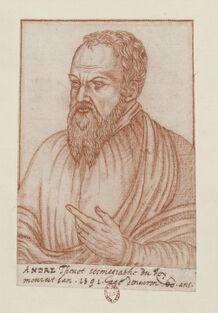
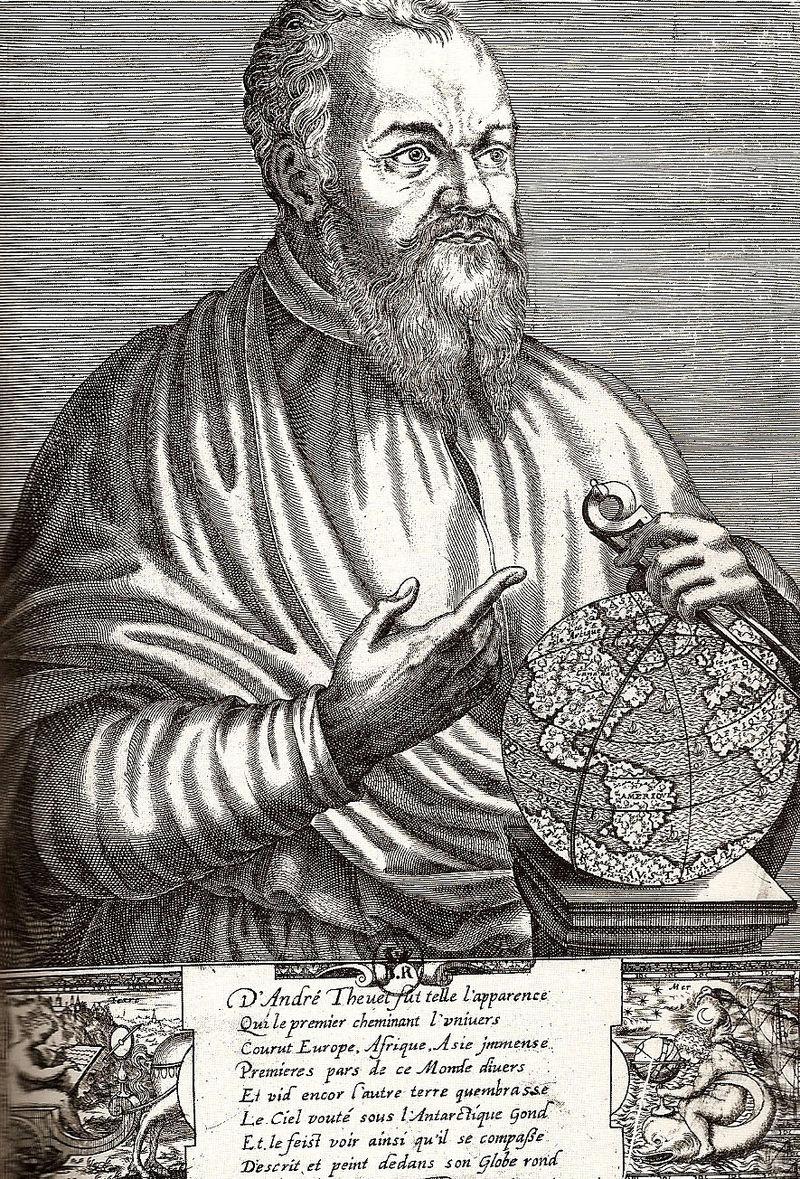
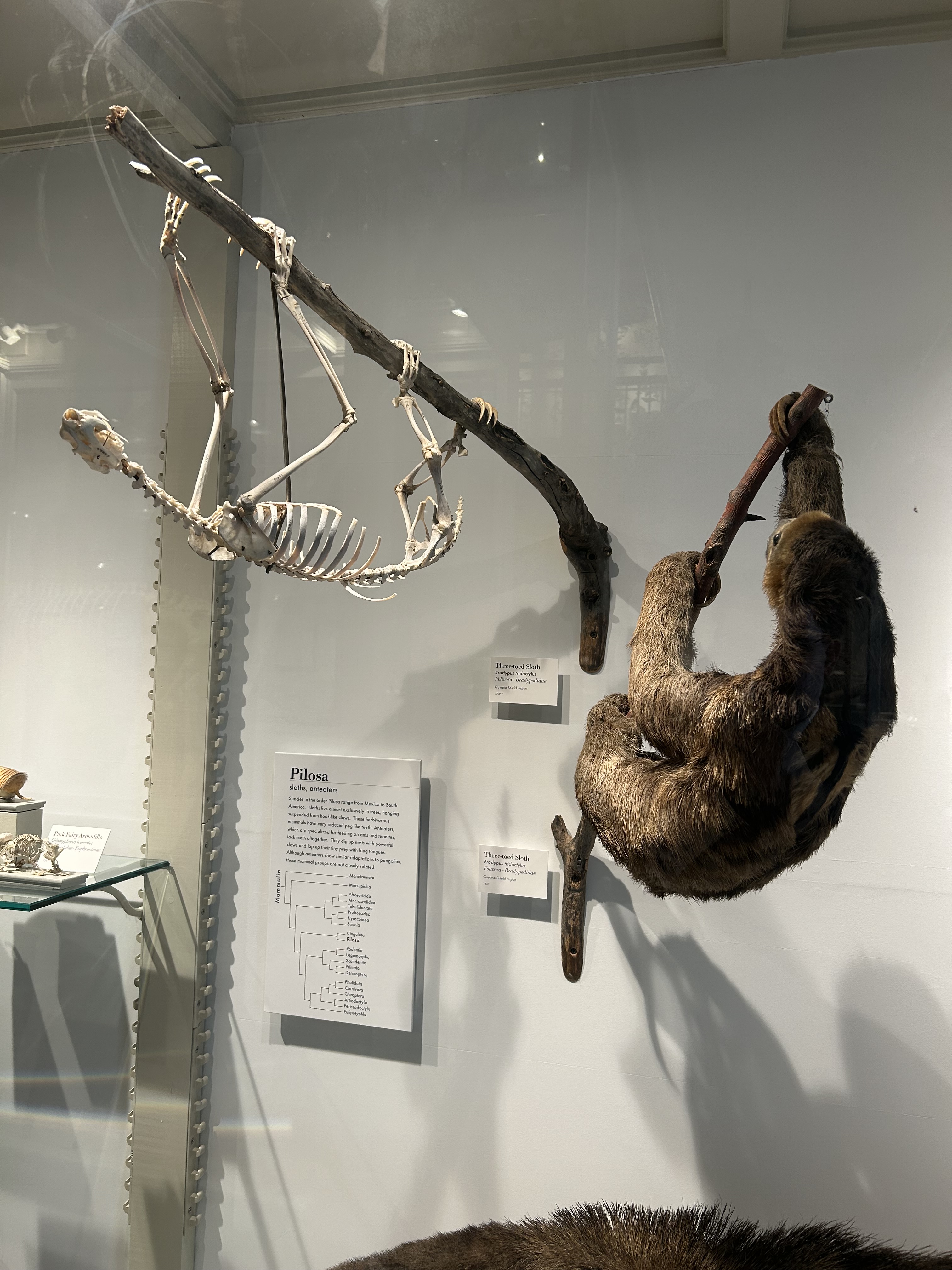
I study history because of all the things I am interested in it is history which brings them together. So far, history is a human creation made in our image and likeness which seeks to tell our story as best as we can recall it. We’ve devised historical methods of a similar manner to understand other histories, salvation history, church history, and natural history to name three. I returned to natural history as an adult yearning for the halcyon days of curiosity and wonder from my early childhood and built my career on my study of André Thevet’s (1516–1590) sloth. It’s become my gateway into the history of natural history, and through it I’m beginning to make my name as a sloth historian. I do not believe in prescriptivism, the notion that history in inexorably leading to some great moment in the future when the final form of human nature will announce itself. I think this is limiting, claustrophobic in fact. It’s far too simplistic to say that we will all wake up someday and find the morning sunlight is just a little bit brighter, the grass and trees greener, and the sky a prettier shade of blue because there’ll be somebody among us who will find something contrary about the experience. I for one an enjoying the gray skies outside my window today, it’s finally cool enough in mid-October for me to open the blinds in my room and let some sunlight in without making it too hot. Rather, history teaches us that the future is what we will make of it. I chose to not study the twentieth century because I felt this dolorous pain in my heart that there were so many things which happened in the last century which could have been avoided, choices which could have been different. In studying recent history, I worried I would be faced with the ghosts of the world wars, Great Depression, and all the troubles faced by humanity in general and my fellow Irish Americans in particular throughout my working life. 

Instead, I looked deeper into the past, first to the Roman Republic with an interest in studying the expansion of Roman citizenship in the late Republic after the Social War of the 90s and 80s BCE and later to the Renaissance, a period that seemed similar enough, Latinate to be sure, yet full of people and stories who I felt I could relate to better than the ancients. I found Thevet almost accidentally, and through his sloth I feel that I’ve found balance in my life that sustains me today, makes me feel more fulfilled in my efforts than I was before. My history is fundamentally interdisciplinary, historical zoology adopts zoological methods and theories to determine the true nature of historical animals, layering their scientific taxa upon their far older human memory and legendaria. In Thevet I am able to work with the ancients, looking especially Aristotle and Pliny, yet soon after I can turn around and look ahead to Buffon and Linnaeus and see how they interpreted what Thevet wrote in order to establish a clear lineage through the historical record for the animal in question. There is nothing sure about this history, often the historical sources are lacking with detail about a given animal, or the zoological data may not have enough detail about an extinct species to offer a clear picture of what it is I am describing. Both are limited by the foggy memory of the human past, yet together they can offer a light with which to move ahead and keep exploring those parts of our cosmos which are still strange and unfamiliar to us today.

I write because it is the greatest way I’ve yet found to express myself. I can say far more in an essay such as this than I could in a conversation. The Wednesday Blog remains less formal than my academic writing, here I use the first person. Yet with the passage of time, I’ve found the Blog has become more academic to the point that friends have told me they got an education about Thevet that they never expected. The Blog has several antecedents, including earlier less regular blog posts which you can find on this same website from before 2021 that all form the roots of this project. I’m proud of the writing I’ve done here, the Wednesday Blog now is comprised of 238 essays and 200 podcast episodes, I’ve written 521 pages, and the total word count is over 300,000. The future is defined as much by its potential as the fact that once it comes to be what was present will then be past. To see an end gives all things meaning. It is for this reason, at the end of the sixth book of the Wednesday Blog, and fifth season of the podcast, that I’ve decided to end this particular publication. This remains a fun thing to write, yet I have so much more to do today, and I only see that workload growing as I try my hand at more peer-reviewed articles, books, and translations in the coming decades. I hope the Wednesday Blog will be a testament to who I was at this point in my life in the years after the COVID-19 Pandemic and during my long years of doctoral study. Let these essays remain a monument of the first half of the 2020s, a sign of where we’ve been and where I hope we will be going.


[1] “Signs,” Wednesday Blog 1.10.

[2] “On Servant Leadership,” Wednesday Blog 6.15.

[3] Percy Bysshe Shelley, “Ozymandias,” Poetry Foundation.
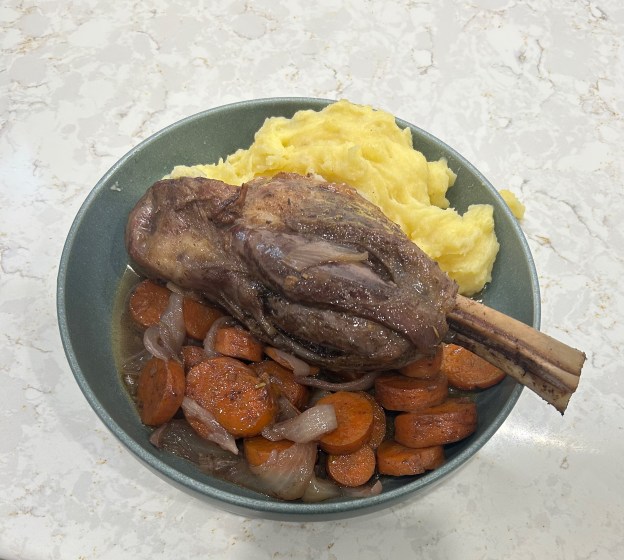

Roasted lamb shank, mashed potatoes, and vegetables cooked by the author in May 2025.

On Little Things

This week, recent events have inspired me to think about the wide, wide world on a smaller scale.—Click here to support the Wednesday Blog: https://www.patreon.com/sthosdkane—Click here to buy a copy of my book Travels in Time Across Europe which tells the stories from my year living in London that began 10 years ago this week.


This week, recent events have inspired me to think about the wide, wide world on a smaller scale.


Last Wednesday, after publishing “On Democracy, Part II” I took my place in the driver’s seat of my car, the Mazda Rua, and went out on a day trip to Jefferson City to join the protest against the congressional redistricting underway here in Missouri. I wanted to drive long distance at highway speeds again like I used to four times a year on my Long Drives East and West between Kansas City and Binghamton. There’s a lot of little things about those drives that I miss now that I’m more rooted here in Brookside. Today, I don’t drive every day. Often times if I can I’ll choose to walk to wherever I want to go in the neighborhood. It’s healthier to be sure, and I get the same free time away from the obligations that crowd my desk to listen to music, podcasts, birdsong, or to just think. These walks aren’t terribly taxing, Apple Fitness likes to remind me that the difficulty is “easy” to “moderate,” yet each one adds up into a sum which says that I am healthier today in mid-September than I was in mid-February or mid-March, let alone a year ago now. Moreover, I loved driving even just about town for that free time. Drivetime was often my podcast time. Now, I’m also reassured that I’m not operating a large and potentially dangerous vehicle while I’m listening to an engaging conversation or story; instead, I can focus on the story itself and not split my attention between that and the road.

So, last Wednesday I did try to recreate the things I loved most about those road trips that marked the beginning of this decade. On the outbound drive I listened to a fascinating discussion about political philosophy and space policy on Planetary Radio and on my return trip I listened to the pilot of the new audio drama Star Trek: Khan. Yet as much as I was thrilled to be back on the road and experiencing things that I felt like I had lost, even at my own volition, I still found that some of the little things got to me. For one, I was annoyed at getting stuck behind a semi-truck on the outbound drive for about 10 miles east of Sedalia and even more frustrated that I couldn’t pass a pair of semis that were ahead of me on the return drive as we transitioned from the two-lane divided highway in Cole County back to the one-lane country road that is US 50 in between the state capital and Sedalia. I know well that I control how I react to things, and therefore that I ought to react better to most things today than I did in my younger years, yet getting stuck behind those larger, slower vehicles on the stretch where passing was far more difficult really annoyed me. The beauty of a country drive is lost somewhat when you’re staring at the same big box retailer’s advertisement on the back of their vehicle for mile after mile.

These little things are what give our experiences life. The great, grand gestures that get remembered are one thing, yet they cannot be sustained without the small tokens of affection or whispered advice that comes from living and making the choices that define who we are. I believe that we are fundamentally formed by our experiences for good or ill. I’ve often ended up resorting to grand actions to try and solve questions or puzzles that find their way onto my desk. Marking something off a checklist is one of the most satisfying things I can do in my life. Those grand acts often become boxes which I can fill with the little things that I undertake. Currently, I am working on editing my translation of André Thevet’s (1516–1590) book Les Singularitez de la France Antarctique to send its book proposal off to an academic press. I have enough of my translation edited to send to them now, the first 16 chapters to be precise, yet there’s more still I need to do. This publisher prints page-facing translations and requires that the original text be sent alongside the translation. So, now I am spending my time typing out the original Middle French text of these first 16 chapters to be included in my proposal. There is a Wikisource page for this book, taken from the 1878 French edition that I could copy and paste from, yet it lacks the folio numbers from the original that are vital signposts to navigate the text and has enough nineteenth-century re-renderings of the sixteenth-century French original that I decided it was better if I just went ahead and typed it out myself. The first chapter took me about an hour to do, so I figure in all I might be able to have most of this typing done by the time I publish The Wednesday Blog next week.

Each character here is a little thing that together add up to the surviving thoughts and memories of a man who lived 450 years ago who exists in the scholarly memory of his time yet rarely in the spotlight. In my work, I hope to turn that spotlight on him and demonstrate his erudition and centrality to the cosmographic profession as it existed in the 1550s and 1560s. All this boils down to the same solution I’ve used to get through big projects for years. On Monday I smiled hearing a friend say essentially the same thing with her work in the history of mathematics, that the best way to solve a problem is to break it down into its constituent parts and figure it out piece by piece. A decade ago, this week when I moved to London, I found that the only way that the move was not overwhelming was to think of each thing I needed to do separately. My frustration rose when I found that I couldn’t make sense of a particular facet of one of the things I needed to do. One particular moment of note here was when I was summoned to the international student office to provide visa papers to confirm that I could legally study in the United Kingdom well after I’d started my coursework. Something got lost in the shuffle, but it was serious enough to scare me a little. When I moved to Binghamton, I had similar bureaucratic problems from issues getting my New York residency owing to my Missouri driver’s license having cracked in two, to a year later having big issues proving my residency to my university because I forgot to cross a t somewhere on a form.

Again, I choose how I react, and in the years since I’ve learned to take little things in stride and think of them in the broader context in which they exist. I believe doing the little things can show fidelity to a greater cause because it shows that I’m there for the long run, not just in the good moments. That’s something I learned from Robin Williams in Good Will Hunting, one of the finest movies I’ve ever seen. I think perhaps the best metaphor to explain what I’m trying to say to you, dear Reader, is that we should approach the things in life like we approach cooking. Recipes break down the task of cooking into smaller pieces that are more easily attainable. In May I made an Easter roast for some of my best friends that comprised several recipes I’d never tried before that day, and I truly didn’t know if it had worked until I finally sat down and took a bite of it. The roasted lamb shanks were perfect, as were the mashed potatoes, and the flourless chocolate cake that I rounded things out with was excellent and just as good the following day. In each recipe, I not only took things one at a time but even experimented a bit here or there based on my own experience from cooking similar things. For one, I had to quickly rethink how I was going to cook the lamb shanks because they were larger than nearly all of the pans I had. For another, I realized later than I wanted that in melting the chocolate chips for the cake I should’ve encouraged the process along with a spatula here and there. Each of these little things rounded out with a fine Tempranillo wine from Rioja to make one of the best dinners I’ve yet cooked.

I have a lot to do right now, and in every respect I’m on course to complete the things I have in my docket. The work would be overwhelming if I looked at it as a great mass, yet it is far easier to approach in small bites. That’s the big reason why I’m ending the Wednesday Blog one month from this week on 15 October. I’ve said what I wanted to say, and looking ahead I can use the time that I devote to writing this blog and recording the podcast working on other things great and small that need my attention. This publication is made up of a great many little things, small ideas that flower with their peers and culminate in an essay each week that I usually feel proud of writing. Little things make the lives we live.


A photograph of the Missouri State Capitol building taken by the author in January 2017.

On Democracy, Part II

This week, on the current round of redistricting sweeping through Missouri.—Click here to support the Wednesday Blog: https://www.patreon.com/sthosdkane—Sources%5B1%5D “On Democracy,” Wednesday Blog 5.39.[2] “We, Irish Americans,” Wednesday Blog 6.10.[3] “On Servant Leadership,” Wednesday Blog 6.15.[4] “Freedom from Fear,” Wednesday Blog 2.6; “Embodied Patriotism,” Wednesday Blog 6.26.[5] “Governor Kehoe announces special session on congressional redistricting and initiative petition reform,” Office of the Governor of the State of Missouri, 29 August 2025.[6] “A Scary Time For Chicago | Trump Gets FOMO Over China's Military Parade | Donald's Life Lessons,” The Late Show with Stephen Colbert (3 September 2025), YouTube.[7] “A Defense of Humanism in a Time of War,” Wednesday Blog 6.24.


This week, on the current round of redistricting sweeping through Missouri.


When I wrote my essay “On Democracy” last December, I anticipated that it would be the only thing I wrote concerning the most recent Presidential election.[1] I wanted to say more, in fact I went back and forth on saying something stronger and more forceful, yet what I ended up with turned out to be just right for the moment. It remains one of the essays I’m most proud of from the Wednesday Blog. The first half of 2025 was marked by a series of essays which followed up on “On Democracy” and commented on the growing number of political crises blowing across this country and here in Missouri and Kansas especially.[2] I even found that the usual low readership numbers on my political essays was mitigated somewhat with these essays; I attribute that in part to my choice to stay positive and focus on the extraordinary acts of ordinary people that have proven essential to the course of American democracy in the last 250 years and remain vital to the continued survival of our Republic today.[3]

All that said, and as much as I am a political animal, I would much rather write about my research and about my English translation of André Thevet’s 1557 book Les Singularitez de la France Antarctique which I’m currently editing. Those are the things which make me happy today because when I’m engaged in my historical work, I feel connected to my friends and colleagues who I’ve met in academia over the years. I want to be known a historian first and a writer second. I’m learning things everyday about Thevet and his worldview that I only barely noticed when I was deep in the effort of translating his book in the first place.

Yet current affairs in Jefferson City are pressing enough that I feel it is my duty to speak up. I know there are very real risks to publishing, saying, or writing anything political today. I’m in a precarious place now as a Ph.D. candidate approaching my dissertation defense and looking at a job market that feels smaller and more threatened than it did a year ago. I know that saying anything political could make me a harder sell for many hiring committees to accept. I take this risk because it is the right thing to do.

Today, 10 September, the Missouri Senate is set to vote on a new congressional map drawn by an uncertain cartographer, possibly in Jefferson City, possibly in Washington, with the intention of ensuring that the Republican Party secures a clear electoral victory in the 2026 congressional midterm elections in spite of learned expectations that the president’s party always loses seats in the midterms after they assume office, and the living reality of our moment in which the majority party is acting to preserve its own power and the wealth of a few at the expense in the political rights of everyone else. I’ve written time and again here that my America in its purest form is embodied in the New Deal and Great Society, and in FDR’s Four Freedoms speech.[4] Sure, we haven’t gotten there yet, all that means is we should keep working for it. America is a shining beacon of democracy for all the world to see, even if that beacon’s shadow often also shows our flaws played out before it like hand-puppets on a screen. Democracy requires participation; it’s the greatest form of government we’ve yet invented because it requires the most of the governed to understand how government works and to participate in their own government for the common good.

This new congressional map is not democratic. In fact, it is the anthesis of democracy. In his statement announcing the Republican supermajority’s push to force this map through the Missouri General Assembly, Governor Mike Kehoe openly stated that this map is intended to protect “Missouri’s conservative, common-sense values should be truly represented at all levels of government, and the Missouri First Map delivers just that.”[5] This was expected, yet still bold by a sitting governor to be so openly one-sided. On Thursday, 4 September, the window to submit written testimony on the redistricting bill opened on the Missouri House of Representatives’ website. I sent in the following statement:

In his statement announcing this new mid-decadal redistricting effort, Governor Kehoe explicitly said this was to preserve “conservative values.” With that out in the open, I want it to be known that if this map is intended to support conservative party politics in Missouri, then it impedes on the rights of all of us moderate, liberal, and progressive Missourians. It is a blatant abuse of power that targets us Kansas Citians in particular. I want to see Missouri create a nonpartisan independent board which draws the electoral maps, so they are fair for all Missourians. I ask the committee to reject this redistricting map for its blatant partisanship and the fact that this redistricting process is costing the taxpayers’ money that could and should be spent elsewhere.

This is the sum of it. I do not think it is hyperbole to say that my own political rights are under threat by this bill. Rather, what was once extreme is today expected because any rules we had for electoral fairness have been thrown out the window. It’s true that both parties gerrymander their congressional maps, but the Republicans do it far more. It’s also true that the Democrats are gerrymandering congressional maps in the states that my party controls. I want independent redistricting maps in all 50 states, the District of Columbia, Puerto Rico, and every territory. That should be our goal. Yet in this moment we need to fight for democracy to save it. This is a struggle here in the United States, yet it is being felt around the globe. Who else is as influential in world geopolitics today who could take up the mantle of democracy if we discard it? What keeps striking me about what the Republicans are doing is that it is all for short-term goals that masquerade as solutions to the country’s problems. What I and many like me want are long term solutions that will actually resolve many of those problems.

With this new congressional map, I and every other moderate, liberal, and progressive on the Missouri side of Greater Kansas City will lose all federal representation. We currently are represented in Congress solely by Congressman Emmanuel Cleaver II, who has served this city for many decades. I regularly send emails to our senators, Josh Hawley and Eric Schmitt about a variety of issues that I care about from restoring funding to the National Endowments for the Arts and Humanities (NEA, NEH) and the National Science Foundation (NSF), to my fears of presidential overreach with so many executive orders which seek policy changes that by law can only be made through acts of Congress. In every instance, the response I receive has nothing to do with what I wrote. In the case of an email I sent to Senator Hawley concerning my fears over my profession’s long-term viability in this country as federal funding to universities and research institutions is threatened for political reasons, I received an email back lauding the Big Beautiful Bill and all the good it will do for America. A screenshot of that email is included below.

Meanwhile, Senator Schmitt’s office only responds with campaign emails pretending to be official senatorial correspondence. This ought to be illegal in my opinion, and a version of the Hatch Act of 1939 should be passed for the Legislative Branch to keep Members of Congress from using their official correspondence to actively campaign for their offices. I have a folder filled with all of the emails I’ve received from his office since April 2024 and normally they will go directly into that folder. Yet there was one email his office sent me in response to my concerns over cutting funding to the Corporation for Public Broadcasting which was such a blatant example of his dismissive approach to his constituents who disagree with his views that I became pretty angry. 

So, I called his Washington office, realizing as the phone was ringing that it was after business hours in the East, and left a voicemail. In summation, I challenged him to actually address his constituents’ concerns. I borrowed what I imagine is the lingo of the manosphere, a foreign corner of the Internet to me and challenged him “man to man to stop being a coward and do his job for all Missourians, not just those in his own party.” I haven’t gotten a response to that one, whether by email, phone, or letter. This is not how I like to talk to people, let alone write to them. I would rather find ways to speak to people in their own language to lift them up. I’m my worst when I lose that sense that I can say or do something that will make the lives of the people around me better.

It’s in this spirit that I decided to write again this week about democracy. Any form of representative government requires that we trust in each other for it to function. This is one of the central tactics of the current majority party. The President recently called the city of my birth a “hellhole,” something that I take personal offence to. I appreciated Stephen Colbert’s response, especially the heartfelt final two words of it.[6] In my essay “A Defense of Humanism in a Time of War” I wrote that I don’t want to be known as a pacifist because there will always be schoolyard bullies to contend with.[7] The people in power today here in Missouri and the slim governing majority in Washington are the biggest bullies this country has seen in a long time. They evoke the worst aspects of America, the greed that embodied both the First Gilded Age and the garishness of this Second Gilded Age in which we live. Not content with letting the democratic process that brought them into office work as it has for over two centuries, they insist on doing what they’ve accused their opponents of doing: rigging the electoral process in their favor. They clearly do not trust us, so why should we trust them?

Democracy is nourished by a love of neighbor. American democracy in particular is built upon a bedrock of idealism that we are still trying to achieve. That is what we need to work on. Robert Reich, the former Secretary of Labor, argues that we are on the verge of a second Progressive Era, a time of tremendous political reform. We who oppose the Missouri supermajority and the thin ruling majority in Washington need to remember that end goal. We need to sustain the democratic spirit through this time of trouble so that we can have a better tomorrow. I’m writing this knowing the risks because I feel it’s my duty as an American. I will always stand up for my neighbor regardless of if we agree or disagree on a given topic just as I will stand up for my colleagues, students, friends, and family because it’s the right thing to do.


[1] “On Democracy,” Wednesday Blog 5.39.

[2] “We, Irish Americans,” Wednesday Blog 6.10.

[3] “On Servant Leadership,” Wednesday Blog 6.15.

[4] “Freedom from Fear,” Wednesday Blog 2.6; “Embodied Patriotism,” Wednesday Blog 6.26.

[5] “Governor Kehoe announces special session on congressional redistricting and initiative petition reform,” Office of the Governor of the State of Missouri, 29 August 2025.

[6] “A Scary Time For Chicago | Trump Gets FOMO Over China’s Military Parade | Donald’s Life Lessons,” The Late Show with Stephen Colbert (3 September 2025), YouTube.

[7] “A Defense of Humanism in a Time of War,” Wednesday Blog 6.24.


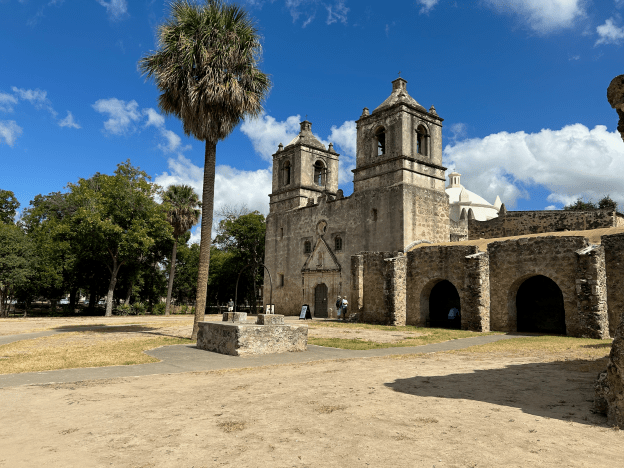
Mission Concepción, San Antonio, TX, USA

New Worlds

This week, I reflect on the flexibility of the word world.—Click here to support the Wednesday Blog: https://www.patreon.com/sthosdkane


This week, I reflect on the flexibility of the word world.


In my field the focus is often on nomenclature as much as it is on the history itself. We, early modern historians of the Atlantic are left dealing with the original intent of our historical subjects while also reckoning with the legacies of their choices in the living world today. That word world is one such central question, after all what does it really mean? In a twenty-first century context the world is synonymous with the Earth itself. I see in the sixteenth century the creation of the current state when the world can be a planetary designation. For past generations the world was something smaller, at most hemispheric yet more often regional in character. André Thevet’s use of the French word sauvage to define the alterity of those beyond his own world in turn set boundaries about his own world, what he wrote about was a Christian world centered on the Mediterranean that was a natural outgrowth of the classical civilizations of Greece and Rome.

I am hesitant then to use the term New World in my dissertation. Sure, it was a term in use in the sixteenth century, popularized by Peter Martyr d’Anghiera (1457–1526), yet in our time it’s gained enough shackles from the dark legacies of the conquest and colonization of these continents that I want to be conscious of my twenty-first century readers even as I seek to place my historical narrative in the sixteenth century. Thus, I argue instead that this new world was created by the conquest and colonization, that it is a new global world born from the encounter between the many old worlds that came before. This follows the arguments made by Marcy Norton concerning a Mesoamerican classical past to which the Spanish in particular looked when placing their new administration upon the remains of the old over the indigenous societies in present day Mexico.[1] I see in how Thevet described the one part of the Americas that was fully colonized in 1556, namely the island of Hispaniola, a new world in all its novelty and experimentation.

I grew up knowing of the Americas as the New World, it’s one term I remember hearing very early on in my youth. Even then, I felt a sense of reluctance at it, after all new things aren’t necessarily all good, so does that mean our New World is in fact worse off than the Old? Most of my family only arrived in the United States in the last four to five generations, at the time within the last century, and so for us America was still in some ways new. I treasure the stories my dad told me as a young boy about Chicago, where we lived; those stories were likely my introduction to history that led slowly toward the career I’ve now chosen. Even now, if I’m looking for something fun to read it will often be something about my hometown as it was a century ago. In 2024 I spent many happy hours engrossed in Jay Kirk’s biography of Carl Akeley (1864–1926), and a few months later once it was released I read eagerly Paul Brinkman’s Now is the Time to Collect about the Field Museum’s 1896 expedition to Africa. Granted, both deal with the same subject, the museum where my own curiosity was first sparked as a young kid, yet they are mementos of that same nostalgia that draws me back into what I thought of when first I considered this term New World. It speaks to Churchill’s famous final rousing word of hope in his “We shall fight on the beaches” speech that Britain need hold out “until in God’s good time, the New World, with all its power and might, steps forth to the rescue and liberation of the Old.”[2] This dichotomy between the youthful New World and our older cousins across the water is echoed in Bernard-Henri Lévy’s 2018 book The Empire and the Five Kings about the decline of American geopolitical power in the present century. Lévy wrote of America, the Empire, as the sons of Aeneas who several generations ago returned east to the Old World to liberate it as Churchill hoped. Yet now, the imperial sons of Aeneas are themselves fattened by their spoils of victory and incapable of meeting the struggles of the current moment as the threats are multiple and not focused on one rival superpower as they were for much of the last century.

Perhaps this is the key facet of this whole conundrum now: not only is the world so diffuse as to merit multiple definitions, but it reflects the uneasy global world in which we all live. For me the disquiet in all this comes just as much from the fact that the benefits which our interconnectedness ought to have brought––peace, economic, political, and social prosperity, greater human solidarity––are still mired in the same old problems of greed, small mindedness, and war as ever. We live in the shadow of Cain as much as in the warm glow of that optimism which keeps the home fires burning. We are at a place in our development as a species where disease, hunger, poverty, and war could all be avoided or cured on the sociopolitical level. We merely lack the will to do any of that. The optimistic promise of this New World which I perceived as a kid in Chicago remains but one vision of our shared reality. The New World into which I was born is built on the remnants of those old worlds that were often assimilated with violent force.I like to find the positive, if possible. When I was considering what I wanted to pursue in my doctoral studies I looked at what my friends were doing and first decided that I didn’t want to do something that would be depressing or sad. I wanted instead to focus on something that would fuel my curiosity and that connected back to those things which I’ve been most interested in throughout my life. I chose to study André Thevet’s sloth because the idea of being a sloth historian made me laugh. Now, with my first peer-reviewed article on the subject published with the journal Terrae Incognitae I feel that the work of these last six years is finally paying off.[3] That work considers the creation of a New World, while balancing contemporary sentiments around that term with historical perceptions of the same. I am after all someone who studies the past for the benefit of illuminating something as of yet uncovered about my subject. That said, I’m writing for readers living now and, in the future, and need to bear their perspectives in mind. That’s at the core of any communication: we learn foreign languages in order to communicate with people from other cultures, countries, and even worlds. I know that my writing is tinged with my own idiolect, yet I hope it remains universal enough to be understood by anyone who is curious enough to read it.


[1] Marcy Norton, The Tame and the Wild: People and Animals After 1492, (Harvard University Press, 2024), 305-313.

[2] Hansard HC Deb 04 June 1940 vol 361 cc787-98.

[3] Seán Thomas Kane, “A Sloth in the First French Colony in the Americas,” Terrae Incognitae 57, no. 3 (2025): 1–15.


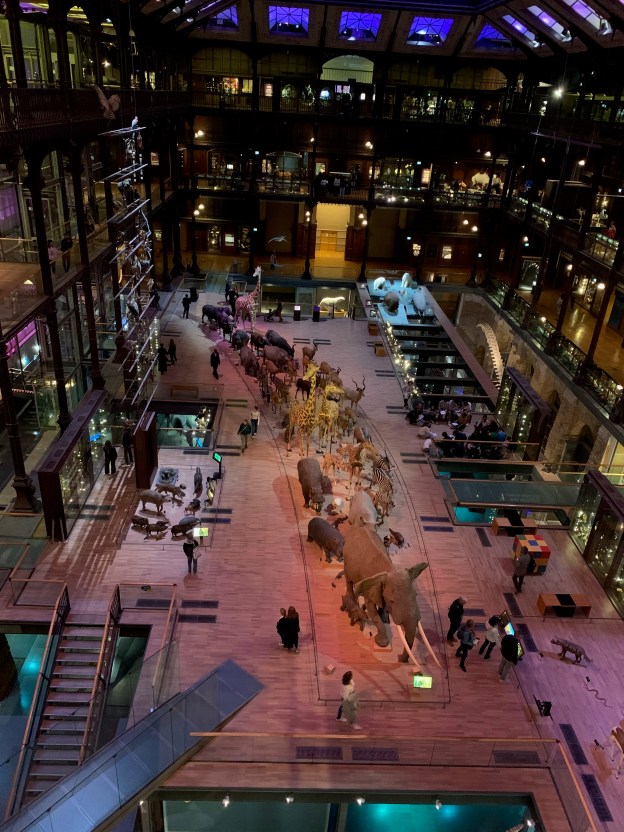
A photograph of the Parade of African Mammals in the Grand Gallery of Evolution at the National Museum of Natural History in Paris taken by the author from the 3rd floor.

On Systems of Knowing

This week, I argue that we must have some degree of artifice to organize our thoughts and recognize the things we see in our world.—Click here to support the Wednesday Blog: https://www.patreon.com/sthosdkane—Sources:%5B1%5D For my recent essays referring to this current historiographic project see “On Sources,” Wednesday Blog 6.22, “On Writing,” Ibid., 6.27, and “On Knowledge,” Ibid., 6.29.[2] Lee Alan Dugatkin, Mr. Jefferson and the Giant Moose, (University of Chicago Press, 2009).[3] Staffan Müller-Wille, “Linnean Lens | Linnaeus’ Lapland Journey Diary (1732),“ moderated by Isabelle Charmantier, virtual lecture, 12 May 2025, by the Linnean Society of London, YouTube, 1:04:18, link here.[4] Jason Roberts, Every Living Thing: The Great and Deadly Race to Know All Life, (Random House, 2024), 45–49.[5] Roberts, 20.[6] Roberts, 115–125.[7] Roberts, 109.[8] André Thevet, Les Singularitez de la France Antarctique, (Antwerp, 1558), 16r–16v. The translation is my own.[9] Roberts, 109.[10] Damião de Góis, Chronica do Felicissimo Rei Dom Emanuel, 4 vols., (Lisbon, 1566–1567).[11] Geraldine Heng, The Invention of Race in the European Middle Ages, (Cambridge University Press, 2018), 190.[12] Roberts, 110.[13] Michael Wintroub, A Savage Mirror: Power, Identity, and Knowledge in Early Modern France, (Stanford University Press, 2006), 42.[14] Roberts, xii.[15] Roberts, 107.[16] Roberts, 96–98.[17] Michael Allin, Zarafa: A Giraffe’s True Story, from Deep in Africa to the Heart of Paris, (Delta, 1998).


This week, I argue that we must have some degree of artifice to organize our thoughts and recognize the things we see in our world.


Near the end of June on a Sunday afternoon visit to the Barnes & Noble location on the Plaza here in Kansas City when we were picking out books to gift to family, I espied a copy of Jason Roberts’s new paperback Every Living Thing: The Great and Deadly Race to Know All Life. In the Plutarchan model it is a twenty-first century Parallel Lives of Carl Linnaeus (1707–1778) and Georges-Louis Leclerc, Comte de Buffon (1707–1788), two of the eighteenth century’s most prolific naturalists. I saved it as fun reading once I thought I’d done enough of my proper historical work. That moment came after I finished writing the first draft of the new introduction to my dissertation, a rather large addition to my doctoral study which is mostly historiographic in nature.[1] I’ve been reading Roberts’s book in my free time and delighting in the vibrant portraits he paints of the two men in question. I am a newer Fellow of the Linnean Society of London, elected in January 2025, and so I arrived to this particular book with a happy perspective on Linnaeus, whose Systema Naturae is cited in my dissertation as the first identification of the three-toed sloth by the genus Bradypus. At the same time, I’ve referenced Buffon’s Histoire Naturelle far more frequently in those moments when I’m following the legacy threads of my own Renaissance naturalists into the Enlightenment. After all, Buffon cited Thevet on several occasions where the savant referred to the same animals which the earlier cosmographer described two centuries before.

In spite of my own Linnean affiliation, and my use of Buffon’s corpus in the earliest stages of my broader historiography, I am still largely unfamiliar with these two men. I first knew of Buffon for his famous comments on his presumption of the diminutive nature of American animals when compared with their Afro-Eurasian counterparts, to which Thomas Jefferson retorted by sending Buffon evidence of an American moose.[2] I also know very little about Linnaeus, most of what I know of the Swede comes from lectures presented at the Linnean Society online including a recent lecture given in May by Staffan Müller-Wille, Professor in the History and Philosophy of the Life Sciences at Cambridge about Linnaeus’s Lapland diary from his northern expedition in 1732.[3] There is a new biography of Linnaeus by Gunnar Broberg titled The Man Who Organized Nature: The Life of Linnaeus which I have an eye on yet haven’t gotten a copy of quite yet. So, reading Roberts’s book is a quick introduction for me to this man who for me is most influential with his method of binominal taxonomy which has appeared time and again here in the Wednesday Blog. Yet this system followed after Linnaeus’s earlier alphabetical system for identifying plants by sexual characteristic. The basic premise here is that if there are 26 letters in the alphabet, we can then use that familiar framework to organize other complicated concepts for easy recognition. Linnaeus used this to categorize plants by their male and female sexual characteristics in his 1730 booklet Praeludia Sponsaliorum Plantarum, or Prelude to the Betrothal of Plants.[4] Therefore, Linnaeus could go around the botanical garden at the University of Uppsala in 1730 and quickly identify a plant as a J plant or a G plant. First reading this I thought of the way that letters are used by the Federal Reserve System to identify specific regional branches. Thus, J represents the Federal Reserve Bank of Kansas City and G the Federal Reserve Bank of Chicago. 

I like the idea behind Linnaeus’s alphabetic system yet having only 26 categories to describe the entire plant kingdom seems doomed to be flawed as it relies on a belief that all the plants that are known to exist are the ones that exist, that there’s nothing new under the Sun to be discovered. Roberts frames this in a biblical context, describing how Olof Celsius (1670–1756), one of Linneaus’s first professors, met the young Linnaeus when he was working on a project called the Hierobotanicum or Priestly Plants which was intended to be a compendium of all 126 plants mentioned in the Old and New Testaments.[5] Why would Linnaeus need more than 26 categories to contain all the plants known to the Ancients and to the Bible? Naturally, the flaws were apparent in this from the start by using a system of knowing which originated in the more arid landscape of the Levant rather than in the cooler and damper climate of Sweden. I’ve noticed this in my own life, how many cultural elements which we practice in the United States, notably the seasons, better fit the natural climate of New England and England proper than they do here in the Midwest with its far more variable conditions depending on the time of year, or even the given hour. Roberts deconstructed Linnaeus’s early efforts near the end of Part I of his book when he described Linnaeus’s first scholarly collision with Buffon after the Frenchman’s appointment by Louis XV to the position of Intendant of the Jardin des Plantes in Paris.[6] In a debate which Roberts calls “the Quarrel of the Universals” Linnaeus argued that species could be recognized from individual type specimens while Buffon countered that this ran the great risk of minimizing the diversity of life and eliminating potential variations in nature.

This got me thinking about systems of knowing, thus I decided to render the title of the original file for this blog post that you’re now reading (or listening to) De Systemarum Scientis in the full Latinate tradition of my own scholarship, or “On Systems of Knowing” in English. Why is it, for instance, that our Roman alphabet begins with A and ends with Z? The first half of that question is easier to answer: the Romans adapted our alphabet from the Greeks who started it off with α alpha, β beta, thus the noun alphabet itself. Yet the Greek alphabet ends with ω omega rather than ζ zeta, so why does ours end with Z? What I’ve heard about this is that the Greek letters that were adopted into the Roman alphabet were tacked onto the end of the line, or at least this is what I remember being taught when I learned to recite the alphabet in French in my undergraduate years. French calls the letter Y y-grec, or the Greek i. Likewise, everyone except for we Americans call the final letter of the Roman alphabet some variation of zed, which is a shortening of the Greek zeta. This better reflects that letter’s original sound in Greek, just as the cursive lowercase z is the lowercase Greek ζ just adopted straight into the Roman alphabet without any major changes.

So, when it comes to the organization of our knowledge there are things that we know in this same alphabetical order or in relation to this alphabetical order. Because the Roman alphabet is written left to right, we know that when it’s used to set up a coordinate system on a printed map that A will always appear to the top left, orientating the way the map should be held. Likewise, a reader can quickly scan through an index in any language written in the Roman alphabet by following along with the order of the letters. How individual languages index objects from that point on differs, but the foundational element remains the same. The Roman alphabet works best for Latin, the language for which it was originally developed, so it tends to be adapted in its phonetic values depending on which language is using it. This is why English uses the letter W to represent a [w] sound while German and in loanwords French uses W to represent a [ˈv] sound. Meanwhile, Irish represents the [w] and [ˈv] sounds with two digraphs, bh and mh that represent both depending on the context. Typically, bh represents [ˈv] while mh represents [w], but it depends on context. The reasoning behind this is that when the Roman alphabet was adapted by Latin speakers to fit Old Irish in the fifth and sixth centuries CE they approximated the phonology of their Latin in rendering the Roman alphabet usable for Irish. So, to these monks the Irish [ˈv] sound in a Gaelic name like Medbh sounded enough like how the letter b was used at the time that they used that letter to approximate this [ˈv] sound. It’s notable to me that in Modern Greek the letter β is today pronounced veta and in the Cyrillic alphabet the letter В represents this same [ˈv] sound while the letter Б represents the [b] sound that we English-speakers associate with the letter B. Cyrillic and its predecessor the Slavonic alphabet were being developed around the same time that the Roman alphabet began to be used for Irish so there must’ve been something going on with the pronunciation of people’s Bs becoming closer to Vs in late antiquity. Thus, the ways in which our alphabets represent specific sounds today reflect the prestige dialects of our two classical languages–Latin and Greek–as they were spoken over a millennium ago.

Consider then how we distinguish technical, scientific, or artistic terminology depending on the prestige language of that field. History has largely become a vernacular field, where we adapt terms that will be more familiar to the non-professional enough to initiate them into what Ada Palmer calls the History Lab. Yet often these terms will have etymologies beyond English itself. Consider the word photograph, or its more common shortened form photo. This word comes purely from Greek, the classical language more associated with science and technology. It blends the Greek φωτο-, the blending form of φῶς (phôs), or light with the suffix –γρᾰ́φος, from the verb γρᾰ́φω meaning to draw, sketch, or write. So, photography at its core is light writing. Neat! The word photography entered English from the French photographie, that etymology referring to the French origins of the art and craft of photography itself in the middle of the 1820s. Yet the linguists who modernized Irish a century ago decided to favor indigenous terminologies, rendering this word grianghraf using the Irish word grian for Sun instead of a variation of φωτο- (light) while adopting the Greek –γρᾰ́φος suffix to center this new Irish conception of the term within the same technological corpus as the English photograph. While consequential to have a particular Irish name for this technology that elevated the Irish use of photography as equal to any other culture’s photography and particular within the Irish language, it still remains rooted in the same western tradition of grounding our names for scientific and technical things in Greek.

Language directly influences how we know things because it is the vehicle by which we recognize those things around us. I know that a photograph is something made by “light writing” therefore I will also recognize that anything else beginning with “photo” also refers to “light” and that anything ending with “graph” refers to some form of record or writing. I come from a culture where light is connected with goodness and dark with ill. Likewise, for me I think of blue and green as happier colors rather than red or orange which are angrier colors. There is safety in light, in the daytime we can see people or things coming toward us easier than in the dark of night. At the Easter Vigil the celebrant lights the Paschal Flame which is then passed around the church so that we all share in the Light of Christ (Lux Christi) returned to the world with the Resurrection. The central question in my dissertation is linguistic: what did André Thevet (1516–1590) mean when he referred to the Americas overall as sauvage? This French word translates into English as both savage and wild, yet I chose to retain the original French to better represent the original concept which encompasses both concepts in English. This word was not necessarily racial in the modern sense, rather Thevet used sauvage to describe people, places, and things which existed beyond civilization. This word itself betrays its original meaning, that is city life. Thevet himself understood the sauvage to be the antonym of this city life. I describe it in the introduction to my dissertation in terms of light and dark, following the cultural connotations already illuminated: the city is the sun whence radiates the light of civilization. The further one goes from that sun, the darker things become and the less civilized they remain. Thevet’s sauvage existed at that furthest extreme in the dark. I imagine the character of Gollum in this sort of darkened existence, deep beneath the Misty Mountains uninterested in light save for the Ring of Power which consumed his day rendering it eternal night. In the literature of Thevet’s time a fine sauvage characterization is Caliban in Shakespeare’s Tempest, wild as the waters which wrecked King Alonso and his men on the island in Act 1 of that play.

Roberts notes how these linguistic attributes influenced Linnaeus’s systemization of humanity in the 1735 second edition of his Systema Naturae. The Swede divided humanity into four subcategories described by color over any other facet.[7] Roberts spends the following five pages questioning Linnaeus’s methodology, asking “why four?” and why these specific colors? There is some historical context for Linnaeus’s choice to refer to Black Africans, even Thevet referred to the varied peoples of Africa as “black” in his Singularitez de la France Antarctique. Thevet hints at a possible environmental cause for blackness, writing that the peoples “of Barbary” who are “the blackest” are “of the same manners and conditions as their region is hotter than others.”[8] Thevet’s understanding of African geography is somewhat uncertain, so his definition of Barbary may not align with the Berbers from whom the Barbary Coast of the Maghreb was named. Still, it hints at an understanding that the hotter, or more torrid, the climate got the darker the skin of the people would become. Roberts notes that the Portuguese were the first to use the “word negro to signify African origin or descent” in the middle of the sixteenth century.[9] This makes sense considering the Portuguese were the first European power to sail down the West African coast in the fifteenth century. That Roberts notes this Portuguese definition of blackness first appears in the middle of the sixteenth century likely refers to Damião de Góis’s (1502–1574) Chronica do Dom Emmanuel I of 1566 to 1567 which is an early source that I’ve consulted for information on the voyages of Vasco da Gama (d. 1524).[10] Geraldine Heng, the leading authority on medieval notions of race, wrote in her 2018 book The Invention of Race in the European Middle Ages that blackness was already well established as an element in religious and secular iconography by the beginning of the First Age of Exploration.[11] Roberts concludes his discussion of this particular racial element of Linnaeus’s great contribution to taxonomy sullenly noting that it’s thanks to Linnaeus that this cultural connotation of blackness with darkness was given scientific credence which continues to support racist ideologies to this day.[12]

How do we use our own words to describe things to which they are not suited, in turn transforming the nature of those things that they may become part of our own world? My research is most interested in understanding these questions of how those things at the boundaries of knowledge were understood by André Thevet using the tools afforded to him during the French Renaissance of the sixteenth century. Thevet used the word sauvage to do this and create a category of life against which he could measure and proclaim the existence of something civilized closer to home. Michael Wintroub, Professor Emeritus of Rhetoric at Cal-Berkeley, wrote in his 2006 book A Savage Mirror that Thevet’s countrymen sought to “civilize the barbarians” to make up for an insecurity they felt at being called barbarians themselves by Italian intellectuals at the turn of the sixteenth century during the French invasion of Italy under King Charles VIII (r. 1483–1498).[13] As long as there was someone else who the French could look down upon beyond their own cities they felt secure in their own civility. Yet the sauvage exists within a larger framework of singularities, a word which is central to Thevet’s cosmography. Thevet used the word singularity to describe those things which were exotic, wonderous, and immensely collectable in his eye and hopefully in the eyes of potential readers who would buy his books. I see various layers and categories of singularities in Thevet’s cosmography, for instance he only included images of certain animals in his book of the same name, the aforementioned Singularitez of 1557. The sloth and toucan were depicted as well as described, yet the mysterious Ascension Island aponar remained a bird worthy only of a textual description. This suggests that somethings were more singular than others, or more worthy of attention and the money needed to produce these woodcut images than others. These systems of knowing framed around the singularity are the subject about which I intend to write my first academic monograph. Classifying something as singular gives it an appeal which sets it aside from both the civil and the sauvage as belonging to a higher level of category which can include both the urbane and the agrestic.

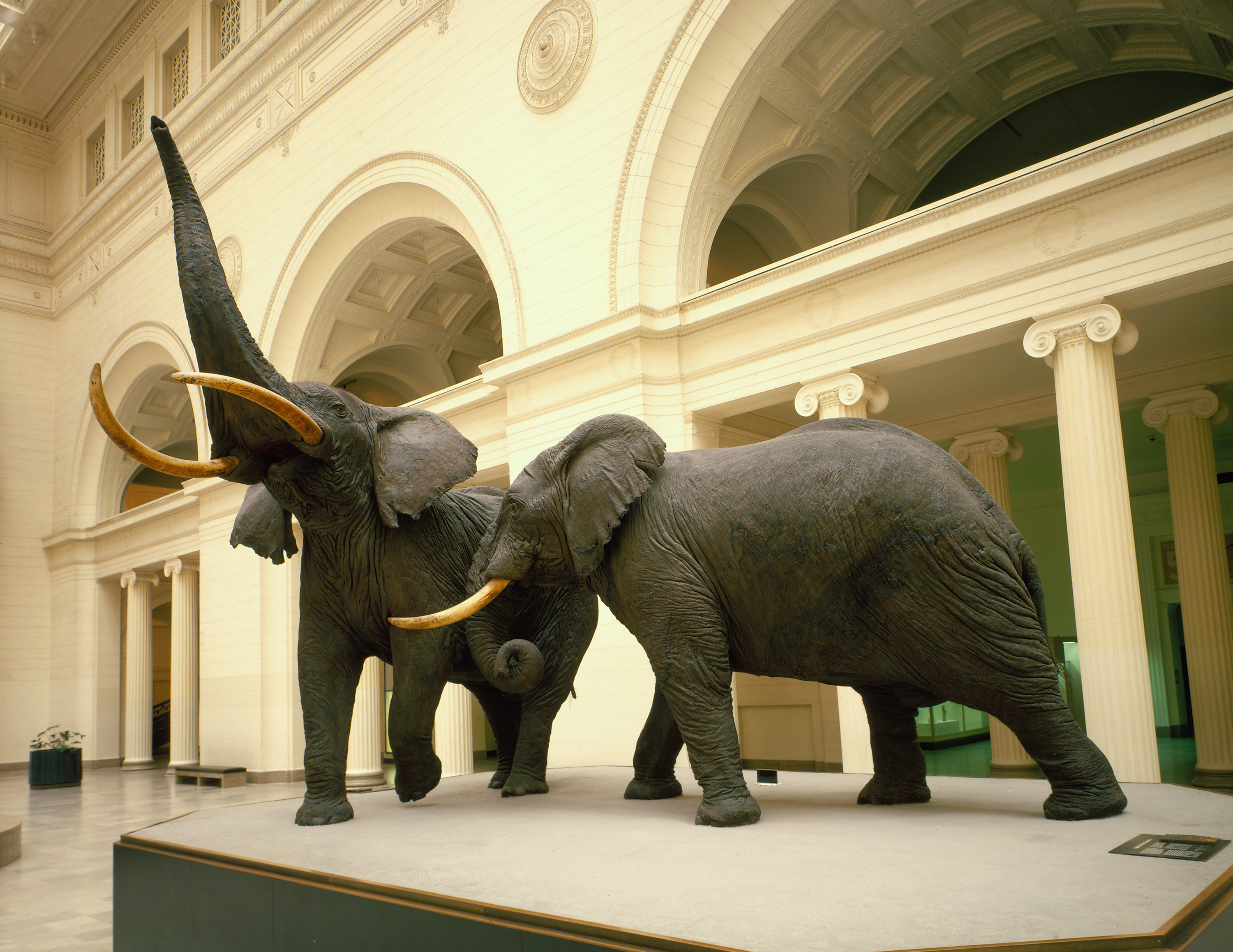
Jason Roberts describes Buffon and Linnaeus’s mutual missions to make something of themselves and to rise above their provincial origins to the heights of society. I laughed out loud reading Roberts’s introduction to Linnaeus’s character, what felt like an iconoclasm of sorts for this Fellow of the Linnean Society. “Carl Linnaeus was a Swedish doctor with a diploma-mill medical degree and a flair for self-promotion, who trumpeted that ‘nobody has been a greater botanist or zoologist’ while anonymously publishing rave reviews of his own work.”[14] Buffon by contrast took advantage of a golden opportunity to build his own demi-paradise at his manor in the Burgundy countryside until his good reputation as a botanist brought him to royal attention and the appointment as Intendent of Jardin du Roi.[15] The Jardin des Plantes, as Buffon’s charge is today known, is perhaps a better place to conclude than most. Situated in the Fifth Arrondissement across Boulevard de l’Hôpital and Rue Buffon from Gare d’Austerlitz, the Jardin is an urban oasis created for the purpose of crafting systems of knowing. Its original intent was to serve as a medicinal garden existing beyond the purview of the Sorbonne, Paris’s sole licensed teaching medical school in the seventeenth century.[16] I’ve spent several happy hours wandering through the Jardin, home to the Muséum National d’Histoire Naturelle’s Grande Galerie de l’Évolution, the Galerie de Paléontologie et d’Anatomie compare, and the Ménagerie du Jardin des Plantes, which was home to Paris’s first resident giraffe whose story is delightfully told by Michael Allin in his 1998 book Zarafa: A Giraffe’s True Story, from Deep in Africa to the Heart of Paris.[17] While Allin’s heroine Zarafa is not today on display in the Grande Galerie de l’Évolution (she is instead today to be found in the Muséum d’Histoire naturelle de La Rochelle), the taxidermy in the Parade of African Mammals that is the centerpiece of the Grande Galerie represents a system of knowing animal life in itself.An elephant leads the parade followed by hippopotami, zebras, and giraffes with two such camelopards standing erect their long necks rising toward the upper galleries at the center of the procession. Behind them come the horned mammals, rhinoceroses, and at the rear a crouching lion watching its prey. This is a system that Buffon would have appreciated more than Linnaeus, one which represents the nature of individual beings more than species. Each stuffed specimen seems to have its own character, its own personality. They look about as one would expect they would in life. The great artifice of this is the idea of a parade itself, a very human notion indeed, and one that is infrequent enough to be nearly singular in character, a reason for a day out, worth putting in the social calendar of a city, town, or village no matter how large or small. A parade is its own system of knowing.


[1] For my recent essays referring to this current historiographic project see “On Sources,” Wednesday Blog 6.22, “On Writing,” Ibid., 6.27, and “On Knowledge,” Ibid., 6.29.

[2] Lee Alan Dugatkin, Mr. Jefferson and the Giant Moose(University of Chicago Press, 2009).

[3] Staffan Müller-Wille, “Linnean Lens | Linnaeus’ Lapland Journey Diary (1732),“ moderated by Isabelle Charmantier, virtual lecture, 12 May 2025, by the Linnean Society of London, YouTube, 1:04:18, link here.

[4] Jason Roberts, Every Living Thing: The Great and Deadly Race to Know All Life(Random House, 2024), 45–49.

[5] Roberts, 20.

[6] Roberts, 115–125.

[7] Roberts, 109.

[8] André Thevet, Les Singularitez de la France Antarctique(Antwerp, 1558), 16r–16v. The translation is my own.

[9] Roberts, 109.

[10] Damião de Góis, Chronica do Felicissimo Rei Dom Emanuel4 vols., (Lisbon, 1566–1567).

[11] Geraldine Heng, The Invention of Race in the European Middle Ages, (Cambridge University Press, 2018), 190.

[12] Roberts, 110.

[13] Michael Wintroub, A Savage Mirror: Power, Identity, and Knowledge in Early Modern France, (Stanford University Press, 2006), 42.

[14] Roberts, xii.

[15] Roberts, 107.

[16] Roberts, 96–98.

[17] Michael Allin, Zarafa: A Giraffe’s True Story, from Deep in Africa to the Heart of Paris, (Delta, 1998).


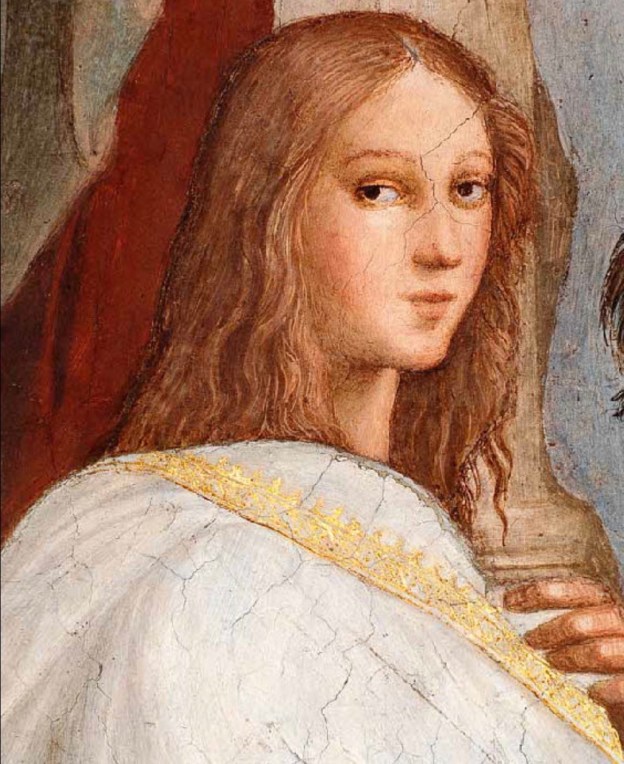
A figure from Raphael's "The School of Athens" variously identified as Francesco Maria della Rovere, Pico della Mirandola, or Hypatia of Alexandria.

On Knowledge

This week, I want to address how we recognize knowledge in comparison to the various fields of inquiry through which we refine our understanding of things.—Click here to support the Wednesday Blog: https://www.patreon.com/sthosdkaneArtRaphael, The School of Athens (1509–1511), Apostolic Palace, Vatican Museums, Vatican City. Public Domain.Sources“On Writing,” Wednesday Blog 6.27.Surekha Davies, Humans: A Monstrous History, (University of California Press, 2025).Marcy Norton, The Tame and the Wild: People and Animals After 1492, (Harvard University Press, 2024), 307.Dead Poets Society, (1989) "What will your verse be?" Video on YouTube.


This week, I want to address how we recognize knowledge in comparison to the various fields of inquiry through which we refine our understanding of things.


Lately my work has been dedicated to a thorough review of the historiography within which I’m grounding my dissertation. I wrote about this two weeks ago in an essay titled “On Writing.”[1] My research is historical, yet it touches on secondary literature which operates within various fields within the discipline of history. These include Renaissance history, and its larger sibling early modern history, the history of cartography, the history of animals, the history of botany, and more broadly the history of early modern science. Methodologically, I owe a great deal to two great twentieth-century Francophone anthropologists, Alfred Métraux (1902–1963) and Claude Lévi-Strauss (1908–2009). While Métraux and Lévi-Strauss aren’t considered directly in the historiographic section of the new introduction that I’m writing for my dissertation, which is limited to sources published since the millennium, they nevertheless stand tall in the background of my history.

Today we often talk within academia about a desire for interdisciplinarity in our work and our research. We’ve found ourselves too narrowed by our ever shrinking fields and seek greener common pastures for grazing as our intellectual and pastoral ancestors alike once knew. In my case, this interdisciplinarity lies more in my efforts to incorporate historical zoology into my work, a methodology which seeks to use zoological methodology and theory to explain historical animals. I have friends who study many things. Among them is one whose passion for history, classics, and mathematics has come together to craft a dissertation which seeks to demonstrate the intersections between those three to better understand the great transitions in human inquiry. Another seeks to follow the medical connections across oceans between disparate regions in the Americas and Europe that nevertheless existed even if they seem remarkable today. Still more, I have a friend who applies basic economic need to explain a complex diplomatic situation that once existed between the Venetian Republic and the Ottoman Empire in the Adriatic Sea. All of these historians of whom I write are applying a degree of interdisciplinarity to their work that reflects their own disparate interests and curiosities. In early modern history we talk about curiosities as objects which were collected from disparate and exotic lands into cabinets to display the erudite collector’s prestige and wealth. I say our curiosity is something to be collected by those worthy archives, libraries, museums, or universities that will employ us in the near future and for us to feed with new ideas and avenues of investigation that we will never be bored with life.

In all of these things, there is an underlying genre of knowledge which I am addressing. I’ve written thus far about history alone, yet it is the same for the anthropologists, astronomers, planetary scientists, and physicists who I know. Likewise for the literature scholars and the linguists. Our fields of inquiry all grow on the same planet that comprises of our collected knowledge. In English, this word knowledge is somewhat nebulous. To me, it says that we know things broad or specific. In London, for instance, the Knowledge is the series of tests which new cabbies must complete in order to learn every street within a certain radius of Charing Cross. The Latin translation of this word, scientia, makes things even more complicated as that is the root of the English word science. Thus, when we refer to Renaissance science, there is always a caveat in the following sentence explaining that “this is not science as we know it but a sort of protoscience.” I was advised, similarly, after a particularly poorly received presentation at a workshop at the Museum of Natural Sciences in Brussels in October 2023 that I shouldn’t refer to “sixteenth-century conservation” because no such concept existed at the time; instead, it would be better to discuss a “genealogy of conservation.” This sense that modern terms, in use since the Enlightenment of the eighteenth century, ought not to be pulled further back into the past I think loses some of the provenance of those terms and how the Enlightenment philosophes first came across them. 

I find it telling that the Ancient Greek translation of knowledge, γνῶσις (gnôsis), is a word with which I’m more familiar from theology and the concept of Gnosticism whereas scientia reminds me of philosophy and the other fields of inquiry which grew from that particular branch of the tree of human curiosity. One might even say that philosophy and theology are a pair, siblings perhaps? They seek to understand similar things: on the one hand an inquiry into thought, and ideally wisdom, and on the other a search for the nature of the Divine, which at least in my Catholicism we can know because we are made in the Image of God. The division here between the Ancient Greek term being affiliated with faith and the Latin one with reason I think speaks to the Latin roots of my own education in Catholic schools and at a Jesuit university, where I learned about Plato and Aristotle, yet I recognized Aristotle’s Historia animalium (History of Animals) by its Latin name by which it was generally known in Western Europe for centuries before the rise of vernacular scholarship rather than by its Greek original Τῶν περὶ τὰ ζα ἰστοριῶν (Ton peri ta zoia historion). Note that the English translation of this title, History of Animals reflects better the Latin cognate of ἰστοριῶν rather than the better English translation of that Greek word, Inquiry.

Added onto these classical etymologies, in my first semester Historiography class at Binghamton University I was introduced to the German translation of scientiaγνῶσις, and knowledge. Wissenschaft struck me immediately because I saw the German cognate for the English word wizard in its prefix, and because I knew that the -schaft suffix tends to translate into English as -ship. Thus, my rough Anglicization of Wissenschaft renders Wizardship, which is rather nifty. Yet this word Wissenschaft instead was seen in the nineteenth century as a general word which could be translated into English as science. This is important for us historians trained in the United States because our own historiographic tradition, that is our national school of historians traces our roots back to German universities in the early and middle decades of the nineteenth century. I remember long sessions of my historiography class at UMKC discussing the works of Leopold von Ranke (1795–1886), the father of research-based history. I felt a sense that this concept of Wissenschaft seemed relatable, and as it turned out that was because Irish has a similar concept. 

Whereas in English we tack on the suffix -ology onto any word to make it the study of that word, in Irish you add the suffix -ocht. So, geology is geolaíocht and biology is bitheolaíocht. Yet note with the second example that the suffix is not just -ocht but an entire word, eolaíocht. This is the Irish word for science, added onto the end of bitheolaíocht to demonstrate that this word refers to the study of bith- a prefix combining form of the word beatha, meaning life. So, biology then is the science of life itself. Powerful stuff. I appreciate that Irish linguists and scholars have sought overall to preserve our language’s own consistency with its scientific terminology. It means that these fields of study, these areas of knowledge, can exist purely within the purview of the Irish language without any extra need to recognize that their prefixes or suffixes come from Latin, Greek, or English. There are some exceptions of course: take zó-eolaíocht, the Irish word for zoology, which effectively adopts the Greek word ζῷον perhaps through the English zoo into Irish. Would it not have been just as easy for whoever devised this hyphenated word to instead write ainmhíeolaíocht, translated into English as the science of animals? Here though I see more influence from English because this language adopts as much as it can from other languages out of prestige and a desire for translingual communicability. As an English speaker, I find scholarly works often easier to read because we share common etymologies for our words relating to knowledge. English’s sciencegeology, biology, and zoology are French’s sciencegéologie,biologie, and zoologie. In English, we drop any pretense of Englishness to clothe ourselves in a common mantle familiar to colleagues from related cultures around the globe. In academia this is to our mutual benefit, after all so much of our work is international. I’m regularly on webinars and Zoom calls with colleagues in Europe for instance. I believe this is the lingering spirit of the old scholarly preference for Latin as a lingua franca which at least to me seems close enough in the past that it’s tangible yet realistically it’s surely been a very long time since any serious scholarly work beyond classics was published in Latin for the benefit of a broad translingual readership?

I for one admire the Irish word eolaíocht and its root eolas, which translates into English as knowledge, that is an awareness of things because eolaíocht represents a universal concept while retaining its own native nature. So often in my research I am discussing the early assimilation of indigenous cosmovisions, to borrow a Spanish word put to good use by Surekha Davies in her latest book, into the nascent global world centered on Europe.[2] I see how these cosmic conceptions faded until they were rendered in Gothic or Latin letters on the voluminous pages of encyclopedic Renaissance general and natural histories which remain among the most often cited primary sources for these indigenous cultures who Marcy Norton argued in her 2024 book The Tame and the Wild: People and Animals After 1492 had their own classical past made remote from their colonial present by European contact, conquest, and colonization.[3] Seeing these indigenous perspectives fade into their categorized and classified statuses within the cosmos defined by Europe’s natural philosophers I feel fortunate that my own diaspora (which was also colonized) has retained this element of our individual perspective. I first came across the -ocht suffix in the word poblacht, the Irish word for republic. A famous story from the birth of the Irish Free State during the Anglo-Irish Treaty negotiations in 1921 tells of British Prime Minister David Lloyd-George, a Welsh speaker, remarking to Michael Collins, an Irish speaker, that their choice of a republic was unusual because none of the Celtic languages naturally have a word for republic. That word evokes its Roman roots in the ancient Res publica Romana, the Roman Republic, whose northward expansion across the Alps led to the gradual death of the Continental Celtic languages, whose speakers’ descendants today are largely the Western Romance speakers of French, Romansh, Occitan, Catalan, Spanish, Galician, and Portuguese, among others. Romance languages are noted for their common descent from Latin, whence they all derive variations on the Latin word scientia; English gets science through Old French. “How are you going to name your new government in the Irish language?” Lloyd-George asked. Collins replied something along the lines of “a kingdom is called a ríocht, so this government of the people (pobal) will be called a poblacht. Thus, the Republic of Ireland is named in Irish Poblacht na hÉireann. Naturally, this word pobal derives from the Latin populus, so the shadow of Rome hovers even over unconquered Hibernia. Yet that is another topic for a different essay.

Let me conclude with a comment on the difference between knowledge and wisdom, as I see it. The former is far more tangible. We can know things through learning embodied best in living and in reading. I know for instance to look both ways before crossing a street because plenty of people in the last 140 years have been hit by cars, buses, and trucks, and you can never be too careful. Likewise, I know everything I do about the things I study through reading what others have written about these topics. It’s my job then to say what I will. In Whitman’s words made immortal by our recitation, the answer to the eternal question, “that the powerful play goes on, and you may contribute a verse.” That’s history, people! Reading the powerful play of what others have written and summoning up the courage to take the podium and have your say. I first heard this particular poem, as did many in my generation, recited by Robin Williams in the 1989 film Dead Poets Society. Knowledge is the recitation of these facts we’ve learned. Wisdom is understanding how these facts fit together and speak to our common humanity. What makes us human? I believe it’s as much what we know as what we remain ignorant of. Our ignorance isn’t always a curse, rather it’s another foggy field we’ve yet to inquire about, a place where someone’s curiosity will surely thrive someday. It is another evocation of eolas still to come in our long human story. How wonderous is that?


[1] “On Writing,” Wednesday Blog 6.27.

[2] Surekha Davies, Humans: A Monstrous History(University of California Press, 2025).

[3] Marcy Norton, The Tame and the Wild: People and Animals After 1492, (Harvard University Press, 2024), 307.


A portrait of André Thevet from 1554

Why André Thevet?

This week, the second in several scribblings about my research: why I chose to study André Thevet and build my career on the mound of his works.—Click here to support the Wednesday Blog: https://www.patreon.com/sthosdkane


This week, the second in several scribblings about my research: why I chose to study André Thevet and build my career on the mound of his works.


I initially chose to focus my dissertation on André Thevet (1516–1590) because of his account of the sloth and because he was French; I speak the language and therefore felt I would not need to learn another language to grasp the sources. Thevet is a figure who I’ve gotten to know over the last 6 years. I first encountered him in Dr. Bill Ashworth’s Renaissance seminar at the University of Missouri-Kansas City. It was in a nice classroom in the southeast corner of the third floor of Haag Hall that welcomed in the midday light as the Sun arced across the sky. We met on Tuesdays and Thursdays, and often I would walk to class from my job working at a cheese shop, the Better Cheddar, at 49th & Pennsylvania on the Plaza. What I didn’t admit at the time but have freely regaled friends and family since is that on Tuesdays the shop’s sommelier would often stop by to offer those of us working at the time wine tastings of the latest vintages. I was hired by the cheesemongers there more for my knowledge of European wines, and because I spoke French, than for my far more limited understanding of cheese going into the job. So, I often went from a delightful morning tasting cabernet francs, pinot noirs, and syrahs to a delightful afternoon sitting in the back third of Dr. Ashworth’s class listening to his stories about the Renaissance.

By this point, I was still committed to a largely unfounded master’s thesis project studying crypto-Catholics in the English court of James I and VI, which was born out of a desire that I might find my way back to London perhaps to work as a curator at the Banqueting House or Hampton Court. By Christmas, that project had well and truly died, it was only several years later that I discovered the fantastic work of the late Professor John Bossey on persistent Catholicism in the North of England that I found the anchor and line that would’ve led me toward my original research project idea. As it turned out, I found my way to Thevet through a more traditional Renaissance history master’s thesis about English humanism, specifically the education of Margaret Roper (1505–1544) and Mary Basset (c. 1523–1572), daughter and granddaughter of St. Thomas More (1478–1535). As an English-speaking Catholic of mostly Irish descent, with a fair minority of English ancestors to boot, I was drawn to the More family as models of a Catholic conscience; it is rather fitting that the upsurge of English colonialism in Ireland coincided with the English Reformation. When I lived in London, while I usually attended Mass at the Jesuit church at Farm Street in Mayfair, I would occasionally go to the English Chant Mass at Westminster Cathedral near Victoria Station. All of this came together in my History master’s thesis about Roper and Basset, my second thesis after the one I wrote in London for my degree in International Relations and Democratic Politics at the University of Westminster.

A painting miniature of the family of Sir Thomas More held in the collections of the Victoria & Albert Museum, London.
A painting miniature of the family of Sir Thomas More held in the collections of the Victoria & Albert Museum, London, c. 1527. Photo by the author.

Yet while I was working on this and writing good essays and papers, I kept hearing my friends talk about how the classes they loved the most dealt with the History of Science. One of my greatest regrets from my time at UMKC is that I didn’t take Dr. Ashworth’s Scientific Revolution class. It would’ve proved to be a good foundation considering I’ve taught essentially the same material since, and considering a great deal of the effort of my generation has been focused on deconstructing this perception of a revolution from humanism to science at the turn of the seventeenth century. So, when I discovered to my horror two weeks before leaving Kansas City to begin my doctorate at Binghamton that the thesis of the dissertation I intended to write had been published in a peer-reviewed journal a year before I took the chance to shift gears entirely and dive into the history of science. I used Thevet’s sloth as my diving board.

I met André Thevet in August 2019. We’d been introduced three years before by Bill Ashworth, yet besides the chuckles I gave at seeing his sloth engraving for the first time I turned my mind away from the Franciscan. Through Thevet I was introduced to the Renaissance notion of cosmography, a starkly different use of the term than how I’d heard it. To me, cosmos is most synonymous with Carl Sagan’s book and documentary series, including that series’ remake in the last decade by Neil DeGrasse Tyson and Sagan’s widow Ann Druyan. I kept coming across the word cosmos throughout the years I was in Binghamton in a myriad of windows. On all of my long drives I listened to audiobooks, and I usually remember the books better than the drives themselves. They animated my existence for those days in the Mazda Rua, my car, crossing the eastern half of our country by road. The first day of my August 2021 Long Drive East was so animated first by Alex Trebek’s last book, which he and Ken Jennings co-narrated, and second after I finished that book on I-70 near the Indiana-Ohio border I turned on a reading of Sagan’s Cosmos read by LeVar Burton. I stopped the car at the Ohio Welcome Center, maybe an hour into the book, to try and get another stand hour on my smart watch and was struck at how brilliant the sky above me seemed that clear August night. That day I’d been running from a massive storm that bore down on Iowa, Illinois, and northern Indiana, a derecho, and for the first time all day I couldn’t see the dark billowing clouds with bolts of lightning shooting forth like thanatic trumpets reminding all in their path that we are mere lodgers on this continent owned by Nature itself. Yet in that moment there were no clouds, no storms on the horizon, only stars burning high above.

Myself in the captain’s chair at the Star Trek Tour in Ticonderoga, NY. Photo: Alex Brisson.

In another drive on a Sunday in late September 2022, at the end of a delightful weekend I spent with my friend Alex Brisson in Ticonderoga and Albany, I drove southwest through the rolling hills of Central New York toward Cooperstown to visit the Hall of Fame. While I was driving, I listened to Andrea Wulf’s biography of the Prussian naturalist Alexander von Humboldt (1769–1859). On that particular Sunday, I listened as Humboldt’s own book Kosmos was described in depth. It felt to me that I could see some of the inspiration for Sagan’s Cosmos in Humboldt’s magnum opus, and I was left wondering how Thevet’s own Renaissance cosmography fit into this cosmic lineage. As it turns out, Humboldt was familiar with Thevet’s work, and didn’t care for it at all. The Prussian naturalist is one of the earliest figures in my dissertation’s secondary literature, and he is important because he largely dismissed Thevet’s contributions to natural history writing that his vision of the cosmos was too small to warrant that word.[1] In many ways, my approach to Thevet has always been bi-directional: I’ve tried to learn more about the man by finding the books which survive from his library and the books we know he translated while at the same time I’ve always had an eye on Thevet as a starting point for understanding a specifically non-Iberian understanding of the development of the natural history of the Americas beginning in the Renaissance. My own perceptions of natural history are shaped by my childhood introduction to this vast kaleidoscope of the human vision of the rest of nature on display in my hometown natural history museum, the encyclopedic Field Museum on the Chicago lakefront. While as a child I marveled more at the dinosaurs in their upper floor galleries, now as an adult I prefer to spend my time in the museum among the taxidermy and dioramas with one eye drawn to nostalgic escape and the other toward scholarship; the Field Museum contains a specimen of one likely candidate for the species of three-toed sloth that Thevet described in his Singularitez. By taking this multidirectional focus on the history of natural history, on the one side starting with Thevet in the sixteenth century and on the other with Carl Akeley and the collecting expeditions launched by the Field Museum at the turn of the last century, I’ve developed a particular perspective on natural history that is visible in both wide and narrow focuses.

Fighting African Elephants in Stanley Field Hall. Taxidermy by Carl Akeley . 41411 is on the left with two tusks and its trunk is raised. 41410 is on the right, with one tusk. Photo credit: (c) Field Museum of Natural History - CC BY-NC 4.0.
Fighting African Elephants in Stanley Field Hall. Taxidermy by Carl Akeley . 41411 is on the left with two tusks and its trunk is raised. 41410 is on the right, with one tusk. Photo credit: (c) Field Museum of Natural History – CC BY-NC 4.0.
A portrait of André Thevet from 1554

In the six years since, I felt that I not only got to know André Thevet the cosmographer but something of Thevet the man. He was just a few years older than I am when he made his first overseas voyage from France to Constantinople, the Levant, and Egypt in 1551. The most famous portraits of Thevet were published in his 1575 Cosmographie Universelle and 1584 Vrais Pourtraits des Hommes Illustres. These two portraits show Thevet at the height of his career, the cosmographer royal, the keeper of an expansive cabinet of curiosities, and a close confident of the Valois royals. Yet there’s an older portrait of Thevet as a younger man which appears in his first book, the Cosmographie de Levant, published in 1554. In it, Thevet is shown not as the resolute man of his craft but as a humble Franciscan friar. It was a position that he was put in by his father when he was 10 years old in order to give the boy a chance at a good education. I see in these three portraits something of a desire for better and greater things. In the process he crossed some people the wrong way and got a fair few things wrong in his cosmography. I’ve learned to take what Thevet wrote with a fine grain of salt especially later in his life. I wonder though if some of the acrimony that Thevet’s reputation has faced since his death in 1590 isn’t in part because of his close ties to the Valois family who declined from power and were replaced by their Bourbon cousins the year before and largely by the Valois’ infamy in the history of the French Wars of Religion, in which the Huguenots who traveled to Brazil with Thevet in 1555 were so threatened by their country over matters of faith. I recently met a woman at a Kansas City Symphony performance who was wearing a Huguenot cross necklace, and it struck me how her ancestors’ experience living as Protestants in a Catholic state mirrored my own ancestors’ experiences living as Catholics in Ireland during the Protestant Ascendancy and Act of Union with the very Protestant Kingdom of Great Britain in 1800. Like her, I’d grown up with a sense of pride in my Catholic ancestors’ resilience at staying Catholic in spite of the state which ruled over them. Seeing the long shadow of the Wars of Religion which for my people didn’t really end until Good Friday 1998 from this vantage gave me tremendous perspective. How did Thevet view it all? He blamed the Huguenots in part for the fall of France Antarctique in his Cosmographie Universelle, writing that “little of this would have happened without some sedition among the French, which began with the division and parting of four ministers of the new religion sent by Calvin to plant his bloody gospel.”[2] Why did he choose to write that the way he did? Certainly, these religious tensions gave cause for the Portuguese to eliminate the French presence in Brazil, yet wouldn’t the economic threat of the French presence in Brazil toward Portuguese trade be justification enough? Could Thevet have been responding to the political situation he found himself in when he published the Cosmographie Universelle in Paris in 1575?

Thevet in 1584.

I like Thevet because I find the man relatable, I get the sense that we can relate somewhat; like him I’ve felt this constant need to prove myself to my peers. This need has waned somewhat as I’m moving along with my career. Yet I feel the younger Thevet depicted in his Cosmographie de Levant is more relatable to my life today in my early thirties. While not a cleric, I chose to not go down that path, I’m alone in my life with a strong sense of wanderlust. Those wanderings have taken me to Paris twice now in the last two years to get a sense of Thevet from beyond the printed books with which I’m most familiar. In October 2023 I followed a lead which took me to Rue de Bièvre, the street where he lived at the end of his life up to his death in 1590. I walked up and down that little street between Boulevard Saint-Germain and Quai de la Tournelle and stopped in the pocket park on the western side of that street. I felt that this was the closest I’d ever get to him, after all the church where he was buried, the Convent des Cordeliers, was desecrated during the Revolution of 1789-1791 and from what I’ve been able to gather, his tomb disappeared. Yet earlier this year while watching an episode of PBS’s science series NOVA about the graves found in Notre-Dame during its reconstruction, I noticed they pulled out a nineteenth-century book of old Parisian epitaphs. I did a quick search through the BnF’s Gallica database, and found Thevet’s own epitaph there transcribed from the original stone carved in 1592 that lay in the Convent of the Cordeliers. In the original French it reads:

Rue de Bièvre, where André Thevet once lived.

Cy gist venerable et scientifique personne Maistre Andre The-

vet, cosmographe de quatre roys, lequel estant aagé de LXXXVIII (88) ans, se-

roit decedé en ceste ville de Paris, le XXIII jour de Novembre M D XCII. –

Priez Dieu pour luy.[3]

In English, this translates as :

Here lies the venerable and scientific person, Mr. André Thevet,

Cosmographer of Four Kings, who was 88 years of age,

he died in this city of Paris, the 23rd day of November 1592.

God, pray for him.

A Tupinambá war club once called “the Sword of Quoniambec” that I’m studying. Thevet brought it to France in 1556.

On that same trip I visited a wooden Tupinambá club which the Musée du Quai Branly records was donated to the royal collections by Thevet and was given to the cosmographer by the Tupinambá leader Quoniambec (d. 1555). I figured this would be the only artifact I’d see that Thevet would’ve himself handled. Little did I realize that eight months later I’d be back in Paris, this time at the BnF’s Richelieu building in the Department of Manuscripts reading through Thevet’s own handwriting. I’d made a visit there that day to read through Thevet’s translation of the Travels of Benjamin of Tudela, a twelfth-century Sephardi Jew from the northernmost reaches of Al-Andalus which told the story of his travels around the Mediterranean world. Tudela’s wanderings took place three centuries before Thevet made his own voyage east into the Mediterranean in 1551. Here, through the window Thevet crafted with his pen over 470 years before, I was reading a story retold in Thevet’s words of events that occurred over 700 years ago. That sunny June day, I spent a few quiet moments reflecting on Thevet’s penmanship, his signature, and how familiar his writing seemed. I’ve read more of Thevet than many others, after all I’ve translated the entirety of his Singularitez, and so when I was working with his Tudela translation, I found the job was made easier by how I could recognize his voice in the flourishes of his pen. I felt that I knew the man, in spite of the centuries between us. Soon after, as I walked from the Richelieu building to a café next to the Sorbonne where I was meeting an editor for a project I’m contributing to, I reflected amid my quick steps crossing the Seine that I was walking the same streets Thevet once walked. They’d changed to be sure, but there were still monuments that he’d recognize, edifices of the Paris he knew.

I chose to study Thevet out of a drive for practicality, a quick solution to a pressing problem of finding a dissertation topic that I could move to when my original plans went up in smoke. In the years since I’ve become known as a Thevet scholar. I’ve given many conference presentations and lectures about the man and his contributions to Renaissance natural history. In fact, I’ll be giving one more on June 12th with the Renaissance Society of America’s Graduate Student Lightning Talks, sponsored by the RSA Graduate Student Advisory Committee. That talk takes a different perspective on Thevet’s sloth than any other I’ve yet given, approaching it as an example of animal intelligence. Tune in to learn more.


[1] Alexander von Humboldt, “Les vieux voyageurs à la Terre Sainte (du XIVe au XVIe siècle),” Nouvelle annales des voyages, de la géographie et de l’histoire 135 (1853): 36–256, at 39.

[2] Thevet, Cosmographie Universelle, Vol. 2, 21.2, ff. 908v–909r.

[3] Émile Raunié, Épitaphier du vieux Paris, recueil général des inscriptions funéraires des églises, couvents, collèges, hospices, cimetières et charniers, depuis le moyen âge jusqu’à la fin du XVIIIe siècle. Vol. 1–3, Paris : 1890-1901), 302, n. 1171.


A frame from Abraham Ortellius's map of the Americas, 1587.

On Toponymy

This week, the first in several scribblings about my research: how I connect historic places in my sources with their modern names.—Click here to support the Wednesday Blog: https://www.patreon.com/sthosdkane


This week, the first in several scribblings about my research: how I connect historic places in my sources with their modern names.


When I started working on my dissertation and began downloading copies of André Thevet’s 1557 book Les Singularitez de la France Antarctique, I was struck by a curious question regarding the identity of some of the places which Thevet described along the disparate shores of the Atlantic Ocean in the middle of the sixteenth century. Some of these were readily accessible, the Portuguese fortress of Elmina for one remained an infamous outpost of the slave trade for centuries after Thevet’s 1555-1556 voyage. Likewise, Thevet made early references to regions like Florida, Mexico, Peru, and Brazil which are still known by those names today. I especially admire how he demonstrated the assimilative power of colonialization in the renaming of the Taíno island of Haiti into a newly christened European island literally called Little Spain, that is Hispaniola. Today, we know Haiti as the name of the western republic on the island of Hispaniola, and the Haitians as a people predominately of African descent, yet that term on its own originated with the indigenous inhabitants of that island and its neighbors.

André Thevet (1516-1590) from his Grande Insulaire.

This new world of names which Thevet hoisted upon the places he sought to describe in his Singularitez place that book in its historical context at the dawn of the European colonization of the broader Atlantic World and also in some cases provides a perspective on precolonial and early contact societies that have otherwise been diminished by the deluge of colonial toponyms which in many places replaced them. Thevet, like his fellow Frenchman Jacques Cartier, tended to use indigenous names for places, flora, and fauna. I’ve written in great detail about this concerning Thevet’s use of a French rendering of the Tupi name for the sloth, Haüt, and my dissertation includes similar analyses of the preservation of indigenous names for toucans, parrots, and macaws from Tupi for Thevet’s own French audience in his work. While his preference for indigenous names certainly added a lure of the exotic to his work, it is clear that he saw the utility of keeping these names and promulgating them to his readers.

When I am approaching a location in Thevet’s work I begin by seeing what the other editors and translators of Thevet down the last 468 years have done to familiarize what Thevet wrote for their audience. Thomas Hacket’s 1568 translation is beneficial to see how an Elizabethan reader might interpret distant Brazil and is useful for connecting Thevet’s Atlantic to Ralegh’s. Likewise, Giuseppe Horologgi’s 1562 translation is beneficial for understanding how Thevet was read by Italian humanists curious about the wider world; these readers were most likely thinking about Thevet’s stories in the context of the wider genre of travel literature typified in Italy by Giovanni Battista Ramusio’s (1485–1557) I Navigationi et Viaggi and for his natural history the collected works of Ulisse Aldrovandi (1522–1605). Moving from Thevet’s contemporaries, I then turn to a nineteenth century French reprint of the Singularites (as they were rendered in Modern French) edited by Paul Gaffarel. This edition was published in 1878 at a time when interest in Thevet and sixteenth-century French Brazil had a resurgence during the Third Republic which lasted into the early career of Claude Lévi-Strauss and Alfred Métraux, the two most prominent French anthropologists to consider the value of Thevet and his rival Jean de Léry as primary sources on early contact Tupinambá culture. Finally, I will turn to the two modern Brazilian translations of Thevet, Estêvão Pinto’s from 1944 and Eugenio Amado’s from 1978. Together these two sources are often my first choice when tracking down taxa of Brazilian flora and fauna and confirming Brazilian demonyms and toponyms. I figure these translators tended to have better access to Brazilian archives and scientific studies concerning their own country than their European counterparts considering the great distance between these continents. Lastly, several partial modern English translations of Thevet exist which provide their own regional analyses, most notable of these is Roger Schlesinger and Arthur Stabler’s 1986 translation of Thevet’s North American chapters which does particular justice to Thevet’s account of Canada. 

The best sort of contributions any of us can make to collective human knowledge is built upon the conclusions and efforts of our colleagues past and present. The academy is a collaborative effort that only survives as long as we believe in the value of our work and of each other. I was reminded of this when I was in Boston during the Renaissance Society of America’s annual conference in March and felt such a potent sense of jubilation at that experience of camaraderie, I felt spending those four days among friends and colleagues. I especially see this among my fellow grad students and early career scholars who are the future of higher education and who are engaged in their work to a degree that in the span of a doctorate we readily become experts in our own disparate fields yet find solace and support in that common experience.

Returning to the task at hand, once I have consulted each of these various editions and translations of Thevet’s Singularitez, I then turn to his Cosmographie Universelle, a two volume magnum opus which was published in 1575. Volume 1 contains his accounts of Asia and Africa, and Volume 2 collected knowledge about Europe and the Americas. Thankfully, the Cosmographie Universelle has a good set of indices crafted by Thevet himself, which make navigating this gargantuan work easier. At this point, six years into my study of the man my PDF files of this book have enough of my own highlights & notes that I’ve added my own layer of internal navigation atop the cosmographer’s original efforts. Often, the Cosmographie Universelle supplements the Singularitez and adds greater depth and detail to it. For one, I first recognized Thevet’s claim that the sloth was an animal which could “live only on air” in the Cosmographie Universelle, only later noting the same claim in Chapter 52 of his Singularitez. In the Cosmographie Universelle it’s actually pulled out as a section heading in the margins of the book.

If again, Thevet either uses the same name for the geographical feature in question without any further context or the feature all together isn’t mentioned I will then turn to his 1586 Grande Insulaire, an unpublished manuscript of his which was edited by the preeminent French Thevet scholar Frank Lestringant and released in book form in 2016 by the Genevan publisher Droz. Lestringant has a long career studying Thevet, and his footnotes on the cosmographer remain among the best around. Often, he’ll be able to identify the places I’m looking for, but again his specialty is the history of French Protestantism in the sixteenth century, so toponymy isn’t necessarily his focus in reading Thevet.

This then leaves the last resort: a quick internet search to see what comes up when I type in Thevet’s sixteenth-century name for a given location. Often, I have better luck searching French or Portuguese Google than English Google (google.fr or google.pt) or even the French or Portuguese editions of Wikipedia, though all results from both the search engine and online encyclopedia need to be taken with a grain of salt and tremendous care. Anything I find online needs to be double-checked with other sixteenth-century sources, often Spanish in origin, to determine where Thevet got his name for the place from.

With my method in place, I want to put it to use explaining how I identified one particularly confusing toponym which Thevet used to describe a city on the coast of Peru. First, let me say that Thevet had a very broad understanding of Peru which included the entire side of South America west of the Andes, Panama, most of Central America, and the Caribbean archipelago beyond. Knowing this, I began by ignoring the word Peru and focusing instead on the coordinates Thevet ascribed to this city. He wrote in Volume 2, Book 22, Chapter 8 of his Cosmographie Universelle that this city was located “22 degrees from the Equator.”[1] Thevet used a Ptolemaic system for determining degrees of latitude, writing in the Singularitez that the Earth was divided into “360 degrees, and each degree is divided into 70 miles, which equals 16.5 leagues (96.48 km).”[2] By this calculation, the Earth’s circumference should be 34,732.8 km, which is 5,342.217 km short of the actual circumference at the Equator. This is a fitting comparison to make because the region where this city of “Saint Iacques” was located because it was certainly Equatorial in latitude considering he placed it among the cities of Quito & Ingapirca, which are located in modern Ecuador and Cusco & Cajamarca, which are located in modern Peru. 

A frame from Abraham Ortellius's map of the Americas, 1587.
A frame from Abraham Ortellius’s map of the Americas, 1587, showing Thevet’s Sainct Iacques as S. Tiago.

Generally, I found that Thevet’s degrees of latitude tend to be about double their modern equivalents, though this is a rough and often incorrect assessment. In this instance, that theory led me to search maps of the Peruvian coast around 11ºS looking for towns called Santiago, the Spanish translation of the Middle French Sainct Jacques. After spending a day searching, I gave up on this particular effort for the first time. Weeks later though, I returned to it after a conversation with frequent Wednesday Blog reader and one of my best friends Carmelita Bahamonde, who pointed out to me that her Ecuadorean hometown’s official, long name is Santiago de Guayaquil. I looked into it, and found several pages later hidden amid the text that Thevet had clarified further about this particular city of Sainct Jacques, writing that it was “the old port formerly named Guayaquil.”[3] I put this oversight at not finding this information where it was in that same source to my own poor eyesight, yet I remain grateful to my friend for confirming her hometown’s presence in Thevet’s Atlantic cosmography. He went into further detail about Guayaquil’s Spanish founder, the conquistador Francisco de Orellana (1511–1546) who led the first successful European expedition down the Amazon from the Andes to the Atlantic, losing almost all of his men along the way to desertion, disease, and attacks by the locals who knew to not welcome the Spaniards. In fact, when I began hearing about the lost Amazonian civilization first on PBS’s NOVA and later in one of my magazines, I believe it was in Smithsonian, I nearly leapt from my chair shouting “Thevet wrote about them!”

An engraving from a 16th century book of indigenous Brazilians cutting down trees for their timber.
The Franco-Tupinambá trade partnership in action from Thevet’s Cosmographie Universelle, vol. 2, 21.16, f. 950v. BNF, Public Domain.

The value of André Thevet’s books lie in their character as sources for understanding the Americas just at the moment of these continents’ invention as the fourth part of a larger global world. The Singularitez and Cosmographie Universelle offer stories and perspectives of peoples and places that had not yet been subsumed into the colonial deluge that would submerge so much of the indigenous cultures of these continents in the coming centuries. This week, my colleague (and newly minted Ph.D.) Mary Katherine Newman at Oxford published a blog post with the History Workshop on restoring indigenous historical practices to equal prominence with the written European archive that we historians are trained to use. In many respects, Thevet did this, albeit through the perspective of a sense of civilizational hierarchy which was the accepted norm of his day. Métraux wrote that Thevet was the better of the sixteenth-century travelers to visit Brazil when it came to finding the precolonial and early contact Tupinambá in that same written archive. In my work, I’ve made a strong effort at acknowledging Tupinambá agency in their colonial encounters with the French, who were interested in trading with the locals rather than conquering, colonizing, or converting them. This allowed for a vibrant trading partnership  to develop between the French and the Tupinambá which lasted through the mid 1560s. French colonial efforts might have taken off in Brazil had the colony, named France Antarctique, survived its first decade. Through a mix of sectarian infighting and increasing Portuguese dominance along the Brazilian coast, the French were expelled from France Antarctique by 1567. Still, one French toponym survives; the island where the French built their fort, which they named Fort Coligny, is today still known in Portuguese as Ilha da Villegagnon, after France Antarctique’s governor, Admiral Nicolas Durand de Villegaignon (1510–1571), the man who brought Thevet to Brazil to serve as the colony’s chaplain.


[1] Thevet, Cosmographie Universelle, vol. 2, 22.8, f. 970a.

[2] Thevet, Singularitez, f. 132v.

[3] Thevet, Cosmographie Universelle, vol. 2, 22.8, f. 972a.


On Boston

This week, some comments about my trip to Boston last month and reflections on that resilient city.—Click Here to Support the Wednesday Blog: https://www.patreon.com/sthosdkane


This week, some comments about my trip to Boston last month and reflections on that resilient city.


I’ve been to Boston several times now, once in my childhood on a family vacation and twice for work. It’s the furthest of the east coast cities from Kansas City, and in some ways it’s rather hard to get to from here. Yet, the influence of Boston in particular, of Massachusetts in general, and of New England overall is quite pronounced here in the Midwest. When I was in the first semester of my History MA program at the University of Missouri-Kansas City one of my favorite books from the American History Colloquium I took discussed the patterns of westward settlement from the old eastern states during the Early Republic. From this, I learned that the reason why New York and New England felt more familiar to me was in part because it was New Yorkers and New Englanders who settled the parts of Northern Illinois that became the metropolis of my birth, Chicago, as well as many of the original towns in Kansas. One aspect of the Bleeding Kansas conflict of the 1850s, an overture of sorts to the American Civil War of the 1860s, was that Missourians with southern roots found their culture clashed with Kansans who were recently arrived pioneers from the North.

I remember really enjoying my childhood visit to Boston for a great many reasons. We did most all of the touristy things in that city, though I realized later on that we hadn’t visited some of the finer art museums in town like the Museum of Fine Arts or the Isabella Stewart Gardner Museum. That thought rested in the back of my mind for about twenty years until I returned to Boston as a doctoral candidate in October 2021 on a mission to see how the first French published translation of the Odyssey translated the Greek word ­ἄγριοι, which Robert Fagles translated into English as “hard men, savages.”[1] The French translator in question, the sixteenth-century humanist Jacques Pelletier du Mans (1517–1582) rendered ­ἄγριοι as “rude and uncivilized men.”[2] The copy I accessed of this book is housed in Harvard’s Houghton Library, and so I made a trip out of a word-search and found so much to admire about Boston and the surrounding suburbs in the few days I was there.

Harvard’s Houghton Library in October 2021

For one, the vintage of that region as one of the great nests of Anglo-American culture has always felt familiar to me, as that is in many respects the roots of my own culture albeit with many more layers of immigrant influence stacked atop it that form my idea of America. When I drove to Boston from Binghamton in October 2021 amid the incandescence of the Fall leaves I kept remarking on the smaller size of so many a Massachusetts village and town each of which was founded in the eighteenth or even seventeenth century. Where towns in Colorado celebrate their altitude and towns across America commend their population, in that Commonwealth each town’s age is celebrated as a mark of pride. My appreciation for this was less driven by an amazement at seeing such old places, I’ve been to many an old city, town, and village in Europe. I’ve even stayed in buildings that were erected 500 years ago like the place I chose in Besançon. What struck me most here was that these old houses were present here in America, in the United States. After all, my homeland in the Midwest has few colonial buildings left for us to mark with signs or commemorate as local landmarks. The French presence was far stronger along the Mississippi south of the Missouri River than in Chicago or Kansas City. Both of my home cities trace their founding to dates after American independence in 1776 and the birth of the republic in 1787.

In October 2021, I fulfilled a childhood dream of seeing the Car Talk offices in Harvard Square from street level. Yeah, I’m an NPR nerd.

Where I have seen this fortitude in a city in the middle third of the country is in San Antonio, an old Spanish settlement founded in 1718 at a time when it fit into a world among the vast global empire of the Spanish crown, connected more to the Canary Islands in settler population than to even more distant England or her colonists’ descendants who moved southwest into Texas a century later leading to that region’s independence and later annexation by the United States. The English-inspired east then annexed the Spanish-inspired southwest in the same manner that thirty years earlier it’d purchased the French-inspired Midwest. In this way, I’ve found New England more reminiscent of England itself than of so many other parts of the United States. It shares more of a common culture and history with England, and in many respects remains the child that chose to go its own way when it could and embrace republicanism in contrast to continued English royalism. I’m sure there’s something I could say here about Cromwell, but I’ll leave that particular figure of English colonial ambitions in Ireland for a less sentimental blog post.

The courtyard garden of the Isabella Stewart Gardner Museum, Boston.

This time, I traveled to Boston to attend the 2025 meeting of the Renaissance Society of America at the Marriott Copley Place in the Back Bay neighborhood to the south of downtown. What’s funny to me is that I don’t remember going anywhere near Copley Square or Back Bay on any of my previous trips to Boston, though I did pass underneath both the square and neighborhood on the Green Line trolley in October 2021 when after completing that wordsearch at Harvard I decided to take the afternoon to visit the Museum of Fine Arts. I remember being impressed by the collection I saw, though I got overwhelmed in some of the galleries and feeling a bit tired after a long day I returned to my friends’ house in the suburbs. On this most recent trip I elected to visit the Isabella Stewart Gardner Museum instead of its neighbor, the Museum of Fine Arts, having heard so much about Ms. Gardner and that museum’s infamous midnight robbery in 1990. I was happy to see how lovely a museum it was, from the garden at the base of its courtyard to the spiraling series of galleries largely unchanged since the museum was built at the turn of the last century. In the museum there is a portrait of Ms. Gardner full of life and joy which was so personal that her husband asked it to remain away from public view until after he died, resulting in the room in which it lives being closed to the public until after his death in 1898. Gardner was friends with many of the American artists of the late nineteenth and early twentieth centuries who I greatly admire, including John Singer Sargent and James McNeill Whistler whose paintings in the Smithsonian’s Freer Gallery of Art in Washington contribute to that gallery being one of my favorites of the Smithsonian Museums.

Isabella Stewart Gardner, 1888 painting by John Singer Sargent.

To reach the Gardner Museum meant taking the trolley through the campus of Northeastern University along Huntington Avenue. Over the few days I was in Boston I also visited two other local universities, Harvard to visit their Museum of Natural History and to attend a concert of medieval liturgical music at St. Paul’s in Harvard Square, and UMass Boston to visit the John F. Kennedy Presidential Library right at the end of my trip. What struck me most about this trip, and what filled me with a greater sense of relief and, yes, joy was seeing how many students were out and about in that city. It felt as though the storm clouds that hover over all of us could be held back if even as a reflection on water by a sense of camaraderie that proved elusive only a few days later when the first wave of student deportations swept up a fellow doctoral candidate at Tufts University in that same city. Still, in the days I spent around the students of Boston and among my fellow Renaissance scholars I was struck by how profound that sense of camaraderie was that in spite of the troubles we see around us we are going to chart a course through the ice and out into calmer, open waters again.

A brown-throated sloth, stuffed, at the Harvard Museum of Natural History

Boston has seen a great many generations live on its headlands and about its bays in these last 395 years since its founding as the capital of the old Massachusetts Bay Colony. In the weeks since, with that trip still fresh in my memory I was reminded of the illustrious revolutionary history of that city and of Massachusetts and the resilience of its people and their peculiar traditions of democracy which have influenced the spread of representative government across this continent through the ideals of the United States and our Constitution. I’m sure it will weather this storm as it has so many before it. Knowing too my own profession, my desire to find a professorship or museum job first and foremost, I suspect I may find my way back to Boston again. After all, not only are there many universities there with healthy endowments, however rare those may become in the years and decades to come, that city remains a vibrant city, a living city, a city that hasn’t carved itself out for sprawl in the way that so many others have. I was struck by how profound that sense of connection and community was there.

Nice place.

The glass atrium at the JFK Library.

[1] Homer, Odyssey 1.230, trans. Robert Fagles, (London: Penguin, 1996), 84.

[2] Homer, Premier et Second Livre de l’Odissée d’Homère, trans. Jacques Pelletier du Mans, (Paris: Claude Gautier, 1571), 10v.


We, Irish Americans

This week, to conclude what I’ve been saying.—Click here to support the Wednesday Blog: https://www.patreon.com/sthosdkane—Sources:%5B1%5D “Signs,” Wednesday Blog 1.10.[2] “On Servant Leadership,” Wednesday Blog 6.15.[3] Percy Bysshe Shelley, “Ozymandias,” Poetry Foundation.
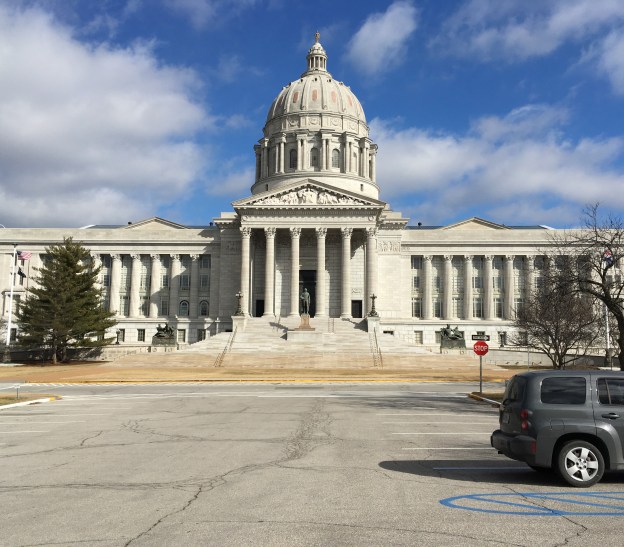

This week, what does it mean for my community to call ourselves Irish Americans?


When I was applying for universities for my undergraduate studies, I was thrilled that one university allowed me to write in my own answer for “race or ethnicity.” I took out my pen and wrote down “Irish.” That university, Rockhurst, is the one which I chose and attended throughout my undergraduate years, and it remains the one that I list today before the others. Rockhurst holds a special place in my heart because it is so intrinsically linked with the Irish American community here in Kansas City, and it is one of those anchors that’s tethered me to this community where I’ve been able to make my own impact and presence.

That adjective I chose to write however is perhaps more complicated. I am not Irish by birth but by descent, though one generation too far removed to qualify for Irish citizenship in that manner. Still, Irish is a better descriptor of me than the generic American white, a category which my people were only accepted into for the sake of preserving the flimsy-footed tableau that is racism in America. When I moved to London, I was surprised to be confronted with three categories of white to choose from rather than the monolith I was used to. I technically qualified for all three: I have both Irish and British ancestry, yet I am from a country other than those two. I marked the box for White Irish as long as I was living and studying there because it felt the truest to my nature. Yet again, I am not Irish per se; rather I am Irish American, a member of one of the larger camps within the diaspora created out of the centuries of trouble caused by English and later British colonialism in Ireland. In this perspective, my people are victims of colonization, yet here in America we are the colonizers. So, amid all these tangled webs of identity and nature what are we, Irish Americans?

It is notable to me that in France there is no particular legal sense of identifying oneself as anything other than French. Trevor Noah put this well when he spoke about an immigrant who was granted French citizenship by President Macron after a tremendous act of heroic bravery in saving the life of a child. Yet when I’m in France, I find that if people are confused about my name I go toward my heritage to explain why it’s not your typical Anglo-American name, that my family comes from Ireland instead. I hear a similar tone from the varied generations of nativists in this country, even in the writings of President Theodore Roosevelt, a man who I overall admire a great deal, who wrote in opposition to us persisting as “hyphenated Americans.” This country ought to be a melting pot where all of the immigrants and their descendants shed away their own national and ethnic trappings in favor of becoming one people with one common identity. Yet again, I find this perspective runs contrary to my own lived experience.

To be an Irish American means to remember the place where our ancestors came from, and to remember their struggles as they sought to live their lives first at home and later in this place their newly adopted home. To be an Irish American is to remember that we too were the immigrants not that long ago and to offer a warmer welcome to the newcomers than our ancestors often received. For me, to be an Irish American is to have roots in two countries, better reflecting the interconnected and global nature of our world. Yet at the end of the day, we are Americans. In Ireland, I refer to myself as “an American cousin,” with a slight nod to that infamous play of 1865. The Ireland that many of us know is the Ireland of our grandparents and great-grandparents, the Ireland of the revolutionary generation and the twentieth century when our families left to come to this country. The Ireland of 2025 is still the same country, yet it has grown with the last generations into something that many of us find incongruent with our expectations. It is less an island than ever before with more outposts of the global world on its shores.

Our experiences greeting this global world are different because we encountered it here in America rather than in Ireland. We relate to all the peoples of the Earth through our friendships, rivalries, and mutual circumstances with the other diasporic immigrant groups in this country. I’ve wondered for a long while, including in this outlet if we are slowly with each new generation becoming less Irish Americans and more deeply rooted in other tribes in this country. We tend to be more religious than our cousins in Ireland, and as there are less Catholic schools and parishes that are explicitly Irish are we then becoming Catholic Americans more than Irish Americans? Or are we contributing to a general secularization of that larger white American demographic resulting in both our ethnicity and our religion fading into the background of our identities as ordinary Americans trying to survive in an ever more chaotic world? The key here is that our community is diversifying between political persuasions and regional identities and an overall willingness to remain connected to the lives and histories and passions of our ancestors.

I for one have kept in touch with all of that because I believe it is intrinsic to understanding who I am. My Dad grew up under the same roof as his grandmother who came to this country from Mayo in 1920, and the fact that my parents chose to name me Sean demonstrated to me that this history was an important part of who I am even before I really began to understand what it all meant. For the record, I decided to add the fada to my name (Seán) when a little before my 10th birthday I learned that’s how it is spelled in Irish. I’ve devoted a great deal of time to learn the Irish language even though it’s not all that useful here in America because I know that it’s what my family once spoke, and in order to better understand them and by extension myself as well, I decided I ought to use one of my talents and learn it.This week we celebrated St. Patrick’s Day with our usual parades here in Kansas City. I marched in two this year, the warm-up parade on the Saturday before here in my neighborhood of Brookside and the big parade down Broadway in Midtown Kansas City on the holy day itself. Normally, I end the big parade and the holy day itself rather annoyed at how the old caricatures of Irishness and Irish Americanness persist along the route both in the parade and among the spectators. And while I did see some of that, I was more focused on marching with my brothers in the Fr. Bernard Donnelly Division of the Ancient Order of Hibernians (AOH). Many of us continued the celebration of our brotherhood and our common heritage later that day and it proved to be one of the better, and sunnier, St. Patrick’s Days that I’ve experienced in a long time. We, Irish Americans persist in our stubborn identity because we’ve built our communities in this country around our roots. It defines us distinctly from our fellow Americans, and with all good intentions demonstrates to our cousins across the water that we haven’t forgotten about them.