Tag Archives: History of Natural History

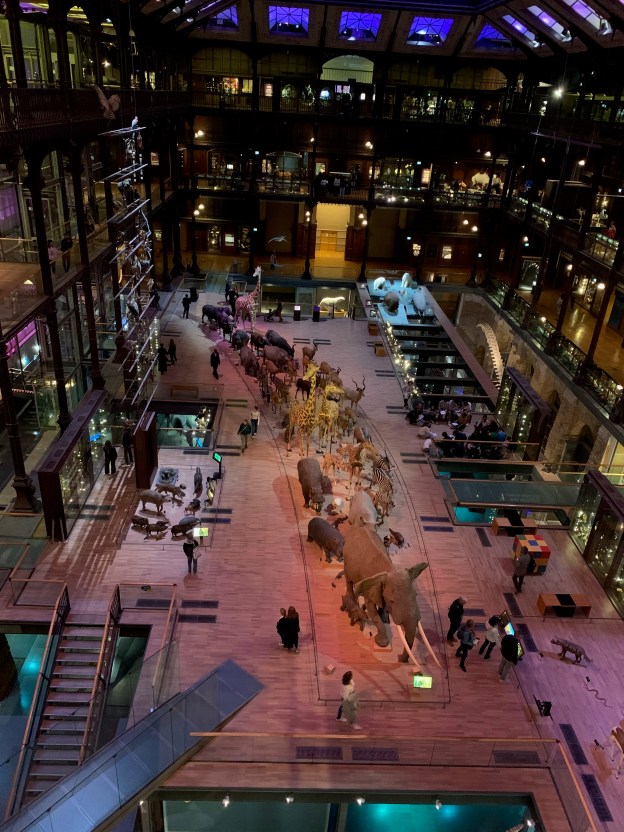
A photograph of the Parade of African Mammals in the Grand Gallery of Evolution at the National Museum of Natural History in Paris taken by the author from the 3rd floor.

On Systems of Knowing

This week, I argue that we must have some degree of artifice to organize our thoughts and recognize the things we see in our world.—Click here to support the Wednesday Blog: https://www.patreon.com/sthosdkane—Sources:%5B1%5D For my recent essays referring to this current historiographic project see “On Sources,” Wednesday Blog 6.22, “On Writing,” Ibid., 6.27, and “On Knowledge,” Ibid., 6.29.[2] Lee Alan Dugatkin, Mr. Jefferson and the Giant Moose, (University of Chicago Press, 2009).[3] Staffan Müller-Wille, “Linnean Lens | Linnaeus’ Lapland Journey Diary (1732),“ moderated by Isabelle Charmantier, virtual lecture, 12 May 2025, by the Linnean Society of London, YouTube, 1:04:18, link here.[4] Jason Roberts, Every Living Thing: The Great and Deadly Race to Know All Life, (Random House, 2024), 45–49.[5] Roberts, 20.[6] Roberts, 115–125.[7] Roberts, 109.[8] André Thevet, Les Singularitez de la France Antarctique, (Antwerp, 1558), 16r–16v. The translation is my own.[9] Roberts, 109.[10] Damião de Góis, Chronica do Felicissimo Rei Dom Emanuel, 4 vols., (Lisbon, 1566–1567).[11] Geraldine Heng, The Invention of Race in the European Middle Ages, (Cambridge University Press, 2018), 190.[12] Roberts, 110.[13] Michael Wintroub, A Savage Mirror: Power, Identity, and Knowledge in Early Modern France, (Stanford University Press, 2006), 42.[14] Roberts, xii.[15] Roberts, 107.[16] Roberts, 96–98.[17] Michael Allin, Zarafa: A Giraffe’s True Story, from Deep in Africa to the Heart of Paris, (Delta, 1998).
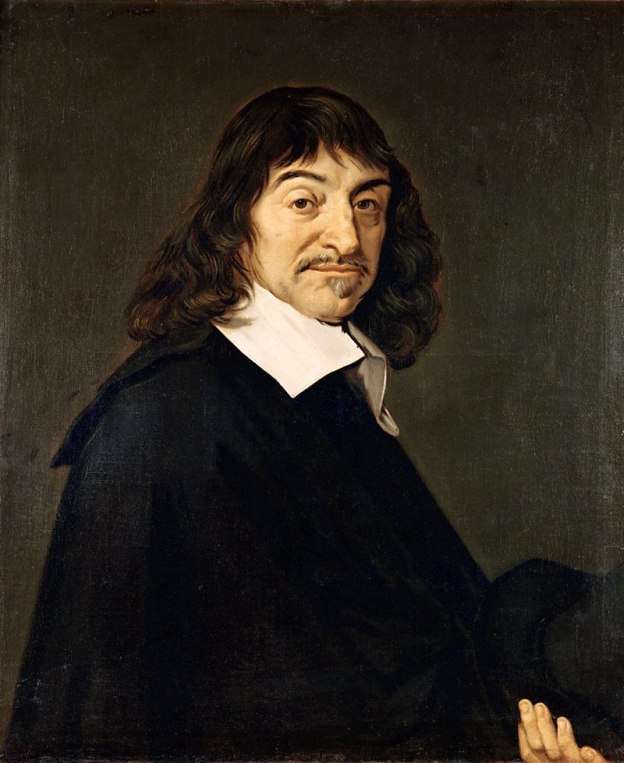

This week, I argue that we must have some degree of artifice to organize our thoughts and recognize the things we see in our world.


Near the end of June on a Sunday afternoon visit to the Barnes & Noble location on the Plaza here in Kansas City when we were picking out books to gift to family, I espied a copy of Jason Roberts’s new paperback Every Living Thing: The Great and Deadly Race to Know All Life. In the Plutarchan model it is a twenty-first century Parallel Lives of Carl Linnaeus (1707–1778) and Georges-Louis Leclerc, Comte de Buffon (1707–1788), two of the eighteenth century’s most prolific naturalists. I saved it as fun reading once I thought I’d done enough of my proper historical work. That moment came after I finished writing the first draft of the new introduction to my dissertation, a rather large addition to my doctoral study which is mostly historiographic in nature.[1] I’ve been reading Roberts’s book in my free time and delighting in the vibrant portraits he paints of the two men in question. I am a newer Fellow of the Linnean Society of London, elected in January 2025, and so I arrived to this particular book with a happy perspective on Linnaeus, whose Systema Naturae is cited in my dissertation as the first identification of the three-toed sloth by the genus Bradypus. At the same time, I’ve referenced Buffon’s Histoire Naturelle far more frequently in those moments when I’m following the legacy threads of my own Renaissance naturalists into the Enlightenment. After all, Buffon cited Thevet on several occasions where the savant referred to the same animals which the earlier cosmographer described two centuries before.

In spite of my own Linnean affiliation, and my use of Buffon’s corpus in the earliest stages of my broader historiography, I am still largely unfamiliar with these two men. I first knew of Buffon for his famous comments on his presumption of the diminutive nature of American animals when compared with their Afro-Eurasian counterparts, to which Thomas Jefferson retorted by sending Buffon evidence of an American moose.[2] I also know very little about Linnaeus, most of what I know of the Swede comes from lectures presented at the Linnean Society online including a recent lecture given in May by Staffan Müller-Wille, Professor in the History and Philosophy of the Life Sciences at Cambridge about Linnaeus’s Lapland diary from his northern expedition in 1732.[3] There is a new biography of Linnaeus by Gunnar Broberg titled The Man Who Organized Nature: The Life of Linnaeus which I have an eye on yet haven’t gotten a copy of quite yet. So, reading Roberts’s book is a quick introduction for me to this man who for me is most influential with his method of binominal taxonomy which has appeared time and again here in the Wednesday Blog. Yet this system followed after Linnaeus’s earlier alphabetical system for identifying plants by sexual characteristic. The basic premise here is that if there are 26 letters in the alphabet, we can then use that familiar framework to organize other complicated concepts for easy recognition. Linnaeus used this to categorize plants by their male and female sexual characteristics in his 1730 booklet Praeludia Sponsaliorum Plantarum, or Prelude to the Betrothal of Plants.[4] Therefore, Linnaeus could go around the botanical garden at the University of Uppsala in 1730 and quickly identify a plant as a J plant or a G plant. First reading this I thought of the way that letters are used by the Federal Reserve System to identify specific regional branches. Thus, J represents the Federal Reserve Bank of Kansas City and G the Federal Reserve Bank of Chicago. 

I like the idea behind Linnaeus’s alphabetic system yet having only 26 categories to describe the entire plant kingdom seems doomed to be flawed as it relies on a belief that all the plants that are known to exist are the ones that exist, that there’s nothing new under the Sun to be discovered. Roberts frames this in a biblical context, describing how Olof Celsius (1670–1756), one of Linneaus’s first professors, met the young Linnaeus when he was working on a project called the Hierobotanicum or Priestly Plants which was intended to be a compendium of all 126 plants mentioned in the Old and New Testaments.[5] Why would Linnaeus need more than 26 categories to contain all the plants known to the Ancients and to the Bible? Naturally, the flaws were apparent in this from the start by using a system of knowing which originated in the more arid landscape of the Levant rather than in the cooler and damper climate of Sweden. I’ve noticed this in my own life, how many cultural elements which we practice in the United States, notably the seasons, better fit the natural climate of New England and England proper than they do here in the Midwest with its far more variable conditions depending on the time of year, or even the given hour. Roberts deconstructed Linnaeus’s early efforts near the end of Part I of his book when he described Linnaeus’s first scholarly collision with Buffon after the Frenchman’s appointment by Louis XV to the position of Intendant of the Jardin des Plantes in Paris.[6] In a debate which Roberts calls “the Quarrel of the Universals” Linnaeus argued that species could be recognized from individual type specimens while Buffon countered that this ran the great risk of minimizing the diversity of life and eliminating potential variations in nature.

This got me thinking about systems of knowing, thus I decided to render the title of the original file for this blog post that you’re now reading (or listening to) De Systemarum Scientis in the full Latinate tradition of my own scholarship, or “On Systems of Knowing” in English. Why is it, for instance, that our Roman alphabet begins with A and ends with Z? The first half of that question is easier to answer: the Romans adapted our alphabet from the Greeks who started it off with α alpha, β beta, thus the noun alphabet itself. Yet the Greek alphabet ends with ω omega rather than ζ zeta, so why does ours end with Z? What I’ve heard about this is that the Greek letters that were adopted into the Roman alphabet were tacked onto the end of the line, or at least this is what I remember being taught when I learned to recite the alphabet in French in my undergraduate years. French calls the letter Y y-grec, or the Greek i. Likewise, everyone except for we Americans call the final letter of the Roman alphabet some variation of zed, which is a shortening of the Greek zeta. This better reflects that letter’s original sound in Greek, just as the cursive lowercase z is the lowercase Greek ζ just adopted straight into the Roman alphabet without any major changes.

So, when it comes to the organization of our knowledge there are things that we know in this same alphabetical order or in relation to this alphabetical order. Because the Roman alphabet is written left to right, we know that when it’s used to set up a coordinate system on a printed map that A will always appear to the top left, orientating the way the map should be held. Likewise, a reader can quickly scan through an index in any language written in the Roman alphabet by following along with the order of the letters. How individual languages index objects from that point on differs, but the foundational element remains the same. The Roman alphabet works best for Latin, the language for which it was originally developed, so it tends to be adapted in its phonetic values depending on which language is using it. This is why English uses the letter W to represent a [w] sound while German and in loanwords French uses W to represent a [ˈv] sound. Meanwhile, Irish represents the [w] and [ˈv] sounds with two digraphs, bh and mh that represent both depending on the context. Typically, bh represents [ˈv] while mh represents [w], but it depends on context. The reasoning behind this is that when the Roman alphabet was adapted by Latin speakers to fit Old Irish in the fifth and sixth centuries CE they approximated the phonology of their Latin in rendering the Roman alphabet usable for Irish. So, to these monks the Irish [ˈv] sound in a Gaelic name like Medbh sounded enough like how the letter b was used at the time that they used that letter to approximate this [ˈv] sound. It’s notable to me that in Modern Greek the letter β is today pronounced veta and in the Cyrillic alphabet the letter В represents this same [ˈv] sound while the letter Б represents the [b] sound that we English-speakers associate with the letter B. Cyrillic and its predecessor the Slavonic alphabet were being developed around the same time that the Roman alphabet began to be used for Irish so there must’ve been something going on with the pronunciation of people’s Bs becoming closer to Vs in late antiquity. Thus, the ways in which our alphabets represent specific sounds today reflect the prestige dialects of our two classical languages–Latin and Greek–as they were spoken over a millennium ago.

Consider then how we distinguish technical, scientific, or artistic terminology depending on the prestige language of that field. History has largely become a vernacular field, where we adapt terms that will be more familiar to the non-professional enough to initiate them into what Ada Palmer calls the History Lab. Yet often these terms will have etymologies beyond English itself. Consider the word photograph, or its more common shortened form photo. This word comes purely from Greek, the classical language more associated with science and technology. It blends the Greek φωτο-, the blending form of φῶς (phôs), or light with the suffix –γρᾰ́φος, from the verb γρᾰ́φω meaning to draw, sketch, or write. So, photography at its core is light writing. Neat! The word photography entered English from the French photographie, that etymology referring to the French origins of the art and craft of photography itself in the middle of the 1820s. Yet the linguists who modernized Irish a century ago decided to favor indigenous terminologies, rendering this word grianghraf using the Irish word grian for Sun instead of a variation of φωτο- (light) while adopting the Greek –γρᾰ́φος suffix to center this new Irish conception of the term within the same technological corpus as the English photograph. While consequential to have a particular Irish name for this technology that elevated the Irish use of photography as equal to any other culture’s photography and particular within the Irish language, it still remains rooted in the same western tradition of grounding our names for scientific and technical things in Greek.

Language directly influences how we know things because it is the vehicle by which we recognize those things around us. I know that a photograph is something made by “light writing” therefore I will also recognize that anything else beginning with “photo” also refers to “light” and that anything ending with “graph” refers to some form of record or writing. I come from a culture where light is connected with goodness and dark with ill. Likewise, for me I think of blue and green as happier colors rather than red or orange which are angrier colors. There is safety in light, in the daytime we can see people or things coming toward us easier than in the dark of night. At the Easter Vigil the celebrant lights the Paschal Flame which is then passed around the church so that we all share in the Light of Christ (Lux Christi) returned to the world with the Resurrection. The central question in my dissertation is linguistic: what did André Thevet (1516–1590) mean when he referred to the Americas overall as sauvage? This French word translates into English as both savage and wild, yet I chose to retain the original French to better represent the original concept which encompasses both concepts in English. This word was not necessarily racial in the modern sense, rather Thevet used sauvage to describe people, places, and things which existed beyond civilization. This word itself betrays its original meaning, that is city life. Thevet himself understood the sauvage to be the antonym of this city life. I describe it in the introduction to my dissertation in terms of light and dark, following the cultural connotations already illuminated: the city is the sun whence radiates the light of civilization. The further one goes from that sun, the darker things become and the less civilized they remain. Thevet’s sauvage existed at that furthest extreme in the dark. I imagine the character of Gollum in this sort of darkened existence, deep beneath the Misty Mountains uninterested in light save for the Ring of Power which consumed his day rendering it eternal night. In the literature of Thevet’s time a fine sauvage characterization is Caliban in Shakespeare’s Tempest, wild as the waters which wrecked King Alonso and his men on the island in Act 1 of that play.

Roberts notes how these linguistic attributes influenced Linnaeus’s systemization of humanity in the 1735 second edition of his Systema Naturae. The Swede divided humanity into four subcategories described by color over any other facet.[7] Roberts spends the following five pages questioning Linnaeus’s methodology, asking “why four?” and why these specific colors? There is some historical context for Linnaeus’s choice to refer to Black Africans, even Thevet referred to the varied peoples of Africa as “black” in his Singularitez de la France Antarctique. Thevet hints at a possible environmental cause for blackness, writing that the peoples “of Barbary” who are “the blackest” are “of the same manners and conditions as their region is hotter than others.”[8] Thevet’s understanding of African geography is somewhat uncertain, so his definition of Barbary may not align with the Berbers from whom the Barbary Coast of the Maghreb was named. Still, it hints at an understanding that the hotter, or more torrid, the climate got the darker the skin of the people would become. Roberts notes that the Portuguese were the first to use the “word negro to signify African origin or descent” in the middle of the sixteenth century.[9] This makes sense considering the Portuguese were the first European power to sail down the West African coast in the fifteenth century. That Roberts notes this Portuguese definition of blackness first appears in the middle of the sixteenth century likely refers to Damião de Góis’s (1502–1574) Chronica do Dom Emmanuel I of 1566 to 1567 which is an early source that I’ve consulted for information on the voyages of Vasco da Gama (d. 1524).[10] Geraldine Heng, the leading authority on medieval notions of race, wrote in her 2018 book The Invention of Race in the European Middle Ages that blackness was already well established as an element in religious and secular iconography by the beginning of the First Age of Exploration.[11] Roberts concludes his discussion of this particular racial element of Linnaeus’s great contribution to taxonomy sullenly noting that it’s thanks to Linnaeus that this cultural connotation of blackness with darkness was given scientific credence which continues to support racist ideologies to this day.[12]

How do we use our own words to describe things to which they are not suited, in turn transforming the nature of those things that they may become part of our own world? My research is most interested in understanding these questions of how those things at the boundaries of knowledge were understood by André Thevet using the tools afforded to him during the French Renaissance of the sixteenth century. Thevet used the word sauvage to do this and create a category of life against which he could measure and proclaim the existence of something civilized closer to home. Michael Wintroub, Professor Emeritus of Rhetoric at Cal-Berkeley, wrote in his 2006 book A Savage Mirror that Thevet’s countrymen sought to “civilize the barbarians” to make up for an insecurity they felt at being called barbarians themselves by Italian intellectuals at the turn of the sixteenth century during the French invasion of Italy under King Charles VIII (r. 1483–1498).[13] As long as there was someone else who the French could look down upon beyond their own cities they felt secure in their own civility. Yet the sauvage exists within a larger framework of singularities, a word which is central to Thevet’s cosmography. Thevet used the word singularity to describe those things which were exotic, wonderous, and immensely collectable in his eye and hopefully in the eyes of potential readers who would buy his books. I see various layers and categories of singularities in Thevet’s cosmography, for instance he only included images of certain animals in his book of the same name, the aforementioned Singularitez of 1557. The sloth and toucan were depicted as well as described, yet the mysterious Ascension Island aponar remained a bird worthy only of a textual description. This suggests that somethings were more singular than others, or more worthy of attention and the money needed to produce these woodcut images than others. These systems of knowing framed around the singularity are the subject about which I intend to write my first academic monograph. Classifying something as singular gives it an appeal which sets it aside from both the civil and the sauvage as belonging to a higher level of category which can include both the urbane and the agrestic.

Jason Roberts describes Buffon and Linnaeus’s mutual missions to make something of themselves and to rise above their provincial origins to the heights of society. I laughed out loud reading Roberts’s introduction to Linnaeus’s character, what felt like an iconoclasm of sorts for this Fellow of the Linnean Society. “Carl Linnaeus was a Swedish doctor with a diploma-mill medical degree and a flair for self-promotion, who trumpeted that ‘nobody has been a greater botanist or zoologist’ while anonymously publishing rave reviews of his own work.”[14] Buffon by contrast took advantage of a golden opportunity to build his own demi-paradise at his manor in the Burgundy countryside until his good reputation as a botanist brought him to royal attention and the appointment as Intendent of Jardin du Roi.[15] The Jardin des Plantes, as Buffon’s charge is today known, is perhaps a better place to conclude than most. Situated in the Fifth Arrondissement across Boulevard de l’Hôpital and Rue Buffon from Gare d’Austerlitz, the Jardin is an urban oasis created for the purpose of crafting systems of knowing. Its original intent was to serve as a medicinal garden existing beyond the purview of the Sorbonne, Paris’s sole licensed teaching medical school in the seventeenth century.[16] I’ve spent several happy hours wandering through the Jardin, home to the Muséum National d’Histoire Naturelle’s Grande Galerie de l’Évolution, the Galerie de Paléontologie et d’Anatomie compare, and the Ménagerie du Jardin des Plantes, which was home to Paris’s first resident giraffe whose story is delightfully told by Michael Allin in his 1998 book Zarafa: A Giraffe’s True Story, from Deep in Africa to the Heart of Paris.[17] While Allin’s heroine Zarafa is not today on display in the Grande Galerie de l’Évolution (she is instead today to be found in the Muséum d’Histoire naturelle de La Rochelle), the taxidermy in the Parade of African Mammals that is the centerpiece of the Grande Galerie represents a system of knowing animal life in itself.An elephant leads the parade followed by hippopotami, zebras, and giraffes with two such camelopards standing erect their long necks rising toward the upper galleries at the center of the procession. Behind them come the horned mammals, rhinoceroses, and at the rear a crouching lion watching its prey. This is a system that Buffon would have appreciated more than Linnaeus, one which represents the nature of individual beings more than species. Each stuffed specimen seems to have its own character, its own personality. They look about as one would expect they would in life. The great artifice of this is the idea of a parade itself, a very human notion indeed, and one that is infrequent enough to be nearly singular in character, a reason for a day out, worth putting in the social calendar of a city, town, or village no matter how large or small. A parade is its own system of knowing.


[1] For my recent essays referring to this current historiographic project see “On Sources,” Wednesday Blog 6.22, “On Writing,” Ibid., 6.27, and “On Knowledge,” Ibid., 6.29.

[2] Lee Alan Dugatkin, Mr. Jefferson and the Giant Moose(University of Chicago Press, 2009).

[3] Staffan Müller-Wille, “Linnean Lens | Linnaeus’ Lapland Journey Diary (1732),“ moderated by Isabelle Charmantier, virtual lecture, 12 May 2025, by the Linnean Society of London, YouTube, 1:04:18, link here.

[4] Jason Roberts, Every Living Thing: The Great and Deadly Race to Know All Life(Random House, 2024), 45–49.

[5] Roberts, 20.

[6] Roberts, 115–125.

[7] Roberts, 109.

[8] André Thevet, Les Singularitez de la France Antarctique(Antwerp, 1558), 16r–16v. The translation is my own.

[9] Roberts, 109.

[10] Damião de Góis, Chronica do Felicissimo Rei Dom Emanuel4 vols., (Lisbon, 1566–1567).

[11] Geraldine Heng, The Invention of Race in the European Middle Ages, (Cambridge University Press, 2018), 190.

[12] Roberts, 110.

[13] Michael Wintroub, A Savage Mirror: Power, Identity, and Knowledge in Early Modern France, (Stanford University Press, 2006), 42.

[14] Roberts, xii.

[15] Roberts, 107.

[16] Roberts, 96–98.

[17] Michael Allin, Zarafa: A Giraffe’s True Story, from Deep in Africa to the Heart of Paris, (Delta, 1998).

Three Ologies

This week, talking through three terms I’ve historically had trouble understanding: epistemology, ontology, and teleology.—Click here to support the Wednesday Blog: https://www.patreon.com/sthosdkane


This week, talking through three terms I’ve historically had trouble understanding.


A major turning point in my life came at the end of 2014 when I decided to drop my philosophy major to a minor and not take the final class that I needed to complete that major. The class in question was Continental Philosophy, and it remains one of those decisions that I regret because it closed some doors for me in the long run even while it seemed like a reasonable decision in the short term. A year later, now working on my master’s degree in International Relations and Democratic Politics at the University of Westminster, I was reminded daily that I really should’ve just taken that last class because so much of what we were studying was based in continental philosophy.

I initially pursued a triple major in History, Philosophy, and Theology and a double minor in French and Music at Rockhurst University. I was quite proud of the fact that up to that point in my seven completed semesters at Rockhurst that I’d been able to juggle those three majors and the two minors while still having an active and fulfilling social life on campus. I went into Rockhurst with several vague ideas of what I might want to do with these degrees when I was finished; notably I remember both considering doing a Ph.D., likely in History, and possibly going from Rockhurst either into the Jesuit novitiate or into a diocesan Catholic seminary to become a priest. The first four years of Catholic seminary is comprised of that philosophy bachelor’s degree, so it felt like a good idea to undertake that at Rockhurst and keep the door open.

Now ten years after I would’ve finished my undergraduate with that philosophy degree, I realize that even as I continued to consider holy orders that I may well have properly begun to close that door in my early twenties, not feeling that the priesthood was the right fit for me in spite of what many people have said. Even then, most of the other professions that I’ve considered have been shrinking in one way or another in my lifetime. It feels here as in so many other aspects of my life that I was born at a high point in our society’s capacity to consider the arts, humanities, and even the sciences and that as I’ve gotten older that capacity has diminished time and again. Even while I continue to be frustrated to remain in these wilderness years, I nevertheless continue to learn and to grow in my understanding of what is possible for me to do in my career.

In the last seven years I’ve reasserted myself as a historian first and foremost, settling into the Renaissance as my period of study in late 2017 and gradually shifting from considering the history of Englishwomen’s education to the history of translation to now the history of natural history. Yet all of these disciplines lie under the common umbrella of intellectual history. My manner of writing the history I craft tends to speak toward French notions of mentality and perception, while the economics I still occasionally encounter in my work speak to Max Weber’s notions of capitalism as a broader Cross-Channel enterprise including Brittany and Normandy alongside England, Picardy, Flanders, and the Dutch Republic. I’m beginning to try out a new method of writing history that draws on the natural sciences to better understand the animals and other natural things described by my Renaissance cosmographers and natural historians.

Amid all of this, three words continue to appear, three words which I have often had trouble remembering their meaning. These three are epistemology, ontology, and teleology. In spite of my training in Ancient Greek, I still have trouble keeping these three apart. They represent three central tenants of philosophy which help make sense of how we understand things. It may not sound like the strongest topic for a riveting podcast episode, but for those of you listening bear with me.

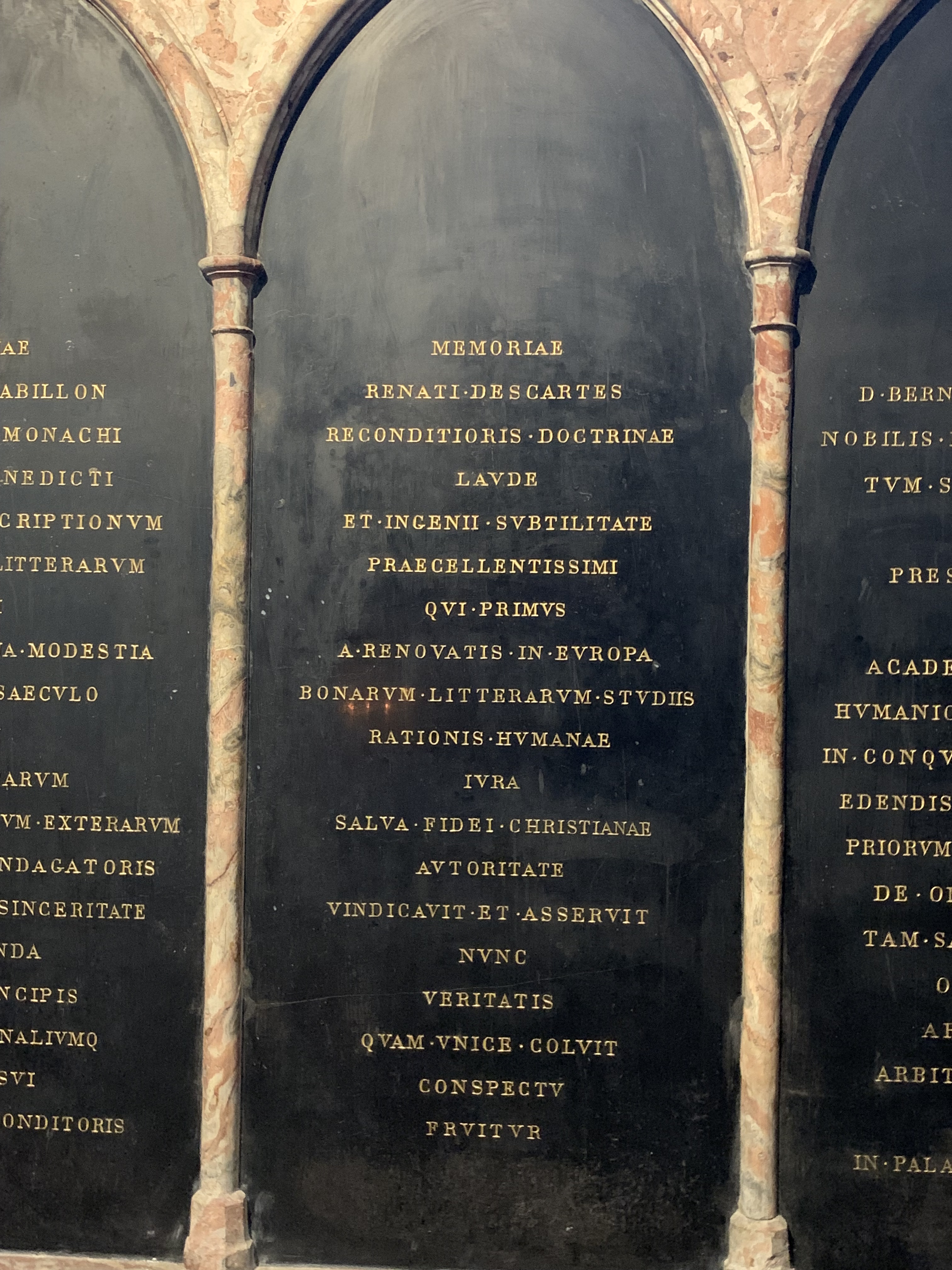
Descartes’s tomb, photo by the author.

Epistemology is the theory of knowledge. It distinguishes things which are justified from mere opinions. This theory of knowledge considers propositions about facts, practices which form knowledge, and familiarity with an object thus allowing the subject to know it. This word episteme in Greek (ἐπιστήμη) translates into English as both knowledge and science. Science itself is a word which at its core refers to knowledge, for the root Latin verb sciō means “to know.” We know for instance that we exist because we can recognize our existence, in Descartes’s famous words “I think, therefore I am.” I made a point of visiting Descartes’s tomb in the Abbey Church of St. Germain-des-Prés when I was in Paris in October 2023 because so much of my own philosophy is Cartesian in its origins. I reject the principle that we could be living in a simulation on the grounds that based on what we can know and perceive we are not inclined to accept such a suggestion.

The second of these words is ontology, a branch of metaphysics dealing with the nature of being. This word derives from the present participle of the Greek to-be verb εἰμί. I stand by my assertion that the life we are living is real because we can recognize it in large part because the best explanation that I’ve found for the course our history has taken is reliant on us having the freedom to decide the courses of our own lives. This free will explains how a society can seem to take steps backward even while the chaos those retreats cause is to the society’s detriment. The method which I am developing in my research to understand the nature of historical animals using modern scientific research is ontological in character. I can test if this method will work by applying it to particular individual animals who appear in the historical record and determining their true character by a process of eliminating candidate species until the animal’s own species is determined. In this search for the nature of these animals I hope to prove that the historical past, before the development of the scientific method in the seventeenth century, is valuable to the natural sciences as a means of understanding the longer-term nature of other animals during the period in which human influence upon nature was growing toward the Anthropocene which we find ourselves in today.

I like to think of ontology in the linguistic context of how the copular to be verb appears in our literature. Think, for instance, of how God is identified in the Bible. In the story of the burning bush, the Divine is referred to as “I Am that I Am,” or rather the purest expression of existence. For this reason, when I was an undergraduate in my theology major, I began to refer to God as the Divine Essence owing to the root of essence in the Latin copular verb. English recognizes a far wider set of states of being than does Irish. Where in English I might say “I am sad,” in Irish I would say “sadness is upon me,” or “Tá brón orm.”

The third of these words is teleology. This is the explanation of phenomena in terms of their purpose rather than the manner of their invention. Τέλος (telos) is the Greek word for an end, an aim, or a goal. The purpose of something’s existence then is at focus here. I do question this idea that we have a specific purpose in life, perhaps because mine has not gone quite how I expected. In my Catholicism, the most teleological concept we retain is the idea of a vocation either to holy orders, marriage, or to the single life. The teleology at play here speaks to some sense of destiny which I feel stands in opposition to our free will. Perhaps there is some purpose to life, at its initial conception in the first moments that matter began to form in the void that became our Universe, yet I do not believe that I can perceive any intended influence beyond the flick of the first domino at the Big Bang. We may not even be sure that the Big Bang was the beginning of everything, after all there had to be energy to build up to cause such a tremendous explosion in the first place. In a theological view I would point to the Incarnation of Jesus as an example of telos in our history, I am a Catholic after all. My lingering question is where should that theological teleology interact with the other ways of knowing?

I’ve written here before about my view that belief and knowledge are two distinct yet interrelated things. One must believe in one’s senses to know, yet there are things in which one can believe without knowing which one cannot know without believing. The prime example of this is God; “I believe in One God,” it’s something I say every week at Mass in the Creed, “Credo in unum Deum,” in the Latin original of our Roman Missal. Yet God alone is a tremendous challenge to know because God is both paradoxical and far greater than the extent of my knowledge. For this reason, we had the Incarnation, as we recite in the Creed:

“I believe in one Lord Jesus Christ,

The Only Begotten Son of God,

Born of the Father before all ages.”

For God to be knowable God needed to come down to our human level in the person of Jesus, God the Son. This was Jesus’s telos, to be known, to be heard, and as we believe restore faith in God and cleanse humanity of original sin. Here there is a collision of belief and knowledge, where something clearly happened about 2,000 years ago because a new profusion of faith occurred, beginning in Judaea and spreading around the Mediterranean World in the Roman Empire and beyond to become Christianity. That new religion adapted to fit the cultures it encountered, so as to be more acceptable to its new converts. Today that collision continues in the Eucharist, the most sacred of all seven sacraments, in which we Catholics alongside our Orthodox brothers and sisters believe that God becomes flesh again in the sacramental bread and wine. Can we know that it happens? Not by any scientific measure, yet something does happen. That something is perceptible through belief, and it is the Great Mystery of the Faith that has kept me in the Catholic Church in spite of the ecclesiastical politics and divisions of our time.

My Irish Gaelic ancestors understood Christianity in their own way, aspects of which survive into the present day. That collision of belief and knowledge looks to some lingering folk belief, or superstition if you will, that I’ve inherited of particular days in the calendar when the worlds of the living and the dead could collide. We see this most pronounced in the old Gaelic calendar on Samhain, which developed through Catholicism into Halloween, the Day of the Dead, and All Souls’ Day around the beginning of November. I see All Saints’ Day fitting into this as well, after all the Saints are our honored dead all the same. Likewise, Bealtaine, the celebration of the coming of Summer at the beginning of May is also the Catholic celebration of the Crowning of Mary, something I attended at Rockhurst on several occasions.

What in all of this can I actually know? I know the stories that have survived from before St. Patrick and the coming of Christianity to my ancestors 15 centuries ago, even if those stories are Christianized in some way or another. I know this just as much as I know that Jesus existed in the first century CE because there are effects of these stories in the lives and histories that are remembered down the generations. If these stories have any teleology, it’s to teach us lessons about life that our ancestors learned so that we might not have to face the same trouble all over again. The folly of humanity is that we are resistant to having a clear purpose or end to our aims. Through our free will we know that there are always many options to choose between.I don’t know if I made the right choice in dropping that philosophy major at the last moment. In many respects, it was a poor decision. I learned from that experience and many others in my early life to stick with things until their conclusion. This learning is something that has been tested to grow beyond mere opinion through belief into something that is verifiable. When I look at my prospects in my doctoral program, I always decide to stick with it because I don’t yet know what my prospects will be like once I’ve earned it, something that I do know having 2 master’s degrees and a bachelor’s degree to my name. I have gained a great deal of epistemic experience through all these memories that have informed the nature of my character. Yet where they lead I cannot say, for the purpose of my life is something I continue to decide day by day.


What’s the Difference between Beavers and Humans?

What's the Difference between Beavers and Humans? Wednesday Blog by Seán Thomas Kane

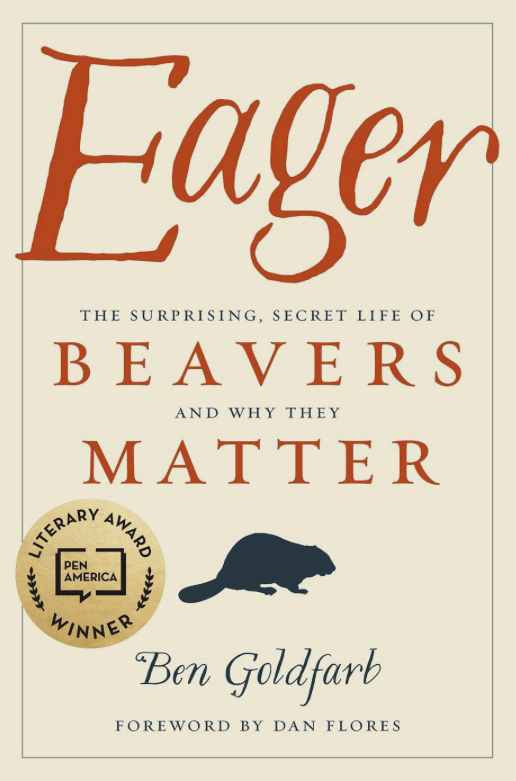
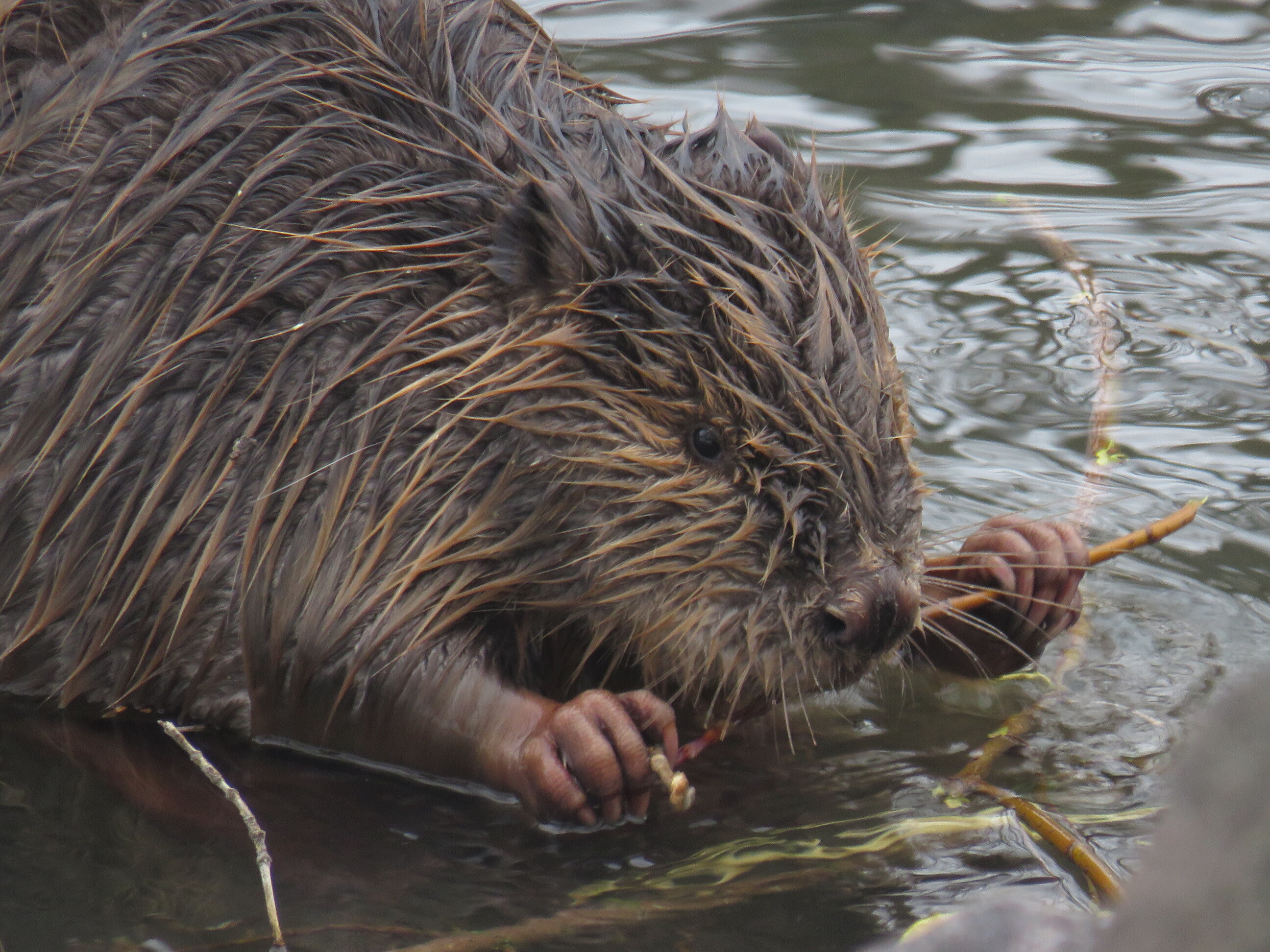
This week, to conclude a month of chaos I interviewed environmental journalist Ben Goldfarb about his book Eager: The Surprising, Secret Life of Beavers and Why They Matter. — Click here to support the Wednesday Blog: https://www.patreon.com/sthosdkane. Links Ben Goldfarb's Website: https://www.bengoldfarb.com NOAA Fisheries, "Oregon Beavers Engineer Better Fish Habitat, More Fish," 14 July 2016. Popular Science, "From the Archives: Do Beavers Rule on Mars?", 6 May 2022. Harvest Public Media, "The Midwest and Great Plains are gearing up for water fights fueled by climate change", 3 Sep 2024. Photo Credit: Beaver in the Pipestone Creek, Pipestone National Monument, Minnesota. Photo: Gabe Yellowhawk. Public Domain. Learn more here.


This week, to conclude a month of chaos I interviewed environmental journalist Ben Goldfarb about his book Eager: The Surprising, Secret Life of Beavers and Why They Matter.


What follows is a transcript of our conversation.

STK: This is a really fascinating book, I have to say.

STK: I was reading something back in June that was talking about the idea of the Homo faber where we should identify ourselves by our ability to build and to imagine solutions to get out of our problems. I read that and said, “that’s what beavers do to, right?” So, the premise of this one is what is the difference between humans and beavers?

STK: When you talked in the book here about the restoration of beaver dams on Bridge Creek in Oregon; could this be a model for a clearer for how humanity could adapt to cohabitate with the rest of nature?

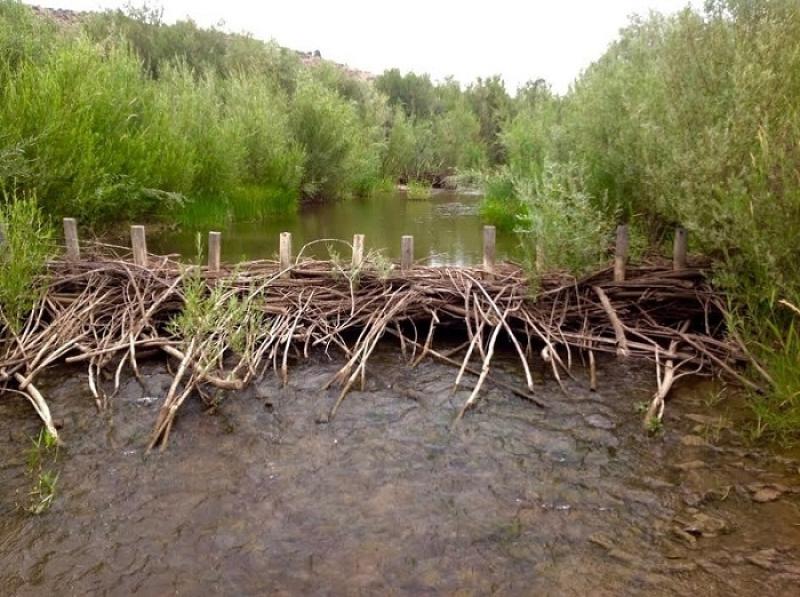
BG: Yeah, I think so. The situation in Bridge Creek and other places like that is that humans are building beaver dam analogues to help beavers flourish. When we wiped out several hundred million beavers over several centuries in North America, we made it harder for beavers to recolonize, so when you have a healthy beaver-rich stream they are pooling that water up and pushing it out onto the floodplain. When the beavers disappear there’s nothing to cool or check the water, streams then cut through the sediment on the bottom, and they turn into these miniature canyons or ravines. That’s a hard place for beavers to recolonize because the stream is trapped in its place and that’s where these human-built beaver dams come in because we can knock some big wooden posts into the stream bed and weave some willows in there and build some stability. It’s not as good as what the beavers do but it’s a starter dam that they can come in, build off of, and advance. So, these beaver dam analogues are like beaver kick starters, and they allow them to recolonize places where they otherwise couldn’t colonize. And to your point, I think we’ve spent hundreds of years in North America making life harder for beavers in many ways, mostly by killing them directly, and this is a way that we’re making life a little bit easier for them. You can apply this model onto many other wildlife restoration projects like wildlife crossings, or the planting of oyster reefs or salt marshes. These are things which work with ecosystems rather than against them.

A beaver dam on Bridge Creek in Oregon. Photo: NOAA Fisheries, Public Domain. Learn more here.

STK: Yeah, I know they talk here about the butterfly gardens that give them a place to land and such when they migrate.

We’re the species that created the grid system whereas beavers have their own idea of fluid stability. What would you say to that?

BG: We as a species are obsessed with linearity and if Homo faber is a construction species or an infrastructure species as some historians have put it. Linear features are what we construct: highways, railroads, power lines, fiberoptic cables, just look at our crop furrows. Beavers create what looks to us like chaos, there’s water ponding up everywhere with trees dying all over the place, and there’s sediment muckiness that smells a bit. This looks to us like fluid chaos, and I think we need to recognize that those kinds of beaver-modified or beaver-influenced systems are first the historical rule rather than the exception at the time of European arrival, but more important that those beaver systems are profoundly healthy as ecosystems compared to our infrastructure which are destructive to nature. We kill more than 1 million animals per day in the U.S. alone with our cars, whereas beavers create infrastructure that is highly beneficial to other animals from salmon and trout to waterfowl to moose and amphibians. It’s hard to name a species that doesn’t benefit from beavers at some point in its lifecycle.

STK: Beavers seem to have a human attitude to modifying the landscape. It reminds me of theories of terraforming other worlds. André Thevet described how on his way back to France from Brazil in 1556 most places hadn’t been colonized yet except how the island of Haiti was transformed by the Spanish into Hispaniola, “Little Spain,” in part by the influx of pigs they brought. So, this idea of terraforming in astrobiology seems pertinent here. You have a quote here, “We are a nation of floodplain dwellers and farmers, drawn to river valleys yet intolerant of riparian anarchy.” So, are we hostile to beavers because they challenge our sense of order?

BG: Right, the whole terraforming thing is funny because there was a story in, I believe Popular Science, in the 1930s that posited that beavers dug out the canals on Mars . So, that idea that beavers are world-makers have been applied to other planets as well. I think it’s instructive to think of the ways that beaver dams and human dams both impact the landscape, especially here in the West where I live. Every single river has a colossal mega dam on it, and those dams are immense, and they create enormous, consolidated reservoirs and they take a diverse and distributed approach to building ponds. Each of those ponds are only an acre or so, but they store more water in the landscape. You think about what the future of solar energy looks like, we’re on track to build giant industrial solar farms in the California desert when we could put a panel on every roof and opting for this more distributed and dispersed approach to power generation. That’s another interesting thing that beavers teach us: the value of the energy and strength of these distributed systems rather than the hyper-centralized systems that we tend to favor out of some misguided love of efficiency.

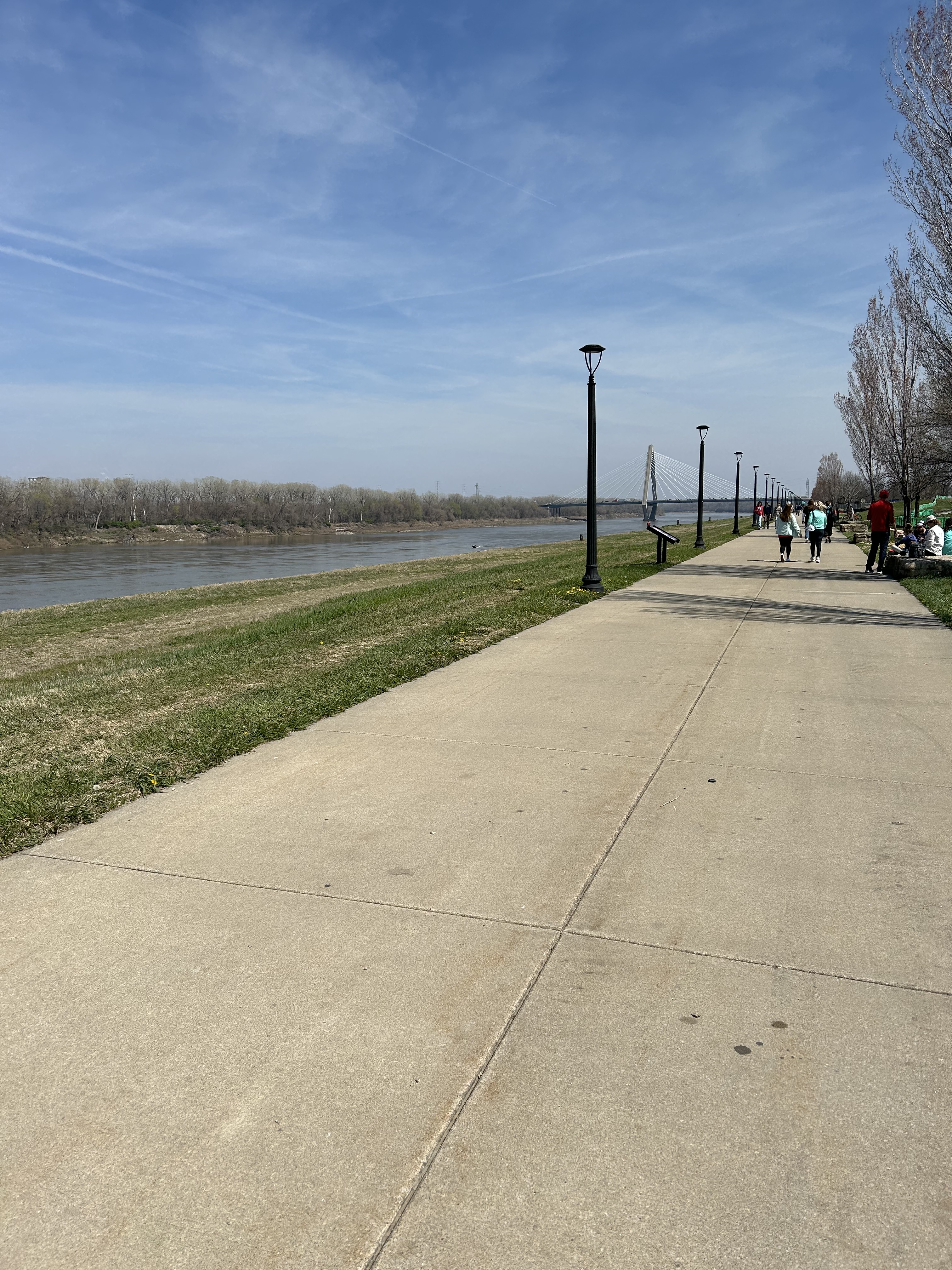
STK: Yeah, I just read this morning that our local NPR station was reporting that there’s a bill being proposed in the Missouri Assembly to ban water exportation from Missouri to the western states anticipating that Colorado, Utah, Arizona, et cetera are going to ask for our water eventually. It’s interesting to see that, we have the Missouri River here and the Mississippi River is on the eastern side of the state, and the Missouri floods at least once a year because they release the dams from the Dakotas that get all of the snowmelt and that floods down here typically. The Missouri is very heavily managed by the Army Corps of Engineers to the point that it’s faster than it used to be, but you know, it still floods.

Kansas City, Missouri’s Riverfront Walk along the Missouri River. Photo by the author.

BG: Look, the Missouri is one of the most hydrologically modified rivers in the U.S., and it’s certainly up there, and look at the catastrophic impacts it’s had most prominently on the Pallid sturgeon, and it speaks to the impact of human infrastructure being catastrophic for nature whereas beaver ponds are the world’s greatest fish production system. Trout and salmon grow exponentially faster in beaver ponds. The Missouri is like the Colorado River, one of those rivers that was incredibly full of sediment, “too thick to drink, too thin to plough,” so by damming the Missouri we changed water flows and sediment flows as well, and I think the beavers show us what a healthier and more beneficial relationship with sediment looks like. Beavers are capturing sediment as a resource which allows them to push more water onto the floodplain; they’re managing sediment better than we are in a lot of cases.

STK: Yeah, we actually saw one a couple of weeks ago on a Sunday morning crossing I-29 in Downtown Kansas City near the river, and it flopped itself over the barrier to get off the highway. I’m hoping there isn’t too much of a fall there, it’s all brush there. It was neat to see. We’re heavily redeveloping the riverfront now, so there’s going to be a lot more people up there were previously it was [among other things] an industrial waste dump by the railroads and such.

STK: I like what you said in the ninth chapter of this book when you were over in the U.K., and I’ve thought for a long time living here in Kansas City, my neighborhood was built here 100 years ago, and there weren’t trees here before they built this neighborhood, and all of the streets are named after colonial New Englanders. I’ve said then to people offhand that the developer tried to make this area a little New England, and as William Cronon wrote, New England was built out of the forests there as a new form of England. So, I wonder there, were you getting toward saying that we could look to Britain for the inspiration for American ecological policies, and secondly that the end goal of unlimited development would be how Britain is today?

BG: Yeah, to me one of the really striking things about visiting the U.K. for the book was how biologically improvised Britain and Ireland are today, and how fortunate we are to have the wildlife here in the U.S.: we have wolves, bison, and moose which were all species that once existed there that were annihilated there. And fortunately, here in the U.S. we were colonized recently enough, and we have enough rugged and inaccessible topography to allow these animals to be conserved, and we’ve done enough wildlife reintroductions here in a way that the U.K. is just beginning to get around to with beavers, and lynx someday. So, visiting made me feel extremely grateful for everything we’ve hung onto in the U.S., and beavers are one of those organisms of an animal in the Lower 48 that we pushed to the brink of extinction, but enough beavers survived up in Canada that we were able to use reintroduced beavers from Canada and some that hung on in Yellowstone National Park to reintroduce beavers on a wide-scale here in the U.S. Beavers today aren’t as ubiquitous as they were at their peak, not by a long shot so maybe we take them for granted a little bit and have beavers in the landscape.

When I went back to England a year later on my book tour, I got to go on a nature walk where we saw beavers doing their thing and people were in tears with joy at seeing these beavers who had been eliminated from the landscape in the 1600s. It’s sort of like seeing the Loch Ness Monster, they’re these giant rodents with their paddle tails and they cut down trees with their teeth to build walls. They’re objectively these cool, bizarre, magical critters, and it was cool to be reminded of that in the U.K. where people are seeing this part of their natural heritage return to the landscape, while meanwhile they hang out in Downtown Kansas City, or Downtown Seattle, or in the Bronx River. It was a good reminder to appreciate our wildlife in general and beavers specifically.

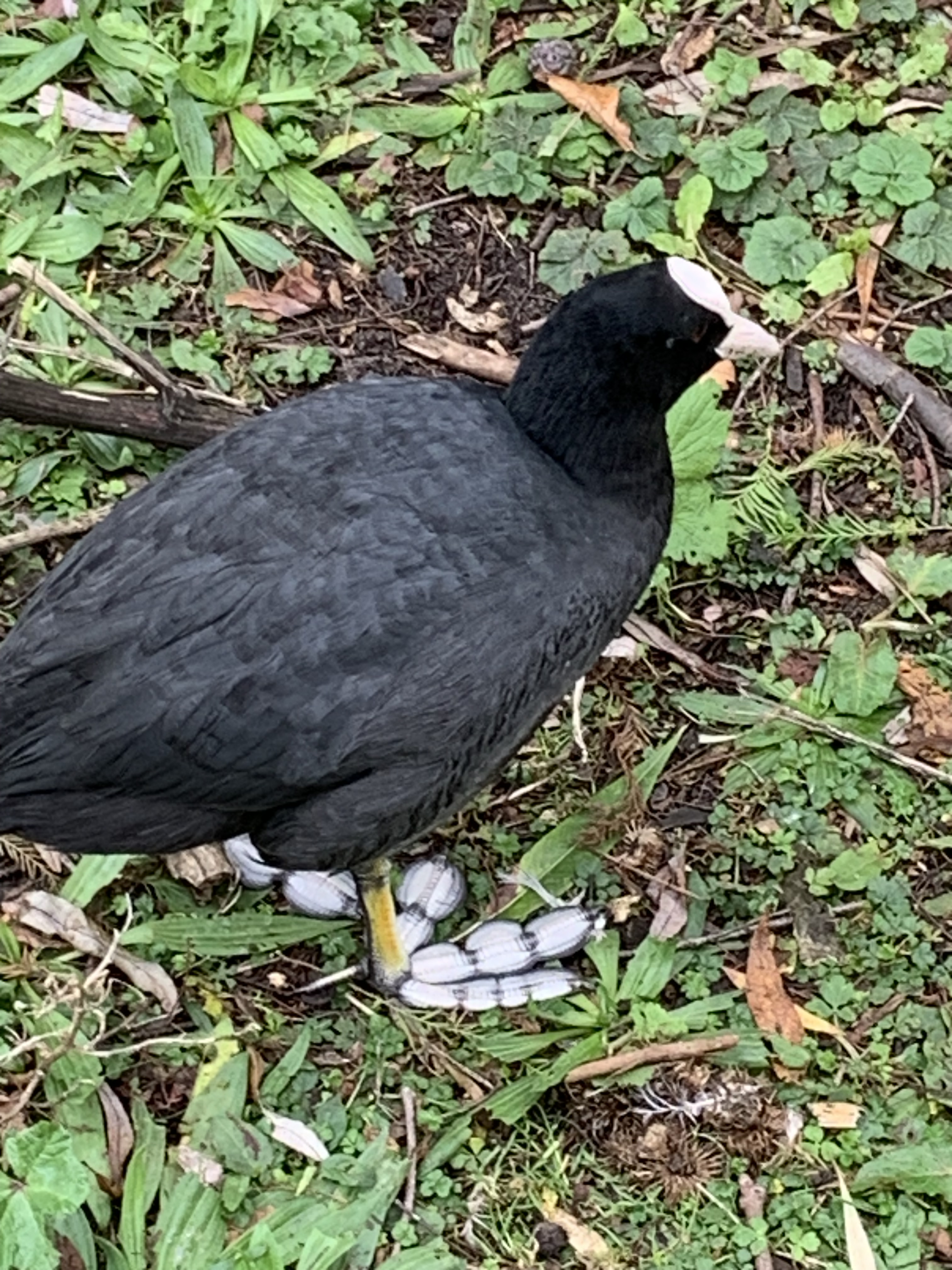
Note that webbing. Photo by the author.

STK: Yeah, I lived in London for a year doing my first Master’s, and you’d see some nature in the parks. I was fascinated looking at the webbing on some of the duck’s feet in St James’s Park where they’ve been protected because that’s been a part of the Palace for 300 years. But if you really wanted to see nature, you’d watch Naturewatch on BBC 1 on weekday mornings.

STK: So, has colonization forever changed beavers? Are they a different animal than they were 400 years ago?

BG: That’s a good question, and I think that ecologically and biologically they’re not. You could take a beaver from the 1300s and plop him down in modern North America and he’d do his thing and build dams and create ponds. They’ve survived so much over the last handful of centuries creating the kinds of landscapes you’d have seen before colonization. I went to Voyageurs National Park in Minnesota where these animals are protected from trapping and the landscape is conducive to beaver dam building, and there were dams that were 1000 ft long and 15 ft high, and I thought it was this great glimpse into pre-colonial America and what this would’ve looked like. These animals are the same but what’s changed is our relationship with beavers where before we perceived them as commodities that we extracted on an industrial scale to make hats. In the 20thcentury beavers began to be protected a little bit, and their populations began to increase, but all of a sudden, they were coming into conflict with humans and flooding our roads and cutting down our apple trees and flooding our irrigation ditches, and so we now see them less as commodities and more as pests. So, we still kill tens if not hundreds of thousands of beavers in the U.S. per year for causing conflict when we’re the nuisance species more than they are, they were here first. So, we need to transition out of the commodity phase and out of the pest phase and into the symbiotic phase where we harness all of the ecological benefits that these animals provide for us. Their ponds filter out water pollution and create oases against drought and prevent wildfires in some cases, especially in the West. They provide incredible fish & wildlife habitat and mitigate flooding in New England. Their value is immense beyond measure and we need to recognize that and treat them as ecological partners in conservation. Indigenous people in North America had that approach. The Blackfeet didn’t kill beavers but saw them as sacred because they created water holes to help other species. Respecting and honoring beavers isn’t new to western science, we just need to rediscover what native people knew for millennia.

STK: Are you working on any big projects now?

BG: I’m working on a book about fish, about fish as ecological engineers putting my beaver hat back on. Fish as drivers of human movement and culture over the course of our species’ own history and all the ways in which we lost fish from our lives and landscapes. I’ve always loved fish, both as quarry (I’m an angler) and as beautiful special specimens, like beavers they’re both concealed by the opacity of water.

BG: I look forward to coming back and joining you when that’s out in, I don’t know, 2056!

STK: Yeah, I’ve got a couple of books that I hope will come out before 2030 hopefully.

BG: Yeah, cool, I look forward to reading about three-toed sloths in human history.


Beaver in the Pipestone Creek, Pipestone National Monument, Minnesota. Photo: Gabe Yellowhawk. Public Domain. Learn more here.

On Exploration

This week, some words on two books about exploration that I’ve read this summer: Hampton Sides’s The Wide Wide Sea, and Michael Palin’s Erebus. — Click here to support the Wednesday Blog: https://www.patreon.com/sthosdkane


This week, some words on two books about exploration that I’ve read this summer: Hampton Sides’s The Wide Wide Sea, and Michael Palin’s Erebus.


I may well be one of a few millennials who regularly watch CBS Sunday Morning. I remember finding it a comforting and calming way to start Sunday when I was little, and now that they publish the stories from each week’s broadcast on YouTube, I tend to watch the program there. So, in April I was excited to see a storyabout Captain Cook was airing on the program. It was an interview with Hampton Sides, an award winning non-fiction writer whose new book The Wide Wide Sea tells the story of Cook’s third and final voyage into the Pacific which left England just days after the thirteen of Britain’s American colonies declared their independence, only returning home again four years later. On this voyage, Cook’s ships the HMS Resolution and HMS Discovery became the first European ships to reach the Hawaiian Islands, where Cook would meet his own demise in February 1779.

I’ve been fascinated by Cook’s voyages for a long time now; his was one of the great explorers whose names I’ve known since childhood. The notion of exploration is intrinsic to our American culture, as a settler society, and Cook’s third voyage was the last time that any of our countrymen participated on a British voyage of exploration as British subjects. Sides makes note that Dr. Benjamin Franklin lobbied his colleagues to provide Cook’s expedition special immunity, and if needed to provide them with safe passage as they conducted their business for the betterment of the scientific knowledge of all humanity. Cook’s voyages have a troubling legacy as they were the forebearers of the later colonists, merchants, and missionaries whose ships soon plied the waters of the Pacific from Arctic to Antarctic. We can learn a great deal then from Cook’s expeditions in how best to interact with other worlds, and what to avoid doing.

I started reading this book on my flight in June from San Francisco to London; I knew I wanted to bring this book with me even though it’s quite large and heavy, there was something about it that struck me as fitting for this trip. I began referring to it as the “Captain Cook Book” with the pun fully intended and when not watching Citizen Kane and The Donut King on that 11 hour flight I opened Hampton Sides’s new book and took in the story of the last full measure of one of the great explorers of the last age of exploration.

When I arrived in London, I tried to visit museums that I hadn’t walked through on my last trip in October. One of these was my old favorite, the National Maritime Museum in Greenwich. When I lived in the British capital in 2015 and 2016, I often would wander southeast towards Greenwich and take in the baroque architecture of the Old Royal Naval College, now the University of Greenwich, and explore the National Maritime Museum’s exhibits on the colonial and exploratory history of the British. This time, I was surprised to find the museum under renovation, and so the main entrance that faces toward the Thames was closed. Instead, I entered through the back of the building. Yet where I was left wanting more in past visits, this time I was pleasantly surprised at how the galleries were set up to tell the story of Britian’s maritime past. I acknowledged the portraits of Cook in the ground-floor Pacific gallery; yet I was more thrilled to see several uniform coats worn by Lord Nelson, including the coat he wore on his last day at the Battle of Trafalgar in 1805. Even more so, I loved seeing relics from the British Antarctic and Arctic expeditions which included Cook’s third voyage.

The Arctic held an appeal for British navigators because they hoped they might find the fabled Northwest Passage above the top of North America, which would be a quicker route for ships to reach China and Japan without passing through the Spanish and Portuguese controlled waters of South America and the fearsome currents and winds of Cape Horn on Tierra del Fuego at the bottom of South America. Martin Frobisher’s three expeditions to the Arctic between 1576 and 1578 were among the first English voyages to the region in search of the famed passage. Frobisher is known to have brought with him the 1557 second French edition of André Thevet’s Les Singularitez de la France Antarctique and Thomas Hacket’s 1568 English translation of that book The New Founde Worlde, or Antartike on at least one of his Arctic voyages. This, dear reader, is the book that I’ve translated as The Singularties of France Antarctique. (More there to come).

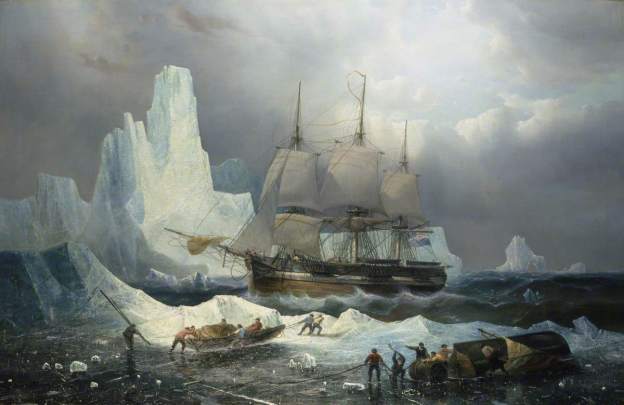
With the Arctic and Antarctic on my mind as I finished my tour of the galleries, I wandered into the gift shop, as one does, and saw they had copies of Michael Palin’s book Erebus, a history of the HMS Erebus which sailed to within both polar circles in the 1830s and 1840s only to disappear in the Arctic ice in the mid-1840s under the command of Sir John Franklin. When this book was first published in 2018, I remember being intimidated by the subject: I knew about the Erebus and her sister-ship the HMS Terror, yet in my mind this sounded more like a history written as a horror novel than anything else, and I’m not one for horror. So, I waited until this sighting of it to buy a copy. I started reading it later that afternoon while taking the Elizabeth line from Canary Wharf back into Central London to Bond Street and was immediately engrossed in the story.

There’s something funny to me about the settings where I start reading books: they become as much a part of my experience and memory of reading those books as the stories themselves. I began reading Judith Herrin’s history of Byzantium on the DLR in mid-summer 2016, and to this day when I glance at it on my shelves or when I’ve taught about Constantinople and the Eastern Roman Empire, I will think not only of that book but also of the DLR elevated line going into Tower Gateway station. In this instance, Palin’s Erebus is connected for me with the darkened-purple hue of the lighting in that Elizabeth line train as we rushed beneath Central London toward the West End.

Now with both books in hand, I proceeded to change my strategy for how I’d read them: I decided that as long as the course which Cook took between 1776 and 1779 mirrored the course that James Clark Ross, captain of the Erebus on its Antarctic expedition between 1839 and 1843, I would go back and forth between each book chapter-by-chapter. That lasted until about Tasmania, where the Erebus first encountered Sir John Franklin, then Lieutenant Governor of the colony, and where Cook and his men had a jolly shore leave before their monumental and historic crossing of the Pacific. What struck me most was how similar these stories felt despite the 70 year gap between their visits to Tasmania. By the time Ross and his crew arrived in Hobart in August 1840, sails were beginning to give way to steam as the main propulsion of ships, and when Erebuswas refitted for its Arctic expedition under Sir John Franklin in 1845, the ship was given an engine from a steam locomotive from the London and Greenwich Railway to help propel it forward into the polar north.

After the two books diverged in their stories I set aside Michael Palin’s Erebus for a while until I finished Hampton Sides’s The Wide Wide Sea, wanting to experience his retelling of Cook’s third voyage in its fatal fullness before reading Palin’s retelling of Franklin’s fateful and more mysterious Arctic expedition. This happened around the 16th of July, a mere six days after Hampton Sides gave a talk here in Kansas City about The Wide Wide Sea. As I switched gears from Cook to Franklin, I listened to as many podcasts as I could find about Cook’s third voyage from our local NPR interview with Hampton Sides in conjunction with his talk, to Melvyn Bragg’s episode of In Our Time from BBC Radio 4 about Captain Cook.

I then picked up Michael Palin’s book again and set off with him in the wake of the Erebus and Terror on their voyage north past the Orkneys and Greenland and into the Canadian Arctic. I came into these chapters with a different sort of prior knowledge about this expedition. On 2 September 2014, the CCGS Sir Wilfrid Laurier, a Canadian icebreaker, sent north by Parks Canada to search for the lost Erebus and Terror discovered one of the ships which a month later was confirmed to be Erebus. I remembered just before moving to London watching an episode of NOVA on PBS about the search, which after reading another article about this expedition in either National Geographic or Smithsonian earlier this year I watched again. So, now instead of a horror-themed history book, I found Palin’s chapters about the Arctic expedition to be a familiar and tragic history of an expedition gone awry.

It struck me in particular that the majority of the last section of his book is devoted to the aftermath of Erebusand Terror’s disappearance entering Baffin Bay in August 1845. Palin told the story as it was uncovered by British and American expeditions sent north to find the lost ships in the 1840s, 50s, and 60s. From all that I’ve read and watched about this voyage, it is likely that we will learn more of what truly happened to ErebusTerror, and their crews in the coming years as more evidence is found in Nunavut, the Canadian territory in whose waters the ships sank.

There is something to be said for how my fascination for exploration has informed my professional life. While I style myself a historian of Renaissance natural history, I am equally focused on exploration, for it was the explorers whose eyewitness accounts first described the animals about which I write. I’ve even considered trying out a voyage of my own just to see what an oceanic crossing by sail is like. What brings both of these books into being in my imagination is that both authors have experienced the places they’re describing and have spent copious time in the archives and libraries and talking to people connected even across the generations to those whose experiences they seek to describe. They truly bring these stories to life. They allow the reader to explore a world now fading, and perhaps even to see how close we are today to Cook, Ross, Franklin, and all their fellow explorers who lived in centuries now gone.


Doctoral Study

Photo by Ricardo Esquivel on Pexels.com

I was 27 when I arrived here in Binghamton at the start of August 2019. I made a big move out here, with immense help from my parents, and set up shop in a good-sized one bedroom apartment that’s remained my sanctuary in this part of the country ever since. I’d wanted to continue my education up to the PhD since my high school days, and it’s a plan I’ve stuck with through thick and thin. After a false start in my first attempt to apply to PhD programs in 2016, which led to two wonderful years working on a second master’s in History at the University of Missouri-Kansas City (UMKC), I applied again, now far better positioned for a PhD program and ended up here through the good graces and friendly insight of several people to whom I’m quite grateful.

Arriving in Binghamton though I found the place very cold and quite lonely. In recent months I’ve begun to think more and more about getting rid of some of my social media accounts only to then remember that Facebook, Instagram, and Twitter were some of my greatest lines of communication with friends and family back home in Kansas City and elsewhere around the globe throughout these last three years. That first semester was tough, very tough, and while the second semester seemed to get off to a good start it was marked by the sudden arrival of the Coronavirus Pandemic and the end of my expectations for these years in Binghamton. 

I spent about half of 2020 and 2021 at home in Kansas City, surrounded by family and finding more and more things to love about my adopted hometown with each passing day. When I was in Binghamton it was to work, in Fall 2020 to complete my coursework and in Spring 2021 to prepare for my Comprehensive Exam and Dissertation Prospectus defense. I still did a good deal of the prospectus work at home rather than here, though the memories of those snowy early months of 2021 reading for the comps here at this desk where I am now always come to mind when I’m in this room.

As the Pandemic began to lessen in Fall 2021 and into the start of this year, I found myself in Binghamton at a more regular pace. There was something nice about that, sure I wanted to be home with my family, but I also felt like I was getting a part of the college experience of going away for a few years to study that was reminiscent of the year I spent working on my first MA at the University of Westminster in London. I started to venture further afield in the Northeast again, traveling to Boston, New York, Philadelphia, Baltimore, and Washington again. When I first decided to come here one of the things, I decided was I’d take the opportunity of being in the Northeast to see as much of this region as possible.

2022 saw another transition, I wasn’t in one of the newer cohorts in my department anymore. Now, in Fall 2022 I’m one of the senior graduate students. It’s a weird thing to consider, seeing as it felt like 2020 and 2021 evaded the usual social life of the history graduate students here, thanks to the ongoing pandemic. I also began to look more seriously at my future, applying for jobs in cities across this country, and even looking again at some professorships, something I doubted for a while would be an option for me. If there’s anything about life that I’ve learned over the past three years spent here, it’s that you always need to have things beyond your work to look forward to. Whether that be a long walk in the woods on the weekends or a day trip to somewhere nearby, or even the latest episode of your favorite show in the evenings. Doing this job without having a life beyond it is draining. 

For me the best times here in Binghamton were in Fall 2021 and Spring 2022 when I truly began to feel like I had a place here that I’d made my own. I was confident in my work, happy with how my TA duties were going, and really enjoying my free time as I began to spend my Friday evenings up at the Kopernik Observatory and Sundays at the Newman House, the Catholic chapel just off campus. I was constantly reading for fun as well, something I’d lost in 2020, even falling behind with the monthly issues of my favorite magazines National Geographic and Smithsonian. There were many weeknights I’d spend out having dinner alone reading natural history, science fiction, anthropology, and astronomy books. 

It’s interesting looking back on myself from six years ago when I was in London, the months that summer when I decided I wanted to get back into history after a year studying political science. My motivations were to earn a job working at one of the great museums I’d spent countless hours in during that year in the British capital. While I studied for my MA in International Relations and Democratic Politics, I was still spending my free time looking at Greek and Roman statuary and wandering the halls of Hampton Court or watching the hours of history documentaries on BBC 4 in the evenings. And now that I’m back in History as much as I do appreciate and love what I do, I find my free time taken up by science documentaries and books.

It’s important if you do want to get your PhD in the humanities and social sciences to figure out why it is you want to do this before you start. Have a plan in mind, have a big research question in mind, and focus your attentions onto that question. My own story has many twists and turns from an interest in my early 20s in democratic politics to a brief dalliance with late republican Roman history before settling into the world of English Catholics during the Reformation. I ended up where I am today because of another series of events that led me to moving from the English Reformation to the French Reformation, and from studying education to natural history. So, here I am, a historian of the development of the natural history of Brazil between 1550 and 1590, specifically focusing on three-toed sloths. In a way there are echoes of all the work I’ve done to date in what I’m doing now, thus as particular as this topic is it makes sense in the course of my life as a scholar.

A month from now will be my 30th birthday, a weird thing to write let alone say aloud. My twenties have been a time of exploration of both the world around me and of myself. When I look at my photo on my Binghamton ID card, the best way to describe my appearance would be grumpy yet optimistic. Just as I was a decade ago, a sophomore in college, so now I am today, looking ahead to the next decade with excited anticipation of what it’ll bring, and hopeful that all the work I’ve done in this decade will find its reward in the next.

Me upon arrival in Binghamton, August 2019.

Natural History, Part 2

Photo by Steven Paton on Pexels.com

I am a Historian of the History of Natural History, or a Stáir ar Stáir an Nádúir in Irish. This means that I study how animals and plants were understood by naturalists in the past, in my case during the mid-1500s, or what I like to call the Late Renaissance. Central to all of this is the fact that the animals I study are all from the Americas, so they were brand new to the French and Swiss naturalists whom I study. In a sense then, natural history seeks to provide a history on human terms for nature. It seeks to bring something so vast as nature down to our level and make it familiar.

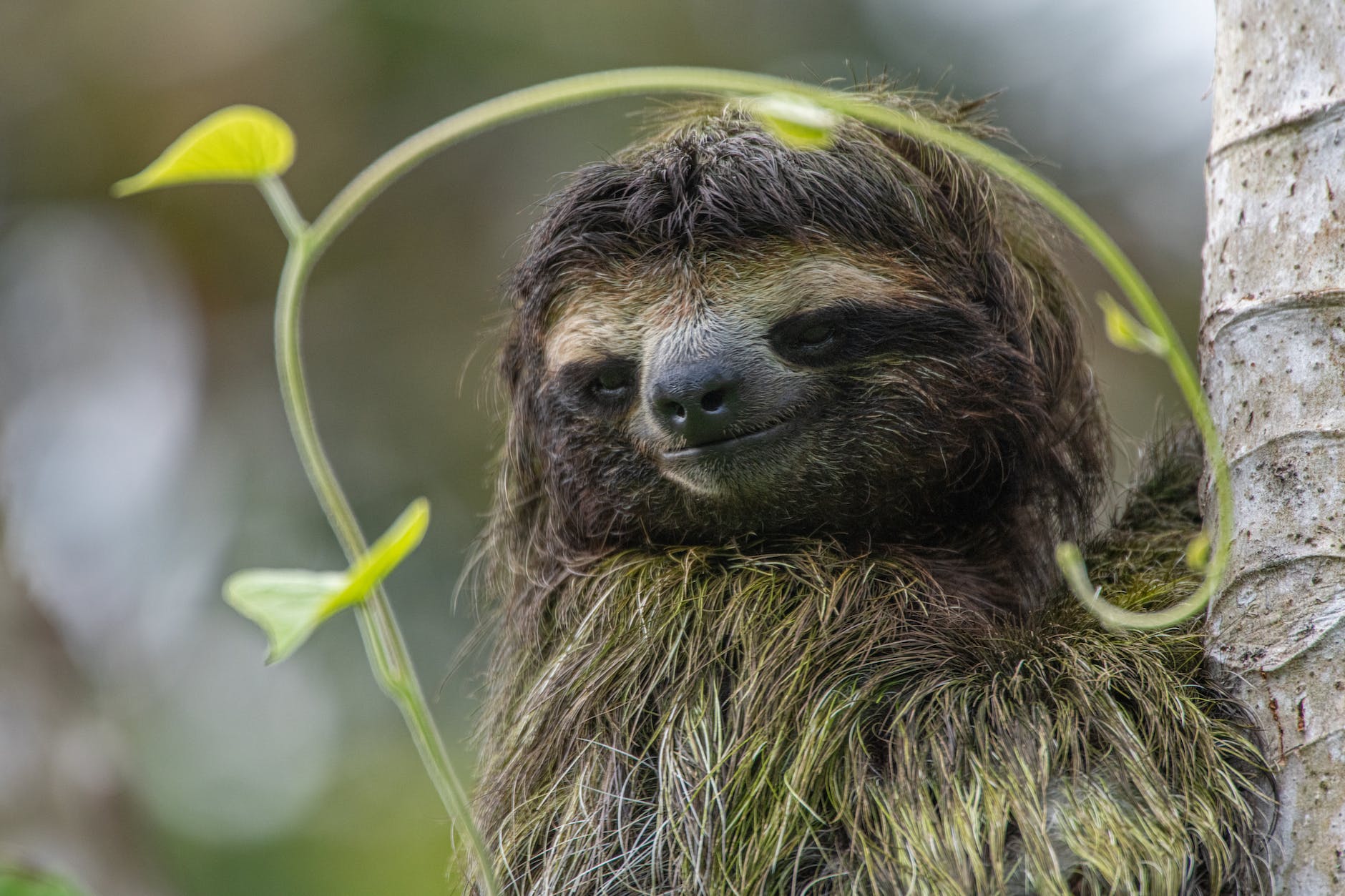
In my research this story focuses on the maned sloth (Bradypus torquatus), a species of three-toed sloth that’s native to the Brazilian Atlantic Forest. It was first recorded in a work of natural history by the Frenchman André Thevet in his 1557 book The Singularities of France Antarctique. Thevet has become famous in the history of natural history for using local names for local animals, rather than calling it a “sloth” he called it a “haüt“, his rendering of the local Tupinambá name. To me this is critical to understanding the History of Natural History, for while you could look at an animal and call it a “sloth” because it moves very slowly another option is to turn to the people who’ve lived alongside it for generations and ask them what they call it. This is what Thevet did.

Last week I got the chance to spend a couple days down in New York City, during which time I wanted to pay a visit to the American Museum of Natural History, arguably one of the preeminent institutions dedicated to the study of nature in this country. It’s a nice enough place, though I’ll admit the exhibits tend to be a bit dated now in 2022. Still, the American Museum offers a good foundation for the layout of such museums around the country. Like its Chicago counterpart, the Field Museum, my favorite such museum, the American Museum has sections focusing on Zoology, Paleontology, Botany, Astronomy, and Anthropology. It seeks to be an encyclopedia of nature in one big building on the edge of Central Park, something it does quite well.

What has struck me the most over the last few years of choosing to visit natural history and science museums in every city that I visit is how all of them try to tell the same story, a history of nature from the Big Bang down to the present. The Field Museum does a wonderful job of capturing this in their Deep Time exhibit, the place where you can find the dinosaurs, in that it begins with that first primordial burst of energy that got everything started and it ends with a wall showing all the species that have gone extinct already in our current age alongside a ticker counting the number of species currently going extinct. We model our natural history on our own history, and frankly our own history is one bookended by a lack of life, whether it be before we exist or after we’ve died.

It’s important that we understand the fact that our perspective is born entirely out of our own experiences. So, we understand the course of time as a linear and finite thing. Past generations have thought of trees and plants as animated creatures like us, while today we recognize they are living if perhaps not as sentient as we animals are. Many among us have understood nature through faith, prescribing that energy which drives all creation to a Creator, a Divine Essence as I like to call the most paradoxical and incomprehensible. (One of these days maybe I’ll release an episode all about the idea and promise of God.)

Thevet understood the sloth to be “most deformed” because of its strange shape and notable slowness. To his perspective it wasn’t a normal creature, natural to its own world yes, but not normal as he understood normal. We still today describe things that are “normal” or “ordinary” as things that we find familiar and comforting. I do it just as much as the next person (see the episode two weeks ago about cultural homogenization). In moderation this is a good thing, it allows us to formulate a baseline, a control, against which we can better understand the unusual and extraordinary around us. The beautiful thing about Nature is as much as our science has made great progress in seeking to describe and understand it, there’s always more out there for us to learn about.

I’m going to leave it there this week. If you haven’t noticed, my voice is failing me today. Let me finish with the thing that I myself will eventually want written as my epitaph (however many decades away that is): stay curious.