
Tag Archives: History PhD

Doctoral Study

Photo by Ricardo Esquivel on Pexels.com

I was 27 when I arrived here in Binghamton at the start of August 2019. I made a big move out here, with immense help from my parents, and set up shop in a good-sized one bedroom apartment that’s remained my sanctuary in this part of the country ever since. I’d wanted to continue my education up to the PhD since my high school days, and it’s a plan I’ve stuck with through thick and thin. After a false start in my first attempt to apply to PhD programs in 2016, which led to two wonderful years working on a second master’s in History at the University of Missouri-Kansas City (UMKC), I applied again, now far better positioned for a PhD program and ended up here through the good graces and friendly insight of several people to whom I’m quite grateful.

Arriving in Binghamton though I found the place very cold and quite lonely. In recent months I’ve begun to think more and more about getting rid of some of my social media accounts only to then remember that Facebook, Instagram, and Twitter were some of my greatest lines of communication with friends and family back home in Kansas City and elsewhere around the globe throughout these last three years. That first semester was tough, very tough, and while the second semester seemed to get off to a good start it was marked by the sudden arrival of the Coronavirus Pandemic and the end of my expectations for these years in Binghamton. 

I spent about half of 2020 and 2021 at home in Kansas City, surrounded by family and finding more and more things to love about my adopted hometown with each passing day. When I was in Binghamton it was to work, in Fall 2020 to complete my coursework and in Spring 2021 to prepare for my Comprehensive Exam and Dissertation Prospectus defense. I still did a good deal of the prospectus work at home rather than here, though the memories of those snowy early months of 2021 reading for the comps here at this desk where I am now always come to mind when I’m in this room.

As the Pandemic began to lessen in Fall 2021 and into the start of this year, I found myself in Binghamton at a more regular pace. There was something nice about that, sure I wanted to be home with my family, but I also felt like I was getting a part of the college experience of going away for a few years to study that was reminiscent of the year I spent working on my first MA at the University of Westminster in London. I started to venture further afield in the Northeast again, traveling to Boston, New York, Philadelphia, Baltimore, and Washington again. When I first decided to come here one of the things, I decided was I’d take the opportunity of being in the Northeast to see as much of this region as possible.

2022 saw another transition, I wasn’t in one of the newer cohorts in my department anymore. Now, in Fall 2022 I’m one of the senior graduate students. It’s a weird thing to consider, seeing as it felt like 2020 and 2021 evaded the usual social life of the history graduate students here, thanks to the ongoing pandemic. I also began to look more seriously at my future, applying for jobs in cities across this country, and even looking again at some professorships, something I doubted for a while would be an option for me. If there’s anything about life that I’ve learned over the past three years spent here, it’s that you always need to have things beyond your work to look forward to. Whether that be a long walk in the woods on the weekends or a day trip to somewhere nearby, or even the latest episode of your favorite show in the evenings. Doing this job without having a life beyond it is draining. 

For me the best times here in Binghamton were in Fall 2021 and Spring 2022 when I truly began to feel like I had a place here that I’d made my own. I was confident in my work, happy with how my TA duties were going, and really enjoying my free time as I began to spend my Friday evenings up at the Kopernik Observatory and Sundays at the Newman House, the Catholic chapel just off campus. I was constantly reading for fun as well, something I’d lost in 2020, even falling behind with the monthly issues of my favorite magazines National Geographic and Smithsonian. There were many weeknights I’d spend out having dinner alone reading natural history, science fiction, anthropology, and astronomy books. 

It’s interesting looking back on myself from six years ago when I was in London, the months that summer when I decided I wanted to get back into history after a year studying political science. My motivations were to earn a job working at one of the great museums I’d spent countless hours in during that year in the British capital. While I studied for my MA in International Relations and Democratic Politics, I was still spending my free time looking at Greek and Roman statuary and wandering the halls of Hampton Court or watching the hours of history documentaries on BBC 4 in the evenings. And now that I’m back in History as much as I do appreciate and love what I do, I find my free time taken up by science documentaries and books.

It’s important if you do want to get your PhD in the humanities and social sciences to figure out why it is you want to do this before you start. Have a plan in mind, have a big research question in mind, and focus your attentions onto that question. My own story has many twists and turns from an interest in my early 20s in democratic politics to a brief dalliance with late republican Roman history before settling into the world of English Catholics during the Reformation. I ended up where I am today because of another series of events that led me to moving from the English Reformation to the French Reformation, and from studying education to natural history. So, here I am, a historian of the development of the natural history of Brazil between 1550 and 1590, specifically focusing on three-toed sloths. In a way there are echoes of all the work I’ve done to date in what I’m doing now, thus as particular as this topic is it makes sense in the course of my life as a scholar.

A month from now will be my 30th birthday, a weird thing to write let alone say aloud. My twenties have been a time of exploration of both the world around me and of myself. When I look at my photo on my Binghamton ID card, the best way to describe my appearance would be grumpy yet optimistic. Just as I was a decade ago, a sophomore in college, so now I am today, looking ahead to the next decade with excited anticipation of what it’ll bring, and hopeful that all the work I’ve done in this decade will find its reward in the next.
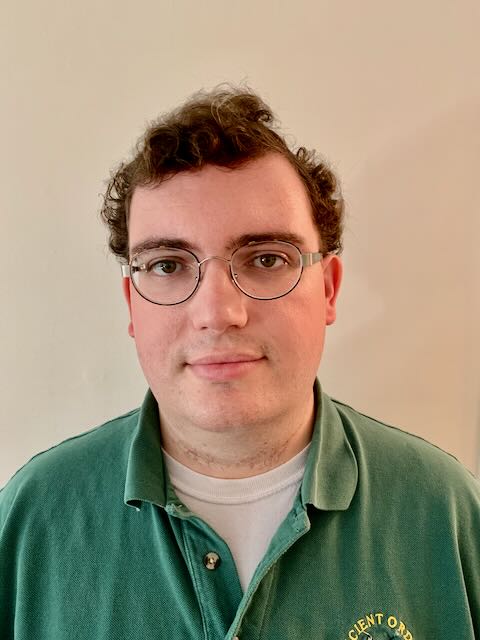
Me upon arrival in Binghamton, August 2019.

Patience

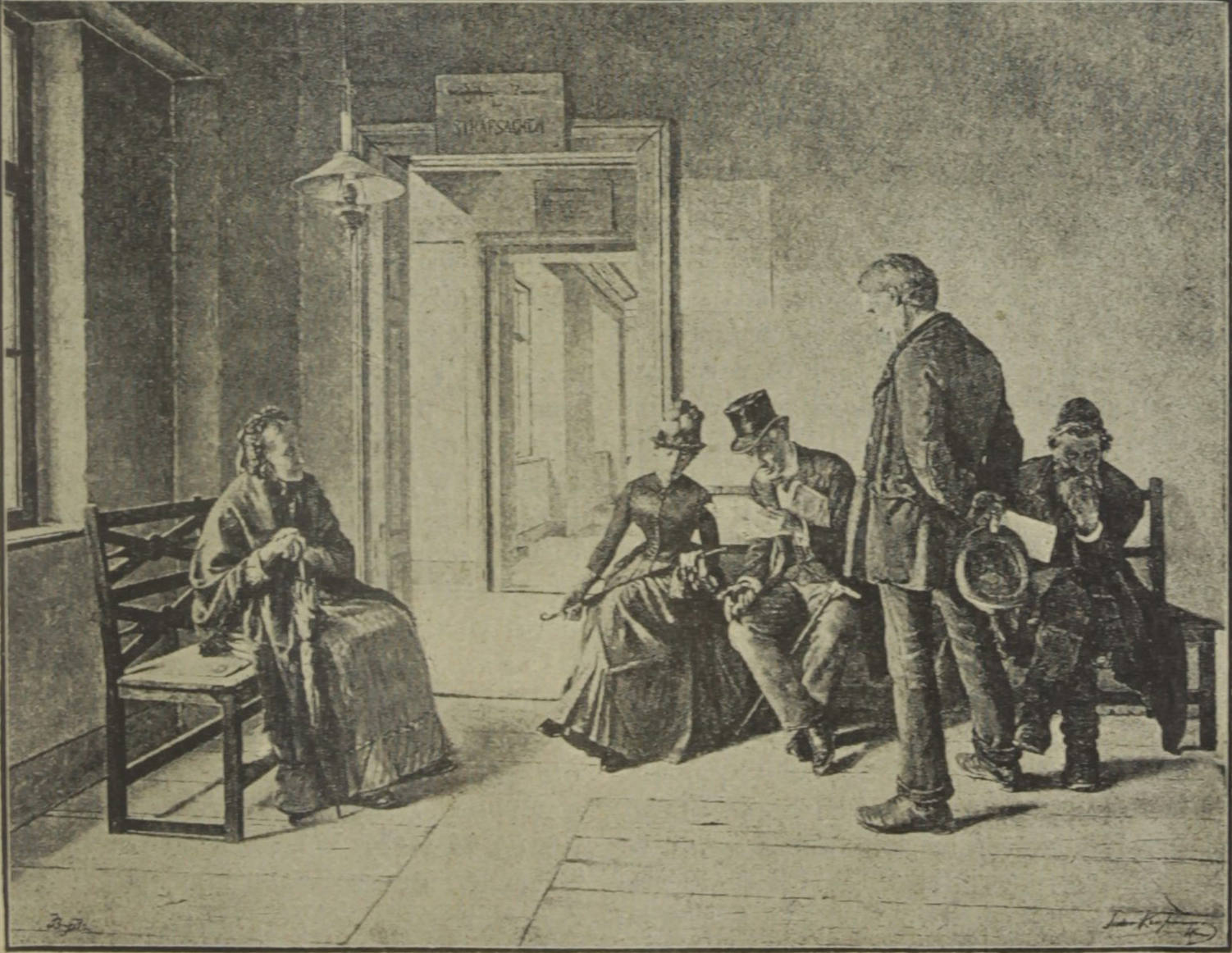
Isidor Kaufmann (1853–1921), “Waiting room at the Court”, 1888
This week, how I've learned that patience really is a virtue.

I’ll freely admit that I’m a pretty impatient guy. I feel the most rewarded when I’m able to solve problems quickly and efficiently, and throughout my life I’ve never really enjoyed dealing with things that are long term questions. As I’ve gotten older though my impatience has mellowed out, I’m more willing now to let myself take a day to relax and think rather than trying to force myself to write a page a day or read a book in an afternoon.

In the last few years, with this global pandemic, it’s really begun to occur to me that there is far more outside of my control than within it, a lot more that I simply can’t do anything about. Sure, I’m not naïve enough to think I could single-handedly stop the looming war clouds hovering over Ukraine or solve the climate crisis. Those are big problems that are going to be solved by a whole host of people likely over generations of hard work. And even in my own work as a historian, and especially as a teacher, I’ve come to learn that as much as I’d like my students to follow directions to the letter, the best I can do is make sure those directions are clear and concise and then let them go down the road I’ve laid. They’re adults after all, it’s up to them how they want to perform in my classroom.

At this moment in my work, I’m writing my doctoral dissertation. The working title is “Trees, Sloths, and Birds: Brazil in Sixteenth-Century Natural History”. It’s a bit of an odd ball of a topic, a combination of many different topics, ideas, and fields that I’ve been interested in from childhood. As of today, I have one out of six of my chapters written, and I’m glad to be in the position I am. But looking ahead at the second chapter, the next one I’m going to start writing in the next week, I’ve got to admit it’s daunting to imagine how I’m going to make it work. And that’s the key to this project and every project any of us will ever attempt; we have to be able to imagine doing it before we actually do it. So, now in my doctoral studies, I’ve learned the benefit of professional patience.

Today is one of those days when I intended to get more done than I actually have. I did make a very loose outline of the chapter I’m about to start writing, with some questions about which order the sections should go in, and I’ve made some headway in coordinating the primary and secondary sources I’m using in my thinking about this chapter. Unlike Mozart in Peter Shaffer’s play Amadeus, I don’t have a fully written draft of this chapter already done in my mind, just waiting to process through my hands and the keyboard into the word processor on my computer. Instead, I’ve got a loose collection of ideas, and an understanding that in a little while, whether it be hours, days, or weeks, I’ll start crafting those into sentences and paragraphs.

That’s my writing process today. It’s less about the mad dash to the finish, and more a leisurely stroll through different interrelated ideas that I’ve got until they’ve come together in a convincing argument that I’m willing to send around to those interested parties. Patience is a virtue, and while I’m thinking through what this chapter will look like, I’m happy to sit and wait for a good result, knowing that eventually it too will pass.

The Puzzle of the Source Material used by my Primary Sources

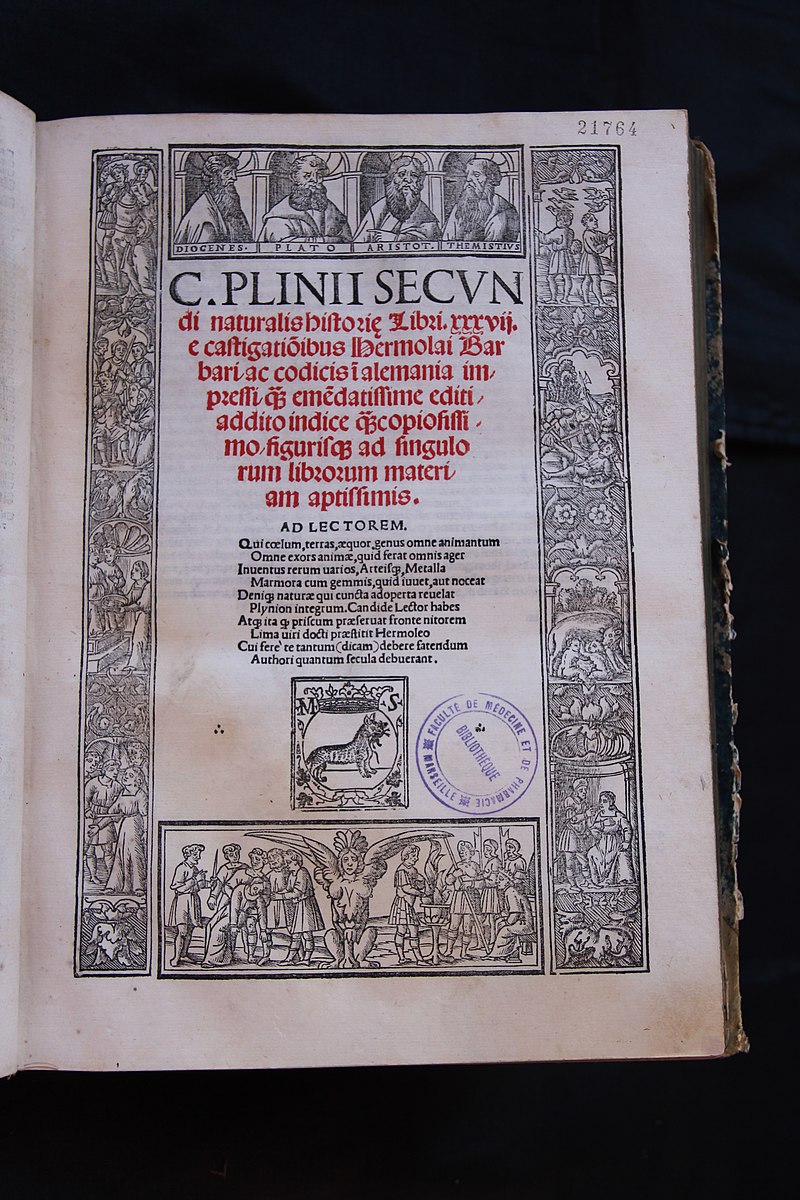
Title page of Pliny’s Natural History. Source: Wikimedia Commons, uploaded by user LDove (2018).

This is a rare blog post that deals directly with my day job. For those of you who aren’t aware, I’m currently a PhD Student in History at Binghamton University. I study sixteenth century French natural history discussing Brazil, drawing particularly from the works of André Thevet (1516–1590) and Jean de Léry (1536–1613). As such, my main primary sources are pretty straightforward: Thevet’s Les Singularitez de la France Antarctique (1557) and Cosmographie Universelle (1575) and Léry’s Histoire d’un voyage fait en la terre du Brésil (1578) form the backbone of my work. But beyond those sources is another layer of source material that those two authors used to ground their own writing. In the case of natural history, Renaissance Natural History is largely founded on Pliny’s Natural History (published 77–79 CE) and Aristotle’s works on natural philosophy and zoology, in particular his History of Animals (4th c. BCE).

Thankfully, I came into this project already fairly familiar with Pliny, having used his Natural History in a project on classical geography and the legacy of the voyages of Pytheas of Massalia (c. 350–306 BCE) in my undergrad. I’ll admit I’m less familiar with Aristotle outside of his works on ethics, but luckily for me and all other scholars there are plenty of resources available today that can give you everything from a quick citation to a thorough discussion of Aristotle. My two favorite are the Loeb Classical Library side-by-side Greek-English translations and the Perseus database provided by Tufts University. These are often the best resources I’ve found, and have in a sense made buying copies of these classical texts unnecessary, which my budget appreciates.

That said, in the context of Renaissance Natural History how much should I really be using these twentieth and twenty-first century editions of these classical sources? If I really want to be accurate to the period I’m writing about, I ought to be using sixteenth-century editions of both authors. The easiest and most accurate way to do this would be to figure out which editions were used by my authors and look for copies of those that have been digitized and are available online. But more often than not it’s not that easy to figure out which editions exactly were used. The secondary literature about Renaissance editions of Pliny and Aristotle provide some clues as to how the early printed editions differ from our modern edited ones, both in the original languages and in translation, but those articles and books don’t quite take the runner to home plate.

The best guide then seems to be using the examples and patterns set by other books that I know for sure were owned and read by these authors and use those to guess at which editions of Pliny and Aristotle they would most likely have known. One good lead for Thevet at least appears to be the fact that he had a connection to the court of François I (r. 1515–1547) who like Thevet came from the provincial city of Angoulême. This means if there’s a specific edition noted as being present in François I’s library, then that might be a good lead to follow to see what Thevet was reading. Looking at the nine books known to have been owned by Thevet, curiously all of them were in French, none in Latin. Generally, I’ve taken this to mean that he probably preferred to read in his native language, so he may have preferred a French translation of both Pliny and Aristotle rather than reading editions in Latin and Greek.

At the end of the day as much as I see a profound benefit in using these sixteenth-century editions of Pliny and Aristotle to really establish my research in the natural history being written in the Late Renaissance, I’m still going to keep my modern edited versions of those same classical works handy. After all, they’re much easier to search than any sixteenth-century version, so if anything the modern editions will continue to prove to be good road maps to help me navigate through their centuries old forbearers.

Time Travel

Today after passing a major milestone in my work, my comprehensive exam, I find myself reflecting on what it took to get me to this point. What would I say to myself from Spring 2019 when I was getting that acceptance letter into the History PhD program from Binghamton amid all the other rejections?

I remember one particular moment when I was standing at my bus stop on a cold windy February morning, the Winter Sun carving with its jagged coldness into my bare face and hands. On that particular morning I received the fifth of ultimately six rejection letters. It was one I expected, to be honest, but it still hurt like all the others did. At that moment I remember thinking, “If I get turned down by all seven I’ll find something else, it’ll hurt for a long time, but I’ll figure things out.” Today though, after finally passing my comps, an experience that was overall almost as stressful as the admissions process, I feel like were I able to talk to myself from two years ago, I’d probably say, “Don’t worry, it’ll all work out in the end. Take whatever win you can, and stand on that because trust me, this doesn’t get any easier.”

Looking at where I’m at today, now halfway through my fifth semester of the PhD, with the end of my work here hopefully closer in sight than the beginning, I do feel proud about what I’ve accomplished. It’s a big deal to make it this far, no matter how challenging it’s been. If anything, I’ve come to understand where my strengths and weaknesses lie, to understand myself and both my limits and potentials better than I ever have before.

As it happens, the day after that spell at the bus stop when the rejection letter arrived via email, I got my first acceptance letter in from Binghamton. It was St. Valentine’s Day, and as worn down as I was by the whole process of applying for doctoral programs at that point, I still celebrated in my own way, knowing that I’d be continuing in this career in academia. Today feels a lot like that day, it’s a moment when I have reason to celebrate, but also a moment when I need to stop and think about all the things that led to today. How can I make these sorts of really important events run smoother in the future? And how can I succeed in what I’m doing from here on out?

That’s the beauty of life, there’s always something new out there to explore, and the potential futures can seem boundless.

Keeping Fiction Alive

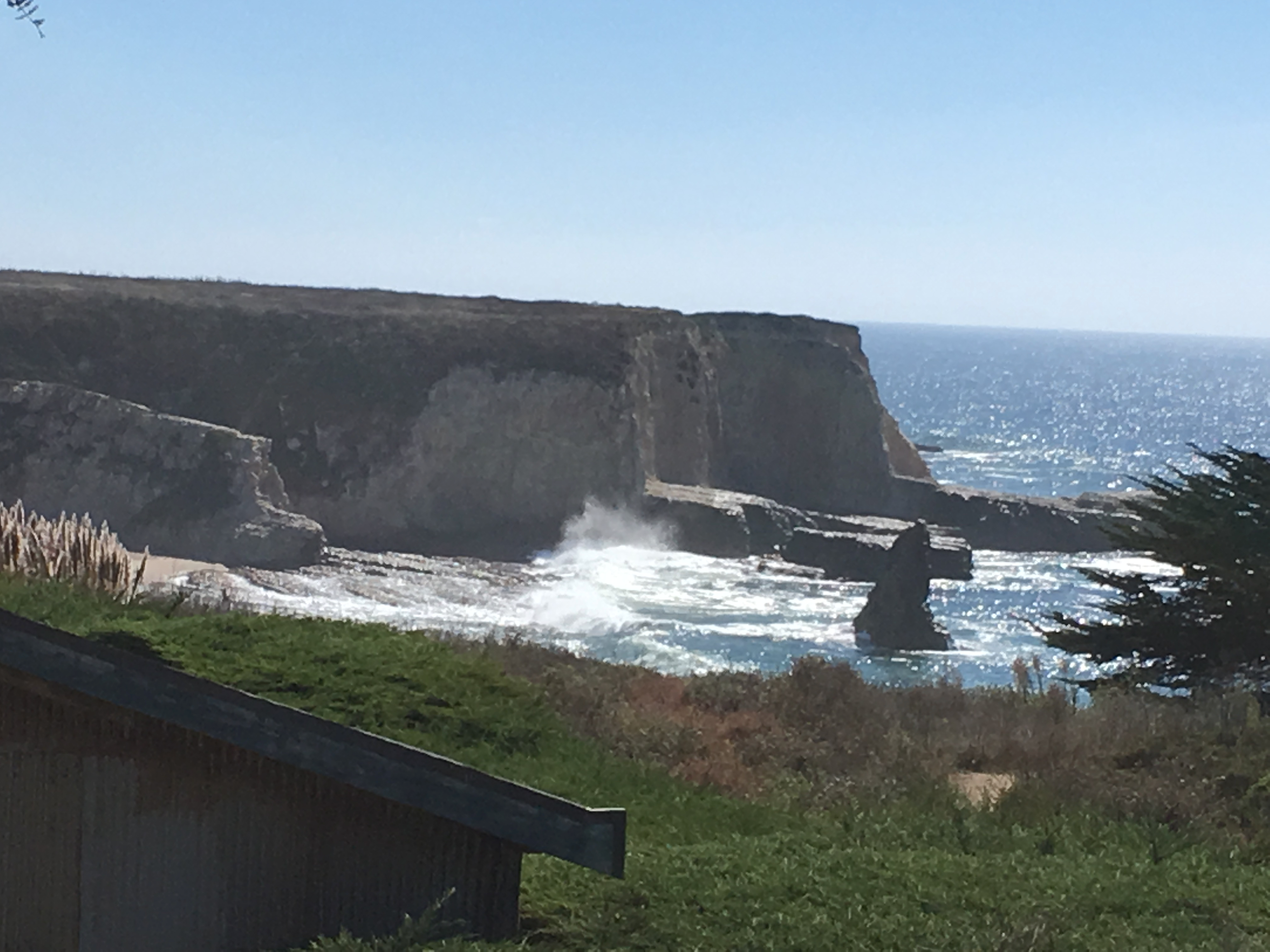
A picture I took of Shark Tooth Rock in Davenport, CA (13 October 2018)

A few years ago when I started working on my PhD here at SUNY Binghamton I arrived not only with a game plan in mind for getting this job done but with 4 chapters written of the sequel to my novel Erasmus Plumwood. That sequel, Plum in the Sun, follows Plumwood west to San Francisco where he’s started working on his dream job in a Silicon Valley company called Technophilia. The only problem is that when he arrives there he finds the job to be far from the dream he hoped it’d be, in particular because of a really awful boss named Don Basil who has it out for Erasmus.

I tried a few times to keep writing Plum in the Sun in my first semester in Binghamton but I found the task was a lot more difficult to do now that my mind was so squarely focused on the doctorate and setting myself up for success academically here. With that in mind I set the novel aside figuring I’d come back to it eventually. It’s only been in the last couple of months that I’ve started to think about working on it again, and while I’m certainly not going to do much of anything with it as I’m in the middle of the doctorate right now, I’m nevertheless beginning to think about working on that novel again.

The next chapter on the list to write is another of my fictionalizations of my own memories, replacing the real people who were with me in the moment with the characters populating this story. The basic premise of the chapter is that the two main characters, Erasmus Plumwood and his girlfriend Marie-Thérèse Merlinais, get more comfortable being together in California on a Sunday drive along the Pacific Coast Highway around Half Moon Bay, something my Mom and I did in October 2018 in what was one of my favorite days yet. I’m looking forward to describing the indescribable beauty of the redwoods and the coastline, the bird song and the feel of the sea breeze on my face.

But this is a story that I have to be in the right sort of mood to write. It’s not something I can do when I’m annoyed or tired or grumpy in any way, it has to be something I write when I’m in a really good mood, not all that different to how I was feeling on the day of. There’ll be some things that will be different between the real event and its fictionalized counterpart; for one thing we made that drive in October and the characters will do it in June, but considering that like it was for me it’ll be Erasmus and Marie-Thérèse’s first time seeing those sights I think my experience can still inform theirs even if I didn’t see it all in Summer.

I do intend to finish Plum in the Sun. If I’m being honest the plot and the characters are a lot stronger than the original book in what’s becoming a series. I was joking a few years ago with a friend that if I did make a series out of Erasmus Plumwood and Plum in the Sun then I might try and make it sound grandiose, if in a mocking way, and call it the Plumwoodiad. I do have a third book in the back of my head wrapping up at least this part of the lives of my characters, but considering I’m putting a dissertation ahead of Plum in the Sun on my writing assembly line, any third book in this Plumwoodiad is well further down the line and won’t be seen for a while.

So as I keep moving through my doctorate, I can’t help but smile when I think of what awaits me when I eventually do get to writing this chapter. It’ll be a wonderful few days spent intensely remembering that day and all I saw in one of the most beautiful parts of this country.

Zoom

Well, it’s been almost a year and a half or so since the pandemic started and we at SUNY Binghamton largely switched to online remote learning. All of this became possible for the masses through the widespread introduction of Zoom, the ubiquitous video-calling platform. I actually advocated more than others among the TAs I was working with in the Spring 2020 semester that we switch to online synchronous classes, thinking the face-to-face interactions with the students was essential to their ability to learn, after all it always has been for me. But now, after two and a half semesters and one inter-semester session, I’m ready to be back in person.

Sure, teaching remotely gave me the golden opportunity to deal with my relative isolation in Binghamton and do my work from my parents’ house in Kansas City, something I’d hoped might be possible in my first semester at Binghamton when my homesickness was at its most virulent. I still would much rather live and work full-time in Kansas City, in a city that has become home to me through decades of experience, but at this moment in my life, in mid-2021 at the age of 28 my work is still centered on that much smaller city in the Susquehanna Valley in the Southern Tier of New York.

But the impact of teaching first from my apartment and later from my parents’ house had a number of more unwelcome side effects. When I’ve been in Binghamton over the last year, I’ve largely been in isolation, about as alone as a guy can be. It’s a bit unnerving in the first couple weeks, but by the end of my second month of it this winter, when I’d wake up in the morning after after having had similar recurring dreams of home, I knew I needed a break from the monotony of solitude. Being alone like that for that long really made me generally melancholic, perhaps more so than usual, something I often tried to treat with the best medicine I knew: work.

During those two months that I was in Binghamton this Spring semester, February and March, I worked most weeks for 5 to 6 days a week, spending a good 14 hours at my desk. This semester in particular was a tough one, I was studying for my comprehensive exams, one of the biggest turning points in the life of someone in a PhD program, one which could make or break my career. I kept myself going with the thought that once I got that done, and once my dissertation proposal was accepted by my committee, it’d be just up to me how much longer I’d need to make the long drive east every August and January back to that “Valley of Opportunity” as Binghamton was once called, to complete my degree. I could set things on my own terms, and finish my work to the best of my ability in a timely and efficient manner.

The only problem was, after two months of working 70 to 96 hours a week, I was burnt out in a very big way. I’ve been in that funk for the better part of the last month or so, it’s why frankly I haven’t gotten much done. I’ve taken some solace in the fact that I got back to Kansas City at the end of March, on the morning of Palm Sunday, and have been able to take breaks from my desk to enjoy my favorite haunts here in town, to see my family, my friends, and to take my dog for walks around the neighborhood. Sitting here now, I’m annoyed that I haven’t done as much as I’d hoped in the last couple weeks, but as much as it may set me back by a little bit, I know that I’ve needed a break.

So, on that warm late-August day in humid Binghamton, NY, when I don my suit and tie again and step back into the classroom, onto my stage, I’m going to enjoy the moment, because it’s one I’ve really been looking forward to. This will be the start of my 5th consecutive academic year working as a TA, having begun in the Fall 2017 semester still not entirely knowing what I was doing.

In the last couple weeks, I’ve tried to restore a bit of normalcy to my Zoom classrooms, by playing a bit of piano jazz as people are coming into the meeting before class starts. I’d started this in Spring 2020, on Valentine’s Day no less, with an outtake of Oscar Levant playing Gershwin’s “They’re Writing Songs of Love, But Not For Me” as a bit of a humorous sigh to being single on that romantic holiday, and the idea seemed to work. So, as the pianist, usually Duke Ellington or more recently Jon Batiste, sets the more mellow mood of my classroom, one where I hope the students will feel comfortable to join the conversation, and come away both having learned something, and having had a good time.

Oscar Levant “But Not For Me”

But even as we move back to fully teaching in-person again, I want to suggest that we keep some of the things we’ve learned and improvised into working during this time when education was conducted over Zoom. Firstly, I want to keep the option of remote teaching in the cards, to allow students who are unwell to tune into the class via Zoom, or better yet to tune into office hours over Zoom. In the event that I get accepted onto a conference’s program, and they decide despite my requests to the contrary to schedule me to speak on a Friday, that I could still maybe teach the class remotely for the week if needs be.

Also, let’s continue to have conferences and lecture series be conducted with a virtual part. I’ve been able to attend conferences at universities across the US, as well as in Italy, New Zealand, and the UK since the pandemic began, something that certainly wouldn’t have been as possible before. Virtual conferences have in some ways helped democratize academia, allowing for scholars who even in normal circumstances wouldn’t be able to travel long distances to still attend conferences, to have their voices and research be heard, or to hear fantastic scholars from around the globe.

I’d like to think I’ve made the most of the last year and a half, no matter how awful things have been. Now, at the end of teaching for the Spring 2021 semester at SUNY Binghamton, let’s hope the coming Fall semester proves to be a much needed return to a new normal, a normal improved and informed by recent experiences. First though, I’ve got to get through one more intersession online asynchronous class, this one of my own creation.

Rhyme Time

Taken on the grounds of Dover Castle, 14 May 2016

My fellow regular daily viewers of Jeopardy, that classic American TV game show, hosted until earlier this year by the legendary and dearly missed Alex Trebek, will no doubt recognize the title of this post. I admit, it’s an homage of sorts to that daily bread which my parents and I partake in five days a week around dinner time. I love how the Jeopardy clue writers play with English, and occasionally other languages, in their clues, the twists and turns, even the multipart answers that often I tend to have trouble with.

This post isn’t about Jeopardy, however, but instead is about rhymes in time. My old boss, Dr. Becky Davis, at UMKC, to whom I am deeply grateful, often used the old Mark Twain quote, “History doesn’t repeat itself, it rhymes” (or something to that effect) to help contextualize how themes seem to reappear throughout history, especially American history. I’ve found that to be a handy way of thinking about history, and our place in it, because as odd as it may sound there are certain times in history that do seem to me to rhyme with our own. There are moments in the past that seem far more familiar than others, far more relatable than others.

Consequently, those tend to be moments well documented among my fellow academic historians; they’re the popular topics of the day. I wasn’t always interested in being a Renaissance Europeanist and Atlanticist (yeah, those are real words), I kind of settled into these fields out of a combination of circumstance and curiosity. Luckily, neither has killed this cat yet.1 I looked into a pretty wide range of historical fields before settling on this one. They included late republican Rome, early medieval Ireland, late medieval England, Renaissance England (my MA thesis), early Stuart England, Georgian London, Dutch colonial New Amsterdam, French Upper Louisiana (aka Missouri), the First French Empire (aka Napoleonic France), (1804–1815), France under the July Monarchy (1830–1848), the history of Baseball, Old Hollywood, and the history of the US restaurant industry. As one of my friends said, I’m interested in too many things for my own good.

Of those considered fields, I do see clear rhyme times with our present moment in a couple, most notably with Georgian Britain, and the late eighteenth century in general. Our social narrative seems to have taken itself to a similar moment where we are at Robert Frost’s diverging two roads. One could take us towards progress, towards addressing our societal ills, the other toward likely political instability and society becoming fed up with the gridlock resulting likely in revolution.

Like Georgian Britain, we live in a highly class-conscious society, one where wealth defines much. Like Georgian Britain, our society has come to value profit over welfare, the maintained power of the few over the well-being of the many. Like Georgian Britain, just as in late republican Rome, a vast majority feel unheard by the ruling big wigs. We’ve seen divergent camps of the unheard, the have nots to borrow a term from a later early Victorian writer of note, who have adopted varying messages and manifestos born out of similar fears and troubles.

Times are not the only things that rhyme: often, I’ve found, our ideas, our hopes, and especially our troubles have a tendency to rhyme as well. Let’s talk about those rhymes, because there’s a chance that beyond the demographics that often divide us are commonalities that could well unite us. Maybe that’ll take us down the better road, the one that’ll benefit everyone. After all, no one of us can walk down it without the rest of us carried along. We will rise together, or we will fall together. It’s up to us to heed our rhymes.

Notes

1 Meow