Tag Archives: Humanism

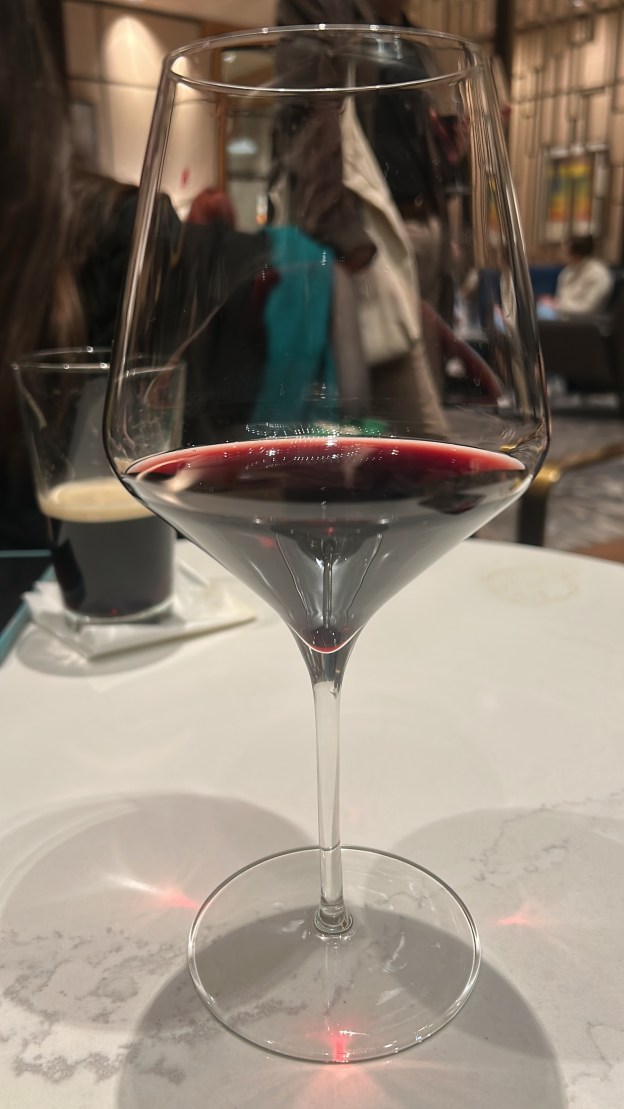
A glass of Rioja red wine drunk by the author in March 2025 in Boston.

On Drink

This week, bringing together my research and my life through wine.—Click here to support the Wednesday Blog: https://www.patreon.com/sthosdkane—Sources:%5B1%5D Thevet, Singularitez, 14v.%5B2%5D Thevet, Singularitez, 15r.%5B3%5D Thevet, Singularitez, 159r.%5B4%5D Thevet, Singularitez, 15v.%5B5%5D Émile Littré, Dictionnaire de la langue française, 4 vols., (Paris, 1873-1877) s.v. « mignol. »[6] Florike Egmond, Eye for Detail: Images of Plants and Animals in Art and Science, 1500-1630, (Reaktion Books, 2017), 30; Mackenzie Cooley, The Perfection of Nature: Animals, Breeding, and Race in the Renaissance, (University of Chicago Press, 2022), 101.[7] Thevet, Singularitez, 18v.[8] Thevet, Singularitez, 19r.[9] Thevet, Singularitez, 19v.[10] Thevet, Singularitez, 19v-20r.[11] Homer, Odyssey 9.403, trans. Fagles.

This week, bringing together my research and my life through wine.


As I progress in my efforts to prepare my translation of André Thevet’s (1516-1590) Singularitez de la France Antarctique for publication, I find myself often laughing at Thevet’s own comments about his world and the worlds he visited on his 1555 voyage from France to Brazil and his 1556 voyage home (the one with the whales). Thevet was a Frenchman through and through, yet while he referred to “our countrymen” on several occasions in the Singularitez he more often identifies himself alongside other Europeans as Christians, distinguishing them from the African and Amerindian peoples he described in various forms of other. Thevet used the broadest possible perspective to craft a story which would resonate with his reader, a story which told of the influence and impact of his fellow Christians from “our Europe” upon these distant worlds across the “Ocean Sea.” I like Thevet’s perspective because as contemporary to the middle of the sixteenth century it is, it still feels contemporary to our own time all the same. If the frontiers of mapped knowledge were just beyond the Atlantic and Pacific shores of the Americas in Thevet’s time, today they lie in the vastness of Space above us. The parallels between the First Age of Exploration to which Thevet contributed and our own Second Age of Exploration now underway are many and ought to be explored further in academic scholarship.

I’ve long loved reading about explorers, pioneers, and settlers. Over the weekend then, when I drove west with my Dad to Hutchinson, Kansas for the 2025 State Convention of the Kansas Ancient Order of Hibernians I made a point of us going to visit the Cosmosphere, one of Hutchinson’s jewels. This museum of spacecraft, memorabilia, and historical artifacts from the 1940s through the end of the Cold War is something worth visiting if you’re in Central Kansas. We’d been there before in about 2007 or 2008 with my Boy Scout Troop to do our Astronomy merit badge. The rest of the weekend was spent enjoying the company of our brother Hibernians and their wives, and in a long business meeting on Saturday in the Strataca Salt Mine Museum just outside of town. While I was in Hutchinson, I made a point of continuing my work on typing out the French original of the 1558 Antwerp edition of Thevet’s book for my impending book proposal. The chapter I worked on in Hutchinson, “On Palm Wine” was one such boozy treatise that made me laugh.

Thevet diverted on several occasions from his cosmographic endeavors of describing the botany, ethnography, geography, and zoology of these places to rest instead on their local wine, or wine substitute. He began these series of diversions on Madeira, still today famous for its wine, “which is first among all other fruits of usage.” Thevet made his case concerning wine plain from the start, writing of the Madeiran variety that it is “necessity for human life.” Vines grow on Madeira, Thevet wrote, because “wine and sugar have an affinity for Madeira’s temperature.”[1] Its wine is comparable to Cretan wine and “the most celebrated wines of Chios and Lesbos,” which Thevet identified as Mitylene. Here, he equated a modern creation, the plantation of Portuguese vines into the soils of Madeira, to the famed wines of antiquity which were prized by the Greeks, Romans, and Persians alike.[2] Thevet couched his qualifications of the greatness of modern things on their parallels with or roots in antiquity. A humanist, Thevet’s cosmography was reliant on these classical framings to assess the proper place and due of these things of which were “secrets most admirable, of which the ancients were not advised.”[3] Maderian wine was better aged, Thevet wrote, “for they let it rest under the ardor of the Sun kept with the times so that it doesn’t keep the natural heat in the wine.”[4] In a place such as this warm enough where sugar cane could be planted in January, Thevet found a paradise where even he and his countrymen could appreciate the local grape.

Two chapters later, as Thevet moved on to describe the coastline around the Cap-Vert in Senegal, the westernmost promontory of Africa and the place whence the island Republic of Cabo Verde derives its name, he stopped again to discuss their local drink, in this case palm wine. Thevet recorded an indigenous name for this drink, Mignol in his Singularitez, which Émile Littré’s Dictionnaire de la langue française recorded is a “spirited liquor extracted from a species of palm.”[5] Perhaps then, Thevet’s use of the term may be the first introduction of this word into French. He writes, with a hint of a sigh that “the vine is unfamiliar to this country where it has not been planted and diligently cultivated,” resulting in a dearth of wine and the preference for liquors extracted from palm trees. This makes wine one of the most human of inventions, something that needs labor to be crafted out of natural things. It is a bridge between the twin categories of collected objects in the cabinets of curiosities of Thevet’s time: artificalia, that which was made by human hands, and naturalia, that which was made by God.[6] While the palm “is itself a marvelously beautiful tree and well accomplished, larger than many others and perpetually verdant” Thevet contended that its fruit still requires less cultivation and work than the fruit of the vine or barley.[7] “This wine is excellent but offensive to the head,” he wrote, noting that it “needs a hot country and grows in glassy sand like salt, lest its roots end up salting when it is planted.”[8] Unlike grape wines, palm wine is “prone to corruption” because, Thevet wrote, “humidity rises in this liqueur.”[9] It is similar in color “as the white wines of Champagne and Anjou and tastes better than the ciders of Brittany, helping the locals who are subjected to continuous and excessive heat.”[10] I infer in here a slight toward the Bretons, who were only recently made subjects of the French crown in 1547 upon the coronation of Henry II of France as both King of France and Duke of Brittany.

Thevet’s point is that while alcohol can come in other forms than just the fruit of the vine, that is far superior to any other drink. I myself prefer wine, especially reds from Chinon, Rioja, and the Burgenland. I’ve had my fair few opportunities to enjoy a glass or two, or perhaps more. Polyphemus put it well when he cried out that Odysseus’s full-bodied wine must be “nectar, ambrosia [which] flows from heaven!”[11] The holy vines whence come wine carry into Christianity and in particular the Catholic and Orthodox traditions. Through transubstantiation the wine becomes the Blood of Christ. To me, this is the greatest mystery of the Faith, or at least the greatest mystery of our liturgy and rite. I find it amusing that other churches have non-alcoholic grape juice rather than wine fill this role, as in our Catholic culture there’s a certain degree of pride in the fact that we use wine proper, and that everyone partakes (if they so choose) in that wine as early as 8 years old at their First Communion. I for one think that a gradual introduction to alcohol within the right guarded circumstances can be healthy; this at least avoids the taboo that can lead to underage drinking as an act of rebellion. Yet by making drink a central tenant of our ritual life, we give it a clear place where it should remain and distinguish it from those places where it should be avoided. For instance, I customarily only drink whiskey in toasts at weddings and funerals or other special events. It’s not something that I want to have on a regular basis.

This regularity is central to our society’s relationship with alcohol. I grew up with the image of drink being embodied in the alcoholic model of Fr. Jack Hackett, played with a finesse by the late great Frank Kelly on the Channel 4 sitcom Father Ted in the 1990s. Fr. Jack’s favorite word was “drink!” always said in an exclamatory manner. Drink has its charms to be sure, yet like anything it should be taken in measure. Too much and you lose control of yourself or even your sense of self all together. Too little and you cannot really enjoy it. A century ago, American society responded to alcoholism by trying to stifle its main fuel through prohibition. The 18th Amendment to the United States Constitution prohibited the sale of alcohol, yet it was hardly effective in this effort. One of the funnier papers I wrote in my undergraduate made the satirical case that Catholicism has advantages over Protestantism because we didn’t think that Prohibition would actually work. Granted, we are the Church that had the Index of Prohibited Books, so we all make mistakes. I think a similar mistake can be made in the idea of wholesale prohibition of actions and things that are controversial today. I for one am more in favor of restricting gun sales, yet a ban simply would not work in the United States. Likewise, my Church is a loud and vocal advocate for the prohibition of abortion. In both cases, these feel like measures at undertaking a complicated surgery with a battleaxe. Instead, let’s consider the underlying societal causes of these issues and address those. Let’s bring together this country’s finest minds, experts in their fields, and have them work together to find a solution that will improve our lives and leave this a better place for our descendants to live.I do enjoy a good glass of wine. I’ve had both good wine and the bad wine to compare it to. I’ve drunk wines so bad that they make your typical communion wine taste like a nice, aged vintage. A good glass of wine elevates a meal for me. On New Year’s Eve during my prix fixe dinner at Paros, a Greek restaurant in Leawood, Kansas, I enjoyed a well-rounded Cretan red with at least one of my five courses. At the end of the meal after the lamb shanks and the octopus and the baklava and everything else I was so content that I didn’t feel the need to continue the festivities. Rather, I let the rest of the night pass by in peace and quiet. A good drink can add in the sweetness of the day, an evening’s amber glow that could just as easily be missed. It remarks on the passing opportunities that if only we saw them we might make different decisions that would make our lives even just a little bit better.


[1] Thevet, Singularitez14v.

[2] Thevet, Singularitez15r.

[3] Thevet, Singularitez159r.

[4] Thevet, Singularitez15v.

[5] Émile Littré, Dictionnaire de la langue française, 4 vols., (Paris, 1873-1877) s.v. « mignol. »

[6] Florike Egmond, Eye for Detail: Images of Plants and Animals in Art and Science, 1500-1630, (Reaktion Books, 2017), 30; Mackenzie Cooley, The Perfection of Nature: Animals, Breeding, and Race in the Renaissance, (University of Chicago Press, 2022), 101.

[7] Thevet, Singularitez18v.

[8] Thevet, Singularitez19r.

[9] Thevet, Singularitez19v.

[10] Thevet, Singularitez19v-20r.

[11] Homer, Odyssey 9.403, trans. Fagles.


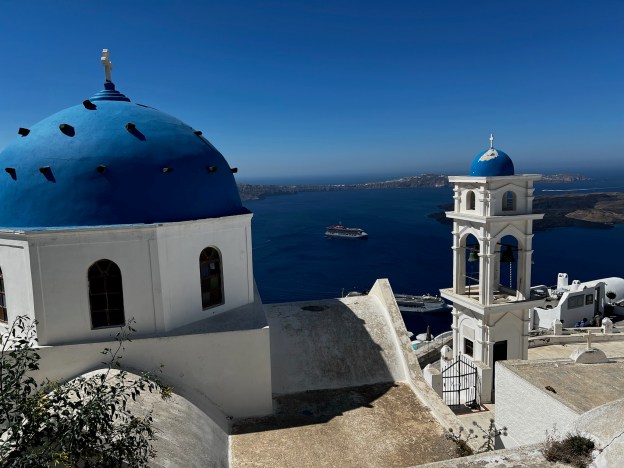
A view from behind a church on the Greek island of Santorini.

On Simplicity

This week, how the greatest wisdom is simple in nature.—Click here to support the Wednesday Blog: https://www.patreon.com/sthosdkane—Sources:Photo by Elizabeth Duke.[1] Nikos Kazantzakis, Zorba the Greek: The Saint’s Life of Alexis Zorba, trans. Peter Bien, (Simon and Schuster, 1946, 2014), 81.[2] “Elephant Tails,” Wednesday Blog 5.24.[3] “Asking the Computer,” Wednesday Blog 5.26.[4] “On Political Violence,” Wednesday Blog 5.17.


This week, how the greatest wisdom is simple in nature.


Over the last several weeks I’ve written about forms of knowledge and knowledge collecting. Knowledge is easier to identify, as it is empirical in its core. Yet on a scale even beyond knowledge lies wisdom, the cumulative sum of humanity’s understanding of the underlying character of human nature. It’s very easy for me to get bogged down in words, words, words and tie myself in knots which I find nigh unbreakable and even more undecipherable. Yet amid all those layers of paint there are often gems which merely need good editing to illuminate. This is what fills my days today, a big edit which I hope will signal the beginning of the end of my years of doctoral study.

In these years, while I’ve devoted my days to reading histories of the Renaissance intersections between the Americas and France, I’ve made a point of reading for fun all the same. I need to read things not related to my research for the escape they provide. At times these fun readings have been more thoroughly connected to my research, as in my recent choice of Jason Roberts’s Every Living Thing, yet in Binghamton I spent many happy evening hours reading Star Trek anthologies and novels while returning to my vocation each day. Of the stories that I’m drawn to, I enjoy reading books and watching films with characters that embody a certain lived experience that begats wisdom. Recently, this desire for such a character led me to read Peter Bien’s new translation of Nikos Kazantzakis’s Zorba the Greek: The Saint’s Life of Alexis Zorba. This is phronesis. Zorba’s wisdom is one that’s been gathered over the sixty years of his life and funneled toward living a good life as he sees fit. His is a simple wisdom which recognizes the physical limitations of the body in opposition to the limitless potential of the soul. I loved the first dance scene in Zorba the Greek in which the old miner erupted upward from his dinner and began to leap about. Kazantzakis describes it as though his soul could not be contained by his body and that it was that spiritual essence which spoke so fervently and wordlessly of its own joy. Kazantzakis can make even the simplest of scenes appear elegant and luminous. His description of the passage of time on the Mediterranean reaching up from Africa to the southern shore of Crete is one of my favorites. Here, I quote from Bien’s translation with the affection that beautiful prose deserves:

“The immense sea reached African shores. Every so often a warm southwest wind blew from distant red-hot deserts. In the morning the sea smelled like watermelons; at midday it vented haze, surged upward discharging miniature unripe breasts; in the evening, rose pink, wine red, eggplant mauve, dark blue, it kept continuously sighing.”[1]

The wisdom inherent in Kazantzakis’s prose lies in his ability to evoke the variable texture of nature, the changing face of it with the passage of the day. I remember once in Binghamton I have the idea to take a selfie once an hour throughout the day to see how my face, hair, stubble, and what not changed as the hours passed. I know for instance that if I want to have a lower register in my recordings of this Wednesday Blog that I need to record first thing in the morning when my tenor is closer to a baritone. This week, owing to a general sense of exhaustion, I haven’t gotten around to writing this essay until nearly 90 minutes before when the podcast normally publishes. Rather than force myself to write something earlier in the day I waited and gave myself the time to think of something good.

Wisdom is knowing that worrying won’t get you anywhere; it lies in the peace of mind and heart that keeps us happy and healthy. This evening, while I was having dinner with one of my best friends and his wife and young son, I brought up my particular conundrum of the day. Jokingly, the suggestion that I write about simplicity was made. I shrugged, thinking of William of Ockham, one of Bill Nye’s favorite history of science examples to use, and decided to run with it. After all, often the wisest people that I’ve met are the ones who embrace the simplicity of living a life embracing their own nature. The wise know that they are going to grow old and die and don’t worry about it. I find myself thinking of this as I watch without much resource as my hair recedes. I’ve joked that my particularly follicly impaired genes may require an eventual investment in a variety of hairpieces for different degrees of formality. I’ve grown in my own comfort with taking care of myself, applying sunscreen before going out on walks around the neighborhood now to mitigate the inevitable that comes from having largely Irish genes and living in the far sunnier Midwestern climate than my ancestors’ rain soaked home soil in Mayo. In his Saint’s Life, Alexis Zorba often doesn’t worry about these things and expresses frustration and even anger when the narrator, his boss, frets about the things he cannot control. I’m better at this than I have been, which is reassuring in some ways of looking at things, yet I still have room to grow.

Wisdom is trusting the people around you to do what they feel is best. If the simplest solution is often the best, then why aim to make things overly complex? Complexity requires forethought, or sometimes is the result of a lack of forethought. Last summer I delighted in writing several essays for the Wednesday Blog attempting to adapt chaos theory to explain human behavior.[2] We need both complexity and simplicity to understand ourselves and the world in which we live. Think about it: we cannot narrow things down to binary options. More often, the binary is one of a series of binaries which together form a logical thought or series. I marvel at the fact that computers most fundamentally work in the binary language of 1s and 0s, and that in this manner language and thought are boiled down to so rudimentary an interpretation. It’s for this reason that while I’m concerned by the rise and development of artificial intelligence and its misuse, I feel a sense of assurance that it is still limited by its basic functions and limited by the abilities of its artifice.[3] The human brain is a wonderous and ever complicated organ which evolved to fulfill its own very particular needs. On the simplest level the brain thinks, it sends directions to the rest of the body to keep the body operating. In a theological framework, I’ve argued that the brain may be the seat of the soul, the consciousness that is at the core of our thought. My earliest memory that I’ve written about here was the first time I recognized that particular voice of my own consciousness, which occurred sometime when I was 3 years old.[4]

Wisdom is intangible, it’s something that you have to learn to recognize. This is perhaps the most complex tenant that represents something simple. In order to truly become wise, one must understand that wisdom isn’t something you can buy off the shelf or write your way into. For all the words which Zorba’s boss writes, allowing them to consume him, he remains feeling unfulfilled in life. It’s why the narrator of the novel struck out from his books and sought to live among ordinary people, buying a stake in a lignite mine on the southern shore of Crete. On his way there in the Piraeus he met Zorba, the man who within a few pages became his foreman and the one who’d realize his idea of finding wisdom in the living world. The simplest explanations are often best. Zorba lives to enjoy the life he has, and when things go wrong––as they often do––he finds something to build upon and start over again.

A couple of months from now I’m going to be contributing my own experiences to a tacit knowledge panel at the History of Science Society’s conference in New Orleans about how I’ve been able to maintain a full research load and writing all year round with hardly any funding at all. I recognize that the circumstances of these past few years have been marked by my own poor decisions and mistakes that I’ve made along the way. Yet in spite of those, and bad luck in many respects, I’ve been able to continue with my work and to produce historical studies that are beginning to make a decent contribution to the history of science in the Renaissance and specifically to the history of animals in that same period. I’m looking forward to that panel, and to the two papers I’m presenting during the same weekend. Maybe, like Zorba, when things feel like they are about to go well I’ll feel the need to rise to my feet and leap into the air as though my soul were attempting to escape from my body. Simply put, for all the trouble that life has brought, joy is overpowering when pure.


[1] Nikos Kazantzakis, Zorba the Greek: The Saint’s Life of Alexis Zorba, trans. Peter Bien, (Simon and Schuster, 1946, 2014), 81.

[2] “Elephant Tails,” Wednesday Blog 5.24.

[3] “Asking the Computer,” Wednesday Blog 5.26.

[4] “On Political Violence,” Wednesday Blog 5.17.


A photo from the upper deck at Kauffman Stadium looking down toward the baseball field during a Kansas City Royals game in July 2025.

Embodied Patriotism

This week, on the patriotism we live in our ordinary lives.—Click here to support the Wednesday Blog: https://www.patreon.com/sthosdkane


This week, on the patriotism we live in our ordinary lives.


This Monday, after a long day working on my dissertation I went with my parents to Kauffman Stadium to see the Kansas City Royals play the first game in this week’s series against the Pittsburgh Pirates. Of the many things that I think of when I see the Pirates, memories of the weekend I spent in Pittsburgh in January 2020, or memories of watching them with my grandmother play the Cubs on WGN in my youth, I have a slight soft spot for the Pirates as a fellow legacy nineteenth-century team (1887) in the National League Central alongside my Cubs (1876), the Reds (1890), and the Cardinals (1892). The great Irish American artist Gene Kelly often said that he took up dancing to meet girls and to be agile and athletic so he could play outfield for the Pirates, his hometown team.

On this particular Monday, once we finished our walk into the stadium, bought our dinners and bottles of water, we made our way up to the top level of the stadium, the View Level to watch the game. I broke off from the rest of my family for a few minutes when we made it up to the 400s level to buy myself a brat. I didn’t realize though that the pregame ceremonies were reaching their conclusion with the march of the color guard and the performance of the national anthem. I consider myself patriotic in my own way; I hope you’ve seen in the last six months on this blog that I strive to elevate my fellow countrymen, my fellow humans in fact, through evocations of all the tremendous things we are capable of doing, of the extraordinary acts of ordinary people.[1] So, as the singer began her tune, I looked around at the people around me to see what I should do. At that moment I was at the register paying for my brat (everything is self-checkout now), yet as I saw no one else at the registers beside me were stopping to make our salute it occurred to me that nothing could be more American, dare I say more patriotic, than engaging in commerce with overpriced foods and drink that’s probably not good for any of us. I quickly finished my purchase and stepped back from the register and took a place beside a group of fellow millennials who held their right hands over their hearts, as we’re taught to do.

Throughout the game, a strong showing by the Royals who hit in 9 runs over the Pirates 3, I thought about this brat purchase during the national anthem and felt resolute in my decision. There are people who I know who take the anthem very seriously to the point of zealotry. In my many years of attending baseball games and soccer matches I’ve often wondered what would happen if someone chose to keep their hands at their sides or even remain seated during the anthem? We saw the harsh reaction of the clamorous cacophony when Colin Kaepernick kneeled during the anthem a decade ago. At the time I was ambivalent yet now having heard more stories of oppression and promises unkept I appreciate what he did. I believe this question of how free we are to patriotically express discontent in civic rituals is essential to the vitality of a democracy. I’ve often found the crafted rituals which the Royals put between innings to be at times bordering the ludicrous. This is especially true in 2025 after the Royals ruined their relationship with so many of us Kansas Citians with how they misled us and took advantage of us in this year’s stadium sales tax vote. My distrust of the team is why I effectively retired the Royals cap that I bought only two years ago at another visit to Kauffman Stadium.

We embody our rituals by wearing American flags on our clothes and demanding unquestioning patriotism in this American life. Here I’m adopting Céline Carayon’s notion of embodied language in her 2019 book Eloquence Embodied about early colonial French communications and relations with Indigenous Americans through gestures and visual language.[2] Today in the United States our patriotism is just as often meant to be blood-red flowing within our bodies as it is worn on our chests and loudly proclaimed with often poorly sung renditions of the national anthem, a hymn requiring professional training to perform. It is meant to be shouted in unquestioning proclamations of American freedom even as that liberty seems ever more fleeting under the combined weight of a cruel-minded governing majority and an even crueler corporate elite that has created so much of the embodied rituals which define American culture in the 21st century. These rituals, always sponsored by some robber baron and crafted by their public relations department, sing proudly of American freedom all while ensuring their own profits at the expense of the American people’s own freedom from want and fear. We embody our patriotism in what we purchase and where. Earlier that day, looking for a late afternoon pastry, I ended up at my local Whole Foods. Their bakery is good; the chocolate croissants are about what you’d expect for a gargantuan corporation’s attempt at mimicry of a Parisian classic. Yet as I bought a slice of pizza that caught my eye thinking how I might stop here for pizza by the slice more often I felt a pang of guilt after all there’s a good local pizzeria, Pizza 51, just across the street and several more within walking distance. Even as bakeries go as fair as Whole Foods is during the morning rush I would much rather go to McLain’s, the Roasterie, or Heirloom, all local bakeries within walking distance of my family home and along the route I was driving yesterday afternoon. Yet where Whole Foods won was that they forego the usual bakery hours and keep baking pastries in the afternoons whereas the others are usually low on their morning batches or already closed for the day. I’ve known for most of my life that these big corporate chains put tremendous stress on small local businesses; in fact I’ve flatly refused to shop at Walmart for this very reason, only buying a couple of bottles of water at one in the Kansas City suburbs once in 2020 when my Dad’s old truck broke down outside of it during the evening rush hour under a hot summer sun.

The America that I love seems more and more fraught the further from walkable neighborhoods and into the suburbs and exurbs you go. This is where most Americans have built their lives in common isolation living in mansions of rest surrounded by moats of artificially green grass regardless of how dry the local climate may be. It’s a life spent driving individually in vehicles increasingly resembling The Princess Bride’s rodents of unusual size in their environmental dangers. Several months ago, I had a bad argument with an attendant at a car wash in a nearby suburb because I ended up in the members’ lane on accident. I told the teenager working there that I made the mistake because there wasn’t a sign that I could see in my Mazda where the two lanes split (the big overhead sign is blocked by a dumpster from my lower line of sight) while the guy kept telling me that I can’t pay in the lane I was in. I was angry because the way that place was built favored the minivans, SUVs, and trucks that most people drive at the expense of those of us who still drive sedans. Yet I lost my temper because when the management got involved in our deteriorating conversation they shrugged off my suggestion that the row of ground-level signs standing outside their toll booth ought to be placed where the lanes split saying “that’s something for corporate to decide.” This is where that America of neighbors seems to be at least dormant to me; rather than making decisions that will benefit all of us together we instead more often choose inaction rather than risk our own individually precarious position. I grew up admiring the likes of Daniel Burnham and was proud as a young kid to say I was from Carl Sandburg’s City of Big Shoulders with big ideas and big ambitions. I’m just as proud to have witnessed firsthand the renaissance that Kansas City has experienced since the millennium. Those sorts of dreams and ambitions are what make me proud to embody our shared patriotism when I feel we’ve warranted it. I prefer the embodied patriotism my parents and grandparents taught me which as I’ve gotten older, I’ve found grew out of the progressive and city beautiful movements of a century ago and felt their greatest expression during FDR’s New Deal in the 1930s. That is my America, the America of neighbors standing up for each other. I see that America every day in my neighborhood where people say hello to each other when walking down the sidewalks or on the Trolley Trail. It’s for that America that I feel pride is warranted, that America which we should be working to rebuild by reconnecting our car-dependent suburbs and neighborhoods, by forcing us to spend time with each other again, to be social again.


[1] That’s one of my favorite lines I’ve ever written.

[2] Céline Carayon, Eloquence Embodied: Nonverbal Communication among French and Indigenous Peoples in the Americas(University of North Carolina Press, 2019).


The Promise of Hope

Last week, the 7th of May 2024, marked the 200th anniversary of the premiere of Ludwig van Beethoven's Symphony No. 9. Today then, I want to talk with you about the hope which runs through that Ode to Joy. The recordings of Beethoven's Ninth Symphony heard in this episode came from the 1956 album by the ProMusica Symphony Orchestra and Chorus under the direction of Jascha Horenstein and are free to use under the Public Domain Mark 1.0 Universal label and can be found in full at archive.org. — Click here to support the Wednesday Blog: https://www.patreon.com/sthosdkane

Last week, the 7th of May 2024, marked the 200th anniversary of the premiere of Ludwig van Beethoven’s Symphony No. 9. Today then, I want to talk with you about the hope which runs through that Ode to Joy.


Last time on the Wednesday Blog, I wrote to you in what I hoped would appear to be an optimistic tone that still acknowledged the troubles and trials I find before me, and to an extent I think that worked. While I did not intend to write a sequel to that post, this week’s topic is one which fits well enough, and which I feel quite fervent about as to warrant mention here in the Wednesday Blog.

I began to explore the world of classical music around the time I started high school. Quite honestly, my big introductions were the music of George Gershwin and the original cast album of Phantom of the Opera. Yet around that time I was introduced to an ensemble called the William Baker Summer Singers and joined them for the 2008 season when we performed Beethoven’s Ninth in Grace & Holy Trinity Cathedral in Downtown Kansas City. I was not the best singer by a long shot, still very new to the whole experience, yet it was the start of my off-and-on tenure singing with choirs around Kansas City.


The first measures of the 1st Movement

Beethoven’s Ninth thunders into life with the opening measures of its first movement, as though the hope and joy which makes this piece so famous is born from something elemental deep beneath the ground, rising out and toward the audience with the orchestra as its first voice. This then makes the chorus out to be some even deeper root of the spirit of this work, its power growing throughout the first three movements leading up to the tremendous clamoring second movement. I’ve always imagined the second movement told the story of a fast paced and clattering horse and rider making their way through fields and farms to pass on good news to some learned recipient.

The third movement is far softer than the first, yet again it speaks to something grand as yet only being revealed to the audience. There is a sense in the third movement of a fundamental truth as of yet untold, whose voice could raise both the living and the dead to new heights of human dignity and grace. Through music, Beethoven captured the full spectrum of human aspiration and expressed our innate confidence in our own abilities to improve our lives. It reminds me of the “Et incarnatus est” movement in Beethoven’s Missa Solemnis, which is written in the Dorian mode, giving it a distinct feeling of rising from a deep ether into the light of a new day. The Missa Solemnis was also written in 1824, premiering on the 7th of April of that year.


The 3rd Movement’s climax

I hear something inherent in Beethoven’s optimism, that even with all the troubles of his life there near its end he could still dream that we might become better versions of ourselves. The tempo marker for the first movement Allegro ma non troppo e un poco maestoso (Quick but not too much and a little majestic) might well be a good motto for life; a good life ought to be taken at a fair pace, yet not too fast, and with some majesty for one’s nature. We can hope for something better because we are born with minds capable of dreaming of better tomorrows.

At the heart of the Ninth Symphony and in particular its choral fourth movement is a fairly simple melody, one that I learned quickly during my time rehearsing it. That melody has taken on a life of its own beyond Beethoven’s original composition and become something ubiquitous in many respects. There are two church hymns set to its tune in the hymnal we use in my current parish choir, “Joyful, Joyful, We Adore Thee,” and the slightly more modern, yet traditionally formal, “Joyful, Joyful, We Adore You.” What I love about this melody is that it is easy to learn, easy to adapt, and so upbeat.


The Ode to Joy theme from the 4th Movement

The words which Beethoven set to that tune were written by the German poet Friedrich Schiller (1759–1805) in the summer of 1785. They are an outgrowth of the Enlightenment and the fervent calls for acknowledging our common humanity that grew from this reassessment of our relationship with Nature. Those words speak volumes to me, that joy makes brothers and sisters of us all, revealing our original state of nature to us amid all the nebulous fog of our lived expectations. It’s easy to forget that beneath all the mantles of identity we hoist upon ourselves that we are all the same in our life and yes in our mortality.

There is a deep promise here that with hope we can accomplish tremendous things. Hope alone will not solve our problems, we will always need to act to improve ourselves and our communities. True hope, pure and fulfilling hope, is such that it requires we all act together to our common benefit, that we think of each other more than of ourselves. I have such a hope in humanity, after all I’ve seen moments in my own life and in our history in which we’ve come together to work for a higher purpose than any one of us. Again, quoting from Schiller’s poem:

“Seid umschlungen, Millionen!
Diesen Kuß der ganzen Welt!”

            “Be embraced, all ye millions!

            With a kiss for all the world!”

This promise of hope is something that is sacred because it offers us a chance at redemption no matter how terrible the things we may have done. There is something truly divine about it, that we can become better versions of ourselves not in spite of who we’ve been but rather because we are willing to improve who we are and how we live with our neighbors.

That is a promise that I hope we can fulfill.


The recordings of Beethoven’s Ninth Symphony heard in this episode came from the 1956 album by the ProMusica Symphony Orchestra and Chorus under the direction of Jascha Horenstein and are free to use under the Public Domain Mark 1.0 Universal label and can be found in full at archive.org.