Tag Archives: Humanity

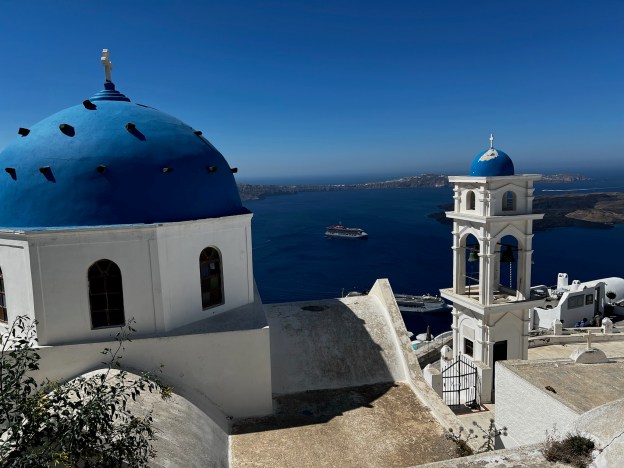
A view from behind a church on the Greek island of Santorini.

On Simplicity

This week, how the greatest wisdom is simple in nature.—Click here to support the Wednesday Blog: https://www.patreon.com/sthosdkane—Sources:Photo by Elizabeth Duke.[1] Nikos Kazantzakis, Zorba the Greek: The Saint’s Life of Alexis Zorba, trans. Peter Bien, (Simon and Schuster, 1946, 2014), 81.[2] “Elephant Tails,” Wednesday Blog 5.24.[3] “Asking the Computer,” Wednesday Blog 5.26.[4] “On Political Violence,” Wednesday Blog 5.17.


This week, how the greatest wisdom is simple in nature.


Over the last several weeks I’ve written about forms of knowledge and knowledge collecting. Knowledge is easier to identify, as it is empirical in its core. Yet on a scale even beyond knowledge lies wisdom, the cumulative sum of humanity’s understanding of the underlying character of human nature. It’s very easy for me to get bogged down in words, words, words and tie myself in knots which I find nigh unbreakable and even more undecipherable. Yet amid all those layers of paint there are often gems which merely need good editing to illuminate. This is what fills my days today, a big edit which I hope will signal the beginning of the end of my years of doctoral study.

In these years, while I’ve devoted my days to reading histories of the Renaissance intersections between the Americas and France, I’ve made a point of reading for fun all the same. I need to read things not related to my research for the escape they provide. At times these fun readings have been more thoroughly connected to my research, as in my recent choice of Jason Roberts’s Every Living Thing, yet in Binghamton I spent many happy evening hours reading Star Trek anthologies and novels while returning to my vocation each day. Of the stories that I’m drawn to, I enjoy reading books and watching films with characters that embody a certain lived experience that begats wisdom. Recently, this desire for such a character led me to read Peter Bien’s new translation of Nikos Kazantzakis’s Zorba the Greek: The Saint’s Life of Alexis Zorba. This is phronesis. Zorba’s wisdom is one that’s been gathered over the sixty years of his life and funneled toward living a good life as he sees fit. His is a simple wisdom which recognizes the physical limitations of the body in opposition to the limitless potential of the soul. I loved the first dance scene in Zorba the Greek in which the old miner erupted upward from his dinner and began to leap about. Kazantzakis describes it as though his soul could not be contained by his body and that it was that spiritual essence which spoke so fervently and wordlessly of its own joy. Kazantzakis can make even the simplest of scenes appear elegant and luminous. His description of the passage of time on the Mediterranean reaching up from Africa to the southern shore of Crete is one of my favorites. Here, I quote from Bien’s translation with the affection that beautiful prose deserves:

“The immense sea reached African shores. Every so often a warm southwest wind blew from distant red-hot deserts. In the morning the sea smelled like watermelons; at midday it vented haze, surged upward discharging miniature unripe breasts; in the evening, rose pink, wine red, eggplant mauve, dark blue, it kept continuously sighing.”[1]

The wisdom inherent in Kazantzakis’s prose lies in his ability to evoke the variable texture of nature, the changing face of it with the passage of the day. I remember once in Binghamton I have the idea to take a selfie once an hour throughout the day to see how my face, hair, stubble, and what not changed as the hours passed. I know for instance that if I want to have a lower register in my recordings of this Wednesday Blog that I need to record first thing in the morning when my tenor is closer to a baritone. This week, owing to a general sense of exhaustion, I haven’t gotten around to writing this essay until nearly 90 minutes before when the podcast normally publishes. Rather than force myself to write something earlier in the day I waited and gave myself the time to think of something good.

Wisdom is knowing that worrying won’t get you anywhere; it lies in the peace of mind and heart that keeps us happy and healthy. This evening, while I was having dinner with one of my best friends and his wife and young son, I brought up my particular conundrum of the day. Jokingly, the suggestion that I write about simplicity was made. I shrugged, thinking of William of Ockham, one of Bill Nye’s favorite history of science examples to use, and decided to run with it. After all, often the wisest people that I’ve met are the ones who embrace the simplicity of living a life embracing their own nature. The wise know that they are going to grow old and die and don’t worry about it. I find myself thinking of this as I watch without much resource as my hair recedes. I’ve joked that my particularly follicly impaired genes may require an eventual investment in a variety of hairpieces for different degrees of formality. I’ve grown in my own comfort with taking care of myself, applying sunscreen before going out on walks around the neighborhood now to mitigate the inevitable that comes from having largely Irish genes and living in the far sunnier Midwestern climate than my ancestors’ rain soaked home soil in Mayo. In his Saint’s Life, Alexis Zorba often doesn’t worry about these things and expresses frustration and even anger when the narrator, his boss, frets about the things he cannot control. I’m better at this than I have been, which is reassuring in some ways of looking at things, yet I still have room to grow.

Wisdom is trusting the people around you to do what they feel is best. If the simplest solution is often the best, then why aim to make things overly complex? Complexity requires forethought, or sometimes is the result of a lack of forethought. Last summer I delighted in writing several essays for the Wednesday Blog attempting to adapt chaos theory to explain human behavior.[2] We need both complexity and simplicity to understand ourselves and the world in which we live. Think about it: we cannot narrow things down to binary options. More often, the binary is one of a series of binaries which together form a logical thought or series. I marvel at the fact that computers most fundamentally work in the binary language of 1s and 0s, and that in this manner language and thought are boiled down to so rudimentary an interpretation. It’s for this reason that while I’m concerned by the rise and development of artificial intelligence and its misuse, I feel a sense of assurance that it is still limited by its basic functions and limited by the abilities of its artifice.[3] The human brain is a wonderous and ever complicated organ which evolved to fulfill its own very particular needs. On the simplest level the brain thinks, it sends directions to the rest of the body to keep the body operating. In a theological framework, I’ve argued that the brain may be the seat of the soul, the consciousness that is at the core of our thought. My earliest memory that I’ve written about here was the first time I recognized that particular voice of my own consciousness, which occurred sometime when I was 3 years old.[4]

Wisdom is intangible, it’s something that you have to learn to recognize. This is perhaps the most complex tenant that represents something simple. In order to truly become wise, one must understand that wisdom isn’t something you can buy off the shelf or write your way into. For all the words which Zorba’s boss writes, allowing them to consume him, he remains feeling unfulfilled in life. It’s why the narrator of the novel struck out from his books and sought to live among ordinary people, buying a stake in a lignite mine on the southern shore of Crete. On his way there in the Piraeus he met Zorba, the man who within a few pages became his foreman and the one who’d realize his idea of finding wisdom in the living world. The simplest explanations are often best. Zorba lives to enjoy the life he has, and when things go wrong––as they often do––he finds something to build upon and start over again.

A couple of months from now I’m going to be contributing my own experiences to a tacit knowledge panel at the History of Science Society’s conference in New Orleans about how I’ve been able to maintain a full research load and writing all year round with hardly any funding at all. I recognize that the circumstances of these past few years have been marked by my own poor decisions and mistakes that I’ve made along the way. Yet in spite of those, and bad luck in many respects, I’ve been able to continue with my work and to produce historical studies that are beginning to make a decent contribution to the history of science in the Renaissance and specifically to the history of animals in that same period. I’m looking forward to that panel, and to the two papers I’m presenting during the same weekend. Maybe, like Zorba, when things feel like they are about to go well I’ll feel the need to rise to my feet and leap into the air as though my soul were attempting to escape from my body. Simply put, for all the trouble that life has brought, joy is overpowering when pure.


[1] Nikos Kazantzakis, Zorba the Greek: The Saint’s Life of Alexis Zorba, trans. Peter Bien, (Simon and Schuster, 1946, 2014), 81.

[2] “Elephant Tails,” Wednesday Blog 5.24.

[3] “Asking the Computer,” Wednesday Blog 5.26.

[4] “On Political Violence,” Wednesday Blog 5.17.
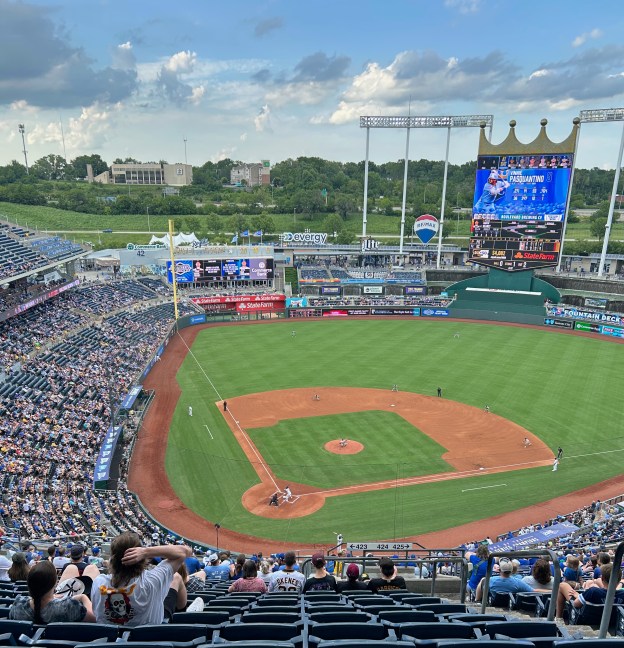

A photo from the upper deck at Kauffman Stadium looking down toward the baseball field during a Kansas City Royals game in July 2025.

Embodied Patriotism

This week, on the patriotism we live in our ordinary lives.—Click here to support the Wednesday Blog: https://www.patreon.com/sthosdkane


This week, on the patriotism we live in our ordinary lives.


This Monday, after a long day working on my dissertation I went with my parents to Kauffman Stadium to see the Kansas City Royals play the first game in this week’s series against the Pittsburgh Pirates. Of the many things that I think of when I see the Pirates, memories of the weekend I spent in Pittsburgh in January 2020, or memories of watching them with my grandmother play the Cubs on WGN in my youth, I have a slight soft spot for the Pirates as a fellow legacy nineteenth-century team (1887) in the National League Central alongside my Cubs (1876), the Reds (1890), and the Cardinals (1892). The great Irish American artist Gene Kelly often said that he took up dancing to meet girls and to be agile and athletic so he could play outfield for the Pirates, his hometown team.

On this particular Monday, once we finished our walk into the stadium, bought our dinners and bottles of water, we made our way up to the top level of the stadium, the View Level to watch the game. I broke off from the rest of my family for a few minutes when we made it up to the 400s level to buy myself a brat. I didn’t realize though that the pregame ceremonies were reaching their conclusion with the march of the color guard and the performance of the national anthem. I consider myself patriotic in my own way; I hope you’ve seen in the last six months on this blog that I strive to elevate my fellow countrymen, my fellow humans in fact, through evocations of all the tremendous things we are capable of doing, of the extraordinary acts of ordinary people.[1] So, as the singer began her tune, I looked around at the people around me to see what I should do. At that moment I was at the register paying for my brat (everything is self-checkout now), yet as I saw no one else at the registers beside me were stopping to make our salute it occurred to me that nothing could be more American, dare I say more patriotic, than engaging in commerce with overpriced foods and drink that’s probably not good for any of us. I quickly finished my purchase and stepped back from the register and took a place beside a group of fellow millennials who held their right hands over their hearts, as we’re taught to do.

Throughout the game, a strong showing by the Royals who hit in 9 runs over the Pirates 3, I thought about this brat purchase during the national anthem and felt resolute in my decision. There are people who I know who take the anthem very seriously to the point of zealotry. In my many years of attending baseball games and soccer matches I’ve often wondered what would happen if someone chose to keep their hands at their sides or even remain seated during the anthem? We saw the harsh reaction of the clamorous cacophony when Colin Kaepernick kneeled during the anthem a decade ago. At the time I was ambivalent yet now having heard more stories of oppression and promises unkept I appreciate what he did. I believe this question of how free we are to patriotically express discontent in civic rituals is essential to the vitality of a democracy. I’ve often found the crafted rituals which the Royals put between innings to be at times bordering the ludicrous. This is especially true in 2025 after the Royals ruined their relationship with so many of us Kansas Citians with how they misled us and took advantage of us in this year’s stadium sales tax vote. My distrust of the team is why I effectively retired the Royals cap that I bought only two years ago at another visit to Kauffman Stadium.

We embody our rituals by wearing American flags on our clothes and demanding unquestioning patriotism in this American life. Here I’m adopting Céline Carayon’s notion of embodied language in her 2019 book Eloquence Embodied about early colonial French communications and relations with Indigenous Americans through gestures and visual language.[2] Today in the United States our patriotism is just as often meant to be blood-red flowing within our bodies as it is worn on our chests and loudly proclaimed with often poorly sung renditions of the national anthem, a hymn requiring professional training to perform. It is meant to be shouted in unquestioning proclamations of American freedom even as that liberty seems ever more fleeting under the combined weight of a cruel-minded governing majority and an even crueler corporate elite that has created so much of the embodied rituals which define American culture in the 21st century. These rituals, always sponsored by some robber baron and crafted by their public relations department, sing proudly of American freedom all while ensuring their own profits at the expense of the American people’s own freedom from want and fear. We embody our patriotism in what we purchase and where. Earlier that day, looking for a late afternoon pastry, I ended up at my local Whole Foods. Their bakery is good; the chocolate croissants are about what you’d expect for a gargantuan corporation’s attempt at mimicry of a Parisian classic. Yet as I bought a slice of pizza that caught my eye thinking how I might stop here for pizza by the slice more often I felt a pang of guilt after all there’s a good local pizzeria, Pizza 51, just across the street and several more within walking distance. Even as bakeries go as fair as Whole Foods is during the morning rush I would much rather go to McLain’s, the Roasterie, or Heirloom, all local bakeries within walking distance of my family home and along the route I was driving yesterday afternoon. Yet where Whole Foods won was that they forego the usual bakery hours and keep baking pastries in the afternoons whereas the others are usually low on their morning batches or already closed for the day. I’ve known for most of my life that these big corporate chains put tremendous stress on small local businesses; in fact I’ve flatly refused to shop at Walmart for this very reason, only buying a couple of bottles of water at one in the Kansas City suburbs once in 2020 when my Dad’s old truck broke down outside of it during the evening rush hour under a hot summer sun.

The America that I love seems more and more fraught the further from walkable neighborhoods and into the suburbs and exurbs you go. This is where most Americans have built their lives in common isolation living in mansions of rest surrounded by moats of artificially green grass regardless of how dry the local climate may be. It’s a life spent driving individually in vehicles increasingly resembling The Princess Bride’s rodents of unusual size in their environmental dangers. Several months ago, I had a bad argument with an attendant at a car wash in a nearby suburb because I ended up in the members’ lane on accident. I told the teenager working there that I made the mistake because there wasn’t a sign that I could see in my Mazda where the two lanes split (the big overhead sign is blocked by a dumpster from my lower line of sight) while the guy kept telling me that I can’t pay in the lane I was in. I was angry because the way that place was built favored the minivans, SUVs, and trucks that most people drive at the expense of those of us who still drive sedans. Yet I lost my temper because when the management got involved in our deteriorating conversation they shrugged off my suggestion that the row of ground-level signs standing outside their toll booth ought to be placed where the lanes split saying “that’s something for corporate to decide.” This is where that America of neighbors seems to be at least dormant to me; rather than making decisions that will benefit all of us together we instead more often choose inaction rather than risk our own individually precarious position. I grew up admiring the likes of Daniel Burnham and was proud as a young kid to say I was from Carl Sandburg’s City of Big Shoulders with big ideas and big ambitions. I’m just as proud to have witnessed firsthand the renaissance that Kansas City has experienced since the millennium. Those sorts of dreams and ambitions are what make me proud to embody our shared patriotism when I feel we’ve warranted it. I prefer the embodied patriotism my parents and grandparents taught me which as I’ve gotten older, I’ve found grew out of the progressive and city beautiful movements of a century ago and felt their greatest expression during FDR’s New Deal in the 1930s. That is my America, the America of neighbors standing up for each other. I see that America every day in my neighborhood where people say hello to each other when walking down the sidewalks or on the Trolley Trail. It’s for that America that I feel pride is warranted, that America which we should be working to rebuild by reconnecting our car-dependent suburbs and neighborhoods, by forcing us to spend time with each other again, to be social again.


[1] That’s one of my favorite lines I’ve ever written.

[2] Céline Carayon, Eloquence Embodied: Nonverbal Communication among French and Indigenous Peoples in the Americas(University of North Carolina Press, 2019).


The Promise of Hope

Last week, the 7th of May 2024, marked the 200th anniversary of the premiere of Ludwig van Beethoven's Symphony No. 9. Today then, I want to talk with you about the hope which runs through that Ode to Joy. The recordings of Beethoven's Ninth Symphony heard in this episode came from the 1956 album by the ProMusica Symphony Orchestra and Chorus under the direction of Jascha Horenstein and are free to use under the Public Domain Mark 1.0 Universal label and can be found in full at archive.org. — Click here to support the Wednesday Blog: https://www.patreon.com/sthosdkane

Last week, the 7th of May 2024, marked the 200th anniversary of the premiere of Ludwig van Beethoven’s Symphony No. 9. Today then, I want to talk with you about the hope which runs through that Ode to Joy.


Last time on the Wednesday Blog, I wrote to you in what I hoped would appear to be an optimistic tone that still acknowledged the troubles and trials I find before me, and to an extent I think that worked. While I did not intend to write a sequel to that post, this week’s topic is one which fits well enough, and which I feel quite fervent about as to warrant mention here in the Wednesday Blog.

I began to explore the world of classical music around the time I started high school. Quite honestly, my big introductions were the music of George Gershwin and the original cast album of Phantom of the Opera. Yet around that time I was introduced to an ensemble called the William Baker Summer Singers and joined them for the 2008 season when we performed Beethoven’s Ninth in Grace & Holy Trinity Cathedral in Downtown Kansas City. I was not the best singer by a long shot, still very new to the whole experience, yet it was the start of my off-and-on tenure singing with choirs around Kansas City.


The first measures of the 1st Movement

Beethoven’s Ninth thunders into life with the opening measures of its first movement, as though the hope and joy which makes this piece so famous is born from something elemental deep beneath the ground, rising out and toward the audience with the orchestra as its first voice. This then makes the chorus out to be some even deeper root of the spirit of this work, its power growing throughout the first three movements leading up to the tremendous clamoring second movement. I’ve always imagined the second movement told the story of a fast paced and clattering horse and rider making their way through fields and farms to pass on good news to some learned recipient.

The third movement is far softer than the first, yet again it speaks to something grand as yet only being revealed to the audience. There is a sense in the third movement of a fundamental truth as of yet untold, whose voice could raise both the living and the dead to new heights of human dignity and grace. Through music, Beethoven captured the full spectrum of human aspiration and expressed our innate confidence in our own abilities to improve our lives. It reminds me of the “Et incarnatus est” movement in Beethoven’s Missa Solemnis, which is written in the Dorian mode, giving it a distinct feeling of rising from a deep ether into the light of a new day. The Missa Solemnis was also written in 1824, premiering on the 7th of April of that year.


The 3rd Movement’s climax

I hear something inherent in Beethoven’s optimism, that even with all the troubles of his life there near its end he could still dream that we might become better versions of ourselves. The tempo marker for the first movement Allegro ma non troppo e un poco maestoso (Quick but not too much and a little majestic) might well be a good motto for life; a good life ought to be taken at a fair pace, yet not too fast, and with some majesty for one’s nature. We can hope for something better because we are born with minds capable of dreaming of better tomorrows.

At the heart of the Ninth Symphony and in particular its choral fourth movement is a fairly simple melody, one that I learned quickly during my time rehearsing it. That melody has taken on a life of its own beyond Beethoven’s original composition and become something ubiquitous in many respects. There are two church hymns set to its tune in the hymnal we use in my current parish choir, “Joyful, Joyful, We Adore Thee,” and the slightly more modern, yet traditionally formal, “Joyful, Joyful, We Adore You.” What I love about this melody is that it is easy to learn, easy to adapt, and so upbeat.


The Ode to Joy theme from the 4th Movement

The words which Beethoven set to that tune were written by the German poet Friedrich Schiller (1759–1805) in the summer of 1785. They are an outgrowth of the Enlightenment and the fervent calls for acknowledging our common humanity that grew from this reassessment of our relationship with Nature. Those words speak volumes to me, that joy makes brothers and sisters of us all, revealing our original state of nature to us amid all the nebulous fog of our lived expectations. It’s easy to forget that beneath all the mantles of identity we hoist upon ourselves that we are all the same in our life and yes in our mortality.

There is a deep promise here that with hope we can accomplish tremendous things. Hope alone will not solve our problems, we will always need to act to improve ourselves and our communities. True hope, pure and fulfilling hope, is such that it requires we all act together to our common benefit, that we think of each other more than of ourselves. I have such a hope in humanity, after all I’ve seen moments in my own life and in our history in which we’ve come together to work for a higher purpose than any one of us. Again, quoting from Schiller’s poem:

“Seid umschlungen, Millionen!
Diesen Kuß der ganzen Welt!”

            “Be embraced, all ye millions!

            With a kiss for all the world!”

This promise of hope is something that is sacred because it offers us a chance at redemption no matter how terrible the things we may have done. There is something truly divine about it, that we can become better versions of ourselves not in spite of who we’ve been but rather because we are willing to improve who we are and how we live with our neighbors.

That is a promise that I hope we can fulfill.


The recordings of Beethoven’s Ninth Symphony heard in this episode came from the 1956 album by the ProMusica Symphony Orchestra and Chorus under the direction of Jascha Horenstein and are free to use under the Public Domain Mark 1.0 Universal label and can be found in full at archive.org.


Genetic Engineering

Photo by Pixabay on Pexels.com

This July, while I was preparing for the Longest Commute, I made my usual pre-trip browse of the audiobooks available on Audible that I might be interested in listening to during the long hours in the car. On this particular trip I had even more driving time than usual to listen to books, podcasts, and music as I made my way through the varied scenery of the Midwest, South, and Northeast. I already had a biography of the German naturalist Alexander von Humboldt on my listening list, and there were other books I’d downloaded for previous long drives that I had yet to touch such as a memoir by actor Cary Elwes about his time making The Princess Bride. But I wanted something that related to the trip itself, something to get me even more excited about the things I’d be seeing along the way.

I settled on an Audible original called The Space Race which tells the history of NASA and Roscosmos from the launch of Sputnik 1 in 1957 up into our current generation of public and private spaceflight agencies and companies competing and cooperating in our continued reach for the stars. The whole story was narrated by Kate Mulgrew, an actress I know best from her role as Captain Kathryn Janeway on Star Trek: Voyager and seeing her name on the billing was among the reasons why I chose this particular thing to listen to. I won’t call it a book, it was more of a series of radio shows with a combination of narration, talking heads, and scenes set in the next century.

Those scenes, the ones set in the future are the ones I want to talk to you about today. They posit that the only way humans can ever hope to reach a habitable planet orbiting our closest neighboring star, Alpha Centauri, would be by a generational ship, one where the original passengers’ grandchildren would be the ones to set foot on that planet, and would only be possible through genetic engineering to ensure that those humans who made it there would be well suited to the environment they found and would soon call home, after all any trip that takes three generations to complete would have no path of return.

I for one am eager to see humanity reach beyond Earth and our Moon towards Mars and beyond. We have the potential to do really tremendous things, to learn so much from those experiences about our universe and about ourselves. Why else would TV series and films like the ones from Star Trek be so intriguing to me? They offer us a vision of a future where our introduction to our cosmic neighborhood makes us better people and ushers in a veritable golden age here on Earth. Why would that not be a thrilling prospect?

I listened to the last few scenes of The Space Race while I was driving east along I-10 in the Florida Panhandle, and the moment when they acknowledged that in the world of their story that genetic engineering would be necessary for such a voyage, I felt chills. So, let me ask you this question: if the purpose of exploration at any scale is both extroverted and by equal measures introspective, if the curiosity at the heart of any exploration is a part of what makes us human, then to what lengths should we go to satisfy that curiosity? Should we go as far as to transform our very genetic code, the most essential biological parts of who we are?

This is a question I really worry about. I’m as much an everyday explorer as anyone else, yet there are limits for me as to how far I’m willing to go to satisfy my curiosity; I don’t know that I would want to push myself to such a point that I’d be willing to change who I am just to see over the next horizon. We are who we are because of so many complex and intricate pieces to our identities. Untangle any of those threads and are we still the same person? It makes logical sense that future explorers would consider adapting themselves to the environment of the planet they’re seeking to visit, yet among the things that make us human are our roots to this our home planet. What would the humans who first set foot on that alien world be like if they have no memory of their own world?

If we are to engineer ourselves in any way to adapt to life as a spacefaring or interplanetary species, then let it be technological rather than biological engineering. Let’s create the habitats we would need to survive on Mars so that we can travel to other worlds as ourselves and not as some engineered offshoot of humanity growing ever distant from the source. Let’s take with us our collective memory of all our triumphs and our faults. Let’s bring our stories & music, our proclivities & our imperfections with us for they are what make us human.

And if our explorers should meet anyone out there who is just as curious about the unknown as we are then let them meet us as we are. Let them see us for who we are. Let them see both our problems and our possibilities.

Pride

This week, a bit about humanity's greatest asset, and our greatest fault.

Of all the emotions that we can feel, pride is the one that seems to be the most complicated. It can be one of the greatest emotions a person will feel in their life. Pride can also be something that drives us to do terrible things. Pride mixed with fear makes fertile ground for bigotry, nationalism, and unfounded ideas of superiority over others. The very idea of the Other, something which my research deals with in part, is drawn from a prideful root. By this thinking we identify ourselves by our difference from others. 

Here in the United States, we pride ourselves on being the “land of the free and home of the brave.” That line in our national anthem is diluted by the fact that we’ve never fully achieved the first part of it: we aren’t the most free or the most democratic society out there anymore, and for many Americans this society isn’t free. Still, we have ideals like these emblazoned in our national mythos, so that’s a step in the right direction. Our pride as Americans, drawn from our collective mythology, helps conceal the innate problems that have existed since the beginning of our colonial societies four centuries ago.

Pride can drive us to do terrible things. It can make us feel like we have a right to things that rightfully aren’t ours. In past generations rallying cries of national superiority led to the worst wars in human history, and even still the worst genocides and atrocities in human history. Pride gives us the false hope that we can act regardless of society, regardless of right, regardless of the consequences. It can give us the fodder to challenge the autonomy of neighbors and wreck lives in the process. Generally, we’ve begun to move past some of these outcomes of our prideful nature; wars of territorial conquest are far less common than they were even a century ago, but that ghoul still haunts the thoughts of those who see in it opportunity.

Pride can also drive us to do wonderful things, to embrace the progress and well-being of humanity. It has driven us to seek scientific advancement, to embrace change for the benefit of all. Pride in our common humanity has allowed us to truly begin to see ourselves as one common species, divided by nationality, language, and culture sure, but less so than ever before. Pride in my work is one of the things that keeps me plodding forward with my dissertation, knowing that what I’ve written so far is something I can be proud of, and hoping that the final product will be equally worthy.

If there is anything that we should be cautious of though it is the pride that convinces us that we are already at the summit of human achievement. The pride that says our methods and technology can determine the reality of all things as they exist now is just as troublesome as the argument that all that could be revealed to humanity, like a book turning page by page, has been revealed, and we find ourselves now at the end of that book. I strongly disagree with this, these ideas that are fueled by our pride more than anything else, that say we are at the culmination of our achievement. Each generation in their own turn does reach that culmination, in their own time, but to mistake one generation’s sum for humanity’s only holds us back. I hope we have many more generations of exploration ahead of us, exploration not only of ourselves and this planetary ecosystem of which we are intrinsically a part, but of the greater Cosmos beyond our orbit as well.

As we go forward our pride will continue to evolve with our experiences. That pride in human achievement that I mentioned a little bit ago has the potential to evolve into a new sort of bigotry that is human supremacy rather than white supremacy or any of the worst cases of nationalism today. We need to be cautious as we are proactive and remember that, as President Lincoln said, “as our case is new, so we must think anew, and act anew.” With every change in circumstance our methods of understanding those new circumstances needs also to change to fit the moment in question.

It’s naïve of us to think we know everything, to think we have all the answers. That is the fun part of living, getting to learn new things, to make mistakes, and to grow from them. And that is something I’m proud of.

Episode Untitled, or Humanity and What We Can Do About It

Episode Untitled, or Humanity and What We Can Do About It Wednesday Blog by Seán Thomas Kane

This week, an attempt at trying to suggest how we humanity can be better humans.

I had a grand piece planned out for this week: how we should come to notice our common humanity more, which I outlined while I was watching the Opening Ceremony of the Beijing Olympics last Friday, but the script that it turned into isn’t something I’m very proud of. It’s too American, too focused on capitalism setting us free, when really that hasn’t happened for millions if not billions of people around this planet. So, I’m writing this with no real goal in mind, just hoping it’ll go somewhere that I can record it and send it out to the twelve of you who listen to my podcast and the other handful of you who read my blog.

I’ve got to say, it’s hard coming up with something new every week. Sometimes when I’m on top of things I’ll have a running list of topics that I want to cover, and slowly make my way down that list. The intended post for this week fit into that model pretty well. But, whether it’s because of sleep deprivation, forgetfulness, or whatever else, I can’t remember where I put that list, so here we are ladies and gents! The big thing I wanted to get across in this week’s intended episode is that we really don’t need enemies, we don’t need rivals or there doesn’t need to be a battle between good and evil. All that builds community, sure, but it also builds mistrust and leaves us poorer in the long run. 

My beloved baseball team (Go Cubs) has a long-standing rivalry with our neighbors downriver, the St. Louis Cardinals, and while that rivalry has sometimes spilled over into actual brawls on the field it’s just a sports rivalry at the end of the day. Except that it’s grown beyond just being a sports rivalry. Rivalries like that can grow into actual hatreds, actual animosity, and that, ladies and gents, is what leads to us having full scale enemies. It’s silly, but it’s also human nature to follow the crowd, and if that crowd tells us to hate then that’s probably what we’ll end up doing.

So, what’s the point of me telling you this? Is it that hate is inherent? Nope. Is it because I made a commitment to write one of these things every week? Yep, and I’m going to make each one count. We follow the crowd, but we don’t necessarily have to follow bad advice. If we take the time to sit down and learn from each other, if we’re honest with each other we can probably solve our problems. The trick is actually meaning it. That’s something I’ve learned through all the toughening my skin’s gone through over the years that I’ve been in grad school, as jaded as I could easily become, every day I still need to remind myself what it is I care about, and why I keep doing what I do. 

If there’s anything I’d like to see happen in my time on this marble rolling around in the sky it’s some cooperation among us humans. Like the commentators at the New York Times did this weekend, I do tend to roll my eyes whenever I heard John Lennon’s song “Imagine” play during the Olympics opening ceremony. It’s lost its impact after the umpteenth time it’s been played in stadiums and games put on by dictators and bullies, in a moment of global solidarity that’s always co-opted into one big marketing campaign for some corporation or another. But as long as those guys listen to Lennon’s words, that’s John, not Vladimir, maybe we will achieve that world where there’s no war, no suffering, no hunger, and where everyone knows how to read.

Natural History

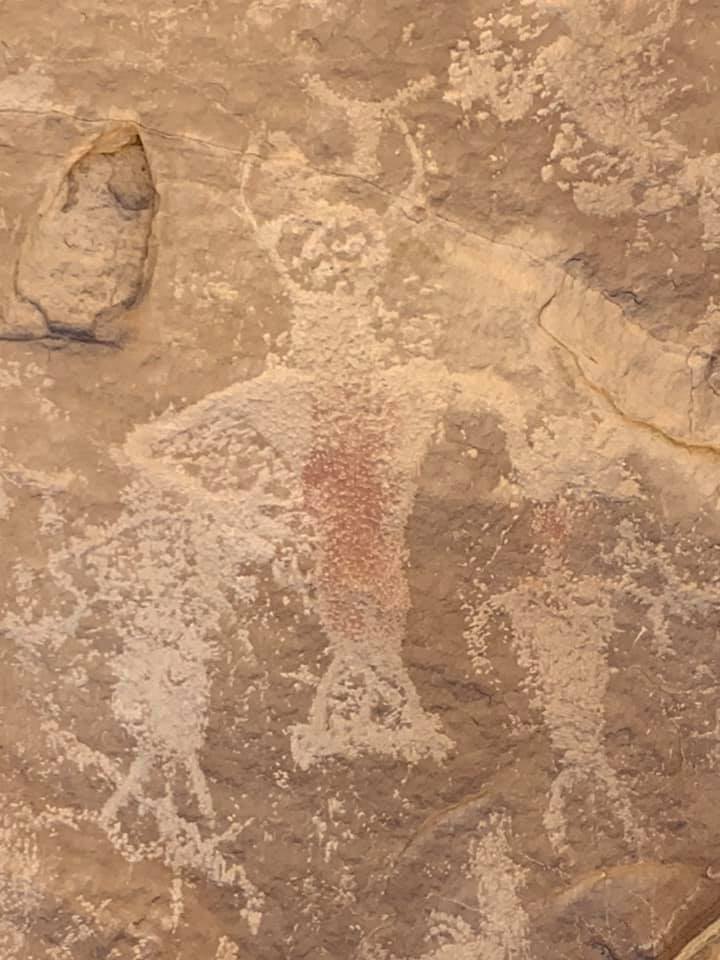
Fremont culture petroglyphs, Dinosaur National Monument. Photo by the author.
This week, I'm thinking about how we humans fit into the structures of natural history.

There’s a big problem with a lot of older anthropology exhibits in natural history museums around the globe, namely that they were built in the last two centuries often using either old and out of date information about the peoples they seek to describe, or like the old bronzes depicting the variety of humanity in the Musée de l’Homme in Paris, they were inherently racist to begin with.

Museums like San Diego’s anthropology museum have sought to rectify this with rebrandings and reorganizations. The museum in question, located in the California Tower building in Balboa Park, has recently renamed itself from the Museum of Man to the Museum of Us. Others like the Musée de l’Homme in Paris have worked to reassess how they display older historic anthropological exhibits like those old bronzes, so that today their primary message is one of “this is how people used to think, but not how we think anymore.” They’ve gone from being scientific teaching tools to historical artifacts.

There needs to be a very fine balance between lumping individual ethnicities with the rest of the natural world and actually considering humanity as a whole as part of nature. We are, after all natural beings, no matter how far we try to remove ourselves from nature with the edifices of civilization we’ve built up around ourselves. In case you’re wondering, this is a pretty central theme to the dissertation that I’m writing. In older generations, the idea of “natural humanity” was inherently understood to mean different peoples who were less civilized than others. It was used in the idea of the savage as a means of demeaning and describing the native peoples of the Americas following the beginning of the Columbian Exchange in 1492 (borrowing a term from one of my favorite historians, Alfred Crosby, here).

I’ve often thought of the world natural as being something good. Natural, or organic, food often tastes far better than the processed stuff. Natural soaps and such are less likely to harm our bodies. There’s even a style of music that I’ve called “natural” before, but only to myself. The liturgical music written by the St. Louis Jesuits, or the album Adiemus by Karl Jenkins would fall into this category.

So, if we’re natural beings, why then shouldn’t we be included in the kaleidoscope of life studied under the big tent of natural history? I for one have developed my own professional career from being an intellectual historian of the Renaissance to being a historian of late Renaissance natural history. That means I study natural history texts written between 1550 and 1600, in particular those which introduced new species from the Americas to audiences in Europe. At the time, natural history was closely related to another field called Cosmography, which while originally a theological study of the Cosmos had by the Renaissance become essentially the study of everything natural and human under the Sun. The first great proto-encyclopedias of our own modern age were descendants of the cosmographies of people like Sebastian Münster and my own focus of study, André Thevet (1516-1590), whose Cosmographie Universelle (1575) basically sought to describe everything, and yes I mean everything, that he knew about.

Today, we live at a turning point in human history. It seems like the last vestiges of the post-World War II order are finally beginning to break off, letting whatever the current century will bring be hatched from that shell born of the last century. Every century’s generations live in the shadows of their forebearers and have to figure out how to deal both with the benefits and the problems those generations left them. So, for us today talking about natural history we have the terrible realities of racism and bigotry which cloud this field and all its constituent studies. I do think humanity ought to be considered a part of natural history, ought to be studied like any other animal, but if we are going to speak of ourselves in those sorts of terms then it ought to do it in the same language across the board for all humanity, recognizing that we are all equal.

Today though, even more than any other time in our past, humanity has a critical role in the future of nature, and the stories that will be told someday in natural history. We’ve entered the beginnings of a new geological epoch, the Anthropocene, when we are the greatest influencers on the natural order of things. I’m seeing this in how many natural history and science museums have extensive exhibits on climate change, and even the handful of older ones on human biology, like my personal favorite at the Natural History Museum in London. We can try to ignore our part in shaping life on Earth, but at the end of the day as much as we’ll ignore it, we’ll end up like the proverbial unicorns who missed the boat. At that point, we will fall victim to our own pride, to our own endless thirst for more raw materials until the nature we need to survive has been stripped away. Human history has always been a part of natural history. Perhaps that’s a key to solving our current crises and all potential crises in the future: we must reckon with nature and our place within it.

Human or Man?

In English should we say that Jesus "became human" or "became man"? Join me as I work through the history of the Nicene Creed and how this most pivotal of beliefs was interpreted first by the Greek speaking Church Fathers who wrote the Creed, later by the Latin speaking Catholic Church, and today by us English speakers. You can read a transcript of the full episode here. Written, read, and produced by Seán Thomas Kane. © Seán Thomas Kane, 2021.

On Saturday I took the opportunity to go to 4:00 pm Mass at my home parish here in Kansas City, MO while I was in town for Thanksgiving. It was wonderful getting to see the place again, and even though it’s only been 3 months since I left town for the semester a part of me doubted I’d actually see these places that are so dear to me anytime soon.

During the Nicene Creed as I recited the words I’ve known at least since freshman year of high school, the proclamation of the Faith, kind of a Pledge of Allegiance that we Catholics still have mostly in common with our Orthodox and Protestant cousins, I noticed something that made perfectly good sense but I hadn’t thought of yet. A friend who was standing near me said that Jesus “became human” instead of “became man.” It caught me off guard for a number of reasons. Firstly, the official English translation that we use in the US does use the older word “man” rather than the newer “human” but secondly, I had a feeling from what I could remember of the Latin translation that our English one is more closely based on that “human”, “homō” in Latin, might actually be the noun used.

That evening I made a point of going to the source. I looked up the Creed in Latin and sure enough the line there is “et homō factus est,” which I’d translate in my schoolroom Latin as “and he was made human.”1

The one catch here is that the Creed wasn’t originally written in Latin but in Greek. So, in order to get to the original meaning and intent of the Church Fathers at the Council of Nicaea (325) that wrote the Creed we still say nearly 17 centuries later, I’d need to call up my admittedly elementary and rusty knowledge of Greek. Unlike Latin, which I studied all through my high school years, have picked up again twice since, and use professionally on a regular basis as a historian of Renaissance natural history, I haven’t been lucky enough to use much of my Greek. I took Classical Greek in my senior year of high school after finishing my last required math credit the summer before, and then took a semester of Koine Greek (aka New Testament Greek) in my sophomore year of undergrad at Rockhurst. So yeah, my Greek is rusty. I can still read the alphabet pretty well and I know enough about etymologies that I can get by, but I never really got it the way I got Latin or French.

Still, I was determined to spend at least a few minutes of my Saturday evening at home working through this question: what was the original Greek line that the Latin translator rendered as “et homō factus est“?2 I went to a pretty reliable source that has both the Latin and Greek versions and started scouring the Greek, figuring I was either looking for one of two words: ἄνθρωπος (anthropos) meaning human or ᾰ̓νήρ (anḗr) meaning man.3

One of the big tricks that I’ve learned after now a few years of working with sixteenth-century printed books that are often not in English is the quickest way to find a particular word you’re looking for is basically to just focus on finding that word, don’t pay too much attention to the rest of the text. Once you’ve found the word you’re looking for then go and read the rest of it to put that word into context.

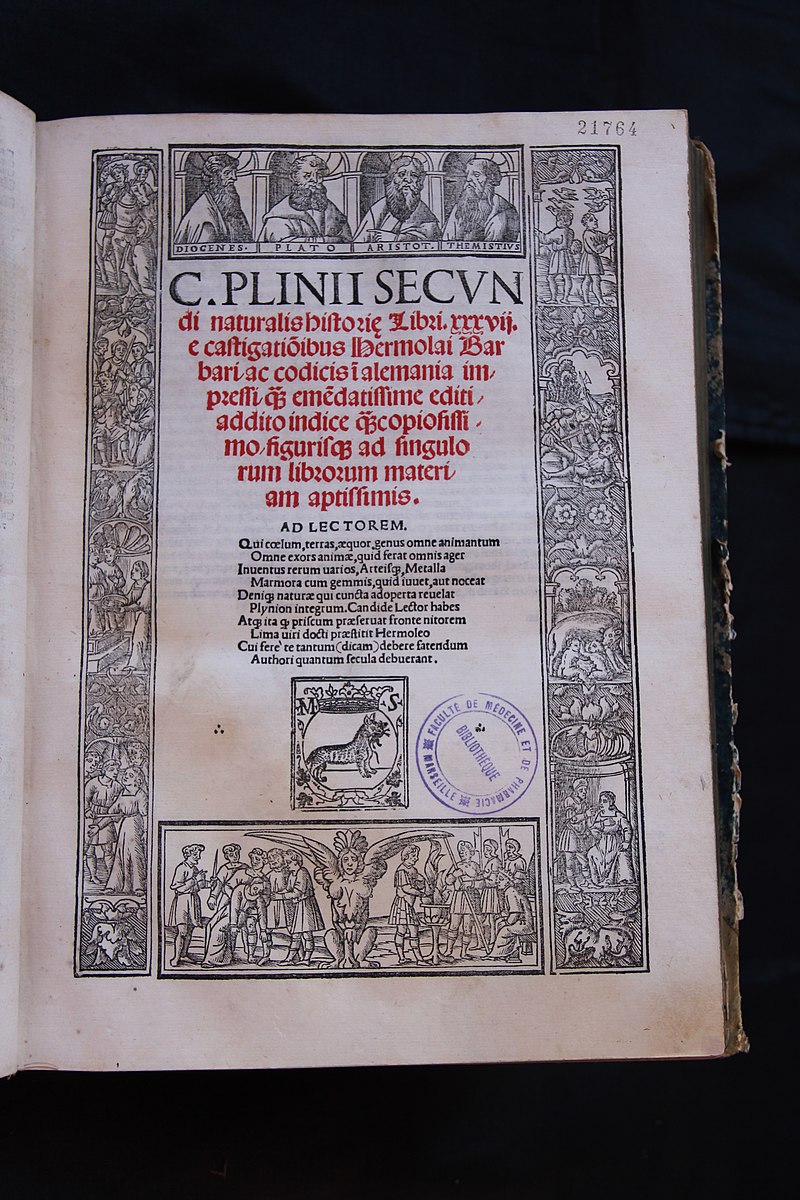
One example of a 16th century printed book that I’ve worked with.

Anyway, back to the story.

So, I scanned through the Greek original version of the Nicene Creed and was left stumped. I couldn’t find either ἄνθρωπος or ᾰ̓νήρ anywhere. I began to wonder if there was some third Greek word for human or man that I didn’t know about, and knowing what I do know about Greek there being three words for the same concept isn’t at all out of the question. Looking for clues, I turned then to the previous line, “and by the Holy Spirit was incarnate of the Virgin Mary”. In the Latin this appears as “Et incarnātus est, ex Spirītū Sānctō ex Marīā Virgine“. A great trick for any researcher working in a second or third language, or better yet one that they have a passing familiarity with is to always keep an eye out for personal names or other proper nouns: those will usually be more prominent, and when it comes to the BVM (Māter Deī, Θεοτόκος [Theotókos]) you can bet her name will be prominent. Sure enough, I quickly found mention of a Μαρίας τῆς Παρθένου (Marias tés Parthenou) meaning the Virgin Mary and kept looking along that line for something that resembled either ἄνθρωπος or ᾰ̓νήρ. Two words over came my answer: a fittingly long Greek verb ἐνανθρωπήσαντα (enanthrōpōpésanta).

I quickly returned to my favorite English-Greek dictionary and found the root form of the verb in question, ἐνᾰνθρωπέω (enanthrōpéō), meaning “to put on human/man’s nature,” or more essentially “to become human/man.” The only job left to do was to take out that clunky slash and acknowledge which noun, ἄνθρωπος or ᾰ̓νήρ was at the heart of that verb. As it turned out, and as you can see, it’s ἄνθρωπος.

Thus, to the best of my efforts as a scholar and translator, and as you can see, I’d argue that in English saying that Jesus “became human” works, perhaps even better than “became man”. Why? Well, remember that English has changed a lot as a language in the past century. We have so many more people and ideas using this language than ever before, and to be honest while the English noun man began as both a word meaning males in both gender and sex (ever a complicated series of terms) and our entire species in general, it has steadily come to lose that second, neuter meaning in favor of solely being a masculine noun. Neil Armstrong’s first words when he stepped onto the Moon’s surface in 1969 were “it’s one small step for man, one giant leap for mankind.” For a guy in 1969 that worked. But for the astronauts that will be setting foot on the lunar surface again in the next few years with the Artemis program, I firmly believe that man won’t cut it anymore.

A few years ago, I wrote a blog post that was a predecessor to this now weekly Wednesday Blog about why I prefer to say “you guys” rather than “y’all”. Long story short: I’m not a Southerner, and I’ll fully admit when I hear “y’all” I don’t tend to think of much besides the people who drug our country into a Civil War 160 years ago because they couldn’t accept the fact that it was morally corrupt to own other human beings. The fact that their heirs are still fighting against racial equity in this country makes my case for me. In that same blog post I also argued that we should move away from the word mankind, and towards something that more closely reflects a more gender neutral word for our species: humanity. On a small side note here (in a paragraph begun with a side note) I don’t like humankind because it combines the very Germanic -kind with the very Latin human. Instead, Latin gives us the word humanity, derived from the Latin hūmānitās. Let’s use that instead. It works, and frankly as we do become far more globally interconnected (which, guys, really isn’t a bad thing at all), it translates far better than humankind ever will.

All this said, getting back to the main point after a brief stop in the politics and history of American English, I think it’s actually a lot better and more profound to refer to Jesus as God becoming human instead of God becoming man. It means that Jesus came to be among all of us, to be one of all of us. I’ve written before in an academic setting about why I believe it’s flawed to refer to God in gendered terms: gender is cultural, it’s fundamentally human, and it keeps the blinders on us to the extent that we can’t make a true effort at seeing, and by seeing hopefully we can get closer to understanding the fullness of God. From there, I’ll leave the writing about how to understand the fullness of God to the theologians and clergy.


Footnotes

  1. Why the difference between the official “became” and “was made” in my translation of the Latin passive verb factus est? Factus est is the passive perfect 3rd person singular form of the verb faciō, which my old stalwart dictionary William Whitaker’s Words translates into the English verbs “do, make, create; acquire; cause, bring about, fashion; compose; accomplish.” So, while “became” is more poetic, “was made” is more accurate to the verb in question. But, theologically was Jesus the passive recipient of the blessing of being made human? After a significant amount of time for what I thought would be a short search I found an entry in the Liddell, Scott, and Jones Ancient Greek Lexicon (LSJ) on the Perseus database that listed the original Greek verb that was translated into Latin as factus est, namely ἐνανθρωπήσαντα, as an aorist participle singular active masculine verb in the accusative case. So basically, while the Latin factus est is in the perfect passive voice (meaning it’s describing an event that fully happened to the subject in the past), the Greek verb is an event that happened in the past without any time specified as to when it happened (kinda like a French passé simple?) This alone shows the complexity of trying to translate from Greek into Latin and then by extension into English. One final note here: while the Greek verb grammatically has a masculine gender (see above in this oversized footnote) I’d stress that that gender designation is referring to Jesus who it’s generally accepted was biologically male. In the process of trying to figure out how the Greek verb in question (ἐνανθρωπήσαντα, in case you forgot) was conjugated, I found an interesting article from the Orthodox Christian Studies Center at Fordham University discussing how best to translate this very verb in the Nicene Creed from the Greek original into English. So, to return to the original question that led me to write this footnote that would outrun the Gettysburg Address in length: the fact that Jesus in the Latin was apparently the passive recipient of his humanity, given to Him by the Holy Spirit is more or less a “it’s the best we can do” translation from the original Greek where Jesus actively “became human”. So, in English while the best translation from the Latin is “was made” human, when taking the Greek into account the official Catholic “became” human works a lot better, because it recognizes that at the end of the day Jesus and the Holy Spirit are consubstantial with the Father, meaning they all share the same Substance, i.e. they are all One. “Three Persons in One God” as my notes from my undergrad freshman Honors Christianity I notes say.
  2. For my fellow grammar constables out there, yes I put the quotation mark outside the quotes. There’s a reason for that, it’s not a part of the quote so I don’t see why it should be included in the quotes. I’m going to write another blog post about this eventually.
  3. For my Greek friends and all Greek scholars out there: to my understanding ᾰ̓νήρ is the Ancient Greek word for “man.” To my understanding the more familiar and modern word άνδρας is descended from the accusative singular (direct object form) of ᾰ̓νήρ.

An Equal and Opposite Reaction

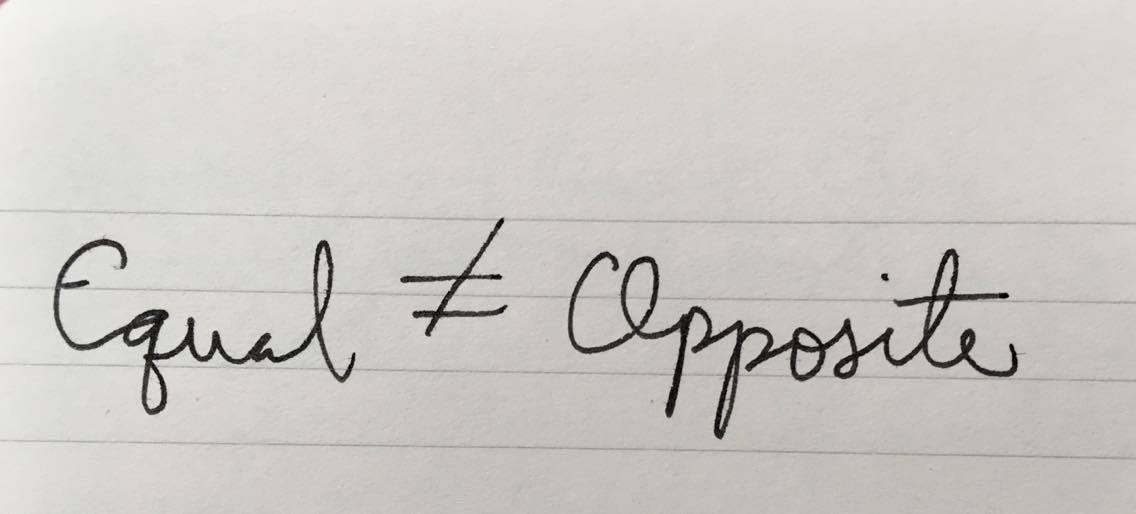
21733868_10214068171760956_1726168460_oOne of the fundamental maxims of physics is that “For every action there is an equal and opposite reaction.” For everything that is said or done something of equal vigour must be in order. By this logic then, for every fascist, far-right, or white supremacist threat to American society and we the American people there must also be an equal reaction by the far-left, by the Anti-Fascists as they have deemed themselves. Yet what good does the threat of violent action do? What is the point of bringing one’s guns to an anti-fascist protest? What is the point of eradicating the memory of all who have had some dirt upon their hands, who committed evils in their lives?

This moment, at the closing years of the second decade of the twenty-first century, is a moment of immense change, of tribulation not unfamiliar to our predecessors from a century prior. We are living through the waning hours of a period of unprecedented social change and extraordinary wealth for many in our society. We have witnessed a plethora of forces at work in their efforts to bend our society to their aims. Some have sought to bend the law in order to further their own wealth and prosperity to the detriment of others. Still more have fought against those egotists in the defence of the common good and the wellbeing of all.

Now, as we look ahead towards the last months of 2017 and the new year 2018 we are beginning to recognise as a society how uncertain our future is. We are realising that our children will probably not be better off than ourselves, that our generation as well will probably fall in economic standing in a way unseen in the past century. It is natural to react to this with fear, to curse the political, economic, and social systems that led us to this moment. But in our present culture we celebrate fear, overreaction, and anger far too much. We have accepted extreme behaviour on television as normal, and in so doing have accepted that same extremism into our own lives.

We have reached a moment in our history when both the right and left are afraid; afraid of losing what they have; afraid of each other. We have reached a moment when the politics of fear have duped millions into electing a man entirely unfit for the duties to which he is oath-bound to serve. We have reached a moment when lies are far louder than truths and accepted as real by sections of society.

We have reached a point where at long last the old Confederate sympathies are being brought into the light of day as racist echoes of a failed rebellion from 150 years ago. Yet the zeal of the most outspoken on the far-left has created its equal reaction to the zeal of the far-right. Both now have sizeable factions at their rallies who are armed, ready to fight.

Extremism in any form is unnatural and unhealthy. Yet in the current moment in American history it is the extremes of our society that are the most vocal. I cannot deny that our political system is flawed, it absolutely is. I cannot also deny that American capitalism favours the rich, that is how the playbook has been written. I would be an idiot to ignore that our society is rigged against anyone who is not male and of European descent, there is a racial hierarchy in this country that has existed since the colonial era. But I would be blind to also deny that we can change things for the better. We can fix our corrupted political system, we can rewrite the codes that govern our capitalism, we can stand up everyday for the rights of all in this country and day by day continue to chip away at those old biases. But we cannot do these things while we are taken hostage by the far-right and far-left of our society. We cannot fully achieve the great work of our society while our society is a hostage to the militant few willing to kill their fellow Americans in defence of their extreme convictions.

We must continue to march, to protest, to organise, and to vote. We must carry on the good work that our predecessors undertook in generations past. We can make this country a better place for our children and grandchildren and great-grandchildren to live in. But we must walk the middle road of moderation to do so.

We must understand the full consequences of our actions, we must learn from our history so that we do not make the same mistakes again. There are many who are opposed to the removal of the Confederate monuments because that is “erasing our history.” I disagree. By removing those monuments to a rebellious movement in our history, we are forcing the book closed on that chapter that has yet to settle. After all, we still see the way in which Americans continue to threaten one another with violence at the slightest hint of progressive reform. To make our society better for the next generations we must rid ourselves of this disease of extremism. We must show those who want violence that through peaceful debate we can achieve far greater things.

“For every action there is an equal and opposite reaction.” When the far-left responds to the far-right’s threats of violence with equal threats the far-left only continues that same cycle of violence. Consider that maxim again: “For every action there is an equal and opposite reaction.” Threats of violence may well be equal on both sides, but the threat of violence on the left is not opposite to the threat of violence to the right. It is not the positive to the right’s negative. Only peaceful protest, nonviolent refusal to play by their rules of violence can achieve that. Through peace and nonviolence we find our equal and opposite reaction. Let’s try it for once. You never know, it might just work.

Optimism and Belief

Cloud-line

In my life, there have been two things standing as constants: optimism and belief. I have embraced these two guiding principles, and striven in due course to live a better life as a part of the wider human community through them. For me, my faith as a Catholic and as a Christian is an inherently positive one; it is a faith in Resurrection, in Union with the Divine Essence, in the fulfilment of the circle and restoration of humanity to paradise.

Yet to allow this faith to persist I have found myself inherently optimistic, always expecting the best from people, and looking at even the darkest of situations with the hope that is required to believe in something greater than Reality. True, this is blind faith, something entirely counter to the principles of our scientific age, yet in the end is not blind faith equally necessary in a scientific setting? After all, we have yet to learn all that there is to know about nature, our sciences are as of yet unfinished in amassing the totality of reality. Therefore, if we are to accept science as an effective and prosperous measure of nature, then we must also accept that that measure is man-made and limited in its scope.

I see those things measured by science each and every day, and I am in awe of their wonder. I see how the Sun rises in the east and sets in the west, how the stars circle in the sky as the year passes. I hear the wind bristling through the leaves of the trees, and across the tall grass prairies. I have known what it means to be caught on the beach at high tide, and to be at the mercy of the awesome tempestuous power of lightning. Past generations might well have worshiped these forces of nature, seen them as gods like Zeus, Taranis, or Ukko, yet I see them as terrestrial, as natural, as real. The true force, the veritable essence to be worshiped is far greater than even the rolling thunder or bristling lightning.

In these circumstances I am reminded of the American hymn How Great Thou Art, yet in the smallest of moments too I am reminded of God’s coming to Elijah on the softest breath of wind in the cave. Divinity and the essence that made all that we know and love is so far beyond our own understanding, yet in that realisation I find my peace.

Often it can be said that I find my belief renewed through music, through that purest, most mellifluous of sound. Some of the most sacred moments of my life, the most moving moments in the story of my belief have come in moments of music, from operas like Mozart’s Die Zauberflöte to the Pilgrim’s Chorus in Wagner’s Tannhäuser to great orchestral outbursts of emotion as in Stravinsky’s Firebird and most all of Mahler’s symphonies; yet equally spiritually potent for me are the more recently composed naturalistic Mass settings that I sang with the Rockhurst University Chorus while an undergraduate student there from 2011 to 2015. Music has long been said to be the Voice of the Heavens, and certainly it has appeared to be so to me.

Yet what I find the most fulfilling to my belief in the Divine is humanity. In the Christian tradition we believe that humanity was “Created in the Image and Likeness of God.” For me, this means that our souls particularly were made in the Divine Image, but that our bodies also have Divine inspiration. When I see humanity, with all our faults, all our problems, all our pain and anguish, I can’t help but be swept off my feet in grief. Yet at the end of the day I always remember the old adage echoed by Little Orphan Annie, “Tomorrow will be a brighter day.”

I believe that one day that will come true, that one day all will be sorted out in our capitals, our courts, our executive palaces. I believe that one day we will march through our cities, not in protest or in anger, not out of anguish or to alleviate our suffering, but because we are celebrating that most essential characteristic of our humanity: liberty. I believe that someday all humanity will walk together, singing in unison, a multitude of voices, of languages, of cultures and creeds making one song. I believe in optimism, and I am optimistic about my belief.