
Tag Archives: Humanity

Designing Cities for People

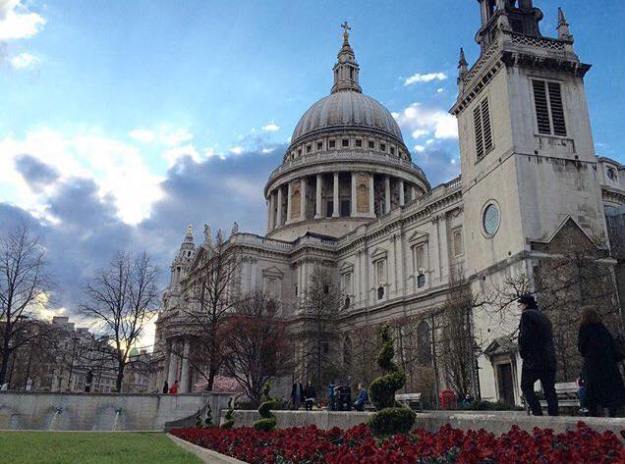
St Paul's at Sunset - April 2016

St Paul’s at Sunset

In older standards of measurement, the imperial mile (1.609 km) was not the longest measurement of distance available; the league filled that role instead. As I have understood it, one league is equal to the distance a person can walk in one hour. For me, that is around three miles, thus making 1 league equal to a decent distance for a nice morning stroll. In 2016 when I was undertaking my first Master’s degree, this one in International Relations and Democratic Politics, at the University of Westminster, I would occasionally decide to walk the league from the university on Regent Street back to my flat in the shadow of Fenchurch Street station on the eastern edge of the old Roman city.

The walk was quite pleasant, a stroll first down from the university to Oxford Circus, then eastwards along Oxford Street to Holborn, and then down High Holborn across the Holborn Viaduct and past the Old Bailey at Newgate, past St Paul’s and onto Cheapside, crossing in front of the Royal Exchange and Bank of England before continuing down Lombard Street and onto Fenchurch Street. At Fenchurch Street station, I would descend a short flight of steps leading towards St Olave’s Hart Street and under the station viaduct itself past the city walls and into my building on Minories.

What made this a nice walk was that I was able to see so much of the capital, everything from the imperial Edwardian grandeur of Regent Street to the new skyscrapers that are being built across the Square Mile to the east. It was an opportunity to experience London as so many had done so before, to get to know the metropolis by foot. In London this is something that can fairly easily be done, one can walk around the capital if one wants to. Sure, most of the suburbs are out of reach for the pedestrian, but with the well established system of underground and suburban railways, as well with the very thorough bus network, London is a city that a person can easily live in without owning a car, let alone riding in one on a daily basis.

When I moved back to Kansas City at the end of August 2016, I thought I would try at keeping up my walking, to walk the same ten miles each day. Yet that didn’t happen. Far from it, I found Kansas City to a.) be built largely for cars, and b.) with a climate far more harsh than the one I had known in London. As a result, not only did I not walk nearly as much as I had wanted, but I found myself hardly walking at all beyond going out of my parents’ house to get into the car and drive somewhere.

While my own lack of fortitude certainly is to blame in part for this sudden drop in my exercise, I also have to lay blame on the city planners here in Kansas City. This city, like so many others in the United States and Canada were designed, or re-designed, for motorists. In fact, it is illegal for a human being to walk in the street in Kansas City, Missouri; if you’re human, you have to stay to the sidewalks (pavements). The rest of the street is reserved for cars, buses, bicycles, vans, and trucks. We have built this city and so many others like it without the human touch that has made cities so universally human in nature.

For thousands of years, our ancestors have lived in cities that were not unlike the Central London; they were just big enough that an able-bodied person could walk from one end to another in about an hour. Cities were built with walking in mind, with the understanding that all of the basic necessities that a city offers should be within walking distance of each citizen’s home. Smaller medieval cities like Besançon in France, Canterbury in England, or Galway in Ireland are prime examples of this sort of pedestrian-focused urban planning.

“In fact, it is illegal for a human being to walk in the street in Kansas City, Missouri”

Here in the United States too there are some attempts at returning to this older model of having residential and commercial establishments within the same general area. Here in Greater Kansas City there are some newer developments that aspire to this goal. Two in particular that I visited this last Friday stand out to me as examples of how to undertake this task, and how not to do so. The latest pieces in the Town Center shopping complex, Park Place is an excellent example of such a development.

A set of winding, narrower streets lined by three and four story buildings, its street level fronts are filled with shops, restaurants, and some offices, while the upper levels are largely residential. In this way, one can live in a compact community, within which one does not necessarily need a car to get around. I first was able to experience Park Place two years ago when walking a 5K through the Town Center area. At that time Park Place was still under construction, yet even as a construction site it seemed vastly out of place when compared to its neighbours in the most arch-suburban of American counties, Johnson County, Kansas. What particularly makes Park Place odd, and in the end stunted in its growth and feasibility is that one has to have a car to access it. Sure, one could live within Park Place as a pedestrian, but going beyond its towering confines on foot can be a perilous exercise with traffic on the surrounding avenues averaging a speed of around 45 mph (72 km/h).

What Park Place does well is its compactness, including both commercial and residential in the same area. Another, equally new development a few miles south of Park Place ignores this principle of traditional urban planning, setting the residential aside from the commercial. This particular development is the fascinatingly misplaced Prairiefire complex on 135th Street in Leawood, Kansas. Another physically enormous complex, Prairiefire’s crown jewel is the Museum at Prairiefire, billed as Kansas City’s Natural History Museum, and an affiliate with the American Museum of Natural History in New York. While the Prairiefire Museum’s architecture is aesthetically beautiful, its size is much like the rest of the Prairiefire development: lacking long-term thinking.

My biggest problem with Prairiefire is the way in which its residential development is divided from its commercial sector by a massive concrete parking garage. Prairiefire was designed by a suburbanite intending to create their image of a compact urban community, albeit without ever having stepped foot inside of a traditional compact city. By splitting the residential from the commercial, they make it far less amenable to residents to take advantage of the shops, restaurants, and entertainment in the commercial side of the property. What’s more, the Museum at Prairiefire itself is deeply flawed in that it is not built with the ability to expand in mind. The current structure is small, built more like a community arts centre and less like a great temple dedicated to nature.

Our over-reliance on cars here in the United States is flawed at the utmost degree. Should there be a major energy crisis in the near future, the vast majority of our cities and states will find themselves paralysed, unable to function owing to the lack of oil to fuel our cars. Developments like Park Place and Prariefire might be able to last for longer, owing to their relative compactness compared to the more traditional suburban sprawl, yet their isolation amidst the sea of suburbia will soon find these two developments in the same situation as the traditional suburban developments.

Our cities must first and foremost be self-reliant; we must be able to grow our own food, and use our own renewable energy sources to power all aspects of our lives. Yet along side this if we are going to build smart, self-sufficient cities, we must build them more compactly, with ourselves in mind. Just consider, if you are suddenly without your car, and don’t have the option of taking public transport, how will you get around? You could certainly walk around your city, but that prospect is only truly viable if said city is designed for walking.

Today, I generally prefer using metric to the more traditional imperial standards of measurement, yet that most old-fashioned of imperial measures, the league, is one that should be maintained. It keeps us humans at the centre, and reminds us of our own physical limitations and abilities. When we consistently push ourselves far beyond those abilities, we endanger the stability of our societies, making any potential crisis even more disastrous.

We Stand Together

18946991_10213047198957274_893548281_o.jpgAt this point in time, after so many terror attacks around the world in recent years, my initial reaction to the attack in London last night was somewhat muted and reserved. I was not surprised that it had happened; yet I was nevertheless deeply distressed that innocent people would be so brutally assaulted. The three attackers, their identities as of yet unannounced by the Metropolitan Police, will spend eternity lapping in the seas of ignominy, far from the verdant peaceful halls of rest that they may wished to have known.
They died attacking innocents; their last actions in this life were in the spirit of chaos. With all that said, they were still human, and as a Christian I believe they, like the rest of us, were made in the image and likeness of God. So, as time passes and I think on their final acts, I will be helpless but to consider them as humans, like the rest of us, and so mourn their poor decisions and pray for their souls, that eventually they, and their victims, might find peace.

We are all human; we all start our lives with that one equalising factor. If terrorists, warlords, and fearmongers seek to divide us, we must constantly remember what unites us. For the sake of our future we must stand together. In the wake of the latest attack we have a choice: to retaliate with ever increasing violence and terror, or to stand taller and remain above their cowardly and weak tactics. When they offer war we must offer peace. When they taunt us towards destroying all they know and love, we must not validate their evil by doing so.

Our societies and governments are founded upon the basic principles of constitutionalism. They are built on the principle that no one should be above the law. Justice is the rudder of our ship of state. Every time we treat anyone as less than their rightful station, every time we jump to conclusions about a person without facts or evidence, every time we respond to terror with terror, baying for blood, we undermine that omnipresent principle of justice for all. After all, once we begin to look out from beneath our blinders and consider the people around us, we will surely see another human being with feelings and hopes, with dreams and desires not unlike our own.

I did not know the men who attacked the crowds on London Bridge or in Borough Market. As of the time of publication the police have not released their names. Nor did I know the seven people whom they killed. I do not know what they were like, what they dreamed about at night, who they loved, or what their favourite things were. What I do know however is that they were all humans like me.

In my culture the golden rule is to treat others as you would want to be treated, and while these attackers certainly did not do that, how can I stand by that rule without seeing them as humans. Sure they were flawed, after all what they did is reprehensible to the highest degree, but all the same they were human. I hope that all involved, perpetrators and victims alike can find peace in this life or in the next. At the end of the day if we want the terror to cease, we must stand together as one common humanity. We must be the change, the light that will douse the darkness. The day we cease to preach and live love is the day we give in to terror and chaos.

Donald Trump and the slow death of American Federalism

US flag

Today the world was flabbergasted and disgusted with our President once again. This time it was not due to his bullish techniques for getting in the front of a group picture, nor his obscene rudeness towards our closest European allies, nor even his disregard for the basic fundamental principles that all humans deserve equal treatment and rights. Far from that, today Donald Trump decided, for whatever reason, to do away with the safety mechanism that would at least temper the oncoming tide of climate change and preserve the planet that we’ve called home for millions of years. But that does not seem to matter to Donald Trump, the human epitome of ego.

He does not seem to care that withdrawing from the Paris Climate Deal will have disastrous effects for all humanity for generations to come. All he cares about is that “America receive a fair deal.” He is a businessman who has never had to deal with the realities of the world; he is a man who has never been fit to serve as President, and frankly is even less fit to do so today.

Climate change is a very real and present danger to humanity, to all of us living on Earth. We have developed our civilisations, our industries, our technologies in a manner that until recently has had a careless attitude. We have raped the Earth of its natural riches, leaving its soils forever changed, its seas void of so much vibrancy and life, and its air thick and soupy with the fumes of our industrial might.

Eventually, in the long run, humanity will inevitably outgrow this our nest, but until that day comes in the future we are stuck here. For the time that we have left on Earth we must do our best to maintain it, to keep it fresh and clean. Anyone who has maintained their own house without the help of servants will know what it means to keep the house in order. Judging from his biography, and his attitude towards the rest of humanity, I doubt Donald Trump has ever been in our shoes.

I have found myself on a daily basis pronouncing my embarrassment at the President’s actions to friends both overseas and here within our borders. My shame at seeing that most self-serving of men occupying the People’s House is far beyond anything I have ever experienced.

Setting aside the climate for one moment, though to be honest that is nigh impossible to do, as everything else is reliant on the climate’s continued health and survival, there is one other more directly American issue at hand here. For the past four months, Donald Trump has done pretty much what he promised to do, to bring stark change to Washington; but the changes that have come about in his time in office have been hardly positive. For one thing the long standing norms of the American body politick are finding themselves being forcibly changed, in many respects against their will. States like California, New York, Massachusetts, and Illinois, long considered key supporters of federalism, in comparison with the likes of Texas, Arizona, Kansas, and most of the South, are now finding their long held faith in Washington to be suddenly, and dramatically unfounded.

What Donald Trump has done is nothing short of contribute to the process of nailing together the coffin of federalism in the United States. Our country has always been an odd fit, some parts more willing than others to play along with the idea of federalism. Trump, a New Yorker, has played into the hands of the anti-federalist extremists on both the left and right, particularly the Tea Party Republicans in Congress and in the respective State Capitols around the country. When the State governments choose to ignore the needs of all their constituents, instead focusing on the demands of a few, we the citizens look to the Federal Government to back us up and defend our rights. Yet now both a majority of State Governments and the Federal Government are controlled by the same faction within the Republican Party that has cried foul at the regulations set up by big government to ensure the continued prosperity of a majority of Americans.

Their self-serving agenda has seen that this country elect one of the least qualified Presidents in its history, and that this country’s legislative electoral process be so mangled that they the small-government “we serve ourselves” far-right Republicans will be mathematically guaranteed to win for many elections to come. Now the rest of us who are not being served by this narrow-mindedness amongst those in power are left to look to the lowest levels of our government, to our cities, for protection and aid. Cities like New York, Chicago, D.C., Boston, San Francisco, Los Angeles, Seattle, Portland, and Kansas City are our last refuge in this our darkest hour. For the time being, while the current faction of Republicans remains in charge of the rest of our government, we must rely on our big-city mayors and our city councils to do what they can to ensure our cities remain safe for American democracy and multiculturalism.

As a European American male, I am a part of the least threatened demographic in the country, yet as an American I am a part of the most threatened demographic of all; for when one American’s inalienable rights are threatened, then the rights of all the rest of us are threatened as well. The day when we return to saying otherwise is the day when we, the United States of America, the nation of immigrants, of opportunity, of possibility, will be the day when we lose our national spirit.

“We care for our own kind.”

IsolationismWith a rise in nationalism worldwide, we have also seen a rise in isolationism from both the extreme right and extreme left. In my view, nationalism and isolationism are blood brothers, and will always go hand-in-hand. In fact, the only way in which an isolationist nationalist government would ever consider interacting with its neighbours would be either through coercion or full force of arms. This is the world that was seemingly far better known in a time now past, a time when it was far more likely for the likes of Germany, France, and Britain to go to war with each other rather than sit around the negotiating table and work out their differences peacefully. Today, in Western Europe and North America we have known this sort of negotiated peace since 1945. It is a peace that has led to my father and I never having had to go to war, unlike the generations before us.

While the political structure established in the wake of the Second World War and expanded with the fall of the communist states in Eastern Europe, has led to unforeseen stability, prosperity, and international goodwill amongst its participants, the trials of the 2000s and 2010s have shaken that stability to its core. From the War on Terror launched by the United States in response to the Attacks of September 11th to the Great Recession, faith in liberal democracy and in capitalism are at an all time low.

I can’t blame those who do not trust the current political and economic systems, after all at least economically capitalism is structured to benefit most those with the most capital, leaving the rest to try and catch up. But when catching up to the wealthy is increasingly nigh impossible, it is understandable that some would be left dissatisfied with the system.

There is one effect of all this pain and negativity being felt around the world that can only have disastrous consequences for us all. I was reminded recently of an old saying, “We take care of our own kind” that one might have heard in generations past. With this comes the idea that we should stick to the social, political, religious, and ethnic groups to which we belong, that I as a middle class Irish American Catholic Democrat should not have anything to do with anyone who is not like me.

This is isolationism in its purest form, isolationism not on a national level but on a local house-by-house level. It means that I should sever all ties with my best friends, who are from Bulgaria, Finland, Venezuela, and Ecuador. It means that my neighbourhood, which is pretty well mixed between Protestants, Catholics, and Jews ought to be sorted out, and that each of us be given our own couple of streets to live on. It means that as a Democrat I should stay as far away from any Republicans, and that we should keep to ourselves so as to ensure we do not step on each other’s toes and cause any trouble.

I’ll be frank; I can’t possibly do any of that. I respect, admire, and in a way love my friends too much to send them packing, and my neighbourhood is better off because of its religious diversity. Furthermore, having seen the divisiveness of the 2016 election, I know all to well that if we Democrats do not talk with our Republican relatives, friends, and neighbours that we will not be able to heal the wounds of division that have wrecked our country so horribly.

But considering those words, “We take care of our own kind,” I am left thinking even more; and you know what, I think I can actually agree with this. It’s best to only care for people like you; it’s best to only be friends with people like yourself. The most optimal way to live one’s life is to solely live it with likeminded people around. After all, that way there won’t be nearly as much conflict within social groups. So yes, I’ll take care of my own kind, after all I’m human, and it is my duty as a human to care for the rest of humanity.

Isolation, and its bedfellow nationalism, serve no real purpose, and in the end are self-cannibalising; because isolationists forget that we do share that one common bond, our humanity, through which we can never fully cast each other asunder. So, let’s take better care of each other and get over that idea that our differences are bigger than what brings us together.

23 June 2014 – Humanity

I don’t care who you are

I don’t mind if you are conservative or liberal

nor if you are a communist or a fascist.

I don’t like that you might see this person or that person

as lesser than yourself

and am more saddened that your view of the world is so small.

Beyond all other possibilities we have seen

throughout history that narrow-mindness dies out

as it blinds the observer from pluarlity

and the ability to change when necessary.

I don’t care who you are

I don’t care what you think

I don’t care if you love me or hate me.

You could put the gun to my head

You could drag my name through the mud

You could desecrate all that I hold dear

and I would still have respect for you.

Why? How? Am I mad?

Perhaps to some I may seem unhinged.

My respect for you comes from something simple

derives from something beautiful

born from the sea-foam like Aphrodite

or out of the head of the divine like Athena.

It is sacrificial like Christ’s death

it seeks truth and wisdom like the Buddha

it sings out like the Adhan from the minaret.

It burns eternally like the fire of Zoroaster.

I respect you for one simple reason

I respect that name by which we are all called

I respect your humanity

Thus I respect you.