Tag Archives: Instagram

Distractions

How distractions can be beneficial or detrimental, from a certain point of view.—Click here to support the Wednesday Blog: https://www.patreon.com/sthosdkaneI recommend you now listen to: On PausesA link to the WBEZ Chicago story referenced in this episode.


How distractions can be beneficial or detrimental, from a certain point of view.


On February 21sta story appeared on the WBEZ Chicago website with reactions to Illinois Governor J.B. Pritzker’s proposal to restrict cellphone use in all public and charter school classrooms. Mine was the first generation of students to have access to cellphones, and from day 1 it was a noticeable distraction for everyone in the room when someone brought their phone to class. Whether looking at the teacher who was trying to do their job in spite of a new topic to chide students over, or to the other students who see that one of their fellows is challenging the classroom’s authority so brazenly, to the student carrying the phone who now had a ready means of ignoring the teacher and missing out on the lesson, phone use is a problem for all.

In all honesty, I’ve been that student from time to time. In some classes it wasn’t a cellphone as much as it was a computer or a tablet that distracted me from the lesson or lecture at hand. In other cases, it was the unavoidable glow of the screen in the row in front of me shopping for shoes or looking at Spring Break trip ideas that drew my attention away from the topic at hand. Looking back, I recognize a noticeable drop in my attention and focus when these technologies began to enter the classroom, just as I notice now how I stopped reading nearly as many books once I discovered YouTube.

The idea of the distraction is often subjective; sure, in the classroom the student is supposed to be paying attention to the instructor, yet beyond that setting what are all the trappings of life but distractions from other facets which to varying degrees we ignore? This isn’t inherently a bad thing. Considering how troubled our times are fast becoming I have made a point of trying to find happy things to look at every day, and in some instances, I send these along to friends who I hope will benefit from smiling at something no matter how inconsequential.

In WBEZ’s report on student reactions to the Governor’s proposal to ban phones from classrooms the reactions were mixed. Some reactions speak to concerns about staying in touch with parents during the school day, especially in case of safety issues. I understand this point, it speaks to the reality that we’ve allowed ourselves to live in an increasingly dangerous society, and to that danger we need resources to mitigate it all while ignoring the underlying problems. We can distract ourselves from addressing gun violence, yet the shootings will continue all the same.

In my own experience the best classroom settings were those where the students either were mature enough to not pull their phones out in class or where they didn’t have their phones with them at all. In a recent substitute teaching job, I found that I was not only competing with student apathy toward following a sub’s instructions but that I also had to compete with students watching all manner of videos on their phones from Netflix and YouTube to TikTok, Instagram, and Snapchat. I simply can’t compete with these bright screens, and as most schools don’t inform their substitutes of any school policies (which allows students to abuse those policies when a sub is in the room), I’m at a tremendous disadvantage in that position.

Today, as I write this blog post I have one conference presentation I need to write and an article submission that I need to revise. The former needs to be done in the next month and the latter by June 1st. In short: I have things I need to be doing right now, yet I can be more flexible with these extended deadlines and keep the Wednesday Blog going for another week. This publication of mine may seem like a sort of distraction to some of my colleagues, yet I feel it is a tremendous opportunity for me to write about topics that I have ideas about which my research doesn’t cover. After I write and record this blog post I will take full advantage of the good weather today (sunny with a high of 65ºF / 18ºC) and go for a long walk this afternoon. After that, I might look at these two projects again. As I said earlier in this paragraph: I have time to wait on both of them.

Returning to the topic at hand: whereas in my teenage years I found it empowering to have a school-issued laptop which I could use in class, today I yearn more for the days before that technology became so accessible to me for the sole reason that I could focus more on the moment at hand. Perhaps the greatest distraction that we’ve created for ourselves is our indefatigable busyness that keeps us moving at full speed whenever we’re awake. We fear boredom because we haven’t allowed ourselves to spend enough time surrounded by the silence that it brings. I wrote about this in October in the context of pauses in the dialogue of the Kate Winslet film Lee. I don’t know if I have any suggestions for systemic change this week, merely advice that each of us ought to look at what we think is most important for our lives and our enrichment. We only have so much time around, so the best thing we can do is to use it wisely.
On Social Media

This week, some thoughts on the divestment of our social media attention and why I choose to use different platforms for different sorts of messages. — Click here to support the Wednesday Blog: https://www.patreon.com/sthosdkane Photo of the author by Hariprasad Ashwene, 2024.


This week, some thoughts on the divestment of our social media attention and why I choose to use different platforms for different sorts of messages.


I’ve been an active social media user since May 2008 when I created my Facebook account at the young age of 15 years old. I remember not being sure what to expect from Facebook when I opened my account, yet my Mom opened her own account at the same time as me and we jumped into it together. I see the big turning point in my time on Facebook as 9 October 2016, the night of the 2nd Presidential Debate that year. Leading up to 2016 I’d gotten a reputation among many friends that was voiced by my London flatmates in 2015 that if they wanted to get an idea of what was going on they’d look at my Facebook to see what news stories I’d posted that day. Yet after that second debate, I noticed a significant drop off of people who were interacting with my posts about the news, and in the years since the overall interaction level hasn’t picked up again since even as I’ve connected with more people on that website.

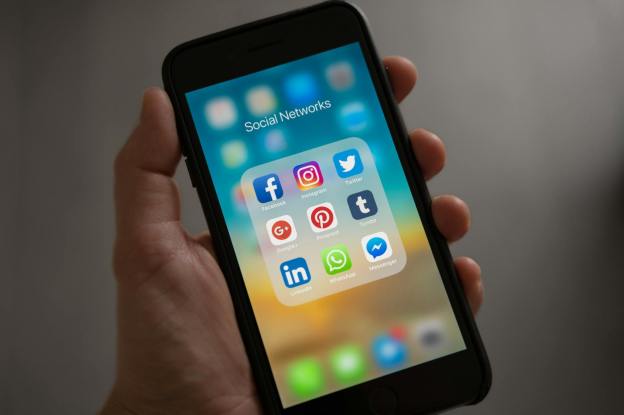
Today I have 10 social media accounts on Facebook, Twitter,[1] Instagram, LinkedIn, Reddit, YouTube, Mastodon, Threads, Snapchat, and BlueSky. I also have 8 professional accounts of a similar vein to social media on Research Gate, Academia.edu, the Knowledge Commons, BE Press, and on the fora hosted by the Linnean Society, History of Science Society, and the American Historical Association. Traditionally, my professional and personal social media activity was shared on the same accounts; I’d post about the Cubs and my research on Twitter, a longtime home of academia online, yet in the past year I’ve begun to rework things a bit. Today, I use BlueSky for my professional social networking within academia. 

Facebook feels like the daily broadsheet of my online presence; it’s my original foray into social media and where I have 17 years of posts up and online. Yet today Instagram is where I am most active socially. There’s been a notable migration of my fellow millennials away from Facebook toward Instagram in the last decade, and whereas readership of my Facebook is restricted to my Facebook friends only I’ve allowed my Instagram profile to remain open to the public. This probably caused me some trouble when I was teaching the middle schoolers in the Fall 2023 semester, and today many of them still regularly view my Instagram stories. What I decided to do was rather than censor myself and limit their access to my Instagram, I would instead take a more curatorial role and be mindful of what I shared on my Instagram stories, making sure it was appropriate and thought-provoking for them. My Snapchat account is the most limited of all my social media accounts: I only accept connection requests from relatives and a very small number of friends there. I still occasionally browse Reddit, especially the Star Trek subreddits, but in the last 6 months I found it was becoming less enjoyable to read and today I only really open that app when I need to do something but am not in the mood to read a book or a magazine. Meanwhile, I’ve only recently begun feeling comfortable posting comments to YouTube videos, I had a handful of very bad experiences doing this in my early years of public comment fora on sites like that of the Kansas City Star and Trip Advisor where I learned quickly that a lot of people take the anonymity of the Internet as permission to be uncivil.[2] As with any place for public comment whether online or in the real world, I try to keep to the principle of only saying something if I feel it’ll contribute to the conversation.

As for the newcomers: like many others I opened a Mastodon account in 2022, and like many others I quickly found Mastodon to be unnecessarily confusing and haven’t opened the app in at least a year. Threads holds some potential in my mind, though like Mastodon I barely use it. I opened my BlueSky account in November 2024 when I was at the History of Science Society conference in Mérida described in Season 4 of the Wednesday Blog, and began connecting with other academics. I decided from Day 1 to cultivate my Blue Sky account as a purely professional account without any hobbies or personal anecdotes. This has limited how much I use the app, though I do use it on occasion.

On the topic of the Wednesday Blog I have an automatic distribution set up with Facebook, LinkedIn, and Threads, and I manually post each week’s blog post on Instagram and Twitter. Because this isn’t necessarily an academic venture I don’t promote this publication on Blue Sky. There’s also a Wednesday Blog Patreon, which you can join for $5 per month!

One of the big conversations of today is whether to close our social media accounts as the corporations who own these sites are increasingly accepting the problems they cause in our society, in the lived world, yet have dropped the mask of caring and continue their play for greater profits bare-faced and defiant in exposing themselves. In the aftermath of the 2024 Presidential Election I saw an immediate flood of false information appear on my Twitter account, which I wouldn’t have noticed if it didn’t appear among the silent notifications that I get daily over that app from the Kansas City office of the National Weather Service, and the handful of academics and other people I follow who are still on Twitter. With the recent announcement by Meta––the owners of Facebook, Instagram, and Threads––that they would cease their work with third-party fact checkers so as not to upset the new President caused a flood of comments about people dropping their profiles on Meta’s social media sites in protest. I haven’t seen as much false information on there yet, thought I expect it will appear.

I for one have considered shutting down most of my social media profiles off and on since 2016, because I understand and generally agree with all my friends and relatives who’ve done just that. Yet while I see a tremendous utility in these social media sites in allowing me to stay in touch with friends and relatives near and far, I see a far better reason to keep these accounts active: I will not be intimidated into silence by their shifting interest in the public good. I often hear the response to the suggestion that we can still have a reasoned debate between people who disagree being that it’s just not possible with how polarized we are today. That polarization is in large part thanks to social media for pushing forward the loudest and most outrageous voices of today just as the yellow journalists of a century ago did the same.

I had many a Facebook argument in my first decade on the platform, and in some cases, they were the primary way that I ended up interacting with people who I knew from school, college, or beyond on the site. I established a simple rule for comments on my profile: I will only delete a comment, “unfriend” someone, or block another account if they intentionally insult myself or someone else who they are communicating with in the comments on my profile. To date I’ve only blocked two other users. I believe we ought to respect differences of opinion when they are based in fact & reason and that as much as social media has been a tool of disinformation so too we can use it to inform and counter the outright lies being spread on these sites.

Social media truly shrank the globe for me and myriad others. Before I began using Facebook in 2008 while I would watch news broadcasts from beyond the U.S., particularly from the BBC on PBS and BBC America, I still was mostly reliant on handwritten and typed letters being sent by air mail to communicate with anyone beyond this country. Now, I keep in regular communication with friends & relatives on every permanently inhabited continent. I’ve been fortunate to stay in touch with some dear friends of mine who I haven’t seen in nearly a decade or more because of how our lives have led us apart; that contact has been sustained and fulfilled through social media.

Let me conclude with a note of data security. I would rather keep all of my social media accounts active because the risk present in someone else or a bot recreating an account in my name is great enough that I don’t want to risk it. I’ve cultivated this garden, and now I don’t want to see it wither. I’d rather use the tools owned by these corporations that actively support forces, ideas, and people who I disagree with in order to circumvent their power over me. I know that their websites aren’t necessary for me to live, even if they’ve grown to become such an ordinary part of my daily life. Yet I continue to use them as an act of self-expression standing for the ideals that I believe in: curiosity, honesty, hope, and optimism.


[1] I still won’t call it X.

[2] I went through a few different words here first.


Creatures of Habit

Photo by Jeremy Bishop on Pexels.com

This week, how we tend to stick to the same things over our lives.

I’m writing this week’s blog post substantially later than I usually do. This past week has been very uncomfortable for me, first with a bout of food poisoning last Tuesday and Wednesday, and now with the continuing aftereffects of it still in my system. So, at a time like this when I feel physically terrible, I often find myself returning to the same old routines and manners that I’ve practiced my entire life. There’s something comforting in watching an old episode of Bill Nye the Science Guy all these years later because it’s nostalgic as well as staying educational.

Last night I found myself craving some good music, the soaring melodies and rich harmonies found in opera. I ended up listening to a couple of things including the Queen of the Night’s second aria “Der Hölle Rache kocht in meinem Herzen” from Mozart’s Magic Flute. For all the hellfire innate in the words––the title translates to “Hell’s vengeance boils in my heart”––there’s one line near the end that caught my eye, “Alle Bande der Natur.” At the moment I thought of “Bande” as in “bonds” or more metaphorically “customs” when in fact it really means “bonds” as in “connections.” So, in my elementary level German I translated “Alle Bande der Natur” as “all bonded by Nature” or that it was a matter of instinct and habit.

My misinterpretation of the German text there brought me to think a bit more about habit and instinct. What sets us off to do what we do? Why for example do some people eat each thing on their plate in turn rather than mix the flavors together? Or why does my cat like to extend her claws when she’s happily being petted?

Instinct is a survival mechanism. If you recognize you’re in a bad situation, you’ll probably do your best to get out of it. That goes back to the days when our distant ancestors were hunted as prey by other larger animals. Perhaps the urge to laugh at other people’s misery, embodied in my youth by America’s Funniest Home Videos and today by a good portion of the content on Instagram and the “Hold My Beer” subreddit, comes from a similar primal satisfaction that it’s not me who’s getting his leg gnawed off by a lion today.

As long as we’re tuned into our own natures, we’re bound to avoid some of the pitfalls that inspired that particular metaphor and survive. I learned the hard way to avoid bad food this past week and am still suffering the consequences now eight days later. On the other hand, my pup Noel learned in which house her best friend the black lab Henry lived and liked to stop and sit at the bottom of his stairs to see if he’d come out to play. We create habits out of experience and grow as a consequence.So, the moral of the story, the greatest lesson to learn here: to quote the Two-Thousand-Year-Old Man himself, “never run for a public bus, there’ll always be another.”

Going “Viral”

Late last week moving into Labor Day weekend I realized later than most at SUNY Binghamton that we not only had the long weekend off but also Tuesday and Wednesday for Rosh Hashanah, the Jewish New Year. I guess I didn’t expect we’d be in class for two weeks and then suddenly out for nearly an entire week. In any case, I knew I wanted to make the most out of the extended break, so I decided I was going to go on at least a couple day trips around the Southern Tier of New York and the Finger Lakes just to the north of here.

On Saturday then, feeling frustrated by staying too long in my apartment on such a beautiful day I got in the car and decided to drive up towards Ithaca following what I knew of the local geography and state highway system without plugging directions into my car’s navigation system. I eventually made it to the shores of Cayuga Lake, and proceeded to drive north up the western shore of the lake thinking I’d try reaching the top and take the interstates back down to Binghamton.

After Saturday, I’d hoped I could get out again on Monday or Tuesday and take another multi-hour drive, give myself some time to see the beautiful scenery of this part of the country, and enjoy a few hours of a good podcast or audiobook. I ended up staying in Binghamton on Sunday and Monday, wanting to avoid most of the holiday weekend crowds, with the goal of waking up on Tuesday and getting on the road early with no destination in particular in mind.

Still, after spending the morning in my apartment doing some much needed cleaning I finally got on the road around 13:00 EDT. This time I did set a route into the navigation system to a town I’d wanted to visit since the first time I drove by the signs on I-86 pointing to it when I moved here in August 2019: Watkins Glen. The drive was scenic and uneventful, lots of small towns and country roads. I listened to Stephen Fry’s book Heroes, his retelling of the Labors of Heracles took up the entire afternoon’s drive.

When I arrived in Watkins Glen I quickly found a parking spot across the street from Watkins Glen State Park, my destination for the day, and made my way into the park’s main gate. Watkins Glen is home to one of a number of spectacular waterfalls that mark the furthest reach of the glaciers that dug the Finger Lakes into the New York landscape during the last Ice Age, only unlike Taughannock Falls outside of Ithaca the gorge that lies at the heart of Watkins Glen State Park is far narrower and honestly an impressive feat of engineering by the people who made it a tourist attraction at the turn of the last century.

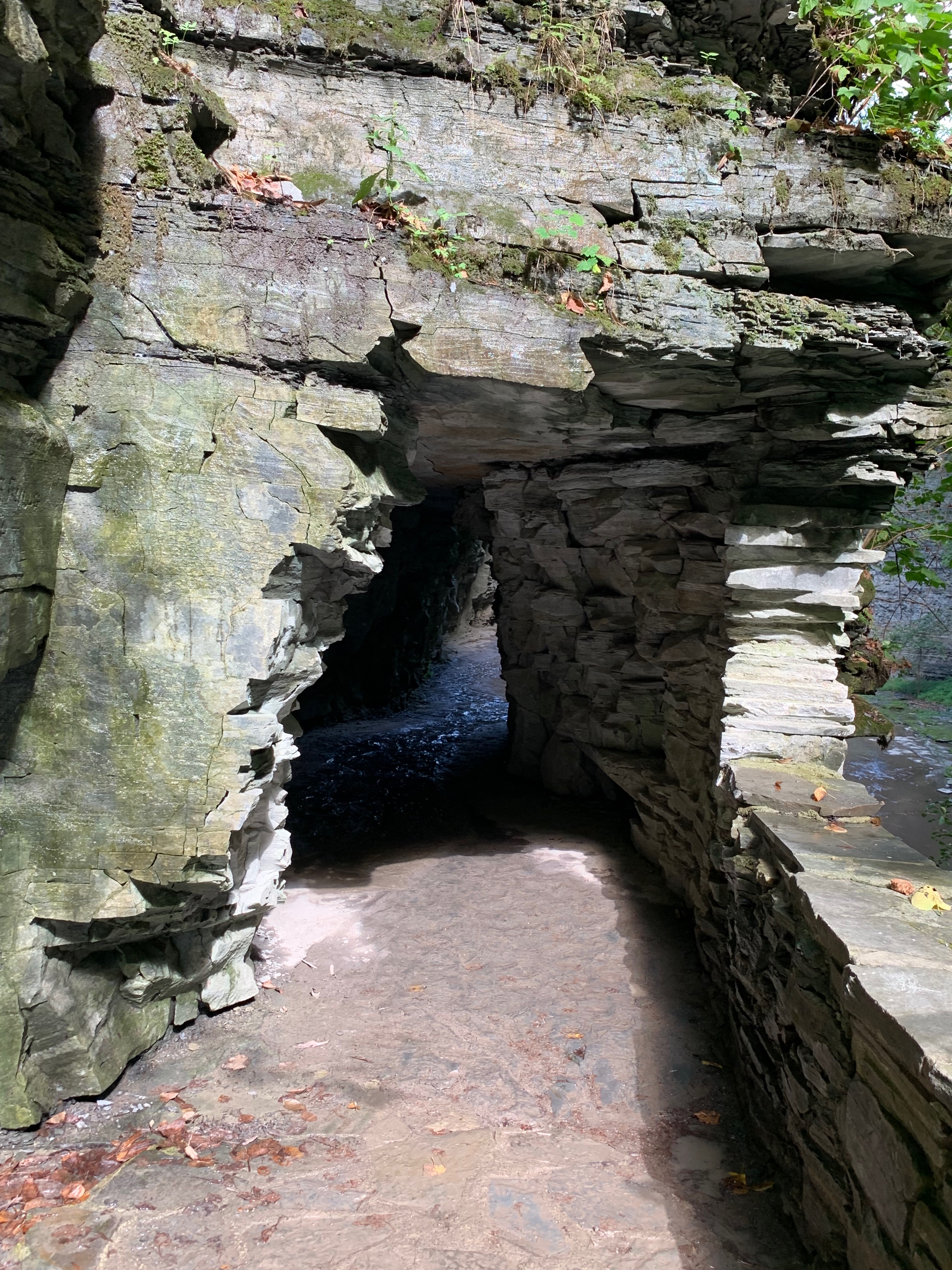
I decided to take the Gorge Trail and see where it led. Running at 1.5 mi (2.4 km) the Gorge Trail is the main attraction of the park. Its high narrow walls make the place seem otherworldly, like something that might be fitting among the tales of the Greek heroes retold in Stephen Fry’s books. It was awe-inspiring and a little frightening at the same time. The trail is made up of an elongated stairway rising up the gorge to its conclusion at a set of 150 stone steps leading to the Upper Entrance to the park called Jacob’s Ladder. I hiked the entire route from the main entrance up to the top of Jacob’s Ladder. Along the way I was dazzled by the amazing power of all the ice and water that carved out that gorge over millions of years.

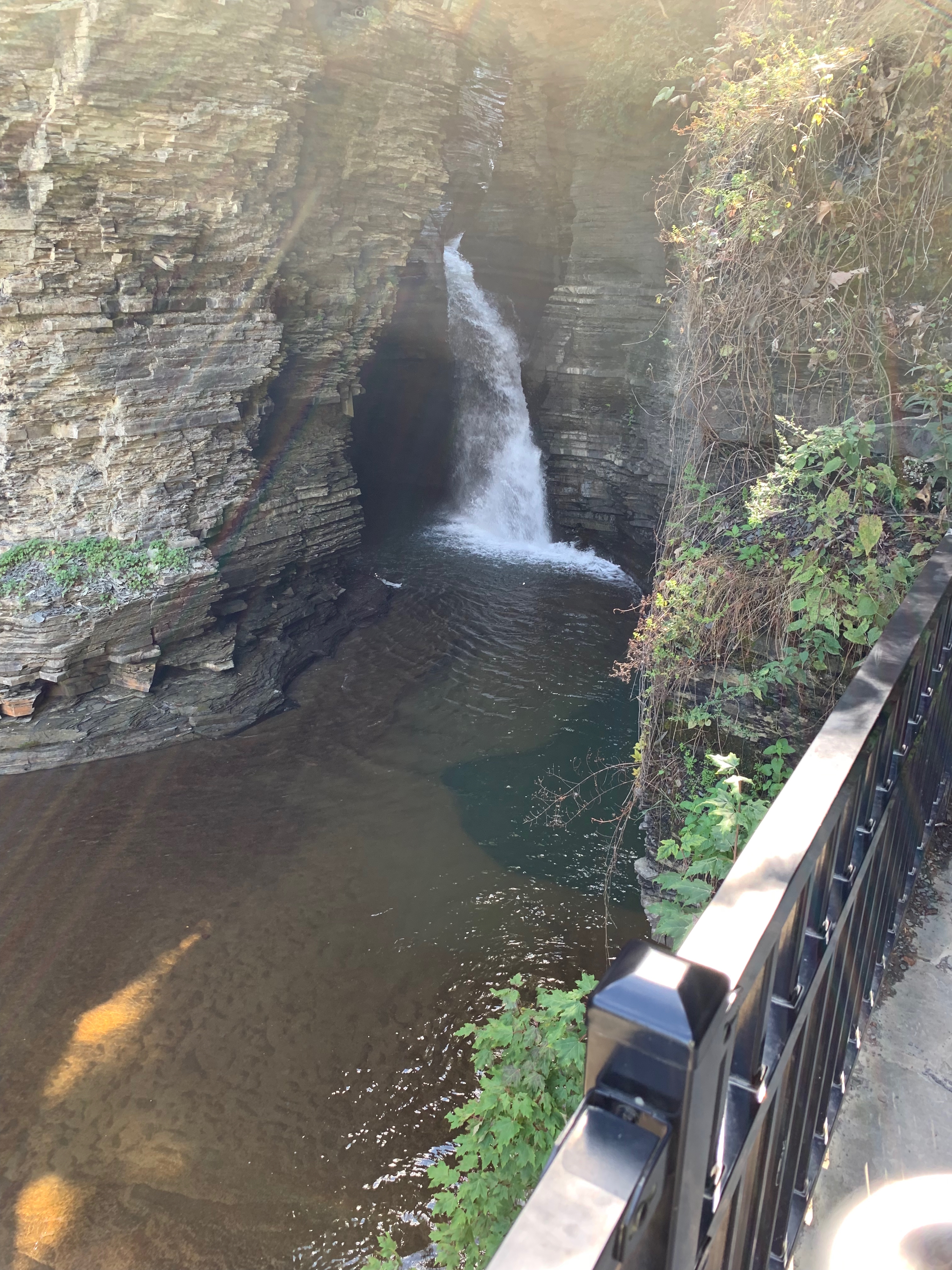
This was my favorite part of the Gorge Trail.

In the first half of the hike I took a fair number of pictures and videos that I figured I’d post onto my Instagram and Facebook after I’d left the park. I didn’t stop to look at what I’d captured, as much as I want to take pictures and videos of these places I visit, more than anything else I want to experience those places in the moment that I’m there. Selfies in particular are rare among my pictures; I care less about showing that I’m somewhere than showing the people who happen to see my pictures what I got to see.

After hiking back down to the main entrance on the far easier 1.1 mi (1.8 km) long North Rim Trail with a friendly couple from the Binghamton area I got back in the car and drove back to Binghamton, figuring I’d look at those pictures once I was back in my apartment and could really focus on them alone. 90 minutes later once I was back at my desk I looked through them, picked out 4 videos and a handful of photos and initially posted them to Instagram. One video that I chose to be the first of the lot, the cover picture as I see it, ended up getting posted to Instagram as a reel. I think at the time I intended it to go up as a longer video file that I could share onto my Instagram story and it’d play automatically instead of just showing a preview frame like videos uploaded as regular Instagram posts tend to do.

I posted everything and turned to Facebook, making a fairly similar update for my family and friends who tend to follow me on that platform. Yet as the videos were uploading to Facebook I kept noticing my phone lighting up with updates from Instagram at a dizzying pace. In the first 3 minutes that reel I’d posted had gotten 40 “likes.” I texted one of my best friends (and a frequent reader of this site) to tell her what was happening, and in the process of typing and sending the message another 45 “likes” appeared. In the next minute the total number rose from 85 to 280.

As I went into the notification settings in the Instagram app to see if I could reset things so my phone battery wouldn’t be drained too quickly by so many updates so quickly the number of “likes” rose over 300. By the time I finally went to bed around 23:00 the total was at 350. At the time of writing this post that number stands at 368.

Normally a post of mine might top out at around 40 “likes” that are often from the same people. Occasionally the things I post on Facebook will top out around 100 similar reactions, as Facebook now has more than just the like button, but nothing in my experience with social media can compare with the reaction to that Instagram reel of a pan shot across the gorge at a particular placid spot. I know for the people who are actively trying to get lots of reactions and “likes” to their social media posts that the 368 that mine received might seem insignificant, but to me it’s something to write home about.

I don’t particularly expect people to view the things I post on social media. I think it’s interesting that this particular reel has a lower than average reaction from my usual viewers. As far as I’m concerned even though this Instagram reel went as close to viral as anything I’ve ever posted on the internet, I see it as a happy accident, something that speaks more so to what the video showed than anything about me personally. Sure some of the people who “liked” that reel might subscribe to my Instagram account and follow future things I post, but either way it’s not something that’s going to change how I use that platform or social media in general. If anything the speed at which the “like” count on that reel grew seemed funny to me in the moment.

In any case if I were to try to use Instagram to promote the really important things that I make, my writing, I’d need at least 10,000 followers to activate the feature that’d allow me to add links to outside webpages to my Instagram stories. It’s one reason why I think this blog has such a steadily low readership: the place where the majority of my audience interacts with me is also a place where I can’t promote this blog or anything else I write lest I direct my audience to the “link in bio.”

Social media can serve a good purpose in my life: it’s a way that a small fish like me can make myself known for the things I do. It can have a lot of downsides too, the amount of spam subscriptions I see on my Instagram account can be gobsmacking. I’ve also got some pretty sour memories of experiences with Facebook from my high school years as well that lurk in the background, but now in my late 20s as much as I may notice what the trolls might have to say, for now I’ve been lucky not to have been harassed enough to spoil the utility of the platform for me.