Tag Archives: Interview

On Conversion

This week, I spoke with a friend who converted to Catholicism as an adult about her conversion and how she relates to the Catholic Church as a whole.—Click here to support the Wednesday Blog: https://www.patreon.com/sthosdkane


This week, I spoke with a friend who converted to Catholicism as an adult about her conversion and how she relates to the Catholic Church as a whole.


The Catholic Church in 2025 stands at a crossroads in the shadow of our late Pope Francis when the world at large has fallen into so many new wars, conflicts, and when fearmongers are the loudest voices in so many countries and governments. It was striking then when Pope Leo XIV began his Urbi et Orbi address, his first public address as pontiff, last Thursday with the words “peace be with you.” To achieve that peace, one needs to allow one’s heart and soul to open to the possibility of peace and of dialogue with both our innermost selves and the world around us. Faith gives an avenue for this dialogue which has provided a moral foundation for generations. Biblical scholar Richard Elliott Friedman made the case in his book The Exodus: How It Happened and Why It Matters that the faith of Moses and the Hebrews evoked in Exodus was the first faith recorded which preached love for neighbor and love for oneself. It was the first time in human history that a religion sought to elevate humanity and dignify us as children of God made in the Image of God.
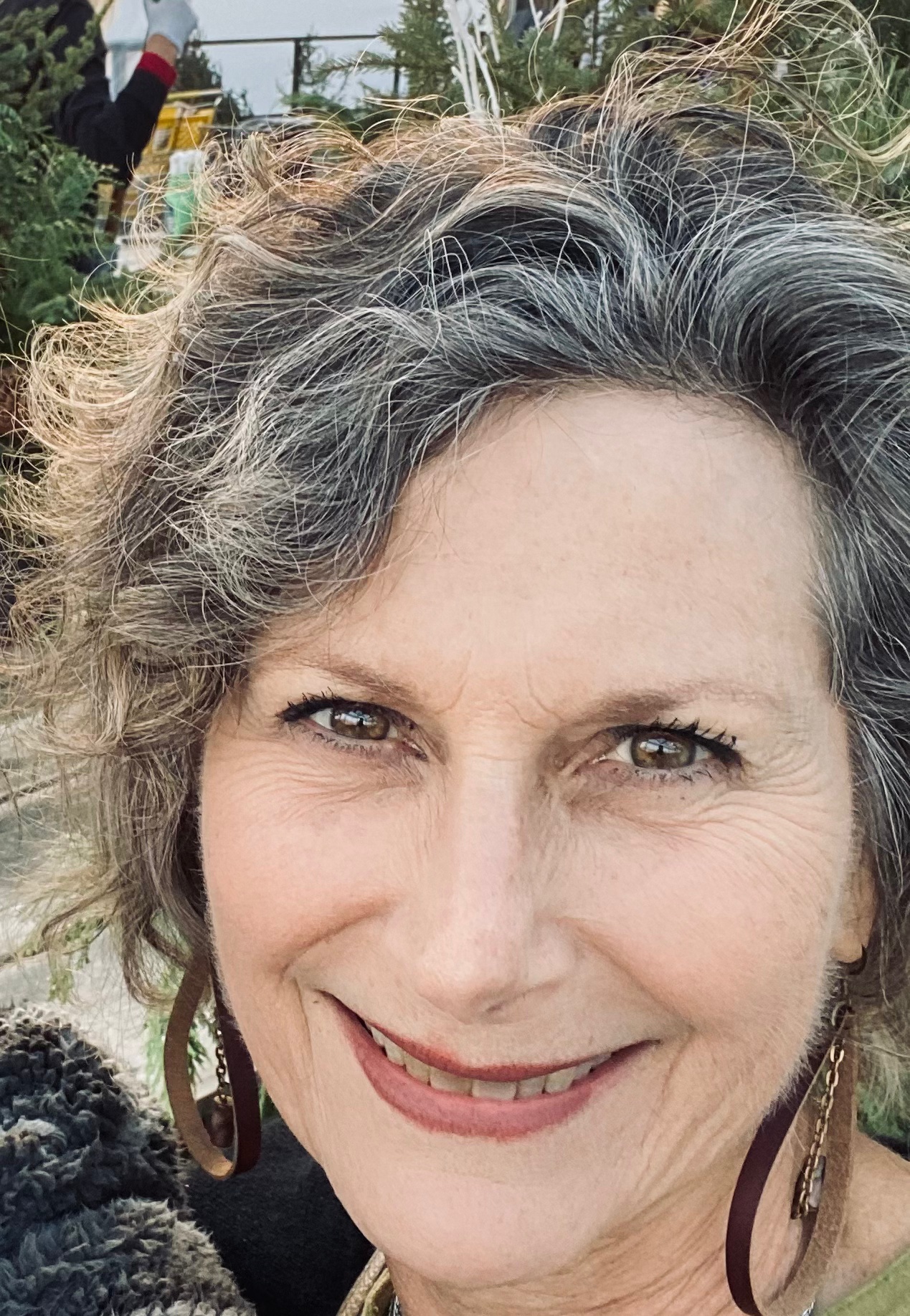
Kim Meyer

I’ve long considered this topic of conversion; in fact, I’ve often noticed how different the perceptions of our shared religion are between cradle Catholics like myself and converts to the Church. My own Catholicism is built on fifteen centuries of believers in my family going back to my distant early medieval Irish ancestors who in the fifth century surely noticed when St. Patrick made his pilgrimages up the holy mountain on the southern shore of Clew Bay, a mountain that towers over the townlands where my ancestors lived for thousands of years that now bears the saint’s name as Croagh Patrick. I asked my friend, Dr. Kim Meyer, if she could tell me more about her perceptions of her faith and our shared religion. A convert to Catholicism who grew up in a secular suburban Kansas City family with Lutheran and Methodist roots, Kim told me about how she found her faith through the most horrific experience of her life as a journalism student at Kansas State University reporting on the activities of a cult in Abeline, Kansas in 1977. Kim described it as “a really dark, dark time and my editors had people in the room with me when I was editing it because I was terrified. It was several months of terror.” After one particularly intense night of terror during her investigations in Abeline when she felt she “was terrified for my soul and I started praying to God, and my Mom had given me a penny of the 23rd Psalm on it, but I was so scared that I couldn’t remember the Lord’s Prayer so I kept rubbing this penny saying, ‘God, if you exist, save me until morning.’ It was really a horrible, horrible, terrifying experience. The next morning, I was still praying and the sun came up, and I realized that the sense of evil was no longer present.” Kim described how she went to several local religious leaders to tell them her story, including the cult leaders, but the only one who listened was the local Catholic priest at St. Andrew’s Parish in Abeline, Monsignor Alfred Wasinger.

This speaks to something that I’ve known, and that has led to little conversions of my own often from one plan or ambition to another. We are drawn to people who appreciate our humanity and who listen to us as this priest listened to Kim at the darkest moment in her life. That’s something that Pope Leo was famous for before his papacy; in all the reports of his life he’s often referred to as a good listener. This draw to a faith that listens to its people is what drew Kim to the Jesuits. More than just thinking of herself as a convert, Kim said she doesn’t “think of myself as a Catholic first. There’s still so much tradition and so much politicking around Catholicism that I find deeply offensive, but the Jesuits’ critical thinking, open spirit, missionary focus, all of that, and it’s the same theology for both, and it’s all about how we practice, and I’m not into the way how some sects of Catholicism practice.” For her, the Jesuits are “really trying to walk the Way of Jesus. It’s literally the Way of Jesus. Some people want to walk the way of Paul or the way of the most recent Pope, but they forget it’s really all about Jesus.” 

Converts like Kim have more of an opportunity to find “the beauty of questioning and the opportunity to discover their faith.” This questioning has marked my faith for most of my life, yet even more so in my adult years as I moved on from my Jesuit undergraduate university and onto graduate and doctoral programs outside of the Church. Whereas my faith is so deeply rooted in millennia old traditions and inheritances embodied in the last century by the various neighborhood parishes that my family called home in Chicago and Kansas City, Kim’s faith seems to fly above that tradition, seeking a closer connection with God through the mysteries of Catholicism and our belief that God opens us to a wider world of possibilities. In Kim’s words, “once I came to believe that God loves me and God is in every person, and I really believed in it that the world wasn’t really the same.” It is notable that of those old neighborhood parish churches, Kim and my parish, St. Francis Xavier in Kansas City is the only one left open. Unlike the others it has adapted with the changing demographics of its home neighborhood, which a few generations ago was largely Irish American, and now caters to Kansas City Catholics seeking Ignatian spirituality. St. Francis was one of the fastest growing parishes in Kansas City during the pandemic, in large part because of its Jesuit affiliation. However, due to a variety of factors the Jesuits left the parish at the end of July 2024 and transferred its leadership to the Diocese of Kansas City-St. Joseph, leading to an uncertain moment for a parish that stands out in this city for its openness and Ignatian spirituality. Kim noted that “Last year we didn’t know what the transition away from being Jesuit would look like, and our community is just as Ignatian as it has ever been.”

Because of this, Kim said she feels more closely connected to the Jesuits than to the Church as a whole. I’ve been struck in the two years since I met Kim how much her outward approach to others reflects this deep well of her faith. I felt in our conversation that we could relate in that depth, though I do not outwardly project my own beliefs in the same way she does, preferring to take a rational approach to life. Yet that rationality has its limits, as I’ve written here in the Wednesday Blog before. Faith and a conversion to accepting the possibility of the improbable is necessary to be open to new and unknown things both in the furthest fringes of our knowledge and at home in our understandings of ourselves. Like anything, there is a blind spot closest to home and that self-reflection and introspection is necessary to live a full and enriching life.

With the election of Pope Leo, the Cardinals embraced this period of self-reflection for the Church in full. They chose a pope who embraced synodality in his Urbi et Orbi address and who said he would continue the efforts of Pope Francis all while seeking to build bridges between the increasingly disparate factions and camps in the Church. The Pope’s humanity shows in his imperfections, in his poor history of dealing with the sex abuse scandals, something familiar to many of us in our own bishops and local leadership. Kim’s approach to life, her mentality born from her Catholic faith has led her to think “’what would Jesus do?’ and that means looking at each person and trying to see God inside of them, and that’s each person.” This stands in contrast to “‘what is the right thing,’ which has less clarity and less consistency in the secular world. Because if you think right vs. not right, where you draw that line is a lot more subjective in the secular world.” The greatest way toward conversion, she said, is prayer. “Pray with others, go find somebody you trust as a spiritual mentor. Stretch yourself and pray. Find ways that you praise that you never imagined.” Both of us pray the Ignatian Examen in our own ways, as Kim said “Prayer changes over time. What I do in my prayer time changes from one season to the next.”Just as May brought us a new Pope and each passing day new things to worry about in politics, the economy, and in ordinary life, so too this conversation told me that the place where one’s spirit is resting will change with time. It may float along in the river of our life, following the currents where they take it, yet it will be there for an opportunity to pray to announce itself. In the wider world we hear messages of people seeking connection with something greater than themselves; it’s a part of our social nature. We do these things to find connection with other people and to grow in those connections as we were born to do. These are all conversions, all transformations of ourselves which can reawaken something dormant that will lead to us living fuller and richer lives. A conversion can reawaken the self to their spirit and spiritual need for connection to something greater than themselves through God as love.
What’s the Difference between Beavers and Humans?

What's the Difference between Beavers and Humans? Wednesday Blog by Seán Thomas Kane

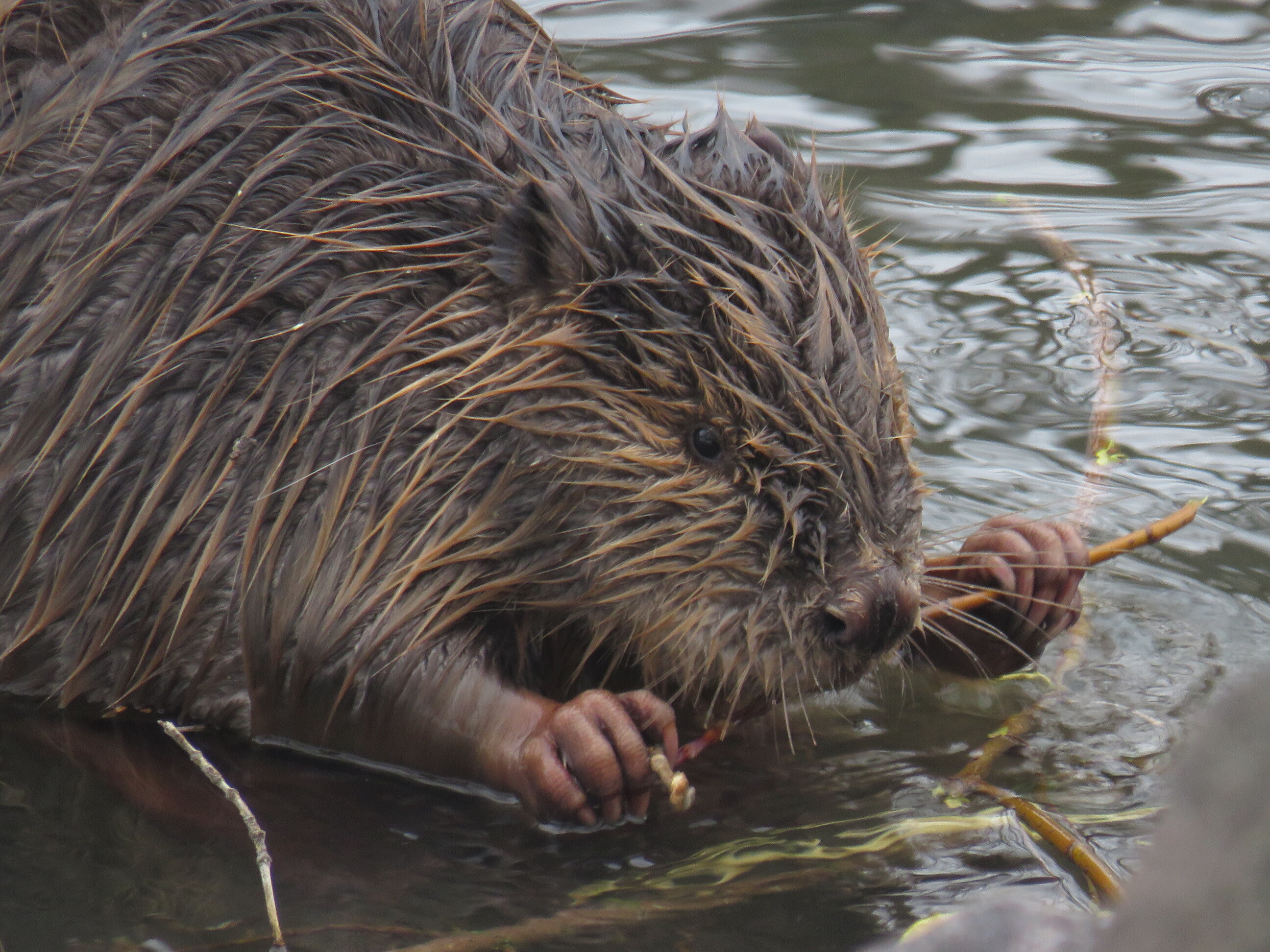
This week, to conclude a month of chaos I interviewed environmental journalist Ben Goldfarb about his book Eager: The Surprising, Secret Life of Beavers and Why They Matter. — Click here to support the Wednesday Blog: https://www.patreon.com/sthosdkane. Links Ben Goldfarb's Website: https://www.bengoldfarb.com NOAA Fisheries, "Oregon Beavers Engineer Better Fish Habitat, More Fish," 14 July 2016. Popular Science, "From the Archives: Do Beavers Rule on Mars?", 6 May 2022. Harvest Public Media, "The Midwest and Great Plains are gearing up for water fights fueled by climate change", 3 Sep 2024. Photo Credit: Beaver in the Pipestone Creek, Pipestone National Monument, Minnesota. Photo: Gabe Yellowhawk. Public Domain. Learn more here.


This week, to conclude a month of chaos I interviewed environmental journalist Ben Goldfarb about his book Eager: The Surprising, Secret Life of Beavers and Why They Matter.


What follows is a transcript of our conversation.

STK: This is a really fascinating book, I have to say.

STK: I was reading something back in June that was talking about the idea of the Homo faber where we should identify ourselves by our ability to build and to imagine solutions to get out of our problems. I read that and said, “that’s what beavers do to, right?” So, the premise of this one is what is the difference between humans and beavers?

STK: When you talked in the book here about the restoration of beaver dams on Bridge Creek in Oregon; could this be a model for a clearer for how humanity could adapt to cohabitate with the rest of nature?

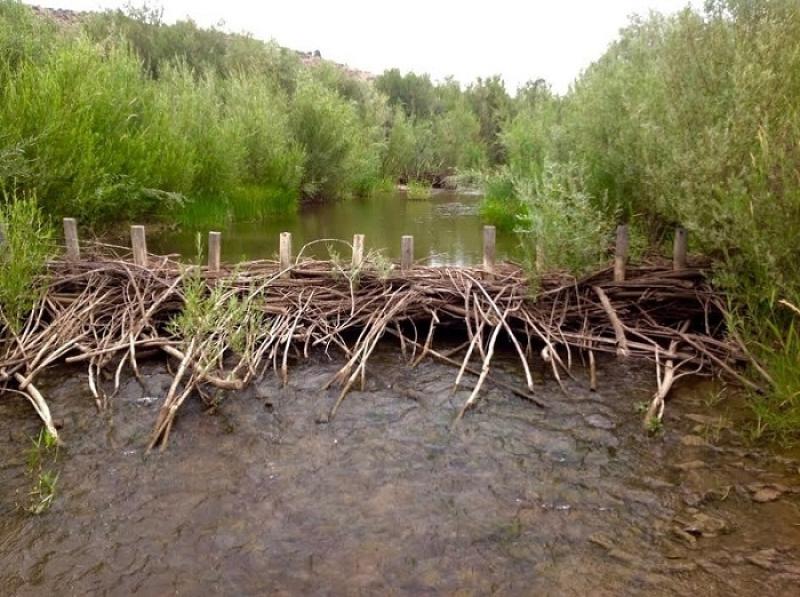
BG: Yeah, I think so. The situation in Bridge Creek and other places like that is that humans are building beaver dam analogues to help beavers flourish. When we wiped out several hundred million beavers over several centuries in North America, we made it harder for beavers to recolonize, so when you have a healthy beaver-rich stream they are pooling that water up and pushing it out onto the floodplain. When the beavers disappear there’s nothing to cool or check the water, streams then cut through the sediment on the bottom, and they turn into these miniature canyons or ravines. That’s a hard place for beavers to recolonize because the stream is trapped in its place and that’s where these human-built beaver dams come in because we can knock some big wooden posts into the stream bed and weave some willows in there and build some stability. It’s not as good as what the beavers do but it’s a starter dam that they can come in, build off of, and advance. So, these beaver dam analogues are like beaver kick starters, and they allow them to recolonize places where they otherwise couldn’t colonize. And to your point, I think we’ve spent hundreds of years in North America making life harder for beavers in many ways, mostly by killing them directly, and this is a way that we’re making life a little bit easier for them. You can apply this model onto many other wildlife restoration projects like wildlife crossings, or the planting of oyster reefs or salt marshes. These are things which work with ecosystems rather than against them.

A beaver dam on Bridge Creek in Oregon. Photo: NOAA Fisheries, Public Domain. Learn more here.

STK: Yeah, I know they talk here about the butterfly gardens that give them a place to land and such when they migrate.

We’re the species that created the grid system whereas beavers have their own idea of fluid stability. What would you say to that?

BG: We as a species are obsessed with linearity and if Homo faber is a construction species or an infrastructure species as some historians have put it. Linear features are what we construct: highways, railroads, power lines, fiberoptic cables, just look at our crop furrows. Beavers create what looks to us like chaos, there’s water ponding up everywhere with trees dying all over the place, and there’s sediment muckiness that smells a bit. This looks to us like fluid chaos, and I think we need to recognize that those kinds of beaver-modified or beaver-influenced systems are first the historical rule rather than the exception at the time of European arrival, but more important that those beaver systems are profoundly healthy as ecosystems compared to our infrastructure which are destructive to nature. We kill more than 1 million animals per day in the U.S. alone with our cars, whereas beavers create infrastructure that is highly beneficial to other animals from salmon and trout to waterfowl to moose and amphibians. It’s hard to name a species that doesn’t benefit from beavers at some point in its lifecycle.

STK: Beavers seem to have a human attitude to modifying the landscape. It reminds me of theories of terraforming other worlds. André Thevet described how on his way back to France from Brazil in 1556 most places hadn’t been colonized yet except how the island of Haiti was transformed by the Spanish into Hispaniola, “Little Spain,” in part by the influx of pigs they brought. So, this idea of terraforming in astrobiology seems pertinent here. You have a quote here, “We are a nation of floodplain dwellers and farmers, drawn to river valleys yet intolerant of riparian anarchy.” So, are we hostile to beavers because they challenge our sense of order?

BG: Right, the whole terraforming thing is funny because there was a story in, I believe Popular Science, in the 1930s that posited that beavers dug out the canals on Mars . So, that idea that beavers are world-makers have been applied to other planets as well. I think it’s instructive to think of the ways that beaver dams and human dams both impact the landscape, especially here in the West where I live. Every single river has a colossal mega dam on it, and those dams are immense, and they create enormous, consolidated reservoirs and they take a diverse and distributed approach to building ponds. Each of those ponds are only an acre or so, but they store more water in the landscape. You think about what the future of solar energy looks like, we’re on track to build giant industrial solar farms in the California desert when we could put a panel on every roof and opting for this more distributed and dispersed approach to power generation. That’s another interesting thing that beavers teach us: the value of the energy and strength of these distributed systems rather than the hyper-centralized systems that we tend to favor out of some misguided love of efficiency.

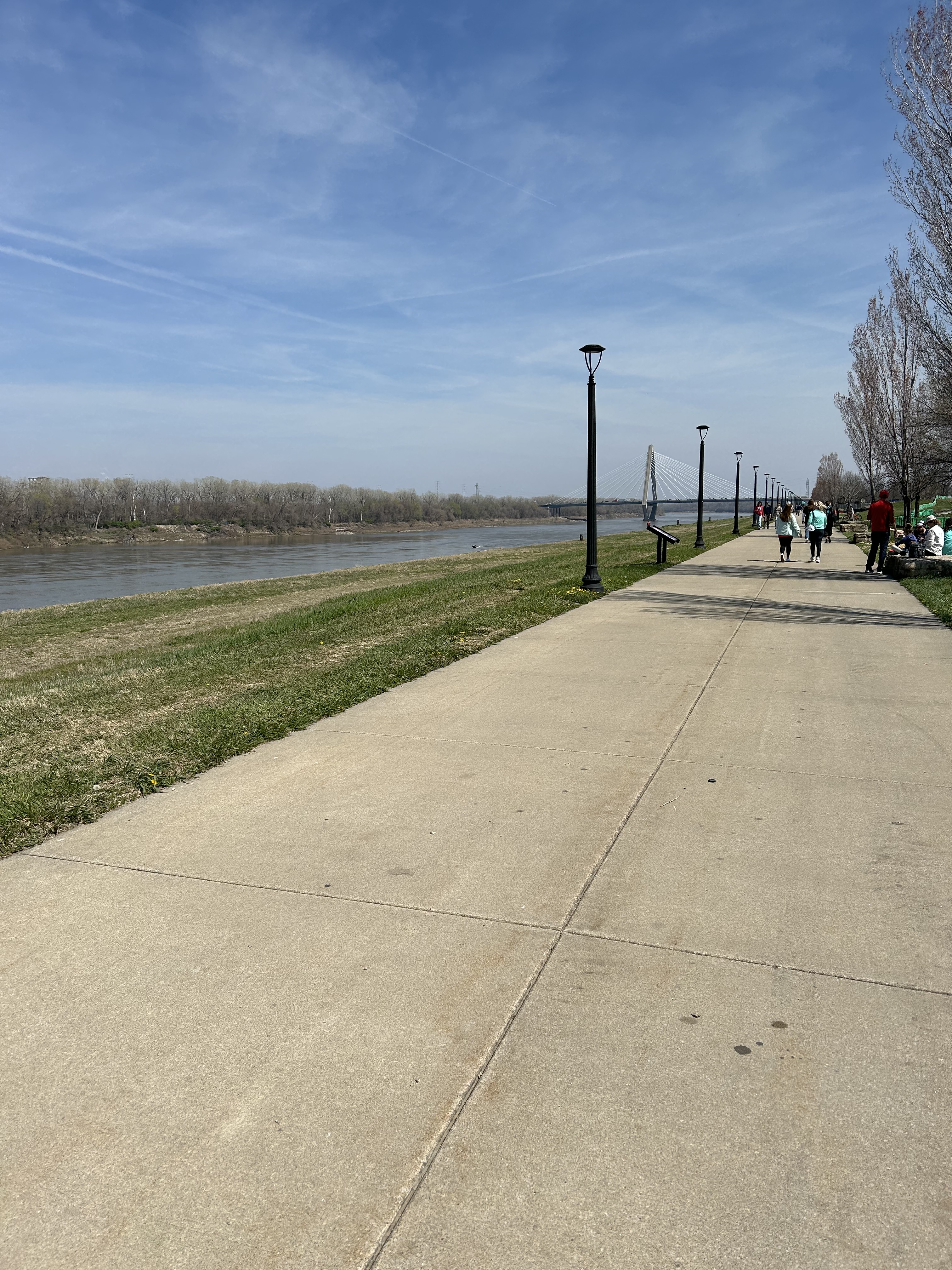
STK: Yeah, I just read this morning that our local NPR station was reporting that there’s a bill being proposed in the Missouri Assembly to ban water exportation from Missouri to the western states anticipating that Colorado, Utah, Arizona, et cetera are going to ask for our water eventually. It’s interesting to see that, we have the Missouri River here and the Mississippi River is on the eastern side of the state, and the Missouri floods at least once a year because they release the dams from the Dakotas that get all of the snowmelt and that floods down here typically. The Missouri is very heavily managed by the Army Corps of Engineers to the point that it’s faster than it used to be, but you know, it still floods.

Kansas City, Missouri’s Riverfront Walk along the Missouri River. Photo by the author.

BG: Look, the Missouri is one of the most hydrologically modified rivers in the U.S., and it’s certainly up there, and look at the catastrophic impacts it’s had most prominently on the Pallid sturgeon, and it speaks to the impact of human infrastructure being catastrophic for nature whereas beaver ponds are the world’s greatest fish production system. Trout and salmon grow exponentially faster in beaver ponds. The Missouri is like the Colorado River, one of those rivers that was incredibly full of sediment, “too thick to drink, too thin to plough,” so by damming the Missouri we changed water flows and sediment flows as well, and I think the beavers show us what a healthier and more beneficial relationship with sediment looks like. Beavers are capturing sediment as a resource which allows them to push more water onto the floodplain; they’re managing sediment better than we are in a lot of cases.

STK: Yeah, we actually saw one a couple of weeks ago on a Sunday morning crossing I-29 in Downtown Kansas City near the river, and it flopped itself over the barrier to get off the highway. I’m hoping there isn’t too much of a fall there, it’s all brush there. It was neat to see. We’re heavily redeveloping the riverfront now, so there’s going to be a lot more people up there were previously it was [among other things] an industrial waste dump by the railroads and such.

STK: I like what you said in the ninth chapter of this book when you were over in the U.K., and I’ve thought for a long time living here in Kansas City, my neighborhood was built here 100 years ago, and there weren’t trees here before they built this neighborhood, and all of the streets are named after colonial New Englanders. I’ve said then to people offhand that the developer tried to make this area a little New England, and as William Cronon wrote, New England was built out of the forests there as a new form of England. So, I wonder there, were you getting toward saying that we could look to Britain for the inspiration for American ecological policies, and secondly that the end goal of unlimited development would be how Britain is today?

BG: Yeah, to me one of the really striking things about visiting the U.K. for the book was how biologically improvised Britain and Ireland are today, and how fortunate we are to have the wildlife here in the U.S.: we have wolves, bison, and moose which were all species that once existed there that were annihilated there. And fortunately, here in the U.S. we were colonized recently enough, and we have enough rugged and inaccessible topography to allow these animals to be conserved, and we’ve done enough wildlife reintroductions here in a way that the U.K. is just beginning to get around to with beavers, and lynx someday. So, visiting made me feel extremely grateful for everything we’ve hung onto in the U.S., and beavers are one of those organisms of an animal in the Lower 48 that we pushed to the brink of extinction, but enough beavers survived up in Canada that we were able to use reintroduced beavers from Canada and some that hung on in Yellowstone National Park to reintroduce beavers on a wide-scale here in the U.S. Beavers today aren’t as ubiquitous as they were at their peak, not by a long shot so maybe we take them for granted a little bit and have beavers in the landscape.

When I went back to England a year later on my book tour, I got to go on a nature walk where we saw beavers doing their thing and people were in tears with joy at seeing these beavers who had been eliminated from the landscape in the 1600s. It’s sort of like seeing the Loch Ness Monster, they’re these giant rodents with their paddle tails and they cut down trees with their teeth to build walls. They’re objectively these cool, bizarre, magical critters, and it was cool to be reminded of that in the U.K. where people are seeing this part of their natural heritage return to the landscape, while meanwhile they hang out in Downtown Kansas City, or Downtown Seattle, or in the Bronx River. It was a good reminder to appreciate our wildlife in general and beavers specifically.

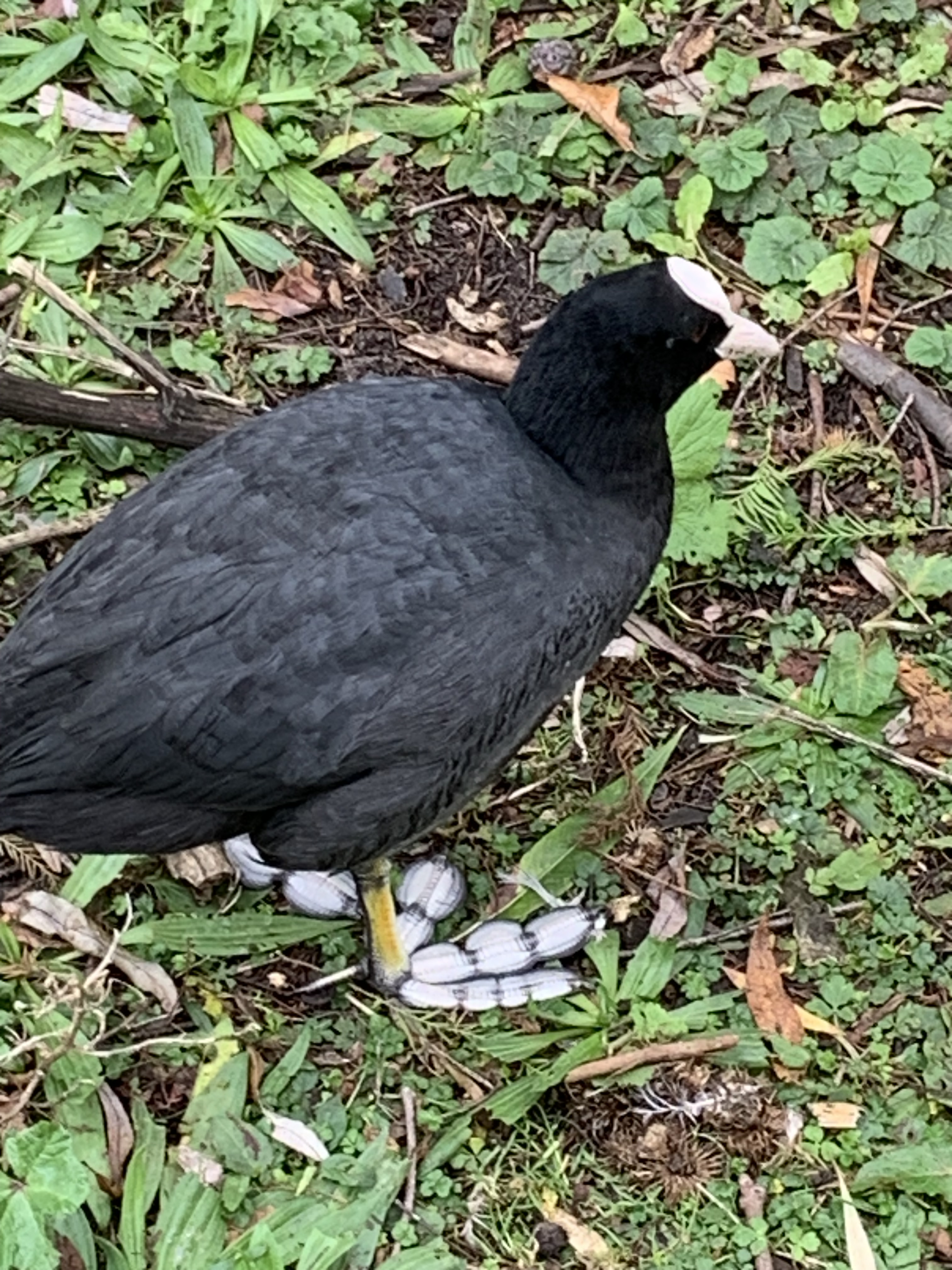
Note that webbing. Photo by the author.

STK: Yeah, I lived in London for a year doing my first Master’s, and you’d see some nature in the parks. I was fascinated looking at the webbing on some of the duck’s feet in St James’s Park where they’ve been protected because that’s been a part of the Palace for 300 years. But if you really wanted to see nature, you’d watch Naturewatch on BBC 1 on weekday mornings.

STK: So, has colonization forever changed beavers? Are they a different animal than they were 400 years ago?

BG: That’s a good question, and I think that ecologically and biologically they’re not. You could take a beaver from the 1300s and plop him down in modern North America and he’d do his thing and build dams and create ponds. They’ve survived so much over the last handful of centuries creating the kinds of landscapes you’d have seen before colonization. I went to Voyageurs National Park in Minnesota where these animals are protected from trapping and the landscape is conducive to beaver dam building, and there were dams that were 1000 ft long and 15 ft high, and I thought it was this great glimpse into pre-colonial America and what this would’ve looked like. These animals are the same but what’s changed is our relationship with beavers where before we perceived them as commodities that we extracted on an industrial scale to make hats. In the 20thcentury beavers began to be protected a little bit, and their populations began to increase, but all of a sudden, they were coming into conflict with humans and flooding our roads and cutting down our apple trees and flooding our irrigation ditches, and so we now see them less as commodities and more as pests. So, we still kill tens if not hundreds of thousands of beavers in the U.S. per year for causing conflict when we’re the nuisance species more than they are, they were here first. So, we need to transition out of the commodity phase and out of the pest phase and into the symbiotic phase where we harness all of the ecological benefits that these animals provide for us. Their ponds filter out water pollution and create oases against drought and prevent wildfires in some cases, especially in the West. They provide incredible fish & wildlife habitat and mitigate flooding in New England. Their value is immense beyond measure and we need to recognize that and treat them as ecological partners in conservation. Indigenous people in North America had that approach. The Blackfeet didn’t kill beavers but saw them as sacred because they created water holes to help other species. Respecting and honoring beavers isn’t new to western science, we just need to rediscover what native people knew for millennia.

STK: Are you working on any big projects now?

BG: I’m working on a book about fish, about fish as ecological engineers putting my beaver hat back on. Fish as drivers of human movement and culture over the course of our species’ own history and all the ways in which we lost fish from our lives and landscapes. I’ve always loved fish, both as quarry (I’m an angler) and as beautiful special specimens, like beavers they’re both concealed by the opacity of water.

BG: I look forward to coming back and joining you when that’s out in, I don’t know, 2056!

STK: Yeah, I’ve got a couple of books that I hope will come out before 2030 hopefully.

BG: Yeah, cool, I look forward to reading about three-toed sloths in human history.


Beaver in the Pipestone Creek, Pipestone National Monument, Minnesota. Photo: Gabe Yellowhawk. Public Domain. Learn more here.

Is Cash Still King?

Over the last week, I've been thinking about how much I still use cash, and what that says about my lifestyle as a whole. Guests: Alex Brisson, New York City Elizabeth Duke, Kansas City, MO George Vial, County Donegal, Ireland — Click here to support the Wednesday Blog: https://www.patreon.com/sthosdkane


Over the last week, I’ve been thinking about how much I still use cash, and what that says about my lifestyle as a whole.


One of the chief ways that ordinary people would interact with their government was through the coins or banknotes in their pocket. We get to know the faces on our currency better for that role than for the things they did that got them printed onto dollar bills or Euro coins. Many were probably more familiar with the late Queen because her face was on the currency in the United Kingdom and all the Commonwealth realms more so than in any other fashion.

Yet, in the last five years, my cash usage has dropped significantly from a high around the mid-2010s when I used it more than my cards. Today, when I go to the bakery or when I buy concert tickets, I do so digitally. I prefer to use contactless payments on my phone over any other for the ease of use, and the security of not having to pull out my wallet in public. Still, I realized early on last week that this was a question better answered by more than one mind.

So, to answer this question, I turned to my Patreon supporters (only $5 a month at patreon.com/sthosdkane) to ask them how much they still use cash.

One of my Patreon supporters who agreed to talk to me this week was regular Wednesday Blog film expert, Alex Brisson who offered a few thoughts of his own from his home in New York City.

How much do you still use cash?

SK: When I moved to Binghamton, when I was going out there to go look at an apartment in May of that year, my Dad gave me $50 in $5 bills and said “Go, drive to Binghamton,” we were in Niagara Falls, “go, drive to Binghamton and find an apartment and be back here by tomorrow to catch the train to Toronto.” And that was the last time I ever used cash for tolls. Traditionally, I’d use cash for tolls, taxis, and really small family run Chinese restaurants. So, let me ask you then: how much do you still use cash?

AB: Almost not at all, extremely rarely. Unless it’s an arcade game that only takes cash, or once in a while the street hot dog vendors in New York only take cash, which is a big mistake in my view, and sometimes there’ll be one cart that takes card next to one that takes cash will get all the business. I’m making constant financial transactions; I’m buying things every day. New York City is just a big shopping mall. I use Apple Pay the huge majority of the time, unless a place doesn’t accept it.

SK: Yeah, it’s much more secure than even using your card. You don’t have to pull your wallet out, and also the encryption of the card number helps.

AB: Yeah, and also there are those machines that can steal your card number going around, so Apple Pay is more secure against those, though Apple Pay might be just as easily compromised, I don’t know. Definitely, money has gone from being a physical, gold-backed thing but now money is purely digital.

One of my Patreon supporters is closer to home, and we were able to do an in-person interview. – “Hi, Mom!” – “Hi, Seán!”

SK: How much do you still use cash?

ED: Very little. I carry maybe $20 for an emergency, but I rarely use cash.

SK: How much do you still use cash?

GV: Not as much as I would like to.

That’s George Vial, who spoke to me from his home in County Donegal, Ireland.

SK: So, you would prefer to use it over card?

GV: Compared to using it over card, the inaccessibility of getting to an ATM is probably the biggest drawback. Today, I had to pay a guy working on a car, and to find an ATM that would dispense the amount took two different trips, so I eventually got him the money. It would’ve been easier if he had taken a bank card, but that was the first time I used cash in almost two weeks.

Do you prefer cash over card or vice versa?

SK: So, you prefer cash over card, I get that. When you’re in the US do you use cash or card more than in Ireland?

GV: I use more cash than card in America, and vice versa in Ireland for one simple reason: Euros don’t fit in the wallet, they were never designed for wallets, and the amount of coins over here is too much. If you go out with €100 your trousers are falling down by the end of the day.

SK: Yeah, I stopped carrying a coin purse. The trouser leg didn’t look right with that in there. What do you think are the benefits to your preferred payment method? You talked about a couple of the drawbacks of using cash in Ireland, what are some of the benefits?

GV: The benefits of cash are that you stick to what you have. When you do digital payments you tap your card, while in America it’s still a lot of swiping. Here there are no minimums to how much you can spend by tapping, so you spend more freely, whereas with cash if you have €200 in your pocket that’s how much you can spend.

SK: Do you prefer cash over card or vice versa?

ED: I prefer to use a card or to actually use Apple Pay so I don’t have to pull something out of my bag. Although, at restaurants in the US you have to give them your card and they take it away from you to run it whereas in Europe they run your card for you there at the table.

SK: I’m starting to see more places in the US where they do have the portable card reader that they bring around, or even the big chain restaurants that has the machine at the table that you can play games on and also use to pay at the end.

~

AB: Money has gone from being a physical, gold-back thing, and I guess the gold is still somewhere, and now money is just a number on a screen.

SK: So, the value of the money has gone fully abstract then, in the last 120 years. So, now instead of being valued off gold it’s an abstract concept. So, what do you think are the benefits to your preferred payment method?

AB: Mainly that I no longer carry a wallet. I have my phone and there’s a little pouch on the back where I carry my cards. I’ve consolidated the things that I carry in my pocket, and as a man in New York City your pockets are prime real estate. Another one is the convenience of my phone being my payment method. Unlike cash, it can’t get wrinkled or blow away or you can’t really steal my Apple Pay. It doesn’t have to be replaced all that frequently like a credit card does, and because it’s contactless it’s safer in terms of transmission of germs and things. During the pandemic we realized we’re passing around all that dirty cash. The main people here who use cash are homeless people because they need you to give them cash, but if you don’t have cash on you then you circumvent that, which is kind of a low thing to say. And, also unlike with cash not carrying around a finite amount of it I can access all of my funds potentially, not instantly but nearly instantly if I shuffle things around.

What do you think are the benefits to your preferred payment method?

SK: So, then do you see any benefit to using cash over card?

ED: I suppose if you don’t want your purchase tracked then that’d be a benefit, or if you’re going to a farmers’ market, but even those will take cards. There are a few places that are cash only but they’re few and far between now.

SK: And inflation has impacted that now, because you have to use more cash to buy stuff now. I remember when I was little you could get a candy bar at a gas station for less than a dollar, and now it’s probably close to $2.

SK: What do you think are the benefits to your preferred payment method?

ED: It’s more secure,  if my wallet were stolen I could stop the card immediately, any of the cards I carry. The same cards work globally, so I can travel and not make many changes. It’s the convenience and the security, although I will say back when I carried cash I had a budget for discretionary spending per month. With a card it’s much harder to do that. It’s really easy to spend more with a card.

SK: When I lived in London, I found it was very beneficial to only use cash if I could because I could control my spending, whereas with my card and contactless it was very easy to buy stuff.

ED: It’s something we all need to figure out how to manage our lives now. I spend a lot more time in the bank app on my phone than I used to.

SK: I found that when I went overseas this most recent time in October that I’d get Pounds and Euros out but this time I used my card everywhere, so I never needed to stop by an ATM, and that was bizarre, even going into the Tube in London, like with OMNY in New York, I just used my phone to get in, and that’s a new thing just within the last 5 years. In New York, you used to have the MetroCard instead.

AB: You’re right, because the Apple Pay and credit card transcend borders. You can use it anywhere in the world. You don’t have to convert your cash.

SK: That was a huge realization, because I realized when I got there that I forgot to get cash out, so I started paying for things with my Apple Pay and quickly realized that I wouldn’t need to get cash out at all. I got to Brussels and paid for my first croissant and thought, “wait a second, I don’t need to get cash out here.” Yeah, that was a big benefit to it. Then, do you think cash will fully ever disappear?

Do you think cash will ever fully disappear?

SK: Yeah, so you’re doing the mental math and figuring you’re borrowing from a future paycheck to pay for this. Do you think cash will ever fully disappear?

GV: I know they’re going to try, the banks of the world, but I don’t think it will. All it will do is create more of a digital black market, so it’s everything from the criminal black market to paying all of the little cash transactions of paying the babysitter or paying the car guy which they’ll be able to monitor, so they should just leave cash as it is.

SK: So, cash in Europe it’s coming out of the European Central Bank (ECB), whereas here it’s coming out of the Federal Reserve and the Mint, while when you’re doing a card payment it’s going through Visa, MasterCard, or Discover, or American Express, or take your pick. Do you see a way that it could be problematic that those particular financial corporations would have that much of a role in our everyday monetary transactions whereas previously it was a public enterprise that was managing it?

GV: Oh, yeah absolutely because it’s throwing the control of our money to these for-profit corporations, it’s totally wrong, and we know behind the scenes the amount of charges, there’s a meme going around talking about how to spend $100 locally, yet to spend that $100 digitally the amount of transactions and fees that go on makes it all very convoluted. I’m not a fan of the big companies tracking our money.

SK: Yeah, I absolutely get that.

AB: My immediate answer is that I’m not properly educated enough to truly venture a guess at that, that said it does feel realistic to think that you could have a post-cash society. That feels very feasible in my mind at least. There’s also this aspect that you only print so many dollars, or that you could track that digitally anyway. I bet we’re shipping a lot of gold and huge stacks of dollar bills from place to place, I bet there are people who are spending time counting money. And we’re handing over a lot of our societal things to computers these days, yet this is a logical usage of this.

SK: I only hesitate with that in 2 points: Jackson County, Missouri’s systems were hacked with a ransomware attack, and the systems were shut down for a while. Having all of your money going through computer systems leaves them up to attack in that sort of hack. Secondly, having your money going through a computer system means that every transaction you make is processed by a financial institution like Visa, so they are getting a cut or have some arbitrary control over the transaction. So, does that give them too much power?

AB: There’s also the data tracking aspect of this too. The thing you were saying about how it could be hacked and disappear is true for any form of currency. There’s an episode of The George Lopez Show where his mom keeps all of her money in a safe under her bed and there’s a house fire and all of it burns. So, is there a truly safe form of currency? I think the answer is no, there’s not. You can hope that each version is more secure, at least digitally there’s a record of its existence. So, if your bank gets hacked then there’s a record of what the bank owes you. Digital money then might be more secure. It’s truly hard to say. It’s scary, the new digital world is scary in a general way, I would say, and things are changing so rapidly. The minds of this generation, and all who are alive right now are struggling to keep up with it all.

SK: Do you think cash will ever fully disappear?

ED: Maybe. It’s expensive for countries to print bills or mint coins, I don’t know. I wonder what the percentage of people are that use cash? You can’t use cash at the new Kansas City Current stadium (CPKC Stadium). So, the more places that refuse to take cash the less we’ll see people using it.

SK: Some countries that I’ve heard about that have dropped cash all together, like Sweden, it’s because the Kronor there has so little value that you’d have to use a lot of it. During my four hours at Arlanda Airport in Stockholm, I paid 200 or 300 kr for a burger there at Max’s Burgers, I thought that was a lot but it’s actually around $10. So, will inflation impact how much cash we use?

SK: Because cash is controlled by the Treasury, with card transactions those are all done through the big companies, does that give those companies too much power over our national economy or our global economy if they’re the middleman in every transaction?

ED: I know bank transfers are still monitored by the Federal Reserve. Cash was just the vehicle to exchange for goods and services, right? So, you’re still doing that exchange, it’s just happening in a contactless or a low-contact manner.

Is cash still king? I don’t think so. I could see how it might return to its former position of prominence if we had massive technological failures, yet that seems remote and unlikely. I do agree with George about the need to have better monitors on the financial institutions that house and monitor all of our digital transactions, though. I wonder if the cultural role that cash plays as our symbol of prosperity will change? This, like many questions I consider here on the Wednesday Blog, remain uncertain in their answers.


On Technology

Last week, I returned to Chicago, this time on a business trip to attend a conference, and on the way took time to slow things down and enjoy the lived experience. — Click here to support the Wednesday Blog: https://www.patreon.com/sthosdkane


Last week, I returned to Chicago, this time on a business trip to attend a conference, and on the way took time to slow things down and enjoy the lived experience.


On Wednesday last week I boarded Amtrak’s Southwest Chief at Kansas City Union Station bound for Chicago. This visit to the metropolis of my birth was less for family affairs and instead for business. I spoke on Friday at the Renaissance Society of America’s conference at the Palmer House Hotel about how toucans were seen by sixteenth-century French merchants as economic commodities first and foremost. It was an unusual topic, but one that fluttered enough feathers in the organizers to earn me a travel grant from the RSA and a matching grant from my own History Department back in Binghamton to cover about half of my overall expenses for the trip.

In recent months, as I’ve had this trip and all the other ones planned in 2024 in mind, I’ve found myself growing evermore tired of being in constant contact with people near and far. Our technology allows us to make wonders, and to inspire ourselves to newer and greater heights with those wonders, yet I’ve found myself asking more lately how much we really ought to rely entirely on our technology? Every so often throughout the year I will find myself with a physical book, whether a paperback or a hardcover, that seems appealing, and I’ll stop and read. I used to read constantly. 

When I was in elementary school my grandparents gave me their 1979 World Book Encyclopedia set that had gone through several moves with them over the years. That year, feeling the effects of insomnia for the first time that I can remember in my life, I often stayed up late in my room reading these encyclopedia volumes. My parents eventually gave that set away, admittedly now the knowledge contained in them is 45 years out of date, it still showed Jimmy Carter as the sitting President, yet I remain forever grateful for that gift in all its thousands of pages. I can still remember the smell of those books in particular, and the charming and sometimes funny black-and-white pictures they contained.

Later, when I was in middle school I read several large and complex books in a row, including Thomas Kinsella’s translation of the Táin Bó Cúailnge, an Irish epic set 2,000 years ago, and Frank Delaney’s book Ireland: A Novel, which my Dad bought for me at a Hudson’s in O’Hare on the way back from another trip up to Chicago to see family during my eighth grade year. Perhaps the last of these memories of endless hours reading for fun was in preparation for the release of the last Harry Potter book, the Deathly Hallows, when I read the other 6 books in 3 days.

All of this changed when I started high school. I chose St. James Academy for two main reasons: they offered Latin as a foreign language, and they offered MacBooks for all of their students. With easier internet access than ever before and the creation of YouTube around that time, I found myself hooked reading more things online and watching videos. Today, I’m often more likely to open YouTube on my computer during some downtime than I am to pull up a book on my phone. I’ve gone through waves of enjoying reading books on my phone here and there, yet these are again just waves.

I spoke to my friend, Carmelita Bahamonde, who I’ve known now for over a decade since we met as undergraduates at Rockhurst University. She gives up her social media accounts every year for Lent, and now during Holy Week is nearing the end of that technological fast for its 2024 occurrence. 

Seán: “I worry that because it’s how I connect with so many people professionally, and cousins in Europe and across the United States, that it’ll minimize how much I’m in touch with them.”

Carmelita: “Yeah, I do, and I do take time off during Lent, yet I take it further, so the longest I’ve gone was to the end of June and start of July. It’s hard to keep that up.”

Seán: “June or July! That’s a long time to keep that up.”

Carmelita: “Yeah, the first time I did it I think I made it through May, and I came back for my Masters, and I decided this was something to come back for.”

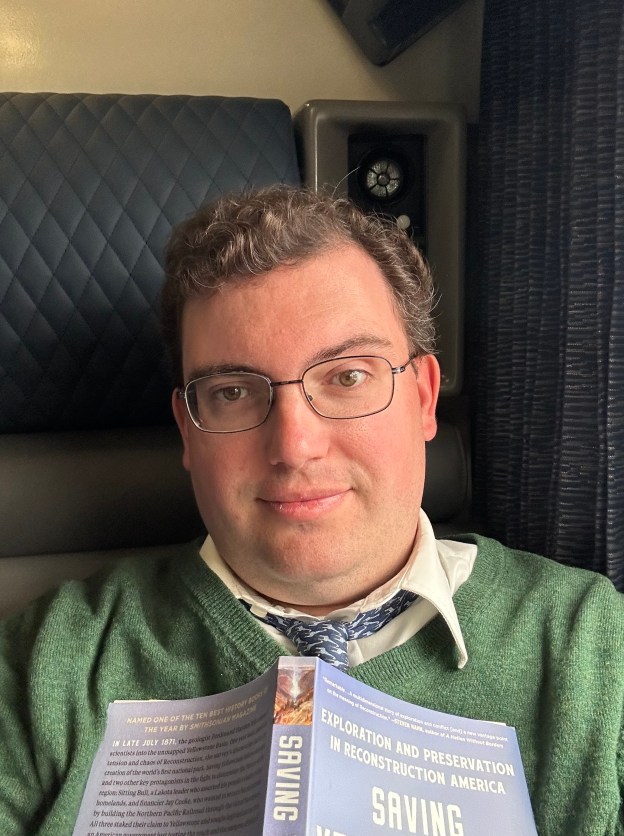
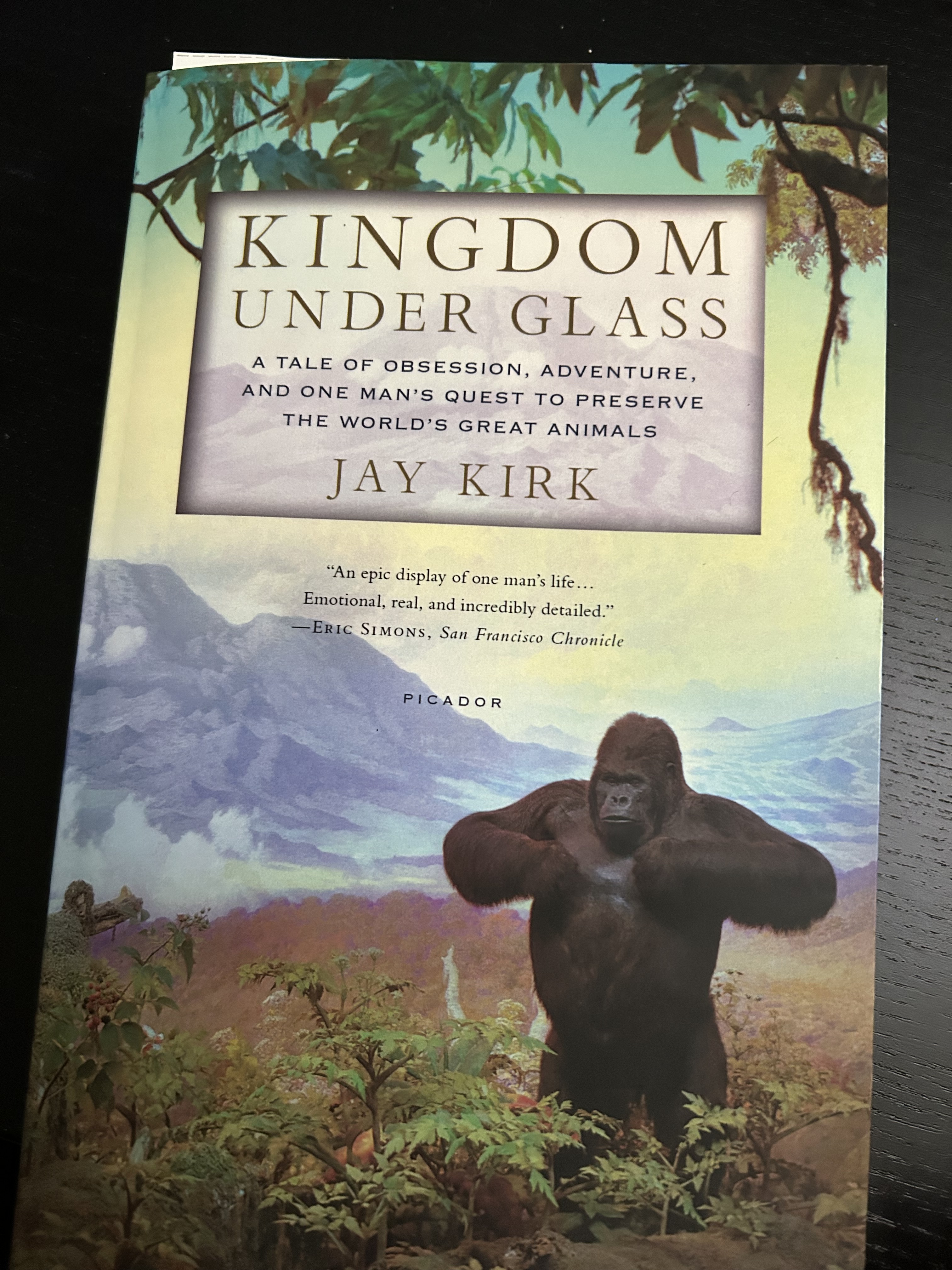
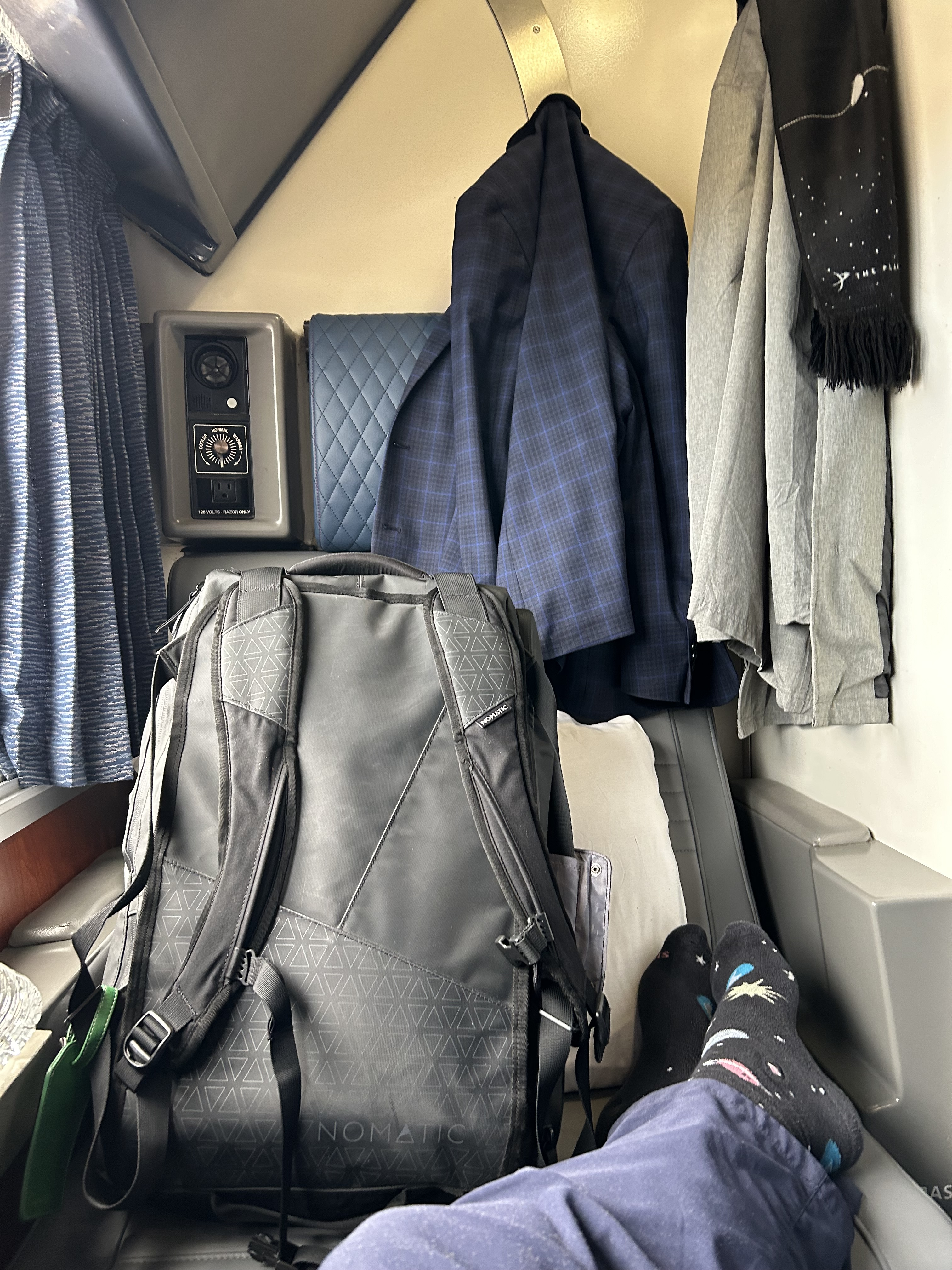
So, when I saw that I could afford to purchase roundtrip sleeper tickets on the Southwest Chief for this trip, I jumped at the opportunity to not only enjoy the best that Amtrak’s western services have to offer, but to also enjoy 7 hours of disconnection from my technology. I spent those 7 hours reading Megan Kate Nelson’s book Saving Yellowstone about the first federal expeditions to the Yellowstone Basin, the building of the Northern Pacific Railroad, the decline of the Lakota’s autonomy, and the foundation of Yellowstone National Park. I brought two other books, three magazines, and all the books downloaded on my phone with me on this trip, figuring I’d have a fair bit of time to read. (On the return trip, rather than reading the materials I brought with me I ended up reading a book I bought in Chicago at the Field Museum’s bookstore by Jay Kirk called Kingdom Under Glass: A Tale of Obsession, Adventure, and One Man’s Quest to Preserve the World’s Great Animalsabout Carl Akelely, the first Taxidermist-in-Chief at the Field Museum. I’m going off script here to say how wonderful it is.)

Seán: “And, I know people who have very full and happy and lovely lives and they’re not on social media, so it’s not necessary to be on it. Yet, it seems that’s how people connect nowadays, right?”

Carmelita: “Yeah, though I only post happy, lovely things, even when I’m at my lowest. So, I always see that so and so is travelling, and man I’m falling behind this year. Yet I wonder how much over time they’ve been doing this year that they can do that?”

Beyond even disconnecting to read, I feel a pull towards stepping back a bit from my complete adoption of all of this technology. I see myself looking more at the screens before me than at the world around me. A friend recently pointed me toward a book which considers that the decline in recreational bowling leagues in this country can be tied to an overall decline in a communal spirit and a deconstruction of our bonds of trust, which have contributed to the current sense of mass isolation, fear, and mistrust which have contributed in turn toward our present political paradigm. I haven’t read this book yet, to be clear, yet I see how the premise works. I love coming to conferences like the RSA to experience the community that these events foster. There are people here who I met last Fall at the Sixteenth Century Society Conference in Baltimore or last March at the 2023 RSA in Puerto Rico. I’ve had the opportunity to tell people here how much I appreciate their work, and to talk a bit about my own, to hear the affirmations that I so often miss in my daily life about the actual research I do.

Carmelita: “Yeah, you have both positives and negatives, you get to connect with family and peers who are far away, yet you also can lose yourself in our technology.”

We could certainly meet remotely using our technology to foster connections, yet those bonds would be far less strong than they are now that we’ve met and know some more about each other. Our technology allows us to instantaneously talk with people whole continents and oceans away, even to the astronauts orbiting our planet on the International Space Station. It has allowed us to even communicate with our furthest satellites that have reached far beyond where any human has gone before. Yet those connections are proxies for the real, physical connections we inherently desire by our basic evolutionary biology. I have trouble sometimes overcoming my own shyness in public settings, I certainly felt that at certain points on this trip, at times I’ve found conferences unbearable because I don’t feel up to talking to people I don’t already know, even when I’ve read and enjoyed their work. I do feel I would be more comfortable in these situations if I were less technologically connected and more connected to the human.

Seán: “What are some alternatives to social media that you’ve found useful?”

Carmelita: “I still have [Facebook] Messenger on my phone, so I use that to stay in touch with people. I sent a message this year to my friend in the Netherlands to say ‘Hey, just to let you know I’m taking my yearly break from social media,’ and she said ‘hey, no problem,’ and she’ll continuously text me and send me things, and my parents will show me things on social media if they’re really necessary. The people who, like you, really want to stay in touch will do so, and I really appreciate that.”

Seán: “It speaks to Robin Dunbar, who’s a primatologist and sociologist, who wrote about this idea called Dunbar’s number where there’s this maximum number that a human can have in their social circles, and I think it really speaks to that culling of that number. I’ve probably got 1700 friends on Facebook, and excluding family which is 30-40 people, there might be 10 people who I stay in touch with, and you’re one of them.”

Carmelita: “Yeah, and you are too. And I’ve actually had people reach out to me in the past and say ‘Hey, I haven’t seen anything from you, are you actually alive?’ and I’ll reply, ‘Hey, yeah I’m actually kind of better!'” (laughs)

My roomette on the Southwest Chief on the way up to Chicago.

I admire my friends and family who can give up some of this technology for extended periods of time. There are things to appreciate about the connectedness our technology provides to be sure, I appreciate seeing the social media posts of those who I care most deeply about, yet within that outer circle there are the few who I see on a daily basis, and I wonder how much I really pay attention to them, or them to me, with these screens in front of us all the time?

It strikes me that more often than not, when I’m mindlessly scrolling through YouTube on a given evening at home, I’m often finding the same music as I had the evening before, listening to the same songs or variations of those songs over and over again. Those songs evoke certain emotions for me, emotions tied to dreams and memories both. Yet I ought to really be focused on the people around me, for as much as our creations may have achieved a sense of immortality with their technological life spans far outpacing our own, those whom I love will only be with me for so long.

Carmelita: “It feels like if you didn’t post it, it didn’t happen; and so last year I went on a family trip, and at the end of the year I didn’t have any pictures and it feels like it didn’t happen, so that’s why I appreciate my social media. Yet like you said earlier today, you don’t have to post everything.”

There ought to be a balance between connection and relief, between all our noise and the silence, which is an acquired taste to be sure, yet is beautiful in its own way. I appreciate the assistance that my technology can provide in my work; it is far easier to do my research using PDF copies of these sixteenth-century books than having to rely on quickly written notes made during a rare research trip to a distant library. When I did my first research trip as an undergrad in 2013 to the Library of Congress, I actually took handwritten notes of the books I read. I quickly realized it was far more efficient to take notes by computer, to type things out at 70 words per minute than to write them by hand in my elegant if at times slow cursive script. This has meant that in the 11 years since I’ve found myself writing by hand less and less, even perhaps risking the loss of the art of penmanship, and calligraphy (if I may be bold to call it that).

Seán: “What’s the underlying purpose of posting? Is it self-gratification, is it to say ‘look what I did!’ is it say ‘look at how cool I am,’ or something like that? I always try to think of the underlying reasons for what I do.”

Carmelita: “I once had a friend who asked me why I post everything, and I said ‘well, I wanted to post pictures of this trip,’ and I think it’s a good way to show what I’m doing to more distant family who I haven’t seen in twenty years. I do sometimes wonder, ‘is this for showing off?’ I don’t like to post things that are show-offy. Several years ago, I got a promotion at work and I wanted to post about it but I sat on it for a while and ended up deleting it because I can’t brag, and so it is a double-edged sword, because you don’t want to brag but you should at the same time. It comes down to perspective: who do you want to know about your successes? Graduating from my Masters, I wanted everyone to know, ‘hey, look I worked my butt off!’ but a trip to Disney isn’t something for everyone to see.”

Let me close with this: I could have all the efficiency in the world with my computer and smart watch and smart phone and voice-activation software in my car and my headphones that connect wirelessly to my other devices so I can talk and take notes on my phone at the same time. I can learn so much from watching all the videos anyone has ever made on a subject and imagine wonders I might never otherwise consider with the invention of film, television, and the videos we upload to the internet. Yet none of it is as rewarding or as joyous as seeing a friend smile, and feeling the warmth of our interaction in that one specific moment in which we are living. Perhaps we need a little more of our human nature in our lives after all.

Seán: “Let me ask you one final question and then we’ll get back to lunch here, this meatball sandwich is giving me a look: do you think technology makes us more or less human? If you think about how we originally evolved in our nature as humans, as Homo sapiens, as wise people, as learned people, and yet do our creations diminish our base humanity if we’re too focused on them?”

Carmelita: “I think it depends on what you post on social media and if you’re fake about them. We talk about influencers who post amazing photos but are broke because of it, then it’s not worth it. Social media allows us to stay connected, and that’s a wonderful thing. So, as long as you’re being true to yourself then that’s the key.”

Seán: “Excellent, I like the connection between philosophy and real life there.”


Finally, for your viewing pleasure my view facing north crossing the Mississippi at Ft. Madison, Iowa.

Correction

Corrected on 28 March 2024 to reflect the correct spelling of Carl Akeley’s name. I’ve misread it now for 31 years as Akerely.