This week, what does it mean for my community to call ourselves Irish Americans?
When I was applying for universities for my undergraduate studies, I was thrilled that one university allowed me to write in my own answer for “race or ethnicity.” I took out my pen and wrote down “Irish.” That university, Rockhurst, is the one which I chose and attended throughout my undergraduate years, and it remains the one that I list today before the others. Rockhurst holds a special place in my heart because it is so intrinsically linked with the Irish American community here in Kansas City, and it is one of those anchors that’s tethered me to this community where I’ve been able to make my own impact and presence.
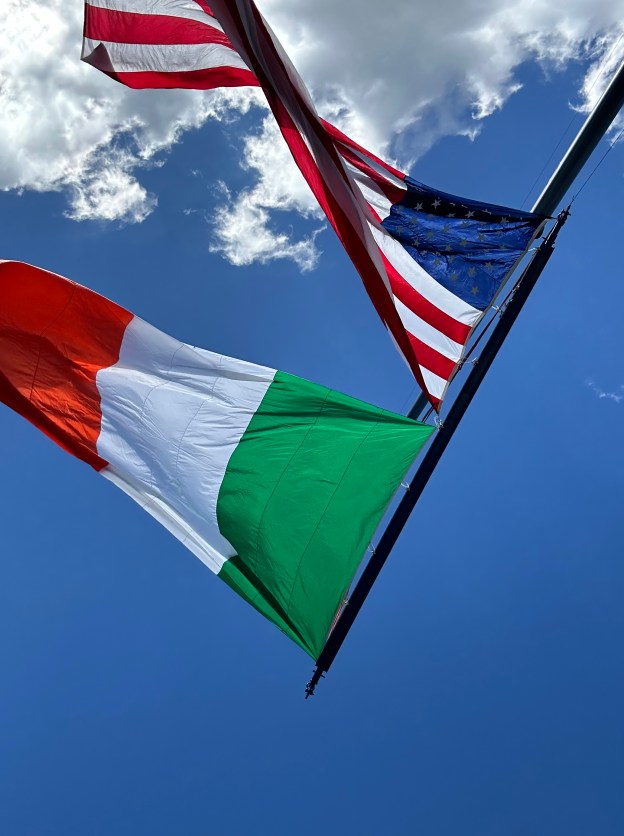
That adjective I chose to write however is perhaps more complicated. I am not Irish by birth but by descent, though one generation too far removed to qualify for Irish citizenship in that manner. Still, Irish is a better descriptor of me than the generic American white, a category which my people were only accepted into for the sake of preserving the flimsy-footed tableau that is racism in America. When I moved to London, I was surprised to be confronted with three categories of white to choose from rather than the monolith I was used to. I technically qualified for all three: I have both Irish and British ancestry, yet I am from a country other than those two. I marked the box for White Irish as long as I was living and studying there because it felt the truest to my nature. Yet again, I am not Irish per se; rather I am Irish American, a member of one of the larger camps within the diaspora created out of the centuries of trouble caused by English and later British colonialism in Ireland. In this perspective, my people are victims of colonization, yet here in America we are the colonizers. So, amid all these tangled webs of identity and nature what are we, Irish Americans?
It is notable to me that in France there is no particular legal sense of identifying oneself as anything other than French. Trevor Noah put this well when he spoke about an immigrant who was granted French citizenship by President Macron after a tremendous act of heroic bravery in saving the life of a child. Yet when I’m in France, I find that if people are confused about my name I go toward my heritage to explain why it’s not your typical Anglo-American name, that my family comes from Ireland instead. I hear a similar tone from the varied generations of nativists in this country, even in the writings of President Theodore Roosevelt, a man who I overall admire a great deal, who wrote in opposition to us persisting as “hyphenated Americans.” This country ought to be a melting pot where all of the immigrants and their descendants shed away their own national and ethnic trappings in favor of becoming one people with one common identity. Yet again, I find this perspective runs contrary to my own lived experience.
To be an Irish American means to remember the place where our ancestors came from, and to remember their struggles as they sought to live their lives first at home and later in this place their newly adopted home. To be an Irish American is to remember that we too were the immigrants not that long ago and to offer a warmer welcome to the newcomers than our ancestors often received. For me, to be an Irish American is to have roots in two countries, better reflecting the interconnected and global nature of our world. Yet at the end of the day, we are Americans. In Ireland, I refer to myself as “an American cousin,” with a slight nod to that infamous play of 1865. The Ireland that many of us know is the Ireland of our grandparents and great-grandparents, the Ireland of the revolutionary generation and the twentieth century when our families left to come to this country. The Ireland of 2025 is still the same country, yet it has grown with the last generations into something that many of us find incongruent with our expectations. It is less an island than ever before with more outposts of the global world on its shores.
Our experiences greeting this global world are different because we encountered it here in America rather than in Ireland. We relate to all the peoples of the Earth through our friendships, rivalries, and mutual circumstances with the other diasporic immigrant groups in this country. I’ve wondered for a long while, including in this outlet if we are slowly with each new generation becoming less Irish Americans and more deeply rooted in other tribes in this country. We tend to be more religious than our cousins in Ireland, and as there are less Catholic schools and parishes that are explicitly Irish are we then becoming Catholic Americans more than Irish Americans? Or are we contributing to a general secularization of that larger white American demographic resulting in both our ethnicity and our religion fading into the background of our identities as ordinary Americans trying to survive in an ever more chaotic world? The key here is that our community is diversifying between political persuasions and regional identities and an overall willingness to remain connected to the lives and histories and passions of our ancestors.
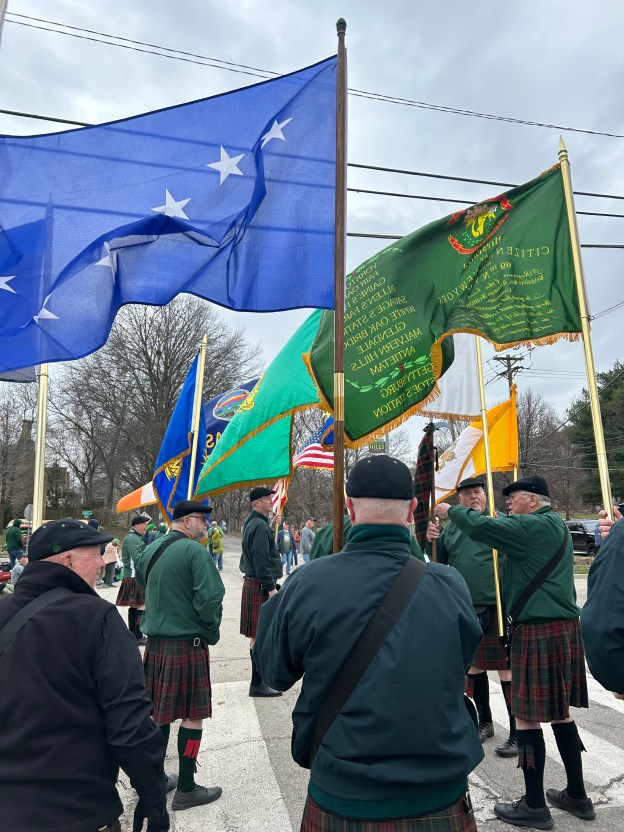
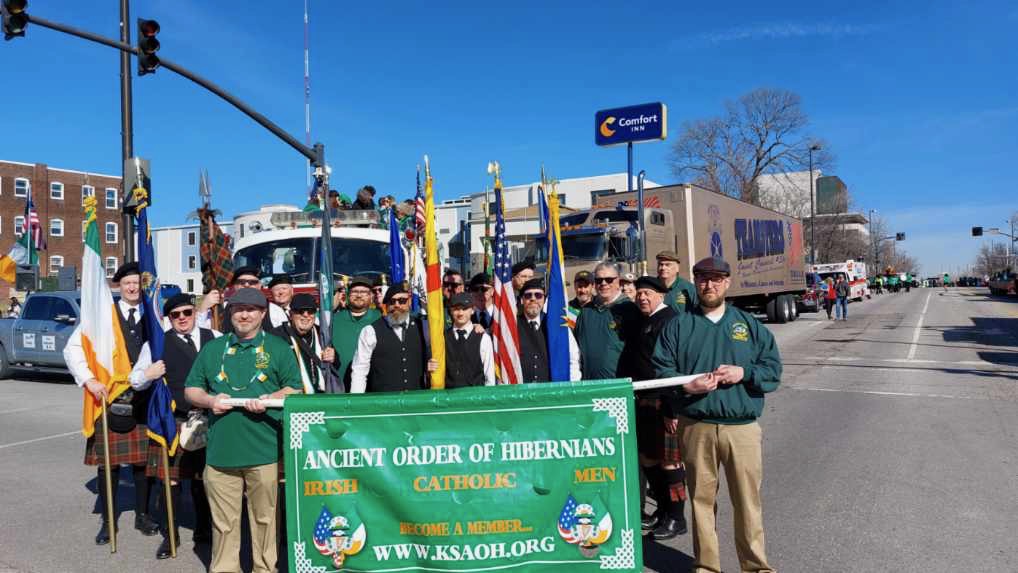
I for one have kept in touch with all of that because I believe it is intrinsic to understanding who I am. My Dad grew up under the same roof as his grandmother who came to this country from Mayo in 1920, and the fact that my parents chose to name me Sean demonstrated to me that this history was an important part of who I am even before I really began to understand what it all meant. For the record, I decided to add the fada to my name (Seán) when a little before my 10th birthday I learned that’s how it is spelled in Irish. I’ve devoted a great deal of time to learn the Irish language even though it’s not all that useful here in America because I know that it’s what my family once spoke, and in order to better understand them and by extension myself as well, I decided I ought to use one of my talents and learn it.This week we celebrated St. Patrick’s Day with our usual parades here in Kansas City. I marched in two this year, the warm-up parade on the Saturday before here in my neighborhood of Brookside and the big parade down Broadway in Midtown Kansas City on the holy day itself. Normally, I end the big parade and the holy day itself rather annoyed at how the old caricatures of Irishness and Irish Americanness persist along the route both in the parade and among the spectators. And while I did see some of that, I was more focused on marching with my brothers in the Fr. Bernard Donnelly Division of the Ancient Order of Hibernians (AOH). Many of us continued the celebration of our brotherhood and our common heritage later that day and it proved to be one of the better, and sunnier, St. Patrick’s Days that I’ve experienced in a long time. We, Irish Americans persist in our stubborn identity because we’ve built our communities in this country around our roots. It defines us distinctly from our fellow Americans, and with all good intentions demonstrates to our cousins across the water that we haven’t forgotten about them.
This week, how numbers are both a universal language and symbols representing deeper meaning.—Click here to support the Wednesday Blog:https://www.patreon.com/sthosdkane
This week, how numbers are both a universal language and symbols representing deeper meaning.
Consider, if you will, what meaning a number holds if unaffixed to an object for calculation or counting? What does six mean if disassociated from the rest of its sentence? Some numbers are recognizable for their meanings due to the broader cultural connotations held by those definitions. A learned reader who sees 3.14 written on a page will recognize that as the first three digits of the value of π, yet without the decimal a Midwesterner will recognize 314 as the telephone area code for the City of St. Louis. Similarly, while 23 holds significance as Michael Jordan’s jersey number to millions if not billions of us who remember the greatest Bull play around the millennium, to others 23 is just another prime number.
Numbers in themselves can only exist beyond the abstract if they account for something. The life is blown into the Music Man’s best known song by the “76 Trombones”; Professor Harold Hill’s exhortation to the people of River City, Iowa would’ve fallen flat if he called on them to raise the funds and enthusiasm for “76” alone. Perhaps the patriotic connotation of that number, 1776 was the year of this country’s birth, might’ve stirred some hearts, but a number alone cannot bring a parent to tears quite as well as hearing their child blow the life out of a trombone for the first time.
It generally annoys me to hear numbers be used with minimal context. I don’t always know what the speaker is referring to when I hear a given number, and in that instance while mathematics may be the universal language the way we use it requires greater linguistic framing. Language can readily transform numbers that otherwise would be subordinated into defined objects of their own. Consider the penny; on the one hand it is merely 1/100th of a dollar in this country or 1/100th of a pound in the U.K. Yet a penny saved is a penny earned, and if Poor Richard’s maxim is to be believed a penny in itself is something beyond its diminutive status in hard currency. The value of the penny has shrunk a tremendous amount in the last century to the point that for the last quarter-century it’s cost the U.S. Mint more to make an individual penny than the value of the penny itself.
The penny is in a less stable place today because of inflation and our society’s transition toward digital currency. How often do you see products priced at 1¢ in stores anymore? With all electronic payments for things, no coins or banknotes are needed to complete the transaction. The unfortunate incident of coming up a few pennies short when paying for something is no longer a problem unless your card is denied. Yet for the cash-users among us losing the penny means they can no longer aim for exactness when paying for things. If a product is priced at $4.99 and you give the cashier a $5 bill you won’t get that penny back. I’d probably shrug it off, but still, I’d feel a twinge of unfulfillment and a residual sense that that shop now owes me money, even if it’s practically worthless. There lies the one great flaw in this plan: the penny is so ingrained in our culture; it’s been one of our coins since independence and even before then pennies go back to Charlemagne’s denarius (thus why in pre-decimal Britain and Ireland the penny was abbreviated d.) The Carolingian denarius of the 8thcentury CE was in turn borrowed from the Roman denarius which was introduced during the Second Punic War (218-201 BCE). So, the penny has been around far longer than most other coins we use here in the United States, and its name transcends this country where it represents 1 cent. The penny still gets used in Britain as the 1 pence coin, there even that word pence is another plural which is synonymous with our pennies.
My photo of the Ha’penny Bridge from August 2016.
In older songs and stories, we still remember when the penny was valuable enough to be subdivided into ha’pennies, or half a penny. At that time, the British penny was worth 1/240th of a pound, in a pre-decimal system that was replaced in 1970 with the current pound-pence system. Dublin’s Ha’penny Bridge is named for the tolls that used to be collected to cross it. Even smaller denominations of the pre-decimal pound such as the farthing (1/4d.), and half farthing (1/8d.) were also minted. Clearly then the penny had more value in the past than it does today. I was struck when I moved to London in 2015 how you could still find goods for sale in the groceries priced less than £1, especially bread. That is almost unheard of in my own country anymore. I think this also speaks to a broader transition in the way we think away from older pre-decimal systems toward ones that work better for computers. After all, the primary method by which we interact with numbers anymore is through our computers who tend to do most all of the calculations for us.
One effect of that shift is that fractions now feel less practical. I was taught fractions in school well before being taught about decimal places in what now feels like one of these pre-decimal holdovers. To an extent I still think in fractions, perhaps thanks to our continued use of the quarter (1/4th) among the coins of the US dollar or the weighing of meat in fractions of a pound. Fractions on their own require that they represent a portion of another number, they cannot exist independently. ¾ is three-quarters of something, yet again here context is key. A musician will look at that fraction and read it as ¾ time, or a 3 beat measure where the quarter note gets the beat. Yet again there: this refers to a quarter note. That musical note may be the default note that gets played, with the ascending and descending scales of note length from that point, yet it still is ¼ of the length of a whole note. I love how in English we’ve mixed Latin and Germanic terms together to describe quarters, halfs, wholes, and such. This word quarter is Latin in origin, coming from the ordinal number fourth in that language: quartus. A quarter then is a fourth of an object.
I remember learning my fractions in school, and I still use them a great deal in my daily life. They’re practical when I know the total number of objects I’m dealing with and when I need to subdivide those objects to ensure maximum efficiency or spread. If I have 4 slices of bread left and I know I won’t be able to make it out of the house for a day or so because of snow, I’ll portion those slices out, so I don’t run out until I have the next loaf in hand. For tangible things that exist in the physical world comparing them as fractions (that is dividing the portion by the whole) helps me understand the numbers I’m dealing with.
Yet again, the quotient produced by that division, the result of that fraction is almost always written in decimals. I think of decimals as a product of the development of the metric system in the late eighteenth century. They are fundamentally more rational, and easier to program into a computer. Rather than asking a computer to translate from the more human fraction one can instead speak to the computer in its own language and let it do its computations faster and more efficiently. Today then, I use decimals far more than fractions. What’s more, each decimal number can exist independently of any other figure. 0.25 is simply 0.25, it’s not inherently a quarter of something else. When I see that price tag of $4.99 in the shop, I think of it as just a hair below $5, and am willing to hand over a $5 bill despite that being worth more than the product I’m buying. If I get my penny back or not is less of a concern, after all in this decimal mindset the penny is almost worthless, so what’s the bother if I lose a few cents here or there? Consider that sentence again though: a penny is a cent, or 1 percent of a larger number, namely $1. Even here when contemplating the penny as 1 cent or $0.01 it is still 1/100th of a dollar. Sure, eventually losing those pennies in every transaction will add up, but it’s going to take long enough that it doesn’t register as a problem for me.
Percentages are another sort of number that’ve grown in importance in my thinking in recent years. We mostly encounter percentages in tipping these days. There’s a tender balance here between tipping a percentage digitally or a whole dollar depending on the initial value of the bill of sale. When doing my own mental math, if I get a rough idea of what 20% of something will be I might decide to round up to the nearest whole dollar when writing a tip on a receipt. Yet those tip screens we see at nearly every business changes the dynamic slightly. Instead of leaving room for that rounding up they offer us the exact sum of 20% of the total bill down to the nearest cent. There’s something lifeless yet efficient about this. This is a number to be sure, yet it represents something human and social that ought to be seen in that light rather than just numerically.Mathematics is the purest language, it’s the one most often looked to as a solution for how we might communicate with other intelligent life who surely wouldn’t know how to speak any of our human languages. Yet all numbers are infused with emotion and have a myriad of deeper meanings than the sum of their parts. In balancing budgets, we could just look at the numbers and cut where seems fitting, yet there is always a human side to every budget line. Each cut is something taken away from someone, a potential line of funding removed that otherwise would’ve contributed to someone’s livelihood and helped them make something new and exciting. Numbers can and do reflect people, and they always have. They can exist in both the abstract as just numbers and the real as representations of people and objects. More often than not, we see them in the latter context. The mathematician is warranted to consider the human in their calculations, lest they clip one cent too many and leave too many of us people without the values we need to survive and thrive in this world we’ve built for ourselves.
Season 4 Finale: This week, to celebrate Christmas I’ve decided to write a bit about naming conventions that I’ve come across, and to explain why I use my full name professionally.
Nollaig shona daoibh | Merry Christmas!
—
Click Here to Support the Wednesday Blog: https://www.patreon.com/sthosdkane
Season 4 Finale: This week, to celebrate Christmas I’ve decided to write a bit about naming conventions that I’ve come across, and to explain why I use my full name professionally.
In American culture middle names have a bad reputation. They’re most famously used in our childhoods to scold us, and in adulthood they most often appear in legal matters. A writer naming non-descript American characters John Booth or Lee Oswald might get away with it but include their middle names Wilkes and Harvey and you have two of the most notorious assassins in American history. Most accused or convicted murderers in our legal system tend to be known in the press by their full names: first, middle, and last. There’s an odd cadence to it when these people are identified by the police or the courts. It’s one of the more common times when middle names get used.
I go by my full name professionally. On my website, in my email signature, and in every conference program and academic publication that I’ll ever appear in I’m identified as Seán Thomas Kane. Trust me, I didn’t intend to draw any connection between myself & the men mentioned in the last paragraph who killed two Presidents who I’ve always looked up to. In my case, the use of my middle name has a different sort of significance. In my extended family I often get called Seán T., in part because I have many relatives who are named Thomas, one of whom goes by T. among the family. Whether intentional or not, my parents gave me one of the most traditional Irish names they could have. Irish names are traditionally patronymic, meaning the person is so-and-so, son or daughter of so-and-so, descendant, son, or daughter of so-and-so. Those last names (or surnames if you aren’t American) that begin with O’ refer to families who are descended from a specific person who lived centuries ago. The ones that begin with Mc however are Anglicizations of the Irish word mac, meaning “son” of a specific person who lived centuries ago. My father’s name is Thomas, so in Irish my name is Seán mac Tomás, or Seán, son of Thomas. Kane is an Anglicization, or better an English phonetic rendering of the Irish name Ó Catháin, pronounced two different ways depending on where you’re from in Ireland (for those reading this, listen to the podcast to hear those two pronunciations.) Cathán was a more common Irish given name in the Early Middle Ages and derives from the word cath meaning battle.
This was in the back of my mind when I decided to start going by my full name professionally. It was 9 March 2016 and I had a few hours without much to do while waiting for a car to pick me up at Lyon-Saint-Exupéry Airport on my way to the eastern French city of Besançon, the capital of the Franche-Comté region and a city which Caesar mentioned in his book about the Gallic Wars (De Bello Gallico 1.38). That cold and rainy Wednesday in March there was a national railway strike in France and I ended up booking a back seat of a Renault Clio driven by a Frenchwoman who spoke little English alongside two other Frenchwomen who again spoke little English from Saint-Exupéry Airport outside of Lyon to Besançon, a good 4 hour drive. Right before they arrived though, I was on Facebook posting an update about my trip and thinking about how I wasn’t entirely sold on sticking with Seán Kane as my name professionally, after all when you search Seán Kane on Google you get a fair handful of results. There on Facebook I noticed that my friend Luis Eduardo Martinez, a fellow graduate student in International Relations and Democratic Politics at the University of Westminster, and a gentleman who I consider a good friend to this day, used his middle name professionally. I felt inspired and changed my name on my Facebook profile from Seán Kane to Seán Thomas Kane then and there standing in the airport parking lot.
Where the last paragraph took place.
This proved to be even more advantageous when the Renault carrying the three Frenchwomen arrived as the driver stepped out and proved that the way Seán is spelled makes little sense to a monolingual French speaker. I remembered when I started studying French at Rockhurst University and we chose French names to use in class how I immediately was discontented with being called Jean alone, as I’d rather be called Jean-Thomas because that’s essentially a French translation of my name coming from Irish. So, I suggested that she call me “Seán-Thomas” which was heard as “Jean-Thomas.” Et voilà, that’s how it all got started. For the record: the Irish name Seán is in fact just an Irish spelling of the twelfth century Norman French pronunciation of that French name Jean, which is also the source of the English name John. You can hear the connections better in an English accent than in my own American one where the oh sound in John has shifted closer further forward in the mouth.
This wasn’t the first time I’d changed my name on my Facebook profile. For a while in high school, I went by my Irish name, Seán Ó Catháin, and that was the name on my early membership cards with the Ancient Order of Hibernians. Yet as much as I was inspired by the Gaelic revival and wanted to do my part to restore our ancestral language, I found that it was impractical to use in America and that deep down I do identify more with Kane than Ó Catháin because that’s the name my grandparents, my dad, and most of my paternal relatives use. Kane itself began as a misspelling by the U.S. Army draft sergeant processing my great-grandfather Thomas Keane when his number was drawn in 1918. He enlisted and served as an artilleryman in France and eventually became an American citizen as Thomas Kane because the sergeant told him if he wanted that first e added back into Keane on his papers he would have to go back to the back of the line and start the process over again.
So, to answer a question I often get in Kansas City: no, I’m not related to any other Kanes in this city except my Dad, and in fact outside of my Dad and his brother’s family all of my living paternal relatives who share our family name on either side of the Atlantic spell it Keane. I suppose I could change mine back to that one, I suspect my granddad’s cousin and longtime Wednesday Blog reader Sr. Mary Jo Keane would’ve approved of that, yet at this point the name dispute feels moot especially considering the Keane spelling only goes back another generation or two to about the 1850s before which in the official British government records written in English my great-grandfather’s great-grandfather’s name was written as Thady Caine. In Irish his name would’ve been Tádhg Ó Catháin, and we know he spoke Irish as his first language. So, what was his name? I’m honestly not sure.
I like how different naming conventions reflect different cultures in their own ways. Our Irish patronymic system is really more Gaelic than Irish, after all it’s the same system that’s used by our Scottish Gaelic speaking cousins and it mirrors a very similar system used in Welsh. In fact, my Welsh ancestors’ family name was Thomas, which derives from the Welsh ap Tomos. Fitting, eh?
When I teach about the Vikings I like to bring up the Norse patronymic system too and explain that Leif Erikson (as we call him in English) was actually Leifr Eiríksson in Old Norse, and that following this tradition as it’s today practiced in Iceland were I born there, or should I someday immigrate to that island republic I’d probably start going by an Icelandic version of my name: Jón Tómasson, dropping the Ó Catháin/Kane family name all together in regular use there to better fit Icelandic society while still retaining it outside of Iceland. I see this as similar to how patronymics are used in Russian, where Tolstoy’s tragic character Ivan Ilyich is known by his first and middle name and not by his first and family names Ivan Golovin as we’d do in the English-speaking world. There, for the record, Seán mac Tomás would translate as Иван Томасaвич (Ivan Tomasavich).[1] In a hypothetical blending of cultures where Irish speakers interacted more with French speakers in North America than with English speakers I could see our patronymic system developing into the French system of having double names, thus why when I still published a French translation of my C.V. I would write my name as Seán-Thomas with the hyphen which I don’t use in English.
Another set of naming systems that I’ve encountered that I appreciate are those originating on Iberia where the family names of both the mother and father are included. My same friend Luis Eduardo Martinez’s full name, and the name I first read when I met him in September 2015 is Luis Eduardo Martinez Mederico. In this Spanish naming custom, his father’s family name appears first followed by his mother’s family name. This is opposite to the Portuguese where the maternal family name precedes the paternal one. So, in the Spanish custom my name would be Seán Thomas Kane Duke, while in the Portuguese custom it would be Seán Thomas Duke Kane. My parents and I actually refer to our family as the Duke-Kane Family, and we’ve joked about what my life would’ve been like if I’d been given both family names at birth in that order. I often conclude that including the East Yorkshire name Duke alongside Kane would’ve made me sound more English.
Then there are the professional names like Smith or Miller. These derive from the first bearer’s profession, so Jefferson Smith had an ancestor somewhere in the distant unwritten past of that Frank Capra film’s imagination who was a blacksmith. Today, on Christmas, we celebrate someone who has such a name, that being Jesus. I get annoyed with my fellow Americans who see “Christ” as Jesus’s last name because it’s not a name at all but a title in the first stage of becoming a name. This name as we understand it ought to be written in English as Jesus the Christ, from the Greek Ἰησοῦς Χριστός through the Latin Iesus Christus, but that word Χριστός is merely a Greek translation of the Hebrew word māšiah (מָשִׁיחַ), which again is usually rendered in English as Messiah, the name of Handel’s most famous oratorio and what Brian certainly wasn’t (he was a very naughty boy.) This is a kingly title, fitting with our view in Christianity of Jesus as priest, prophet, and king appears most prominently this time of year in the Feast of Christ the King, something we celebrate in the Catholic Church at the Liturgical New Year, which was 24 November this year.
Jan van Eyck’s depiction of Christ the King from the Ghent Altarpiece (1426)
A brief digression here: this past Feast of Christ the King I learned that the official name of the day is the Solemnity of Our Lord Jesus Christ, King of the Universe. While that last title might sound overly grandiose in the twenty-first century it actually comes from Ancient Mesopotamia, where the most powerful monarchs of those city states as far back as Sargon of Akkad (r. c. 2334–2284 BCE) claimed this as their imperial title: šar kiššatim, which actually meant King of Kish, the primate of all Mesopotamian cities and according to the older Sumerian King List it was the first city to crown its kings following the Great Flood. So, in essence this title places Jesus, a humble carpenter who was incarnate as God the Son as the true “King of Kings (forever, and ever) and Lord of Lords (for ever and ever)” to quote from the Handel.
Now, back to that rendering Christ as Jesus’s last name. In his lifetime, Jesus was known as Jesus of Nazareth, and in earlier times Christians were known as Nazarenes (Acts 24:5). This word is still used to describe Christians in Hebrew in the form notsrí (נוֹצְרִי) and in Arabic with naṣrāniyy (نَصْرَانِيّ). Thus, he was known more by a locator name than by a last name in the modern American sense. Furthermore inJohn’s Gospel, St. Philip referred to Jesus as “Jesus, son of Joseph, from Nazareth.”[2] So, in the culture in which Jesus was born he would’ve been known most fully in this way rather than with any last name that we may recognize. It’s important to remember that Jesus’s ministry took place 2,000 years ago, and contrary to some popular belief he didn’t speak English. English wasn’t even a language then, though an older form of Irish was around, just probably not heard as much in Galilee or Judaea.
So, let me conclude with the bits that seem to have started as identifiers that came at the end of people’s names before there were family names in the sense that we use them today. These are often locators of where the person in question was from. In the case of Leonardo da Vinci, da Vinci merely refers to the fact that Leonardo was born in the Tuscan commune of Vinci. These particles of place tend to denote nobility in some names, see the French, Spanish, and Portuguese de, the Italian de’ and di, and the German von. However, I see the utility in having this locator in someone’s name to make it clear that even though they’re a Booth they’re not related to every other Booth around. That way a random John Booth living in 1865 would’ve had less trouble because of his more infamous counterpart’s scheming that Good Friday. I’d ask though, in my own case whither would such a locator in my name identify? Where would it refer to? Would it stick just with me, saying that my original hometown is Wheaton, Illinois, so I’d be Seán Thomas Kane of Wheaton? Or would it go back to the origins of my particular Kane/Keane/Caine/Ó Catháin family in the Derryhillagh townland outside of Newport, County Mayo, in Ireland? In Irish the way this would be written would either be with a different Irish preposition ó (yep, there are at least two of these), or with the preposition as. In my Irish as I speak it, I say as in this context more than ó, as in to say “Is as Meiriceá mé,” or “I am from America.”
We don’t do these in Irish names, in part because of our patronymic system which does a fine job on its own. Sometimes when I’m writing stuff in Latin and I want to adopt the style of the Renaissance humanists who I read in my research I’ll try to Latinize my name with one of these locators, rendering my hometown of Wheaton, Illinois by using the name of the Roman goddess of what, Ceres, and essentially making a town name from there. Thus, Wheaton becomes Ceresia. The tricky thing is that when I’m translating my name into Latin, something that was done in academia more into the nineteenth century but is almost never done today, I have a conundrum of whether to start from Kane or from Ó Catháin. I for one don’t like how a Latinized Kaniussounds, so instead I do go from Ó Catháin and use Cahanius, or Ioannes Thomae Cahanius Ceresius in full.
Names are important, and they say as much about the person who bears them as the people who named that person and the culture to which they belong. I’ve played around with my own name a fair bit, as you’ve seen. Today I’m more used to being called Seán-Thomas in French than in English, though the latter has happened more and more. I’ve even noticed that people have started calling me Thomas seeing that name and recognizing it faster than they do Seán, especially with the fada on the a. I smile and acknowledge them, after all I’m happy to be mistaken for my Dad. Looking forward, should I be fortunate enough to name my own children I’ll say these two things: first I’m not the one who’ll be pregnant with them for nine months, so I shouldn’t get first call on their names, and second there’s that Irish tradition that offers a simple answer to this conundrum. Will my first-born son be named Thomas as well then? Yeah, maybe. We’ll have to wait and see how this poorly named lifetime membership with one of the dating apps works out for me. I certainly hope I’m not putting my name out there for the rest of my life, though you can bet I’ll be using that lifetime membership joke for as long as I can.
[1] NB: I’m using Russian as the example here because that’s the one I’m more familiar with. No political inclinations toward the Kremlin in their invasion of Ukraine are intended.
This week, I discuss the two Irish words for the horse, and what they tell us about the history of the Irish language.
—
Click here to support the Wednesday Blog: https://www.patreon.com/sthosdkane
This week, I discuss the two Irish words for the horse, and what they tell us about the history of the Irish language.
The word that we’re taught in Irish classes, in fact the word which is listed in the 1959 English-Irish Dictionary for the English word horse is capall. I like this word; it sounds to me like the clopping of a horse’s hooves on stone. Yet it actually derives from the Latin caballus, a word borrowed into Latin from the Gaulish *kaballos that gradually replaced the Classical Latin equus in late antiquity.[1]Capall then is a relative of the French chevalas well as the Welsh ceffyl. Yet Irish also has another word for horse, each, which fell out of use in favor of capall at some point in the past. Even still, each survives in words deriving from the concept of horsemanship, or equestrianism if you prefer Latin roots over the former’s Germanic ones.
How then did capall replace each, and when might Irish have come into contact with the Latin caballus that did this deed? T. F. O’Rahilly argued in the 1930s that capall may be one of several Brittonic loan words in Irish, owing to its similarities to the Welsh ceffyl.[2] I’m less sold on this idea myself, as it presumes that capallentered Irish earlier than the arrival of Christianity, though it does speak to the presence of interisland trade between the Britons and Gaels in the Iron Age.
Each derives from the Proto-Celtic *ekwālos, itself a descendant of the Proto-Indo-European *h1ékwos. Other Celtic languages derived words for horse from this root, including the Welsh word cyfeb referring to a mare in foal and ebol referring to a colt or a foal. Gaulish appears to have had the word epos for horse, existing alongside the aforementioned *kaballos, which in turn appears similar to the Gallo-Roman horse goddess Epona.
Each remains the more common Scottish Gaelic word for horse to this day, which to me rules out a possible Norman introduction, as the influence of Norman French was felt in both Ireland and Scotland in the twelfth century. Rather then, considering the Welsh connection to their word ceffyl, it seems to me that capall was introduced to Ireland by the Roman monks who brought Christianity to the Gaels in the fifth and sixth centuries. In the stories of St. Patrick, the holy man studied for the priesthood not in his native Britain but in Gaul, where again this Latin word caballus found its origins.
The recurring problem with this question is one of sources. I am trained to study texts looking for answers to historical quandaries. In the case of Irish, few textual sources from before the coming of Christianity survive. We have an idea of what life was like in Ireland before St. Patrick’s mission through the ancient epics and stories that have survived and been embellished down the generations, yet there is something lost deep within our past that could only survive as the faintest whisper of a thought in our memory.
How then do we address older stories in the historical narrative? In my mind, I am able to separate these stories from the factual accounts which I study in the same way that I am able to delineate the different spheres of the scientific from the spiritual. It doesn’t matter to me if there was never a man named Amergin Glúingel whose song on the eve of the Milesian invasion of Ireland to wrest control of the land from the Tuatha Dé Dannán, led to a peaceful division of that island home between the two peoples. What matters instead is that the story tells us to seek peace rather than war, dialogue instead of revenge as Amergin’s brothers sought in their invasion. I don’t use these stories in my research, yet I’d gladly tell them beyond the analytical sphere of my writing.
Yesterday morning, I read in the Guardian the analysis of one nostalgia expert that we historians are often drawn to study the past because of a yearning to experience a time different from our own. This story was written in the context of the 25th anniversary of the computer game Age of Empires II, which I too played in my youth. From my vantage, I see myself very much as one of the wider diasporas that came from the homelands of my ancestors. I grew up with far more connections to the Irish diaspora here in America, and so have come to know myself more as an Irish American than by any other appellation. At the heart of that sense of being Irish American is the sense that even if we today are well at home in America, our families came here as exiles, deoraithe in Irish, and in some sense, we feel that weight even today generations later.
There is a sense that something is lost when one is ever yearning for the land of their ancestors, the lives they might have lived. I’ve been to the town around which most of my paternal ancestors came, Newport, County Mayo, and I was struck on the one hand by how many of the people were the spitting images of their cousins that I’ve known in Chicago, and on the other hand how as beautiful the country around Clew Bay is I’d much prefer the city over living there. For me then, I’ve turned to the language, to Gaeilge, as a way of keeping that connection with our roots alive and flourishing like some great tree amid the physical and spiritual droughts of the world today.
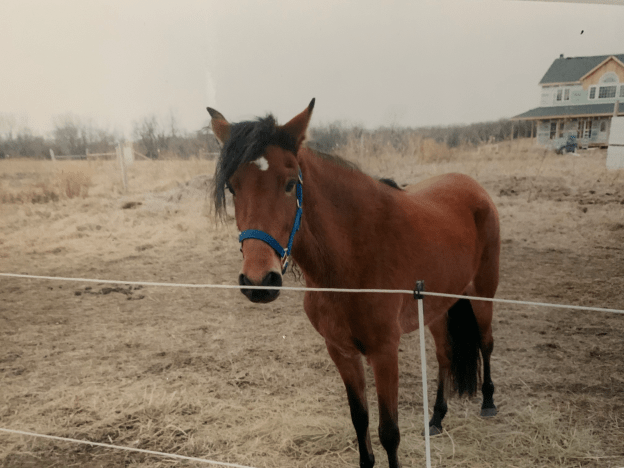
My eye as a historian is drawn to finding the roots of the things that I come across, both in my studies and in my curiosities. It struck me then to see in my Fócloir Gaeilge-Béarla that different equine words in Irish retained traces of this older word for the horse: each. In my likely forlorn search for some trace of the oldest roots of the Irish language, and by extension of my own ancestors, I feel the need to understand where these two words come from. Horses are important in their own way, albeit replaced in most uses by cars, trains, and airplanes today. Despite moving to a farm when I was six in order to have horses, I don’t think I’ve ridden a horse in at least 15 years, if not a full score. When you ride a horse, you are working with the horse to move about the world. Wherever you look, the horse will wander that direction. It’s key to remember that the horse is more than just a vehicle, it is a living being with thoughts and wishes all its own.
Having two words for this animal show that the perceptions of it have changed down the generations. This word each today is used to describe people or activities which relate to horses in the same way we use the word equine in English. That English word however derives from the Latin equus, while each is a relative of the same generation as the Latin. Meanwhile, capall is the horse as the everyday being: the beast of burden, the bearer of riders, and yes the friend. As with most things concerning the origins of the Irish language, I can’t yet say for certain when or how capall entered the language though I am more certain that each was already there if only because I know that equus predates caballus in Latin, and because the most innate relationship humanity can have with a horse, as the rider, is reflected in Irish with the word eachaí.
There is much we can learn from our past, and how we lived within nature and alongside other natural things in those distant days. I do hope we can learn more as we continue on in our lives on this Earth.
[1] The use of the asterisk in these Gaulish, Proto-Celtic, and Proto-Indo-European words denote that they are theoretical reconstructions.
This week, to begin Season 4 of the Wednesday Blog podcast, I want to talk about what it means to exist. I know, small topic for a Wednesday.
—
Click here to support the Wednesday Blog: https://www.patreon.com/sthosdkane
This week, to begin Season 4 of the Wednesday Blog podcast, I want to talk about what it means to exist. I know, small topic for a Wednesday.
Two weeks ago, I started teaching a new class that I’m calling Bunrang Ghaeilge, Beginner Irish. The students come from my fellow members of the Fr. Bernard Donnelly Division of the Ancient Order of Hibernians and their relatives, and in the first two weeks we’ve progressed slower than I initially expected yet we’re still progressing through the materials. The first verb which I taught my current students in English translates as to be, yet in Irish as two forms: is for a more permanent being and tá in a more impermanent circumstance. In the moment I explained this difference by noting how I say is as Chicago mé (I am from Chicago), as in I was born in the Chicago area, but I say tá mé i mo chónaí in Kansas City (I live in Kansas City). We don’t have this distinction in English, either between the permanent and impermanent versions of the to be verb or in the clear distinction between where you’re from at birth and where you currently live; that distinction is far more subtle in English.
At the same time, I am learning Italian for a trip this summer, my own version of the Grand Tour, and on the Busuu app where I’m learning Italian they taught that I should say sono di Chicago però abito a Kansas City,as in I was born in Chicago, but I inhabit today in Kansas City. This distinction between a place that is central to our essence, the place where we were born, and the place where we now live seem important, yet it flies in the face of the American sense of reinvention that we can make ourselves into whomever we want to be. It’s struck me when I’ve met people who would rather see themselves as from the place where they currently live than the place where they were born. That is a different view from my own, born out of different lived experiences and different aspirations.
This word essence developed from the Latin word essentia, which the 1st century CE Stoic philosopher Seneca wrote was coined by the great orator Cicero as a translation of the Greek word οὐσία (ousia), a noun form of the Ancient Greek verb εἰμί (eimi), meaning “to be.” (Sen., Ep. 58.6) It refers to an innate idea that the ultimate goal of philosophy and learning in general is to better understand the self; the most famous inscription in the ancient Temple of Apollo at Delphi read γνῶθισαυτόν (gnōthi sauton), or “know thyself.” I add to that goal the aspiration that one can improve oneself.
This time of year, I find myself thinking more and more about what it means for me to be an Irish American. This past weekend we celebrated St. Patrick’s Day, a day of great celebration for the global Irish diaspora and our cousins back in Ireland as well. I’ve written before here about how my communities’ immigrant connections to Ireland often predate the current century, if not the twentieth century as well and how we are in many respects far more American than Irish. In recent years, I began to refer to myself in this subject as an American cousin, after all as much as I have Irish roots and I come from an Irish family, I’m an American and have lived an American life to date. I’m not as far removed from Ireland as many I know, yet this year marks the 110th anniversary of my great-grandfather Thomas Kane’s arrival in America.
There’s something about being Irish American which doesn’t quite fit neatly into any of the official boxes. In Ireland, to be Irish is to be from Ireland or to be a close enough descendant that you qualify for Irish citizenship, like my father does. In America, there’s a sense that the old stereotypes of Irish immigrants are fair caricatures to still uphold, especially on our communities’ holiday in much the same way that the sombreros are donned on Cinco de Mayo. Yet there’s a lot more to it. On both sides of the Atlantic, our communities have the same deeply intertwined connections between families near and far, friends in common, and a sense of nostalgia that I see especially strong among those of us born in America.
Perhaps the Irish language can offer the best answer here. In Irish, I’ll say to Irish people, as I wrote a few paragraphs ago, “Is col ceathrair Meiriceánach mé.” Yet the official Irish name for us Irish Americans is “na Gael-Meiriceánigh”, or Gaelic Americans. I think this speaks to something far older and deeper than any geographic or political connections. We come from common ancestors, share common histories and stories that wind their way back generations and centuries even. We are who we are because of whom we’ve come from. I hope to pass this rich legacy in all its joys and struggles onto the next generation in my family; perhaps I dream of those not yet born hoping they’ll be better versions of my own generation. I hope they’ll still feel this connection to our diaspora like I do even as we continue on our way along the long winding road of time further and further from Ireland.
I am the child of my parents, the grandchild of my grandparents, and great-grandchild of my great-grandparents. In so many ways, I am who I am today because of those who’ve come before me. The geography of my life was written by them, by a choice among other immigrants from County Mayo my ancestors found their way to Chicago instead of Boston, New York, or Philadelphia. My politics reflect my ancestors’ views as well, in the Irish context the legacies of the Home Rule Crisis of 1912-1916, the Easter Rising of 1916, the War of Independence of 1919-1921, and the Civil War of 1922-1924 all have as much of a presence in my political philosophy as does their American contemporaries: the Progressive Era and its successor in the New Deal coalition. Yet I am my own person, and from these foundations I’ve built my own house in as much of an image of the past as it is a hope for the future.
What does it mean then to be ourselves? We hear a great deal today about how people identify, in a way which seems to be a radical departure from older norms and expectations both in the English language and in how we live. We constantly seek answers to all of our questions because we anticipate that all of our questions can be answered, yet the mystery of being is one of my great joys. I love that there are always things which I do not know, things with which I’m unfamiliar and uncertain. This is where belief extends my horizons beyond what my knowledge can hold, a belief born from the optimistic twins of aspiration and imagination. I know that the essence of my being, the very fundamental elements of who I am, draw far more from these twins than any other emotion. I am what my dreams make of me, I see my world with eyes colored by what my mind imagines might be possible; and in that possibility I find the courage to hope for a better tomorrow.
Lake Michigan frozen by the Polar Vortex on 7 Jan.
Kansas City – We’ve all seen (or felt) the extremes in weather that have affected the US, Canada, and Australia so far this year. Between my hometown of Chicago reaching a record low of -16F (-26.7C) and the Australian Open having to be postponed because of record heat in Melbourne of 109F (43C), it seems like the English colonists picked the short stick in terms of extreme weather compared to the Spanish and Portuguese (who have their own problems as well.) With the extreme in weather freezing us in North America and scorching our friends in Australia, I thought it’d be a good idea to help with the introduction of Celsius to the general public here in the Fahrenheit-using United States.
In the summer of 2011, as I was preparing to leave for my first year at university, I thought it was as good a time as any to make a few changes to my life. No, I didn’t take up any nasty habits, nor did I decide to stop going by Seán and ask everyone to call me George. Rather, I decided I was going to forgo the Imperial system of measurements that I’d been accustomed to up until then, and join the rest of the world (except the United States and a couple of other countries) and take up the Metric system.
I know, I know, it’s not the average life change for an 18 year old (as I was at the time), but it seemed like a good idea. I began switching things about, alongside the switch to metric I changed my digital clocks from 12 hour to 24 hour, and began switching the working language of my then new computer (I was off to university, remember?) from English to Irish. But the biggest problem remained, just how to rework my mind to where I would stop thinking 32 degrees and start thinking 0 degrees. It took me a few years, in fact I only really figured out a good working conversion a couple of days ago, but at long last I have one to offer:
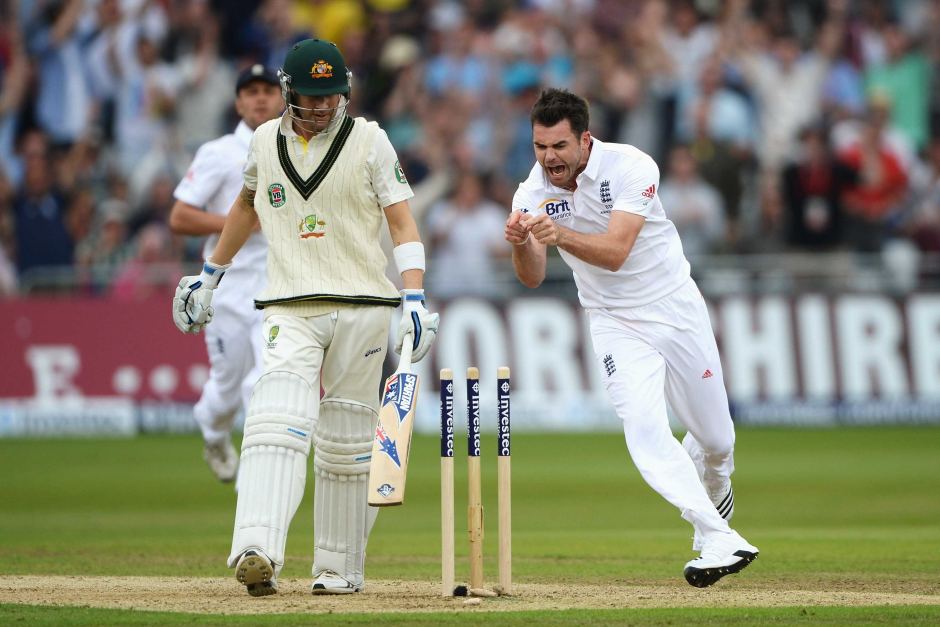
The heat has also caused some concern for England in their Ashes tour of Australia. -Courtesy of the ABC (Australian Broadcasting Corporation).
So, we all know that 32 F is equal to 0 C aka, the freezing point. That’s a good place to start, but coming from thinking in Fahrenheit, I found this basic introductory conversion to not be entirely useful, except to know when I need to wear a scarf. So, I had to find a way to sort out the Celsius equivalent of the bases of my understanding of Fahrenheit: 0F and 100F. This past summer, in part because I spent a fair bit of time in the UK, I ended up using Celsius more than Fahrenheit in general conversation. As a result, when I returned to humid Kansas City, I found myself confronted with the infamous Midwestern summer heat. One afternoon as I was driving along in my car, the thermometer hit 38C. I knew this was very hot, but I honestly hadn’t a clue what 38C converted to in F. So, I switched the thermometer over to Fahrenheit, discovering that it read that long-sought-after number: 100F.
So, for the next few months after that, my understanding of Celsius was simply this: 38C = 100F, 0C = 32F. Going on from there I knew at some point I’d have to figure out what 0F was in Celsius, a fact which I only discovered a couple days ago. And the funny thing is that there’s a bit of an obvious pattern here. We hit 0F a couple of nights ago here in Kansas City, and not for the first time this year mind you. I had a look at my thermometer and found it read -18C (0F). So, there is a distance of 58 degrees Celsius between 100F and 0F. From there I figured the best thing to do was to work on reteaching my mind to think of temperature on a Celsius-based scale rather than on a Celsius, but Fahrenheit based scale. So, my new scale for saying those sort of maximum and minimum endurable temperatures run from -20C (-4F, which really isn’t too bad compared to what has been hitting us in North America) all the way up to 40C (104F, though to be honest I’d rather stay indoors when the temperature goes above 30C [86F]).
Now two main points to make about these numbers: 1. Yes, members of the scientific community, I know that these aren’t totally, minutely, accurate numbers, after all 0F is really -17.8C, and 100F is 37.8C, but let’s be honest with ourselves that if we’re not dealing with materials flammable at the tenth of a degree, I think we’re fine with just rounding up. And 2. In the UK, Ireland, and New Zealand you’re generally not going to have to deal with these extreme temperatures, as the weather is fairly moderate compared to the other main English speaking countries (Australia, Canada, and the USA). So really, this is a sort of total-scale, whose extremities relate primarily to those of us away from London, Dublin, and Wellington.
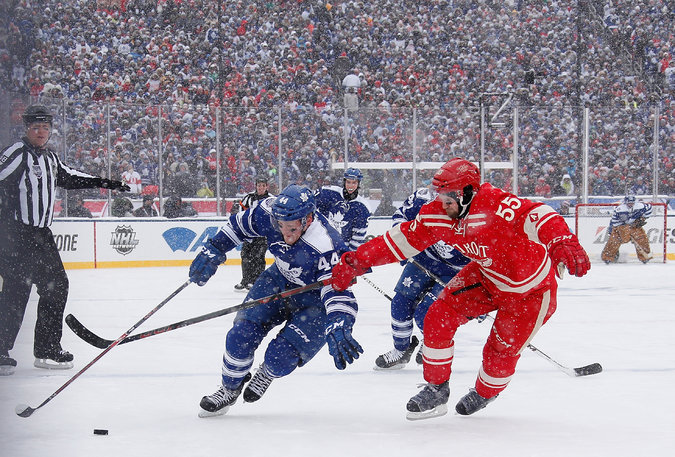
In conclusion, I do hope these basic conversions help if you decide to come over to Celsius. Don’t worry Fahrenheit loyalists, I’ll be using both, especially in my Formula 1 articles. One thing I will say in positive for the cold weather hitting us in North America: it’s good hockey weather!
“It’s good hockey weather!” -Courtesy of the “New York Times”.







 Wednesday Blog by Seán Thomas Kane