Tag Archives: Irish

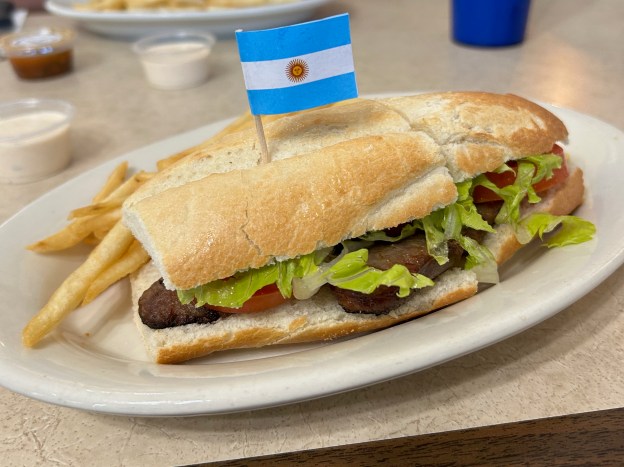
A choripán sandwich from Los Hornos Argentinian Flavors in Kansas City, Missouri photographed by the author just before it was eaten by the same.

On Language Acquisition

On Language Acquisition Wednesday Blog by Seán Thomas Kane

This week, how living in a culture is required to speak a language in depth.—Click here to support the Wednesday Blog: https://www.patreon.com/sthosdkane—Sources: [1] “A Letter from San Juan,” Wednesday Blog 3.29.[2] “The North American Tour,” Wednesday Blog 5.34.


This week, how living in a culture is required to speak a language in depth.


The languages which I speak are directly responsible for the ways my life has turned, its winding path a result of the words I use and the ideas they represent. Language is the voice of culture; it evokes the rich harmony of thought that comes from seeing things from certain points of view. At the University of Westminster, I was regularly in classes where there were maybe 10 or 20 languages spoken between each of the students, if not more. English remained our common language and the language of instruction, yet how many of us must have been switching between English and their own native language as they thought about the readings and topics in political philosophy and science which we discussed on a given day? Even then, my English is not the same as the King’s English, nor is it the same as the English I heard spoken when I drove through Alabama in July 2022. Language then reflects our individual circumstances of experience. Knowledge is gained through experience first and foremost, whether that experience be theoretical through books or practical through lived experience. I make this distinction because I often feel that when I’m reading a particularly well written book that I can actually imagine the characters as real people who I might meet in my life. The best TV shows and films are like that, their casts that we see regularly begin to seem like old friends who we look forward to visiting again and again.

Language acquisition is a lot like this for me. Today, I speak three languages: English, Irish, and French, and I can read Latin, Italian, Catalan, Spanish, and Portuguese and some Ancient Greek. I break my languages down into these two categories by their utility in my life. The handful which I can read are those which I’ve worked with in my historical capacity. I’ve spoken Italian and Spanish from time to time, yet those moments of elocution are few and far between. The same could be said for my German, though it’s now been five years since I last spoke that language in Munich, and at time of writing I can’t say that I’d be much use in remembering it today. This is even more true for my Mandarin, a language which I studied for a semester in between my two master’s degrees out of pure curiosity. I can remember the pronouns, a couple of verbs, and a noun or two but that’s about it. All this to say that I may know something about German and Mandarin yet it’s little more than a foundation for the future when I might be faced with a desire or need to learn the language properly.

I’ve been thinking lately that of any of these I need to work most on my Spanish, the most useful of these languages for me to speak here in the United States. I can understand Spanish fine yet speaking it remains a challenge. On Sunday evening after my shift I decided to reopen the Spanish course on the app Busuu––one which I used for Spanish before my March 2023 trip to the Renaissance Society of America’s annual meeting in San Juan, Puerto Rico––and try it out again.[1] That time I got through the A1 level before life got in the way, and I gave it up feeling frustrated with the process. I did not resume any online Spanish courses before my trip to Mexico last November for the History of Science Society meeting in Mérida, instead choosing the less preparatory method of winging it.[2] That worked with fits and spurts, my best Spanish conversations were in taxis with locals, though I was mostly thinking about how I would say things in French and then Hispanifying them based on my minimal knowledge of Spanish grammar. On Sunday, after I retired for the evening from my Spanish lessons on the app I realized what it was I missed so much in these apps: the human connection. Busuu prides itself on its crowd-sourced learning method; throughout the course learners are asked to submit spoken or written answers to the computer’s prompts which learners of other languages who speak the target language then correct. I like this system overall, and it does give this sense of community, yet I feel that it could go further.

After English, the second language I learned was Irish, my ancestral language. I started studying the Irish language when I was fourteen and have been focused on it to varying degrees for the last eighteen years. It really took until 2022 for me to connect with the language though, in spite of the fitful starts and stops because in that year I began to build a community around the Irish language. First on Zoom through Gaelchultúr, an Irish language school in Dublin, I met other speakers from across North America and beyond who like me were descendants of Irish immigrants old and new. I looked forward to seeing some of the same people term after term. Yet after returning to Kansas City, I began to look locally for Irish classes and came across the community that my friend Erin Hartnett has built at the Kansas City Irish Center. Through Erin I’ve met some really good friends and from our mutual appreciation for our ancestral language we’ve found a lot more in common from mutual histories to mutual appreciations for rugby. Without this community I would speak Irish but not terribly well. Now, not only do I speak Irish daily, but I also write in Irish every day. It has truly surpassed French as my second language, something I’m proud of yet not too concerned about when it comes to my Francophonic abilities.

French exists in a different sort of place for me than Irish. It’s not an ancestral language with deep family ties. Rather, it’s a language that I gravitated toward out of a fascination with French culture and history. I may have written here in the Wednesday Blog before that my first exposure to French came at sunset on a Sunday in February 2001 when my Mom put a “Learn French” cassette tape into the tape player in our family car when we were driving through the hills of northwestern Illinois toward Dubuque, Iowa. She and I were preparing for a trip to London and Paris that summer, the first European trip that I could remember, and she wanted to put in the effort for us to have some French before we arrived on the Eurostar from Waterloo Station at Paris-Gare du Nord. I didn’t like Paris much on that first visit, I found the language barrier to be too great for me to really feel a sense of connection with the place. On my next visit to France in March 2016 with three years of undergraduate French under my belt I found that I not only got the place more, but I appreciated the nuances of French culture more than I had as a child.

I owe a great deal to my undergraduate French professors M. Kathleen Madigan and Claudine Evans. It’s through their classes that I gravitated toward my career studying the French Renaissance. When I get asked why I chose to study the French I keep it simple and say it was a matter of pure convenience: I already spoke French, so I wouldn’t need to learn a new language (Spanish or Portuguese) to read my primary sources. That’s how I ended up studying André Thevet (1516–1590). I chose him because he happened to write about a sloth and for me the idea of being a sloth historian made me laugh. It’s as simple as that. I loved studying French in college, and even more teaching it with the online Beginner French course I built for the Barstow School in 2023 and 2024. I found that going through the same textbook I used a decade before I was not only teaching the students who in the future would go through my course, I was also renewing my own French education and learning things that I’d missed on my first go around. This is a critical point in language acquisition: few people are going to get a language on their first try, it’ll take multiple goes to understand what’s being said and to make oneself heard as well. It took me three tries to get Irish down, and the same is the case for Latin. Failure in the moment is merely a setback which can, and ought to be overcome in future endeavors. After all, remember that if we’re paying attention to our lives we’ll learn from our experiences.

I grew to really embrace a lot about the Francophonie to the point of paying Sling TV for access to TV5 Monde, France’s global TV channel which now broadcasts several different channels. I personally enjoy TV5 Monde Style, which tends to broadcast documentaries and cooking shows, though I don’t watch it as much as I might like. I read a lot of French books for my research, after all I work with source material that has largely only been written about in French and to a lesser extent in Portuguese. I am able to do what I do with those sources because I can read them and the secondary literature about them in French. All this made it all the easier for me to go to France and Belgium in the last several years and be able to switch from English to French as soon as I walked off the plane. I found when I was flying back to the United States in June 2024 after spending about a week speaking mostly French in Paris that I was consistently responding with the quick phrases “please, thank you, you’re welcome,” and the like bilingually with the French followed by the English as I’d heard so many people do in shops and the museums during that visit. It took me a while to get past doing this and just say things in English again after I returned.This then is why I think I’ve had so much trouble with learning Spanish. It’s the first language that I’ve given a big effort to learning outside of a classroom on my own. At least in the classroom you have fellow students around you to practice with. When you’re on your own you’re on your own, a wise-sounding craic which is to say that when alone you have no one else to talk with. I have friends here in Kansas City who speak Spanish, and I know all I have to do is ask, yet it’s finding the free time to sit down with them and work on it that I need to figure out. To truly gain a footing in a language one needs to immerse oneself in the culture. Apps and online learning will only take you so far. A classroom learner will blend into their own classroom idiolect of the language in that particular space where it exists in their life. Only if they move beyond classroom and begin to converse and live with people in places where that language is spoken will they begin to speak it in a manner which is more recognizable to native speakers.


[1] “A Letter from San Juan,” Wednesday Blog 3.29.

[2] “The North American Tour,” Wednesday Blog 5.34.
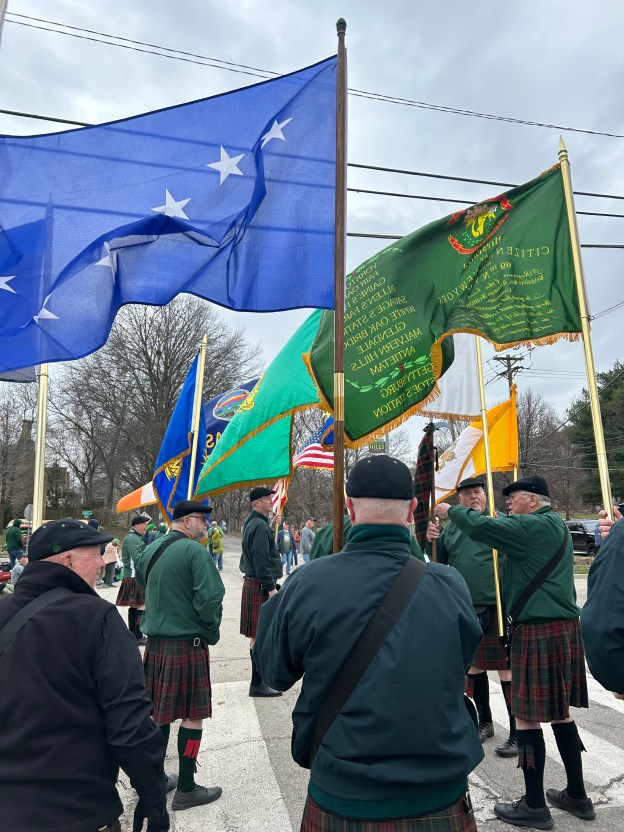

We, Irish Americans

This week, to conclude what I’ve been saying.—Click here to support the Wednesday Blog: https://www.patreon.com/sthosdkane—Sources:%5B1%5D “Signs,” Wednesday Blog 1.10.[2] “On Servant Leadership,” Wednesday Blog 6.15.[3] Percy Bysshe Shelley, “Ozymandias,” Poetry Foundation.


This week, what does it mean for my community to call ourselves Irish Americans?


When I was applying for universities for my undergraduate studies, I was thrilled that one university allowed me to write in my own answer for “race or ethnicity.” I took out my pen and wrote down “Irish.” That university, Rockhurst, is the one which I chose and attended throughout my undergraduate years, and it remains the one that I list today before the others. Rockhurst holds a special place in my heart because it is so intrinsically linked with the Irish American community here in Kansas City, and it is one of those anchors that’s tethered me to this community where I’ve been able to make my own impact and presence.

That adjective I chose to write however is perhaps more complicated. I am not Irish by birth but by descent, though one generation too far removed to qualify for Irish citizenship in that manner. Still, Irish is a better descriptor of me than the generic American white, a category which my people were only accepted into for the sake of preserving the flimsy-footed tableau that is racism in America. When I moved to London, I was surprised to be confronted with three categories of white to choose from rather than the monolith I was used to. I technically qualified for all three: I have both Irish and British ancestry, yet I am from a country other than those two. I marked the box for White Irish as long as I was living and studying there because it felt the truest to my nature. Yet again, I am not Irish per se; rather I am Irish American, a member of one of the larger camps within the diaspora created out of the centuries of trouble caused by English and later British colonialism in Ireland. In this perspective, my people are victims of colonization, yet here in America we are the colonizers. So, amid all these tangled webs of identity and nature what are we, Irish Americans?

It is notable to me that in France there is no particular legal sense of identifying oneself as anything other than French. Trevor Noah put this well when he spoke about an immigrant who was granted French citizenship by President Macron after a tremendous act of heroic bravery in saving the life of a child. Yet when I’m in France, I find that if people are confused about my name I go toward my heritage to explain why it’s not your typical Anglo-American name, that my family comes from Ireland instead. I hear a similar tone from the varied generations of nativists in this country, even in the writings of President Theodore Roosevelt, a man who I overall admire a great deal, who wrote in opposition to us persisting as “hyphenated Americans.” This country ought to be a melting pot where all of the immigrants and their descendants shed away their own national and ethnic trappings in favor of becoming one people with one common identity. Yet again, I find this perspective runs contrary to my own lived experience.

To be an Irish American means to remember the place where our ancestors came from, and to remember their struggles as they sought to live their lives first at home and later in this place their newly adopted home. To be an Irish American is to remember that we too were the immigrants not that long ago and to offer a warmer welcome to the newcomers than our ancestors often received. For me, to be an Irish American is to have roots in two countries, better reflecting the interconnected and global nature of our world. Yet at the end of the day, we are Americans. In Ireland, I refer to myself as “an American cousin,” with a slight nod to that infamous play of 1865. The Ireland that many of us know is the Ireland of our grandparents and great-grandparents, the Ireland of the revolutionary generation and the twentieth century when our families left to come to this country. The Ireland of 2025 is still the same country, yet it has grown with the last generations into something that many of us find incongruent with our expectations. It is less an island than ever before with more outposts of the global world on its shores.

Our experiences greeting this global world are different because we encountered it here in America rather than in Ireland. We relate to all the peoples of the Earth through our friendships, rivalries, and mutual circumstances with the other diasporic immigrant groups in this country. I’ve wondered for a long while, including in this outlet if we are slowly with each new generation becoming less Irish Americans and more deeply rooted in other tribes in this country. We tend to be more religious than our cousins in Ireland, and as there are less Catholic schools and parishes that are explicitly Irish are we then becoming Catholic Americans more than Irish Americans? Or are we contributing to a general secularization of that larger white American demographic resulting in both our ethnicity and our religion fading into the background of our identities as ordinary Americans trying to survive in an ever more chaotic world? The key here is that our community is diversifying between political persuasions and regional identities and an overall willingness to remain connected to the lives and histories and passions of our ancestors.

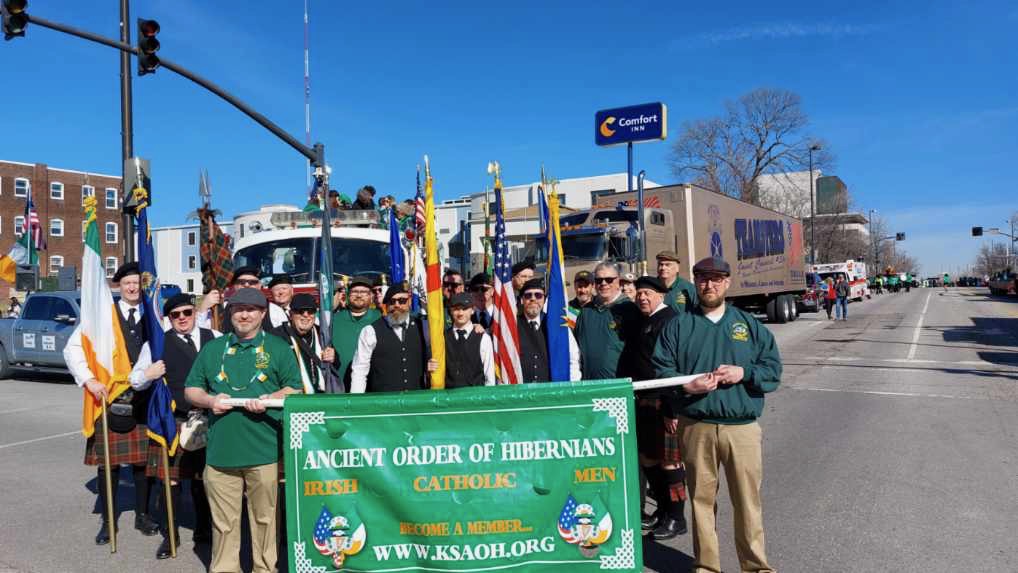
I for one have kept in touch with all of that because I believe it is intrinsic to understanding who I am. My Dad grew up under the same roof as his grandmother who came to this country from Mayo in 1920, and the fact that my parents chose to name me Sean demonstrated to me that this history was an important part of who I am even before I really began to understand what it all meant. For the record, I decided to add the fada to my name (Seán) when a little before my 10th birthday I learned that’s how it is spelled in Irish. I’ve devoted a great deal of time to learn the Irish language even though it’s not all that useful here in America because I know that it’s what my family once spoke, and in order to better understand them and by extension myself as well, I decided I ought to use one of my talents and learn it.This week we celebrated St. Patrick’s Day with our usual parades here in Kansas City. I marched in two this year, the warm-up parade on the Saturday before here in my neighborhood of Brookside and the big parade down Broadway in Midtown Kansas City on the holy day itself. Normally, I end the big parade and the holy day itself rather annoyed at how the old caricatures of Irishness and Irish Americanness persist along the route both in the parade and among the spectators. And while I did see some of that, I was more focused on marching with my brothers in the Fr. Bernard Donnelly Division of the Ancient Order of Hibernians (AOH). Many of us continued the celebration of our brotherhood and our common heritage later that day and it proved to be one of the better, and sunnier, St. Patrick’s Days that I’ve experienced in a long time. We, Irish Americans persist in our stubborn identity because we’ve built our communities in this country around our roots. It defines us distinctly from our fellow Americans, and with all good intentions demonstrates to our cousins across the water that we haven’t forgotten about them.


On Names

Season 4 Finale: This week, to celebrate Christmas I’ve decided to write a bit about naming conventions that I’ve come across, and to explain why I use my full name professionally. Nollaig shona daoibh | Merry Christmas! — Click Here to Support the Wednesday Blog: https://www.patreon.com/sthosdkane


Season 4 Finale: This week, to celebrate Christmas I’ve decided to write a bit about naming conventions that I’ve come across, and to explain why I use my full name professionally.


In American culture middle names have a bad reputation. They’re most famously used in our childhoods to scold us, and in adulthood they most often appear in legal matters. A writer naming non-descript American characters John Booth or Lee Oswald might get away with it but include their middle names Wilkes and Harvey and you have two of the most notorious assassins in American history. Most accused or convicted murderers in our legal system tend to be known in the press by their full names: first, middle, and last. There’s an odd cadence to it when these people are identified by the police or the courts. It’s one of the more common times when middle names get used.

I go by my full name professionally. On my website, in my email signature, and in every conference program and academic publication that I’ll ever appear in I’m identified as Seán Thomas Kane. Trust me, I didn’t intend to draw any connection between myself & the men mentioned in the last paragraph who killed two Presidents who I’ve always looked up to. In my case, the use of my middle name has a different sort of significance. In my extended family I often get called Seán T., in part because I have many relatives who are named Thomas, one of whom goes by T. among the family. Whether intentional or not, my parents gave me one of the most traditional Irish names they could have. Irish names are traditionally patronymic, meaning the person is so-and-so, son or daughter of so-and-so, descendant, son, or daughter of so-and-so. Those last names (or surnames if you aren’t American) that begin with O’ refer to families who are descended from a specific person who lived centuries ago. The ones that begin with Mc however are Anglicizations of the Irish word mac, meaning “son” of a specific person who lived centuries ago. My father’s name is Thomas, so in Irish my name is Seán mac Tomás, or Seán, son of Thomas. Kane is an Anglicization, or better an English phonetic rendering of the Irish name Ó Catháin, pronounced two different ways depending on where you’re from in Ireland (for those reading this, listen to the podcast to hear those two pronunciations.) Cathán was a more common Irish given name in the Early Middle Ages and derives from the word cath meaning battle.

This was in the back of my mind when I decided to start going by my full name professionally. It was 9 March 2016 and I had a few hours without much to do while waiting for a car to pick me up at Lyon-Saint-Exupéry Airport on my way to the eastern French city of Besançon, the capital of the Franche-Comté region and a city which Caesar mentioned in his book about the Gallic Wars (De Bello Gallico 1.38). That cold and rainy Wednesday in March there was a national railway strike in France and I ended up booking a back seat of a Renault Clio driven by a Frenchwoman who spoke little English alongside two other Frenchwomen who again spoke little English from Saint-Exupéry Airport outside of Lyon to Besançon, a good 4 hour drive. Right before they arrived though, I was on Facebook posting an update about my trip and thinking about how I wasn’t entirely sold on sticking with Seán Kane as my name professionally, after all when you search Seán Kane on Google you get a fair handful of results. There on Facebook I noticed that my friend Luis Eduardo Martinez, a fellow graduate student in International Relations and Democratic Politics at the University of Westminster, and a gentleman who I consider a good friend to this day, used his middle name professionally. I felt inspired and changed my name on my Facebook profile from Seán Kane to Seán Thomas Kane then and there standing in the airport parking lot.

Where the last paragraph took place.

This proved to be even more advantageous when the Renault carrying the three Frenchwomen arrived as the driver stepped out and proved that the way Seán is spelled makes little sense to a monolingual French speaker. I remembered when I started studying French at Rockhurst University and we chose French names to use in class how I immediately was discontented with being called Jean alone, as I’d rather be called Jean-Thomas because that’s essentially a French translation of my name coming from Irish. So, I suggested that she call me “Seán-Thomas” which was heard as “Jean-Thomas.” Et voilà, that’s how it all got started. For the record: the Irish name Seán is in fact just an Irish spelling of the twelfth century Norman French pronunciation of that French name Jean, which is also the source of the English name John. You can hear the connections better in an English accent than in my own American one where the oh sound in John has shifted closer further forward in the mouth.

This wasn’t the first time I’d changed my name on my Facebook profile. For a while in high school, I went by my Irish name, Seán Ó Catháin, and that was the name on my early membership cards with the Ancient Order of Hibernians. Yet as much as I was inspired by the Gaelic revival and wanted to do my part to restore our ancestral language, I found that it was impractical to use in America and that deep down I do identify more with Kane than Ó Catháin because that’s the name my grandparents, my dad, and most of my paternal relatives use. Kane itself began as a misspelling by the U.S. Army draft sergeant processing my great-grandfather Thomas Keane when his number was drawn in 1918. He enlisted and served as an artilleryman in France and eventually became an American citizen as Thomas Kane because the sergeant told him if he wanted that first e added back into Keane on his papers he would have to go back to the back of the line and start the process over again. 

So, to answer a question I often get in Kansas City: no, I’m not related to any other Kanes in this city except my Dad, and in fact outside of my Dad and his brother’s family all of my living paternal relatives who share our family name on either side of the Atlantic spell it Keane. I suppose I could change mine back to that one, I suspect my granddad’s cousin and longtime Wednesday Blog reader Sr. Mary Jo Keane would’ve approved of that, yet at this point the name dispute feels moot especially considering the Keane spelling only goes back another generation or two to about the 1850s before which in the official British government records written in English my great-grandfather’s great-grandfather’s name was written as Thady Caine. In Irish his name would’ve been Tádhg Ó Catháin, and we know he spoke Irish as his first language. So, what was his name? I’m honestly not sure.

I like how different naming conventions reflect different cultures in their own ways. Our Irish patronymic system is really more Gaelic than Irish, after all it’s the same system that’s used by our Scottish Gaelic speaking cousins and it mirrors a very similar system used in Welsh. In fact, my Welsh ancestors’ family name was Thomas, which derives from the Welsh ap Tomos. Fitting, eh?

When I teach about the Vikings I like to bring up the Norse patronymic system too and explain that Leif Erikson (as we call him in English) was actually Leifr Eiríksson in Old Norse, and that following this tradition as it’s today practiced in Iceland were I born there, or should I someday immigrate to that island republic I’d probably start going by an Icelandic version of my name: Jón Tómasson, dropping the Ó Catháin/Kane family name all together in regular use there to better fit Icelandic society while still retaining it outside of Iceland. I see this as similar to how patronymics are used in Russian, where Tolstoy’s tragic character Ivan Ilyich is known by his first and middle name and not by his first and family names Ivan Golovin as we’d do in the English-speaking world. There, for the record, Seán mac Tomás would translate as Иван Томасaвич (Ivan Tomasavich).[1] In a hypothetical blending of cultures where Irish speakers interacted more with French speakers in North America than with English speakers I could see our patronymic system developing into the French system of having double names, thus why when I still published a French translation of my C.V. I would write my name as Seán-Thomas with the hyphen which I don’t use in English.

Another set of naming systems that I’ve encountered that I appreciate are those originating on Iberia where the family names of both the mother and father are included. My same friend Luis Eduardo Martinez’s full name, and the name I first read when I met him in September 2015 is Luis Eduardo Martinez Mederico. In this Spanish naming custom, his father’s family name appears first followed by his mother’s family name. This is opposite to the Portuguese where the maternal family name precedes the paternal one. So, in the Spanish custom my name would be Seán Thomas Kane Duke, while in the Portuguese custom it would be Seán Thomas Duke Kane. My parents and I actually refer to our family as the Duke-Kane Family, and we’ve joked about what my life would’ve been like if I’d been given both family names at birth in that order. I often conclude that including the East Yorkshire name Duke alongside Kane would’ve made me sound more English.

Then there are the professional names like Smith or Miller. These derive from the first bearer’s profession, so Jefferson Smith had an ancestor somewhere in the distant unwritten past of that Frank Capra film’s imagination who was a blacksmith. Today, on Christmas, we celebrate someone who has such a name, that being Jesus. I get annoyed with my fellow Americans who see “Christ” as Jesus’s last name because it’s not a name at all but a title in the first stage of becoming a name. This name as we understand it ought to be written in English as Jesus the Christ, from the Greek Ἰησοῦς Χριστός through the Latin Iesus Christus, but that word Χριστός is merely a Greek translation of the Hebrew word māšiah (מָשִׁיחַ), which again is usually rendered in English as Messiah, the name of Handel’s most famous oratorio and what Brian certainly wasn’t (he was a very naughty boy.) This is a kingly title, fitting with our view in Christianity of Jesus as priest, prophet, and king appears most prominently this time of year in the Feast of Christ the King, something we celebrate in the Catholic Church at the Liturgical New Year, which was 24 November this year.

Jan van Eyck’s depiction of Christ the King from the Ghent Altarpiece (1426)

A brief digression here: this past Feast of Christ the King I learned that the official name of the day is the Solemnity of Our Lord Jesus Christ, King of the Universe. While that last title might sound overly grandiose in the twenty-first century it actually comes from Ancient Mesopotamia, where the most powerful monarchs of those city states as far back as Sargon of Akkad (r. c. 2334–2284 BCE) claimed this as their imperial title: šar kiššatim, which actually meant King of Kish, the primate of all Mesopotamian cities and according to the older Sumerian King List it was the first city to crown its kings following the Great Flood. So, in essence this title places Jesus, a humble carpenter who was incarnate as God the Son as the true “King of Kings (forever, and ever) and Lord of Lords (for ever and ever)” to quote from the Handel.

Now, back to that rendering Christ as Jesus’s last name. In his lifetime, Jesus was known as Jesus of Nazareth, and in earlier times Christians were known as Nazarenes (Acts 24:5). This word is still used to describe Christians in Hebrew in the form notsrí (נוֹצְרִי) and in Arabic with naṣrāniyy (نَصْرَانِيّ). Thus, he was known more by a locator name than by a last name in the modern American sense. Furthermore in John’s Gospel, St. Philip referred to Jesus as “Jesus, son of Joseph, from Nazareth.”[2] So, in the culture in which Jesus was born he would’ve been known most fully in this way rather than with any last name that we may recognize. It’s important to remember that Jesus’s ministry took place 2,000 years ago, and contrary to some popular belief he didn’t speak English. English wasn’t even a language then, though an older form of Irish was around, just probably not heard as much in Galilee or Judaea.

So, let me conclude with the bits that seem to have started as identifiers that came at the end of people’s names before there were family names in the sense that we use them today. These are often locators of where the person in question was from. In the case of Leonardo da Vinci, da Vinci merely refers to the fact that Leonardo was born in the Tuscan commune of Vinci. These particles of place tend to denote nobility in some names, see the French, Spanish, and Portuguese de, the Italian de’ and di, and the German von. However, I see the utility in having this locator in someone’s name to make it clear that even though they’re a Booth they’re not related to every other Booth around. That way a random John Booth living in 1865 would’ve had less trouble because of his more infamous counterpart’s scheming that Good Friday. I’d ask though, in my own case whither would such a locator in my name identify? Where would it refer to? Would it stick just with me, saying that my original hometown is Wheaton, Illinois, so I’d be Seán Thomas Kane of Wheaton? Or would it go back to the origins of my particular Kane/Keane/Caine/Ó Catháin family in the Derryhillagh townland outside of Newport, County Mayo, in Ireland? In Irish the way this would be written would either be with a different Irish preposition ó (yep, there are at least two of these), or with the preposition as. In my Irish as I speak it, I say as in this context more than ó, as in to say “Is as Meiriceá mé,” or “I am from America.”

We don’t do these in Irish names, in part because of our patronymic system which does a fine job on its own. Sometimes when I’m writing stuff in Latin and I want to adopt the style of the Renaissance humanists who I read in my research I’ll try to Latinize my name with one of these locators, rendering my hometown of Wheaton, Illinois by using the name of the Roman goddess of what, Ceres, and essentially making a town name from there. Thus, Wheaton becomes Ceresia. The tricky thing is that when I’m translating my name into Latin, something that was done in academia more into the nineteenth century but is almost never done today, I have a conundrum of whether to start from Kane or from Ó Catháin. I for one don’t like how a Latinized Kaniussounds, so instead I do go from Ó Catháin and use Cahanius, or Ioannes Thomae Cahanius Ceresius in full.

Names are important, and they say as much about the person who bears them as the people who named that person and the culture to which they belong. I’ve played around with my own name a fair bit, as you’ve seen. Today I’m more used to being called Seán-Thomas in French than in English, though the latter has happened more and more. I’ve even noticed that people have started calling me Thomas seeing that name and recognizing it faster than they do Seán, especially with the fada on the a. I smile and acknowledge them, after all I’m happy to be mistaken for my Dad. Looking forward, should I be fortunate enough to name my own children I’ll say these two things: first I’m not the one who’ll be pregnant with them for nine months, so I shouldn’t get first call on their names, and second there’s that Irish tradition that offers a simple answer to this conundrum. Will my first-born son be named Thomas as well then? Yeah, maybe. We’ll have to wait and see how this poorly named lifetime membership with one of the dating apps works out for me. I certainly hope I’m not putting my name out there for the rest of my life, though you can bet I’ll be using that lifetime membership joke for as long as I can.

Nollaig shona daoibh a léithoirí rúin! | Merry Christmas, dear readers!


[1] NB: I’m using Russian as the example here because that’s the one I’m more familiar with. No political inclinations toward the Kremlin in their invasion of Ukraine are intended.

[2] John 1:45 (New American Bible), see more here.


An Equine Etymology

This week, I discuss the two Irish words for the horse, and what they tell us about the history of the Irish language. — Click here to support the Wednesday Blog: https://www.patreon.com/sthosdkane


This week, I discuss the two Irish words for the horse, and what they tell us about the history of the Irish language.


The word that we’re taught in Irish classes, in fact the word which is listed in the 1959 English-Irish Dictionary for the English word horse is capall. I like this word; it sounds to me like the clopping of a horse’s hooves on stone. Yet it actually derives from the Latin caballus, a word borrowed into Latin from the Gaulish *kaballos that gradually replaced the Classical Latin equus in late antiquity.[1] Capall then is a relative of the French chevalas well as the Welsh ceffyl. Yet Irish also has another word for horse, each, which fell out of use in favor of capall at some point in the past. Even still, each survives in words deriving from the concept of horsemanship, or equestrianism if you prefer Latin roots over the former’s Germanic ones.

How then did capall replace each, and when might Irish have come into contact with the Latin caballus that did this deed? T. F. O’Rahilly argued in the 1930s that capall may be one of several Brittonic loan words in Irish, owing to its similarities to the Welsh ceffyl.[2] I’m less sold on this idea myself, as it presumes that capallentered Irish earlier than the arrival of Christianity, though it does speak to the presence of interisland trade between the Britons and Gaels in the Iron Age.

Each derives from the Proto-Celtic *ekwālos, itself a descendant of the Proto-Indo-European *h1ékwos. Other Celtic languages derived words for horse from this root, including the Welsh word cyfeb referring to a mare in foal and ebol referring to a colt or a foal. Gaulish appears to have had the word epos for horse, existing alongside the aforementioned *kaballos, which in turn appears similar to the Gallo-Roman horse goddess Epona. 

Each remains the more common Scottish Gaelic word for horse to this day, which to me rules out a possible Norman introduction, as the influence of Norman French was felt in both Ireland and Scotland in the twelfth century. Rather then, considering the Welsh connection to their word ceffyl, it seems to me that capall was introduced to Ireland by the Roman monks who brought Christianity to the Gaels in the fifth and sixth centuries. In the stories of St. Patrick, the holy man studied for the priesthood not in his native Britain but in Gaul, where again this Latin word caballus found its origins.

The recurring problem with this question is one of sources. I am trained to study texts looking for answers to historical quandaries. In the case of Irish, few textual sources from before the coming of Christianity survive. We have an idea of what life was like in Ireland before St. Patrick’s mission through the ancient epics and stories that have survived and been embellished down the generations, yet there is something lost deep within our past that could only survive as the faintest whisper of a thought in our memory.

How then do we address older stories in the historical narrative? In my mind, I am able to separate these stories from the factual accounts which I study in the same way that I am able to delineate the different spheres of the scientific from the spiritual. It doesn’t matter to me if there was never a man named Amergin Glúingel whose song on the eve of the Milesian invasion of Ireland to wrest control of the land from the Tuatha Dé Dannán, led to a peaceful division of that island home between the two peoples. What matters instead is that the story tells us to seek peace rather than war, dialogue instead of revenge as Amergin’s brothers sought in their invasion. I don’t use these stories in my research, yet I’d gladly tell them beyond the analytical sphere of my writing.

Yesterday morning, I read in the Guardian the analysis of one nostalgia expert that we historians are often drawn to study the past because of a yearning to experience a time different from our own. This story was written in the context of the 25th anniversary of the computer game Age of Empires II, which I too played in my youth. From my vantage, I see myself very much as one of the wider diasporas that came from the homelands of my ancestors. I grew up with far more connections to the Irish diaspora here in America, and so have come to know myself more as an Irish American than by any other appellation. At the heart of that sense of being Irish American is the sense that even if we today are well at home in America, our families came here as exiles, deoraithe in Irish, and in some sense, we feel that weight even today generations later.

There is a sense that something is lost when one is ever yearning for the land of their ancestors, the lives they might have lived. I’ve been to the town around which most of my paternal ancestors came, Newport, County Mayo, and I was struck on the one hand by how many of the people were the spitting images of their cousins that I’ve known in Chicago, and on the other hand how as beautiful the country around Clew Bay is I’d much prefer the city over living there. For me then, I’ve turned to the language, to Gaeilge, as a way of keeping that connection with our roots alive and flourishing like some great tree amid the physical and spiritual droughts of the world today.

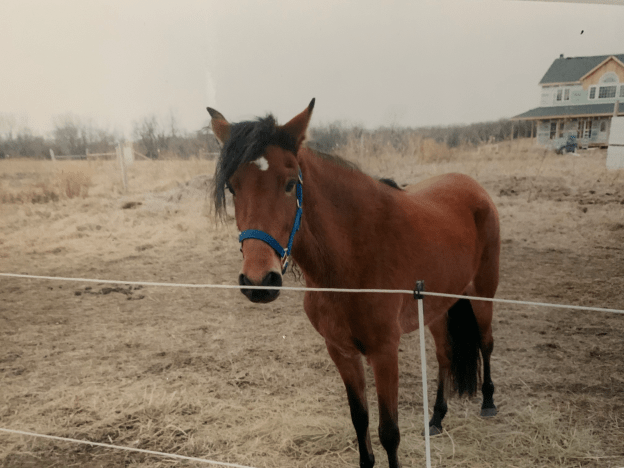
My eye as a historian is drawn to finding the roots of the things that I come across, both in my studies and in my curiosities. It struck me then to see in my Fócloir Gaeilge-Béarla that different equine words in Irish retained traces of this older word for the horse: each. In my likely forlorn search for some trace of the oldest roots of the Irish language, and by extension of my own ancestors, I feel the need to understand where these two words come from. Horses are important in their own way, albeit replaced in most uses by cars, trains, and airplanes today. Despite moving to a farm when I was six in order to have horses, I don’t think I’ve ridden a horse in at least 15 years, if not a full score. When you ride a horse, you are working with the horse to move about the world. Wherever you look, the horse will wander that direction. It’s key to remember that the horse is more than just a vehicle, it is a living being with thoughts and wishes all its own.

Having two words for this animal show that the perceptions of it have changed down the generations. This word each today is used to describe people or activities which relate to horses in the same way we use the word equine in English. That English word however derives from the Latin equus, while each is a relative of the same generation as the Latin. Meanwhile, capall is the horse as the everyday being: the beast of burden, the bearer of riders, and yes the friend. As with most things concerning the origins of the Irish language, I can’t yet say for certain when or how capall entered the language though I am more certain that each was already there if only because I know that equus predates caballus in Latin, and because the most innate relationship humanity can have with a horse, as the rider, is reflected in Irish with the word eachaí

There is much we can learn from our past, and how we lived within nature and alongside other natural things in those distant days. I do hope we can learn more as we continue on in our lives on this Earth.


[1] The use of the asterisk in these Gaulish, Proto-Celtic, and Proto-Indo-European words denote that they are theoretical reconstructions.

[2] Myles Dillon, “Linguistic Borrowing and Historical Evidence,” Language 21, no. 1 (1945): 12–17, at 13. (JSTOR)


Our First Languages

Last week, I listened to an essay from the New York Times Magazine about the possibility that one might lose their first language if they use another too much. Today then, I write to my own experience in this matter. — Click here to support the Wednesday Blog: https://www.patreon.com/sthosdkane

Last week, I listened to an essay from the New York Times Magazine about the possibility that one might lose their first language if they use another too much. Today then, I write to my own experience in this matter.


We choose how we sound to the extent that our physical bodies can allow. This means that our voices and body language can change as we move between environments and groups. I’ve seen this, and even noticed it in myself. My jokes change depending on the setting for one, yet also my tone and accent will deviate to the slightest degree when I move from one group to the next. This change is all the more dramatic when I’m speaking a different language to any significant degree. Last October, when I was in Brussels and Paris, I was speaking French far more than English. On two occasions when I met with friends who I normally speak with in English, I noticed something strange was happening to my voice: my accent was dulled. 

I like to compare the human voice to a pen, in the right hands and with the right training it can move with fluid precision. When at my best moments I can glide in and out of a series of registers with ease and use those different registers to accentuate the point I’m making. You’ve heard some of this here on the Wednesday Blog, those who listen to the podcast that is. The range of sounds I can make is far broader than the mere 26 letters of the English alphabet; this is thanks to my experience speaking other languages, French and Irish in conversation, and to the years of singing Latin hymns at Mass and practicing reciting Ovid and Virgil in my high school Latin classes. I can make myself understood in German, Italian, and Spanish as well if needs be, thanks to the other four I’ve spoken most frequently.

So, at those two dinners, one in Paris and the other a few days later in Brussels, I found that the usual fluidity of my speech was lacking, that I couldn’t quite make all the sounds I usually can. It occurred to me then that speaking French so much had made it harder to switch back into English after all the exercise that my vocal muscles had parler français produced different results to my usual practice speaking English. The author of the essay in the Times Magazine, Madeleine Schwartz, writes about losing recall of one language as much as the physical difficulty of making the sounds not made in the language, she uses the most. For her, the American English r sound was especially challenging after saying the French r so often. For me, my version of the French /ʁ/ is in fact an approximation that I make based on the Irish /ɣ/ sound as in the word dhá, a variation of the number two. These two sounds are approximates of each other, the French /ʁ/ is an uvular fricative while the Irish ɣ is a velar fricative. This means that the French /ʁ/ is produced further back in the mouth than the Irish /ɣ/. Still, my American English /r/ becomes a challenging sound to make when I’ve been saying /ɣ/ or /ʁ/ all day.

On top of this, I’ve steadily worked on mastering another r sound, the trilled r sounds. I say sounds because there are a variety of these that an individual speaker can make depending on where on the tongue you produce the sound. I can make three of these sounds, one which is more of a clipped r that I picked up from Peter Cushing’s performance as Grand Moff Tarkin in the original Star Wars that I think of as more high-brow stage English, the second is a fuller trill, scientifically called a velar fricative, not quite at the tip of the tongue that I use at the beginnings and middles of Irish words, and in Latin and when I’ve spoken Italian and Spanish, and the third is a wisping of air just beyond the tip of the tongue that I use to make the r sound at the ends of Irish words. This last r is called a palatized fricative. These have all taken practice to learn and even more practice to begin doing on a regular basis. Again, I chose to speak the way that I do, and to change registers when I am speaking to a public audience, what you hear here, compared to when I’m speaking with family and friends.

I find that the letter r is important for getting down any accent, because it is so particular to each. It’s a sort of in-between sound that is a consonant yet can act like a vowel in some ways. It’s perhaps fitting then that this same Irish velar fricative ɣ is spelled dh, a digraph which is also pronounced in my Irish as the schwa vowel, /ə/. In my speech, I want to be understandable to my audience, yet also express an aspect of myself in a way that will appeal to that person. While my first language is English, my own urban Midwestern variety of it, my experiences and travels have transformed my idiolect into something that transcends regional boundaries now with bits of London and the Northeastern American English accents that I’ve been exposed to filtering in alongside the ways that my family and community here at home talk amongst ourselves.

One question I still have, one which I’ve pondered for years, is does our modern code switching reflect the abilities of our prehistoric ancestors and perhaps the early evolutionary history of language and human speech? Are other animals able to change how they communicate to reach the widest possible audience? It’s notable to me that a great deal of evidence shows that adult domesticated cats only meow to humans, a vocalization they normally only make as kittens to their mothers. So, in the cat’s meow we hear a conscious change in vocal expression intended to get whatever they’re feeling or thinking across to us. Had I not become a historian, I would have probably chosen to pursue anthropology, focusing on the evolution of human communication and human language.

What do you think about this? Do you intentionally change how you speak to be understood by specific audiences? Let me know in the comments on this blog post at wednesdayblog.org, or on the social media platforms where I share this: Facebook, Instagram, LinkedIn, and X (formerly Twitter). You can also share your comments on the Wednesday Blog Patreon feed where I share these blog posts with more of an introduction from me and a bit before they go onto the social media channels.


Eclipse simulation using Stellarium

The Eclipse

This Monday, North America experienced its second total solar eclipse in the last decade. — Click here to support the Wednesday Blog: https://www.patreon.com/sthosdkane


This Monday, North America experienced its second total solar eclipse in the last decade.


I remember being over-the-moon excited when we began preparing for the Total Solar Eclipse in August 2017. Several weekends before the eclipse, my parents and I drove north from Kansas City into the path of totality to scout out possible places where we might travel on Eclipse Day to see the phenomenon for ourselves. Eclipse Day 2017 also happened to be my first day as a history graduate student at the University of Missouri-Kansas City. That morning a sudden summer thunderstorm rolled through Kansas City and as the day continued the clouds persisted in our skies. When the moment of totality arrived around 12:55 pm on 21 August, we watched it through darkened clouds and heard the birds and insects around us revert to their nocturnal states and songs.

I was excited to have experienced a total solar eclipse yet disappointed that I wasn’t able to see it. So, when the prospect of traveling for this week’s total solar eclipse appeared, I seriously considered going afield to Texas to observe it. That trip didn’t end up working out because of a series of scheduling conflicts, and so instead seeing that the cloud forecast across North America called for most places along the path of totality to be obscured, I decided to stay here in Kansas City and observe our partial solar eclipse. At its greatest extent, the April 2024 solar eclipse reached about 90.5% totality. I was able to see that extent, yet the feel of it was quite different than 100% totality from seven years ago. We were watching Everyday Astronaut and the Planetary Society’s live broadcast from the Society’s Eclipse-o-rama event in Fredericksburg, Texas while observing the eclipse here at home, and what they experienced was far more dramatic than what we observed. I do regret not travelling for this eclipse, yet at the same time in the circumstances as they fell, I’m glad I chose to stay home all the same.

This concept of an eclipse is one that speaks to me both astronomically, as a big space nerd, historically, and linguistically. Eclipses are phenomena that have made their mark on the psyche of more than just us humans, note how the birds began singing their twilight songs when the Moon passed in front of the Sun. I have never put much theological potency into eclipses because we have been able to predict their occurrences with increasing accuracy for generations now. Religion, in many ways, relies on our perceptions of things. Some see in an eclipse a threat to divine order in the Cosmos. This view reminds me of Mozart’s final opera, near to my favorite of his works, Die Zauberflöte (The Magic Flute) in which the Queen of the Night is defeated by Sarastro, the high priest of the Temple of the Sun. Sarastro proclaims victory for the good and right, singing: 

Die Strahlen der Sonne

Vertreiben die Nacht.

Zernichtet der Heuchler

Erschlichende Macht.

The rays of the sun

Drive away the night.

Destroyed  is the hypocrites’  

Surreptitious power.

(Source: Aria-Database.com, trans. Lea Frey)

Sarastro’s triumphant finale in Die Zauberflöte sung by Josef Greindl with the RIAS Symphonie-Orchester Berlin.

The divine hand is better seen in the wisdom of devising a manner to mathematically ascertain the revolutions of these celestial orbs, to borrow the title of Copernicus’s magnum opus, De revolutionibus orbium coelestium. In our ability to ascertain our surroundings, and to make sense of nature we see a loving design.

Still, knowledge of the movements of the Sun, planets, moons, and stars across our night skies have had their impact in our history. During his fourth voyage, on 1 March 1504, after 9 months stranded in Jamaica, Christopher Columbus (1451–1506) used his knowledge of eclipses from an almanac he brought with him written by the Castilian Jewish astronomer Abraham Zacuto (1452 – c. 1515) to inspire the Taíno caique of that part of Jamaica to give Columbus’s men food and provisions. Columbus wrote in his journals that he pointed at the Moon and told the Taíno that “God caused that appearance, to signify his anger against them for not bringing the food” to Columbus and his men.[1] Several years ago then, when discussing this story with a friend and fellow Renaissance historian, I decided to use the Stellarium astronomy program to simulate this lunar eclipse as Columbus and those with him in Jamaica saw it. Our ability to track the movements of these celestial orbs is good enough that our computers can show exactly what was visible in the night sky (baring any atmospheric data) at any moment in the past or future.

My simulation of the March 1504 Lunar Eclipse as seen from St. Ann’s Bay, Jamaica using Stellarium.

This ability to calculate the dates and locations of eclipses came in handy when researchers look at mentions of eclipses in ancient literature to seek to date the events of the stories. Plutarch and Heraclitus both argued that the Odyssey contains “a poetic description of a total solar eclipse,” which astronomers Carl Schoch and P.V. Neugebauer proposed matched an eclipse which occurred over the Ionian Sea on 16 April 1178 BCE, though a more recent article in the Proceedings of the National Academy of Sciences by Constantino Baikouzis and Marcelo O. Magnasco offer doubts concerning this proposition owing to the difficulty of finding exact matches in spite of centuries of the Odyssey‘s transmission through the oral tradition before it was written.[2] Still, that eclipses are so readily discernible and measurable with our mathematics speaks to the potential that they could be used to date moments long remembered only in heroic literature like Odysseus’s return to Ithaca in Book 20 of the Odyssey (20.356-57). In this effort, where others divine gods, we make tools out of the Sun and Moon to better understand ourselves.

The way we describe an eclipse speaks to our culture’s relationship with the phenomenon. Our Modern English word derives from the same word in Old French, which developed from the Latin eclīpsis, which in turn was borrowed from the Ancient Greek ἔκλειψις (ékleipsis), which comes from the verb ἐκλείπω (ekleípō)meaning to abandon, go out, or vanish.” Eclipse eclipsed the Old English word āsprungennes, which derives from the past participle of the verb āspringan, meaning “to spring up, to spread out, to run out, to cease or fail.” As an adjective, āsprungen meant that something was defunct or deficient, so perhaps this sense of an eclipse meant that it seemed for a moment as though the Sun had run out of energy and ceased to burn? Again, this speaks to the idea that nature had limits as humanity does, to an older understanding of nature from the perspective of a limited human lifespan. 

In Irish, there is the Hellenic word éiclips, yet there’s an older Gaelic word which means the same thing, urú. Now, usually students of the Irish language will learn of urú in the context of Irish grammar, an urú or eclipsis is one way that Irish handles both consonant clusters and situations when one word ends in a vowel and the following word begins with another vowel. So, in that sense the word gets eclipsed by this urú which preserves some of the integrity of the language. Yesterday’s eclipse then was less an urú focail (word eclipse) and more a urú gréine (solar eclipse). That both the Sun and the words we speak in Irish can be eclipsed makes this astronomical phenomenon all the more ordinary and measurable. 

We use this word eclipse beyond astronomy in many cases; it seems to me today that the old guard of the Republican Party has been eclipsed by an orange political pulsar whose violent rhetoric and chaotic behavior have eaten away at their party’s support in these last 8 years, not unlike a pulsar discovered by NASA’s Swift and Rossi X-Ray Timing Explorer satellites in 2007. An eclipse is something wonderous to behold yet ordinary in how readily we can predict when they will appear. They have given us a great deal of cultural qualifications that continue to influence how we see our world.

On Monday then, when the sky began to darken as the Moon passed in front of the Sun, I noticed that the color spectrum that I’ve always known began to change. Before my eyes the colors seemed to take on a sort of metallic glow, as if the light which illuminated them was shifting into a spectrum that seemed unnatural to the natural world I’ve known. The Sun is fundamental to how we understand the world around us. Its light is what illuminates our senses, and without it, or even with partial changes to its glow, we would find ourselves observing a very different world.


[1] Christopher Columbus, “The Fourth Voyage,” Select Letters of Christopher Columbus: With Other Original Documents Relating to the Four Voyages to the New World, trans. and ed. R. H. Major, (London: Haklyut Society, 1847), 226.

[2] Constanino Baikouzis and Marcelo O. Magnasco, “Is an eclipse described in the Odyssey?” Proceedings of the National Academy of Sciences 105, no. 26 (2008): 8823–8828, nn. 1, 12–14.


The Essence of Being

This week, to begin Season 4 of the Wednesday Blog podcast, I want to talk about what it means to exist. I know, small topic for a Wednesday. — Click here to support the Wednesday Blog: https://www.patreon.com/sthosdkane


This week, to begin Season 4 of the Wednesday Blog podcast, I want to talk about what it means to exist. I know, small topic for a Wednesday.


Two weeks ago, I started teaching a new class that I’m calling Bunrang Ghaeilge, Beginner Irish. The students come from my fellow members of the Fr. Bernard Donnelly Division of the Ancient Order of Hibernians and their relatives, and in the first two weeks we’ve progressed slower than I initially expected yet we’re still progressing through the materials. The first verb which I taught my current students in English translates as to be, yet in Irish as two forms: is for a more permanent being and  in a more impermanent circumstance. In the moment I explained this difference by noting how I say is as Chicago mé (I am from Chicago), as in I was born in the Chicago area, but I say tá mé i mo chónaí in Kansas City (I live in Kansas City). We don’t have this distinction in English, either between the permanent and impermanent versions of the to be verb or in the clear distinction between where you’re from at birth and where you currently live; that distinction is far more subtle in English.

At the same time, I am learning Italian for a trip this summer, my own version of the Grand Tour, and on the Busuu app where I’m learning Italian they taught that I should say sono di Chicago però abito a Kansas City,as in I was born in Chicago, but I inhabit today in Kansas City. This distinction between a place that is central to our essence, the place where we were born, and the place where we now live seem important, yet it flies in the face of the American sense of reinvention that we can make ourselves into whomever we want to be. It’s struck me when I’ve met people who would rather see themselves as from the place where they currently live than the place where they were born. That is a different view from my own, born out of different lived experiences and different aspirations.

This word essence developed from the Latin word essentia, which the 1st century CE Stoic philosopher Seneca wrote was coined by the great orator Cicero as a translation of the Greek word οὐσία (ousia), a noun form of the Ancient Greek verb εἰμί (eimi), meaning “to be.” (Sen., Ep. 58.6) It refers to an innate idea that the ultimate goal of philosophy and learning in general is to better understand the self; the most famous inscription in the ancient Temple of Apollo at Delphi read γνῶθι σαυτόν (gnōthi sauton), or “know thyself.” I add to that goal the aspiration that one can improve oneself. 

This time of year, I find myself thinking more and more about what it means for me to be an Irish American. This past weekend we celebrated St. Patrick’s Day, a day of great celebration for the global Irish diaspora and our cousins back in Ireland as well. I’ve written before here about how my communities’ immigrant connections to Ireland often predate the current century, if not the twentieth century as well and how we are in many respects far more American than Irish. In recent years, I began to refer to myself in this subject as an American cousin, after all as much as I have Irish roots and I come from an Irish family, I’m an American and have lived an American life to date. I’m not as far removed from Ireland as many I know, yet this year marks the 110th anniversary of my great-grandfather Thomas Kane’s arrival in America.

There’s something about being Irish American which doesn’t quite fit neatly into any of the official boxes. In Ireland, to be Irish is to be from Ireland or to be a close enough descendant that you qualify for Irish citizenship, like my father does. In America, there’s a sense that the old stereotypes of Irish immigrants are fair caricatures to still uphold, especially on our communities’ holiday in much the same way that the sombreros are donned on Cinco de Mayo. Yet there’s a lot more to it. On both sides of the Atlantic, our communities have the same deeply intertwined connections between families near and far, friends in common, and a sense of nostalgia that I see especially strong among those of us born in America.

Perhaps the Irish language can offer the best answer here. In Irish, I’ll say to Irish people, as I wrote a few paragraphs ago, “Is col ceathrair Meiriceánach mé.” Yet the official Irish name for us Irish Americans is “na Gael-Meiriceánigh”, or Gaelic Americans. I think this speaks to something far older and deeper than any geographic or political connections. We come from common ancestors, share common histories and stories that wind their way back generations and centuries even. We are who we are because of whom we’ve come from. I hope to pass this rich legacy in all its joys and struggles onto the next generation in my family; perhaps I dream of those not yet born hoping they’ll be better versions of my own generation. I hope they’ll still feel this connection to our diaspora like I do even as we continue on our way along the long winding road of time further and further from Ireland.

I am the child of my parents, the grandchild of my grandparents, and great-grandchild of my great-grandparents. In so many ways, I am who I am today because of those who’ve come before me. The geography of my life was written by them, by a choice among other immigrants from County Mayo my ancestors found their way to Chicago instead of Boston, New York, or Philadelphia. My politics reflect my ancestors’ views as well, in the Irish context the legacies of the Home Rule Crisis of 1912-1916, the Easter Rising of 1916, the War of Independence of 1919-1921, and the Civil War of 1922-1924 all have as much of a presence in my political philosophy as does their American contemporaries: the Progressive Era and its successor in the New Deal coalition. Yet I am my own person, and from these foundations I’ve built my own house in as much of an image of the past as it is a hope for the future.

What does it mean then to be ourselves? We hear a great deal today about how people identify, in a way which seems to be a radical departure from older norms and expectations both in the English language and in how we live. We constantly seek answers to all of our questions because we anticipate that all of our questions can be answered, yet the mystery of being is one of my great joys. I love that there are always things which I do not know, things with which I’m unfamiliar and uncertain. This is where belief extends my horizons beyond what my knowledge can hold, a belief born from the optimistic twins of aspiration and imagination. I know that the essence of my being, the very fundamental elements of who I am, draw far more from these twins than any other emotion. I am what my dreams make of me, I see my world with eyes colored by what my mind imagines might be possible; and in that possibility I find the courage to hope for a better tomorrow.


Personalizing Language

Personalizing Language Wednesday Blog by Seán Thomas Kane

This week, adding onto last week's release about my work as a translator, I'm discussing my view on how language ought to be personalized. — Click here to support the Wednesday Blog: https://www.patreon.com/sthosdkane

This week, adding onto last week’s release about my work as a translator, I’m discussing my view on how language ought to be personalized.

About this time every year I’ve been releasing a blog post about my interest in and continued study of the Irish language. In past years I’ve talked about how I came into this period of studying Irish knowing bits and pieces of it, but without the comfort of speaking or reading it regularly, and later how I appreciate the meaning of how the structure of Irish gets its ideas across. This year, I want to talk about how I feel my own personal use of the Irish language has taken on its own form, or idiolect, and why that’s the case.

A few weeks ago, I found several books on the regional variations in Irish through my university’s e-book catalog. It struck me that these linguists had found such common generalizations of Irish sounds when spoken, or rather attempted, by native English speakers who don’t have much experience with Irish itself. The frequent “ch” sound as in leathanach, or page, gets hardened from a ch to a k, while the slightly less frequent “dh” in dha, or two things, gets turned from a dh into a g. The best way I can describe this dh sound is it sounds to me like a French r that’s rolled further back in the throat.

I read these examples of Anglicizations of Irish phonetics and could see, or rather hear, where they were coming from. Yet in my own case I’ve always tended to either make these sounds as we’re taught in class, or to soften them, with the ch becoming a h and the dh joining the other sound spelled “dh” as something along the lines of a ya. I suppose the authors of that book were using native speakers of Hiberno-English as their test subjects, something that I am not. I speak American English, more specifically a blending of the western end of Inland Northern American English (aka Great Lakes English) and Midland American English. Plus, when it comes to other languages I’m most often exposed to, French and Spanish, I’ve found a good deal of the phonetics of those languages to be rather easy to adopt. So, my own idiolect, my own way of speaking Irish would be a tad different from the norm because I don’t speak the expected standard of English.

Going forward, I wonder if it would be more helpful, should I ever get the opportunity to teach Irish here in the United States, if I adopted some of these slightly easier to pronounce sounds and taught those, alongside the traditional Irish ones, would that change the ways my students spoke the language? It’s certainly possible, yet on the other hand like how I adapted Irish to fit the comforts of my own speech perhaps they would find ways to make the language their own as well.

At the end of the day, these ch and dh sounds are two of many that make Irish its own, that give it the spirit and the character that keeps it true to its origins and history. I for one love that I’ve figured out how to make these sounds, and how to speak this language to an intermediate level now as an adult. It means a lot to me to speak the language of so many of my ancestors, to keep that vehicle for thoughts, ideas, and stories alive.

How Irish Understands the World

After I released my previous episode “Summer School in Irish” back at the beginning of August, I had a good conversation with one of my best friends and one of my most frequent listeners, past Wednesday Blog guest Alex Brisson, about the utility of keeping smaller languages like Irish alive. How do these languages benefit humanity when we’re moving toward a time of greater linguistic conformity, when there are a handful of global human linguae francae, such as English, Mandarin, Russian, Arabic, Spanish, and French (the official languages of the United Nations)?

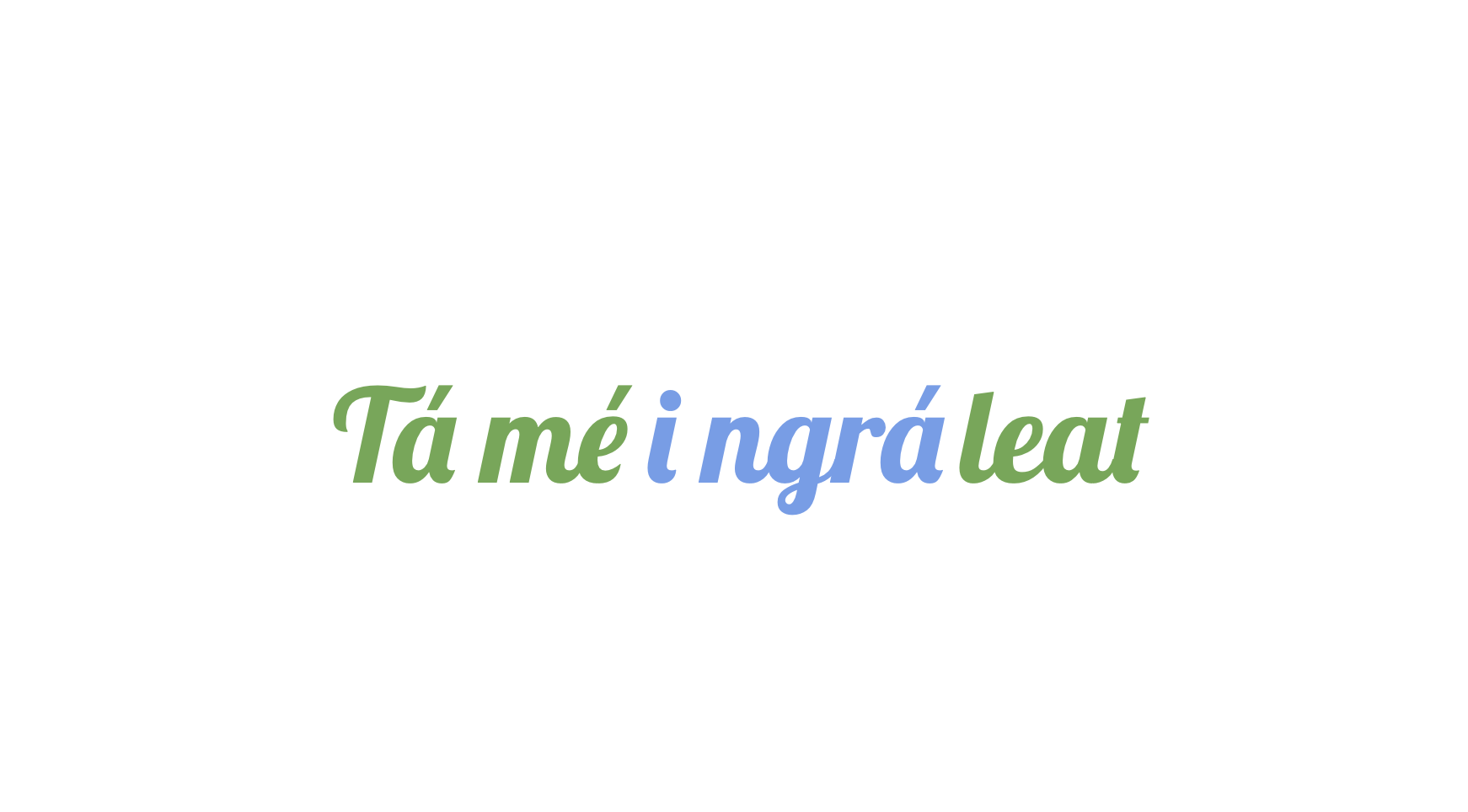
I responded by lauding the beauty of Irish, by the fact that Irish helps the speaker understand the nature and world around them differently. Take the phrase Tá mé i ngrá leat for example. This means “I love you,” though not quite in the same sense as the English. In English, there’s the subject “I” who’s doing an action “love” to the object “you.” This is the same way that this sentiment is expressed in many other languages from German “Ich liebe dich” to French “Je t’aime” to Spanish’s “Yo te amo” or more simply “Te amo.” 

Irish, on the other hand takes a less forceful approach, instead having the subject “mé” being in a state of love ” i ngrá” with the object “leat.” Thus, in Irish the expression Tá mé i ngrá leat says less that one person is expressing love toward another and more that both people are in a state of love with each other, a model of relationship that I personally prefer far more. Losing a language like Irish loses this elegant worldview, it takes away one particular means of understanding how one group of humans has long perceived the world around them.

Another way that Irish does things differently from English is in the use of a habitual copular verb. In plain English this means there’s a version of “to be” that expresses an action that’s done on a regular basis, so Bím ag scríobh colún gach seachtain a The Wednesday Blog atá air. | I write a column every week which is called The Wednesday Blog. This particular verbal construction of Bím rather than the present active tense Tá mé as seen in the last example helps express the regularity of the action, the writing of the blog and podcast itself. It demonstrates that I, Seán, am on a weekly basis writing this string of ideas which you, dear reader or listener, then choose to read or listen to. It also offers a sense of much needed hope that yes, I’ll actually keep writing The Wednesday Blog, something which I’m always not sure about. Today though, looking back at the 40 episodes already written and the 38 blog posts that came before the launch of the podcast, I’d like to think I’ve gotten myself into a good rhythm.

If there’s any other chief argument I’ve made in the past for why Irish ought to be kept alive, even taken off life support one day and spoken as another one of Europe’s vibrant languages, it’s that so many echoes of its once and future vitality still exist on the face of our world today. Take my name, Seán Thomas Kane, which though not intentional is a highly traditional Irish name. In Irish, my name is Seán mac Tomás Ó Catháin, or Seán, son of Thomas, descendant of Cathán. Cathán was a King of Ulster who ruled in the late 9th century CE about the same time as Alfred the Great was on the throne of Wessex. Thomas is my Dad, Tom Kane, meaning that my name actually works quite well seeing as I am actually Seán mac Tomás, or in the more clunky English Seán, son of Thomas. You can often tell when a family over here in the U.S. are Irish Americans by the fact that the parents and kids tend to have similar Irish names like Brigid, Patrick, Maureen, Brendan, or Molly, among others. While we’ve generally lost our ancestral language through the generations spent living in English-speaking countries, we’ve still kept aspects of that culture alive.

One thing I would love to see someday is a vibrant, if spread out, Irish-speaking community here in North America. It would be neat to have that sort of communal connection through our ancestral language preserved and even slightly transformed by our own distinct experiences living in North America from the Irish that’s spoken today in Ireland. Perhaps this would be seen in the gradual creation of a North American dialect of Irish alongside the three modern dialects of Connacht, Munster, and Ulster Irish. I for one am finding it easiest to speak a bit of a mix of Connacht Irish (the dialect spoken by my family) and Ulster Irish, though I’ve also learned many a Munster mannerism and mode of doing things as well.

Here in the United States our monolingualism has so greatly influenced our way of thinking that it is strange to consider a life where one might speak one language at home and one out in society. This is something done by people everywhere, even here in the US. In that future, even if we do come up with some sort of universal translator that just renders all linguistic barriers largely null and void, there would still be room for people to speak their own languages in their own way among themselves.

Go raibh maith agaibh go héisteacht! Thanks for listening!

Languages

Of any one of my talents, the one that I tend to pride myself in the most is my ability to pick up languages fairly easily. I listen for the patterns, for words that may sound familiar, and gradually piece together what the speaker or author is trying to say. I have a number of stories involving me fumbling through having to speak languages foreign to me, whether it be the time I accidentally said “no” in Finnish when I mean to say “eh?” as in asking the flight attendant to repeat her question, or the time when I tried to tell a pair of Flemish men I didn’t need to see a doctor after falling down a flight of stairs at the train station in Welkenraedt in eastern Belgium. My solution there, by the way, was to merge the German “Ich bin gut” with what little I knew of Dutch, coming up with “Ik bin gut.” Regardless of how accurate it was to the situation, the fumbled line in my attempted Flemish worked, and kept the medical attention at bay.

The first language I learned to speak was English, American English, centered on the Midwestern cities that I’ve called home, Chicago and Kansas City. I’ve often yearned for small signs here or there of linguistic peculiarities in my own speech, and in the ways my family and friends speak. While many of the most evident signs I’d hope would appear haven’t shown, we aren’t terribly distinctive in how we speak, pretty standard American to be honest, the potential that we could have some regionality in our speech certainly makes the foundations for a good story.

I wouldn’t really begin to learn other languages until I was 14, when I began taking classes in Irish, the language of the majority of my ancestors. I’ve always wanted to be fluent in Irish, to speak the language which I feel is the closest to the beating heart and origins of my community. Based on Census data, my great-grandparents’ generation among my Kane ancestors, the ones who came over from Mayo a century ago, were the last ones who likely had some Irish. That multigenerational gap in our ability to read, write, speak, and think in our ancestral language reflects the degree to which we’ve become American with each generation, to which we’ve given up the cóta of the coasts of Clew Bay and embraced our new urban Midwestern American nature to its fullest.

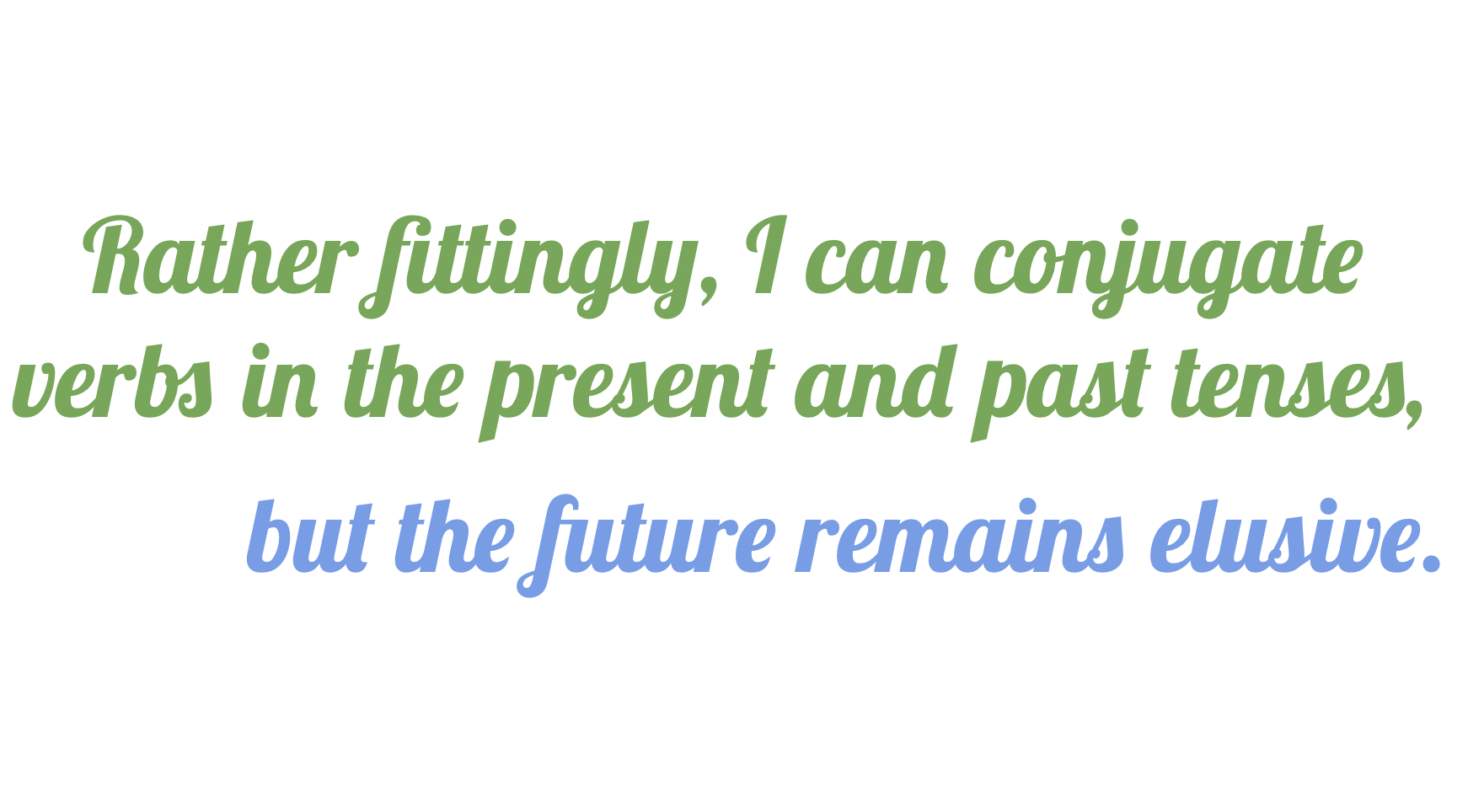
Today, I can do somethings in Irish; rather fittingly I can conjugate verbs in the present and past tense, but the future remains elusive. I use my limited Irish in some contexts, when she was still alive I’d talk to Noel in Irish, saving that language so dear to my heart for my dearest of friends. In the meantime, I’ve focused on other languages: I’m now on my third attempt to properly learn Latin, thankfully as I hope my previous post made clear, third time’s a charm. I’ve also spent a great deal of effort and time learning French, with enough comfort to the extent that I built my PhD dissertation’s source material around the availability of French sources that I could. I’ve spent time studying German and Italian, Ancient Greek, and Egyptian Hieroglyphs. I’ve studied my other ancestral languages, Welsh, Finnish, and Swedish, as well as a little more Flemish after my railway station tumble.

I once wrote a sentence in Irish that I thought expressed how I think about the language, how many of us the descendants of European immigrants spread across this continent may well equally think of their ancestral languages. Is ár dteanga an glór ár n-anama í. “Our language is the voice of our soul.” As best I can tell, it’s grammatically correct, and to me it has deep meaning. As long as we understand and remember our ancestral languages, the deep and intricate contexts of so many aspects of our familial manners and ways of life will stay alive. Even in the whisper of an ethnic memory that comes in preserving our names, the many Irish Americans named Patrick, Molly, Colleen, Brendan, Aidan, or Seán, we can see a hint of the Irish language alive today.

If I am able to truly become fluent in Irish, and I hope I’ll be able to dedicate the time and energy to do so in the long run, I hope my contribution to the language will reflect our times, that as truly it will recognize the efforts of generations past, my Irish will be the language as it is spoken in the twenty-first century, with recognition of the international nature of the language deeply rooted in the native soil from whence all Irish Americans’ ancestors came. I hope deeply, as an American cousin, that my efforts to continue my studies will reflect the respect and admiration I feel for the modern, progressive people my Irish cousins have become.