For most of my adult life I never really thought that I’d ever own my own house whether through the pure economics of trying to buy a house in the neighborhoods that I like here in Kansas City or in the other cities I’ve applied for jobs in. There have been the odd moments though when homeownership seemed within reach, as a sort of mirage just on the edge of my vision. In these instances, the circumstances that would’ve allowed me to buy a home faded away, yet by getting that taste of the possibility of it this future still feels probable.
The arguments for homeownership are financial, having a stake in the local economy through your home value, and aspirational of having control over your future in this fortress that you can truly make your own. To every man his castle, right? I do have ideas for a dream home, ways I’d decorate it, ways I might even add onto it. There are ways that I could modernize one of the century old homes here in Brookside to be more energy efficient, to run on renewable power, and to feel futuristic for even the 2020s. I want to have lots of color in my home, whether in patterned tilework or in the art that I’d hang on the walls. I also want to have a room set aside as a library for the practicality of needing to store all my books, yet also as a place to work.
There are days when I still sometimes think about the houses I considered buying. Now it’s as if I’m remembering the memory of these places where I was thrilled to imagine myself living. That hope at the heart of all of this is what keeps me engaged and actively trying to move my career forward. Today, writing this it’s hard to imagine me owning a house as my professional life continues to exist in its malaise waiting for things to happen. I’d rather not be so rooted in one place as the potential for my life to wander from place to place is too good to let pass by.
To this end, Jennifer Denbow, a Professor of Political Science at Cal Poly, San Luis Obispo made a very strong case for renting or even condo ownership in her recounting of her family’s struggles to buy a home in their city in an article in the February 2025 issue of Commonweal. I usually don’t underline text in magazines, the better to preserve the physical artifact for someone else to read. Yet in this instance, I was drawn to Professor Denbow’s affirmation that living in a multifamily development allows the “building of community and solidarity,” something much needed today. The investment here is in the community itself, less in the property which can drive individuals to support restrictive housing policies which keep the housing stock low and house prices high.
In my experience the reality of this community and solidarity depends upon the people living in close proximity with one another. I knew many of my fellow tenants in my building in London, yet I knew them far better than I did my downstairs neighbors in Binghamton. In London we had more in common, all of us were students––a mix of undergrads and postgrads––and all of us were new to that city and learning about it as we lived in it together. The same could be said for my dormmates at Rockhurst and during my summer study abroad session at Westminster. We became fast friends through our mutual situations and interests. This common bond is necessary if any solidarity is to be achieved.I suppose homeownership for me is one of those standards of American life that wavers in and out of range for me. I might buy a house or a condo someday, but it’s never been a guarantee. I know the sorts of places that I like in the cities where I want to live. Where the next year or two will take me remains uncertain.
This week, looking ahead to the next 25 years here are three things that I hope we see become ordinary things by 2050.
—
Click here to support the Wednesday Blog: https://wwww.patreon.com/sthosdkane
This week, looking ahead to the next 25 years here are three things that I hope we see become ordinary things by 2050.
Last week I started the New Year off in this publication with a reflection on the technologies that I remember looking forward to in the first quarter of the twenty-first century. Today then, I want to look ahead to the next quarter, to the years leading up to 2050. On New Year’s Day of that year, I will be 57 years old, well into my career with hopefully a good wind in my sails from successes and contributions to society in the decades previously built upon the work that I am doing now. Perhaps by then I will watch the New Year’s ball drop in Times Square with my wife and children to be, though that’s one dream that remains more elusive to imagine than any professional triumph. 2050 feels like a strange milestone to me, in part because 1950 feels far more tangible to me growing up surrounded by people who were beginning their own lives in that middle decade of the twentieth century. Yet as much as I feel a bond to the century of my birth, my own legacy will likely be numbered among the figures of the current century rather than the last.
Our century has tremendous potential to be one of the most consequential in the long history of humanity. We’ve already seen dramatic changes in the first 25 years which have defined the break in our current moment from the century we left at the millennium from new wars and economic recessions to the COVID-19 pandemic and dramatic advances in technology and global interconnectedness. A significant cause for discomfort in this century is the rift between those who see globalization as a threat to individual, local, regional, and national identity and the increasing interconnectedness of our world. At the beginning of this century the easiest and most affordable way for us in the United States to be in touch with relatives in Britain and Ireland was by letter, whether handwritten or typed, and sent by air mail to arrive within the next two weeks at its destination. We could place international phone calls, I remember doing this in early 2001 when my Mom was in London on a business trip, but those were far more expensive. The expense of international calling over regular phone networks remains an annoyance, yet today we have other options of placing voice and video calls over the internet that have existed since near the beginning of the century which fill this role.
The increasing ease of global communication is one clear sign of the advances of this century that I applaud. Just before writing this, I spent a delightful hour watching a live public lecture from the Linnean Society of London over Zoom in which I was able to pose a question in the Q&A box that was read by the moderator at her desk nearly 7,000 km across the Atlantic and answered soon after by the speaker. Throughout my undergraduate I often heard the maxim that I should earn my doctorate in the country in which I wish to teach, yet the little islands of national academies that we’ve built in the last two centuries are fast growing into each other’s back gardens to the extent that in my experience there isn’t so much an American and a Canadian academy but a North American academy which also has close links with the republics of letters in Britain, Ireland, and across Europe with more disparate connections in East Asia, Australia, and New Zealand or even South Africa. I’ve yet to present at any conferences on the far side of the Pacific though I have attended conferences held at the Universities of Auckland and Sydney over Zoom that were held the following day, or thanks to the disparity of time zones late in the evening here in North America.
The lecture in question
Yet again, these are technologies which already exist and even if they have room for improvement, they fit better into that first of these two entries about the technological innovations of the twenty-first century that I am most excited by. This week then, I intend to discuss three technologies which I hope will see fruition in the next 25 years that would have a noticeable influence on all our lives for the better. All three of these technologies are already being developed, and in some cases merely need implementation here on this continent as they already are elsewhere. We seem to be in a moment of reaction when the parking brake is firmly grasped in the hands of those who fear any further forward motion on the part of our society whether for their own portended loss of power or their general fear of the unknown. Both are understandable, yet as Indiana Jones learned in his last great challenge in The Last Crusade there comes a point in life where each of us needs to take a leap of faith and trust in ourselves and our future.
The first of these three technologies which I’ve read a great deal about in the last several years and which is proven in a laboratory setting is the use of nuclear fusion to create a new source of energy and ideally power to keep our lights on. One great worry I have among many others about the incoming administration which will take office next week in this country is that they will slow or even stop the construction of new renewable energy facilities: solar and wind farms in particular without any significant scientific foundation for that decision. We ought to be developing ways that solar panels can be integrated into the shingles and tiles atop our roofs so that they aren’t an extra addition to any edifice. Likewise, wind farms in places like the deserts, the Great Plains, and off our coasts (ideally still out of sight of the beachgoers) where the wind is strongest and most usable would help to eliminate our use of fossil fuels including natural gas and coal which are still in use in parts of this country.
A drawing of the ITER Tokamak and integrated plant systems now under construction in France. CC by 2.0 Oak Ridge National Laboratory.
The prospect of nuclear fusion to be downsized from its current necessary laboratory dimensions to something that can be implemented on a local level in cities and towns around the globe is what I look forward to most. The effects of human influenced climate change are well and visible around us. Look no further than the extreme shifts in weather year round, or the prolonged droughts across much of this continent. Look at the winter wildfires that burned around Boulder, Colorado and west of Kansas City in Central and Western Kansas in December 2021. Look at the wildfires burning down neighborhoods in the Los Angeles area today! We need renewable and clean energy sources that will continue to power our civilization if we’re going to survive in this brave new world that we’ve created for ourselves. We’ve already reached the threshold of a 1.5ºC increase in mean global temperatures, and we only seem to be letting things get worse. I’m reminded of the beginning of the story of the Flood in Genesis and how “the wickedness of human beings was on the earth” and “[corrupted] the earth” itself. Are we not doing the same thing by not wedding our continued innovation and progress with a heart for preserving the Earth that has nurtured us to which we too contribute? If we can develop technologies from our own invention which will cultivate a stronger relationship with the rest of nature on this planet in whose cradle we evolved as every other living thing we today know did then what are we doing?
Secondly, one of my great passions outside of academia is the promotion of high speed rail here in the United States. The YouTuber Alan Fisher recently released a video which spells out the utility of high speed rail as a realized technology in contrast to the fantasized options like the Hyperloop that caught our national attention several years ago and even resulted in a thorough study by the State of Missouri to build a hyperloop line between Kansas City, Columbia, and St. Louis. I’ve had my fair share of experiences on high speed rail in Europe and having that option alongside air travel would go a long way to building a far more equitable society in this country. Today, unless you choose to drive the 3.5-4 hours it takes to get between Kansas City and St. Louis, you have the choice of 2 daily flights on Southwest, 2 daily trains on the Missouri River Runner, or 8 daily bus services provided by Greyhound and Flix Bus. While the flight itself is quite short, rarely more than 45-50 minutes from takeoff to landing though including travel to & from each airport and waiting time this option grows closer to 4-5 hours in length. Meanwhile, the train takes 5.5-6 hours and the bus usually 4.5 hours to cross the state. With high speed rail we could certainly cut the travel time either along the Missouri River Runner or a new route along the I-70 corridor with one intermediate stop in Columbia for a service that could well be faster and more convenient than driving. The Missouri state high speed rail proposal from the High Speed Rail Alliance, of which I am a member, calls for 10 daily roundtrip services between KC and St. Louis at least making it possible for residents of either city to make day trips to the other, something that is very difficult to do by any option today.
The Eurostar hall at St Pancras International in London. Photo by the author, 2016.
In Kansas we have a more tangible possibility for high speed rail thanks to the work of a YouTuber who goes by the channel name Lucid Stew. He released a video this summer theorizing what a High Plains HSR line between Denver and Kansas City would look like. The total travel time largely following I-70 would take 3.5 hours compared to the 4 hours it takes to fly between the two cities with airport transfer times included. There are currently on average 7 flights per day between these two cities offered by Frontier, Southwest, and United and there is at least 1 daily bus between the two cities. The drive across Kansas is a dull one, the Great Plains really do get to seem flat once you get west of Salina until essentially the Denver Airport exit. I remember falling asleep in the passenger seat on my last drive from Denver back to Kansas City in June 2021 in a trip featured in the Wednesday Blog two-parter “Sneezing Across the West” and dreaming that there was a high speed train running between the two cities that ran frequently enough (a minimum of 10 trips per day each way) that allowed your average Kansas Citian the opportunity to get off work on a Friday afternoon and go spend the weekend in Denver or up in the Rockies with enough time to come back on Sunday evening to make the start of business on Monday. It was one of those dreams that really sat with me, and made me wonder whether it could be possible to build this line in the future? I think the key feature that would make this happen would be if it were the primary transcontinental link between a Midwestern high speed rail network centered around Chicago and the easternmost node in a Western network that included lines reaching as far as the Pacific Ocean. While it’s far less likely that most travelers would take high speed rail from Kansas City to Los Angeles, San Francisco, Portland, Seattle, or Vancouver, we should still think on a continental scale because there could be travelers leaving from Denver who might want to make that trip, putting the High Plains HSR line into the broader North American network.
The Southwest Chief in Kansas City, photo by the author 2023.
I for one would gladly take a high speed train to Chicago over flying or driving. I already enjoy taking the Southwest Chief, though I was lucky the last time I took it that we arrived on time. Our current passenger rail network is hampered by the lack of enforcement of the federal law which says that Amtrak should have the right of way over freight, yet the host freight railroads now run trains so long that it’s much harder to manage Amtrak schedules in the face of mile-long freight trains that take up much more of the space along these lines. This is a problem for both the long distance routes like the Chief, which runs on BNSF tracks between Chicago and Los Angeles, as it is for the state-sponsored routes like the River Runner which runs on the old Missouri Pacific line now owned by Union Pacific. With the same sorts of amenities as the current trains, the option for private compartments (roomettes, rooms, and bedrooms), sleeper capabilities, a fully stocked dining car, and the observation & café car, I’d happily spend a couple hours more traveling by train on a high speed line between Kansas City and Chicago via St. Louis rather than take the more direct, if slower, route on the Chief. It seems more likely that the Missouri River Runner will get the high speed upgrade than the Southwest Chief because it’ll serve more people: the Southwest Chief’s primary metropolitan areas east of the Great Plains are Kansas City and Chicago alone. If we had an express train that ran just between those two cities along the Chief route that could be another good option that’d cut the journey down from 7 to closer to 5 hours.
RideKC’s Streetcar service at Union Station, photo by the author 2016.
All of this would need to be complimented by better public transportation on the regional, metropolitan, and local levels. We will soon see the opening of the southern extension of the Kansas City Streetcar down Main Street from Union Station (23rd Street-ish) to UMKC (51st Street). This will get the Streetcar right to the top of my neighborhood, Brookside, and just within reach that I will probably begin to take it when I’m going downtown for work or a day out. Yet our local transit agency, RideKC, needs to expand bus service south of 51st Street now to feed people onto the extended streetcar line. Currently we have 20 minute frequencies on the Main Street Max line south of the Country Club Plaza (47th Street), which have been the case since the Max line opened in 2005. I for one want to see at least 10 minute frequencies all the way to Waldo (75thStreet) if not even further south to 85th Street or even to the I-435 loop around 103rd Street. This is a problem that needs to be addressed nationwide. I firmly believe that no one in an urban or suburban area should live further than a half a mile from a transit line, whether that be a bus, streetcar, light rail, metro, or regional rail. When I worked at the Nativity Parish School at 119th Street and Mission Road in Leawood, Kansas the closest bus line to the school was the 57 bus stop at the intersection of Minor and Wornall Roads just north of Avila University (Minor Road becomes 119th Street at State Line Road, aka the Kansas-Missouri border). The walk from there to the school is 2.1 miles (3.38 km) in length and according to Google would take about 45 minutes to complete and while there’s a sidewalk for most of the way on the north side it does end at the property of the Church of the Nazarene just 528 feet shy of the border. Here the pedestrian can cross the street and continue on the south side of the street, but that’s not always the safest prospect on what is a fairly major street on both sides of the border.
In Kansas City we need more streetcar lines and a robust regional rail network that can connect the disparate suburbs together as a supplement for our existing highway network. Thinking about this over the weekend I came to the thought that perhaps if we had a strong enough passenger rail network it could leave more space on the highways for freight traffic which already makes up a fair share of the interstate network’s users. Here if we had a system of through services connecting at Union Station on the tracks of the Kansas City Terminal Railway (KCTR) we could have north-south routes running from St. Joseph to Gardner or Lee’s Summit that would connect points in between including KCI Airport, suburbs in the Northland, Downtown, and neighborhoods and suburbs on the southwest and southeast sides of the urban core. Likewise, an east-west line ought to run as far west as Topeka and as far east as Grain Valley or beyond along the I-70 corridor would do a great deal to connect this region.
I’ve digressed a great deal here about transportation, and rail in particular. So, let me finish with something that’s on a smaller scale yet seems to be growing into something far more robust. In the last decade 3D printing has really developed into a new art form that has a great deal of utility to offer. My parents have developed a hobby of 3D printing with both uses. I’m quite proud of the one print that I’ve completed with my Mom’s help. Just before Christmas we made an old World War I biplane with red filament leading to my declaration that this year the Red Baron would be visiting the Baby Jesus in our manger scene. I’ve seen newer models of cars and trucks, the Ford Maverick in particular, which have interior parts that are 3D printed.
The Red Baron biplane as it appeared when it finished printing. Some assembly required. Photo by the author, 2024.
In October 2016, NASA launched Phase 2 of its 3D printed habitat challenge to see what could be designed as homes “where future space explorers can live and work.” One of the problems to be solved here is that for every kilogram of mass which is carried into Space whether for a Lunar or Martian destination the spacecraft will need to carry more fuel. So, why not bring lighter materials that can be assembled on arrival? The advent of 3D printing technology will allow this to happen with the understanding that the technology will continue to advance in the coming years as the Artemis program brings humanity back to the Moon in the 2020s and 2030s and a future program takes astronauts to Mars for the first time. I don’t know if we’ll see humans on Mars by New Year’s 2050. It’s possible, but with all the delays that the Artemis II launch has faced it seems like the days of rapid-fire launches from the Apollo era are more a distant memory than a part of the present moment.
The Tiki Taco Surf & Turf Burrito, not 3D printed. Photo by the author, 2024
Other innovations in 3D printing stand as challenges to be faced: ghost guns made from 3D printed parts are a new threat to public safety, and the fact that these filaments are largely plastic concerns me from an environmental standpoint. I’m curious however about the prospect of 3D printed food. A long term vision I have for this technology is that it may lead to some sort of device like the replicator we see on Star Trek, and should my preference for beef over other meats become unsustainable and too expensive for me to continue in the next 25 years then I’d be open to considering an artificial alternative that is less taxing on the Earth and its environment alongside eating other meats: bison, chicken, lamb, and pork as well as the varieties of seafood. Yet with this last one there’s the problem of over-fishing. By any natural measure we in Kansas City shouldn’t have as easy access as we do to saltwater fish, shrimp, and the like. I’ve recently discovered the surf & turf burrito at Tiki Taco, a Kansas City Cali-Mex chain with 3 locations. This burrito’s main ingredients are shrimp, steak, with either rice or fries and several other fillings, and yes, I do love it. Yet again, if cattle produce more methane than is safe for our climate and if industrial shrimping is bad for the long term viability of shrimp populations and the oceans in general, shouldn’t we look for alternatives, even ones that have their origins in laboratory experiments?
Finally, I don’t quite know what to make of advances in artificial intelligence quite yet. The means in which it’s become most visible in our lives is through crafted sentences and generated images. I’ve seen some examples of good AI and many of AI that is obviously computer generated. I freely admit to using an AI program, DALL-E 2, to create the images I used in my story “Ghosts in the Wind” from the Season 2 finale, and again I used a separate AI program to create the portrait of Carruthers Smith which appears at the top of my story “Carruthers Smith’s Museum” and its follow-up appendix. I’ve taken advantage of the vast database behind Chat GPT to confirm it’s not aware of more secondary sources in projects where I’m less familiar with the scholarship, a sort of streamlined version of the databases I’ve used throughout my career to find peer-reviewed articles and books. Yet I have too much pride in my own scribblings to use an AI program to write for me. If I want to find a fancier way of saying something, I’ll turn to my trusty thesaurus instead and decide for myself which of the synonyms I like best.
I do think we can find examples of computerized systems that work well to enhance the lived human experience of all three of these technologies. Computers with human supervision will be one of the better ways of monitoring nuclear fusion reactors to ensure their safe operation. Driverless trains already operate in cities like London and Paris, and while it’s disconcerting when you first board the front carriage of a DLR train or a Line 1 train in their respective cities you get used to it. On a less labor-pinching model using automatic train signaling systems and AI driven algorithms to determine schedules and monitor bus & train maintenance will help streamline things. Meanwhile in the world of 3D printing the flaws in current printers certainly can be ironed out with assistance from artificial intelligence to build things in regular patterns and to warn the operators if the machinery involved needs to be fine-tuned or replaced. As a comparison: Teslas have sensors in each wheel which keep track of individual tire pressures. These sensors are accessible on the central display screen. My own Mazda Rua has similar sensors, but they don’t differentiate between each of the four tires and so there’s the one light that will illuminate when there’s a problem. To find which tire has the low pressure I need to leave my car and check each one manually, which really isn’t a problem, yet it’s become an annoyance on my long drives when I’ve had to stop repeatedly to check tire pressures because of the poor quality of road surfaces on our older highways in this country.
As I’m writing this, I’ve been watching the notifications pop up on my computer from new emails coming in. A recent software update from Apple introduced Apple Intelligence to my computer, and now I get brief summaries of each email as they arrive. This means that the pop ups appear a second or two slower than before, and so if I’m not busy as I often check the email before the pop up appears. However, one that did appear while I was finishing the last paragraph announced several new books for sale at a local bookshop. One category of these was “Dystopian fiction.” I for one don’t care for dystopias, I’d rather spend my days thinking of utopias. Sure, the word utopia is St. Thomas More’s way of saying “nowhere is perfect,” but isn’t the human ideal that we’re foolhardy enough to strive for things that seem impossible only to find we actually got close to making those things happen?
Today, high speed rail is slowly being developed in this country. The Central Valley leg of the California High Speed Rail line between Los Angeles and San Francisco continues its slow march, even as its detractors try to see it shut down. At the same time, Brightline West’s efforts to build a separate high speed line between the eastern LA suburb of Rancho Cucamonga and Las Vegas seems more likely to open in this decade. Once we see those lines open in California, will the rest of the country begin to take notice and start planning their own high speed lines? By the time we reach the middle of the century it’s possible our energy sources will come from nuclear fusion generators as well as solar and wind farms, hydroelectric dams like the ones around Niagara Falls, and some as yet unknown or unfamiliar technologies that will help our civilization to progress further in communion with nature rather than in contrast to it. This could well be done using the descendants and successors of our current 3D printers. This technology will likely be instrumental in the establishment of the first permanent human settlements on the Moon and Mars and could prove just as useful here at home. Maybe the interiors of those trains will largely be made from 3D printed materials and parts not unlike the prefabricated houses that’ve been built now for generations. I remember seeing a news story in 2019 or 2020 about a company building prefabricated homes that didn’t require air conditioning because of strategic window placement near the roofline which allowed for the wind to naturally cool the space.
There are a great many prospects to look forward to in the next 25 years, and I hope come New Year’s 2050 that we will be living on a far healthier planet and will have worked through the gridlock that keeps us held back today. I hope that 2050 will beckon in a happier time in a way that 2025 doesn’t seem to be.
This week, to begin Season 5, I discuss some hopes of mine for the first quarter of the twenty-first century through reflections on three things that I imagined might be possible twenty-five years ago.
—
Click here to support the Wednesday Blog: https://www.patreon.com/sthosdkane
This week, to begin Season 5, I discuss some hopes of mine for the first quarter of the twenty-first century through reflections on three things that I imagined might be possible twenty-five years ago.
25 years ago, I was a young boy of 7 when I witnessed the ringing in of the New Year 2000 in my Aunt Jennie’s living room. I was a new arrival here in Kansas City, having only lived here for close to six months, and surrounded by people and places that were fairly new to me. The end of the twentieth century was a significant turning point in my life. It meant that I would be a part of the first generation to grow to adulthood in the third millennium of the current era. Despite this I’ve always felt drawn to the 1990s as the decade when I planted my roots and began to seek out an understanding of my world and what might lie beyond.
I remember throughout the day sitting in front of the television set watching several things, including my first viewing of Star Trek: The Next Generation, whichever channel it was showed “The Best of Both Worlds” Parts 1 and 2. Yet they also cut to the new year’s celebrations in cities around our planet. I remember seeing the fireworks go off atop the Sydney Harbour Bridge and later along the Thames. At 11 pm our time we watched the ball drop in Times Square, and then again, an hour later the networks rebroadcast that ball drop for us living in the Central Time Zone. We stayed the night with my Aunt Jennie and cousins Chelsea and Isabella and then drove north to Smithville, Missouri on the morning of New Year’s Day to buy a new sofa before returning to the farm my parents bought the previous summer where we were still building our house. That winter we lived in a 10-foot long trailer that had to be moved into the farm’s barn in the winter to keep it from blowing over in the high winter winds. This way at least we could be on the build site so my parents could be around to oversee the entire process of our house being built. The only other thing of note from New Year’s 2000 was that it was the last time I visited the town of Smithville until February 2019 when I gave a public lecture at the Smithville branch of the Midcontinent Public Library system. I’ve since made the trip to that northern Kansas City suburb once more in April 2024 in a vain effort at seeing the Northern Lights when I could’ve stayed home and seen them perfectly well in the city.
As New Year’s 2025 approached this year then I began to reflect on my memories of New Year’s 2000. In all honesty it was the first New Year’s that I can remember staying up for, let alone my first New Year’s in Kansas City. It’s one holiday that I’ve continuously celebrated in this city ever since. Yet what I’ve been thinking about more is what I was reading at the time about future technologies that were just around the corner. On a recent episode of the Startalk podcast hosted by Dr. Neil DeGrasse Tyson of the Hayden Planetarium in New York and Comedian Chuck Nice they interviewed Dr. Charles Liu, a professor of astrophysics at the City University of New York, Dr. Tyson talked about how the most futuristic thing that he looked forward to from the original 1960s Star Trek series were the videophones that they used. I too remember an entry in one of my childhood factbooks that I loved reading around the millennium which included one of these as one of the great up and coming technologies. While we may not have landline telephones with video capabilities like that entry suggested our portable smart phones all largely have this very function. The funny thing about it is that I rarely use FaceTime on my iPhone. Looking at my call logs the last FaceTime videocall I made was in March 2024 when I was excited to show off the room upgrade that I got in a hotel in the Chicago Loop to my parents. We’d stayed at that same hotel together several years before in the week between Christmas and New Year’s and had half the space for the three of us that I had in this room on my own.
I tend to make more videocalls on my computer over Zoom, FaceTime, WhatsApp, or Facebook Messenger and very rarely over Skype which Zoom largely replaced in 2020. Zoom has become the de facto videocall platform for many of us, especially in professional contexts. I even use Zoom to record lectures thanks to its screen sharing features. I do wish the technology could improve further though. It would be great to have an easier way to have the camera be set up higher so that it’s not looking up at me but instead straight-on or slightly downward. While an aesthetic preference it also speaks again to the old Star Trek ship-to-ship on screen communications seen in all of the series. Star Wars’s holographic communications would be an even neater step forward, and while I remember seeing a story about how the French left-wing leader Jean-Luc Mélenchon used holography in his bid in the 2022 French presidential election and another that ABBA is touring again in holographic form the technology still seems to be far from ubiquitous enough to be a regular form of communication.
An Air France Concorde at the Stephen F. Udvar-Hazy Center of the Smithsonian National Air and Space Museum near Dulles Airport in Virginia.
Another technology that I remember dreaming about in 2000 that was in active commercial use then yet has lain dormant for most of the quarter-century since is supersonic flight. The Concorde last flew in 2003 thanks to its extreme cost and the fatal crash at Paris-Charles de Gaulle Airport in 2000. Yet I remember my Mom often saying that she wanted to cross the Atlantic at least once on a supersonic jet. While there are many aspects of the in-flight experience on your average transatlantic flight that I enjoy, I do actually enjoy the food and movies in economy for the most part, I certainly wouldn’t mind a quicker jump across the water to Europe. The average supersonic flight between New York and London or Paris was 3.5 hours compared to the 7 hours it tends to take on subsonic aircraft. That’s closer to the travel time for a flight from the Midwest to Southern California today. Looking at supersonic aviation now and the promises of companies like Boom at restoring supersonic flight to commercial service, I’m hopeful that I’ll be able to someday fly on one of these planes. In the short term I’m more hopeful that Kansas City might finally get a nonstop service to one of the European capitals in time for our hosting duties in the 2026 FIFA World Cup. On my last return trip from Paris to Kansas City via Washington-Dulles while I enjoyed a great many aspects of the flight I do remember a growing sense of annoyance at how long it takes to get to Kansas City from Europe when compared to most other American cities our size and larger.
Finally, at the turn of the millennium one of my favorite TV shows was the natural history program Eyewitness co-produced by the publisher Doring Kindersley, Oregon Public Broadcasting, and the BBC. Surprisingly for how influential it’s been, I haven’t written about Eyewitness on the Wednesday Blog yet. This program brought the factual book series of the same to life for its viewers and set the stories of life, the universe, and everything it told in a computer-generated space it called the “Eyewitness Museum” which acted in some ways like a physical museum yet in many others with unusual camera angles and hallways it was entirely an edifice of the mind. I remember loving this series because it gave me the space to imagine and wonder at nature, the world, and human history in a manner which few other programs have done. I remember hoping that I could visit such a museum sometime in my life, and in some ways I’ve done that time and again. Many of the cultural artifacts in the program are on display at the Victoria & Albert Museum in London, and when it comes to the animals & plants on camera it’s well and truly on display in natural history museums around the globe that I’ve gotten to visit.
I rediscovered Eyewitness again in my early twenties when DK began uploading the episodes onto YouTube. By that point I’d already been making videos of my own for nearly a decade, and rewatching this old show from the ‘90s I was inspired to try to frame the material I wanted to describe in videos and in my teaching in a similar minimalist fashion on a blank white background with the object of my videos and lectures taking front and center. As it turns out, white is a much harder color on the eyes so in 2019 I switched to a light blue which I continue to use. My former students will certainly be quite familiar with my blue slideshows that form the core of my teaching materials. Those old Eyewitness episodes disappeared from YouTube in Fall 2023, in fact the last time I watched any of them was when I showed one to my seventh graders as part of their World Geography class.
Yet when thinking about the Eyewitness Museum itself the technology exists today that the viewer could tour that structure through virtual reality headsets. I still haven’t tried one of those on yet, at first from what I understood they didn’t fit over glasses, yet I’m curious about what potential they may hold for both education and entertainment. It would be fascinating to use such a headset to wander through that labyrinth of galleries famous for their all-white surfaces and see everything they hold.The last twenty-five years did not meet our expectations in many respects. Paul Krugman’s final editorial for the New York Times published on 9 December 2024 speaks to the loss of our millennial optimism in the face of 9/11, the Wars in Afghanistan & Iraq, the Great Recession, and all the other crises that have crashed on the rocky shores of our world. Where for a while we thought we might have fine sandy beaches that heralded a prosperous, safe, and happy future now we have fearsome cliffs which act as much as walls defending our “scepter’d isles” as limits to the possibilities of things in our world. I feel a dissonance in my own life with the world we live in because I am still an optimist, and still dream of things that we could do, new monuments to that optimism we could build, and like the Irish quarrymen brought to a young Kansas City in the nineteenth century by Fr. Bernard Donnelly, the founder of the Kansas City Irish community, ways in which we can break down those cliffs and build a city of fountains and gardens in its place. I’ll write more about all of this next week in a reflection on what I hope we will see realized in the next quarter of the twenty-first century. By the time we reach New Year’s 2050, I will be 57 years old, far from the young boy who watched humanity ring in the third millennium in what was for him a new city in a new time full of hope.
This week, some moderation in Maverick’s “need for speed.”
I’ll admit that I have never seen Top Gun nor the recent sequel. My best familiarity with the film is that I once had dinner at the Kansas City Barbeque restaurant on Harbor Drive in San Diego where they filmed one of the scenes in that film. At the time I was living in Binghamton, NY and out west for the 2021 meeting of the Sixteenth Century Society and excited to see somewhere named “Kansas City Barbeque” in walking distance of my meetings. The sauce had a vinegary feel to it. Still, that “need for speed” that Tom Cruise’s character Maverick appears to have in the film is something that I can get in some regards.
I’ve been driving for close to twenty years now. When I was little I always wanted to drive the family car. To put a stop to this pestering, my Mom said, “You can drive when you can see over the wheel and reach the pedals at the same time.” Well, that happened when I was ten, and I quickly moved from being in the trailer with my Dad while we bailed hay in the summers on the farm we moved to in Piper, Kansas to driving the truck. It was one of the first really smart things I ever did. I got my learner’s permit when I was 14, my restricted driver’s license when I was 15, and my full driver’s license when I was 16 on St. Stephen’s Day 2008.
In those first few years that I was licensed I, like many teenagers, was thrilled at being able to drive fast. I learned to drive on highways before learning to drive on narrower city streets and country lanes, as I was driving daily between our farm and my high school, St. James Academy, a 30 minute journey south along K-7 on the western edge of Greater Kansas City. I have many stories from those early years driving that surely will make good blog posts in future, so I won’t tell all of them here. I learned early how to drive with greater caution in ice and snow, and in one instance did slide off a highway interchange ramp going from I-635 southbound to I-35 southbound in icy conditions. All the same, I got a sense of thrill from driving.
And yet, I wasn’t one who liked road trips all that much, something which changed out of necessity when I started making my 14 long drives east & west between Kansas City and Binghamton between August 2019 and December 2022. These long drives changed how I drive, and made me highly aware of what my car, which I’ve lovingly named the Mazda Rua, because it’s a red Mazda 3, does in certain circumstances. One of the greatest feelings when driving is when I get the sense that I can control the motions of my car with only the slightest movements, and when there’s a sense of connection between my thoughts and my car with my arms and hands as the conduits for that connection. In Binghamton, especially when I was teaching online and didn’t have many places to go to get out of my apartment, I would take long drives in every direction, just driving as far as I felt like I wanted to in a day and turning around. In one instance I made it east on I-86 (NY-17) as far as Hancock, NY in the Upper Delaware Valley, while in another I drove up the western shore of Cayuga Lake almost to the New York State Thruway at which point I decided to turn around and return to Binghamton for the night. I’d spend this time on the road listening to podcasts or audiobooks and exploring the world around me in ways I otherwise wouldn’t have done. I now know a great deal more about the Southern Tier and Finger Lakes than I ever would’ve otherwise simply by spending a weekend day driving around seeing what’s out there.
I’ve always known the speed limit to be more of the mark at which traffic tends to go, a number to aim for yet ideally not cross too much. Here in Kansas City, it felt reasonable to drive maybe 5 mph (8 km/h) over the speed limit but not much more than that. When I arrived in New York State, I was told by people I met there that it’s normal to go 10 mph (16 km/h) over the speed limit, and so I tried my best to keep up with the pace of traffic. It was even worse during my Longest Commute when while driving in Florida along I-10, I-75, and Florida’s Turnpike from Destin to Orlando when the traffic was moving closer to 20 mph (32 km/h) over the speed limit, and again I felt the need to keep up if only for my own safety. What struck me the most was that after the Pandemic the average pace of traffic in Kansas City has risen to 10 mph over the posted speed limit not only on the highways but in some cases on the larger city streets as well. I followed along at first, trying not to be run off the road by the more aggressive drivers tailgating me the entire way on Southwest Trafficway from Westport Road to 31st Street, for example, yet I knew that even then I would not have the reaction times I wanted and needed to be able to stop for the odd jaywalking pedestrian or animal, or other obstacle that fell into the street. Like that time a couple of years ago when I was driving on I-470 out to Lee’s Summit when I had to dodge a sofa that fell out of the back of a truck in the middle lane.
This stands in stark contrast to my experiences in other countries where the speed limits are adhered to as they are posted. As much as approaching a roundabout at 70 mph (112.65 km/h) in Milton Keynes was startling to say the least, the fact that my friend who was driving kept strictly to the national speed limit (and was driving a Tesla that has the breaking ability to slow down enough to make it to that roundabout) was a relief, if a bit of an anomaly in my driving experience. In some instances the posted speed limits don’t always make sense to me. In 2010, I was walking down a road in Gleann Cholm Cille, County Donegal, where the posted speed limit was 80 km/h (50 mph), which seemed far too fast for the width of the road in question. Now having driven in Canada, it seems even more silly considering the 401 Freeway which is the main highway in Ontario has a posted speed limit outside of cities and work zones of 100 km/h (62 mph). In what way does it make sense then for an old bóthar, a proper country cow-path in Donegal, to have a speed limit that’s only just lower than one of the highest trafficked highways in Canada?
All of this got me thinking about how I drive here in America, and after I returned from this summer’s European tour, I found myself spending less time pressing down the accelerator and more time coasting; less time aiming for 30 or 35 mph (48 or 56 km/h) and more time enjoying and observing the neighborhoods around me, safely breaking for pedestrians, and not hitting animals.
On August 31st, the California Senate passed Senate Bill 961 which will require all new vehicles model year 2030 and beyond to have technology installed which will alert drivers if they are going more than 10 mph (16 km/h) over the speed limit. How this alert will function––an alarm bell, a verbal warning from the car’s computer, a vibration in the steering wheel, a slight electric shock to the hands––remains uncertain. Yet this bill made the national news because, like Wisconsin’s seatbelt requirement passed in 1962, it presages any federal legislation on the same speed limit technology. I know many people will be upset or angry about this legislation and will say that speeding is their right as an American, or whatever they will. I am in favor of the idea yet uncertain about the execution. For one, the 10 mph warning line ought to take local conditions into account, is the traffic around you going faster than 10 mph over the speed limit, and for all of us who will likely not be driving new model cars in 2030, how long until this law has such widespread effect as to be practical? Until earlier this year my Dad was driving a 1962 Ford F100 truck as his everyday car. My Mazda Rua is now 10 years old, yet it has always had a built in feature in the navigation system that will warn me I’m crossing the speed limit by turning the white speed limit sign on the screen red.
With all that I’ve written here about slowing down on the city streets, I still would probably drive faster on highways on intercity long drives, within reason of course. Today I don’t drive on the highways much, in fact I have a knack for actively avoiding the highways most of the time and taking the city and suburban street grid wherever I need to go in Jackson and Johnson Counties. Anywhere beyond that and I’ll usually have to get on a highway to at least cross the Missouri or Kansas Rivers. My point is that the circumstances of driving really will always depend on the moment in which I’m in. Here on my street, I’m happy to drive closer to 15 mph (24 km/h) instead of the 25 mph (40 km/h) speed limit. Perhaps the best we can do short of installing technology in cars that will slow them down to the speed limit, is doing the European thing of installing speeding cameras along all of our highways, roads, and streets which will send tickets by mail to anyone caught speeding. Here in Kansas City, Missouri our red light cameras were turned off in 2015 after the Missouri Supreme Court ruled them to be a privacy violation. These camera systems wouldn’t require officers writing tickets on the side of a busy street or highway. All that said, I don’t feel optimistic that the nigh libertarian political climate of either Kansas or Missouri will go for this.
That then leaves our speeding up to the individual drivers collectively creating a speed for the flow of traffic. I could say that this will help at least keep vehicles moving at roughly the same speed which will in turn keep everyone involved safe, but that again ignores the full impact of the human factor, my interpretation of chaos theory which I wrote about last week. At the time of writing, chaos might well be the best adjective for describing the streets and highways of Greater Kansas City. And that is proof, dear reader, that leaving the speed up to the individual drivers isn’t going to work.
In the last week, I’ve learned about the impermanence of things after a flood struck our house.
—
Click here to support the Wednesday Blog: https://www.patreon.com/sthosdkane
In the last week, I’ve learned about the impermanence of things after a flood struck our house.
I had just finished writing last week’s blog post titled “Olympic Optimism” when I started to hear the beeping noises around our house. This usually was a sign that the power was being tripped in some place, or that one of our smoke or carbon dioxide detectors needed new batteries. I checked outside, it’d been raining for a while so perhaps the power lines behind our house had suffered some damage. Seeing nothing in the back, I turned to my left toward the door to our basement garage and opened the door.
Our garage tends to flood anytime there’s a heavy rain, but it will barely be enough water to cover the soles of our boots. Still, it’s often enough water to require work cleaning up the mess. We live in an old house; it’s century mark will come in two years, and the stone walls of our basement garage, common for houses here in Kansas City built through the middle of the last century, tend to seep water when it rains like that. This time though, there was something different about the water that I saw, for it could not have rained so much as to produce a flood some 8 inches deep to the point that the car charging in our basement was partially submerged. I shouted to my Mom, who was finishing her lunch as we prepared to go out for the afternoon, and she came over to me quickly at the sound of concern in my voice. The sight of it all gave me a sort of thrill at first, as I thought about how dramatic this all looked.
I gently walked down several steps, not touching the water itself as I was sure there could be live wires submerged in that pond. I looked past the car and saw our trash and recycling bins on their backs floating in the surf. The entire basement was submerged, no part of it beneath that 8 inch mark was dry. I returned up the stairs, and went into my room where I kept a pair of snow boots that rise to a bit below the knee, and laced those up, figuring they were better than my usual shoes and went out onto our block to see what the damage was elsewhere.
As it turned out, the entire block on our side of the street had flooded. The city engineers arrived a while later and confirmed that the water main which they had replaced a year before had broken and flushed all of this sewer water into our basements on the downhill side of the block. The further down the hill, the worse it got. When we have disasters like this on my block, we develop a sense of solidarity. I remember the microburst of high winds, thunder, and rain in Spring 2018 that struck our street and toppled many of the trees on this block, crushing several cars beneath them, and causing considerable damage all around. We all banded together, and even some friends from neighboring blocks came to ours, as we learned which guys in which houses kept chainsaws handy. This time, we frequently wandered into the street at the same time, conferring how the damage looked in each other’s basements. There were other houses that had it a lot worse than us, for one our driveway neighbors’ basement was finished until this flood. Yet it wasn’t a difference between mopping up an inch of water in ours compared to several inches in theirs.
The damage from this flood was severe, destroying nearly everything that was on the floor. Thankfully, as of writing the car was deemed to be safe by its manufacturer, but so many other things were lost in the flood. Some of the last physical memories of my Donnelly great-grandparents were lost as my great-grandfather’s blanket chest partially flooded. I took photos of all the pictures we had to throw out, my eyes were the last ones to look upon the originals. Hereafter, we will have my digital copies, but it’s still not the same experience. My Dad lost plenty of power tools that he had collected over the last three decades and beyond. Many of my Mom’s personal mementos, her crafting goods, and gardening tools were lost as well. There was an old heavy wooden side table that my Dad bought in college which was ruined, and some wooden stools that I remembered from our first years in Kansas City that were also deemed unsafe. I found camp photos from my Boy Scout years in the 2000s that needed to be thrown away, all ruined by the flood.
In the days after I found myself drained of energy, beleaguered by a sense of uncertain loss. All of these things, I suppose, were tangible memories that I expected would survive until their materials degraded. We historians are able to study far older objects than the ones lost in this flood because they have survived long after their makers have returned to dust. Just two months ago, I was sitting in the Department of Manuscripts at the Bibliothèque nationale de France’s Richelieu building in Paris holding a volume that contained André Thevet’s handwritten translation of the Travels of Benjamin of Tudela. For the first time in the five years that I’ve studied Thevet, I got to feel paper on which he wrote his own name, on which the impressions of his hand and his thoughts could be seen. Thevet himself is long gone, his tomb in the Convent des Cordeliers likely destroyed during or after the French Revolution, yet there in that grand room I was able to touch something he touched, something upon which he left a part of himself with his words and ideas.
Any hope of experiencing that with these objects left by my great-grandparents, grandparents, parents, and by my younger self that were on the lowest level of storage in our basement are now gone. The experience spoke to me of the impermanence of the physical world, how as Persephone said to Orpheus in the Jim Henson retelling, “everything dies.” This past weekend, I found myself yearning for my childhood again, hoping that I might restore in my mind some of the memories of these artifacts that they might imprint themselves in my thoughts before my memory of them slips away. I could remember how those two wooden stools, light brown in color, felt when I sat on them for too long doing my homework or during meals. I could remember taking that camp photo with the couple hundred other Scouts from around Greater Kansas City and beyond, and how we all gave at least a half-hearted effort at the official photo before giving our all at the silly picture to come. The flood widened the gulf between this present time and all those things which embodied the memories of my past and my family’s past going back to the turn of the Twentieth Century. It made 2024 feel far more removed from 1924 than I’ve yet felt.The one good thing to come out of this flood, if anything, is that we can start anew and learn from the mistakes that led to such widespread damage this time. I expect there will be a next time, that same water main breaks at least once a year, though this is the first time it flushed sewage into our basements. I suspect we will not store anything on our basement floor ever again. Everything will be raised off the floor by at least 10 inches or more. I even suggested installing metal ramps strong enough to hold the car so that it too would never be susceptible to a flood like this again. That is the way of things: we are a reactive people; we see a problem and we don’t prioritize it until it hurts us. I wish we could be more proactive and avoid more of these problems, yet the trials and tribulations of life require that we learn from our experiences, and how can we measure the good moments of life if we haven’t experienced the bad?
Today, one week after this city's great triumph and great tragedy, I've decided to reflect on the week now passed.
—
Click here to support the Wednesday Blog: https://www.patreon.com/sthosdkane
Today, one week after this city’s great triumph and great tragedy, I’ve decided to reflect on the week now passed.
One of my favorite speeches of Peter Capaldi’s run on Doctor Who came at a moment when the Doctor finds himself in the middle of a war-game just beginning. On the one side are an alien species beginning their invasion of Earth, on the other the humans fighting for survival as we do. In a powerful bit of oration, Capaldi’s Doctor cries out that none of this conflict would happen if we would just sit down and talk with each other. I think of this scene often when I’m reading news analysis of our current moment in American history. We are at a point where we so vastly disagree with each other over the very facts of our nature and our world that we only talk with people with whom we agree.
Now there’s a key semantic note here: we talk to people with whom we disagree, yet we often only talk withpeople with whom we agree. One week ago, this city was filled with millions of people talking, cheering, laughing, and dancing with each other in our moment of jubilee. One week ago, this city basked in the bright, warm mid-February sky.
I didn’t go downtown for the parade, instead choosing to watch the first hour of it at home before going to my parish church for Ash Wednesday Mass and a delightful afternoon walk on that warm day at the Kansas City Zoo. While I was at the Zoo, riding on the Sky Safari chairlift on the way back from seeing the chimpanzees, I heard over the staff radio that something was happening at the parade. A few seconds later one of my best friends, a regular Wednesday Blog reader no less, texted me about a shooting at Union Station. By the time I returned to ground at the other side of the chairlift near the cheetah enclosure I knew enough that I chose to cut my zoo visit short and return to the assured safety of home.
At that point, we didn’t know if the shooting, still ongoing, was a terror attack or a fight gone wrong. It turned out to be the latter, yet in the process 22 bystanders were injured and 1 bystander, Lisa Lopez-Galvan, was killed. Her name is now etched into the memory of this city. She is by no means the first Kansas Citian to be killed in a shooting in the past year, each Sunday at Mass my parish prays for the victims of gun violence killed in the past week, ultimately reading 184 names in the 12 month course of 2023. Still, this was the first time that such a shooting happened with elected officials from the Governors of Kansas and Missouri to the Mayor of Kansas City to State and County legislators from throughout our region were all present. There are reports of Chiefs coach Andy Reid and players from the team helping comfort other revelers shocked by the sudden shooting and leading many to safety within Union Station itself.
At the time of writing the Kansas City Police Department has reported that the two suspects in this shooting are juveniles who got into an argument at the end of the Super Bowl Rally and started firing at least one, if not two, weapons. These individuals weren’t talking with each other but instead were talking to each other. The circumstances of the laws which govern our society here in Missouri contributed to this situation, and I hope that the experience inspires change in the hardest of hearts in Jefferson City and Topeka.
That evening, feeling shocked and dumbed by the experience of seeing our jubilee transform into a living nightmare I wanted to do something, anything that could help. At dinner, I compiled a list of all of the Members of Congress who represent the Kansas City Metropolitan Area with their DC office phone numbers and posted it to my Instagram story and Facebook profile. The following morning then, I dialed the three numbers of my Congressman Emmanuel Cleaver, and Senators Josh Hawley and Eric Schmitt. I spoke with a staffer for the Congressman and left messages with the senators’ offices.
Sen. Hawley (R-MO): (202) 224-6154
Sen. Schmitt (R-MO): (202) 224-5721
Sen. Moran (R-KS): (202) 224-6521
Sen. Marshall (R-KS): (202) 224-4774
Rep. Cleaver (D-MO): (202) 225-4535
Rep. Alford (R-MO): (202) 225-2876
Rep. Graves (R-MO): (202) 225-7041
Rep. Davids (D-KS): (202) 225-2865
Rep. LaTurner (R-KS): (202) 225-6601
In each case, echoing what Jason Kander, a local veteran and sometime Democratic political candidate, said on Wednesday night, asked each official to consider the repeal of a law called the Protection for Lawful Commerce in Arms Act (PLCAA) which prohibits lawsuits against the gun industry over damages caused by their products. The judicial system is something which ensures consumer safety. Without this safeguard, we are at far greater risk as a society, and we’re a society with a government that has checks and balances built into our very DNA! Those checks and balances only really work if the different branches of government, and the people who choose those in government, talk with each other about the issues of the day which in some cases can determine life or death.
As the week drew to a close, I set into a new task and worked a good 21 hours this weekend at the Kauffman Center in what was truly a wonderful antidote to the grief I felt after the events midweek. To me it seemed that many people choose to come see the Kansas City Ballet’s production of Peter Pan for the escapism that the boy who never grows up embodies. We did our part, however small, to help heal our city and restore some of that jubilant spirit to our lives. Even so, on one of those nights after a long shift I drove home down Main Street and stopped at the Pershing Road light just before midnight. Even then, days later, with St. John of the Cross’s dark night of the soul feeling ever present around me at that scene, the red and yellow confetti still gently fell as it had on Wednesday morning.
On Saturday afternoon, I attended with my parents and grandmother a rally held by the gun control organization Moms Demand Action in Washington Square Park, located across Main Street from Union Station. It is a site I know best as the annual home of the Kansas City Irish Festival’s arts area, where among other works of great imagination, I talked myself out of buying a beautiful painting of the USS Enterprise-Dfrom Star Trek: The Next Generation during the last festival over Labor Day weekend. The speakers at that rally included Moms Demand Action organizers, Missouri State Representatives, Jackson County Legislator Manny Abarca IV, and our mayor Quinton Lucas. All of the speeches I heard were stirring, and like my relations there I felt the same call to action, even as the same confetti fell around us blown on the wind from the west across the park.
Writing this on Monday night just before bed, I’m surprised to think that by the time you read this blog it will have only been 1 week, a mere 7 days, since our jubilee became our nightmare in the place where our city celebrates great triumphs. To me, this last week has felt more like two weeks, the emotions have been too great to be contained by a single week alone. I sit here, writing, hoping these words speak with you, while listening to Alan Gilbert and the New York Philharmonic’s 2015 performance of Verdi’s Requiem. It seems to be the best soundtrack for this week’s edition of the Wednesday Blog, something which evokes the inherent conflict and paradox of human experience and human emotions. Giuseppe Verdi was, after all, noted for his anti-clerical views, yet his spirituality can be heard in every note of this great Mass of the Dead.
I thought briefly on Wednesday about what I would say if I were in the room with the two suspects in this shooting. Yet after a few moments, after all the anger, all I felt was sorrow that they made their decisions which led to the nightmare they wrought. When I listen to the Lacrimosa in Verdi’s setting, I think not only of Ms. Lopez-Galvan, but of those individuals as well who caused her death. How can we heal if we cannot recognize each other’s humanity? This prayer then, the words which Verdi set to music, as Mozart and Berlioz did before him, speak to both the victims and the perpetrators:
Lacrimosa dies illa
Qua resurget ex favilla
Judicandus homo reus.
Huic ergo parce, Deus:
Pie Jesu Domine,
Dona eis requiem. Amen.
Full of tears will be that day
When from the ashes shall arise
The guilty man to be judged;
Therefore spare him, O God,
Merciful Lord Jesus,
Grant them eternal rest. Amen.
Postscript
Dear Reader, this is now the second week in a row that I’ve released a follow up to the weekly edition of the Wednesday Blog, a sign perhaps that this format does not quite work as well for current news as I might wish. About 20 hours after I wrote this week’s post and an hour after I sent the recording off to Spotify to be published at midnight Central Time, I read a story from KSHB, Kansas City’s NBC affiliate which confirmed the two main suspects’ names, their charges, and some of their testimony from their own hospital beds where they are recovering from their own gunfire.
What struck me the most about this story, which has since been updated with more information and a mugshot of the suspect whose bullet killed Ms. Lopez-Galvan, is that the man in question’s testimony shows some sense of remorse. Quoting from the article written by KSHB’s news staff, “‘Just pulled a gun out and started shooting. I shouldn’t have done that. Just being stupid,’ Mays said.” Knowing some of the humanity of this suspect speaks to me of how broadly this shooting has hurt so many.
In a week of great triumph for my city and impactful announcements, some words on civic pride.
—
Click here to support the Wednesday Blog: https://www.patreon.com/sthosdkane
In a week of great triumph for my city and impactful announcements, some words on civic pride.
A city is as vibrant as the people who make it, and those who build on its strong foundations do well to recognize their forebearers. Cities are at the core of our concept of civilization, the city is the star about which a system of suburbs, exurbs, and ever more distant rural communities revolve. This has been true since antiquity, when the first human settlements were established for the mutual benefit of those who lived within them. Our cities today exist for similar reasons. It’s easier to live close to the places you work, eat, and play. It’s safer to live surrounded by like-minded people who in the best of circumstances will come together when a crisis emerges.
Cities are extensions of humanity; they can be organic in how they grow and function. The cancer and rot we’ve seen grow in our bodies that pose the greatest medical struggles today, mirrors the decay we’ve see in our cities in the last 70 years with urban renewal projects that removed vibrant urban life for new modes of living which prioritized distant suburbs and cars traveling far faster than one can walk in order to better connect our sprawl.
Our cities can find common passions in their livelihoods, civic pride in the things a city is known for making, and within the last 170 years in our professional sports. A central part of my love for my original hometown of Chicago comes from my memories as young boy in the suburbs of that city during the Bulls’ historic second threepeat and the Cubs wonderous 1998 season. Here in Kansas City the passion for our local teams, the Chiefs, Royals, Sporting, and the Current, is one common bond that runs throughout this city and its metropolitan region. We may agree on little else, but Kansas Citians agree on their passion for their teams.
This week then, Kansas City finds itself amid two pivotal moments in its recent history. On Sunday night the Kansas City Chiefs won their third Super Bowl in the last five years. This was also their second consecutive championship. As Quarterback Patrick Mahomes said in his post-game press conference, “the Kansas City Chiefs are never underdogs.” This success for the city’s football team remains in stark contrast to the Chiefs of my childhood. They made a playoff run during my first year living here, yet I remember listening to their early knockout defeat on the radio around New Year’s 2000. On the day that this is released, the Chiefs will parade down Grand Boulevard through Downtown & the Crossroads surrounded by what will surely be crowds of 1 million or more.
On Tuesday of this week, perhaps hoping to ride on the celebratory mood, the Kansas City Royals, this city’s Major League Baseball team, announced nearly 5 months late their choice for a new stadium site to replace the 52 year old Kauffman Stadium located next to the Chiefs’ Arrowhead Stadium in the eastern suburbs. In September of last year, the Royals had announced two preferred stadium sites, one on the east side of downtown along the east loop where Interstate 70 and US-71 round the urban core, and the other in North Kansas City across the Missouri River from Downtown in suburban Clay County.
By the time the official announcement was released the rumors of what the announcement would hold had already been circulating for a good 12 hours, and to the bafflement of many, the delight of some, and the dismay of more the team announced they’d chosen a third site now occupied by the Kansas City Star Pavilion and a host of small businesses bounded by Truman Road on the north, Locust Street on the east, 17th Street on the south, and Grand Boulevard on the west. This site would be conveniently located next to the local indoor arena, the T-Mobile Center, where Kansas City’s hypothetical professional basketball and hockey teams would play. The proposed stadium would also connect to a park that is in the planning to be built over Interstate 670 on the south loop, which would continue to run beneath the park and new stadium.
A city needs to balance the causes of all of its constituents, each organ working in its own manner with minimal conflict between them. The proposed site of this stadium brings out clear and obvious conflict with local small businesses, Crossroads neighborhood residents, and the transportation grid of this city. I support the south loop park project which would cover Interstate 670 and better connect the Crossroads with Downtown, yet by that proposal Walnut Street and Grand Boulevard would be blocked by the park, which was fine before a baseball stadium was proposed to go there. The stadium proposal blocks Oak Street, a vital, if less used artery which runs along the east side of Downtown and the Crossroads connecting to Gillham Road in Midtown and eventually Rockhill Road at the Nelson-Atkins Museum of Art and Holmes Road on the east side of Brookside, my neighborhood.
The proposed stadium also displaces many vibrant local businesses that are located within its proposed footprint and will likely displace further local businesses in the surrounding blocks with a large new stadium dropped in the middle of their neighborhood. To me, it seems as though the team went out of its way to choose a third option which would disrupt as much of this city’s urban life as possible. With that in mind, I’m inclined to vote no on the question of whether we, Jackson County residents should renew the 3/8th-cent sales tax that’s on our April ballot in order to keep the Royals from building a stadium at this site.
Yet, I’m not opposed to a downtown stadium. I’m merely opposed to this proposed final location for the downtown stadium. I would prefer the City of Kansas City include questions on the April ballot asking municipal residents whether we’d prefer this location or the location on the east side of Downtown, which was the team’s original preference in Kansas City, Missouri. That location is currently occupied by parking lots rather than local businesses. It won’t require the demolition of a few vibrant blocks of urban life like the Crossroads location would. The one downside to the eastern location is that it is further away from the Streetcar line, the Power and Light District, and the T-Mobile Center. Yet spectators attending games at the current stadium walk further as it is often than they would in that situation.
At the end of it all, considering the history of teams that do not get their way with public funding for new stadiums, I worry that the current ballot question will not serve local residents in the best way possible. We stand to lose a great deal if the 3/8th-cent ballot question doesn’t pass, as both the Royals and the Chiefs have signaled their intent to look beyond Jackson County for new homes without that funding. While I expect the Chiefs to stay in Kansas City, I have my doubts about the Royals.
While all this is going on here, back in Chicago the White Sox and Bears organizations are also pressuring the City of Chicago and suburban municipalities for options for new stadiums as well. The Bears were all set on a northwestern suburban location in Arlington Heights until new pressures there have led them within the last week to muse about demolishing historic Soldier Field in favor of a new stadium in the old one’s southern parking lot along Burnham Harbor. Meanwhile, last week the White Sox released designs for a new stadium located 1 mile west of Soldier Field at an empty lot between Clark Street to the east, the South Branch of the Chicago River to the west, Roosevelt Road to the north, and 16th Street to the south. Over the summer when the White Sox initially found lukewarm reception for their own stadium rebuild, their leadership mused about either leaving Chicago for the suburbs or even going to Nashville.
My worry about the Royals, then, is that if they don’t get their way with the City of Kansas City, they’ll either move to North Kansas City, which would be all right but not ideal in my book, or worse out of town all together to a booming market like Nashville, Portland, or Austin. This city is proud of its teams, proud of its people, and proud of its local character. Let’s have clearer communication between all the parties involved in as momentous a decision as this new Royals Stadium as we can.I want to see a downtown stadium, just not on the site being proposed. One piece of the report from KCURthat bugged me more than others was that the Royals were unconcerned about the parking situation around their proposed stadium in the Crossroads because “as existing parking downtown can accommodate fans who drive to games.” This says to me they see all the expansive parking lots that remain in the Crossroads as permanent features of the area, and not temporary eyesores from a time when we thought it good to carve out our urban cores for the sake of suburban development. It says to me that the Royals organization wants to operate in the urban core but not be a part of the community.
I write these blog posts on Mondays and Tuesdays, and after writing this one yesterday afternoon I’ve since read more about the project. To put it simply: I don’t know what I think about this project. One glaring issue I still have is that Royals organization has a website for their new stadium but I couldn’t find it on Google. Rather, I found it linked in a Reddit post. All of the information I have comes from KCUR, KSHB, KCTV-5, and the Kansas City Star, as well as other individuals on Reddit and X (formerly Twitter). One Reddit user posted a side-by-side comparison of the proposed stadium and the current site.
I’m still disappointed that the Royals are choosing a site that is presently occupied, and that in their FAQ they rely on current surface parking lots that dot the Crossroads for future game-day parking when we should be looking at redeveloping those lots and building garages to handle downtown parking.
Yet, I drove through this area yesterday evening on the way to a Fat Tuesday party, and I can see how they could make this site work. I still have many reservations about this project, but this morning, I don’t oppose it. I’m not issuing a retraction for several reasons: my original argument still stands on some of these issues, the podcast was already published at midnight, and I don’t have a backup plan. If anything, I want to make it clear how there are benefits and detriments to this plan. I wish the Royals site would acknowledge the impact their plan will have by closing Oak Street and displacing the businesses on the 1600 and 1700 blocks of Walnut, McGee, and Oak Streets, and again I wish they would discuss building more compact parking options than the swaths of surface parking that remains a blemish on our urban core.
I’m not happy about this blog post because I want to offer you a clear argument. Yet in this instance I’m not sure I can, there are too many factors involved. If we were looking at a spectrum with 0 as complete opposition and 100 as complete support, when I wrote the original blog post on Tuesday afternoon I was at a 35 or 40, still opposed to this project but not vehemently so. Now, I’m closer to a 55 or 60, supportive of it yet still quite cautious about what it could hold for our city.
This week I want to talk about how we can recognize the existence of unknown things.
—
Click here to support the Wednesday Blog: https://www.patreon.com/sthosdkane
This week I want to talk about how we can recognize the existence of unknown things.
At the beginning of the month when I was preparing for my copyright post, I looked into an old interest of mine that had always been there, yet wasn’t quite active in the last few years, the effort by an organization called Thank You Walt Disney to restore the building that his first studio, Laugh-O-Gram, occupied at 31st & Forest here in Kansas City called the McConahay Building. To this end, I made a detour by the old building one afternoon on the way back from the central post office at Union Station and saw a good deal of work underway on that block, and after some back and forth I found a book written by some members of that organization called Walt Disney’s Missouri that I requested from the Kansas City Public Library.
I found Disney’s early years in Marceline, Chicago, and Kansas City quite familiar; his passion and drive to create art and tell stories in a new and inventive way using the skills and talents he developed over those early years remind me deeply of many of the ideas and projects I’ve worked on since my high school days. The sky truly is the limit in this mindset. I find the young Walt Disney to be a familiar face, someone who is quite relatable to all of us who have adopted Kansas City as our canvas for the many things we create.
Yet Kansas City is not like many other great American cities, for unlike New York, Los Angeles, or even Chicago we aren’t on a shoreline, we don’t look out onto an endless expanse of water far out to the horizon. Instead, we have the vast sightlines of the prairies and Great Plains extending out from our city in every direction. The astounding sunsets that glowed across the prairies out to the west of our old family farm are some of the great images of my childhood that will forever be burned into my memory.
When I was reading about Disney returning to Marceline, Missouri as an older man, I felt intensely familiar with the setting having grown up in the Midwest; familiar with the vast scale of the prairie that overwhelms me in how small it makes me, and the few built-up edifices of our civilization feel amid the tall grass Prairie. Our interventions only emptied this landscape and rebuilt it anew with the farms & ranches that have largely replaced the native roots. We have changed this landscape to suit ourselves, and yet this landscape remains its own because its fundamental character is too distinct for us to fully comprehend in our vision of a normal inspired by the great woodlands and old colonies of the East Coast and even older cultivated and measured forests and farmland growing around the ancient generational villages and towns of Europe.
My research focuses on the unknown entities that were too far-fetched to be imagined on the edge of the European imagination, particularly animals whose proportions were exaggerated to a degree that set them and the world they inhabited apart from the well-known and measured Mediterranean World at the heart of the European cosmos. This question of how we can begin to describe the unknown has stood out to me for a while and it’s something that both thrills and scares me at the same time. I feel a profound sense of humility thinking of all the things that we don’t know that exist beyond our world, whether they be lifeforms deep in the still largely unexplored oceans or entities deep in the void of Space. Yet I love stopping to think of these things and the endless horizon they represent as it gives me a sense of things still to accomplish.
Imagine, dear reader if you will, what it would be like to witness something you never before knew appear before your own eyes, or even those things which you do know about but only in stories and fables happening in real life. Shakespeare asked his audience to use their imaginations to fill in the breadth and depth of his world. In the prologue of Henry V, the Chorus asks the audience to imagine that the actors on the stage might
“on this unworthy scaffold bring forth
so great an object. Can this cockpit hold
the vasty fields of France? Or may we cram
within this wooden O the very casques
that did affright the air at Agincourt?
O pardon, since a crooked figure may
attest in little place a million,
and let us, ciphers to this great account,
on your imaginary forces work.
Suppose within the girdle of these walls
Are now confined two mighty monarchies,
Whose high upreared and abutting fronts
the perilous narrow ocean parts asunder.”
Henry V, Prologue 11–23
Our imaginations are perhaps our greatest assets, after all we call ourselves Homo sapiens, wise humans. We pride ourselves on our capacity for thought, on our ability to imagine possibilities for ourselves and our posterity. We need the unknown to give us hope that there will be something new to discover tomorrow, for even if that new thing is familiar to others, it will still invoke wonder in us. Hope is what the greatest human endeavors are built upon, the hope that even if a cause seems doomed in the short term that someday it will succeed.
I feel this sense of potential success is central to my nature. I grew up with this hopeful maxim from three sources, my Catholic faith in things inexplicable, my Irish heritage informed by the experiences of generations who hoped for home rule and justice under a colonial government, and more light-heartedly from my lifelong passion for the erstwhile lovable losers, the Chicago Cubs. Robert Emmet perhaps put it best in his speech from the dock that he knew someday his epitaph would be written, someday someone yet unknown to him in 1803 would be able to judge his efforts towards Irish independence. “Let my character and my motives repose in obscurity and peace, till other times and other men can do them justice. Then shall my character be vindicated; then may my epitaph be written.”
We cannot truly know what our future will hold, though we can predict what variable futures might come to exist. I wonder if a young Walt Disney would have imagined the man he would become, and how his name would be known by what surely is a majority of humanity alive today, 123 years after his birth. All of that was unknown in his childhood, just as all the things that will happen tomorrow and every day after that are still to a certain degree unknown to us today. That might be the closest we come to touch the unknown, to recognize its ambiguous feel, yet while that fine cloth of silk might seem somewhat familiar in its unfamiliarity, we ought to always remember that it extends far enough from our view and beyond all our horizons into infinity. There is, and likely will always be, more unknowns than knowns in the Cosmos.
A historian restores things forgotten from the vast silk threads of the unknown and weaves those fibers back into the great tapestry of human knowledge. I just started reading a book yesterday which does this with the understanding that religion and science have always been at odds when it comes to the age of the Earth. Perhaps I will write about that book, Ivano Del Prete’s On the Edge of Eternity: The Antiquity of the Earth in Medieval & Early Modern Europe in this publication later this year. That, good people, remains well and truly among those strands of the great yet smooth silky unknown sea which lies behind us, beyond our vision as the Greeks understood the future to be. The future is perhaps more unknown to us than the past because we at least have means and methods to uncover the past we’ve long forgotten and left behind, whereas the future remains unwritten and daunting to behold.
Perhaps that is why I chose to become a historian, because I find a comfort in imagining and reading about the past that is absent when I imagine the future. There is some truth there that the future I behold is colored in the same hues as my present, which I know will not be realized as the future will certainly be its own creation, inspired by our current moment yet distinct from it all the same. The characters who grace this “kingdom for a stage” will have taken their last bow by the time many of these events I imagine in the future occur; and at the culmination of the future lies the greatest unknown of all, one about which we tell many stories and ascribe many tenants, all to humanize it and make it more familiar.Our memories keep past ideas, people, places, and things alive in our knowledge. I hope the people at Thank You Walt Disney are successful in restoring the McConahay Building which housed Disney’s Laugh-O-Gram Studio so that the memory of that time when so many creative minds, so many animators, lived in this city is preserved; so that Kansas Citians in the present and unknown future remember that art can be created here, and dreams first imagined here can grow into wonders for all humanity to behold.
This week on the Wednesday Blog, recollections of this past holiday weekend's activities at the Kansas City Irish Fest and beyond.
—
Click here to support the Wednesday Blog: https://www.patreon.com/sthosdkane
I had a realization this weekend when I was talking to some people who were friends of friends in the Kansas City Irish community: I don’t need to try to be someone else or to accentuate one part of my personality over any other part to fit in, I am who I am and the people around me accept me for it. Growing up I would see my friends and classmates make their name as the big baseball player or the dancer or as the Polish guy who could tell you everything you ever wanted to know about the thing, they were passionate in. For me, I filled several different roles from the history and geography nerd to the Irish guy in the room, to the Chicago kid living away here in Kansas City. Yet throughout all of it, I always felt the need to highlight one part of who I was over all the others in a given moment.
I often get annoyed when I see other people do this, when they talk about the same thing over and over again to no end and will catch myself doing the same thing. So, it is a relief and a moment of joy to realize that I don’t need to be that person, that I never needed to be that person. I’ve always been complicated and multifaceted in my interests, roots, and personality and I am the combination of all those things.
This weekend saw my return to the Kansas City Irish Fest after five years away thanks to my time in Binghamton. I remembered the Fest being larger in the mid-2010s during my most recent visits, and this year my own participation was somewhat muted by outside circumstances of a new job and a general need to use the Labor Day weekend to rest after months at work on my latest dissertation draft. So, I found myself relieved to be surrounded by my own community, the Kansas City Irish community which is made up of long-time locals like my maternal family, recently arrived Irish immigrants, and transplants from other Irish communities across North America like my Dad and I. It was a moment when I felt like I was returning to something of the normal that I once knew before the pandemic and before I left for Binghamton that I had forgotten I missed.Still, the holiday weekend also saw another momentous occasion in the history of this city beyond the regular annual festivities in our community. On Friday, 1 September, the new aquarium at the Kansas City Zoo opened. I got to tour it with my parents on Labor Day, this Monday, and was awed at the achievement of all the people who conceived of the idea of building an aquarium at the Kansas City Zoo, and of all the people who built it including one of my uncles. This aquarium, while small compared to the Shedd in Chicago still offers a complete picture of life in the world’s oceans and seas from the deepest depths to the coastlines. I want to go back on a cold, snowy winter day when no one is at the Zoo and just wander the halls of the aquarium without all the people around and admire what was achieved in that building’s construction. Surely there will be scientists who will be inspired by that building to pursue careers in marine biology and oceanography. That alone makes me radiant with joy at the future that this our metropolitan community has as we continue to improve ourselves and open ourselves up to new worlds and ideas, and with each passing day to a great many more future possibilities.
Last Friday, I took Amtrak's Missouri River Runner from Independence to Kansas City's Union Station to see how the NFL Draft was affecting public transit in & around the Station.
Click here to support the Wednesday Blog: https://www.patreon.com/sthosdkane
The following post is a transcript of the audio from the podcast episode this week. I strongly advise you listen to this one rather than just reading it. Thank you, and enjoy!
Independence, Missouri: hometown of President Truman.
“I’m at Independence Station, the only person here, the station house is locked, looks like it’s been abandoned for a while. I’m about 50 minutes early for my train, nothing here, no seats. We’ll see how this adventure goes!”
That was on Friday, 28 April 2023 just after 12:30 pm on a cloudy but calm day in Independence, Missouri, one of the eastern suburbs of Kansas City. I got a ride out there so I could try taking Amtrak’s Missouri River Runner service into Kansas City’s Union Station located just south of Downtown. Normally, arriving at Union Station is a moment of awe and wonder at the grandeur of that Beaux Arts station, built in 1914, one of the great reminders of the time when trains were the fastest and most comfortable way to cross North America. Last weekend though Union Station hosted the NFL Draft, a big event where all 32 professional teams in the top American Football league on the planet gather to pick who among the top prospects from the college teams across the U.S., they want to offer contracts to and invite to start their professional careers with those teams. That about sums it up. I’ve known about the Draft for most of my life and have so far spent the better part of the past thirty years not caring about it.
This year though is different, the Draft has landed squarely in the center of my city. Union Station has been a stage for many important moments in my life, from my first volunteer job at the Kansas City Irish Center back in 2006 to the place where I began several trips back to my original hometown of Chicago onboard Amtrak’s Southwest Chief to birthday lunches and dinners at Pierpont’s and Harvey’s and even a date. So, for me it feels personal to have that most public of spaces be taken over for the biggest, richest, pro sports league in the country for the whole weekend.
“It’s now begun to rain. Some church bells ringing. According to the Amtrak app the train is about 10 minutes out from Lee’s Summit, which is about 20 minutes down the line from here further to the southeast. Here I am, hiding underneath the overhang of the roof of this station that’s still deserted.”
An empty platform under a gray sky.
As I waited a long Union Pacific freight train passed by the station on the further of the two tracks in front of the platforms. [train recording] It was carrying carriage upon carriage of double-stacked cargo containers that had come from one of the many ocean ports to the south and east of Kansas City, marked with the logos of a number of different cargo shipping companies including the Taiwanese Evergreen Group, whose container ship got stuck in the Suez Canal last year. At this point I was joined by a Salvadorean trainspotter who came down to the platform to take some videos of the train. We talked for a few minutes, or rather spluttered back and forth not speaking each other’s languages. I really need to properly learn Spanish one of these days.
“I happened to just meet a rather friendly Salvadorean gentleman who’s here for a conference. Charming. Oh, my Spanish is so terrible, and using French didn’t help. Train’s on time now, should be here in about eight minutes.”
Those eight minutes turned into 10 minutes as the River Runner arrived at 13:30 rather than 13:26, which by my book is alright when it comes to Amtrak delays.
[Sound of the Missouri River Runner arriving in Independence]
The Missouri River Runner approaches!
I let a handful of passengers disembark before telling the conductor my name, which he recognized from his passenger list, and boarded. The best thing about Amtrak’s service is even in coach on these state-run smaller services the seats really are quite comfortable. Plus, if you just want something to eat to keep you going, you’ll be able to find something in the café car. I was so thankful to buy a bag of really salty chips in there, my lunch for the day. There were probably about 30 other people on the train, most of them traveling into Kansas City from points east in Missouri, but some were on board going to the Draft.
On board the River Runner in coach class.
[Missouri River Runner ambient noise]
This meant that once we arrived at Union Station 20 minutes later, the passengers who disembarked were a good mix of excited at seeing the station taken over by the NFL and frustrated that the station was closed off for its original use, to welcome rail travelers into Kansas City.
The Amtrak platform at Union Station was occupied by a force of about 10 Homeland Security officers, who stared at us emotionless as we disembarked. We were directed by the Amtrak conductors to walk down the platform towards its western end and then to use a gate in the fence separating the railyard from the parking lot beyond. In that parking lot were more Homeland Security officers, stern faced and resolute. They didn’t need to tell anyone not to cross them or try to enter the station, it was pretty clear that wouldn’t be received lightly. Despite the emails that Amtrak sent out every so often in the days before the trip about how the arrival procedure would go there was still some confusion among the passengers as to where we were being taken. I tried to help, having studied the plans as thoroughly as I could to make sure I did what I needed for this trip to happen without a hitch.
Arriving at Union Station walking from the platform to the shuttle trolley party bus
“Well, it’s going to 25th St, it’s south of here, it’s going down here, past Broadway, and to the left.”
Amtrak Police officers then guided us towards a set of shuttles, in fact trolley party buses, that would take us to the drop off point at 25th and Jefferson, one block west of the IRS building’s Broadway entrance.
At this point, I should say that this whole idea began a few months earlier. I thought about going to the Chiefs’ Super Bowl Rally in February by train, catching the River Runner either in Lee’s Summit or Independence, again just to see what would happen when it got to Union Station, but on that cold, windy February Wednesday I forgot all about it and took the Main Street Max bus downtown with my Dad. On our return trip we got stuck in Midtown for a good two hours waiting for a southbound Main Street bus to pass us. A part of the plan, and the risk, of this Friday’s adventure would be seeing whether the Ride KC city buses would be running on schedule & on route or even running at all.
This time, I’d done more of my homework, so I knew if the buses weren’t running on time or at all, which in my experience as a former bus commuter in Kansas City is sometimes possible, I could be home in around 2 hours on foot. Sure, it’s a 6 mile walk south from 25th Street to my home in Brookside, but I had my best gym shoes on and lots of water available if needed.
Thankfully, I only had to wait for about 10 minutes before a southbound Main Street Max bus arrived at the stop on Broadway at 25th Street. I didn’t get any audio of this, my goal was to get on board and not be left behind or somehow make what was turning out to be the best possible situation into one that I’d come to regret.
I boarded my bus at 14:15 and was at my local stop without any trouble or problems. All that remained was a delightful walk home through the tree-lined streets of Brookside listening to the birdsong and fountains in my neighbors’ front yards.
[Audio from my walk home from the bus]
So, as it turned out, things worked out. One big difference I noticed between today and the Super Bowl rally a few months ago was the crowd control on Pershing Road and around Union Station all together was much stronger. I guess I could put it down to the NFL paying for stricter security than the City of Kansas City did, plus I read a story earlier this week that KCPD still owes the 350 officers who worked and managed the crowds during the Super Bowl Parade & Rally their overtime pay 73 days later. Not having thousands of people, myself included, walking down the middle of Pershing Road and Broadway to try to get out of that crowd that some have numbered up to 1 million people at the Super Bowl Rally really helped keep traffic flowing, and keep the public transportation network moving.
Far less chaotic on Pershing Rd. during the NFL Draft than it was during the 2023 Chiefs Super Bowl Rally.
I’m still frustrated, as were many of my fellow Amtrak passengers, that the Union Station organization sees itself less as a transportation hub, which the station was built for, and more as a big center for the city and a tourist attraction. I like all the things that Union Station has to offer, yet I think it would be better for our city if we increased our focus on the rail services that the station was built for and improved those services to be more frequent, and more useful for everyone in this metro. I’m glad that I chose to take a train into the station rather than try to get a train out of the station during the NFL Draft, for while I was able to disembark on the platform and board my city bus to go home all in the course of 20 minutes, the departing passengers were told to be at the platform 2 hours before their trains left, and were given trailers to wait in or else they’d have to sit outside in folding chairs with few amenities to speak of. It’s a solution, but it’s not great.
So, I’d consider Friday’s adventure to be a success. Truly, the only part of it that didn’t quite go to plan was my decision to leave home when I did, it took me far less time to be driven to Independence Station than I thought it would. Otherwise, I’m surprised to say it all worked. Would I do it again? Sure.
Some celebratory chocolate mudslide ice cream from the Tillamook Dairy in Oregon after the adventure was at an end.



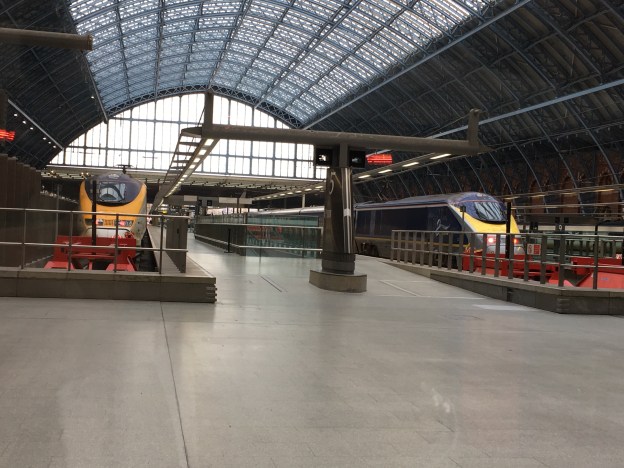

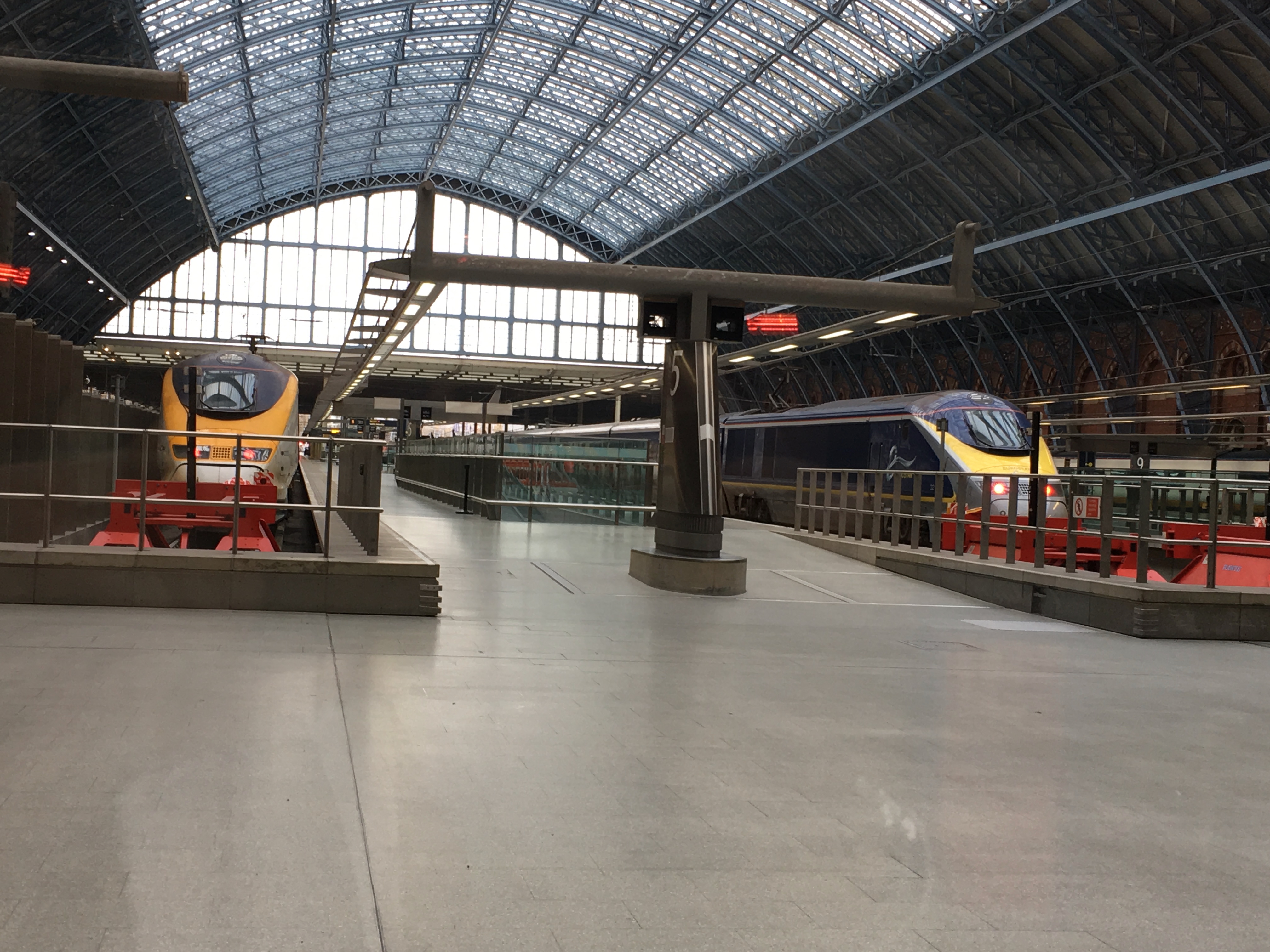
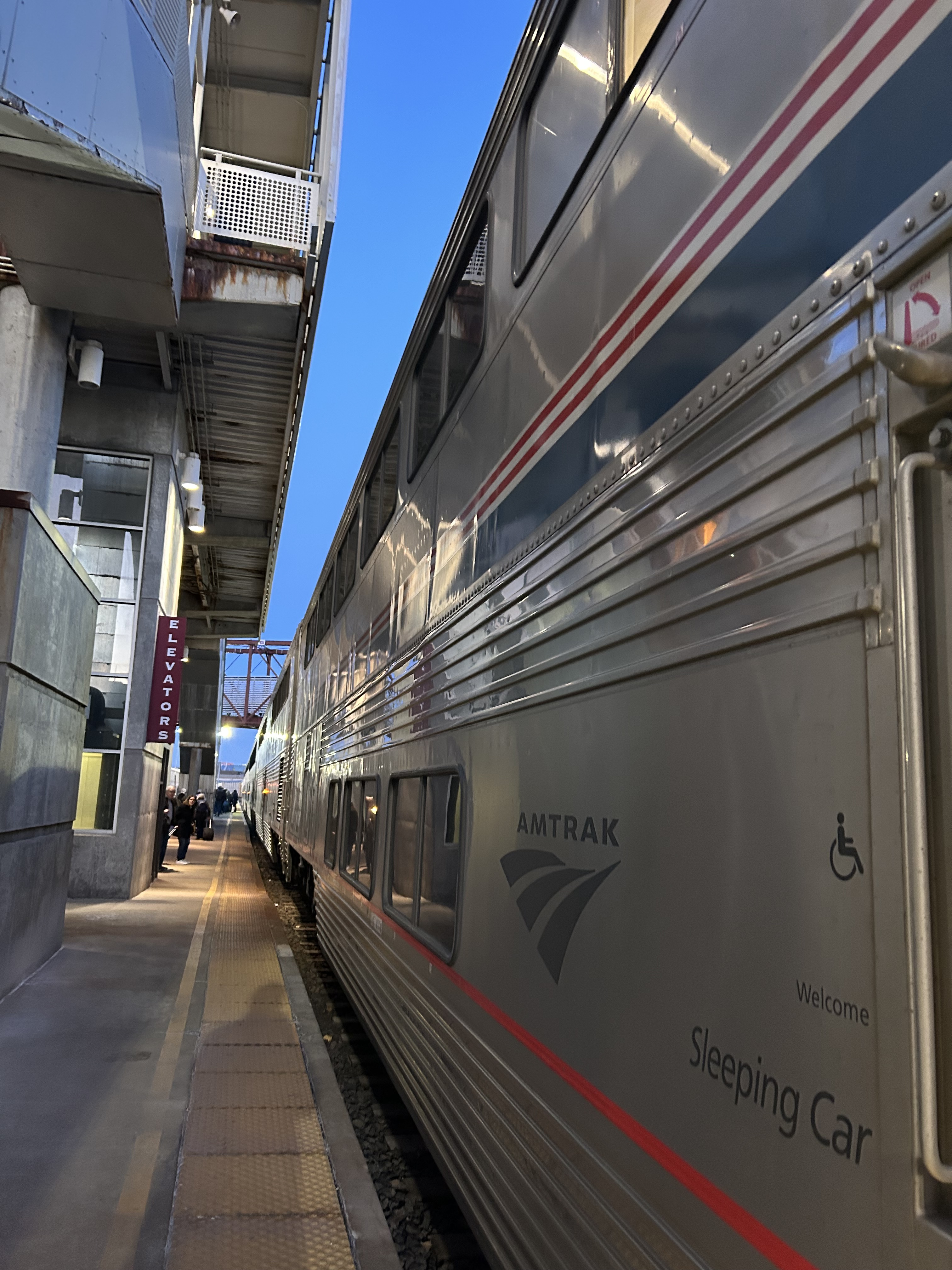
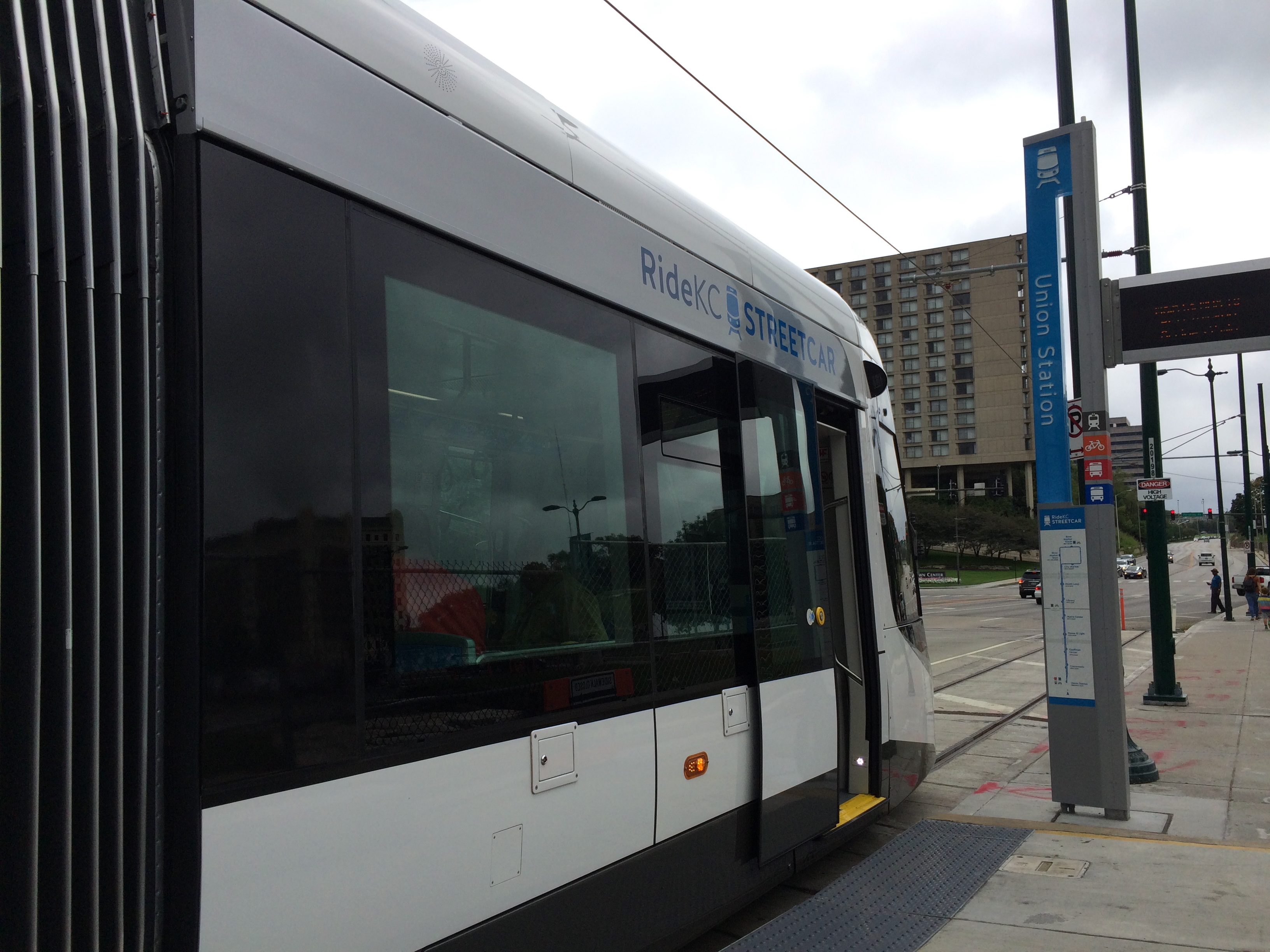

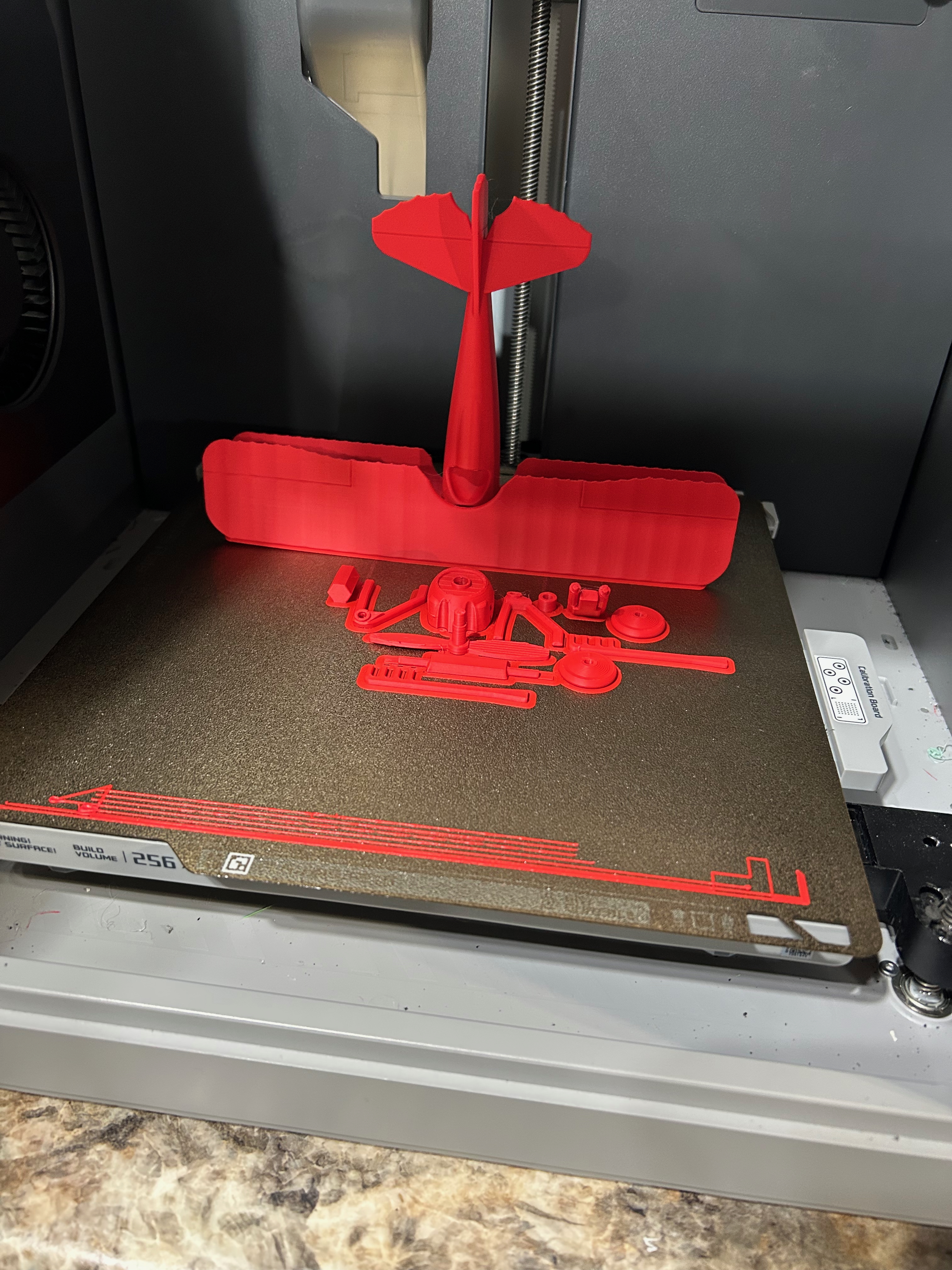
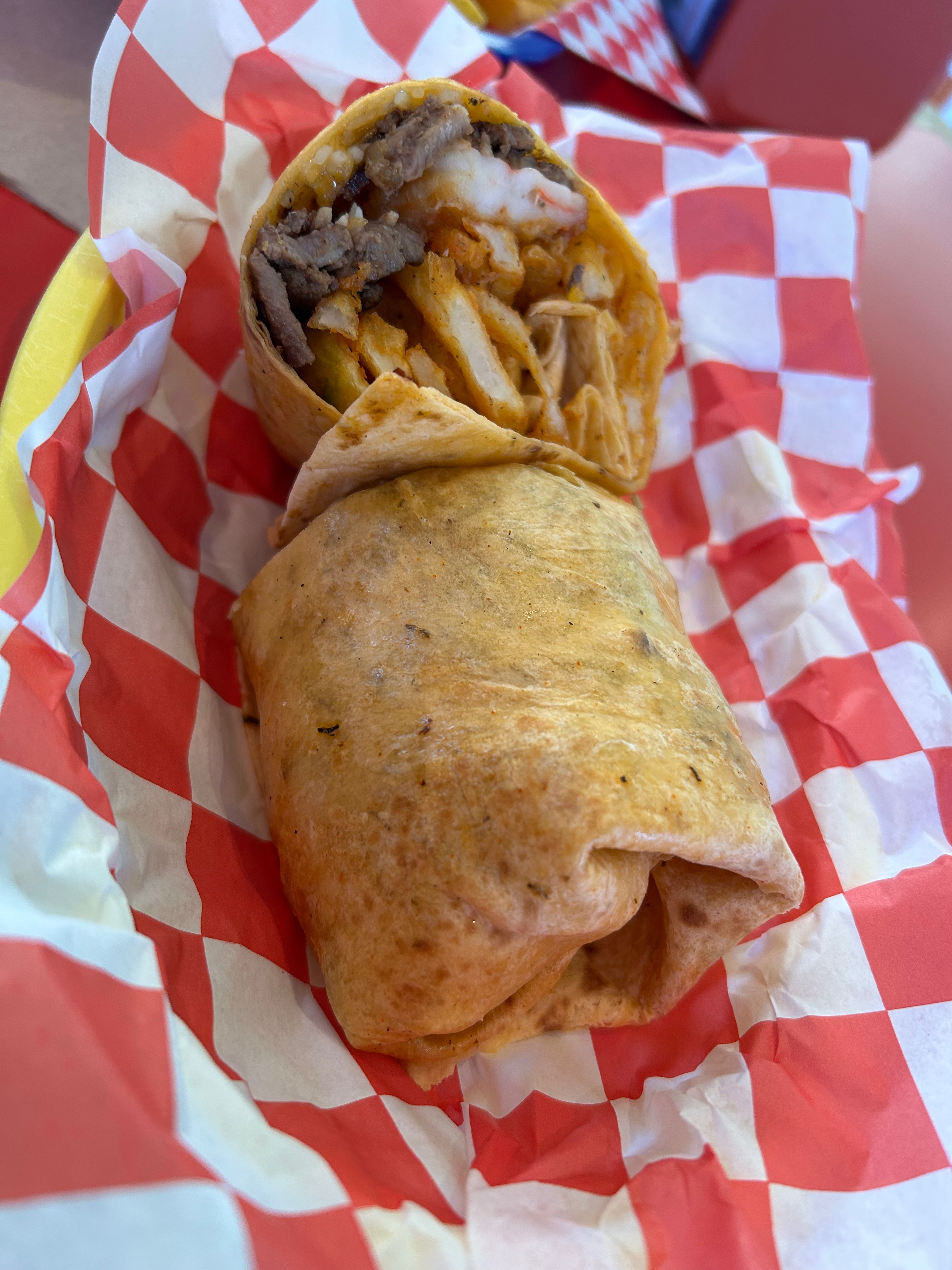
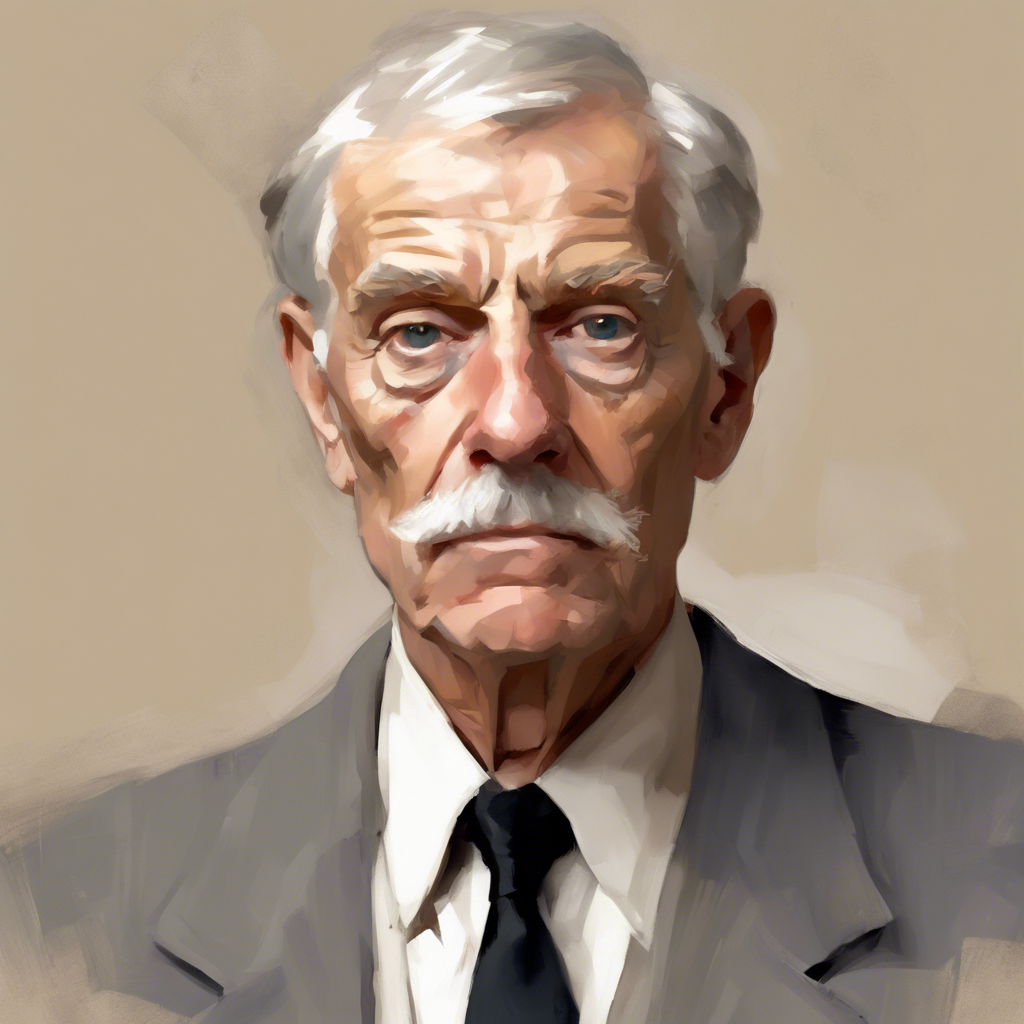
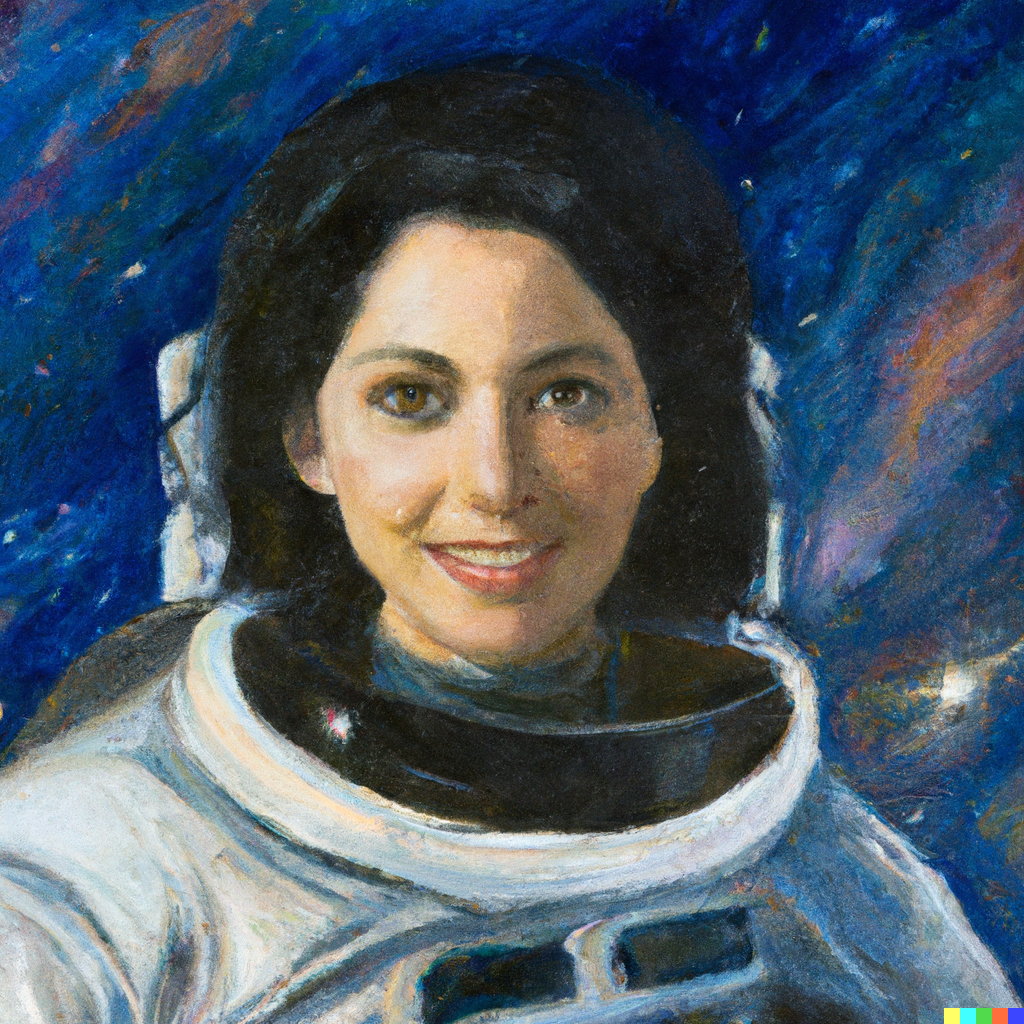


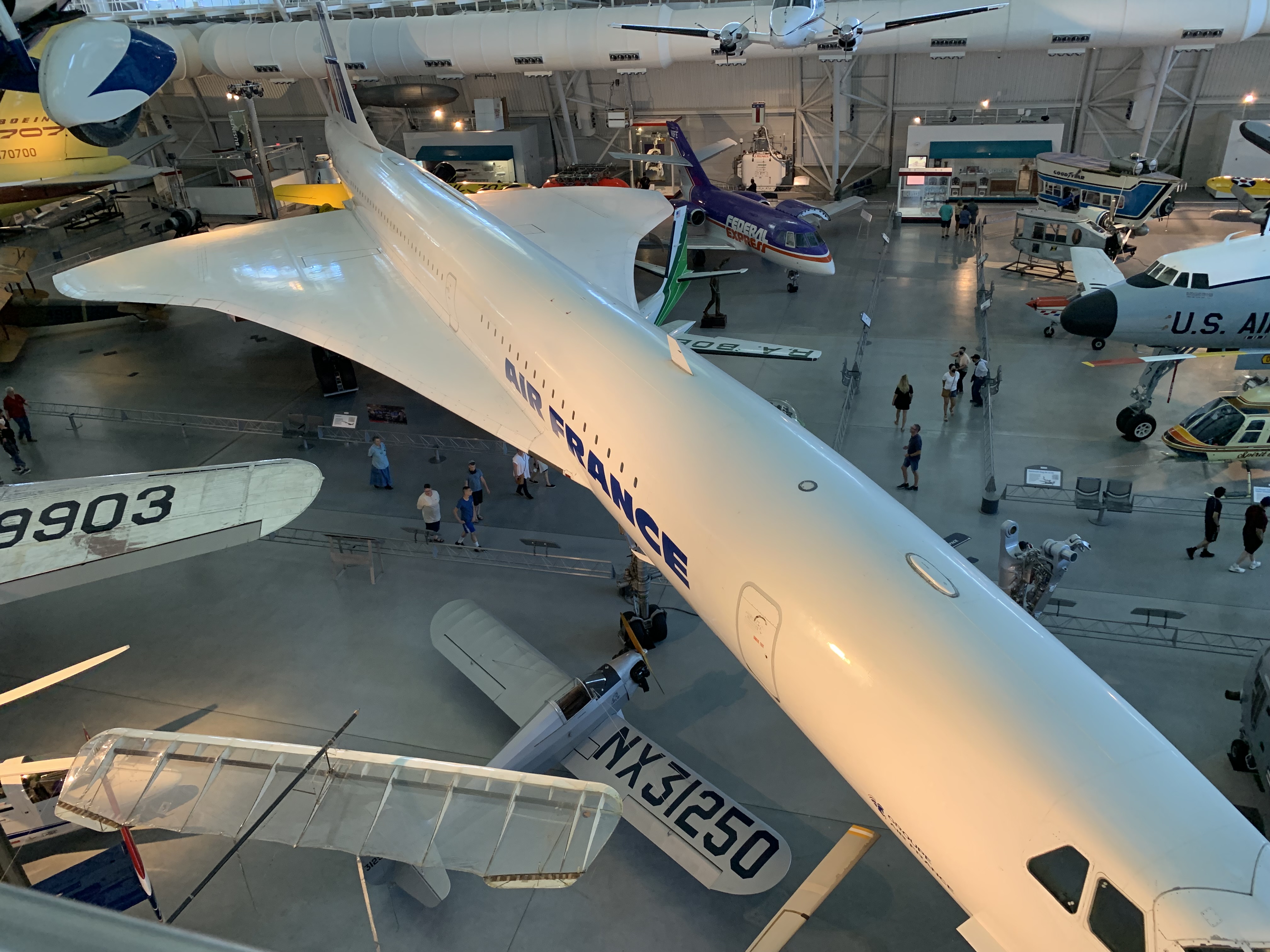
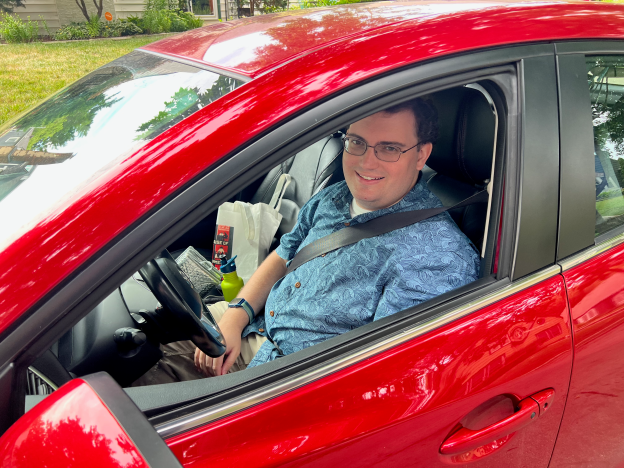


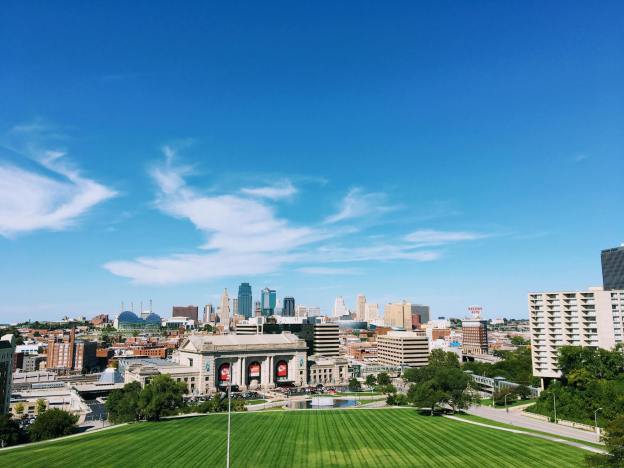
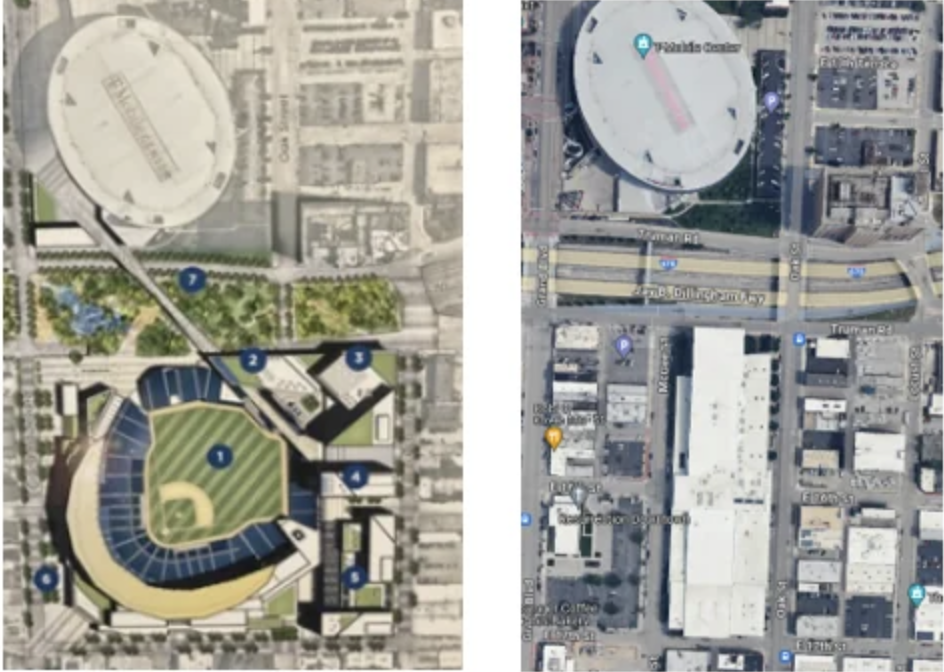


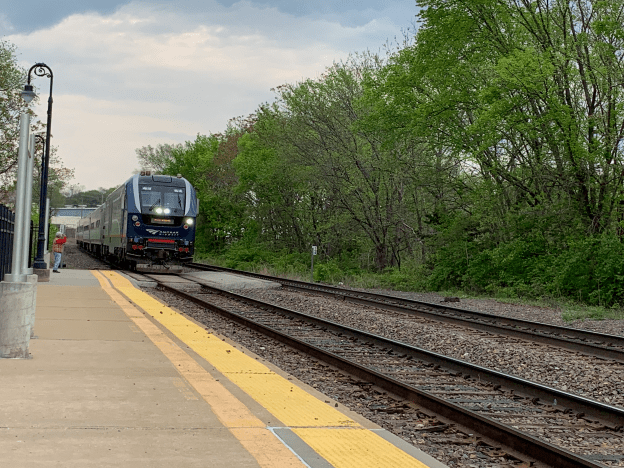
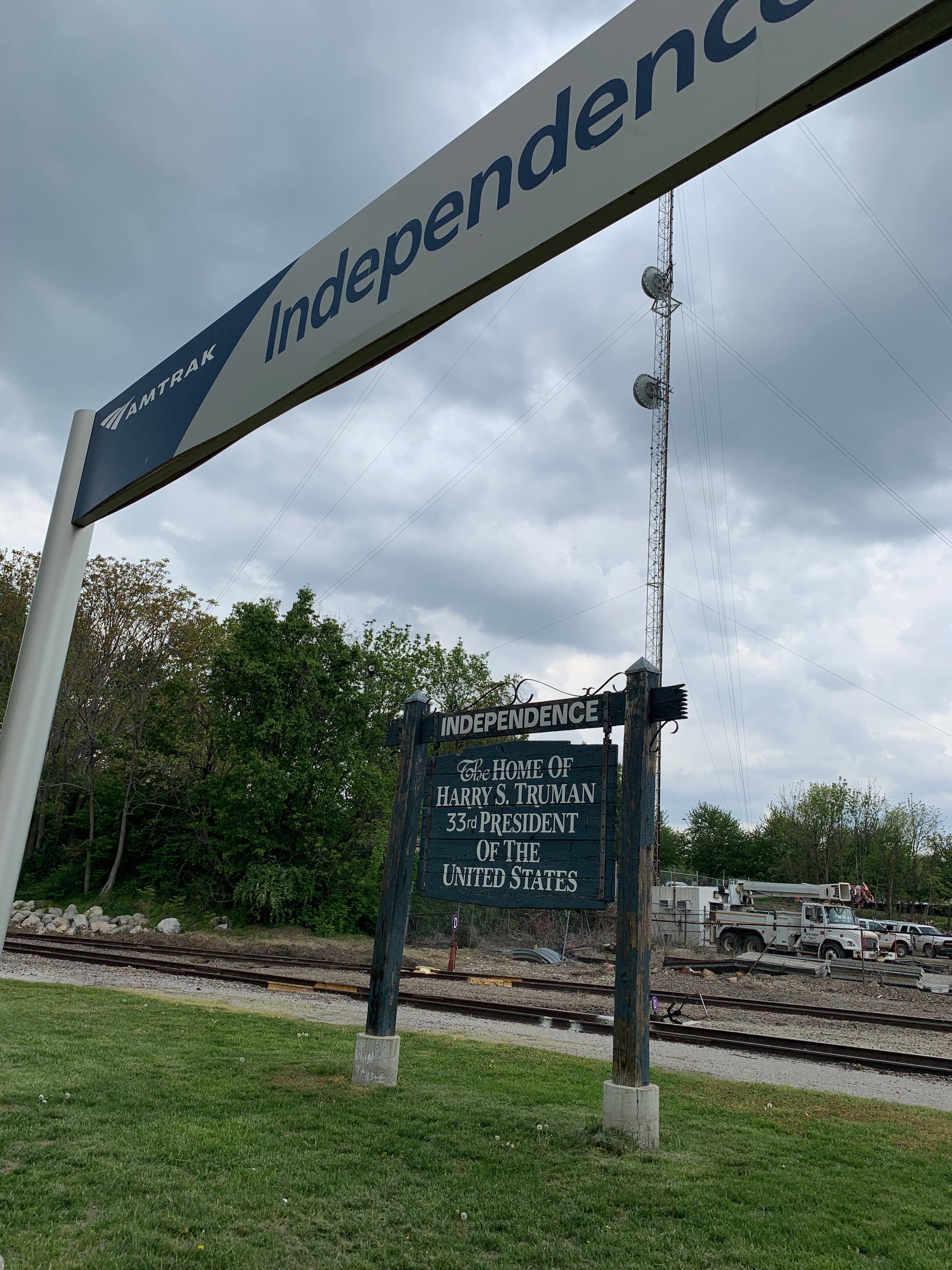
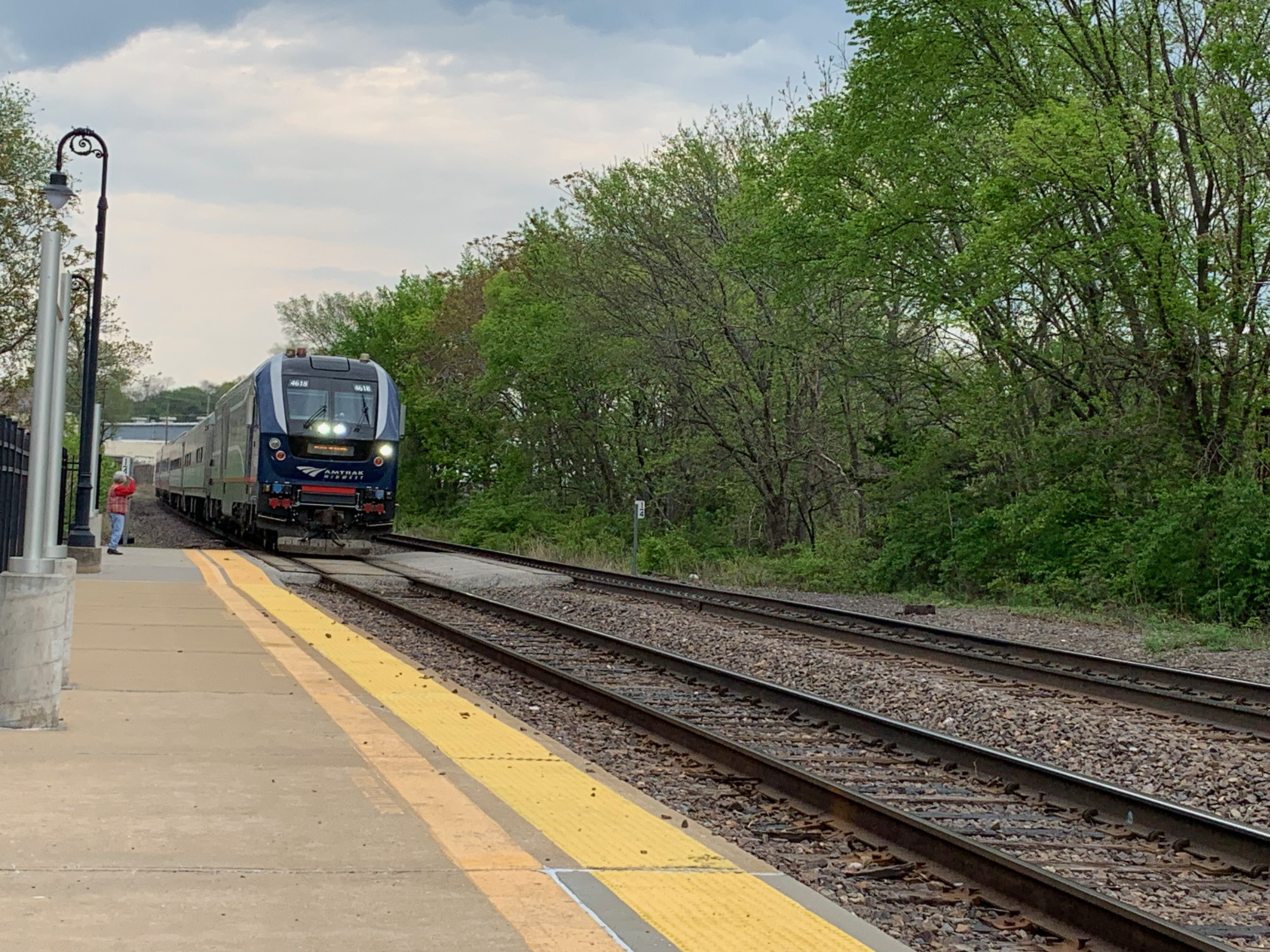
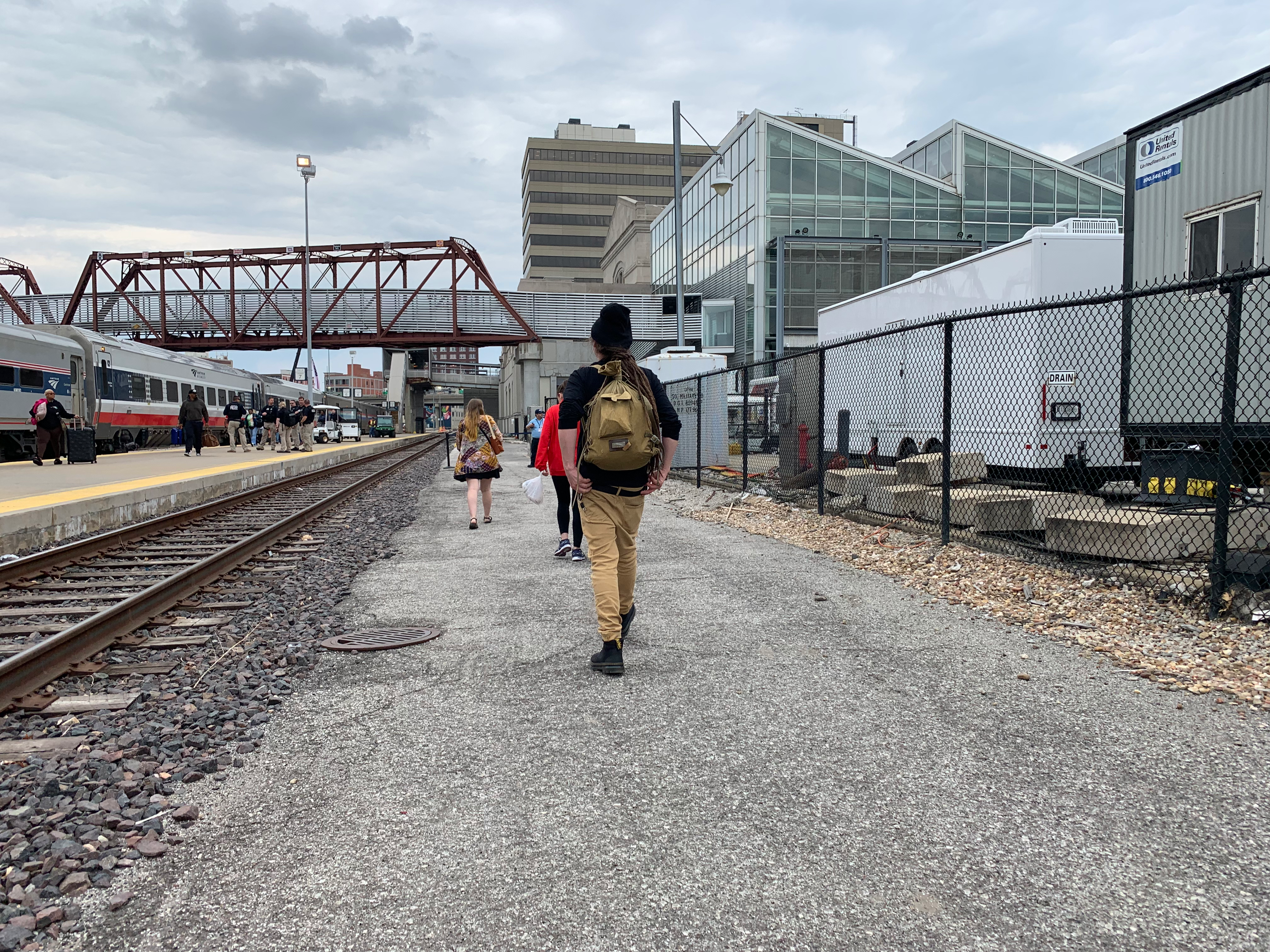
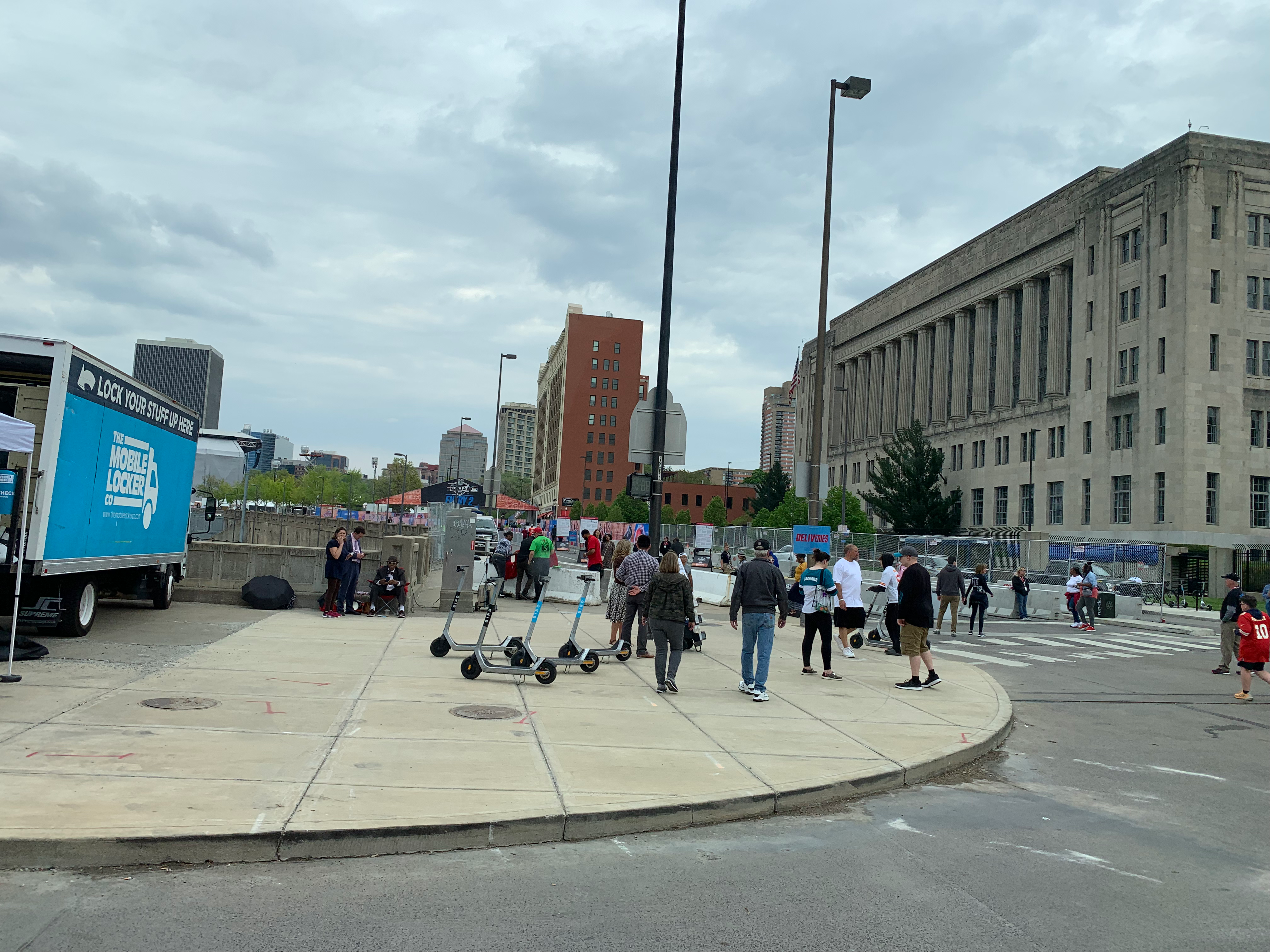
 Wednesday Blog by Seán Thomas Kane