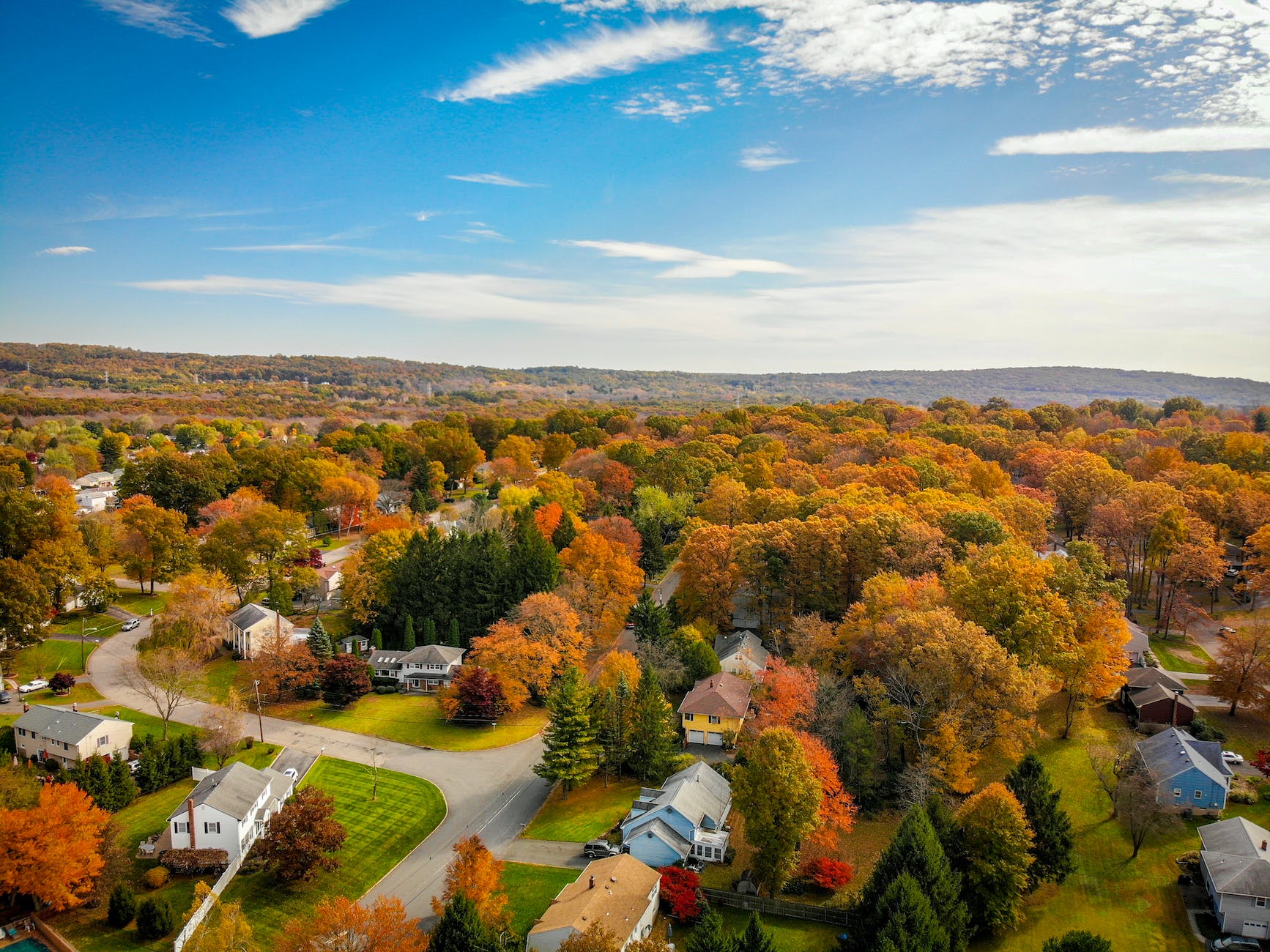
I’m so glad to have enjoyed this April, to have had some truly beautiful days in short sleeves out under the blue skies listening to the birdsong that rings around my neighborhood. Throughout my life one of the most commonly asked questions has been “what’s your favorite season?” For the longest time I’d say Winter for the mystery of those long, dark, cold nights, for the appearance of the constellations like Orion that I remembered seeing the most in my childhood, and for the exuberant joy of Christmas and New Year’s. Yet today, I don’t think I have a favorite anymore. There are things I like about all four seasons, from the radiant red leaves of Fall to the warm days and nights of Summer. Spring is perhaps the most beautiful of the four seasons for how much joy it radiates. Spring sees the rebirth of the gardens and trees here in Kansas City, it sees our wild neighbors––the birds and beasts alike––returning from their wintering to a new year of life here in the Fountain City.
I find myself drawn to less dramatic things today, less of the big lightning storms that race across the prairies in Summer, and more to the softer, gentler, more subtle breezes of Spring. Sure, it does rain a lot here in the Springtime, as the winter snows begin to warm up and turn to rain. Spring is a time when we have the rains we need throughout the Summer, the water that keeps life possible here on the edge of the Great Plains, in a region dry enough that really it shouldn’t support a city of 2 million.
Yesterday, after finishing writing my lecture notes for my upcoming Summer class titled The Columbian Exchange in the First Age of Exploration, 1500–1700, I took a break from my desk and went outside into our backyard to get a better listen to the birds that were singing their hearts out on our back fence and in our fountain. There’s one blackbird who spent most of the weekend playing in the bubbling water that burst from the trunk of that elephant-shaped fountain. If a bird could laugh, then that little blackbird was giggling with joy the whole time.
My fascination with Spring began seven years ago in April 2016 when after a long winter I found myself vacationing in France with my parents. We spent our first week together staying in a guest house on the shores of Lake Annecy in the French Alps, the clearest glacial lake I’ve ever seen, enjoying the stillness of the place and the immense natural wonder that the lake, the forests, and surrounding mountains held. Then, as that week came to an end, we boarded a train in Geneva and headed northwest to Paris, savoring a week together there in the French capital before I returned to London, where I was then living, and my parents home to Kansas City. I remember a great deal about that week in Paris, in fact I wrote an entire chapter in my book Travels in Time Across Europe all about that week.
Yet what I remember most about that city is the light, the brilliant delicacy of the April sunshine in Paris will always stay with me. It made the impressionist paintings that I grew up loving, the works of Monet, make more sense to me having been there in that moment. I remember one day in particular when we traveled out to Meudon to visit Renoir’s home and studio where the grand boulevards of the city give way to a mix of suburbia and creeping remnants of the countryside. I learned to appreciate Renoir’s sculptures far better that day, and to understand more of what makes Spring such a beautiful season in our lives. Vivaldi captured that emotion in his Four Seasons, Johann Strauss Jr. evoked the joy of the Flowers of Spring in his Frühlingsstimmen Walzerand Ella Fitzgerald embodied it in her own famous song April in Paris. I for one will let that little blackbird have the last word.
To hear the blackbird, click on the podcast player at the top.
Today, I'm going to talk for a bit about how the meanings of words change.
Click here to support the Wednesday Blog: https://www.patreon.com/sthosdkane
Normally, I’ll have something written for the Wednesday Blog by Monday and recorded at the latest by Tuesday morning. Yet this week I’m sitting here on Tuesday at 2:30 pm with nothing written, and thus nothing recorded. Some weeks I’m abuzz with ideas and others, like this week, the hive remains silent. So, while I was talking this morning with my friend Rebecca Legill, I was in the background searching for something to write about this week.
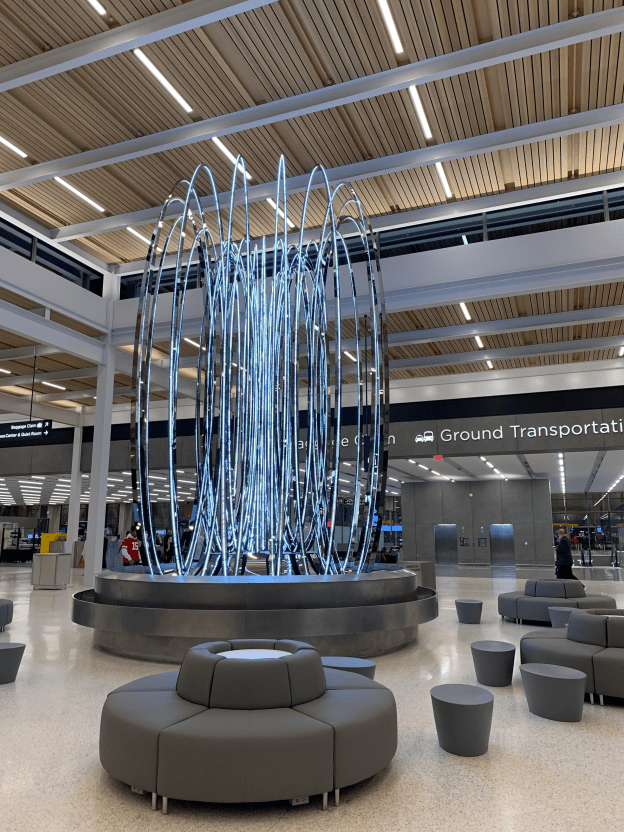
Our conversation turned, as many conversations in Kansas City do these days, to the new terminal at Kansas City International Airport. The big shiny new building opened to the public a month ago on February 28th and has seen around 300,000 travelers pass through its doors in the weeks since. What struck me while I was talking about the new terminal with Rebecca was that the word terminal itself is a bit of an odd word. Terminal comes from the Latin terminus, a word for a boundary or a limit. The modern context of a terminal as a transportation hub came from the railways whose end stations are called terminals. Think of Grand Central Terminal in New York or the London Terminals that you used to see on old British Rail tickets. Here in Kansas City, it’s a bit of a weird idea because our Union Station was built as a through station. Sure, trains once terminated and still terminate here, the Missouri River Runner’s western end is in K.C., but elsewhere the idea of a terminal station makes sense.
So, when the languages of railways and ocean liners were being adopted for airports a century ago the idea of the airport terminal as one building among others where people board and disembark from planes was born. In many cases a terminal isn’t necessarily where a trip ends, especially on a point-to-point carrier like Southwest Airlines here in the United States, yet for hub airlines like our big three––American, Delta, and United––to say that the new building at KCI is the terminal works pretty well. In a similar way, saying that O’Hare Airport in Chicago has Terminals 1, 2, 3, and 5 or that London Heathrow has Terminals 2, 3, 4, and 5 also makes sense in this logic of aviation naming considering that a flight is most often the equivalent of an express train, they rarely make stops along the way anymore to unload some passengers and bring aboard others.Language evolves with its speakers; my English today is different from my English twenty years ago when I was a spry 10 year old. The complexity of any language becomes more noticeable with time and experience speaking that language. Language is the vehicle that carries us from one terminal in our lives to the next, it’s how we interpret the experiences that our senses describe to us. Language is our mechanism for crafting new worlds and ideas, whether fantastical or ordinary. Language is how we think, so it strikes me as curious to consider which philosophers speak to which people. Some appreciate the Stoics for their straightforwardness, others like me the Existentialists who see patterns and subtext in every interpretation. In the study of history perhaps the most influential thinker is Karl Marx, whose economic philosophy has defined a great deal of historians especially in Europe following the Second World War. All of us have read Marx to varying degrees. I get his ideas though I don’t entirely buy them. Of all the Marxist philosophers the one who speaks the most to me has to be Harpo Marx for all the life and joy that can be found in his chaotic wisdom. Language can be more than just words, and Harpo lived and breathed that kind of expression.
It hung over the streets and steeples of Kansas City like a great dark cloud, the many neighborhoods and suburbs looking up at it in awe. It had been said by some that the airship Phaeton was over a mile from bow to stern, but many could not believe such a craft could ever take to flight. And yet here it was, towering over nearly half a million pairs of eager eyes, who looked up at her underside with a mix of fear and wonder. All were running out into the streets to behold the sight, businessmen and artists, cabbies peering from within their charges and clergy praying to their God at such a magnificent sight. There were scholars and vagabonds, sportsmen and aviators, soldiers, sailors, and marines on leave, politicians and pensioners, inmates and the invalid all looking upward at the great edifice in the sky. From 33rd to 54th, the city was clouded by the shadow of Phaeton, the greatest wonder ever built by human hands.
Out of his home on 55th near Main, still in his slippers ran Noël Felix, a lecturer on transportation and public efficacy at the University of Kansas City. He was in awe of the sight that rose high above his home, the great sign of humanity’s technological achievements, which only a decade prior had been considered too fantastical to even be allocated probability within the modern imagination. “He’s done it!” cried Noël, “Captain Daedalus’ ship flies!” It was certainly an amazing start to a quiet Lenten Friday.
Alongside the lecturer, out in 55th Street, the many residents of the neighborhood clamoured and shouted praises to the world-renowned Captain Daedalus. It was said that he was the first person to land on both poles without stopping to refuel, the first to bring much needed humanitarian aid to the people of North Korea, the first to arrive on the summit of Mount Everest from above rather than below. Daedalus was by far the most renowned figure of his time.
~
There was a certain air about him, he did seem both kind and boastful, but not to much more than a degree expected of a man who was the conqueror of the last great terrestrial trials facing an adventurer. He had been welcomed with fabulous balls and galas in every city he visited. No less of a welcome would he receive upon arriving in the Paris of the Plains, whose artistry and musicianship were renowned throughout the world. In the great hall of the Performing Arts Centre, a great ball was held in Daedalus’ honor in the evening of 31 March 2012, the Saturday following his arrival. All the great figures of the Metro were invited, the rich and famous along with those of high moral and social regard as well.
Nöel had spent the greater part of the day allocating a good evening suit for the occasion, for he was not often accustomed to wearing black tie. He arrived in the Arts Centre to hear some light chamber music being played by the house orchestra; largely at this point it was Mozart and Haydn. Upon arrival he was presented to the mayor, Edward Johnson, who had personally invited all of the guests. “Welcome, Mr. Felix,” he said, shaking the lecturer’s hand, “I trust your father is well?”
“He is,” replied Noël with a polite smile, “he sends his regards to you and your wife.”
“That’s very good of him,” said Mayor Johnson as he turned to converse with Walter Gregson, the famed industrialist and philanthropist. Noël gave a slight bow to the mayor and then turned and walked about the great hall. He was dazzled by the beautiful brilliance of the hall, its amazing use of glass, steel, and marble to allow for light to flood through its great open chasm that stood between the theatre that was home to the opera and ballet, and the concert hall that was home to the orchestra.
He began to walk up the stair that led to the mezzanine level of the concert hall, observing the beautiful blue shades that surrounded him. It felt as though he were walking on an aquatic azure cloud, which rang with the beauty of the music from the hall below. The swirling sounds of the strings and woodwinds mesmerized Noël, and he leaned against the wall, his breath becoming the chief function of his body, as he let the music consume his senses. The very nature of the sounds that flooded into his metaphysical soul through the all-too physical existence of the ear were enough to make even the hardest of hearts relish in the exuberance and beauty of this nearly angelic artistry.
Noël had always loved Mozart, but his life had taken him far from his youthful aspirations of soaring high above the mundane in a realm of celestial beauty, far down to laboring over improving the roads and railways of America, forming what he hoped would be a better infrastructure for posterity. And yet, despite his career bearing him amongst those who are all too fond of cynical pessimism, he retained some degree of his youthful optimistic imagination, a trait which had earned great accolades for the once time pianist turned civil engineer.
Suddenly, the music picked up, a trumpet sounded in one of the higher galleries that led to the highest levels of the theatre. All eyes turned towards the grand staircase that led up to the hall from the foyer below. Noël rushed to the edge of the balcony on which he stood, peering down as a figure robed in finery processed up the stair to Mayor Johnson, whose smile beamed all the way up to where Noël watched.
His heart pounded with excitement, as he rushed down the stair to the hall, pushing his way through the mob, to the head of the stair where the adventurer stood. Though he recognized the sounds of many voices about him, he understood not any verbal expression that erupted from his fellow Kansas Citians. His eyes were on the place where stood the subject of an entire world’s admiration.
The Mayor caught sight of Noël, and called to him, allowing for many members of society to steadily push the little lecturer forward, many out of a deep desire to be in his position, others simply euphoric at that historic moment in their city’s history. All seemed like a daze to Noël, like a lifetime of impressionistic fog covering his eyes, the sounds of the applause and personalities about him muffled, the music slowed, yet his own heartbeat taking center stage in this symphony of the present moment. The light about him seemed to dim as well, as he moved ever forward, to the one whom he admired most. His every thought bent on little more than his plausible reactions to the introduction that was certainly coming closer with every step.
Suddenly he was at the top of the stair, standing next to the Mayor looking headlong into his idol’s eyes. “Noël Felix, may I present Captain Amelia Daedelus.”
Noël was amazed: before him stood Daedelus, not the wizened man that he had long thought, but a beautiful woman, with the steely determination of any great name from the history of humanity. He bowed low, “Captain,” being the only word his tongue could emit.
“Mr. Felix,” she replied, with a fine mezzo-soprano voice, “it is an honor to meet you.” As she walked forward into the throng, she turned to look once more at Noël, whose face by this point was a fine shade of red. She winked, then turned and walked on.
Cosmos comes to English from Ancient Greek, where it referred to a sort of order in nature, the opposite of Chaos. This meaning stuck into the medieval period in works like the twelfth-century philosopher Bernardus Silvestris’s Cosmographia. In the Renaissance, the period I study, a science called cosmography developed in Europe as a way of making sense of all the worlds the explorers setting out from Portugal, Spain, France, and England were encountering. Still later, in the early nineteenth century the German scientific polymath Alexander von Humboldt named his greatest work, the five volume book Kosmos, which sought to describe the totality of nature as he and his colleagues had observed throughout his long lifetime. Today, Cosmos speaks to something far exceeding the Earth in scale, it’s the observable Universe with a potential for even more that we presently don’t know to be included under that cosmic umbrella.
A term like Cosmos is important because it helps us understand how we make sense of everything around us. I feel like I can imagine the entirety of the Universe but I’m sure if I saw an artistic rendering of the visible Universe, I’d feel like I was seeing a new face. This weekend as I was on my way west back to Kansas City through Chicago, the two cities I’ve called home over these past thirty years, I found my perspective shifting away from that of the stranger in the Northeast to one of familiarity and comfort back in my own native Midwest again. Arriving in Chicago I was delighted to realize I didn’t need the GPS in my car anymore, I knew exactly where I was in a place so vividly familiar to me. The same can be said for the rest of my drive west of Chicago, everything was familiar and wonderful to see.
My own Cosmos then, the order that keeps my life together, is built with Midwestern sentiments and expectations. Something that made life in New York difficult for me was how the customs there are at least somewhat different from what I’m used to. Even in these last few weeks there I still had to remind myself it wasn’t intentional rudeness when people I knew wouldn’t acknowledge me, let alone smile and say “hi” when we’d walk past one another, it’s just the impersonality of life in a place that has never really become familiar to me.
In these last three years I’ve now stretched my world out further, filling in many of the gaps of my own experience here in North America with trips to nearly all of the major cities on the East Coast and to Montréal and Toronto. I now know so many of the highways that link the Midwest & Great Lakes with the east. I found myself thinking about how as a child living in the Chicago suburbs that my family never took road trips east out of Chicago to Michigan, Indiana, or Ohio, nor north to Wisconsin. Instead, whenever we traveled it was west to St. Louis, Kansas City, and Denver further afield. Thus, the ways heading east were new to me as I drove along them this weekend, the easy drive on I-94 from Detroit to Chicago being one such example.
I’ve known many people who define themselves by where they’re from, for good or ill. There have been plenty who are loud and proud supporters of their hometown baseball team, and others who use their origins as an excuse to be unkind to the people around them. Over these last three years I had moved into a state of mind where my own origins were somewhat more dormant, sure I had all sorts of art up on the walls in my apartment celebrating both Chicago and Kansas City, and I’ve interchangeably worn my Cubs and Royals hats, but I’d begun to think of myself more as a person who can shift between places and communities, a skill that I needed to develop in Binghamton. Yet upon my return first on Saturday to Chicago and then on Monday to Kansas City I found all those old emotions and memories flooding back.
One of the parts of the Christmas story that I always remember is that St. Joseph had to go to Bethlehem from Nazareth to participate in the census because that’s where he was born. I am who I am just as much because of the places I’ve grown up in and the people I’ve lived among as the experiences I’ve had as an individual trying to make things work over these last three years alone in a lonely valley far from home. Home is a word of tremendous significance for me, it’s the place where I feel the most comfortable, the safest, and the most appreciated. For much of my life I’ve seen both Chicago and Kansas City as my home. It’s a sentiment I’ve reinforced this weekend on my first visit to the city of my birth since the pandemic began. Were I to say I have a “homeland,” Lake Michigan would remain its eastern boundary, the Great Plains beyond Kansas City its western. That is the heart of my Cosmos.
One of my favorite YouTubers is J.J. McCullough, a Vancouver-based political columnist for The Washington Post who creates videos discussing topics of culture, politics, and society here in North America. In the summer he made a video discussing the topic of cultural homogenization, of how all cities here in the US and Canada tend to have a fair number of similar things going on. It’s a thesis that I agree with, though with some hesitancy.
I for one am happy with this idea that you can go to any major city in these two countries today and generally feel rather familiar with your surroundings. It’s why I’ll often prefer to stay in chain hotels over smaller super-local B&Bs or even use Air BnB or VRBO when I’m traveling. I like the fact that I know what to expect in a hotel room from the generic furniture to having the same soaps and shampoos to having the same set up with the TVs. When I travel, I’m not traveling to spend my time in a hotel, rather I want that consistency as somewhere I can return to and feel familiar in after a day of going around a city that I may not know quite as well.
Likewise, on the long drives I’ve done four times a year for the past 3 years between Kansas City and Upstate New York, I’ve often mentioned along the way that I feel at home in the suburbs of the various cities I tend to stop in. In particular, my usual overnight hotel in Columbus felt quite familiar, in part thanks to its modern décor and highly suburban surroundings, far more so than Binghamton, NY where I’ve been working on my PhD. This has led me to often remark that leaving Columbus is like leaving the familiarity I’ve come to know and appreciate in the urban Midwest as I head into the Appalachians of New York.
The biggest difference here that I’ve noticed between Binghamton and the other American cities I’ve lived and worked in––Chicago & Kansas City––is that Bing has had a rougher recent economic history than either of the two. While Chicago was able to survive the decline of older industries in the Great Lakes Region, aka the Rust Belt, through its sheer size and the diversity of its economy, and while Kansas City has had a renaissance of its own in the last twenty years to the point that it is today a thriving, growing metropolis with ever increasing opportunities, Binghamton has never really had the size or the economic diversity to stay as strong throughout the bad last few decades of outsourcing jobs and closing down old factories in some of these older towns and cities in the Northeast. There are some hints of this continental North American culture here in Binghamton and in Broome County more broadly, just look at the national chains that line Vestal Parkway, but in its current state I argue that this city has far more in common with the other old industrial centers of the Northeast, particularly in New York and Pennsylvania that have seen their main industries move away within the last 40 years than it does with the broader North American culture.
Still, there are moments when I’ll be driving around suburban Broome County where I’ll find myself remarking how similar the houses are to some of the older Cook County suburbs of Chicago, albeit built in a valley surrounded by what the US Geological Survey calls “small mountains.” I myself am a child of the western DuPage County suburbs of Chicago, and after moving grew up on the far western edge of Kansas City, Kansas, whose older neighborhoods to the east are equally similar in their character and in the age of the buildings to some places here in Binghamton, Johnson City, and Endicott.
In seeing those similarities I’m seeing the broad cultural trends of a century ago. Just as today there are particular architectural styles that are in fashion across this continent, from the renovation of old urban industrial buildings into lofts to the big glass buildings that mark the styles of the later 2000s and into the 2010s, a time when after the worst of the Great Recession had passed, I do think in retrospect we’ll say was a time of optimism, however short it ended up being.
In the media I consume, I’ve often found it interesting that I’ll prefer to watch the national evening news broadcasts over the local news. In my own case I’m a PBS Newshour guy, and there’s something about watching that broadcast that I know millions of other people around the U.S. are also watching, and that it’s coming from a studio in in the Virginia suburbs of D.C. (a place I know very well), that makes me feel like I’m a part of a wider community. The same goes for watching Jeopardy! every weeknight. It’s a show that I know a big number of people watch from all living generations, and it’s 30 minutes a day when I can feel like I’ve got something in common with all of them. I don’t otherwise watch much popular TV, and when I do watch shows that’ll catch the headlines like the recently released Lord of the Rings: The Rings of Power, I often have to ignore those same headlines and subreddits for how negative they often become. In those moments, that hour a week, I want to enjoy the story and not be caught up in what other people might think about it.
Our world is built on mass-production in every sense of the word. We wouldn’t be able to sustain the lifestyles we lead, nor our current population, without industrialization. So, while I will go on a limb and try out the local cuisine when I’m traveling, whether that’s crab cakes in Maryland or the breakfast burritos in Austin, I still like to see what my usual staples are like in a given place. I’ll freely admit to preferring to get a burger or pizza or chicken when I’m doing overnight stops in cities in part because after a day of traveling, I don’t want to be as adventurous, yet also because I can use that baseline, that control, to see how they do the same sorts of meals in a given restaurant in one city and compare it to all the others I’ve tried that in. In some cases, like at Mr. Bartley’s Burger Cottage in Cambridge, Massachusetts it was a wonderful choice, in others like at many of the places I’ve ordered burgers at higher altitude in the Rockies, it’s been a poor choice seeing as I’m less of a fan of well-done beef.
Yet with all this mass-production it strikes me as funny that we often have our very particular ways of distinguishing ourselves, from monograms to those new Facebook avatars, that are themselves mass-produced. I first started seeing this style of monogram, one large letter surrounded by two smaller letters, when I was in college. They often became near logos for the people who used them, yet those very personal symbols were themselves created from templates and used by millions of other people. I did the same thing with the logo for this podcast, which I chose out of a set of templates as a matter of convenience when I was creating it, my own meager attempts at making a logo had all been rejected by Anchor’s formatting.
When it comes to some of the very local sayings that J.J. mentioned, like the often-heard Kansas Citian remark, “if you don’t like the weather just wait five minutes,” it’s something I’ve also heard in many other cities. When I moved to London, I found that our North American customs surrounding weather & seasons made a lot more sense there. The dates when we demarcate our seasons, Winter & Summer starting at the solstices, Spring & Fall at the Equinoxes, makes sense in Europe. It doesn’t make sense here in North America where the weather fluctuates dramatically within a given day. Even now, I’m wearing short sleeves on a 66ºF (19ºC) day in Upstate New York and watching the leaves now past their Fall peak begin to be blown off the trees by the impending winter air. Last week, by comparison, I was wearing thick wool sweaters, wool socks, with a coat, hat, and gloves when outside. Our weather makes a lot more sense when you think of it continentally, after all no one place is entirely separated from everywhere else in North America when it comes to the weather. The snow that strikes the Dakotas one day could well fall in the Mid-Atlantic States a day or two later.
I love Kansas City, and Chicago, the two cities I consider to be my hometowns. I love the things they do that are different from other cities, like Chicago’s hot dogs, Italian beef, and deep dish, or Kansas City’s barbecue. They are the two cities where my own experiences, and my family’s American experience has played out, both in their old urban neighborhoods and in the postwar suburban sprawl where I grew up. I appreciate all the things they have in common, things which they share with much the rest of the metropolitan cities of North America. That’s what’s made places like St. Louis, Denver, Columbus, Indianapolis, suburban Maryland & Virginia, and even Toronto feels like a place where I could settle down. I’ve heard Toronto referred to as a cleaner version of Chicago. It’s what’s made the big merging metros of the Northeast––Philly, New York, and Boston––feel less foreign to me than the cities that lie between them and the Midwest.
I’m happy that we have so much in common in this time when we seem so set on dividing ourselves into parties and camps constantly at odds with each other. Our commonalities demonstrate how much we depend on one another.
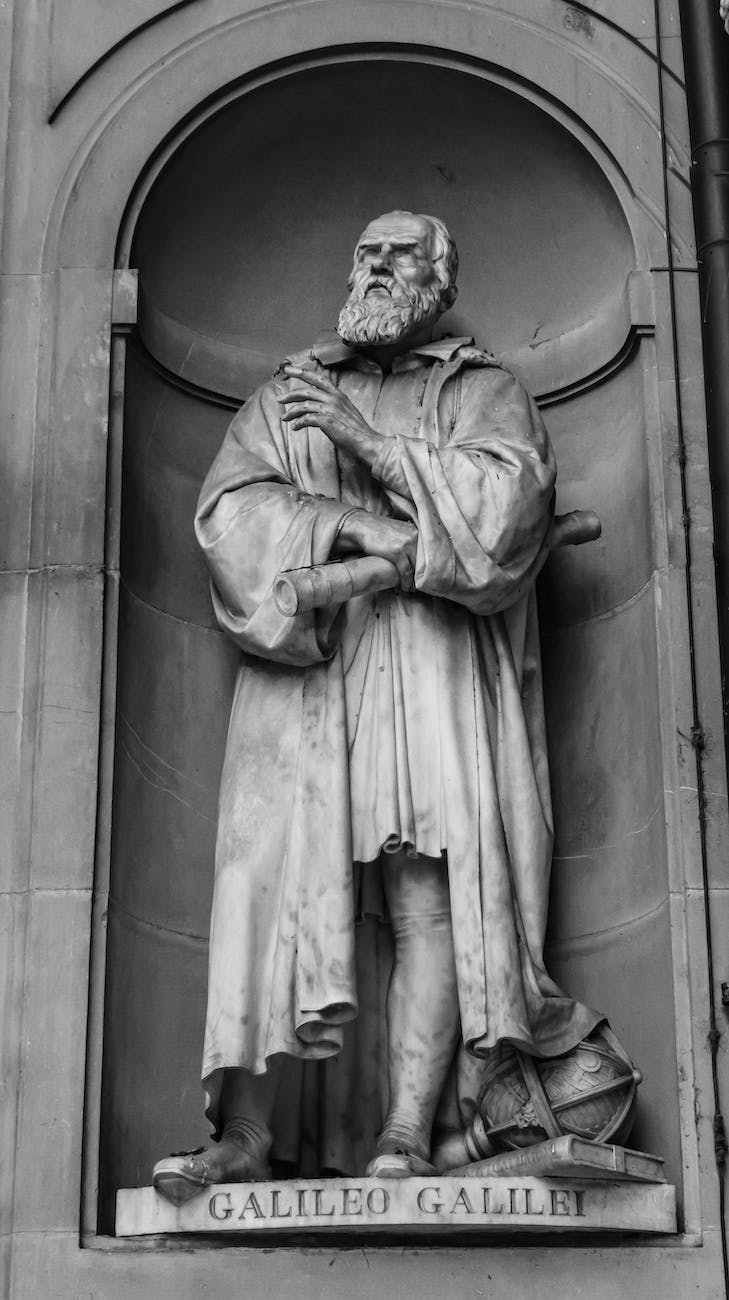
If there are any reasons why I find myself drawn to Galileo, this distant Italian astronomer who lived 400 years ago it’s that we have two things in common: we’re both stubborn and occasionally grumpy. I’ve known the basics of Galileo’s story for most of my life; he was an astronomer who was born in Florence and worked in the Venetian Republic at the University of Padua who was one of the first to use a telescope to look out into the night sky, making him the first to observe the Galilean moons of Jupiter, collectively named today for the man himself. His support of Copernicus’s heliocentric model––that the Earth revolves around the Sun––contributed to his falling out with the Papacy and his eventual arrest and trial by the Roman Inquisition who put him under house arrest for the last few decades of his life.
Of course, the real story isn’t quite that simple, after all many of his opponents agreed in principle with what he was arguing, they just didn’t like how he argued it. Still, Galileo’s contributions to science and to human knowledge of our cosmos overall are undeniable. In the last few weeks, I’ve thought about Galileo quite a bit as Jupiter has come the closest to Earth in its orbit for the first time in decades. I got a good look at Jupiter both through a telescope and with my own eyes on Friday night a few weeks ago up at the Kopernik Observatory and even was able to take a better-quality picture of it than I’ve gotten before with my phone.
Jupiter as seen with an iPhone camera on the 4th Friday in September at the Kopernik Observatory in Vestal, NY. Photo: Seán Kane.
I see in Galileo an inspiration of sorts because of the things he did. He was able to prove that the Moon wasn’t perfectly spherical by observing the shadows of the crater walls (what he called mountains) on the lunar surface. Using those shadows, the effects of the lunar geography, Galileo could prove the existence of something he otherwise wouldn’t have been able to see. It’s like how when it rains the best way to actually see the raindrops falling on your head is to look at them with a dark background like a tree or a darker-colored house. Otherwise, the water droplets will blend in with the ambient colors surrounding them. Likewise, we can see the Moon and the planets because it’s the light of our Sun shining on them that is reaching us here. The Moon doesn’t light itself up, nope, nor does the Earth, rather it’s the Sun that naturally does the job.
Here lies an interesting development in this story: the Sun lights up the Earth during the day, but the Earth is now still lit up at night. Only a few generations ago our ancestors figured out how to use electricity to light up our lives and turn the darkness of night into something new entirely. As long as I can remember I’ve been fascinated by this idea, that even at night some places are well lit. I wonder today if our cities might even be built with night in mind, if there’s more artistry in the architecture when the buildings are lit up by electricity rather than by the Sun’s rays? Certainly, we have more control over how our buildings are lit in this context rather than during the daytime. One of my favorite ways to experience a museum is after dark when all the lighting being done has been devised by an exhibit designer trying to control all aspects of how the exhibit is lit through their own lighting patterns. The British Museum does a really awe-inspiring job with lighting the Parthenon Marbles in such a way that their great shadows climb up the walls of their room making them seem even larger-than-life than they already are.
Still, in Galileo’s day before electric lighting they could see more of the night sky. It’s a sign of the world that we live in that it wasn’t until my 28th year that I actually saw the band of the Milky Way up in the night sky. Even in my youth growing up on the farm on the western edge of the Kansas City metro I never saw it. I think seeing the night sky in all its splendor gives us a chance to reconnect with our past before our industrialized modern world, to reconnect with the lights that illuminated our ancestor’s nights and memories. I’ve talked before here about how profound it seemed to me to be able to see light from Vega that had left that star when I was a child, well the same is true for seeing the same moons of Jupiter that Galileo first saw in 1610 from his telescope in Padua.
As winter approaches here in the Northern Hemisphere we’ll get to see a lot more of the night sky. The days are already here when the sun is setting in Binghamton during dinner time. The fall chill is in the air. It amazes me that October is already upon us, after all it feels like we were just in August; but then again, I probably say the same thing a few times every year. When I was little and first learning the names of the months in school, I remember being given worksheets that included pictures for each month to personify that time the better to remember it by. March was shown as a lion, April as a storm cloud, and May as a flower. In the Fall, September was a tree having reached its fullest bloom after the summer heat, and October was a collection of fallen leaves surrounding a Jack-o-Lantern.
I wonder how Galileo would’ve personified those months, or if he even would’ve thought of doing that? The month of my birth, December, is often associated with the beginning of the Holidays, in my tradition of Christmas specifically. Yet it’s also often thought of as the beginning of winter even though the worst of the winter cold and snows don’t come until January. Yet the seasons here in North America are different than those in Europe; in fact, I found that our months and seasons make more sense in Britain than they do in America where the weather changes at a more expected time than its fluctuations here in America allow. In my Midwestern home I’ve experienced Halloweens in the snow and Halloweens in summer conditions. In my year living in London though, admittedly now a heat island, when it got cold in October it stayed cold until March.
How different then is our world from Galileo’s? How much has our industry and development changed the world we live in? And how different will the world be at the end of this century from the world I knew as a child at the end of the last century? These are all questions I’m going to leave you with today.
Over the last 3 years I have driven between Kansas City and Binghamton, New York twelve times, that adds up to around 15,600 miles of driving in total. It’s a lot of time on the road, and in the last few weeks I’ve begun to think of this period in my life as my Years of Wandering, a period when I have been practically migratory in how I’ve moved across the country so often. Surely at this point the postal workers in Binghamton and Kansas City recognize my name for how frequently I’m asking my mail to be forwarded from one address to another. Still, I am in a far better position professionally today than I was after my first master’s degree in 2016. And looking ahead now, the future really is bright for me. I’ve got a lot of opportunities over the horizon.
With all this in mind, I woke up at the reveille of my 06:45 alarm on Friday, 29 July 2022, as is usual, and ruminated on a strange dream I had been having involving, people singing the Internationale while making strange hand gestures and being overly polite, all as a part of a protest over fish. Must’ve been the wine the evening before. Regardless, I woke up that morning knowing exactly what I needed to do: it was time to strip my bed, start my regular morning routine, and begin packing up the car for the next Long Drive East.
To date this drive is the earliest I’ve ever left to return to Binghamton for the Fall semester. Its predecessor in that record was the original Long Drive East on 1 and 2 August 2019, after which I decided I would never again make that trip so early in August again. I intended to keep that promise, even through the period of 14-day quarantines in 2020, yet here I was, on the 29th of July packing the car for the Long Drive East, a drive that would end in a muggy humid valley in Upstate New York that feels about as far from home as it could be while still being in the Lower 48. So, after a quick breakfast of sourdough French toast, scrambled eggs, and hash browns with some friends, I left home at 10:00, bound for my first refueling stop in St. Louis.
The normal Long Drive East has four refueling stops, one every four hours. Typically, they are St. Louis, Indianapolis, Columbus, and Erie. That is if I take the fastest out of the possible 10 different routes. In this instance, I intended to keep to form and barrel my way across Missouri without stopping between Kansas City and St. Louis, so as to get the trip off to a strong start, and maybe to make better time at my overnight stop. But, as things have happened so often this summer, the first day of the trip didn’t quite go to plan. Rather than making it all the way to St. Louis without stopping I decided midway across the state to make a lunch stop in Columbia, home of Mizzou (the University of Missouri to the rest of humanity not from the Midwest). Already by that point I was beginning to feel pretty tired, and knew I needed at least a few minutes of a break. With that in mind, I made an early stop, and shrugged it off, opening the door for even more unscheduled stops over the rest of the trip to come.
This particular Long Drive East was different from every other one that I’ve done over the past few years. Sometimes, I might include a day or two of sightseeing along the way, as an extra bribe to myself to go through with driving so far for so long. The last time I did that was in January 2020 when I stopped in Pittsburgh for a couple days to see the Carnegie Museums. In the years since I’ve allowed myself half-day stops here and there, like at the Cleveland Museum of Natural History in August 2021. In all of those occasions I rarely detoured from the general Great Lakes region that lies between the Great Plains where Kansas City blooms and the Appalachians where Binghamton is nestled among those low mountains along the banks of the ancient Susquehanna River.
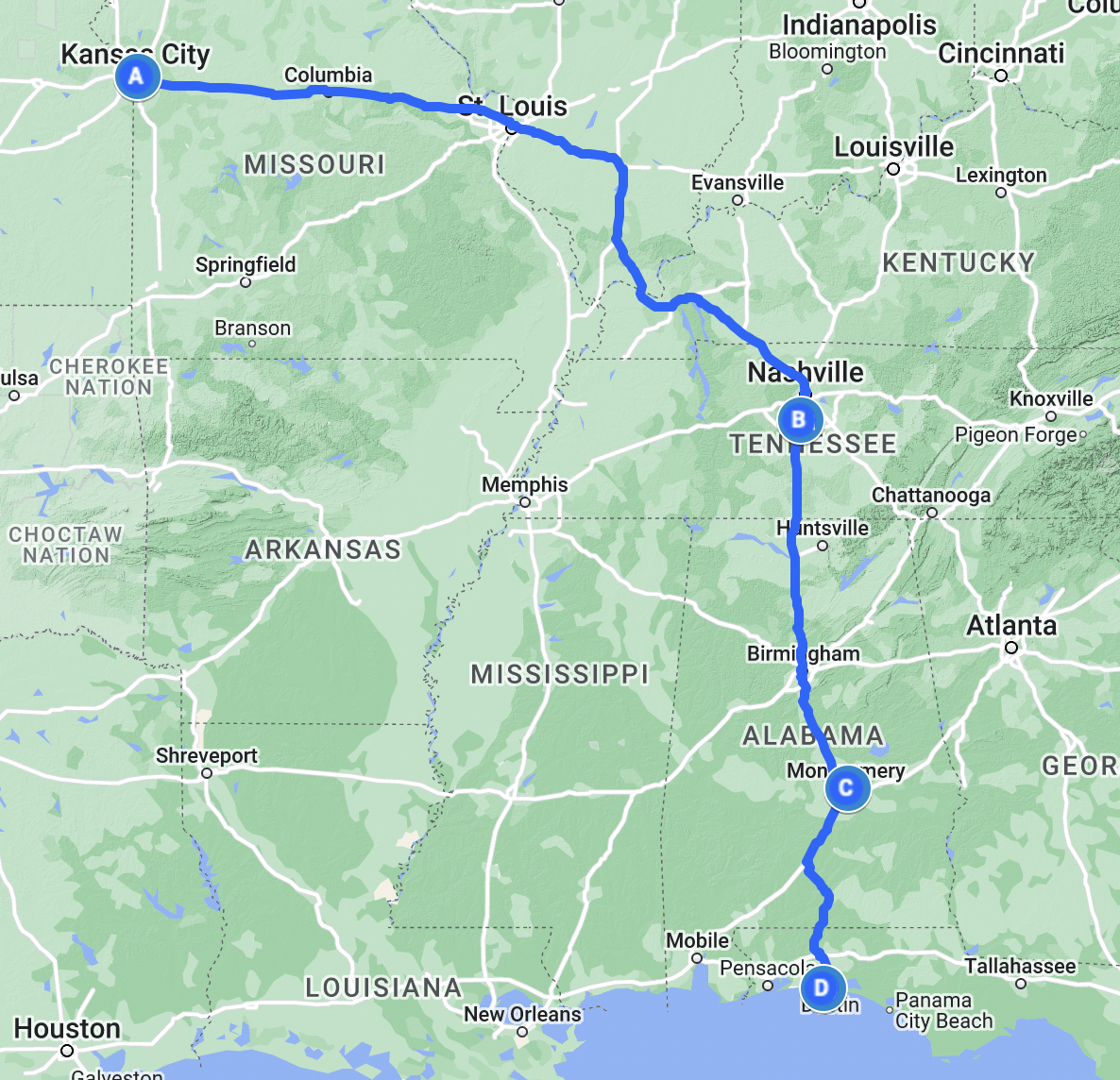
This time I was taking a long way around, not exactly what I’d call “the long way around”––that would be driving to Binghamton via Alaska––instead, I planned to return to Binghamton via the South, the one region of the country (besides Alaska and Hawaii) that I’ve spent the least amount of time in. Why would I add an extra 1,430 miles (2,301.36 km) to my route just to do a bit of sightseeing? Family, that’s why. This year my family decided to hold a reunion in Destin, Florida, a small resort town on the Emerald Coast of the Gulf of Mexico that lies about halfway between the larger Northern Florida cities of Pensacola and Panama City.
Of the 24 of us who went to Destin this Summer about half made the trip by air along various routes, while the other half of us drove. I decided from the first moment I started planning this trip that I wanted to stick to the interstates as much as possible, seeing as I memorized most of those over years of staring at maps during road trips as a kid between Chicago and Kansas City. Most of the drivers chose to take a slightly faster route on US Highways through the Ozarks stopping overnight in Memphis and Tupelo, Mississippi (Elvis’s two hometowns). In my case, my goal for the first night was Franklin, Tennessee, a suburb south of Nashville along I-65. So, naturally as I drove across Missouri, I was repeating from time to time the general route I was following on that first day: I-70, I-64, I-57, I-24, I-65. As long as I kept those numbers in mind, I knew I’d make it to Franklin eventually.
I arrived in St. Louis around 13:30, about 2 hours later than I usually would on a Long Drive East. Granted, I also left Kansas City 2 hours later than usual, choosing that wonderful breakfast at Eggtc. over the typical simpler breakfast at home or the quick sandwich & doughnuts that I’d normally pick for such a trip. In the days before I left, the St. Louis area had been badly flooded by heavy rains, with some places in St. Charles County even seeing a foot of rain (30 cm) fall in the course of a day. The reports showed homes inundated, metro stations submerged beneath 21st century ponds, and highways deep under water. I was concerned that the aftereffects of the flooding might close some of the highways I needed to take, particularly I-70 in St. Charles County and I-64 across St. Louis County and City, but thankfully it was smooth sailing the entire way to the Arch.
I crossed the mighty Mississippi on the Poplar Street Bridge and left Missouri behind for the second state, the state of my birth, Illinois. Now the thing to say about Illinois from the start is that as much as it is the state of my birth, there is a tremendous difference between Chicago and the rest of Illinois, just as there is between any metropolitan area and the rural countryside in between across the United States. So, as much as I do kind of feel at home even there in Southern Illinois, it’s still not exactly the same as the place that I still call my original home a couple hours’ drive to the north of St. Louis. This trip marked the first time I drove southeast out of St. Louis on I-64, which is the main road between St. Louis and Louisville, continuing on from there eventually to Richmond and Hampton Roads, Virginia. I was only on I-64 for a short time, little more than an hour, when in Mt. Vernon, Illinois I left that east-west route and turned south on I-57, a highway I usually encounter in Effingham, Illinois, to head towards the furthest reaches of that state of my birth, to a place I’d long heard of and wondered about.
When I was 5 or 6 my parents bought a beautiful cloth-bound hardcover photographic atlas of the United States that was probably a special millennium edition. I remember the inside cover had a photo of a mountain climber scaling an ice-covered cliff on one of the mountains either out in the Rockies or up in Alaska. But as I drove through the southernmost reaches of Illinois, what came to mind the most was the photo of the Fall colors in Shawnee National Forest, which covers 280,000 acres (1,100 km2) of woodlands near the confluence of the Ohio and Mississippi Rivers. As a child, I always was amazed that there was a national forest in Illinois, I had only ever encountered national forests out in Colorado, and so to me that meant they must be truly wild places with great mountains and old trees and lots of animals. Shawnee National Forest certainly has some hills, the Ozark and Shawnee Hills to be precise, but the years since has tempered my initial surprise through time spent in the national forests of the Appalachians.
I crossed the Ohio at Paducah, entering the Commonwealth of Kentucky. I last visited Kentucky in September 2018 when I attended the Midwest Conference on British Studies at an Embassy Suites in Lexington. My experience of the state this time was largely the same as that time, only I’m happy to report I-24 is far less potholed than I-75 was the last time I drove it between Cincinnati and Lexington. I crossed Kentucky quickly, I-24 crosses only 93 miles in that state before entering Tennessee. While in Kentucky though I did see the first big dark clouds that marked the latest round of flooding, this time not in St. Louis but in Eastern Kentucky.
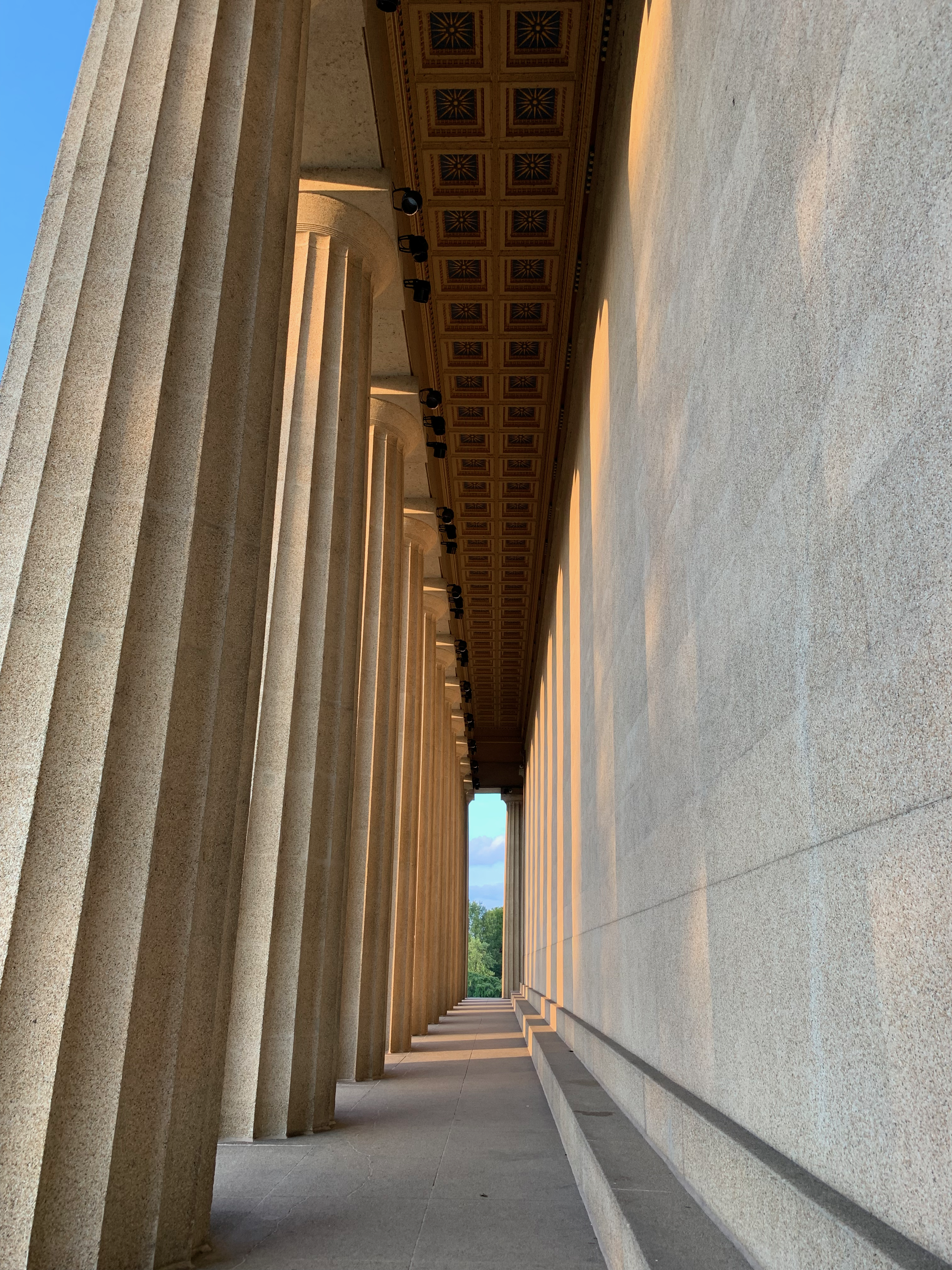
As I left Kentucky for Tennessee, I began to enter a far hillier area that makes up the northern rim of the Nashville Basin, a great bowl surrounding the state capital. Traffic picked up as I descended into the bowl, reaching the I-24/I-65 junction north of Downtown Nashville. Back in Kansas City I had chosen to enter the address of the top site on my tourist list in Nashville into my navigation system, and so I left I-65 early of my hotel for Centennial Park and the Nashville Parthenon. This building is a full-scale replica of the original Parthenon located on the Acropolis in Athens. I arrived at 19:00, sadly a few hours after the interior had closed to visitors, and thus could not enter the building. Nevertheless, I gazed in wonder at the reliefs and ornate ceilings of the porticoes and stoas.
After a quick stop at the Parthenon, I made an even quicker stop at the Tennessee State Capitol, wanting to avoid the ire of the state police for spending too long on their property, and by that point having been on the road for a full 9 hours, I really needed to get to my hotel to sleep. With those two stops in Downtown Nashville done, I returned to I-65 and made quick work of the drive south to Franklin.
The following morning, I woke with my 06:45 alarm and staggered upright after the usual vivid and surreal dreams. There were images of me in quick step striding my way across a white sand beach on the Gulf Coast, dressed in a full business suit beneath the midday Sun. In my left hand my briefcase, my right hand raised aloft trying to catch some phantom bus that was due to roll onto the shore. Riding atop my head was my cat, Kitty, lazily lunging on my scalp as if unconcerned by the precariousness of her position.
I remembered what I had to do and quickly got ready for another day of driving. While the first day had taken me along roads I knew all too well, this day would pass along many roads I’d only ever looked at on the map. I left my hotel in Franklin at 08:00, stopping for a quick breakfast before turning my attention once more to I-65 and the continuing road south. The Tennessee hills glowed in the morning Sun, their green cover of foliage marking the southern end of the great Appalachian Mountains that I knew well in New York.
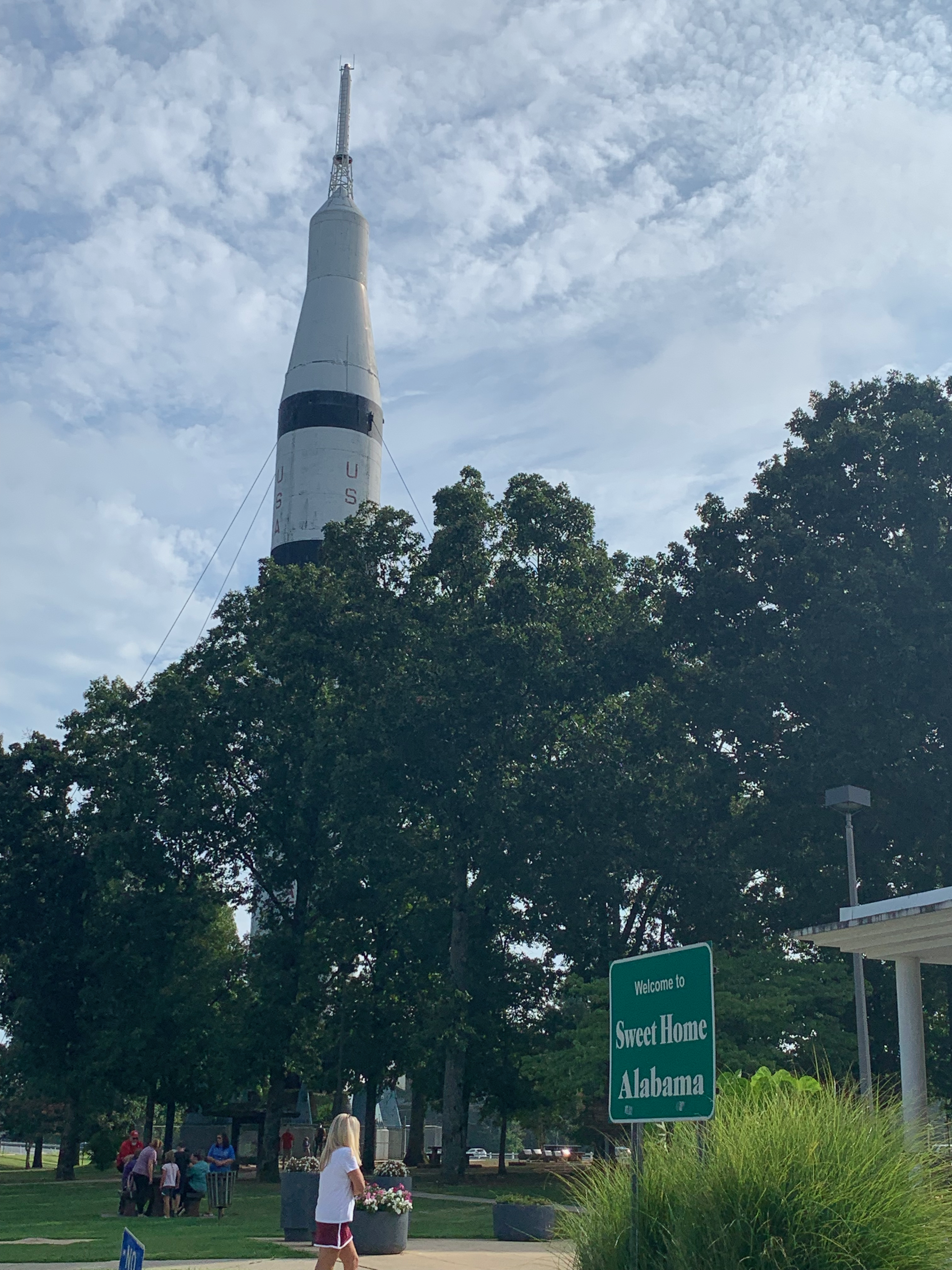
I made quick progress along I-65 to the Alabama border and soon found myself facing a Saturn IB, a NASA rocket built in Huntsville, Alabama. I pulled over into the Alabama Welcome Center parking lot and briskly walked over to the base of the rocket to take some pictures before returning to my own chariot for its continuing voyage rocketing ever southward toward far greener shores.
Alabama struck me as in some ways old fashioned, in other ways brilliant, as in how they included the mile markers on each bridge, a great way of calculating distances as I crossed the Heart of Dixie. After about an hour I entered the great valley where Birmingham was built, the largest city by far in the state. In Birmingham I began to truly notice that I was moving southward as I crossed over Interstate 20.
Here in the US, the Interstate highways are numbered in an ingenious way to help navigation: east-west highways are even numbered with the lower numbered highways in the south and higher numbered in the north, and north-south highways are odd numbered, with the lower numbered in the west and higher numbered in the east. Thus, with Interstates 5 and and 8, San Diego is the 0/0 point of the Interstate system, while Boston with its Interstates 95 and 90 is the exact opposite. There are some exceptions to the rule (I’m looking at you, I-99 in central Pennsylvania and New York), but by and large it’s a rule that’s followed nationwide. So, when I saw the signs for I-20, I knew I was making progress, especially when I started the trip in Kansas City on I-70.
Birmingham seemed like an interesting place, and while I didn’t stop there this time, I wouldn’t be entirely opposed to having a conference there in future years, if that happens. Nevertheless, I passed it on by and continued south toward my first waypoint of the day in the state capitol Montgomery. Yet after leaving Birmingham I was baffled to be stopped by bumper-to-bumper traffic that had occurred for no apparent reason. I sat in the southbound lanes crawling behind semis, RVs, boats on trailers, pickup trucks, and suburban soccer mom tanks (aka minivans) with every state’s license plate imaginable adorning their rear bumpers. The heavy traffic continued for the rest of the day’s drive until I reached the Gulf Coast late that afternoon.
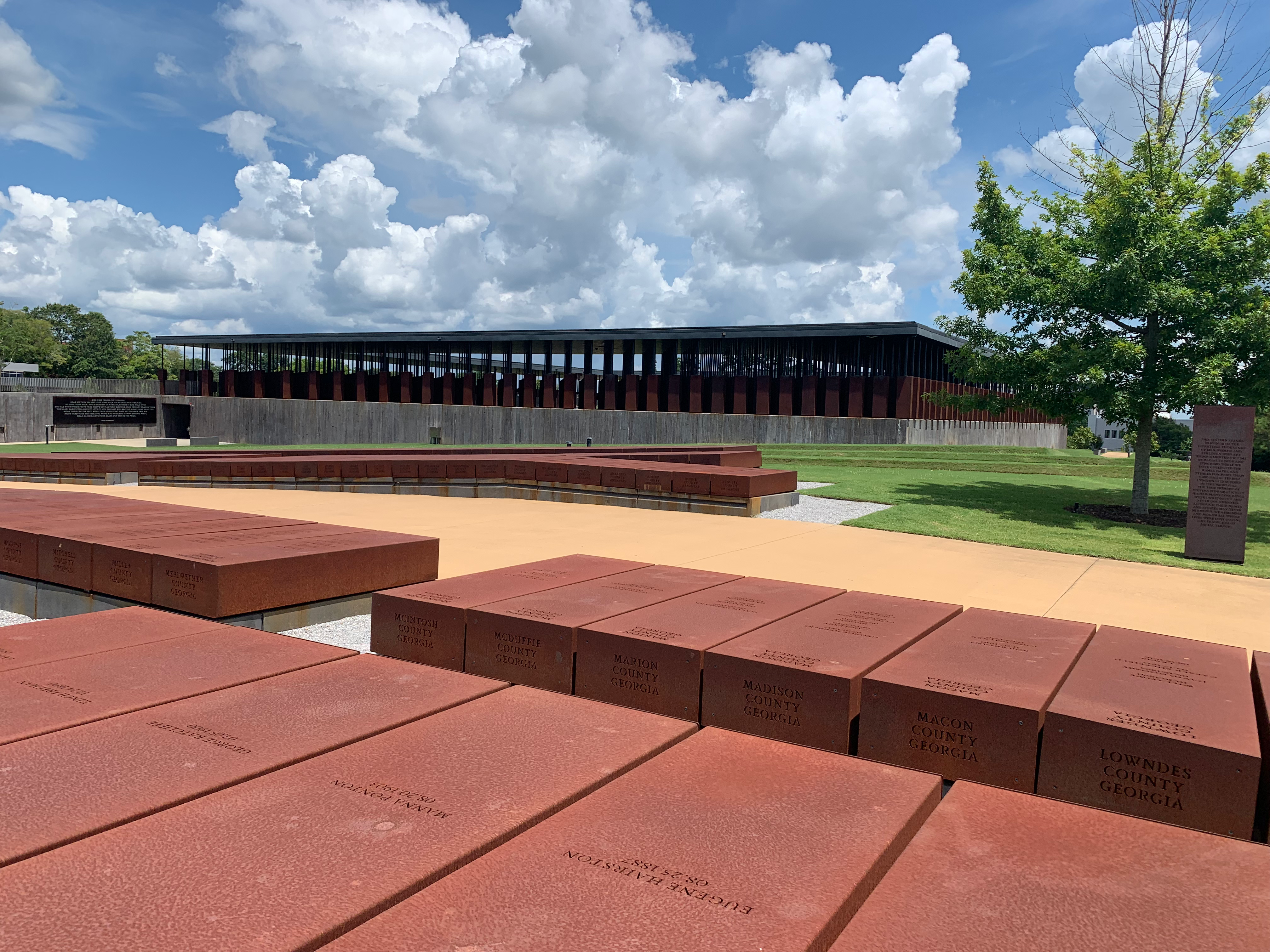
I reached Montgomery just before noon and drove straight to the main site I wanted to visit. The National Memorial for Peace & Justice opened in April 2018 to much press. A review at the time from The Washington Post’s Philip Kennicott called it “one of the most powerful and effective new memorials created in a generation.” I read all about it when it opened, and even looked into how I could travel to Montgomery to visit it. When I did arrive, I wasn’t disappointed. The memorial honors the African American victims of racially motivated lynchings that took place between the end of Reconstruction in 1877 and the beginning of the Civil Rights movement in the 1950s. The memorial is made up of a series of 805 hanging rectangular steel pillars representing each county where an African American was lynched in this country during that 73-year period. I was quiet walking up to the memorial, stunned by the sight of it. I knew what to expect, but I didn’t really grasp the power of that vision until I actually saw it in the flesh. How such racially motivated terror was, and frankly remains so common in this country is sickening.
My eyes stayed wide as I gazed first at the pillars that hung along the entry to the memorial and then slowly turning upward as I walked down into the heart of the site, a trench that was dug deep into the ground like some vast communal grave into which all these tormented souls were buried. Some of these pillars have been taken down from their original places aloft and placed on the ground in a series of rows like in a cemetery, those that have are the ones that represent counties that have established their own memorials to mourn those who were murdered this way locally. My own home county––Jackson County, Missouri––was included among those that have erected their own memorials, in our case to a man named Levi Harrington who was murdered on 3 April 1882 on a bridge in the West Bottoms. In June 2020 the monument in question was thrown down the cliffs on the western side of Quality Hill soon after its installation by several unnamed individuals. At this moment of writing, I can’t remember if it was replaced and fixed.
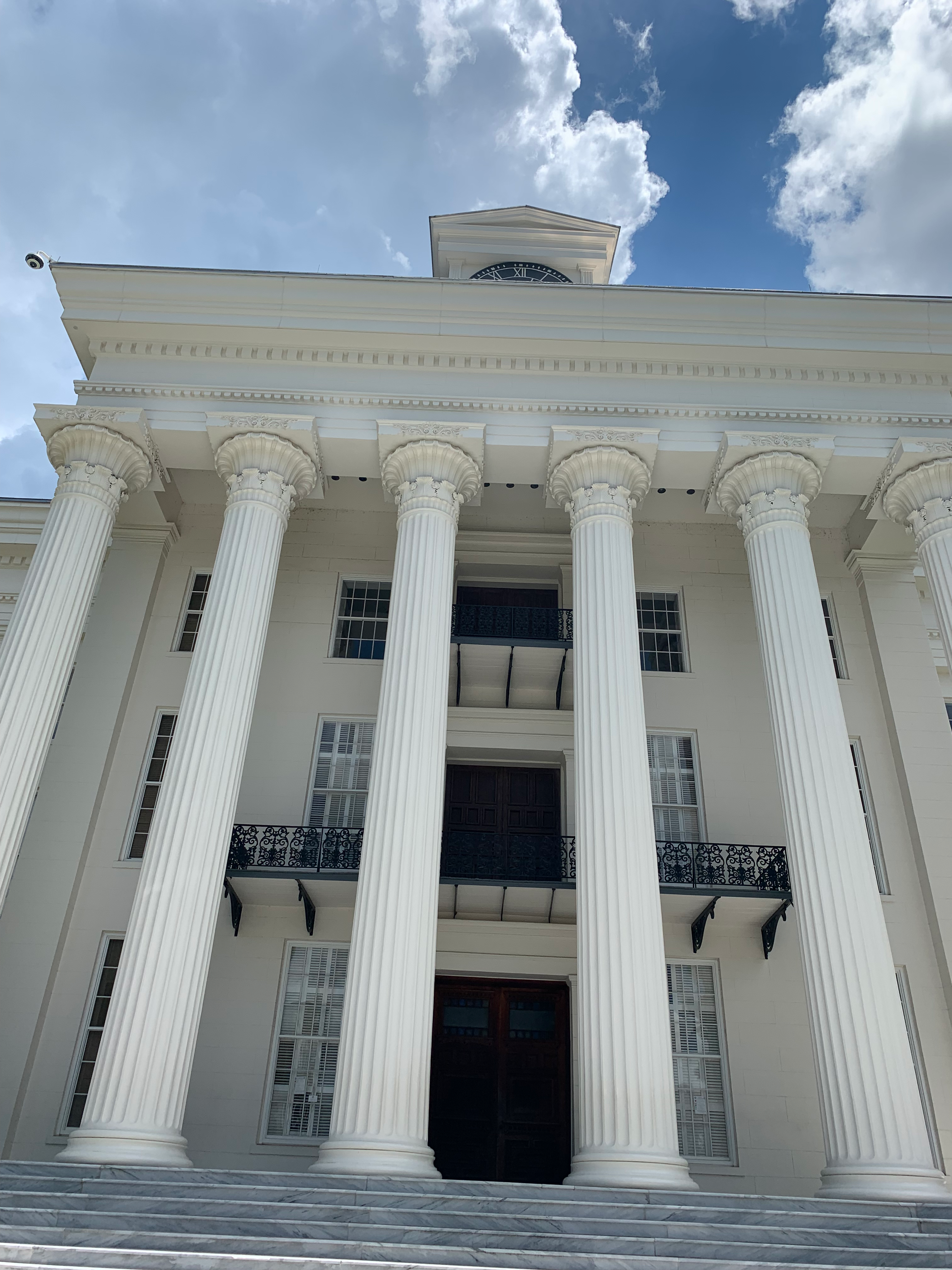
I left the memorial and drove into downtown Montgomery hoping to find lunch and make a stop at the Alabama State Capitol. Yet of all the things that could be confounding the parking situation was what kept me from making more than just the one stop on the capitol grounds. Every parking meter I stopped at had a red “Expired” sign waving like a most unwelcoming of flags before me. So, I decided the best place to risk getting ticketed for illegal parking was the State Capitol itself.
The Alabama State Capitol has a checkered history in my book. On 22 February 1862 it was the scene of the inauguration of Jefferson Davis as President of the Confederate States. While I was taking pictures of the capitol building’s white façade a guard walked over to me and asked, “You should get pictures of the statues as well, like Jefferson Davis over there?” I turned to the guard and quickly replied, admittedly without thought, “I don’t take pictures of traitors.” Alabama to me is the South personified, it was home to the first capital of the Confederacy, and the heart of the old Jim Crow South that perpetuated the evils of the old Southern way of life for generations after they were defeated in battle by the Northerners and Midwesterners. I myself didn’t have any ancestors who fought in the Civil War, they were all either too old or too young for the draft, but I do remember hearing stories of the anger towards the South in the younger generation that lived through that war, whose lives were scarred by the horrors of a war fought over the elites of one half of the country’s inability to consider an entire group of people as anything more than property. This is the reason why I’ve generally avoided the South, especially Alabama, which to me is the beating heart of that infernal system.
I left Montgomery and continued ploughing my way ever southward toward the coast. I followed I-65 for another 90 minutes of steady traffic until turning off and onto a series of smaller country roads at the town of Georgiana, birthplace of Hank Williams (1923–1953) one of the most influential country singer-songwriters of the last century. From there the road took me ever deeper into the hardwood swamp forests and bogs of southern Alabama, typified by the woods of Conecuh National Forest. As I drove through the forest the first sign that I had entered Florida was that the highway name had switched from an Alabama state highway to a Florida one. Naturally at that point I lost my data signal and briefly lost navigation and communication on my car’s computer.
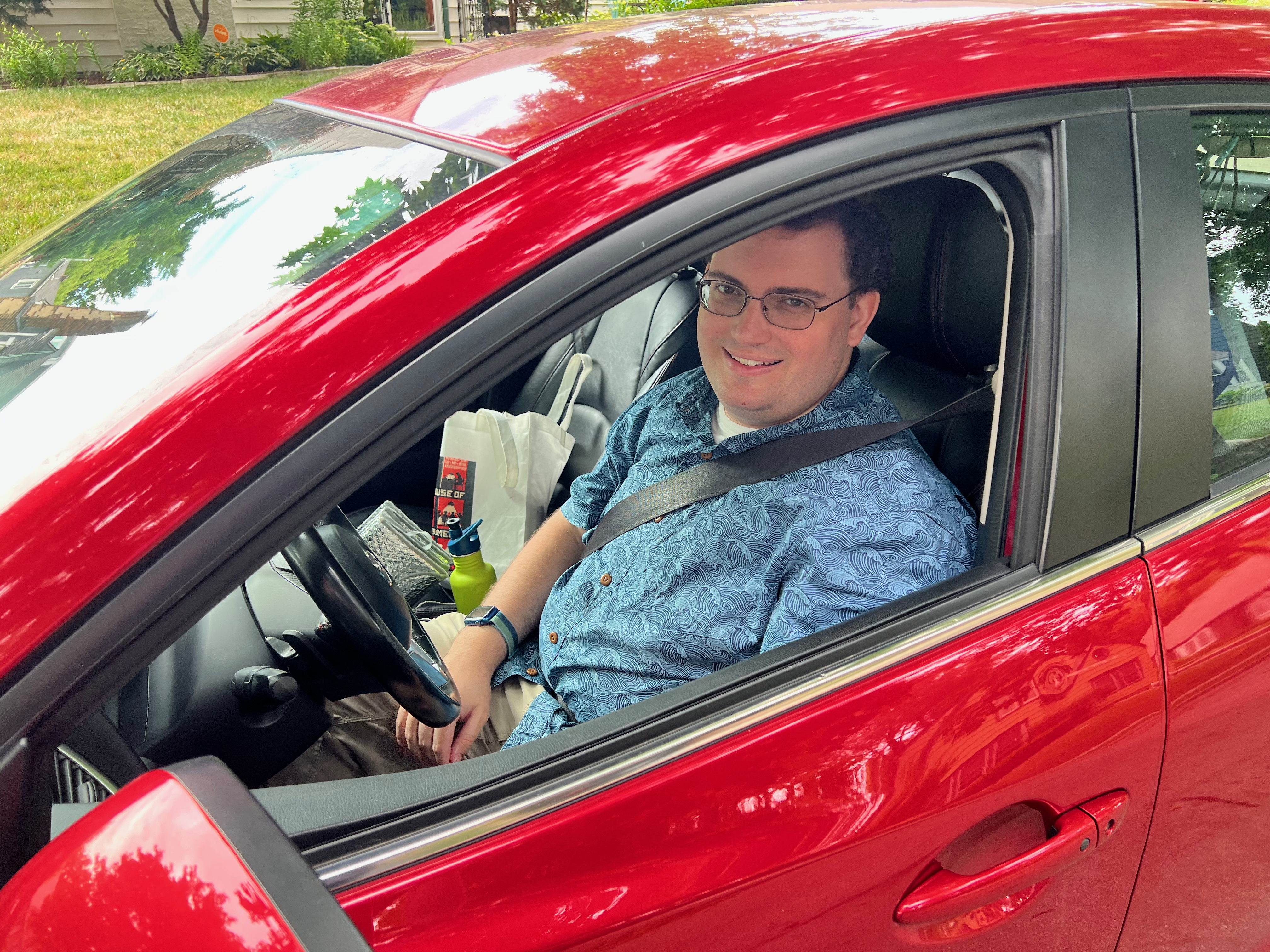
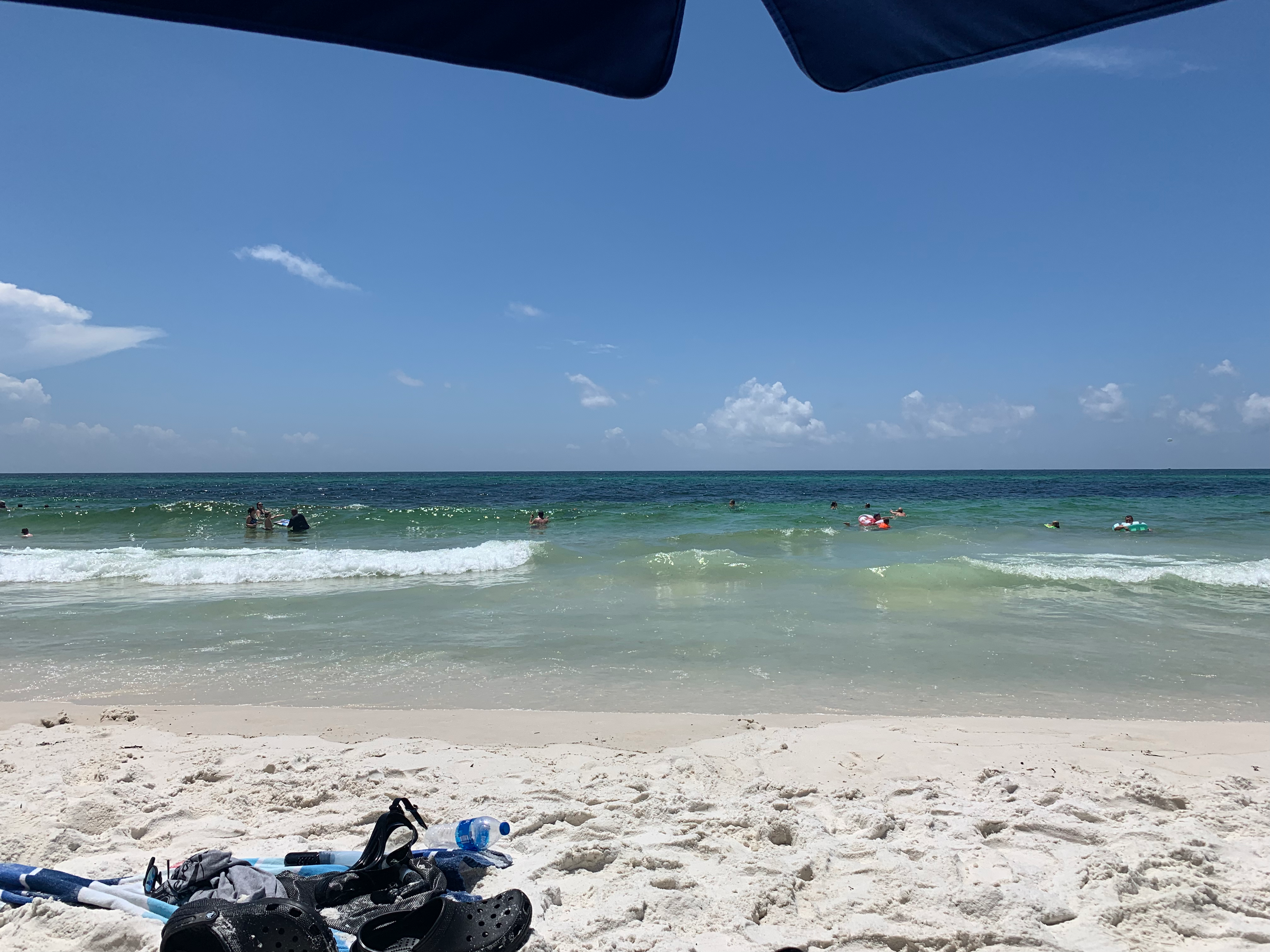
But after a good 15 minutes it all began to return as I left the thick forests of the far northern reaches of the Florida Panhandle and crossed over I-10, better known in California as the Santa Monica Freeway. After another 20 minutes I was in Fort Walton Beach approaching Destin with seemingly nearly everyone else from the Midwest and Deep South. The streets of Fort Walton Beach were packed to the gills, leading to the last mile of the drive taking a full 20 minutes to complete. Regardless, I was now in sight of the Gulf of Mexico, the second arm of the Atlantic I had driven my car, the Mazda Rua, to. It was surely the beginning of a beautiful relationship.
Have you ever thought about the words you use to show appreciation for something? Or better yet, have you ever considered what the words you use to show excitement mean? You might say a very modern “cool,” or a more traditional “good,” or a Midwestern “neat,” or a more midcentury “groovy.” There could be a “dude” thrown in there if that’s your style, or you could go even further and offer an “awesome” or a “fantastic,” or Mr. Spock’s own measured “fascinating” into the mix. There’s one such exclamation that bears some consideration, one that is “wonderful” to behold.
What does it mean when something is wonderful? What does it mean to be full of wonder? Growing up I knew the word wonder from the Age of Empires series of computer games where a player could win the game by building a wonder and keeping it standing for 2,000 years in the game’s time (10 minutes in our own reckoning). I always wanted to build wonders in those games but was never quite good enough a player as a child to get to that point.
There are other uses of the word wonder that come to mind like the German Wunderkind, or Wonder-Child, whose abilities outmatch all others. Or there’s the 2016 Sir Elton John album Wonderful Crazy Night that I got to see him promote and perform on the night when I was in the audience at the Graham Norton Show in London. Wonder is a flexible word because of how lofty an idea it evokes. There are wonderous things out there that are worldly, like the blueberry danishes at McLain’s Bakery in Kansas City, and there are wonders unimaginable to behold like the visions of previously unimaginable beauty seen by the James Webb Space Telescope in recent months.
Yes, I was there.
In the last couple years, I’ve come across the word wonder more and more in my work. It is one of the best English translations of the French word singularité which appears frequently in my primary sources, a word which can be translated as both “individuality [and] uniqueness” as well as a “peculiarity [or an] oddity.” Une singularité is a wonderous thing because it defies expectations. The wonders beheld by the European explorers who arrived on the Atlantic shores of these continents five centuries ago opened their eyes to visions they could not previously have imagined. They became “marvelous possessions” as the literary scholar Stephen Greenblatt described in a landmark study of the First Age of Exploration.
In my own specialization the 3-toed sloth was a wonder to behold for all these very reasons. It was a mammal that did not seem to provide any usefulness to the humans who lived around it. Nor did it seem to contribute to its own ecosystem by hunting or foraging beyond whatever it could slowly grasp in its own favorite tree. What’s more an especially wonderous claim was made by one of the leading sloth writers of the day, a Frenchman named André Thevet (1506–1590) that claimed because there was no eyewitness evidence of the sloth eating or drinking that had been proven by a European then the animal must be one of only a very small number, if not a true singularité in that it could “live only on air.”
Another place where the word wonder appears is in religion. In Exodus 3 where Moses encounters God at the Burning Bush, God says that when the Pharoah of Egypt does not heed God’s command to let the Hebrews go that God “will stretch out [God’s] hand and strike Egypt” “with wonderous deeds.” (Exodus 3:20 NAB) These same wonders were then performed by Moses and his brother Aaron to assert God’s will that their people should be freed (Exodus 11:10), leading to a transformation in the relationship between the Egyptians and the Hebrews from master and slave to former oppressor and the defiant.
To be wonderous is to be unfathomable, to be terrifying in power and incomprehensibility. The other great nearly religious experience where I’ve heard the word wonder used is in those moments of joy when words fail, and song takes over. I’m of course talking about falling in love, and of that great Gershwin song “S’Wonderful,” which I first heard in the 1951 Gene Kelly film An American in Paris sung by the Pittsburgh native song and dance man himself alongside the French cabaret singer and actor Georges Guétary. It’s one of those songs that I know by heart, having played the film’s album enough times and seen it quite a few at that. One of these days I’ll sing it for myself.
This week, I feel a bit sentimental about the biggest anniversary in my life to date.
23 years ago this week, my parents and I packed up our house in the Chicago suburbs and moved about 500 miles southwest to a farm on the western edge of Kansas City, Kansas. There were so many different aspects to that move from an opportunity for a different sort of life to the chance that I could grow up with my maternal cousins. In the years since we’ve had all that and more. Still, for the first 20 years I approached this anniversary with a bit of a sour attitude.
I was excited at first at the prospect of moving to a farm, to a place where we’d have horses and all sorts of pets (back then I was really into cowboys as well as dinosaurs like your typical 6-year-old). But as time passed and I began to realize what it meant to be living on a farm on the outskirts of a metropolitan city away from so many of the things I’d come to know and love back in Chicago, I developed a sense of gloom about the whole story.
It took until my mid-twenties for me to fully appreciate how wonderful a city Kansas City is, and how much it had really become my home. As the twentieth anniversary of the big move approached in 2019, I was back in Chicago for a week for probably the first time as an adult returning to my original hometown for business rather than on a family trip. At that point I seemed to be on the verge of securing a position back in that city and felt like all my hopes of the previous two decades were finally coming true. That job didn’t end up panning out, and besides a quick overnight stop in the suburbs on a long drive west to Kansas City from Upstate New York in October 2020, I haven’t been back to the city of my birth yet this decade.
When I was there in January 2019 attending the American Historical Association’s annual conference, I paused here and there between things to reflect on the life I might have had if we’d stayed. Now as an adult having gone through academia I wonder if I might be in a more advantageous position today professionally if I’d gone to high school and college up there rather than down here. Don’t misunderstand me, my education at St. James and Rockhurst was wonderful and something I’ll always treasure. Still, the opportunities of things to study, especially in the sciences, are far greater there than here. In fact, I wonder if I would be in a different field today if we had stayed there than here: planetary science, paleontology, geology, who knows, maybe even anthropology.
It’s curious to me that my interest in history didn’t really begin until after the move to Kansas City. In Chicago we were members of the Field Museum, a cultural icon that we visited easily once or twice every month. My fascination with the past was born in those hallowed halls, first for dinosaurs and in more recent years for the ancient megafauna of the Pleistocene and for anthropology. Without that steady anchor in the natural sciences to keep my interest I began to turn to other things like Roman and later medieval history as well as linguistics.
The Field Museum in its Winter splendor
In many ways, that move impacted me far greater than any other event in my life so far. I became the guy I am today because of it. The guy in the classroom with more complicated loyalties and interests, the one with two favorite baseball teams (the Cubs and the Royals). Yet I’ve realized in recent years that I accentuated the fact that I’m not a native Kansas Citian for a good long while because it was something I could use to stand out from the crowd. Though rather than it being just a bunch of grandstanding, that fact of my life is one of the deepest and most personal parts of my story. Loyalty is something I treasure above all, and my own loyalty to my original hometown, even after 23 years, remains strong. To me, for example, abandoning the Cubs would be like turning my back on a core part of my identity.
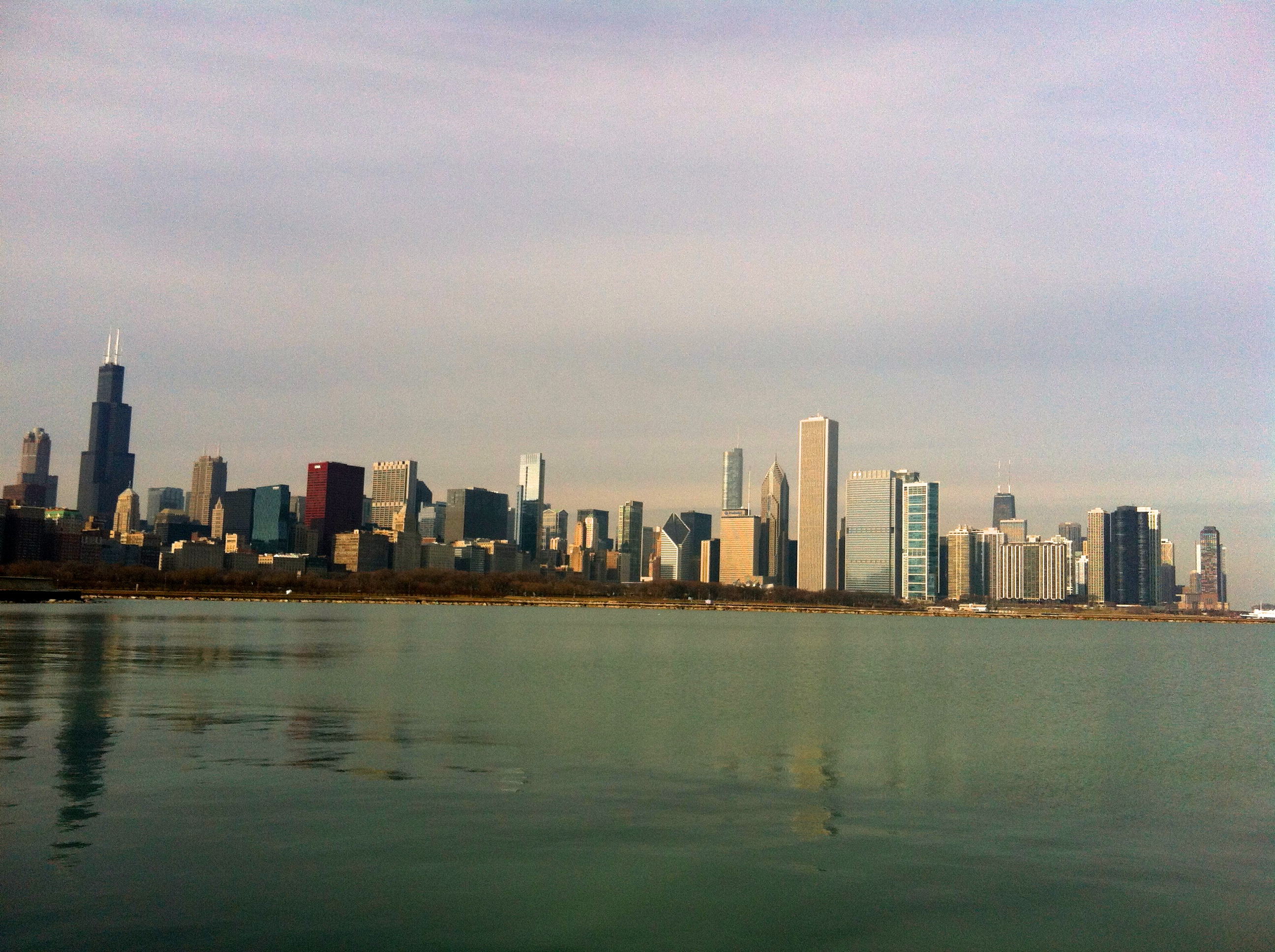
That passion is helped by the fact that those first six years contain many of my best memories, like the April Fool’s Day when my Mom woke me up to a clear sky and said, “I took the day off work, and I’m keeping you out of school today. Let’s go to the Brookfield Zoo.” Or the time when some relatives were visiting, and I rode with my Aunt Kay in the back of my parents’ Ford Explorer down the Eisenhower Expressway so all of us could go see the then brand-new Michael Jordan statue outside the United Center. There are the times when I got to go visit my grandparents with my Dad up in Mt. Prospect, or the times when he took me on the Metra downtown to go to the Field Museum (again, that old museum). There are all the summer days we spent on our sailboat, the Arctic Tern, out on Lake Michigan up and down the Chicago lakefront and out to where the skyline fell below the western horizon.
You can understand why then for 20 years I felt like I was missing something from my life. After we moved to Kansas City we went from the big towers and expansive museums and endless suburban streets to big open skies, beautiful sunsets, and days spent remembering what we had before we left the place that to me still felt most like home. I think the farm wasn’t ever really going to feel like home to me, it was too quiet, and as an only child out there I was pretty lonely. Only after we moved into Brookside, the neighborhood where my Mom grew up, did Kansas City really feel like a place where I belonged.
Still, as much as I may grumble about the move it has also brought so many wonderful and dear people into my life. I got to know most of my family after moving to Kansas City, all my aunts, uncles, and cousins on my Mom’s side. I also made many dear friends in school and in daily life, including some who have been a part of this podcast so far and my brothers in the Donnelly Division of the Ancient Order of Hibernians in Kansas. I would not have gotten to know my dogs and cats and other pets if it weren’t for the move. I learned to love my best friend Noel, departed a year ago this month, and became a far better, kinder, and gentler person because of her presence in my life. Kansas City has given me so much, and made me who I am today.
Now as an adult I can see many different paths ahead of me, some of which lead back to that great lakefront metropolis, the beating heart of the Midwest. Others lead me back here to the Fountain City that I’ve adopted as home after a long and sometimes begrudging trial period. Some see me keep working out in the East in one of those great cities, and still more see me move out West to California or stay closer to home in Colorado. Nevertheless, today I could conceivably decide to fly up to Chicago for the day and go walk around those museums and streets that I remember so fondly from my youth. For me the Field Museum today is as much a place of scientific wonder as it is a place of wonderful memories. I’m still a member there, even though I haven’t actually visited in three years. (Thanks, COVID!)The Ancient Greeks had an understanding of time that we are always facing backwards to the past with the future still over our shoulders. I like that idea both as a historian and as a passionate person with a still young life filled with memories. What can I say, I’m always in a sentimental mood.
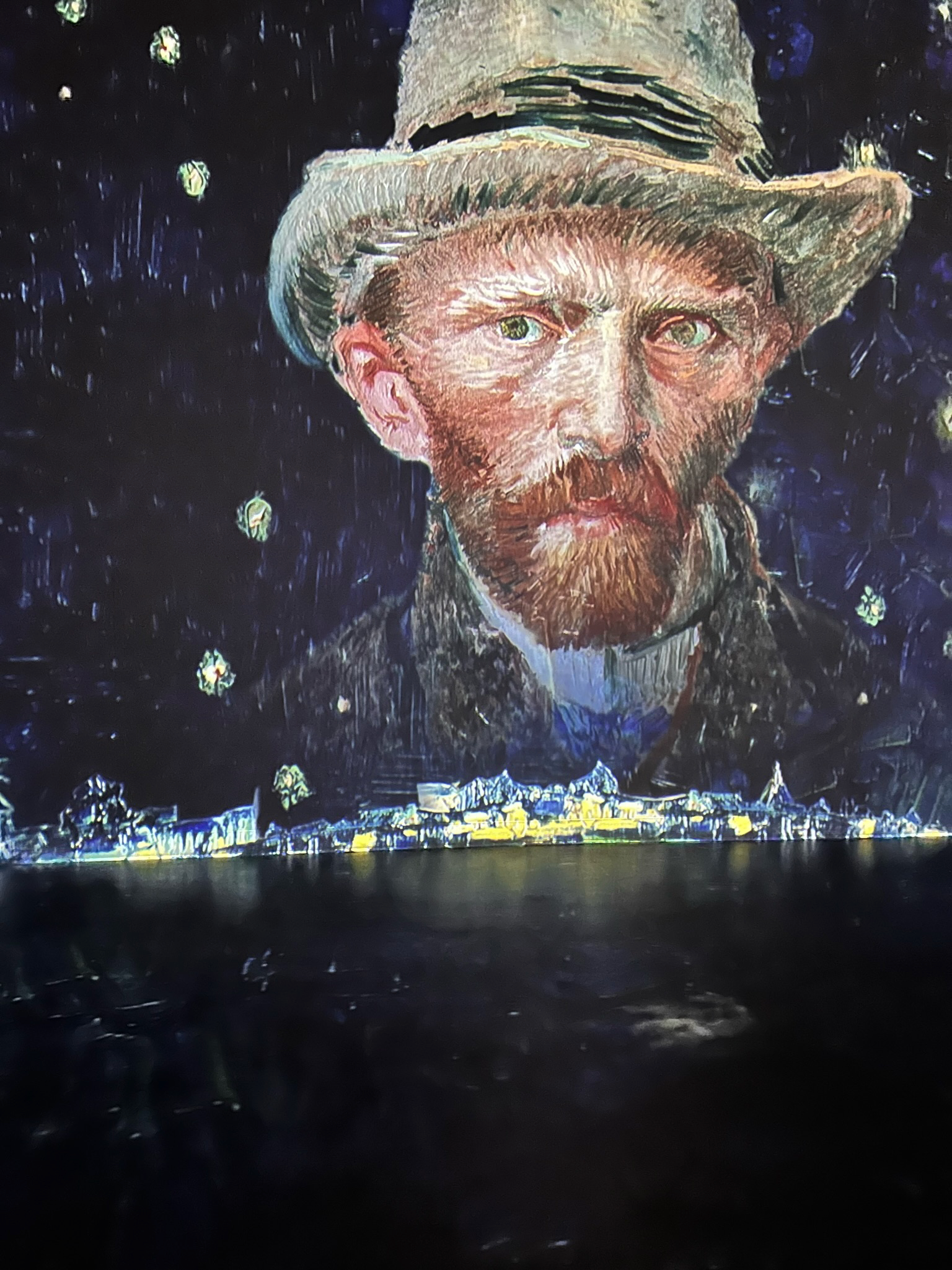
On Sunday, I went with my parents to see the Immersive Van Gogh exhibit that’s been touring around the globe for the past few years. I first heard about it when I was in Paris in May 2018 and thought about going to see it there but ended up not paying a visit to it then. So, the following year when it was announced that Immersive Van Gogh would be coming to Kansas City, I jumped on the opportunity and bought tickets for my family to attend.
Then the world changed in what now seems like a prolonged moment as the COVID-19 Pandemic took hold around the globe. The exhibit opening was delayed in Kansas City, and it began to slip from my mind for the next couple years as the storms that shadowed the last few years of the 2010s burst into the troubled times that have been the hallmarks of the 2020s thus far.
So, after years of anticipation when I finally entered the Immersive Van Gogh exhibit this past Sunday afternoon I was awed to experience it, the sights and sounds combined for a truly awe-inspiring experience. We entered the gallery as Edith Piaf’s “Je ne regrette rien” burst over the speakers to the bright yellow hues of the fields of Provence as observed 140 years ago by the artist’s eyes. I took a seat on the floor with my back to a mirror-covered pillar and watched as the images danced across the walls and floor surrounding me.
The exhibit inspired a question: does our art influence how we perceive the world around us, and as a historian more importantly does the art of past generations influence how we today perceive the light and color and nature of past periods? Take the Belle-Époque, the age of the Impressionists like Monet and Post-Impressionists like Van Gogh, do we understand and think of the daily reality of that period in a way that is colored by the works of those artists? There is a Monet painting in the Nelson-Atkins French collection here in Kansas City of the Boulevard des Capucines which dates to 1873. It shows the hustle and bustle of the French capital in a manner that is both of its own time and seemingly timeless in how modern it appears. This extends in my own mind to the point that I’ve imagined the same scene whenever I’ve happened to walk down that same boulevard in the last few years.
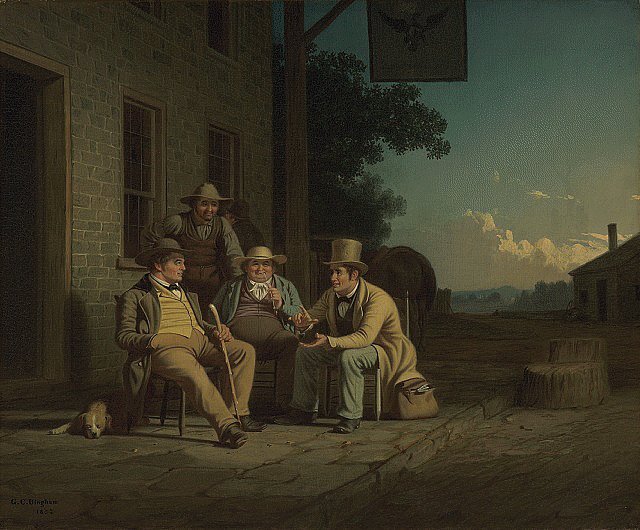
On the other hand, the images that exist of Kansas City from the nineteenth century are largely dominated by black-and-white photographs and the odd painting by the likes of our first great local artist George Caleb Bingham (1811–1879). So, for how many of us are our ideas of say the Civil War largely just in black and white even though the reality was in the same vibrant color as we see now today? Even in my own life, I’ve found that there’s a slight hint of faded color in my memories of earliest days of my life, perhaps influenced by the technology available in the color photography of the 1990s which is noticeably less radiant than the colors available today in our digital images.
George Caleb Bingham, Canvassing for a Vote, 1852, (92.71 x 105.41 cm), Nelson-Atkins Museum of Art
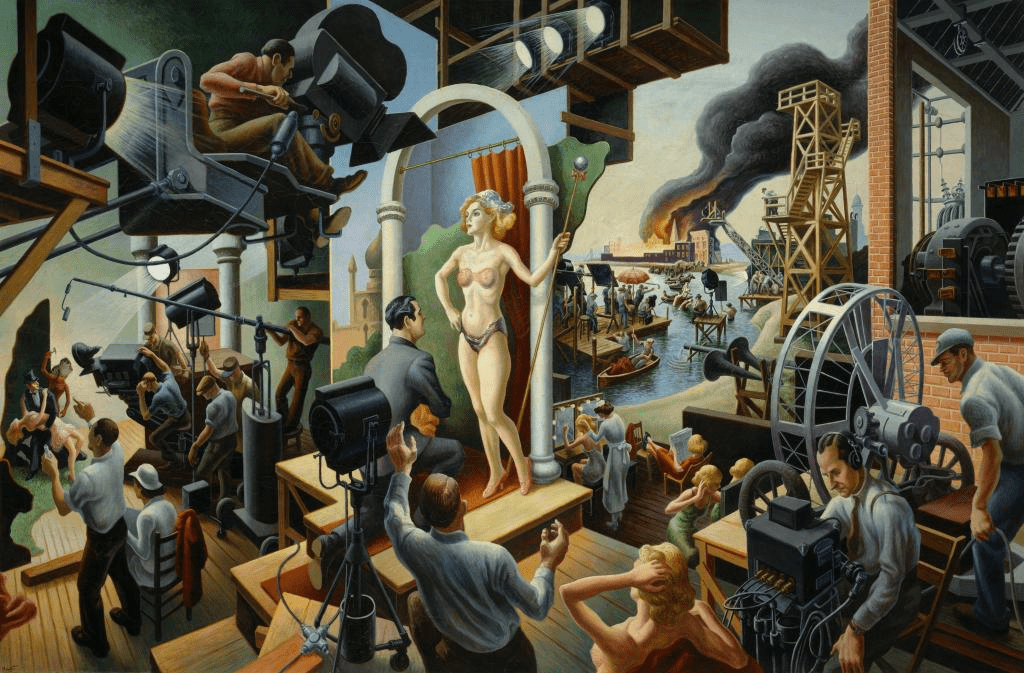
Art at its most fundamental level is a means of communication. It transmits memories from the creator, a historian of their own sort, to their patrons in posterity. Whether that art is expressed in painting or sculpture, sketching or cartoons, music or poetry, theatre or film, and in every form of literature both fiction and non-fiction alike, it is still at its core a transmission of knowledge and information. Through art the dead are able to speak to us still. In art we can experience something of the world that others live, that they see and hear and think. In the paintings of Thomas Hart Benton (1889–1975), in my opinion the greatest Kansas City artist to date, we can see echoes of American life as he understood it in the first half of the twentieth century. I can truly say that his art has influenced how I understood the Depression, World War II, and the Postwar years in a way that is best described by the fact that having grown up in Kansas City going to the Nelson and the Truman Library I saw his art far more often than many other Americans might well have. Through his paintings, Benton communicated ideas about what it means to be American, and the place of the Midwest in general and this part of Missouri in particular in the wider fabric of this diverse country of ours.
Thomas Hart Benton, Hollywood, 1937-1938, (156.53 x 227.01 cm), Nelson-Atkins Museum of Art
So, what sort of message will we in the 2020s leave for future generations? What do we want to communicate to them? In the last couple of weeks, I’ve been thinking of the Stephen Foster song “Hard Times Come Again No More.” Written in 1854 at a time when my home region was embroiled in the Border War known more commonly as Bleeding Kansas, one of the last preludes to the American Civil War of the 1860s, I’ve always thought of “Hard Times” as a song not of the nineteenth century but of the Great Depression, something that I could imagine being sung by farmers fleeing the Dust Bowl here in the prairies for new lives elsewhere. Still, the fact that the stories surrounding that song can speak to different times with common troubles speaks to the power of art. Maybe it’s high time we restore “Hard Times” to the charts, after all what better description of the present could there possibly be?








 Wednesday Blog by Seán Thomas Kane