Tag Archives: Kansas City

Rivalries

The idea of a rivalry and all the extra stuff that goes with it seems to be baked into American culture. Rivalries often make for the most exciting games in a league’s calendar not only for the history traditionally associated with that matchup but also for the antics and occasional brawls that break out in the process of playing the game. As a young Cub fan I always expected there’d be a fight during a Cubs vs Cardinals game or a Cubs vs White Sox game, just as any meeting between the Red Sox and the Yankees seemed sure to produce the sort of atmosphere normally reserved in North American professional sports for the hockey rink.

Interestingly, going off of what I wrote about last week in terms of regionalism, I think it’s important to recognize that rivalries often define a region’s local identity more than anything else. The two great cities of Missouri, Kansas City and St. Louis, are defined just as much by the shuttlecocks at the Nelson-Atkins and the Gateway Arch as they are by the rivalry between the Royals and Cardinals, particularly during the 1985 World Series, which ended in Game 7 with a Royals victory over the red birds. I only hope that with the introduction of MLS’s new St. Louisian team, St. Louis City SC, that we’ll see a strong rivalry between “City” as likely they’re going to call themselves, and our own Sporting.

If anything unites most American cities and their surrounding metropolitan suburbs it’s a general dislike for other cities and their metros. Often the greatest of these rivalries seem to be founded in sports: the Chicago/St. Louis rivalry for example, which certainly began as a disagreement among two of the Midwest’s greatest metropolises in the nineteenth century and developed in the last decades of that century and into the early decades of the twentieth through the birth of the Cubs in 1871 and the ancestors of the Cardinals, the original St. Louis Browns, in 1882. In the decades and generations since that rivalry has grown not only with the introduction of the Blackhawks vs. Blues rivalry in hockey but also a general sentiment that I experienced as a Cub fan going to college at a place dominated by St. Louisians; it didn’t help that my freshman year was also a year when the redbirds won their last World Series.

On a larger scale it seems like we could carry this idea of the rivalry to a geopolitical level. Sure, the US has rivals, traditionally they’d be our counterparts in Europe, in particular in the nineteenth century Britain and in the first half of the twentieth century Germany. More recently though, in the last few generations the US’s biggest global rivals have tended to be the likes of Russia and more recently China. I will fully admit to playing off of the eternal bogeyman in the American psyche by playing the sublimely stereotypically Russian theme tune to the fantastic 1990 film The Hunt for Red October every time I find myself in St. Louis when the Cardinals are doing well. In my own silly way it’s playing off of fears of the bogeyman projected on the wall in this country in communism, comparing my own Cubs’ greatest rival to that red scourge.

It’s interesting though that we have come to develop such profound senses of national pride out of how different we are from other countries, or at least how different we see ourselves from other countries. People in positions of authority, both in government and in the media, have taken advantage of this idea of rivalry to profoundly change the political discussion: we hear more banter about the creeping influences of socialism or Islam today than we do from the same people about problems that face our country internally like racism, vast inequality, and the constant threat of violence due to our overly lenient gun laws.

I’ve often thought that if anything is true it’s that a people who define themselves by what they aren’t rather than what they are will surely fall apart in the long run. Equally, a people who cry wolf at the shadow of the wolf on the wall, labelling it something foreign, when its fangs are being used by the same crier to cause chaos in the cave itself is a people doomed to falter. We’ve found ways to use the excitement of sports to infiltrate our politics and our daily lives, forcing us to adopt a mindset that it’s always us vs. them. Eventually, if we’re not careful we’re going to bring about our own defeat on the field of play, and not by anything our opponents do. It’ll be an own goal, a safety, our knives in our own back that will bring the land of rivals to its knees.
Defining Ourselves Regionally

In the last couple weeks since the UN released their new and ominous climate report I’ve been reading quite a bit about how climate change is going to impact my own home region and city. More often than not I tend to feel let down by the data available as for the United States it tends to be organized by state. So, instead of reading about how climate change is going to impact the Kansas City Metro I usually am left reading reports about its potential impacts on the States of Kansas and Missouri as a whole. While this is somewhat helpful as it narrows down the data from a national level to at least focusing on my local region, it becomes increasingly unhelpful the closer into the details I try and investigate as the climate is hardly uniform across both Kansas and Missouri.

I think this complication in how we think about ourselves and our regional identities is in large part due to how we so thoroughly organize our societies here in the United States into our 50 states, the District of Columbia, and the overseas commonwealths and territories. Metropolises like Kansas City don’t fit comfortably into these state-based regions as they straddle interstate borders. Think through a list of the major metropolitan cities in the United States, how many of them straddle interstate borders like Kansas City? This tends to be a factor more in the East and Midwest than the West where the borders tends to reflect the regional geography better than in the West where they are based on abstract lines of latitude and longitude (see the rectangularity of Colorado and Wyoming).

At the time when the United States was first formed as a federal republic in the late 1780s these borders effectively reflected what had been the borders between neighboring colonies and later effectively semi-autonomous republics and commonwealths. The idea of urban sprawl, let alone suburban development, was in its infancy. Cities could only be as large as a person could cross them by foot or carriage. Yet thanks to industrialization and a booming population the great cities of this country have spread far and wide from their original boundaries. There is a good argument to be made that the westernmost suburbs of New York today are located in Northeastern Pennsylvania.

We should really begin to think of our country not as a collection of states defined solely by their geographical boundaries but instead as a collection of metropolises defined by their sprawl and common culture. I believe the best maps to describe the population of the United States today are those that depict either regional media markets, such as the counties where the local TV and radio broadcasts come from a specific city, or those that show general spheres of cultural influence.

A map of the US media markets

All of this is fully impacted by each metropolis’s local climate. Kansas City is Kansas City in part because of its varied weather and four seasons, and by the fact that unlike much of Kansas to the west that Kansas City actually gets a decent amount of rain. So when I read that the climate “in Kansas” or “in Missouri” is going to do X or Y I’m left frustrated because our climate in Kansas City is vastly different from the climate of Goodland or Dodge City as it equally is from that of St. Louis or Ste. Genevieve. I suggest we begin to really start thinking of our country in this manner that’s more accurate to the population and density.

For me, having lived on both the Kansas and Missouri sides of the metro, I see myself as a Kansas Citian well before I’ve ever thought of myself as a Kansan or a Missourian. The same can be said in regards to my original hometown in the Chicago suburbs: I always felt more a part of the greater Chicago Metro than I ever did feel any connection to the rural parts of Illinois beyond the suburban sprawl. The continuing pandemic has only increased my sense of a metropolitan identity with how profoundly the state government in Missouri let its citizens down in not fighting but actually aiding and abetting the spread of the pandemic throughout the state.

Yesterday I did find a Kansas City-specific climate change report published by the Mid-America Regional Council. In it the evidence points to a likely conclusion that Kansas City will move by the end of this century from its current situation of being on the borderline between a humid continental climate and a humid subtropical climate to being fully within the bounds of the latter. As a humid subtropical city, we will have more rainfall per year, with hotter summers and milder winters. Less snow, sure, but more summer days when it will be too hot and humid to be outside.

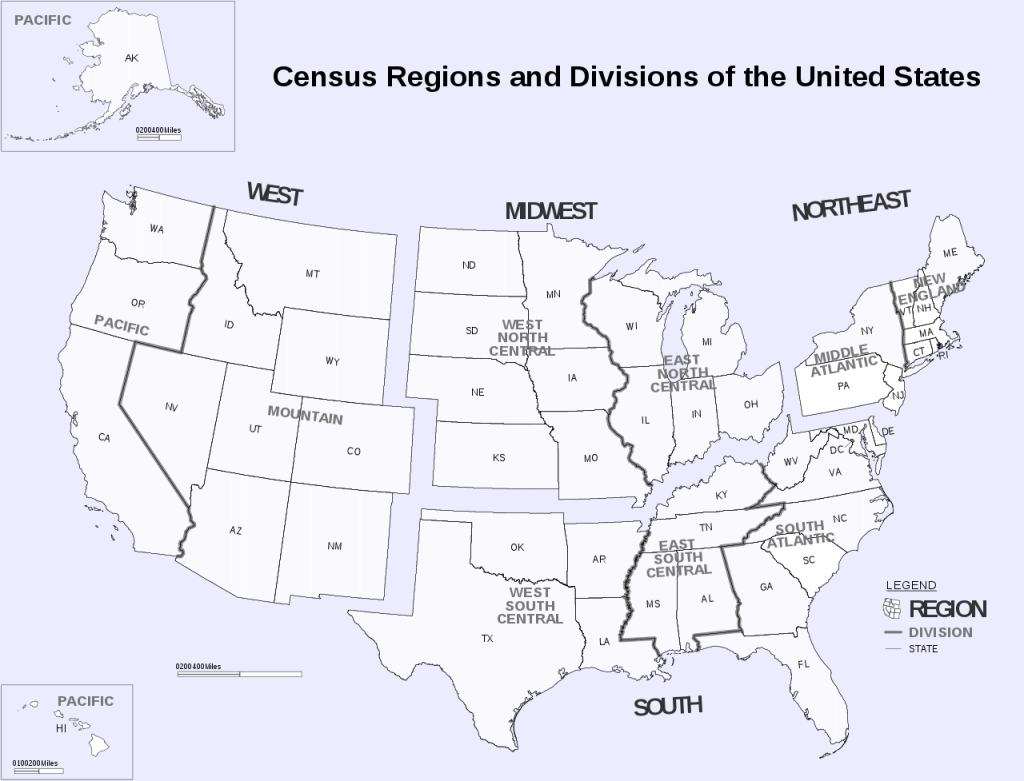
One aspect of this report that wasn’t stated that I think needs to be considered: if Kansas City is going to have a hotter and more humid climate, then surely the cities and states further to the south (Arkansas, Louisiana, Oklahoma, Texas) will see their climates transition to a point that they will be unbearable for many people. To me this seems to indicate that Kansas City will become a destination for many climate refugees from the West South Central census region, meaning our current metropolitan population of 2.34 million is only a shadow of what we might end up happening.

Heat Wave

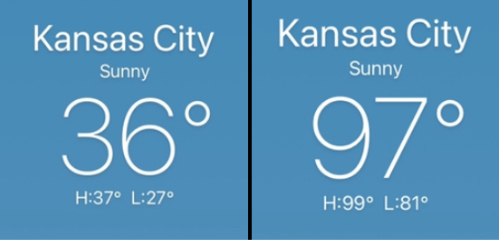
It’s hot again here in Kansas City. At the time of writing the current air temperature is 36ºC (97ºF) with a heat index of 45ºC (113ºF) and a humidity measuring at 55%. Like I said, it’s hot again here in Kansas City. And while August is usually the hottest month of the year here in the Midwest, and while thankfully we aren’t dealing with the horrific wildfires that are burning up the Mountain West and Pacific states, it’s still hot here on the prairies.

The thing about this heat that makes it more unusual to me than our regular summer heat waves is the fact that based on a UN climate report that was published earlier this week this sort of heat is going to be the norm in places like Kansas City in the coming decades, and to be honest we have only ourselves to blame. As warm as it is here it must be even worse further to the south right now in Texas and beyond the Rio Grande in Mexico and Central America. Our summer discomfort bodes even worse for the people who live in places where 35ºC+ temperatures in the summer are the norm because when our weather gets that hot theirs is bound to get even hotter.

It makes me wonder then how will this impact our winters? In the last decade we’ve seen harsher winters with more formidable blizzards and snowfall here in Kansas City than I can remember in my own relatively short lifetime. Will our summers get hotter and our winters cooler? Or will the summer heat mean our temperature cycles won’t fall quite as far as they have? For the record low temperature that I’ve experienced here has been -26ºC (-15ºF), though thankfully I was away in comparably balmy yet snowy Upstate New York when the temperature dropped even lower than -26ºC (-15ºF) this past February during the storms that knocked out power to Texas and by extension most of the Great Plains.

I’m not terribly fond of this sort of heat, and yes there is a difference to dry heat compared to this wet heat (take that pun where you will). When I was on a road trip with my Dad driving across the deserts of the Colorado Plateau in western Colorado and eastern Utah in June I got to experience this same temperature, 36ºC (97ºF) in a very dry climate, and it was actually a pleasant experience. Would I want to live out there in the deserts near Moab and Green River? Probably not. But if a KCUR article today about a local group of triathletes is correct, as KCUR usually tends to be, the human body can adapt rather well to extremes in temperature. I’ve tried to take the opportunity to go out and walk earlier in the mornings when the temperature is still in the high 20s, low 30s C (around 80ºF), which has certainly helped me cope with the few times I’ve needed to go outside during the height of the afternoon when as it happens I’m writing this post.

I guess the best answer I can give now is that we’ll adapt. We’ll adapt both in realizing we have to shift towards renewable energy sources ASAP or risk our very survival as a species, and we’ll adapt to the new climate that we ourselves have created, for better or worse. While it’s been fairly obvious for a while I’d say the new UN Climate Report is rightfully the herald of the Anthropocene, the latest geological epoch in Earth’s history. It’s an epoch when the greatest impact upon the balanced and complex ecosystem of our planet has been transformed and impacted the most by us and our industriousness. We’ve created our bed, now it’s time to sleep in it, and make sure the feathers don’t fly out of the mattress and pollute the entire bedroom floor. That cleanup would be practically impossible.

Languages

Of any one of my talents, the one that I tend to pride myself in the most is my ability to pick up languages fairly easily. I listen for the patterns, for words that may sound familiar, and gradually piece together what the speaker or author is trying to say. I have a number of stories involving me fumbling through having to speak languages foreign to me, whether it be the time I accidentally said “no” in Finnish when I mean to say “eh?” as in asking the flight attendant to repeat her question, or the time when I tried to tell a pair of Flemish men I didn’t need to see a doctor after falling down a flight of stairs at the train station in Welkenraedt in eastern Belgium. My solution there, by the way, was to merge the German “Ich bin gut” with what little I knew of Dutch, coming up with “Ik bin gut.” Regardless of how accurate it was to the situation, the fumbled line in my attempted Flemish worked, and kept the medical attention at bay.

The first language I learned to speak was English, American English, centered on the Midwestern cities that I’ve called home, Chicago and Kansas City. I’ve often yearned for small signs here or there of linguistic peculiarities in my own speech, and in the ways my family and friends speak. While many of the most evident signs I’d hope would appear haven’t shown, we aren’t terribly distinctive in how we speak, pretty standard American to be honest, the potential that we could have some regionality in our speech certainly makes the foundations for a good story.

I wouldn’t really begin to learn other languages until I was 14, when I began taking classes in Irish, the language of the majority of my ancestors. I’ve always wanted to be fluent in Irish, to speak the language which I feel is the closest to the beating heart and origins of my community. Based on Census data, my great-grandparents’ generation among my Kane ancestors, the ones who came over from Mayo a century ago, were the last ones who likely had some Irish. That multigenerational gap in our ability to read, write, speak, and think in our ancestral language reflects the degree to which we’ve become American with each generation, to which we’ve given up the cóta of the coasts of Clew Bay and embraced our new urban Midwestern American nature to its fullest.

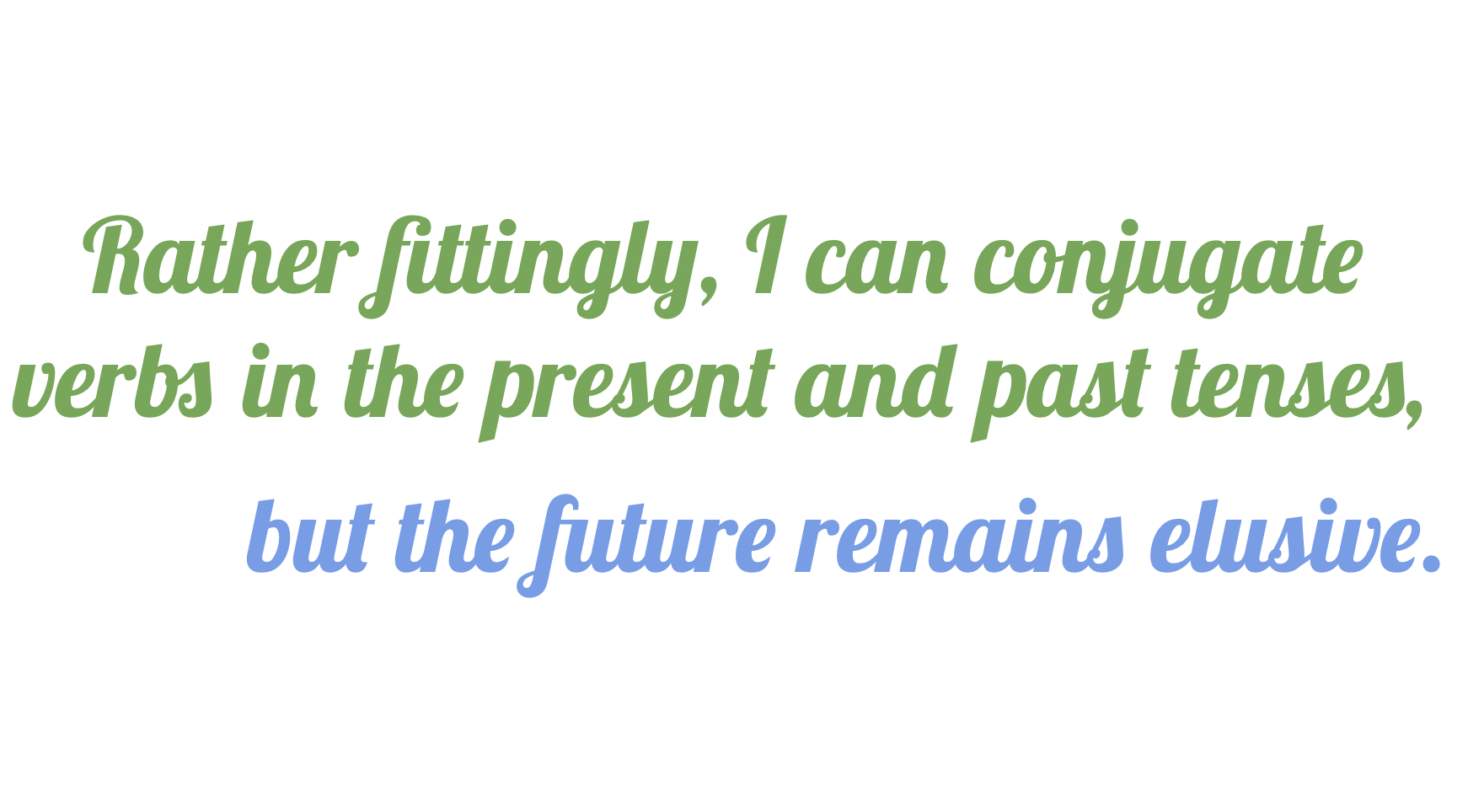
Today, I can do somethings in Irish; rather fittingly I can conjugate verbs in the present and past tense, but the future remains elusive. I use my limited Irish in some contexts, when she was still alive I’d talk to Noel in Irish, saving that language so dear to my heart for my dearest of friends. In the meantime, I’ve focused on other languages: I’m now on my third attempt to properly learn Latin, thankfully as I hope my previous post made clear, third time’s a charm. I’ve also spent a great deal of effort and time learning French, with enough comfort to the extent that I built my PhD dissertation’s source material around the availability of French sources that I could. I’ve spent time studying German and Italian, Ancient Greek, and Egyptian Hieroglyphs. I’ve studied my other ancestral languages, Welsh, Finnish, and Swedish, as well as a little more Flemish after my railway station tumble.

I once wrote a sentence in Irish that I thought expressed how I think about the language, how many of us the descendants of European immigrants spread across this continent may well equally think of their ancestral languages. Is ár dteanga an glór ár n-anama í. “Our language is the voice of our soul.” As best I can tell, it’s grammatically correct, and to me it has deep meaning. As long as we understand and remember our ancestral languages, the deep and intricate contexts of so many aspects of our familial manners and ways of life will stay alive. Even in the whisper of an ethnic memory that comes in preserving our names, the many Irish Americans named Patrick, Molly, Colleen, Brendan, Aidan, or Seán, we can see a hint of the Irish language alive today.

If I am able to truly become fluent in Irish, and I hope I’ll be able to dedicate the time and energy to do so in the long run, I hope my contribution to the language will reflect our times, that as truly it will recognize the efforts of generations past, my Irish will be the language as it is spoken in the twenty-first century, with recognition of the international nature of the language deeply rooted in the native soil from whence all Irish Americans’ ancestors came. I hope deeply, as an American cousin, that my efforts to continue my studies will reflect the respect and admiration I feel for the modern, progressive people my Irish cousins have become.

The Luxury of Stress, or the Adrenaline Rush of Fear

2020 began for me with a long drive east: Kansas City to Pittsburgh to New York. I drove the first leg in 15 hours, arriving just before midnight on a Friday, and spent the next day wandering through the Carnegie Museums of Art and Natural History in Downtown Pittsburgh, which was the main reason for that particular stopover. That Sunday however was characteristic of how the year that this would become. I woke up around 4 am on Sunday, early enough that I hoped I could be in Manhattan for lunch. As I made a quick donut stop near Pittsburgh Airport, I checked the travel updates for the Pennsylvania Turnpike, and was shocked to discover that it was blocked in both directions just east of Pittsburgh due to a fatal multi-vehicle accident that had happened about an hour before. So, realizing that I’d have to take an alternate route, I plugged one into the navigation system in my car and made my way into one of the most eventful days of driving in my lifetime.

The route on that snowy Sunday morning in January

For the first 3 hours of the 6 that I’d have to drive that day, I was largely on US-22, a smaller rural highway, which heads east out of Pittsburgh across Pennsylvania toward the Jersey Shore. Normally I prefer to stick to the interstates for the lack of stoplights, and at that hour of the night for the lack of traffic. In this instance though I quickly found myself crawling my way across the Appalachians in a blizzard with next to no visibility. I passed semitrucks that were sliding backwards down the inclines on this normally reasonable, yet now snow-packed, highway. I’m pretty sure I passed a plow or two even, continuing onward, only really able to see where I was going thanks to the car’s navigation. Only after 7:30 am or so did the snow clear and I was able to enjoy an otherwise uneventful drive to the long-term parking garage that I frequent near Newark Airport when I drive to New York City.

Like the rest of 2020, thus far, I was nearly stressed to my limit in the early hours of that morning. This year has been one for the record books, a right old annus horibilis to borrow a term from the Queen. At the same time that I was dodging stuck semis in the Pennsylvania mountains, this country’s leaders were saber-rattling and threatening war with Iran. We were lucky to have missed that cataclysmic fiasco of a war, though I doubt we’ll know the full details of how we missed it for a few years to come. Since then we’ve seen the rise of the greatest pandemic in a century, a near economic depression, irate armed citizens occupying government buildings over their economic and social fears, the murders of many other citizens of this country by authorities, and the largest protests this country has seen in a long time. Throughout all of this, the response of those in charge hasn’t helped to ease tensions one bit, both publicly and privately for a great many of us.

Yet unlike that early morning in January, I now feel like I have the luxury to think about it, and to stress about it. That morning, I did not have that luxury, or perhaps I had too strong of a fear-driven adrenaline rush to stress about it. After all, if I thought too hard about how terrifying of a situation I was in, I would’ve made a mistake and gone off the side of the road, not knowing what that’d bring: a field, a hill, a house, the edge of one of the mountains? If I’d let my stress take over then, I can’t be sure I’d be able to write this today. Yet in the months since I’ve been largely secluded from the world, first in my apartment in Binghamton, NY, and for the last two months in my parents’ house in Kansas City, MO. Like all of us, I’ve had a lot of extra time on my hands to think, to consider how I want my life to go forward, and to stress and worry about our world, and how it’ll either improve or wreck our future.

The stress has certainly got to me, and there have been more occasions than usual of late where I’ve had real trouble working through it. It’s left me irritable, quick to anger, and generally in a sour temper. I could probably take all this sour stress and make one of those sourdough starters that so many people started doing this Spring. I’ve always found it hard to hear the memories and feel the emotions of the best days of my life over the obnoxious clamoring of the worst memories. Lately it’s been harder than ever, but I’ve tried my best to cherish the best moments of my life and my time at home. 

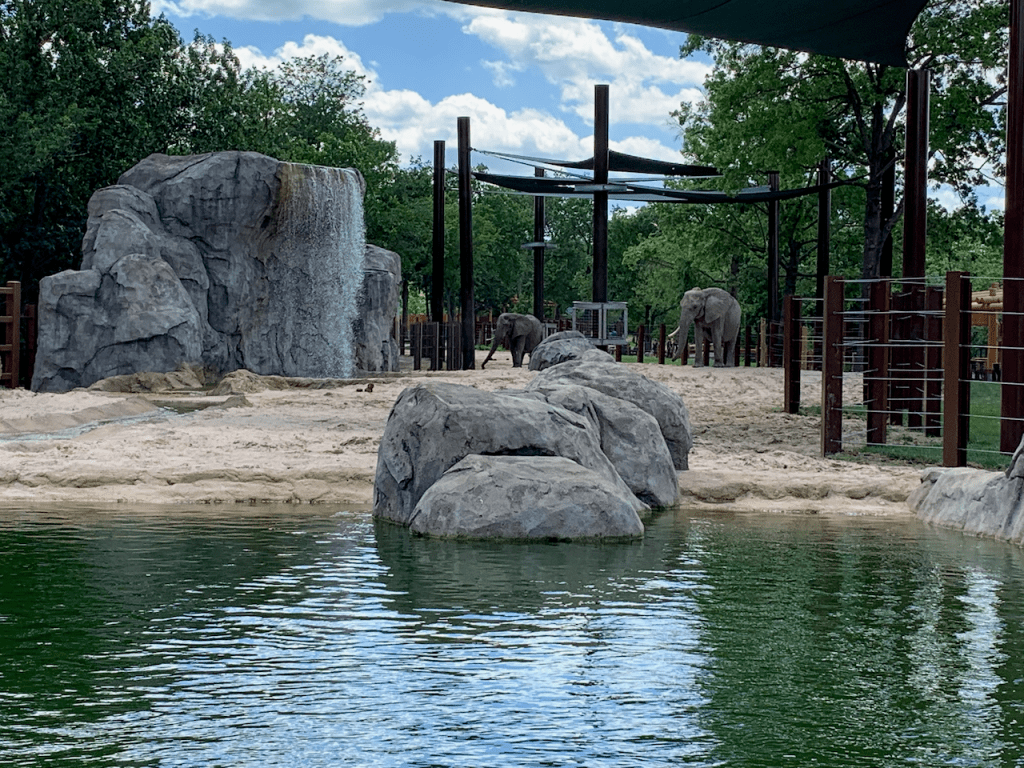
This past weekend in particular had so many wonderful moments. On Friday, the executives at my Mom’s company decided to give all of their employees Juneteenth off. So, that morning for the first time in at least 21 years my parents and I together went to the Zoo. When I was little, I loved going to the Brookfield Zoo near our home in suburban Chicagoland with them and have cherished those memories ever since. Now, after living in Kansas City for 21 years, we finally went as a family to the Kansas City Zoo, a place that I usually visit at least once a week on my own when I’m home. We didn’t see everything we wanted to see, but we left truly happy. 

The Kansas City Zoo’s new Elephant Expedition Enclosure. The photo is my own.

Later that evening after dinner we drove up to my alma mater Rockhurst University at 52nd & Troost and took part in the Juneteenth Prayer Service that stretched for 10 miles all along Troost. This was a prayer service like no other, less silent meditation, or communal rosary, and more a celebration of the hope that our community on both sides of the dividing line feels that change is in the air. I sat there on a stone wall for an hour and watched as countless cars drove by, their drivers honking their horns, people waving, children singing from the back windows.

On Saturday we went to one of my aunt’s houses for a small backyard gathering. I always treasure the times that I have with my family, the whole crowd. Just sitting there with people whose company I enjoy, people who I’ve known my whole life, and experiencing the madness of our current world from the perspectives of their stories, jokes, and worries made everything seem better for a little bit. Sunday was similar, Father’s Day, a quiet celebration this year at home with my parents. My Mom and I made brunch for the three of us, brioche French toast and eggs, before spending the afternoon watching soccer and reading June’s National Geographic. This was followed by a quiet small gathering in Roanoke Park.

I was reminded of all of this, and in particular of that terrifying snowy morning on US-22 east of Pittsburgh on Sunday evening when we watched last year’s release A Beautiful Day in the Neighborhood, starring Tom Hanks as Mr. Rogers. In part, the film’s Pittsburgh setting triggered those memories, and my thoughts on that January Saturday evening that I’d live in Pittsburgh if I got a job there, and how much fun I had at the Carnegie Museums. Yet more than that, the kindness which Mr. Rogers exuded in his life and work reminded me that this stress doesn’t have to be permanent, and that the best of memories should be the ones I treasure. I can still vaguely remember seeing him on WTTW in Chicago in the ’90s, and even a little bit on KCPT after we moved here to KC at the turn of the millennium. At the time I don’t really remember knowing what to make of the guy. Yet today, as an adult with far more responsibility to my community, our future, and to myself, I feel like if I were to try to learn from anyone in my own work as an educator, it’d be him.

Designing Cities for People

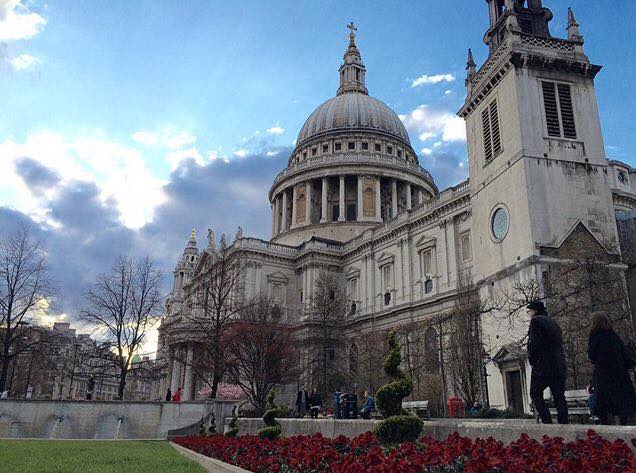
St Paul's at Sunset - April 2016

St Paul’s at Sunset

In older standards of measurement, the imperial mile (1.609 km) was not the longest measurement of distance available; the league filled that role instead. As I have understood it, one league is equal to the distance a person can walk in one hour. For me, that is around three miles, thus making 1 league equal to a decent distance for a nice morning stroll. In 2016 when I was undertaking my first Master’s degree, this one in International Relations and Democratic Politics, at the University of Westminster, I would occasionally decide to walk the league from the university on Regent Street back to my flat in the shadow of Fenchurch Street station on the eastern edge of the old Roman city.

The walk was quite pleasant, a stroll first down from the university to Oxford Circus, then eastwards along Oxford Street to Holborn, and then down High Holborn across the Holborn Viaduct and past the Old Bailey at Newgate, past St Paul’s and onto Cheapside, crossing in front of the Royal Exchange and Bank of England before continuing down Lombard Street and onto Fenchurch Street. At Fenchurch Street station, I would descend a short flight of steps leading towards St Olave’s Hart Street and under the station viaduct itself past the city walls and into my building on Minories.

What made this a nice walk was that I was able to see so much of the capital, everything from the imperial Edwardian grandeur of Regent Street to the new skyscrapers that are being built across the Square Mile to the east. It was an opportunity to experience London as so many had done so before, to get to know the metropolis by foot. In London this is something that can fairly easily be done, one can walk around the capital if one wants to. Sure, most of the suburbs are out of reach for the pedestrian, but with the well established system of underground and suburban railways, as well with the very thorough bus network, London is a city that a person can easily live in without owning a car, let alone riding in one on a daily basis.

When I moved back to Kansas City at the end of August 2016, I thought I would try at keeping up my walking, to walk the same ten miles each day. Yet that didn’t happen. Far from it, I found Kansas City to a.) be built largely for cars, and b.) with a climate far more harsh than the one I had known in London. As a result, not only did I not walk nearly as much as I had wanted, but I found myself hardly walking at all beyond going out of my parents’ house to get into the car and drive somewhere.

While my own lack of fortitude certainly is to blame in part for this sudden drop in my exercise, I also have to lay blame on the city planners here in Kansas City. This city, like so many others in the United States and Canada were designed, or re-designed, for motorists. In fact, it is illegal for a human being to walk in the street in Kansas City, Missouri; if you’re human, you have to stay to the sidewalks (pavements). The rest of the street is reserved for cars, buses, bicycles, vans, and trucks. We have built this city and so many others like it without the human touch that has made cities so universally human in nature.

For thousands of years, our ancestors have lived in cities that were not unlike the Central London; they were just big enough that an able-bodied person could walk from one end to another in about an hour. Cities were built with walking in mind, with the understanding that all of the basic necessities that a city offers should be within walking distance of each citizen’s home. Smaller medieval cities like Besançon in France, Canterbury in England, or Galway in Ireland are prime examples of this sort of pedestrian-focused urban planning.

“In fact, it is illegal for a human being to walk in the street in Kansas City, Missouri”

Here in the United States too there are some attempts at returning to this older model of having residential and commercial establishments within the same general area. Here in Greater Kansas City there are some newer developments that aspire to this goal. Two in particular that I visited this last Friday stand out to me as examples of how to undertake this task, and how not to do so. The latest pieces in the Town Center shopping complex, Park Place is an excellent example of such a development.

A set of winding, narrower streets lined by three and four story buildings, its street level fronts are filled with shops, restaurants, and some offices, while the upper levels are largely residential. In this way, one can live in a compact community, within which one does not necessarily need a car to get around. I first was able to experience Park Place two years ago when walking a 5K through the Town Center area. At that time Park Place was still under construction, yet even as a construction site it seemed vastly out of place when compared to its neighbours in the most arch-suburban of American counties, Johnson County, Kansas. What particularly makes Park Place odd, and in the end stunted in its growth and feasibility is that one has to have a car to access it. Sure, one could live within Park Place as a pedestrian, but going beyond its towering confines on foot can be a perilous exercise with traffic on the surrounding avenues averaging a speed of around 45 mph (72 km/h).

What Park Place does well is its compactness, including both commercial and residential in the same area. Another, equally new development a few miles south of Park Place ignores this principle of traditional urban planning, setting the residential aside from the commercial. This particular development is the fascinatingly misplaced Prairiefire complex on 135th Street in Leawood, Kansas. Another physically enormous complex, Prairiefire’s crown jewel is the Museum at Prairiefire, billed as Kansas City’s Natural History Museum, and an affiliate with the American Museum of Natural History in New York. While the Prairiefire Museum’s architecture is aesthetically beautiful, its size is much like the rest of the Prairiefire development: lacking long-term thinking.

My biggest problem with Prairiefire is the way in which its residential development is divided from its commercial sector by a massive concrete parking garage. Prairiefire was designed by a suburbanite intending to create their image of a compact urban community, albeit without ever having stepped foot inside of a traditional compact city. By splitting the residential from the commercial, they make it far less amenable to residents to take advantage of the shops, restaurants, and entertainment in the commercial side of the property. What’s more, the Museum at Prairiefire itself is deeply flawed in that it is not built with the ability to expand in mind. The current structure is small, built more like a community arts centre and less like a great temple dedicated to nature.

Our over-reliance on cars here in the United States is flawed at the utmost degree. Should there be a major energy crisis in the near future, the vast majority of our cities and states will find themselves paralysed, unable to function owing to the lack of oil to fuel our cars. Developments like Park Place and Prariefire might be able to last for longer, owing to their relative compactness compared to the more traditional suburban sprawl, yet their isolation amidst the sea of suburbia will soon find these two developments in the same situation as the traditional suburban developments.

Our cities must first and foremost be self-reliant; we must be able to grow our own food, and use our own renewable energy sources to power all aspects of our lives. Yet along side this if we are going to build smart, self-sufficient cities, we must build them more compactly, with ourselves in mind. Just consider, if you are suddenly without your car, and don’t have the option of taking public transport, how will you get around? You could certainly walk around your city, but that prospect is only truly viable if said city is designed for walking.

Today, I generally prefer using metric to the more traditional imperial standards of measurement, yet that most old-fashioned of imperial measures, the league, is one that should be maintained. It keeps us humans at the centre, and reminds us of our own physical limitations and abilities. When we consistently push ourselves far beyond those abilities, we endanger the stability of our societies, making any potential crisis even more disastrous.

Why Kansas City’s Catholics must Come Together

Let me begin by admitting to the fact that I haven’t written anything for this site in some months. After having written so frequently, so fervently on many a topic, I found myself exhausted, unhappy with the prospect of setting my thoughts to ink and paper. However, the greatest, most pressing issue at hand for the Catholic Diocese of Kansas City-St Joseph, my home diocese, is one which brings my pen forth from its stupor.

As many will know, I have been highly critical of the now Bishop Emeritus Finn. His authoritarian leadership style, as well as his suppression of any official dialogue between social conservatives, liberals, and moderates within the diocese left me unwilling to offer anything but criticism towards his administration. All that said, I do not intend to demean his character. I have met Finn, on a number of occasions. On my first assignment as a journalist, at the 2009 National Catholic Youth Conference which was held here in Kansas City, I interviewed both Bishop Finn, as well as his counterpart from across the border, Archbishop Naumann. I found both men highly intelligent, and Finn in particular to be quite friendly and personable. For one thing he actually remembered my name, and stopped to ask me how I was doing the next time I was in the same room.

In most regards, as a liberal, I have frequently found myself in disagreement with my friends and colleagues. In recent years, as I have began to shed the scales of fear, I have in turn become more outspoken in my views, more willing to speak out when something that I find something good, or ill in the world. Let me be clear, though, to those who do not look on my views and persuasions favourably, that all that I believe, all that I espouse, is founded upon the two greatest commandments given by God to humanity: to love God, and love one’s neighbour. It is for this reason that I do not seek to insult Finn’s honour, only to speak out against his actions.
On Tuesday, I celebrated, and breathed many a sigh of relief. At long last, the leadership of the Catholic Church in my adopted city does not outwardly favour my fellow Catholics whose views are on the opposite side of the aisle from my own. Yes, I say yes, all things are political! All things are related to politics, especially in the Roman Catholic Church! Any body as old as ours, as powerful as ours, as wealthy as ours, any body with named “Roman” must be political by nature. We may not like that fact, but it is a fact nonetheless. It is better that we embrace the truth than continue to deny it.

I write today to my fellow Catholics in Kansas City with a simple request. We must work together again, as we have in the past. We must heal the wounds that have been wrought over the past ten years. We must reconcile, and as one body in Christ reunite our increasingly divided diocese. Liberals, conservatives, moderates, Tridentine Mass attendees, as well as those who prefer a more progressive type of Mass should come together, work together, to build a better diocese, a better community.

This coming Sunday, I will be at my home parish, Saint Francis Xavier, for Mass with the parish community that my maternal family has been a part of for five generations. I ask my fellow Catholics here in the Kansas City-St Joseph Diocese to do the same. Let us all pray for our diocese that we might reconcile and reunite. Let us also pray for our most recent Bishop Emeritus, as he moves into the next phase of his life, that he may think of his time here in Kansas City, and consider both what he did, and that which he chose to forgo doing. Let us also pray for our Pope, Papa Frank as I call him, that he might find the best candidate, with God’s guidance, to become our next bishop.

I thank you all for your attention, and ask God for his blessings upon each and everyone of you, no matter whom you are.

September – Thank God it’s over

Kansas City – After all the fun and adventure of this past summer, you’d think I’d take this semester a bit slower, a bit quieter, to recuperate and ready myself for the coming year. But then again, I’m not that sort of person. I started the semester with a bit of a bang – one month with event after event.

First there was Irish Fest on Labour Day weekend. Then there was a day of volunteering at the Irish Centre (Cúltúrlann Éireannach). This was followed by a 60+ hour week of academics, work, business, and other fun events. Then there was the wedding of two good friends in Lenoir, North Carolina. I returned to Rockhurst from the wedding exhausted, and ready for the quiet weekend to come. That came after another 60+ hour week, and at first it looked promising. But then something rather unfortunate happened. Saturday 21 September 2013 will always be one of those days that just didn’t have to happen – and yet in a big way it did. I woke that morning to an early alarm as I was going to be filming the Classroom scene for my film Sisyphus that day. However, none of the extras showed up to film – so I ended up having to postpone the shoot until this past Sunday 6 October. I left Rockhurst for my parents’ house, where my Mom was home alone getting ready for the Lyric Opera of Kansas City’s opening night premiere of Bellini’s I Capuleti e i Montecchi. The day before I drove my Dad up to the airport to fly to Chicago to see my Granddad, with plans of sorting out the plans to move him into hospice care by Sunday.

That, unfortunately didn’t happen. I was at 59th and Rockhill, heading back to my parents’ house after getting a shirt for the opera when my phone rang. My Dad was on the other end, at my Uncle Bill’s house in Suburban Chicagoland – my Granddad had died at about 16.30 CDT. From then on out, the entire world seemed to flip on its head. My Mom and I did go the opera that night, but the next morning I found myself driving her up to the Airport so she could fly up to Chicago to meet my Dad and work with the rest of their generation in the Kane family on the funeral arrangements. I stayed behind in Kansas City for a while longer, so that I wouldn’t miss too much class. That, as it turned out, didn’t really work so well. I missed my first class on Monday morning, Western Civilisation II, because I was taking the dogs to the vet for boarding for the time that I’d also be in Chicago. Then I skipped out on my Modern Political Philosophy class because I just didn’t feel like I could take it just then. Finally, I threw in the towel on school for the week when the power of what had happened to my family hit me like a bag of rocks in choir, when we were rehearsing the Jesuit hymn These Alone are Enough for the Family Weekend Mass.

I flew up to Chicago on the evening of the 23rd – weary, and ready to be with my parents, aunt, uncle, and cousins. It was a short flight, and considering that I had no bags to bring with, as my Mom had already packed everything I’d need – I flew up in the first row on Southwest! The time in Chicagoland was very emotional for me. Between facing the fact that now both of my Kane grandparents are dead, and experiencing all of these places again that I remembered from my early childhood, a time which I cherish quite dearly, I found it hard sometimes to face the facts. Thus, when we were driving from place to place, especially in the traffic on the Tristate Tollway and with that awful construction traffic on Dempster at the Tollway, I slept. The wake and funeral were nice. It was especially great to get to see all of the more distant cousins on my Dad’s side, many of my grandparents’ friends, and some college friends of my parents (including my Godparents). But in the end, I was just ready to go back to Kansas City and sleep for a long time.

After that second exhausting trip, I was in no mood for work. I ended up being a fair bit behind in my work, especially when it came to French. I’ve only just caught up. My classes on Thursday and Friday were a blur, and to be honest I probably wouldn’t have even had any will to go to them if it weren’t for the fact that I had nothing else to do at that point. By Friday 27 September, I had gone for at least 20 days with sleep worth only about 15 normal nights, and was in no mood for any more misadventures.

Thankfully, that weekend was anything but a misadventure. My cousin Ashley, who I’ve known for my entire life, got married! It was a very nice wedding, and a fantastic reception. That wedding was a good way to balance out the stress and grief of the month in which it occurred, as it showed me that even though all sorts of dour things happen in our lives, there’s still room for happiness and jolliness. Which on that note: Middlesex County Cricket finished 3rd in the County Championship! O, and the USA Men’s Team (the Waldoes as I call them) qualified for the ’14 World Cup in Brazil!

So, as I write this, safe and sound, now 7 days removed from that dreadful month, I have to say “Buíchos le Dia!” that it’s over. Less than 24 hours ago, I was able to shoot that scene that originally was intended to be shot on the 21st – and this time no one that I know died on the same day! September was about as poor at its’ game as Chivas USA is at soccer, which is saying something really sad about that month. But, on the plus side – I got paid at the end of it all, thanks to that week and a half of French tutoring that I did in August!

Hopefully I’ll be able to update a bit more in the future, as things may be settling down. We’ll have to see.