Tag Archives: Kauffman Center for the Performing Arts

Phaëton: A Short Story

It hung over the streets and steeples of Kansas City like a great dark cloud, the many neighborhoods and suburbs looking up at it in awe. It had been said by some that the airship Phaeton was over a mile from bow to stern, but many could not believe such a craft could ever take to flight. And yet here it was, towering over nearly half a million pairs of eager eyes, who looked up at her underside with a mix of fear and wonder. All were running out into the streets to behold the sight, businessmen and artists, cabbies peering from within their charges and clergy praying to their God at such a magnificent sight. There were scholars and vagabonds, sportsmen and aviators, soldiers, sailors, and marines on leave, politicians and pensioners, inmates and the invalid all looking upward at the great edifice in the sky. From 33rd to 54th, the city was clouded by the shadow of Phaeton, the greatest wonder ever built by human hands.

         Out of his home on 55th near Main, still in his slippers ran Noël Felix, a lecturer on transportation and public efficacy at the University of Kansas City. He was in awe of the sight that rose high above his home, the great sign of humanity’s technological achievements, which only a decade prior had been considered too fantastical to even be allocated probability within the modern imagination. “He’s done it!” cried Noël, “Captain Daedalus’ ship flies!” It was certainly an amazing start to a quiet Lenten Friday.

         Alongside the lecturer, out in 55th Street, the many residents of the neighborhood clamoured and shouted praises to the world-renowned Captain Daedalus. It was said that he was the first person to land on both poles without stopping to refuel, the first to bring much needed humanitarian aid to the people of North Korea, the first to arrive on the summit of Mount Everest from above rather than below. Daedalus was by far the most renowned figure of his time.

~

There was a certain air about him, he did seem both kind and boastful, but not to much more than a degree expected of a man who was the conqueror of the last great terrestrial trials facing an adventurer. He had been welcomed with fabulous balls and galas in every city he visited. No less of a welcome would he receive upon arriving in the Paris of the Plains, whose artistry and musicianship were renowned throughout the world. In the great hall of the Performing Arts Centre, a great ball was held in Daedalus’ honor in the evening of 31 March 2012, the Saturday following his arrival. All the great figures of the Metro were invited, the rich and famous along with those of high moral and social regard as well.

Nöel had spent the greater part of the day allocating a good evening suit for the occasion, for he was not often accustomed to wearing black tie. He arrived in the Arts Centre to hear some light chamber music being played by the house orchestra; largely at this point it was Mozart and Haydn. Upon arrival he was presented to the mayor, Edward Johnson, who had personally invited all of the guests. “Welcome, Mr. Felix,” he said, shaking the lecturer’s hand, “I trust your father is well?”

“He is,” replied Noël with a polite smile, “he sends his regards to you and your wife.”

“That’s very good of him,” said Mayor Johnson as he turned to converse with Walter Gregson, the famed industrialist and philanthropist. Noël gave a slight bow to the mayor and then turned and walked about the great hall. He was dazzled by the beautiful brilliance of the hall, its amazing use of glass, steel, and marble to allow for light to flood through its great open chasm that stood between the theatre that was home to the opera and ballet, and the concert hall that was home to the orchestra.

He began to walk up the stair that led to the mezzanine level of the concert hall, observing the beautiful blue shades that surrounded him. It felt as though he were walking on an aquatic azure cloud, which rang with the beauty of the music from the hall below. The swirling sounds of the strings and woodwinds mesmerized Noël, and he leaned against the wall, his breath becoming the chief function of his body, as he let the music consume his senses. The very nature of the sounds that flooded into his metaphysical soul through the all-too physical existence of the ear were enough to make even the hardest of hearts relish in the exuberance and beauty of this nearly angelic artistry.

Noël had always loved Mozart, but his life had taken him far from his youthful aspirations of soaring high above the mundane in a realm of celestial beauty, far down to laboring over improving the roads and railways of America, forming what he hoped would be a better infrastructure for posterity. And yet, despite his career bearing him amongst those who are all too fond of cynical pessimism, he retained some degree of his youthful optimistic imagination, a trait which had earned great accolades for the once time pianist turned civil engineer.

Suddenly, the music picked up, a trumpet sounded in one of the higher galleries that led to the highest levels of the theatre. All eyes turned towards the grand staircase that led up to the hall from the foyer below. Noël rushed to the edge of the balcony on which he stood, peering down as a figure robed in finery processed up the stair to Mayor Johnson, whose smile beamed all the way up to where Noël watched.

His heart pounded with excitement, as he rushed down the stair to the hall, pushing his way through the mob, to the head of the stair where the adventurer stood. Though he recognized the sounds of many voices about him, he understood not any verbal expression that erupted from his fellow Kansas Citians. His eyes were on the place where stood the subject of an entire world’s admiration.

The Mayor caught sight of Noël, and called to him, allowing for many members of society to steadily push the little lecturer forward, many out of a deep desire to be in his position, others simply euphoric at that historic moment in their city’s history. All seemed like a daze to Noël, like a lifetime of impressionistic fog covering his eyes, the sounds of the applause and personalities about him muffled, the music slowed, yet his own heartbeat taking center stage in this symphony of the present moment. The light about him seemed to dim as well, as he moved ever forward, to the one whom he admired most. His every thought bent on little more than his plausible reactions to the introduction that was certainly coming closer with every step.

Suddenly he was at the top of the stair, standing next to the Mayor looking headlong into his idol’s eyes. “Noël Felix, may I present Captain Amelia Daedelus.”

Noël was amazed: before him stood Daedelus, not the wizened man that he had long thought, but a beautiful woman, with the steely determination of any great name from the history of humanity. He bowed low, “Captain,” being the only word his tongue could emit.

“Mr. Felix,” she replied, with a fine mezzo-soprano voice, “it is an honor to meet you.” As she walked forward into the throng, she turned to look once more at Noël, whose face by this point was a fine shade of red. She winked, then turned and walked on.

To read more stories like this, please consider purchasing a copy of my book The Adventures of Horatio Woosencraft and Other Short Stories

The Voice of American Music

Growing up there always seemed to be a few specific genres of hymns that’d be sung at Mass: the really traditional Latin hymns that go back into the Middle Ages, the eighteenth and nineteenth century hymns, often of Lutheran or Methodist origin that we Catholics had adopted, without necessarily acknowledging their sources, and the newer hymns written by the likes of the St. Louis Jesuits or those that came out of the spiritual and Gospel tradition native to this country. Often, my experiences performing music, whether singing or playing, was pretty well focused on church music and on the other hand on traditional Irish music, which I started learning when I was 13.

It strikes me how much our common musical language here in the United States can bridge gaps that we ourselves aren’t yet quite ready to leap across ourselves. My own experiences coming from a Midwestern Irish American Catholic family are entirely different from many of the people I work with today on so many different levels, but at the core of it all there seems to be this same common musical language that subconsciously unites us.

One of my favorite YouTube videos lately is of the great cellist Yo-Yo Ma performing “Going Home” from Dvorak’s 9th Symphony for the New American Arts Festival. Ma begins his contribution by telling the story of Dvorak’s time teaching music to his American students before his own return to Europe, and how the Czech master told them not to copy his style but to go out and listen to all the different music around them and create their own style from that. Out of those students and their students came Duke Ellington, George Gershwin, and Aaron Copeland, three of the great American composers of their day.

I often find myself thinking of how I could embody this country in a particular sound, or in a sonic landscape that could immediately transport me as I listen to one part of this country or another. When I wrote my trio sonata for flute, violin, and cello, I set the first three movements in a very Irish tone. The first movement was an entirely original jig, with the flute taking the part that I’d normally play with my tin whistle. The second movement ended up being my version of Dvorak’s “Going Home”, this time a setting of the Irish air “An Gaoth Aneas,” known in English as “The South Wind,” the third movement ended up being a setting of the jig “Merrily Kiss the Quaker’s Wife,” which has a really fun second part to it.

The fourth movement though was again something new. But unlike the first three movements, which told their story with an Irish voice, the fourth movement was set in America, and to tell that story I tried to emulate the voice that Aaron Copeland composed in, built off the sound of American folk tunes, their very particular twang that certainly has some Irish roots but has changed with all the other influences on music in this country. I wrote that fourth movement with the spirituals and originally Methodist hymns I’ve sung at Mass all my life in mind, and compared to the rest of the piece it has a very different sound.

There’s a related but still different sound in the musical landscape of the American West, something born out of both old cowboy songs from the nineteenth century as well as both twentieth century Hollywood soundtracks to the great Westerns, including my personal favorites, the contributions of Ennio Morricone’s to the genre through his scores for Sergio Leone’s spaghetti westerns A Fistful of Dollars, For a Few Dollars More, The Good, The Bad, and the Ugly, and of course Once Upon a Time in the West. Still more interesting to me is that this western soundscape has been picked up in recent decades by the continued popularity of Country music, though admittedly it’s a genre I’m personally not nearly as fond of as many of my fellow Americans.

When I think of one particularly American instrument, it’s honestly the trumpet. Sure, this is something that was invented in Europe and is used in all sorts of contexts outside American music, but the trumpet nevertheless plays a central role in two particular musical genres that speak volumes to me personally. The first is the frequent use of the trumpet to represent the solemn dignity of the republic, as a calling card for our country as the first modern representative government. It’s something I hear particularly in the film music of John Williams, especially in his scores for Lincoln and Amistad.

This particular sound blends into the use of the trumpet as a stand in for the military as well, seen especially well in Williams’s score to Saving Private Ryan or in Jerry Goldsmith’s score for the film Patton and Elmer Bernstein’s mix of military motifs with Keystone Cops silliness in his score for Stripes. The trumpet, it’s simple yet pronounced call, seems to me to symbolize the idealized nature of this republic, and its classical legacy with the same instrument often being used in sword and sandal films to stand in for Republican Rome.

The other great genre that uses the trumpet to tremendous effect is my favorite genre created in this country: jazz. When I was first really learning about jazz as an adolescent I specifically remember thinking that I was less interested in what I saw as that boring piano jazz that my Dad liked to listen to on NPR. Instead, I wanted to hear the exciting stuff written for trumpets and trombones and horns.

I’ve since grown to love piano jazz, as my students can tell you from listening to Duke Ellington, Count Baisie, and Jon Batiste before the start of my classes every Friday (when I can get the sound in the classroom to work), but I still have a knack for wanting to hear trumpet. I’ve gotten to see Wynton Marsalis play live twice now, the first time with the Abyssinian Gospel Choir when they played his Abyssinian Mass at the Kauffman Center in Kansas City about 7 years ago, the second time when he played with Jazz at Lincoln Center in a Christmas concert at the Midland Theatre in 2015 or 2016. Jazz trumpet especially lends itself to Latin Jazz, another part of this country’s and more broadly these continents’ musical landscape that speaks directly to the soul of what it means to be American.

One of these days, I’d like to try to blend the traditional Irish music that I play with jazz, to see what sorts of neat sounds come out of it. What sort of language will be sung by those instruments when they come together. Maybe if I try my hand at composing again I’ll make an effort at it. Oh, and if you’re looking for recordings of my sonata I’m afraid you’re out of luck, it’s yet to be performed, though I’m open to offers there.

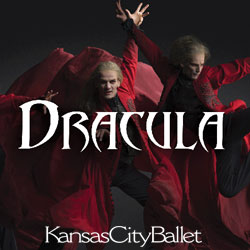
“Dracula” seduces Kansas City

Image

Courtesy of the Kansas City Ballet

Kansas City – Don’t worry about the title of this review, there are no vampires afoot in Kansas City to my knowledge. Rather, the Kansas City Ballet has released a different sort of vampire onto the theatregoing public. Their new production of Dracula, which opened to a nearly sold-out theatre at the Kauffman Center, was seducing and sumptuous to the fullest degree. From the fantastic modern score to the dancing to the special effects that are possible in such a new and decked out theatre as the Muriel Kauffman Theatre, Dracula is a sight to be seen. Now, I should make note that I am not typically one to go to ballet. My preference generally is opera, theatre, choral and orchestral concerts, and smaller recitals. However, the chance to see what sounded like a stunning production wasn’t one that I was going to miss.

Dracula the ballet is quite similar to Dracula the novel. Generally it is very faithful to the original book. I know the story of Dracula more from the historical context of Vlad Draculea, aka Vlad III of Walachia, a fairly bloody king of part of modern Romania who spent much of his reign fighting off the Ottoman Turks. It is often thought that Vlad Draculea was the original inspiration for the Dracula of fiction. The KC Ballet’s production does a fantastic job showing the differences culturally between the far more old-fashioned Dracula and the far more modern Jonathan Harker in one moment in Act I when Harker first meets the vampire. Dracula offers him a deep bow of welcome, which Harker returns with a handshake.

I found the occasional use of the voice to be perfectly fitting for where it was used. There may have been a few too many screams here and there, though at times with such a subject as this one can never truly know if the screams are coming from on stage or beyond. Anthony Krutzkamp excelled as Dracula, showing the gracefulness that would naturally come with such an elevated age. The two dancers who played Mina and Lucy, Molly Wagner and Laura Hunt respectively excelled at their roles, showing their prowess and flexibility with each moment that they were on stage. Ryan Jolicoeur-Nye (Harker) did a fantastic job in Act I in his dance with Krutzkamp (Dracula). I was left astounded at how well they were able to move together, how fluidly they could let their bodies work in unison as Dracula steadily drove Harker to insanity.

I recommend this production of Dracula to anyone who has the chance to see it. The ballet runs at the Kauffman Center this weekend (22 – 23 Feb) and next Thursday through Sunday (27 Feb – 2 Mar). See this link for more details.