Tag Archives: Life

Distractions

How distractions can be beneficial or detrimental, from a certain point of view.—Click here to support the Wednesday Blog: https://www.patreon.com/sthosdkaneI recommend you now listen to: On PausesA link to the WBEZ Chicago story referenced in this episode.


How distractions can be beneficial or detrimental, from a certain point of view.


On February 21sta story appeared on the WBEZ Chicago website with reactions to Illinois Governor J.B. Pritzker’s proposal to restrict cellphone use in all public and charter school classrooms. Mine was the first generation of students to have access to cellphones, and from day 1 it was a noticeable distraction for everyone in the room when someone brought their phone to class. Whether looking at the teacher who was trying to do their job in spite of a new topic to chide students over, or to the other students who see that one of their fellows is challenging the classroom’s authority so brazenly, to the student carrying the phone who now had a ready means of ignoring the teacher and missing out on the lesson, phone use is a problem for all.

In all honesty, I’ve been that student from time to time. In some classes it wasn’t a cellphone as much as it was a computer or a tablet that distracted me from the lesson or lecture at hand. In other cases, it was the unavoidable glow of the screen in the row in front of me shopping for shoes or looking at Spring Break trip ideas that drew my attention away from the topic at hand. Looking back, I recognize a noticeable drop in my attention and focus when these technologies began to enter the classroom, just as I notice now how I stopped reading nearly as many books once I discovered YouTube.

The idea of the distraction is often subjective; sure, in the classroom the student is supposed to be paying attention to the instructor, yet beyond that setting what are all the trappings of life but distractions from other facets which to varying degrees we ignore? This isn’t inherently a bad thing. Considering how troubled our times are fast becoming I have made a point of trying to find happy things to look at every day, and in some instances, I send these along to friends who I hope will benefit from smiling at something no matter how inconsequential.

In WBEZ’s report on student reactions to the Governor’s proposal to ban phones from classrooms the reactions were mixed. Some reactions speak to concerns about staying in touch with parents during the school day, especially in case of safety issues. I understand this point, it speaks to the reality that we’ve allowed ourselves to live in an increasingly dangerous society, and to that danger we need resources to mitigate it all while ignoring the underlying problems. We can distract ourselves from addressing gun violence, yet the shootings will continue all the same.

In my own experience the best classroom settings were those where the students either were mature enough to not pull their phones out in class or where they didn’t have their phones with them at all. In a recent substitute teaching job, I found that I was not only competing with student apathy toward following a sub’s instructions but that I also had to compete with students watching all manner of videos on their phones from Netflix and YouTube to TikTok, Instagram, and Snapchat. I simply can’t compete with these bright screens, and as most schools don’t inform their substitutes of any school policies (which allows students to abuse those policies when a sub is in the room), I’m at a tremendous disadvantage in that position.

Today, as I write this blog post I have one conference presentation I need to write and an article submission that I need to revise. The former needs to be done in the next month and the latter by June 1st. In short: I have things I need to be doing right now, yet I can be more flexible with these extended deadlines and keep the Wednesday Blog going for another week. This publication of mine may seem like a sort of distraction to some of my colleagues, yet I feel it is a tremendous opportunity for me to write about topics that I have ideas about which my research doesn’t cover. After I write and record this blog post I will take full advantage of the good weather today (sunny with a high of 65ºF / 18ºC) and go for a long walk this afternoon. After that, I might look at these two projects again. As I said earlier in this paragraph: I have time to wait on both of them.

Returning to the topic at hand: whereas in my teenage years I found it empowering to have a school-issued laptop which I could use in class, today I yearn more for the days before that technology became so accessible to me for the sole reason that I could focus more on the moment at hand. Perhaps the greatest distraction that we’ve created for ourselves is our indefatigable busyness that keeps us moving at full speed whenever we’re awake. We fear boredom because we haven’t allowed ourselves to spend enough time surrounded by the silence that it brings. I wrote about this in October in the context of pauses in the dialogue of the Kate Winslet film Lee. I don’t know if I have any suggestions for systemic change this week, merely advice that each of us ought to look at what we think is most important for our lives and our enrichment. We only have so much time around, so the best thing we can do is to use it wisely.

On Social Media

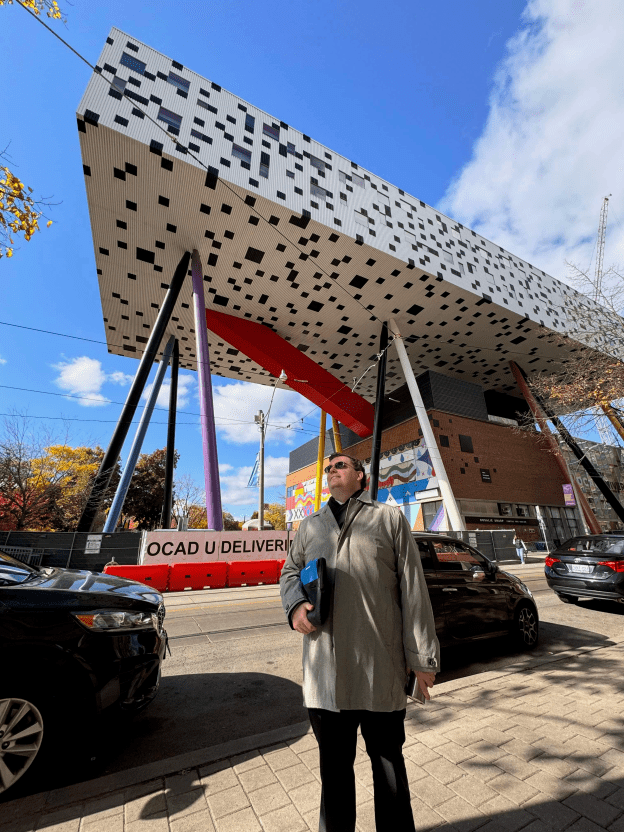
This week, some thoughts on the divestment of our social media attention and why I choose to use different platforms for different sorts of messages. — Click here to support the Wednesday Blog: https://www.patreon.com/sthosdkane Photo of the author by Hariprasad Ashwene, 2024.


This week, some thoughts on the divestment of our social media attention and why I choose to use different platforms for different sorts of messages.


I’ve been an active social media user since May 2008 when I created my Facebook account at the young age of 15 years old. I remember not being sure what to expect from Facebook when I opened my account, yet my Mom opened her own account at the same time as me and we jumped into it together. I see the big turning point in my time on Facebook as 9 October 2016, the night of the 2nd Presidential Debate that year. Leading up to 2016 I’d gotten a reputation among many friends that was voiced by my London flatmates in 2015 that if they wanted to get an idea of what was going on they’d look at my Facebook to see what news stories I’d posted that day. Yet after that second debate, I noticed a significant drop off of people who were interacting with my posts about the news, and in the years since the overall interaction level hasn’t picked up again since even as I’ve connected with more people on that website.

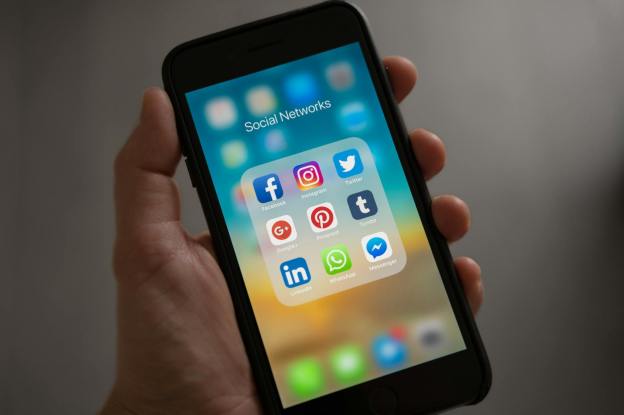
Today I have 10 social media accounts on Facebook, Twitter,[1] Instagram, LinkedIn, Reddit, YouTube, Mastodon, Threads, Snapchat, and BlueSky. I also have 8 professional accounts of a similar vein to social media on Research Gate, Academia.edu, the Knowledge Commons, BE Press, and on the fora hosted by the Linnean Society, History of Science Society, and the American Historical Association. Traditionally, my professional and personal social media activity was shared on the same accounts; I’d post about the Cubs and my research on Twitter, a longtime home of academia online, yet in the past year I’ve begun to rework things a bit. Today, I use BlueSky for my professional social networking within academia. 

Facebook feels like the daily broadsheet of my online presence; it’s my original foray into social media and where I have 17 years of posts up and online. Yet today Instagram is where I am most active socially. There’s been a notable migration of my fellow millennials away from Facebook toward Instagram in the last decade, and whereas readership of my Facebook is restricted to my Facebook friends only I’ve allowed my Instagram profile to remain open to the public. This probably caused me some trouble when I was teaching the middle schoolers in the Fall 2023 semester, and today many of them still regularly view my Instagram stories. What I decided to do was rather than censor myself and limit their access to my Instagram, I would instead take a more curatorial role and be mindful of what I shared on my Instagram stories, making sure it was appropriate and thought-provoking for them. My Snapchat account is the most limited of all my social media accounts: I only accept connection requests from relatives and a very small number of friends there. I still occasionally browse Reddit, especially the Star Trek subreddits, but in the last 6 months I found it was becoming less enjoyable to read and today I only really open that app when I need to do something but am not in the mood to read a book or a magazine. Meanwhile, I’ve only recently begun feeling comfortable posting comments to YouTube videos, I had a handful of very bad experiences doing this in my early years of public comment fora on sites like that of the Kansas City Star and Trip Advisor where I learned quickly that a lot of people take the anonymity of the Internet as permission to be uncivil.[2] As with any place for public comment whether online or in the real world, I try to keep to the principle of only saying something if I feel it’ll contribute to the conversation.

As for the newcomers: like many others I opened a Mastodon account in 2022, and like many others I quickly found Mastodon to be unnecessarily confusing and haven’t opened the app in at least a year. Threads holds some potential in my mind, though like Mastodon I barely use it. I opened my BlueSky account in November 2024 when I was at the History of Science Society conference in Mérida described in Season 4 of the Wednesday Blog, and began connecting with other academics. I decided from Day 1 to cultivate my Blue Sky account as a purely professional account without any hobbies or personal anecdotes. This has limited how much I use the app, though I do use it on occasion.

On the topic of the Wednesday Blog I have an automatic distribution set up with Facebook, LinkedIn, and Threads, and I manually post each week’s blog post on Instagram and Twitter. Because this isn’t necessarily an academic venture I don’t promote this publication on Blue Sky. There’s also a Wednesday Blog Patreon, which you can join for $5 per month!

One of the big conversations of today is whether to close our social media accounts as the corporations who own these sites are increasingly accepting the problems they cause in our society, in the lived world, yet have dropped the mask of caring and continue their play for greater profits bare-faced and defiant in exposing themselves. In the aftermath of the 2024 Presidential Election I saw an immediate flood of false information appear on my Twitter account, which I wouldn’t have noticed if it didn’t appear among the silent notifications that I get daily over that app from the Kansas City office of the National Weather Service, and the handful of academics and other people I follow who are still on Twitter. With the recent announcement by Meta––the owners of Facebook, Instagram, and Threads––that they would cease their work with third-party fact checkers so as not to upset the new President caused a flood of comments about people dropping their profiles on Meta’s social media sites in protest. I haven’t seen as much false information on there yet, thought I expect it will appear.

I for one have considered shutting down most of my social media profiles off and on since 2016, because I understand and generally agree with all my friends and relatives who’ve done just that. Yet while I see a tremendous utility in these social media sites in allowing me to stay in touch with friends and relatives near and far, I see a far better reason to keep these accounts active: I will not be intimidated into silence by their shifting interest in the public good. I often hear the response to the suggestion that we can still have a reasoned debate between people who disagree being that it’s just not possible with how polarized we are today. That polarization is in large part thanks to social media for pushing forward the loudest and most outrageous voices of today just as the yellow journalists of a century ago did the same.

I had many a Facebook argument in my first decade on the platform, and in some cases, they were the primary way that I ended up interacting with people who I knew from school, college, or beyond on the site. I established a simple rule for comments on my profile: I will only delete a comment, “unfriend” someone, or block another account if they intentionally insult myself or someone else who they are communicating with in the comments on my profile. To date I’ve only blocked two other users. I believe we ought to respect differences of opinion when they are based in fact & reason and that as much as social media has been a tool of disinformation so too we can use it to inform and counter the outright lies being spread on these sites.

Social media truly shrank the globe for me and myriad others. Before I began using Facebook in 2008 while I would watch news broadcasts from beyond the U.S., particularly from the BBC on PBS and BBC America, I still was mostly reliant on handwritten and typed letters being sent by air mail to communicate with anyone beyond this country. Now, I keep in regular communication with friends & relatives on every permanently inhabited continent. I’ve been fortunate to stay in touch with some dear friends of mine who I haven’t seen in nearly a decade or more because of how our lives have led us apart; that contact has been sustained and fulfilled through social media.

Let me conclude with a note of data security. I would rather keep all of my social media accounts active because the risk present in someone else or a bot recreating an account in my name is great enough that I don’t want to risk it. I’ve cultivated this garden, and now I don’t want to see it wither. I’d rather use the tools owned by these corporations that actively support forces, ideas, and people who I disagree with in order to circumvent their power over me. I know that their websites aren’t necessary for me to live, even if they’ve grown to become such an ordinary part of my daily life. Yet I continue to use them as an act of self-expression standing for the ideals that I believe in: curiosity, honesty, hope, and optimism.


[1] I still won’t call it X.

[2] I went through a few different words here first.


The Flood

In the last week, I’ve learned about the impermanence of things after a flood struck our house. — Click here to support the Wednesday Blog: https://www.patreon.com/sthosdkane


In the last week, I’ve learned about the impermanence of things after a flood struck our house.


I had just finished writing last week’s blog post titled “Olympic Optimism” when I started to hear the beeping noises around our house. This usually was a sign that the power was being tripped in some place, or that one of our smoke or carbon dioxide detectors needed new batteries. I checked outside, it’d been raining for a while so perhaps the power lines behind our house had suffered some damage. Seeing nothing in the back, I turned to my left toward the door to our basement garage and opened the door.

Our garage tends to flood anytime there’s a heavy rain, but it will barely be enough water to cover the soles of our boots. Still, it’s often enough water to require work cleaning up the mess. We live in an old house; it’s century mark will come in two years, and the stone walls of our basement garage, common for houses here in Kansas City built through the middle of the last century, tend to seep water when it rains like that. This time though, there was something different about the water that I saw, for it could not have rained so much as to produce a flood some 8 inches deep to the point that the car charging in our basement was partially submerged. I shouted to my Mom, who was finishing her lunch as we prepared to go out for the afternoon, and she came over to me quickly at the sound of concern in my voice. The sight of it all gave me a sort of thrill at first, as I thought about how dramatic this all looked. 

I gently walked down several steps, not touching the water itself as I was sure there could be live wires submerged in that pond. I looked past the car and saw our trash and recycling bins on their backs floating in the surf. The entire basement was submerged, no part of it beneath that 8 inch mark was dry. I returned up the stairs, and went into my room where I kept a pair of snow boots that rise to a bit below the knee, and laced those up, figuring they were better than my usual shoes and went out onto our block to see what the damage was elsewhere.

As it turned out, the entire block on our side of the street had flooded. The city engineers arrived a while later and confirmed that the water main which they had replaced a year before had broken and flushed all of this sewer water into our basements on the downhill side of the block. The further down the hill, the worse it got. When we have disasters like this on my block, we develop a sense of solidarity. I remember the microburst of high winds, thunder, and rain in Spring 2018 that struck our street and toppled many of the trees on this block, crushing several cars beneath them, and causing considerable damage all around. We all banded together, and even some friends from neighboring blocks came to ours, as we learned which guys in which houses kept chainsaws handy. This time, we frequently wandered into the street at the same time, conferring how the damage looked in each other’s basements. There were other houses that had it a lot worse than us, for one our driveway neighbors’ basement was finished until this flood. Yet it wasn’t a difference between mopping up an inch of water in ours compared to several inches in theirs.

The damage from this flood was severe, destroying nearly everything that was on the floor. Thankfully, as of writing the car was deemed to be safe by its manufacturer, but so many other things were lost in the flood. Some of the last physical memories of my Donnelly great-grandparents were lost as my great-grandfather’s blanket chest partially flooded. I took photos of all the pictures we had to throw out, my eyes were the last ones to look upon the originals. Hereafter, we will have my digital copies, but it’s still not the same experience. My Dad lost plenty of power tools that he had collected over the last three decades and beyond. Many of my Mom’s personal mementos, her crafting goods, and gardening tools were lost as well. There was an old heavy wooden side table that my Dad bought in college which was ruined, and some wooden stools that I remembered from our first years in Kansas City that were also deemed unsafe. I found camp photos from my Boy Scout years in the 2000s that needed to be thrown away, all ruined by the flood.

In the days after I found myself drained of energy, beleaguered by a sense of uncertain loss. All of these things, I suppose, were tangible memories that I expected would survive until their materials degraded. We historians are able to study far older objects than the ones lost in this flood because they have survived long after their makers have returned to dust. Just two months ago, I was sitting in the Department of Manuscripts at the Bibliothèque nationale de France’s Richelieu building in Paris holding a volume that contained André Thevet’s handwritten translation of the Travels of Benjamin of Tudela. For the first time in the five years that I’ve studied Thevet, I got to feel paper on which he wrote his own name, on which the impressions of his hand and his thoughts could be seen. Thevet himself is long gone, his tomb in the Convent des Cordeliers likely destroyed during or after the French Revolution, yet there in that grand room I was able to touch something he touched, something upon which he left a part of himself with his words and ideas.

Any hope of experiencing that with these objects left by my great-grandparents, grandparents, parents, and by my younger self that were on the lowest level of storage in our basement are now gone. The experience spoke to me of the impermanence of the physical world, how as Persephone said to Orpheus in the Jim Henson retelling, “everything dies.” This past weekend, I found myself yearning for my childhood again, hoping that I might restore in my mind some of the memories of these artifacts that they might imprint themselves in my thoughts before my memory of them slips away. I could remember how those two wooden stools, light brown in color, felt when I sat on them for too long doing my homework or during meals. I could remember taking that camp photo with the couple hundred other Scouts from around Greater Kansas City and beyond, and how we all gave at least a half-hearted effort at the official photo before giving our all at the silly picture to come. The flood widened the gulf between this present time and all those things which embodied the memories of my past and my family’s past going back to the turn of the Twentieth Century. It made 2024 feel far more removed from 1924 than I’ve yet felt.The one good thing to come out of this flood, if anything, is that we can start anew and learn from the mistakes that led to such widespread damage this time. I expect there will be a next time, that same water main breaks at least once a year, though this is the first time it flushed sewage into our basements. I suspect we will not store anything on our basement floor ever again. Everything will be raised off the floor by at least 10 inches or more. I even suggested installing metal ramps strong enough to hold the car so that it too would never be susceptible to a flood like this again. That is the way of things: we are a reactive people; we see a problem and we don’t prioritize it until it hurts us. I wish we could be more proactive and avoid more of these problems, yet the trials and tribulations of life require that we learn from our experiences, and how can we measure the good moments of life if we haven’t experienced the bad?


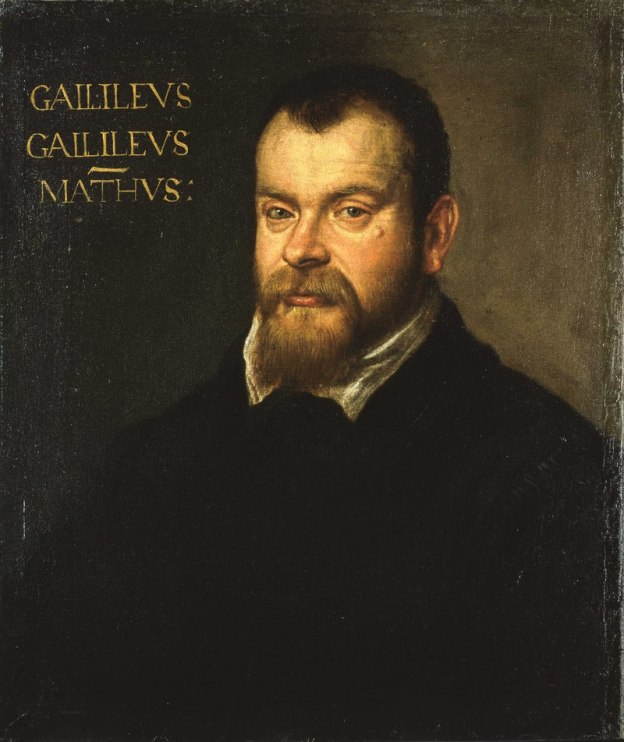
Galileo Galilei pictured in his early 40s c. 1600.

Return to Normalcy

Over the last week, I've been thinking about the standards we define to cast a model of normality, or in an older term normalcy. This week then, I try to answer the question of what even is normal? — Click here to support the Wednesday Blog: https://www.patreon.com/sthosdkane


Over the last week, I’ve been thinking about the standards we define to cast a model of normality, or in an older term normalcy. This week then, I try to answer the question of what even is normal?


One of the great moments of realization in my life to date was when it occurred to me that everything we know exists in our minds in relation to other things, that is to say that nothing exists in true isolation. The solar eclipse I wrote about last week was phenomenal because it stood in sharp contrast to what we usually perceive as the Sun’s warmth, and a brightness which both ensures the longevity of life and can fry anything that stares at it for too long. So too, we recognize the people around us often in contrast to ourselves. Everyone else is different in the ways they walk, the ways they talk, the ways they think and feel. We are our own control in the great experiment of living our lives, the Sun around which all the planets of our solar system orbit.

There is a great hubris in this realization, as a Jesuit ethics professor at Loyola said to my Mom’s class one day, in a story she often recounts, no one acts selflessly, there’s always a motive for the things we do. That motive seems to be in part driven by our desire to understand how different things work, how operations can function outside of the norm of our own preferences or how we would organize them. I might prefer to sort the books on my shelves by genre, subgenre, and then author; history would have its own shelf with the history of astronomy in its own quadrant of that shelf and Stillman Drake’s histories of Galileo set before David Wootton’s Galileo: Watcher of the Skies. Yet, at the same time I could choose to add another sublevel of organization where each author’s titles are displayed not alphabetically but by publication date. So, Stillman Drake’s Two New Sciences of 1974 would be placed before his 1978 book Galileo At Work.

This shelving example may seem minor, yet one can find greater divergence in book sorting than just these small changes here or there. My favorite London bookseller, Foyle’s on Charing Cross Road, was famous for many decades for the eccentricities of organizing the books on their shelves by genre, yet then not by author but by publisher. This way, all the black Penguin spines would be side-by-side, giving a uniform look to the shelves of that establishment. It is pleasant to go into Foyle’s today and see on the third floor all the volumes of Harvard’s Loeb Classical Library side-by-side with the Green Greek volumes contrasting with the Red Roman ones on the shelves below. Yet to have books organized by publisher when the average reader is more interested in searching for a particular author seems silly. Yet that was the norm in Foyle’s for a long time until the current ownership purchased the business.

Our normal is so remarkably defined by our lived world. In science fiction, bipedal aliens who have developed societies and civilizations are called humanoid, in a way which isn’t all that dissimilar from how the first generations of European explorers saw the native peoples of the Americas. André Thevet wrote in his Singularitez, the book which I’ve translated, that the best way he could understand the Tupinambá of Brazil was by comparing them to his own Gallic ancestors at the time of Caesar’s conquest of Gaul in the first century BCE. Even then, an older and far more ancient normal of a time when he perceived that his own people lived beyond civilization was needed to make sense of the Tupinambá. The norms of Thevet’s time, declarations of the savagery of those who he saw as less civilized for one, are today abnormal. Thus, our sense of normal changes with each generation. For all his faults and foibles, Thomas Jefferson got that right, in a September 1789 letter to James Madison, Jefferson argued that “by the law of nature, one generation is to another as one independent nation to another.” Thus, the norms of one generation will both build upon and reject those of their predecessors.

At the same time that we continue to refer to the aliens of fiction in contrast to ourselves, we have also developed systems of understanding the regulations of nature that build upon the natural world of our own planet. The Celsius scale of measuring temperatures is based on the freezing point of water. At the same time, the Fahrenheit scale which we still use in the United States was originally defined by its degrees, with 180 degrees separating the boiling (212ºF) and freezing points (32ºF) of water. the source of all life on our own planet and a necessary piece of the puzzle of finding life on other planets. I stress here that that water-based life would be Earthlike in nature, as it shares this same common trait as our own. So, again we’re seeing the possibility of other life in our own image. Celsius and Fahrenheit then are less practical as scales of measurement beyond the perceived normalcy of our own home planet. It would be akin to comparing the richness of the soils of Mars to those of Illinois or Kansas by taking a jar full of prairie dirt on a voyage to the Red Planet. To avoid this terrestrial bias in our measurements, scientists have worked to create a temperature scale which is divorced from our normalcy, the most famous of these is the Kelvin scale, devised by Lord Kelvin (1824–1907), a longtime Professor of Natural Philosophy at the University of Glasgow in Scotland. Kelvin’s scale is defined by measuring absolute 0. Today, the Celsius and Fahrenheit scales are both officially defined in the International System of Units by their relations to the Kelvin scale, while still calculating the freezing point of water as 0ºC or 32ºF.

In this sense, the only comparison that can be made between these scales comes through our knowledge of mathematics. Galileo wrote in his 1623 book Il Saggiatore, often translated as The Assayer, that nature, in Stillman Drake’s translation, “cannot be understood unless one first learns to comprehend the language and interpret the characters in which it is written. It is written in the language of mathematics, and its characters are triangles, circles, and other geometrical figures.”[1] I love how the question of interplanetary communication in science fiction between humanity and our visitors is often answered mathematically, like the prime numbers running through Carl Sagan’s Contact which tell the radio astronomers listening in that someone is really trying to talk to them from a distant solar system. There one aspect of our own normalcy can act as a bridge to another world’s normalcy, evoking a vision of a cosmic normal which explains the nature of things in a way that would have made Lucretius take note.

I regret that my own mathematical education is rather limited, though now in my 30s I feel less frustration toward the subject than I did in my teens. Around the time of the beginning of the pandemic, when I was flying between Kansas City and Binghamton and would run out of issues of the National Geographic and Smithsonian magazines to read, I would sit quietly and try to think through math problems in my mind. Often these would be questions of conversions from our U.S. standard units into their metric equivalents, equivalents which I might add are used to define those U.S. standard units. I’ve long tried to adopt the metric system myself, figuring it simply made more sense, and my own normal for thinking about units of measurement tends to be more metric than imperial. That is, I have an easier time imagining a centimeter than I do an inch. I was taught both systems in school, and perhaps the decimal ease of the metric system was better suited to me than the fractional conversions of U.S. Standard Units, also called Imperial Units for their erstwhile usage throughout the British Empire.

In his campaign for the Presidency in 1920, Republican Warren G. Harding used the slogan “Return to Normalcy.” Then and ever since, commentators have questioned what exactly Mr. Harding meant by normalcy. I think he meant he wanted to return this country to what life had been like before World War I, which we entered fashionably late. I think he also meant a return to a sort of societal values which were more familiar to the turn of the twentieth century, values perhaps better suited to the Gilded Age of the decades following the Civil War which in some respects were still present among his elite supporters. I remember laughing with the rest of the lecture hall at the presentation of this campaign slogan, what a silly idea it was to promise to return to an abstract concept that’s not easily definable. Yet, there is something comforting about the idea of there being a normal. I’ve looked for these normalcies in the world and seen some glimpses of it here or there. Perhaps by searching for what we perceive as normal, we are searching within our world for things we have crafted in our own image. We seek to carry on what we have long perceived as works of creation, the better to leave our own legacy for Jefferson’s future generations to use as foundations for their own normal.


[1] Galileo Galilei, Discoveries and Opinions of Galileo, (Garden City, NY: Doubleday Anchor Books, 1957), 238.


Doubt

As we end 2023, I want to discuss doubt, one of the great drivers of my faith. — Click here to support the Wednesday Blog: https://www.patreon.com/sthosdkane

As we end 2023, I want to discuss doubt, one of the great drivers of my faith.


One might say that doubt is the opposite of faith, the absence of faith in fact. I thought this in my teenage years and believed with an abandon that grew from both invention and tradition. I grew up with an expectation of faith, that my belief would always permeate my life and that there would always be wonders unseen which I could aspire to know through faith. In high school we were often told that our faith would diminish as adults and that our worldview would shift as we moved further away from the secure halls of our younger years where belief was fostered through frequent prayers and service.

For much of my adult life I’ve taken that warning as a challenge and maintained my belief just as I’ve maintained my optimism. The faith that I developed became thus far less performative and far more innate. It was a faith drawn to seeking the goodness in people and ideas more so than proclaiming my beliefs out loud for all to hear. In fact, I tend to view less serious if equally personal devotions as more worthy of public adulation, my passion for the Chicago Cubs being chief among these causes. While not hiding the light of my faith I have still let it retreat more into private spaces where it could continue to grow.

In the last decade I’ve also come to doubt a great many things. The commanding voice of faith which we hear in public, trumpeted as it often is from a position of great authority, often feels hollow to me. I hear the words spoken and think of the actions that same voice takes, and of the limits they place on our society to accept the goodness of all, and I am left feeling evermore jaded and unwilling to play along. I am certainly not the same person I was a decade ago, like all things I have changed with the passing of time. Both faith and doubt have their place in this decade, both gave me their shared wisdom to find my place in their midst, and I feel affirmed in my beliefs because of it.

I have long believed in my own ability to do anything I set my mind to; there’s a part of me deep down that still hasn’t quite given up on my childhood dream to pitch for the Cubs even though I’ve hardly ever shown any athletic talent whatsoever (except for one day in 6th Grade.) This part of me is what convinced me to pursue a left field idea of broadening the teaching section of my C.V., yet in that effort I found my limits to be resolute. I sit here now, at the end of 2023 looking back on that storm which overtook my life in August exhausted by my efforts and feeling drained of all the passion I poured into that project.

Do I now doubt my abilities to broaden my horizons? I’m not sure. I’ve wondered for many years now what people meant when they described how promising youths grew into adults stuck in a current of nostalgia incapable of achieving that promise which with maturity they ought to have grown into. I see what they meant now, it’s a pool like the ones in the Ozarks that I canoed past as a Boy Scout in the first decade of this century. I could well lean in and let that pool consume me, right now I’d rather rest than carry on, yet as always, I have far too much to look forward to in the coming year to give up now. I promised myself many years ago that I would not give up, that I would not let myself fail at making something of my life, and if anything, my doubt has made that resolve only strengthen and grow.

I don’t like to brag, it’s one of those central parts of my upbringing that I’ve hung onto all these years in spite of everything the world has thrown at me. Still, I have accomplished a good deal over these past three-plus decades. In my four high school years alone, the years when I discovered my writer’s voice, I wrote fourteen plays and even dabbled with choral and orchestral composition. In my adult years I’ve branched out and written constantly. Perhaps my greatest accomplishment to date is that I’ve learned to pace myself, to write bits at a time and trust that I will find the energy to finish what I’ve started, even if isn’t in the same day, week, month, or year. The sequel to my novel Erasmus Plumwood is one such project that I started in 2019 and still have tucked away in my computer’s files and in the back of my mind. I know how Plum in the Sun is going to go, and how it will end, I’ve just been waiting now for four years for the right mood to write the next chapter which is so joyous in its tone that it needs an exuberant mind filled with childlike joy to write it.

When I started writing the Wednesday Blog, I didn’t figure it’d run for very long. Either through embarrassment or frustration or boredom I figured it’d be something I write for a few months, maybe a year, and that would be that. I’ve been keeping a running tally of these posts in a document called “Wednesday Blog Full Text” since I started it, with the pre-podcast posts and each season of the podcast as an individual book within the whole collection. What you are reading, or listening to, now is Chapter 30 of Book 4. The greatest trial of endurance for the Wednesday Blog came in these last few months when I barely had the time to write it or record it amid a constant, pulsating, Shostakovichian work schedule. Like the 4th movement of that Russian composer’s 5th Symphony, I came to feel as though the life within my body was holding on rather than directing the machinery of my days. Seeing my place to exit that brief phase of my life, and finally creating the time to rest during this Christmas season is something I am more convinced is the right thing than most other things I’ve yet done.Do I still doubt that I’m making the right decision today? Absolutely, I embrace the ever present doubts of my mind, for they will right my path amid all the bucolic and proud visions which will come to pass. Yet at least for this moment, writing now at the end of December at the end of 2023 and at the beginning of this next year in my life, I know I made a choice that was right for me.


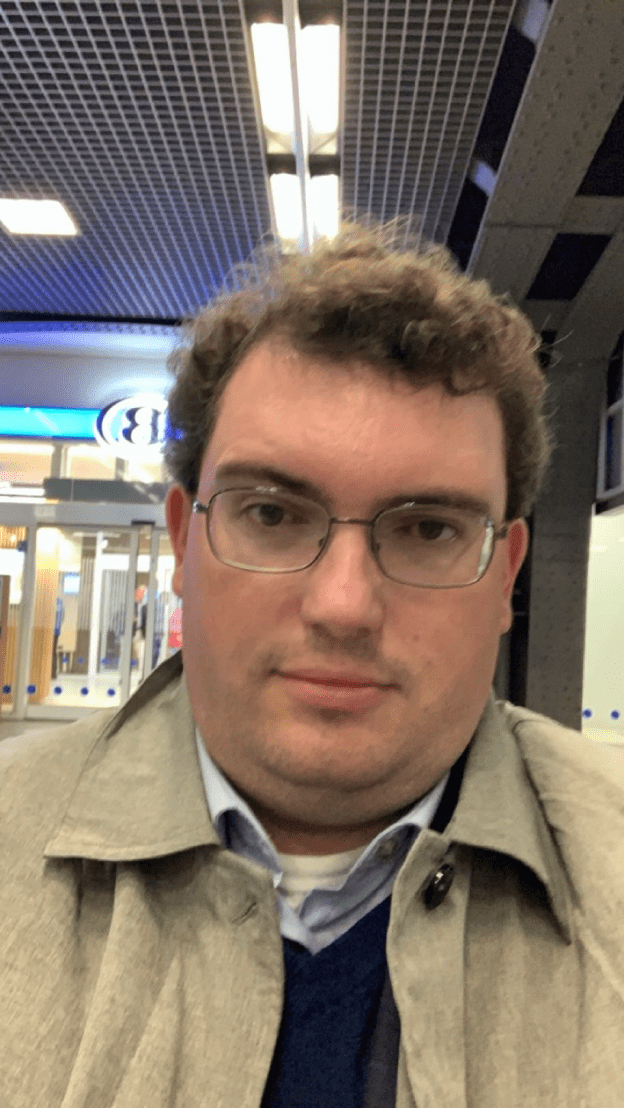
The author sitting in a railway station in Belgium looking tired after a transatlantic flight.

Milestones

Today it's my birthday. So, some words about milestones. — Click here to support the Wednesday Blog: https://www.patreon.com/sthosdkane

Today it’s my birthday. So, some words about milestones.


It’s not often that my birthday lines up with a Wednesday, in fact except for this one circumstance the occurrence of my birthday on a Wednesday would hold no significance, unless I happened to find myself in a Wednesday afternoon camel ride to mark midweek. Yet baring a visit to the Sahara in one of those often photographed camel rides, or better yet a visit from the rare descendant of Hadji Ali’s camels in the Arizona desert, a Wednesday birthday has no significance to me.

In most years, I can expect what will occur in the coming year, where I’ll go, who I’ll see, what I’ll do, and where I’ll work in the coming year. This year now ending was in one part predictable and in another surprising. I returned to Kansas City expecting to speak at conferences in Puerto Rico, Europe, and across the United States during the first year of my thirties. Yet I didn’t expect to work at the Kauffman Center, let alone that I’d possibly find myself teaching middle school history and geography full time. This year now ending held a great many surprises for me, which I embraced as unexpected turns in the road.

This birthday is also significant in that it coincides with my last day in that middle school position. Today marks the end of the first semester, or the second quarter as we’re officially calling it. I have many mixed emotions about my decision to leave this role, there are parts of teaching these classes that I loved, and the people are charming. Still, my 31st birthday feels like one that will come and go without much fanfare. Perhaps I’ll take some quiet time to myself in between leaving my desk at midday and the usual birthday festivities in the evening and relax, something I haven’t done much of lately.

The thing I’ve learned most over this past year is that I’m more resilient than I’ve traditionally given myself credit for. In spite of the trials that I’ve put myself through each year I find a way to rebound and redouble my efforts and to rise above the trouble I’ve put myself in. This year is the perfect example of this; while I didn’t accomplish all I hoped to do as a thirty year old, I still achieved a great deal. Working in two intensely public roles has brought my gregarious side out far more than before. In past years I could be outgoing and even bubbly from time to time, yet often my doubts and fears kept me quiet as a church mouse in public, preferring my own counsel over others, and stumbling over my words trying to impress the people around me.

I realized in high school that a great tool I could use to get my point across was humor. If my audience would laugh with me then they would be able to connect with me directly. The first problem to solve in public speaking is figuring out how to speak to your public, how to get your message across. I’ve continued to use humor to do this, to varying effect. Yet relying on one technique without exploring more options can fashion a tool into a crutch and prove limiting.

As much as I enjoy making jokes, and love getting laughs, I’ve grown as a professional and found that my work is beginning to speak for itself without the need to frame it in jokes and gags. I may find life to be humorous in our human complexity and folly, yet this doesn’t feel like the day to praise our innate charm. There will certainly be another.


A Sunrise

This week on the Wednesday Blog, a reflection on the rising Sun. — Click here to support the Wednesday Blog: https://www.patreon.com/sthosdkane


This week on the Wednesday Blog, a reflection on the rising Sun.


Last Friday as I drove south to reach my classroom in the morning I was awed by the pink and yellow rays of the rising Sun that appeared in the east. It seemed to echo some sort of hope of things to come. These last months have felt as though I’ve been caught up in a storm both unfamiliar and of my own shaping, and it has left much of my life from my part time work to even this Wednesday Blog to be written at the eleventh hour each week. Unable to set foot on solid ground over these months, I’ve prioritized staying upright in my life while putting my best efforts into my work. Still, even that hasn’t seemed to be enough to balance everything.

I am more used to the pattern of having several part-time jobs which fit together however imperfectly, so the introduction of a full-time position on top of everything else sank all those other things that I previously worked on to the detriment of all. There were weeks when I even ignored my own needs as my new duties required every shred of focus, every aspiration of my emotions. This has left me exhausted of many of the things which kept me going and I feel hollowed out by the harsh tides of the world.

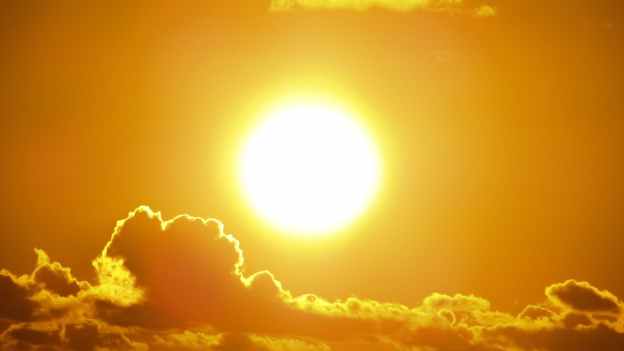
This sunrise then spoke to me of hope. It was a sunrise that only the long nights of winter could forebode, a bright eastern glow whose radiance was more pronounced because it followed a long, dark night. I gazed up at it when I could on my drive south and thought of all that had transpired, and all the possible futures that these next months and years might hold. I know, of course, that the Sun appears to rise as our planet continues in its revolutionary course, the Earth spinning on its axis with each passing day so that this sunrise has surely been seen by many before and will indeed return again to grace our mornings. Yet amid all that the sciences can tell my emotions speak louder in my interpretation of its very natural phenomena.

There have been many sunrises in my life that have moved me, after all I’m traditionally far more a night owl than an early bird, so until recently I rarely saw the sunrise. In my childhood my bedroom looked out to the west and each evening was warmed in the glow of the setting sun. With all our popular fears and worries about endings today, they are far louder than any wonderings about new beginnings, it seems that we as a civilization looks to the setting more than the rising Sun. We see our future as a fading echo of distant glories, our lives existing in the ruined monuments of earlier generations. Our stories are populated with more Ozymandiases and fewer Abrahams and Jacobs in spite of the newness of so much of our built world here in the Americas and the other old settler colonies.

I think our transition from the early decades of this new century into the first of the middle decades has a great deal to do with all of this. The generations now being born will surely see the last century as something in the past existing behind a veil just remote enough to not be touched. When I show pictures from my travels of old monuments today my audience and I are both struck that often they were infants or even yet to be born in that same moment. The first decades of this century are to them what the 1970s and 1980s are to me; and as we continue our inevitable march forward in time we will move ever further away from those years and generations in which our world here in the United States, and especially here in the Great Plains and West, was still young. It seems to me that we have a great deal to learn of change; that we will always need a reminder that the passage of time is something to be admired as much as it is feared. The oldest people I knew as a child would now be reaching their centenary if they were still alive, and surely someday I too will be in that moment where the power of my life fades as my time recedes from life and into memory.

The rising Sun speaks to me then of both hope and the truth that after many sunrises there will be one which will be seen in a moment when my world and all who I know are gone. There will be a sunrise after my time, yet in the meantime I hope I can make all the days that follow the sunrises of my life fruitful. With that light there are a great many things I can see, a great many marvels to behold; for all of us are individual marvels in all our complexity, our wants, our passions, and our fears. As long as I am able, I yearn to experience those marvels like that pink and yellow sunrise from a few days ago and live to the fullest of my ability.


St. Nicholas

This week on the Wednesday Blog, some words about St. Nick. — Click Here to support the Wednesday Blog: https://www.patreon.com/sthosdkane

This week on the Wednesday Blog, some words about St. Nick.


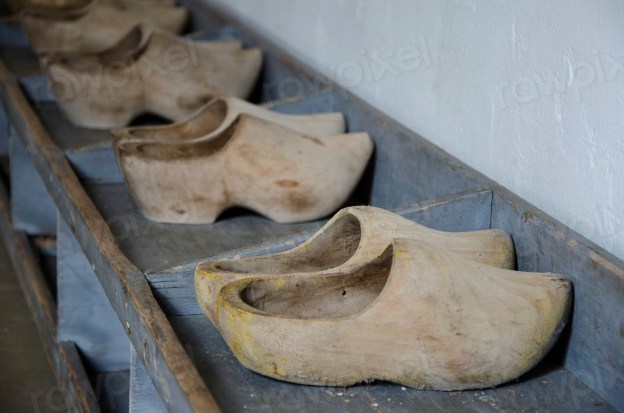
We find ourselves again in the last month of the year, at a holiday that I wasn’t aware of until elementary school. According to tradition, on the night leading up to the 6th of December, St. Nicholas will come around to everyone’s houses and leave presents in our shoes. I remember thinking that was an exciting idea at first but today I wonder about the sanitation of that, let alone the sanity of it as well. Then again, to quote the late, great Chico Marx “there ain’t no such thing as a sanity clause!” I always imagined St. Nicholas as a winter saint, in line with the old Green Man figure of folklore. So, for me this feast day is more about the beginning of Advent, of December, and of the Holiday Season than it is about the sainted fellow himself.

There are many elements which go into this season that conflate the ancient, medieval, & modern, the sacred & secular, the busy & serene. I feel as though my life has been caught in a whirling storm, a tempest raised by some staffed soul seeking to prove a point about the possible and limits of my own ability. I can now sit at peace with my own limitations and know that in spite of what might be seen as a failure is its own kind of success, a fulfilled experience across eighteen weeks that proved to me where my own road leads.

This Christmas, I find myself thinking as well about the remarkable Christmases past. Christmas 2012 stands out to me now. That year, I had my one and only experience sitting beside my grandfather Kane at the table as one of the adults. He told me stories about his own childhood and twenties that I hadn’t heard before. It’s been ten years now since he made the voyage to the great Christmas dinner in the sky, where I hope we’ll sit beside each other again someday. That promise of a future may well be the chief reason why I believe at all, for belief on its own is hard to justify. I look at the charming, gregarious, and quite vocal people I’ve spent my days with now for the last few months and think about all the Christmases to come they will know. Even as our roads come to their divergence, I smile thinking about them and all they will become.

These long December nights are a time when the ancient returns to life again in my imagination; when the dancing dreams of an idealized past reignites itself with the flames that inspired our modern electric lights which keep us comfortable amid the darkness. The early mornings still feel alien, and they are something I will not miss from this time now ending, yet the fact I could make that time my own is something I’m quite proud of.

All of this is to say that I have chosen to leave the school I am currently teaching at as of the end of this semester on Wednesday, 20 December. If you couldn’t tell, I don’t often know what the conclusion of these Wednesday Blog posts will be when I start writing them. St. Nicholas may be in my mind, yet life continues to catch my attention. I set out in July to see if I could teach middle school children, ages 11 to 14, and I’ve found the difficulties outweigh the tremendous successes. I’ve learned where my abilities lie and where I have room to grow. So, I now prepare to leave as I see the wind change on the eastern horizon. Like the staff-bearer, this role “I here abjure,” and leave it happy at the fortune of having held it if only for a while so best to speak the truth as I know it. This moment will one day be another person’s ancient history even as I now see the present moment; and when it is their history, I hope they will see all the interwoven vines and threads which connect this moment with its own historic foundations and see all the things that from it are yet to come.

Like St. Nicholas’s Day, these months serving as a teacher have touched on a great many historic rhymes, and I hope moments of it will live on as another one of my own Christmas memories.


The New Frontier

This week on the Wednesday Blog, I try to remember a story for this week that I came up with on Saturday while lost in a parking garage. — Click here to support the Wednesday Blog: https://www.patreon.com/sthosdkane

This week on the Wednesday Blog, I try to remember a story for this week that I came up with on Saturday while lost in a parking garage.

I will usually have a few ideas for the Wednesday Blog lying around in one of several repositories, including my memory of incidents that’ve happened within the last few days or weeks that might make for curious anecdotes for this weekly publication. This Saturday, while I was getting dinner on the Plaza on my way up to my evening shift at the Kauffman Center, I thought of one such idea that at the time seemed golden for this week. For some reason, walking back down the stairs from street level to where my car was parked underground, I found myself thinking about the first line of Captain Jean-Luc Picard’s opening monologue from Star Trek: The Next Generation, identical to the same line in Captain James Kirk’s monologue from the Original Series, “Space, the Final Frontier.” This idea of the frontier sticks with me because my own world here in the Midwest is so very new; where now there are tree-lined streets, parks, and fountains little more than a century ago was open prairie.

At the 1893 Columbian Exposition World’s Fair in Chicago, the American historian William Jackson Turner presented his famed Frontier Thesis, which argued that as of that moment the American frontier was well and truly closed; all land from Atlantic to Pacific was taken, bought, or occupied by some one or another. Turner, a historian at the University of Wisconsin-Madison, made this point to mark 1893 as a major turning point in American history from the age when our culture was defined by the endless frontier extending far out beyond the horizon to a distant and nigh mythic Pacific Ocean and towards a new world where the United States was an island unto itself, with travel from New York to San Francisco possible in a matter of days by rail. Today, of course, the same journey can be made in about 6 hours by plane, and for much of my life I’ve heard of Alaska as the new frontier and, like the two Captains of my favorite science fiction series, Space as the final frontier.

Yet I think there’s another frontier that bears consideration, one which is far more personal to each of us. I stand today looking at my own life and childhood with a great degree of nostalgia, and especially now that I am spending my days with students who are going through those same moments, I often want to connect with them by remarking about how I was doing this or that when I was their age. Yet, it is hard for me to reconcile that these people are living out their adolescent years in the early 2010s and not the early 2000s as I did. Their world is a new frontier for me, one that is far more digital, one that is far more interconnected, and one that is in many ways far more dangerous than my own.

I’ve long thought about how different things would be if I had children for them compared to my own life. If I were to have children this year in 2023, they would be in middle school in the early 2030s and graduate high school in 2041, a full 30 years after I did. This is almost equal to the same gap that I have with my parents, yet to me the cultural and technological differences between even today in 2023 with what I knew in 2011 are in some ways far greater than what I remember being around when I was little in the mid and late 1990s that my parents lived with in their teenage and young adult years in the 1980s. It is harder for me to understand some of this generation because my experiences are far more framed in the world that existed when I was born, and as much as I look forward to the futures that this century could hold, I still feel a close connection to the century that formed my own existence.

This is all a very linear way of thinking about time and even space. It could be that echoes of moments from my own past keep appearing in my present as I experience this new period in my life. The frontier of full-time employment has been reached, and I’ve chosen for the moment to cross its threshold into whatever its potentials may hold. I look back at my life from just a few months ago with some wistful longing for the days before I was constantly needing to be my best self, the days when I had plenty of time to get all of the things I need to complete done. There are always echoes in my memory which announce themselves in the present, from the way the sunlight shines nebulously in the sky on a morning after an overnight rain to the new takes on old hymns we sang in my elementary school Masses each week. I find myself remembering the people I knew and loved in my past and see a great deal of them in those I surround myself with now.

I hope that as I move further into this new frontier I will be glad to see what it has to offer, what ideas it will inspire in me, and how I can continue to grow, hopefully, to become the person who people will remember in centuries long after I and all those around me are gone when perhaps humans will have begun venturing out from our home planet to seek their own new frontiers deep in the void of Space.

Natural History, Part 2

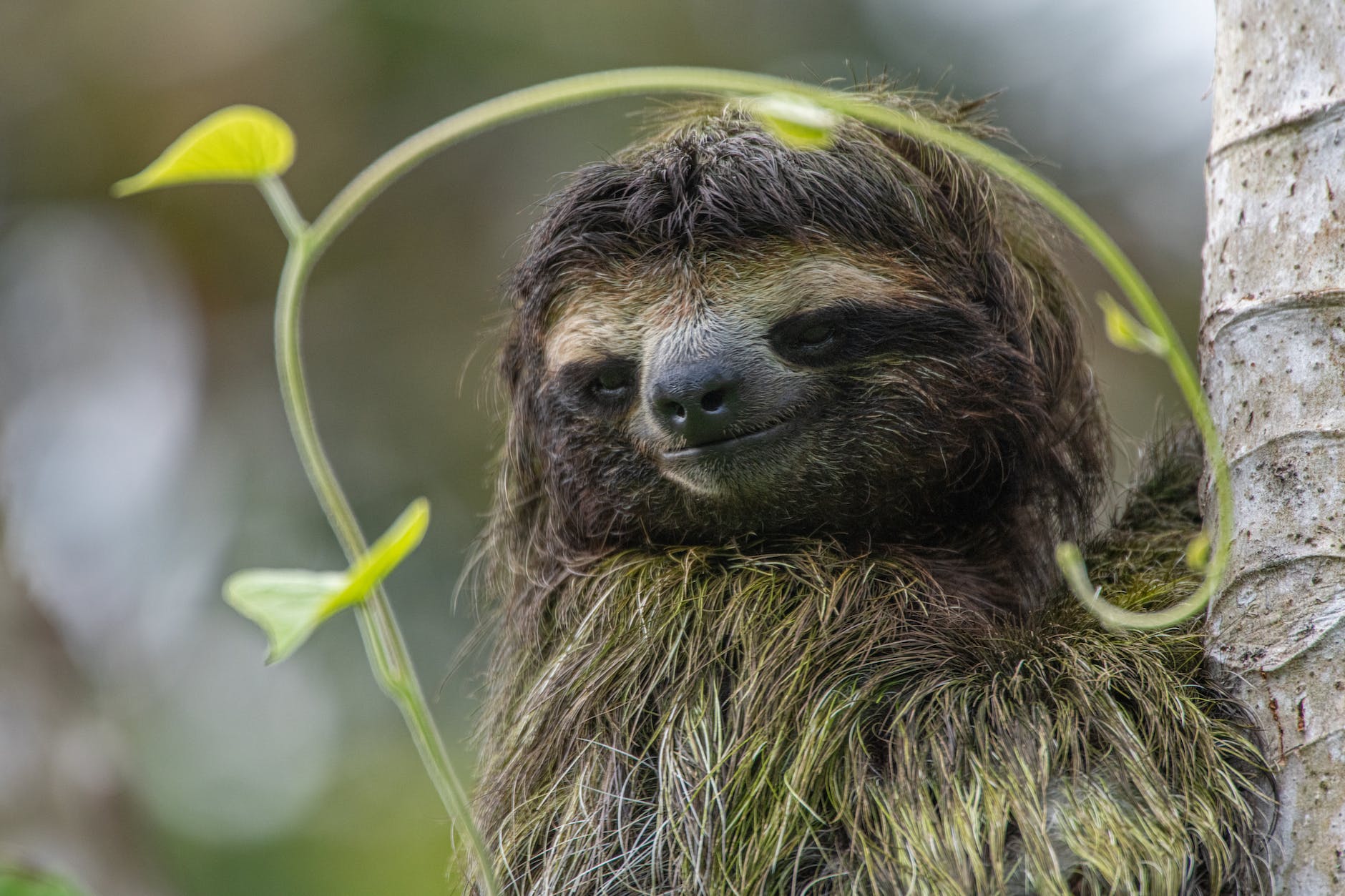
Photo by Steven Paton on Pexels.com

I am a Historian of the History of Natural History, or a Stáir ar Stáir an Nádúir in Irish. This means that I study how animals and plants were understood by naturalists in the past, in my case during the mid-1500s, or what I like to call the Late Renaissance. Central to all of this is the fact that the animals I study are all from the Americas, so they were brand new to the French and Swiss naturalists whom I study. In a sense then, natural history seeks to provide a history on human terms for nature. It seeks to bring something so vast as nature down to our level and make it familiar.

In my research this story focuses on the maned sloth (Bradypus torquatus), a species of three-toed sloth that’s native to the Brazilian Atlantic Forest. It was first recorded in a work of natural history by the Frenchman André Thevet in his 1557 book The Singularities of France Antarctique. Thevet has become famous in the history of natural history for using local names for local animals, rather than calling it a “sloth” he called it a “haüt“, his rendering of the local Tupinambá name. To me this is critical to understanding the History of Natural History, for while you could look at an animal and call it a “sloth” because it moves very slowly another option is to turn to the people who’ve lived alongside it for generations and ask them what they call it. This is what Thevet did.

Last week I got the chance to spend a couple days down in New York City, during which time I wanted to pay a visit to the American Museum of Natural History, arguably one of the preeminent institutions dedicated to the study of nature in this country. It’s a nice enough place, though I’ll admit the exhibits tend to be a bit dated now in 2022. Still, the American Museum offers a good foundation for the layout of such museums around the country. Like its Chicago counterpart, the Field Museum, my favorite such museum, the American Museum has sections focusing on Zoology, Paleontology, Botany, Astronomy, and Anthropology. It seeks to be an encyclopedia of nature in one big building on the edge of Central Park, something it does quite well.

What has struck me the most over the last few years of choosing to visit natural history and science museums in every city that I visit is how all of them try to tell the same story, a history of nature from the Big Bang down to the present. The Field Museum does a wonderful job of capturing this in their Deep Time exhibit, the place where you can find the dinosaurs, in that it begins with that first primordial burst of energy that got everything started and it ends with a wall showing all the species that have gone extinct already in our current age alongside a ticker counting the number of species currently going extinct. We model our natural history on our own history, and frankly our own history is one bookended by a lack of life, whether it be before we exist or after we’ve died.

It’s important that we understand the fact that our perspective is born entirely out of our own experiences. So, we understand the course of time as a linear and finite thing. Past generations have thought of trees and plants as animated creatures like us, while today we recognize they are living if perhaps not as sentient as we animals are. Many among us have understood nature through faith, prescribing that energy which drives all creation to a Creator, a Divine Essence as I like to call the most paradoxical and incomprehensible. (One of these days maybe I’ll release an episode all about the idea and promise of God.)

Thevet understood the sloth to be “most deformed” because of its strange shape and notable slowness. To his perspective it wasn’t a normal creature, natural to its own world yes, but not normal as he understood normal. We still today describe things that are “normal” or “ordinary” as things that we find familiar and comforting. I do it just as much as the next person (see the episode two weeks ago about cultural homogenization). In moderation this is a good thing, it allows us to formulate a baseline, a control, against which we can better understand the unusual and extraordinary around us. The beautiful thing about Nature is as much as our science has made great progress in seeking to describe and understand it, there’s always more out there for us to learn about.

I’m going to leave it there this week. If you haven’t noticed, my voice is failing me today. Let me finish with the thing that I myself will eventually want written as my epitaph (however many decades away that is): stay curious.