Tag Archives: London

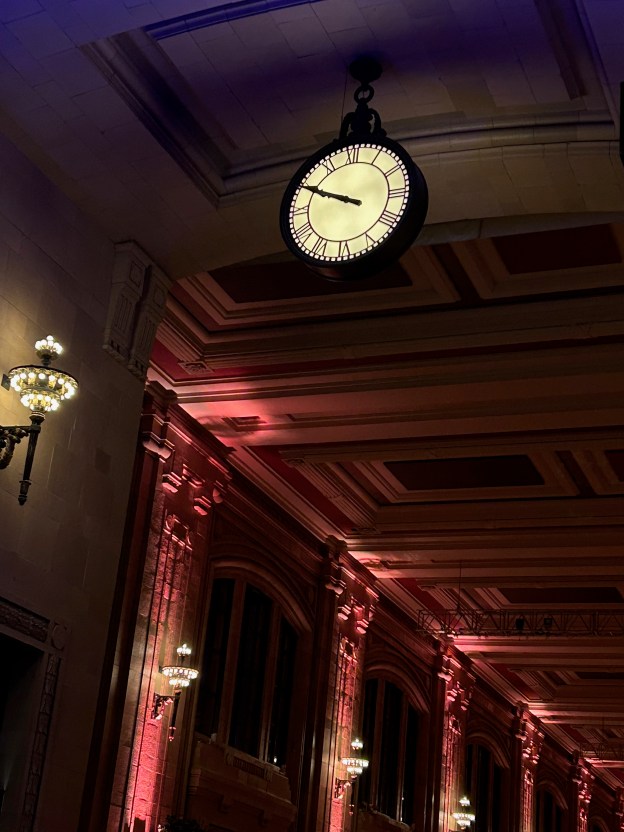
A picture of the great clock at Kansas City Union Station at night.

The Poetics of Finality

The Poetics of Finality Wednesday Blog by Seán Thomas Kane

This week, some words on endings.—Click here to support the Wednesday Blog: https://www.patreon.com/sthosdkane


This week, some words about endings.


On the morning of Flag Day, I went to the Linda Hall Library with my parents to see the classic 1951 science fiction film The Day the Earth Stood Still. I knew about this film, but this was my first time seeing it. Beside the story, what struck me most about this film was its tone, pacing, and overall character. After I finished my other two events of the day, the Plaza No Kings Rally where I watched the crowd of 11,000 people rally for democracy, and Mass that afternoon, I returned home tired yet eager to find that same tone. I went looking for it in Rod Serling’s classic series The Twilight Zone. Released between 1959 and 1964 in its first incarnation, this series had scared me a bit the previous times I’d sat down to watch an episode or two. It has an air of fear to it that is reminiscent of the reasons why I generally stay away from horror films. And yet on closer inspection, Serling’s stories tell something that is far less frightening than I first imagined because it’s a theme with which I’m all too familiar.

I came to indirectly know more about Mr. Serling when I moved to his hometown, Binghamton, New York, to undertake my doctoral studies in August 2019. His image isn’t all over town, but it’s a visible reminder of Binghamton’s history and place in the fabric of American culture. In fact, much of the stories that I’ve now watched in The Twilight Zone fit the character of that interior part of the Northeast where I lived from August 2019 to December 2022 quite well. In some ways, not too much of the built environment has changed from Serling’s day 60 years ago. Still, I noticed time and again how the optimism of that postwar era had faded. The same town was there, but some of the energy it once knew was long gone. Having lived my life to date in Chicago, Kansas City, and London, all cities with layers of history and memory, I’ve seen how the current generations have chosen to craft their own layer. 

London is a city that holds mementos to its ancient and medieval past while largely built in the form of its eighteenth, nineteenth, and twentieth century growth at the height of the British Empire. Yet today there are enough futuristic buildings and settings in the capital that it was used as a setting standing in for the space-age galactic capital of Coruscant in the latest Star Wars series Andor. I delighted in seeing familiar places from the Barbican Estate and Canary Wharf in the show.

Chicago has some of the same American character of Binghamton and the Northern states as a whole, a common history. Yet Chicago is the powerhouse of this country, the beating heart of our transportation network, the real crossroads of this nation. Where other industrial cities in the Great Lakes faltered in the 1970s, 1980s, and 1990s Chicago instead continued to power on for its sheer size and the diversity of its industry. Today, it has a very particular character which I believe makes it the most American city this country has to offer for its marriage of American settler culture and all the different indigenous, migrant, and immigrant communities that make America the patchwork of peoples in one great republic that it is.

Kansas City meanwhile saw more of the downturn for its smaller size and some of its traditional industries haven’t translated as well into the current information revolution. Kansas City once thrived as another great railway hub: the Gateway to the Southwest as the last major Midwestern metropolis along the Santa Fe Railroad as it drove across the prairies toward New Mexico, Arizona, and Southern California. Today, our interstate highways direct traffic through Kansas City more from Texas, Colorado, the Dakotas, Iowa, Minnesota, and points east than in the old northeast-to-southwest alignment of the rails. Recently while I was in downtown Kansas City, I remarked on how underwhelmed I felt visiting there for the first time after the business and thrill of going with my parents down to the Loop on weekends when we still lived in Chicago. Kansas City however has seen a renaissance of its own in the last twenty-five years that has filled in many of the gaps left by urban renewal and restored this city’s vitality. That more than anything else made my move to Binghamton a tremendous culture shock: going from a growing city to one that was a shadow of its former self struggling to invest in its future.

For every Twilight Zone episode there seems to be a fearsome unknown menace looming over the story; something that the character can perceive the effects of yet can’t quite see. Yet if there is any common thread to this menace it’s that it is a fear of the unknown. In the original pilot that launched the Twilight Zone, titled “The Time Element,” Serling’s rational psychoanalyst foil to the main character trapped in his dreams concludes through his logic that his dreams that he goes back in time from 1958 to Pearl Harbor on December 6th, 1941 could not be real because any incident that happened in this dreamed 1941, if real, would impact the patient as he lived in 1958. Yet reason is proven unequipped to address the irrational, how can it explain what it intrinsically is not? I’ve argued time and again here in the Wednesday Blog that this is where there exists room for belief in a life lived rationally. Still, having watched a fair number of Mr. Serling’s stories now, I think I can say something to this menace’s true character.

There is an intrinsic fear that comes with knowledge of seeing that we do have an ending. On a biological level, our bodies can only continue working for so long. We drift apart from our lives as they were in one moment or another, apart from friends who we admired and loved in a given moment, apart from jobs that consumed our waking and sleeping thoughts, apart from situations which challenged us to become better versions of ourselves. Yet, all those lived moments will continue on in our memory, at least for a time. I was stunned to find how well I could remember very particular moments of minute detail earlier this year when prompted by a sudden and wonderful realization about how I want to live in my life to come. Even the smallest of details that my senses perceived were there, locked away. The antidote to any fear is joy, and for me it was the most radiant joy I’ve felt in years which unlocked those memories for me of moments which led to that jubilation. Still, fear in moderation is a good counsel, a wise friend. It’s what makes me watch for traffic when I’m crossing the street here in Kansas City, or that advises me to make certain decisions over other ones at a very fundamental level to keep me alive. This is one interpretation of what the infamous tree in Genesisportended: that once humanity ate its fruit we would never again be able to be innocent from seeing flaws in the beauty of nature and in the beauty of ourselves.

Over the weekend then, I went to see the new Stephen King film The Life of Chuck starring Tom Hiddleston as Charles Krantz. I particularly grew to like young Chuck’s grandfather played by Mark Hamill. If I were to compare Stephen King’s writing to any other American storyteller of the last century it would be Rod Serling. Both tell stories of this same menacing fear. Yet in King’s Life of Chuck, the monster who’s revealed in the last scene is far more familiar, ordinary, and known to us all that I saw it less as a menace and more as a companion. There is intense poetry in both Serling’s Twlight Zone and King’s Life of Chuck around endings. They tell us that the finality of moments in our lives and of our lives all together give our lives greater meaning and purpose. I’ve found in the various projects and events I’ve helped organize that we get more done when we have goals we’re trying to achieve and a timeline by when we want to achieve those goals. I often work better when I have deadlines because if I begin to feel impatient at how long something might take, I know there’s an end date to look forward to. I feel that about little things but not the big ones, not the experiences that’ll one day make for good stories or about my life itself.

I for one don’t want to live forever, I worry that’d take some of the meaning out of my life. I would like to be remembered for my writing, for being a good person, for the history I research and leave for generations of graduate students to muddle through in their coursework. On a recent digital security Zoom call that I attended we were asked to search our names on several search engines and see what came up. Should there be anything we didn’t want searchable we could then get that removed. I was delighted to see that after my website, social media profiles, and various conference programs came page after page filled with essays published here on The Wednesday Blog. I suppose that’s one benefit of writing this weekly for the last four years: my thoughts written here will be remembered at least by the search engines. Yet I think the Wednesday Blog will have more meaning when I decide to set it aside and turn my staff to other facets of “my so potent art” to borrow from Prospero. Because then anyone who is curious enough to glance through these pages will be able to see them in their totality and know these essays are artifacts of the time when they were written in the early 2020s at a time of my life of doctoral study that feels so very close to ending.

This is not the last time you’ll hear from me on the Wednesday Blog, rather I’ve decided to end my weekly publication of this blog at the end of the current season. This is Season 5 of the podcast, or Book 6 of the blog itself. I feel that it’s had a wonderful run, and it’s been a great outlet for me while I’m biding my time as my career slowly begins. Yet now, I’ve got a lot more writing to do from new research papers to submit for peer-review to book reviews that it’ll be nice to take this off my docket. This is the 25th issue of this season, and I have a further 15 issues planned before the end. Thank you to all my readers over the last four years and all my listeners over the last three. I hope this will be an ending worthy of your curiosity.

Tóg go bog é | Take it easy

Tóg go bog é | Take it easy Wednesday Blog by Seán Thomas Kane

This week, a few words on taking life slower.—Click here to support the Wednesday Blog: https://www.patreon.com/sthosdkane


This week, a few words on taking life slower.


Where I grew up first in the Chicago suburbs and later on the western edge of Kansas City, Kansas the average speed limits were around 35 mph (56 km/h). I think there’s something to be said about a life that’s taken at those sorts of speeds, that the speed we drive from place to place reflects in how we approach other aspects of our lives all the same. By comparison, in the year that I lived in London I fell out of practice with my driving, instead I knew how to navigate by walking speed, closer to 3 mph (5 km/h). Perhaps this is one of the reasons that I found Binghamton to be such an incongruent place to live because the average speed limit is 30 mph on the local streets and roads in that valley.

When I learned to drive then, the average speed that I found myself at hovered around 35 mph. Furthermore, I learned to drive on the highways before I learned city driving, as most of my early daily drives were on the highway K-7 between our home in Piper and my high school in western Lenexa, Kansas. It was a 30 minute commute each way to school every day, and one that I don’t remember getting that old too fast. In more recent memory, I found that driving a good 20-25 minutes every day down to the school I taught at in Leawood, Kansas did grow taxing to the point that now I’m less willing to drive quite as far in town as I did even a few short years ago.

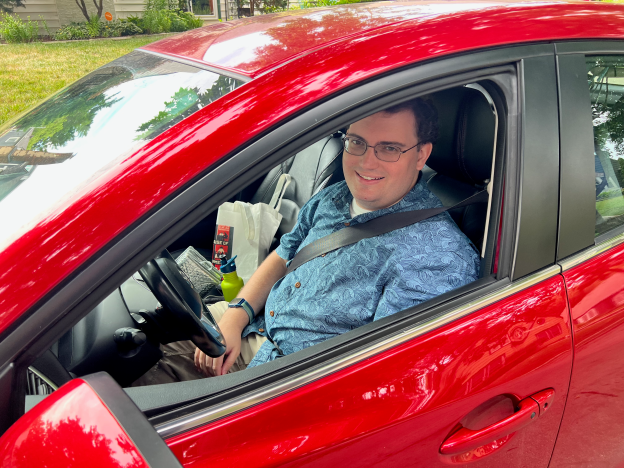
I’ve noticed several types of driving and several variations on speed that my car will embody depending on how I’m feeling on a given day. There are times when I am so attuned to my surroundings and to my car, which I lovingly named the Mazda Rua 6 years ago, that it will feel as though we are one in the same, that my car will adjust its direction and speed with the slightest turn of my hands, or the flick of my eyes from one direction to another. This feeling was especially pronounced on my 14 long drives between Kansas City and Binghamton that I undertook between August 2019 and December 2022. On those drives, I would usually keep a steady pace of around 75-80 mph (120-129 km/h) on the Interstates between the Catskills on the eastern edge of my route and the Great Plains to the west. When I’m out on the open road I’ll still sometimes set my car into cruise control at this sort of speed, which tends to be the pace of highway traffic anyway and let the day’s drive go by.

Yet I’ve noticed more and more in my drives around town, I’m not going quite as fast as I used to. I tend to drive a few times per week between my home in Brookside and my place of work in the Crossroads, always on the city streets and always in a decent amount of traffic for Kansas City. Yet the pace of traffic has slowed somewhat; where before I’d keep to that 35 mph threshold, now I’m fine if I’m hovering between 30 and 35 mph (48 and 56 km/h). Just before writing this, I drove home from a haircut with my cousin Richard Morrissey at his salon in Mission, Kansas and I found that I didn’t particularly care that the traffic was going 30 mph, especially when I crossed the border and merged onto the northern reaches of Ward Parkway. Nor did I mind the slower speeds when I decided to turn off that major boulevard and onto a side street that goes up Sunset Hill toward Loose Park where traffic really ought to be moving no faster than 15 mph (24 km/h). I didn’t mind the slower pace because I didn’t feel the need for speed.

My generation grew up with the role models of our parents and grandparents whose generations worked day in and day out for decades and who built our sprawling metropolises in which we need cars to get around. I’ve accepted this world that I was born into and its hurried tempo and made myself far busier than I probably need to be. On a recent day when I had 3 meetings in a row in the span of 3 hours I was struck by the fact that when I was still in Binghamton I was busy but not this busy; that the reason why I’ve not been keeping up with podcasts or TV shows the way I used to is because I simply don’t have as much time in the day for them.

The key here is a learned moderation which goes a long way to what I find is a happier life. There are things which I hope for and want with an eagerness that inspires me to plow on forward yet I’ve learned that the best things I can hope for are those which occur in the quiet moments of calm between those rushing evocations of the modern life. I for one would much prefer to just be an academic spending my days reading and writing about historical zoology and having deep and enriching discussions with friends and colleagues. I would much rather listen to my colleagues about what they’re researching, and about the things they’re learning in their own particular topics. And yet, when I was with my colleagues at the Renaissance Society of America’s conference the week before last in Boston, I felt that I stood out in some ways from them by all the different fires I have going at once. I’ve always been one with many different projects in the works. Even now, alongside this weekly blog and my dissertation I have two articles in the review and editing stage, a third that I’m hoping to submit to a journal soon, two books on the way that I will be reviewing, and a short story I’m plodding through writing. 

On top of this I hold several different committee assignments in the Fr. Bernard Donnelly AOH alongside my primary recording secretary duties. I also work part-time as an usher team captain for the Kauffman Center for the Performing Arts and now have somewhat of a hands off approach to my Mom’s efforts in leading and organizing a local progressive protest organization called Blue Brookside. Simply put, I have to persist at this higher speed to keep track of everything.

One of the first phrases I learned when I started studying Irish in 2007 was one which I initially misheard: Tóg go bog é, which translates as “Take it easy!” This is a nice sentiment, and one which I’m trying to live, to be less worried, to inflict less stress upon myself. Perhaps even though I didn’t identify it as such this may well be what I’m trying to give up for Lent this year. You might say it’s working in some stripes yet not in others. What remains is a key question about how I can grow from finding this balance between busyness and nonchalance? Maybe this is something we all need, time away from the constant stream of information and news and worry. I’ve recently begun responding when people talk about social media that I admire those who’ve dropped away from it; were it not such a good way of staying in touch with friends and family near and far I probably would do that too.Let this be a motto for us to aspire to: tóg go bog é, take it easy.


Homeownership

This week, a few words on homeownership.—Click here to support the Wednesday Blog: https://www.patreon.com/sthosdkane


This week, a few words on homeownership.


For most of my adult life I never really thought that I’d ever own my own house whether through the pure economics of trying to buy a house in the neighborhoods that I like here in Kansas City or in the other cities I’ve applied for jobs in. There have been the odd moments though when homeownership seemed within reach, as a sort of mirage just on the edge of my vision. In these instances, the circumstances that would’ve allowed me to buy a home faded away, yet by getting that taste of the possibility of it this future still feels probable.

The arguments for homeownership are financial, having a stake in the local economy through your home value, and aspirational of having control over your future in this fortress that you can truly make your own. To every man his castle, right? I do have ideas for a dream home, ways I’d decorate it, ways I might even add onto it. There are ways that I could modernize one of the century old homes here in Brookside to be more energy efficient, to run on renewable power, and to feel futuristic for even the 2020s. I want to have lots of color in my home, whether in patterned tilework or in the art that I’d hang on the walls. I also want to have a room set aside as a library for the practicality of needing to store all my books, yet also as a place to work.

There are days when I still sometimes think about the houses I considered buying. Now it’s as if I’m remembering the memory of these places where I was thrilled to imagine myself living. That hope at the heart of all of this is what keeps me engaged and actively trying to move my career forward. Today, writing this it’s hard to imagine me owning a house as my professional life continues to exist in its malaise waiting for things to happen. I’d rather not be so rooted in one place as the potential for my life to wander from place to place is too good to let pass by.

To this end, Jennifer Denbow, a Professor of Political Science at Cal Poly, San Luis Obispo made a very strong case for renting or even condo ownership in her recounting of her family’s struggles to buy a home in their city in an article in the February 2025 issue of Commonweal. I usually don’t underline text in magazines, the better to preserve the physical artifact for someone else to read. Yet in this instance, I was drawn to Professor Denbow’s affirmation that living in a multifamily development allows the “building of community and solidarity,” something much needed today. The investment here is in the community itself, less in the property which can drive individuals to support restrictive housing policies which keep the housing stock low and house prices high.

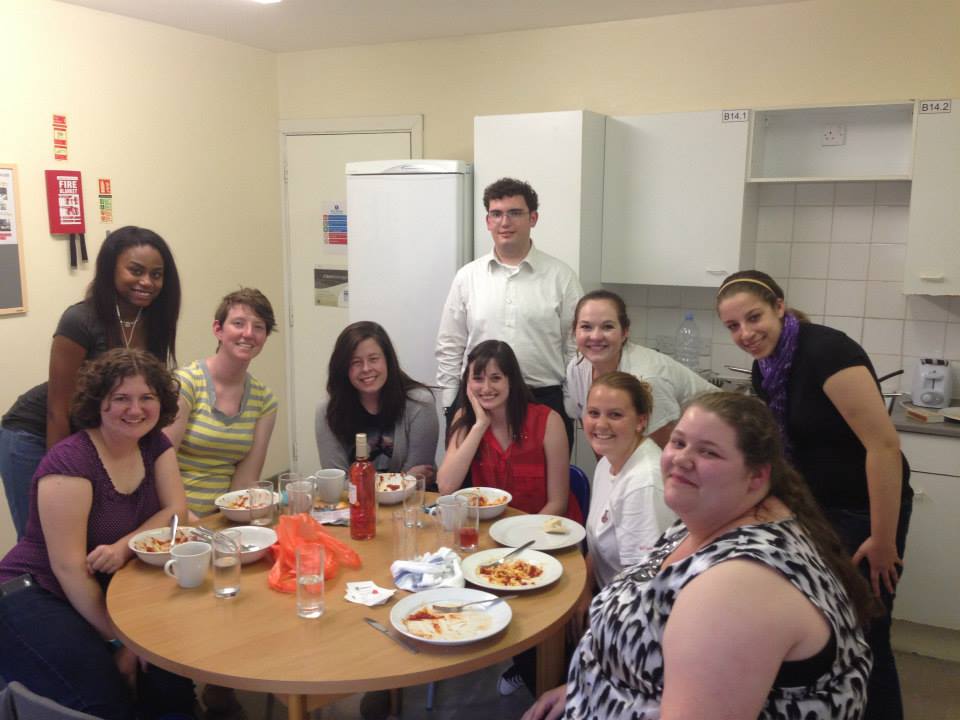
In my experience the reality of this community and solidarity depends upon the people living in close proximity with one another. I knew many of my fellow tenants in my building in London, yet I knew them far better than I did my downstairs neighbors in Binghamton. In London we had more in common, all of us were students––a mix of undergrads and postgrads––and all of us were new to that city and learning about it as we lived in it together. The same could be said for my dormmates at Rockhurst and during my summer study abroad session at Westminster. We became fast friends through our mutual situations and interests. This common bond is necessary if any solidarity is to be achieved.I suppose homeownership for me is one of those standards of American life that wavers in and out of range for me. I might buy a house or a condo someday, but it’s never been a guarantee. I know the sorts of places that I like in the cities where I want to live. Where the next year or two will take me remains uncertain.


Two Cities

This week, a few words about the trip I just completed to London and Paris. — Click here to support the Wednesday Blog: https://www.patreon.com/sthosdkane


This week, a few words about the trip I just completed to London and Paris.


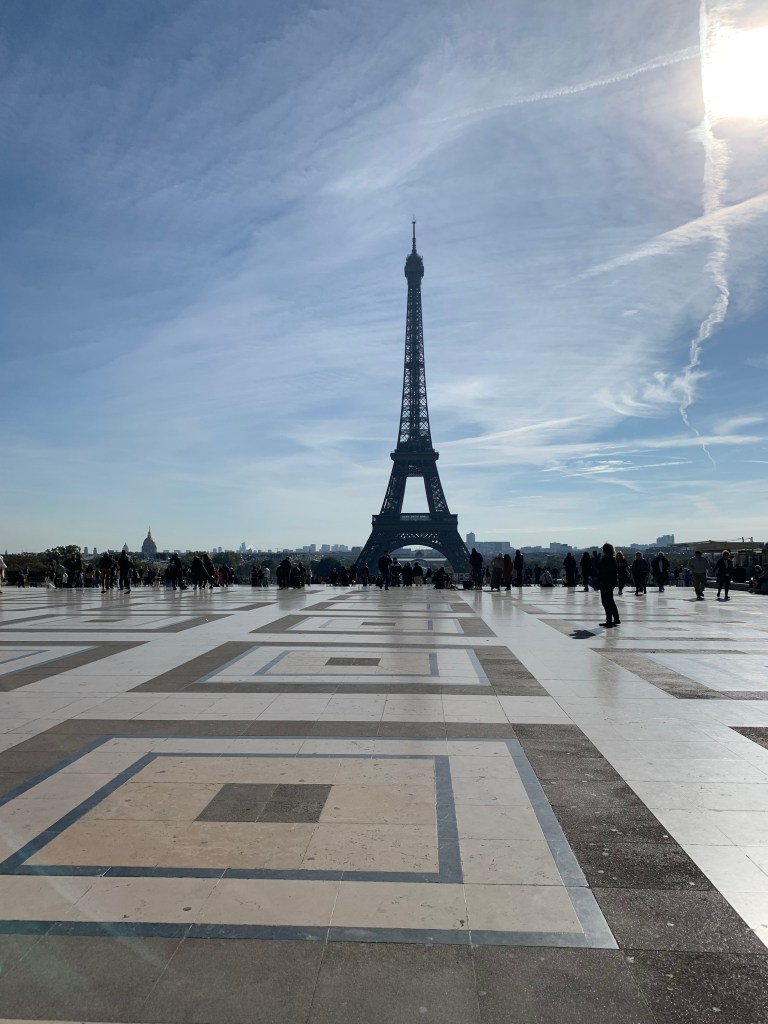
If there’s anywhere in Europe, I’ve visited more than anywhere else it’s London and Paris. 

When I was eight my Mom took me on a two week tour of those two cities which I found to be life changing for how they opened my eyes to a far wider world than what I’d previously known. My fascination for European history began on that trip; it’s a fascination that I’ve made into my career. I remember that February she put a “Learn French” cassette tape on while our family was driving through the hills of northwestern Illinois from Chicago to visit relatives at Mount Carmel, the Motherhouse of the Sisters of Charity of the Blessed Virgin Mary in Dubuque. I still think of that evening, watching the sunset over those hills, as the moment when I was first introduced to French, a language that I have come to define a great deal of my brand as a historian, writer, and translator by.

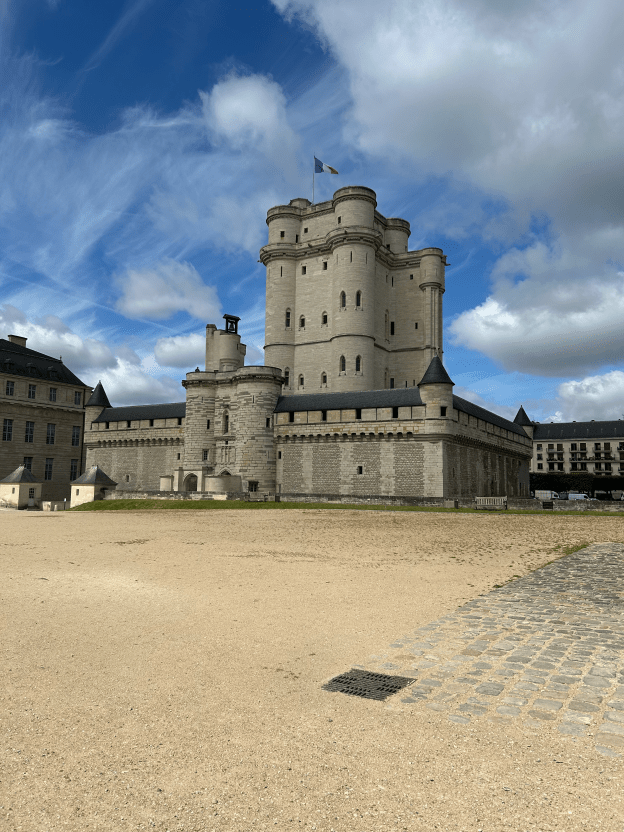
I remember thinking after our return from Paris in June 2001 that before that trip when I thought of what I was most excited about it was the Space Shuttle, dinosaurs, cowboys, and American history. Yet after that trip, while still thrilled by these things they still felt dulled somewhat by a new passion for medieval castles and far older history than what we had in our young republic. What’s funny to me about this is that these same thoughts returned in the days before I left for Europe. While normally Memorial Day wouldn’t have as much of an impact upon me, I think it’s pairing this year with the 80th anniversary of D-Day left me far more profoundly moved with pride in our republic, and what our people have accomplished across these generations. I returned to Europe then in much the same mindset that I had when I first visited London and Paris 23 years before, albeit with those 23 years of experience framing my thoughts.

London remains a home-away-from-home for me, having lived there for a time. Some of the optimism I remember feeling in that city in 2015 and early 2016 seemed to be renewed, if slightly, by the prospect of the upcoming General Election which will likely see a change in the governing party for the first time since 2010. I arrived there not entirely wanting to cross the Atlantic on June 6th. I always feel a hint of fear when I travel, especially overseas; this has been magnified since the pandemic when international borders were closed and for years afterward travel remained severely limited. The thought of being stranded somewhere away from my family leaves me shuddering, and has given me more pause when considering travel since 2020. Still, the flights, trains, lodgings, and some museum visits booked, I left home on the morning of June 6th and flew west to San Francisco, where I caught my transatlantic flight on United to Heathrow.

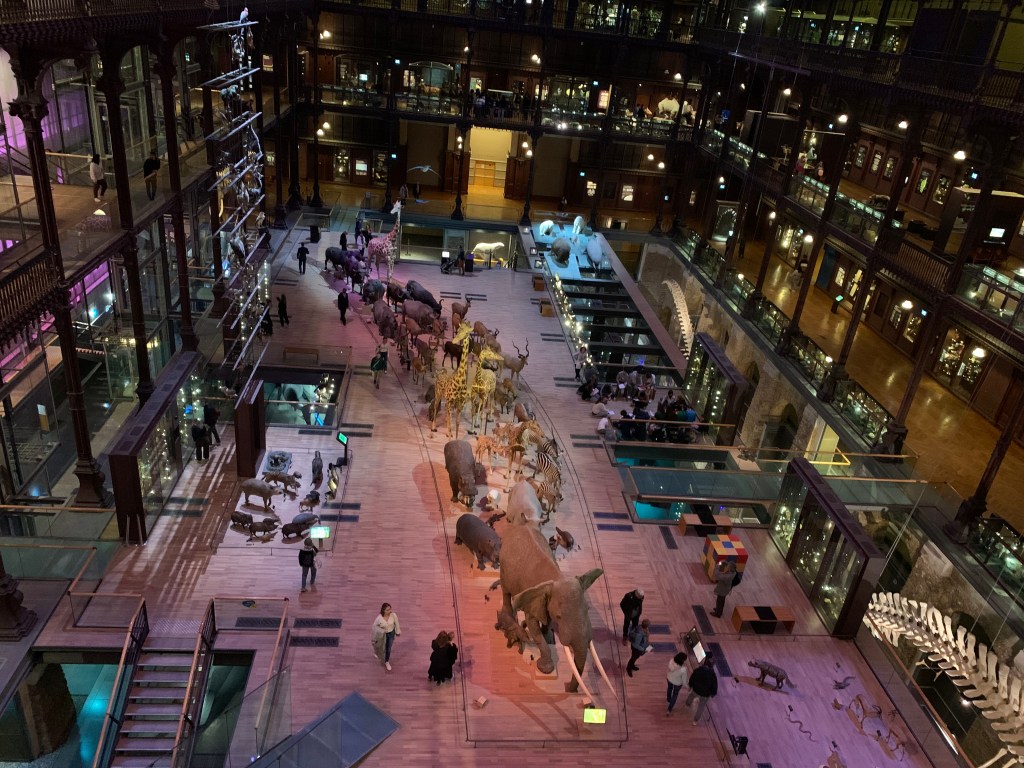
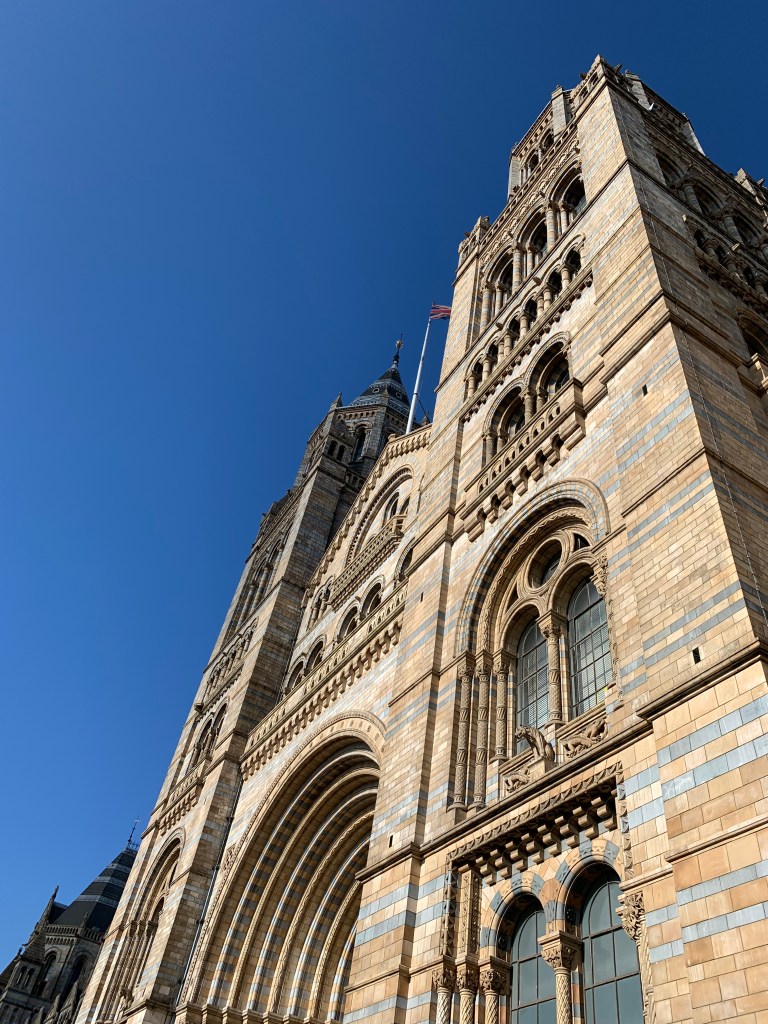
Why go west to go east? I tend to use my miles to fly international, and it was 30,000 miles cheaper to fly through San Francisco than my usual connections in Chicago, Newark, or Washington, or even through Toronto on Air Canada. Like last time, I felt a renewed sense of welcome when I arrived in London, and throughout my stay with friends in the Home Counties, I knew that this remained a place where I could build myself a home if the opportunity or need arose. One key difference from my last trip in October was that I was less concerned with visiting every single place I wanted to see from my time living there. I didn’t feel that desperation or passion to see and do everything that I’ve long known. Rather, I was content to be there again, and to enjoy what I was able to see and do. I prioritized seeing special exhibits at the museums alongside the permanent collections and was thrilled to visit the Tropical Modernism Architecture and Independence exhibit at the V&A, an exhibit on birds at the Natural History Museum, and two exhibits at the British Museum. 

The first of the British Museum exhibitions spoke to the initial field of study I wanted to pursue after finishing my MA in International Relations and Democratic Politics at the University of Westminster. It followed the life of a Roman legionary during the reign of Trajan, and provided a full introduction to the legions and auxiliaries of the Roman Army during the height of the Empire. In 2016, when I chose to return to History from Political Science, I wanted to study the expansion of Roman citizenship to provincial subjects either after the Social War during the late Republic or during the reign of Caracalla when in 212 CE the emperor extended citizenship to all free men in the Roman Empire. That initial interest eventually led me to where I am today studying the natural history of the Americas in the Renaissance, by admittedly a circuitous route. The second British Museum exhibition was closer to what I study today in its chronology as it covers the life and works of Michelangelo Buonarroti (1475–1564). It was inspiring to see his own self-portrait gazing out at us visitors, and to see his letters and sonnets in his own hand on paper there in the exhibit gallery.

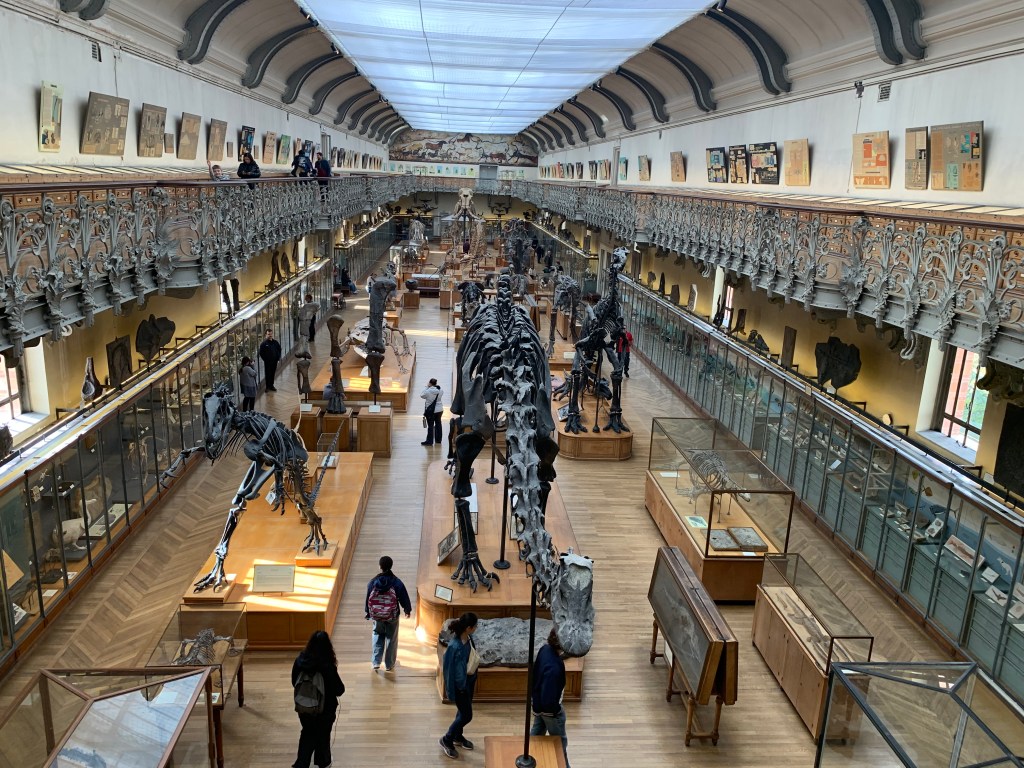
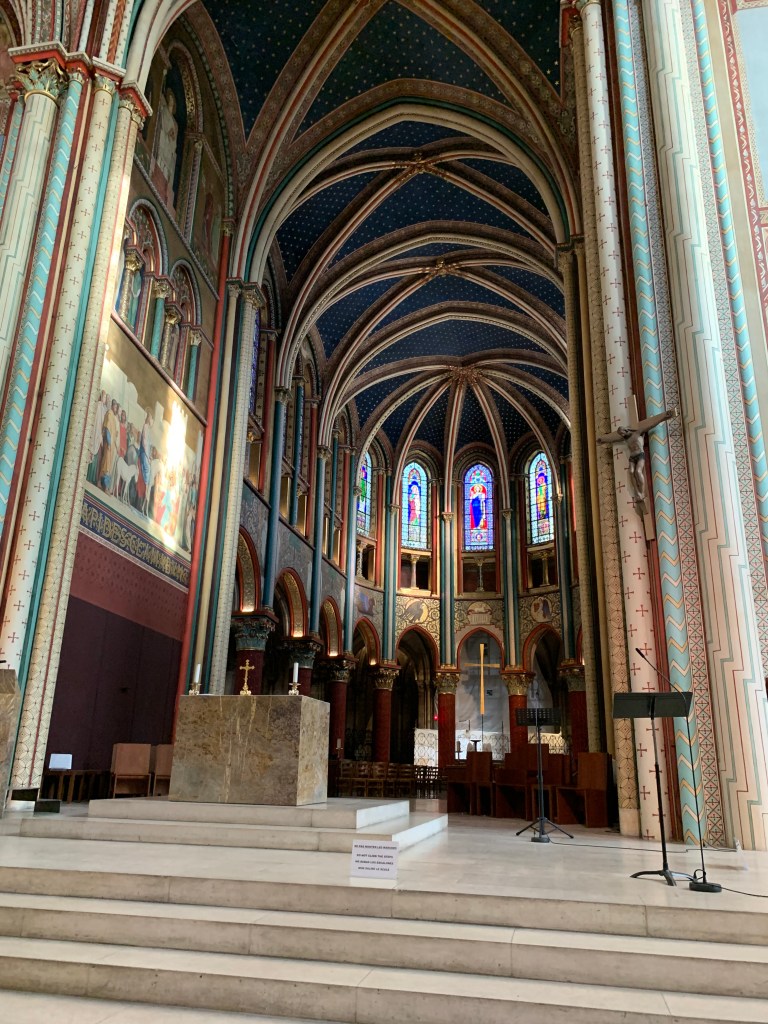
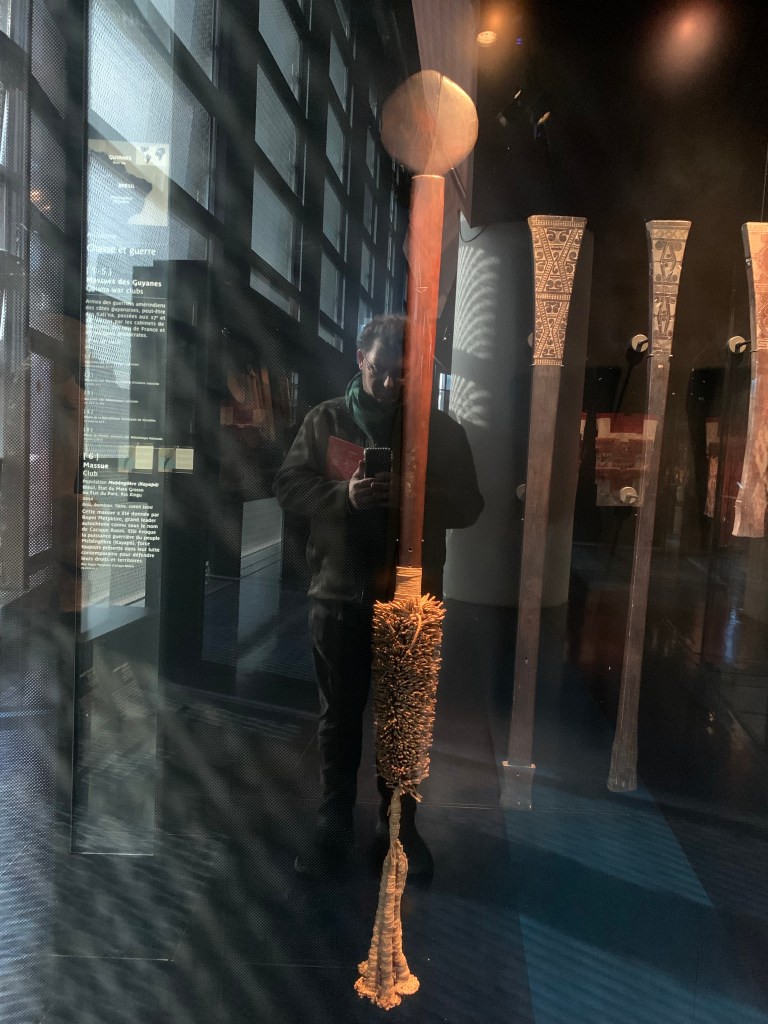
After a weekend in London, I traveled south to Paris for a conference on collecting in early modernity that was held at the École des Hautes Études en Sciences Sociales (the School for Advanced Studies in the Social Sciences) in their building on Boulevard Raspail in the 6th Arrondissement. The building in question is important in the historical profession as it is where the French Annales school has been based since 1947, the Annalistes being quite influential in introducing new methods and theories of studying history to the profession globally in the postwar years. There, I presented my research into the provenance of two Tupinambá ritual artifacts today housed in the Musée du Quai Branly, also in Paris, which were likely brought to France by André Thevet in 1556 as gifts from the Tupinambá leader Quoniambec (d. 1555).

I’d intended to use the majority of my time in Paris to work in the various departments of the Bibliothèque nationale de France and Archives nationales to look at some sources I didn’t have online access to, but instead in the months leading up to the trip I was able to find and request several of these documents be emailed to me, while others were restricted due to their poor physical condition. As a result, I only viewed one document, Thevet’s 1553 French translation of the Travels of Benjamin of Tudela, a 12th century Sephardic traveler who toured the Mediterranean. I spent a lovely morning sitting in the ornate Department of Manuscripts in the BNF Richelieu site reading and photographing Thevet’s translation. It was the first time I’d ever seen Thevet’s handwriting in person and gotten somewhat of an unscientific sense of the man himself between the lines. Looking at the folios, I had a sense of familiarity in a man who started with elegant pen-strokes which with each turn of the page became quicker and impatient. The last significant work that I wrote out by hand, a play I wrote in 2011 titled The Poet and the Lamb, had the same feel to it. I enjoyed writing it by hand, but it proved to be more of a burden than the art I intended it to be when I eventually typed it all out after all.

My theory is that considering Thevet took the time to translate Tudela’s travels into French, all 56 folios (112 pages) of it, that he likely modeled his own Mediterranean travel account La Cosmographie de Levant and his later Atlantic travel account Les Singularitez de la France Antarctique on aspects of Tudela’s work. I found my efforts at reading his Tudela translation were aided by my deep knowledge of the Singularitez, which I’ve translated into English. Thevet has a particular style and verbiage that you get to know after translating an entire book of his, a project that for the first draft alone took me three years to complete.

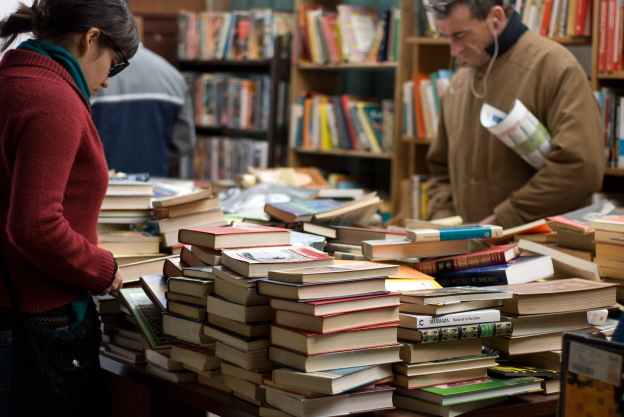
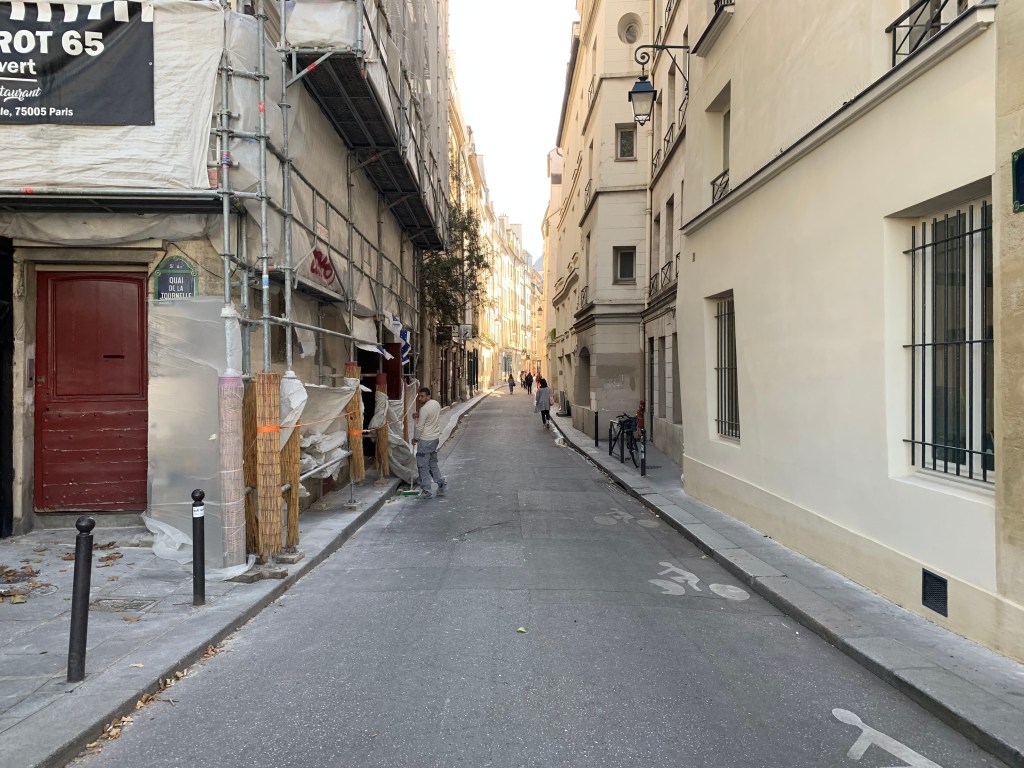
Without any other archival visits scheduled, I spent the rest of the week enjoying a few days of life in Paris. I visited several museums each day, wandered about the city from bakery to bakery (it’s not just a joke I tell about the bakery crawl being my favorite type of walk), and looking around bookshops selling both general titles, specialized academic titles, and several antique bookshops selling volumes largely published in the 18thand 19th centuries, though there were several I browsed through printed in the 17th century.

All around, this was a pleasant trip. When I returned home to the United States on Bloomsday, the holiday commemorating Leopold Bloom’s day about Dublin on 16 June 1904, I was left with an unsettling feeling that both in climate and in history that I fit in better in Europe than in America. For one, none of the muscular or joint pains I often feel walking around Kansas City are present when walking similar distances in either London or Paris. For another, the pace of life and the dearth of car dependency is certainly better all-around than how we’ve built our cities and lives here in the United States. I’d happily take the bus around town at home, if the temperature dropped below 90ºF (32ºC) during the day, and if the bus schedule worked with my own.

In these two cities I’ve grown to become much of the guy who I am today. This was my sixth visit to Paris, and a return to an old hometown of mine in London once again. In them, to draw the Dickens analogy out further, I’ve seen some of the best of times, and yes some of the worst of times, yet I’ve learned now to go with the flow, to not worry too much, and to embrace the opportunity to travel to these places. Travelling has made our world far smaller than ever before, so that the 4,500 miles (7,242 km) between Kansas City and Paris seem not as far as it really is. After all, before aviation it would’ve taken close to 10 days to travel between these two cities, whereas now it’ll take only a day.


The End of an Era

This week on the Wednesday Blog, my perspective on the last century and a half as a time of tremendous change. — Click here to support the Wednesday Blog: https://www.patreon.com/sthosdkane

This week on the Wednesday Blog, my perspective on the last century and a half as a time of tremendous change.


On my first day in London this October I walked from the British Museum, my first stop in the capital, to Charing Cross Road where I made my way into Foyles, my favorite bookstore in that city. Foyles has a wider variety of titles than I’ve seen in most bookstores, and especially titles that catch my attention time and again. I didn’t plan on walking out with a new book, and I stuck to that plan, yet I saw several books which I’ve since acquired in other ways since I got home (I do kind of feel bad about that.) I didn’t pack for this trip with new acquisitions in mind, leaving little room for anything new in my luggage.

Still, I loved wandering through the aisles and shelves of Foyle’s and catching up on the latest that the British publishing industry has to offer, five years after my last visit to that island. Here in the United States, I see some reviews of books printed in Britain, usually in the New York Times or through interviews on NPR, but by and large I’d cut myself loose from the British press that I read, listened to, and watched throughout my adult years. Unlike previous trips back to London, a city that became a home-away-from-home for me in 2015 and 2016, I felt like I’d missed a great deal and had a lot of new things to discover on this trip.

One book that caught my eye several times was Michael Palin’s new book Great-Uncle Harry: A Tale of War and Empire which tells the story of the author’s own great-uncle Harry Palin whose life saw the end of an era and the beginning of our own tumultuous time. Harry Palin was working on a farm on the South Island of New Zealand when Great Britain and its Empire entered the First World War in August 1914 and enlisted with the New Zealand Expeditionary Force, one-half of the famed Australian and New Zealand Army Corps (ANZACs). The elder Palin survived the Gallipoli Campaign and for a while on the Western Front until he died during the Battle of the Somme in 1916. 

Two weeks after seeing Great-Uncle Harry on the shelves of Foyles I was reminded of it by something else and bought a copy of the audiobook on Audible to listen to, read by the author, in the car on my way to and from the school where I currently work. The life and story of Harry Palin animated my drives to and from the school where I now work over the last two weeks and left me both inspired to think about the end of the nineteenth century, a period in our recent history that I’ve always been fascinated by, and horrified by what became in the twentieth century.

I chose to not study the end of the nineteenth century and turn of the twentieth century professionally because of the looming specters of the World Wars ever on the horizon of my memory of those moments in history. Harry Palin’s story reminded me of what I love about that period as much as at the end of his life what horrifies me about the experiences of his generation.

The world that existed in 1914 was one which had a continuity with the generations that came before it. There were some major shifts, the revolutions at the end of the 18th century and in 1848 come to mind, yet none of those in Europe were permanent. The needle of change wavered throughout the century leading up to the First World War. All of that changed as old institutions, which had long weathered the storms and basked in the sunshine of Europe’s history now collapsed under the tides of change released by the hands of their own officials. That war is perhaps the greatest example of hubris among any political leaders yet seen in our long history. Men who thought they could expand their empires, enhance their prestige and honor by waging war against each other instead lost their crowns and left millions dead in the wake of the conflict they unleashed.

When I read histories of this period, I often want to shout at the characters to look out, to be wary of what is coming; for in a Dedalian way I worry we can become too complacent and hawkish yet again. Our caution is well learned, now after a century which saw two world wars and countless other conflicts born from those furnaces. In the wake of the first war a great instability allowed for experimentation to occur. This is a natural thing, something I see in the Renaissance and Wars of Religion (the period which I study) yet in the context of the twentieth Century it marks something far darker. This experimentation in politics and economics led to a further world war in which the three new dominant ideologies –– communism, liberal democracy, and fascism –– collided. Out of it, fascism fell but not before taking millions with it, and a cold war simmered which defined the rest of the century.

In my own life, a further reduction in the formalization of conflicts has played itself out. Now instead of great armies facing off in large-scale battles like those known in the world wars, or even the proxy wars fought by the superpowers we see violence wrought through terrorism. The front lines are not so far away when the threat of violence, whether foreign or domestic could be around the corner. Our children practice for the possibility of an active shooter in our schools because such an incident has happened time and again, and I’ve internalized the reality that in my profession I’m likely to experience such an attack as long as I continue to teach.

I go to places like Foyles to get away from these worries and horrors, to discover new ideas and ways of looking at the world that I was previously unaware of. On this trip, it occurred to me several days before my return to London that I was left bereft of worries, a feeling of calm that I hadn’t felt in a very long time. It almost left me feeling a loss for something I’d long known. I chose to work on a time period further removed from the present to have a refuge in my work from the horrors of the recent past that shaped my world; yet this is still my world, our world, and for as many problems as it has there is a lot that I feel nostalgic for about the century now passed. Even as I write now in 2023 and will likely be remembered as a voice of the twenty-first century, I will always think of myself just as connected to the twentieth, in which I was born and during which a great many of my formative memories occurred.

It occurs to me now that as much as we live in a continuation of the new era born out of the First World War, perhaps the general crisis we find ourselves in now, from the wars my country fought throughout my teens and twenties to the climate crisis we now witness, is bringing us into an even newer era. I hope it will be better than the last, and that maybe this time we’ll find a way to live up to the highest ideals of our predecessors.


A Return

This week on the Wednesday Blog, some words about a trip just completed. — Click here to support the Wednesday Blog: https://www.patreon.com/sthosdkane

This week on the Wednesday Blog, some words about a trip just completed.


My world is one of open borders, the international scholarly republic of letters, and friends far and wide in this country and across the oceans. All of that shook to its core in 2020 when those borders closed, and friends grew apart with the pandemic we all experienced. I attempted to keep my life going in 2020, in those last few weeks before COVID-19 changed everything with a quick trip to Munich to see some university friends. Thereafter, for the last three years I kept to our own shores. A part of my wariness to travel far was a lingering worry that those borders could close again, that as I feared in 2020 so too even now there was a chance of getting stuck far from home.

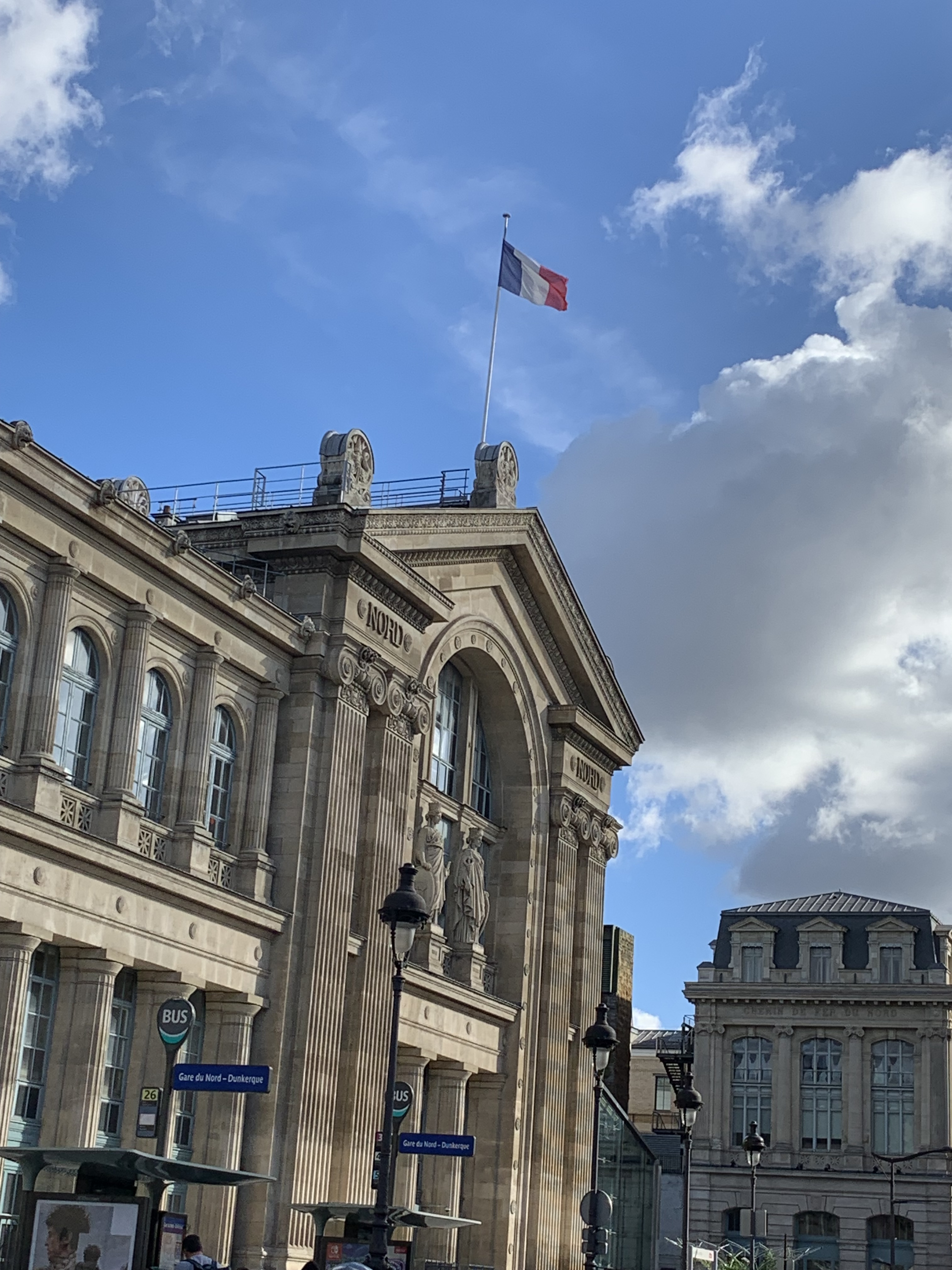
Paris Gare du Nord

Over the last two weeks of October, I saw past that worry and made a joyous return to Europe, visiting Brussels, Paris, and London not just as an American tourist but as a historian hoping to realize dreams of walking the same streets as the humanists whom I study who lived at the end of the Renaissance 450 years ago. I arrived in Brussels on Sunday the 15th with an ease and lack of concern for doing or seeing everything I wanted to that betrayed a confidence that I’d return again in the future. And as I write this, I’m continuing with the research that will guide me back to Paris again. 

In the stress and emotions of my daily life, I’ve learned to embrace the quiet moments, in which the sonorous radiance of the most joyous resurrections can be heard. That silence makes a return to places so close to my heart as wonderous as hearing Mahler’s great Resurrection Symphony in person. Why limit myself with worry when there’s an entire world out there to experience?

One performance of the Resurrection Symphony that I enjoyed recently.

On this trip I found my favorite thing to do was to walk around and experience the city I was in. I did this most in Paris, when I arrived there around mid-day on Sunday, 15 October I ended up walking from Gare du Nord all the way to Notre-Dame, via Place de la République, the Marché Bastille, the Canal Saint-Martin, and Île Saint-Louis. The route took me about 6.4 km (3.7 miles) and lasted from around 11:30 until close to 14:30 when I descended into the Métro to make my way to the studio apartment I’d rented near the old Bastille. I loved returning to Paris in all its busyness, its sights, sounds, yes even smells. I was agog walking through the Marché Bastille and seeing whole fish lying on ice in the seafood stalls, there was even a shark with an apple in its mouth. If I lived in a place like this, I’d be sure to visit an open-air market every so often, if only for the experience of life that it offers. This entire walk, all 6.4 km of it, was done with a heavy backpack hoisted behind me as I didn’t think to look at Gare du Nord for the luggage lockers in the basement; use those, dear reader, if you have a long delay between arriving in a city and checking into your lodgings if the place where you’re staying doesn’t have a luggage room.

All in all, I walked 197 km (122 miles) on this trip across all 15 days. My feet are still sore, and my shoes need new insoles, yet I’d gladly do it again. Life on foot out in the open is much more personal than life behind the wheel of a car traveling at speeds at least 3 times my average walking pace. Whether in Paris, Brussels, or London, I took time to enjoy my surroundings, and to live as much in the moment as I could.

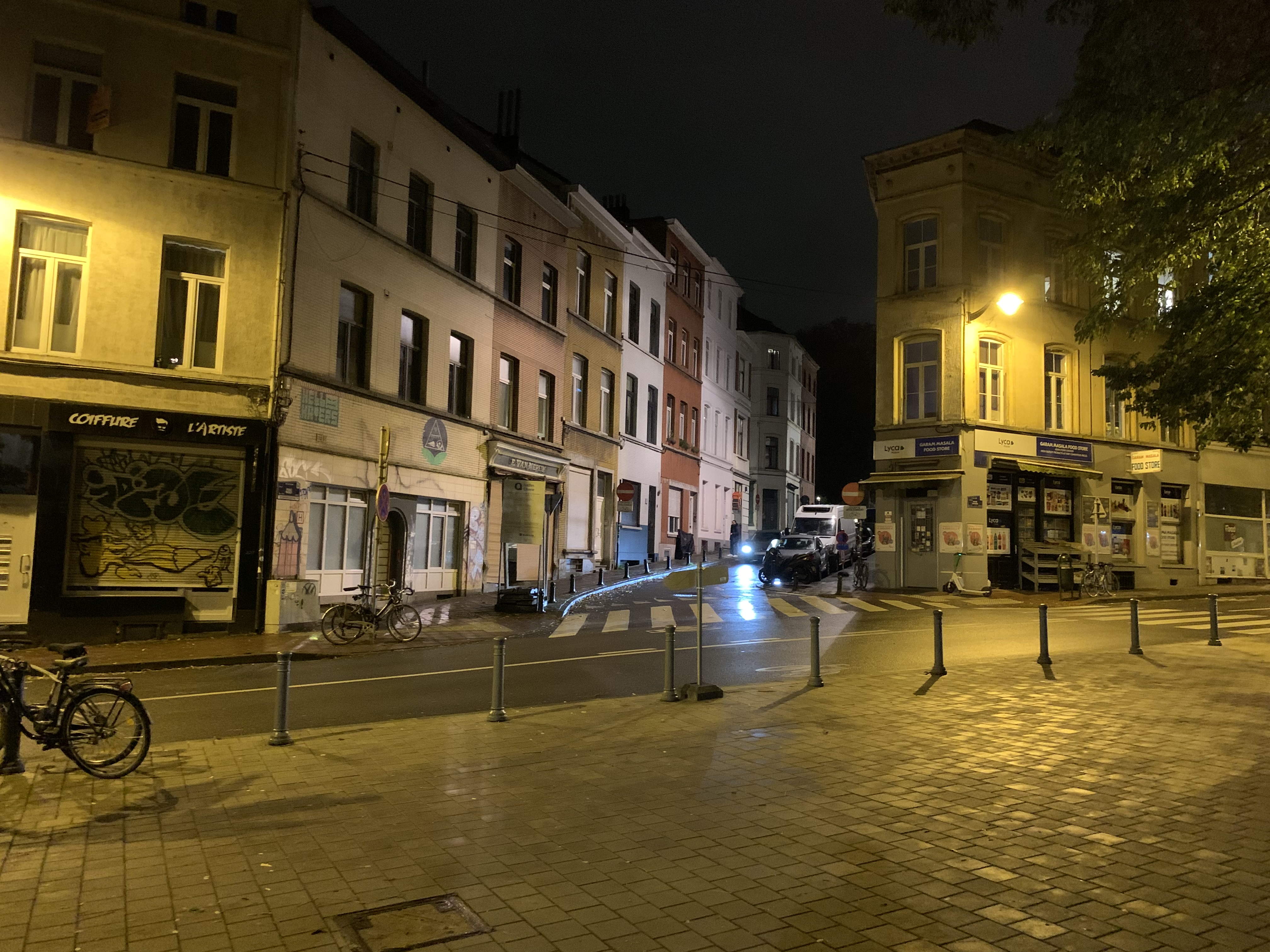
I found Brussels to be gloomier, the Belgian capital felt tired and like Paris well lived in. I was staying near the European Quarter in Ixelles, to the east of the city center and on my frequent walks back to my lodgings after dark I’d remark on how low the horizon felt walking those streets. Unlike many other cities I’ve visited, the high apartment buildings seemed to block off the lowest reaches of the night sky and the overhead glow of the city lights which illuminated the streets shaded my eyes from seeing up towards the heavens. It was like some of the stories I remember seeing as a child, stories told on the screen which were set in this sort of world where the mysteries of the skies above are darkened by a radiant yet feeble attempt at letting there be new light which makes the world all seem smaller and more confined. Far from utopian, for this light tells me I am somewhere, it still left me wanting for more and grander visions of the Cosmos far from those streets.

A junction in Ixelles from the steps of the Museum of Natural Sciences.

Returning to London felt as though I was returning to a long lost home. I strolled down the platform at St Pancras when I arrived beaming a broad smile after days unsure what I’d find or think arriving in that city. I soon found my way around the capital with ease, much of what I’d known during my life there in the middle of the last decade was as it had been. I returned to most of my old favorite places––the museums, the streets & squares of Fitzrovia, Bloomsbury, and Mayfair––and to the place where I once lived on Minories just beyond the old city walls. On my last evening there I sat for a while in the garden behind my old flat, the one my window looked out onto, and thought about all that had happened since last I was there.

I returned to Europe a different person from who I was when last I crossed the Atlantic. The Pandemic and my years of doctoral study shaped my youthful optimism just as it sculpted my ever-receding hairline. I returned to Europe less worried about losing something I had in the present and more appreciative of that moment I was in, of the places I was walking, the people I was seeing, whether for the first time ever or for the first time in years, and still hopeful that one day again I will return to these places. I do hope it’ll be sooner, whether just to visit or to live remains to be seen.

As much as this trip felt like a return to a life I once knew well, it also felt different from my past when I lived across the water because I’m a different person now. If any experience in my life could feel like a “return to normalcy” to quote Warren G. Harding’s campaign slogan of 1920 it would’ve been this; yet there is no real returning to an old normal, for we are never the same. I felt this when I returned to Kansas City after living in Europe; I was gone for just under a year, yet it felt like I had missed so much. Some things remain yet eventually all things must change. For the first time in my life, I’m happy to accept that, and to embrace that change as a good friend.


Designing Cities for People

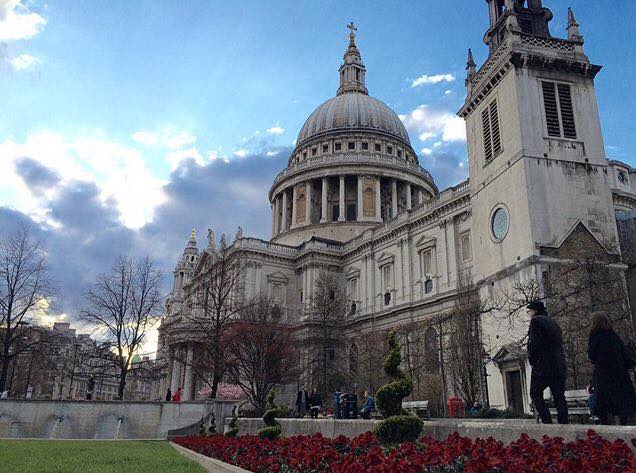
St Paul's at Sunset - April 2016

St Paul’s at Sunset

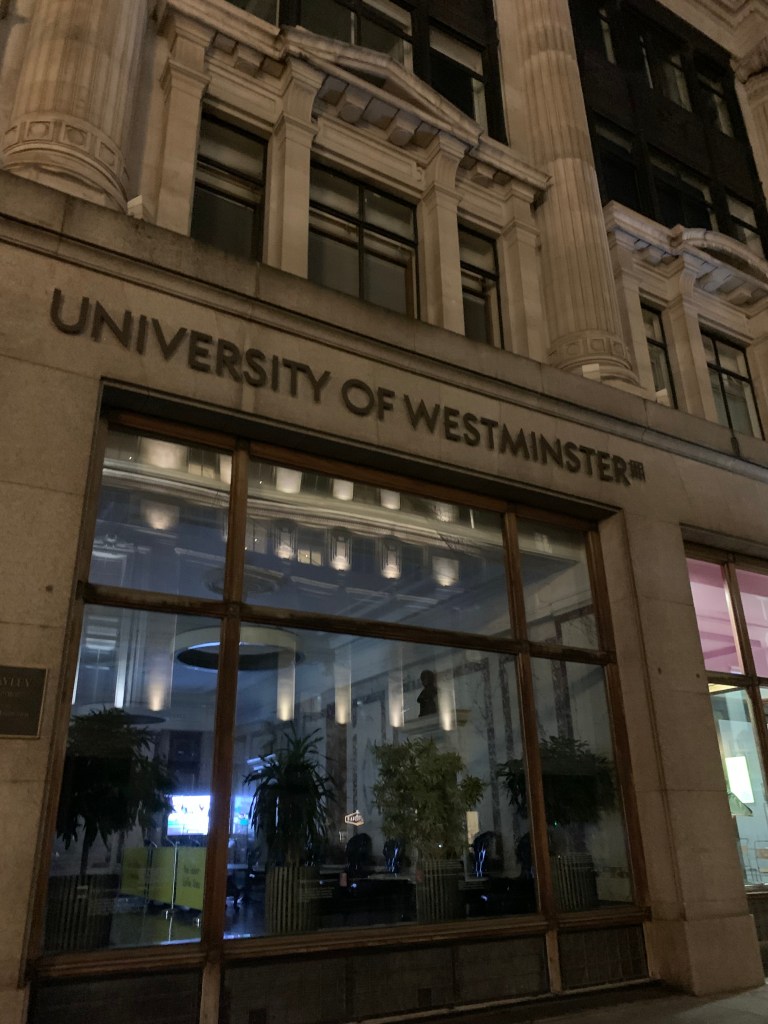
In older standards of measurement, the imperial mile (1.609 km) was not the longest measurement of distance available; the league filled that role instead. As I have understood it, one league is equal to the distance a person can walk in one hour. For me, that is around three miles, thus making 1 league equal to a decent distance for a nice morning stroll. In 2016 when I was undertaking my first Master’s degree, this one in International Relations and Democratic Politics, at the University of Westminster, I would occasionally decide to walk the league from the university on Regent Street back to my flat in the shadow of Fenchurch Street station on the eastern edge of the old Roman city.

The walk was quite pleasant, a stroll first down from the university to Oxford Circus, then eastwards along Oxford Street to Holborn, and then down High Holborn across the Holborn Viaduct and past the Old Bailey at Newgate, past St Paul’s and onto Cheapside, crossing in front of the Royal Exchange and Bank of England before continuing down Lombard Street and onto Fenchurch Street. At Fenchurch Street station, I would descend a short flight of steps leading towards St Olave’s Hart Street and under the station viaduct itself past the city walls and into my building on Minories.

What made this a nice walk was that I was able to see so much of the capital, everything from the imperial Edwardian grandeur of Regent Street to the new skyscrapers that are being built across the Square Mile to the east. It was an opportunity to experience London as so many had done so before, to get to know the metropolis by foot. In London this is something that can fairly easily be done, one can walk around the capital if one wants to. Sure, most of the suburbs are out of reach for the pedestrian, but with the well established system of underground and suburban railways, as well with the very thorough bus network, London is a city that a person can easily live in without owning a car, let alone riding in one on a daily basis.

When I moved back to Kansas City at the end of August 2016, I thought I would try at keeping up my walking, to walk the same ten miles each day. Yet that didn’t happen. Far from it, I found Kansas City to a.) be built largely for cars, and b.) with a climate far more harsh than the one I had known in London. As a result, not only did I not walk nearly as much as I had wanted, but I found myself hardly walking at all beyond going out of my parents’ house to get into the car and drive somewhere.

While my own lack of fortitude certainly is to blame in part for this sudden drop in my exercise, I also have to lay blame on the city planners here in Kansas City. This city, like so many others in the United States and Canada were designed, or re-designed, for motorists. In fact, it is illegal for a human being to walk in the street in Kansas City, Missouri; if you’re human, you have to stay to the sidewalks (pavements). The rest of the street is reserved for cars, buses, bicycles, vans, and trucks. We have built this city and so many others like it without the human touch that has made cities so universally human in nature.

For thousands of years, our ancestors have lived in cities that were not unlike the Central London; they were just big enough that an able-bodied person could walk from one end to another in about an hour. Cities were built with walking in mind, with the understanding that all of the basic necessities that a city offers should be within walking distance of each citizen’s home. Smaller medieval cities like Besançon in France, Canterbury in England, or Galway in Ireland are prime examples of this sort of pedestrian-focused urban planning.

“In fact, it is illegal for a human being to walk in the street in Kansas City, Missouri”

Here in the United States too there are some attempts at returning to this older model of having residential and commercial establishments within the same general area. Here in Greater Kansas City there are some newer developments that aspire to this goal. Two in particular that I visited this last Friday stand out to me as examples of how to undertake this task, and how not to do so. The latest pieces in the Town Center shopping complex, Park Place is an excellent example of such a development.

A set of winding, narrower streets lined by three and four story buildings, its street level fronts are filled with shops, restaurants, and some offices, while the upper levels are largely residential. In this way, one can live in a compact community, within which one does not necessarily need a car to get around. I first was able to experience Park Place two years ago when walking a 5K through the Town Center area. At that time Park Place was still under construction, yet even as a construction site it seemed vastly out of place when compared to its neighbours in the most arch-suburban of American counties, Johnson County, Kansas. What particularly makes Park Place odd, and in the end stunted in its growth and feasibility is that one has to have a car to access it. Sure, one could live within Park Place as a pedestrian, but going beyond its towering confines on foot can be a perilous exercise with traffic on the surrounding avenues averaging a speed of around 45 mph (72 km/h).

What Park Place does well is its compactness, including both commercial and residential in the same area. Another, equally new development a few miles south of Park Place ignores this principle of traditional urban planning, setting the residential aside from the commercial. This particular development is the fascinatingly misplaced Prairiefire complex on 135th Street in Leawood, Kansas. Another physically enormous complex, Prairiefire’s crown jewel is the Museum at Prairiefire, billed as Kansas City’s Natural History Museum, and an affiliate with the American Museum of Natural History in New York. While the Prairiefire Museum’s architecture is aesthetically beautiful, its size is much like the rest of the Prairiefire development: lacking long-term thinking.

My biggest problem with Prairiefire is the way in which its residential development is divided from its commercial sector by a massive concrete parking garage. Prairiefire was designed by a suburbanite intending to create their image of a compact urban community, albeit without ever having stepped foot inside of a traditional compact city. By splitting the residential from the commercial, they make it far less amenable to residents to take advantage of the shops, restaurants, and entertainment in the commercial side of the property. What’s more, the Museum at Prairiefire itself is deeply flawed in that it is not built with the ability to expand in mind. The current structure is small, built more like a community arts centre and less like a great temple dedicated to nature.

Our over-reliance on cars here in the United States is flawed at the utmost degree. Should there be a major energy crisis in the near future, the vast majority of our cities and states will find themselves paralysed, unable to function owing to the lack of oil to fuel our cars. Developments like Park Place and Prariefire might be able to last for longer, owing to their relative compactness compared to the more traditional suburban sprawl, yet their isolation amidst the sea of suburbia will soon find these two developments in the same situation as the traditional suburban developments.

Our cities must first and foremost be self-reliant; we must be able to grow our own food, and use our own renewable energy sources to power all aspects of our lives. Yet along side this if we are going to build smart, self-sufficient cities, we must build them more compactly, with ourselves in mind. Just consider, if you are suddenly without your car, and don’t have the option of taking public transport, how will you get around? You could certainly walk around your city, but that prospect is only truly viable if said city is designed for walking.

Today, I generally prefer using metric to the more traditional imperial standards of measurement, yet that most old-fashioned of imperial measures, the league, is one that should be maintained. It keeps us humans at the centre, and reminds us of our own physical limitations and abilities. When we consistently push ourselves far beyond those abilities, we endanger the stability of our societies, making any potential crisis even more disastrous.

We Stand Together

18946991_10213047198957274_893548281_o.jpgAt this point in time, after so many terror attacks around the world in recent years, my initial reaction to the attack in London last night was somewhat muted and reserved. I was not surprised that it had happened; yet I was nevertheless deeply distressed that innocent people would be so brutally assaulted. The three attackers, their identities as of yet unannounced by the Metropolitan Police, will spend eternity lapping in the seas of ignominy, far from the verdant peaceful halls of rest that they may wished to have known.
They died attacking innocents; their last actions in this life were in the spirit of chaos. With all that said, they were still human, and as a Christian I believe they, like the rest of us, were made in the image and likeness of God. So, as time passes and I think on their final acts, I will be helpless but to consider them as humans, like the rest of us, and so mourn their poor decisions and pray for their souls, that eventually they, and their victims, might find peace.

We are all human; we all start our lives with that one equalising factor. If terrorists, warlords, and fearmongers seek to divide us, we must constantly remember what unites us. For the sake of our future we must stand together. In the wake of the latest attack we have a choice: to retaliate with ever increasing violence and terror, or to stand taller and remain above their cowardly and weak tactics. When they offer war we must offer peace. When they taunt us towards destroying all they know and love, we must not validate their evil by doing so.

Our societies and governments are founded upon the basic principles of constitutionalism. They are built on the principle that no one should be above the law. Justice is the rudder of our ship of state. Every time we treat anyone as less than their rightful station, every time we jump to conclusions about a person without facts or evidence, every time we respond to terror with terror, baying for blood, we undermine that omnipresent principle of justice for all. After all, once we begin to look out from beneath our blinders and consider the people around us, we will surely see another human being with feelings and hopes, with dreams and desires not unlike our own.

I did not know the men who attacked the crowds on London Bridge or in Borough Market. As of the time of publication the police have not released their names. Nor did I know the seven people whom they killed. I do not know what they were like, what they dreamed about at night, who they loved, or what their favourite things were. What I do know however is that they were all humans like me.

In my culture the golden rule is to treat others as you would want to be treated, and while these attackers certainly did not do that, how can I stand by that rule without seeing them as humans. Sure they were flawed, after all what they did is reprehensible to the highest degree, but all the same they were human. I hope that all involved, perpetrators and victims alike can find peace in this life or in the next. At the end of the day if we want the terror to cease, we must stand together as one common humanity. We must be the change, the light that will douse the darkness. The day we cease to preach and live love is the day we give in to terror and chaos.

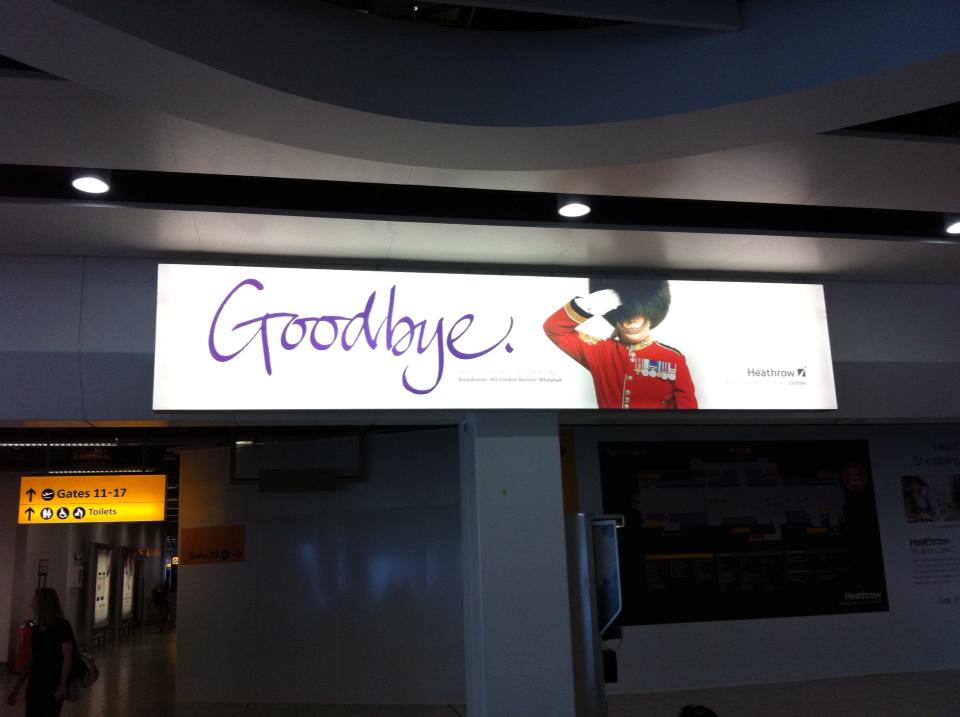
Goodbye!

Image

Kansas City – Well, the time at last has come. I spent the last night of my stay in the Alexander Fleming Halls of Residence in Hoxton up reading, and doing some minor research on local history. My thought was that it would help me to sleep on the plane if I didn’t sleep at all the night prior to. Hitherto, my abilities of sleeping whilst flying have been almost non-existent, but I thought I’d give this most extreme tactic a try.

ImageAt about 4.32 BST, I noticed some light creeping into my West facing window. Looking out, I beheld the last British sunrise that I’ll see for a while. It was a nice, soft sunrise, quite different from those out in the Midwest. At 5.00, I went out and walked about the neighbourhood, hoping to find a café that might be open where I could get a cup of tea to help cure my allergies, and possibly inhibit the oncoming cold. Sadly, all the local cafés were closed, as it was Saturday. Even Starbuck’s hadn’t yet opened. So, it was back upstairs to my room to sort out the last minute packing that I might have missed the day prior. Thankfully, there was nothing to have missed, so it was onto another hour and a half of waiting until anything would be open.

I spent that period of time sitting on the benches outside the hall, bidding farewell to my friends as they went on their ways in ones and twos. At 7.30 BST, I too left Fleming with a pair of friends, Cara and

Image

Mike, and headed for Old Street tube, to catch a train to King’s Cross St Pancras and then onto Heathrow.

As noted in my last post, the hardest thing I have had to do in the past few weeks was to say goodbye to all these friends that made up what we’ve called the Old Street Gang. It really did seem like we were all together for a good year, when in fact it was a mere three weeks.


Luckily, I ran into two Old Street-ers, Kendall and Allison, in the entrance to security at Heathrow. We later ran into another member of the Gang, Kelsea, in the duty free area just past security. The four of us spent our last moments together in London, attempting to avoid thinking about the inevitable, but at the same time unable to avoid the reality that we faced. I was the first to leave, as my 12.30 flight to Minneapolis was due to begin boarding at 11.35.

I walked down the path to the plane, looking out the windows, capturing the sights for the last time for now. Mentally preparing myself for my return to the US, and future return to the UK, I boarded the

Image

plane, and took my aisle seat. The flight back was mostly uneventful. I slept a good deal of the way, with the aid of a couple films like The Hobbit and Life of Pi, the audio of which helped put me to sleep. I was surprised at Delta’s hospitality, considering that they had 3 meals for us. Still, I’m switching to British Airways/American Airlines after this trip.

After a good 8 and a half hours in the air, we passed over the UP and began to descend into Minneapolis-St Paul International Airport. The process of going through Customs wasn’t as bad as I’d thought it could be. The biggest difference between the British and American Customs agencies is that HM Customs wasn’t understaffed. There were only 4 open desks at MSP, processing hundreds of people. After heading through Customs, I had my first experience of culture shock, when I went on the wrong moving walkway in the airport, realising that things in the States are on the right, not left. It just so happened that I was on the phone with my parents at this point, informing them of my arrival back in the Americas.

After a good three and a half hours sitting about in Minnesota, I boarded my flight to Kansas City. It was a short 58 minute flight between the homes of the Twins and Royals, but at long last we landed in Kansas City. It was great seeing my parents again, I missed them very much. It was just as good to see my dog, Noel, once more when we returned home.

I’ll really miss London, and all my friends. Since we’ve returned to our homes in the States, the group has been staying in touch, writing fervently about a reunion of sorts at some point in the near future. When and where that’ll be, we shall have to see.

Now, I may have started this blog as a way to record my study abroad experiences in London, but I intentionally named it so as to allow for it to continue after my return home. There’ll be more blog posts coming in the future, about such topics as my film work, return to Rockhurst, and other upcoming travels. For now, and to all of you who have been reading since I started this blog about a month ago, go raibh míle mhaith agaibh, thanks so much for reading and following my adventures. Until next time, tá!Image

Learning in London – A Living, Urban Classroom

Image

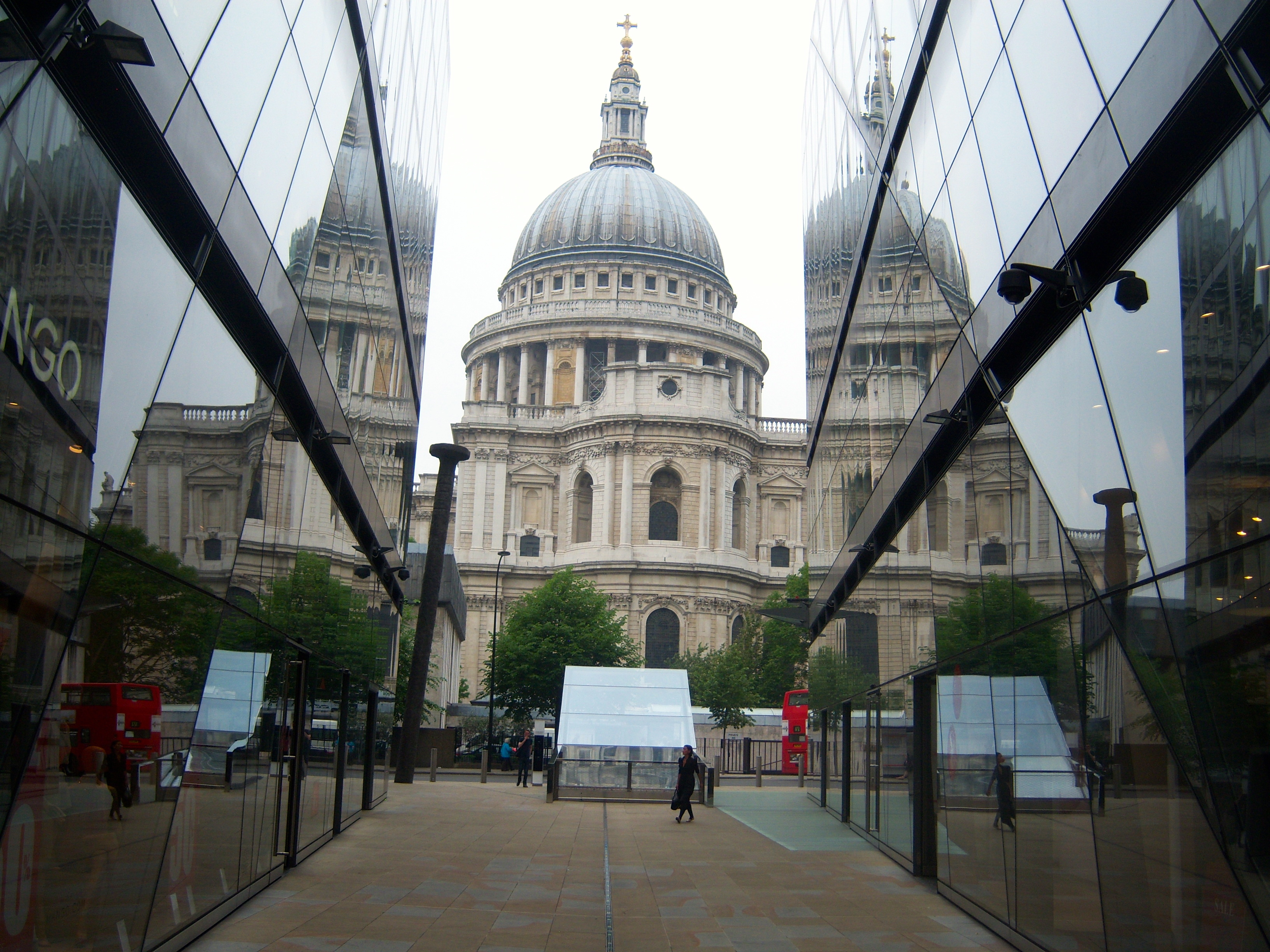
St Paul’s reflected by the face of One New Change.

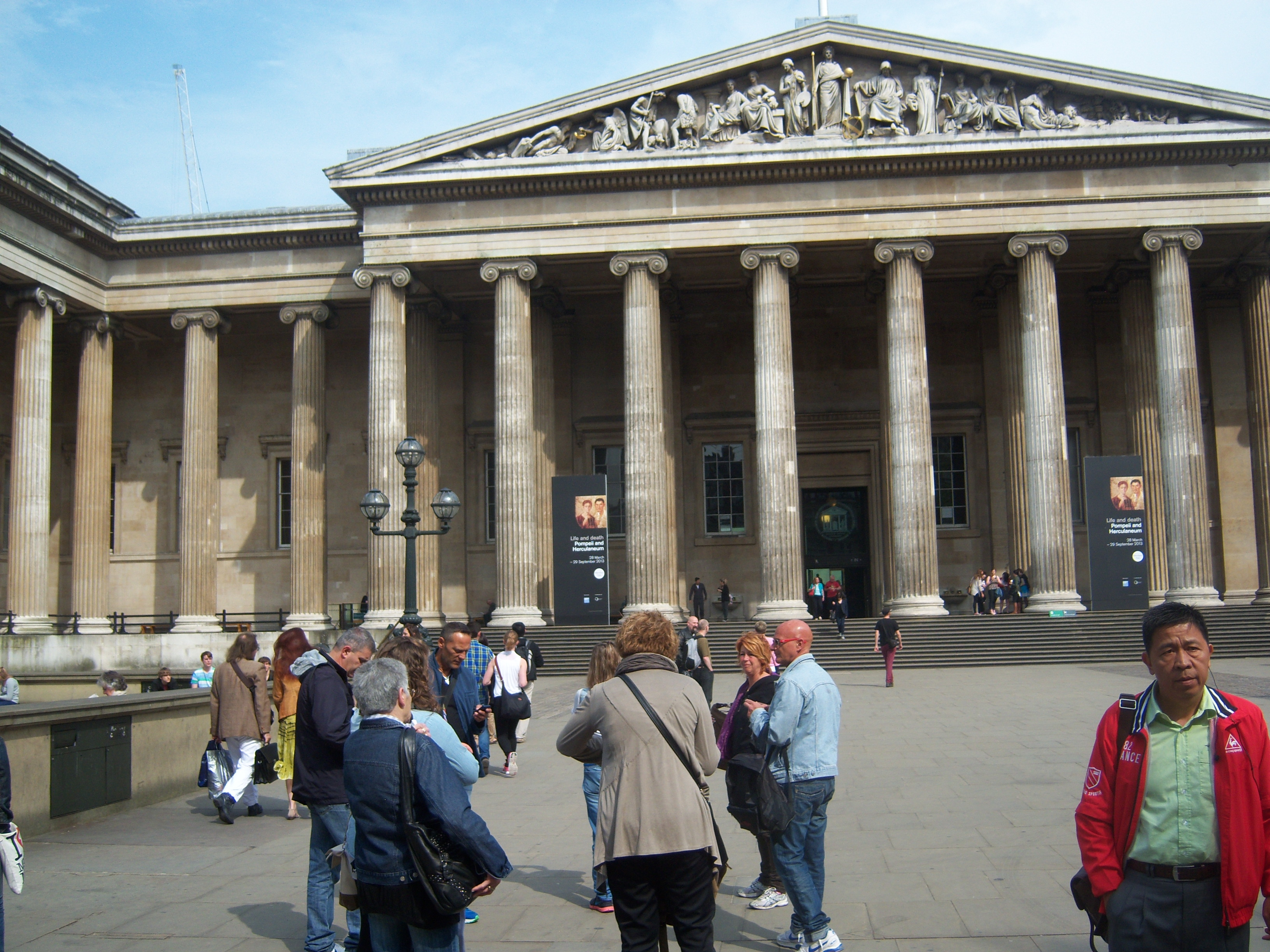
Shoreditch, London – If I ever wanted to study history, there are few cities in the world that are greater places to do so than here. Not only is my class studying the history of London in London, but we’re doing it by going around and actually seeing the history and how the present is presenting and re-presenting it through museums, galleries, plaques, and monuments. So far, this is the best way I’ve found to learn the history of a place, because it cuts out the Prof. Binns effect to use a Harry Potter reference, in that the class can just be a boring list of names, dates, and battles. Not that I’ve actually had such a class thus far in my academic career, of course. However, the class I’m in right now is by far at the extreme opposite end of the spectrum from such a Binns class. After all, how many history classes have you taken where your classroom for the day is the British Museum, or where your main project is to find something in the history of London that could be better represented or needs to be told in the first place.

Image

“…how many history classes have you taken where your classroom for the day is the British Museum…”

My paper and presentation is going to be on how the linguistic history of London could be better represented in the Museum of London. In particular, I’m going to be looking at how the languages and cultures of the past, whether Celtic, Roman, Saxon, Norman, Medieval, Tudor, or the more recent generations, impacted the landscape and life of London today. You can see the impact greatly in toponymy. For example, in London one can find a tremendous amount of Anglo-Saxon street and borough names, such as Aldgate, Cheapside, and Smithfield.

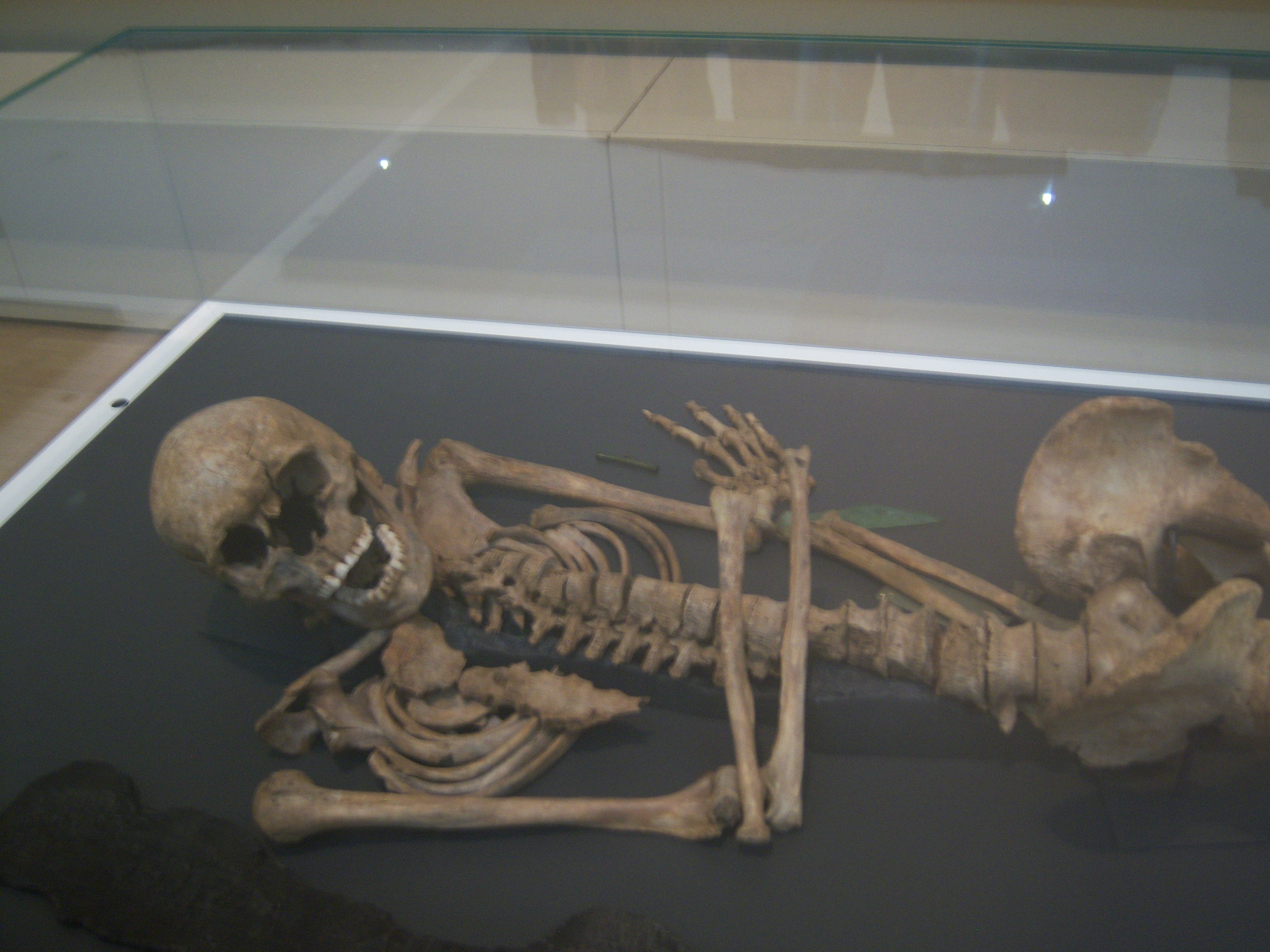
My first full day of class was at the British Museum. We spent the day wandering through it, first looking at how the museum told the story of humanity, and then in particular how it told the story of Britain. There were somethings in the museum that I found really interesting and exciting, particularly in the British sections, such as the Barnack Burial, which is a skeleton of a man who died between 2330 BC and 2310 BC. (Source: British Museum). The crazy thing about it is that when I thought about it, I realised that because he was a pre-Roman Briton (the ancestors more so of the modern Welsh than English), this skeleton is probably one of my ancestors. That realisation made the experience more personal, and much cooler for me.

Image

“…this skeleton is probably one of my ancestors.”

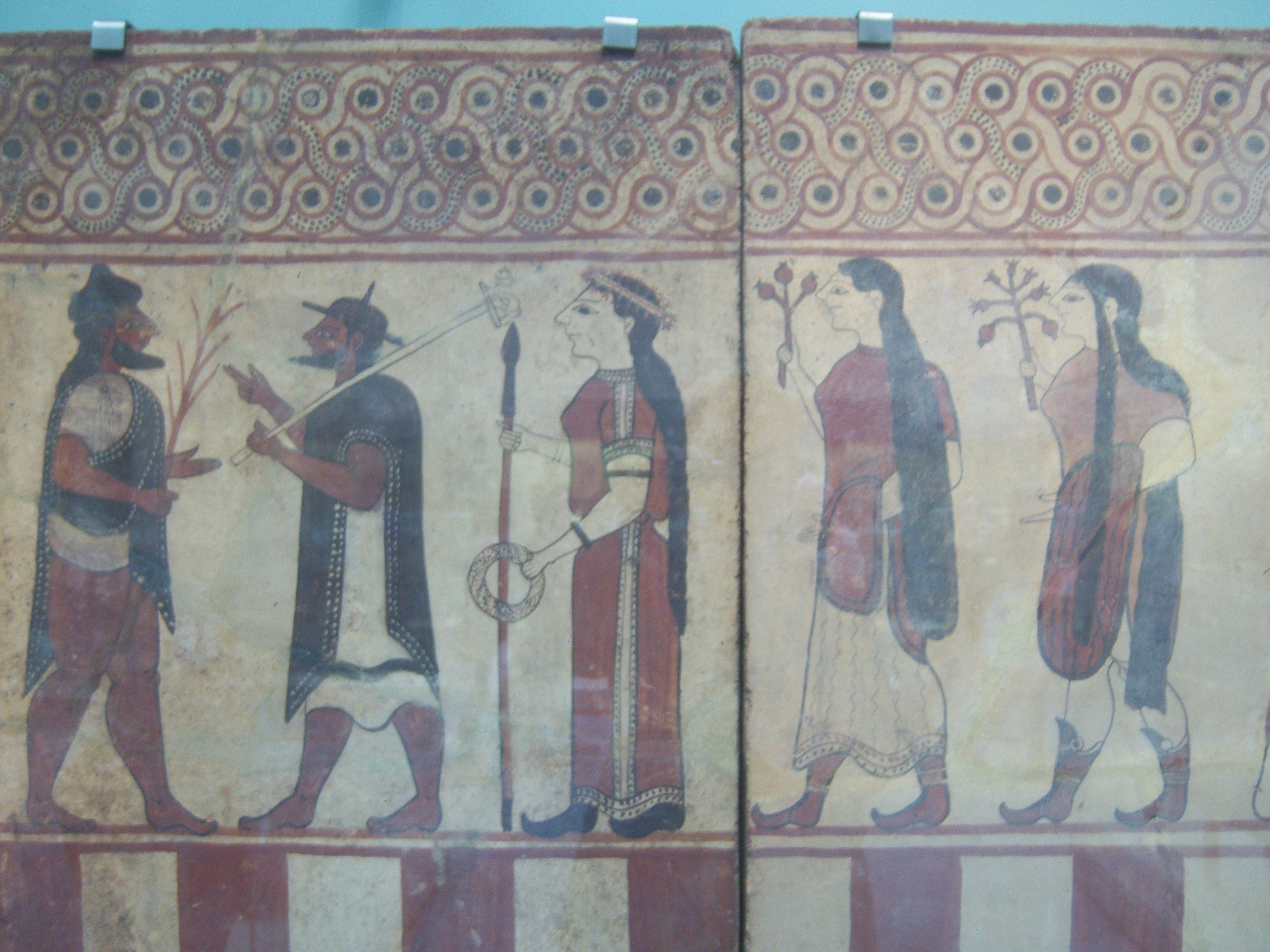
One area that I am most interested in, as can be seen by my mention of the aforementioned skeletal man, is in the peoples who came before the great civilisations and empires of Antiquity. Two such peoples are the Etruscans of Italy and the Minoans of Crete. The British Museum has a collection of Etruscan artefacts, which were a delight to see, as I don’t get to see much save Rome in Kansas City. Among them was a wall painting showing your normal Etruscans from the height of their civilisation. A lot of these ancient things are so eerie because I think about how when they were first made, that culture was probably not unlike our own in that it seemed stable, and ready to continue on into the future. But, they are no longer around, just as one day we will most probably not be around as well.

Image

“…that culture was probably not unlike our own…”

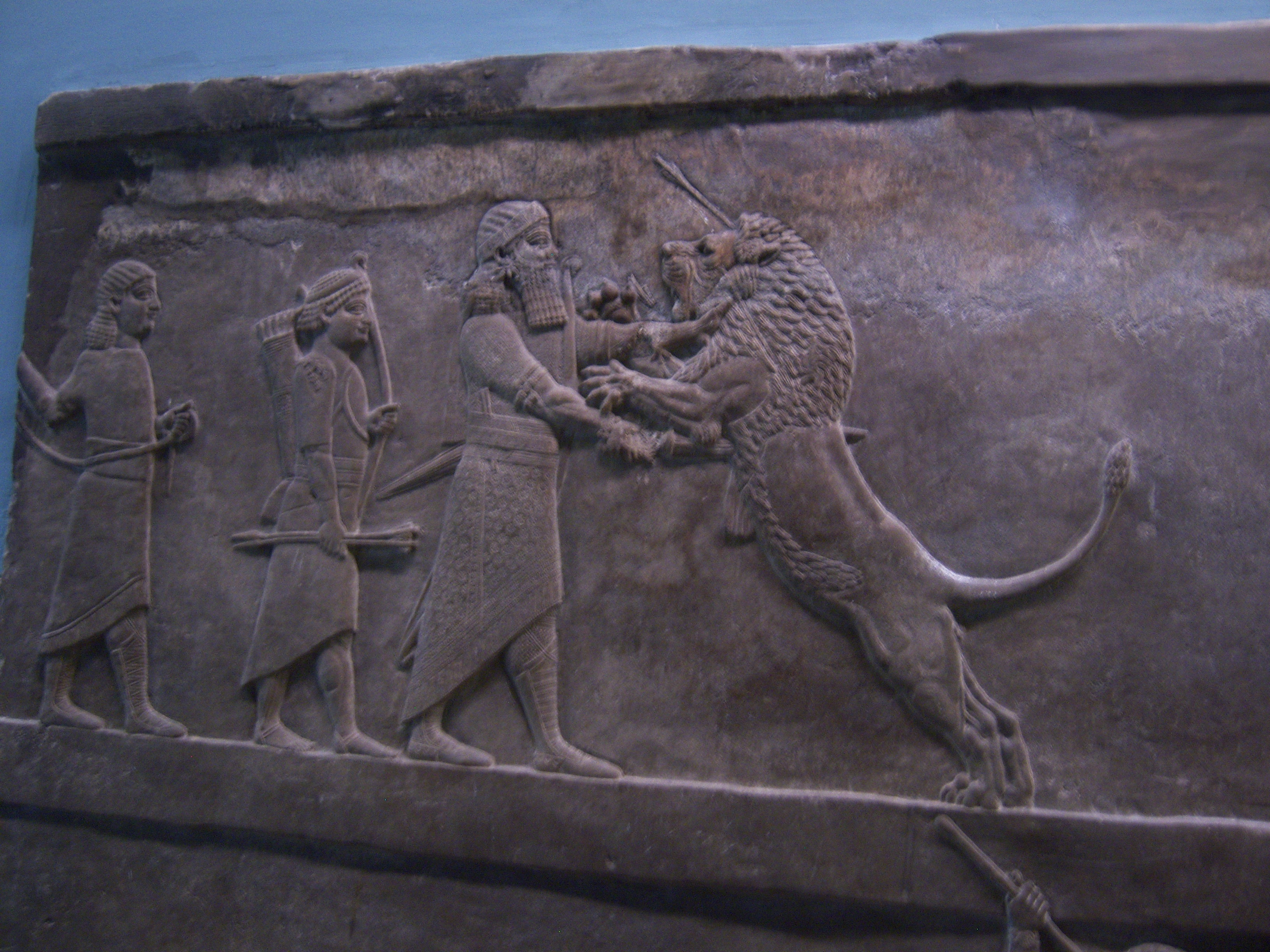
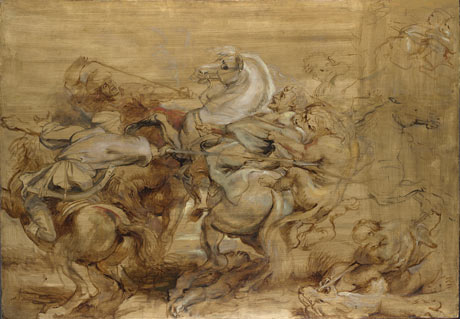
Another interesting thing that caught my eye was the Assyrian collection. Being a lover of Gilgamesh, I had to take a look at this section of the museum, which was as it should be: astounding. Again in the artefacts that we leave behind, the future can learn more about lost civilisations and cultures. So too, in things such as a wall carving of an Assyrian king wrestling and stabbing a lion, we are shown a particular image of their society, and the power of their kings, that could or could not be unlike our own. I had a good laugh later in the day when at the National Portrait Gallery, I came across a Reubens depiction of a Lion Hunt.

Image

An Assyrian King stabs a lion whilst throttling it.

Image

Peter Paul Rubens, A Lion Hunt, about 1614-15.

The thing to keep in mind is that despite the passage of time, the changing of language and culture from one to another, we always remain human. Just as a king in the 16th Century BC may have a fascination with hunting lions, to show his own power and prowess, so too a 17th Century painter would use that same image to depict the greatness of his subject. After all, what is the symbol of English Football than the 3 Lions of England? This is one of the great things about history that I love so much, that we learn so much about ourselves and our culture when we study others. In London, one can see this more so than perhaps in other cities. Here in the courtyard of the London Guildhall, one can see architecture from every period in the City’s 2000 year history from the Roman amphitheatre under one’s feet to the late 20th century buildings on of the Guildhall’s West Wing. This is truly a great place to study history, one of, if not the greatest there is. I am looking forward to next week’s class, as we continue on our walks through London, learning about the past, and how the present depicts it, while keeping a watchful eye on how the future may depict us when we too become the past.