
Tag Archives: Marcy Norton

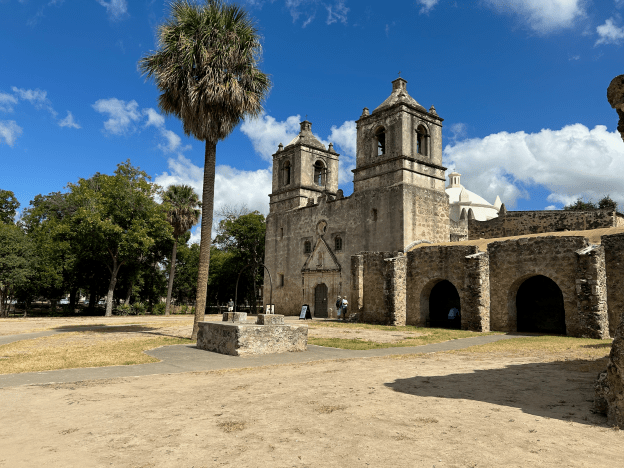
Mission Concepción, San Antonio, TX, USA

New Worlds

This week, I reflect on the flexibility of the word world.—Click here to support the Wednesday Blog: https://www.patreon.com/sthosdkane


This week, I reflect on the flexibility of the word world.


In my field the focus is often on nomenclature as much as it is on the history itself. We, early modern historians of the Atlantic are left dealing with the original intent of our historical subjects while also reckoning with the legacies of their choices in the living world today. That word world is one such central question, after all what does it really mean? In a twenty-first century context the world is synonymous with the Earth itself. I see in the sixteenth century the creation of the current state when the world can be a planetary designation. For past generations the world was something smaller, at most hemispheric yet more often regional in character. André Thevet’s use of the French word sauvage to define the alterity of those beyond his own world in turn set boundaries about his own world, what he wrote about was a Christian world centered on the Mediterranean that was a natural outgrowth of the classical civilizations of Greece and Rome.

I am hesitant then to use the term New World in my dissertation. Sure, it was a term in use in the sixteenth century, popularized by Peter Martyr d’Anghiera (1457–1526), yet in our time it’s gained enough shackles from the dark legacies of the conquest and colonization of these continents that I want to be conscious of my twenty-first century readers even as I seek to place my historical narrative in the sixteenth century. Thus, I argue instead that this new world was created by the conquest and colonization, that it is a new global world born from the encounter between the many old worlds that came before. This follows the arguments made by Marcy Norton concerning a Mesoamerican classical past to which the Spanish in particular looked when placing their new administration upon the remains of the old over the indigenous societies in present day Mexico.[1] I see in how Thevet described the one part of the Americas that was fully colonized in 1556, namely the island of Hispaniola, a new world in all its novelty and experimentation.

I grew up knowing of the Americas as the New World, it’s one term I remember hearing very early on in my youth. Even then, I felt a sense of reluctance at it, after all new things aren’t necessarily all good, so does that mean our New World is in fact worse off than the Old? Most of my family only arrived in the United States in the last four to five generations, at the time within the last century, and so for us America was still in some ways new. I treasure the stories my dad told me as a young boy about Chicago, where we lived; those stories were likely my introduction to history that led slowly toward the career I’ve now chosen. Even now, if I’m looking for something fun to read it will often be something about my hometown as it was a century ago. In 2024 I spent many happy hours engrossed in Jay Kirk’s biography of Carl Akeley (1864–1926), and a few months later once it was released I read eagerly Paul Brinkman’s Now is the Time to Collect about the Field Museum’s 1896 expedition to Africa. Granted, both deal with the same subject, the museum where my own curiosity was first sparked as a young kid, yet they are mementos of that same nostalgia that draws me back into what I thought of when first I considered this term New World. It speaks to Churchill’s famous final rousing word of hope in his “We shall fight on the beaches” speech that Britain need hold out “until in God’s good time, the New World, with all its power and might, steps forth to the rescue and liberation of the Old.”[2] This dichotomy between the youthful New World and our older cousins across the water is echoed in Bernard-Henri Lévy’s 2018 book The Empire and the Five Kings about the decline of American geopolitical power in the present century. Lévy wrote of America, the Empire, as the sons of Aeneas who several generations ago returned east to the Old World to liberate it as Churchill hoped. Yet now, the imperial sons of Aeneas are themselves fattened by their spoils of victory and incapable of meeting the struggles of the current moment as the threats are multiple and not focused on one rival superpower as they were for much of the last century.

Perhaps this is the key facet of this whole conundrum now: not only is the world so diffuse as to merit multiple definitions, but it reflects the uneasy global world in which we all live. For me the disquiet in all this comes just as much from the fact that the benefits which our interconnectedness ought to have brought––peace, economic, political, and social prosperity, greater human solidarity––are still mired in the same old problems of greed, small mindedness, and war as ever. We live in the shadow of Cain as much as in the warm glow of that optimism which keeps the home fires burning. We are at a place in our development as a species where disease, hunger, poverty, and war could all be avoided or cured on the sociopolitical level. We merely lack the will to do any of that. The optimistic promise of this New World which I perceived as a kid in Chicago remains but one vision of our shared reality. The New World into which I was born is built on the remnants of those old worlds that were often assimilated with violent force.I like to find the positive, if possible. When I was considering what I wanted to pursue in my doctoral studies I looked at what my friends were doing and first decided that I didn’t want to do something that would be depressing or sad. I wanted instead to focus on something that would fuel my curiosity and that connected back to those things which I’ve been most interested in throughout my life. I chose to study André Thevet’s sloth because the idea of being a sloth historian made me laugh. Now, with my first peer-reviewed article on the subject published with the journal Terrae Incognitae I feel that the work of these last six years is finally paying off.[3] That work considers the creation of a New World, while balancing contemporary sentiments around that term with historical perceptions of the same. I am after all someone who studies the past for the benefit of illuminating something as of yet uncovered about my subject. That said, I’m writing for readers living now and, in the future, and need to bear their perspectives in mind. That’s at the core of any communication: we learn foreign languages in order to communicate with people from other cultures, countries, and even worlds. I know that my writing is tinged with my own idiolect, yet I hope it remains universal enough to be understood by anyone who is curious enough to read it.


[1] Marcy Norton, The Tame and the Wild: People and Animals After 1492, (Harvard University Press, 2024), 305-313.

[2] Hansard HC Deb 04 June 1940 vol 361 cc787-98.

[3] Seán Thomas Kane, “A Sloth in the First French Colony in the Americas,” Terrae Incognitae 57, no. 3 (2025): 1–15.
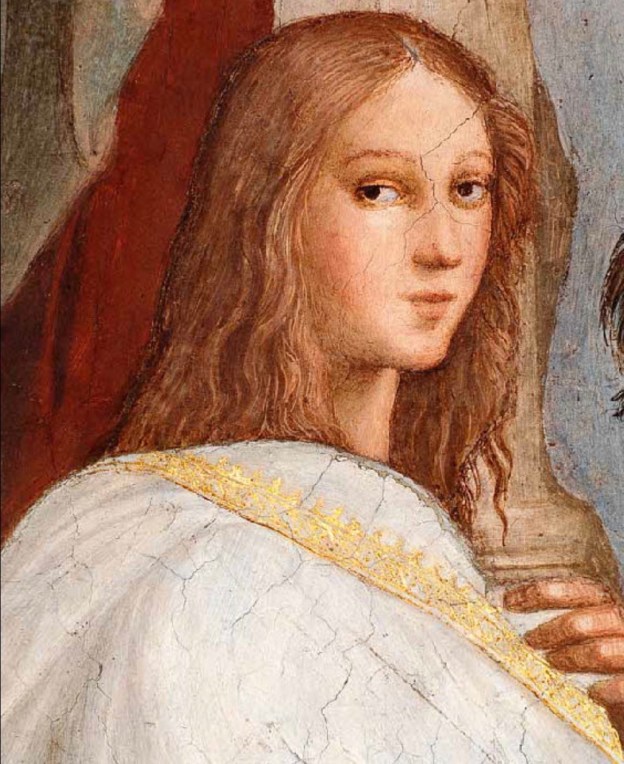

A figure from Raphael's "The School of Athens" variously identified as Francesco Maria della Rovere, Pico della Mirandola, or Hypatia of Alexandria.

On Knowledge

This week, I want to address how we recognize knowledge in comparison to the various fields of inquiry through which we refine our understanding of things.—Click here to support the Wednesday Blog: https://www.patreon.com/sthosdkaneArtRaphael, The School of Athens (1509–1511), Apostolic Palace, Vatican Museums, Vatican City. Public Domain.Sources“On Writing,” Wednesday Blog 6.27.Surekha Davies, Humans: A Monstrous History, (University of California Press, 2025).Marcy Norton, The Tame and the Wild: People and Animals After 1492, (Harvard University Press, 2024), 307.Dead Poets Society, (1989) "What will your verse be?" Video on YouTube.


This week, I want to address how we recognize knowledge in comparison to the various fields of inquiry through which we refine our understanding of things.


Lately my work has been dedicated to a thorough review of the historiography within which I’m grounding my dissertation. I wrote about this two weeks ago in an essay titled “On Writing.”[1] My research is historical, yet it touches on secondary literature which operates within various fields within the discipline of history. These include Renaissance history, and its larger sibling early modern history, the history of cartography, the history of animals, the history of botany, and more broadly the history of early modern science. Methodologically, I owe a great deal to two great twentieth-century Francophone anthropologists, Alfred Métraux (1902–1963) and Claude Lévi-Strauss (1908–2009). While Métraux and Lévi-Strauss aren’t considered directly in the historiographic section of the new introduction that I’m writing for my dissertation, which is limited to sources published since the millennium, they nevertheless stand tall in the background of my history.

Today we often talk within academia about a desire for interdisciplinarity in our work and our research. We’ve found ourselves too narrowed by our ever shrinking fields and seek greener common pastures for grazing as our intellectual and pastoral ancestors alike once knew. In my case, this interdisciplinarity lies more in my efforts to incorporate historical zoology into my work, a methodology which seeks to use zoological methodology and theory to explain historical animals. I have friends who study many things. Among them is one whose passion for history, classics, and mathematics has come together to craft a dissertation which seeks to demonstrate the intersections between those three to better understand the great transitions in human inquiry. Another seeks to follow the medical connections across oceans between disparate regions in the Americas and Europe that nevertheless existed even if they seem remarkable today. Still more, I have a friend who applies basic economic need to explain a complex diplomatic situation that once existed between the Venetian Republic and the Ottoman Empire in the Adriatic Sea. All of these historians of whom I write are applying a degree of interdisciplinarity to their work that reflects their own disparate interests and curiosities. In early modern history we talk about curiosities as objects which were collected from disparate and exotic lands into cabinets to display the erudite collector’s prestige and wealth. I say our curiosity is something to be collected by those worthy archives, libraries, museums, or universities that will employ us in the near future and for us to feed with new ideas and avenues of investigation that we will never be bored with life.

In all of these things, there is an underlying genre of knowledge which I am addressing. I’ve written thus far about history alone, yet it is the same for the anthropologists, astronomers, planetary scientists, and physicists who I know. Likewise for the literature scholars and the linguists. Our fields of inquiry all grow on the same planet that comprises of our collected knowledge. In English, this word knowledge is somewhat nebulous. To me, it says that we know things broad or specific. In London, for instance, the Knowledge is the series of tests which new cabbies must complete in order to learn every street within a certain radius of Charing Cross. The Latin translation of this word, scientia, makes things even more complicated as that is the root of the English word science. Thus, when we refer to Renaissance science, there is always a caveat in the following sentence explaining that “this is not science as we know it but a sort of protoscience.” I was advised, similarly, after a particularly poorly received presentation at a workshop at the Museum of Natural Sciences in Brussels in October 2023 that I shouldn’t refer to “sixteenth-century conservation” because no such concept existed at the time; instead, it would be better to discuss a “genealogy of conservation.” This sense that modern terms, in use since the Enlightenment of the eighteenth century, ought not to be pulled further back into the past I think loses some of the provenance of those terms and how the Enlightenment philosophes first came across them. 

I find it telling that the Ancient Greek translation of knowledge, γνῶσις (gnôsis), is a word with which I’m more familiar from theology and the concept of Gnosticism whereas scientia reminds me of philosophy and the other fields of inquiry which grew from that particular branch of the tree of human curiosity. One might even say that philosophy and theology are a pair, siblings perhaps? They seek to understand similar things: on the one hand an inquiry into thought, and ideally wisdom, and on the other a search for the nature of the Divine, which at least in my Catholicism we can know because we are made in the Image of God. The division here between the Ancient Greek term being affiliated with faith and the Latin one with reason I think speaks to the Latin roots of my own education in Catholic schools and at a Jesuit university, where I learned about Plato and Aristotle, yet I recognized Aristotle’s Historia animalium (History of Animals) by its Latin name by which it was generally known in Western Europe for centuries before the rise of vernacular scholarship rather than by its Greek original Τῶν περὶ τὰ ζα ἰστοριῶν (Ton peri ta zoia historion). Note that the English translation of this title, History of Animals reflects better the Latin cognate of ἰστοριῶν rather than the better English translation of that Greek word, Inquiry.

Added onto these classical etymologies, in my first semester Historiography class at Binghamton University I was introduced to the German translation of scientiaγνῶσις, and knowledge. Wissenschaft struck me immediately because I saw the German cognate for the English word wizard in its prefix, and because I knew that the -schaft suffix tends to translate into English as -ship. Thus, my rough Anglicization of Wissenschaft renders Wizardship, which is rather nifty. Yet this word Wissenschaft instead was seen in the nineteenth century as a general word which could be translated into English as science. This is important for us historians trained in the United States because our own historiographic tradition, that is our national school of historians traces our roots back to German universities in the early and middle decades of the nineteenth century. I remember long sessions of my historiography class at UMKC discussing the works of Leopold von Ranke (1795–1886), the father of research-based history. I felt a sense that this concept of Wissenschaft seemed relatable, and as it turned out that was because Irish has a similar concept. 

Whereas in English we tack on the suffix -ology onto any word to make it the study of that word, in Irish you add the suffix -ocht. So, geology is geolaíocht and biology is bitheolaíocht. Yet note with the second example that the suffix is not just -ocht but an entire word, eolaíocht. This is the Irish word for science, added onto the end of bitheolaíocht to demonstrate that this word refers to the study of bith- a prefix combining form of the word beatha, meaning life. So, biology then is the science of life itself. Powerful stuff. I appreciate that Irish linguists and scholars have sought overall to preserve our language’s own consistency with its scientific terminology. It means that these fields of study, these areas of knowledge, can exist purely within the purview of the Irish language without any extra need to recognize that their prefixes or suffixes come from Latin, Greek, or English. There are some exceptions of course: take zó-eolaíocht, the Irish word for zoology, which effectively adopts the Greek word ζῷον perhaps through the English zoo into Irish. Would it not have been just as easy for whoever devised this hyphenated word to instead write ainmhíeolaíocht, translated into English as the science of animals? Here though I see more influence from English because this language adopts as much as it can from other languages out of prestige and a desire for translingual communicability. As an English speaker, I find scholarly works often easier to read because we share common etymologies for our words relating to knowledge. English’s sciencegeology, biology, and zoology are French’s sciencegéologie,biologie, and zoologie. In English, we drop any pretense of Englishness to clothe ourselves in a common mantle familiar to colleagues from related cultures around the globe. In academia this is to our mutual benefit, after all so much of our work is international. I’m regularly on webinars and Zoom calls with colleagues in Europe for instance. I believe this is the lingering spirit of the old scholarly preference for Latin as a lingua franca which at least to me seems close enough in the past that it’s tangible yet realistically it’s surely been a very long time since any serious scholarly work beyond classics was published in Latin for the benefit of a broad translingual readership?

I for one admire the Irish word eolaíocht and its root eolas, which translates into English as knowledge, that is an awareness of things because eolaíocht represents a universal concept while retaining its own native nature. So often in my research I am discussing the early assimilation of indigenous cosmovisions, to borrow a Spanish word put to good use by Surekha Davies in her latest book, into the nascent global world centered on Europe.[2] I see how these cosmic conceptions faded until they were rendered in Gothic or Latin letters on the voluminous pages of encyclopedic Renaissance general and natural histories which remain among the most often cited primary sources for these indigenous cultures who Marcy Norton argued in her 2024 book The Tame and the Wild: People and Animals After 1492 had their own classical past made remote from their colonial present by European contact, conquest, and colonization.[3] Seeing these indigenous perspectives fade into their categorized and classified statuses within the cosmos defined by Europe’s natural philosophers I feel fortunate that my own diaspora (which was also colonized) has retained this element of our individual perspective. I first came across the -ocht suffix in the word poblacht, the Irish word for republic. A famous story from the birth of the Irish Free State during the Anglo-Irish Treaty negotiations in 1921 tells of British Prime Minister David Lloyd-George, a Welsh speaker, remarking to Michael Collins, an Irish speaker, that their choice of a republic was unusual because none of the Celtic languages naturally have a word for republic. That word evokes its Roman roots in the ancient Res publica Romana, the Roman Republic, whose northward expansion across the Alps led to the gradual death of the Continental Celtic languages, whose speakers’ descendants today are largely the Western Romance speakers of French, Romansh, Occitan, Catalan, Spanish, Galician, and Portuguese, among others. Romance languages are noted for their common descent from Latin, whence they all derive variations on the Latin word scientia; English gets science through Old French. “How are you going to name your new government in the Irish language?” Lloyd-George asked. Collins replied something along the lines of “a kingdom is called a ríocht, so this government of the people (pobal) will be called a poblacht. Thus, the Republic of Ireland is named in Irish Poblacht na hÉireann. Naturally, this word pobal derives from the Latin populus, so the shadow of Rome hovers even over unconquered Hibernia. Yet that is another topic for a different essay.

Let me conclude with a comment on the difference between knowledge and wisdom, as I see it. The former is far more tangible. We can know things through learning embodied best in living and in reading. I know for instance to look both ways before crossing a street because plenty of people in the last 140 years have been hit by cars, buses, and trucks, and you can never be too careful. Likewise, I know everything I do about the things I study through reading what others have written about these topics. It’s my job then to say what I will. In Whitman’s words made immortal by our recitation, the answer to the eternal question, “that the powerful play goes on, and you may contribute a verse.” That’s history, people! Reading the powerful play of what others have written and summoning up the courage to take the podium and have your say. I first heard this particular poem, as did many in my generation, recited by Robin Williams in the 1989 film Dead Poets Society. Knowledge is the recitation of these facts we’ve learned. Wisdom is understanding how these facts fit together and speak to our common humanity. What makes us human? I believe it’s as much what we know as what we remain ignorant of. Our ignorance isn’t always a curse, rather it’s another foggy field we’ve yet to inquire about, a place where someone’s curiosity will surely thrive someday. It is another evocation of eolas still to come in our long human story. How wonderous is that?


[1] “On Writing,” Wednesday Blog 6.27.

[2] Surekha Davies, Humans: A Monstrous History(University of California Press, 2025).

[3] Marcy Norton, The Tame and the Wild: People and Animals After 1492, (Harvard University Press, 2024), 307.