Tag Archives: Michel de Montaigne

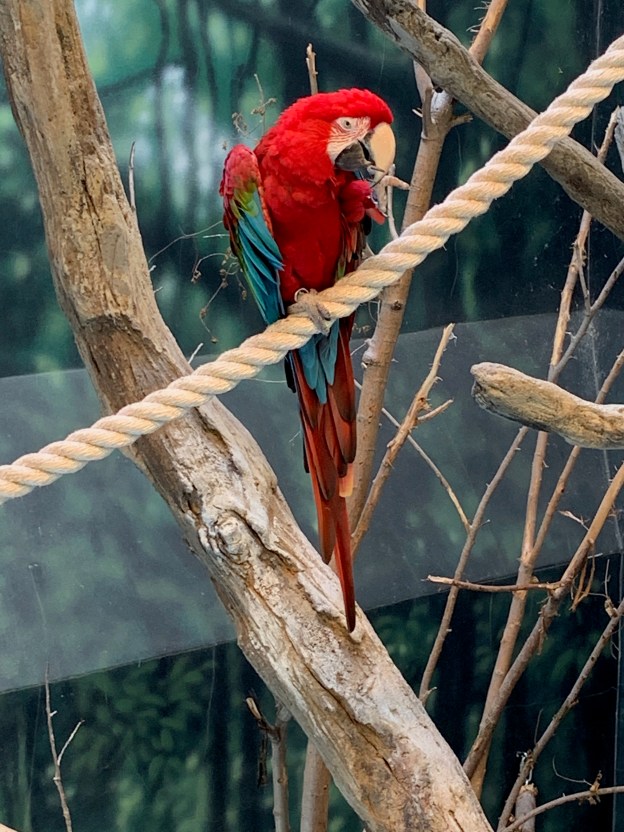
A macaw

On Skepticism

This week, I express my dismay at how fast time seems to be moving for me of late and how it reflects the existence of various sources of knowledge in our world.—Click here to support the Wednesday Blog: https://www.patreon.com/sthosdkane—Sources:%5B1%5D Ada Palmer, Inventing the Renaissance: The Myth of a Golden Age, (University of Chicago Press, 2025), 603.[2] If this word epistemology leaves you confused, have no fear, for my own benefit as well I wrote a blog post explaining this word alongside two of its compatriots. “Three Ologies,” Wednesday Blog 6.6 (podcast 5.6).


This week, I express my dismay at how fast time seems to be moving for me of late and how it reflects the existence of various sources of knowledge in our world.


I first noticed the passage of time on my tenth birthday, that is to say I remember remarking on how from that day on for the rest of my life, I would no longer be counting my years in single digits. I remember distinctly the feeling of surprise at this, a sense that I could never go back to my earliest years. That was especially poignant for me as those first six years lived in the Chicago suburbs held a nostalgic glow in my memory then as they do now. In those early years I felt that time moved slowly; I remember once as a kid I fretted over a 3 minute cooking timer, worrying that I would be unable to stand there and watch the flame over which I was cooking eggs for a full 3 minutes. Today that sounds silly, yet I believe it is vital to remember how I felt all those years ago lest I lose my empathy with my past self or anyone else I may encounter with similar concerns over things I see as minute.

Soon after my tenth birthday, I found a new method of getting through things that I found tedious or even odious to endure. I realized that if I tricked myself into enjoying the moment that the tedium would pass by quicker than if I wallowed in my annoyance and misery. Perhaps there was a degree of pessimism in this realization: that the good moments don’t seem to last as long as the bad ones in my recollection of things, or that it’s in fact easier to remember the bad more than the good. This is something I’ve been struggling with lately, that when I find my thoughts sinking to these depths of my greatest uncertainty and grief that I need to remind myself of all the good in my life. Time seems to move faster today than it did before. The days fly by more than linger, and there’s always something new or old that I need to do. I’ve long thrived on work, a trait I inherited from my parents. Often my happiest days are those spent dedicated to a specific task; those days are made happy by my sense of accomplishment once the task has progressed or even is done. I’ve learned to accept that good things won’t often be finished in a day. I’ll push myself instead to do as much as I feel I can do in the span of a day and see where that leaves me when I go to bed at night. With the new introduction to my dissertation this meant that it took me 9 days to write all 105 pages of it. This is one of those times where I feel that I’m on a roll and in my writer’s paradise when I can write and write and write and not run out of ideas to commit to paper.

Yet I worry about that quicker passage of time because I feel that there are less things that I’m able to do in a given day than I would like. I sacrifice rest sometimes in order to see a project to completion, or I choose to try and find a balance between my work and the rest of my life only to see one side, or another overwhelm its counterpart leaving me feeling unfulfilled when I retire for the night. I do worry that the time I’m afforded is limited, and that I’m not going to do everything I want to undertake. There are plenty of things I want to write, so much I want to say, yet so little time in a given day to say it. I’m still young, just a few weeks over halfway to my 33rd birthday. I have this lingering feeling that there’s so much that I want to do with the life I have and an indeterminate amount of time with which to do those things. Am I content with what I’ve done with my life so far? Yes. Is there so much more I want to do? Absolutely.

I suspect this shock at time moving faster is my own realization of my mortality. Everything has a beginning and an end, the mystery lies in not knowing either terminus directly. How many of us can remember our own birth? I certainly can’t. By the same token we can’t necessarily interview the dead after they’ve shuffled off this mortal coil because, in the words of Dr. McCoy, they’re dead. Thus, we remain doubters of our own mortality, our limits. I often hear older friends talk about how the young feel invincible and immortal and make mistakes which reinforce that sentiment of invincibility all while, if they’re particularly bold or just unlucky, asserting their mortality with a sudden abandon. Our doubts are aimed at established sources of knowledge, authorities to whom we feel no particular duty to abide even if we begrudgingly accept their precepts out of bare necessity. I see enough people every day ignore pedestrian crossing lights even though they are there on the city’s authority to protect us pedestrians when crossing the streets that we’ve abdicated to vehicles. It usually leaves me at least frustrated at the ignorance of the driver, at most even angry when I’ve gotten close to being hit by such an ignoramus.

Skepticism is a significant marker in Renaissance studies as a transitional element from the classically inspired scholarship of the fifteenth and sixteenth centuries into the empirical knowledge-making that traditionally we’ve said was emblematic of the Scientific Revolution. I have many colleagues who are working now on disproving the existence of that Scientific Revolution; I admire that cause and yearn to read what they’re writing even though one of my stock courses to teach is called “the Scientific Revolution: 1500-1800.” Ada Palmer calls Michel de Montaigne, in some ways the inspiration for my Wednesday Blog, “the avatar of this moment” when skepticism became a driving force in Renaissance thought.[1] I argue in my dissertation that the American experience drove the course of skeptical thought in the Renaissance; all the things which André Thevet called singular in the Americas represented a dramatic break from classical standards of knowledge which required a new epistemology to explain them.[2] The key here is that we should never be complacent that our current knowledge is all there is to know, after all a well-lived life is a life spent learning. I’m skeptical about many things and have a drive to continue learning, to continue exploring. Curiosity hasn’t killed this cat yet.[3]I find then that my time is best spent in pursuit of this knowledge, and as much as one can learn alone in the solitude of their study reading and thinking quietly to oneself like a monk, it is far better to learn in communion with others. Since the pandemic began, I’ve grown particularly fond of Zoom lectures, webinars, and workshops as much for the expertise on show as for the community they build. Even if we only communicate through these digital media I still look forward to seeing these people, to experiencing that one part of life with them. We learn so that we might have richer experiences of our own lives, so that we might find comfort in our knowledge, so that we might, in Bill Nye’s words, “change the world.” In the time that I have afforded to me I want to learn more than anything else, to learn about the people around me, about our common heritage, about what our future may hold, and about myself. If I can do that, then when I am “no more, cease to be, expired and gone to meet my maker, become a stiff, bereft of life and resting in peace” I’ll be content in my leave-taking. Hopefully unlike the dead parrot they won’t nail me to my perch like Bentham’s auto-icon which greets knowledge-seekers in the South Cloisters of University College London, though that could be a rather humorous way to go.


[1] Ada Palmer, Inventing the Renaissance: The Myth of a Golden Age, (University of Chicago Press, 2025), 603.

[2] If this word epistemology leaves you confused, have no fear, for my own benefit as well I wrote a blog post explaining this word alongside two of its compatriots. “Three Ologies,” Wednesday Blog 6.6.

[3] Meow.


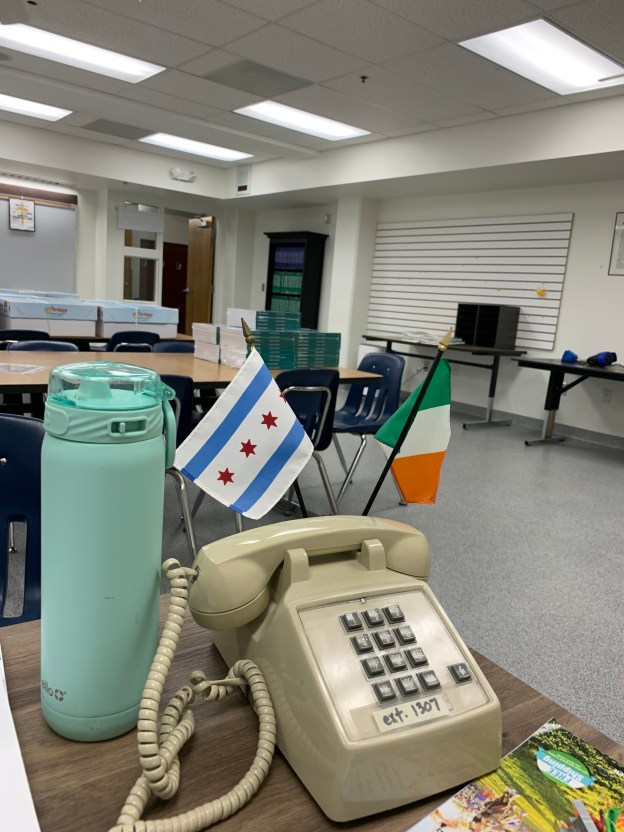
A landline telephone in a classroom.

Electronic Signals

This week, the coalescence of my thoughts over the last few months about how the way we communicate today in 2025 is so rooted in our technology.—Click here to support the Wednesday Blog: https://www.patreon.com/sthosdkane


This week, the coalescence of my thoughts over the last few months about how the way we communicate today in 2025 is so rooted in our technology.


For most of my life I tended to write a lot of ordinary quotidian things out by hand on paper either in notebooks, on notepads, or on the backs of receipts, envelopes, or whatever paper I had around. I kept up a good cursive hand and used it on a regular basis. Yet in the last decade technology has caught up to the humble notepad; a decade ago when I was living in London and trying to write out ideas for my first round of graduate essays on my phone’s Notes app while I was on the train or walking about, I often found that app in particular drained my phone’s battery at a considerable and worrisome rate. Then again, that particular smartphone tended to die if the battery dropped below 40 percent, so it had a bad battery. Still, that led to me continuing with the practice of keeping notes and scribblings in little notebooks or on notepads that I carried with me in a pocket. 

It’s funny then that it’s only now in 2025 that I notice how little I write these same notes anymore by hand; in 2021 when my Mom came to visit me in Binghamton, she brought me a couple of notebooks emblazoned with pictures of various national parks on their covers, a new trend in notebooks that began around then. I was a little taken aback by this gift because by that point I’d largely done away with handwritten notes all together. In fact, my Binghamton years launched me head-first into doing as much as possible on the computer so that I’d have less paper and books to carry back and forth between Upstate New York and Kansas City. Like printed books over digital ones, when I returned to Kansas City I began to write handwritten notes again. This is largely thanks to my employers at the Kauffman Center for the Performing Arts; in our department we still carry around paper performance notes on our shifts. When I started, I was surprised to realize that at some point in the last 5 years I’d stopped carrying a pen with me on a daily basis. Since then, in April 2023, I’ve always had a pen in my pocket.

The pandemic reinforced our digital communications in ways which pushed us firmly forward toward more frequent videocalls and texting to the detriment of the telephone in particular. Most of my friends and family tend to prefer text messages over phone calls, especially among my fellow millennials, to the point that I often second-guess myself as to whether I should try calling someone in the first place. Is a phone call intrusive, whereas a text message is like a telegram or a letter? It can be replied to in the recipient’s own time, though with a text the response time is usually expected to be faster than with a letter that’ll take days to arrive, or even an email, which I see as slightly more formal. Since the invention of Samuel Morse’s electrical telegraph in 1838, our communications have moved into a realm of electricity which was foreign to our conversations and our lives beyond lightning strikes and the daily shocks one gets in a dry climate.

This Spring then, when I was regularly on videocalls–usually over Zoom–with friends, colleagues, and family alike a thought occurred to me that all of our communications are being translated down to electrical signals being sent over wires from one person’s device to another. Those messages, no matter the content, all buzz and fizzle through our wireless data signals and across our telephone wires, through our data centers and bouncing off our satellites all to better communicate to anyone whether on the planet or high above us in orbit or beyond. It’s made us all so much closer to one another. Today, I’m regularly in contact with people in North America, Europe, and Asia and that contact is often almost as instantaneous as if we were together in the same room. It’s what makes my solitary life feel lived in community with the people I like. And yet it’s also spoiled us for the slower communication of the written letter or even the face-to-face conversation that started all these “words, words, words” as Hamlet says that we “might unpack my heart with words.” We communicate to do just that: to speak our thoughts and to live in the strange and beautiful worlds we build around ourselves. So often now, those conversations are not only occurring with the aid of the electrical signals pulsing about our minds telling us how to react and what to say and do, but also through their extracorporeal currents which connect us through our technology across vast distances to one another.

You are listening to my voice filtered by the microphone and my audio editing software being transmitted to anyone with an internet connection. While naturally we aren’t supposed to hear it, as my hearing isn’t quite as good as it should be, I can now hear the differences between sound frequencies in a finer detail yet to the point that if two voices are speaking with the same frequency, I only hear ringing at that frequency and no words or other noise. This was demonstrated to me with dramatic and terrifying effect several years ago when I was nearly t-boned by a Kansas City fire engine roaring along at full speed because I didn’t hear its siren, which wails at the same frequency as the particular section of the 1st movement of Tchaikovsky’s Violin Concerto that I was listening to in my car at the time. So, when you hear my voice what you’re hearing is an electronic recording of my voice being transmitted to you. Often, I sound higher pitched on the recording even by just a half-step, than I do to my ears when I’m doing the recording. I’m a tenor, so I’m okay with that. Still, it’s noticeable especially if I record later in the day or at night, or if I’m nervous.

After I began my graduate studies in History back in August 2017, I started making a practice of recording any conference presentation or invited lecture I gave. I’d usually only make a sound recording, not wanting to deal with a camera. This way too, if someone missed a talk and wanted to see it, I could lay the slides over the recording in iMovie and turn it into a video to send around. This has turned into a wonderful tool for listening to changes in my voice over the years. Yet it’s also interesting now because I not only use this tool for recording the actual performance but also the rehearsals as well, and sometimes when I’m editing papers. I gave a lightning talk last week that was part of a webinar hosted by the Graduate Student Advisory Committee of the Renaissance Society of America about animal intelligence titled “Animals Adapting to Changes in Nature: Perceptions of Animal Intelligence in the Renaissance?” The paper itself was pretty quick and easy to write; it maybe took me an hour to make the first draft several months ago. Yet I began recording rehearsals and making edits after each one up to the minutes before I went live on Thursday morning. I was a bit nervous when I presented, so in the end the cool and practiced pace I’d planned with a mid-range voice ended up being a minute faster than expected and closer to my upper register. When I’ve thought about what to do if anyone asked to hear this talk after the fact, I’ve considered possibly sending out my last rehearsal recording from an hour before the performance, after all many speakers would in decades past make a separate recording of their lectures & speeches from the actual live reading. Yet to keep it authentic to the talk as it went ahead, I also feel inclined to send out the one that I gave on Thursday morning to the 16 other panelists and organizers on the call and the 35 attendees listening in from around the globe. This question gets to the heart of my talk because I made the case that André Thevet’s sloth showed signs of intelligence by refusing food it didn’t want to eat and not falling to the same bad practices as the Frenchmen who captured it or the native Tupinambá who were more familiar with it. Those practices, human faults one might say, include indecision.

Rather than flip a coin or pick another method of choosing, I’m instead going to play for you now the last rehearsal recording for one very simple reason. The main benefit of my recording of the actual talk is that it ought to have captured the organizer’s introduction and the questions that followed my presentation. Yet, my phone’s microphone couldn’t pick any of that up because my computer’s sound output was going into my headphones. So, without any more gilding the lily here are my thoughts on Renaissance sloths adapting to changes in nature, brought to you through a most electronic form of communication.

~

Animals Adapting to Changes in Nature:

Perceptions of Animal Intelligence in the Renaissance?

I want to begin by thanking the members of the RSA Graduate Student Advisory Committee for holding these lightning talks and accepting my proposal among the speakers today. When considering this question of animal intelligence, I’m drawn back to the Aristotelian notions of the animal sensitive soul in contrast to the human rational soul; Erica Fudge put it well, writing that animals can feel, perceive, and move, yet humans are the only natural beings to express intellect.[1] Animals were used as stand-ins for humans in allegory and vivisection, and an over-exertion of passion could drive a human into a state of animality, yet the human was understood to be fundamentally different because of our facilities of reason developed through experience over one’s lifetime.[2]

Newly encountered American animals played a disruptive role in this dynamic. Anatomically, many such animals defied European expectations for their size, or their chimerical character appearing as a composite of unrelated creatures known to exist in the wider Mediterranean World. Chief among these in my research is the three-toed sloth which was described by the French cosmographer André Thevet (1516–1590) in his 1557 book Les Singularitez de la France Antarctique. There are many different aspects of Thevet’s sloth which allowed it to stand out as a singularity among singularities from its appearance as a bear-like ape to its vocalizations “sighing like a little child afflicted with sorrow” to its general disregard by the indigenous Tupinambá people who explained aspects of its manner to Thevet.[3] I’ve written and spoken extensively about this, I know several of you have heard me talk about Thevet’s sloth at a number of conferences in the last several years. Today though, I want to discuss something I haven’t addressed yet in all these presentations; namely the signs in Thevet’s text which point toward some sense of the sloth’s intelligence.

The sloth’s intelligence is seen in its abstention from eating the food Thevet provided it. Thevet wrote “I kept it well for a space of 26 days, where I knew that it never ate or drank, but was always in a similar state.”[4] This reaffirmed Thevet’s assertion that “this beast has never been seen to eat by a living human,” either by the Tupinambá or the French.[5] This abstention from eating could well be understood as a sign of the sloth’s lack of a rational soul which would know to eat; yet I think it is better to perceive the sloth’s abstinence as an active choice made by an animal who didn’t favor the food it was offered. Thevet wrote that “some believe that this beast lives solely on leaves of a tree named in [the Tupi language] Amahut,” which is one of the Cercopia species known to live along the Brazilian coast.[6] Yet a 2021 sloth behavioral study published in the journal Austral Ecology has proven that this claim is less grounded in the genus’s actual experience.[7]

Perhaps the sloth can be best contrasted with the dogs which killed it at the end of that 26-day captivity, or even with the accused descent from humanity by first the Tupinambá and later the French in accusations of cannibalism. Unlike the humans who occupy these stories from France Antarctique who so often fall so far from their rationality to eat each other, the sloth simply refused to eat at all. This small creature, taken from its forest home and left in the care of an unfamiliar human who didn’t know what to feed it, chose to preserve its nature and not eat what was foreign to it. The sloth adapted to changes in the nature around it and expressed an intelligence perhaps more elevated than the humans who captured it. I’m drawn to one of the most poignant lines in Montaigne’s essay “Des cannibales” in which the erstwhile political animal himself wrote “I think there is more barbarity in eating a man alive than in eating him dead; and in tearing by tortures and the rack a body still full of feeling.”[8] In all of the variations on his sloth account, Thevet published this same story twice first in the Singularitez of 1557 and later in the Cosmographie Universelle of 1575, the dominant sense I get from Thevet’s text is one of befuddlement at an animal that defied his expectations in so many ways. In the tradition of animal allegories from Aesop to Renyard the Fox the sloth fills the role of an exotic oddity, a stranger in the canon of European natural history which didn’t quite fit any mold available. Even after Thevet’s sloth was christened by Conrad Gessner an Arctopithecus in 1560 and by Carolus Clusius as an Ignavus in 1605, this fact that it refused to eat or drink what Thevet offered it for 26 days remained a constant in its story. I see in the sloth a sign of intelligence beyond expected human norms and rules which rendered it exceptional. Any assimilation of the sloth was an artifice laid over its character, a colonial imposition. Still, its abstinence fit the framework of the sensitive soul, reflecting a delicate sensitivity toward things it found unfamiliar.

~

How does a 450 year old sloth’s intelligence have any bearing on the electronic signals which carry our communications in this new century? I wouldn’t have been able to study Thevet’s sloth in the way I have without the internet and all our technology. So much of my work is with digitized primary sources, mostly printed books, that I do almost all of my research on the computer. It’s a rare occurrence that I get to go into an archive to look at a source in the flesh. Yet I think there’s another interpretation we can take here: like the sloth we choose how much we are in touch with each other, how much of our lives are spent with our phones in our hands. My weekly screen-time report tends to fall in the 3 hour range per day. Yet I’m not only checking my social media accounts or texting with people on my phone, but I’m also reading books and writing notes and ideas down on my phone or using the camera to try and capture an artful reflection of the lived world around me. Recently on Instagram I saw another person’s screen-time report say they spend 14 hours on their phone per day, which is essentially the entirety of my waking hours. To me that is unhealthy to an extreme. Yet that’s how that individual has chosen to live their life.

I know that no matter where I end up, I will remain connected to others through our technology. Somedays I do miss the slower pace of sending letters or calling family and friends on the phone as things were when I was a child. I’d rather talk with someone face-to-face or voice-to-voice than text. As I wrote in January, I feel that we’ve allowed texting to take the place that videocalls were supposed to hold in the 21st century. We’re not constantly talking to people over monitors beyond Zoom calls that are scheduled and with that pre-arrangement more formal than the quotidian string of text messages. Today, I do have a notepad on my desk, one that was given to me among the materials of a workshop I attended at the École des Hautes-Études en Sciences Sociales in Paris last summer. It’s gotten some use, yet one year later I’m still only halfway through the gridded pages. As with so much of life in general, I feel that I’m trying to find a balance between the digital and the manual, between life online and life in this place where I find myself in a given moment. All I know for certain is that over all else, I long for connection.


[1] Erica Fudge, Brutal Reasoning: Animals, Rationality, and Humanity in Early Modern England(Cornell University Press, 2019), 13.

[2] Fudge, 17.

[3] Thevet, Singularitez (Antwerp, 1558), 99r.

[4] Thevet, Singularitez (Antwerp, 1558), 99v–98r.

[5] Thevet, Singularitez (Antwerp, 1558), 99v.

[6] Thevet, Singularitez (Antwerp, 1558), 98r.

[7] Gastón Andrés Fernandez Giné, Gastón Andrés, Laila Santim Mureb, and Camila Righetto Cassano, “Feeding ecology of the maned sloth (Bradypus torquatus): Understanding diet composition and preferences, and prospects for future studies,” Austral Ecology 47 (2022): pp. 1124–1135, at p. 1132.

[8] Michel de Montaigne, “Of Cannibals,” in The Complete Essays of Montaigne, trans. Donald M. Frame, (Stanford University Press, 1965), 155.


On Vanity

This week, I reflect on the role of love in balancing between self-praise and community in a discussion of vanity.—Click here to support the Wednesday Blog: https://www.patreon.com/sthosdkane


This week, I reflect on the role of love in balancing between self-praise and community in a discussion of vanity.


Today, in Rome the College of Cardinals will convene for the new conclave to elect our next Pope. By the time you read this we may have already seen white smoke rise from the chimney and met our new pontiff by his papal name on the balcony of St. Peter’s. Or more likely when you read this the cardinals will be amid one volley or another of voting rounds and deliberating their right course of action. Since the death of Pope Francis, I’ve felt rebuffed by the electoral speculation over who will be the next pope; by and large I’ve avoided reading any of these articles or watching any of these analyses. On the one hand, in my lifetime these lists of papabili have often been wrong. Francis was an unexpected choice. Yet on the other hand I see a sense of vanity in all this speculation which seeks the political power of the Papacy while ignoring its pastoral nature. I’ve long heard that the eventual choice of Pope is supposed to be directed by the Holy Spirit, whispering perhaps into the ears of the men in red like God did to Elijah in the cave. In my own experience, I’ve seen this most in the realization that the best path for me to take often is the strangest or most winding in character.

It takes a great deal of humility to take that particularly uncertain way in life, to not know where you’re going to end up. You have to learn to trust in yourself and in the people around you to make that path work. I’ve learned to expect things to break, and nothing that I try to work, and to figure out how to move forward in spite of what I’d dreamed and hoped for. I try to learn from my experience even when it is painful or heart wrenching to see dreams vanish and new realities, perhaps less glowing than what I hoped for, take their place. Still, the best way in my experience is to be patient and let things grow naturally around you and within you. The initial instinct isn’t always accurate, yet it should not be discounted either. There are days when the useless is best just to let your mind rest and decide where to go next. The late Renaissance French humanist essayist Michel de Montaigne (he actually wrote “I am no philosopher”) wrote in his essay “Of Vanity” of the men of his own time when France was wracked by forty years of civil war, “a time when it is so common to do evil, it is practically praiseworthy to do what is merely useless.”[1] I am often focused on resolving questions by finding immediate solutions, even if they are smaller steps leading to a greater whole. Yet in recent weeks I’ve found those solutions aren’t always needed or warranted, for they can sift the complexities of a problem so far down that the problem itself slips through the strainer and remains unresolved.

I recognize a degree of vanity here; I figure I have a strong mind and being reasonably well educated that I can attend to any problem and find a logical solution. Yet logic cannot account for humanity in all our chaos and charm. The character and nature of humanity is to spy ourselves in the glass and be marveled by it. We can be so caught in imagining our own glories and our own defeats that we miss the lived moments in between when we are surviving the daily fare and writing even the smallest of verses which will contribute to the song of our lives. I’ve learned to accept that my wishes for things are not always going to happen, and that as much as I warm my soul with dreams of wonders to come those dreams will only be realized by living with the people around me, learning about them, trying to understand them, supporting them, and appreciating them for who they are. Why enforce my own persuasions on you when I could appreciate you, dear Reader, for your own self and your cosmovision? This is a word I only recently learned, I saw it first in Surekha Davies’s new book Humans: A Monstrous History. It seems to originate in Spanish as a way of expressing the way in which reality is subjectively understood through our sensory perceptions. Descartes’s famous maxim for knowledge, “I think, therefore I am” means in this sense that we know what we know because we can perceive it. The cosmos in all its wonder is familiar to us through our sight, hearing, smell, and touch. I would much rather wait to hear your song and listen to it harmonize with mine than pull your voice into my own melody against its own nature.

Montaigne admired those in his generation who kept up the good nature of humanity, its customs, laws, and mores in spite of the world around them losing so much of that common purpose. In quoting Cicero, “not by the calculation of your income, but by your manner of living and your culture, is your wealth really to be reckoned,” the essayist speaks the greater value of a good life enriched by a passion for community and a charitable outlook on our pursuits.[2] While I’m a practicing Catholic, ever striving to be more faithful in my life, I firmly believe with my whole being that the state should be secular, the better to reflect the totality of the people from whom government derives its power. I would be vain to demand that the state reflect my Catholicism at the detriment of all my neighbors, even my fellow Catholics, whose faith is personal and distinct from my own. A good person recognizes this and seeks communion through mutual respect and appreciation. The most central tenant of my faith is that God is love, άγάπηφιλίαand ἕρως alike in the original Greek, and the greatest expression of this love is in our liberty to make our own lives, our free will. If we are meant to live in this image then surely we ought to lower our pride and our vanity and hail the liberty of those around us to live their own lives and make their own choices?

For much of my life I’ve had a hard time taking criticism. I’m better at it today, yet it still is a something I know I will always need to work on. I’m no longer in a state of mind where I feel that I need to justify my actions or choices to everyone. On the inverse side, several years ago I finally caught myself trying to deflect praise with a witty quip that deflated some of the experience. This is something that I’d been doing for a long time perhaps to not inflate my ego too far. I went through my phase of wanting to be important, wanting to be a leader, and to be at the front of things and today when I am in that position in so many organizations, I’ve found that it’s much more fun to be a part of a team working together to achieve our common ends. Together these twin forces pull me toward a humility that I hope keeps me grounded, in which I’ve allowed myself to experience my successes while embracing the troubles that occurred in the course of those victories.

In my academic career I’ve published to date one public-facing article about my historical zoology research into the three-toed sloth and an encyclopedia entry titled “Amerindians in Brazil” for the volume South America: From European Contact to Independence which was published earlier this year. In both instances, I’ve since found things that I got wrong. It was a bit of a shock at first to realize this. In the case of the encyclopedia entry, I made a rather large error in misgendering a god, the Tupi deity Maire-Monan who I interpreted as feminine following the lead of the sixteenth-century Portuguese authorities, only to realize while I was writing a book chapter last summer about magic in Shakespeare’s play The Tempest the error I’d made. As such, the correction to the encyclopedia entry appears in the footnotes of that forthcoming chapter. Likewise, in the editing stage of a forthcoming article of mine, my first peer-reviewed article to be published, I was presented with conclusive evidence that my prior conclusions that the three-toed sloth found in my sources cannot be definitively identified as a southern maned sloth (Bradypus crinitus) as I’d written in that article “The ‘Sufficiently Strange’ Sloth” for EPOCH Magazine’s June 2024 issue but is in fact more likely either a northern maned sloth (B. torquatus) or a brown-throated sloth (B. variegatus). That prior assertion in favor of the southern maned sloth stands corrected now not only in my forthcoming article “A Sloth in the First French Colony in the Americas” but also in the latest draft of Chapter 3 of my dissertation.

A few years ago, I would have still had significant trouble accepting these critiques out of a strong sense of embarrassment at making such a mistake. In the case of the sloth’s historical zoology, I thought I read all there was to read about the different three-toed sloth species which live in the Brazilian Atlantic Forest, yet I was proven wrong by a generous reviewer who even offered a bibliography of where I could look to find more reliable information. Were, I always fixated on the looking glass of my successes I would surely miss the flaws that pronounce my humanity and not see the ample room for growth. I know that I’m not perfect, in fact I revel in the fact. And while my faith exists, I challenge anyone who claims to know definitive things about matters of belief whether they can really know the mind of God, a concept which as I wrote previously in my blog post from 12 March titled “The Divine Essence,” that divinity extends in scale far beyond human comprehension.

These last few years I’ve long felt a sense of disconnect between the two poles of my life. On the one hand in Binghamton, I felt a sense of professional accomplishment, I was at a good university conducting research and teaching, and a part of an academic community, however disparate that community was in practice. Yet I missed my family, I missed the Midwest, my home cities of Chicago and Kansas City became longed for isles of the blessed far to the west on the flatlands beyond the Appalachians. I longed to be active in my parish and to offer my talents to my brother Hibernians in elected office. I missed the regularity of the live music in Kansas City, the greater presence of the Kansas City Symphony in this city than anything I could find in Binghamton. Yet when I left Binghamton at a moment when I know I needed to leave, I found that I gave up more than I necessarily wanted. I lost that sense of professional accomplishment and surrounded myself by friends from beyond the academy who appreciate what I do but don’t necessarily understand the nuances of it. In the last few months, I’ve found something of that professional community through the learned societies that I’m a part of and at academic conferences where once again those two poles seem linked by a common axis. That axis is essential to a good life because it provides the balance which allows the individual to truly live to their fullest potential as a part of a wider community. I’ve known true solitude, a mantra of mine in recent weeks has been the simple Irish phrase, “Is mé i m’aonar,” or “I am alone.” It’s a plaintive call of sorts, yet it’s also a moment to learn from, that as much as I’m used to this existence that I want to grow out of it. Montaigne wrote in “Of Vanity” that “it is pitiful to be in a place where everything you see involves and concerns you.”[3] This is the solitary life, a life where about you all things revolve, and what’s worst about it is that it can be lived in community. Alone together was a phrase I read time and again during the recent pandemic. Yet even then with our need to stay apart we found ways to be together. I spent much of the pandemic years here in Kansas City rather than in Binghamton and still felt far more closely attuned to my professional community and the friends who populate it. 

In these past few weeks, I’ve been happiest when I’ve had that connection with my family and friends, when I’m with other people and experiencing their lives, their passions, their perceptions of our shared world. I put faith in the currency of human connection and community because that is the most valuable coinage I’ve yet seen. All the gold and silver that humanity has ever mined cannot compare with the value of community and the humility it brings out in all of us. I have many highly accomplished, brilliant friends, and I’m delighted to count myself among them. There is some vanity in these friendships, after all we approach each other with our own experiences and stories to share, highlighting the things we’ve done, yet in a good relationship we do so to elevate our friends and encourage them to seek greater things for themselves. I feel fortunate to have met these friends, and to be able to put my talents to use serving our common cause.This week then as the cardinals vote in Rome, I hope they will look not just to their own personal interests, theological bent, or political persuasion. I pray they will listen for that suggestion that seems just strange enough that it could be right, and that they chose a Pope to lead our Church who will continue to build bridges that may close the divides erected for millennia between ourselves and so many of our fellows. I hope for a pope who will be a friend to all, a good diplomat who can unite disparate peoples together into one common cause. May his humility guide him to be the pope we need now in the second quarter of the twenty-first century, and when he is elected may we rise to the occasion to better ourselves.


[1] Michel de Montaigne, The Complete Essays of Montaigne, trans. Donald M. Frame, (Stanford University Press, 1965), 3.9., p. 722.

[2] Montaigne, Essays 3.9., p. 724.

[3] Montaigne, Essays 3.9., pp. 725–26.


Montaigne and the Ages of Life

Montaigne and the Ages of Life Wednesday Blog by Seán Thomas Kane

This week, reflections on Michel de Montaigne’s perception of his changing character throughout his life.—Click here to support the Wednesday Blog: https://www.patreon.com/sthosdkane


This week, reflections on Michel de Montaigne’s perception of his changing character throughout his life.


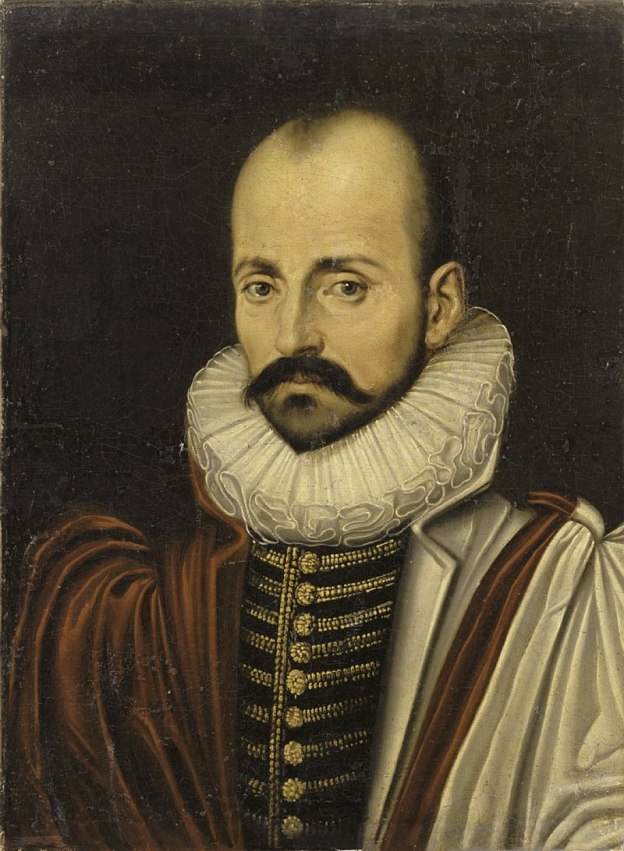
I’m currently reading Philippe Desan’s biography of Michel de Montaigne, the French philosopher and statesman and the father of the essay. Montaigne is an influence for me in how the Wednesday Blog has developed over the last four years that I’ve been writing this weekly. He is also one of the figures on the orbit of my dissertation, and one of the most important sources for critical analysis of the events which I describe in that doctoral work. Philippe Desan in turn is one of, if not the most prolific Montaigne scholar of our time. So, it’s been a delight to read his biography of this man who I’ve gotten to know however faintly through the frame of his Essays in my research.

Most of my work deals with his famous essay “On the Cannibals” found in Volume 1 of that three volume collection. “Des cannibales,” as it’s known in its original French, was published in the first collection of Montaigne’s essays in 1580, and it’s this collection with which I’ve been the most invested in my work. The cannibals of Montaigne’s focus speak to questions of humanity and human dignity which I pose in my dissertation, which is titled “Understanding the Sauvage in André Thevet’s Brazil: 1555-1590.” 

Yet it is in the third volume of Essays where Desan established a crucial connection between Montaigne the man and Montaigne the humanist of the late Renaissance preserved in the amber of his words. In the essay titled “On Vanity” Montaigne poses a fascinating self-reflection looking back at his life as he remembered it and who he was at the time he wrote that particular essay near the end of his days. Quoting here from Donald Frame’s 1965 translation, Montaigne wrote that in the years since he published his first edition of essays in 1580 “I have grown older by a long stretch of time; but certainly I have not grown an inch wiser.” Here whether out of humility or in refutation of Aristotle’s maxim that age and experience begats wisdom, Montaigne sees himself as the same light as before. Despite this, Montaigne continued to observe that “myself now and myself a while ago are indeed two; but when better, I simply cannot say.”[1] This struck me that the essayist could see such a simple yet profound difference between himself as he was when first he wrote and published his magnum opus and the man he later was publishing his third and final volume of essays nearly a decade later.

From my earliest days of extensive writing in my high school years I found myself looking ahead to a time late in my life when I would return to the places of my teenage youth and reflect on what once was and who I’d become. I suppose there’s some vanity of my own in having this profound sense of legacy even from what was then quite an early point in my life. Still, in recent weeks I’ve been reintroduced to younger versions of myself as my family carries out a Spring cleaning and we’ve found decades old boxes of photographs and postcards that I still remember taking and sending yet which haven’t seen the light of day since their capture. I was humbled and heartened to see in particular how loved was the boy I once was, and how inventive and imaginative he could be. Looking at these photos, especially from around my family’s great move from Chicago to Kansas City in 1999, I remember each and every one of them being taken. I remember the sights and sounds, the smells, the prairie winds and the things I was thinking in those first days of my life in Kansas City. These memories have always been there in my mind, yet the subsequent quarter-century has piled many more atop them so that they are now rendered foundations for the memories that comprise me today.

I suspect these days spent pouring over decades-old photos removed some sort of mental block I’d put up out of stress that’s kept my imagination in check in recent months. I longed to have the same expansive dreams and wandering thoughts that’ve populated so much of my consciousness, and now again I find it easy to tap into that deep reservoir which too is built into my memories yet also grows out from them into things which are wonderous and extend beyond the limits of reality toward the possible. Am I then wiser than I was when first I began writing essays in my adolescent and early teenage years? I’d like to think so, at least in some respects. I have a sense of calm today which was lacking in earlier years, and while the stresses of my life are great, as they are for all of us, I know how to accept them and tamper down some of their effects.

Yet in so many ways I do feel that I too am a different person from the kid who moved west all those years ago. Likewise, I see a clear distinction between the student starting high school in the years after the turn of the millennium and imagining his future in the last decades of this century. I’ve learned to live more in the moment in which I find myself, to influence that moment to fit what I aspire it to be. A complex turn of this answer is to consider all the potential lives I might have led, a thought experiment which I’ve considered developing into a short story with some sort of science fiction shenanigans. In one version of this, a broken-down elevator occurring simultaneously across parallel realities as a sort of mirror image resulted in contemporary alternative versions of myself ending up stuck in the same elevator all at once. I could see it either being a bit of a laugh-fest as one version of myself attempted to out-wit the others, or a simmering cauldron of irritation. 

What all this speaks to is the complexity of our personalities. We are all multifaceted with so many different competing thoughts and desires and inclinations and perceptions. I’ve thought more recently that perhaps my academic career would be further along if I limited myself to only focusing on my research, yet then again, I’ve always had multiple hats in the ring so why would I stop doing all these different things now? The Wednesday Blog for one remains a sort of release-valve for me to write about things which I’m curious about yet don’t directly relate to my research. I look to my colleagues, and I see people with similar interests and in some cases similar paths they’ve taken to get to where they are today. Several days ago, when I was dwelling in a particular bout of melancholy thinking about the long winter that has grayed the skies over my own doctoral candidacy when compared to my peers, I felt a sense of pride at noticing just how I’ve persisted in my efforts and my work in spite of all the challenges which the last six years have brought. Perhaps it is this combination of trial and hope which forms a person; it’s what formed me into the historian I am today.

When I started writing the Wednesday Blog in March 2021 I did so because I felt such a profound sense of nostalgic hope at one particular memory that surfaced after a sleepless night amid my comprehensive exam studying that I felt compelled to share it with the world. I know for a fact that I am a different person today than I was four years ago when I wrote that blog post about an Air France commercial I remembered seeing on ITV and Channel 4 five years before when I lived in London. The difference lies in the added layers of experience laid by all the trials which I’ve endured and the hopes which’ve kept me going. When I had such tremendous trouble unlocking my imagination and letting myself daydream in the latter months of 2024, I recognized that I am happier when I allow my mind to wander and craft stories that no one else will ever know. These are often stories of the future I hope I might live and the wonders I might come to know and explore. That imagination, that connection with my own consciousness, is the thread that runs all throughout my life and connects these different versions of myself that I’ve grown into and out of with the passing of time.

When Montaigne picked up a copy of the 1588 edition of his Essais, containing all three volumes of musings, he took a pen to it and steadily began correcting things he found beneath the standards he’d developed at that late moment in his life. I don’t often read my own writing after I’ve finished editing a document. I’ll occasionally return to an old blog post when I’m referencing it in a newer one, and even more occasionally if I’ve cited a source before in a previous paper, I’ll open that paper to aid me in citing the same source again in the research project of the moment. Yet, I rarely sit down just to read my own writing. The last time I did I ended up switching from a PDF file back to the Word document version so I could edit as I read. In fact, when I was moving into my apartment in Binghamton in August 2019, I found an essay I wrote in my sophomore year of high school when I was 15 years old. It was a near 20 page essay that attempted to summarize the history of religion in Britain and Ireland from the Stone Age to St. Patrick. Reading it then at the start of my doctorate and thinking about it as an essay that I might grade, I would’ve given it a low B- or maybe a C+.

I need to remember that my old writing fits into a particular time and place in my life and ought to remain in that setting for as long as I can muster the strength to not try to refine it further. These ages in my life mirror those in everyone else’s, and I hope that as I dream about the ages to come, I will be able to share them and live them to their fullest potential. Montaigne died in September 1592, almost 400 years before my own birth. At that point, he’d made his name in politics and in philosophy. The Wednesday Blog is essentially my collection of essays of varying length and quality. I hope that when I wander off in my own time that my life in all its ages will have been as fulfilled and prolific as the great essayist.


[1] Montaigne, Essais (EB) 3.9.433r, Frame, 736.


On the Cannibals

This week on the Wednesday Blog, looking back to a Renaissance philosopher to try and make sense of the present. — Click here to support the Wednesday Blog: https://www.patreon.com/sthosdkane

This week on the Wednesday Blog, looking back to a Renaissance philosopher to try and make sense of the present.


I was in my 8th grade year when Hamas took control of Gaza, and throughout my childhood as much as my own country was at war in Afghanistan and Iraq in what our government called the “War on Terror,” I knew of Israel and Palestine as a set of nations that had been in some state of war since the foundation of the State of Israel in 1948. To hear then last week that Hamas had attacked Israel, starting a new war at the end of the Jewish high holy days filled me with a grief I thought had been lost in the jaded and bruised reactions of my conscience after decades of hearing of atrocities here at home and abroad. At one point in my life, I thought of war as a sort of grand adventure, of the glory that men like Theodore Roosevelt and Winston Churchill looked to in combat. I never chose to serve, nor would I have likely been allowed to because of my health, though as I grew up, I found the very idea of war, let alone the idea of taking another person’s life to be anathema and horrific to behold.

The Catholic Church has a theory of just war, which argues that in the case of most need, when no other option is available that war is the only solution available to a good and morally upright people. I for one have trouble with this theory, though I do see how it could make sense. I’d rather negotiate for as long as possible, try to find common ground with a potential enemy in the same way that I try to speak to those I interact with on a daily basis in their own language. Yet sometimes it does come down to this question of whether after all the negotiating and the impasses that have resulted if fighting is justified?

In 1580, the French humanistic philosopher Michel de Montaigne, the first great essayist, published in his first volume of Essays one such document titled “Des cannibales,” or in English “On the Cannibals.” In it, Montaigne spoke about a Tupinambá man from Brazil who he met in Rouen, the great port in Normandy where most of France’s trade with Brazil was based. Montaigne described how the Tupinambá became famous in his time for their cannibalism, rituals which were an intrinsic part of their culture that made them seem alien to his own, and dreadful in their otherworldliness.

Yet Montaigne saw also in the Tupinambá something of a reflection of his own world. 1580 saw France embroiled in the Wars of Religion, which lasted nearly 40 years and cost the French people a great many lives across several generations. Montaigne retired from public life in the civil service in part out of disgust for how the course of French history had gone, disgust that Frenchmen were not just killing fellow Frenchmen but torturing them and bringing ruin onto their families and communities all in the name of religion.

Religion is a tricky thing in human cultures. Most religions today are intended to give their believers a guide to living a good and true life; the greatest commandment which Jesus offers in the Gospels is to “love the Lord, your God, with all your heart, with all your being, with all your strength, and with all your mind, and your neighbor as yourself.” (Luke 10:27, NAB) I’m a practicing Roman Catholic, as a priest once said to me “I’m practicing, I’m still learning how to do it right,” and at the end of the day the best any of us can do is try to be good people, to make something positive and impactful of our lives, even if it is only a small impact on our immediate friends and families. I am religious for many reasons which perhaps someday I will write about here. 

Yet I am also a skeptic, much like Montaigne whose essays reflect this uncertainty about life, humanity, and established norms. Montaigne’s skepticism reflected the empiricism that was born in the following decades of the Scientific Revolution and flowered 150 years later during the earliest stirrings of the Enlightenment as much as it came from the humanism of his own time during the Renaissance. Montaigne challenged his readers, his fellow Frenchmen amid their own bloodletting, to save their cries of barbarity for the Tupinambá lest they also “call that barbarism which is not common to them” at the same time. Montaigne thought it more barbarous to “eat men alive than feed upon them when dead.” The way in which this war is being prosecuted by Hamas, while they hold clear grievances, loses any sense of moral justice when, as Montaigne charged his countrymen, they “mangle by tortures and torments a body full of lively sense, wresting him in pieces.” The horrors of this war then, in all their wanton cruelty, show this twisted version of the human character in its fullest expression.

When I thought more about the war after it began last week, and as I thought of what I could write about it, about the renewal of this long simmering conflict in lands thought to be holy by three of our species’s largest religions, I was drawn to Montaigne’s words again, especially after reading reports from a journalist friend about the killings of infants and children by Hamas still defenseless in the earliest verses of their song.

What worries me is this idea of religious war, fighting “under pretense of piety and religion” in Montaigne’s words, remains in my own Catholicism. I know there are some who adopt the image and iconography of the Crusaders of old to battle against what they see as the wickedness and snares of evil, desecrations against what they hold most dear. Theirs is a faith limited to only a few, a scarce number that will surely only grow within their own families. When one says, to quote Handel’s Messiah “if God be for us, who can be against us?” it is very hard to argue, let alone change the mind of those who see God on their side. That is a faith limited to only the most elect, denying the promises of salvation to “our neighbors and fellow citizens” who instead receive scorn at the least, torture, death, and dismemberment at the worst.

I worry about how large this war will become. It is not like the other sudden conflicts that Israel has found itself in throughout its young history as a modern nation-state. This is a war fought against a terrorist organization with clear backing from another power in the region. Will that power leave the shadows or be attacked directly by Israel to stop the flow of weapons and funds that at time of writing is likely going to Hamas? And if so, how far will the Israeli Defence Force go to defeat Hamas before they lose their own moral standing? This is why I do not care for the idea of just war; taken too far with too much emotion driving one’s judgement a just war can quickly become unjust and the warriors fighting in the defense of their own kind could resort to brutality like their foes “that exceeds them in all kinds of barbarism.” So, in the last week when I’ve been at Mass, when I’ve led my classes at my Catholic school in prayer, my thoughts have been on the victims of this war, the fighters who see their actions as their best and only recourse, and on the faint glimmer of hope that peace will someday return to the Israeli and Palestinian peoples. In an age when terror is as potent a weapon as any other, I hope those able to see an end to this war will find a way to start talking with each other again. Until then, just as Montaigne wrote 443 years ago, so too today we find ourselves “not sorry we note the barbarous horror of such an action, but grieved, that prying so narrowly into their faults, we are so blinded in our own.”


The translation of Montaigne’s Essays used here is based off of John Florio’s 1603 first English edition of the Essayes, or Morall, Politike, and Militaire Discourses of Lord Michell de Montaigne published in London.

Essay Writing

Photo by picjumbo.com on Pexels.com

I’m at a rather fun point in my doctoral studies. Today, I get to spend my days working on my dissertation and serving as a Teaching Assistant for a class. In my TA duties here at Binghamton, I’ve been assigned two sections of 25 students each, so when they submit essays, I find myself grading 50 of those in the course of a few days. It’s a lot of work, and in the moment the grading inspires a variety of emotions in me, from joy at a wonderfully written essay to disappointment at one that could’ve done better with just a little more effort.

One of the greatest boons to my work as a teacher is that now, after 12 years in college and 27 years overall as a student, I’ve finally made sense of how to write an essay. This word, used so often in academic writing, never really clicked for me. I knew I was supposed to write a research paper that had a introduction, body, and conclusion, but never really got the structure my teachers and professors were going for beyond that. It took my own transition from student to teacher for me to really understand that an essay is an extended argument. 

It also took for me to start studying Renaissance French Humanism and Natural History for me to really understand the origins of the essay with Michel de Montaigne’s 1580 book of Essays, where the term originated. These were reflections on a variety of topics, from children’s education to cannibalism and everything in between. My own Wednesday Blog is in some ways a nod to Montaigne in format. Montaigne’s essays sought to describe his world as he saw it and understood it, in all its rich detail and complexity.

In the academic essays that I write, from the quick 3 to 5 page papers I used to write for my undergrad history classes at Rockhurst to my dissertation, which in many aspects is itself a long essay, all have the same core structure and spirit. Yes, at its barest bones the essay is made up of an introduction, body, and conclusion, but there’s so much more rich detail to a good essay than just that. 

This semester it really occurred to me that the introduction ought to be made up of three main things: something to catch the reader’s attention, a thesis statement laying out the essay’s argument, and a brief summary of the main points with some context in the existing literature included if you’re writing on a graduate or professional level. Any of my colleagues reading or listening to this will either find their eyes are glazing over here or are instead laughing that I only really figured this out this late in the game as I was writing my dissertation.

The body is more than just the main points of the essay, it’s the real meat of the work, the rich quotes and analyses of the sources, the connections made to other works in all their intricate splendor, the quotable lines that help the essay stick in the reader’s memory and look forward to reading more of your work in the future. I still would say though that the thesis remains more important than the body, after all the body isn’t going to make sense without a strong central argument, a beating heart at the core of the entire work. I often tell my students this and have even begun advising them to underline their thesis statements to help them keep that heart in mind as they continue to flesh out the rest of their written creation.

Finally, there’s the conclusion. It’s a summary of the main points of the essay, a restating of the thesis with the memory of the body fresh in the reader’s mind. The conclusion is a chance to leave your reader with a really strong impact from your essay, something to find them wanting more. 

For a while now I’ve often thought of the essay as a form functioning for scholarship and literature as the symphony functions for music. In both cases there are different styles and methods of elevating the pure form into an art that reflects the writer or composer’s personality and craft, that leaves the audience feeling something different, something that they can best describe as emblematic of that work’s author. In symphonic music there are clear distinctions between the classical composers like Haydn & Mozart and the romantic composers like Beethoven & Brahms. Sometimes, the best way to end an essay is to borrow an idea from the romantic symphonies and even the romantic operas of composers like Gounod and Wagner: let the main themes finish and then have a sigh to really round things off. If you listen to the finale of Wagner’s Götterdammerung, you’ll hear this very sigh, as if all the energy built up in the composition over the last few hours is nearly extinguished but has one last breath. If you can write an essay like that then bravo.

I’m writing this in the midst of an extensive round of edits to my dissertation, going line by line making corrections, clarifications, and all around tightening down my work until it really just elevates the core form of my thesis. In the last year since I started writing this dissertation, I’ve learned a great deal about how to do this job, and I hope I will in future avoid some of the great pitfalls that I’ve caught myself up in time and again in my studies.If you’re a fellow academic, or interested in academic writing, I highly suggest you go listen to my friend Kate Carpenter’s podcast Drafting the Past, which is all about the process of writing history. It’s a wonderful service to the profession that Kate’s doing. Enjoy your week!