Tag Archives: Music

The First Quarter-Century

The First Quarter-Century Wednesday Blog by Seán Thomas Kane

This week, to begin Season 5, I discuss some hopes of mine for the first quarter of the twenty-first century through reflections on three things that I imagined might be possible twenty-five years ago. — Click here to support the Wednesday Blog: https://www.patreon.com/sthosdkane


This week, to begin Season 5, I discuss some hopes of mine for the first quarter of the twenty-first century through reflections on three things that I imagined might be possible twenty-five years ago.


25 years ago, I was a young boy of 7 when I witnessed the ringing in of the New Year 2000 in my Aunt Jennie’s living room. I was a new arrival here in Kansas City, having only lived here for close to six months, and surrounded by people and places that were fairly new to me. The end of the twentieth century was a significant turning point in my life. It meant that I would be a part of the first generation to grow to adulthood in the third millennium of the current era. Despite this I’ve always felt drawn to the 1990s as the decade when I planted my roots and began to seek out an understanding of my world and what might lie beyond.

I remember throughout the day sitting in front of the television set watching several things, including my first viewing of Star Trek: The Next Generation, whichever channel it was showed “The Best of Both Worlds” Parts 1 and 2. Yet they also cut to the new year’s celebrations in cities around our planet. I remember seeing the fireworks go off atop the Sydney Harbour Bridge and later along the Thames. At 11 pm our time we watched the ball drop in Times Square, and then again, an hour later the networks rebroadcast that ball drop for us living in the Central Time Zone. We stayed the night with my Aunt Jennie and cousins Chelsea and Isabella and then drove north to Smithville, Missouri on the morning of New Year’s Day to buy a new sofa before returning to the farm my parents bought the previous summer where we were still building our house. That winter we lived in a 10-foot long trailer that had to be moved into the farm’s barn in the winter to keep it from blowing over in the high winter winds. This way at least we could be on the build site so my parents could be around to oversee the entire process of our house being built. The only other thing of note from New Year’s 2000 was that it was the last time I visited the town of Smithville until February 2019 when I gave a public lecture at the Smithville branch of the Midcontinent Public Library system. I’ve since made the trip to that northern Kansas City suburb once more in April 2024 in a vain effort at seeing the Northern Lights when I could’ve stayed home and seen them perfectly well in the city.

As New Year’s 2025 approached this year then I began to reflect on my memories of New Year’s 2000. In all honesty it was the first New Year’s that I can remember staying up for, let alone my first New Year’s in Kansas City. It’s one holiday that I’ve continuously celebrated in this city ever since. Yet what I’ve been thinking about more is what I was reading at the time about future technologies that were just around the corner. On a recent episode of the Startalk podcast hosted by Dr. Neil DeGrasse Tyson of the Hayden Planetarium in New York and Comedian Chuck Nice they interviewed Dr. Charles Liu, a professor of astrophysics at the City University of New York, Dr. Tyson talked about how the most futuristic thing that he looked forward to from the original 1960s Star Trek series were the videophones that they used. I too remember an entry in one of my childhood factbooks that I loved reading around the millennium which included one of these as one of the great up and coming technologies. While we may not have landline telephones with video capabilities like that entry suggested our portable smart phones all largely have this very function. The funny thing about it is that I rarely use FaceTime on my iPhone. Looking at my call logs the last FaceTime videocall I made was in March 2024 when I was excited to show off the room upgrade that I got in a hotel in the Chicago Loop to my parents. We’d stayed at that same hotel together several years before in the week between Christmas and New Year’s and had half the space for the three of us that I had in this room on my own.

I tend to make more videocalls on my computer over Zoom, FaceTime, WhatsApp, or Facebook Messenger and very rarely over Skype which Zoom largely replaced in 2020. Zoom has become the de facto videocall platform for many of us, especially in professional contexts. I even use Zoom to record lectures thanks to its screen sharing features. I do wish the technology could improve further though. It would be great to have an easier way to have the camera be set up higher so that it’s not looking up at me but instead straight-on or slightly downward. While an aesthetic preference it also speaks again to the old Star Trek ship-to-ship on screen communications seen in all of the series. Star Wars’s holographic communications would be an even neater step forward, and while I remember seeing a story about how the French left-wing leader Jean-Luc Mélenchon used holography in his bid in the 2022 French presidential election and another that ABBA is touring again in holographic form the technology still seems to be far from ubiquitous enough to be a regular form of communication.
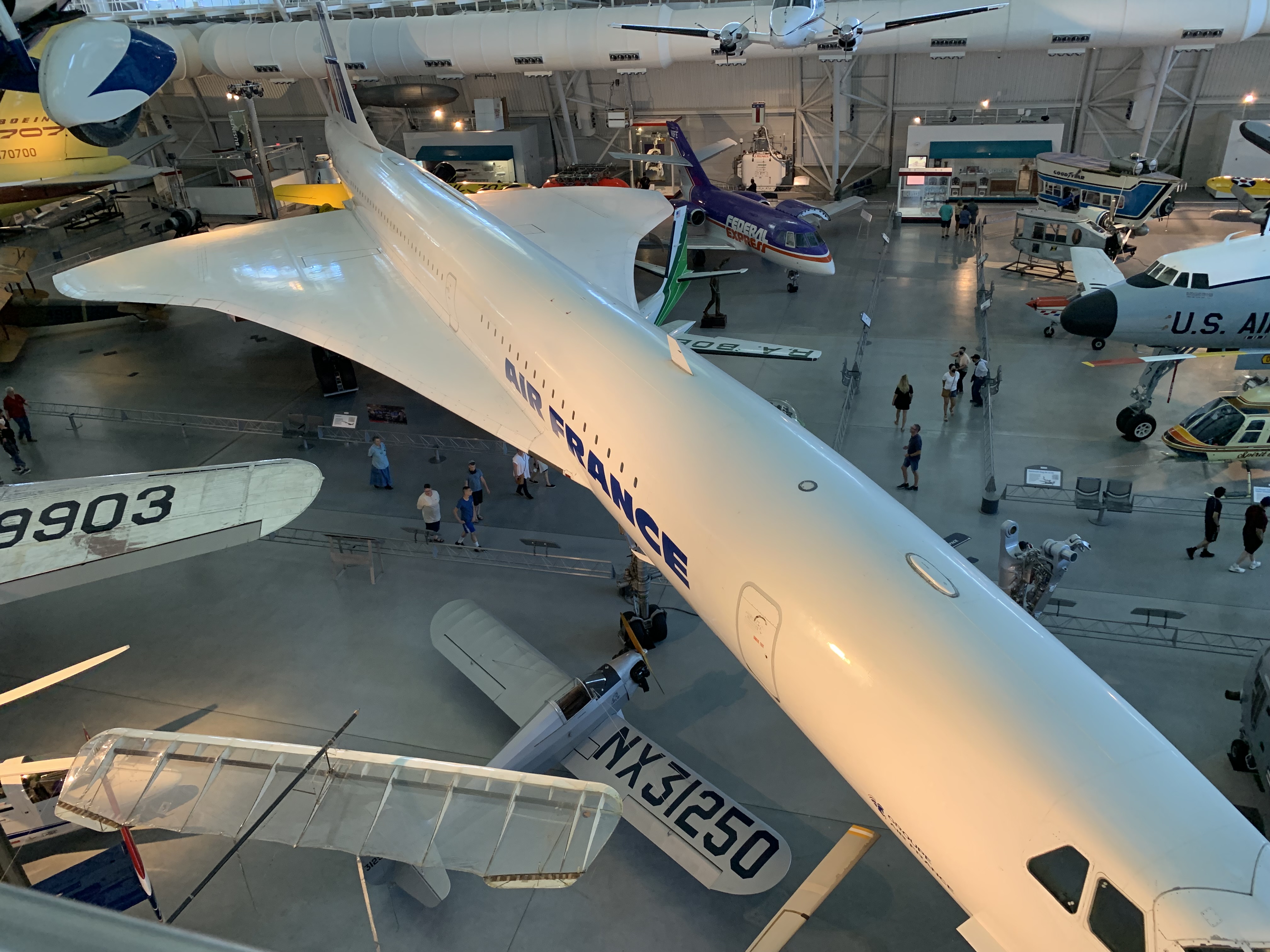
An Air France Concorde at the Stephen F. Udvar-Hazy Center of the Smithsonian National Air and Space Museum near Dulles Airport in Virginia.

Another technology that I remember dreaming about in 2000 that was in active commercial use then yet has lain dormant for most of the quarter-century since is supersonic flight. The Concorde last flew in 2003 thanks to its extreme cost and the fatal crash at Paris-Charles de Gaulle Airport in 2000. Yet I remember my Mom often saying that she wanted to cross the Atlantic at least once on a supersonic jet. While there are many aspects of the in-flight experience on your average transatlantic flight that I enjoy, I do actually enjoy the food and movies in economy for the most part, I certainly wouldn’t mind a quicker jump across the water to Europe. The average supersonic flight between New York and London or Paris was 3.5 hours compared to the 7 hours it tends to take on subsonic aircraft. That’s closer to the travel time for a flight from the Midwest to Southern California today. Looking at supersonic aviation now and the promises of companies like Boom at restoring supersonic flight to commercial service, I’m hopeful that I’ll be able to someday fly on one of these planes. In the short term I’m more hopeful that Kansas City might finally get a nonstop service to one of the European capitals in time for our hosting duties in the 2026 FIFA World Cup. On my last return trip from Paris to Kansas City via Washington-Dulles while I enjoyed a great many aspects of the flight I do remember a growing sense of annoyance at how long it takes to get to Kansas City from Europe when compared to most other American cities our size and larger.

Finally, at the turn of the millennium one of my favorite TV shows was the natural history program Eyewitness co-produced by the publisher Doring Kindersley, Oregon Public Broadcasting, and the BBC. Surprisingly for how influential it’s been, I haven’t written about Eyewitness on the Wednesday Blog yet. This program brought the factual book series of the same to life for its viewers and set the stories of life, the universe, and everything it told in a computer-generated space it called the “Eyewitness Museum” which acted in some ways like a physical museum yet in many others with unusual camera angles and hallways it was entirely an edifice of the mind. I remember loving this series because it gave me the space to imagine and wonder at nature, the world, and human history in a manner which few other programs have done. I remember hoping that I could visit such a museum sometime in my life, and in some ways I’ve done that time and again. Many of the cultural artifacts in the program are on display at the Victoria & Albert Museum in London, and when it comes to the animals & plants on camera it’s well and truly on display in natural history museums around the globe that I’ve gotten to visit.

I rediscovered Eyewitness again in my early twenties when DK began uploading the episodes onto YouTube. By that point I’d already been making videos of my own for nearly a decade, and rewatching this old show from the ‘90s I was inspired to try to frame the material I wanted to describe in videos and in my teaching in a similar minimalist fashion on a blank white background with the object of my videos and lectures taking front and center. As it turns out, white is a much harder color on the eyes so in 2019 I switched to a light blue which I continue to use. My former students will certainly be quite familiar with my blue slideshows that form the core of my teaching materials. Those old Eyewitness episodes disappeared from YouTube in Fall 2023, in fact the last time I watched any of them was when I showed one to my seventh graders as part of their World Geography class.

Yet when thinking about the Eyewitness Museum itself the technology exists today that the viewer could tour that structure through virtual reality headsets. I still haven’t tried one of those on yet, at first from what I understood they didn’t fit over glasses, yet I’m curious about what potential they may hold for both education and entertainment. It would be fascinating to use such a headset to wander through that labyrinth of galleries famous for their all-white surfaces and see everything they hold.The last twenty-five years did not meet our expectations in many respects. Paul Krugman’s final editorial for the New York Times published on 9 December 2024 speaks to the loss of our millennial optimism in the face of 9/11, the Wars in Afghanistan & Iraq, the Great Recession, and all the other crises that have crashed on the rocky shores of our world. Where for a while we thought we might have fine sandy beaches that heralded a prosperous, safe, and happy future now we have fearsome cliffs which act as much as walls defending our “scepter’d isles” as limits to the possibilities of things in our world. I feel a dissonance in my own life with the world we live in because I am still an optimist, and still dream of things that we could do, new monuments to that optimism we could build, and like the Irish quarrymen brought to a young Kansas City in the nineteenth century by Fr. Bernard Donnelly, the founder of the Kansas City Irish community, ways in which we can break down those cliffs and build a city of fountains and gardens in its place. I’ll write more about all of this next week in a reflection on what I hope we will see realized in the next quarter of the twenty-first century. By the time we reach New Year’s 2050, I will be 57 years old, far from the young boy who watched humanity ring in the third millennium in what was for him a new city in a new time full of hope.

The Promise of Hope

Last week, the 7th of May 2024, marked the 200th anniversary of the premiere of Ludwig van Beethoven's Symphony No. 9. Today then, I want to talk with you about the hope which runs through that Ode to Joy. The recordings of Beethoven's Ninth Symphony heard in this episode came from the 1956 album by the ProMusica Symphony Orchestra and Chorus under the direction of Jascha Horenstein and are free to use under the Public Domain Mark 1.0 Universal label and can be found in full at archive.org. — Click here to support the Wednesday Blog: https://www.patreon.com/sthosdkane

Last week, the 7th of May 2024, marked the 200th anniversary of the premiere of Ludwig van Beethoven’s Symphony No. 9. Today then, I want to talk with you about the hope which runs through that Ode to Joy.


Last time on the Wednesday Blog, I wrote to you in what I hoped would appear to be an optimistic tone that still acknowledged the troubles and trials I find before me, and to an extent I think that worked. While I did not intend to write a sequel to that post, this week’s topic is one which fits well enough, and which I feel quite fervent about as to warrant mention here in the Wednesday Blog.

I began to explore the world of classical music around the time I started high school. Quite honestly, my big introductions were the music of George Gershwin and the original cast album of Phantom of the Opera. Yet around that time I was introduced to an ensemble called the William Baker Summer Singers and joined them for the 2008 season when we performed Beethoven’s Ninth in Grace & Holy Trinity Cathedral in Downtown Kansas City. I was not the best singer by a long shot, still very new to the whole experience, yet it was the start of my off-and-on tenure singing with choirs around Kansas City.


The first measures of the 1st Movement

Beethoven’s Ninth thunders into life with the opening measures of its first movement, as though the hope and joy which makes this piece so famous is born from something elemental deep beneath the ground, rising out and toward the audience with the orchestra as its first voice. This then makes the chorus out to be some even deeper root of the spirit of this work, its power growing throughout the first three movements leading up to the tremendous clamoring second movement. I’ve always imagined the second movement told the story of a fast paced and clattering horse and rider making their way through fields and farms to pass on good news to some learned recipient.

The third movement is far softer than the first, yet again it speaks to something grand as yet only being revealed to the audience. There is a sense in the third movement of a fundamental truth as of yet untold, whose voice could raise both the living and the dead to new heights of human dignity and grace. Through music, Beethoven captured the full spectrum of human aspiration and expressed our innate confidence in our own abilities to improve our lives. It reminds me of the “Et incarnatus est” movement in Beethoven’s Missa Solemnis, which is written in the Dorian mode, giving it a distinct feeling of rising from a deep ether into the light of a new day. The Missa Solemnis was also written in 1824, premiering on the 7th of April of that year.


The 3rd Movement’s climax

I hear something inherent in Beethoven’s optimism, that even with all the troubles of his life there near its end he could still dream that we might become better versions of ourselves. The tempo marker for the first movement Allegro ma non troppo e un poco maestoso (Quick but not too much and a little majestic) might well be a good motto for life; a good life ought to be taken at a fair pace, yet not too fast, and with some majesty for one’s nature. We can hope for something better because we are born with minds capable of dreaming of better tomorrows.

At the heart of the Ninth Symphony and in particular its choral fourth movement is a fairly simple melody, one that I learned quickly during my time rehearsing it. That melody has taken on a life of its own beyond Beethoven’s original composition and become something ubiquitous in many respects. There are two church hymns set to its tune in the hymnal we use in my current parish choir, “Joyful, Joyful, We Adore Thee,” and the slightly more modern, yet traditionally formal, “Joyful, Joyful, We Adore You.” What I love about this melody is that it is easy to learn, easy to adapt, and so upbeat.


The Ode to Joy theme from the 4th Movement

The words which Beethoven set to that tune were written by the German poet Friedrich Schiller (1759–1805) in the summer of 1785. They are an outgrowth of the Enlightenment and the fervent calls for acknowledging our common humanity that grew from this reassessment of our relationship with Nature. Those words speak volumes to me, that joy makes brothers and sisters of us all, revealing our original state of nature to us amid all the nebulous fog of our lived expectations. It’s easy to forget that beneath all the mantles of identity we hoist upon ourselves that we are all the same in our life and yes in our mortality.

There is a deep promise here that with hope we can accomplish tremendous things. Hope alone will not solve our problems, we will always need to act to improve ourselves and our communities. True hope, pure and fulfilling hope, is such that it requires we all act together to our common benefit, that we think of each other more than of ourselves. I have such a hope in humanity, after all I’ve seen moments in my own life and in our history in which we’ve come together to work for a higher purpose than any one of us. Again, quoting from Schiller’s poem:

“Seid umschlungen, Millionen!
Diesen Kuß der ganzen Welt!”

            “Be embraced, all ye millions!

            With a kiss for all the world!”

This promise of hope is something that is sacred because it offers us a chance at redemption no matter how terrible the things we may have done. There is something truly divine about it, that we can become better versions of ourselves not in spite of who we’ve been but rather because we are willing to improve who we are and how we live with our neighbors.

That is a promise that I hope we can fulfill.


The recordings of Beethoven’s Ninth Symphony heard in this episode came from the 1956 album by the ProMusica Symphony Orchestra and Chorus under the direction of Jascha Horenstein and are free to use under the Public Domain Mark 1.0 Universal label and can be found in full at archive.org.


Copyright

This week, a discussion of copyright expiration and what that means for this publication. — Click here to support the Wednesday Blog: https://www.patreon.com/sthosdkane

This week, a discussion of copyright expiration and what that means for this publication.


I’m a relatively cautious writer when it comes to many of my friends. The Wednesday Blog reflects this caution in its simplicity and dearth of music or asides. Since day 1, I’ve been concerned about avoiding copyright infringements that could sink this entire project. This fear may not be justified, as some of you my audience have told me, because of how small an audience I have; I could well get away with using audio clips from songs that are still copyrighted interspersed in my work so long as the owners of those clips don’t notice. I gape at this perspective with an astonishment that characterizes the litigious world in which we live today.

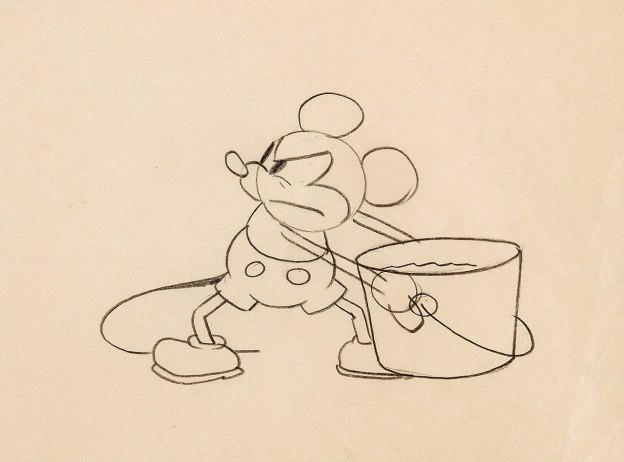
So, it was a delight to read several weeks ago that a great deal of music, film, and stories would be entering the public domain on New Year’s Day, just earlier this week. Films like Mickey Mouse’s first appearance in Steamboat Willie, characters like Peter Pan and Tigger, and the Marx Brothers musical Animal Crackers saw their copyright expire at the end of 2023 and start of 2024. What this means for me is complicated. I could use song recordings that were created before 1928 here in the Wednesday Blog, especially in episodes that deal with timely topics to those tunes, though so many of those older recordings have fared so poorly that I’ve chosen to avoid including them.

I did consider writing this week about Walt Disney’s influence on Kansas City––the place where he got his start, and his old Laugh-o-Gram Studio which is today being slowly renovated––and building that story around the audio track from Steamboat Willie, yet by my best understanding while the silent film itself is now in the public domain, the music and sound effects that go along with it were copyrighted by Disney in 1930 and remain so until that copyright expires in 2026. That’s a story for another day, then.

For at least two years now I’ve planned a story that would express my appreciation for the music of George Gershwin, the great American composer of a century ago whose work blended the classical orchestra with jazz in clever ways that created a certain American voice. Yet again, while many of Gershwin’s works are now in the public domain their recordings aren’t. A good solution to all of this would be for me to reach out to my musician friends and see if we can make new recordings of these public domain scores.

Copyright is a tricky issue for me. On the one hand, I want all of my work to remain my own. I’ve had moments in the past where others have taken credit for things I’ve done, and that really doesn’t feel good. Still, it makes things difficult for me in this instance of crafting a podcast each week because my best solution is to do everything myself, text and score, and record all of it by myself so that I own all of my own copyrights. This problem is less pronounced when it comes to the text of the Wednesday Blog itself. There I know exactly what to do, after all in my day job I spend a good deal of time citing sources and filling out footnotes in my historical research, something that I do actually enjoy in spite of how time-consuming it can be. Yet plagiarism is a different matter from violating someone’s copyright, and the two only overlap in that I know better than to try and use audio in the podcast without permission.

My friends are right when they say I’m a small enough fish that if I skirt along the hem of copyright law by using the odd audio-clip here or there it won’t be much of a problem. Yet I don’t want my work to remain that of a small fish in a big pond forever, I want what I write to make an impact on our world. As boastful as it may sound, I want to help, and this is the best way I know how. I want to help advise and inspire our world with the stories I tell whether through my non-fiction writing in this outlet or in my research, or through the occasional stories that I tell. To do this well, I need to cover all of my bases so that if I am fortunate enough to be in a position of impact, I won’t have any early-career problems that could harm my credibility.

I hope this new year 2024 brings a brighter future than the present we find ourselves in. For now, I’ll leave you with the Victor Mixed Chorus’s 1928 performance of “Auld Lang Syne” from their record Songs of Scotland. Happy New Year everyone!


Audio scanned by Internet Archive Python library 3.5.0, scanner George Blood, L.P.

Mirrors

This week on the Wednesday Blog, how I've learned to deal with stage-fright and in some cases overcome it. — Click here to support the Wednesday Blog: https://www.patreon.com/sthosdkane

For a few years starting when I was thirteen, I took lessons in traditional Irish music from a good friend named Turlach Boylan who is quite talented on the flute, tin whistle, and mandolin and plays locally in sessions. I had potential but never really got there, in part because I didn’t practice as much as I should’ve, yet also in part because I kept running up against a sort of translucent wall of my own self-consciousness. After a while when we were both around during sessions, Turlach would invite me to come join the circle and play with the other musicians. I’d try but often when I’d hear someone else playing with me, I would burst into a big smile and have a very hard time playing my tin whistle with the group.

There’s something about playing an instrument with a group of people in such a loose and lively manner as in a trad session that has been hard for me. This week I read a story in Commonwealabout the joyous experience of all the craic that goes on in the trad sessions that the author, Commonweal‘s managing editor Isabella Simon, had joined in New York City. It made me think more that perhaps in that context my fear was less a shock at the fact that I was playing with other people but the worry that I’d mess things up, play the wrong note, or not know the jigs, reels, polkas, waltzes, and airs they were playing. As Ms. Simon wrote the talent of a session player is judged not in their virtuosity but “by whether the listeners are tapping their feet.” That clicked for me because that is how I approach teaching and lecturing, the expertise and skill that I exhibit in the classroom is a big part of the puzzle, yet it is one half of the whole picture which is best filled out by a comfort and ease with entertaining my audience and keeping them engaged.

I’ve found that difficult the last few days as I’m starting my new teaching job, sometimes I’m not sure my messages are getting across, especially when I have to shout over a room of excited students. Still, it’s not an unfamiliar lesson for me. One story I’m sure I’ve told on this blog before is about an icebreaker presentation that I gave in my Junior Year AP English class in high school, where our teacher asked all of us to bring in baby pictures of ourselves that she could hang up on the back wall of her classroom. When I got up to present my own picture, I let slip that I had considered bringing in a picture of a monkey to say that “I was a very hairy baby,” a line I think I partially stole (lovingly indeed) from Father Ted‘s milkman episode. Still, the picture I showed to the class was of a very large ancient tree on the grounds of Canterbury Cathedral with my Dad and I barely seen near the base sitting on a park bench. My classmates laughed at the whole routine, and I returned to my seat at the end of it feeling really good about myself; my fear that they’d all be laughing at me was avoided by telling the joke rather than being the joke.

In my teaching, I like to keep things loose, to have more of an improvisational style that changes to fit the room. That worked well at the university level and is kind of working here with the middle schoolers, but with more guidance from myself to make sure they’re doing what they need to be and getting the correct information about the day’s subject in the moment. I tend to not have the same kind of stage-fright that I used to, I can usually get up in front of a crowd and say what I need to, yet I do judge the room every time. There have been moments when I’ve started talking and I can immediately tell most of the people in the room either don’t care or actually are sitting there against their will. In those cases, I keep things brief. If I can play around with an audience though I’ll have more fun and will weave different stories together.

I love music, from the structured virtuosity of a fine orchestra like our own Kansas City Symphony to the fluid vitality of an Irish traditional session and all the great jazz in between. I love how it can express things that mere words could not annunciate. Yet where Irish music shines is in its ability to keep that conversation, no matter how joyous or sad, beyond one tune and into the next. In that moment the memories of generations of musicians can be heard, their voices echoed in the instruments and songs of their students which keep this rich tradition alive and well.

The lesson I’ve learned in all of this, which Ms. Simon’s story clarified for me, is that all life is a performance, and in the moments when I can relax and see past the mirror in my mind, I’ll be okay. In all the things I’ve tried for personal enrichment, from learning French and Irish to learning how to skate on ice after the Pyeongyang Olympics in 2018 to standing on stage in front of a full house, I’ll be okay as long as I don’t think about the fact that I’m putting myself out there too much, taking that risk of ridicule. My stage-fright will only ever be experienced by me and me alone. And at the end of the day if I’m comfortable with my own performance, if I play to the internal audience as well as the external, then I’ll be happy. To paraphrase something the gentlemen of the Monty Python troupe once said, “we only write jokes that we think are funny.” In those sessions, I’m playing not just for my own ear, but to be a part of a circle of friends united by our common musical language, at ease with each other’s company, rejoicing evermore in that fine moment.

The Voice of American Music

Growing up there always seemed to be a few specific genres of hymns that’d be sung at Mass: the really traditional Latin hymns that go back into the Middle Ages, the eighteenth and nineteenth century hymns, often of Lutheran or Methodist origin that we Catholics had adopted, without necessarily acknowledging their sources, and the newer hymns written by the likes of the St. Louis Jesuits or those that came out of the spiritual and Gospel tradition native to this country. Often, my experiences performing music, whether singing or playing, was pretty well focused on church music and on the other hand on traditional Irish music, which I started learning when I was 13.

It strikes me how much our common musical language here in the United States can bridge gaps that we ourselves aren’t yet quite ready to leap across ourselves. My own experiences coming from a Midwestern Irish American Catholic family are entirely different from many of the people I work with today on so many different levels, but at the core of it all there seems to be this same common musical language that subconsciously unites us.

One of my favorite YouTube videos lately is of the great cellist Yo-Yo Ma performing “Going Home” from Dvorak’s 9th Symphony for the New American Arts Festival. Ma begins his contribution by telling the story of Dvorak’s time teaching music to his American students before his own return to Europe, and how the Czech master told them not to copy his style but to go out and listen to all the different music around them and create their own style from that. Out of those students and their students came Duke Ellington, George Gershwin, and Aaron Copeland, three of the great American composers of their day.

I often find myself thinking of how I could embody this country in a particular sound, or in a sonic landscape that could immediately transport me as I listen to one part of this country or another. When I wrote my trio sonata for flute, violin, and cello, I set the first three movements in a very Irish tone. The first movement was an entirely original jig, with the flute taking the part that I’d normally play with my tin whistle. The second movement ended up being my version of Dvorak’s “Going Home”, this time a setting of the Irish air “An Gaoth Aneas,” known in English as “The South Wind,” the third movement ended up being a setting of the jig “Merrily Kiss the Quaker’s Wife,” which has a really fun second part to it.

The fourth movement though was again something new. But unlike the first three movements, which told their story with an Irish voice, the fourth movement was set in America, and to tell that story I tried to emulate the voice that Aaron Copeland composed in, built off the sound of American folk tunes, their very particular twang that certainly has some Irish roots but has changed with all the other influences on music in this country. I wrote that fourth movement with the spirituals and originally Methodist hymns I’ve sung at Mass all my life in mind, and compared to the rest of the piece it has a very different sound.

There’s a related but still different sound in the musical landscape of the American West, something born out of both old cowboy songs from the nineteenth century as well as both twentieth century Hollywood soundtracks to the great Westerns, including my personal favorites, the contributions of Ennio Morricone’s to the genre through his scores for Sergio Leone’s spaghetti westerns A Fistful of Dollars, For a Few Dollars More, The Good, The Bad, and the Ugly, and of course Once Upon a Time in the West. Still more interesting to me is that this western soundscape has been picked up in recent decades by the continued popularity of Country music, though admittedly it’s a genre I’m personally not nearly as fond of as many of my fellow Americans.

When I think of one particularly American instrument, it’s honestly the trumpet. Sure, this is something that was invented in Europe and is used in all sorts of contexts outside American music, but the trumpet nevertheless plays a central role in two particular musical genres that speak volumes to me personally. The first is the frequent use of the trumpet to represent the solemn dignity of the republic, as a calling card for our country as the first modern representative government. It’s something I hear particularly in the film music of John Williams, especially in his scores for Lincoln and Amistad.

This particular sound blends into the use of the trumpet as a stand in for the military as well, seen especially well in Williams’s score to Saving Private Ryan or in Jerry Goldsmith’s score for the film Patton and Elmer Bernstein’s mix of military motifs with Keystone Cops silliness in his score for Stripes. The trumpet, it’s simple yet pronounced call, seems to me to symbolize the idealized nature of this republic, and its classical legacy with the same instrument often being used in sword and sandal films to stand in for Republican Rome.

The other great genre that uses the trumpet to tremendous effect is my favorite genre created in this country: jazz. When I was first really learning about jazz as an adolescent I specifically remember thinking that I was less interested in what I saw as that boring piano jazz that my Dad liked to listen to on NPR. Instead, I wanted to hear the exciting stuff written for trumpets and trombones and horns.

I’ve since grown to love piano jazz, as my students can tell you from listening to Duke Ellington, Count Baisie, and Jon Batiste before the start of my classes every Friday (when I can get the sound in the classroom to work), but I still have a knack for wanting to hear trumpet. I’ve gotten to see Wynton Marsalis play live twice now, the first time with the Abyssinian Gospel Choir when they played his Abyssinian Mass at the Kauffman Center in Kansas City about 7 years ago, the second time when he played with Jazz at Lincoln Center in a Christmas concert at the Midland Theatre in 2015 or 2016. Jazz trumpet especially lends itself to Latin Jazz, another part of this country’s and more broadly these continents’ musical landscape that speaks directly to the soul of what it means to be American.

One of these days, I’d like to try to blend the traditional Irish music that I play with jazz, to see what sorts of neat sounds come out of it. What sort of language will be sung by those instruments when they come together. Maybe if I try my hand at composing again I’ll make an effort at it. Oh, and if you’re looking for recordings of my sonata I’m afraid you’re out of luck, it’s yet to be performed, though I’m open to offers there.

Optimism and Belief

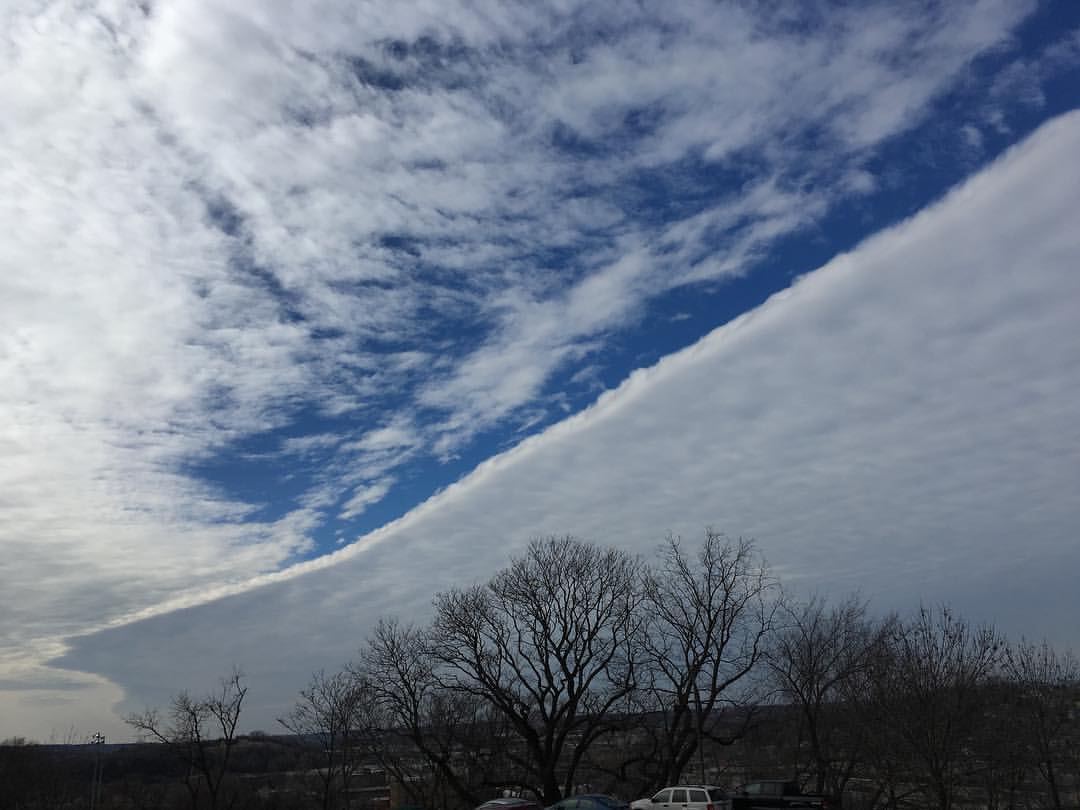
Cloud-line

In my life, there have been two things standing as constants: optimism and belief. I have embraced these two guiding principles, and striven in due course to live a better life as a part of the wider human community through them. For me, my faith as a Catholic and as a Christian is an inherently positive one; it is a faith in Resurrection, in Union with the Divine Essence, in the fulfilment of the circle and restoration of humanity to paradise.

Yet to allow this faith to persist I have found myself inherently optimistic, always expecting the best from people, and looking at even the darkest of situations with the hope that is required to believe in something greater than Reality. True, this is blind faith, something entirely counter to the principles of our scientific age, yet in the end is not blind faith equally necessary in a scientific setting? After all, we have yet to learn all that there is to know about nature, our sciences are as of yet unfinished in amassing the totality of reality. Therefore, if we are to accept science as an effective and prosperous measure of nature, then we must also accept that that measure is man-made and limited in its scope.

I see those things measured by science each and every day, and I am in awe of their wonder. I see how the Sun rises in the east and sets in the west, how the stars circle in the sky as the year passes. I hear the wind bristling through the leaves of the trees, and across the tall grass prairies. I have known what it means to be caught on the beach at high tide, and to be at the mercy of the awesome tempestuous power of lightning. Past generations might well have worshiped these forces of nature, seen them as gods like Zeus, Taranis, or Ukko, yet I see them as terrestrial, as natural, as real. The true force, the veritable essence to be worshiped is far greater than even the rolling thunder or bristling lightning.

In these circumstances I am reminded of the American hymn How Great Thou Art, yet in the smallest of moments too I am reminded of God’s coming to Elijah on the softest breath of wind in the cave. Divinity and the essence that made all that we know and love is so far beyond our own understanding, yet in that realisation I find my peace.

Often it can be said that I find my belief renewed through music, through that purest, most mellifluous of sound. Some of the most sacred moments of my life, the most moving moments in the story of my belief have come in moments of music, from operas like Mozart’s Die Zauberflöte to the Pilgrim’s Chorus in Wagner’s Tannhäuser to great orchestral outbursts of emotion as in Stravinsky’s Firebird and most all of Mahler’s symphonies; yet equally spiritually potent for me are the more recently composed naturalistic Mass settings that I sang with the Rockhurst University Chorus while an undergraduate student there from 2011 to 2015. Music has long been said to be the Voice of the Heavens, and certainly it has appeared to be so to me.

Yet what I find the most fulfilling to my belief in the Divine is humanity. In the Christian tradition we believe that humanity was “Created in the Image and Likeness of God.” For me, this means that our souls particularly were made in the Divine Image, but that our bodies also have Divine inspiration. When I see humanity, with all our faults, all our problems, all our pain and anguish, I can’t help but be swept off my feet in grief. Yet at the end of the day I always remember the old adage echoed by Little Orphan Annie, “Tomorrow will be a brighter day.”

I believe that one day that will come true, that one day all will be sorted out in our capitals, our courts, our executive palaces. I believe that one day we will march through our cities, not in protest or in anger, not out of anguish or to alleviate our suffering, but because we are celebrating that most essential characteristic of our humanity: liberty. I believe that someday all humanity will walk together, singing in unison, a multitude of voices, of languages, of cultures and creeds making one song. I believe in optimism, and I am optimistic about my belief.

17 June 2014 – A Musical World

There is music in the world

it flows in the winds

it flowers on the trees.

There is music in the world

which blossoms with each new life

and is releas’d into the cosmos

with each passing death.

There is music in the world

that makes us all happy

that makes us cry.

All this can be done by music

the rhythm of life

the melodious voice of nature

the source of beauty and strength.

The Canadian Brass comes to Kansas City

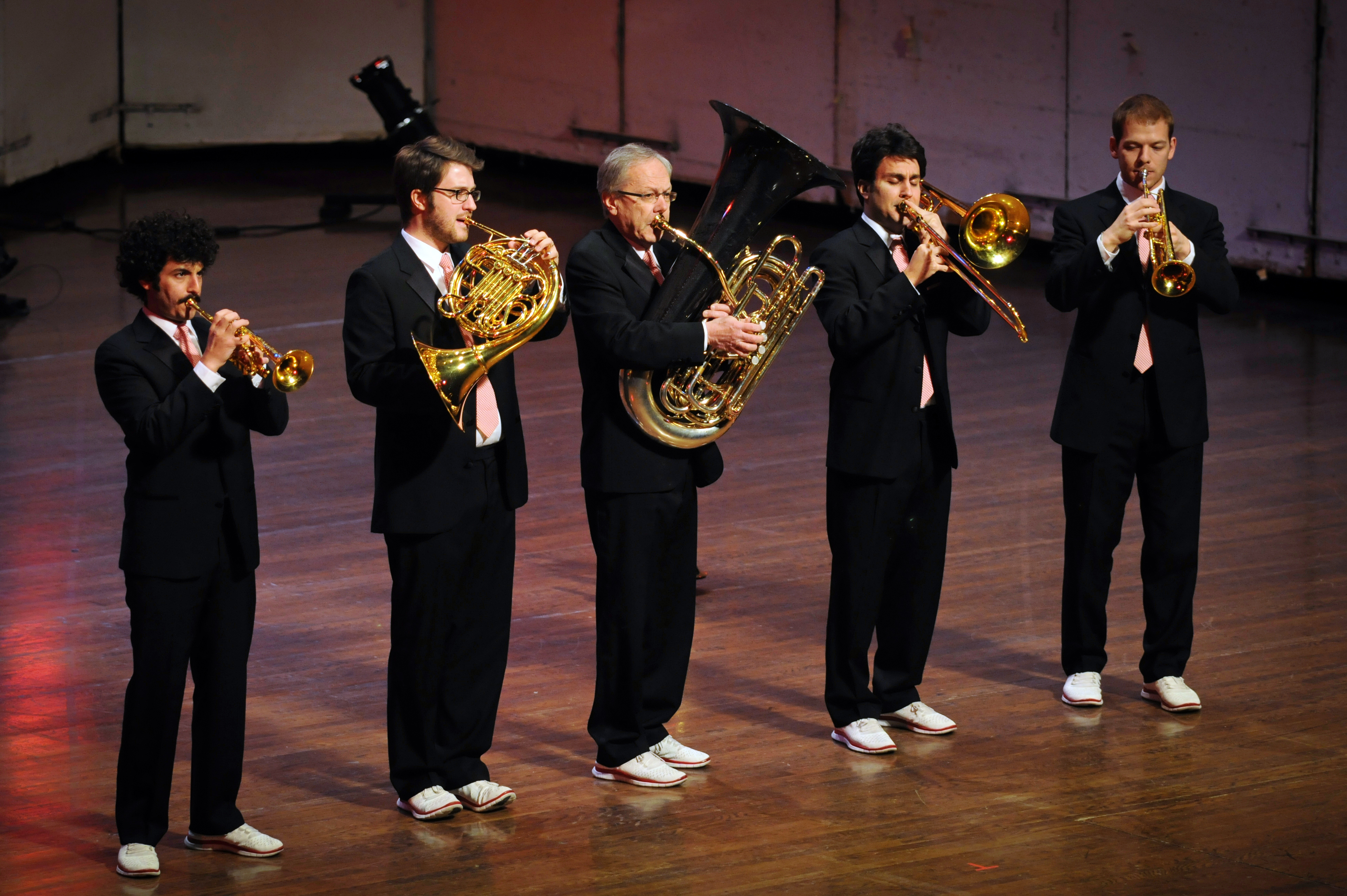
Kansas City – I will admit that I am one of those who had heard the Canadian Brass before, mostly on NPR and the BBC, but I had never actually Imageproperly heard of this fantastic quintet until tonight. The Canadian Brass are a world renowned brass quintet founded and based in, you guessed it, Canada. They have performed all across the planet both live in person and through the transmissional wonders of television and radio. Their membership includes five of the finest brass players in the world, with Americans Christopher Coletti, Caleb Hudson (Trumpets), Eric Reed (French Horn), Greek Achilles Liarmakopoulos (Trombone) and American-Canadian Chuck Dallenbach (Tuba) who was a co-founder of the original group in 1970.

In this concert presented by the Harriman-Jewell Series at the beautiful Kauffman Center for the Performing Arts’ Helzberg Hall, the Canadian Brass played with humour and demonstrated with flourish their fantastic musical abilities.
The quintet began with four pieces which depict the history and evolution of brass orchestration within Western classical music. These were English Renaissance composers Anthony Holborne’s (c. 1545-1602) Muy Linda, and John Dowland’s (1563-1626) Come Sweet Love, followed by early German Baroque composer Samuel Scheidt’s (1587-1654) Galliard Battaglia. These were played with charm and period enthusiasm, which as someone who has performed solely Early Music for the past few years, I throughly enjoyed.
This was followed by a set of selections from the Canadian Brass’ album Carnaval, which were taken from musical sketches for piano by Robert Schumann and arranged by the quintet’s own Coletti. These were a whirlwind characteristic of the carnival celebrations of Venice, with all the fun and excitement of that last day before the 40 days of purple-clad sorrow leading up to the Passion.
Courtesy of CanadianBrass.com
Following this jolly jaunt in the visions of Schumann, the quintet was joined by horn player Eric Reed’s father, the magnificent Douglas Reed, on the Julia Irene Kauffman Casavant Organ, which going along with the national theme of the night was built proudly in Québec City. Douglas Reed’s performance on the organ was stunning, and reminiscent of Midnight Mass when the church organ sings out for joy at Christ’s Birth. He joined the quintet for four pieces, Farué’s Cantique, and the traditional carols Jolly Old St. NickGood King Wenceslas, and Jingle Bells. My only complaint of the entire concert came at this point, as I found it a challenge to hear the quintet over the bellowing awesomeness of the organ. Here Herbert Spencer’s declaration of “survival of the fittest” rang loud and true with the organic domination over the brass below.
Following intermission, the Canadian Brass took the floor once again with a Killer Tango introduced to the ensemble by their Greek trombonist Liarmakopoulos. It was filled with the spices and flavour of an Argentine summer’s evening, the sweet scent of that magnificent South American flavouring oozing like sumptuous wine from the performance. This tango was followed by a performance of Coletti’s piece Bach’s Bells, an arrangement of a Bach cantata and Carol of the Bells, which I simply found confusing.
For the next three pieces, the Canadian Brass was joined by the William Jewell College Concert Choir, led by Dr. Anthony J. Maglione in performing three songs Angel and the TrumpeterSweet Songs of Christmas, and We Wish You a Merry Christmas. I enjoyed hearing the choir and the brass work together, as the dynamics of the voice and brass instrument seem to share some qualities, especially the ability for projection.
Following the departure of the William Jewell Concert Choir, the quintet honoured that other great holiday of December (and November this year), Hanukkah, by performing a jazzy set of Dreydel Variations. The Klezmer clarinet impersonation and strong high C’s of Coletti stole this part of the concert with drama worth of an operatic divo.
Finally, the highlight of the evening came with the quintet’s performance of a Suite from Georges Bizet’s “Carmen”. Not only did they play the music from that greatest of Bizet masterpieces, but they did it with such showmanship and flair that it left the audience standing on their feet in uproarious approval. I especially loved the change of the male lead from the Spanish soldier Don José to the Canadian soldier Don Jos eh.
Needless to say, tonight’s concert by the Canadian Brass was one to remember for its musicality, its showmanship, and its humour. I was expecting a small chamber orchestra of very serious, circle sitting brass players. What I heard was far from that, it was a group of five friends who were playing fantastically beautiful music, and having a good time whilst doing it.

American Classical Music

Image

Courtesy of WGBY television.

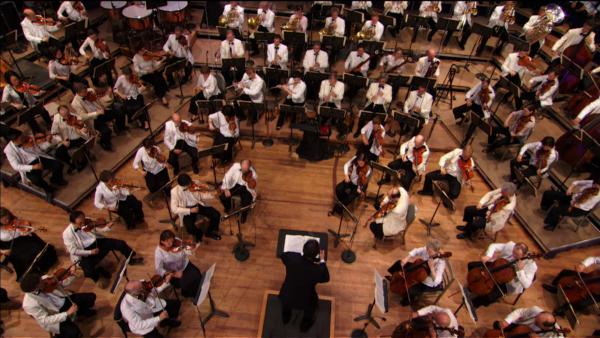
Kansas City – I can’t think of a better way of spending my last night at my parents’ house before returning to my townhouse tomorrow at Rockhurst than watching the Boston Pops’ 75th Anniversary concert at Tanglewood on PBS. So far, they’ve played Copland and Bernstein, two of this country’s greatest composers. Right now, they’re playing a suite from Bernstein’s On the Town.

George Gershwin, my favourite American composer.The odd thing is that when it comes to American classical music, I tend to think more of the various orchestras about the country, the New York Philharmonic, Chicago Symphony Orchestra, San Francisco Symphony, Boston Pops, and of course our fantastic Kansas City Symphony, just to name a few, than the composers who called this country home, or at least their birthplace. Quite honestly, there isn’t a single American composer in my top five list. That elite group consists of an Austrian, a few Frenchmen, and an Italian: Gustav Mahler (Austria), Giuseppe Verdi (Italy), Gabriel Fauré, Jean-Baptiste Lully, and Claude Deubssy (France). Even in the top ten, the Americans probably would only come in the bottom of those: W. A. Mozart (Austria), Ludwig van Beethoven, Richard Wagner (Germany), Sergei Rachmanioff (Russia), and George Gershwin (USA). Below Gershwin however do come a number of American composers; numbers 11-13 being Leonard Bernstein, John Williams, and Philip Glass.

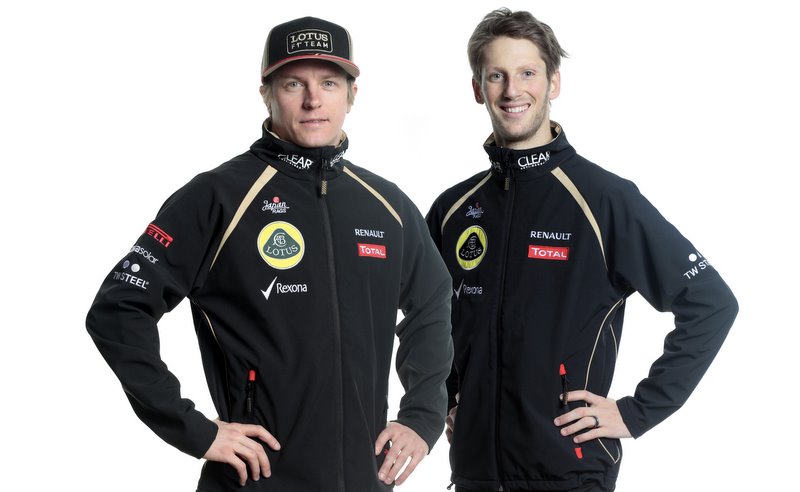
So, why exactly then, being a classical music lover who has lived the majority of my nearly 21 years in the States, do I, along with many others, tend to prefer European composers over our home-grown cast of colourful characters? I think it could very well go back to the fact that this country, along with the rest of the Americas, were once colonies of Europe, and therefore surely not on par with Europe’s high culture! Also, the American Revolution certainly didn’t help win the hearts of my fellow monarchist music lovers back in Europe. There is a general disdain for all things American in regards to high culture. Just look at the luxury status of a Mercedes or my favourite, a Jaguar, compared to their price tag equals from Cadillac, Chrysler, and Lincoln among others. Another area that this can be seen is in Formula One, my favourite of all motor sports, which features a largely European cast of drivers (go Lotus!)

Kimi Räiikkönen and Romain Grosjean, the 2013 Lotus F1 drivers

Kimi Räiikkönen and Romain Grosjean, the 2013 Lotus F1 drivers. Courtesy of grandprix247.com

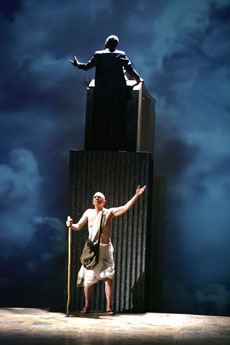
"Satyagraha", my favourite Philip Glass opera

“Satyagraha”, my favourite Philip Glass opera. Courtesy of the Metropolitan Opera, New York.

In this country we truly do have a great classical music tradition, with its own uniquely American flavour. I’d argue Broadway holds a similar place in American classical music that Gilbert and Sullivan holds in Britain. We don’t necessarily need to have grand operas of the same flavour as those that came out of Italy, France, Germany, Austria, and Russia. Our opera has a different flavour, a more, at least presently, popular flavour. Our opera buffa could be said to be Broadway, whilst our opera seria could be said to be works like those of John Adams, Philip Glass, and of course Gershwin’s Porgy and Bess and Bernstein’s West Side Story. Just like how in many a Verdi opera you can hear an all-too Italian flavour, for example the brass scales during the “Gran nuova! Gran nuova!” chorus in Rigoletto have always sounded quite Italian to my ears, so too West Side Story and most, if not all, of Gershwin’s major work has a distinctly American tone and texture to it. At the same time, because we are a nation of exiles, refugees, and immigrants, our composers have the flair and ability to write in the styles of many far distant lands, like Philip Glass in his Gandhi opera Satyagraha.

Tonight on PBS’ Great Performances, this testament to the power and uniqueness of American classical music stands firm, as both high art and popular art pieces are being performed side by side. When I started writing this entry, music that premiered on Broadway filled my parents’ living room, now it has been succeeded by the quietude of a Haydn Piano Concerto.

Until next time, tá!

My Redemption Song

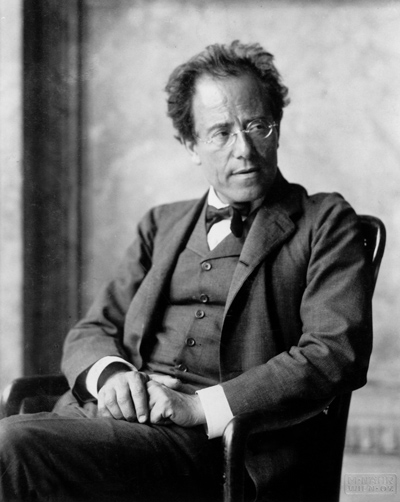
Kansas City – One of my favourite songs on the Chieftains’ 40th Anniversary album Wide World Over is the Redemption Song by Ziggy Marley. It’s a song that has stuck with me since the so named Kings of Irish Music released it 11 years ago, as has the concept that music can redeem. My personal redemption song isn’t your average 4 minute 30 second piece, nor is it something written in the past 50 years. It’s Mahler’s Symphony No. 8.

Image

I first heard Mahler’s music on NPR’s Weekend Edition early one Saturday morning sometime in about 2009 or 2010. The San Francisco Symphony was making a series of recordings of all of the great Austrian composer’s symphonies. They played excerpts from his Symphony No. 6 on the air, but I avoided Mahler for years, despite my liking what I had heard on the air, because I was told that his music was “quite depressing.” It wasn’t until Summer 2011 that I bought my first Mahler album, the New York Philharmonic, Leonard Bernstein recording of the Symphony No. 1 and the Adagio from Symphony No. 10. I bought it specifically to take out into the fields on my iPod so I could have something to listen to whilst painting fences in the pastures. From then on, any chance I got to listen to some Mahler, I took it, attending every Mahler concert performed by the Kansas City Symphony since. It is a blessing of sorts to be living in Kansas City right now, because the KCS’ conductor Michael Stern is certainly one of this country’s great living Mahlerians.

Mahler’s 8th, demotically known as the Symphony of a Thousand is just that, a symphonic work in which my favourite of the Germanophonic composers pulls out all the stops and lets his very heart and soul sing. It begins with the Veni Creator Spiritus, a prayer commonly chanted around Pentecost in the Roman Catholic Church, my sort of spiritual lifelong home.

However, the real redemption comes in the second part (Movements 3 and 4). It is here that Mahler’s music takes on the story of the Redemption of Dr Faust. Contrary to M. Gonoud’s famous grand opera about the aforementioned doctor, in Mahler’s version, it could be said Faust is redeemed rather than falling back into sin. Whenever I listen to Mahler’s 8th, I always come out on the other end feeling empowered and eased, like I do when leaving the confessional or after spending time in the Adoration of the Blessed Sacrament. It’s a calming sort of thing, which is rather odd considering the symphony ends with a very loud and quite triumphant sound. This is one piece that, if I ever were to get into conducting, I’d love to conduct. And yet, it takes quite a bit more to conduct than your average piece of music.

So, on days when you’re not feeling quite up to your normal, when you’re stuck in that bunker on the bottom nine, why not find a good recording of Mahler’s 8th, or really any of his works (except perhaps the 6th, which is rather sad), and have a listen. It’s as close as you’ll ever get to hearing a man’s soul cry out in joy and peace.

Image

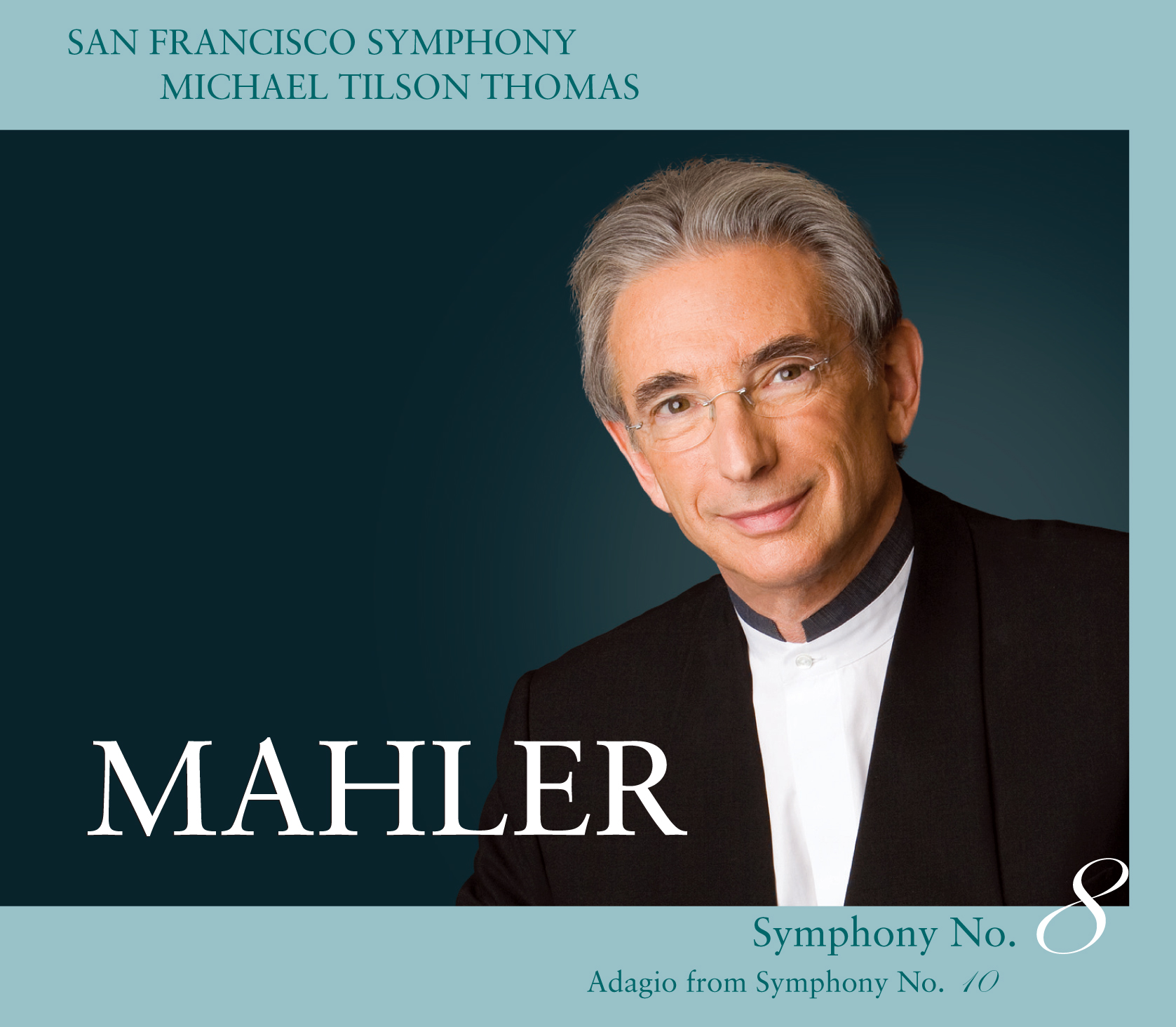
My personal favourite version is the San Francisco Symphony, Michael Tilson Thomas recording. It’s on iTunes.