


Of all the emotions that we can feel, pride is the one that seems to be the most complicated. It can be one of the greatest emotions a person will feel in their life. Pride can also be something that drives us to do terrible things. Pride mixed with fear makes fertile ground for bigotry, nationalism, and unfounded ideas of superiority over others. The very idea of the Other, something which my research deals with in part, is drawn from a prideful root. By this thinking we identify ourselves by our difference from others.
Here in the United States, we pride ourselves on being the “land of the free and home of the brave.” That line in our national anthem is diluted by the fact that we’ve never fully achieved the first part of it: we aren’t the most free or the most democratic society out there anymore, and for many Americans this society isn’t free. Still, we have ideals like these emblazoned in our national mythos, so that’s a step in the right direction. Our pride as Americans, drawn from our collective mythology, helps conceal the innate problems that have existed since the beginning of our colonial societies four centuries ago.
Pride can drive us to do terrible things. It can make us feel like we have a right to things that rightfully aren’t ours. In past generations rallying cries of national superiority led to the worst wars in human history, and even still the worst genocides and atrocities in human history. Pride gives us the false hope that we can act regardless of society, regardless of right, regardless of the consequences. It can give us the fodder to challenge the autonomy of neighbors and wreck lives in the process. Generally, we’ve begun to move past some of these outcomes of our prideful nature; wars of territorial conquest are far less common than they were even a century ago, but that ghoul still haunts the thoughts of those who see in it opportunity.
Pride can also drive us to do wonderful things, to embrace the progress and well-being of humanity. It has driven us to seek scientific advancement, to embrace change for the benefit of all. Pride in our common humanity has allowed us to truly begin to see ourselves as one common species, divided by nationality, language, and culture sure, but less so than ever before. Pride in my work is one of the things that keeps me plodding forward with my dissertation, knowing that what I’ve written so far is something I can be proud of, and hoping that the final product will be equally worthy.
If there is anything that we should be cautious of though it is the pride that convinces us that we are already at the summit of human achievement. The pride that says our methods and technology can determine the reality of all things as they exist now is just as troublesome as the argument that all that could be revealed to humanity, like a book turning page by page, has been revealed, and we find ourselves now at the end of that book. I strongly disagree with this, these ideas that are fueled by our pride more than anything else, that say we are at the culmination of our achievement. Each generation in their own turn does reach that culmination, in their own time, but to mistake one generation’s sum for humanity’s only holds us back. I hope we have many more generations of exploration ahead of us, exploration not only of ourselves and this planetary ecosystem of which we are intrinsically a part, but of the greater Cosmos beyond our orbit as well.
As we go forward our pride will continue to evolve with our experiences. That pride in human achievement that I mentioned a little bit ago has the potential to evolve into a new sort of bigotry that is human supremacy rather than white supremacy or any of the worst cases of nationalism today. We need to be cautious as we are proactive and remember that, as President Lincoln said, “as our case is new, so we must think anew, and act anew.” With every change in circumstance our methods of understanding those new circumstances needs also to change to fit the moment in question.
It’s naïve of us to think we know everything, to think we have all the answers. That is the fun part of living, getting to learn new things, to make mistakes, and to grow from them. And that is something I’m proud of.
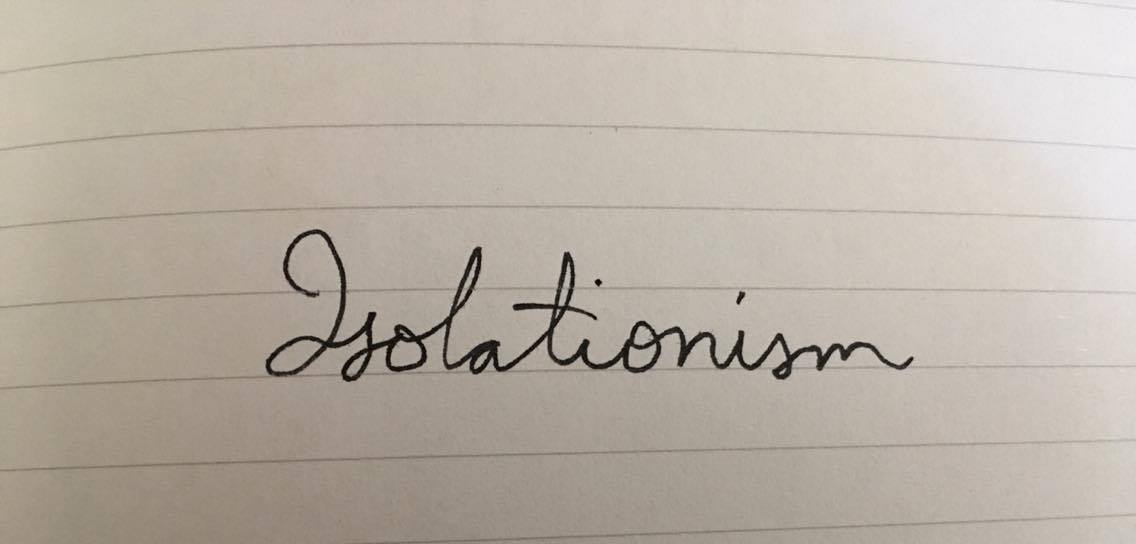 With a rise in nationalism worldwide, we have also seen a rise in isolationism from both the extreme right and extreme left. In my view, nationalism and isolationism are blood brothers, and will always go hand-in-hand. In fact, the only way in which an isolationist nationalist government would ever consider interacting with its neighbours would be either through coercion or full force of arms. This is the world that was seemingly far better known in a time now past, a time when it was far more likely for the likes of Germany, France, and Britain to go to war with each other rather than sit around the negotiating table and work out their differences peacefully. Today, in Western Europe and North America we have known this sort of negotiated peace since 1945. It is a peace that has led to my father and I never having had to go to war, unlike the generations before us.
 Wednesday Blog by Seán Thomas Kane