Tag Archives: Nelson-Atkins Museum of Art

The Joy of Reading

This week, an odd sort of sorrow that explains my reading habits. — Click here to support the Wednesday Blog: https://www.patreon.com/sthosdkane


This week, an odd sort of sorrow that explains my reading habits.


On Sunday evening, I surprised myself by finishing reading Sebastian Smee’s new book Paris in Ruins: Love, War, and the Birth of Impressionism. I read a review of it in the New York Times several months ago in conjunction with the exhibition celebrating the 150th anniversary of the first Impressionist exposition which I saw at the Musée d’Orsay this summer and is now showing at the National Gallery of Art in Washington. I’ve long loved the works of Claude Monet, especially his choice and use of color, yet of all the impressionists in this exhibit the one who stood out to me the most was Berthe Morisot (1841–1895), one of the few women included in the 1874 exposition. This book tells the story of her life during the Second Empire, the Franco-Prussian War, the Paris Commune, and in the first three decades of the Third Republic at a time when France was a prosperous great power yet still politically unstable, something familiar to our own day. I’d first heard of the Commune as an underlying current of the macabre in Gaston Leroux’s 1910 novel The Phantom of the Opera, though this is the first time I’ve properly read about the Commune or its collapse during the Semaine sanglante, or Bloody Week of 21-28 May 1871.

“Berthe Morisot au bouquet des violets” by Édouard Manet (1872), Musée d’Orsay
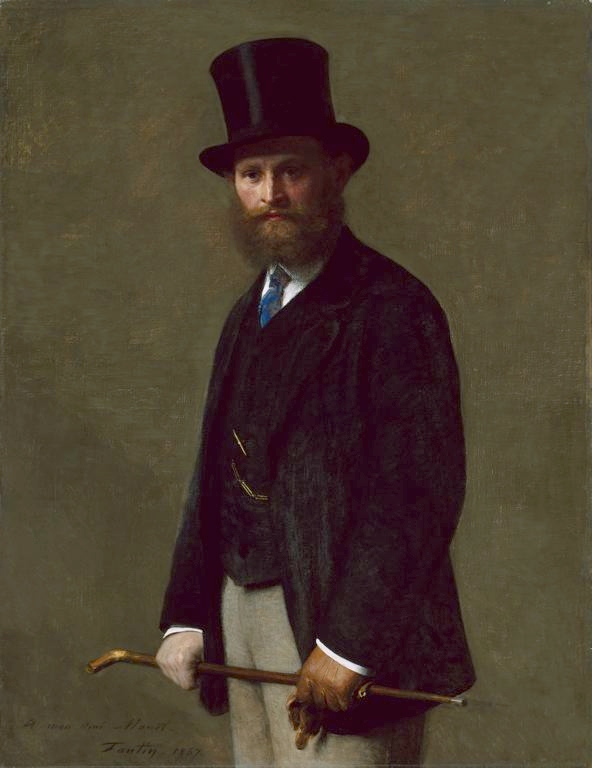
“Pourtrait d’Édouard Manet,” by Henri Fantin-Latour (1867), Art Institute of Chicago

Over the months I read and listened to this book I felt that I got to know Morisot, her friend Édouard Manet (1832–1883), her sister Edma Morisot (1839–1921), her husband Eugène Manet (1833–1892), and her daughter Julie Manet (1878–1966). Early while reading this I went, as I often do, to the Internet to look at the paintings described and learn more about these people I was meeting on every page. It struck me that many of the children of these Impressionists lived well into the twentieth century, Julie died in 1966. I’ve been drawn to the Impressionists for how tangible their art is, as I’ve written here before in my early childhood in the 1990s the decades a century before, notably the Columbian Exposition of 1893, felt recent and quite tangible to me. That sense remains even as we now move toward the end of this first quarter of the twenty-first century, and so Morisot, Manet, and Monet feel more contemporary to me than perhaps they aught to. That their art began to be acquired for American museum collections in the first decades of the twentieth century makes them feel to me more contemporaneous with the 1893 World’s Fair, the Theodore Roosevelt Administration (1901–1909), or the earliest stirrings of silent film before World War I than with the American Civil War which erupted when these artists were first exhibiting their works. That their children lived into my grandparents’ and parents’ lives leaves people like Morisot who died nearly 130 years ago feeling like they were just here yesterday.

I think the setting of Paris also helps with this. The French capital has changed in some ways, for one the Métro was built after Morisot died, though after I finished reading Smee’s book on Sunday night it struck me looking at some of the addresses mentioned in the latter chapters of the book that she would have seen the Eiffel Tower rise over the Champs-du-Mars from her various homes just across the Seine in Passy. Again, these are all symbols of the Belle-Époque that marked the transition from the nineteenth to the twentieth centuries, and yet these are people whose lives began during the July Monarchy of Louis Philippe in the 1830s and 1840s, a decade which also saw the death of the Marquis de Lafayette (1757–1834) and some of the last great figures of the American and French Revolutions of the 1770s and 1780s. Do you see how time can seem to pinch when considering it on a personal level? Paris is a city that has changed in some ways yet in others it would still be recognizable to someone from the 1880s or 1890s. One of my favorite short stories that I’ve ever read is Andrew Robinson’s contribution to the Star Trek: Deep Space Nine anthology series Prophecy and Change, a story titled “The Calling” in which Robinson’s character from the TV show, Elim Garak, is sent by his planet’s government to seek assistance from the United Federation of Planets whose capital in the late twenty-fourth century is Paris, one of the great cities of Earth. Garak remarks that unlike most other Earth cities Paris feels ancient, and that the locals like to keep their particular sense of Frenchness in spite of all the interplanetary mingling going on at this point over 350 years from now.

Again, despite all the advances in technology from Robinson’s description of Paris in the late 2400s it sounds like it would still be recognizable to someone like me who knows it from the 2010s and 2020s or perhaps even to Morisot and Manet who knew it in the 1860s through the 1890s. That’s a bold claim that may be without much merit, but I’ll make it here because it speaks to something intensely Parisian, a city more modern in many respects than many of our great cities here in the United States with a constantly evolving transportation network, good healthcare, and some of the best educational institutions on the planet, yet still true to itself in its age. When I finished Robinson’s story, I was so moved that I considered trying to contact the author to tell him as much, though I haven’t built up the courage to do so yet. That’s something I’ve begun to do with fellow historians, at these conferences over the last three weeks I would often tell people whose books I’d read how much I enjoyed them. It’s something I hope people will say to me when I publish my own works later this decade.
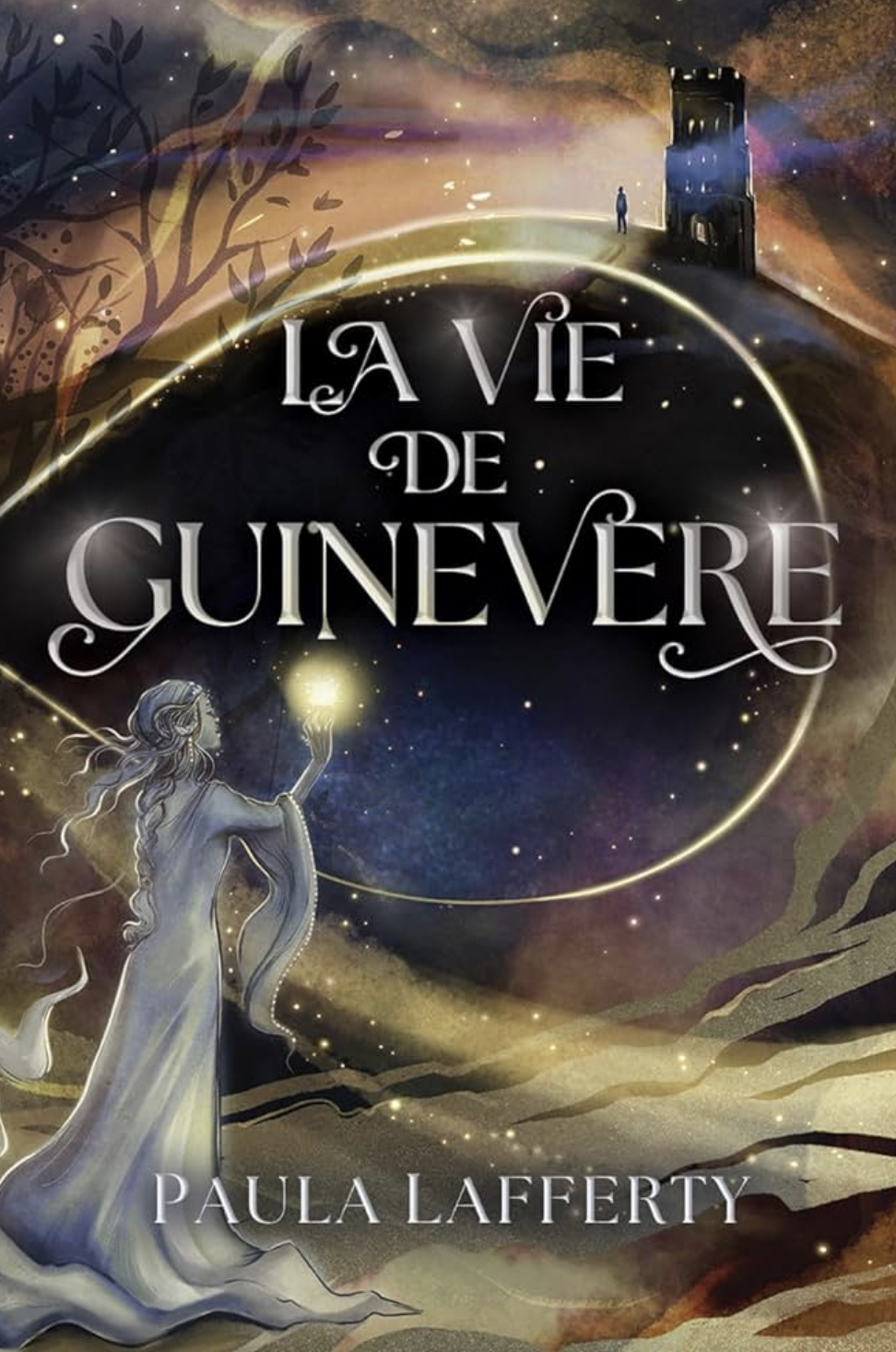
If any book that I’ve recently read speaks to this sense of timelessness yet also is populated by such profoundly vibrant characters it’s Paula Lafferty’s new fantasy novel La Vie de Guinevere in which a woman named Vera living in early twenty-first century Glastonbury in the southwest of England discovers she’s a time-traveling Queen Guinevere and is brought back to the seventh century to fulfill her obligations as queen. I’ve known Paula for over a decade now, she’s one of the pastors of my Mom’s church, and I count her among my good friends, so I’ve been excited to hear progress of this book over the last few years when we’ve met for meals and crossed paths. I read this book during my trip to Toronto over Halloween weekend and finished it on the 6th of November in Houston and again this is one where I quickly began to feel familiar with the characters and where I looked forward to visiting with them again. Paula’s way of breathing life into them made them feel contemporary in a way that most stories set in the Early Middle Ages don’t. Glastonbury is a great setting for good portions of this story; it’s another one of these timeless places, one that I’ve yet to visit, yet it speaks to an element of maturity in the English countryside that seems foreign to our young society here in the American Midwest.
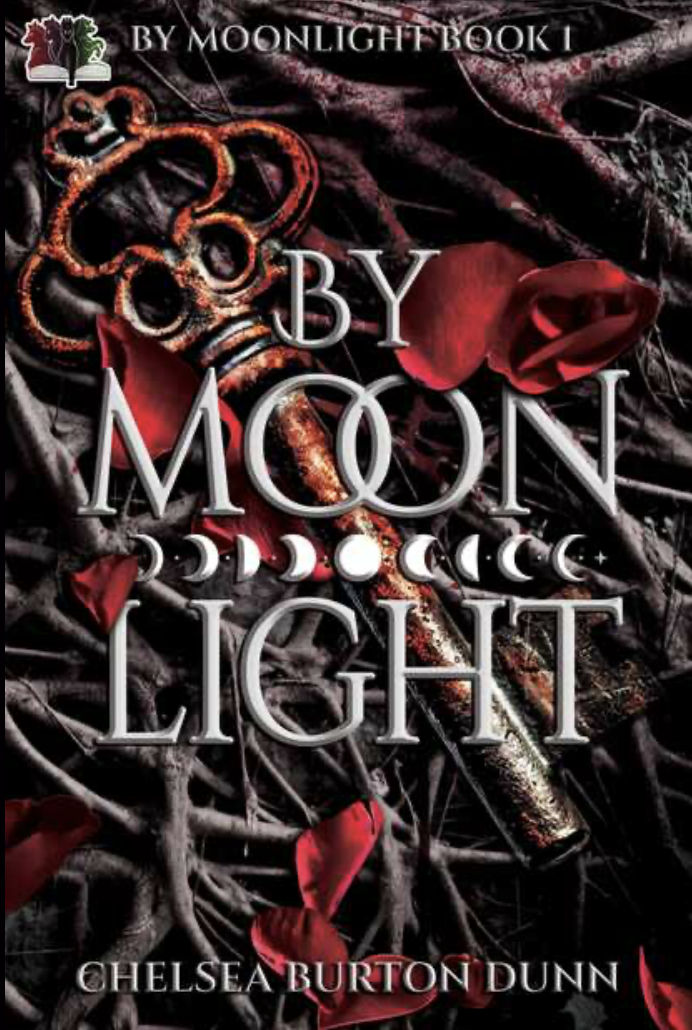
And yet, there is a degree of that agedness that you can find in my cousin Chelsea Burton Dunn’s series of books By Moonlight telling the story of a Kansas City woman named Vee. These books are set here in town, many of the main characters live in my neighborhood, yet things are not quite as they seem for most of the Brooksiders in question are werewolves. I read the first book over the course of one evening, during which time I met Vee and Shane, the werewolf pack leader, and his family. Knowing Chelsea I was able to recognize the story, its setting, and characters quickly and began to feel a sense of comfort around them. These were just more people I was meeting, albeit on paper only. Now when I drive or walk down the street where the werewolves are said to live in these books, I find my mind thinking of them. In this instance, having the story take place so close to home makes it easier for me to find joy in reading it. These are the furthest sorts of stories from my usual fare, especially from the history, anthropology, and zoology works I read for my studies, yet there’s still a place for them and their characters to flourish in the imagination.

I have a tendency of getting close to finishing a book and then setting it aside for a while and leaving it unfinished. I think this goes back to my sense as an only child that the characters in the books I read often feel far more familiar by the time I’m finished with the story, and so I don’t want to see them leave my regular daily life where I spend a good hour or so each day visiting with them and learning more about their lives and experiences. It’s silly in some cases, yet it’s truly a factor in my reading. I remember doing this reading Judith Herrin’s Byzantium in 2016 and 2017, building up a several month gap near the end of the book in part because I didn’t want the story to end. That may also be why my greatest attempt at fiction, my stories about Erasmus Plumwood, remain unfinished. That and that I’ve been translating Thevet’s Singularitez and writing my dissertation.

There is a special joy in reading that is lost in other media. The stories are projected from the page into our imaginations whence they come to life for us to see in our mind’s eye. I love watching television shows and seeing films, in fact I’m eager to go see Robert Zemeckis’s new film Here and Ridley Scott’s Gladiator II, yet reading is much more personal and intimate. It’s a story acted out on the perfect sized stage, a stage that can project just to the individual or to a group if the book is read aloud. At the moment both of the Morisot paintings at the Nelson-Atkins are off view, one is in Nice for a Morisot retrospective exhibit, yet I still chose to wander the Impressionist galleries of the museum this Monday to see the light and color and life which Morisot and her friends envisioned in the last decades of the nineteenth century and the first decades of the twentieth century. Their lives continue to recede into the past, like Eurydice’s eternal fall from Orpheus’s outstretched arms into the dark of Hades, yet for me there’s still a string tethering the Impressionists and me and all the generations in between. That’s a string I will leave bound as long as possible even as time pulls us further apart. It’s a string I will rejuvenate by going to see their paintings and reading more about their lives even as the distance between us continues to grow.
The Art of Joy

This past weekend, the Nelson-Atkins Museum of Art debuted a new retrospective exhibit on the life and work of Franco-American artist Niki de Saint Phalle. One of her great initiatives was to express rebellious joy in her art, especially later in her career. — Click here to support the Wednesday Blog: https://www.patreon.com/sthosdkane


This past weekend, the Nelson-Atkins Museum of Art debuted a new retrospective exhibit on the life and work of Franco-American artist Niki de Saint Phalle. One of her great initiatives was to express rebellious joy in her art, especially later in her career.


I wasn’t familiar with the name Niki de Saint Phalle (1930-2002) before the Nelson-Atkins Museum of Art announced they would be hosting the first American retrospective exhibition of her work, yet having seen aspects of it, particularly her Nanas, I find that I do remember seeing these around here and there. The exhibit begins with her early work, highlighting her tirs paintings (1961–63) which involved her shooting paint-filled collages of popular material objects each with their own cultural meanings, until they bled their paint out. I found these hard to appreciate, the violence at the core of these pieces and the claustrophobic nature of their assemblages filled me with a sense of dread.

Yet, it was the latter two thirds of the Saint Phalle exhibit which I returned to, the section radiating and erupting in light and color in a manner that felt welcoming and brilliant as though it were made to bathe in the warm rays of the Sun. These portions of the gallery were filled with her Nanas (1964–73) and other works in the same style. Saint Phalle created her Nanas as an evocation of the power of women, often drawing from ancient fertility figurines like the Venus of Willendorf, today housed at the Museum of Natural History in Vienna. Even the serpentine figures which I would normally be wary of felt warm and cheering.

So, what then is it about Saint Phalle’s work and this dramatic change between her early creations in the 1960s and 1970s to her later works in the 1980s, 1990s, and early 2000s that the latter ones feel so different? In my two visits thus far I’ve gotten a sense that early on she was fighting back against oppressive forces and that her resolve was to take hold of the ancient model of fighting violence with violence, while later once she felt liberated from these old shadows, as much as she could’ve been, she began to create in a spirit of wonderous joy.

I’ve had a hard time with joy lately, and I’m usually the eternal optimist. In many respects, I feel my emotions have had a softening in the last year and a half out of fatigue more than anything else. After I finished my teaching job in the Fall, I could not feel much for a good two weeks; I was so tired that Christmas came and went with only a passing acknowledgement from me. I gave every last drop of my enthusiasm and optimism in that job, knowing that I would have to do no less if I wanted to do that job justice. Joy then, the emotion that I felt even in the darkest and most terrifying days of the pandemic as I dreamed of better tomorrows, is something distant from me even now.

Yet I prefer to be optimistic, to live joyfully, rather than to be consumed by the trends of pessimism and destruction that are well in vogue now. There are horrific things happening in our world every single day, and I applaud those who are fighting to stop those horrors from spreading. The great fight of our time is one to defend democracy in a year when it is very well and truly under threat. It might seem naïve to some, yet I feel it is my vocation to try to keep a positive outlook and remind the people around me of all the good things we’re fighting for. What good is war if we give up any hope of finding peace again? Like Saint Phalle, I see joy in color and light. Where years ago, I would want to keep the shutters closed on my windows today I love having the sunlight dance between their opened gates and radiate an exuberance that reminds me of St. Francis wandering the fields around Assisi 800 years ago. There are great horrors in our world, and we need heroes who will face them and restore them to their box, yet we also need people to remind us of the good times so that we have a reason to envelop that darkness in light.

In the arts, the greatest periods in recent American history of optimism and joy are the New Deal and the Great Society, two moments when the political will to make life better for all Americans translated into an artistic awakening which sings the spirit of the times. The New Deal policies of President Franklin Delano Roosevelt responded to a time of great pessimism and trouble for America and the globe, when at the heart of the Great Depression he and his brain trust found ways to invigorate society through economic and financial reforms as well as new funds for the arts that had not been known at any time before. Here in Kansas City, we look to the paintings of our local artist Thomas Hart Benton (1889–1975) to evoke the regionalist style of the day, or nationally to the works of Georgia O’Keefe, Edward Hopper, and Grant Wood. I often associate O’Keefe’s art with the bright colors and lights of the desert Southwest, a region that was conquered by the United States from Mexico in 1848 yet not fully realized into our national mentality until after World War II.

For me, the great voice of this optimism is Aaron Copland, whose music evokes the same regional influences of the painters just mentioned. A long standing question in American classical music is how best do we define our national voice? I say we here because the compositions created in this country live or die by the audience’s appreciation. I found it fitting then when I read that the Kansas City Symphony’s first European tour, happening this August, will include performances of Copland’s Third Symphony in Berlin and Hamburg alongside performances of the works of three other great American composers: Bernstein, Gershwin, and Ives. In Copland’s music there’s a sense of the enduring youth of this country, the optimism of a new society building itself from these foundations.[1]

I love how the third symphony uses his famed Fanfare for the Common Man as a central theme, this idea that while in other countries fanfares would be reserved for only the great and the good descending down to our common level on their golden escalators, in our country that fanfare is open to anyone who is willing to live their best life. We are all capable of greatness as long as we live within that brilliant sunlight that so dominates the most optimistic periods in our art.

The greatest challenge that we humans have ever received is to love one another, to be kind and generous with our compassion, and to work for the betterment of all of us. I see that message fading somewhat today, its brilliance drowned in the neon glow of our own individualism and aspirations for fame and riches. It runs contrary to our culture as it has developed that we ought to prefer charity over transactionalism, that we ought to be kind to each other for no other reason than because it’s the right thing to do. I worry that this is lost amid all the revolving cycles of fads and trends that catch our attention for but a moment only to be overshadowed by the next.

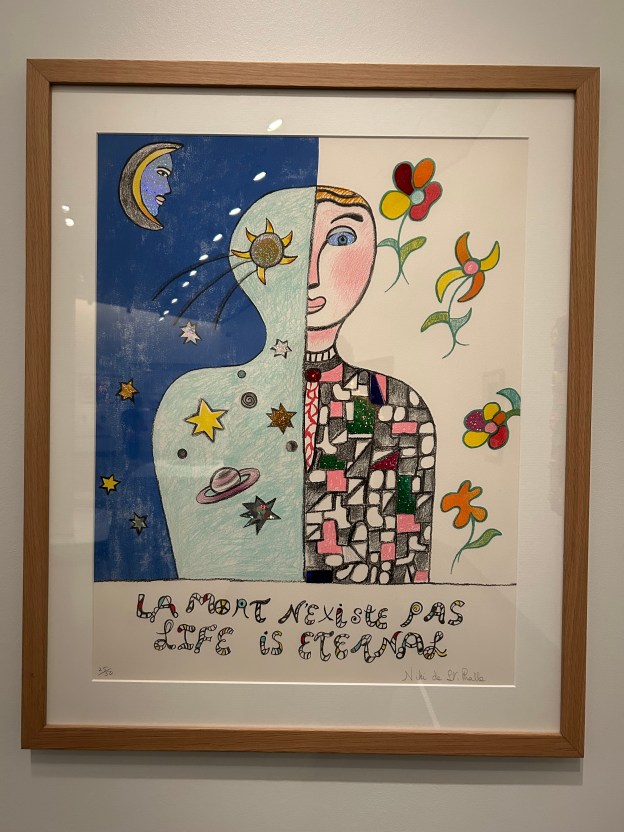
So then, perhaps what I appreciated the most about Niki de Saint Phalle’s later works was as much the longevity of their creation as it was their brilliant colors and joyous expressions. These are works which are meant to last so that generations of people will see them and perhaps in their forms feel a sense of their creator’s joy. I certainly felt that, even now 22 years after Saint Phalle’s death. I took one photo in the exhibit, of a color lithograph she made with a dualistic figure, on the one side with a human face and body and on the other the human frame surrounded by planets, moons, and stars. Beneath the dual figure Saint Phalle wrote in French and English, “La mort n’existe pas / Life is eternal.” I believe through our joy, no matter how childlike it may be, we can live on even after death. As St. Paul wrote, “Rejoice! Your kindness should be known to all.” (Phil. 4:4–9)


[1] Yes, there’s a great deal of problems with that new society’s foundations in the conquest and colonization of this continent.


Niki de Saint Phalle: Rebellion and Joy is on view in the Bloch Building at the Nelson-Atkins Museum of Art from 27 April through 21 July 2024. More information can be found here.

The Museum

This week, to round out Season 3 of the Wednesday Blog podcast, a few words about my love for museums. — Click here to support the Wednesday Blog: https://www.patreon.com/sthosdkane


This week, to round out Season 3 of the Wednesday Blog podcast, a few words about my love for museums.


I learned about our cosmos from visiting museums and reading books as a child. Where my books could thrill my imagination into creating whisps of wonders that would dance about my mind and keep me enchanted during the quieter moments, museums offered me the physical embodiments of many of those same wonders. The older Irish word for a museum is iarsmalann, or “reliquary.” Museums, the seat of the muses of the Ancient Greek cosmos, are where we house our greatest treasures today. They are places which the public can visit and learn about our human world and the natural cosmos it inhabits. Museums are seats of knowledge where we can wonder about a great many things that otherwise would not be accessible to us.

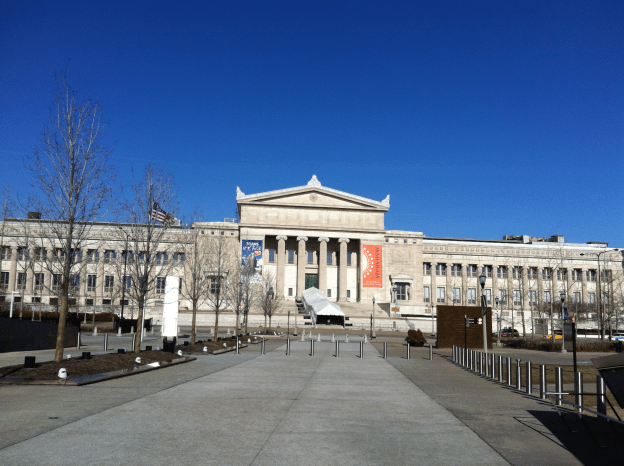
My favorite museums to visit are the ones I return to the most. From my youth, I loved wandering the halls of Chicago’s Field Museum and Art Institute most. In the acknowledgements of my dissertation, I will note that it was in the Field Museum as a small child that I first experienced wonder, and that that is where the passion, beauty, and joy that drives my career and my life today began. One of my last truly awe inspiring visits to the Art Institute was in January 2019 on the last day of the American Historical Association’s meeting at the Hilton on South Michigan Avenue. That afternoon as I wandered around the labyrinthine halls of the Art Institute, I was struck at how endearing I found the Early Republican galleries, rooms which previously I’d been frustrated by because I still have trouble finding my way out of them. I’ve returned to the Field Museum more in the following years both to wander the halls and to remember all the joyous times I’ve had in that building as a child, a teenager, and now an adult.

Here in Kansas City, my favorite museum by far is the Nelson-Atkins Museum of Art. When we first moved to Kansas City, 25 years ago this summer, my Dad took me to the Nelson in hopes of filling that role that the Field Museum had for me back in Chicago. As I grew and matured, I found myself returning to the Nelson more and more, seeing the same art each time sure, but more so appreciating the constancy of that art than anything else. In the last six years I’ve grown to love the Kansas City Zoo & Aquarium as well; perhaps the Zoo is a better equivalent locally to the Field Museum with its dominant focus on the natural world over anything else. I think of the Zoo like another sort of museum, a living and breathing museum situated in the expansive wooded grounds of Swope Park. One of my dreams is to contribute a museum to Kansas City, ideally a natural history museum where my own particular contribution would be in a History of Science gallery.

Elsewhere, during my year in London I fell in love with many of that city’s great museums. I became a member of the British Museum and would often walk there from class and spend my afternoons wandering and loving how much I could learn there. It was on these visits to the British Museum that I decided to do my doctorate in History or Classics; I settled on History as you know, though I ended up in the Renaissance in part because of my love for the Banqueting House on Whitehall and Hampton Court Palace, two expansive palaces now turned into museums by Historic Royal Palaces. Initially, I wanted to study Roman history and focus on how the concept of Roman citizenship expanded as the Republic’s and later Empire’s borders expanded outward from the City of Rome. Yet, I instead decided to settle in the Renaissance, a period that seemed to me to evoke some aspects of the idealized Rome that I thought of while still feeling closer to home. In London too I loved my visits to the Natural History Museum and Victoria & Albert Museum in South Kensington, two that I returned to on several occasions on this most recent, if brief, visit to the British capital in October.

The more I’ve traveled, the more museums I’ve visited. In many respects they fill certain roles which I set in my mind from early on depending on their focus. In Upstate New York, if I wanted to visit a natural history museum I would go to the Museum of the Earth in Ithaca or if I wanted to wander around an art museum for an afternoon, I’d go to the Rockwell Museum in Corning or the Everson Museum in Syracuse.

I’ve been fortunate to see so many of these places and experience the life we give them amid all the relics of our past. In more ways than I probably even recognize, these museums have inspired my career, and I hope that I may contribute a verse to their songs one day.


Dalí and the Surreal

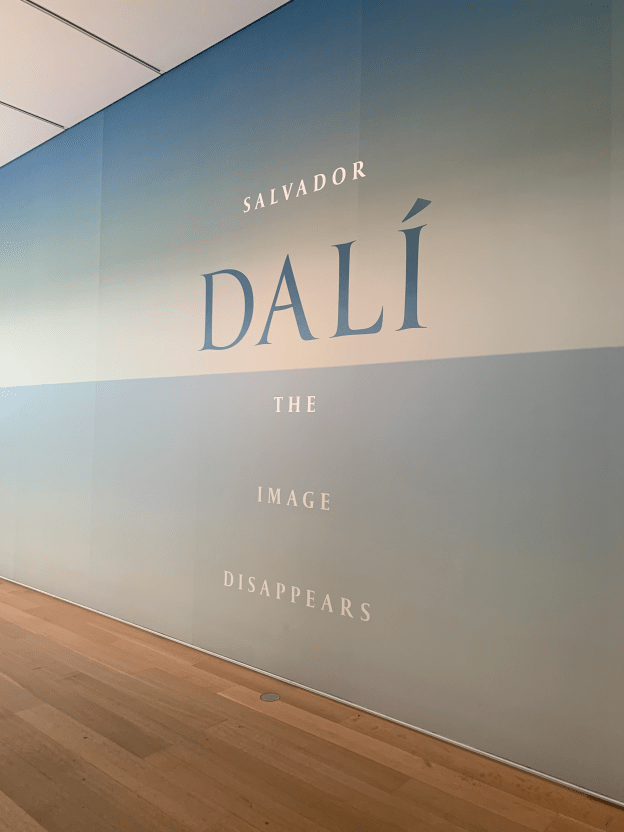
Over the weekend I was in Chicago to see a special exhibit at the Art Institute called Salvador Dalí: The Image Disappears. It got me thinking about the appeal of the surreal. Click here to support the Wednesday Blog: https://www.patreon.com/sthosdkane

Over the weekend I was in Chicago to see a special exhibit at the Art Institute called Salvador Dalí: The Image Disappears. It got me thinking about the appeal of the surreal.

I for one really like Dalí’s art, it captures something of the subconscious possibility in the way it bends and transforms nature. Surrealism creates a mirror universe governed by its own laws, inhabited by a cast of characters that are just familiar enough to us to warrant closer inspection and intense curiosity. When developed to its fullest extent with sound and movement, the color and light of the surreal comes to life in a truly radiant and radical fashion. I’m talking of course of Dalí’s collaboration with Walt Disney, which became the short film Destino, a gorgeous film that is available today on Disney+. The Spanish guitar and drums, and singer’s voice pair well with Dalí’s images that find themselves unlocked from the monumental stone edifices they were built into upon their creation, the permanence of place and pose in painting.

The Dalí paintings at the Art Institute reflected the opposite of the great monuments of Destino, and more the impermanence and fragility of life itself. Crafted and devised throughout Dalí’s life, in particular during the troubled years of the Spanish Civil War, these images tell their own stories of paranoia and chaos. They show how Dalí expressed his emotions and innermost thoughts in his art. When world events on his doorstep forced him to contemplate horrors that pulled him from his passions, those horrors showed themselves in his work.

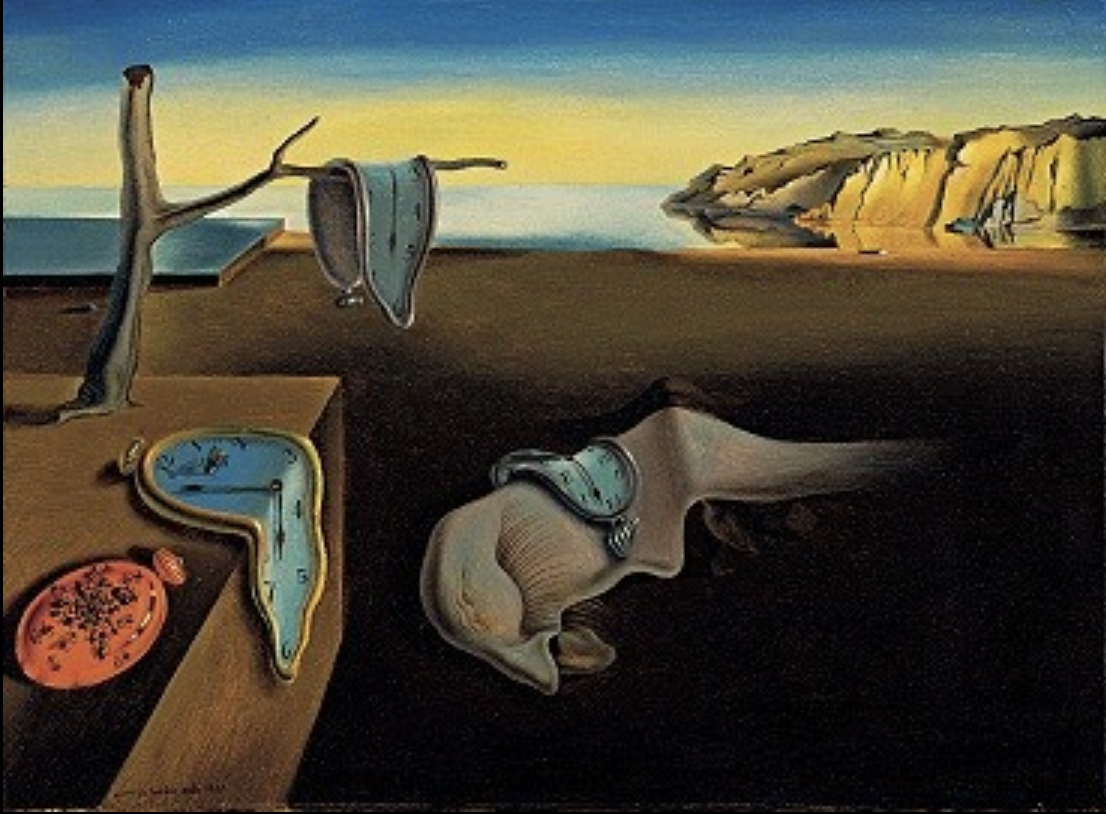
The Persistence of Memory

I’m drawn to Dalí’s most classic examples of surrealism, The Persistence of Memory being the type painting of these. They remind me with their distant hazy horizons of a book of labyrinths that I was given for Christmas one year in the early 2000s that had the same eternal yet present horizon line which stretched out from the central object echoing the idea of infinity yet not quite reaching that point itself. About a decade ago I was lucky enough to get to see another Dalí exhibit, this one in the Hallmark Headquarters at Crown Center here in Kansas City, where several Dalí images commissioned by Hallmark in the 1950s for a new line of greeting cards were on display for employees and their families. I remember Dalí’s interpretation of Santa for a Christmas card was fascinating, though not what Hallmark, the Norman Rockwell of American companies, necessarily wanted.

On Monday, I decided to compliment the Dalí exhibit with a visit to the Nelson-Atkins Museum of Art here in Kansas City to see Alberto Giacometti: Toward the Ultimate Figure, a collection of sketches, paintings, and sculptures by the Swiss master artist whose work spanned the first six decades of the twentieth century, and was in many ways Dalí’s contemporary. Yet where Dalí sought to interpret the human form through distortion imbued with a great sunny sense of Catalan romance, Giacometti’s works narrowed down their focus to the purest and ultimate human figure, which he crafted throughout his life’s work into sculptures notable for their roughness, slenderness, and height. I for one prefer Dalí’s vision over Giacometti’s, though I respect both artists for what they were trying to create.

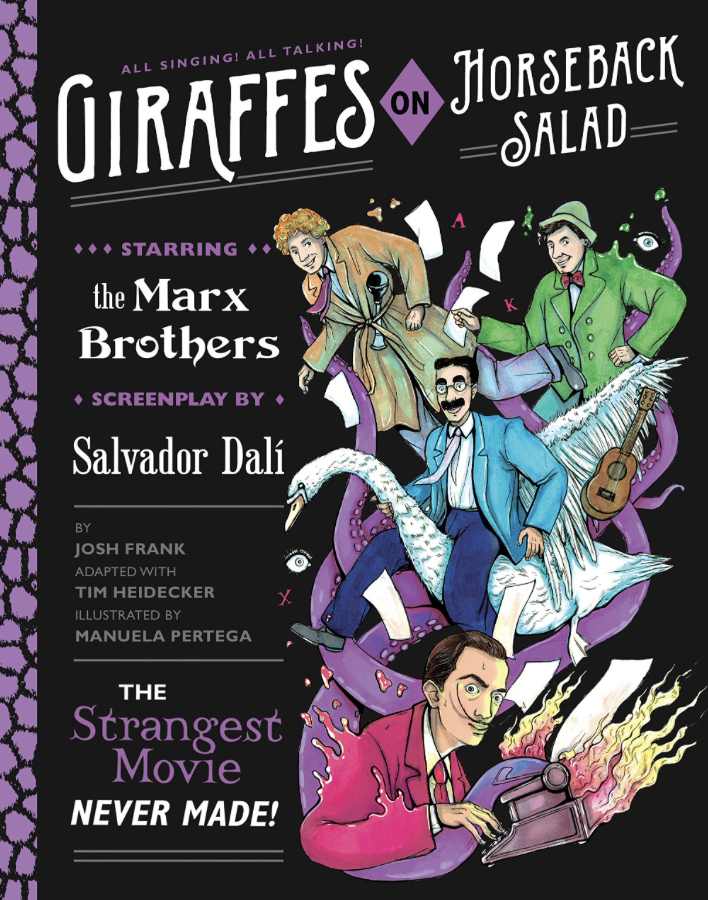
The surreal appeals to me because it echoes the disorderly world of my own dreams, the images that dance through my mind when I sleep are best described as surreal. Dalí collaborated with one of my favorite comics of his day, Harpo Marx, to create a film which ultimately was dropped by MGM for being too strange and finally in the last decade adapted into a graphic novel called Giraffes on Horseback Salad. Neither man spoke each other’s language, yet they both knew how to approach the language of the surreal, and so crafted a story that is the definition of weird and silly, that proved to be too strange even for Harpo’s brother Groucho. It’s good for us to have this alternate to our own world to turn to, this dreamlike fantasy realm where things don’t quite add up to how we expect. We humans are too imaginative to really fully be the normal people we make ourselves out to be. We have dreams, all of us, and rarely do they turn out to meet our expectations of what is normal.

Metropolis

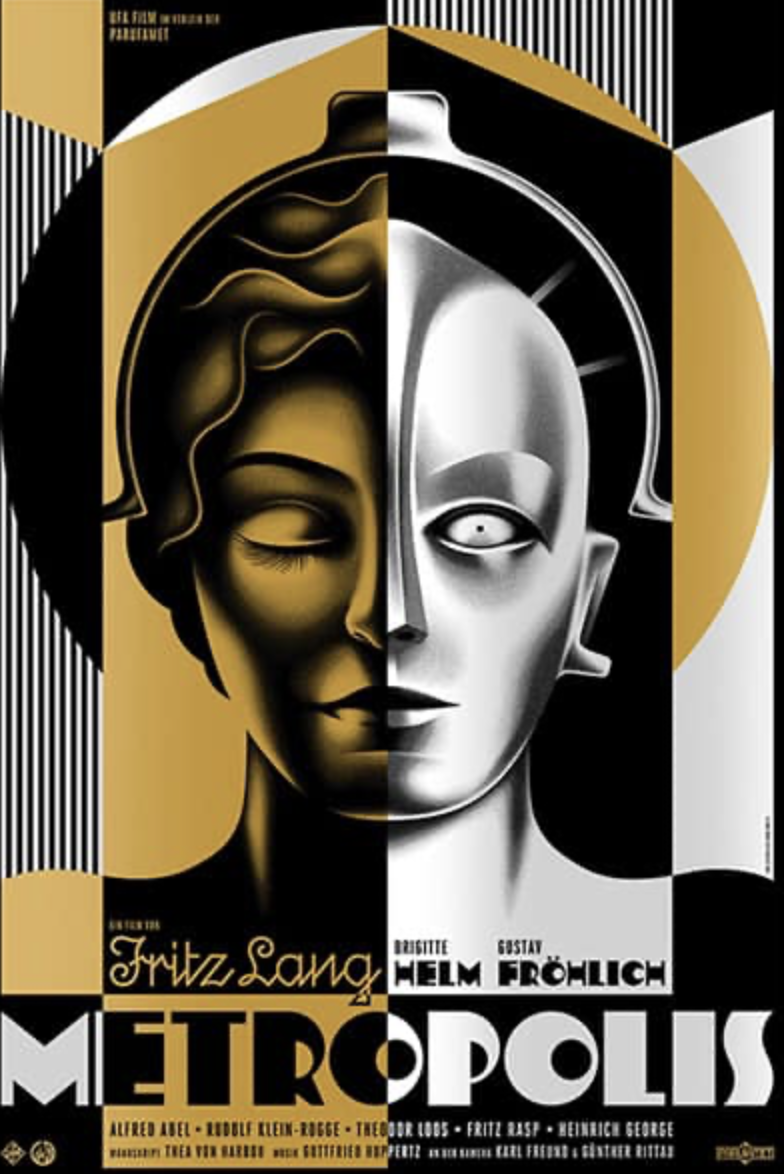
When I returned home to Kansas City about a month ago, I saw an email from the Nelson-Atkins Museum of Art that the Tivoli Cinema, which since 2020 has been housed in the Nelson’s auditorium, would be holding two showings of Fritz Lang’s 1927 silent masterpiece Metropolis. I jumped at the opportunity and immediately bought a ticket for the opportunity to watch this film on a big screen with an audience around me. So, this past Sunday afternoon I showed up for the matinee screening and was even more dazzled by the experience than I’d expected.

I had seen Metropolis once before when it was on Netflix about a decade ago. I remember feeling a bit wary of the film and its story when I first watched it that time. Now I know that watching a movie as monumental as this one on a screen as small as my laptop does a disservice to the whole experience. Metropolis was made to be seen on the big screen with a live orchestra, or at least a live organist, adding a whole extra dimension of music to this already vivid story. In the case of this weekend’s showings, Metropolis was accompanied by a 2010 recording of the original Gottfried Huppertz score performed by Berlin Radio Symphony Orchestra conducted by Frank Strobel. I’ve since played that recording again on iTunes while grading essays this week and have felt just as profoundly moved by it as I was in the theatre on Sunday.

It occurred to me while listening to that album again this week that as much as this score is a film score, listening to it on its own it feels far more like ballet music. In the past I’ve written about how I feel that ballet and silent film share similar characteristics born out of their mutual need for wordless expression to tell their stories. As I listened to Huppertz’s score without seeing the images in front of me I found myself thinking back to each particular scene in Metropolis as I’d seen them the day before. Yet in the moment as I sat in the third row of the Atkins Auditorium watching this spectacle unfold before me, I felt that Metropolis was more operatic than balletic in its very character. These were actors performing at a time when the quantity of film influences were far fewer on their lives thanks to the relatively recent invention of motion pictures, film at that point was only about 40 years old. 

In Metropolis I saw echoes of Wagner and Strauss as well as hints of the future, all the films and television shows that would follow it. There is a scene near the beginning of the film’s first act, the 45-minute prelude, where a shift change of the underground workers occurs that seemed strikingly similar to several scenes from the new Star Wars: Andor series released on Disney+ this Fall. Don’t worry, no spoilers here. There are many elements of Metropolis that certainly have been influential, look no further than the Machine-Man, the poster child of Metropolis that wreaks havoc on the city and nearly destroys it and all who live within it. There perhaps we see the ancestor of Doctor Who‘s cybermen, Star Trek‘s Borg, or Alicia Vikander’s character in Ex Machina.

In the last few days, I read in Variety that there’s a TV series remake of Metropolis in the works for Apple TV+. While I’m normally hesitant about remakes of classic films or shows, the new Star Trek: Strange New Worlds which sees the adventures of the original 23rd century USS Enterprise before it was captained by James T. Kirk, has made the idea more amenable to me, though that’s likely because Strange New Worlds does the whole reboot idea perfectly. I’m most curious to see how Apple TV+’s new Metropolis will depict the city of tomorrow. In 1927 Fritz Lang’s original film used the great art deco skyscrapers of New York built of brick and steel as his model. Will this new series seek to depict the sort of futuristic architecture that I’ve collected on my architecture Pintrest board, filled with gentle curves, evocative colors, and dramatic lines? That remains to be seen.

Metropolis was a gripping film to see, and while long, with some aspects perhaps a bit old fashioned to our tastes, notably the over-the-top heart-gripping that happens throughout that made the crowd around me laugh from time to time, it still has my attention caught even now a few days later. Silent films speak to us in a way that their talking counterparts created after 1927 simply don’t. They tell stories in different ways, adjusting their style to fit the technical limitations of their time. I’ve always been drawn to silent films for this reason, and perhaps I’m drawn to ballet for much the same reason. After all, Chaplin was as much a dancer as he was a slapstick comic. Metropolis is a testament to the time and place in which it was made, Weimar Germany in the 1920s. In Joh Fredersen, the master of Metropolis I see Henry Ford, both in his character and in his physical appearance. I see fears about extremism on all fronts, and a call for unity and dialogue in the face of anger. I wonder what the new Metropolis will be like?

Art

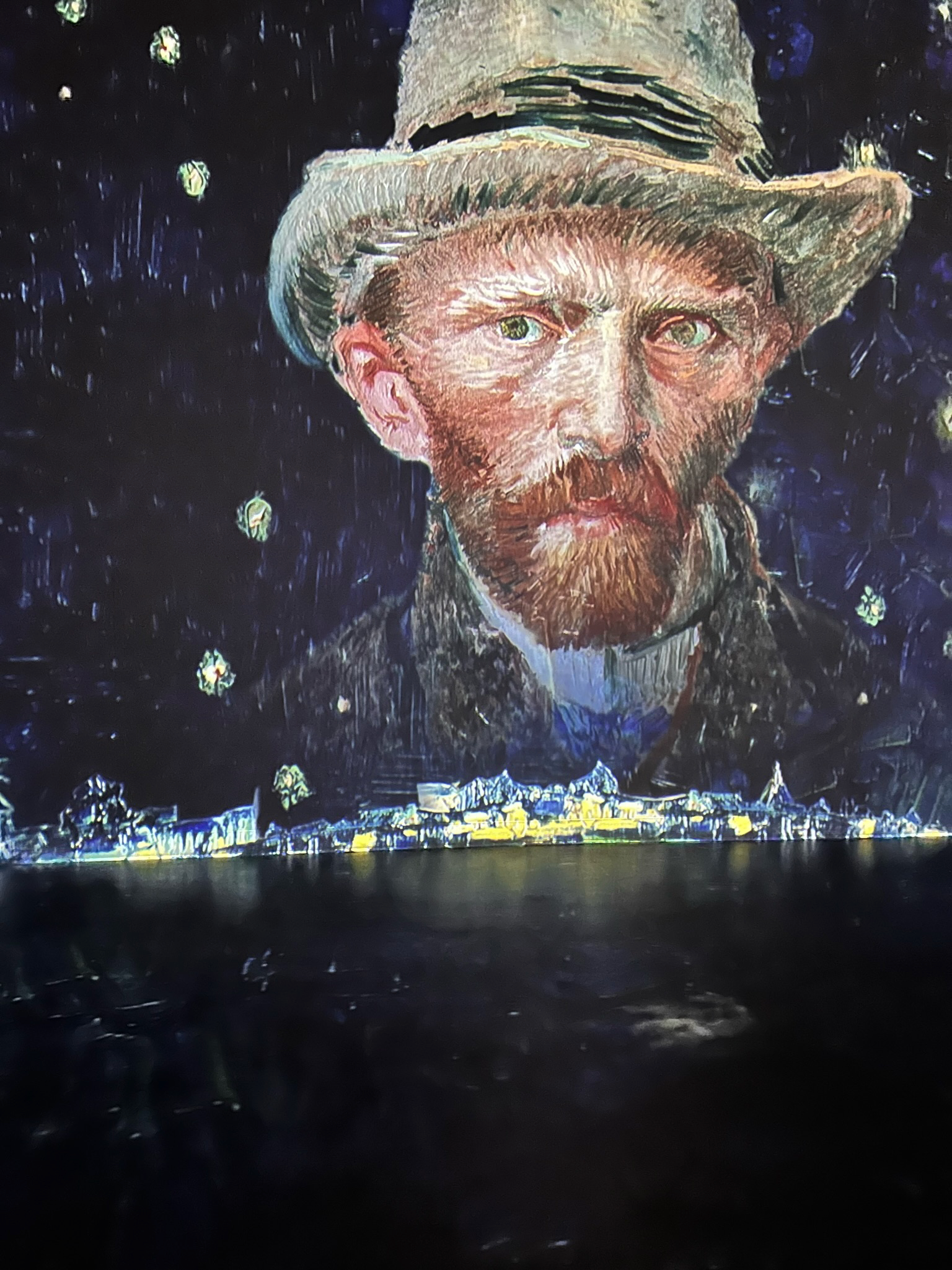
Photo: Tom Kane at Immersive Van Gogh Kansas City
This week, how art impacts how we see the world around us. ~~~ Immersive Van Gogh: https://www.kansascityvangogh.com Claude Monet, Boulevard des Capucines, (1873): https://art.nelson-atkins.org/objects/17852/boulevard-des-capucines George Caleb Bingham's Catalog: https://www.binghamcatalogue.org Thomas Hart Benton's art at the Nelson-Atkins: https://art.nelson-atkins.org/people/2320/thomas-hart-benton/objects "Hard Times Come Again No More" by The Chieftains and Paolo Nutini: https://youtu.be/uPqjQTkEA6g

On Sunday, I went with my parents to see the Immersive Van Gogh exhibit that’s been touring around the globe for the past few years. I first heard about it when I was in Paris in May 2018 and thought about going to see it there but ended up not paying a visit to it then. So, the following year when it was announced that Immersive Van Gogh would be coming to Kansas City, I jumped on the opportunity and bought tickets for my family to attend. 

Then the world changed in what now seems like a prolonged moment as the COVID-19 Pandemic took hold around the globe. The exhibit opening was delayed in Kansas City, and it began to slip from my mind for the next couple years as the storms that shadowed the last few years of the 2010s burst into the troubled times that have been the hallmarks of the 2020s thus far.

So, after years of anticipation when I finally entered the Immersive Van Gogh exhibit this past Sunday afternoon I was awed to experience it, the sights and sounds combined for a truly awe-inspiring experience. We entered the gallery as Edith Piaf’s “Je ne regrette rien” burst over the speakers to the bright yellow hues of the fields of Provence as observed 140 years ago by the artist’s eyes. I took a seat on the floor with my back to a mirror-covered pillar and watched as the images danced across the walls and floor surrounding me.

The exhibit inspired a question: does our art influence how we perceive the world around us, and as a historian more importantly does the art of past generations influence how we today perceive the light and color and nature of past periods? Take the Belle-Époque, the age of the Impressionists like Monet and Post-Impressionists like Van Gogh, do we understand and think of the daily reality of that period in a way that is colored by the works of those artists? There is a Monet painting in the Nelson-Atkins French collection here in Kansas City of the Boulevard des Capucines which dates to 1873. It shows the hustle and bustle of the French capital in a manner that is both of its own time and seemingly timeless in how modern it appears. This extends in my own mind to the point that I’ve imagined the same scene whenever I’ve happened to walk down that same boulevard in the last few years.

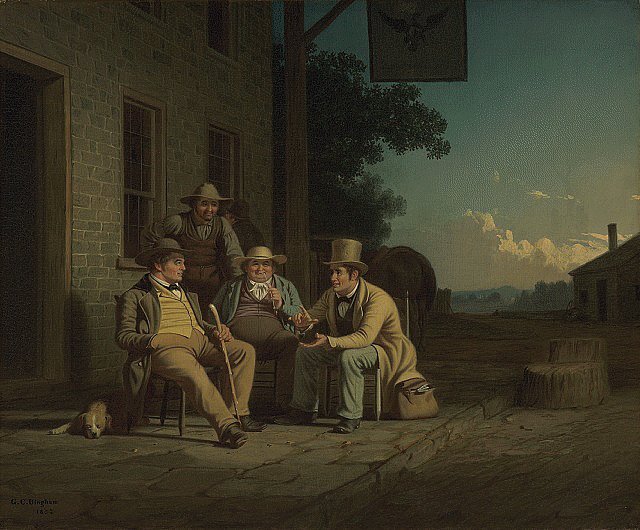
On the other hand, the images that exist of Kansas City from the nineteenth century are largely dominated by black-and-white photographs and the odd painting by the likes of our first great local artist George Caleb Bingham (1811–1879). So, for how many of us are our ideas of say the Civil War largely just in black and white even though the reality was in the same vibrant color as we see now today? Even in my own life, I’ve found that there’s a slight hint of faded color in my memories of earliest days of my life, perhaps influenced by the technology available in the color photography of the 1990s which is noticeably less radiant than the colors available today in our digital images.

George Caleb Bingham, Canvassing for a Vote, 1852, (92.71 x 105.41 cm), Nelson-Atkins Museum of Art

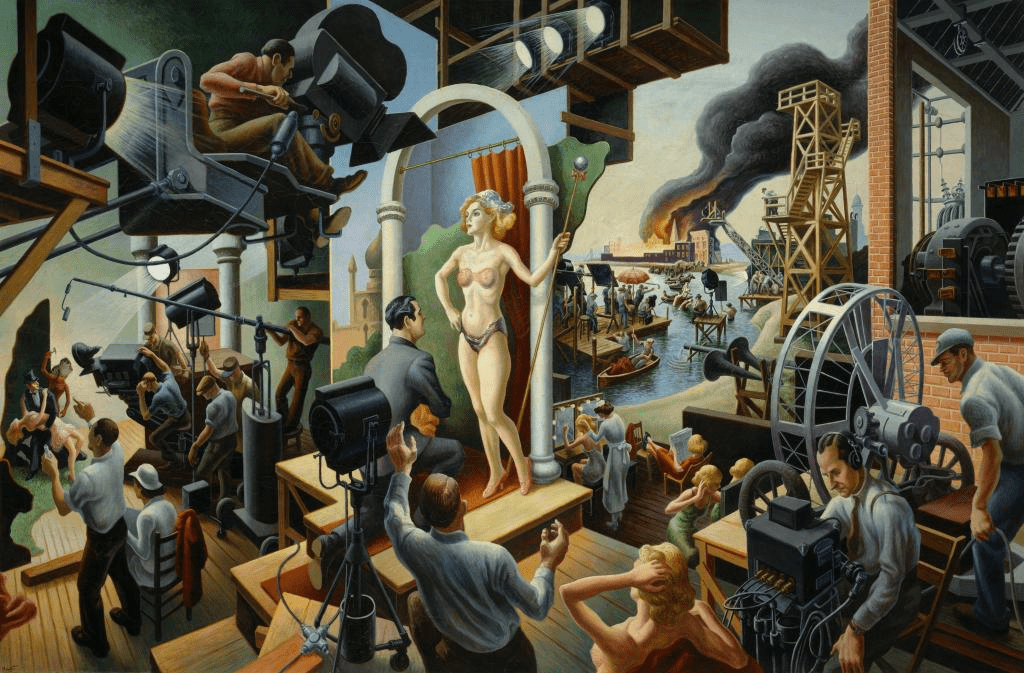
Art at its most fundamental level is a means of communication. It transmits memories from the creator, a historian of their own sort, to their patrons in posterity. Whether that art is expressed in painting or sculpture, sketching or cartoons, music or poetry, theatre or film, and in every form of literature both fiction and non-fiction alike, it is still at its core a transmission of knowledge and information. Through art the dead are able to speak to us still. In art we can experience something of the world that others live, that they see and hear and think. In the paintings of Thomas Hart Benton (1889–1975), in my opinion the greatest Kansas City artist to date, we can see echoes of American life as he understood it in the first half of the twentieth century. I can truly say that his art has influenced how I understood the Depression, World War II, and the Postwar years in a way that is best described by the fact that having grown up in Kansas City going to the Nelson and the Truman Library I saw his art far more often than many other Americans might well have. Through his paintings, Benton communicated ideas about what it means to be American, and the place of the Midwest in general and this part of Missouri in particular in the wider fabric of this diverse country of ours.

Thomas Hart Benton, Hollywood, 1937-1938, (156.53 x 227.01 cm), Nelson-Atkins Museum of Art

So, what sort of message will we in the 2020s leave for future generations? What do we want to communicate to them? In the last couple of weeks, I’ve been thinking of the Stephen Foster song “Hard Times Come Again No More.” Written in 1854 at a time when my home region was embroiled in the Border War known more commonly as Bleeding Kansas, one of the last preludes to the American Civil War of the 1860s, I’ve always thought of “Hard Times” as a song not of the nineteenth century but of the Great Depression, something that I could imagine being sung by farmers fleeing the Dust Bowl here in the prairies for new lives elsewhere. Still, the fact that the stories surrounding that song can speak to different times with common troubles speaks to the power of art. Maybe it’s high time we restore “Hard Times” to the charts, after all what better description of the present could there possibly be?