Tag Archives: Netflix

Distractions

How distractions can be beneficial or detrimental, from a certain point of view.—Click here to support the Wednesday Blog: https://www.patreon.com/sthosdkaneI recommend you now listen to: On PausesA link to the WBEZ Chicago story referenced in this episode.


How distractions can be beneficial or detrimental, from a certain point of view.


On February 21sta story appeared on the WBEZ Chicago website with reactions to Illinois Governor J.B. Pritzker’s proposal to restrict cellphone use in all public and charter school classrooms. Mine was the first generation of students to have access to cellphones, and from day 1 it was a noticeable distraction for everyone in the room when someone brought their phone to class. Whether looking at the teacher who was trying to do their job in spite of a new topic to chide students over, or to the other students who see that one of their fellows is challenging the classroom’s authority so brazenly, to the student carrying the phone who now had a ready means of ignoring the teacher and missing out on the lesson, phone use is a problem for all.

In all honesty, I’ve been that student from time to time. In some classes it wasn’t a cellphone as much as it was a computer or a tablet that distracted me from the lesson or lecture at hand. In other cases, it was the unavoidable glow of the screen in the row in front of me shopping for shoes or looking at Spring Break trip ideas that drew my attention away from the topic at hand. Looking back, I recognize a noticeable drop in my attention and focus when these technologies began to enter the classroom, just as I notice now how I stopped reading nearly as many books once I discovered YouTube.

The idea of the distraction is often subjective; sure, in the classroom the student is supposed to be paying attention to the instructor, yet beyond that setting what are all the trappings of life but distractions from other facets which to varying degrees we ignore? This isn’t inherently a bad thing. Considering how troubled our times are fast becoming I have made a point of trying to find happy things to look at every day, and in some instances, I send these along to friends who I hope will benefit from smiling at something no matter how inconsequential.

In WBEZ’s report on student reactions to the Governor’s proposal to ban phones from classrooms the reactions were mixed. Some reactions speak to concerns about staying in touch with parents during the school day, especially in case of safety issues. I understand this point, it speaks to the reality that we’ve allowed ourselves to live in an increasingly dangerous society, and to that danger we need resources to mitigate it all while ignoring the underlying problems. We can distract ourselves from addressing gun violence, yet the shootings will continue all the same.

In my own experience the best classroom settings were those where the students either were mature enough to not pull their phones out in class or where they didn’t have their phones with them at all. In a recent substitute teaching job, I found that I was not only competing with student apathy toward following a sub’s instructions but that I also had to compete with students watching all manner of videos on their phones from Netflix and YouTube to TikTok, Instagram, and Snapchat. I simply can’t compete with these bright screens, and as most schools don’t inform their substitutes of any school policies (which allows students to abuse those policies when a sub is in the room), I’m at a tremendous disadvantage in that position.

Today, as I write this blog post I have one conference presentation I need to write and an article submission that I need to revise. The former needs to be done in the next month and the latter by June 1st. In short: I have things I need to be doing right now, yet I can be more flexible with these extended deadlines and keep the Wednesday Blog going for another week. This publication of mine may seem like a sort of distraction to some of my colleagues, yet I feel it is a tremendous opportunity for me to write about topics that I have ideas about which my research doesn’t cover. After I write and record this blog post I will take full advantage of the good weather today (sunny with a high of 65ºF / 18ºC) and go for a long walk this afternoon. After that, I might look at these two projects again. As I said earlier in this paragraph: I have time to wait on both of them.

Returning to the topic at hand: whereas in my teenage years I found it empowering to have a school-issued laptop which I could use in class, today I yearn more for the days before that technology became so accessible to me for the sole reason that I could focus more on the moment at hand. Perhaps the greatest distraction that we’ve created for ourselves is our indefatigable busyness that keeps us moving at full speed whenever we’re awake. We fear boredom because we haven’t allowed ourselves to spend enough time surrounded by the silence that it brings. I wrote about this in October in the context of pauses in the dialogue of the Kate Winslet film Lee. I don’t know if I have any suggestions for systemic change this week, merely advice that each of us ought to look at what we think is most important for our lives and our enrichment. We only have so much time around, so the best thing we can do is to use it wisely.

Why I enjoyed Netflix’s “The Two Popes”

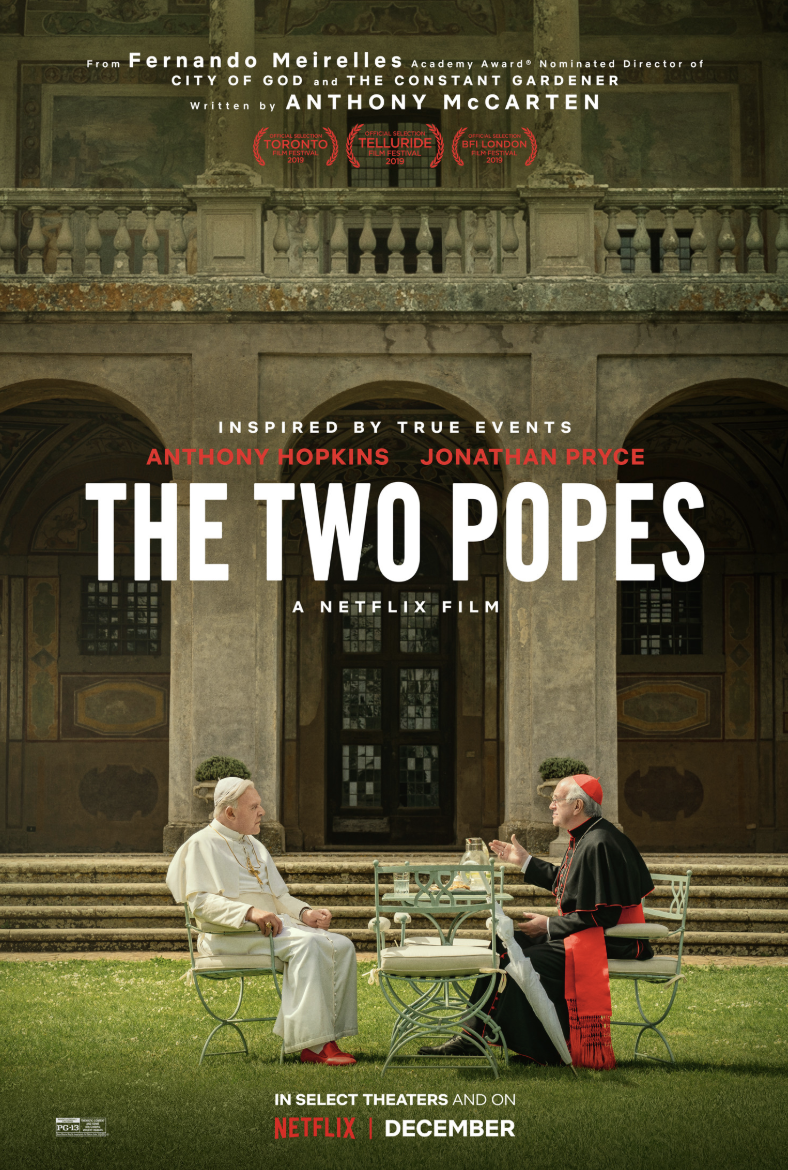
Two Popes posterNetflix’s new two-hour film The Two Popes starring Jonathan Pryce as Pope Francis and Sir Anthony Hopkins as Pope Emeritus Benedict XVI is theatre, pure and simple. It falls into one of the most classic sorts of plays, a dialogue between two men with similar positions yet very different experiences. While not all the conversations that make up The Two Popes may have happened, according to an article in America, the story that they tell on the screen is beautifully rendered and exceptionally human in its content.
The film begins with the Papal Conclave of 2005 at the death of Pope, now Saint, John Paul II, when then Cardinal Josef Ratzinger was elected as the new Supreme Pontiff, taking the name Benedict XVI. The conflict between Benedict and the reformist cardinal Jorge Maria Bergoglio, the current pope, is made clear from the first moment. Moreover, the two characters are framed as foils for each other: Benedict is removed from the world while Francis is fully a part of it; Benedict is traditional while Francis is less keen on pomp and grandeur of the Papacy and the Church in general; Benedict says he is disliked when observing how Francis seems to make friends with just about anyone he meets.

It is important to understand that while this film tells a story inspired by the recent events of the lives of two of the most important men in our lifetimes, it is nonetheless a story meant to entertain and give the audience a message of hope for redemption, peace, and a willingness to accept change even if it may not be the change we expected. In that sense The Two Popes has a bit of the same spirit that has enriched many a story down the centuries. There’s a sense in this film that if two people with opposing perspectives sit down and talk about their disagreements, that eventually they’ll reach some sort of common understanding, or at least mutual respect. Both Popes come to respect each other out of a mutual understanding of their imperfect humanity, that both men have made mistakes in their lives, yet they still have striven to do good.

The Two Popes does not hold back on the problems facing the Catholic Church today. It acknowledges the scandals and errors that continue to plague the Church now at the start of the 2020s. Yet it takes those scandals, those errors, those misjudgments, and it uses them to breath even more life into these two characters. I enjoyed this film because it’s a well written bit of theatre, depicted beautifully on the screen. The Two Popes, and in particular Pryce and Hopkins’s performances, do what any good bit of writing is supposed to do: make the audience think.

Netflix’s “House of Cards” comes into its own

Image

Don’t worry, there are no spoilers below.


Kansas City – A few weeks ago I published my first review of a “television” show. I find it amusing that my first TV review should be of the first big-budget show to be produced and broadcast by an online-only broadcaster. In January, I wrote about how the first season of Netflix’s House of Cards, starring Kevin Spacey and Robin Wright as Congressman Frank Underwood (D-SC) and his wife Claire, related to its British parent.

Like the country in which it is set, this new American House of Cards needed a while to set itself up as an independent show. However, with the start of Season 2, Netflix’s masterpiece of drama truly set itself apart from its roots in Westminster. I found the second season to be far more thrilling than the first. The speed by which the action moved, balancing the need for both quick and slow plot lines, was exhilarating. There were quite a few moments over the past fortnight that I found myself sitting forward in my seat, gasping “Did they just do that?” My first season mulligan of “Well, I know how the BBC version went” quickly became defunct and resoundingly out of place in this truly American drama.

Image

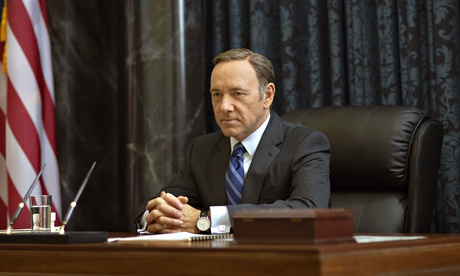
Kevin Spacey as Frank Underwood. Courtesy of “The Guardian”.

Spacey continues to refine and evolve in his role as Underwood, the epitome of the modern anti-hero, perhaps villain. He was able to balance out the ruthlessness and chessmanship of the political realm with the more mellow personal moments here and there throughout the season. I found myself amazed that even he as an actor going off of a script could keep up with the many twists and turns, the double and triple bluffs that lace the plot in such a fashion that they began to seem almost too fantastic for the politics of the reality (or at least I should hope, though perhaps naïvely, so).

Image

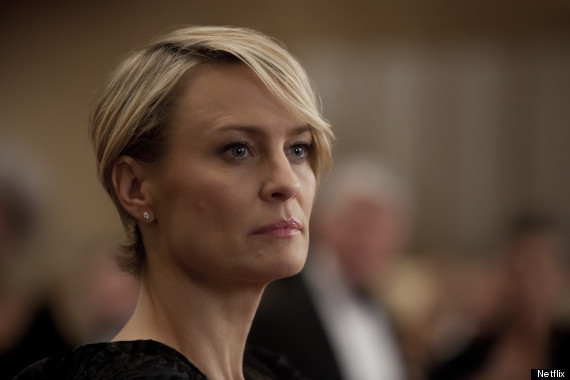
Robin Wright as Claire Underwood. Courtesy of “The Huffington Post”.

Complimenting her Golden Globe award from last month, Robin Wright’s performance as Claire Underwood continued to evolve just as much, if not even more than Spacey’s role as her husband. I found Claire much more likeable after a while in this season than I certainly did in Season 1, though the same characteristics that made me wary of her in the first season are certainly still present in her character. After seeing the second season, I find myself hoping, again perhaps naïvely, that Claire Underwood won’t turn out as Elizabeth Urquhart (the wife in the BBC series) did, as a sort of Lady Macbeth to counter Frank Underwood/Francis Urquhart’s Richard of Gloucester (Richard III).

Beyond the acting, the runaway golden winner here has to be the writers. Their work is truly a masterpiece of drama that certainly does a good job at expressing the emotions and desires of our time, especially in the political realm. Netflix’s House of Cards is a drama for our time, set in our time, featuring us, and calling upon us to ask ourselves how we feel about what we see in the mirror that the series offers the United States in 2014.

Washington and Westminster – Comparing both “House of Cards”

Image

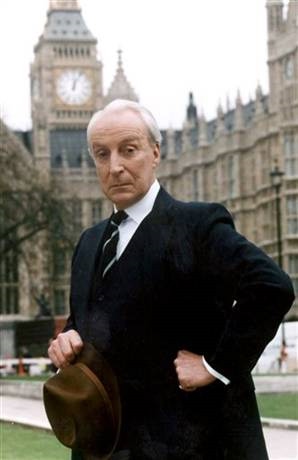
Ian Richardson as Francis Urquhart.
Courtesy of the Wikimedia Commons.

Kansas City – It was funny to me that last night as I finished watching Season 1 of Netflix political drama House of Cards, one of its leading stars, Robin Wright, won the Golden Globe for Best Actress for her part in the hit series. I was first introduced to the Netflix series through its inspiration, it’s daddy so to speak: the BBC’s 1990 miniseries of the same name. The BBC’s version was based upon the novel by Michael Dobbs in a script adapted by Andrew Davies. It starred acclaimed Scottish Shakespearean Ian Richardson as Francis Urquhart, MP a Machiavellian Tory chief whip and is set in the years following the fall of Thatcher’s government in the 1990s.

I was first attracted to Richardson’s House in large part by the leading actor’s grandfatherly charm, which prevailed over his on-screen persona for the majority of the original BBC miniseries (it had two sequels, To Play the King, and The Final Cut). Also I am a bit preferential to the parliamentary system over its presidential counterpart, which added into my interest in the British series. Richardson’s Urquhart is a charming aristocratic MP, who feels cheated by the Conservative Party when he was not chosen as her successor for the leadership. What follows is a reign of vengeance that easily rivals that of Shakespeare’s portrayal of Richard III. In fact, another area in which I was drawn to the series was in the subtle, though sometimes verbal, references to Shakespeare, with Urquhart being based upon Richard III whilst his wife rings more true of Lady Macbeth.

Image

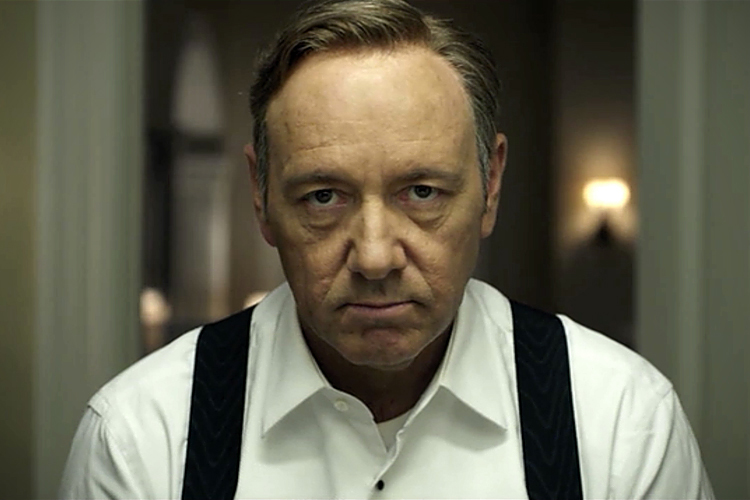
Kevin Spacey as Frank Underwood.
Courtesy of Salon Magazine.

In comparison Kevin Spacey’s Congressman Frank Underwood (D-SC) lacks the charm that Richardson so gracefully portrays. What the two characters do share is a dramatic penchant for ruthlessness and determination to do whatever it may be that is on their minds at any given moment. Thus far, considering that only half of the American version has been broadcast, I would say the character closest to their British original would have to be Doug Stamper (Michael Kelly), Underwood’s Chief of Staff. He shares many traits with Urquhart’s Junior Whip, Tim Stamper, MP (Colin Jeavons). Both are loyal at first to their superiors, but as time goes on Stamper, MP begins to see how truly evil Urquhart’s intentions are, a plot development which I will be sorry to see missing from the second season of Netflix’s rendition.

Likewise in the Netflix adaptation, I will say that thus far my favourite characters in the Netflix series are Congressman Peter Russo (D-PN), played by Corey Stoll, and his Chief of Staff and girlfriend, Christina Gallagher (Kristen Connolly). They seemed the most personable of the entire cast to me, and after all it’s nice after a while to find a love story that is very honest and quite beautiful in how human it really is. To counter this I was left rather confused by the relationship between Frank and Claire Underwood, the leading couple, who frankly (pun intended) seemed, perhaps more so than Francis and Elizabeth Urquhart (Diane Fletcher), like having Gen. Patton and Field Marshal Rommel living happily married together. Both characters are outwardly kind and considerate, but inwardly ruthless and willing to go to any lengths, yes any lengths, to see their goals achieved.

At the same time as Robin Wright was accepting her award in LA, I found myself mostly thankful that the first series of this all-too interesting show was at last over. One major complaint that I have about American television is that there can at times be too much of it. Consider that the average British season will run for about 6 to 8 episodes, whilst the average American one runs for about 10 to 20. After a while, especially in the context that I was watching it in, to review it in comparison to the BBC’s original, I found myself emotionally exhausted by the many bumps in the road that Netflix’s House of Cards has to offer. For a programme like this, 13 episodes per season is just too long to watch in as short a span of time as I did (in about half a week).

And yet, I am looking forward to seeing how Season 2 carries on the threads from Season 1, hopefully bringing them together for a good conclusion. In short, Netflix’s House of Cards is good in its own right, but I would still prefer to listen to Francis Urquhart’s asides mixed with a sense of laughter at the world than here Frank Underwood’s complaints and Machiavellian strategies on how he’ll make his next move.