Tag Archives: News

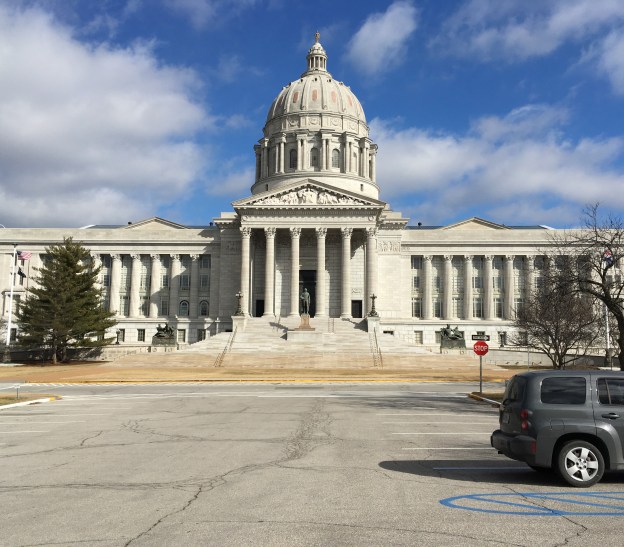
A photograph of the Missouri State Capitol building taken by the author in January 2017.

On Democracy, Part II

This week, on the current round of redistricting sweeping through Missouri.—Click here to support the Wednesday Blog: https://www.patreon.com/sthosdkane—Sources%5B1%5D “On Democracy,” Wednesday Blog 5.39.[2] “We, Irish Americans,” Wednesday Blog 6.10.[3] “On Servant Leadership,” Wednesday Blog 6.15.[4] “Freedom from Fear,” Wednesday Blog 2.6; “Embodied Patriotism,” Wednesday Blog 6.26.[5] “Governor Kehoe announces special session on congressional redistricting and initiative petition reform,” Office of the Governor of the State of Missouri, 29 August 2025.[6] “A Scary Time For Chicago | Trump Gets FOMO Over China's Military Parade | Donald's Life Lessons,” The Late Show with Stephen Colbert (3 September 2025), YouTube.[7] “A Defense of Humanism in a Time of War,” Wednesday Blog 6.24.


This week, on the current round of redistricting sweeping through Missouri.


When I wrote my essay “On Democracy” last December, I anticipated that it would be the only thing I wrote concerning the most recent Presidential election.[1] I wanted to say more, in fact I went back and forth on saying something stronger and more forceful, yet what I ended up with turned out to be just right for the moment. It remains one of the essays I’m most proud of from the Wednesday Blog. The first half of 2025 was marked by a series of essays which followed up on “On Democracy” and commented on the growing number of political crises blowing across this country and here in Missouri and Kansas especially.[2] I even found that the usual low readership numbers on my political essays was mitigated somewhat with these essays; I attribute that in part to my choice to stay positive and focus on the extraordinary acts of ordinary people that have proven essential to the course of American democracy in the last 250 years and remain vital to the continued survival of our Republic today.[3]

All that said, and as much as I am a political animal, I would much rather write about my research and about my English translation of André Thevet’s 1557 book Les Singularitez de la France Antarctique which I’m currently editing. Those are the things which make me happy today because when I’m engaged in my historical work, I feel connected to my friends and colleagues who I’ve met in academia over the years. I want to be known a historian first and a writer second. I’m learning things everyday about Thevet and his worldview that I only barely noticed when I was deep in the effort of translating his book in the first place.

Yet current affairs in Jefferson City are pressing enough that I feel it is my duty to speak up. I know there are very real risks to publishing, saying, or writing anything political today. I’m in a precarious place now as a Ph.D. candidate approaching my dissertation defense and looking at a job market that feels smaller and more threatened than it did a year ago. I know that saying anything political could make me a harder sell for many hiring committees to accept. I take this risk because it is the right thing to do.

Today, 10 September, the Missouri Senate is set to vote on a new congressional map drawn by an uncertain cartographer, possibly in Jefferson City, possibly in Washington, with the intention of ensuring that the Republican Party secures a clear electoral victory in the 2026 congressional midterm elections in spite of learned expectations that the president’s party always loses seats in the midterms after they assume office, and the living reality of our moment in which the majority party is acting to preserve its own power and the wealth of a few at the expense in the political rights of everyone else. I’ve written time and again here that my America in its purest form is embodied in the New Deal and Great Society, and in FDR’s Four Freedoms speech.[4] Sure, we haven’t gotten there yet, all that means is we should keep working for it. America is a shining beacon of democracy for all the world to see, even if that beacon’s shadow often also shows our flaws played out before it like hand-puppets on a screen. Democracy requires participation; it’s the greatest form of government we’ve yet invented because it requires the most of the governed to understand how government works and to participate in their own government for the common good.

This new congressional map is not democratic. In fact, it is the anthesis of democracy. In his statement announcing the Republican supermajority’s push to force this map through the Missouri General Assembly, Governor Mike Kehoe openly stated that this map is intended to protect “Missouri’s conservative, common-sense values should be truly represented at all levels of government, and the Missouri First Map delivers just that.”[5] This was expected, yet still bold by a sitting governor to be so openly one-sided. On Thursday, 4 September, the window to submit written testimony on the redistricting bill opened on the Missouri House of Representatives’ website. I sent in the following statement:

In his statement announcing this new mid-decadal redistricting effort, Governor Kehoe explicitly said this was to preserve “conservative values.” With that out in the open, I want it to be known that if this map is intended to support conservative party politics in Missouri, then it impedes on the rights of all of us moderate, liberal, and progressive Missourians. It is a blatant abuse of power that targets us Kansas Citians in particular. I want to see Missouri create a nonpartisan independent board which draws the electoral maps, so they are fair for all Missourians. I ask the committee to reject this redistricting map for its blatant partisanship and the fact that this redistricting process is costing the taxpayers’ money that could and should be spent elsewhere.

This is the sum of it. I do not think it is hyperbole to say that my own political rights are under threat by this bill. Rather, what was once extreme is today expected because any rules we had for electoral fairness have been thrown out the window. It’s true that both parties gerrymander their congressional maps, but the Republicans do it far more. It’s also true that the Democrats are gerrymandering congressional maps in the states that my party controls. I want independent redistricting maps in all 50 states, the District of Columbia, Puerto Rico, and every territory. That should be our goal. Yet in this moment we need to fight for democracy to save it. This is a struggle here in the United States, yet it is being felt around the globe. Who else is as influential in world geopolitics today who could take up the mantle of democracy if we discard it? What keeps striking me about what the Republicans are doing is that it is all for short-term goals that masquerade as solutions to the country’s problems. What I and many like me want are long term solutions that will actually resolve many of those problems.

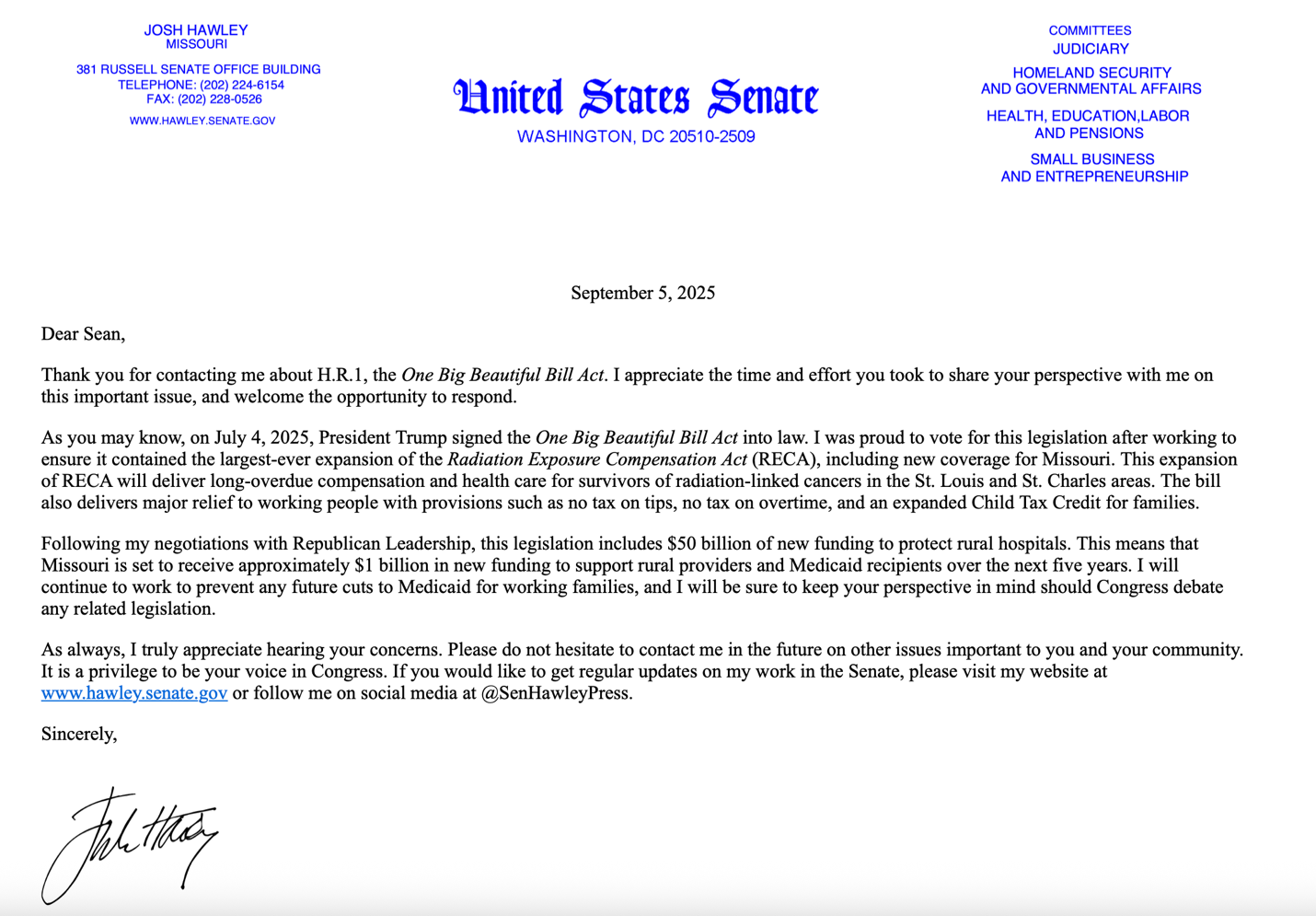
With this new congressional map, I and every other moderate, liberal, and progressive on the Missouri side of Greater Kansas City will lose all federal representation. We currently are represented in Congress solely by Congressman Emmanuel Cleaver II, who has served this city for many decades. I regularly send emails to our senators, Josh Hawley and Eric Schmitt about a variety of issues that I care about from restoring funding to the National Endowments for the Arts and Humanities (NEA, NEH) and the National Science Foundation (NSF), to my fears of presidential overreach with so many executive orders which seek policy changes that by law can only be made through acts of Congress. In every instance, the response I receive has nothing to do with what I wrote. In the case of an email I sent to Senator Hawley concerning my fears over my profession’s long-term viability in this country as federal funding to universities and research institutions is threatened for political reasons, I received an email back lauding the Big Beautiful Bill and all the good it will do for America. A screenshot of that email is included below.
Meanwhile, Senator Schmitt’s office only responds with campaign emails pretending to be official senatorial correspondence. This ought to be illegal in my opinion, and a version of the Hatch Act of 1939 should be passed for the Legislative Branch to keep Members of Congress from using their official correspondence to actively campaign for their offices. I have a folder filled with all of the emails I’ve received from his office since April 2024 and normally they will go directly into that folder. Yet there was one email his office sent me in response to my concerns over cutting funding to the Corporation for Public Broadcasting which was such a blatant example of his dismissive approach to his constituents who disagree with his views that I became pretty angry. 
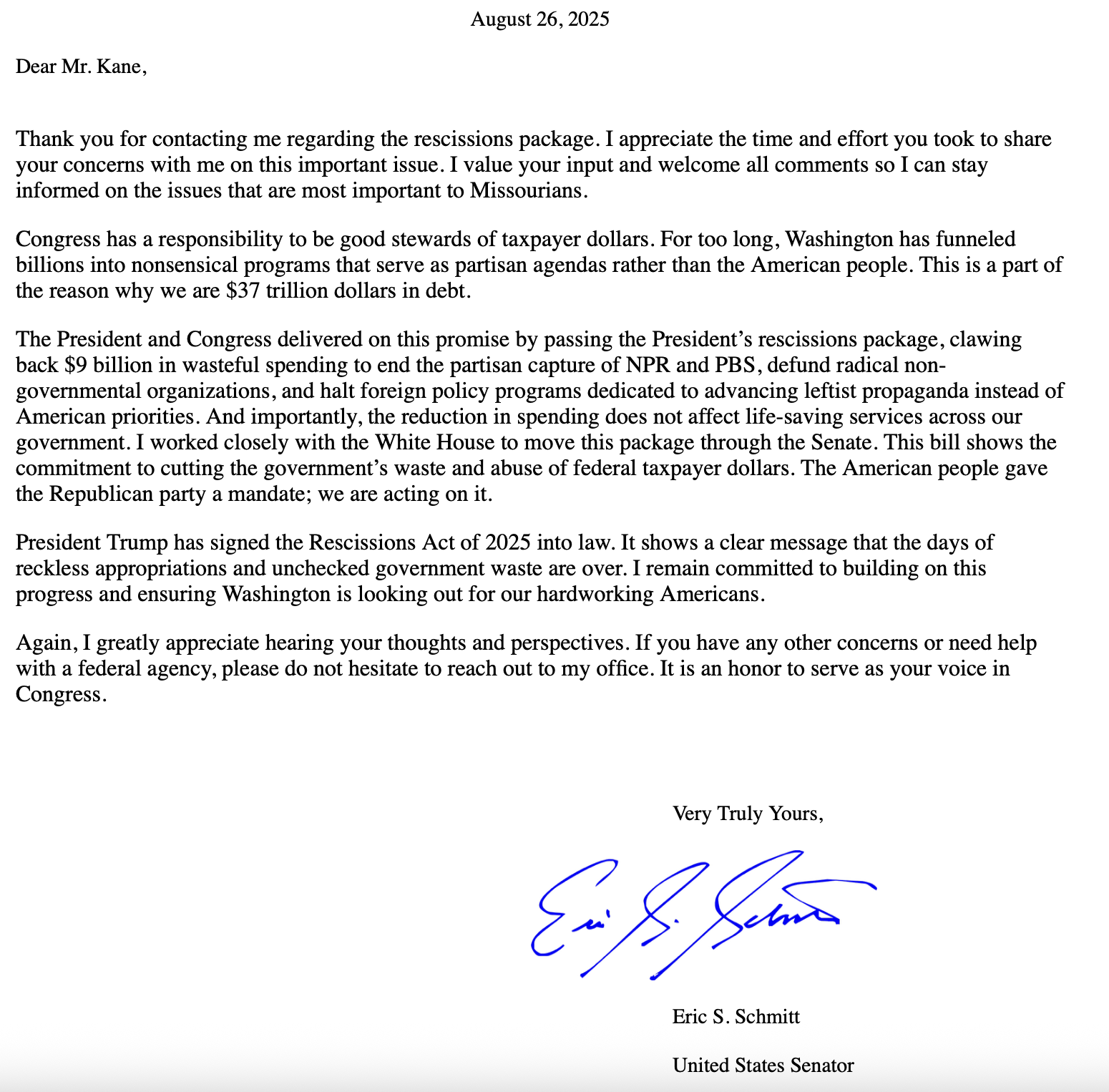
So, I called his Washington office, realizing as the phone was ringing that it was after business hours in the East, and left a voicemail. In summation, I challenged him to actually address his constituents’ concerns. I borrowed what I imagine is the lingo of the manosphere, a foreign corner of the Internet to me and challenged him “man to man to stop being a coward and do his job for all Missourians, not just those in his own party.” I haven’t gotten a response to that one, whether by email, phone, or letter. This is not how I like to talk to people, let alone write to them. I would rather find ways to speak to people in their own language to lift them up. I’m my worst when I lose that sense that I can say or do something that will make the lives of the people around me better.

It’s in this spirit that I decided to write again this week about democracy. Any form of representative government requires that we trust in each other for it to function. This is one of the central tactics of the current majority party. The President recently called the city of my birth a “hellhole,” something that I take personal offence to. I appreciated Stephen Colbert’s response, especially the heartfelt final two words of it.[6] In my essay “A Defense of Humanism in a Time of War” I wrote that I don’t want to be known as a pacifist because there will always be schoolyard bullies to contend with.[7] The people in power today here in Missouri and the slim governing majority in Washington are the biggest bullies this country has seen in a long time. They evoke the worst aspects of America, the greed that embodied both the First Gilded Age and the garishness of this Second Gilded Age in which we live. Not content with letting the democratic process that brought them into office work as it has for over two centuries, they insist on doing what they’ve accused their opponents of doing: rigging the electoral process in their favor. They clearly do not trust us, so why should we trust them?

Democracy is nourished by a love of neighbor. American democracy in particular is built upon a bedrock of idealism that we are still trying to achieve. That is what we need to work on. Robert Reich, the former Secretary of Labor, argues that we are on the verge of a second Progressive Era, a time of tremendous political reform. We who oppose the Missouri supermajority and the thin ruling majority in Washington need to remember that end goal. We need to sustain the democratic spirit through this time of trouble so that we can have a better tomorrow. I’m writing this knowing the risks because I feel it’s my duty as an American. I will always stand up for my neighbor regardless of if we agree or disagree on a given topic just as I will stand up for my colleagues, students, friends, and family because it’s the right thing to do.


[1] “On Democracy,” Wednesday Blog 5.39.

[2] “We, Irish Americans,” Wednesday Blog 6.10.

[3] “On Servant Leadership,” Wednesday Blog 6.15.

[4] “Freedom from Fear,” Wednesday Blog 2.6; “Embodied Patriotism,” Wednesday Blog 6.26.

[5] “Governor Kehoe announces special session on congressional redistricting and initiative petition reform,” Office of the Governor of the State of Missouri, 29 August 2025.

[6] “A Scary Time For Chicago | Trump Gets FOMO Over China’s Military Parade | Donald’s Life Lessons,” The Late Show with Stephen Colbert (3 September 2025), YouTube.

[7] “A Defense of Humanism in a Time of War,” Wednesday Blog 6.24.

On Servant Leadership

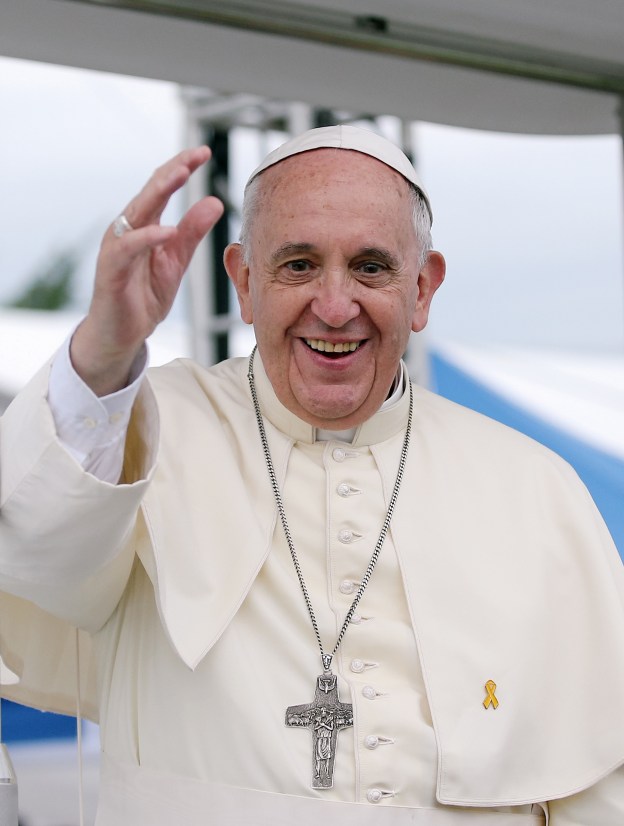
This week, in memory of His Holiness Pope Francis and of the revolutionary anniversaries in America and Ireland this week, some words on the humility necessary for the best sorts of leaders.—Click here to support the Wednesday Blog: https://www.patreon.com/sthosdkanePhoto: By Korea.net / Korean Culture and Information Service (Photographer name), CC BY-SA 2.0, https://commons.wikimedia.org/w/index.php?curid=34828249

Photo Credit: By Korea.net / Korean Culture and Information Service (Photographer name), CC BY-SA 2.0, https://commons.wikimedia.org/w/index.php?curid=34828249


This week, in memory of His Holiness Pope Francis and of the revolutionary anniversaries in America and Ireland this week, some words on the humility necessary for the best sorts of leaders.


Over the past weekend as we marked the 250th anniversary of Paul Revere’s Ride, the Battles of Lexington and Concord, the Siege of Boston, and the beginning of the American Revolution, I started to think about writing this week about that anniversary. I partook in the Veterans’ Rally on the Plaza here in Kansas City, which was part of the National Day of Action against Kings. During the hour walk to and from the event in Mill Creek Park I thought long and hard about what I would say, of my fascination with Paul Revere as a child, or about my first visit to Boston in 2002 when my parents & I walked the Freedom Trail with a family friend who I reconnected with on this most recent trip. Normally, at this point in April I’m more focused on the more recent revolutionary anniversary of the Easter Rising which began with the reading of the Proclamation of the Irish Republic in front of the General Post Office in Dublin. Perhaps I could blend the two revolutionary touchstones into something profound for our own moment; of the unrealized dreams and aspirations of both sets of revolutionaries.

Yet events of the following days have changed all that. I’m writing this now close to two hours after I heard the sad news of the death of Pope Francis. After a half an hour replying to messages from my parents and various friends who texted me the news over the night, I wrote my own brief message which appeared on my social media accounts:

This one feels different to me. Papa Frank was our pope: from the Americas, a Jesuit, and more open minded to the world. His Universal Synod will remain a testament to the man and his twelve years of service to our Church.

Francis’s pontificate marked my early adult years. He was elected at the height of my time as a student at Rockhurst University, when I was surrounded by Jesuit philosophy and spirituality, at a moment when his election seemed to match the optimism I felt in our world. Pope Francis remained a rock amid the tempestuousness of the years that have followed. His humility and humanity shone beyond either of the other two popes of my lifetime. Last summer, my European tour originally included nearly a month in Italy on the way to a dear friend’s wedding party. I’d planned to be in Rome for one Wednesday in the hopes of going into the Paul VI Audience Hall to see Pope Francis in person, even if I was way in the back of the room and wouldn’t be able to meet him. The Swiss & Italian portions of that trip didn’t end up happening, and I regret not getting to see the man in person.

Despite this, I felt that I knew Pope Francis on a personal level. He always struck me as another guy trying to make the best out of life. I’ve heard many people refer to him as the grandfather of the Church away in the Vatican keeping us in mind and in good humor. I like this image; it matches what I saw when he was interviewed by the American television networks. Like Voltaire, my mental image of Pope Francis is him with a smile on his face, an earnest and caring smile and perhaps with a joke in mind. Pope Francis was a leader I was willing to follow because he did so with intense humility. I was standing in the lobby of the Campus Ministry, Counseling, and Career Counseling offices at Rockhurst that afternoon of 13 March 2013 when Cardinal Tauran delivered the Habemus papam announcement from the balcony of St. Peter’s Basilica and announced that Cardinal Jorge Mario Bergoglio of Buenos Aires was our new Pope, Francis, a name chosen to commemorate the humblest of saints. That he asked us to pray for him, to help him in his pontificate was for me the first sign that this man was different.

The Catholic Church exists in a very different world today than it did a century ago. Then when only 150 years had passed since the eruption of the American Revolution and even less since the anticlerical outbursts of the French Revolution the relationship of the Church to democracy was more fraught. A century ago, fascists in Italy claimed they were acting in defense of tradition and of the Church to attacks from communism. We saw where that road led in the Second World War. A century ago, the Church emerged from the ashes of the Irish Civil War in a dominant position in the new Free State, a position it would hold through the founding of the Republic in 1949 and into my own lifetime. Here in America, Catholic voices led the chorus of the most extreme and anti-democratic factions in this country railing against anyone who opposed them, even their fellow Catholics.

I worried twelve years ago as we neared the end of the first decade of Pope Benedict XVI’s reign that the disconnect between the Church and our world would only continue, and that locally the voices of we liberals and progressives in the Church would remain a hushed minority. We received two new bishops in Greater Kansas City that were appointed by St. John Paul II in 2004; in January Archbishop Fred Naumann was appointed to lead the Archdiocese of Kansas City in Kansas where I grew up, and in May Bishop Robert Finn was appointed to lead the Diocese of Kansas City-St. Joseph, which covers the Missouri half of this metropolis. Both were far more conservative than their predecessors, and far more dogmatic. Bishop Finn closed a great many of the social justice ministries of the Diocese and alienated at least a quarter of the local Catholics. My own parish, St. Francis Xavier, often stood in sharp opposition to his leadership as the Jesuit parish remained welcoming and open to all. By the time Pope Francis was elected Finn’s leadership was crumbling under the weight of his inaction and obstruction with the abuse scandals, though Archbishop Naumann was only replaced in the last two weeks with the far more synodal and open Bishop W. Shawn McKnight, who previously led the Diocese of Jefferson City in central Missouri. I for one am hopeful that Archbishop elect McKnight will prove to be a better listener to the Catholics of his new archdiocese.

I remember the sun shining on the day when Pope Francis was elected. It was actually very similar to today, Monday, 21 April 2025, and my sense of a new dawn for our Church. The Sun was shining overhead, and the Spring birdsong was resounding around campus. I experienced many of the same things today. It’s profound to me how similar those two days are.

It did feel revolutionary in many ways when he was elected. He was the first Pope from the Americas, an Argentinian by birth. He was the first Jesuit pontiff, the first pope in a long time to be the child of immigrants. Pope Francis felt like he was one of us. Over the weekend I thought a great deal about what it takes to enact change and restore optimism and hope to a society such as ours which is so bereft of it. Pope Francis brought hope because he was one of us. The minutemen who stood up for their communities and their rights as citizens of a democracy 250 years ago at Concord were like us. The Irish Volunteers like so many of my great-grandparents’ siblings who stood up to British colonial rule a century ago and for better or worse kept fighting even after some liberty had been attained were like us. The people I saw on Saturday were mere ordinary people standing up not just for themselves but for all of us.

The true merits of a servant leader lie in their willingness to help everyone, not only their friends or fellows. Pope Francis was the Papa for all Catholics, especially those who disagreed with him and so loudly denounced his efforts at reform. He was the Pope who listened to us even when the bishops receiving his messages didn’t always heed them. I participated in the Synod on Synodality in the initial parochial stage when I was still in Binghamton; I spent an evening writing my own lengthy and heartfelt answers to the questionnaire, and when my parish’s report was published, I was excited to see some of my comments appear amid the harmonious chorus of like-minded people at my parish. Yet when the diocesan report was published, I was saddened to see how little of that chorus was heard, and at the one listening session I was able to attend several years into the Synod process I felt that as much as we in the laity heard each other that our local clerical leadership kept their ears closed.A servant leader listens to the people. They are approachable, open, and honest about their decisions. I’ve known many leaders who fit this bill: from the late Pope to many of my pastors down the years, to our Mayor Quinton Lucas, a man who I consider to be a friend. Servant leaders do great things as ordinary people. During my walk home from the rally, I remembered a scene from the second episode of the 2008 HBO miniseries John Adams, one of the touchstones of all millennial history buffs in this country. That scene showed a team of men and oxen pulling the cannons from Fort Ticonderoga past the Adams farm to the Dorchester Heights to the south of Boston. I rewatched this episode that afternoon and felt a upswelling of emotion at seeing something akin to what I saw on the Plaza that afternoon: ordinary people working together for a common cause to make life better for all of us. These are the extraordinary acts of ordinary people. That, dear reader, is servant leadership.


On Democracy

This week, for my birthday I want to write to you about my belief in all of us and how democracy remains our best hope. — Click here to support the Wednesday Blog: https://www.patreon.com/sthosdkane


This week, for my birthday I want to write to you about my belief in all of us and how democracy remains our best hope.


One of those great efforts with which human history is concerned is the question of what our original nature was at our beginning and if and how we have changed that nature. The French anthropologist Claude Lévi-Strauss’s notion of the primitive as “closer to humanity’s origins” and living in a state without the societal and technological innovations “that obscure their nature” evokes this original nature, what in Christianity is called our original sin, or biologically our evolved state as a particular form of bipedal mammals among other lifeforms.[1] The seeming natural state of human societies until very recently has been toward forms of monarchy and aristocracy, the Tory Party in Britain today still refers to itself as the natural party of government because they descend through many generations from the old Cavaliers who supported Charles I and the aristocrats in the Parliaments of the Stuart and Georgian centuries who opposed the liberal reforms of the Whigs. Here in the United States, our own whiggish political tradition sees its modern manifestation in the old establishment wing of the Republican Party, also known as the Grand Old Party or G.O.P., whose founders in the 1850s included former Northern members of the Whig Party once led by our own aristocrats, men like Henry Clay and John Quincy Adams in the early republic.

Yet those same men stood for something beyond just preserving their own aristocratic power within their own society. These American Whigs and their Republican and Democratic successors aspired to a high ideal of human nature that entrusted power in the hands of the many rather than in those of a few or the one. Dr. Heather Cox Richardson recently wrote in her Letters from an American about how the Secessionists who dragged this country into our Civil War in 1860 and 1861 were trying to assert their own aristocratic vision of the republic that would benefit the few at the disregard of most and the expense of the many. As James J. Sheehan reminded us in his essay in the December 2024 issue of Commonweal, Tocqueville wrote that the chief difference between the source of power in an aristocracy or a monarchy, or their corrupted forms oligarchy and a tyranny, and the source of power in a democracy is that “despotism may govern without faith, but liberty cannot.”[2] The despots rely less on our trust in their rule, and in many of the cases we see today they sew discontent in government, the economy, and for all of us with each other in order to assert their authority and keep hold of power. 

Democracy is a far harder thing to keep, as Dr. Franklin knew well. The inclusion of more and more people complicates any organization, yet it also allows that organization to better reflect all involved. Democracy requires the efforts of all of us to survive; if left unwatered and unnourished by each generation it will wither and die like any other flower or fruit on the vine. Throughout my life, I’ve looked to heroes in our history from Lincoln, Mandela, Óscar Romero, Popes Francis and St. John XXIII, to people closer to my own life. What all of them have in common is a desire to improve the lot of humanity, and in the case of Lincoln and Mandela to promote democracy in their homelands. When I look ahead and worry about what might be coming in these next four years, I often wonder if I would be safer, happier, healthier, and living a more fulfilled life elsewhere in another country where I can leave the troubles of my own behind. Yet I remember these heroes, MacDonagh and MacBride, and Connolly and Pearse, my great-grandfathers who fought in the two World Wars, the dreamers and optimists who organized and marched non-violently for civil rights here in America and in Ireland too, and looking again at our own day I pause. This is our time to make life better for our successors while we live to overcome the long winter of fear before us. If I left now, could I look those heroes of mine in the eye when my time ends?

I believe in democracy because it is the best form of government we’ve yet imagined. I believe in representative government because I would rather have a say in my neighborhood, my city, my county, my state, and my country than not. I believe in democracy because I believe in humanity and that all of us can make something better if only we believed in ourselves and in each other. I believe that before that original sin there was original grace, original goodness; that before the first frown there was the first smile; that before the first thoughts of lust there were thoughts of love. I believe in democracy because I need to believe that I will have a future, that all the things which I’ve done in these last 31 years are building up to something which will, in Bill Nye’s words, “change the world,” no matter how small that change may be. To do any of this, to see any of this goodness in our hearts, to believe in ourselves again we need to be willing first to acknowledge our faults and second to forgive ourselves and put in the effort to make our lives better. For all our technology and our ever increasingly complicated ways of life, we are still the same humans as our ancestors living in Lévi-Strauss’s primitive manner. We retain the same bodies and souls. Because of this, we can build a future for our posterity in a spirit of grace, compassion, and optimism that would make the heroes of old proud.


[1] Claude Lévi-Strauss, From Montaigne to Montaigne, trans. Robert Bononno, (Minneapolis: University of Minnesota Press, 2019), 25.

[2] James J. Sheehan, “Democracy and Its Discontents,” Commonweal, December 2024, 13.


Speed Limits

This week, some moderation in Maverick’s “need for speed.” — Click here to support the Wednesday Blog: https://www.patreon.com/sthosdkane


This week, some moderation in Maverick’s “need for speed.”


I’ll admit that I have never seen Top Gun nor the recent sequel. My best familiarity with the film is that I once had dinner at the Kansas City Barbeque restaurant on Harbor Drive in San Diego where they filmed one of the scenes in that film. At the time I was living in Binghamton, NY and out west for the 2021 meeting of the Sixteenth Century Society and excited to see somewhere named “Kansas City Barbeque” in walking distance of my meetings. The sauce had a vinegary feel to it. Still, that “need for speed” that Tom Cruise’s character Maverick appears to have in the film is something that I can get in some regards.

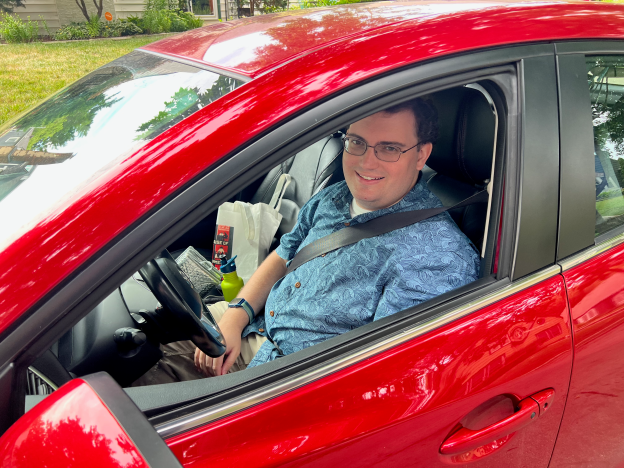
I’ve been driving for close to twenty years now. When I was little I always wanted to drive the family car. To put a stop to this pestering, my Mom said, “You can drive when you can see over the wheel and reach the pedals at the same time.” Well, that happened when I was ten, and I quickly moved from being in the trailer with my Dad while we bailed hay in the summers on the farm we moved to in Piper, Kansas to driving the truck. It was one of the first really smart things I ever did. I got my learner’s permit when I was 14, my restricted driver’s license when I was 15, and my full driver’s license when I was 16 on St. Stephen’s Day 2008.

In those first few years that I was licensed I, like many teenagers, was thrilled at being able to drive fast. I learned to drive on highways before learning to drive on narrower city streets and country lanes, as I was driving daily between our farm and my high school, St. James Academy, a 30 minute journey south along K-7 on the western edge of Greater Kansas City. I have many stories from those early years driving that surely will make good blog posts in future, so I won’t tell all of them here. I learned early how to drive with greater caution in ice and snow, and in one instance did slide off a highway interchange ramp going from I-635 southbound to I-35 southbound in icy conditions. All the same, I got a sense of thrill from driving.

And yet, I wasn’t one who liked road trips all that much, something which changed out of necessity when I started making my 14 long drives east & west between Kansas City and Binghamton between August 2019 and December 2022. These long drives changed how I drive, and made me highly aware of what my car, which I’ve lovingly named the Mazda Rua, because it’s a red Mazda 3, does in certain circumstances. One of the greatest feelings when driving is when I get the sense that I can control the motions of my car with only the slightest movements, and when there’s a sense of connection between my thoughts and my car with my arms and hands as the conduits for that connection. In Binghamton, especially when I was teaching online and didn’t have many places to go to get out of my apartment, I would take long drives in every direction, just driving as far as I felt like I wanted to in a day and turning around. In one instance I made it east on I-86 (NY-17) as far as Hancock, NY in the Upper Delaware Valley, while in another I drove up the western shore of Cayuga Lake almost to the New York State Thruway at which point I decided to turn around and return to Binghamton for the night. I’d spend this time on the road listening to podcasts or audiobooks and exploring the world around me in ways I otherwise wouldn’t have done. I now know a great deal more about the Southern Tier and Finger Lakes than I ever would’ve otherwise simply by spending a weekend day driving around seeing what’s out there.

I’ve always known the speed limit to be more of the mark at which traffic tends to go, a number to aim for yet ideally not cross too much. Here in Kansas City, it felt reasonable to drive maybe 5 mph (8 km/h) over the speed limit but not much more than that. When I arrived in New York State, I was told by people I met there that it’s normal to go 10 mph (16 km/h) over the speed limit, and so I tried my best to keep up with the pace of traffic. It was even worse during my Longest Commute when while driving in Florida along I-10, I-75, and Florida’s Turnpike from Destin to Orlando when the traffic was moving closer to 20 mph (32 km/h) over the speed limit, and again I felt the need to keep up if only for my own safety. What struck me the most was that after the Pandemic the average pace of traffic in Kansas City has risen to 10 mph over the posted speed limit not only on the highways but in some cases on the larger city streets as well. I followed along at first, trying not to be run off the road by the more aggressive drivers tailgating me the entire way on Southwest Trafficway from Westport Road to 31st Street, for example, yet I knew that even then I would not have the reaction times I wanted and needed to be able to stop for the odd jaywalking pedestrian or animal, or other obstacle that fell into the street. Like that time a couple of years ago when I was driving on I-470 out to Lee’s Summit when I had to dodge a sofa that fell out of the back of a truck in the middle lane.

This stands in stark contrast to my experiences in other countries where the speed limits are adhered to as they are posted. As much as approaching a roundabout at 70 mph (112.65 km/h) in Milton Keynes was startling to say the least, the fact that my friend who was driving kept strictly to the national speed limit (and was driving a Tesla that has the breaking ability to slow down enough to make it to that roundabout) was a relief, if a bit of an anomaly in my driving experience. In some instances the posted speed limits don’t always make sense to me. In 2010, I was walking down a road in Gleann Cholm Cille, County Donegal, where the posted speed limit was 80 km/h (50 mph), which seemed far too fast for the width of the road in question. Now having driven in Canada, it seems even more silly considering the 401 Freeway which is the main highway in Ontario has a posted speed limit outside of cities and work zones of 100 km/h (62 mph). In what way does it make sense then for an old bóthar, a proper country cow-path in Donegal, to have a speed limit that’s only just lower than one of the highest trafficked highways in Canada? 

All of this got me thinking about how I drive here in America, and after I returned from this summer’s European tour, I found myself spending less time pressing down the accelerator and more time coasting; less time aiming for 30 or 35 mph (48 or 56 km/h) and more time enjoying and observing the neighborhoods around me, safely breaking for pedestrians, and not hitting animals.

On August 31st, the California Senate passed Senate Bill 961 which will require all new vehicles model year 2030 and beyond to have technology installed which will alert drivers if they are going more than 10 mph (16 km/h) over the speed limit. How this alert will function––an alarm bell, a verbal warning from the car’s computer, a vibration in the steering wheel, a slight electric shock to the hands––remains uncertain. Yet this bill made the national news because, like Wisconsin’s seatbelt requirement passed in 1962, it presages any federal legislation on the same speed limit technology. I know many people will be upset or angry about this legislation and will say that speeding is their right as an American, or whatever they will. I am in favor of the idea yet uncertain about the execution. For one, the 10 mph warning line ought to take local conditions into account, is the traffic around you going faster than 10 mph over the speed limit, and for all of us who will likely not be driving new model cars in 2030, how long until this law has such widespread effect as to be practical? Until earlier this year my Dad was driving a 1962 Ford F100 truck as his everyday car. My Mazda Rua is now 10 years old, yet it has always had a built in feature in the navigation system that will warn me I’m crossing the speed limit by turning the white speed limit sign on the screen red.

With all that I’ve written here about slowing down on the city streets, I still would probably drive faster on highways on intercity long drives, within reason of course. Today I don’t drive on the highways much, in fact I have a knack for actively avoiding the highways most of the time and taking the city and suburban street grid wherever I need to go in Jackson and Johnson Counties. Anywhere beyond that and I’ll usually have to get on a highway to at least cross the Missouri or Kansas Rivers. My point is that the circumstances of driving really will always depend on the moment in which I’m in. Here on my street, I’m happy to drive closer to 15 mph (24 km/h) instead of the 25 mph (40 km/h) speed limit. Perhaps the best we can do short of installing technology in cars that will slow them down to the speed limit, is doing the European thing of installing speeding cameras along all of our highways, roads, and streets which will send tickets by mail to anyone caught speeding. Here in Kansas City, Missouri our red light cameras were turned off in 2015 after the Missouri Supreme Court ruled them to be a privacy violation. These camera systems wouldn’t require officers writing tickets on the side of a busy street or highway. All that said, I don’t feel optimistic that the nigh libertarian political climate of either Kansas or Missouri will go for this.

That then leaves our speeding up to the individual drivers collectively creating a speed for the flow of traffic. I could say that this will help at least keep vehicles moving at roughly the same speed which will in turn keep everyone involved safe, but that again ignores the full impact of the human factor, my interpretation of chaos theory which I wrote about last week. At the time of writing, chaos might well be the best adjective for describing the streets and highways of Greater Kansas City. And that is proof, dear reader, that leaving the speed up to the individual drivers isn’t going to work.


The Power of Hope

This past weekend, history was made when President Biden dropped out of the 2024 presidential race. The next 48 hours inspired tremendous hope again. — Click here to support the Wednesday Blog: https://www.patreon.com/sthosdkane


This past weekend, history was made when President Biden dropped out of the 2024 presidential race. The next 48 hours inspired tremendous hope again.


During my senior year at Rockhurst, now a decade ago, the BBC released the first of two seasons of a new series of Shakespearean adaptations called The Hollow Crown. These films were realist adaptations of the Henriad plays Richard II, Henry IV Parts I and II, and Henry V. This first season seized my attention and enthusiasm with a tremendous rush of emotion and energy. I wrote my undergraduate capstone in History on Richard II partially because of how these films brought these medieval kings to life for me. Shakespeare’s plays have tremendous power because they speak to common human emotions and experiences, it’s why they’ve been adapted by Akira Kurosawa from their original settings to feudal Japan, and why contemporary adaptations of these plays can work even if they can also leave something to be desired. 

Yet the greatest power that Shakespeare’s plays have is in their quotability. William Shakespeare was one of the greatest writers to use the English language to tell his stories, and to breathe life into his characters and settings that the most fantastical magic of The Tempest can seem just as believable as Richard II’s grief at losing his crown. For me, one of the most readily quotable lines in Richard II comes not from the deposed king but from his uncle John of Gaunt, Duke of Lancaster, who in a speech which Jeremy Irons described as one coming from a medieval Brexiteer, offered the truism “small showers last long, but sudden storms are short.” (2.1). I think of this often in many different situations. Our politics of these last 8 years have been somewhere in the middle, an 8 year on-going rain that may seem tempestuous throughout but that has merely brought together several of these sudden storms in quick succession.

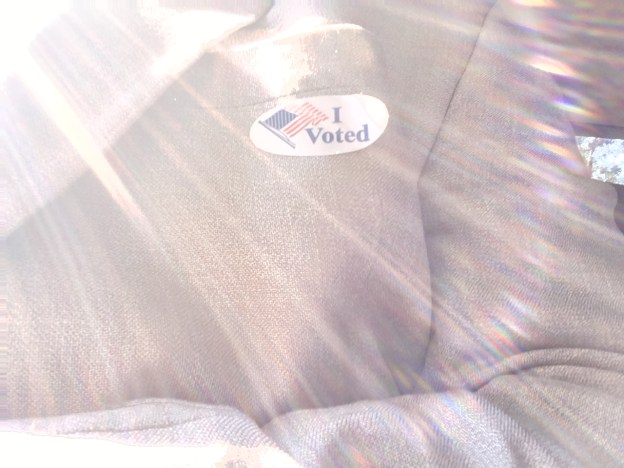
For most of my life I’ve heard the argument that ordinary people like us cannot do much to change our politics, and that we are better off leaving politics to the politicians who are going to do whatever they want anyway. I’ve grown up surrounded by this apathy, yet my parents instilled in me from my earliest memories a duty to vote, to speak up, and to play my part as a citizen. I’ve been frustrated in the last year in particular hearing so many people express a distaste in our electoral system because the two candidates running for President this year were men who seemed so out of touch and disconnected from the rest of us that we felt little need to participate. For myself, by the time the Missouri Primary came around for my party, our candidate had already secured enough delegates to claim victory in the primaries, and so this was one rare election when I didn’t vote.

All of that changed on Sunday at 12:46 Central Time when our sitting President, my party’s candidate, Mr. Biden announced he would no longer seek reelection to the Presidency this November. I was out at lunch with my parents when I got the news, and my first reaction was akin to many: fear at what would come next. I was on the fence whether President Biden should drop out of the race, unsure of what the result might be; and today writing this 48 hours later I’m still afraid of what could happen.

Yet my fears have been assuaged somewhat at the sight of how much the tone of this election has changed in my party. Where so many were going to vote for the President in order to keep his opponent out of power, in the last 48 hours our new candidate, Vice President Harris, has received more than 28,000 offers from ordinary people to volunteer for the Harris campaign. In the last 48 hours the Harris campaign and the Democratic Party have raised about $250 million in donations and pledges; of those donations more than 888,000 were from ordinary people wanting to pitch in. The tone has changed, where before last month’s debate we hoped that President Biden could lead the campaign to eke out enough moderate and undecided voters to support the Democratic side and defeat his opponent, now we have a campaign that is built less on fear of the opposition and more on the hope of what our new candidate has promised to do and could do if elected President.

Hope is far stronger than fear because it offers us a chance to aspire to something greater than ourselves. The most successful President of the twentieth-century, Franklin Delano Roosevelt, ran on a platform of hope and reform that would pull the country out of the Great Depression, and in his later campaigns defend liberal democracy from the growing tides of authoritarianism around the globe. All Democratic Presidents since Roosevelt have been judged on what FDR accomplished, and few have risen close to his level. The two that initially come to mind are Lyndon Banes Johnson, who served as President from President Kennedy’s assassination in November 1963 until January 1969, and our now outgoing President Biden. In spite of a staunch and illiberal opposition built around the premise that any and all legislation proposed by the Democrats must be blocked at all costs, even at the expense of the country, the Biden-Harris Administration has passed several landmark pieces of legislation which have been notable in the good they’ve done while being overshadowed by claims to the opposite from the clamoring gallery in the opposition.

Most of the Biden-Harris Administration’s major legislation occurred when the Democrats had a majority in both houses of Congress through the end of 2022. These included in 2021: 

  • The American Rescue Plan Act, which injected $1.9 trillion into the economy to help ordinary people during the hard times of the recent pandemic.
  • The Bipartisan Infrastructure Investment and Jobs Act, which is funding infrastructure improvements and new projects across the country. 

In 2022, Biden signed: 

  • The Inflation Reduction Act, which included elements of his failed Build Back Better Act offering significant investment in climate and energy production and a three-year extension to the Affordable Care Act.
  • The Bipartisan Safer Communities Act which is the first major federal gun control law passed in the last three decades.
  • The CHIPS and Science Act which bolstered American semiconductor manufacturing.
  • The Honoring our PACT Act, which expanded health care for US veterans.
  • The Electoral Count Reform and Presidential Transition Improvement Act which adds procedures to the Electoral Count Act of 1887 to avoid a repeat of the stalling measures to keep President Biden’s election from being certified during the January 6th attack on the Capitol.
  • The Respect for Marriage Act which codified same-sex and interracial marriage.

And finally, in 2023, Biden signed:

  • The Fiscal Responsibility Act which restrained federal spending during fiscal years 2024 and 2025, and suspended the debt ceiling until the beginning of 2025.
  • In September 2023, he established the American Climate Corps, in a Rooseveltian manner to help facilitate the national response to the climate crisis.

What is striking about Biden’s presidency is both how much he accomplished in four years, and how little most people seem to know about it. He could not fully live up to FDR’s legacy because he lacked the majorities in Congress throughout his term that would have allowed him to continue to pass legislation. In the last month, it’s become clear that what new policies his Administration announces will be intended less as viable things to be accomplished in what remains of his term, but rather as signs of hope of what his party would do if they retain the Presidency and win back a majority in the House of Representatives.

That hope now has a face and a name in the Democratic presumptive nominee for President, Kamala Harris. The Democrats would do well to recognize that the power of hope for the things she and her Administration and the congressional party can accomplish together are far more powerful than all the fears we have of what would happen should the opposition regain the Presidency and retain its majority in the House. Hope is stronger than fear because it builds on the idea that there’s something better to be had than what we now have. I believe that hope is what will unite us together in the Democratic big tent this year to win this election. The circumstances aren’t great, President Biden’s withdrawal was far later in the race than I would have liked, and in the coming weeks I want to write here about the flaws in our electoral systems that his withdrawal lays bare.

This week though, let me leave you with what I believe to be true: the Harris campaign is in a strong place with its grassroots enthusiasm, fundraising, and organizing, and has the legislative accomplishments of the Biden-Harris Administration as a strong foundation for a successful, if unexpected, campaign. It’s up to all of us to hope that she can provide better promises than her opponents, and to act on that hope and vote in November.


An Equal and Opposite Reaction

21733868_10214068171760956_1726168460_oOne of the fundamental maxims of physics is that “For every action there is an equal and opposite reaction.” For everything that is said or done something of equal vigour must be in order. By this logic then, for every fascist, far-right, or white supremacist threat to American society and we the American people there must also be an equal reaction by the far-left, by the Anti-Fascists as they have deemed themselves. Yet what good does the threat of violent action do? What is the point of bringing one’s guns to an anti-fascist protest? What is the point of eradicating the memory of all who have had some dirt upon their hands, who committed evils in their lives?

This moment, at the closing years of the second decade of the twenty-first century, is a moment of immense change, of tribulation not unfamiliar to our predecessors from a century prior. We are living through the waning hours of a period of unprecedented social change and extraordinary wealth for many in our society. We have witnessed a plethora of forces at work in their efforts to bend our society to their aims. Some have sought to bend the law in order to further their own wealth and prosperity to the detriment of others. Still more have fought against those egotists in the defence of the common good and the wellbeing of all.

Now, as we look ahead towards the last months of 2017 and the new year 2018 we are beginning to recognise as a society how uncertain our future is. We are realising that our children will probably not be better off than ourselves, that our generation as well will probably fall in economic standing in a way unseen in the past century. It is natural to react to this with fear, to curse the political, economic, and social systems that led us to this moment. But in our present culture we celebrate fear, overreaction, and anger far too much. We have accepted extreme behaviour on television as normal, and in so doing have accepted that same extremism into our own lives.

We have reached a moment in our history when both the right and left are afraid; afraid of losing what they have; afraid of each other. We have reached a moment when the politics of fear have duped millions into electing a man entirely unfit for the duties to which he is oath-bound to serve. We have reached a moment when lies are far louder than truths and accepted as real by sections of society.

We have reached a point where at long last the old Confederate sympathies are being brought into the light of day as racist echoes of a failed rebellion from 150 years ago. Yet the zeal of the most outspoken on the far-left has created its equal reaction to the zeal of the far-right. Both now have sizeable factions at their rallies who are armed, ready to fight.

Extremism in any form is unnatural and unhealthy. Yet in the current moment in American history it is the extremes of our society that are the most vocal. I cannot deny that our political system is flawed, it absolutely is. I cannot also deny that American capitalism favours the rich, that is how the playbook has been written. I would be an idiot to ignore that our society is rigged against anyone who is not male and of European descent, there is a racial hierarchy in this country that has existed since the colonial era. But I would be blind to also deny that we can change things for the better. We can fix our corrupted political system, we can rewrite the codes that govern our capitalism, we can stand up everyday for the rights of all in this country and day by day continue to chip away at those old biases. But we cannot do these things while we are taken hostage by the far-right and far-left of our society. We cannot fully achieve the great work of our society while our society is a hostage to the militant few willing to kill their fellow Americans in defence of their extreme convictions.

We must continue to march, to protest, to organise, and to vote. We must carry on the good work that our predecessors undertook in generations past. We can make this country a better place for our children and grandchildren and great-grandchildren to live in. But we must walk the middle road of moderation to do so.

We must understand the full consequences of our actions, we must learn from our history so that we do not make the same mistakes again. There are many who are opposed to the removal of the Confederate monuments because that is “erasing our history.” I disagree. By removing those monuments to a rebellious movement in our history, we are forcing the book closed on that chapter that has yet to settle. After all, we still see the way in which Americans continue to threaten one another with violence at the slightest hint of progressive reform. To make our society better for the next generations we must rid ourselves of this disease of extremism. We must show those who want violence that through peaceful debate we can achieve far greater things.

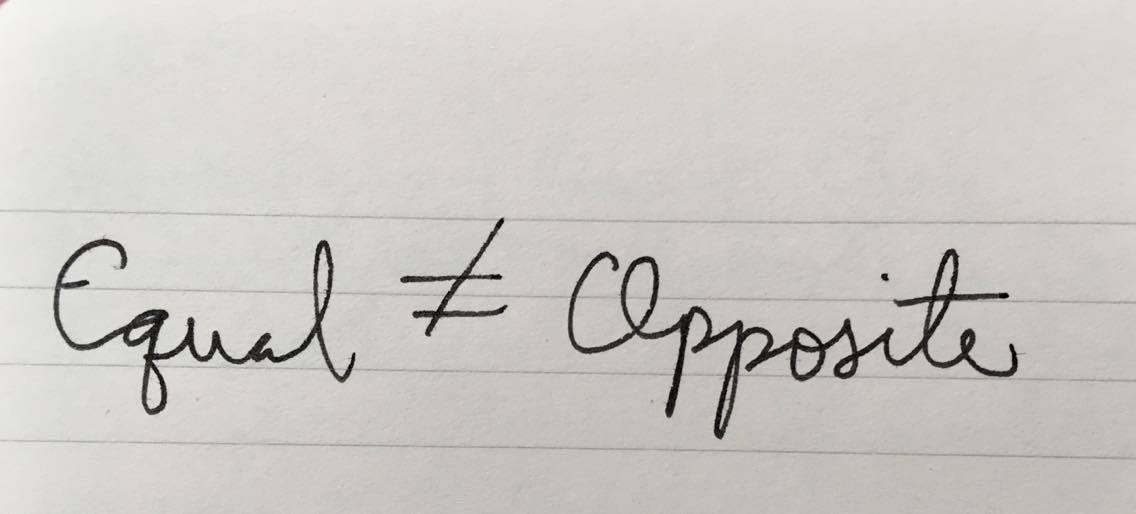
“For every action there is an equal and opposite reaction.” When the far-left responds to the far-right’s threats of violence with equal threats the far-left only continues that same cycle of violence. Consider that maxim again: “For every action there is an equal and opposite reaction.” Threats of violence may well be equal on both sides, but the threat of violence on the left is not opposite to the threat of violence to the right. It is not the positive to the right’s negative. Only peaceful protest, nonviolent refusal to play by their rules of violence can achieve that. Through peace and nonviolence we find our equal and opposite reaction. Let’s try it for once. You never know, it might just work.

Ottawa: Multiple Gunmen open fire on Parliament Hill

Ottawa – The normal routine of the Canadian capital was broken today when multiple gunmen opened fire on Parliament Hill. The Tern can certify that at least one gunman entered the Parliament building, where he was gunned down by House of Commons Sergant-at-Arms Kevin Vickers. A second gunman shot a soldier who was standing guard at the National War Memorial standing opposite Parliament. The soldier in question, a reservist from Hamilton, Ontario, later died from his wounds. Three others remain in hospital with minor wounds.

The Canadian capital remains on lockdown, with police advising locals and tourists alike to avoid the downtown area for the time being. Tonight’s NHL game between the Toronto Maple Leafs and Ottawa Senators has been postponed in response to the lockdown.

All three main party leaders, Prime Minister Harper of the Conservatives, Muclair of the New Democrats, and Trudeau of the Liberals are reported by the CBC to be safe. RCMP Assistant Commissioner Gilles Michaud stated, according to the CBC, that police “were taken by surprise.”

As of 16.00 local time (15.00 Chicago, 21.00 London) all downtown Ottawa schools have been taken off lockdown.