Tag Archives: Noel

Utopia Lost

This week, I have a short story for you that I wrote three years ago after the death of a dear friend. — Click here to support the Wednesday Blog: https://www.patreon.com/sthosdkane


This week, I have a short story for you that I wrote three years ago after the death of a dear friend.


How does one convince a civilization to accept it’s moved beyond the known and into an entirely unknown and new age? How does one convince oneself of this terrifying and very real fact? It takes loss, grief, and sorrow for humanity to recognize and embrace change, world wars, revolutions, or sudden bouts of violence to remind us that time continues ever onward. Yet for me, one guy living in this world moving along, strong, pulsing like the tempo in the fourth movement of Shostakovich’s Fifth Symphony, it takes something even more personal for me to admit one act in my life is ending, and that after a turbulent period of intermission that another will shortly begin. It often takes moving out of my skin, out of the comforts of my upper middle-class normality, my tree-lined block in my beautiful neighborhood in the heart of my city, out into places I’d never really desired to visit. And yet, after she died, I found the need to flee far from home, like Gilgamesh seeking a cure for death itself in the lands beyond the water.

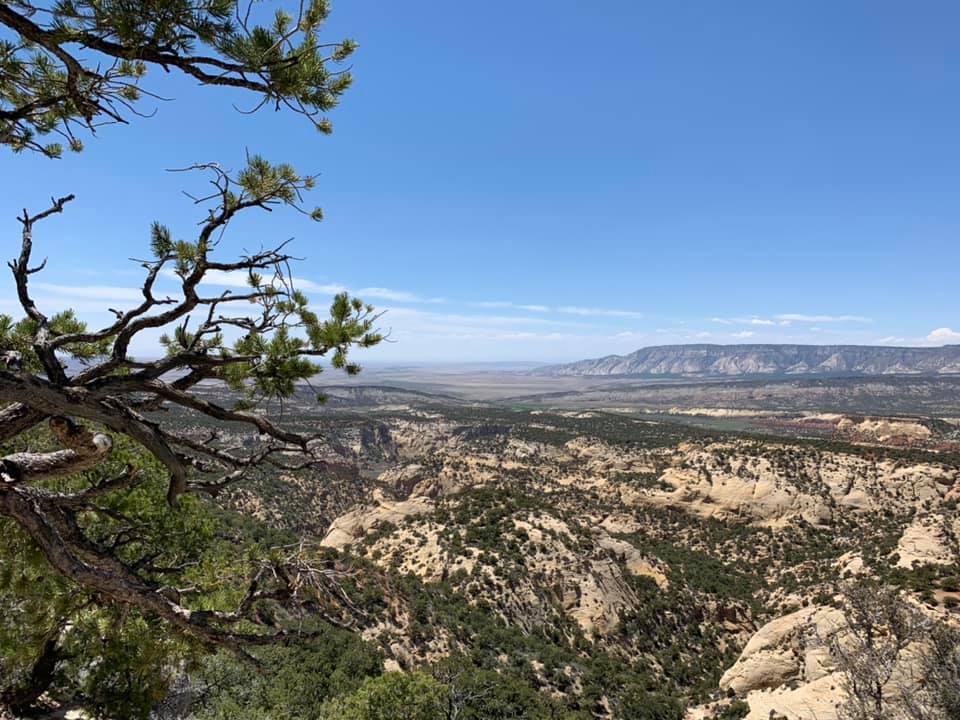
These thoughts danced through my mind as I stood atop the rim of a canyon, a thousand miles from home, in the high deserts of the Colorado Plateau, exposed and in the open; a danse macabre moving out of place in the desert setting of a Dali or Georgia O’Keeffe painting. I was struck by the silence of the scene, the extreme quietude that reminded me of many a hymn and prayer the Jesuits and Franciscans alike offered about finding God in all things. Nature certainly is God’s canvas, just as van Gogh understood it when he painted his own vision of that Creation, and just as I, a guy trying to understand grief had heard but never fully appreciated until I saw it for myself. The starkness of the desert, the browns, greys, and dusty oranges, seemed so different from the many shades of green, the vibrant spectrum of flowers that decorate the parks and gardens of my city. Yet it was there, in that environment, so far from home, that I felt drawn to. I’d been in the desert before, in Arizona, and found it lacking in beauty, seeming to be hostile, dangerous by nature, unbefitting for someone of my origins or health. Yet this desert, as alien as it was to me, seemed gentler in a way, less severe, more textured in its variety. Here where the Yampa River flows into the Green River, on federally protected land, the wilderness seemed to sing with all its resplendent harmony. Nature cried out on the wind as if to Elijah in a whisper, in its own language, its own song. I could recognize it, but I had a hard time understanding it. I, a city guy, knew only the manicured nature of my urban homeland. I knew the landscape that had been remade in the image of the Eastern cities and their European forebearers, a landscape of verdant trees and gardens which conquered the native prairie grasses in the wake of the settlers who conquered the native peoples who had called those prairies home.

I knew my home was artificial, and so it was not fit to help me through my sorrows. When she died, laying there on the veterinarian’s table, her face was calm, at peace; she looked as though she were having the best of dreams. Long suffering from a lack of tears, even when I wanted them, I felt as if I cried enough to fill the stormy Atlantic and more. She was my dearest of friends, the one who was always first to comfort me, the one who would go on adventures with me through the parks and along the trails. She was my companion at the sidewalk cafés, her with her water bowl and a couple treats, me with my tea and a pastry or two. Neither of our lives would’ve been possible without our artificial world, we were both born in an industrial, global, civilization, created out of the migrations of countless dogs and people from throughout the globe who would carry out a few begats until we were born in our own times. Yet even then, in her long life, her sixteen years of naps and treats and play, she saw our world change again from that industrial world of our forebearers into a world of the digital, a world where ideas were spread not on paper but on screens, where her favorite toys would inevitably come not only from the local pet shop and groomers, but often from some distant warehouse, a distribution center built to cater to the needs of millions, even billions of “consumers,” as we’d become known. To them, we were just numbers, her existence was acknowledged by the fact we purchased from the dog section, but her gifts inevitably were counted among my numbers. We’d created this world where if we really wanted to, and had the means, we could ensure that we would never wont for anything again. We’d created a world where instead of settling for the same old cooking shows that she loved to watch (she knew the names of all the foods), we could now tune into cooking shows from Europe, as I learned French, hoping she might pick those food words up too. I dreamed of a reality where we would always be together, where she would be as wonderful and dear a friend to my kids in the coming decades as she has been to me. Yet time marches on, and with it we age. Unlike Gilgamesh, I knew I couldn’t stop death, like the Swedish knight, I knew even if I kept the game going, eventually Death would reach checkmate, yet in my dreams at least she was still with me, still snoring next to me every night, still leading me from one blade of grass to another around the neighborhood as she sniffed for traces of her dog friends’ adventures.

In my dreams then, I hoped I might hear a familiar pattering of her paws on the rocks leading to the canyon rim, only to turn about and see her trotting over to me, tail wagging with glee. Perhaps a part of me truly believed if I went out into the desert, I might just see her again, if only in a greater clarity in my mind’s eye, in my memories. I stood there on the canyon rim, and listened to the silence, hoping dearly she was coming, wishing she could’ve seen that sight as I was seeing it that day. I could hear her snorting, and smelled that she needed a bath, something she was often proud of, though never appreciative of when she was bathed. Yet I knew, all too well, I wouldn’t see her again until I too had crossed the water, however distant that day would be. As much as I spent our days together worrying about the world around us, and what might well be beyond what we know, she spent those same days curious about few things, simple things, but most of all she was sure about love, and its importance and meaning. I understood it in those last moments before she died as she kissed my face for a final time. It was clear to me that as much as I could speak French when in Paris or Montréal, so too I could communicate with her, by letting her do “gross” things like jump on my chest and kiss my chin, or listen to her growl and whine at me, to let her have her say. I would reply each time, telling her “I love you,” and meaning it. Even if I was leaving the house to shovel the snow in the winter, I would look her in the eyes and say, “I love you,” so that she knew it well. She was as innocent as she was mischievous, her favorite game was running around the house with the end of a roll of toilet paper in her mouth, decorating the rooms and halls with that ribbon of white. It annoyed my family to no end, but I could see she was having so much fun doing it.

The desert, a place I traditionally thought of as dead, hot, lonely, seemed full of life, and while I could not see birds fluttering around the far rim of the canyon, I knew they were there. I could feel the breeze as if it were in part propelled across the chasm by the fluttering of many little pairs of wings beyond. It was as though they were singing their own hymn to being alive, to the radiant Sun in the blue sky, to the scrub and the rocks laid down there over millions of years. This place had seen many ages even before the coming of the first humans. To it, my little artificial urban island in the seas of prairie grass must have seemed both a cute human attempt at recreating nature in humanity’s own image, and a threat to the current vitality of the wilderness itself. Far overhead, the trails of passenger jets remained the only sign of the civilization beyond the canyonland before me. Sitting in those planes, focused on evading humanity’s worst bogeyman, a specter named boredom, the passengers surely didn’t notice what wilderness was below them, and if they did look out the windows, from 30,000 feet they would well have been at a loss to truly appreciate what they were speeding over on their way to the great cities of this country and beyond.

I thought of Elijah, hearing the Voice of God in the faintest whisper of the wind, and imagined what the Divine might say to me. Quickly though, unlike other daydreamed dialogues, I found myself at a loss for imagined words and banter, unsure of how to speak for such a concept as an omnipotent and omniscient God. Maybe then that’s the real beauty of Elijah’s experience, he heard God in a whisper because we humans can’t really understand what it even means to hear such a Voice. I tried fantasizing about it even more though, doggedly not wanting to give up too easily, and found myself afraid, scared at the idea of even hearing such words, the power and presence they would command would be the same that creates realities. The idea itself was but a micro fraction of a particle of a grain of sand when compared to the consequences of the Divine. My importance was duly minute, yet without my imaginations would I really recognize any of this? Would I hold out hope that my dog recently deceased would appear to me wanting to play there on the canyon rim knowing all I know about how this reality operates? In the great cosmic totality, I began to wonder how much her life really had meant. A little eleven-pound dog, who couldn’t put on a fierce face to anyone, or serve as much of a herder. If anything, she was best at being a friend, the best of friends. 

If her life had any consequence, I realized, it was in loving everyone and everything she met, in that unblemished innocence, that unconditional affection for life itself. She served as a role model of sorts for all the rest of us, especially for me, having lived with her for so many years. Even someone as little as her could plant a seed of love and charity in the minds of others that one day could restore the Utopia that seemed lost to me at her death. I stood there as the day continued on, and through the setting of the Sun, and watched as Venus, the evening star, rose overhead, bearing behind it the curtain of darkness that is the twilight and eventual nightfall. I was soon laying on my back on the canyon rim, not caring about the dust or the bugs, just awestruck at the sights above me as one star after another appeared in the darkening sky. The ancients believed the dead could be found among the stars, though my own ancestors passed down a belief of an earthly paradise on an island of eternal youth, something which as skeptical and scientific our world becomes, I still find myself believing in. If for nothing else, that light in the darkness of even the emptiest of cloud covered nights has kept me warm company in my thoughts. From that far distant island I thought I could hear her calling, her bark and wagging tail inviting me to come, but in my own time, not too soon. Even in this most dystopian of days, I thought, tears streaming down my cheeks again like on the day she died, there is still hope to be found, utopia restored, after all behind every cloud glows the light of some distant star. I laid there looking up into the starry night, through my tears singing a song I used to sing to her, hoping, believing, knowing somewhere she was listening.

Someday, however soon or far, I knew I’d see her again, once the boatman calls upon me. Funny enough, for someone who enjoys life as much as I do, the simple belief that I will see my dearest and sweetest of friends again is enough for me to look forward to that reunion across the water on the far shore.


On Perspective

Some words about how changing perspective changes what one sees. Click here to support the Wednesday Blog: https://www.patreon.com/sthosdkane

A part of being a historian is learning how to reach into the sources and find the perspectives of the people you’re researching. In my case that’s a French explorer and writer named André Thevet (1516–1590), who longtime readers and listeners to this publication will now be familiar with. The best way to learn about Thevet’s perspective is to read his books, and in my case to translate them as well. It’s a humbling experience to get to know this man, or at least to get to know the public persona he crafted in his published works over a 45 year career.

These are lessons I’ve found important to carry over into my daily life. I’m more hesitant to get angry at someone who cuts me off driving, or to get annoyed at the crying baby in a café or restaurant because I don’t know what’s bothering the baby or how their parents’ day might be going. I do remember my own phase in life when my initial reaction to most things was to cry, as an adult I figure that’s because I was scared of the unknown, scared of being away from familiar places, people, and things. I hope I remember that when the day comes that I’m lucky enough to be a parent, should that day come indeed.

I’ve learned to adapt my speech to fit the people I’m talking to, using the official wording of a company or that someone in a professional capacity used to make sure we’re talking on the same wavelength. One instance of this that annoyed me to no end was at my local Panera, since closed, where the staff had a different way of referring to sizes of soups and mac & cheese than what was on the menu. Whereas it was written above their heads that portions were served as half or whole they instead would only refer to them as small or large, and often wouldn’t seem to understand what I wanted when I used the printed terminology from Panera. I learned after a few awkward encounters, though admittedly Panera’s mac & cheese has always been hit or miss, somedays it’s delicious with a creamy hot melted cheese, other times the cheese is clumpy and more a lukewarm solid than a liquid.

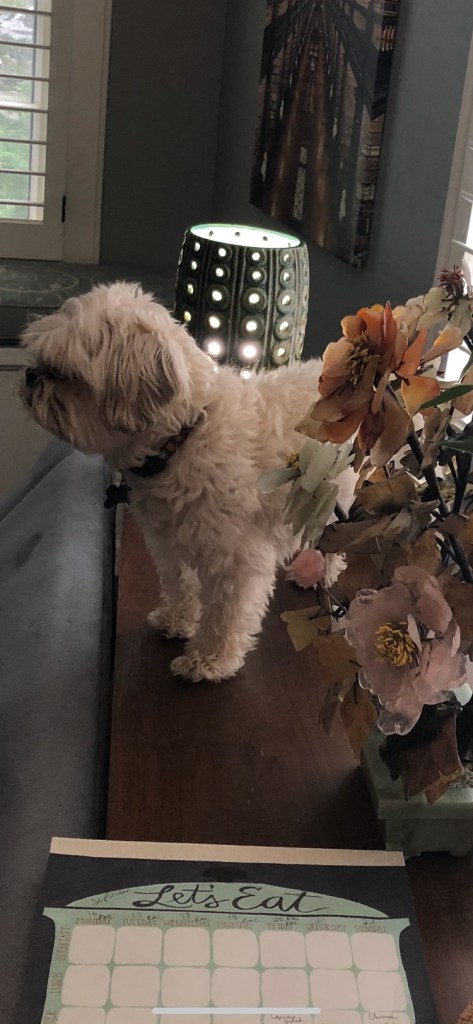
For a while I’ve been thinking about the contemporary efforts underway to find a gender neutral 3rd person pronoun to use in English. The choice of they makes a great deal of sense considering the history of this language. For each person (1st, 2nd, and 3rd) we have two pronouns, singular and plural, except of course for the 2nd person which is you all around. For the 3rd person options we have it and they, and while they is a clunky solution to the conundrum of gender neutrality in language, they is still a better fit than itIt bears an air of inhumanity; it’s what we use to refer to things that are less-than human: animals, plants, and inanimate objects. The division between something referred to as it rather than he, she, or they is murky. I often became quite annoyed with people who referred to my dog Noel as it rather than she, after all she had a gregarious personality. She expressed emotions, love, joy, happiness, fear, sadness, boredom. It was clear to me having lived with her for over a decade that she knew how to think for herself, how to make her desires known to those of us who could understand her. It reflects English’s Germanic roots more than anything else. I tend to think of the English it in the context of its closest German cognate, the pronoun es, as well as in the German distinction between the action of humans eating essen and the action of animals eating fressen

We’ve preserved this distinction in our language because we find it useful to define boundaries between different types of subjects and objects. This distinction demonstrates our priorities toward one set from another, toward the human over what older schools of natural history referred to as lesser forms of life. I for one find that to be an outdated way of thinking for it ignores what we have to learn from the great kaleidoscope of life in all its radiance and color. I became a better person because of the years I spent living with Noel, playing with her, taking her for walks, comforting her when she needed it, and letting her comfort me when I was feeling down.

If we have one great flaw as humans, it’s our hubris. We let ourselves believe that we know all there is out there to know, that we have gotten to a point in our evolution as a species where we’ve developed tools that can make sense of anything and everything the Universe can throw at us. Life has proven to me that that kind of thinking is flawed on so many levels. We know a lot more about what’s out there around us now than we did in the past, but the most wonderous part of being alive is knowing that we don’t know everything yet! I love that fact for how simple it is, and because it means there’s more for us to explore, that there’s still a horizon to look over.

I think that’s why I’m drawn to people like Thevet, like Noel. I like explorers because in my own way I’m an explorer too. I may not always take off for far distant countries or alien worlds, but I do get out of bed every morning not knowing what the day ahead is going to bring. And no matter if it’s a good day or a bad one, I know eventually it’ll make a good story, and that I’ll learn from it so I can wake up the next day better prepared for life.

Kitty

Kitty, Easter 2022
This week, I want to tell you about my cat Kitty.

I’ll freely admit I’m more of a dog person. I am fascinated by cats, their social behaviors, their mannerisms, their temperamentality. Yet at the end of the day, I like the unconditional love a dog will always offer if you treat it well. This summer is my first one in over 20 years without a dog in my life, as my best friend Noel died a year ago at the start of June at the ripe old age of 16. Throughout all that time that I’ve had dogs, first Pretty the Beagle, then Spot the Aussie Shepherd, then Caesar the Black Lab mixed with a pony, and finally Noel the Shih Poo. 

I’ve also lived with a succession of cats. First among these was a black cat named Mrs. Norris, who we more commonly called Nora, then a grey cat we rescued who we named Crookshanks. After these two Harry Potter-themed names my Dad and I adopted a Siamese farm cat named Leo who could be very lovable but also was a bully to first Nora. Finally in the Summer of 2009 my Dad rescued a fourth cat, an orange and white cat who we named Kitty Kiernan, or Kitty for short.

When I first met Kitty on that Saturday afternoon, she was standing on an ottoman in our living room at our old house on the farm looking out the window onto the porch and into the western fields beyond. She quickly turned at my entrance and began talking to me, meowing with so much excitement. We became fast friends and over the next year she loved to sit in my lap when I was at the computer or watching TV. She also became best friends with Noel, after all Leo and Crookshanks were friends, and while Crookshanks was kind to Kitty, Leo was a jerk to her from the first moment they met. So, Kitty became Noel’s best friend. They slept together a lot when they were young and continued playing with each other even into their senior years until Kitty got tired of Noel jumping on her and tackling her and retreated to her own parts of our current house where Noel couldn’t reach her.

Over the years I’ve collected a large photo album of what I call “Noel Pictures.” I still look at them from time to time, I’ll freely admit I’m still in mourning for my pup. One of my favorites taken a few days before Noel died is of her sleeping on the old red Victorian sofa in the sunroom in my parents’ house with Kitty sitting on the floor below her looking up at Noel with concern clearly written all over her face. In those last few weeks Kitty came downstairs to check on Noel from time to time, and in the last day she came to say goodbye, sniffing Noel and rubbing her head against the ailing pup’s. The amount of affection those two showed for each other both in their youth and as they’ve grown up together really does touch my heart.

This week I’m reading about the premodern concept of the Great Chain of Being, a hierarchy of nature which places God at the top followed by Angels, then Humans, then Animals, followed by Plants, and finally Minerals at the bottom. This is inspired by both Plato and Aristotle, but especially Aristotle’s biology found in his book the History of Animals (Books 1 & 8). Aristotle classified life forms based on what sort of soul they have between a Rational, Sensitive, or Vegetative Soul. We humans, Aristotle wrote, had all three types of soul in ours. All other animals lacked reason but had the sensitive and vegetative types in their souls. Plants, as the name suggests, are just vegetative in their essence. When I was a freshman in high school my theology teacher said that animals don’t go to Heaven, that Salvation is reserved for humans alone, and even then, only those humans who willingly surrender themselves to God. As I’ve lived with Noel and Kitty, as well as Caesar, Spot, Leo, Crookshanks, Nora, and Pretty over the years I’ve come to see more in their eyes than just a partially completed soul. When I saw Noel die last June, I saw something leave her, the will to keep going, the consciousness that dwelt within her little body for sixteen years left her, and her body fell into a far more restful slumber once her last snores stopped.

On Monday evening, as with every other time when I sit down with my parents to enjoy that evening’s televisual feast (to borrow a phrase from Fawlty Towers) Kitty was quick to jump up onto my lap for some quality pet time. I’ve learned where she likes to be petted and try to do my best at it. Considering how blissful the look on her face often is after just a few minutes I suspect I meet my objective time and time again. This Monday though it went a step beyond just mere bliss. Kitty curled up in a ball on my lap and slowly, softly, gently began to snore as I petted her in one smooth stroke from forehead to the tip of her tail and back again in a circle. In that moment I too started to relax, to breath deeper, and to feel something of the serenity I often feel when I imagine myself floating in air or dream of the delicate beauty of the evolutionary order of the Cosmos.

Kitty conked out, June 2022

I don’t entirely agree with Aristotle’s idea that animals are inherently lesser than us, sure they aren’t human, but we are animals in our own right. We’ve just evolved differently than animals. Whereas Kitty’s daily routine involves napping, watching birds and squirrels out the windows, eating and drinking, and getting petted whenever there’s a free lap for her to lay down on, mine is far more focused not only on the abstract, both the past and the future, but also on affairs far from our home. Sure, I think about meals just as she does, and I long for those moments of physical interaction with the people I love, holding my Mom’s hand or giving my parents hugs from time to time. When it comes to Kitty though, I do enjoy letting her jump up onto my lap so I can pet her. I appreciate being appreciated. I like the fact that even when we do have disagreements (she has bit me from time to time) she always returns to me when she wants to.

I don’t know how much longer Kitty will be around, we never really figured out how old she is seeing as she was found by a friend in the parking lot of an apartment building here in Kansas City. But regardless of how much longer I get to be her friend, she’s taught me a lot about empathy and what it means to care for someone else.

Kitty snoozing on the clock, September 2015.

Anniversaries

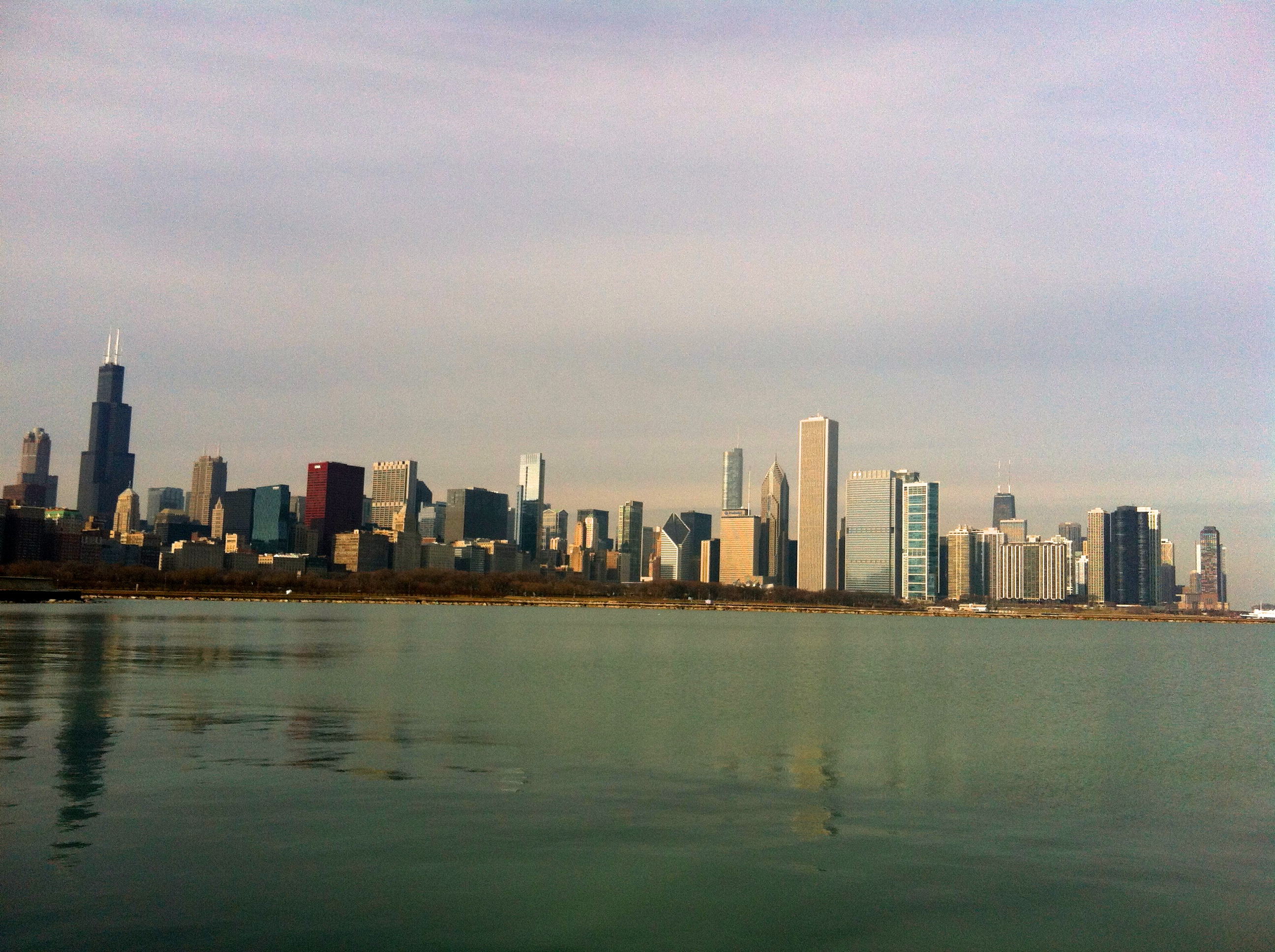
The Chicago skyline as seen from the Museum Campus in January 2013
This week, I feel a bit sentimental about the biggest anniversary in my life to date.

23 years ago this week, my parents and I packed up our house in the Chicago suburbs and moved about 500 miles southwest to a farm on the western edge of Kansas City, Kansas. There were so many different aspects to that move from an opportunity for a different sort of life to the chance that I could grow up with my maternal cousins. In the years since we’ve had all that and more. Still, for the first 20 years I approached this anniversary with a bit of a sour attitude. 

I was excited at first at the prospect of moving to a farm, to a place where we’d have horses and all sorts of pets (back then I was really into cowboys as well as dinosaurs like your typical 6-year-old). But as time passed and I began to realize what it meant to be living on a farm on the outskirts of a metropolitan city away from so many of the things I’d come to know and love back in Chicago, I developed a sense of gloom about the whole story.

It took until my mid-twenties for me to fully appreciate how wonderful a city Kansas City is, and how much it had really become my home. As the twentieth anniversary of the big move approached in 2019, I was back in Chicago for a week for probably the first time as an adult returning to my original hometown for business rather than on a family trip. At that point I seemed to be on the verge of securing a position back in that city and felt like all my hopes of the previous two decades were finally coming true. That job didn’t end up panning out, and besides a quick overnight stop in the suburbs on a long drive west to Kansas City from Upstate New York in October 2020, I haven’t been back to the city of my birth yet this decade.

When I was there in January 2019 attending the American Historical Association’s annual conference, I paused here and there between things to reflect on the life I might have had if we’d stayed. Now as an adult having gone through academia I wonder if I might be in a more advantageous position today professionally if I’d gone to high school and college up there rather than down here. Don’t misunderstand me, my education at St. James and Rockhurst was wonderful and something I’ll always treasure. Still, the opportunities of things to study, especially in the sciences, are far greater there than here. In fact, I wonder if I would be in a different field today if we had stayed there than here: planetary science, paleontology, geology, who knows, maybe even anthropology.

It’s curious to me that my interest in history didn’t really begin until after the move to Kansas City. In Chicago we were members of the Field Museum, a cultural icon that we visited easily once or twice every month. My fascination with the past was born in those hallowed halls, first for dinosaurs and in more recent years for the ancient megafauna of the Pleistocene and for anthropology. Without that steady anchor in the natural sciences to keep my interest I began to turn to other things like Roman and later medieval history as well as linguistics.

The Field Museum in its Winter splendor

In many ways, that move impacted me far greater than any other event in my life so far. I became the guy I am today because of it. The guy in the classroom with more complicated loyalties and interests, the one with two favorite baseball teams (the Cubs and the Royals). Yet I’ve realized in recent years that I accentuated the fact that I’m not a native Kansas Citian for a good long while because it was something I could use to stand out from the crowd. Though rather than it being just a bunch of grandstanding, that fact of my life is one of the deepest and most personal parts of my story. Loyalty is something I treasure above all, and my own loyalty to my original hometown, even after 23 years, remains strong. To me, for example, abandoning the Cubs would be like turning my back on a core part of my identity.

That passion is helped by the fact that those first six years contain many of my best memories, like the April Fool’s Day when my Mom woke me up to a clear sky and said, “I took the day off work, and I’m keeping you out of school today. Let’s go to the Brookfield Zoo.” Or the time when some relatives were visiting, and I rode with my Aunt Kay in the back of my parents’ Ford Explorer down the Eisenhower Expressway so all of us could go see the then brand-new Michael Jordan statue outside the United Center. There are the times when I got to go visit my grandparents with my Dad up in Mt. Prospect, or the times when he took me on the Metra downtown to go to the Field Museum (again, that old museum). There are all the summer days we spent on our sailboat, the Arctic Tern, out on Lake Michigan up and down the Chicago lakefront and out to where the skyline fell below the western horizon.

You can understand why then for 20 years I felt like I was missing something from my life. After we moved to Kansas City we went from the big towers and expansive museums and endless suburban streets to big open skies, beautiful sunsets, and days spent remembering what we had before we left the place that to me still felt most like home. I think the farm wasn’t ever really going to feel like home to me, it was too quiet, and as an only child out there I was pretty lonely. Only after we moved into Brookside, the neighborhood where my Mom grew up, did Kansas City really feel like a place where I belonged.

Still, as much as I may grumble about the move it has also brought so many wonderful and dear people into my life. I got to know most of my family after moving to Kansas City, all my aunts, uncles, and cousins on my Mom’s side. I also made many dear friends in school and in daily life, including some who have been a part of this podcast so far and my brothers in the Donnelly Division of the Ancient Order of Hibernians in Kansas. I would not have gotten to know my dogs and cats and other pets if it weren’t for the move. I learned to love my best friend Noel, departed a year ago this month, and became a far better, kinder, and gentler person because of her presence in my life. Kansas City has given me so much, and made me who I am today.

Now as an adult I can see many different paths ahead of me, some of which lead back to that great lakefront metropolis, the beating heart of the Midwest. Others lead me back here to the Fountain City that I’ve adopted as home after a long and sometimes begrudging trial period. Some see me keep working out in the East in one of those great cities, and still more see me move out West to California or stay closer to home in Colorado. Nevertheless, today I could conceivably decide to fly up to Chicago for the day and go walk around those museums and streets that I remember so fondly from my youth. For me the Field Museum today is as much a place of scientific wonder as it is a place of wonderful memories. I’m still a member there, even though I haven’t actually visited in three years. (Thanks, COVID!)The Ancient Greeks had an understanding of time that we are always facing backwards to the past with the future still over our shoulders. I like that idea both as a historian and as a passionate person with a still young life filled with memories. What can I say, I’m always in a sentimental mood.


23 Years Later and I finally bought my first Royals hat.

Creatures of Habit

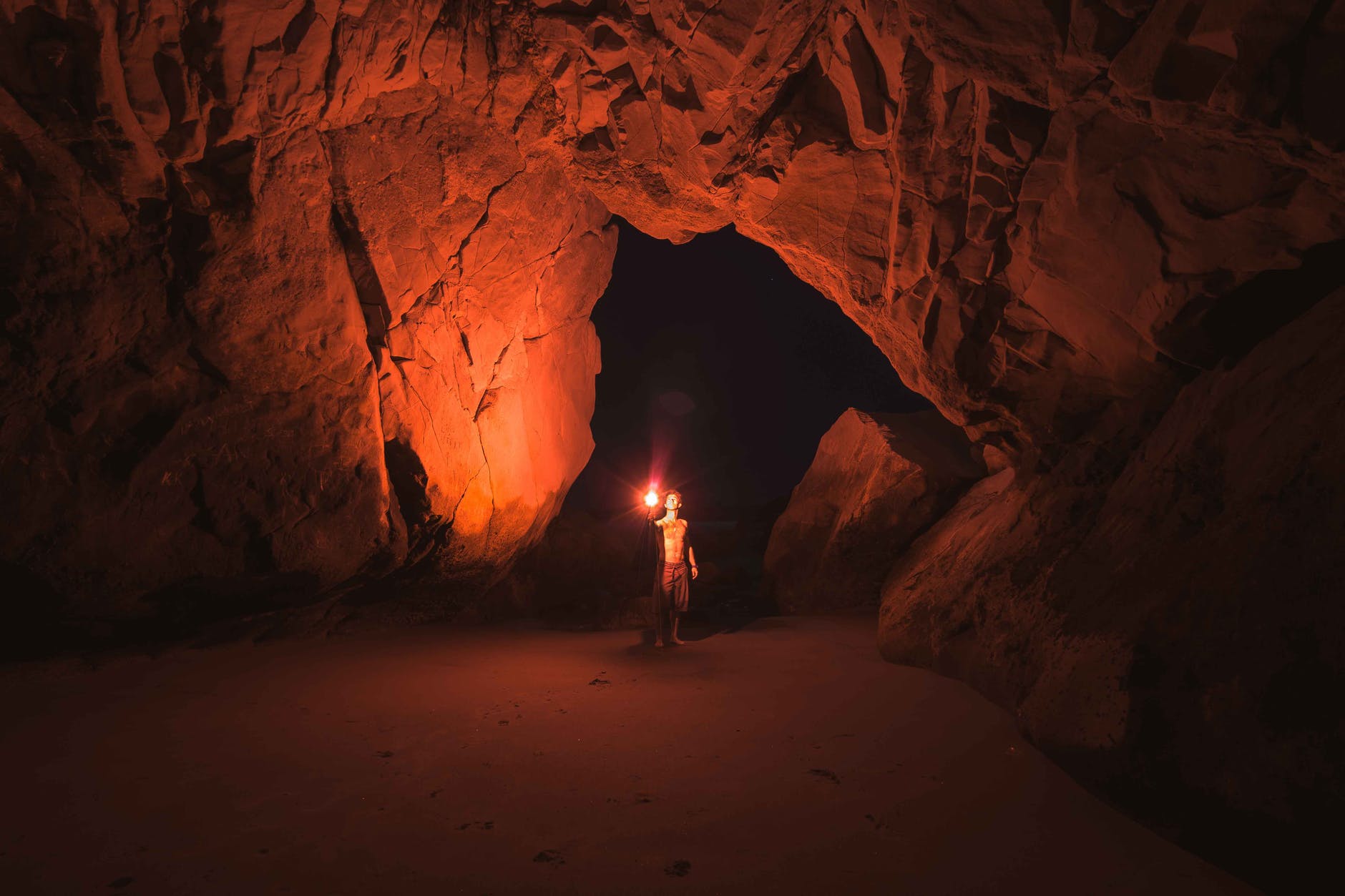
Photo by Jeremy Bishop on Pexels.com

This week, how we tend to stick to the same things over our lives.

I’m writing this week’s blog post substantially later than I usually do. This past week has been very uncomfortable for me, first with a bout of food poisoning last Tuesday and Wednesday, and now with the continuing aftereffects of it still in my system. So, at a time like this when I feel physically terrible, I often find myself returning to the same old routines and manners that I’ve practiced my entire life. There’s something comforting in watching an old episode of Bill Nye the Science Guy all these years later because it’s nostalgic as well as staying educational.

Last night I found myself craving some good music, the soaring melodies and rich harmonies found in opera. I ended up listening to a couple of things including the Queen of the Night’s second aria “Der Hölle Rache kocht in meinem Herzen” from Mozart’s Magic Flute. For all the hellfire innate in the words––the title translates to “Hell’s vengeance boils in my heart”––there’s one line near the end that caught my eye, “Alle Bande der Natur.” At the moment I thought of “Bande” as in “bonds” or more metaphorically “customs” when in fact it really means “bonds” as in “connections.” So, in my elementary level German I translated “Alle Bande der Natur” as “all bonded by Nature” or that it was a matter of instinct and habit.

My misinterpretation of the German text there brought me to think a bit more about habit and instinct. What sets us off to do what we do? Why for example do some people eat each thing on their plate in turn rather than mix the flavors together? Or why does my cat like to extend her claws when she’s happily being petted?

Instinct is a survival mechanism. If you recognize you’re in a bad situation, you’ll probably do your best to get out of it. That goes back to the days when our distant ancestors were hunted as prey by other larger animals. Perhaps the urge to laugh at other people’s misery, embodied in my youth by America’s Funniest Home Videos and today by a good portion of the content on Instagram and the “Hold My Beer” subreddit, comes from a similar primal satisfaction that it’s not me who’s getting his leg gnawed off by a lion today.

As long as we’re tuned into our own natures, we’re bound to avoid some of the pitfalls that inspired that particular metaphor and survive. I learned the hard way to avoid bad food this past week and am still suffering the consequences now eight days later. On the other hand, my pup Noel learned in which house her best friend the black lab Henry lived and liked to stop and sit at the bottom of his stairs to see if he’d come out to play. We create habits out of experience and grow as a consequence.So, the moral of the story, the greatest lesson to learn here: to quote the Two-Thousand-Year-Old Man himself, “never run for a public bus, there’ll always be another.”

Goodbye, Noel

Oh, my sweet little pup,

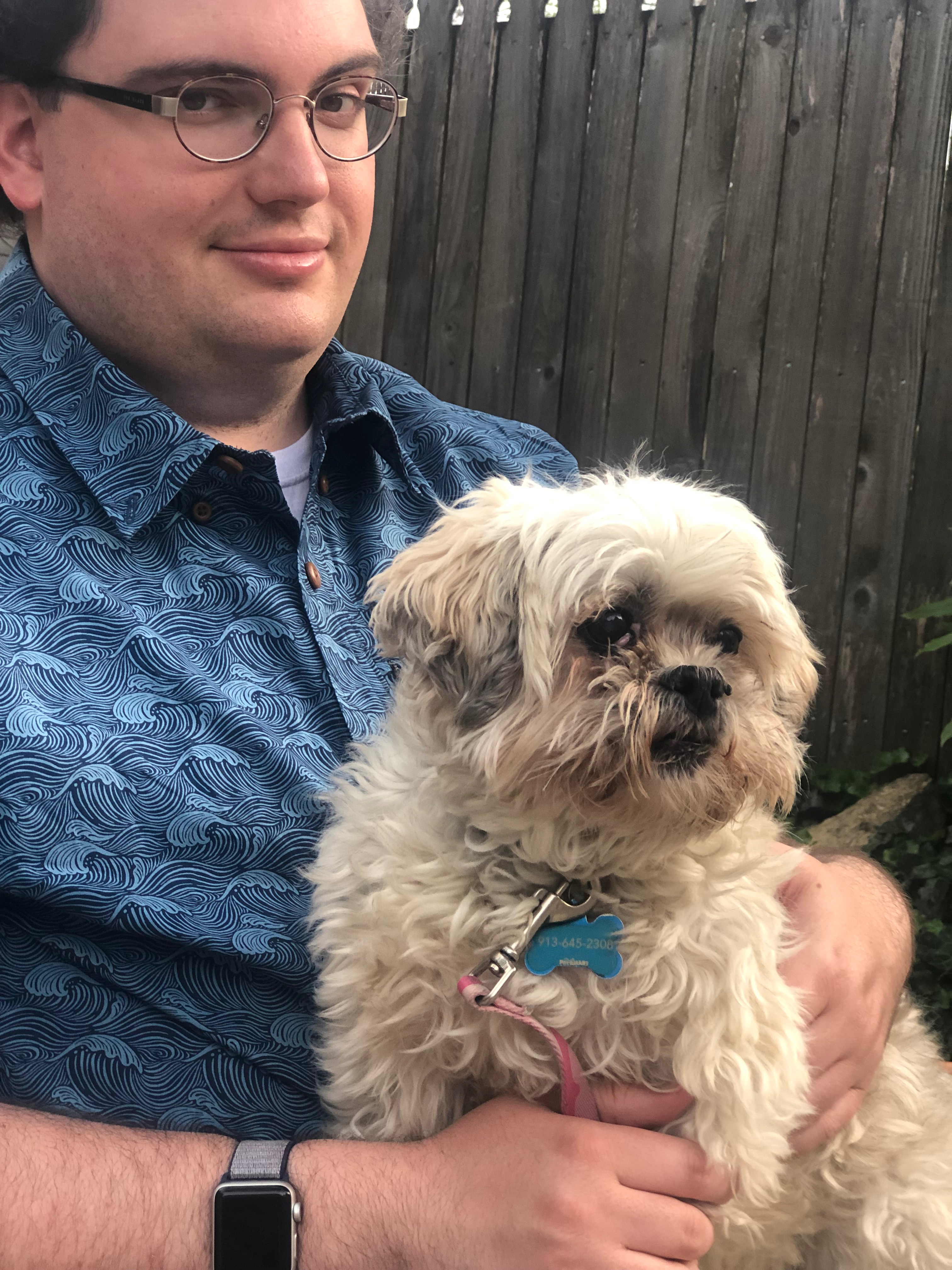
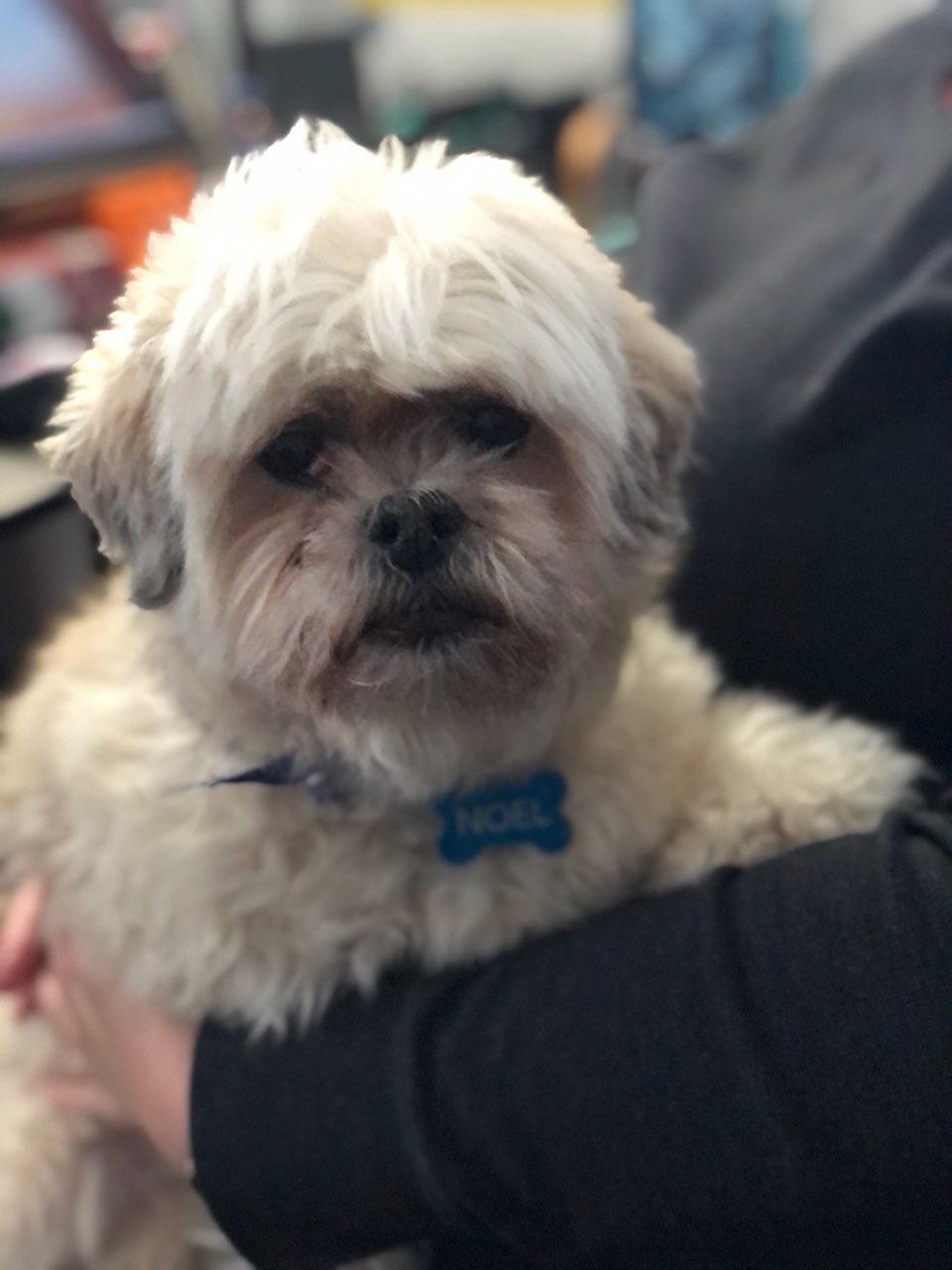
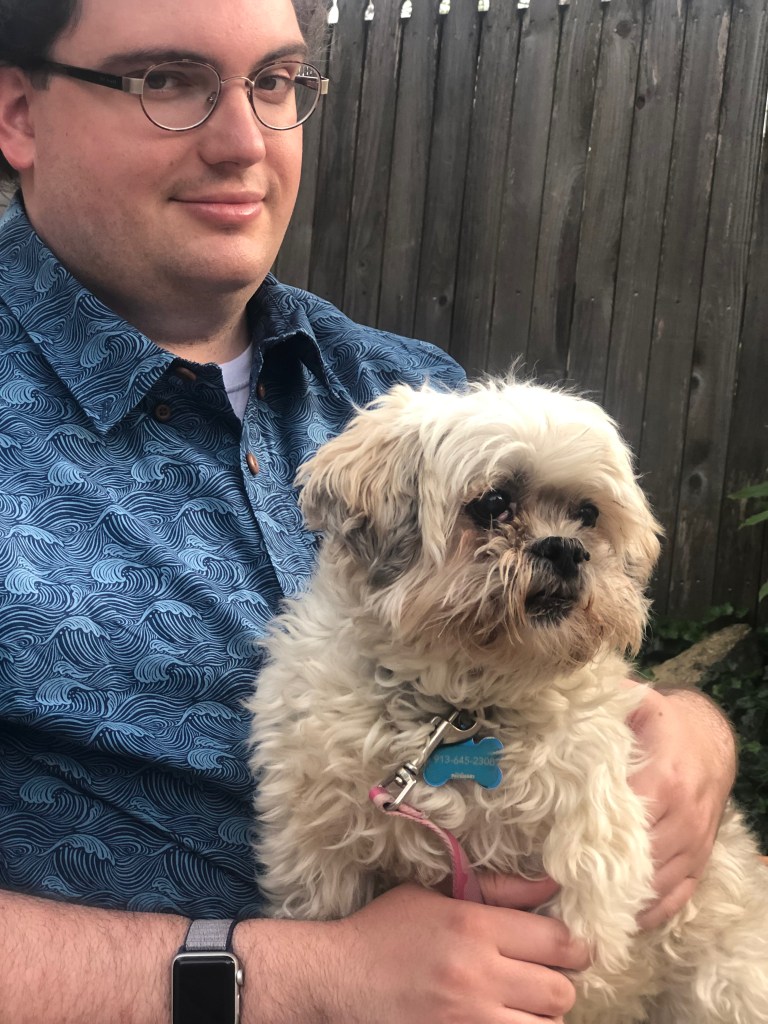
I remember when I first met you sixteen years ago on a warm summer’s day. You were little more than a month old, and more excited than anyone can fathom at new people coming to your front door. For those first two years you lived with my cousins, until your first sickness, when you came to recover with my parents and I. Living with you over these past fourteen years has taught me so much. I have learned the patience to live with someone with as boundless energy as you, to accept the fact that you are going to need my help from time to time, but more than anything else, I’ve learned that unconditional love exists. I learned that from you, little Noel.

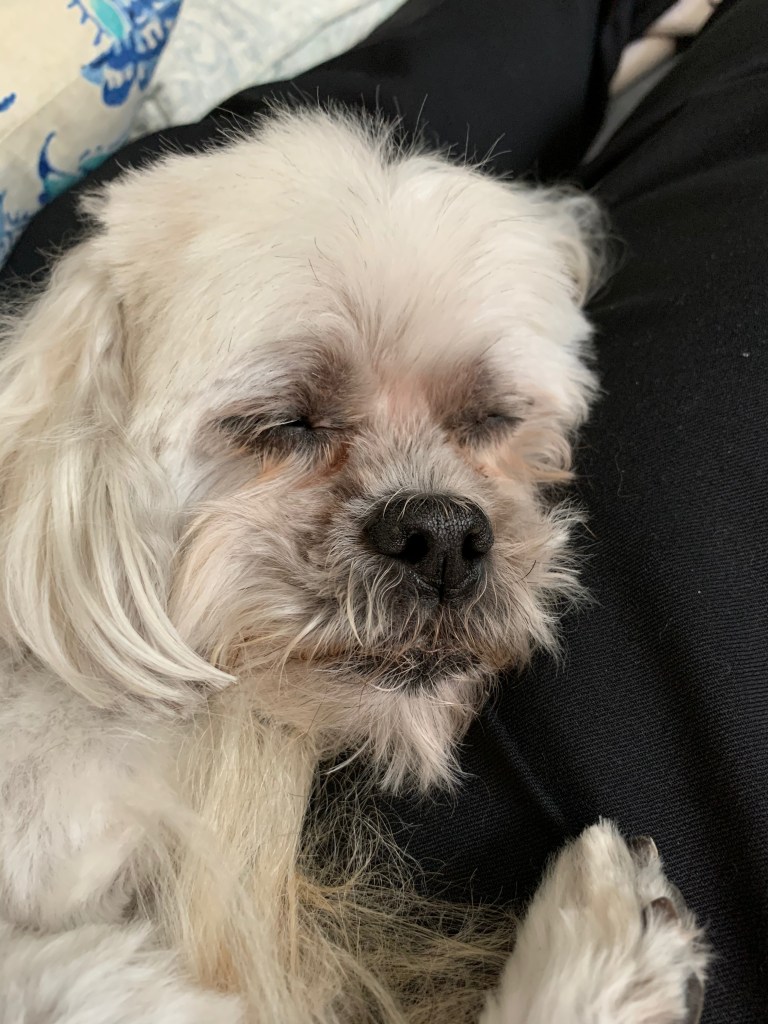
The years have gone by and we’ve grown closer than I thought possible. I don’t remember exactly when you moved full time from sleeping in your box to sleeping on my bed with me, but that’s been something that every night both of us have looked forward to. I remember many fond moments laying there next to you, listening to you snore, hearing you bark in your sleep and run in your dreams, your legs moving about as you lay on your side. I remember one night in the summer of 2014 or 2015 when you were so happy that you rolled over onto your back and began to sing into the darkness.

As my life has taken me away from home over the last four years, I’ve treasured every moment that I’ve had with you. My friends and family from places that you might well have never heard of know your name and your face, and everyone who I’ve spoken to about you has smiled when I’ve told them stories of your life. My silly dog, you’ve had your moments when you’ve caused my parents and I grief, but you’ve truly become a member of the family, so I guess it’s fair to say that comes with the territory.

Every time I’ve had to leave you to go back to London or Binghamton it’s been hard. I wanted so badly for you to come with me when I left for my doctorate this past August, but it seemed better for you and your health that you stayed behind with my parents at home. Some of my sweetest memories of you, sweet pup, have been those first days after I’ve returned home after a long trip. Perhaps the best was my first morning waking up in our bed after moving back from London when I opened my eyes to find you laying there a nose-length away staring back at me. If dogs can smile, you were smiling then.

I’ve loved every one of your kisses, regardless of hygiene. My days were made whole when I’d walk through our front door in the afternoons to be greeted by you. I hope I’ve matched your affections as best I can, though I know they could never reach the levels which your heart ascends to every day. You, dear Noel, have walked with me from my youth to my adulthood, you’ve been there to comfort me when I’m sad, always jumping up next to me and offering reassuring wet dog-kisses on my chin.

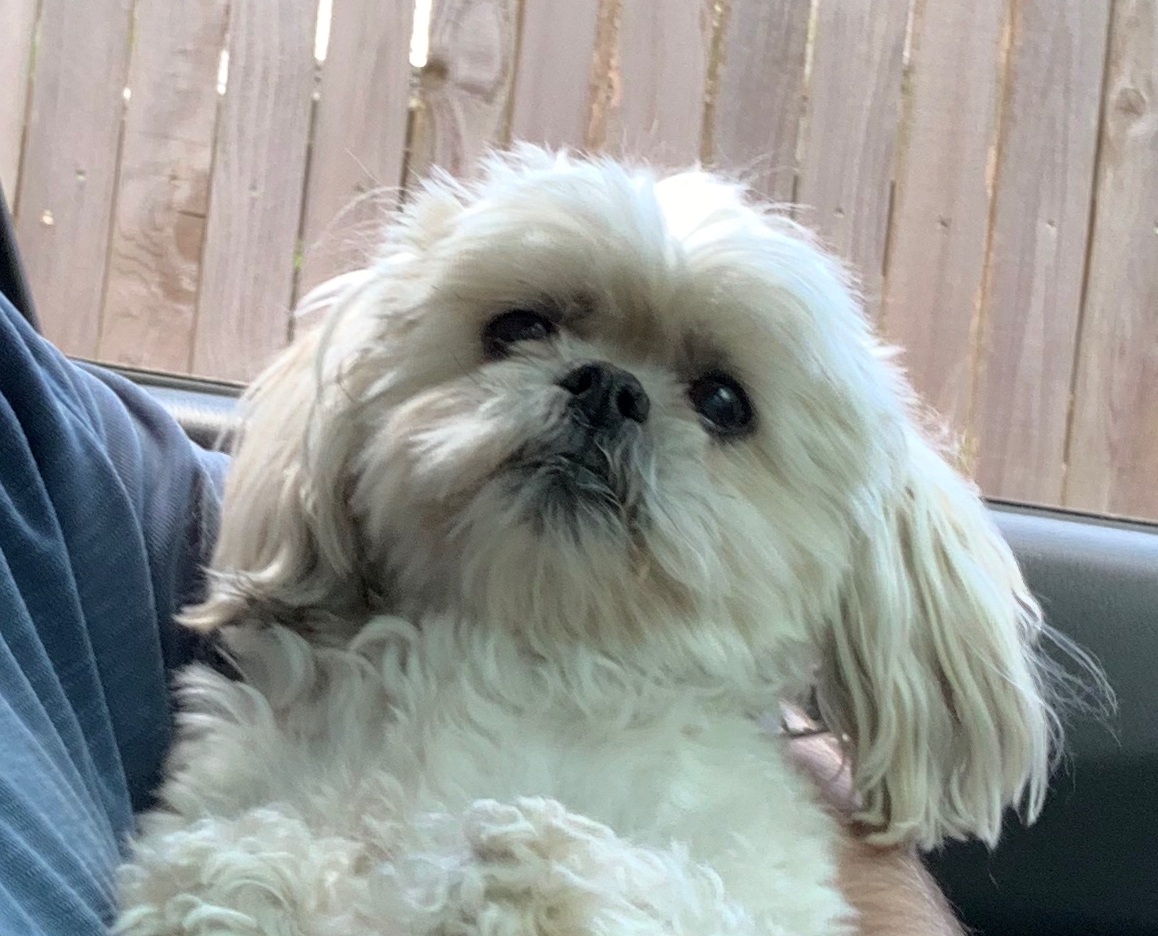
But now as your health wains, I find it so very hard to say goodbye. You are a treasure who always has a place deep in my heart. I don’t know if it’ll happen, but I hope I will see you again one day, my darling little girl. Slán go fóill, goodbye for now, my sweet Noel.

2005 – 2021