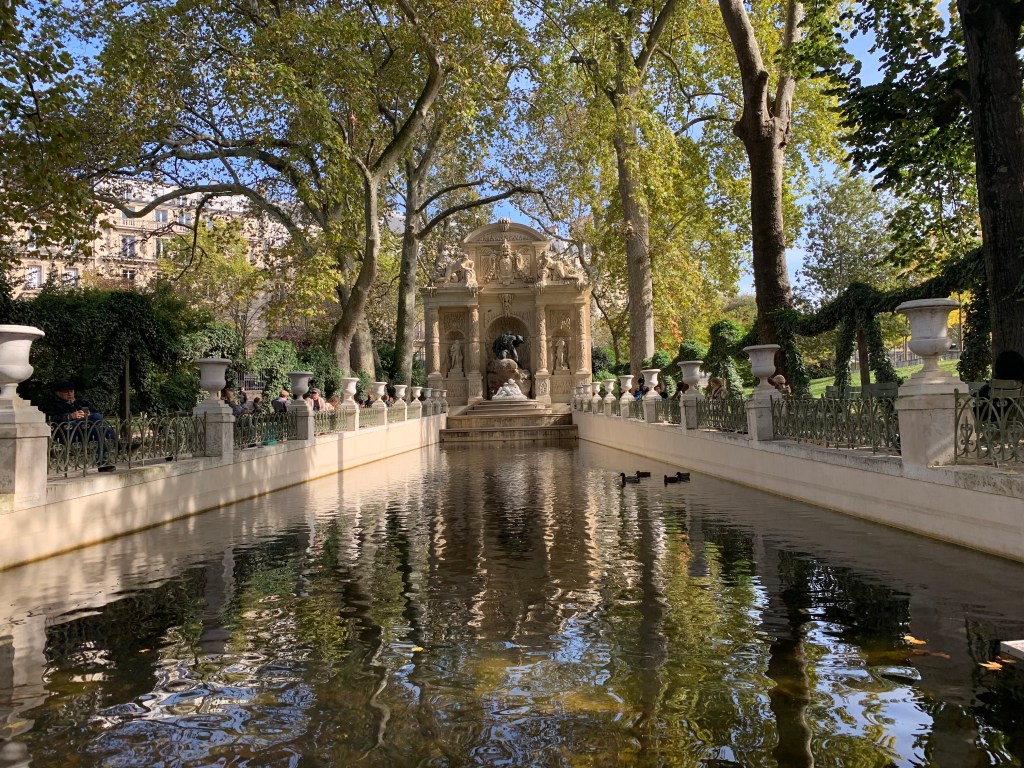
Tag Archives: Paris

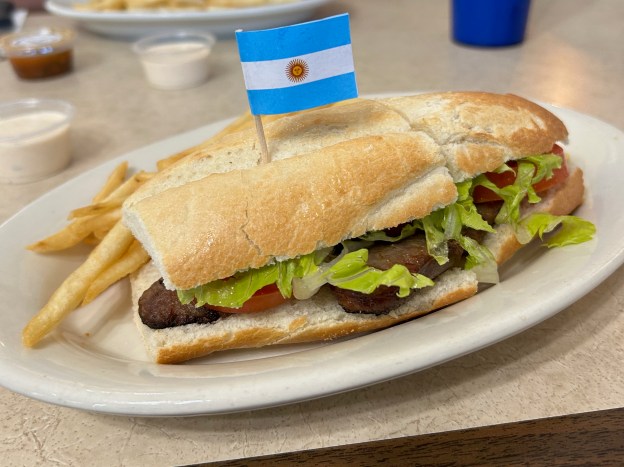
A choripán sandwich from Los Hornos Argentinian Flavors in Kansas City, Missouri photographed by the author just before it was eaten by the same.

On Language Acquisition

On Language Acquisition Wednesday Blog by Seán Thomas Kane

This week, how living in a culture is required to speak a language in depth.—Click here to support the Wednesday Blog: https://www.patreon.com/sthosdkane—Sources: [1] “A Letter from San Juan,” Wednesday Blog 3.29.[2] “The North American Tour,” Wednesday Blog 5.34.


This week, how living in a culture is required to speak a language in depth.


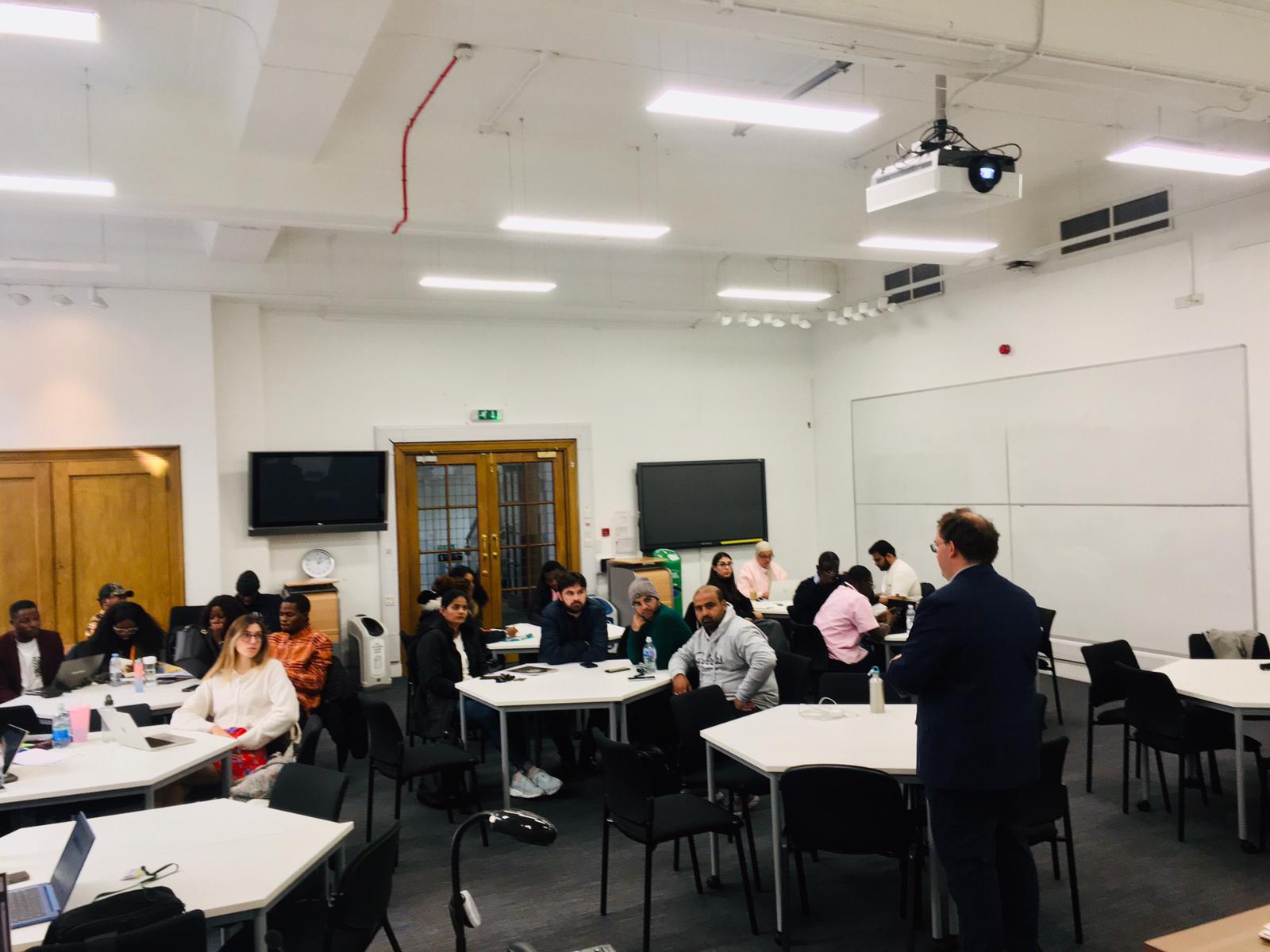
The languages which I speak are directly responsible for the ways my life has turned, its winding path a result of the words I use and the ideas they represent. Language is the voice of culture; it evokes the rich harmony of thought that comes from seeing things from certain points of view. At the University of Westminster, I was regularly in classes where there were maybe 10 or 20 languages spoken between each of the students, if not more. English remained our common language and the language of instruction, yet how many of us must have been switching between English and their own native language as they thought about the readings and topics in political philosophy and science which we discussed on a given day? Even then, my English is not the same as the King’s English, nor is it the same as the English I heard spoken when I drove through Alabama in July 2022. Language then reflects our individual circumstances of experience. Knowledge is gained through experience first and foremost, whether that experience be theoretical through books or practical through lived experience. I make this distinction because I often feel that when I’m reading a particularly well written book that I can actually imagine the characters as real people who I might meet in my life. The best TV shows and films are like that, their casts that we see regularly begin to seem like old friends who we look forward to visiting again and again.

Language acquisition is a lot like this for me. Today, I speak three languages: English, Irish, and French, and I can read Latin, Italian, Catalan, Spanish, and Portuguese and some Ancient Greek. I break my languages down into these two categories by their utility in my life. The handful which I can read are those which I’ve worked with in my historical capacity. I’ve spoken Italian and Spanish from time to time, yet those moments of elocution are few and far between. The same could be said for my German, though it’s now been five years since I last spoke that language in Munich, and at time of writing I can’t say that I’d be much use in remembering it today. This is even more true for my Mandarin, a language which I studied for a semester in between my two master’s degrees out of pure curiosity. I can remember the pronouns, a couple of verbs, and a noun or two but that’s about it. All this to say that I may know something about German and Mandarin yet it’s little more than a foundation for the future when I might be faced with a desire or need to learn the language properly.

I’ve been thinking lately that of any of these I need to work most on my Spanish, the most useful of these languages for me to speak here in the United States. I can understand Spanish fine yet speaking it remains a challenge. On Sunday evening after my shift I decided to reopen the Spanish course on the app Busuu––one which I used for Spanish before my March 2023 trip to the Renaissance Society of America’s annual meeting in San Juan, Puerto Rico––and try it out again.[1] That time I got through the A1 level before life got in the way, and I gave it up feeling frustrated with the process. I did not resume any online Spanish courses before my trip to Mexico last November for the History of Science Society meeting in Mérida, instead choosing the less preparatory method of winging it.[2] That worked with fits and spurts, my best Spanish conversations were in taxis with locals, though I was mostly thinking about how I would say things in French and then Hispanifying them based on my minimal knowledge of Spanish grammar. On Sunday, after I retired for the evening from my Spanish lessons on the app I realized what it was I missed so much in these apps: the human connection. Busuu prides itself on its crowd-sourced learning method; throughout the course learners are asked to submit spoken or written answers to the computer’s prompts which learners of other languages who speak the target language then correct. I like this system overall, and it does give this sense of community, yet I feel that it could go further.

After English, the second language I learned was Irish, my ancestral language. I started studying the Irish language when I was fourteen and have been focused on it to varying degrees for the last eighteen years. It really took until 2022 for me to connect with the language though, in spite of the fitful starts and stops because in that year I began to build a community around the Irish language. First on Zoom through Gaelchultúr, an Irish language school in Dublin, I met other speakers from across North America and beyond who like me were descendants of Irish immigrants old and new. I looked forward to seeing some of the same people term after term. Yet after returning to Kansas City, I began to look locally for Irish classes and came across the community that my friend Erin Hartnett has built at the Kansas City Irish Center. Through Erin I’ve met some really good friends and from our mutual appreciation for our ancestral language we’ve found a lot more in common from mutual histories to mutual appreciations for rugby. Without this community I would speak Irish but not terribly well. Now, not only do I speak Irish daily, but I also write in Irish every day. It has truly surpassed French as my second language, something I’m proud of yet not too concerned about when it comes to my Francophonic abilities.

French exists in a different sort of place for me than Irish. It’s not an ancestral language with deep family ties. Rather, it’s a language that I gravitated toward out of a fascination with French culture and history. I may have written here in the Wednesday Blog before that my first exposure to French came at sunset on a Sunday in February 2001 when my Mom put a “Learn French” cassette tape into the tape player in our family car when we were driving through the hills of northwestern Illinois toward Dubuque, Iowa. She and I were preparing for a trip to London and Paris that summer, the first European trip that I could remember, and she wanted to put in the effort for us to have some French before we arrived on the Eurostar from Waterloo Station at Paris-Gare du Nord. I didn’t like Paris much on that first visit, I found the language barrier to be too great for me to really feel a sense of connection with the place. On my next visit to France in March 2016 with three years of undergraduate French under my belt I found that I not only got the place more, but I appreciated the nuances of French culture more than I had as a child.

I owe a great deal to my undergraduate French professors M. Kathleen Madigan and Claudine Evans. It’s through their classes that I gravitated toward my career studying the French Renaissance. When I get asked why I chose to study the French I keep it simple and say it was a matter of pure convenience: I already spoke French, so I wouldn’t need to learn a new language (Spanish or Portuguese) to read my primary sources. That’s how I ended up studying André Thevet (1516–1590). I chose him because he happened to write about a sloth and for me the idea of being a sloth historian made me laugh. It’s as simple as that. I loved studying French in college, and even more teaching it with the online Beginner French course I built for the Barstow School in 2023 and 2024. I found that going through the same textbook I used a decade before I was not only teaching the students who in the future would go through my course, I was also renewing my own French education and learning things that I’d missed on my first go around. This is a critical point in language acquisition: few people are going to get a language on their first try, it’ll take multiple goes to understand what’s being said and to make oneself heard as well. It took me three tries to get Irish down, and the same is the case for Latin. Failure in the moment is merely a setback which can, and ought to be overcome in future endeavors. After all, remember that if we’re paying attention to our lives we’ll learn from our experiences.

I grew to really embrace a lot about the Francophonie to the point of paying Sling TV for access to TV5 Monde, France’s global TV channel which now broadcasts several different channels. I personally enjoy TV5 Monde Style, which tends to broadcast documentaries and cooking shows, though I don’t watch it as much as I might like. I read a lot of French books for my research, after all I work with source material that has largely only been written about in French and to a lesser extent in Portuguese. I am able to do what I do with those sources because I can read them and the secondary literature about them in French. All this made it all the easier for me to go to France and Belgium in the last several years and be able to switch from English to French as soon as I walked off the plane. I found when I was flying back to the United States in June 2024 after spending about a week speaking mostly French in Paris that I was consistently responding with the quick phrases “please, thank you, you’re welcome,” and the like bilingually with the French followed by the English as I’d heard so many people do in shops and the museums during that visit. It took me a while to get past doing this and just say things in English again after I returned.This then is why I think I’ve had so much trouble with learning Spanish. It’s the first language that I’ve given a big effort to learning outside of a classroom on my own. At least in the classroom you have fellow students around you to practice with. When you’re on your own you’re on your own, a wise-sounding craic which is to say that when alone you have no one else to talk with. I have friends here in Kansas City who speak Spanish, and I know all I have to do is ask, yet it’s finding the free time to sit down with them and work on it that I need to figure out. To truly gain a footing in a language one needs to immerse oneself in the culture. Apps and online learning will only take you so far. A classroom learner will blend into their own classroom idiolect of the language in that particular space where it exists in their life. Only if they move beyond classroom and begin to converse and live with people in places where that language is spoken will they begin to speak it in a manner which is more recognizable to native speakers.


[1] “A Letter from San Juan,” Wednesday Blog 3.29.

[2] “The North American Tour,” Wednesday Blog 5.34.
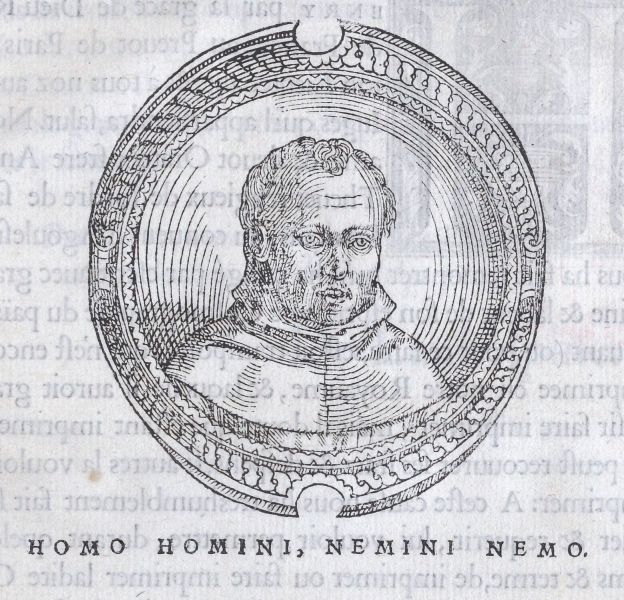

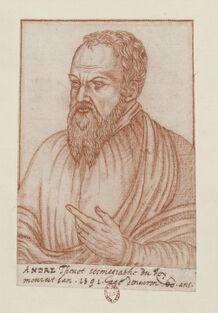
A portrait of André Thevet from 1554

Why André Thevet?

This week, the second in several scribblings about my research: why I chose to study André Thevet and build my career on the mound of his works.—Click here to support the Wednesday Blog: https://www.patreon.com/sthosdkane


This week, the second in several scribblings about my research: why I chose to study André Thevet and build my career on the mound of his works.


I initially chose to focus my dissertation on André Thevet (1516–1590) because of his account of the sloth and because he was French; I speak the language and therefore felt I would not need to learn another language to grasp the sources. Thevet is a figure who I’ve gotten to know over the last 6 years. I first encountered him in Dr. Bill Ashworth’s Renaissance seminar at the University of Missouri-Kansas City. It was in a nice classroom in the southeast corner of the third floor of Haag Hall that welcomed in the midday light as the Sun arced across the sky. We met on Tuesdays and Thursdays, and often I would walk to class from my job working at a cheese shop, the Better Cheddar, at 49th & Pennsylvania on the Plaza. What I didn’t admit at the time but have freely regaled friends and family since is that on Tuesdays the shop’s sommelier would often stop by to offer those of us working at the time wine tastings of the latest vintages. I was hired by the cheesemongers there more for my knowledge of European wines, and because I spoke French, than for my far more limited understanding of cheese going into the job. So, I often went from a delightful morning tasting cabernet francs, pinot noirs, and syrahs to a delightful afternoon sitting in the back third of Dr. Ashworth’s class listening to his stories about the Renaissance.

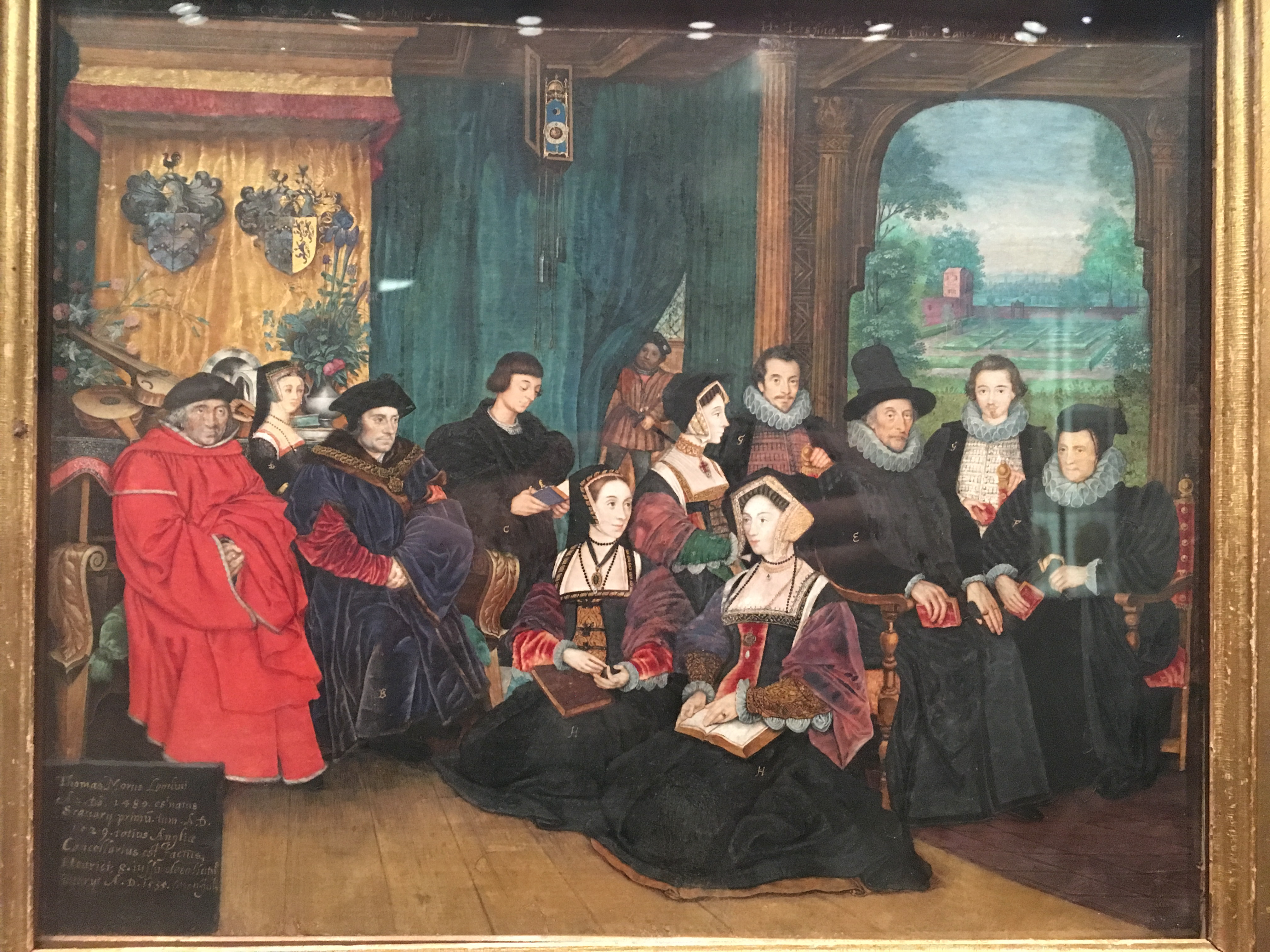
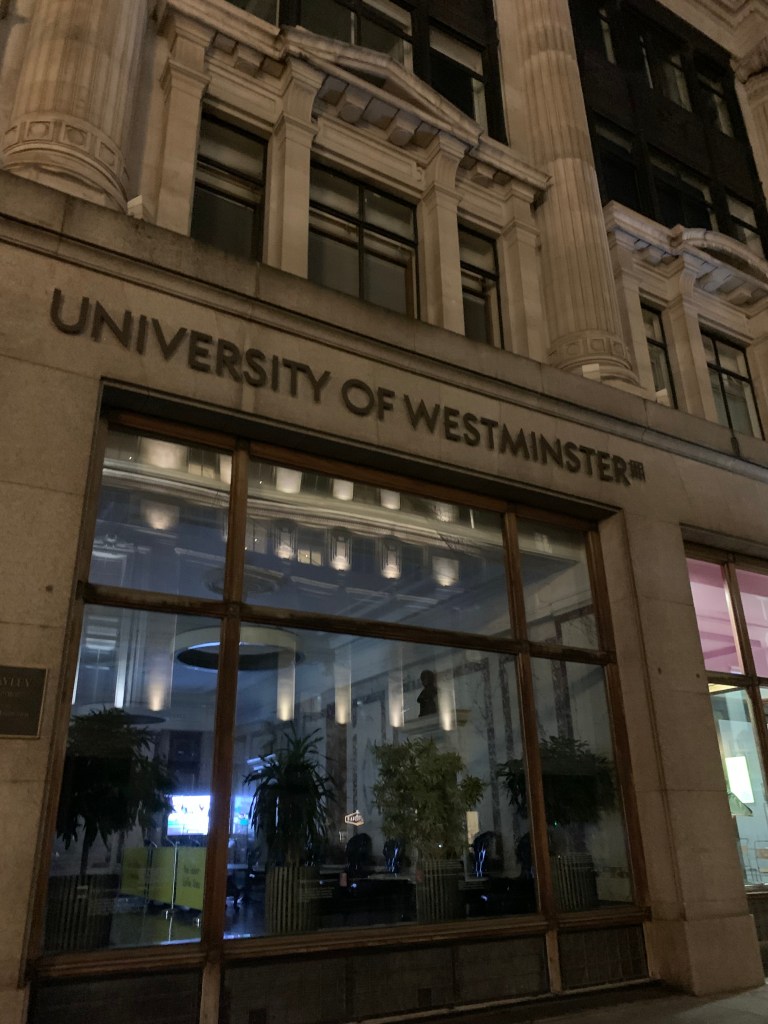
By this point, I was still committed to a largely unfounded master’s thesis project studying crypto-Catholics in the English court of James I and VI, which was born out of a desire that I might find my way back to London perhaps to work as a curator at the Banqueting House or Hampton Court. By Christmas, that project had well and truly died, it was only several years later that I discovered the fantastic work of the late Professor John Bossey on persistent Catholicism in the North of England that I found the anchor and line that would’ve led me toward my original research project idea. As it turned out, I found my way to Thevet through a more traditional Renaissance history master’s thesis about English humanism, specifically the education of Margaret Roper (1505–1544) and Mary Basset (c. 1523–1572), daughter and granddaughter of St. Thomas More (1478–1535). As an English-speaking Catholic of mostly Irish descent, with a fair minority of English ancestors to boot, I was drawn to the More family as models of a Catholic conscience; it is rather fitting that the upsurge of English colonialism in Ireland coincided with the English Reformation. When I lived in London, while I usually attended Mass at the Jesuit church at Farm Street in Mayfair, I would occasionally go to the English Chant Mass at Westminster Cathedral near Victoria Station. All of this came together in my History master’s thesis about Roper and Basset, my second thesis after the one I wrote in London for my degree in International Relations and Democratic Politics at the University of Westminster.

A painting miniature of the family of Sir Thomas More held in the collections of the Victoria & Albert Museum, London.
A painting miniature of the family of Sir Thomas More held in the collections of the Victoria & Albert Museum, London, c. 1527. Photo by the author.

Yet while I was working on this and writing good essays and papers, I kept hearing my friends talk about how the classes they loved the most dealt with the History of Science. One of my greatest regrets from my time at UMKC is that I didn’t take Dr. Ashworth’s Scientific Revolution class. It would’ve proved to be a good foundation considering I’ve taught essentially the same material since, and considering a great deal of the effort of my generation has been focused on deconstructing this perception of a revolution from humanism to science at the turn of the seventeenth century. So, when I discovered to my horror two weeks before leaving Kansas City to begin my doctorate at Binghamton that the thesis of the dissertation I intended to write had been published in a peer-reviewed journal a year before I took the chance to shift gears entirely and dive into the history of science. I used Thevet’s sloth as my diving board.

I met André Thevet in August 2019. We’d been introduced three years before by Bill Ashworth, yet besides the chuckles I gave at seeing his sloth engraving for the first time I turned my mind away from the Franciscan. Through Thevet I was introduced to the Renaissance notion of cosmography, a starkly different use of the term than how I’d heard it. To me, cosmos is most synonymous with Carl Sagan’s book and documentary series, including that series’ remake in the last decade by Neil DeGrasse Tyson and Sagan’s widow Ann Druyan. I kept coming across the word cosmos throughout the years I was in Binghamton in a myriad of windows. On all of my long drives I listened to audiobooks, and I usually remember the books better than the drives themselves. They animated my existence for those days in the Mazda Rua, my car, crossing the eastern half of our country by road. The first day of my August 2021 Long Drive East was so animated first by Alex Trebek’s last book, which he and Ken Jennings co-narrated, and second after I finished that book on I-70 near the Indiana-Ohio border I turned on a reading of Sagan’s Cosmos read by LeVar Burton. I stopped the car at the Ohio Welcome Center, maybe an hour into the book, to try and get another stand hour on my smart watch and was struck at how brilliant the sky above me seemed that clear August night. That day I’d been running from a massive storm that bore down on Iowa, Illinois, and northern Indiana, a derecho, and for the first time all day I couldn’t see the dark billowing clouds with bolts of lightning shooting forth like thanatic trumpets reminding all in their path that we are mere lodgers on this continent owned by Nature itself. Yet in that moment there were no clouds, no storms on the horizon, only stars burning high above.

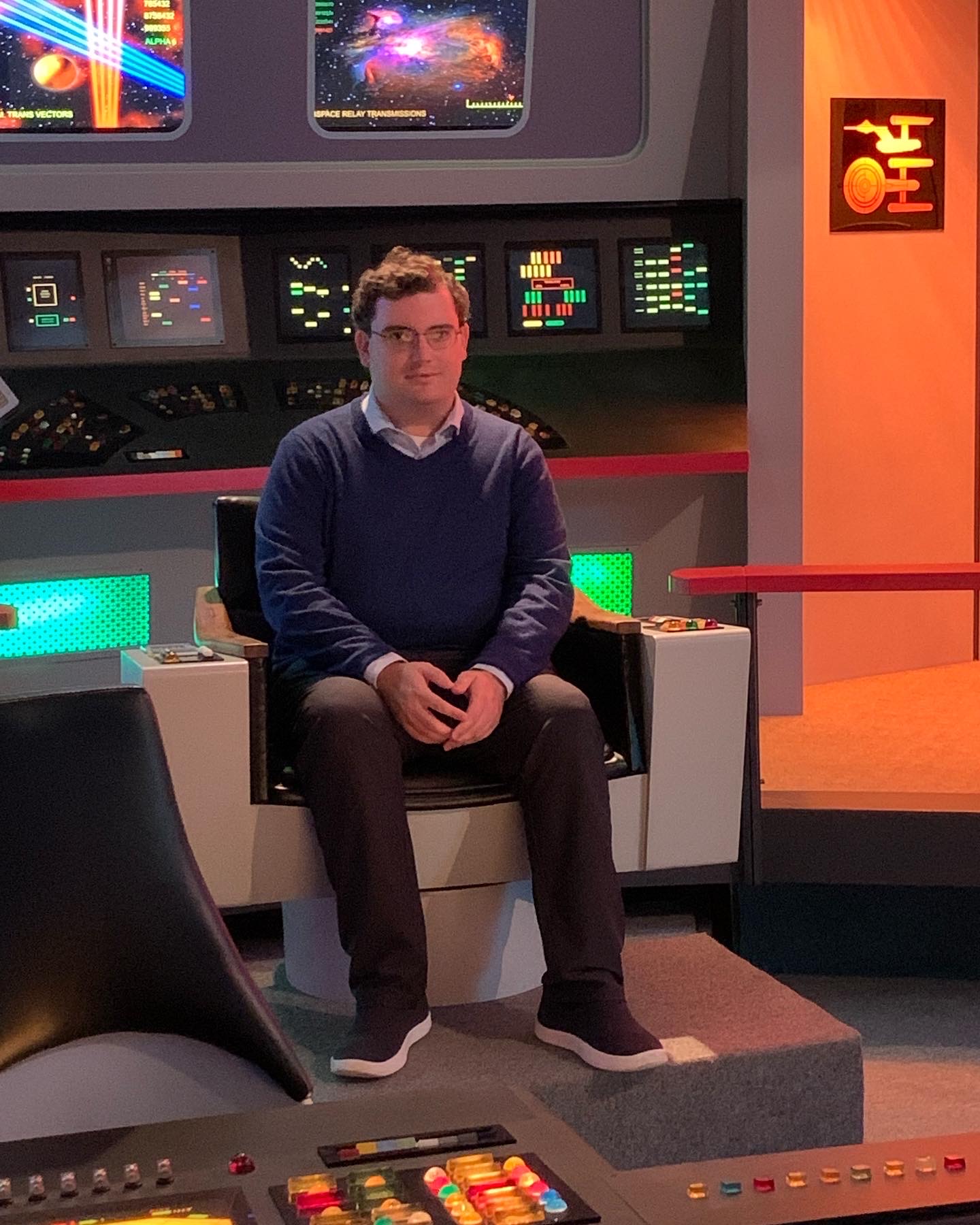
Myself in the captain’s chair at the Star Trek Tour in Ticonderoga, NY. Photo: Alex Brisson.

In another drive on a Sunday in late September 2022, at the end of a delightful weekend I spent with my friend Alex Brisson in Ticonderoga and Albany, I drove southwest through the rolling hills of Central New York toward Cooperstown to visit the Hall of Fame. While I was driving, I listened to Andrea Wulf’s biography of the Prussian naturalist Alexander von Humboldt (1769–1859). On that particular Sunday, I listened as Humboldt’s own book Kosmos was described in depth. It felt to me that I could see some of the inspiration for Sagan’s Cosmos in Humboldt’s magnum opus, and I was left wondering how Thevet’s own Renaissance cosmography fit into this cosmic lineage. As it turns out, Humboldt was familiar with Thevet’s work, and didn’t care for it at all. The Prussian naturalist is one of the earliest figures in my dissertation’s secondary literature, and he is important because he largely dismissed Thevet’s contributions to natural history writing that his vision of the cosmos was too small to warrant that word.[1] In many ways, my approach to Thevet has always been bi-directional: I’ve tried to learn more about the man by finding the books which survive from his library and the books we know he translated while at the same time I’ve always had an eye on Thevet as a starting point for understanding a specifically non-Iberian understanding of the development of the natural history of the Americas beginning in the Renaissance. My own perceptions of natural history are shaped by my childhood introduction to this vast kaleidoscope of the human vision of the rest of nature on display in my hometown natural history museum, the encyclopedic Field Museum on the Chicago lakefront. While as a child I marveled more at the dinosaurs in their upper floor galleries, now as an adult I prefer to spend my time in the museum among the taxidermy and dioramas with one eye drawn to nostalgic escape and the other toward scholarship; the Field Museum contains a specimen of one likely candidate for the species of three-toed sloth that Thevet described in his Singularitez. By taking this multidirectional focus on the history of natural history, on the one side starting with Thevet in the sixteenth century and on the other with Carl Akeley and the collecting expeditions launched by the Field Museum at the turn of the last century, I’ve developed a particular perspective on natural history that is visible in both wide and narrow focuses.

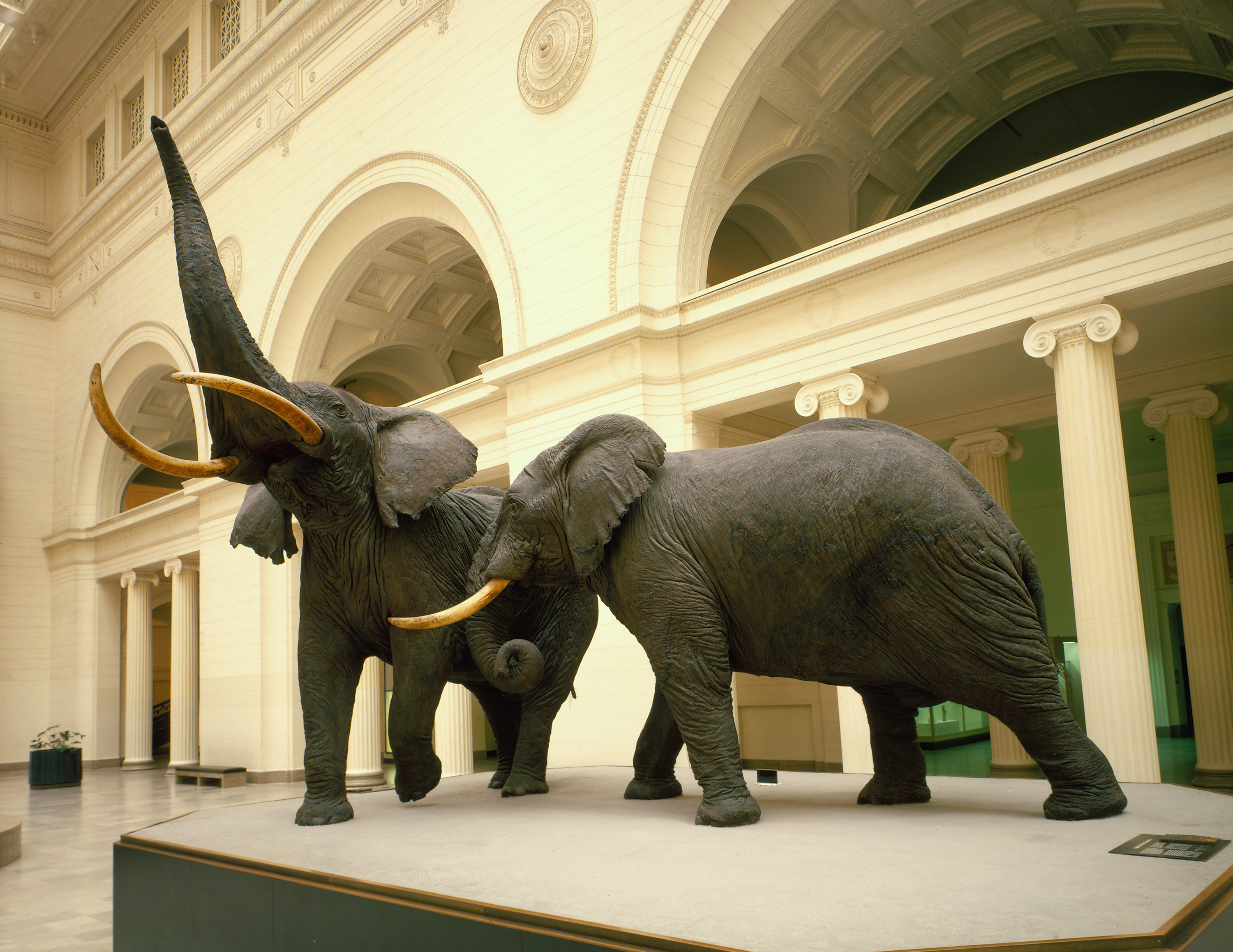
Fighting African Elephants in Stanley Field Hall. Taxidermy by Carl Akeley . 41411 is on the left with two tusks and its trunk is raised. 41410 is on the right, with one tusk. Photo credit: (c) Field Museum of Natural History - CC BY-NC 4.0.
Fighting African Elephants in Stanley Field Hall. Taxidermy by Carl Akeley . 41411 is on the left with two tusks and its trunk is raised. 41410 is on the right, with one tusk. Photo credit: (c) Field Museum of Natural History – CC BY-NC 4.0.
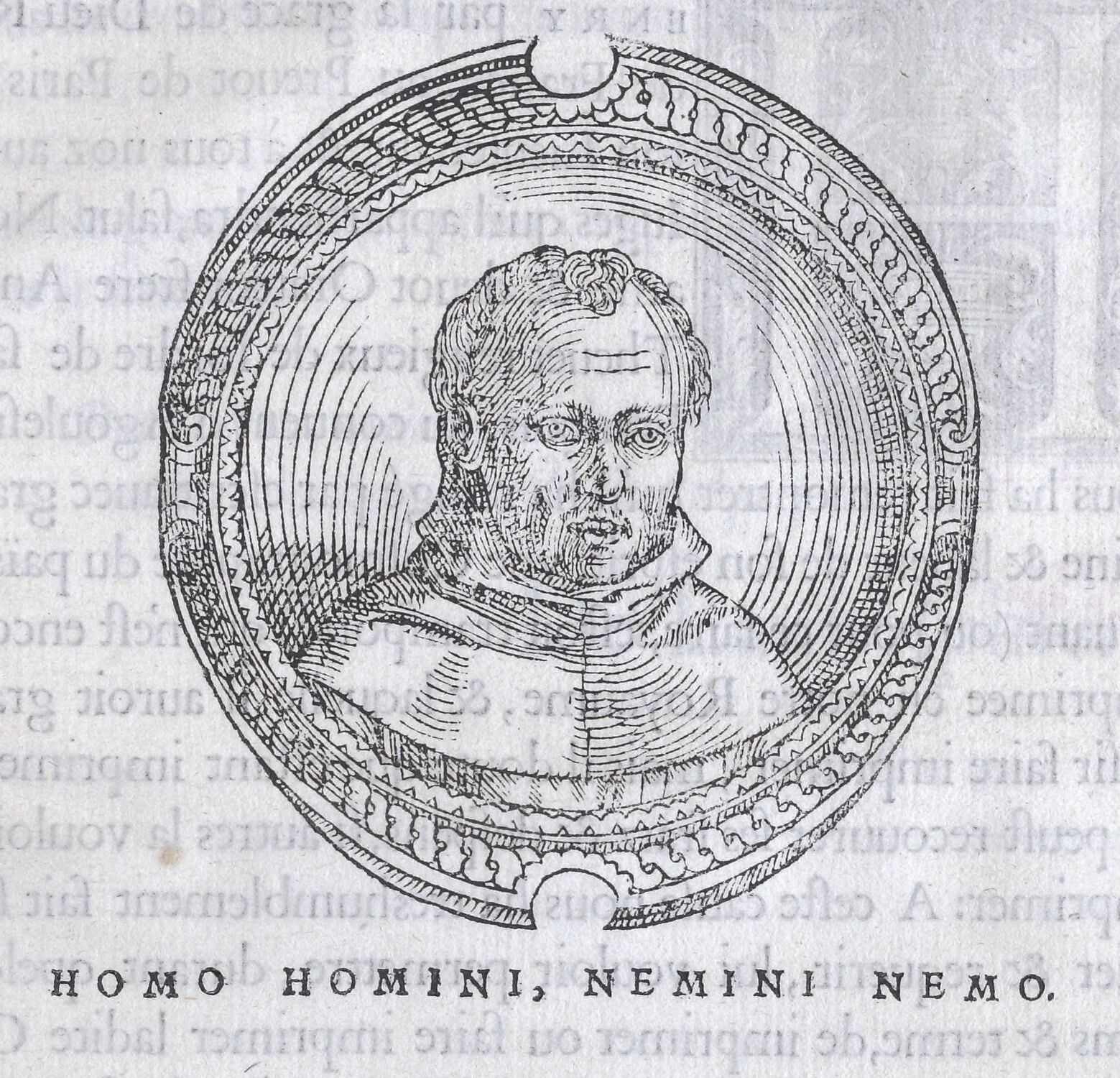
A portrait of André Thevet from 1554

In the six years since, I felt that I not only got to know André Thevet the cosmographer but something of Thevet the man. He was just a few years older than I am when he made his first overseas voyage from France to Constantinople, the Levant, and Egypt in 1551. The most famous portraits of Thevet were published in his 1575 Cosmographie Universelle and 1584 Vrais Pourtraits des Hommes Illustres. These two portraits show Thevet at the height of his career, the cosmographer royal, the keeper of an expansive cabinet of curiosities, and a close confident of the Valois royals. Yet there’s an older portrait of Thevet as a younger man which appears in his first book, the Cosmographie de Levant, published in 1554. In it, Thevet is shown not as the resolute man of his craft but as a humble Franciscan friar. It was a position that he was put in by his father when he was 10 years old in order to give the boy a chance at a good education. I see in these three portraits something of a desire for better and greater things. In the process he crossed some people the wrong way and got a fair few things wrong in his cosmography. I’ve learned to take what Thevet wrote with a fine grain of salt especially later in his life. I wonder though if some of the acrimony that Thevet’s reputation has faced since his death in 1590 isn’t in part because of his close ties to the Valois family who declined from power and were replaced by their Bourbon cousins the year before and largely by the Valois’ infamy in the history of the French Wars of Religion, in which the Huguenots who traveled to Brazil with Thevet in 1555 were so threatened by their country over matters of faith. I recently met a woman at a Kansas City Symphony performance who was wearing a Huguenot cross necklace, and it struck me how her ancestors’ experience living as Protestants in a Catholic state mirrored my own ancestors’ experiences living as Catholics in Ireland during the Protestant Ascendancy and Act of Union with the very Protestant Kingdom of Great Britain in 1800. Like her, I’d grown up with a sense of pride in my Catholic ancestors’ resilience at staying Catholic in spite of the state which ruled over them. Seeing the long shadow of the Wars of Religion which for my people didn’t really end until Good Friday 1998 from this vantage gave me tremendous perspective. How did Thevet view it all? He blamed the Huguenots in part for the fall of France Antarctique in his Cosmographie Universelle, writing that “little of this would have happened without some sedition among the French, which began with the division and parting of four ministers of the new religion sent by Calvin to plant his bloody gospel.”[2] Why did he choose to write that the way he did? Certainly, these religious tensions gave cause for the Portuguese to eliminate the French presence in Brazil, yet wouldn’t the economic threat of the French presence in Brazil toward Portuguese trade be justification enough? Could Thevet have been responding to the political situation he found himself in when he published the Cosmographie Universelle in Paris in 1575?
Thevet in 1584.

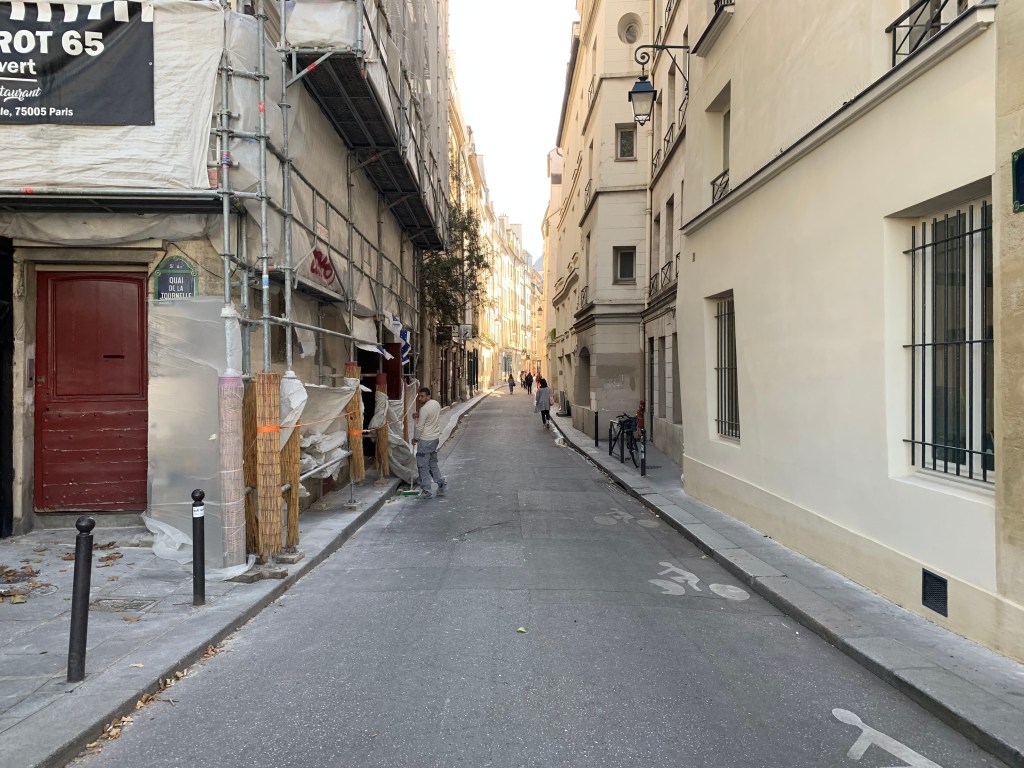
I like Thevet because I find the man relatable, I get the sense that we can relate somewhat; like him I’ve felt this constant need to prove myself to my peers. This need has waned somewhat as I’m moving along with my career. Yet I feel the younger Thevet depicted in his Cosmographie de Levant is more relatable to my life today in my early thirties. While not a cleric, I chose to not go down that path, I’m alone in my life with a strong sense of wanderlust. Those wanderings have taken me to Paris twice now in the last two years to get a sense of Thevet from beyond the printed books with which I’m most familiar. In October 2023 I followed a lead which took me to Rue de Bièvre, the street where he lived at the end of his life up to his death in 1590. I walked up and down that little street between Boulevard Saint-Germain and Quai de la Tournelle and stopped in the pocket park on the western side of that street. I felt that this was the closest I’d ever get to him, after all the church where he was buried, the Convent des Cordeliers, was desecrated during the Revolution of 1789-1791 and from what I’ve been able to gather, his tomb disappeared. Yet earlier this year while watching an episode of PBS’s science series NOVA about the graves found in Notre-Dame during its reconstruction, I noticed they pulled out a nineteenth-century book of old Parisian epitaphs. I did a quick search through the BnF’s Gallica database, and found Thevet’s own epitaph there transcribed from the original stone carved in 1592 that lay in the Convent of the Cordeliers. In the original French it reads:

Rue de Bièvre, where André Thevet once lived.

Cy gist venerable et scientifique personne Maistre Andre The-

vet, cosmographe de quatre roys, lequel estant aagé de LXXXVIII (88) ans, se-

roit decedé en ceste ville de Paris, le XXIII jour de Novembre M D XCII. –

Priez Dieu pour luy.[3]

In English, this translates as :

Here lies the venerable and scientific person, Mr. André Thevet,

Cosmographer of Four Kings, who was 88 years of age,

he died in this city of Paris, the 23rd day of November 1592.

God, pray for him.

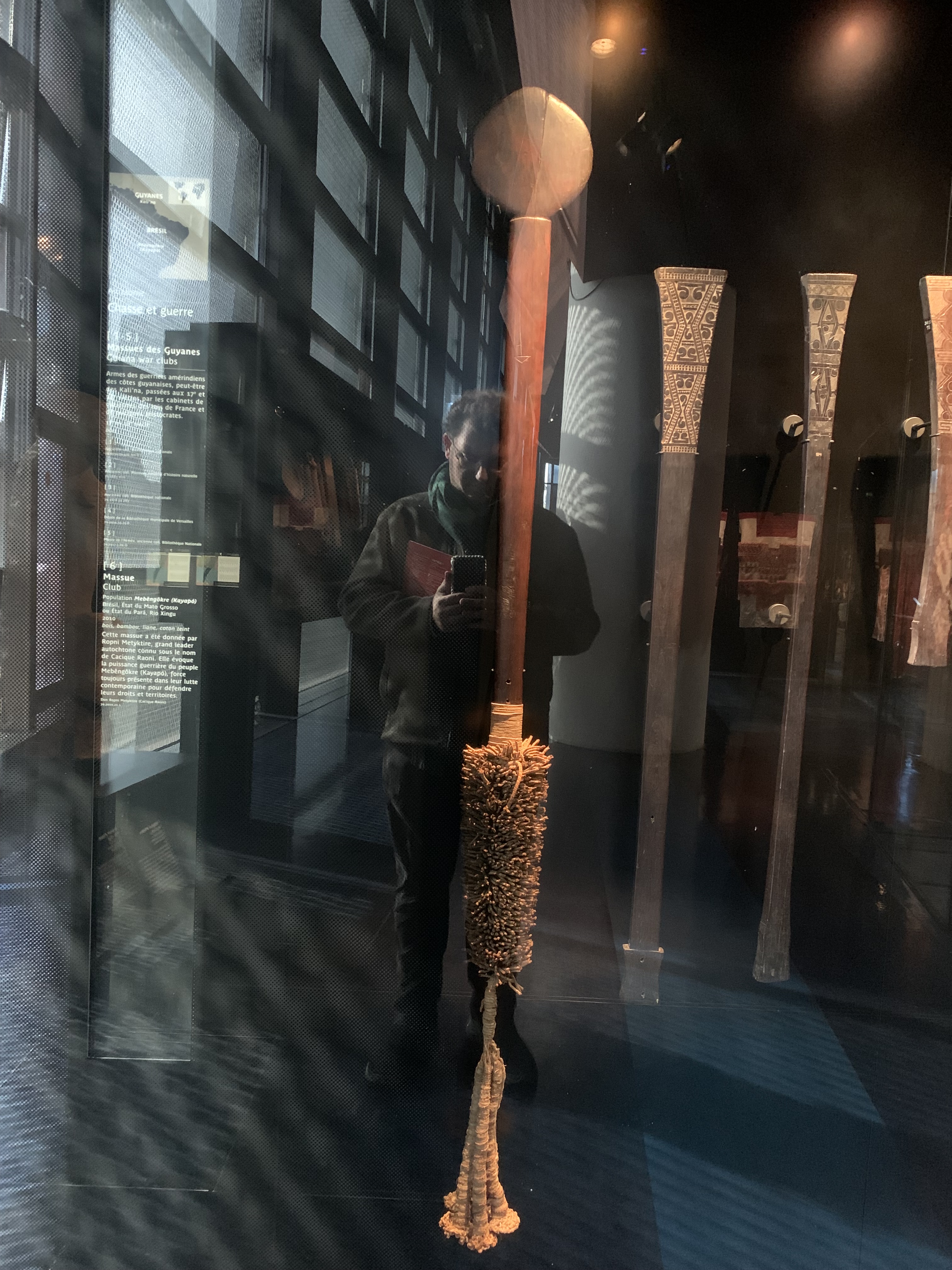
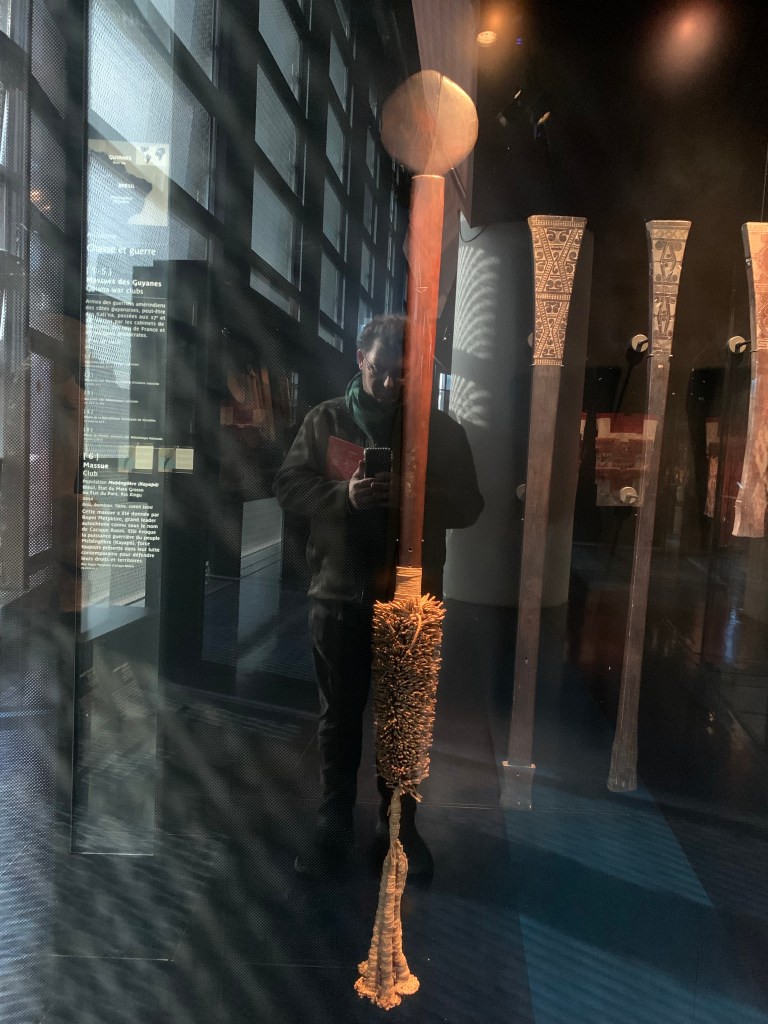
A Tupinambá war club once called “the Sword of Quoniambec” that I’m studying. Thevet brought it to France in 1556.

On that same trip I visited a wooden Tupinambá club which the Musée du Quai Branly records was donated to the royal collections by Thevet and was given to the cosmographer by the Tupinambá leader Quoniambec (d. 1555). I figured this would be the only artifact I’d see that Thevet would’ve himself handled. Little did I realize that eight months later I’d be back in Paris, this time at the BnF’s Richelieu building in the Department of Manuscripts reading through Thevet’s own handwriting. I’d made a visit there that day to read through Thevet’s translation of the Travels of Benjamin of Tudela, a twelfth-century Sephardi Jew from the northernmost reaches of Al-Andalus which told the story of his travels around the Mediterranean world. Tudela’s wanderings took place three centuries before Thevet made his own voyage east into the Mediterranean in 1551. Here, through the window Thevet crafted with his pen over 470 years before, I was reading a story retold in Thevet’s words of events that occurred over 700 years ago. That sunny June day, I spent a few quiet moments reflecting on Thevet’s penmanship, his signature, and how familiar his writing seemed. I’ve read more of Thevet than many others, after all I’ve translated the entirety of his Singularitez, and so when I was working with his Tudela translation, I found the job was made easier by how I could recognize his voice in the flourishes of his pen. I felt that I knew the man, in spite of the centuries between us. Soon after, as I walked from the Richelieu building to a café next to the Sorbonne where I was meeting an editor for a project I’m contributing to, I reflected amid my quick steps crossing the Seine that I was walking the same streets Thevet once walked. They’d changed to be sure, but there were still monuments that he’d recognize, edifices of the Paris he knew.

I chose to study Thevet out of a drive for practicality, a quick solution to a pressing problem of finding a dissertation topic that I could move to when my original plans went up in smoke. In the years since I’ve become known as a Thevet scholar. I’ve given many conference presentations and lectures about the man and his contributions to Renaissance natural history. In fact, I’ll be giving one more on June 12th with the Renaissance Society of America’s Graduate Student Lightning Talks, sponsored by the RSA Graduate Student Advisory Committee. That talk takes a different perspective on Thevet’s sloth than any other I’ve yet given, approaching it as an example of animal intelligence. Tune in to learn more.


[1] Alexander von Humboldt, “Les vieux voyageurs à la Terre Sainte (du XIVe au XVIe siècle),” Nouvelle annales des voyages, de la géographie et de l’histoire 135 (1853): 36–256, at 39.

[2] Thevet, Cosmographie Universelle, Vol. 2, 21.2, ff. 908v–909r.

[3] Émile Raunié, Épitaphier du vieux Paris, recueil général des inscriptions funéraires des églises, couvents, collèges, hospices, cimetières et charniers, depuis le moyen âge jusqu’à la fin du XVIIIe siècle. Vol. 1–3, Paris : 1890-1901), 302, n. 1171.


Three Ologies

This week, talking through three terms I’ve historically had trouble understanding: epistemology, ontology, and teleology.—Click here to support the Wednesday Blog: https://www.patreon.com/sthosdkane


This week, talking through three terms I’ve historically had trouble understanding.


A major turning point in my life came at the end of 2014 when I decided to drop my philosophy major to a minor and not take the final class that I needed to complete that major. The class in question was Continental Philosophy, and it remains one of those decisions that I regret because it closed some doors for me in the long run even while it seemed like a reasonable decision in the short term. A year later, now working on my master’s degree in International Relations and Democratic Politics at the University of Westminster, I was reminded daily that I really should’ve just taken that last class because so much of what we were studying was based in continental philosophy.

I initially pursued a triple major in History, Philosophy, and Theology and a double minor in French and Music at Rockhurst University. I was quite proud of the fact that up to that point in my seven completed semesters at Rockhurst that I’d been able to juggle those three majors and the two minors while still having an active and fulfilling social life on campus. I went into Rockhurst with several vague ideas of what I might want to do with these degrees when I was finished; notably I remember both considering doing a Ph.D., likely in History, and possibly going from Rockhurst either into the Jesuit novitiate or into a diocesan Catholic seminary to become a priest. The first four years of Catholic seminary is comprised of that philosophy bachelor’s degree, so it felt like a good idea to undertake that at Rockhurst and keep the door open.

Now ten years after I would’ve finished my undergraduate with that philosophy degree, I realize that even as I continued to consider holy orders that I may well have properly begun to close that door in my early twenties, not feeling that the priesthood was the right fit for me in spite of what many people have said. Even then, most of the other professions that I’ve considered have been shrinking in one way or another in my lifetime. It feels here as in so many other aspects of my life that I was born at a high point in our society’s capacity to consider the arts, humanities, and even the sciences and that as I’ve gotten older that capacity has diminished time and again. Even while I continue to be frustrated to remain in these wilderness years, I nevertheless continue to learn and to grow in my understanding of what is possible for me to do in my career.

In the last seven years I’ve reasserted myself as a historian first and foremost, settling into the Renaissance as my period of study in late 2017 and gradually shifting from considering the history of Englishwomen’s education to the history of translation to now the history of natural history. Yet all of these disciplines lie under the common umbrella of intellectual history. My manner of writing the history I craft tends to speak toward French notions of mentality and perception, while the economics I still occasionally encounter in my work speak to Max Weber’s notions of capitalism as a broader Cross-Channel enterprise including Brittany and Normandy alongside England, Picardy, Flanders, and the Dutch Republic. I’m beginning to try out a new method of writing history that draws on the natural sciences to better understand the animals and other natural things described by my Renaissance cosmographers and natural historians.

Amid all of this, three words continue to appear, three words which I have often had trouble remembering their meaning. These three are epistemology, ontology, and teleology. In spite of my training in Ancient Greek, I still have trouble keeping these three apart. They represent three central tenants of philosophy which help make sense of how we understand things. It may not sound like the strongest topic for a riveting podcast episode, but for those of you listening bear with me.

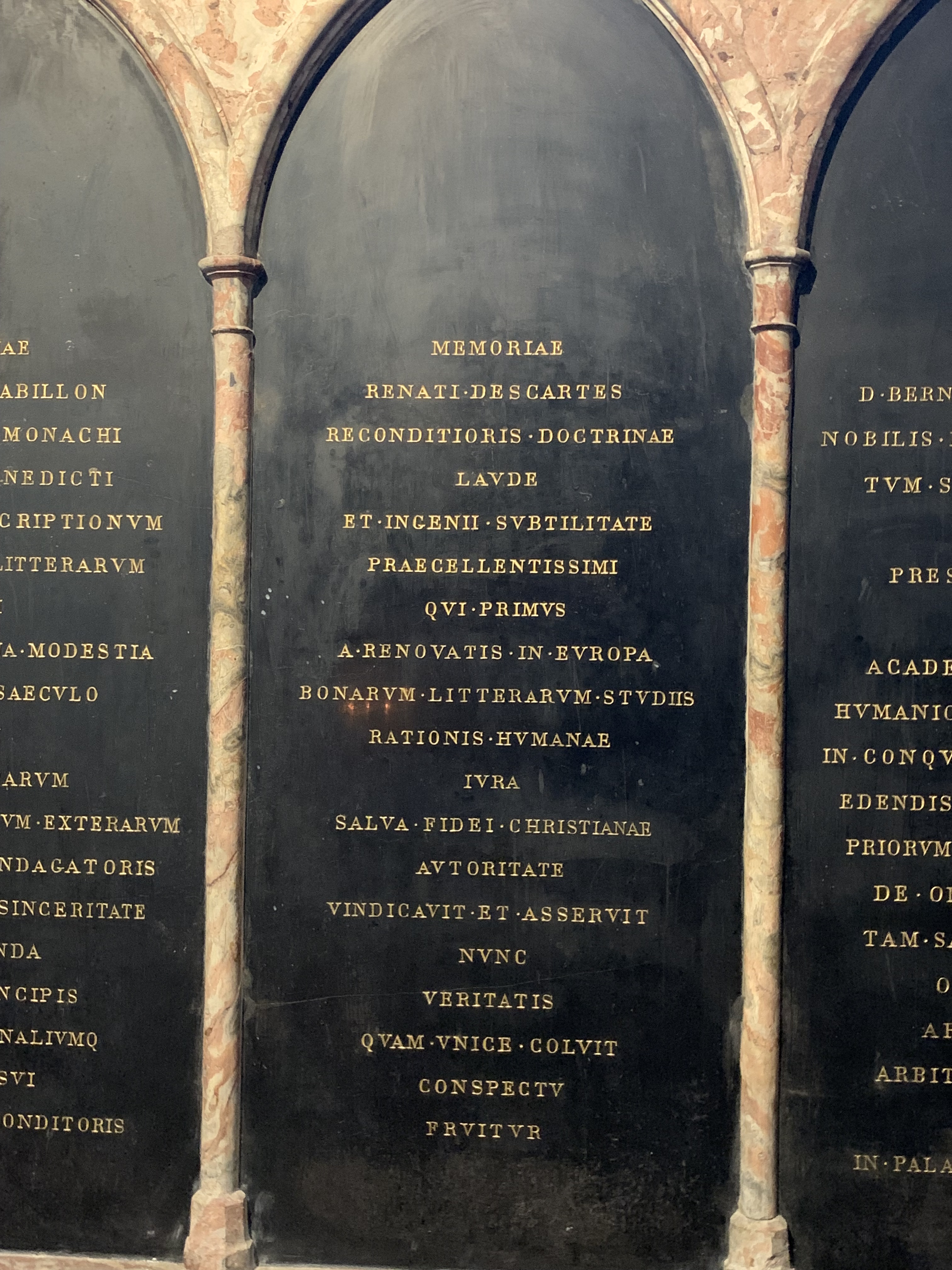
Descartes’s tomb, photo by the author.

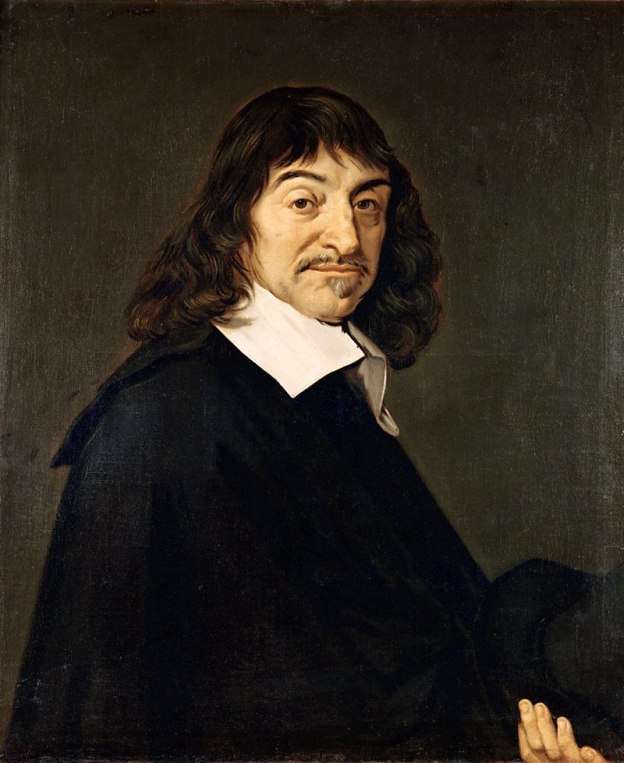
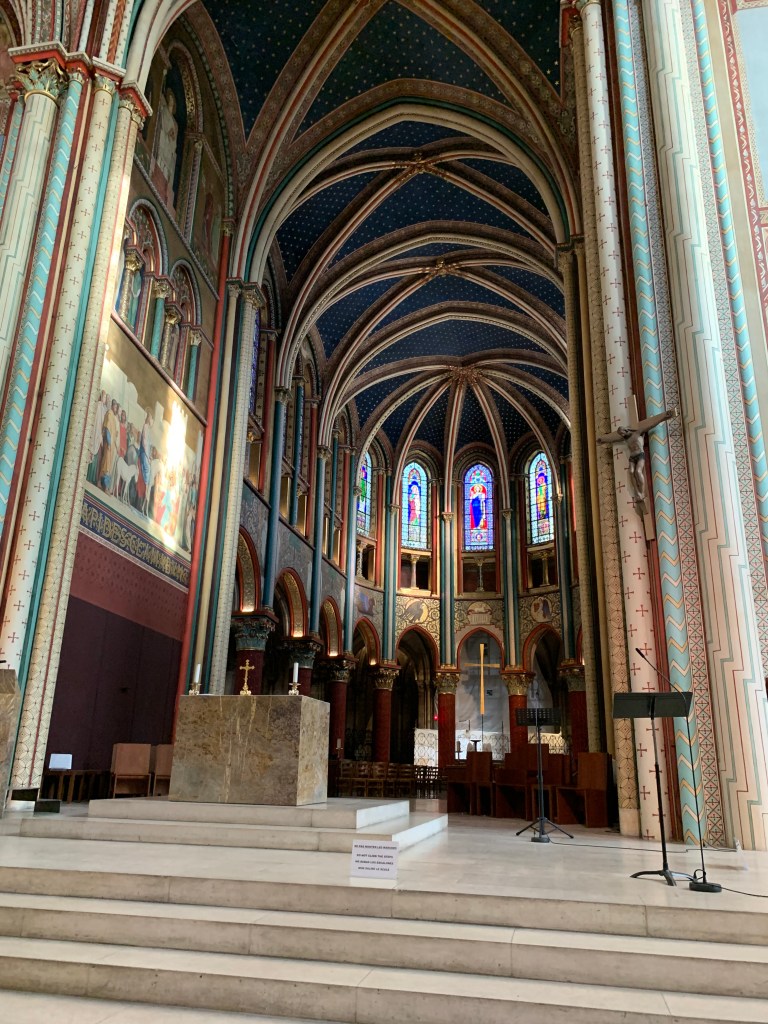
Epistemology is the theory of knowledge. It distinguishes things which are justified from mere opinions. This theory of knowledge considers propositions about facts, practices which form knowledge, and familiarity with an object thus allowing the subject to know it. This word episteme in Greek (ἐπιστήμη) translates into English as both knowledge and science. Science itself is a word which at its core refers to knowledge, for the root Latin verb sciō means “to know.” We know for instance that we exist because we can recognize our existence, in Descartes’s famous words “I think, therefore I am.” I made a point of visiting Descartes’s tomb in the Abbey Church of St. Germain-des-Prés when I was in Paris in October 2023 because so much of my own philosophy is Cartesian in its origins. I reject the principle that we could be living in a simulation on the grounds that based on what we can know and perceive we are not inclined to accept such a suggestion.

The second of these words is ontology, a branch of metaphysics dealing with the nature of being. This word derives from the present participle of the Greek to-be verb εἰμί. I stand by my assertion that the life we are living is real because we can recognize it in large part because the best explanation that I’ve found for the course our history has taken is reliant on us having the freedom to decide the courses of our own lives. This free will explains how a society can seem to take steps backward even while the chaos those retreats cause is to the society’s detriment. The method which I am developing in my research to understand the nature of historical animals using modern scientific research is ontological in character. I can test if this method will work by applying it to particular individual animals who appear in the historical record and determining their true character by a process of eliminating candidate species until the animal’s own species is determined. In this search for the nature of these animals I hope to prove that the historical past, before the development of the scientific method in the seventeenth century, is valuable to the natural sciences as a means of understanding the longer-term nature of other animals during the period in which human influence upon nature was growing toward the Anthropocene which we find ourselves in today.

I like to think of ontology in the linguistic context of how the copular to be verb appears in our literature. Think, for instance, of how God is identified in the Bible. In the story of the burning bush, the Divine is referred to as “I Am that I Am,” or rather the purest expression of existence. For this reason, when I was an undergraduate in my theology major, I began to refer to God as the Divine Essence owing to the root of essence in the Latin copular verb. English recognizes a far wider set of states of being than does Irish. Where in English I might say “I am sad,” in Irish I would say “sadness is upon me,” or “Tá brón orm.”

The third of these words is teleology. This is the explanation of phenomena in terms of their purpose rather than the manner of their invention. Τέλος (telos) is the Greek word for an end, an aim, or a goal. The purpose of something’s existence then is at focus here. I do question this idea that we have a specific purpose in life, perhaps because mine has not gone quite how I expected. In my Catholicism, the most teleological concept we retain is the idea of a vocation either to holy orders, marriage, or to the single life. The teleology at play here speaks to some sense of destiny which I feel stands in opposition to our free will. Perhaps there is some purpose to life, at its initial conception in the first moments that matter began to form in the void that became our Universe, yet I do not believe that I can perceive any intended influence beyond the flick of the first domino at the Big Bang. We may not even be sure that the Big Bang was the beginning of everything, after all there had to be energy to build up to cause such a tremendous explosion in the first place. In a theological view I would point to the Incarnation of Jesus as an example of telos in our history, I am a Catholic after all. My lingering question is where should that theological teleology interact with the other ways of knowing?

I’ve written here before about my view that belief and knowledge are two distinct yet interrelated things. One must believe in one’s senses to know, yet there are things in which one can believe without knowing which one cannot know without believing. The prime example of this is God; “I believe in One God,” it’s something I say every week at Mass in the Creed, “Credo in unum Deum,” in the Latin original of our Roman Missal. Yet God alone is a tremendous challenge to know because God is both paradoxical and far greater than the extent of my knowledge. For this reason, we had the Incarnation, as we recite in the Creed:

“I believe in one Lord Jesus Christ,

The Only Begotten Son of God,

Born of the Father before all ages.”

For God to be knowable God needed to come down to our human level in the person of Jesus, God the Son. This was Jesus’s telos, to be known, to be heard, and as we believe restore faith in God and cleanse humanity of original sin. Here there is a collision of belief and knowledge, where something clearly happened about 2,000 years ago because a new profusion of faith occurred, beginning in Judaea and spreading around the Mediterranean World in the Roman Empire and beyond to become Christianity. That new religion adapted to fit the cultures it encountered, so as to be more acceptable to its new converts. Today that collision continues in the Eucharist, the most sacred of all seven sacraments, in which we Catholics alongside our Orthodox brothers and sisters believe that God becomes flesh again in the sacramental bread and wine. Can we know that it happens? Not by any scientific measure, yet something does happen. That something is perceptible through belief, and it is the Great Mystery of the Faith that has kept me in the Catholic Church in spite of the ecclesiastical politics and divisions of our time.

My Irish Gaelic ancestors understood Christianity in their own way, aspects of which survive into the present day. That collision of belief and knowledge looks to some lingering folk belief, or superstition if you will, that I’ve inherited of particular days in the calendar when the worlds of the living and the dead could collide. We see this most pronounced in the old Gaelic calendar on Samhain, which developed through Catholicism into Halloween, the Day of the Dead, and All Souls’ Day around the beginning of November. I see All Saints’ Day fitting into this as well, after all the Saints are our honored dead all the same. Likewise, Bealtaine, the celebration of the coming of Summer at the beginning of May is also the Catholic celebration of the Crowning of Mary, something I attended at Rockhurst on several occasions.

What in all of this can I actually know? I know the stories that have survived from before St. Patrick and the coming of Christianity to my ancestors 15 centuries ago, even if those stories are Christianized in some way or another. I know this just as much as I know that Jesus existed in the first century CE because there are effects of these stories in the lives and histories that are remembered down the generations. If these stories have any teleology, it’s to teach us lessons about life that our ancestors learned so that we might not have to face the same trouble all over again. The folly of humanity is that we are resistant to having a clear purpose or end to our aims. Through our free will we know that there are always many options to choose between.I don’t know if I made the right choice in dropping that philosophy major at the last moment. In many respects, it was a poor decision. I learned from that experience and many others in my early life to stick with things until their conclusion. This learning is something that has been tested to grow beyond mere opinion through belief into something that is verifiable. When I look at my prospects in my doctoral program, I always decide to stick with it because I don’t yet know what my prospects will be like once I’ve earned it, something that I do know having 2 master’s degrees and a bachelor’s degree to my name. I have gained a great deal of epistemic experience through all these memories that have informed the nature of my character. Yet where they lead I cannot say, for the purpose of my life is something I continue to decide day by day.


The Joy of Reading

This week, an odd sort of sorrow that explains my reading habits. — Click here to support the Wednesday Blog: https://www.patreon.com/sthosdkane


This week, an odd sort of sorrow that explains my reading habits.


On Sunday evening, I surprised myself by finishing reading Sebastian Smee’s new book Paris in Ruins: Love, War, and the Birth of Impressionism. I read a review of it in the New York Times several months ago in conjunction with the exhibition celebrating the 150th anniversary of the first Impressionist exposition which I saw at the Musée d’Orsay this summer and is now showing at the National Gallery of Art in Washington. I’ve long loved the works of Claude Monet, especially his choice and use of color, yet of all the impressionists in this exhibit the one who stood out to me the most was Berthe Morisot (1841–1895), one of the few women included in the 1874 exposition. This book tells the story of her life during the Second Empire, the Franco-Prussian War, the Paris Commune, and in the first three decades of the Third Republic at a time when France was a prosperous great power yet still politically unstable, something familiar to our own day. I’d first heard of the Commune as an underlying current of the macabre in Gaston Leroux’s 1910 novel The Phantom of the Opera, though this is the first time I’ve properly read about the Commune or its collapse during the Semaine sanglante, or Bloody Week of 21-28 May 1871.

“Berthe Morisot au bouquet des violets” by Édouard Manet (1872), Musée d’Orsay
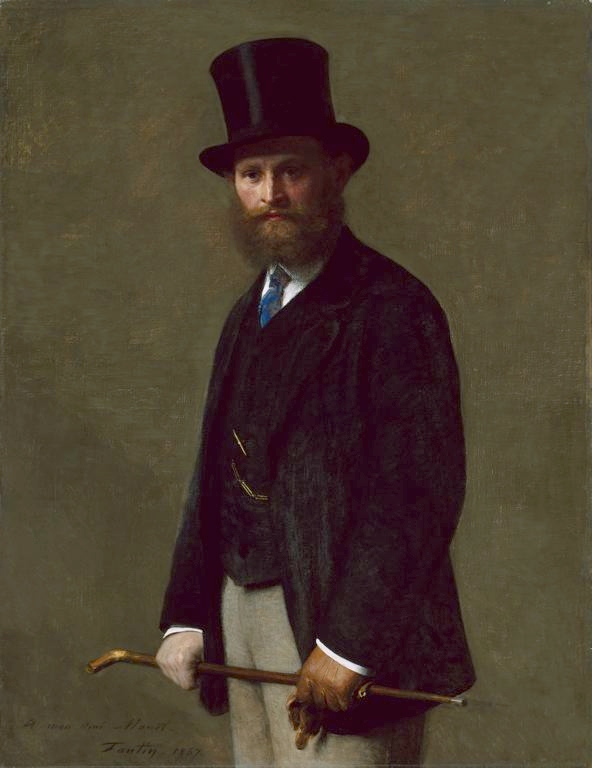
“Pourtrait d’Édouard Manet,” by Henri Fantin-Latour (1867), Art Institute of Chicago

Over the months I read and listened to this book I felt that I got to know Morisot, her friend Édouard Manet (1832–1883), her sister Edma Morisot (1839–1921), her husband Eugène Manet (1833–1892), and her daughter Julie Manet (1878–1966). Early while reading this I went, as I often do, to the Internet to look at the paintings described and learn more about these people I was meeting on every page. It struck me that many of the children of these Impressionists lived well into the twentieth century, Julie died in 1966. I’ve been drawn to the Impressionists for how tangible their art is, as I’ve written here before in my early childhood in the 1990s the decades a century before, notably the Columbian Exposition of 1893, felt recent and quite tangible to me. That sense remains even as we now move toward the end of this first quarter of the twenty-first century, and so Morisot, Manet, and Monet feel more contemporary to me than perhaps they aught to. That their art began to be acquired for American museum collections in the first decades of the twentieth century makes them feel to me more contemporaneous with the 1893 World’s Fair, the Theodore Roosevelt Administration (1901–1909), or the earliest stirrings of silent film before World War I than with the American Civil War which erupted when these artists were first exhibiting their works. That their children lived into my grandparents’ and parents’ lives leaves people like Morisot who died nearly 130 years ago feeling like they were just here yesterday.

I think the setting of Paris also helps with this. The French capital has changed in some ways, for one the Métro was built after Morisot died, though after I finished reading Smee’s book on Sunday night it struck me looking at some of the addresses mentioned in the latter chapters of the book that she would have seen the Eiffel Tower rise over the Champs-du-Mars from her various homes just across the Seine in Passy. Again, these are all symbols of the Belle-Époque that marked the transition from the nineteenth to the twentieth centuries, and yet these are people whose lives began during the July Monarchy of Louis Philippe in the 1830s and 1840s, a decade which also saw the death of the Marquis de Lafayette (1757–1834) and some of the last great figures of the American and French Revolutions of the 1770s and 1780s. Do you see how time can seem to pinch when considering it on a personal level? Paris is a city that has changed in some ways yet in others it would still be recognizable to someone from the 1880s or 1890s. One of my favorite short stories that I’ve ever read is Andrew Robinson’s contribution to the Star Trek: Deep Space Nine anthology series Prophecy and Change, a story titled “The Calling” in which Robinson’s character from the TV show, Elim Garak, is sent by his planet’s government to seek assistance from the United Federation of Planets whose capital in the late twenty-fourth century is Paris, one of the great cities of Earth. Garak remarks that unlike most other Earth cities Paris feels ancient, and that the locals like to keep their particular sense of Frenchness in spite of all the interplanetary mingling going on at this point over 350 years from now.

Again, despite all the advances in technology from Robinson’s description of Paris in the late 2400s it sounds like it would still be recognizable to someone like me who knows it from the 2010s and 2020s or perhaps even to Morisot and Manet who knew it in the 1860s through the 1890s. That’s a bold claim that may be without much merit, but I’ll make it here because it speaks to something intensely Parisian, a city more modern in many respects than many of our great cities here in the United States with a constantly evolving transportation network, good healthcare, and some of the best educational institutions on the planet, yet still true to itself in its age. When I finished Robinson’s story, I was so moved that I considered trying to contact the author to tell him as much, though I haven’t built up the courage to do so yet. That’s something I’ve begun to do with fellow historians, at these conferences over the last three weeks I would often tell people whose books I’d read how much I enjoyed them. It’s something I hope people will say to me when I publish my own works later this decade.

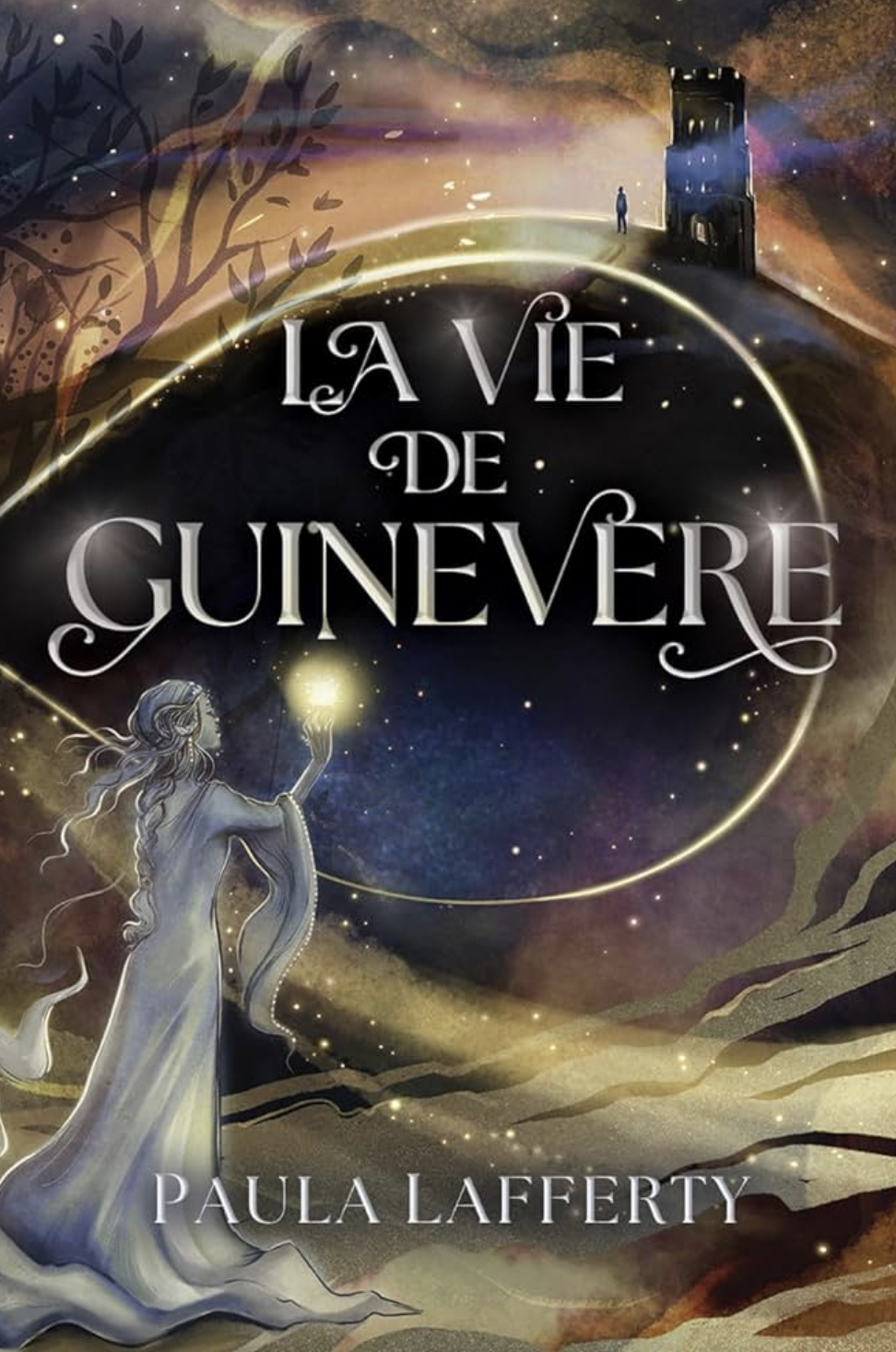
If any book that I’ve recently read speaks to this sense of timelessness yet also is populated by such profoundly vibrant characters it’s Paula Lafferty’s new fantasy novel La Vie de Guinevere in which a woman named Vera living in early twenty-first century Glastonbury in the southwest of England discovers she’s a time-traveling Queen Guinevere and is brought back to the seventh century to fulfill her obligations as queen. I’ve known Paula for over a decade now, she’s one of the pastors of my Mom’s church, and I count her among my good friends, so I’ve been excited to hear progress of this book over the last few years when we’ve met for meals and crossed paths. I read this book during my trip to Toronto over Halloween weekend and finished it on the 6th of November in Houston and again this is one where I quickly began to feel familiar with the characters and where I looked forward to visiting with them again. Paula’s way of breathing life into them made them feel contemporary in a way that most stories set in the Early Middle Ages don’t. Glastonbury is a great setting for good portions of this story; it’s another one of these timeless places, one that I’ve yet to visit, yet it speaks to an element of maturity in the English countryside that seems foreign to our young society here in the American Midwest.

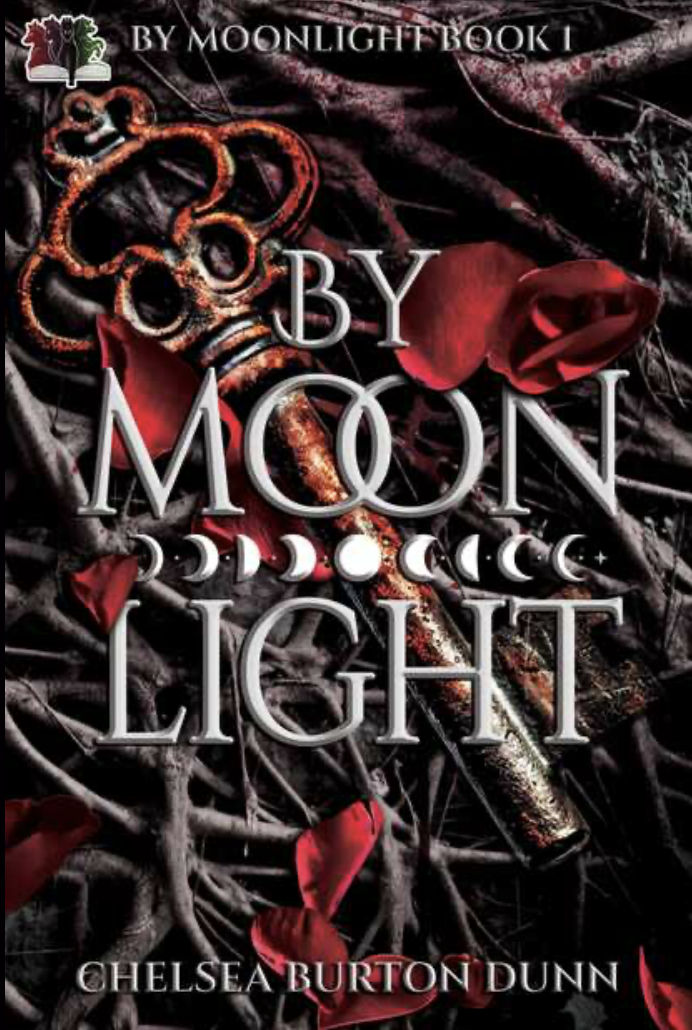
And yet, there is a degree of that agedness that you can find in my cousin Chelsea Burton Dunn’s series of books By Moonlight telling the story of a Kansas City woman named Vee. These books are set here in town, many of the main characters live in my neighborhood, yet things are not quite as they seem for most of the Brooksiders in question are werewolves. I read the first book over the course of one evening, during which time I met Vee and Shane, the werewolf pack leader, and his family. Knowing Chelsea I was able to recognize the story, its setting, and characters quickly and began to feel a sense of comfort around them. These were just more people I was meeting, albeit on paper only. Now when I drive or walk down the street where the werewolves are said to live in these books, I find my mind thinking of them. In this instance, having the story take place so close to home makes it easier for me to find joy in reading it. These are the furthest sorts of stories from my usual fare, especially from the history, anthropology, and zoology works I read for my studies, yet there’s still a place for them and their characters to flourish in the imagination.

I have a tendency of getting close to finishing a book and then setting it aside for a while and leaving it unfinished. I think this goes back to my sense as an only child that the characters in the books I read often feel far more familiar by the time I’m finished with the story, and so I don’t want to see them leave my regular daily life where I spend a good hour or so each day visiting with them and learning more about their lives and experiences. It’s silly in some cases, yet it’s truly a factor in my reading. I remember doing this reading Judith Herrin’s Byzantium in 2016 and 2017, building up a several month gap near the end of the book in part because I didn’t want the story to end. That may also be why my greatest attempt at fiction, my stories about Erasmus Plumwood, remain unfinished. That and that I’ve been translating Thevet’s Singularitez and writing my dissertation.

There is a special joy in reading that is lost in other media. The stories are projected from the page into our imaginations whence they come to life for us to see in our mind’s eye. I love watching television shows and seeing films, in fact I’m eager to go see Robert Zemeckis’s new film Here and Ridley Scott’s Gladiator II, yet reading is much more personal and intimate. It’s a story acted out on the perfect sized stage, a stage that can project just to the individual or to a group if the book is read aloud. At the moment both of the Morisot paintings at the Nelson-Atkins are off view, one is in Nice for a Morisot retrospective exhibit, yet I still chose to wander the Impressionist galleries of the museum this Monday to see the light and color and life which Morisot and her friends envisioned in the last decades of the nineteenth century and the first decades of the twentieth century. Their lives continue to recede into the past, like Eurydice’s eternal fall from Orpheus’s outstretched arms into the dark of Hades, yet for me there’s still a string tethering the Impressionists and me and all the generations in between. That’s a string I will leave bound as long as possible even as time pulls us further apart. It’s a string I will rejuvenate by going to see their paintings and reading more about their lives even as the distance between us continues to grow.


The Face

This week, I have a spooky short story for you, based on an experience I had over the summer. — Click here to support the Wednesday Blog: https://www.patreon.com/sthosdkane Photo: an empty corridor in the Paris Métro as seen by the author on the evening when this spooky story takes place.


This week, I have a spooky short story for you, based on an experience I had over the summer.


The second evening since my colleagues had left town now arrived, I made my way down into the caverns of the metro to cross Paris from Opéra to the Maison de la Radio. The journey should only take 30 minutes, during which time I knew I would be surrounded by people, it was the rush hour after all. Yet one thing was certain about this journey: none of us would intentionally make eye-contact with each other. That is one of the great, universal, cardinal rules of public transport systems. To look into the eyes of a stranger who was stuck sitting or standing beside you in close quarters was to break some great pact of collective anonymity. I kept to this rule as well as I could, having learned it as a child and improved within its bounds in my teenage and young adult years.

That is what struck me the most about the face that I saw peering at me from ahead. At first, I thought I must’ve been seeing things, yet then I looked at it more closely and saw its eyes gazing back at me in an unbroken stare. Whose face was this that would be so flagrant in their regard for the social order of the metro? I turned away quickly and restored my gaze on the linear route map on the upper section of the walls of the carriage. It was just above the twin doors which stood before me. I was positioned in the center of the train’s vestibule, holding onto the vertical pole as all of the seats were taken, and if I could’ve taken one for myself it would’ve served little purpose, as I was alighting in only a few stops.

I looked back in the corner of my eye and saw those eyes piercing their way through the stifling air back at me. A shiver ran down my spine, and the hairs on the back of my neck stood on end, someone really was watching me, someone here on this train. I looked up at the map again, we were only just arriving at Miromesnil. I knew I could transfer here, but it would take me out of my way, and I needed to get closer to the Maison de la Radio if I was going to have time for dinner before my concert. At Miromesnil, I looked to see if the face I’d seen was one that alighted, perhaps to transfer to Line 13 or to the streets of the 8th Arrondissement above. The doors closed as soon as they opened, and we were off southwest again toward the intersection of l’Avenue de Franklin Roosevelt and les Champs-Élysées. I feared turning to look again, those eyes could well still be there staring at me. They didn’t look friendly, I’d convinced myself. They were eyes that stood out for how sharp their whites appeared against the brown of their pupils, like a milky sea surrounding a distinct island of mahogany. It seemed unnatural in the greenish light I saw them in, a light produced by the electronic lighting on the train.

At Alma – Marceau, I knew I could transfer to the RER C, which would take me to my final destination, but I stuck to my plan, in spite of the eyes that I was sure still gazed at me. Did their owner long to know more about me? Did they think me foolish, or could they see through the sport-coat and sweaty dress shirt that I’d been wearing for several days? I let the doors close on the Alma – Marceau platform without alighting, and watched as the station flew past us until the darkness of the Line 9 tunnel overwhelmed the green light illuminating the train again. 

There they were! The eyes! Gazing at me from behind, I thought. I felt tired, weary of feeling like I had to look over my shoulder to see who this person was, like the unknown figure who’d sit behind me at Mass when I would feel too self-conscious to turn around and see who it was. That would require I acknowledge them, say “hello” or what you will. Here though, the sign of peace was not turning to acknowledge this figure standing behind me, rather to acknowledge that I could see someone’s eyes there staring at me in the window yet not turn and interrupt their privacy in so public a place by looking into them myself. So, there I stood, trying my hardest not to turn as Orpheus did and lose the love which I felt for that vaunted, phantom privacy.

At Trocadéro, I alighted with relief, and walked down the platform following the signs for Line 6. I pulled out my phone and searched in the metro’s app for my route again, confirming I would need to take Line 6 only one stop to Passy. I walked up a flight of stairs and down another, noting the Trocadéro ticket lobby was surely nearby, before I descended onto the Line 6 platform for trains terminating at Place de la Nation. I didn’t notice anyone familiar from the Line 9 train on the platform and breathed a sigh of relief. I thought about buying a bottle of water from the vending machine on the platform to help calm my nerves, but thought better of it, remembering I was hopefully heading to dinner before my concert. 

A minute later, the train arrived, its light green signage mirroring the color scheme of the Paris Metro overall. I watched it arrive, and boarded in the penultimate carriage, which I found moderately full. I had plenty of room on either side of me as I again chose to stand, keeping myself upright with the aid of the vertical pole in that train’s rear vestibule. I watched the doors close and lock, and the train begin to move, picking up speed with a good rhythm from the tracks below us.

As we reached the tunnel my relief turned to horror, there was that face again, those eyes piercing my soul with their weary look, as if the weight of a life lived well yet not to its fullest sang a plaintive hymn from their gaze. Was that what I feared about them the most? That they seemed to be tired, forlorn? Something else caught my attention though, without many other people around me, logically there wouldn’t be anyone else in this carriage’s end vestibule who was on my last train. I looked back at those eyes with trepidation and let out an audible laugh as the train flew out of the tunnel from beneath Trocadéro and onto the elevated line that took Line 6 over the Seine and along the western edge of the Champ du Mars. 

Those eyes were my eyes, their piercing stare was my piercing stare, that weary gaze was my weary gaze. I saw myself in the window this whole time and feared what I saw. I feared the figure who was trying to make it through one day to the next without causing too much trouble for himself. I was scared of failure and restless in this self-enforced frugality of expression. 

I saw the platforms of Passy station appear alongside the train, and alighted onto the platform, descending down the stairs, and out toward the banks of the Seine.


Two Cities

This week, a few words about the trip I just completed to London and Paris. — Click here to support the Wednesday Blog: https://www.patreon.com/sthosdkane


This week, a few words about the trip I just completed to London and Paris.


If there’s anywhere in Europe, I’ve visited more than anywhere else it’s London and Paris. 

When I was eight my Mom took me on a two week tour of those two cities which I found to be life changing for how they opened my eyes to a far wider world than what I’d previously known. My fascination for European history began on that trip; it’s a fascination that I’ve made into my career. I remember that February she put a “Learn French” cassette tape on while our family was driving through the hills of northwestern Illinois from Chicago to visit relatives at Mount Carmel, the Motherhouse of the Sisters of Charity of the Blessed Virgin Mary in Dubuque. I still think of that evening, watching the sunset over those hills, as the moment when I was first introduced to French, a language that I have come to define a great deal of my brand as a historian, writer, and translator by.

I remember thinking after our return from Paris in June 2001 that before that trip when I thought of what I was most excited about it was the Space Shuttle, dinosaurs, cowboys, and American history. Yet after that trip, while still thrilled by these things they still felt dulled somewhat by a new passion for medieval castles and far older history than what we had in our young republic. What’s funny to me about this is that these same thoughts returned in the days before I left for Europe. While normally Memorial Day wouldn’t have as much of an impact upon me, I think it’s pairing this year with the 80th anniversary of D-Day left me far more profoundly moved with pride in our republic, and what our people have accomplished across these generations. I returned to Europe then in much the same mindset that I had when I first visited London and Paris 23 years before, albeit with those 23 years of experience framing my thoughts.

London remains a home-away-from-home for me, having lived there for a time. Some of the optimism I remember feeling in that city in 2015 and early 2016 seemed to be renewed, if slightly, by the prospect of the upcoming General Election which will likely see a change in the governing party for the first time since 2010. I arrived there not entirely wanting to cross the Atlantic on June 6th. I always feel a hint of fear when I travel, especially overseas; this has been magnified since the pandemic when international borders were closed and for years afterward travel remained severely limited. The thought of being stranded somewhere away from my family leaves me shuddering, and has given me more pause when considering travel since 2020. Still, the flights, trains, lodgings, and some museum visits booked, I left home on the morning of June 6th and flew west to San Francisco, where I caught my transatlantic flight on United to Heathrow.

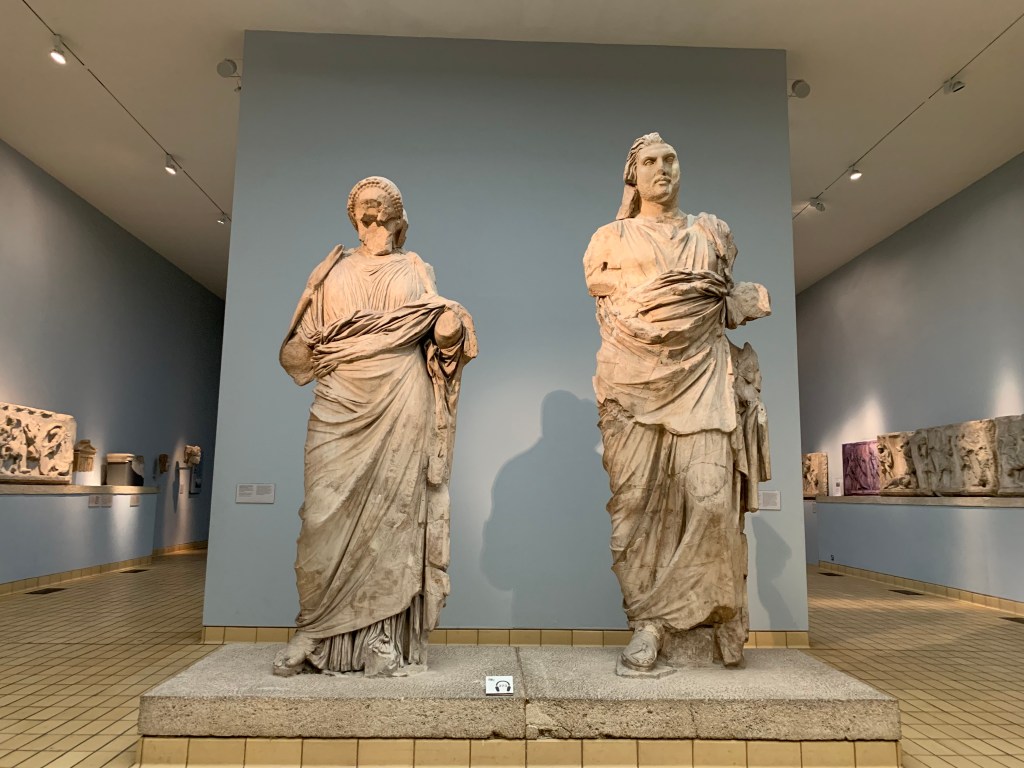
Why go west to go east? I tend to use my miles to fly international, and it was 30,000 miles cheaper to fly through San Francisco than my usual connections in Chicago, Newark, or Washington, or even through Toronto on Air Canada. Like last time, I felt a renewed sense of welcome when I arrived in London, and throughout my stay with friends in the Home Counties, I knew that this remained a place where I could build myself a home if the opportunity or need arose. One key difference from my last trip in October was that I was less concerned with visiting every single place I wanted to see from my time living there. I didn’t feel that desperation or passion to see and do everything that I’ve long known. Rather, I was content to be there again, and to enjoy what I was able to see and do. I prioritized seeing special exhibits at the museums alongside the permanent collections and was thrilled to visit the Tropical Modernism Architecture and Independence exhibit at the V&A, an exhibit on birds at the Natural History Museum, and two exhibits at the British Museum. 

The first of the British Museum exhibitions spoke to the initial field of study I wanted to pursue after finishing my MA in International Relations and Democratic Politics at the University of Westminster. It followed the life of a Roman legionary during the reign of Trajan, and provided a full introduction to the legions and auxiliaries of the Roman Army during the height of the Empire. In 2016, when I chose to return to History from Political Science, I wanted to study the expansion of Roman citizenship to provincial subjects either after the Social War during the late Republic or during the reign of Caracalla when in 212 CE the emperor extended citizenship to all free men in the Roman Empire. That initial interest eventually led me to where I am today studying the natural history of the Americas in the Renaissance, by admittedly a circuitous route. The second British Museum exhibition was closer to what I study today in its chronology as it covers the life and works of Michelangelo Buonarroti (1475–1564). It was inspiring to see his own self-portrait gazing out at us visitors, and to see his letters and sonnets in his own hand on paper there in the exhibit gallery.

After a weekend in London, I traveled south to Paris for a conference on collecting in early modernity that was held at the École des Hautes Études en Sciences Sociales (the School for Advanced Studies in the Social Sciences) in their building on Boulevard Raspail in the 6th Arrondissement. The building in question is important in the historical profession as it is where the French Annales school has been based since 1947, the Annalistes being quite influential in introducing new methods and theories of studying history to the profession globally in the postwar years. There, I presented my research into the provenance of two Tupinambá ritual artifacts today housed in the Musée du Quai Branly, also in Paris, which were likely brought to France by André Thevet in 1556 as gifts from the Tupinambá leader Quoniambec (d. 1555).

I’d intended to use the majority of my time in Paris to work in the various departments of the Bibliothèque nationale de France and Archives nationales to look at some sources I didn’t have online access to, but instead in the months leading up to the trip I was able to find and request several of these documents be emailed to me, while others were restricted due to their poor physical condition. As a result, I only viewed one document, Thevet’s 1553 French translation of the Travels of Benjamin of Tudela, a 12th century Sephardic traveler who toured the Mediterranean. I spent a lovely morning sitting in the ornate Department of Manuscripts in the BNF Richelieu site reading and photographing Thevet’s translation. It was the first time I’d ever seen Thevet’s handwriting in person and gotten somewhat of an unscientific sense of the man himself between the lines. Looking at the folios, I had a sense of familiarity in a man who started with elegant pen-strokes which with each turn of the page became quicker and impatient. The last significant work that I wrote out by hand, a play I wrote in 2011 titled The Poet and the Lamb, had the same feel to it. I enjoyed writing it by hand, but it proved to be more of a burden than the art I intended it to be when I eventually typed it all out after all.

My theory is that considering Thevet took the time to translate Tudela’s travels into French, all 56 folios (112 pages) of it, that he likely modeled his own Mediterranean travel account La Cosmographie de Levant and his later Atlantic travel account Les Singularitez de la France Antarctique on aspects of Tudela’s work. I found my efforts at reading his Tudela translation were aided by my deep knowledge of the Singularitez, which I’ve translated into English. Thevet has a particular style and verbiage that you get to know after translating an entire book of his, a project that for the first draft alone took me three years to complete.

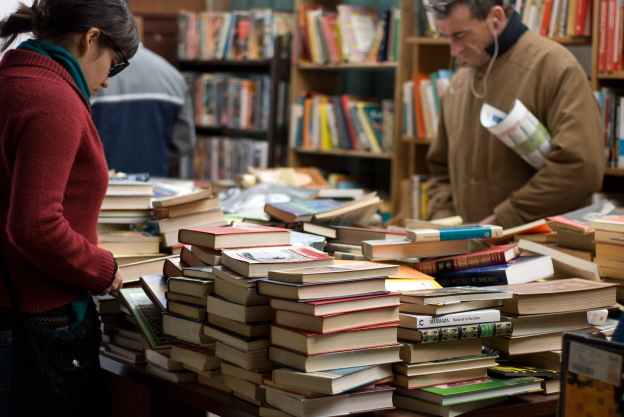
Without any other archival visits scheduled, I spent the rest of the week enjoying a few days of life in Paris. I visited several museums each day, wandered about the city from bakery to bakery (it’s not just a joke I tell about the bakery crawl being my favorite type of walk), and looking around bookshops selling both general titles, specialized academic titles, and several antique bookshops selling volumes largely published in the 18thand 19th centuries, though there were several I browsed through printed in the 17th century.

All around, this was a pleasant trip. When I returned home to the United States on Bloomsday, the holiday commemorating Leopold Bloom’s day about Dublin on 16 June 1904, I was left with an unsettling feeling that both in climate and in history that I fit in better in Europe than in America. For one, none of the muscular or joint pains I often feel walking around Kansas City are present when walking similar distances in either London or Paris. For another, the pace of life and the dearth of car dependency is certainly better all-around than how we’ve built our cities and lives here in the United States. I’d happily take the bus around town at home, if the temperature dropped below 90ºF (32ºC) during the day, and if the bus schedule worked with my own.

In these two cities I’ve grown to become much of the guy who I am today. This was my sixth visit to Paris, and a return to an old hometown of mine in London once again. In them, to draw the Dickens analogy out further, I’ve seen some of the best of times, and yes some of the worst of times, yet I’ve learned now to go with the flow, to not worry too much, and to embrace the opportunity to travel to these places. Travelling has made our world far smaller than ever before, so that the 4,500 miles (7,242 km) between Kansas City and Paris seem not as far as it really is. After all, before aviation it would’ve taken close to 10 days to travel between these two cities, whereas now it’ll take only a day.


A Return

This week on the Wednesday Blog, some words about a trip just completed. — Click here to support the Wednesday Blog: https://www.patreon.com/sthosdkane

This week on the Wednesday Blog, some words about a trip just completed.


My world is one of open borders, the international scholarly republic of letters, and friends far and wide in this country and across the oceans. All of that shook to its core in 2020 when those borders closed, and friends grew apart with the pandemic we all experienced. I attempted to keep my life going in 2020, in those last few weeks before COVID-19 changed everything with a quick trip to Munich to see some university friends. Thereafter, for the last three years I kept to our own shores. A part of my wariness to travel far was a lingering worry that those borders could close again, that as I feared in 2020 so too even now there was a chance of getting stuck far from home.

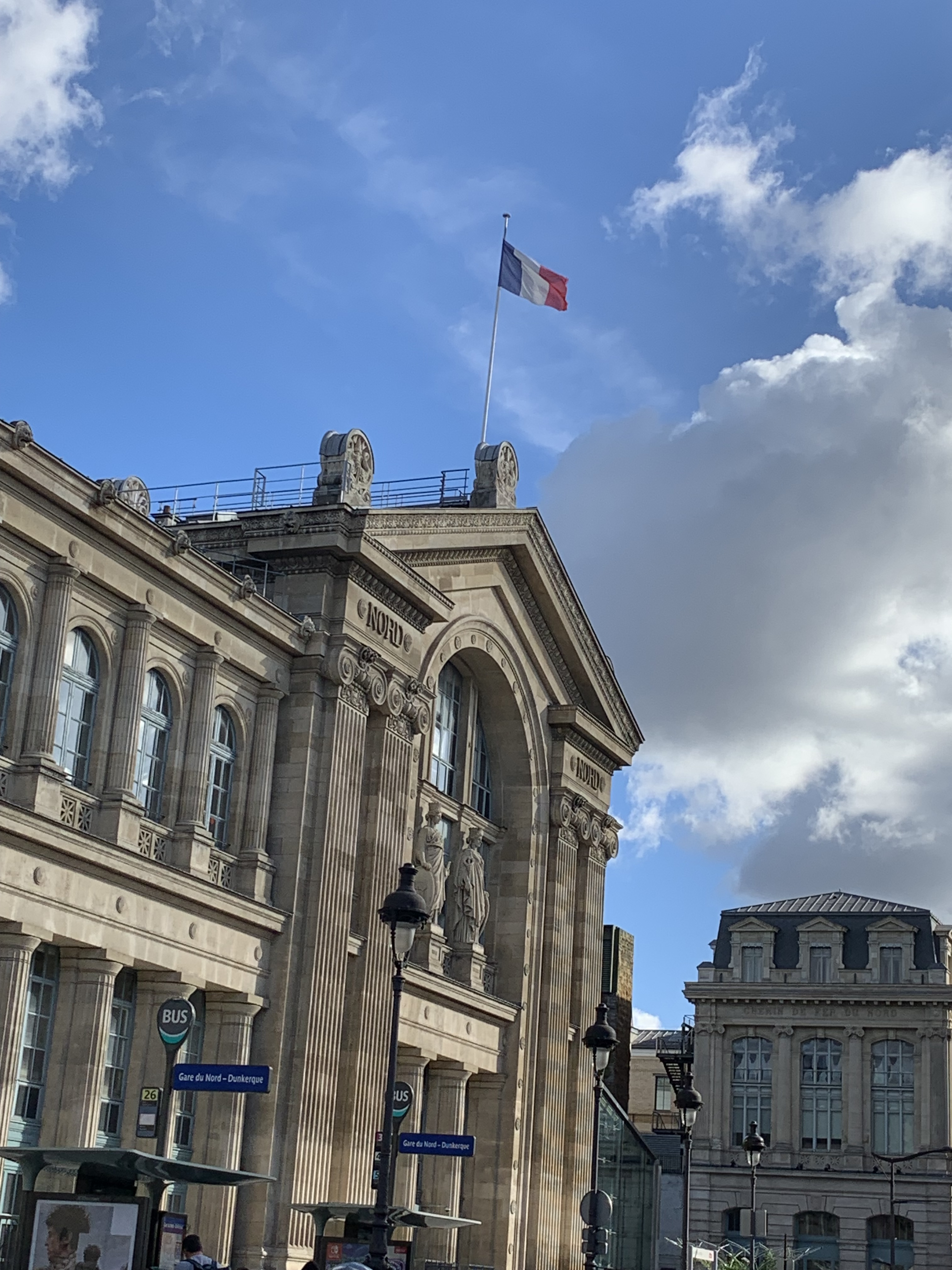
Paris Gare du Nord

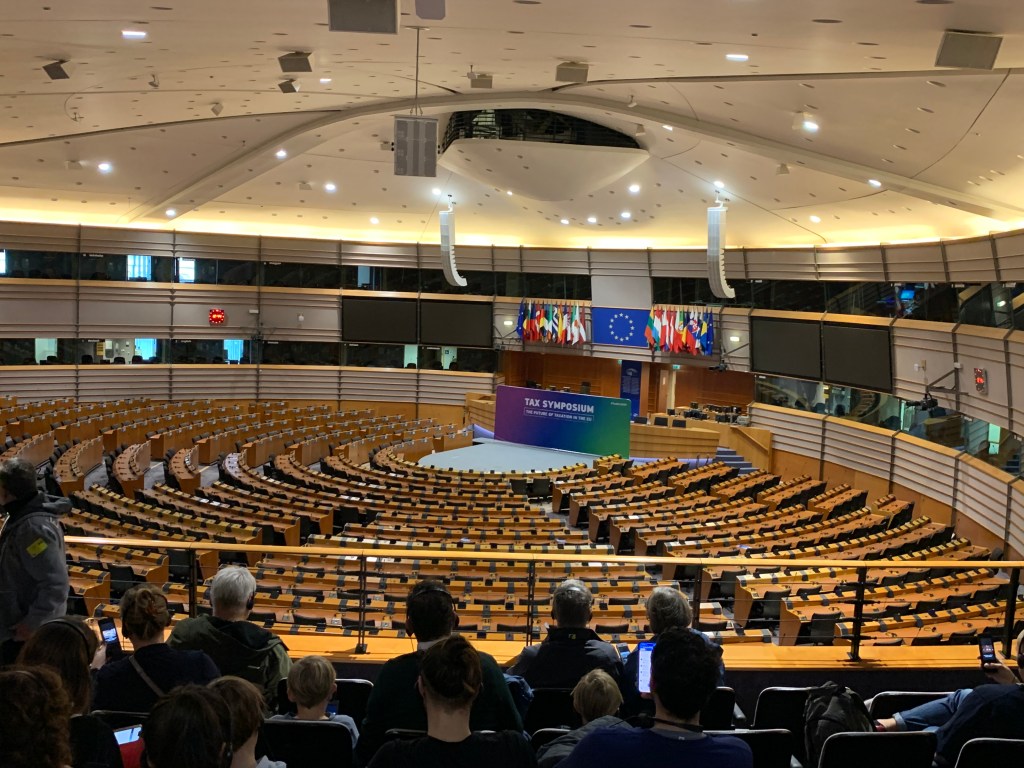
Over the last two weeks of October, I saw past that worry and made a joyous return to Europe, visiting Brussels, Paris, and London not just as an American tourist but as a historian hoping to realize dreams of walking the same streets as the humanists whom I study who lived at the end of the Renaissance 450 years ago. I arrived in Brussels on Sunday the 15th with an ease and lack of concern for doing or seeing everything I wanted to that betrayed a confidence that I’d return again in the future. And as I write this, I’m continuing with the research that will guide me back to Paris again. 

In the stress and emotions of my daily life, I’ve learned to embrace the quiet moments, in which the sonorous radiance of the most joyous resurrections can be heard. That silence makes a return to places so close to my heart as wonderous as hearing Mahler’s great Resurrection Symphony in person. Why limit myself with worry when there’s an entire world out there to experience?

One performance of the Resurrection Symphony that I enjoyed recently.

On this trip I found my favorite thing to do was to walk around and experience the city I was in. I did this most in Paris, when I arrived there around mid-day on Sunday, 15 October I ended up walking from Gare du Nord all the way to Notre-Dame, via Place de la République, the Marché Bastille, the Canal Saint-Martin, and Île Saint-Louis. The route took me about 6.4 km (3.7 miles) and lasted from around 11:30 until close to 14:30 when I descended into the Métro to make my way to the studio apartment I’d rented near the old Bastille. I loved returning to Paris in all its busyness, its sights, sounds, yes even smells. I was agog walking through the Marché Bastille and seeing whole fish lying on ice in the seafood stalls, there was even a shark with an apple in its mouth. If I lived in a place like this, I’d be sure to visit an open-air market every so often, if only for the experience of life that it offers. This entire walk, all 6.4 km of it, was done with a heavy backpack hoisted behind me as I didn’t think to look at Gare du Nord for the luggage lockers in the basement; use those, dear reader, if you have a long delay between arriving in a city and checking into your lodgings if the place where you’re staying doesn’t have a luggage room.

All in all, I walked 197 km (122 miles) on this trip across all 15 days. My feet are still sore, and my shoes need new insoles, yet I’d gladly do it again. Life on foot out in the open is much more personal than life behind the wheel of a car traveling at speeds at least 3 times my average walking pace. Whether in Paris, Brussels, or London, I took time to enjoy my surroundings, and to live as much in the moment as I could.

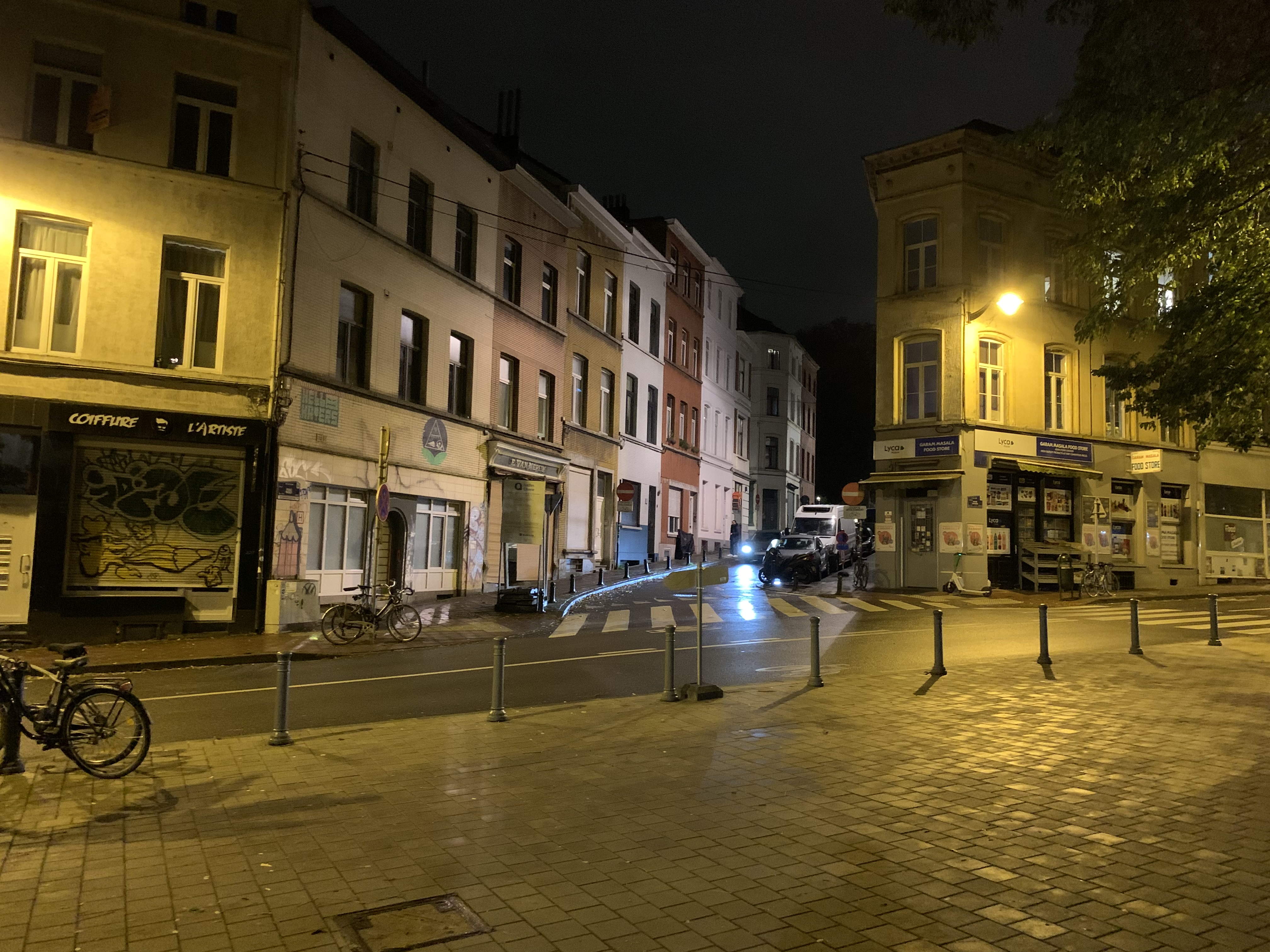
I found Brussels to be gloomier, the Belgian capital felt tired and like Paris well lived in. I was staying near the European Quarter in Ixelles, to the east of the city center and on my frequent walks back to my lodgings after dark I’d remark on how low the horizon felt walking those streets. Unlike many other cities I’ve visited, the high apartment buildings seemed to block off the lowest reaches of the night sky and the overhead glow of the city lights which illuminated the streets shaded my eyes from seeing up towards the heavens. It was like some of the stories I remember seeing as a child, stories told on the screen which were set in this sort of world where the mysteries of the skies above are darkened by a radiant yet feeble attempt at letting there be new light which makes the world all seem smaller and more confined. Far from utopian, for this light tells me I am somewhere, it still left me wanting for more and grander visions of the Cosmos far from those streets.

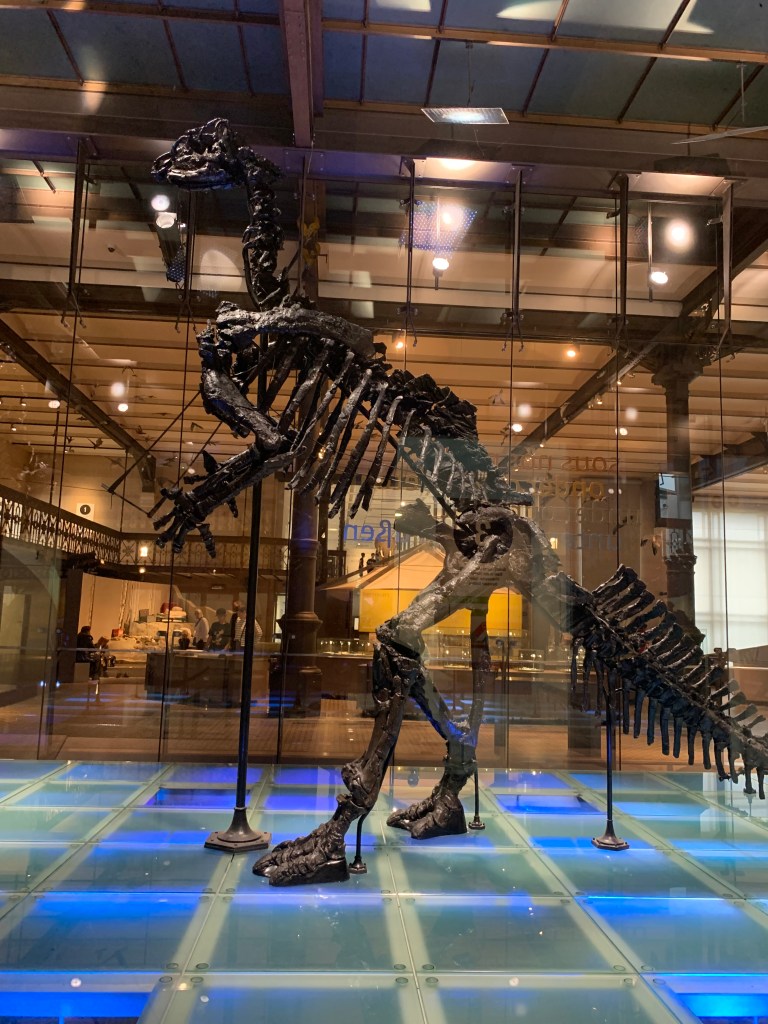
A junction in Ixelles from the steps of the Museum of Natural Sciences.

Returning to London felt as though I was returning to a long lost home. I strolled down the platform at St Pancras when I arrived beaming a broad smile after days unsure what I’d find or think arriving in that city. I soon found my way around the capital with ease, much of what I’d known during my life there in the middle of the last decade was as it had been. I returned to most of my old favorite places––the museums, the streets & squares of Fitzrovia, Bloomsbury, and Mayfair––and to the place where I once lived on Minories just beyond the old city walls. On my last evening there I sat for a while in the garden behind my old flat, the one my window looked out onto, and thought about all that had happened since last I was there.

I returned to Europe a different person from who I was when last I crossed the Atlantic. The Pandemic and my years of doctoral study shaped my youthful optimism just as it sculpted my ever-receding hairline. I returned to Europe less worried about losing something I had in the present and more appreciative of that moment I was in, of the places I was walking, the people I was seeing, whether for the first time ever or for the first time in years, and still hopeful that one day again I will return to these places. I do hope it’ll be sooner, whether just to visit or to live remains to be seen.

As much as this trip felt like a return to a life I once knew well, it also felt different from my past when I lived across the water because I’m a different person now. If any experience in my life could feel like a “return to normalcy” to quote Warren G. Harding’s campaign slogan of 1920 it would’ve been this; yet there is no real returning to an old normal, for we are never the same. I felt this when I returned to Kansas City after living in Europe; I was gone for just under a year, yet it felt like I had missed so much. Some things remain yet eventually all things must change. For the first time in my life, I’m happy to accept that, and to embrace that change as a good friend.