
Tag Archives: Partisan Politics

The Power of Personality

The Power of Personality Wednesday Blog by Seán Thomas Kane

This week on the Wednesday Blog, a look back 200 years to another time of great political change in the United States. — Click here to support the Wednesday Blog: https://www.patreon.com/sthosdkane

Next week, I will be teaching about the Era of Good Feelings and the elections of the 1820s which saw the rise of the Second Party System in my Eighth Grade United States History classes. The Era of Good Feelings was a period of political transition between the two-party politics of the Early Republic between the Jeffersonian Democratic-Republicans and the Federalists led by Alexander Hamilton and John Adams towards the Democratic Party founded by Andrew Jackson and the Whigs founded by remnant Federalists and anti-Jacksonians. This era is so named because it saw one major political party, the Democratic-Republicans, dominate American politics after the decline of the Federalists after the War of 1812. The President of the late 1810s and early 1820s, James Monroe, and his successor John Quincy Adams sought to ensure party politics would never return, yet those hopes soon proved futile.

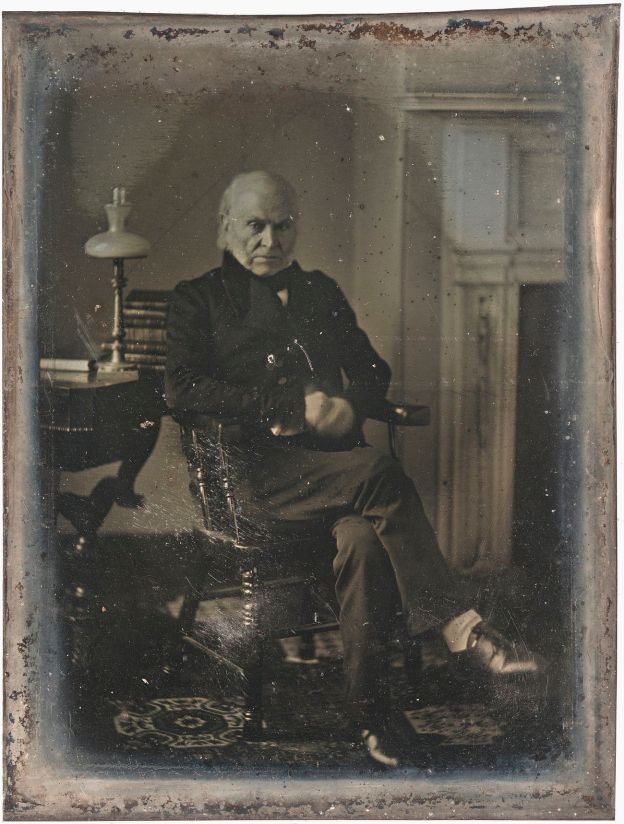
I’ve long enjoyed reading about John Quincy Adams, the eldest son of the second President, John Adams. The younger Adams had many qualities that I admire in a public servant: a great intellectual talent, a Ciceronian love of rhetoric, the patience of a great diplomat, and an openness to change for the benefit of new ideas. Adams was an early abolitionist and supporter of women’s suffrage fifty years before the passage of the 13th Amendment and a century before the 19th Amendment became law. Adams even tried to found a national university and a national observatory, as well as get the United States to adopt the metric system. 

Sadly, none of these things happened during his administration, which ended in failure when his old political rival of 1824, General Andrew Jackson, returned with a populist fervor that elevated the Tennessee planter to the Presidency in 1828. This week as I’ve been making my slides for next week, I’m struck by the clarity of choices in the Election of 1828, and how those choices were between an incumbent who ran on policy and a firebrand outsider who ran on personality. It’s a familiar election narrative, yet it provoked a new conclusion about our current political stalemate between 2023’s Democrats and Republicans than what I had considered before.

Whereas the far-right of the Republican Party has a loud and defiant outsider candidate to rally behind to promote their vision of America, no other faction in either the Republican or Democratic Parties have the same kind of clear leadership. The parties are in a moment when few unifying voices can be heard, when there is always something about the current roster of politicians that leaves more voters choosing between “the lesser of two evils” rather than for a candidate they genuinely like.

Now, I’m biased in this monologue that I’m writing this week: I would have gladly voted to reelect John Quincy Adams in 1828, and not just because I don’t care for Andrew Jackson. Adams is one of my favorite presidents for all the reasons I included above; and his status as one of the fathers of the Whig Party, a preeminent predecessor of the modern Republican Party, shows how party philosophy changes with each successive generation. Still, while many in his day and now might discount the idea that John Quincy Adams had a strong political personality, I suggest we look to the politics of the early republic to find a guide out of our current quagmire.

Having a political figure who can unite a broad coalition behind their own banner, someone who is well liked by a majority of the voting public, is a way to move out of a period of uncertainty and nigh political chaos into a restored stability. The recent political history of the United States has elevated some who could fit this model, yet the extreme levels of bile flung by one faction at another leaves any sense of partisan unity, or better yet partisan magnanimity, far from certain. This leader should be able to bring this wide coalition together yet be humble enough to practice servant leadership, and remember they are in their role as President to help and guide the American people.

The great challenge of our time is to find a common purpose where we have long seen what divides us. It is a challenge which I know we can overcome, a hope which I believe we can realize.

Church and State

Photo by Pavel Danilyuk on Pexels.com
This week, a message for the present moment for the future prosperity of the country.

The foundation of good government is good ethics, which I fully acknowledge can and are taught by many faiths and learned through religious teaching. The Golden Rule after all is in various forms the foundation of most major religions after the various commandments to love and honor God above all else. Those ethics –– treat others the way you would want to be treated, contribute to society in a positive way, build a better future for your children and their children to come, among others –– aren’t inherently tied to religion; they feature in many religious teachings but they themselves are not inherently religious. 

A good society unbound by religion can also teach these morals. Some of the great humanists of the last century have proven that; great minds like Carl Sagan whose call to reflect on how we’re all residents of this one Pale Blue Dot in the vastness of Space. Like it or not, we all have to live together, and so our laws which govern our societies in a way that makes life better for all themselves ought to be built upon those same codes of ethics. It is possible for a society to legislate based on religion, to derive their laws from a common bond of faith. This has happened time and again in societies around the globe. Even in my own references to God exist in an otherwise secular republic. 

Yet if laws are going to be written to dictate in a manner grounded in religious doctrine or the interpretation of everyday questions through one interpretation of religious doctrine then those laws must reflect the will of the whole society, not only one part of it. Show me a council of any type of scholars whether theologians, philosophers, economists, or historians where everyone has willingly and freely agreed on every issue of their own accord. I doubt there has ever been one in the long memory of humanity.

With that in mind any state which governs over a society made of a plurality of faiths should never legislate based on the teachings of one faith, lest they elevate that faith above all others. I left a religious social club in 2014 because they violated the core principle that in our country the church and the state should remain separate through their continued political fundraising and campaigning. A state cannot govern without the support and trust of the public in the blind justice of its institutions to craft, execute, and interpret the law in such a manner that is beneficial to the society as a whole.

A transgression of that trust would damage the reputation, the honor of the very institutions that form the foundations of this society. The wanton abandon of obligations and duties that come with high office is a great symptom for the corruption in our society today. Elected officials who have coopted their offices to support a narrow set of highly partisan campaigns at the detriment of their constituents who expect those they elected to be responsive to them and be their voice in the halls of power. A branch of government designed to be above the partisan fray that has dominated our legislatures since the Early Republic has too fallen into the mire, making decisions its members promised they would not make to overturn “the law of the land” as one such member said before the legislature in his confirmation hearings. Still, a profound conviction grounded in religion rather than civics has influenced two key rulings by that august body in the last week. Two rulings that prove how poorly the separation of Church and State is faring today in this country.

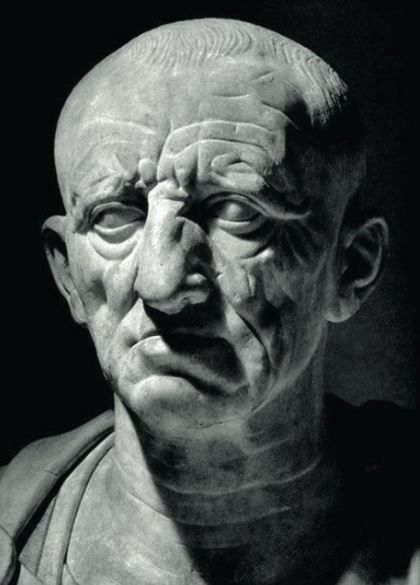
The support of these causes which drove the twin arguments forward to on the one hand expand the rights of the individual at the fatal expense of the society at large and on the other to deny the rights of the individual at the will of a few who after generations of single-minded clamoring like Cato the Elder before the Roman Senate that “Carthage must be destroyed” those particular rights are now revoked. Better options exist in other societies with other governments and other relationships between the Church and their states, yet here in a country so engorged by its own reflection that any action less than overt and aggressive nationalism is unpatriotic the power of the pulpit cannot be denied.

Cato the Elder

Carthāgō dēlenda est! | Carthage must be destroyed!

Cato the Elder (234–149 BCE)

Those other options, opportunities to improve our own quality of life in such a manner that the great debate at the heart of this affair would be resolved without any sweeping action to legislate prohibition as was done with alcohol a century ago. Still in our current state our bloated yet fragile national ego won’t allow for ideas to enter the narrative from beyond our borders lest we lower our guard and allow those distantly related bogeymen of Communism and Socialism to invade just as prior generations of proud Americans feared the influence of Papism and foreign interlopers.

Of all the songs from Handel’s Messiah the one that has always stuck with me the most is the aria sung by a female voice “If God be for us, who can be against us?” The chief issue at the heart of this stalemate in public discourse is that one side of the argument claims the blessings of Heaven behind their words, their actions, and their beliefs. To them anyone who opposes them opposes God, and the opponents of God are inherently wrong. Thus, there is no need for debate at all. I do believe that we humans have been fortunate from time to time to be able to interpret the Will of God, look no further than the Beatitudes or the Greatest Commandment uttered by the scholar of the law in answering his own question to Jesus in Luke’s Gospel, 

“He said in reply, ‘You shall love the Lord, your God, with all your heart, with all your being, with all your strength, and with all your mind, and your neighbor as yourself.”

(Luke 10:27, NAB)

Are those public servants honored by the duty and responsibility to fulfill the obligations of their offices who legislate based on a very particular interpretation of the law of the land directed by their own personal religious beliefs truly doing service to the country in their actions? Are they truly acting out of love for their neighbor? This is a time when the durability of the institutions that form the bedrock of this society are being challenged in every direction both by those who see less need for democracy in their own self-interest and by those who seek to reform and revitalize those institutions to flourish for generations to come. 

We must always act with an eye to the past that we build our generation on the precedents that have come before us, but with our mind turned toward the future that we today now build, that it will be a just and kind world for our descendants.