
Tag Archives: photography

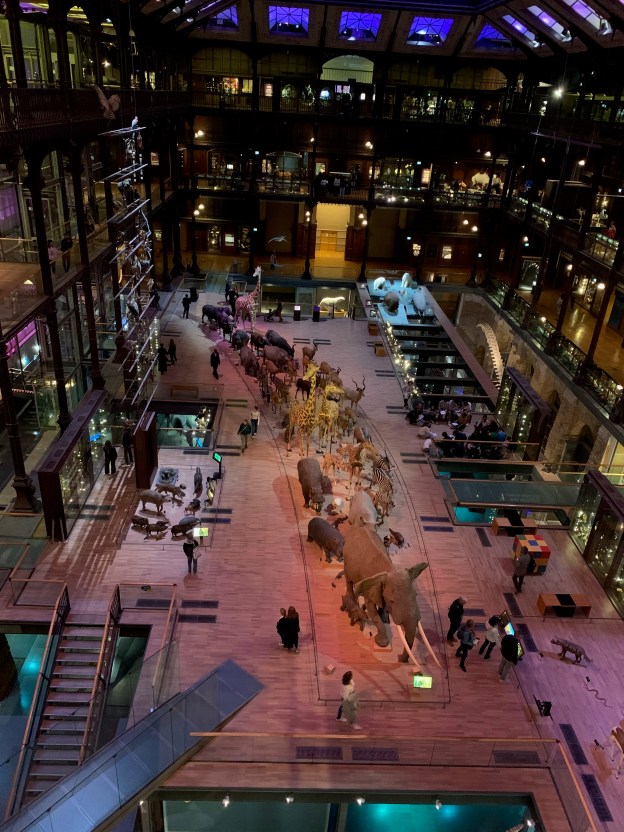
A photograph of the Parade of African Mammals in the Grand Gallery of Evolution at the National Museum of Natural History in Paris taken by the author from the 3rd floor.

On Systems of Knowing

This week, I argue that we must have some degree of artifice to organize our thoughts and recognize the things we see in our world.—Click here to support the Wednesday Blog: https://www.patreon.com/sthosdkane—Sources:%5B1%5D For my recent essays referring to this current historiographic project see “On Sources,” Wednesday Blog 6.22, “On Writing,” Ibid., 6.27, and “On Knowledge,” Ibid., 6.29.[2] Lee Alan Dugatkin, Mr. Jefferson and the Giant Moose, (University of Chicago Press, 2009).[3] Staffan Müller-Wille, “Linnean Lens | Linnaeus’ Lapland Journey Diary (1732),“ moderated by Isabelle Charmantier, virtual lecture, 12 May 2025, by the Linnean Society of London, YouTube, 1:04:18, link here.[4] Jason Roberts, Every Living Thing: The Great and Deadly Race to Know All Life, (Random House, 2024), 45–49.[5] Roberts, 20.[6] Roberts, 115–125.[7] Roberts, 109.[8] André Thevet, Les Singularitez de la France Antarctique, (Antwerp, 1558), 16r–16v. The translation is my own.[9] Roberts, 109.[10] Damião de Góis, Chronica do Felicissimo Rei Dom Emanuel, 4 vols., (Lisbon, 1566–1567).[11] Geraldine Heng, The Invention of Race in the European Middle Ages, (Cambridge University Press, 2018), 190.[12] Roberts, 110.[13] Michael Wintroub, A Savage Mirror: Power, Identity, and Knowledge in Early Modern France, (Stanford University Press, 2006), 42.[14] Roberts, xii.[15] Roberts, 107.[16] Roberts, 96–98.[17] Michael Allin, Zarafa: A Giraffe’s True Story, from Deep in Africa to the Heart of Paris, (Delta, 1998).

This week, I argue that we must have some degree of artifice to organize our thoughts and recognize the things we see in our world.


Near the end of June on a Sunday afternoon visit to the Barnes & Noble location on the Plaza here in Kansas City when we were picking out books to gift to family, I espied a copy of Jason Roberts’s new paperback Every Living Thing: The Great and Deadly Race to Know All Life. In the Plutarchan model it is a twenty-first century Parallel Lives of Carl Linnaeus (1707–1778) and Georges-Louis Leclerc, Comte de Buffon (1707–1788), two of the eighteenth century’s most prolific naturalists. I saved it as fun reading once I thought I’d done enough of my proper historical work. That moment came after I finished writing the first draft of the new introduction to my dissertation, a rather large addition to my doctoral study which is mostly historiographic in nature.[1] I’ve been reading Roberts’s book in my free time and delighting in the vibrant portraits he paints of the two men in question. I am a newer Fellow of the Linnean Society of London, elected in January 2025, and so I arrived to this particular book with a happy perspective on Linnaeus, whose Systema Naturae is cited in my dissertation as the first identification of the three-toed sloth by the genus Bradypus. At the same time, I’ve referenced Buffon’s Histoire Naturelle far more frequently in those moments when I’m following the legacy threads of my own Renaissance naturalists into the Enlightenment. After all, Buffon cited Thevet on several occasions where the savant referred to the same animals which the earlier cosmographer described two centuries before.

In spite of my own Linnean affiliation, and my use of Buffon’s corpus in the earliest stages of my broader historiography, I am still largely unfamiliar with these two men. I first knew of Buffon for his famous comments on his presumption of the diminutive nature of American animals when compared with their Afro-Eurasian counterparts, to which Thomas Jefferson retorted by sending Buffon evidence of an American moose.[2] I also know very little about Linnaeus, most of what I know of the Swede comes from lectures presented at the Linnean Society online including a recent lecture given in May by Staffan Müller-Wille, Professor in the History and Philosophy of the Life Sciences at Cambridge about Linnaeus’s Lapland diary from his northern expedition in 1732.[3] There is a new biography of Linnaeus by Gunnar Broberg titled The Man Who Organized Nature: The Life of Linnaeus which I have an eye on yet haven’t gotten a copy of quite yet. So, reading Roberts’s book is a quick introduction for me to this man who for me is most influential with his method of binominal taxonomy which has appeared time and again here in the Wednesday Blog. Yet this system followed after Linnaeus’s earlier alphabetical system for identifying plants by sexual characteristic. The basic premise here is that if there are 26 letters in the alphabet, we can then use that familiar framework to organize other complicated concepts for easy recognition. Linnaeus used this to categorize plants by their male and female sexual characteristics in his 1730 booklet Praeludia Sponsaliorum Plantarum, or Prelude to the Betrothal of Plants.[4] Therefore, Linnaeus could go around the botanical garden at the University of Uppsala in 1730 and quickly identify a plant as a J plant or a G plant. First reading this I thought of the way that letters are used by the Federal Reserve System to identify specific regional branches. Thus, J represents the Federal Reserve Bank of Kansas City and G the Federal Reserve Bank of Chicago. 

I like the idea behind Linnaeus’s alphabetic system yet having only 26 categories to describe the entire plant kingdom seems doomed to be flawed as it relies on a belief that all the plants that are known to exist are the ones that exist, that there’s nothing new under the Sun to be discovered. Roberts frames this in a biblical context, describing how Olof Celsius (1670–1756), one of Linneaus’s first professors, met the young Linnaeus when he was working on a project called the Hierobotanicum or Priestly Plants which was intended to be a compendium of all 126 plants mentioned in the Old and New Testaments.[5] Why would Linnaeus need more than 26 categories to contain all the plants known to the Ancients and to the Bible? Naturally, the flaws were apparent in this from the start by using a system of knowing which originated in the more arid landscape of the Levant rather than in the cooler and damper climate of Sweden. I’ve noticed this in my own life, how many cultural elements which we practice in the United States, notably the seasons, better fit the natural climate of New England and England proper than they do here in the Midwest with its far more variable conditions depending on the time of year, or even the given hour. Roberts deconstructed Linnaeus’s early efforts near the end of Part I of his book when he described Linnaeus’s first scholarly collision with Buffon after the Frenchman’s appointment by Louis XV to the position of Intendant of the Jardin des Plantes in Paris.[6] In a debate which Roberts calls “the Quarrel of the Universals” Linnaeus argued that species could be recognized from individual type specimens while Buffon countered that this ran the great risk of minimizing the diversity of life and eliminating potential variations in nature.

This got me thinking about systems of knowing, thus I decided to render the title of the original file for this blog post that you’re now reading (or listening to) De Systemarum Scientis in the full Latinate tradition of my own scholarship, or “On Systems of Knowing” in English. Why is it, for instance, that our Roman alphabet begins with A and ends with Z? The first half of that question is easier to answer: the Romans adapted our alphabet from the Greeks who started it off with α alpha, β beta, thus the noun alphabet itself. Yet the Greek alphabet ends with ω omega rather than ζ zeta, so why does ours end with Z? What I’ve heard about this is that the Greek letters that were adopted into the Roman alphabet were tacked onto the end of the line, or at least this is what I remember being taught when I learned to recite the alphabet in French in my undergraduate years. French calls the letter Y y-grec, or the Greek i. Likewise, everyone except for we Americans call the final letter of the Roman alphabet some variation of zed, which is a shortening of the Greek zeta. This better reflects that letter’s original sound in Greek, just as the cursive lowercase z is the lowercase Greek ζ just adopted straight into the Roman alphabet without any major changes.

So, when it comes to the organization of our knowledge there are things that we know in this same alphabetical order or in relation to this alphabetical order. Because the Roman alphabet is written left to right, we know that when it’s used to set up a coordinate system on a printed map that A will always appear to the top left, orientating the way the map should be held. Likewise, a reader can quickly scan through an index in any language written in the Roman alphabet by following along with the order of the letters. How individual languages index objects from that point on differs, but the foundational element remains the same. The Roman alphabet works best for Latin, the language for which it was originally developed, so it tends to be adapted in its phonetic values depending on which language is using it. This is why English uses the letter W to represent a [w] sound while German and in loanwords French uses W to represent a [ˈv] sound. Meanwhile, Irish represents the [w] and [ˈv] sounds with two digraphs, bh and mh that represent both depending on the context. Typically, bh represents [ˈv] while mh represents [w], but it depends on context. The reasoning behind this is that when the Roman alphabet was adapted by Latin speakers to fit Old Irish in the fifth and sixth centuries CE they approximated the phonology of their Latin in rendering the Roman alphabet usable for Irish. So, to these monks the Irish [ˈv] sound in a Gaelic name like Medbh sounded enough like how the letter b was used at the time that they used that letter to approximate this [ˈv] sound. It’s notable to me that in Modern Greek the letter β is today pronounced veta and in the Cyrillic alphabet the letter В represents this same [ˈv] sound while the letter Б represents the [b] sound that we English-speakers associate with the letter B. Cyrillic and its predecessor the Slavonic alphabet were being developed around the same time that the Roman alphabet began to be used for Irish so there must’ve been something going on with the pronunciation of people’s Bs becoming closer to Vs in late antiquity. Thus, the ways in which our alphabets represent specific sounds today reflect the prestige dialects of our two classical languages–Latin and Greek–as they were spoken over a millennium ago.

Consider then how we distinguish technical, scientific, or artistic terminology depending on the prestige language of that field. History has largely become a vernacular field, where we adapt terms that will be more familiar to the non-professional enough to initiate them into what Ada Palmer calls the History Lab. Yet often these terms will have etymologies beyond English itself. Consider the word photograph, or its more common shortened form photo. This word comes purely from Greek, the classical language more associated with science and technology. It blends the Greek φωτο-, the blending form of φῶς (phôs), or light with the suffix –γρᾰ́φος, from the verb γρᾰ́φω meaning to draw, sketch, or write. So, photography at its core is light writing. Neat! The word photography entered English from the French photographie, that etymology referring to the French origins of the art and craft of photography itself in the middle of the 1820s. Yet the linguists who modernized Irish a century ago decided to favor indigenous terminologies, rendering this word grianghraf using the Irish word grian for Sun instead of a variation of φωτο- (light) while adopting the Greek –γρᾰ́φος suffix to center this new Irish conception of the term within the same technological corpus as the English photograph. While consequential to have a particular Irish name for this technology that elevated the Irish use of photography as equal to any other culture’s photography and particular within the Irish language, it still remains rooted in the same western tradition of grounding our names for scientific and technical things in Greek.

Language directly influences how we know things because it is the vehicle by which we recognize those things around us. I know that a photograph is something made by “light writing” therefore I will also recognize that anything else beginning with “photo” also refers to “light” and that anything ending with “graph” refers to some form of record or writing. I come from a culture where light is connected with goodness and dark with ill. Likewise, for me I think of blue and green as happier colors rather than red or orange which are angrier colors. There is safety in light, in the daytime we can see people or things coming toward us easier than in the dark of night. At the Easter Vigil the celebrant lights the Paschal Flame which is then passed around the church so that we all share in the Light of Christ (Lux Christi) returned to the world with the Resurrection. The central question in my dissertation is linguistic: what did André Thevet (1516–1590) mean when he referred to the Americas overall as sauvage? This French word translates into English as both savage and wild, yet I chose to retain the original French to better represent the original concept which encompasses both concepts in English. This word was not necessarily racial in the modern sense, rather Thevet used sauvage to describe people, places, and things which existed beyond civilization. This word itself betrays its original meaning, that is city life. Thevet himself understood the sauvage to be the antonym of this city life. I describe it in the introduction to my dissertation in terms of light and dark, following the cultural connotations already illuminated: the city is the sun whence radiates the light of civilization. The further one goes from that sun, the darker things become and the less civilized they remain. Thevet’s sauvage existed at that furthest extreme in the dark. I imagine the character of Gollum in this sort of darkened existence, deep beneath the Misty Mountains uninterested in light save for the Ring of Power which consumed his day rendering it eternal night. In the literature of Thevet’s time a fine sauvage characterization is Caliban in Shakespeare’s Tempest, wild as the waters which wrecked King Alonso and his men on the island in Act 1 of that play.

Roberts notes how these linguistic attributes influenced Linnaeus’s systemization of humanity in the 1735 second edition of his Systema Naturae. The Swede divided humanity into four subcategories described by color over any other facet.[7] Roberts spends the following five pages questioning Linnaeus’s methodology, asking “why four?” and why these specific colors? There is some historical context for Linnaeus’s choice to refer to Black Africans, even Thevet referred to the varied peoples of Africa as “black” in his Singularitez de la France Antarctique. Thevet hints at a possible environmental cause for blackness, writing that the peoples “of Barbary” who are “the blackest” are “of the same manners and conditions as their region is hotter than others.”[8] Thevet’s understanding of African geography is somewhat uncertain, so his definition of Barbary may not align with the Berbers from whom the Barbary Coast of the Maghreb was named. Still, it hints at an understanding that the hotter, or more torrid, the climate got the darker the skin of the people would become. Roberts notes that the Portuguese were the first to use the “word negro to signify African origin or descent” in the middle of the sixteenth century.[9] This makes sense considering the Portuguese were the first European power to sail down the West African coast in the fifteenth century. That Roberts notes this Portuguese definition of blackness first appears in the middle of the sixteenth century likely refers to Damião de Góis’s (1502–1574) Chronica do Dom Emmanuel I of 1566 to 1567 which is an early source that I’ve consulted for information on the voyages of Vasco da Gama (d. 1524).[10] Geraldine Heng, the leading authority on medieval notions of race, wrote in her 2018 book The Invention of Race in the European Middle Ages that blackness was already well established as an element in religious and secular iconography by the beginning of the First Age of Exploration.[11] Roberts concludes his discussion of this particular racial element of Linnaeus’s great contribution to taxonomy sullenly noting that it’s thanks to Linnaeus that this cultural connotation of blackness with darkness was given scientific credence which continues to support racist ideologies to this day.[12]

How do we use our own words to describe things to which they are not suited, in turn transforming the nature of those things that they may become part of our own world? My research is most interested in understanding these questions of how those things at the boundaries of knowledge were understood by André Thevet using the tools afforded to him during the French Renaissance of the sixteenth century. Thevet used the word sauvage to do this and create a category of life against which he could measure and proclaim the existence of something civilized closer to home. Michael Wintroub, Professor Emeritus of Rhetoric at Cal-Berkeley, wrote in his 2006 book A Savage Mirror that Thevet’s countrymen sought to “civilize the barbarians” to make up for an insecurity they felt at being called barbarians themselves by Italian intellectuals at the turn of the sixteenth century during the French invasion of Italy under King Charles VIII (r. 1483–1498).[13] As long as there was someone else who the French could look down upon beyond their own cities they felt secure in their own civility. Yet the sauvage exists within a larger framework of singularities, a word which is central to Thevet’s cosmography. Thevet used the word singularity to describe those things which were exotic, wonderous, and immensely collectable in his eye and hopefully in the eyes of potential readers who would buy his books. I see various layers and categories of singularities in Thevet’s cosmography, for instance he only included images of certain animals in his book of the same name, the aforementioned Singularitez of 1557. The sloth and toucan were depicted as well as described, yet the mysterious Ascension Island aponar remained a bird worthy only of a textual description. This suggests that somethings were more singular than others, or more worthy of attention and the money needed to produce these woodcut images than others. These systems of knowing framed around the singularity are the subject about which I intend to write my first academic monograph. Classifying something as singular gives it an appeal which sets it aside from both the civil and the sauvage as belonging to a higher level of category which can include both the urbane and the agrestic.

Jason Roberts describes Buffon and Linnaeus’s mutual missions to make something of themselves and to rise above their provincial origins to the heights of society. I laughed out loud reading Roberts’s introduction to Linnaeus’s character, what felt like an iconoclasm of sorts for this Fellow of the Linnean Society. “Carl Linnaeus was a Swedish doctor with a diploma-mill medical degree and a flair for self-promotion, who trumpeted that ‘nobody has been a greater botanist or zoologist’ while anonymously publishing rave reviews of his own work.”[14] Buffon by contrast took advantage of a golden opportunity to build his own demi-paradise at his manor in the Burgundy countryside until his good reputation as a botanist brought him to royal attention and the appointment as Intendent of Jardin du Roi.[15] The Jardin des Plantes, as Buffon’s charge is today known, is perhaps a better place to conclude than most. Situated in the Fifth Arrondissement across Boulevard de l’Hôpital and Rue Buffon from Gare d’Austerlitz, the Jardin is an urban oasis created for the purpose of crafting systems of knowing. Its original intent was to serve as a medicinal garden existing beyond the purview of the Sorbonne, Paris’s sole licensed teaching medical school in the seventeenth century.[16] I’ve spent several happy hours wandering through the Jardin, home to the Muséum National d’Histoire Naturelle’s Grande Galerie de l’Évolution, the Galerie de Paléontologie et d’Anatomie compare, and the Ménagerie du Jardin des Plantes, which was home to Paris’s first resident giraffe whose story is delightfully told by Michael Allin in his 1998 book Zarafa: A Giraffe’s True Story, from Deep in Africa to the Heart of Paris.[17] While Allin’s heroine Zarafa is not today on display in the Grande Galerie de l’Évolution (she is instead today to be found in the Muséum d’Histoire naturelle de La Rochelle), the taxidermy in the Parade of African Mammals that is the centerpiece of the Grande Galerie represents a system of knowing animal life in itself.An elephant leads the parade followed by hippopotami, zebras, and giraffes with two such camelopards standing erect their long necks rising toward the upper galleries at the center of the procession. Behind them come the horned mammals, rhinoceroses, and at the rear a crouching lion watching its prey. This is a system that Buffon would have appreciated more than Linnaeus, one which represents the nature of individual beings more than species. Each stuffed specimen seems to have its own character, its own personality. They look about as one would expect they would in life. The great artifice of this is the idea of a parade itself, a very human notion indeed, and one that is infrequent enough to be nearly singular in character, a reason for a day out, worth putting in the social calendar of a city, town, or village no matter how large or small. A parade is its own system of knowing.


[1] For my recent essays referring to this current historiographic project see “On Sources,” Wednesday Blog 6.22, “On Writing,” Ibid., 6.27, and “On Knowledge,” Ibid., 6.29.

[2] Lee Alan Dugatkin, Mr. Jefferson and the Giant Moose(University of Chicago Press, 2009).

[3] Staffan Müller-Wille, “Linnean Lens | Linnaeus’ Lapland Journey Diary (1732),“ moderated by Isabelle Charmantier, virtual lecture, 12 May 2025, by the Linnean Society of London, YouTube, 1:04:18, link here.

[4] Jason Roberts, Every Living Thing: The Great and Deadly Race to Know All Life(Random House, 2024), 45–49.

[5] Roberts, 20.

[6] Roberts, 115–125.

[7] Roberts, 109.

[8] André Thevet, Les Singularitez de la France Antarctique(Antwerp, 1558), 16r–16v. The translation is my own.

[9] Roberts, 109.

[10] Damião de Góis, Chronica do Felicissimo Rei Dom Emanuel4 vols., (Lisbon, 1566–1567).

[11] Geraldine Heng, The Invention of Race in the European Middle Ages, (Cambridge University Press, 2018), 190.

[12] Roberts, 110.

[13] Michael Wintroub, A Savage Mirror: Power, Identity, and Knowledge in Early Modern France, (Stanford University Press, 2006), 42.

[14] Roberts, xii.

[15] Roberts, 107.

[16] Roberts, 96–98.

[17] Michael Allin, Zarafa: A Giraffe’s True Story, from Deep in Africa to the Heart of Paris, (Delta, 1998).

Dominion or Cultivation of Nature?

Dominion or Cultivation of Nature? Wednesday Blog by Seán Thomas Kane

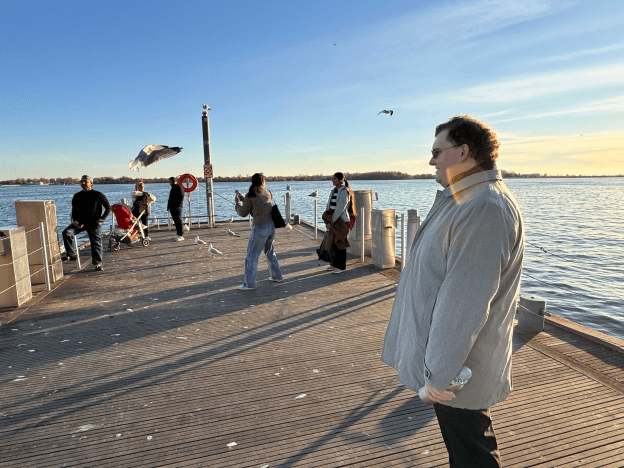
This week, how our relationship with the natural world reflects on our relationships with each other.—Click here to support the Wednesday Blog: https://www.patreon.com/sthosdkanePhoto by Hariprasad Ashwene, 2024.


This week, how our relationship with the natural world reflects on our relationships with each other.


A line in the Book of Genesis that comes into play in my dissertation is in the very first chapter of that first book of the Bible in the first Creation story in which God made humanity “after our likeness” and gave us “dominion over the fish of the sea, the birds of the air, the tame animals, all the wild animals, and all the creatures that crawl on the earth.” In the context of my research this divine proclamation of human dominion over the rest of Nature in Verse 26 was used to justify the conquest and colonization of the Americas by Europeans beginning in the last decade of the fifteenth century. Here these newcomers from across the sea found worlds that to them seemed less touched by human hands. Brazil in particular stood out for André Thevet, the man at the heart of my dissertation, because its great forests seemed unaltered by its human inhabitants. The Tupinambá had in fact been living and using the great Atlantic Forest for generations, yet to Thevet coming from a France covered by cities, towns, villages, and a countryside that’d been farmed and ploughed for thousands of years he beheld something that to him seemed primeval in this world on the far side of the Atlantic.

I grew up hearing the adage that before settlement of the Midwestern states in the Early Republic and Antebellum decades that a squirrel could travel from the Atlantic coast to the Mississippi River leaping from tree to tree without ever setting foot on the ground, and that these great forests were ancient and unspoiled by human hands. I now know that while there once were great forests in the old Northwest Territory, the Great Lakes states where I was born, those forests seemed far deeper and darker to the European explorers and colonists of the 17th and 18th centuries because the diseases which their predecessors introduced on North America’s coasts in the 16th century. Those pandemics killed vast potions of this continent’s indigenous populations such that by the Revolution the old indigenous forestry efforts of controlled burns were fewer and farther between.

I was born in the western suburbs of Chicago, a city which is famous for its engineering triumphs that shaped the natural world on which it was built. Chicago stands on the borderland between the Eastern Woodlands and the Prairies. Generations of engineers and innovators created an environment suitable for the building of one of the greatest metropolises in all of human history. I remember as a child listening with a sense of awe and pride to my Dad’s retelling of the story of how engineers reversed the flow of the Chicago River at the turn of the last century to keep Lake Michigan, the city’s drinking water source, clean from all the pollution in the river. The western suburbs where I grew up were largely built as bedroom communities for downtown commuters. Our home was 26 miles west of the Loop, which in a preindustrial context would’ve take a pedestrian nearly 9 hours to travel. Wheaton, my hometown, became accessible from the city thanks to the railroad, in this case the Union Pacific which as of time of writing continues to operate trains for Metra through Wheaton’s two commuter stations into the Ogilvie Transportation Center, or Northwestern Station as I knew it. On the Metra you can today get from Wheaton to the Loop in 45 to 50 minutes, making it a viable commute for many. This sprawl is possible because of industry and the ways in which we’ve grown in our civilization with this mentality that we have dominion over nature and ought to use it and change it to our needs.

An even more radical transformation of nature can be found in my adopted home city of Kansas City, a metropolis of 2.2 million built around the confluence of the Kansas and Missouri Rivers about 400 miles southwest of Chicago as the crow flies. The land here is a mix of old glacial hills and prairie, yet unlike in Chicago where the city and suburbs were built from the old forests which survive as preserves in various pockets, in this drier region trees normally only grow in those few places where rivers, creeks, and streams flow. Kansas City is on the easternmost edge of the arid western half of North America, and so this region’s original state could not support the same kind of verdant canopy nor the large population which it does today. Brookside is a beautiful place; I love my neighborhood in particular for all the old trees which line our streets. The oldest of those trees were planted by developers working for J.C. Nichols between 1906 and 1950 when he built the Country Club District, of which Brookside is one part. The Kansas City Public Library’s history collections contain photographs of my neighborhood when it was just being built in the 1920s and while I recognize the contours of the hills, I find the lack of tree canopy to be somewhat alien to my recollection.

In developing neighborhoods like Brookside, our ancestors sought to create lived realities which fit what they knew in the Northeast, where too as William Cronon so expertly wrote in Changes in the Land, the landscape there was transformed by the first generations of colonists to resemble something of England, the Netherlands, and France depending on whether the colonists were in New England, the Hudson Valley, or along the St. Lawrence River. I find something reassuring and communal in seeing similar neighborhoods to my own in cities across this continent, from Atlantic to Pacific; this tells me that there are others whose lives might be something like mine, and that I’m not as alone as I often feel. It’s the same reason in fact why I like watching Jeopardy! or the national evening news broadcasts, because I know millions of others are also watching these programs, and maybe even a few people I know & love are among them.

What I hope I’m getting at here is a sense that I have that we’ve built up our world and transformed the nature of the worlds ours replaced in order to better fit some sense of normalcy which has been brought further and further toward the fringe of our world from some idealized source. I for one am drawn to the sense that this source is English, owing to the prevalence of English names in so many of these neighborhoods whether drawn in the Midwestern case from New England, the Mid-Atlantic states, or the Old South, or in each of those cases from England itself. Yet with that embrace of a nostalgia for an idyll that may never have fully existed, of the idealized American town whose cultural roots fall in the idealized English market town, do we also carry on the sense of ownership over nature? This dominion after all caused English forests to be so depleted in the early modern period that wood began to be imported from New England and Canada for the building of ships for commerce and war alike.

I’ve grown used to expecting a less than favorable reception from other people. I’m ready to flinch and to put up my defenses whenever necessary. I suppose this is a learned hesitation; I’ve met a lot of people throughout the years who were interested in me only for their own benefit. Recently I loaned out a pen to a friend and immediately reawakened a 20 year old memory of doing the same thing in middle school only for the classmate to declare that pen was theirs now and not mine, leaving me to write the rest of the day with an old stubby pencil that was barely longer than my thumb and forefinger are wide. Last week, I wrote about how traffic even in Kansas City seems to have gotten worse, and the behavior of drivers across the board more aggressive since the recent pandemic. Unlike my Dad who learned to drive in Chicago, I never use my car’s horn out of a general knowledge that in this country other drivers are likely to have guns, and I’d rather my frustration at their conduct remain unannounced to them in the name of self-preservation.

The great trial of the present moment seems to me to be one of ordinary people like you or me just trying to survive amid a deluge of unnecessary troubles brought on by the greed of a few. I believe that before profits or efficiency that empathy must always come first in all our deliberations. I hope for the best intentions in all people whom I meet, and in many cases I see the good in their eyes and posture and in the way they interact with our world. Do we allow for the flood to persist because we are so jaded to the naïve hope that love could actually be the most powerful emotion? I know that love is more potent than greed, and that in the end it’s flame will always burn brighter than one fueled by fear. Yet love requires patience, as St. Paul wrote, and patience is not something which industry can well afford to have.Should we then look for other ways of living? If we are to begin anywhere, it’s to remember that we are natural beings ourselves, yes made in God’s image, yet evolved out of the same natural materials that begat all other life on Earth. I don’t know where the Divine comes into play in any of this, you can read my recent blog post on that topic for more. In fact, I see myself as much a hopeful skeptic as a believer. What I do know is what I’ve experienced, and that is that there is no more powerful emotion than love which burns so bright as to blind the mind and senses to any other voice. I for one love the aspiration and mission of studying how the innate and fundamental in nature was understood in our historic past, and I hope to continue learning more about this. Yet I feel the weight of our world on my shoulders, and like many others who feel isolated from the higher pursuit of wisdom in all its philosophical pulcherity, today I’m just trying to keep that love which I feel burning bright while I also do what I can to survive in this world we’ve built. It is our dominion, which is a triumph to our humanity, yet its roots are still in nature and nature will outlive anything we build.


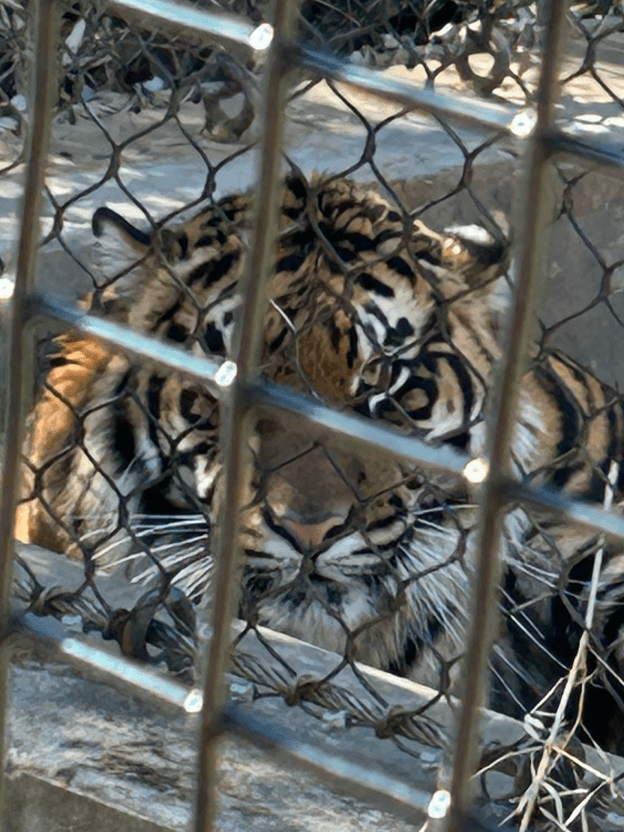
A tiger staring at the camera through two fences.

A Tiger in the Sun

This week, I have a short story for you, in the style of an Irish aisling, a dream narrative, about a tiger basking in the warm February sun. — Click here to support the Wednesday Blog: https://www.patreon.com/sthosdkane


This week, I have a short story for you, in the style of an Irish aisling, a dream narrative, about a tiger basking in the warm February sun.


On a sunny, warm, and blustery day in February I left my desk in the afternoon for a walk at the city zoo. You could never really know how many warm days you’d have in February on the prairies, a time of snow, cold, and gray skies. I showed my member’s pass at the gate to the clerk and strolled between the polar bear’s wide enclosure and the lorikeets’ walk in cage towards the penguin house where I often liked to stand quietly and watch the birds waddle and swim about. There was something wistful about these penguins today, their black and white feathers glowing with a renewed exuberance from the lengthening days outside. I’d seen these penguins in all seasons, confined to their Antarctic chamber with many good places to swim, enclosures, and crevices that even I hadn’t seen. Worlds still unfamiliar to my eyes yet already known to my imagination which saw places where these birds could play and rest away from human eyes.

I left the penguins and began to walk further into the zoo towards the Asian and Australian animals who I hadn’t seen in my last few afternoon visits. I’d read that a new pair of Sumatran tigers had been brought to the zoo from another facility on the West Coast where they’d been born into captivity. These animals it seemed had a comfortable life, if confined as they were from the wilds their ancestors had once known. My walk took me past the alligators still hidden indoors and the camels who wandered about the edges of their sandy glade looking for new grass and leaves to eat. 

After passing the pelicans I came to a grand sign displaying a portrait of a tiger, in all its majestic ferocity. The entry to this Asian walkway was marked by a fleeting glimpse of another red, black, and white animal whose furry legs and tail darted behind a wall to my left. I walked onward and rounding the wall met a red panda on a stroll within the confines of its fenced enclosure. I stopped to look at the red panda who climbed a gangway that’d been set up for its enrichment and admired its ease of movement, the jolly grace of its demeanor. Yet still, the hairs on the back of my neck stood tall, alert. I knew the tigers dwelt behind me, yet they could’ve been anywhere in their terraced enclosure. I turned and caught the yellow eyes of a cat staring back at me, its orange nose wreathed in a beard striped black, orange, and white. This new tiger was smaller than I imagined, perhaps little older than a cub. It lay there on its side like my own cat often does, finding a nice place at the highest point in its home with the sun’s rays glittering down upon its neck and back between the barren branches of the cottonwood grove which towered above both feline and me.

I stood stock still, my nature sensing some intrinsic danger in my situation despite the double layers of fencing between us. This was a tiger after all, a hunter who if in the mood would gladly seek prey from either myself or its red panda neighbors across the path. Who was I to say I was any finer a creature than this one, who was lounging the afternoon away in the warm winter sun. It had no need of work or time; no economy or politics furrowed its brow. Here was a creature free of all our worldly concerns in its terraced enclosure. I would soon have to leave this tiger and continue on my way. My walk in the zoo was merely a distraction from my labors, an escape from the small walled enclosure of my desk where Sisyphean work awaited my attention. What time did I have to lay out in the sun and cherish the day? I walked on, my body moving back towards my work, yet my imagination remained. I dreamed as I walked of adventures I might have, greater escapes from my work, and of absconding for more than an afternoon from worry.

As I rounded the corner past the lower terrace of the tiger’s enclosure my phone began to ring. I pulled it from my pocket and caught myself seeing the number, “213, who’s calling me from Los Angeles?” I answered, looking up towards where the tiger lounged high above me. “Hello?”

            “Hello, I’m calling you about your application for the archivist position at the Space Science Center.”

            “Oh yes, how may I help you?” I asked reflexively, a knot building in my throat worried at what word might come next after so many rejections.

            “We would like to offer you the position here, if you’re still interested.”

            I caught myself in my jubilation, remembering I was in public, “Oh!” I cried, “what wonderful news!”

            “So, you’ll take it?”

            “Yes,” I stopped myself from being too exuberant, “It would be an honor to work with all of you there.”

            I thought I heard a smile from the other end of the phone. “I’m glad to hear that. Can you be here later this week to start?”

            “Later this week?” I asked, stopping in my tracks near the entrance to the kangaroos’ enclosure.

            “Yes, we’d like you to take over the work from our outgoing archivist who’s retiring at the end of this week.”

            I looked at my watch, it was nearly 3 ‘o clock in the afternoon. “Well, it’s Monday now, I can be there on Friday morning if that’d be alright with you.”

            “That’d be fine,” the herald of good news replied over the phone. “We’ll see you on Friday morning here in Pasadena.”

            “Thank you again!” I said as I heard the phone on the other end hang up. “Friday, Friday morning in Pasadena. I need to start packing,” I turned from the kangaroos and was about to walk past the building ahead when I remembered that path was closed for winter renovations. I turned back again towards the gate and strolled through; my head held higher than before with a newfound exuberance. Soon I wouldn’t be scraping by just as a freelancer, my four part-time jobs would have to go. Now, I could really earn enough to begin living my life.

I passed the Australian birds in their walk-through enclosure and was amused to see they were all standing stock still on various fenceposts. One squawked at the world, in what seemed to me a jubilant chord of praise for the wonderous afternoon sun.

If I was going to be in California on Friday morning, I would need to leave at dawn tomorrow. I could drive to Denver on Tuesday and stay at my cousin’s house there, if he’ll have me, and then cross the Rockies and the high deserts on Wednesday. I’d driven most of that route before one summer vacation several years ago, but the Rockies in winter would surely be an entirely different challenge than they are to cross in summer. The last time I drove through the Eisenhower Tunnel that bored its way beneath the Continental Divide I waited to use my breaks for just a few seconds too long on the western side and nearly ignited them in their furious efforts to slow my car down as it pulled into a parking spot along a creek in the village of Silverthorne. Should I get my snow tires out then, and have those on in case the interstate was slick up in the mountains? But I wouldn’t need them once I reached Utah where the high deserts would surely be dry, and possibly still hot despite it being February.

Once in Utah, even if my tank was nearly full, I would still stop in Green River, the last town before nearly 125 miles of open desert to ensure I wouldn’t run out of fuel on that other most dangerous part of the trip. I’d avoided that part of the interstate last time, taking a smaller high mountain pass through Central Utah. This time though there was no avoiding the desert. Once I made it to the junction with Interstate 15, I could turn south and make my way to my second overnight stop in Las Vegas. I figured I might not be the only traveler passing through Sin City who wasn’t there to gamble or for the spectacle. Then at last, on Thursday, I would finish with the last leg of the drive southwest across the California border and to Pasadena where my future awaited me. Work, to be sure, was something that drove me forward, the aspiration that I might make something of myself, that I might better my stars and spend my days doing something that both kept the lights on and fulfilled my dreams.

Like the tiger, I would perhaps have time to rest in the sun, to enjoy the afternoons on a park bench near the science center. Surely in California, I would never have to shovel snow again, or scrape the ice off my car in the cold January mornings. Wasn’t California where that tiger was born? I thought about that for a moment as I walked along the path. To my left the local kangaroo mob lounged and grazed on the grasses of their meadow. A kangaroo stood and stared at me. I warily watched it, silently snapping a photo of it with my phone, and continued on my way, keeping ever a respectful distance from those remarkable creatures.

But what of my cat? How would she fare the long voyage west? Would she appreciate so much time in the car? She’d never been one for car rides even to her vet just a few blocks away. Perhaps she’d rather stay with my parents, they always enjoyed her company and she theirs. She was surely napping now too, finding a sunbeam somewhere near a south-facing window where she could enjoy this lovely day like her far larger yet far distant cousin. It would be a great change for my cat, as much as it was for me. We’d have to travel light, perhaps I could send for the rest of my belongings, especially my books, after we settled into our new abode. 

I paused at the southern gate leaving the kangaroo enclosure. Before me one of the camels stopped its grazing to stare back at me as I stood there, deep in thought. I could see my life in California well. I’d probably get a space in the basement of the science center, somewhere with no natural light where they kept their records. My domain would exist in the deep darkness there, somewhere I could make my own. Maybe I’d be far enough away from the rest of the staff or the general public to bring a radio in and listen to baseball games during the season like my grandmother used to do in her kitchen. There’d always be a part of me that would yearn for home of course, for the prairies and woodlands of the Midwest. Who would I be without this place that I came from? What would my life be like so far from everyone I know and love? Could I really separate myself off, devote my working hours to a place where few would understand what it meant to be from here, where few would understand me?

My mind returned to that tiger lying there in the sun, content with its lot in life. There was a creature that could try to hunt and prowl, perhaps it did so in its dreams. What are dreams but the longings of the subconscious? I’d always been a dreamer, an imaginer of wonders near and far from the truth. Do dreams then tell the truth, or is there such a thing as truth in the surreal realm which we imagine? I remembered a story I read as a child, from P.L. Travers’s original Mary Poppins novel, of a scene in which the roles were reversed and all the animals of London Zoo were gawking at the humans in the cages. Was fantasy so different from reality that it could not be informed by the real but instead kept unreal? 

I felt I had to return to that being whose yellow eyes had so deeply captured my thoughts that even now as I planned the monumental voyage of these coming days, a week spent crossing half a continent in winter, I couldn’t shake the image of those deep yellow eyes. I followed the path back towards the tiger sign that greeted visitors to the Asian footpath and ignored the red pandas in all their charm and found my captor laying there still. Those eyes caught mine again, and they seemed to recognize me from only a few minutes before. In those eyes I saw a truth that life was meant to be enjoyed, to be lived, yet in my eyes I was sure the creature could only see fear and wonder. Without these fences we both knew those yellow eyes would be a death sentence for me and that my power was devised in only the most artificial of means. The tiger was the real power, the true monarch of our shared domain. And yet it blinked at me, slowly, a signal that my own cat offers when it feels comfortable around me. Could this tiger feel at ease in its enclosure or is its ease perhaps from its inherited knowledge that nature gave it the upper hand over feeble, clawless, scaleless, featherless, furless me.

I didn’t feel the need to speak, this tiger could understand my expressions. I gazed into those eyes deeper, feeling my thoughts free fall into that yellow sea of potent grace. Did these eyes envision things like mine did? Could this tiger see things unknown to it in its dreams? Could it imagine a Creator? Would I still feel such a connection when I retired from my native place to that basement archive where surely, I would spend my waking hours? I wasn’t sure that the adventure of it all would be worth the query, yet I felt my nature pull me towards exploring further and deeper. I heard a noise from before me, a deep hiss emanating from a striped sea of orange, black, and white. The tiger had enough of my gaze, and with a hiss told me enough, “move along, leave me be.”

I backed out from the tiger’s view and turned away, looking to the red panda who seemed unfazed by the hissing hunter across the way. Move along indeed. In this adventure I’ll learn more about myself, and what I am capable of. When I reach the end of the line on this drive, when I arrive in California, there will surely be many new possibilities and wonders to behold. How often had I experienced a warm, sunny day in February here on the prairies? Wonderous things remained for me to find beyond my desk. I walked back to the front gate of the zoo and felt something new inside of me glow with confident glee at the thought of all that was to come.