Tag Archives: Rail Travel

On Technology

Last week, I returned to Chicago, this time on a business trip to attend a conference, and on the way took time to slow things down and enjoy the lived experience. — Click here to support the Wednesday Blog: https://www.patreon.com/sthosdkane


Last week, I returned to Chicago, this time on a business trip to attend a conference, and on the way took time to slow things down and enjoy the lived experience.


On Wednesday last week I boarded Amtrak’s Southwest Chief at Kansas City Union Station bound for Chicago. This visit to the metropolis of my birth was less for family affairs and instead for business. I spoke on Friday at the Renaissance Society of America’s conference at the Palmer House Hotel about how toucans were seen by sixteenth-century French merchants as economic commodities first and foremost. It was an unusual topic, but one that fluttered enough feathers in the organizers to earn me a travel grant from the RSA and a matching grant from my own History Department back in Binghamton to cover about half of my overall expenses for the trip.

In recent months, as I’ve had this trip and all the other ones planned in 2024 in mind, I’ve found myself growing evermore tired of being in constant contact with people near and far. Our technology allows us to make wonders, and to inspire ourselves to newer and greater heights with those wonders, yet I’ve found myself asking more lately how much we really ought to rely entirely on our technology? Every so often throughout the year I will find myself with a physical book, whether a paperback or a hardcover, that seems appealing, and I’ll stop and read. I used to read constantly. 

When I was in elementary school my grandparents gave me their 1979 World Book Encyclopedia set that had gone through several moves with them over the years. That year, feeling the effects of insomnia for the first time that I can remember in my life, I often stayed up late in my room reading these encyclopedia volumes. My parents eventually gave that set away, admittedly now the knowledge contained in them is 45 years out of date, it still showed Jimmy Carter as the sitting President, yet I remain forever grateful for that gift in all its thousands of pages. I can still remember the smell of those books in particular, and the charming and sometimes funny black-and-white pictures they contained.

Later, when I was in middle school I read several large and complex books in a row, including Thomas Kinsella’s translation of the Táin Bó Cúailnge, an Irish epic set 2,000 years ago, and Frank Delaney’s book Ireland: A Novel, which my Dad bought for me at a Hudson’s in O’Hare on the way back from another trip up to Chicago to see family during my eighth grade year. Perhaps the last of these memories of endless hours reading for fun was in preparation for the release of the last Harry Potter book, the Deathly Hallows, when I read the other 6 books in 3 days.

All of this changed when I started high school. I chose St. James Academy for two main reasons: they offered Latin as a foreign language, and they offered MacBooks for all of their students. With easier internet access than ever before and the creation of YouTube around that time, I found myself hooked reading more things online and watching videos. Today, I’m often more likely to open YouTube on my computer during some downtime than I am to pull up a book on my phone. I’ve gone through waves of enjoying reading books on my phone here and there, yet these are again just waves.

I spoke to my friend, Carmelita Bahamonde, who I’ve known now for over a decade since we met as undergraduates at Rockhurst University. She gives up her social media accounts every year for Lent, and now during Holy Week is nearing the end of that technological fast for its 2024 occurrence. 

Seán: “I worry that because it’s how I connect with so many people professionally, and cousins in Europe and across the United States, that it’ll minimize how much I’m in touch with them.”

Carmelita: “Yeah, I do, and I do take time off during Lent, yet I take it further, so the longest I’ve gone was to the end of June and start of July. It’s hard to keep that up.”

Seán: “June or July! That’s a long time to keep that up.”

Carmelita: “Yeah, the first time I did it I think I made it through May, and I came back for my Masters, and I decided this was something to come back for.”
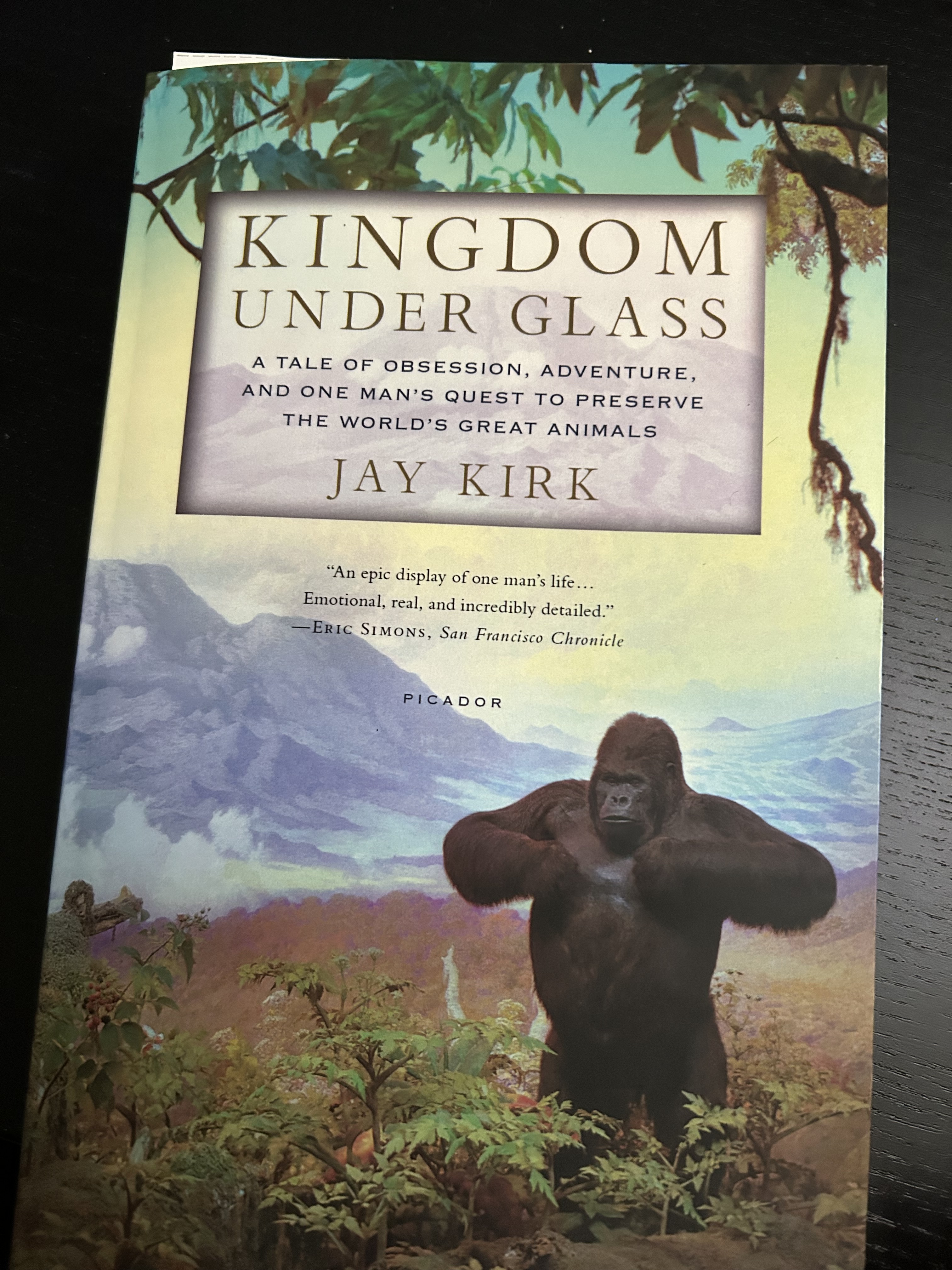
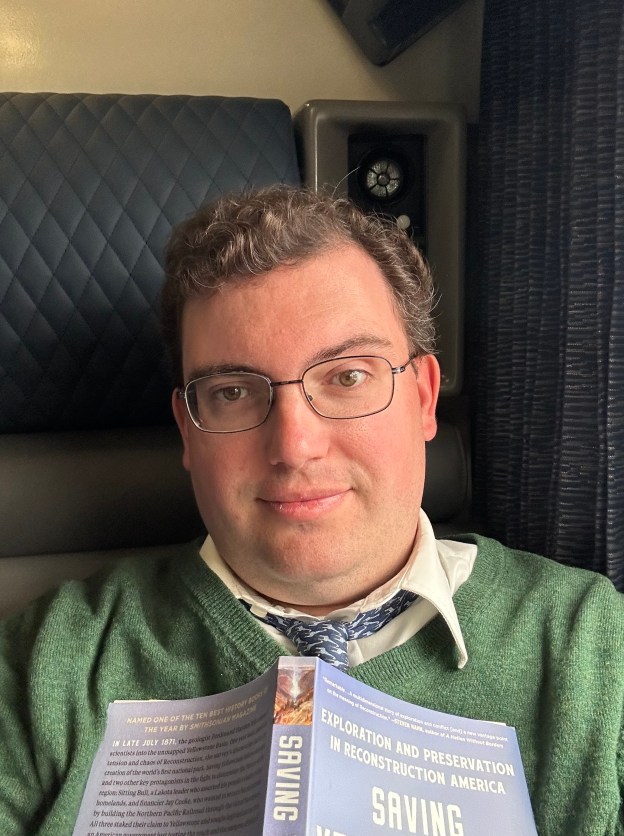
So, when I saw that I could afford to purchase roundtrip sleeper tickets on the Southwest Chief for this trip, I jumped at the opportunity to not only enjoy the best that Amtrak’s western services have to offer, but to also enjoy 7 hours of disconnection from my technology. I spent those 7 hours reading Megan Kate Nelson’s book Saving Yellowstone about the first federal expeditions to the Yellowstone Basin, the building of the Northern Pacific Railroad, the decline of the Lakota’s autonomy, and the foundation of Yellowstone National Park. I brought two other books, three magazines, and all the books downloaded on my phone with me on this trip, figuring I’d have a fair bit of time to read. (On the return trip, rather than reading the materials I brought with me I ended up reading a book I bought in Chicago at the Field Museum’s bookstore by Jay Kirk called Kingdom Under Glass: A Tale of Obsession, Adventure, and One Man’s Quest to Preserve the World’s Great Animalsabout Carl Akelely, the first Taxidermist-in-Chief at the Field Museum. I’m going off script here to say how wonderful it is.)

Seán: “And, I know people who have very full and happy and lovely lives and they’re not on social media, so it’s not necessary to be on it. Yet, it seems that’s how people connect nowadays, right?”

Carmelita: “Yeah, though I only post happy, lovely things, even when I’m at my lowest. So, I always see that so and so is travelling, and man I’m falling behind this year. Yet I wonder how much over time they’ve been doing this year that they can do that?”

Beyond even disconnecting to read, I feel a pull towards stepping back a bit from my complete adoption of all of this technology. I see myself looking more at the screens before me than at the world around me. A friend recently pointed me toward a book which considers that the decline in recreational bowling leagues in this country can be tied to an overall decline in a communal spirit and a deconstruction of our bonds of trust, which have contributed to the current sense of mass isolation, fear, and mistrust which have contributed in turn toward our present political paradigm. I haven’t read this book yet, to be clear, yet I see how the premise works. I love coming to conferences like the RSA to experience the community that these events foster. There are people here who I met last Fall at the Sixteenth Century Society Conference in Baltimore or last March at the 2023 RSA in Puerto Rico. I’ve had the opportunity to tell people here how much I appreciate their work, and to talk a bit about my own, to hear the affirmations that I so often miss in my daily life about the actual research I do.

Carmelita: “Yeah, you have both positives and negatives, you get to connect with family and peers who are far away, yet you also can lose yourself in our technology.”

We could certainly meet remotely using our technology to foster connections, yet those bonds would be far less strong than they are now that we’ve met and know some more about each other. Our technology allows us to instantaneously talk with people whole continents and oceans away, even to the astronauts orbiting our planet on the International Space Station. It has allowed us to even communicate with our furthest satellites that have reached far beyond where any human has gone before. Yet those connections are proxies for the real, physical connections we inherently desire by our basic evolutionary biology. I have trouble sometimes overcoming my own shyness in public settings, I certainly felt that at certain points on this trip, at times I’ve found conferences unbearable because I don’t feel up to talking to people I don’t already know, even when I’ve read and enjoyed their work. I do feel I would be more comfortable in these situations if I were less technologically connected and more connected to the human.

Seán: “What are some alternatives to social media that you’ve found useful?”

Carmelita: “I still have [Facebook] Messenger on my phone, so I use that to stay in touch with people. I sent a message this year to my friend in the Netherlands to say ‘Hey, just to let you know I’m taking my yearly break from social media,’ and she said ‘hey, no problem,’ and she’ll continuously text me and send me things, and my parents will show me things on social media if they’re really necessary. The people who, like you, really want to stay in touch will do so, and I really appreciate that.”

Seán: “It speaks to Robin Dunbar, who’s a primatologist and sociologist, who wrote about this idea called Dunbar’s number where there’s this maximum number that a human can have in their social circles, and I think it really speaks to that culling of that number. I’ve probably got 1700 friends on Facebook, and excluding family which is 30-40 people, there might be 10 people who I stay in touch with, and you’re one of them.”

Carmelita: “Yeah, and you are too. And I’ve actually had people reach out to me in the past and say ‘Hey, I haven’t seen anything from you, are you actually alive?’ and I’ll reply, ‘Hey, yeah I’m actually kind of better!'” (laughs)
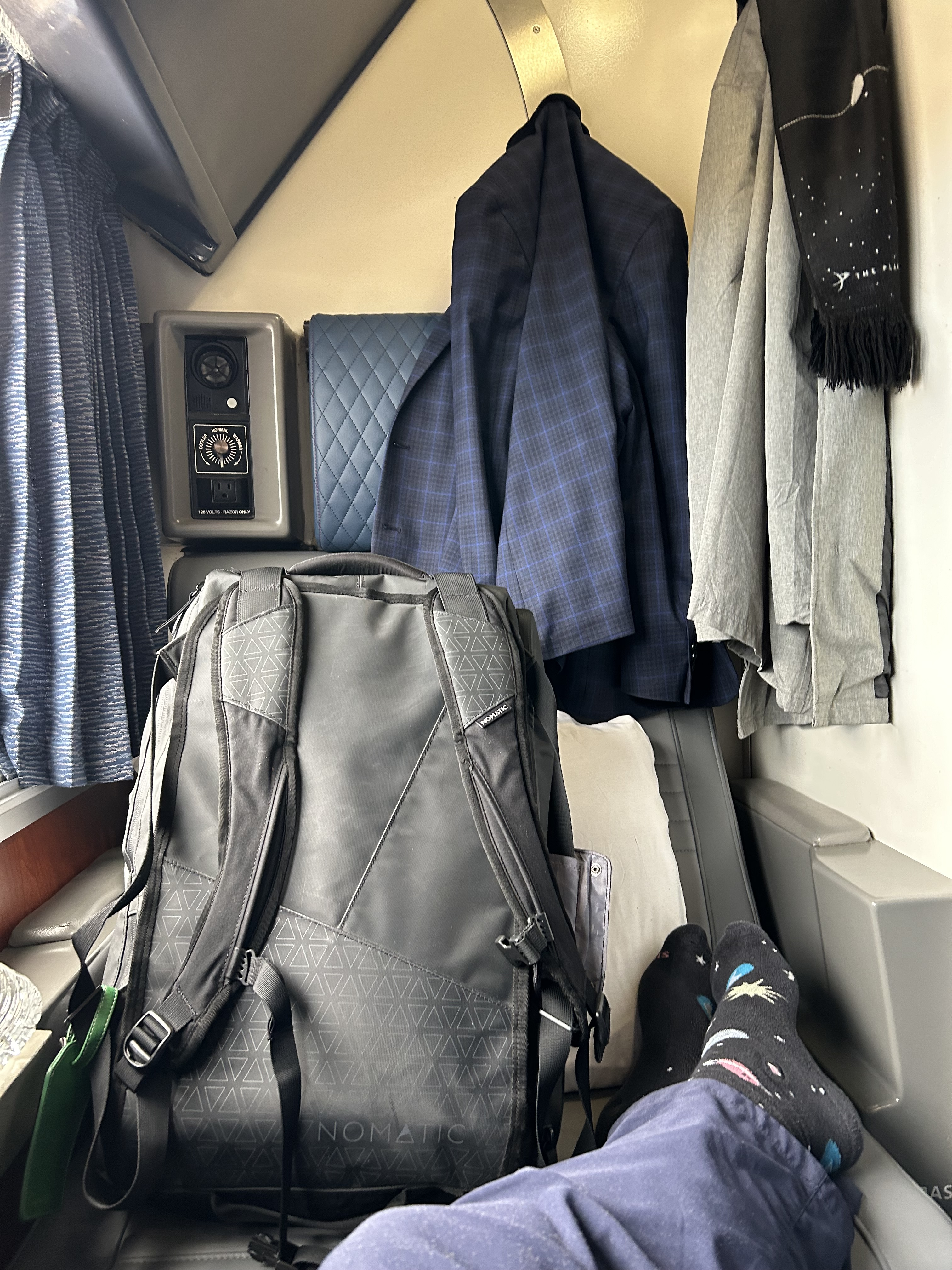
My roomette on the Southwest Chief on the way up to Chicago.

I admire my friends and family who can give up some of this technology for extended periods of time. There are things to appreciate about the connectedness our technology provides to be sure, I appreciate seeing the social media posts of those who I care most deeply about, yet within that outer circle there are the few who I see on a daily basis, and I wonder how much I really pay attention to them, or them to me, with these screens in front of us all the time?

It strikes me that more often than not, when I’m mindlessly scrolling through YouTube on a given evening at home, I’m often finding the same music as I had the evening before, listening to the same songs or variations of those songs over and over again. Those songs evoke certain emotions for me, emotions tied to dreams and memories both. Yet I ought to really be focused on the people around me, for as much as our creations may have achieved a sense of immortality with their technological life spans far outpacing our own, those whom I love will only be with me for so long.

Carmelita: “It feels like if you didn’t post it, it didn’t happen; and so last year I went on a family trip, and at the end of the year I didn’t have any pictures and it feels like it didn’t happen, so that’s why I appreciate my social media. Yet like you said earlier today, you don’t have to post everything.”

There ought to be a balance between connection and relief, between all our noise and the silence, which is an acquired taste to be sure, yet is beautiful in its own way. I appreciate the assistance that my technology can provide in my work; it is far easier to do my research using PDF copies of these sixteenth-century books than having to rely on quickly written notes made during a rare research trip to a distant library. When I did my first research trip as an undergrad in 2013 to the Library of Congress, I actually took handwritten notes of the books I read. I quickly realized it was far more efficient to take notes by computer, to type things out at 70 words per minute than to write them by hand in my elegant if at times slow cursive script. This has meant that in the 11 years since I’ve found myself writing by hand less and less, even perhaps risking the loss of the art of penmanship, and calligraphy (if I may be bold to call it that).

Seán: “What’s the underlying purpose of posting? Is it self-gratification, is it to say ‘look what I did!’ is it say ‘look at how cool I am,’ or something like that? I always try to think of the underlying reasons for what I do.”

Carmelita: “I once had a friend who asked me why I post everything, and I said ‘well, I wanted to post pictures of this trip,’ and I think it’s a good way to show what I’m doing to more distant family who I haven’t seen in twenty years. I do sometimes wonder, ‘is this for showing off?’ I don’t like to post things that are show-offy. Several years ago, I got a promotion at work and I wanted to post about it but I sat on it for a while and ended up deleting it because I can’t brag, and so it is a double-edged sword, because you don’t want to brag but you should at the same time. It comes down to perspective: who do you want to know about your successes? Graduating from my Masters, I wanted everyone to know, ‘hey, look I worked my butt off!’ but a trip to Disney isn’t something for everyone to see.”

Let me close with this: I could have all the efficiency in the world with my computer and smart watch and smart phone and voice-activation software in my car and my headphones that connect wirelessly to my other devices so I can talk and take notes on my phone at the same time. I can learn so much from watching all the videos anyone has ever made on a subject and imagine wonders I might never otherwise consider with the invention of film, television, and the videos we upload to the internet. Yet none of it is as rewarding or as joyous as seeing a friend smile, and feeling the warmth of our interaction in that one specific moment in which we are living. Perhaps we need a little more of our human nature in our lives after all.

Seán: “Let me ask you one final question and then we’ll get back to lunch here, this meatball sandwich is giving me a look: do you think technology makes us more or less human? If you think about how we originally evolved in our nature as humans, as Homo sapiens, as wise people, as learned people, and yet do our creations diminish our base humanity if we’re too focused on them?”

Carmelita: “I think it depends on what you post on social media and if you’re fake about them. We talk about influencers who post amazing photos but are broke because of it, then it’s not worth it. Social media allows us to stay connected, and that’s a wonderful thing. So, as long as you’re being true to yourself then that’s the key.”

Seán: “Excellent, I like the connection between philosophy and real life there.”


Finally, for your viewing pleasure my view facing north crossing the Mississippi at Ft. Madison, Iowa.

Correction

Corrected on 28 March 2024 to reflect the correct spelling of Carl Akeley’s name. I’ve misread it now for 31 years as Akerely.
Draft at the Station

Last Friday, I took Amtrak's Missouri River Runner from Independence to Kansas City's Union Station to see how the NFL Draft was affecting public transit in & around the Station. Click here to support the Wednesday Blog: https://www.patreon.com/sthosdkane

The following post is a transcript of the audio from the podcast episode this week. I strongly advise you listen to this one rather than just reading it. Thank you, and enjoy!

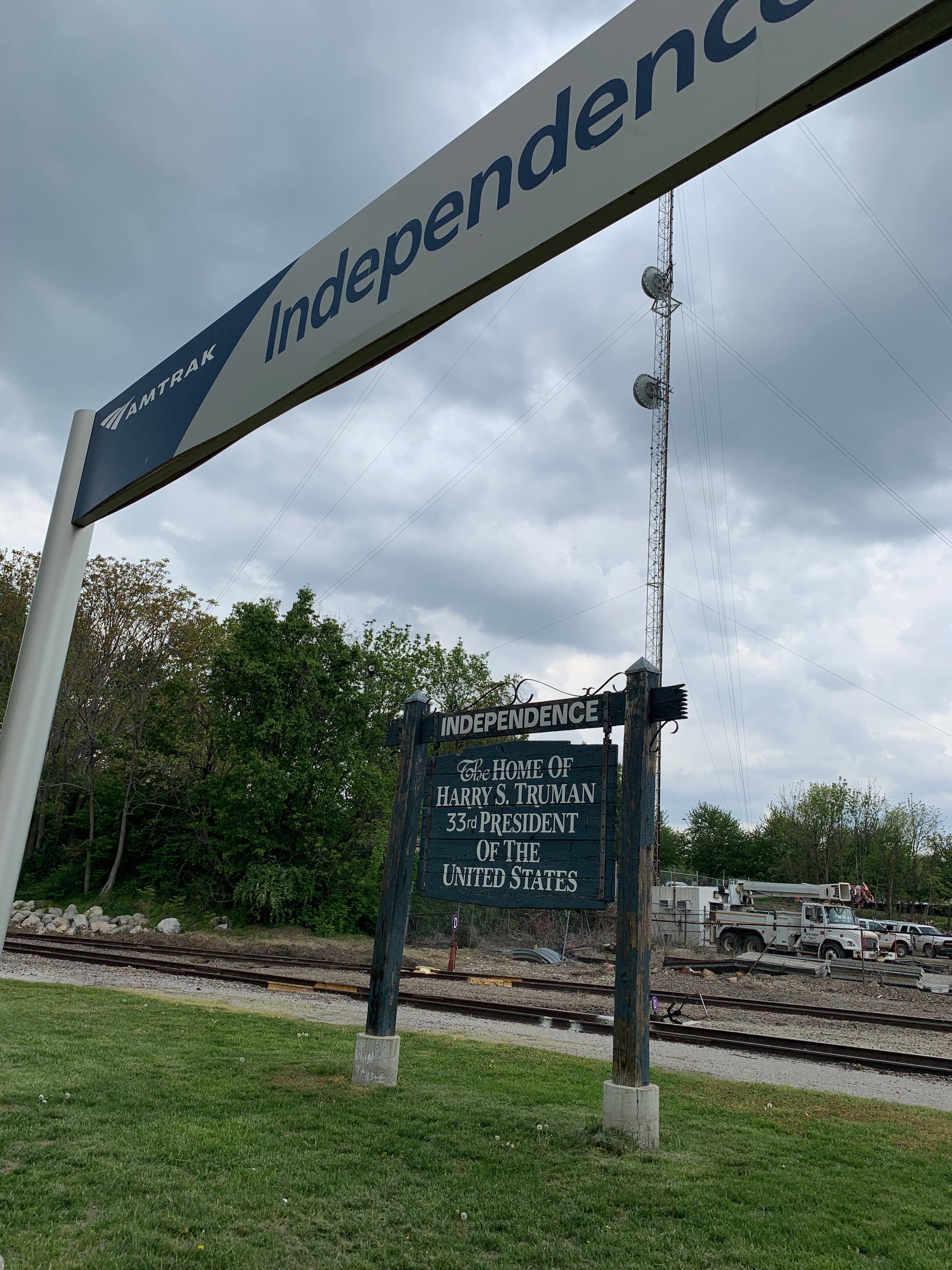
Independence, Missouri: hometown of President Truman.

“I’m at Independence Station, the only person here, the station house is locked, looks like it’s been abandoned for a while. I’m about 50 minutes early for my train, nothing here, no seats. We’ll see how this adventure goes!”

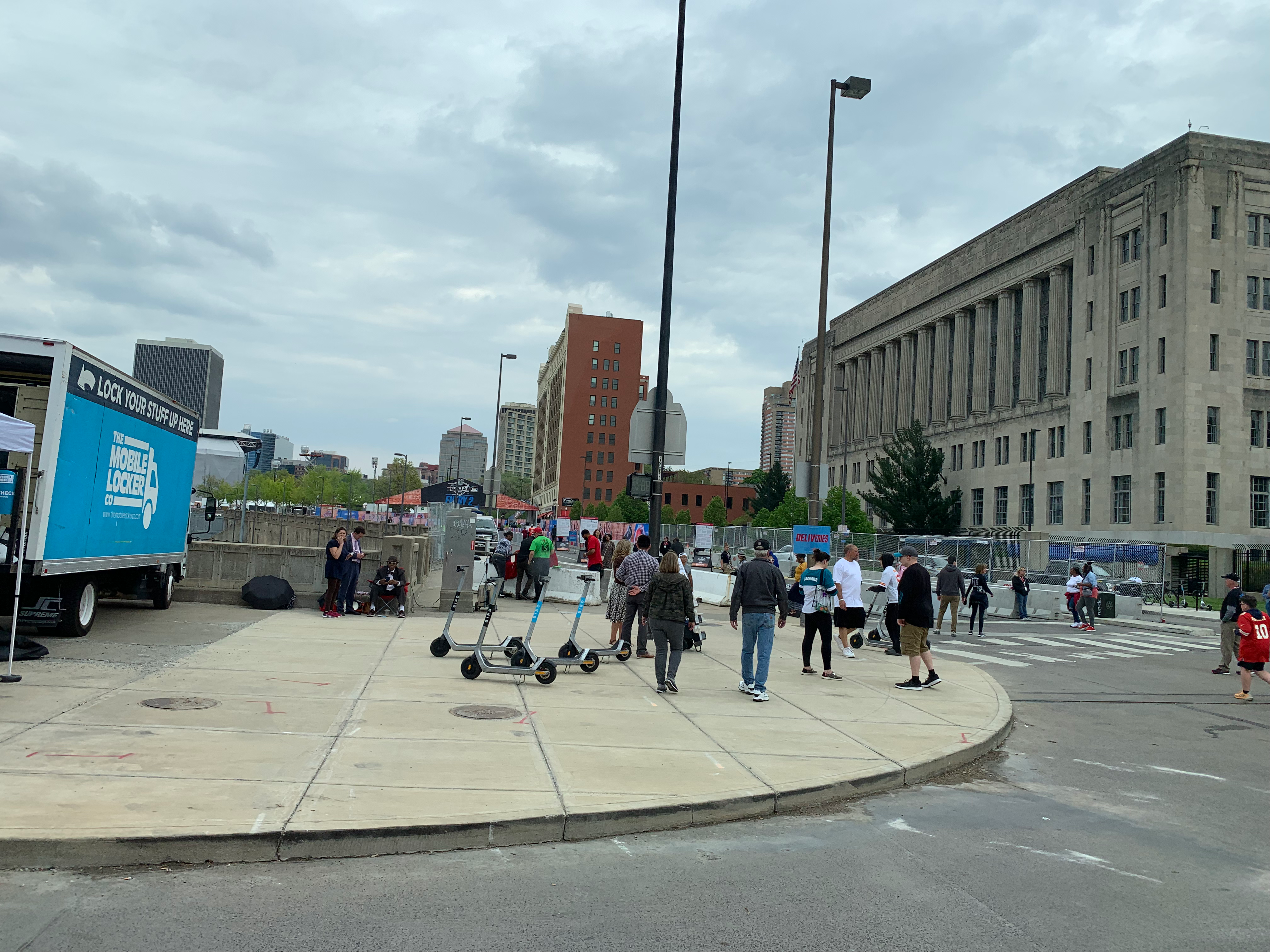
That was on Friday, 28 April 2023 just after 12:30 pm on a cloudy but calm day in Independence, Missouri, one of the eastern suburbs of Kansas City. I got a ride out there so I could try taking Amtrak’s Missouri River Runner service into Kansas City’s Union Station located just south of Downtown. Normally, arriving at Union Station is a moment of awe and wonder at the grandeur of that Beaux Arts station, built in 1914, one of the great reminders of the time when trains were the fastest and most comfortable way to cross North America. Last weekend though Union Station hosted the NFL Draft, a big event where all 32 professional teams in the top American Football league on the planet gather to pick who among the top prospects from the college teams across the U.S., they want to offer contracts to and invite to start their professional careers with those teams. That about sums it up. I’ve known about the Draft for most of my life and have so far spent the better part of the past thirty years not caring about it.

This year though is different, the Draft has landed squarely in the center of my city. Union Station has been a stage for many important moments in my life, from my first volunteer job at the Kansas City Irish Center back in 2006 to the place where I began several trips back to my original hometown of Chicago onboard Amtrak’s Southwest Chief to birthday lunches and dinners at Pierpont’s and Harvey’s and even a date. So, for me it feels personal to have that most public of spaces be taken over for the biggest, richest, pro sports league in the country for the whole weekend.

“It’s now begun to rain. Some church bells ringing. According to the Amtrak app the train is about 10 minutes out from Lee’s Summit, which is about 20 minutes down the line from here further to the southeast. Here I am, hiding underneath the overhang of the roof of this station that’s still deserted.”

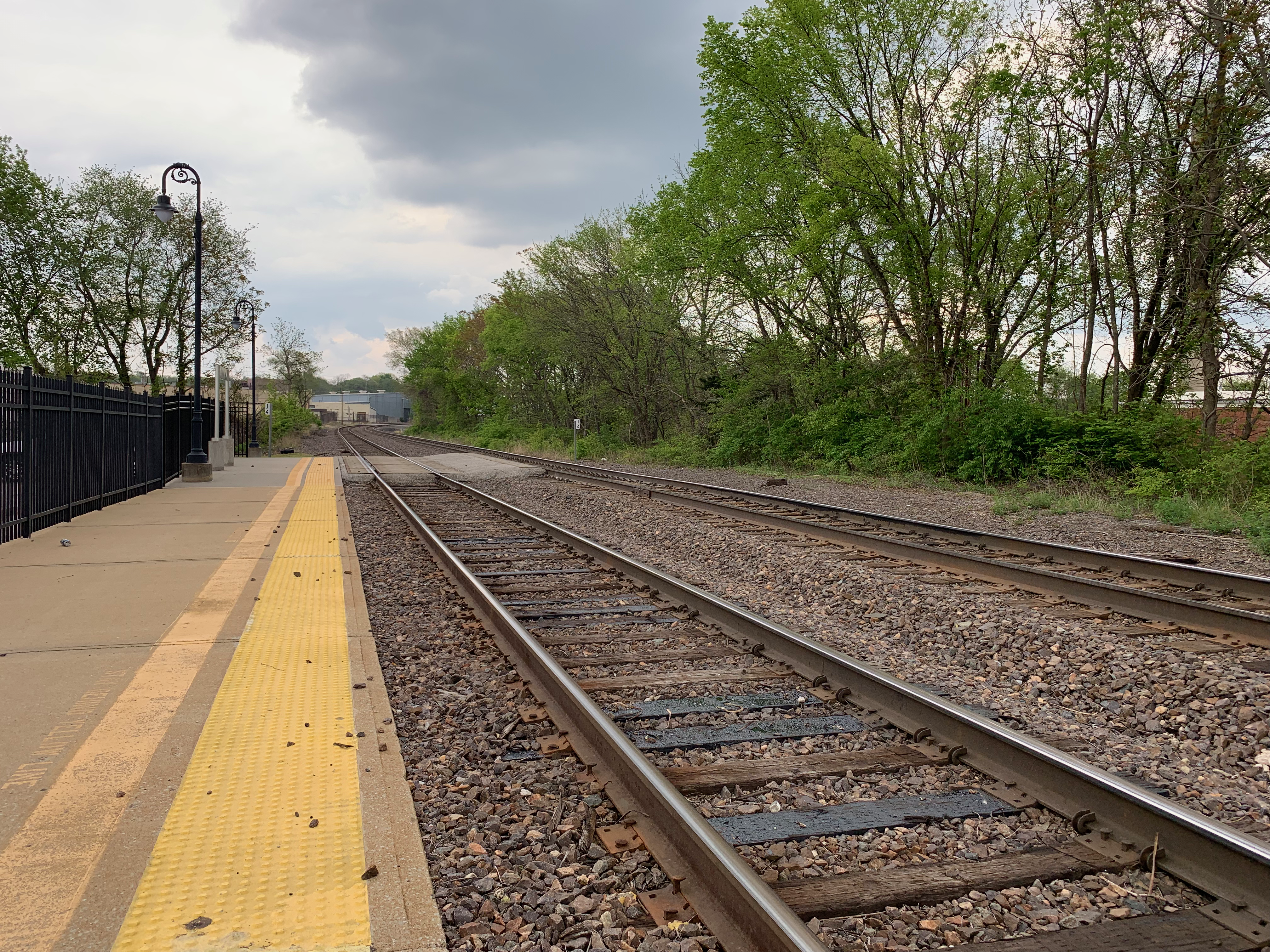
An empty platform under a gray sky.

As I waited a long Union Pacific freight train passed by the station on the further of the two tracks in front of the platforms. [train recording] It was carrying carriage upon carriage of double-stacked cargo containers that had come from one of the many ocean ports to the south and east of Kansas City, marked with the logos of a number of different cargo shipping companies including the Taiwanese Evergreen Group, whose container ship got stuck in the Suez Canal last year. At this point I was joined by a Salvadorean trainspotter who came down to the platform to take some videos of the train. We talked for a few minutes, or rather spluttered back and forth not speaking each other’s languages. I really need to properly learn Spanish one of these days.

“I happened to just meet a rather friendly Salvadorean gentleman who’s here for a conference. Charming. Oh, my Spanish is so terrible, and using French didn’t help. Train’s on time now, should be here in about eight minutes.”

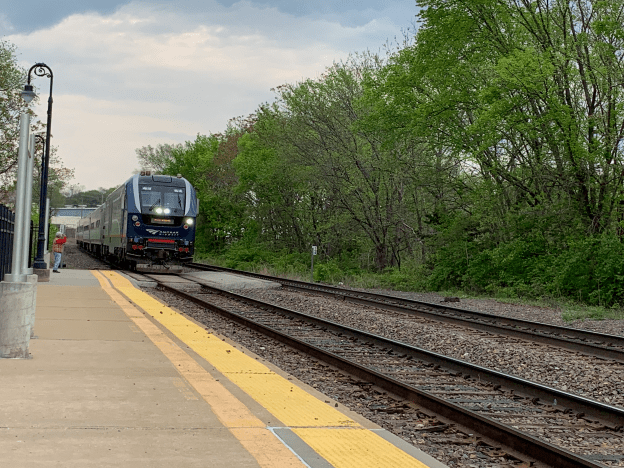
Those eight minutes turned into 10 minutes as the River Runner arrived at 13:30 rather than 13:26, which by my book is alright when it comes to Amtrak delays.

[Sound of the Missouri River Runner arriving in Independence]

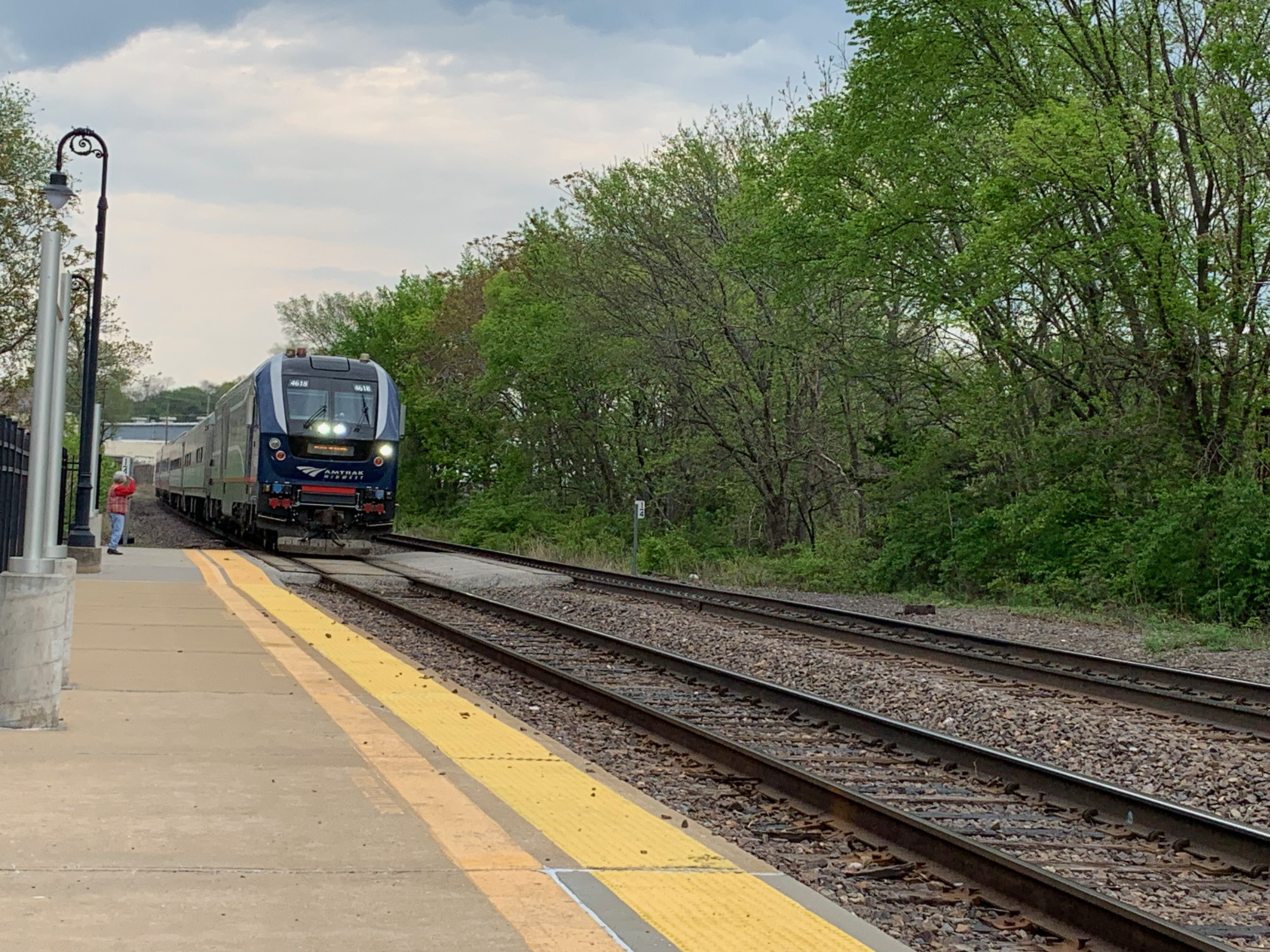
The Missouri River Runner approaches!

I let a handful of passengers disembark before telling the conductor my name, which he recognized from his passenger list, and boarded. The best thing about Amtrak’s service is even in coach on these state-run smaller services the seats really are quite comfortable. Plus, if you just want something to eat to keep you going, you’ll be able to find something in the café car. I was so thankful to buy a bag of really salty chips in there, my lunch for the day. There were probably about 30 other people on the train, most of them traveling into Kansas City from points east in Missouri, but some were on board going to the Draft.

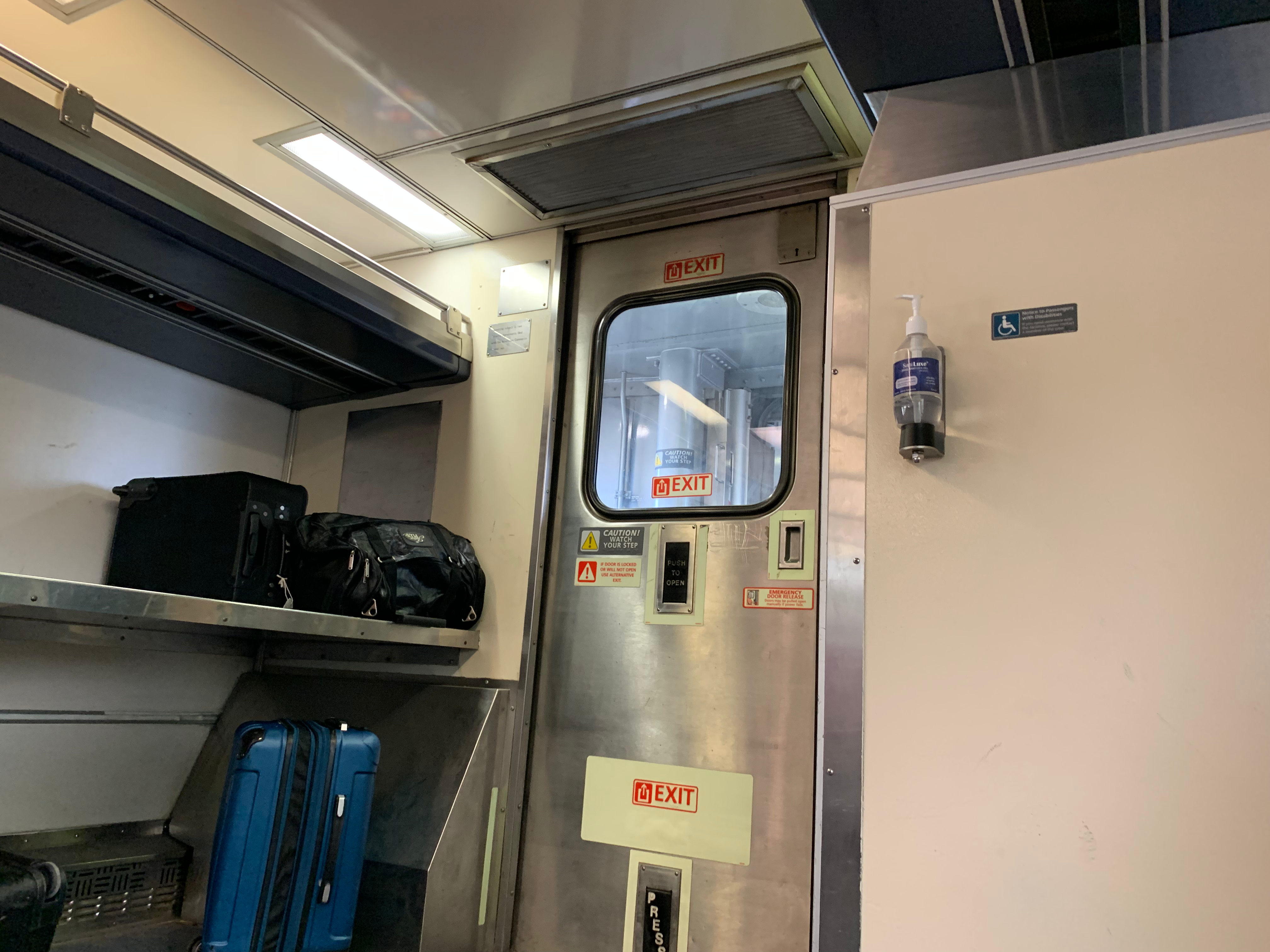
On board the River Runner in coach class.

[Missouri River Runner ambient noise]

This meant that once we arrived at Union Station 20 minutes later, the passengers who disembarked were a good mix of excited at seeing the station taken over by the NFL and frustrated that the station was closed off for its original use, to welcome rail travelers into Kansas City.

The Amtrak platform at Union Station was occupied by a force of about 10 Homeland Security officers, who stared at us emotionless as we disembarked. We were directed by the Amtrak conductors to walk down the platform towards its western end and then to use a gate in the fence separating the railyard from the parking lot beyond. In that parking lot were more Homeland Security officers, stern faced and resolute. They didn’t need to tell anyone not to cross them or try to enter the station, it was pretty clear that wouldn’t be received lightly. Despite the emails that Amtrak sent out every so often in the days before the trip about how the arrival procedure would go there was still some confusion among the passengers as to where we were being taken. I tried to help, having studied the plans as thoroughly as I could to make sure I did what I needed for this trip to happen without a hitch.

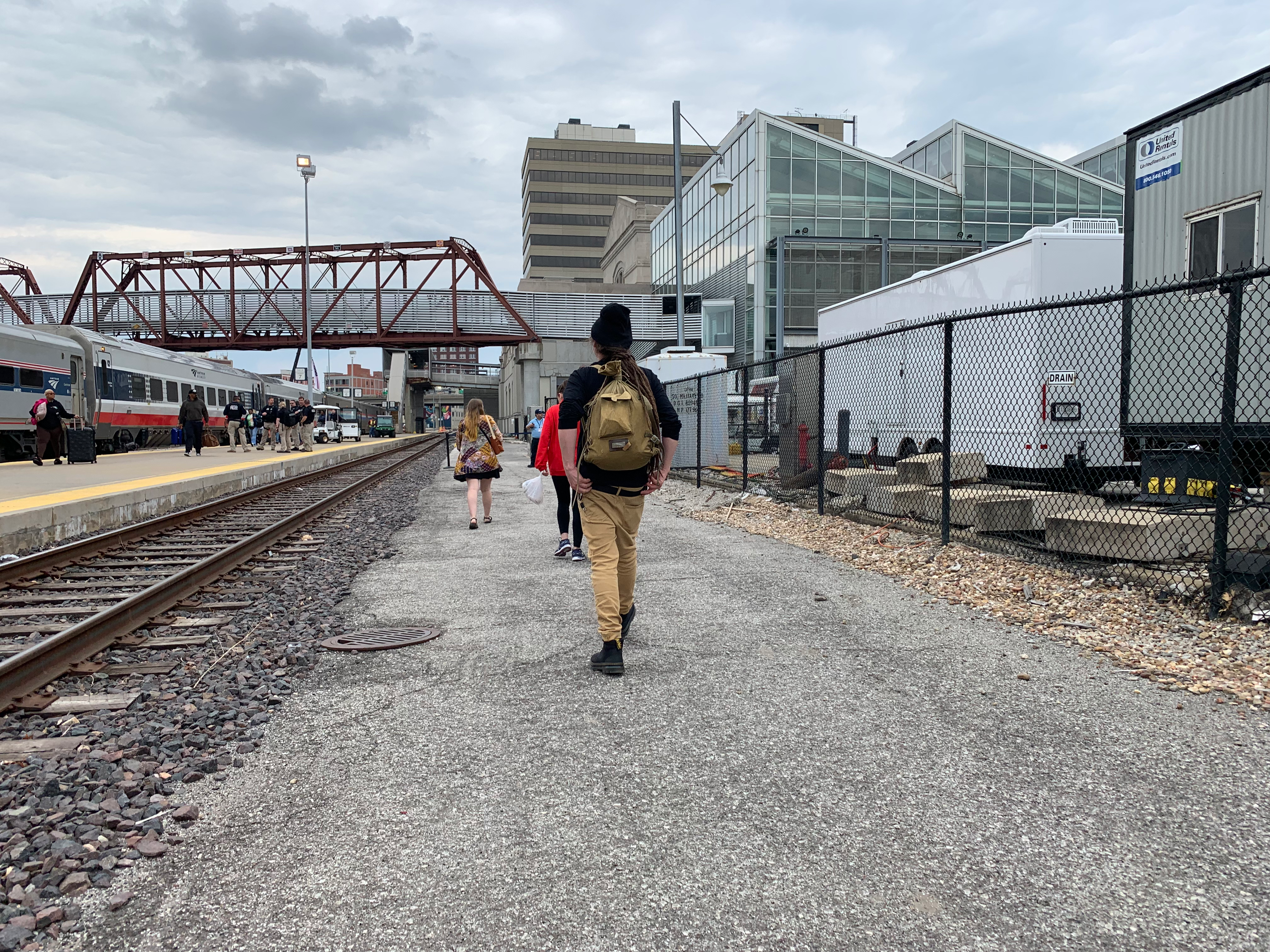
Arriving at Union Station walking from the platform to the shuttle trolley party bus

“Well, it’s going to 25th St, it’s south of here, it’s going down here, past Broadway, and to the left.”

Amtrak Police officers then guided us towards a set of shuttles, in fact trolley party buses, that would take us to the drop off point at 25th and Jefferson, one block west of the IRS building’s Broadway entrance.

At this point, I should say that this whole idea began a few months earlier. I thought about going to the Chiefs’ Super Bowl Rally in February by train, catching the River Runner either in Lee’s Summit or Independence, again just to see what would happen when it got to Union Station, but on that cold, windy February Wednesday I forgot all about it and took the Main Street Max bus downtown with my Dad. On our return trip we got stuck in Midtown for a good two hours waiting for a southbound Main Street bus to pass us. A part of the plan, and the risk, of this Friday’s adventure would be seeing whether the Ride KC city buses would be running on schedule & on route or even running at all.

This time, I’d done more of my homework, so I knew if the buses weren’t running on time or at all, which in my experience as a former bus commuter in Kansas City is sometimes possible, I could be home in around 2 hours on foot. Sure, it’s a 6 mile walk south from 25th Street to my home in Brookside, but I had my best gym shoes on and lots of water available if needed.

Thankfully, I only had to wait for about 10 minutes before a southbound Main Street Max bus arrived at the stop on Broadway at 25th Street. I didn’t get any audio of this, my goal was to get on board and not be left behind or somehow make what was turning out to be the best possible situation into one that I’d come to regret.

I boarded my bus at 14:15 and was at my local stop without any trouble or problems. All that remained was a delightful walk home through the tree-lined streets of Brookside listening to the birdsong and fountains in my neighbors’ front yards.

[Audio from my walk home from the bus]

So, as it turned out, things worked out. One big difference I noticed between today and the Super Bowl rally a few months ago was the crowd control on Pershing Road and around Union Station all together was much stronger. I guess I could put it down to the NFL paying for stricter security than the City of Kansas City did, plus I read a story earlier this week that KCPD still owes the 350 officers who worked and managed the crowds during the Super Bowl Parade & Rally their overtime pay 73 days later. Not having thousands of people, myself included, walking down the middle of Pershing Road and Broadway to try to get out of that crowd that some have numbered up to 1 million people at the Super Bowl Rally really helped keep traffic flowing, and keep the public transportation network moving.

Far less chaotic on Pershing Rd. during the NFL Draft than it was during the 2023 Chiefs Super Bowl Rally.

I’m still frustrated, as were many of my fellow Amtrak passengers, that the Union Station organization sees itself less as a transportation hub, which the station was built for, and more as a big center for the city and a tourist attraction. I like all the things that Union Station has to offer, yet I think it would be better for our city if we increased our focus on the rail services that the station was built for and improved those services to be more frequent, and more useful for everyone in this metro. I’m glad that I chose to take a train into the station rather than try to get a train out of the station during the NFL Draft, for while I was able to disembark on the platform and board my city bus to go home all in the course of 20 minutes, the departing passengers were told to be at the platform 2 hours before their trains left, and were given trailers to wait in or else they’d have to sit outside in folding chairs with few amenities to speak of. It’s a solution, but it’s not great.

So, I’d consider Friday’s adventure to be a success. Truly, the only part of it that didn’t quite go to plan was my decision to leave home when I did, it took me far less time to be driven to Independence Station than I thought it would. Otherwise, I’m surprised to say it all worked. Would I do it again? Sure.

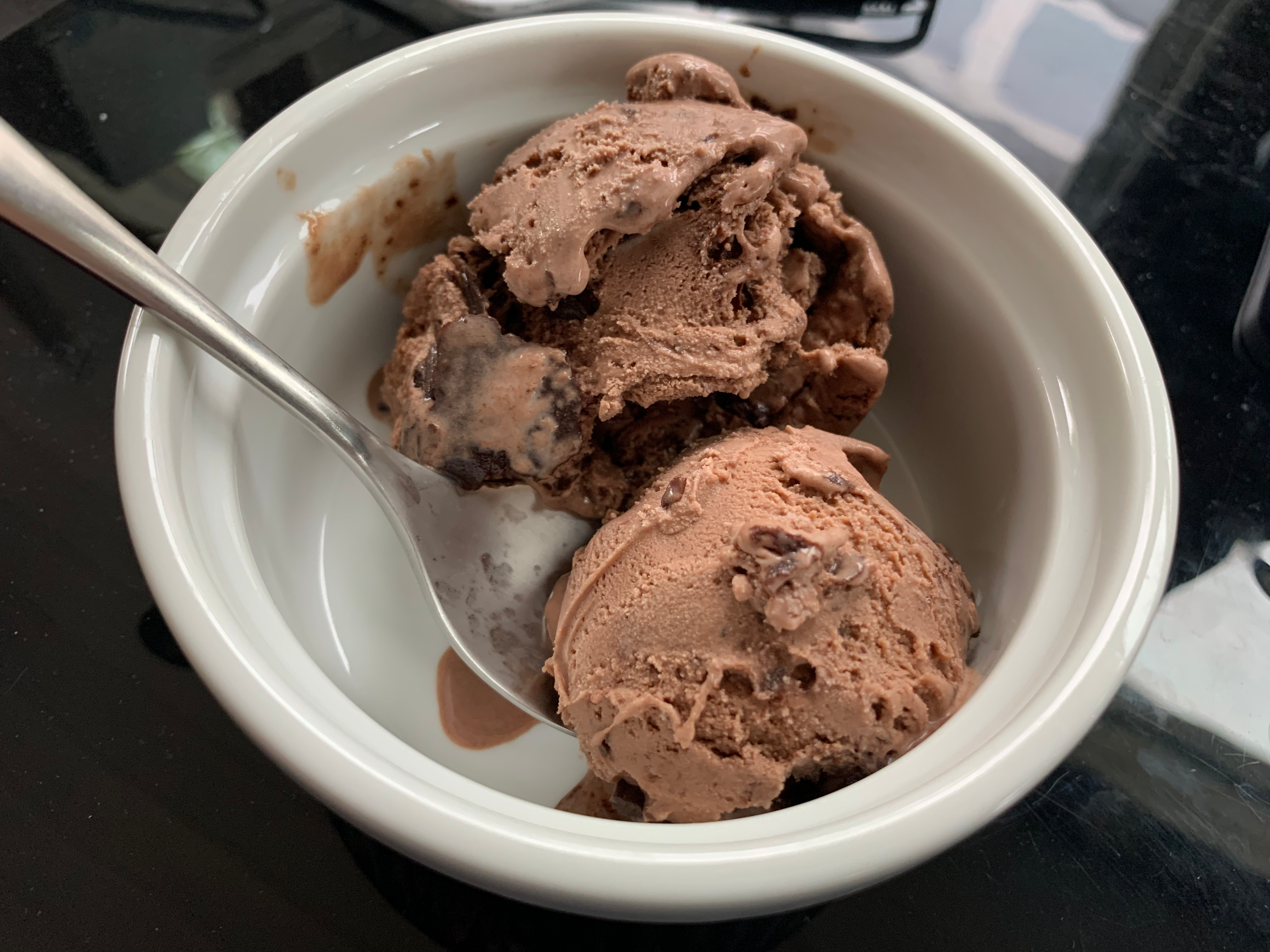
Some celebratory chocolate mudslide ice cream from the Tillamook Dairy in Oregon after the adventure was at an end.

The Dawn of Summer

What follows is an excerpt from my upcoming travelogue, whose working title is The Great American Basset Hound. No basset hounds were harmed, or have even at this point been involved in the writing of this excerpt, or indeed any other part of the upcoming volume. Enjoy!

                   -Seán Kane.

Friday 8 April 2016 came about two hours later than the previous day, as my alarm was set for the much more leisurely hour of eight rather than its far more rushed predecessor of six. I breakfasted with Kristiina in the empty hotel dining room, as the majority of our group had already left for their first meeting of the day at the International Crisis Group. Kristiina had chosen to not attend that particular talk, as she wanted to get some rest and get the most out of the main event of the day, a visit to the European Parliament. We had a quiet breakfast of waffles, frankfurters, and croissants, passing the time with small talk, the very nature of which seemed to be our way of avoiding thinking about our respective journeys that day: hers to London in the afternoon and mine to Annecy just before eleven.

I had everything well planned, and at the chosen time was ready to leave our hotel at Place de Sainte-Catherine for the journey across Brussels to Zuidstation/Gare du Midi. At around 09:45 I said goodbye to Kristiina, turned in my room key, and headed out the door, pulling my suitcase with briefcase mounted atop behind me, as the cobblestones did not work well with all four wheels. I felt a sense of excitement, a sense of anticipatory joy at seeing my parents again for the first time in four months. This was the longest stretch of time that I had been away from them in my life, the longest since we had hugged, or sat together, or ate together. Yet also I felt a pang in my heart, a longing for my friends who would be returning to London that afternoon. Perhaps the perfect possibility would have been if both my parents and my friends could be together, but at least in this instance that was not to be.

Sainte-Catherine Bruxelles

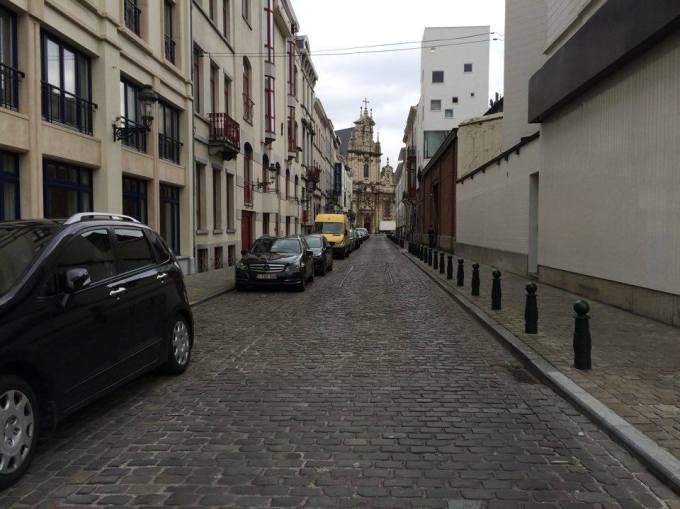
Looking towards Place de Sainte-Catherine in Brussels.

I walked through Place de Sainte-Catherine towards De Brouckère metro station, where I descended down the steps quite clumsily with my suitcase, briefcase, and umbrella in hand. At first I tried to use the fancy larger ticket gates, which are intended for those who have luggage and the handicapped, but I could not figure out how to make them work. Instead, I turned to the normal gates, and passed through fairly easily into the station proper. I was quite surprised to not see any soldiers in De Brouckère station that day, as there had always been at least two or three on patrol there every other time I had gone through that particular station. Soon though I was faced with a problem, as I had forgotten which metro line was the one to take to Zuidstation/Gare du Midi. Remembering that I had taken a direct train going to De Brouckère the day prior, I knew that I would find the proper train eventually, but still I was faced with a bit of an odd conundrum. Eventually though I came upon a bit of luck, and was soon on the T3 prémetro tram heading southbound.

To digress briefly, the public transport system in Brussels is a good model for what my city, Kansas City, could do. A system made up in part of trams (streetcars in American English), but equally reliant on buses and commuter rail could do wonders for Kansas City, bringing more people and business into the city itself, and quite possibly reducing the need for parking in places like downtown. The prémetro idea, namely having the trams move underground for part of their route and operate as a part of the metro alongside the subway lines is a smart way to better connect one’s varying modes of public transport, while saving money by allowing the local transport authority to avoid having to pay for heavy rail services like a subway. This will also reduce the need for private cars along the tram routes, equally leading to both more pedestrians and lower rates of road congestion within the city.

I quickly descended on the escalator, and went down a further set of stairs onto the platform, where the Tram 3 arrived about three minutes later. Boarding, I soon found myself hoping beyond hope that no one else would board and try to sit around me, as my bags were so big that I feared they would only cause trouble between my fellow passengers and I. Thankfully for me, that did not happen, and in large part due to the recent terror attacks in Brussels, the three stations (Bourse, Anneessens, and Lemonnier) between De Brouckère and Gare du Midi were closed. As a result, the journey only took a mere eight minutes, and as we passed along the single track between the darkened platforms at Lemonnier, I began to prepare myself mentally and physically for the journey up from the metro and into Gare du Midi. Then a sudden lurch came as the tram suddenly, and forcefully stopped in its tracks in the tunnel, whose darkness penetrated the hearts of all on-board, leaving everyone still, fearful of what was to come to pass. After a minute we started on our way again, with no reason given to what I assumed must have been some sort of animal moving across the tracks in front of the tram’s headlights, startling the driver into his sudden cessation of travel and apparent use of the emergency brake.

About two minutes later we arrived at Gare du Midi. I stood as the tram entered the station, taking my suitcase, briefcase, and umbrella firmly in hand, nearly falling over in the process as we came to a halt and the doors opened. I passed the people on the platform waiting to get on-board and walked up a short flight of stairs towards an escalator which took me into the shopping centre attached to Gare du Midi. I was surprised to find the ticket gates open, and anticipating that this crevice might merely be temporary, I slipped through, removing myself from the Brussels Metro into, as P.T. Barnum put it “The Land of Egress.” Having egressed into the mainline railway station, I began searching for a signboard which would tell me which platform I needed to go to to catch my first train, a Thalys train to Paris Gare du Nord, which was due to depart in about thirty minutes at 10:43.

Soon I found a screen hanging just above a large doorway leading onto the main concourse, which showed my train as departing from Platform 5B. Looking around, I found another sign, which pointed towards the international ticket office and Eurostar security lines as the site of the otherwise elusive Platform 5B. I walked down another long, dark corridor, which seemed to have been built with an antagonistic spirit towards the Sun above, yet hidden by the thick concrete of the platforms above. As I walked along my way I saw one final police checkpoint with two armed officers standing guard on the platforms above. My mind began to plan ahead, considering that it was entirely possible they would ask for my papers, thus I reminded myself where my passport and ticket were. In front of me was a man carrying two oversized suitcases, which attracted the attention, though only slightly, of the guards. However after a couple words they let the man pass, and it was my turn to step forward. To my surprise they completely ignored me, and I walked swiftly and smoothly through the checkpoint, heading up the ramp to the platform above.

Bruxelles-Midi

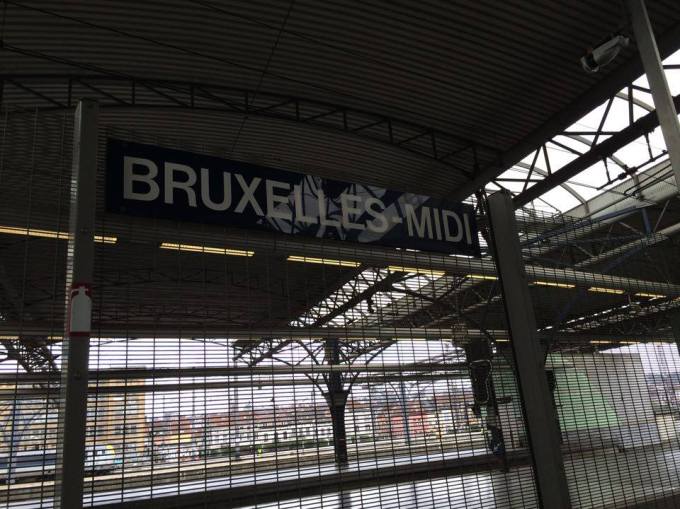
Brussels-Midi Railway Station

The architecture of Brussels-Midi is quite interesting, different from some of the grand old railway stations in London and Paris, but truly a hub of activity for the railways of Belgium, the Netherlands, northwestern Germany, and northeastern France. Rather than have a grand long arched glass roof that is suspended between the two side walls of the platforms, the glass roof at this particular station is more like that at Kansas City’s Union Station, one which is made up of many smaller arches, thus giving the station ceiling more of a wave-like feel. The station itself does not necessarily have the charm of Paddington or Gare de Lyon, but it does have the practicality and methodical feel of much of post-war Brussels. At 10:23 on the dot my train arrived, its deep red paint matching the equally luxurious opera red interiors. I was surprised to see the train already filled with passengers, having not realised that Brussels was not the first stop on its route. Rather, this particular train had started in Cologne, then travelled through Aachen and Liège before arriving in the Belgian capital.

Initially I was scheduled to fly from Brussels to Geneva, meeting my parents in at the Swiss airport only two hours after their own flight from London had arrived at that lakeshore alpine city. However on Holy Tuesday, the 22nd of March, I awoke to some of the worst news one can ever wake up to. Two nail bombs had gone off at Brussels Airport in the departures hall, while a third bomb was detonated in Maelbeek metro station in the European Quarter of the city. In total, thirty-two people were killed by the ruthless barbarity of these extremists. As I readied myself for that day’s class, I kept a close eye on my TV, watching as more and more information arrived in London from the Belgian capital. Immediately, I began to reconsider my route from Brussels to Annecy, knowing that if the airport itself was bombed then the odds were pretty high that I would not be able to fly through that same airport two weeks later.

As it turned out, my intended flight did go out of Brussels, however I was not on it, and my ticket was cancelled. I did not want to step foot in that same hall where a mere two weeks prior such violence and sorrow was wrought. I did not want to walk amongst those ghosts of people who by right should still be warm to the touch, still laughing and smiling, playing and singing. I did not want to stand there and take in the macabre spectacle. I chose a different road to France, one with less sadness, with less pain.

After allowing for those passengers getting off in Brussels to do so, I boarded the train and took my place: Car 26, Seat 76. The seats on Thalys are perhaps the most comfortable seats on any train that I have yet travelled on, and I was in second class. At 10:43 on the dot our train began to move out of Brussels, heading south at high speed towards Paris. I spent the hour and twenty-two minutes that it took for us to arrive at Paris Gare du Nord writing the second half of my account of my previous two days in the Belgian capital, finishing the majority of the work in about an hour and ten minutes, thus giving me ample time to be ready to jump off the train and run to the metro station beneath Gare du Nord.

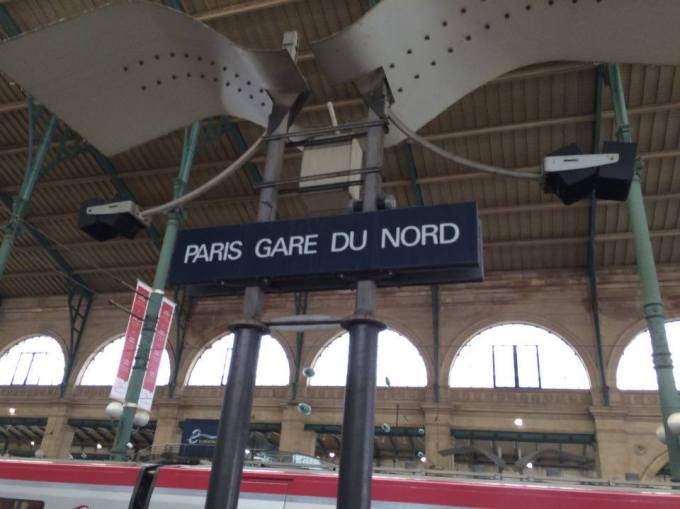
Paris Gare du Nord

“… run to the metro station beneath Gare du Nord.”

While I greatly appreciate the excellent service provided by SNCF, the French national railway company, I spent the better part of the next hour in a panicked rush. I had a mere forty-five minutes to transfer between Gare du Nord and Gare de Lyon. While this would not have been much of an issue had I been using one of the normal metro lines to get from A to B, I had to take the RER D line, a double-decker suburban line that only runs through Gare du Nord about once every twenty minutes. In short, I made it to my train on Platform 7 at Gare de Lyon with two minutes to spare, having just barely gotten on board the train before they closed the doors.

I had requested a seat on the upper level of the train, wanting to have a good view of the French countryside as I traversed that country from the plains around Paris in the north to the Alps in the south. I soon found my seat, No. 105 in Car 7, and soon met the gentleman sitting in No. 104. I figured he had a reservation for that seat, and forgetting my French, I somehow convinced him to get up and move to another seat about two rows back; though I have a feeling he simply wanted a row to himself. I quickly set my briefcase down on the seat next to mine, took out my iPad, portable keyboard, and headphones, and ticket, before removing my overcoat and placing it, my umbrella, and briefcase in the racks above my seat. As I sat down I realised my huge mistake, as I had originally intended to drop off my suitcase in the luggage racks at the end of the car, then drop off my briefcase, overcoat, and umbrella above my seat, then without taking anything out of my briefcase walk up to the café car and get lunch. However, with my iPad, keyboard, and headphones out in the open I figured I had might as well just bring them with.

I first walked towards the front of the train, but soon found myself at a dead end. Turning around, I walked through Cars 6, 5, and 4 before coming upon the Café in Car 3. By this point we were ten minutes out of Paris, and the line in the Café were at least ten people long with only one person working behind the counter. I took my place at the back of the line and waited for a good thirty minutes before ordering a Croque Monsieur and a bottle of Vittel water. Now walking back towards the front of the train, my sandwich on its plate balanced atop my electronics, the bottle and plastic cup in my right hand, whose fingers also had the highly important job of opening all of the doors between my seat and the café, I was stopped by a conductor who asked to see my ticket. “Il est à ma place,” I said, still slightly shaky on remembering my French.

“Comment?” he replied.

“Parlez-vous anglais?” I asked, accepting linguistic defeat. He nodded. “My ticket?” He nodded again. “It’s at my seat. voiture sept, place cent-cinq,” I said, switching back to French for the bit that I knew for certain how to say in that moment of intense hunger and mindlessness caused by the anxiety of my fast transfer.

“Ah, d’accord,” he said nodding and moving onto the next person. I breathed a sigh of relief and moved on through the three cars that were between my seat and I, at last returning to that place I sought out most of all at that point in time: my seat, where I enjoyed a delicious sandwich and watched three hours of a new BBC documentary on the House of Stuart’s time on the thrones of the Three Kingdoms of England, Scotland, and Ireland in the Seventeenth Century. It was at this point that I suddenly remembered that it was Friday, a day when I usually decline to eat meat, partially out of religious observance, partially out of consideration of my usually meat-filled diet and an attempt at improving my health. By this point I had had a frankfurter at breakfast, and a Croque Monsieur, which includes ham, for lunch. In that minute of realisation I thought of a new interpretation of the argument which I had used the Friday prior, that because it was the Liturgical Season of Easter, I could rejoice the Resurrection by eating meat on a Friday. Recognising the fact that this was quite a stretch of reasoning, I moved on and spent the next three hours moving my eyes back and forth between the documentary on my iPad and the fields, hills, and mountains that the TGV flew by at 300 kph (186 mph).

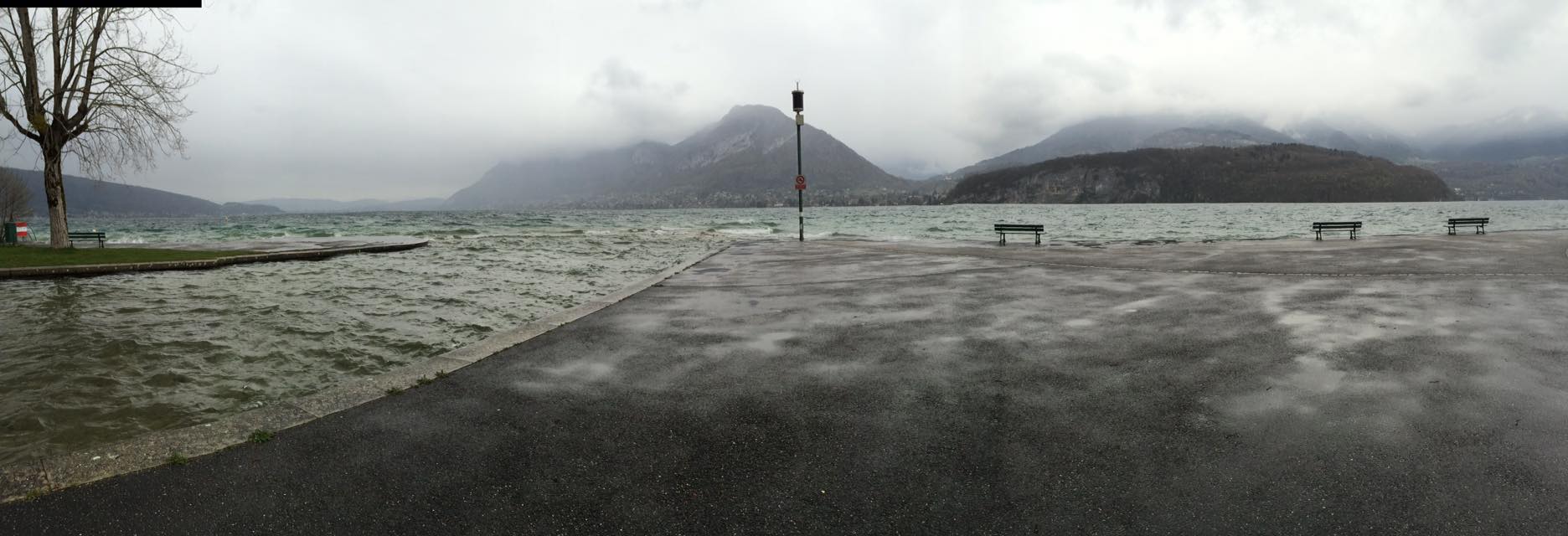
At 16:29 I at long last arrived in Annecy, a city, which to me appeared to still be in the Waterloo of its winter. I left my seat ten minutes prior to our arrival, and was down at the train door, ready and waiting our arrival at the platform when we at long last came to a halt and the door opened. I jumped out of the train, letting my suitcase and briefcase go ahead of me. Then rushing along the platform with the crowd, I soon saw my Mom’s red hair and my Dad’s old Cubs hat in the distance, standing behind a pillar out of the wind. I rushed up to them with a huge, broad smile on my face, and at long last was able to give them that much needed hug, that long sought-after embrace. Our Alpine Reunion had come. I was with my parents again.

Lake Annecy 8 April 2016

Lake Annecy, “which to me appeared to still be in the Waterloo of its winter.”