

The Versatility of Storytelling – Wednesday Blog by Seán Thomas Kane
This week, how the same tools can be used to weave a variety of different stories.
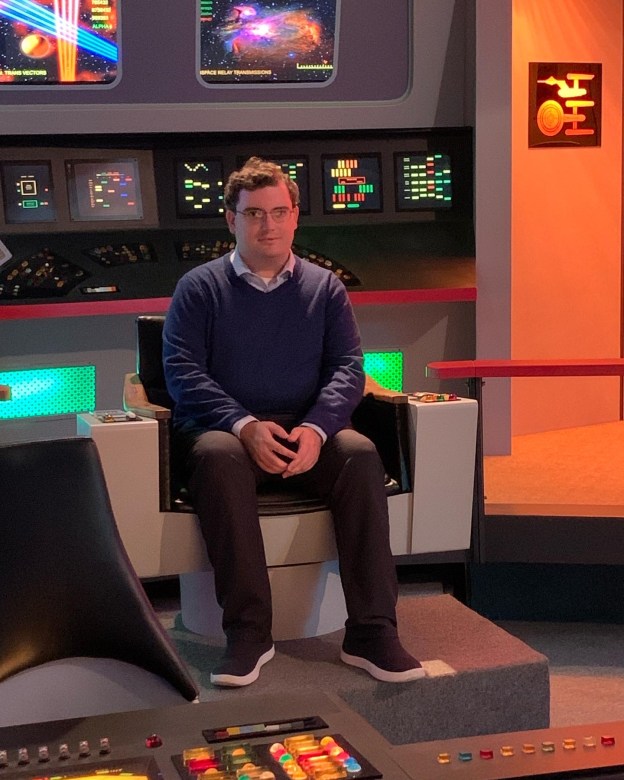
My favorite sorts of stories are the ones where I feel that I’ve gotten to know the characters and can relate to them on a personal level; that these characters are either real people who I’ll never meet or entirely fictional is beside the point. I often remember the stories I was reading, or watching, or listening to more than the experiences from my own life that surrounded new tellings of those stories. This potent relationship is heightened in moments when my own life is dull or foreboding, as in the height of the recent Pandemic when I passed the long days of isolation in my Binghamton apartment or at home in Kansas City watching and reading stories in the Star Trek franchise which I only really began to discover in February and March of 2020.
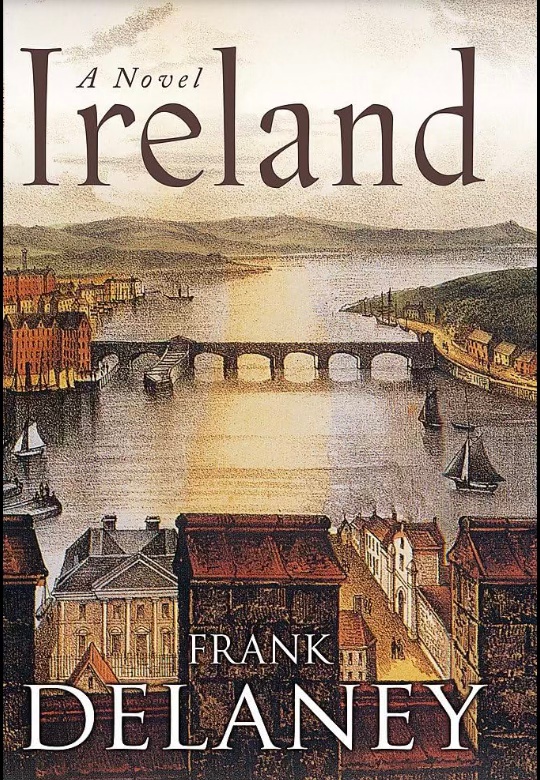
I wanted to be a storyteller from my youth. I read a book by the Irish journalist Frank Delaney called Ireland which followed a young man as he discovered his own passion for storytelling by listening to the seanchaí who often visited his family’s home. I began to write for myself around this time, though my efforts were focused more on poetry and plays at first. A decade ago, I built up the endurance to write a longer-form short story called “Abducted and Abandoned,” and around that time started writing what today is The Wednesday Blog. By the time I was working on my first master’s degree in 2015 and 2016 I’d begun writing a longer work, my book Travels in Time Across Europe, which I self-published in 2017. That one tells the stories I collected from my year living in London, stories of my own adventures traveling from the British capital to other cities across Europe. At the time I imagined that it could become a sort of valuable source for readers seeking to understand the world as it was in that last year before the Brexit referendum and the rise of Trumpism swept across Britain and the United States.
Like the main character of Delaney’s Ireland, I too went to university to study history, to use my passion for storytelling, and as things came about, I’m now close to earning my doctorate in the field. Today, besides my efforts here with the blog I largely am just writing things related to my research. Alongside my dissertation I currently have one encyclopedia entry soon to be published, a book chapter and a scholarly article submitted for editing and am now writing another article related to my translation of André Thevet’s Singularitez. I still try to write the odd bits of fiction, like “Carruthers Smith’s Museum” which I released two weeks ago, or “Ghosts in the Wind” which I’m quite proud of. Yet I haven’t written anything to be acted in years. That’s striking to me, because my first big scribal efforts were for the stage and screen in my high school years. I do have an idea for a play that I might turn to someday in the next few years, yet even writing that here fills me with a sense of loss because it could well become another project that I’m excited about and have good ideas for yet don’t ever get to.
What I love most about writing for the stage and screen is that there’s a chance I’ll get to hear my words interpreted into lived experiences. Ideas that once only existed in my mind could be seen by many others played out before them and enlivened by the actors who utter those words & all the designers of sets, sound, lighting, props, effects, and music who flesh out that lived experience into something relatable and emotional in its truth. In short, to see my words brought to life in performance is to see a world created from what was once my thoughts, the smallest and most intimate of stages that I alone know.
To this end then, I am awed by the versatility of those storytellers who create these worlds in their performances. My erstwhile dissertation advisor Dr. Richard Mackenney, a man for whom I have the deepest respect and consider a friend, often talked about his own experiences on stage playing characters created by Shakespeare alongside many of the greats of the British theatre. In his lectures I saw a performance like any revival of King Lear or any of the Henrys or Richards that Shakespeare wrote. My own lecturing has taken on this same quality, yes at least in part in flattery, because I saw how he kept the rapt attention of most of the 150 or so students in the lecture hall with his art.
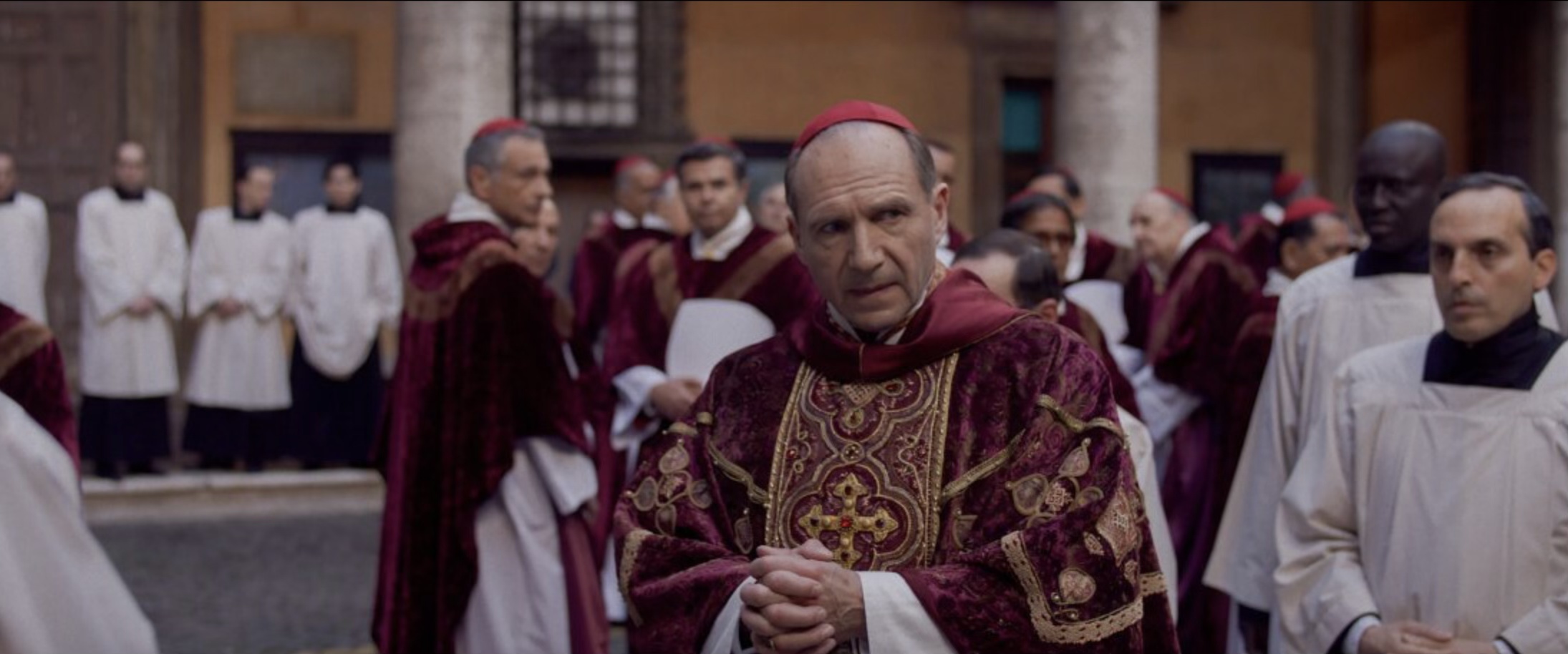
In recent weeks I had the pleasure to see the English actor Ralph Fiennes play two very different yet still akin parts in the films Conclave and The Return. In the former, Fiennes plays Cardinal Thomas Lawrence, the Dean of the College of Cardinals who is tasked with managing a papal conclave on the death of the Pope. In the latter, Fiennes returns to the screen a mere month after he appeared cassocked as an English cardinal this time dressed in rags as Odysseus returned to Ithaca after 20 years away at war against Troy. To see the same man inhabit two characters who on the surface could not be more distinct is a profound testament to the man’s mastery of his art. Both films are pieces of theatre imagined with the realism of a certain type of cinema that is more European than American, with less effects and a minimalist score that has its roots in the French New Wave. In the American context it’s reminiscent of the minimalism that we see in some of the television dramas produced recently for their streaming service by Apple.
I felt that I could instantly relate to Cardinal Lawrence in spite of his high office. The finest leaders I’ve met, whether cardinals and bishops or mayors, senators, and ambassadors are all people first and foremost. They acknowledge the trappings of their offices yet retain the everyman spirit that makes them relatable. I saw this in Cardinal Lawrence more than in many of the other characters who populate the halls of the Vatican in Conclave. That he is an English Catholic cardinal speaks to the post-Reformation moment in which we now live when the old sectarian wars of religion feel behind us and reflects on the Catholic Church in England and Wales that I know from my year living there and going to Mass in London. He speaks for a certain Anglophonic ideal that is democratic yet still upholding of tradition and custom.
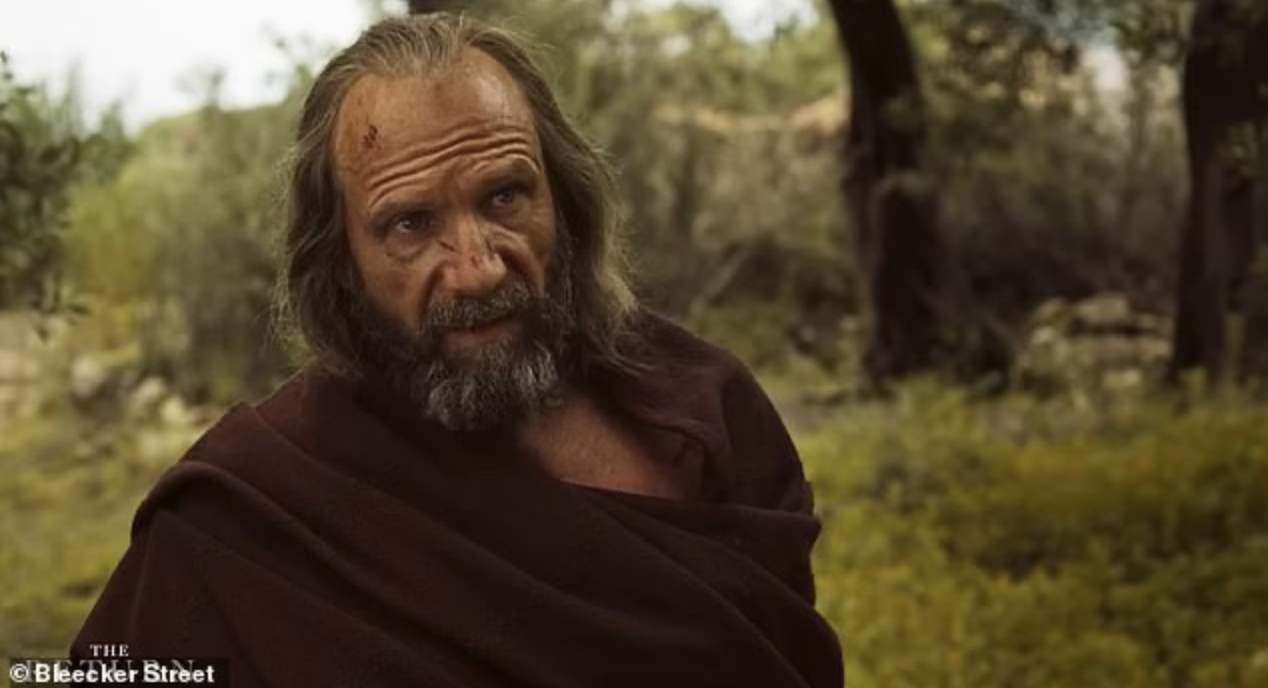
Odysseus in contrast is a man who has seen much and endured much more than I ever hope to. His pain is written across his mostly silent face, and in this role, Fiennes says more with a tortured look than with words. That he only acknowledges his own identity verbally once in the film is telling. This is a man who fears that he won’t be the man that his family have waited for over these twenty long years that he was away. I can merely relate in that I’ve noticed time and again how my home and my city change each time that I’m away. On this most recent return of my own from Mérida on 10 November I was startled in the weeks that followed to see that the last vestiges of the long summer we had in this region at last faded away into a brief Fall before receding into the winter cold far sooner than I expected. Even more dramatic was the city I found on my return from London at the end of August in 2016. Kansas City wasn’t the same place it had been even 8 months before when I flew home for Christmas. There were plenty of stories I’d missed while I was away, one relative who’d been born and who I met for the first time at a far later date than any of her cousins in the youngest generation of my family. In that loss that comes with being far from home I can relate, yet in the pain he suffered and inflicted while he was away at war, I am thankful to lack that experience.
Yet the brilliant versatility of storytelling here expresses itself in Fiennes’s ability to say so much with so little about the war he fought and the trials he faced on his homeward voyage. Odysseus suffered for his efforts, and in his suffering, I see his humanity & feel that I can relate to him. At the end of the film, I felt that I got to know Odysseus for the man he’d become, and that in spite of the Bronze Age setting and the far looser garments, in a film whose costumes are marked by a combination of loincloth & cloak, than anything I would wear, I felt that I could see myself, my own humanity in that moment in time on the island of Ithaca in the second millennium BCE, perhaps the 12th century BCE as the polymath Eratosthenes of Cyrene (276–194 BCE) dated the fall of Troy to 1183 BCE.Where both Conclave and The Return succeed is in placing the lives of their characters in moments and settings which feel real. Odysseus’s Ithaca feels as lived in as Cardinal Lawrence’s Vatican, yet the former seems to be set in a far brighter and younger world with different morals and values than the darker and starker built world which succeeded it in the monumental edifices of the Vatican. Yet both are in my imagination places which I now have visited & seen, and both are places that I would recognize again if I ever returned to them in my memory of those films, or should I ever venture there in my own life to the Vatican or to the Ionian Islands and Peloponnese where the filmmakers created their vision of Ithaca. That stage is as lived in as any seemingly sparser platform that Shakespeare’s Muse might have evoked in Henry V; it is as alive as any other that can be imagined in our art.
 Wednesday Blog by Seán Thomas Kane