Tag Archives: Richard Wagner

Classics

This week I'm discussing what the word "classical" means to me in musical as well as historical and political terms. — Click here to support the Wednesday Blog: https://www.patreon.com/sthosdkane

During my high school years in Kansas City, I would often listen to either NPR or 1660 AM, the local classical music station, on my 30 minute drive south to St. James Academy. In those years I continued to embrace Classical Music, especially opera, as an art form that remains a particular passion of mine, even to the point of several ill-fated attempts at composing.

Still, it strikes me that our term classical has a rather complicated set of meanings and uses. In the musical sense, it’s used to refer to the most highbrow of our genres, the rare musical tradition that still sees performances of music composed within the last 400 years rather than the decade-based music that usually makes the Pop and Rock charts. Classical Music tends to embrace the trappings of old European and American elite while also providing a gateway for the rest of us to enter that refined space and hear the radiant melodies and harmonies that have been the soundtrack for generations.

I began to explore Classical Music in my middle school years, like many Americans my introduction to this wide scope of music was through jazz and Gershwin’s blending of the classical and jazz orchestras. I’ve been wanting to write a blog post all about my appreciation for Gershwin’s music, though my continuing uncertainty regarding copyright law has kept me from ever publishing it or trying to record a podcast version of it. From Gershwin I jumped backwards to Mozart, Beethoven, and the other big names before settling both in the Baroque world with Lully and in the realm of the Romantics with the likes of Johann Strauss II, Verdi, Wagner, and Mahler. Today, I still love the music from all of those composers, yet I’m also drawn to more recent works written by the likes of Debussy, film music that fits in the 20th Century late Romantic tradition embodied by Prokofiev and the German film composer Gottfried Huppertz, who longtime Wednesday Blog readers and listeners will remember is the composer of the score for Fritz Lang’s 1926 science fiction film Metropolis

In the last couple of years, I’ve returned to my first unwitting introduction to classical music through the film music of the likes of John Williams and Elmer Bernstein and found myself drawn to electronic-classical compositions of Vangelis, which inspired the theme for the Wednesday Blog, and the choral classical-crossover albums of Christopher Tin and 2022’s The Moons Symphony written by Amanda Lee Falkenberg. I’ll gladly spend an afternoon listening to Jerry Goldsmith’s themes for the various Star Trek series and Mr. Williams’s compositions for Star Wars as much as I’ll choose to hear a Mozart piano concerto or Bernard Lallement’s Missa Gallica.

I’ve long thought that classical music saw its greatest innovation in the last century when its venue diversified from the concert hall alone to include the sweeping compositions that breathe life into films. Film music to me fits in the long tradition of ballet music. This comes out of the great silent film tradition of a century ago which reached its zenith in the late 1920s with epics like the original Ben-Hur and Phantom of the Opera films as well as with Metropolis and the other great German expressionist films. Sound film took some of the storytelling need off of the music as now the characters on screen could too be heard, yet the power of music in film was already clear. I relish the chance to hear the Kansas City Symphony perform a concert of film music, because even when it’s disassociated from the pictures that score was originally created to accompany that score often holds up on its own as a concert piece.

It is interesting then to consider that within the world of Classical Music the term “classical” generally only refers to a short span of musical composition within the long history of the wider “classical” genre. The Classical Period in music matches up with the Neo-Classical Period in art, architecture, and literature that ran from around 1750 to 1820. This period includes great composers like Gluck, Haydn, Mozart, Beethoven, and Schubert, all of whom worked in Vienna the beating heart of Europe’s music industry in this period. Yet by this definition the word classical implies a separation from the present, clear limits to its scale and span, and an air of antiquity.

In many other contexts the term classical refers to the far older Classical Antiquity of European History, the centuries during the height of Greek and later Roman civilization from around the 8th century BCE to the 5th century CE. When I write about the classics in my work, I am most often referring to people and ideas conceived during this 13-century long span of time. The classical fathers of Western philosophy––Socrates, Plato, and Aristotle––continue to be required reading in modern philosophy studies, while Aristotle and Pliny the Elder have a foundational role in my own discipline in the History of Natural History. Those two, Aristotle and Pliny, were central influences for the naturalists who defined the Americas in the sixteenth century, people like the focus of my dissertation André Thevet, as well as Gonzalo Fernández de Oviedo and José de Acosta who both wrote natural histories of the Spanish Americas, and Conrad Gessner & Carolus Clusius whose works were written about distant worlds from the comfort of their own homes back in Europe.

Classical is a tricky word because it can be interpreted as something which is removed from common life. It stands apart from popular things because of its high status. I’m often struck by the adoption of mannerisms and norms from the classical music world in popular music, there was one concert I attended nearly a decade ago where the musicians on stage went from dancing in circles playing their violins to suddenly, briskly, taking chairs and sitting in a neat orchestral row in them as though playing the part yet ever with a wink and a nod about it. There has been a general loosening of expectations and normalities in our culture, a sort of reaction to the manners of past generations. I tend to see our present moment as responding to the norms of the 1980s and 1990s, politically we are in a period of unstable transition from the Reagan Conservativism and Clinton centrism of the 80s and 90s, though that needle continues to move forward in time and it does feel now that American conservativism and liberalism now seems to be working in response to the policies of the Bush and Obama Administrations as our youngest generation of voters now were born after the Millennium. I’m happy to see more classical musicians on social media releasing short videos of their performances, rehearsals, and daily practice for all to see. That’s one way for the classical to remain vibrant in the present moment. Still, it worries me that today in 2023 classical and jazz tend to be the exception in popular performance compared to pop, rock, and country.
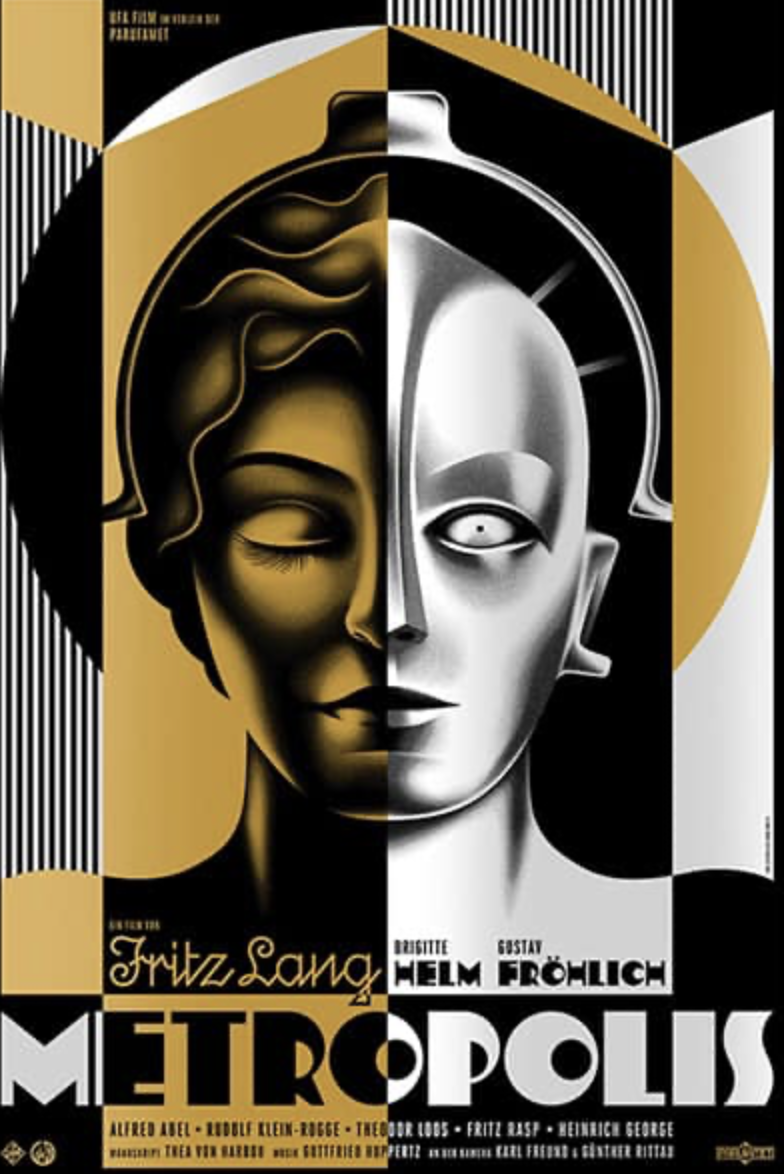

Metropolis

When I returned home to Kansas City about a month ago, I saw an email from the Nelson-Atkins Museum of Art that the Tivoli Cinema, which since 2020 has been housed in the Nelson’s auditorium, would be holding two showings of Fritz Lang’s 1927 silent masterpiece Metropolis. I jumped at the opportunity and immediately bought a ticket for the opportunity to watch this film on a big screen with an audience around me. So, this past Sunday afternoon I showed up for the matinee screening and was even more dazzled by the experience than I’d expected.

I had seen Metropolis once before when it was on Netflix about a decade ago. I remember feeling a bit wary of the film and its story when I first watched it that time. Now I know that watching a movie as monumental as this one on a screen as small as my laptop does a disservice to the whole experience. Metropolis was made to be seen on the big screen with a live orchestra, or at least a live organist, adding a whole extra dimension of music to this already vivid story. In the case of this weekend’s showings, Metropolis was accompanied by a 2010 recording of the original Gottfried Huppertz score performed by Berlin Radio Symphony Orchestra conducted by Frank Strobel. I’ve since played that recording again on iTunes while grading essays this week and have felt just as profoundly moved by it as I was in the theatre on Sunday.

It occurred to me while listening to that album again this week that as much as this score is a film score, listening to it on its own it feels far more like ballet music. In the past I’ve written about how I feel that ballet and silent film share similar characteristics born out of their mutual need for wordless expression to tell their stories. As I listened to Huppertz’s score without seeing the images in front of me I found myself thinking back to each particular scene in Metropolis as I’d seen them the day before. Yet in the moment as I sat in the third row of the Atkins Auditorium watching this spectacle unfold before me, I felt that Metropolis was more operatic than balletic in its very character. These were actors performing at a time when the quantity of film influences were far fewer on their lives thanks to the relatively recent invention of motion pictures, film at that point was only about 40 years old. 

In Metropolis I saw echoes of Wagner and Strauss as well as hints of the future, all the films and television shows that would follow it. There is a scene near the beginning of the film’s first act, the 45-minute prelude, where a shift change of the underground workers occurs that seemed strikingly similar to several scenes from the new Star Wars: Andor series released on Disney+ this Fall. Don’t worry, no spoilers here. There are many elements of Metropolis that certainly have been influential, look no further than the Machine-Man, the poster child of Metropolis that wreaks havoc on the city and nearly destroys it and all who live within it. There perhaps we see the ancestor of Doctor Who‘s cybermen, Star Trek‘s Borg, or Alicia Vikander’s character in Ex Machina.

In the last few days, I read in Variety that there’s a TV series remake of Metropolis in the works for Apple TV+. While I’m normally hesitant about remakes of classic films or shows, the new Star Trek: Strange New Worlds which sees the adventures of the original 23rd century USS Enterprise before it was captained by James T. Kirk, has made the idea more amenable to me, though that’s likely because Strange New Worlds does the whole reboot idea perfectly. I’m most curious to see how Apple TV+’s new Metropolis will depict the city of tomorrow. In 1927 Fritz Lang’s original film used the great art deco skyscrapers of New York built of brick and steel as his model. Will this new series seek to depict the sort of futuristic architecture that I’ve collected on my architecture Pintrest board, filled with gentle curves, evocative colors, and dramatic lines? That remains to be seen.

Metropolis was a gripping film to see, and while long, with some aspects perhaps a bit old fashioned to our tastes, notably the over-the-top heart-gripping that happens throughout that made the crowd around me laugh from time to time, it still has my attention caught even now a few days later. Silent films speak to us in a way that their talking counterparts created after 1927 simply don’t. They tell stories in different ways, adjusting their style to fit the technical limitations of their time. I’ve always been drawn to silent films for this reason, and perhaps I’m drawn to ballet for much the same reason. After all, Chaplin was as much a dancer as he was a slapstick comic. Metropolis is a testament to the time and place in which it was made, Weimar Germany in the 1920s. In Joh Fredersen, the master of Metropolis I see Henry Ford, both in his character and in his physical appearance. I see fears about extremism on all fronts, and a call for unity and dialogue in the face of anger. I wonder what the new Metropolis will be like?

Essay Writing

Photo by picjumbo.com on Pexels.com

I’m at a rather fun point in my doctoral studies. Today, I get to spend my days working on my dissertation and serving as a Teaching Assistant for a class. In my TA duties here at Binghamton, I’ve been assigned two sections of 25 students each, so when they submit essays, I find myself grading 50 of those in the course of a few days. It’s a lot of work, and in the moment the grading inspires a variety of emotions in me, from joy at a wonderfully written essay to disappointment at one that could’ve done better with just a little more effort.

One of the greatest boons to my work as a teacher is that now, after 12 years in college and 27 years overall as a student, I’ve finally made sense of how to write an essay. This word, used so often in academic writing, never really clicked for me. I knew I was supposed to write a research paper that had a introduction, body, and conclusion, but never really got the structure my teachers and professors were going for beyond that. It took my own transition from student to teacher for me to really understand that an essay is an extended argument. 

It also took for me to start studying Renaissance French Humanism and Natural History for me to really understand the origins of the essay with Michel de Montaigne’s 1580 book of Essays, where the term originated. These were reflections on a variety of topics, from children’s education to cannibalism and everything in between. My own Wednesday Blog is in some ways a nod to Montaigne in format. Montaigne’s essays sought to describe his world as he saw it and understood it, in all its rich detail and complexity.

In the academic essays that I write, from the quick 3 to 5 page papers I used to write for my undergrad history classes at Rockhurst to my dissertation, which in many aspects is itself a long essay, all have the same core structure and spirit. Yes, at its barest bones the essay is made up of an introduction, body, and conclusion, but there’s so much more rich detail to a good essay than just that. 

This semester it really occurred to me that the introduction ought to be made up of three main things: something to catch the reader’s attention, a thesis statement laying out the essay’s argument, and a brief summary of the main points with some context in the existing literature included if you’re writing on a graduate or professional level. Any of my colleagues reading or listening to this will either find their eyes are glazing over here or are instead laughing that I only really figured this out this late in the game as I was writing my dissertation.

The body is more than just the main points of the essay, it’s the real meat of the work, the rich quotes and analyses of the sources, the connections made to other works in all their intricate splendor, the quotable lines that help the essay stick in the reader’s memory and look forward to reading more of your work in the future. I still would say though that the thesis remains more important than the body, after all the body isn’t going to make sense without a strong central argument, a beating heart at the core of the entire work. I often tell my students this and have even begun advising them to underline their thesis statements to help them keep that heart in mind as they continue to flesh out the rest of their written creation.

Finally, there’s the conclusion. It’s a summary of the main points of the essay, a restating of the thesis with the memory of the body fresh in the reader’s mind. The conclusion is a chance to leave your reader with a really strong impact from your essay, something to find them wanting more. 

For a while now I’ve often thought of the essay as a form functioning for scholarship and literature as the symphony functions for music. In both cases there are different styles and methods of elevating the pure form into an art that reflects the writer or composer’s personality and craft, that leaves the audience feeling something different, something that they can best describe as emblematic of that work’s author. In symphonic music there are clear distinctions between the classical composers like Haydn & Mozart and the romantic composers like Beethoven & Brahms. Sometimes, the best way to end an essay is to borrow an idea from the romantic symphonies and even the romantic operas of composers like Gounod and Wagner: let the main themes finish and then have a sigh to really round things off. If you listen to the finale of Wagner’s Götterdammerung, you’ll hear this very sigh, as if all the energy built up in the composition over the last few hours is nearly extinguished but has one last breath. If you can write an essay like that then bravo.

I’m writing this in the midst of an extensive round of edits to my dissertation, going line by line making corrections, clarifications, and all around tightening down my work until it really just elevates the core form of my thesis. In the last year since I started writing this dissertation, I’ve learned a great deal about how to do this job, and I hope I will in future avoid some of the great pitfalls that I’ve caught myself up in time and again in my studies.If you’re a fellow academic, or interested in academic writing, I highly suggest you go listen to my friend Kate Carpenter’s podcast Drafting the Past, which is all about the process of writing history. It’s a wonderful service to the profession that Kate’s doing. Enjoy your week!

Optimism and Belief

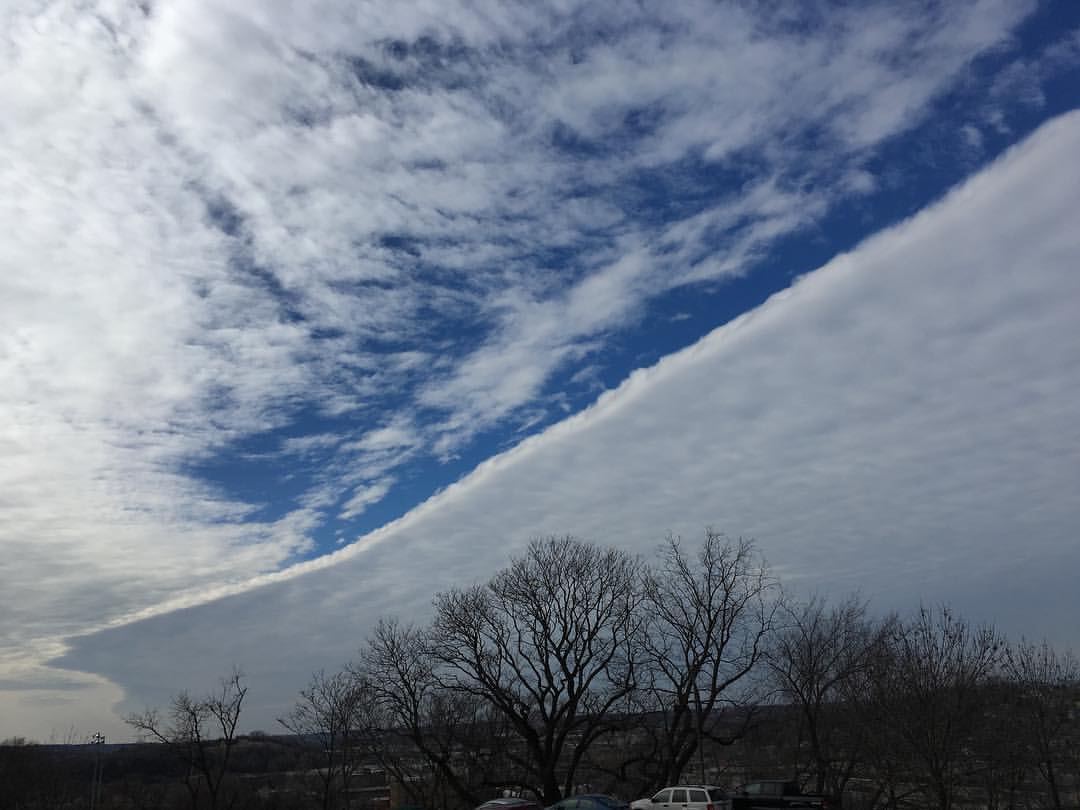
Cloud-line

In my life, there have been two things standing as constants: optimism and belief. I have embraced these two guiding principles, and striven in due course to live a better life as a part of the wider human community through them. For me, my faith as a Catholic and as a Christian is an inherently positive one; it is a faith in Resurrection, in Union with the Divine Essence, in the fulfilment of the circle and restoration of humanity to paradise.

Yet to allow this faith to persist I have found myself inherently optimistic, always expecting the best from people, and looking at even the darkest of situations with the hope that is required to believe in something greater than Reality. True, this is blind faith, something entirely counter to the principles of our scientific age, yet in the end is not blind faith equally necessary in a scientific setting? After all, we have yet to learn all that there is to know about nature, our sciences are as of yet unfinished in amassing the totality of reality. Therefore, if we are to accept science as an effective and prosperous measure of nature, then we must also accept that that measure is man-made and limited in its scope.

I see those things measured by science each and every day, and I am in awe of their wonder. I see how the Sun rises in the east and sets in the west, how the stars circle in the sky as the year passes. I hear the wind bristling through the leaves of the trees, and across the tall grass prairies. I have known what it means to be caught on the beach at high tide, and to be at the mercy of the awesome tempestuous power of lightning. Past generations might well have worshiped these forces of nature, seen them as gods like Zeus, Taranis, or Ukko, yet I see them as terrestrial, as natural, as real. The true force, the veritable essence to be worshiped is far greater than even the rolling thunder or bristling lightning.

In these circumstances I am reminded of the American hymn How Great Thou Art, yet in the smallest of moments too I am reminded of God’s coming to Elijah on the softest breath of wind in the cave. Divinity and the essence that made all that we know and love is so far beyond our own understanding, yet in that realisation I find my peace.

Often it can be said that I find my belief renewed through music, through that purest, most mellifluous of sound. Some of the most sacred moments of my life, the most moving moments in the story of my belief have come in moments of music, from operas like Mozart’s Die Zauberflöte to the Pilgrim’s Chorus in Wagner’s Tannhäuser to great orchestral outbursts of emotion as in Stravinsky’s Firebird and most all of Mahler’s symphonies; yet equally spiritually potent for me are the more recently composed naturalistic Mass settings that I sang with the Rockhurst University Chorus while an undergraduate student there from 2011 to 2015. Music has long been said to be the Voice of the Heavens, and certainly it has appeared to be so to me.

Yet what I find the most fulfilling to my belief in the Divine is humanity. In the Christian tradition we believe that humanity was “Created in the Image and Likeness of God.” For me, this means that our souls particularly were made in the Divine Image, but that our bodies also have Divine inspiration. When I see humanity, with all our faults, all our problems, all our pain and anguish, I can’t help but be swept off my feet in grief. Yet at the end of the day I always remember the old adage echoed by Little Orphan Annie, “Tomorrow will be a brighter day.”

I believe that one day that will come true, that one day all will be sorted out in our capitals, our courts, our executive palaces. I believe that one day we will march through our cities, not in protest or in anger, not out of anguish or to alleviate our suffering, but because we are celebrating that most essential characteristic of our humanity: liberty. I believe that someday all humanity will walk together, singing in unison, a multitude of voices, of languages, of cultures and creeds making one song. I believe in optimism, and I am optimistic about my belief.