Tag Archives: Ride KC

The Second Quarter-Century

The Second Quarter-Century Wednesday Blog by Seán Thomas Kane

This week, looking ahead to the next 25 years here are three things that I hope we see become ordinary things by 2050. — Click here to support the Wednesday Blog: https://wwww.patreon.com/sthosdkane


This week, looking ahead to the next 25 years here are three things that I hope we see become ordinary things by 2050.


Last week I started the New Year off in this publication with a reflection on the technologies that I remember looking forward to in the first quarter of the twenty-first century. Today then, I want to look ahead to the next quarter, to the years leading up to 2050. On New Year’s Day of that year, I will be 57 years old, well into my career with hopefully a good wind in my sails from successes and contributions to society in the decades previously built upon the work that I am doing now. Perhaps by then I will watch the New Year’s ball drop in Times Square with my wife and children to be, though that’s one dream that remains more elusive to imagine than any professional triumph. 2050 feels like a strange milestone to me, in part because 1950 feels far more tangible to me growing up surrounded by people who were beginning their own lives in that middle decade of the twentieth century. Yet as much as I feel a bond to the century of my birth, my own legacy will likely be numbered among the figures of the current century rather than the last.

Our century has tremendous potential to be one of the most consequential in the long history of humanity. We’ve already seen dramatic changes in the first 25 years which have defined the break in our current moment from the century we left at the millennium from new wars and economic recessions to the COVID-19 pandemic and dramatic advances in technology and global interconnectedness. A significant cause for discomfort in this century is the rift between those who see globalization as a threat to individual, local, regional, and national identity and the increasing interconnectedness of our world. At the beginning of this century the easiest and most affordable way for us in the United States to be in touch with relatives in Britain and Ireland was by letter, whether handwritten or typed, and sent by air mail to arrive within the next two weeks at its destination. We could place international phone calls, I remember doing this in early 2001 when my Mom was in London on a business trip, but those were far more expensive. The expense of international calling over regular phone networks remains an annoyance, yet today we have other options of placing voice and video calls over the internet that have existed since near the beginning of the century which fill this role.

The increasing ease of global communication is one clear sign of the advances of this century that I applaud. Just before writing this, I spent a delightful hour watching a live public lecture from the Linnean Society of London over Zoom in which I was able to pose a question in the Q&A box that was read by the moderator at her desk nearly 7,000 km across the Atlantic and answered soon after by the speaker. Throughout my undergraduate I often heard the maxim that I should earn my doctorate in the country in which I wish to teach, yet the little islands of national academies that we’ve built in the last two centuries are fast growing into each other’s back gardens to the extent that in my experience there isn’t so much an American and a Canadian academy but a North American academy which also has close links with the republics of letters in Britain, Ireland, and across Europe with more disparate connections in East Asia, Australia, and New Zealand or even South Africa. I’ve yet to present at any conferences on the far side of the Pacific though I have attended conferences held at the Universities of Auckland and Sydney over Zoom that were held the following day, or thanks to the disparity of time zones late in the evening here in North America.

The lecture in question

Yet again, these are technologies which already exist and even if they have room for improvement, they fit better into that first of these two entries about the technological innovations of the twenty-first century that I am most excited by. This week then, I intend to discuss three technologies which I hope will see fruition in the next 25 years that would have a noticeable influence on all our lives for the better. All three of these technologies are already being developed, and in some cases merely need implementation here on this continent as they already are elsewhere. We seem to be in a moment of reaction when the parking brake is firmly grasped in the hands of those who fear any further forward motion on the part of our society whether for their own portended loss of power or their general fear of the unknown. Both are understandable, yet as Indiana Jones learned in his last great challenge in The Last Crusade there comes a point in life where each of us needs to take a leap of faith and trust in ourselves and our future.


The first of these three technologies which I’ve read a great deal about in the last several years and which is proven in a laboratory setting is the use of nuclear fusion to create a new source of energy and ideally power to keep our lights on. One great worry I have among many others about the incoming administration which will take office next week in this country is that they will slow or even stop the construction of new renewable energy facilities: solar and wind farms in particular without any significant scientific foundation for that decision. We ought to be developing ways that solar panels can be integrated into the shingles and tiles atop our roofs so that they aren’t an extra addition to any edifice. Likewise, wind farms in places like the deserts, the Great Plains, and off our coasts (ideally still out of sight of the beachgoers) where the wind is strongest and most usable would help to eliminate our use of fossil fuels including natural gas and coal which are still in use in parts of this country.
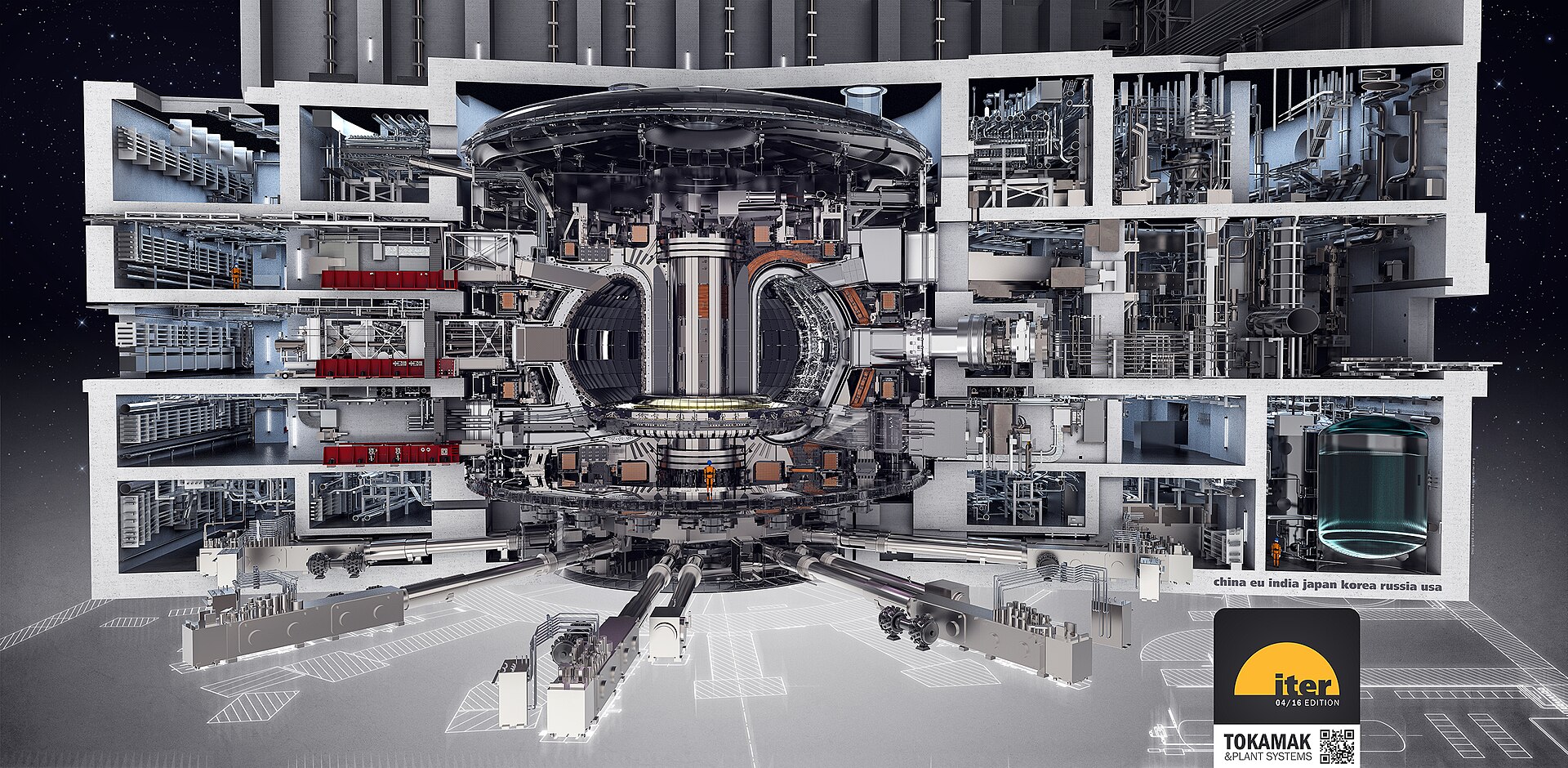
A drawing of the ITER Tokamak and integrated plant systems now under construction in France. CC by 2.0 Oak Ridge National Laboratory.

The prospect of nuclear fusion to be downsized from its current necessary laboratory dimensions to something that can be implemented on a local level in cities and towns around the globe is what I look forward to most. The effects of human influenced climate change are well and visible around us. Look no further than the extreme shifts in weather year round, or the prolonged droughts across much of this continent. Look at the winter wildfires that burned around Boulder, Colorado and west of Kansas City in Central and Western Kansas in December 2021. Look at the wildfires burning down neighborhoods in the Los Angeles area today! We need renewable and clean energy sources that will continue to power our civilization if we’re going to survive in this brave new world that we’ve created for ourselves. We’ve already reached the threshold of a 1.5ºC increase in mean global temperatures, and we only seem to be letting things get worse. I’m reminded of the beginning of the story of the Flood in Genesis and how “the wickedness of human beings was on the earth” and “[corrupted] the earth” itself. Are we not doing the same thing by not wedding our continued innovation and progress with a heart for preserving the Earth that has nurtured us to which we too contribute? If we can develop technologies from our own invention which will cultivate a stronger relationship with the rest of nature on this planet in whose cradle we evolved as every other living thing we today know did then what are we doing?


Secondly, one of my great passions outside of academia is the promotion of high speed rail here in the United States. The YouTuber Alan Fisher recently released a video which spells out the utility of high speed rail as a realized technology in contrast to the fantasized options like the Hyperloop that caught our national attention several years ago and even resulted in a thorough study by the State of Missouri to build a hyperloop line between Kansas City, Columbia, and St. Louis. I’ve had my fair share of experiences on high speed rail in Europe and having that option alongside air travel would go a long way to building a far more equitable society in this country. Today, unless you choose to drive the 3.5-4 hours it takes to get between Kansas City and St. Louis, you have the choice of 2 daily flights on Southwest, 2 daily trains on the Missouri River Runner, or 8 daily bus services provided by Greyhound and Flix Bus. While the flight itself is quite short, rarely more than 45-50 minutes from takeoff to landing though including travel to & from each airport and waiting time this option grows closer to 4-5 hours in length. Meanwhile, the train takes 5.5-6 hours and the bus usually 4.5 hours to cross the state. With high speed rail we could certainly cut the travel time either along the Missouri River Runner or a new route along the I-70 corridor with one intermediate stop in Columbia for a service that could well be faster and more convenient than driving. The Missouri state high speed rail proposal from the High Speed Rail Alliance, of which I am a member, calls for 10 daily roundtrip services between KC and St. Louis at least making it possible for residents of either city to make day trips to the other, something that is very difficult to do by any option today.
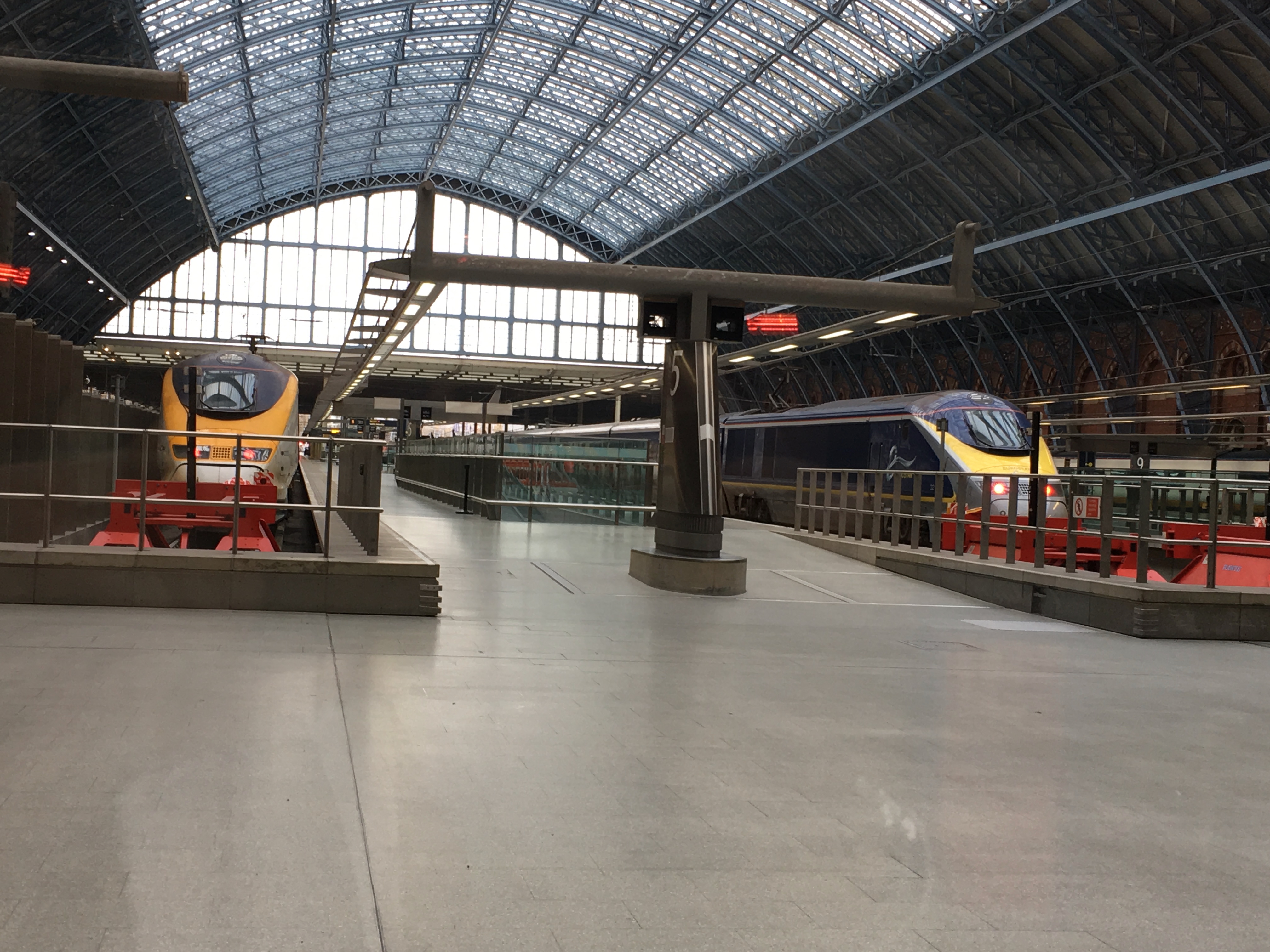
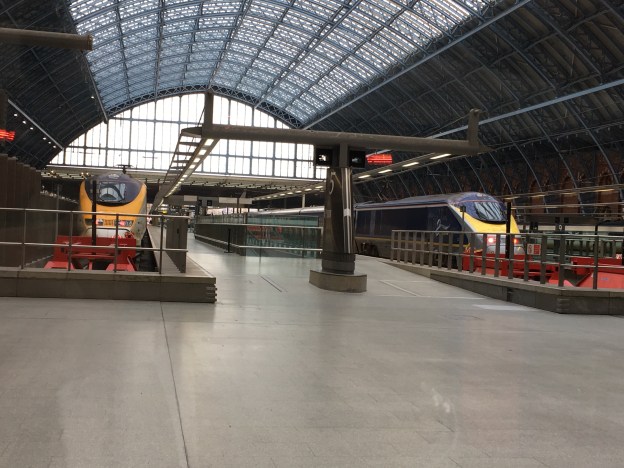
The Eurostar hall at St Pancras International in London. Photo by the author, 2016.

In Kansas we have a more tangible possibility for high speed rail thanks to the work of a YouTuber who goes by the channel name Lucid Stew. He released a video this summer theorizing what a High Plains HSR line between Denver and Kansas City would look like. The total travel time largely following I-70 would take 3.5 hours compared to the 4 hours it takes to fly between the two cities with airport transfer times included. There are currently on average 7 flights per day between these two cities offered by Frontier, Southwest, and United and there is at least 1 daily bus between the two cities. The drive across Kansas is a dull one, the Great Plains really do get to seem flat once you get west of Salina until essentially the Denver Airport exit. I remember falling asleep in the passenger seat on my last drive from Denver back to Kansas City in June 2021 in a trip featured in the Wednesday Blog two-parter “Sneezing Across the West” and dreaming that there was a high speed train running between the two cities that ran frequently enough (a minimum of 10 trips per day each way) that allowed your average Kansas Citian the opportunity to get off work on a Friday afternoon and go spend the weekend in Denver or up in the Rockies with enough time to come back on Sunday evening to make the start of business on Monday. It was one of those dreams that really sat with me, and made me wonder whether it could be possible to build this line in the future? I think the key feature that would make this happen would be if it were the primary transcontinental link between a Midwestern high speed rail network centered around Chicago and the easternmost node in a Western network that included lines reaching as far as the Pacific Ocean. While it’s far less likely that most travelers would take high speed rail from Kansas City to Los Angeles, San Francisco, Portland, Seattle, or Vancouver, we should still think on a continental scale because there could be travelers leaving from Denver who might want to make that trip, putting the High Plains HSR line into the broader North American network.
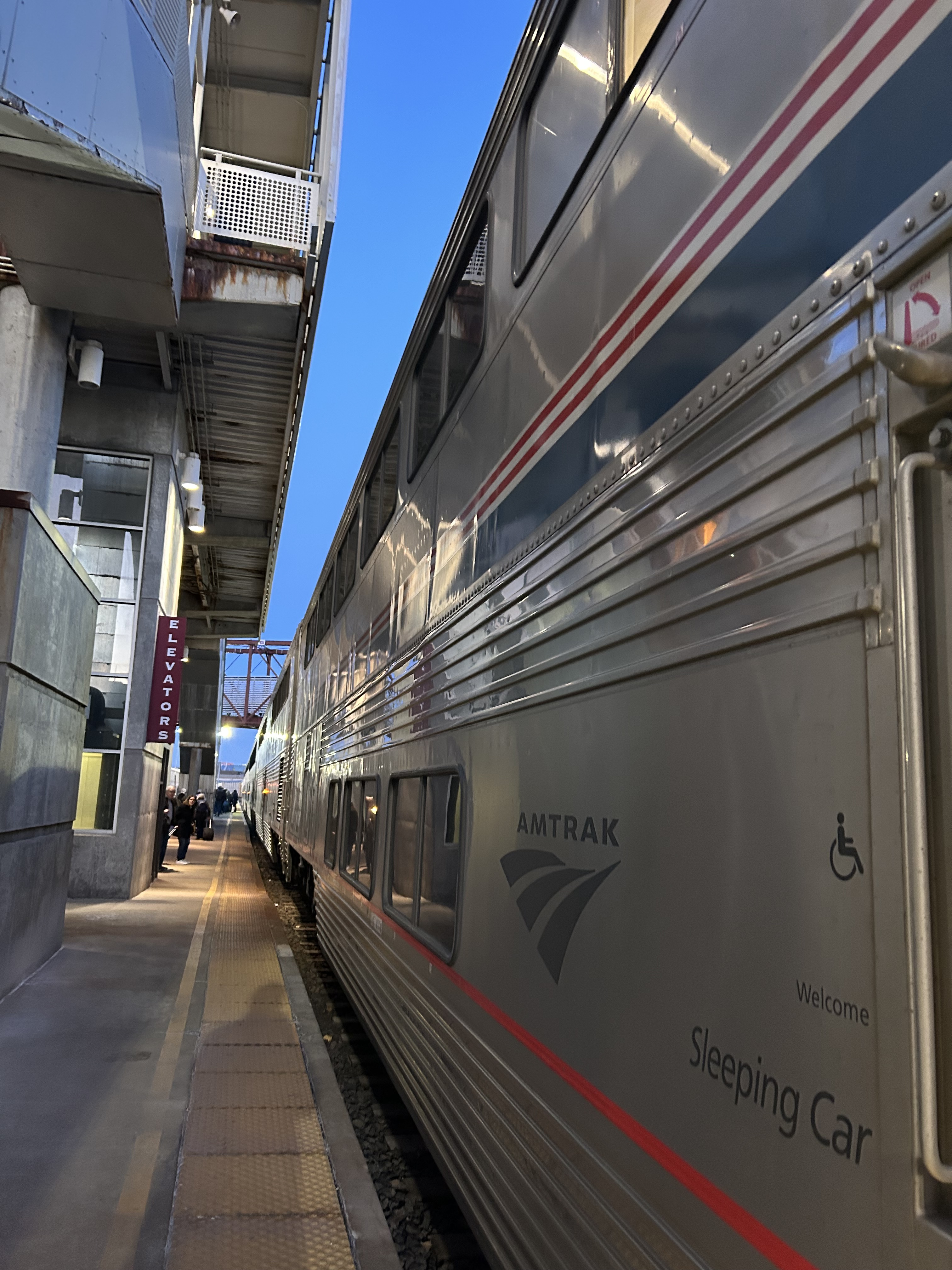
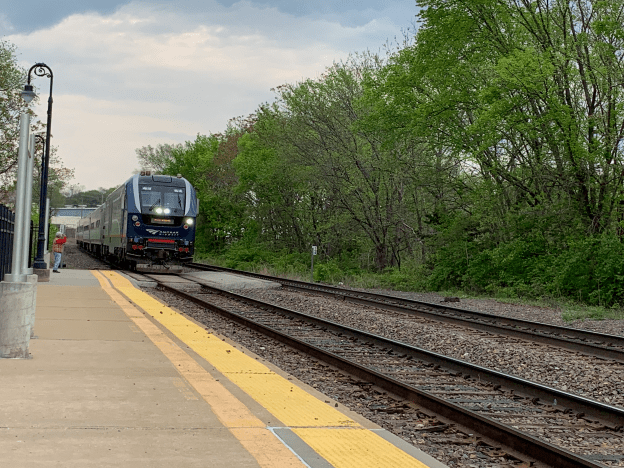
The Southwest Chief in Kansas City, photo by the author 2023.

I for one would gladly take a high speed train to Chicago over flying or driving. I already enjoy taking the Southwest Chief, though I was lucky the last time I took it that we arrived on time. Our current passenger rail network is hampered by the lack of enforcement of the federal law which says that Amtrak should have the right of way over freight, yet the host freight railroads now run trains so long that it’s much harder to manage Amtrak schedules in the face of mile-long freight trains that take up much more of the space along these lines. This is a problem for both the long distance routes like the Chief, which runs on BNSF tracks between Chicago and Los Angeles, as it is for the state-sponsored routes like the River Runner which runs on the old Missouri Pacific line now owned by Union Pacific. With the same sorts of amenities as the current trains, the option for private compartments (roomettes, rooms, and bedrooms), sleeper capabilities, a fully stocked dining car, and the observation & café car, I’d happily spend a couple hours more traveling by train on a high speed line between Kansas City and Chicago via St. Louis rather than take the more direct, if slower, route on the Chief. It seems more likely that the Missouri River Runner will get the high speed upgrade than the Southwest Chief because it’ll serve more people: the Southwest Chief’s primary metropolitan areas east of the Great Plains are Kansas City and Chicago alone. If we had an express train that ran just between those two cities along the Chief route that could be another good option that’d cut the journey down from 7 to closer to 5 hours.
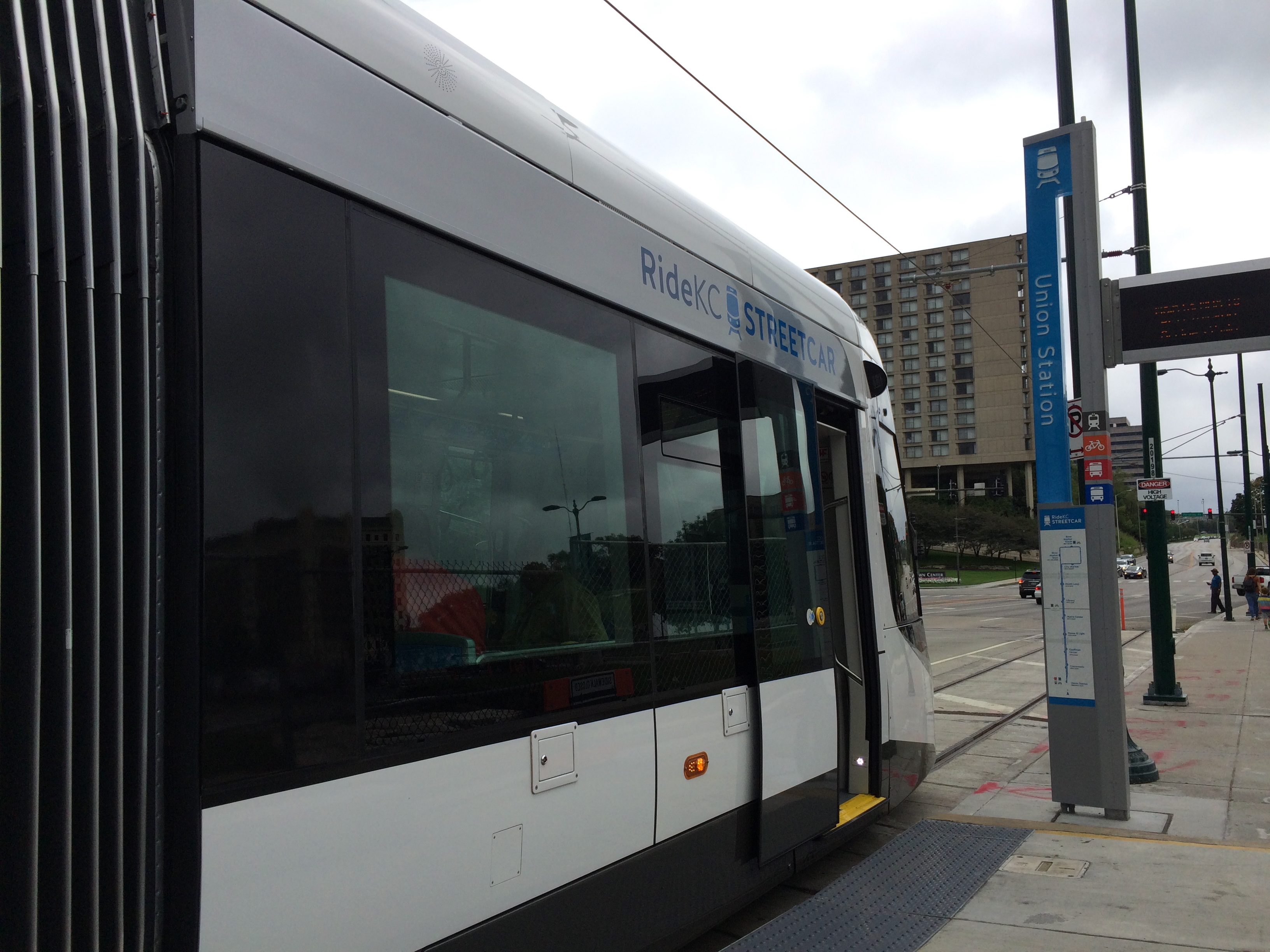
RideKC’s Streetcar service at Union Station, photo by the author 2016.

All of this would need to be complimented by better public transportation on the regional, metropolitan, and local levels. We will soon see the opening of the southern extension of the Kansas City Streetcar down Main Street from Union Station (23rd Street-ish) to UMKC (51st Street). This will get the Streetcar right to the top of my neighborhood, Brookside, and just within reach that I will probably begin to take it when I’m going downtown for work or a day out. Yet our local transit agency, RideKC, needs to expand bus service south of 51st Street now to feed people onto the extended streetcar line. Currently we have 20 minute frequencies on the Main Street Max line south of the Country Club Plaza (47th Street), which have been the case since the Max line opened in 2005. I for one want to see at least 10 minute frequencies all the way to Waldo (75thStreet) if not even further south to 85th Street or even to the I-435 loop around 103rd Street. This is a problem that needs to be addressed nationwide. I firmly believe that no one in an urban or suburban area should live further than a half a mile from a transit line, whether that be a bus, streetcar, light rail, metro, or regional rail. When I worked at the Nativity Parish School at 119th Street and Mission Road in Leawood, Kansas the closest bus line to the school was the 57 bus stop at the intersection of Minor and Wornall Roads just north of Avila University (Minor Road becomes 119th Street at State Line Road, aka the Kansas-Missouri border). The walk from there to the school is 2.1 miles (3.38 km) in length and according to Google would take about 45 minutes to complete and while there’s a sidewalk for most of the way on the north side it does end at the property of the Church of the Nazarene just 528 feet shy of the border. Here the pedestrian can cross the street and continue on the south side of the street, but that’s not always the safest prospect on what is a fairly major street on both sides of the border.

In Kansas City we need more streetcar lines and a robust regional rail network that can connect the disparate suburbs together as a supplement for our existing highway network. Thinking about this over the weekend I came to the thought that perhaps if we had a strong enough passenger rail network it could leave more space on the highways for freight traffic which already makes up a fair share of the interstate network’s users. Here if we had a system of through services connecting at Union Station on the tracks of the Kansas City Terminal Railway (KCTR) we could have north-south routes running from St. Joseph to Gardner or Lee’s Summit that would connect points in between including KCI Airport, suburbs in the Northland, Downtown, and neighborhoods and suburbs on the southwest and southeast sides of the urban core. Likewise, an east-west line ought to run as far west as Topeka and as far east as Grain Valley or beyond along the I-70 corridor would do a great deal to connect this region.


I’ve digressed a great deal here about transportation, and rail in particular. So, let me finish with something that’s on a smaller scale yet seems to be growing into something far more robust. In the last decade 3D printing has really developed into a new art form that has a great deal of utility to offer. My parents have developed a hobby of 3D printing with both uses. I’m quite proud of the one print that I’ve completed with my Mom’s help. Just before Christmas we made an old World War I biplane with red filament leading to my declaration that this year the Red Baron would be visiting the Baby Jesus in our manger scene. I’ve seen newer models of cars and trucks, the Ford Maverick in particular, which have interior parts that are 3D printed. 
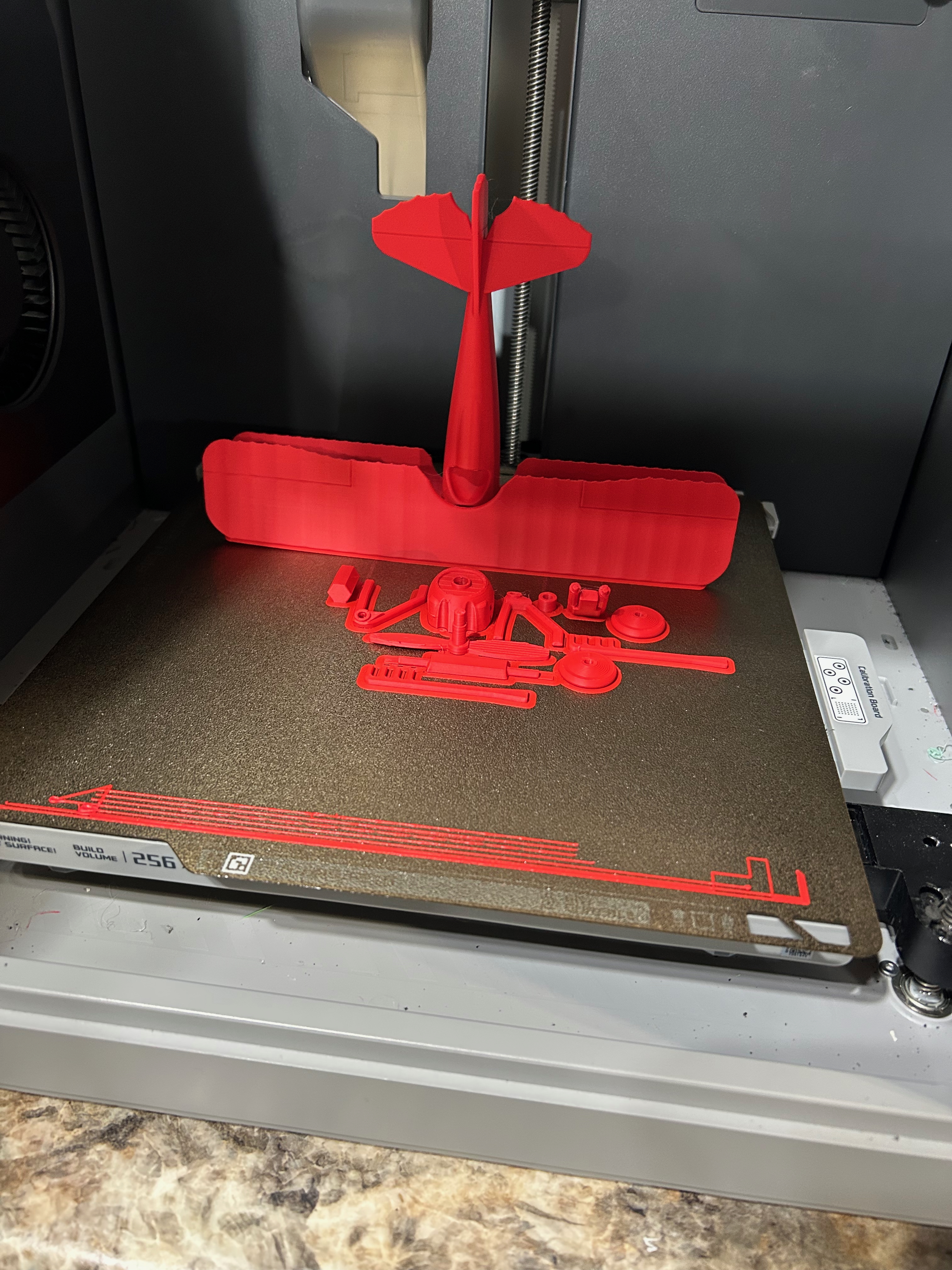
The Red Baron biplane as it appeared when it finished printing. Some assembly required. Photo by the author, 2024.

In October 2016, NASA launched Phase 2 of its 3D printed habitat challenge to see what could be designed as homes “where future space explorers can live and work.” One of the problems to be solved here is that for every kilogram of mass which is carried into Space whether for a Lunar or Martian destination the spacecraft will need to carry more fuel. So, why not bring lighter materials that can be assembled on arrival? The advent of 3D printing technology will allow this to happen with the understanding that the technology will continue to advance in the coming years as the Artemis program brings humanity back to the Moon in the 2020s and 2030s and a future program takes astronauts to Mars for the first time. I don’t know if we’ll see humans on Mars by New Year’s 2050. It’s possible, but with all the delays that the Artemis II launch has faced it seems like the days of rapid-fire launches from the Apollo era are more a distant memory than a part of the present moment.
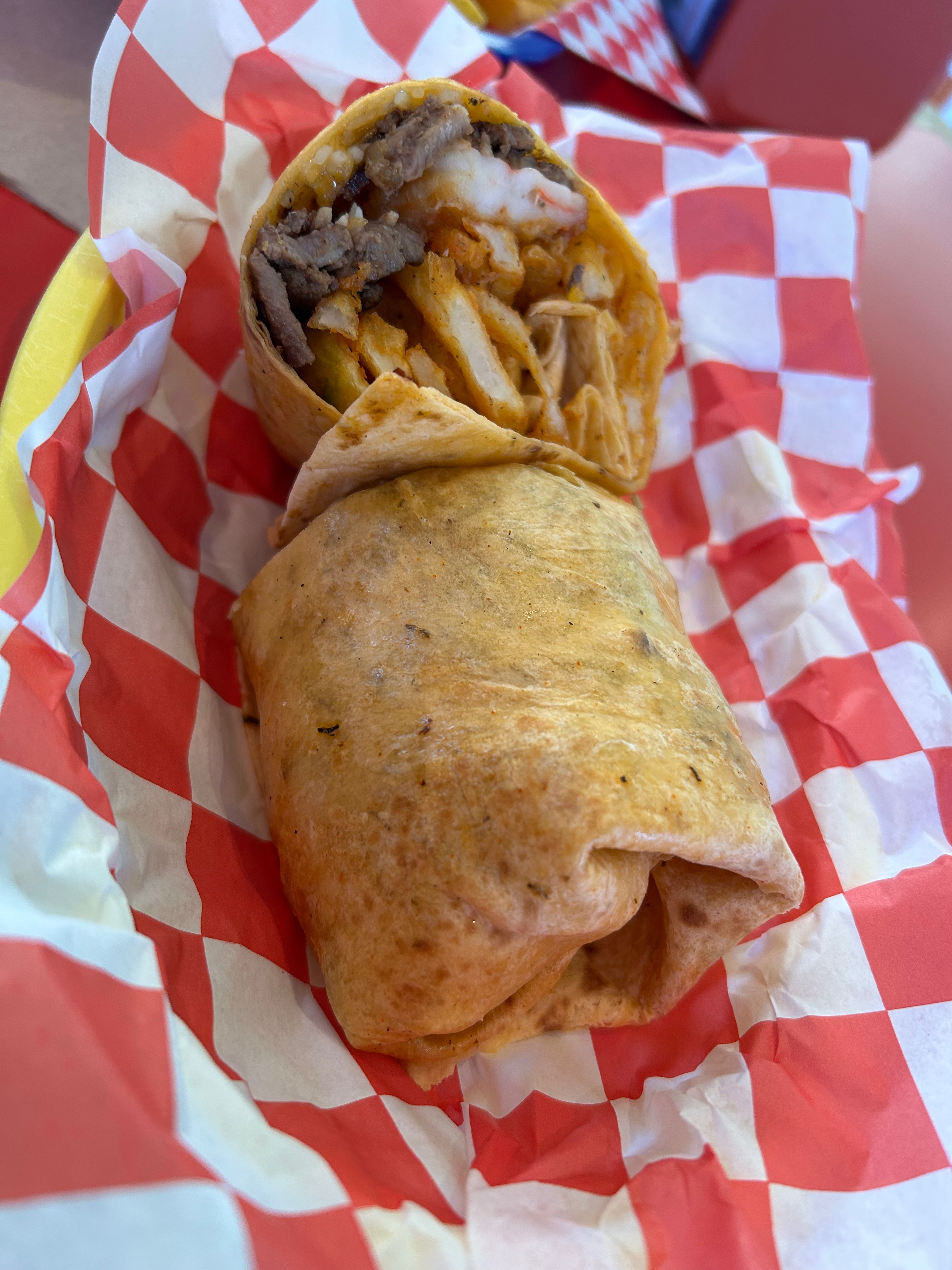
The Tiki Taco Surf & Turf Burrito, not 3D printed. Photo by the author, 2024

Other innovations in 3D printing stand as challenges to be faced: ghost guns made from 3D printed parts are a new threat to public safety, and the fact that these filaments are largely plastic concerns me from an environmental standpoint. I’m curious however about the prospect of 3D printed food. A long term vision I have for this technology is that it may lead to some sort of device like the replicator we see on Star Trek, and should my preference for beef over other meats become unsustainable and too expensive for me to continue in the next 25 years then I’d be open to considering an artificial alternative that is less taxing on the Earth and its environment alongside eating other meats: bison, chicken, lamb, and pork as well as the varieties of seafood. Yet with this last one there’s the problem of over-fishing. By any natural measure we in Kansas City shouldn’t have as easy access as we do to saltwater fish, shrimp, and the like. I’ve recently discovered the surf & turf burrito at Tiki Taco, a Kansas City Cali-Mex chain with 3 locations. This burrito’s main ingredients are shrimp, steak, with either rice or fries and several other fillings, and yes, I do love it. Yet again, if cattle produce more methane than is safe for our climate and if industrial shrimping is bad for the long term viability of shrimp populations and the oceans in general, shouldn’t we look for alternatives, even ones that have their origins in laboratory experiments?


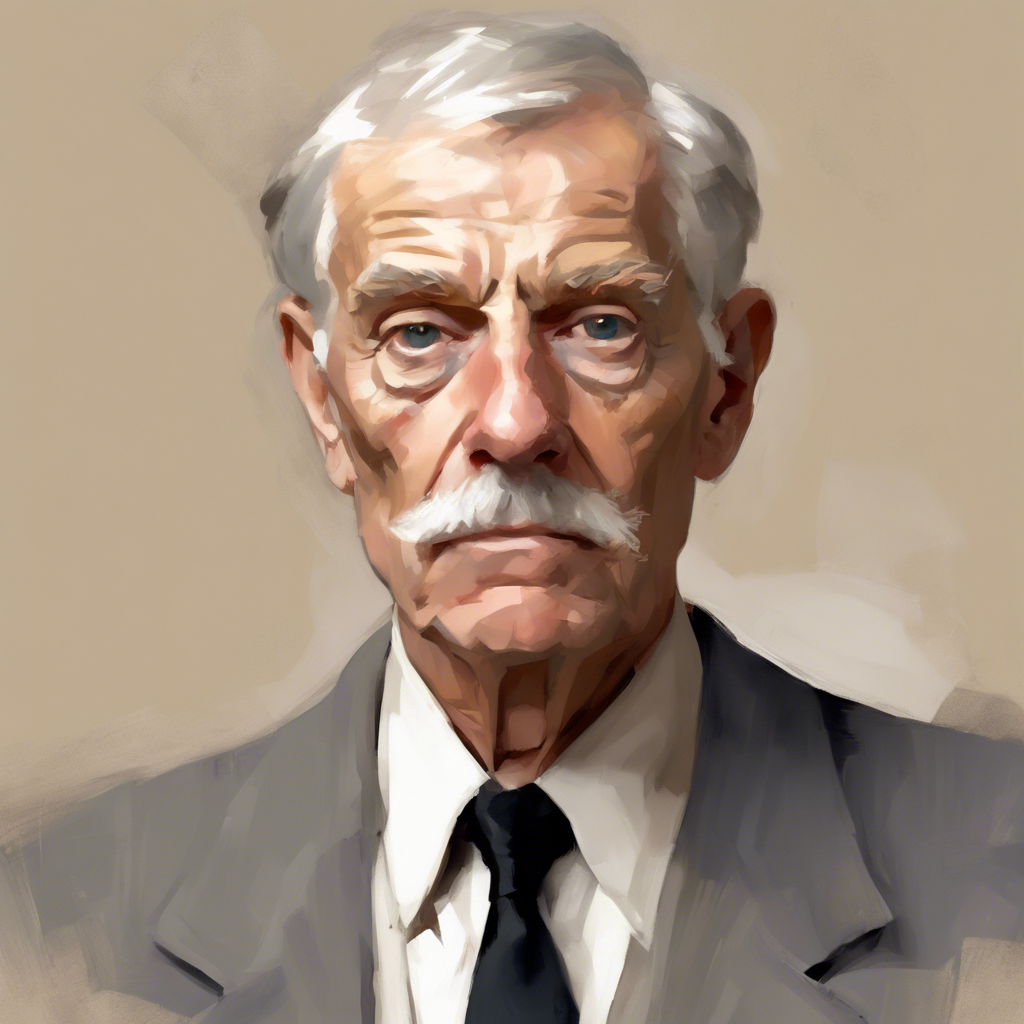
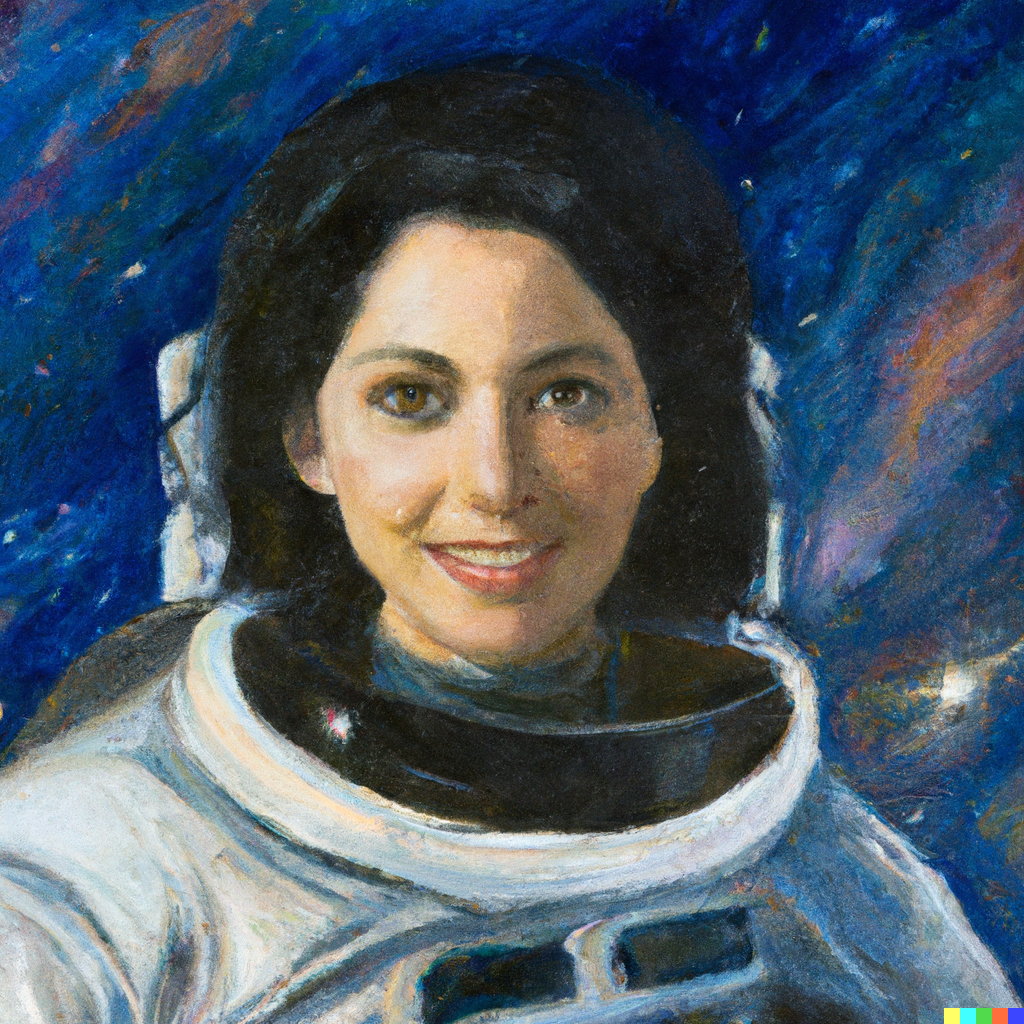
Finally, I don’t quite know what to make of advances in artificial intelligence quite yet. The means in which it’s become most visible in our lives is through crafted sentences and generated images. I’ve seen some examples of good AI and many of AI that is obviously computer generated. I freely admit to using an AI program, DALL-E 2, to create the images I used in my story “Ghosts in the Wind” from the Season 2 finale, and again I used a separate AI program to create the portrait of Carruthers Smith which appears at the top of my story “Carruthers Smith’s Museum” and its follow-up appendix. I’ve taken advantage of the vast database behind Chat GPT to confirm it’s not aware of more secondary sources in projects where I’m less familiar with the scholarship, a sort of streamlined version of the databases I’ve used throughout my career to find peer-reviewed articles and books. Yet I have too much pride in my own scribblings to use an AI program to write for me. If I want to find a fancier way of saying something, I’ll turn to my trusty thesaurus instead and decide for myself which of the synonyms I like best.
I do think we can find examples of computerized systems that work well to enhance the lived human experience of all three of these technologies. Computers with human supervision will be one of the better ways of monitoring nuclear fusion reactors to ensure their safe operation. Driverless trains already operate in cities like London and Paris, and while it’s disconcerting when you first board the front carriage of a DLR train or a Line 1 train in their respective cities you get used to it. On a less labor-pinching model using automatic train signaling systems and AI driven algorithms to determine schedules and monitor bus & train maintenance will help streamline things. Meanwhile in the world of 3D printing the flaws in current printers certainly can be ironed out with assistance from artificial intelligence to build things in regular patterns and to warn the operators if the machinery involved needs to be fine-tuned or replaced. As a comparison: Teslas have sensors in each wheel which keep track of individual tire pressures. These sensors are accessible on the central display screen. My own Mazda Rua has similar sensors, but they don’t differentiate between each of the four tires and so there’s the one light that will illuminate when there’s a problem. To find which tire has the low pressure I need to leave my car and check each one manually, which really isn’t a problem, yet it’s become an annoyance on my long drives when I’ve had to stop repeatedly to check tire pressures because of the poor quality of road surfaces on our older highways in this country.

As I’m writing this, I’ve been watching the notifications pop up on my computer from new emails coming in. A recent software update from Apple introduced Apple Intelligence to my computer, and now I get brief summaries of each email as they arrive. This means that the pop ups appear a second or two slower than before, and so if I’m not busy as I often check the email before the pop up appears. However, one that did appear while I was finishing the last paragraph announced several new books for sale at a local bookshop. One category of these was “Dystopian fiction.” I for one don’t care for dystopias, I’d rather spend my days thinking of utopias. Sure, the word utopia is St. Thomas More’s way of saying “nowhere is perfect,” but isn’t the human ideal that we’re foolhardy enough to strive for things that seem impossible only to find we actually got close to making those things happen?

Today, high speed rail is slowly being developed in this country. The Central Valley leg of the California High Speed Rail line between Los Angeles and San Francisco continues its slow march, even as its detractors try to see it shut down. At the same time, Brightline West’s efforts to build a separate high speed line between the eastern LA suburb of Rancho Cucamonga and Las Vegas seems more likely to open in this decade. Once we see those lines open in California, will the rest of the country begin to take notice and start planning their own high speed lines? By the time we reach the middle of the century it’s possible our energy sources will come from nuclear fusion generators as well as solar and wind farms, hydroelectric dams like the ones around Niagara Falls, and some as yet unknown or unfamiliar technologies that will help our civilization to progress further in communion with nature rather than in contrast to it. This could well be done using the descendants and successors of our current 3D printers. This technology will likely be instrumental in the establishment of the first permanent human settlements on the Moon and Mars and could prove just as useful here at home. Maybe the interiors of those trains will largely be made from 3D printed materials and parts not unlike the prefabricated houses that’ve been built now for generations. I remember seeing a news story in 2019 or 2020 about a company building prefabricated homes that didn’t require air conditioning because of strategic window placement near the roofline which allowed for the wind to naturally cool the space.

There are a great many prospects to look forward to in the next 25 years, and I hope come New Year’s 2050 that we will be living on a far healthier planet and will have worked through the gridlock that keeps us held back today. I hope that 2050 will beckon in a happier time in a way that 2025 doesn’t seem to be.

So, Happy New Year!

Draft at the Station

Last Friday, I took Amtrak's Missouri River Runner from Independence to Kansas City's Union Station to see how the NFL Draft was affecting public transit in & around the Station. Click here to support the Wednesday Blog: https://www.patreon.com/sthosdkane

The following post is a transcript of the audio from the podcast episode this week. I strongly advise you listen to this one rather than just reading it. Thank you, and enjoy!

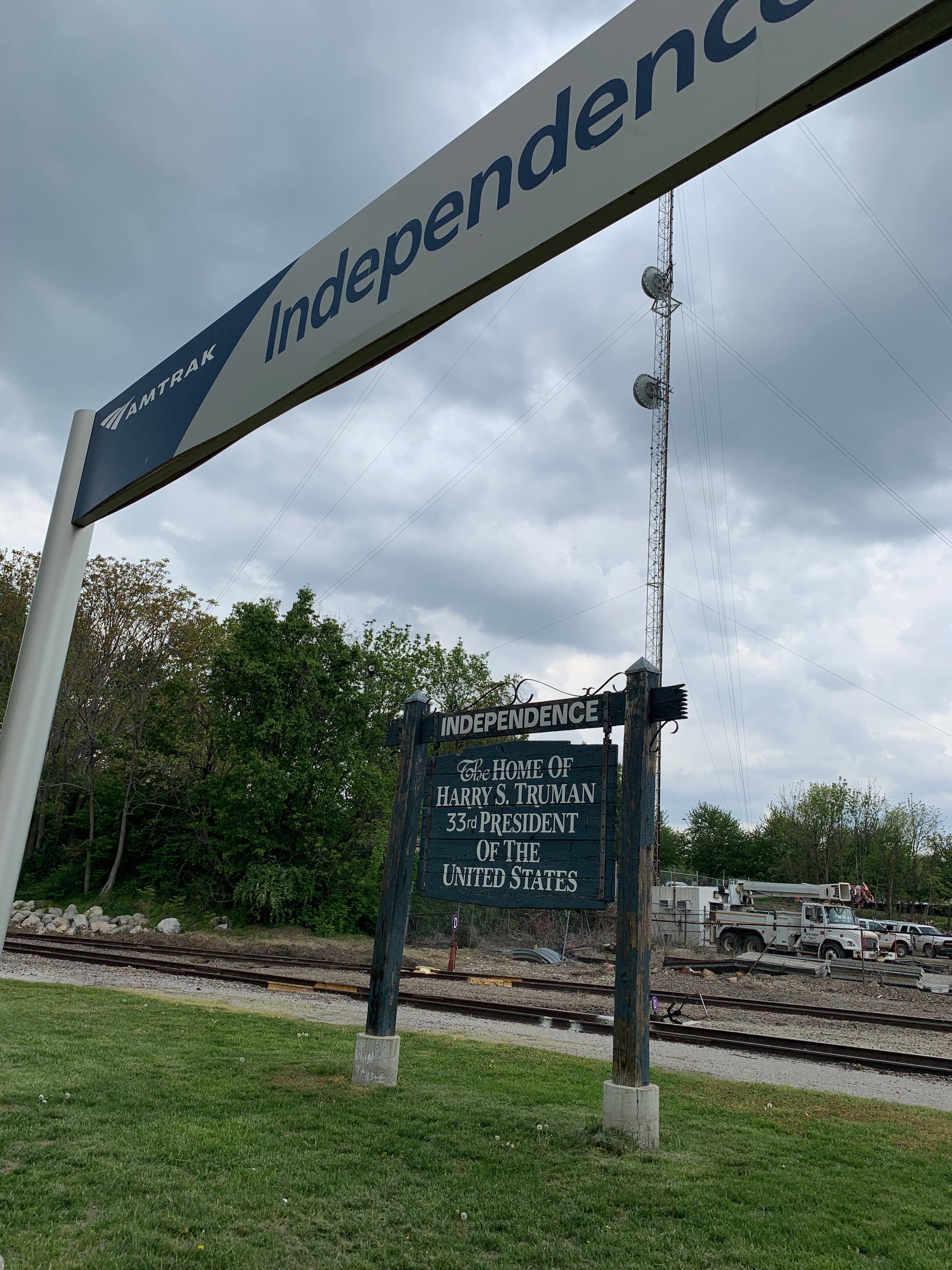
Independence, Missouri: hometown of President Truman.

“I’m at Independence Station, the only person here, the station house is locked, looks like it’s been abandoned for a while. I’m about 50 minutes early for my train, nothing here, no seats. We’ll see how this adventure goes!”

That was on Friday, 28 April 2023 just after 12:30 pm on a cloudy but calm day in Independence, Missouri, one of the eastern suburbs of Kansas City. I got a ride out there so I could try taking Amtrak’s Missouri River Runner service into Kansas City’s Union Station located just south of Downtown. Normally, arriving at Union Station is a moment of awe and wonder at the grandeur of that Beaux Arts station, built in 1914, one of the great reminders of the time when trains were the fastest and most comfortable way to cross North America. Last weekend though Union Station hosted the NFL Draft, a big event where all 32 professional teams in the top American Football league on the planet gather to pick who among the top prospects from the college teams across the U.S., they want to offer contracts to and invite to start their professional careers with those teams. That about sums it up. I’ve known about the Draft for most of my life and have so far spent the better part of the past thirty years not caring about it.

This year though is different, the Draft has landed squarely in the center of my city. Union Station has been a stage for many important moments in my life, from my first volunteer job at the Kansas City Irish Center back in 2006 to the place where I began several trips back to my original hometown of Chicago onboard Amtrak’s Southwest Chief to birthday lunches and dinners at Pierpont’s and Harvey’s and even a date. So, for me it feels personal to have that most public of spaces be taken over for the biggest, richest, pro sports league in the country for the whole weekend.

“It’s now begun to rain. Some church bells ringing. According to the Amtrak app the train is about 10 minutes out from Lee’s Summit, which is about 20 minutes down the line from here further to the southeast. Here I am, hiding underneath the overhang of the roof of this station that’s still deserted.”

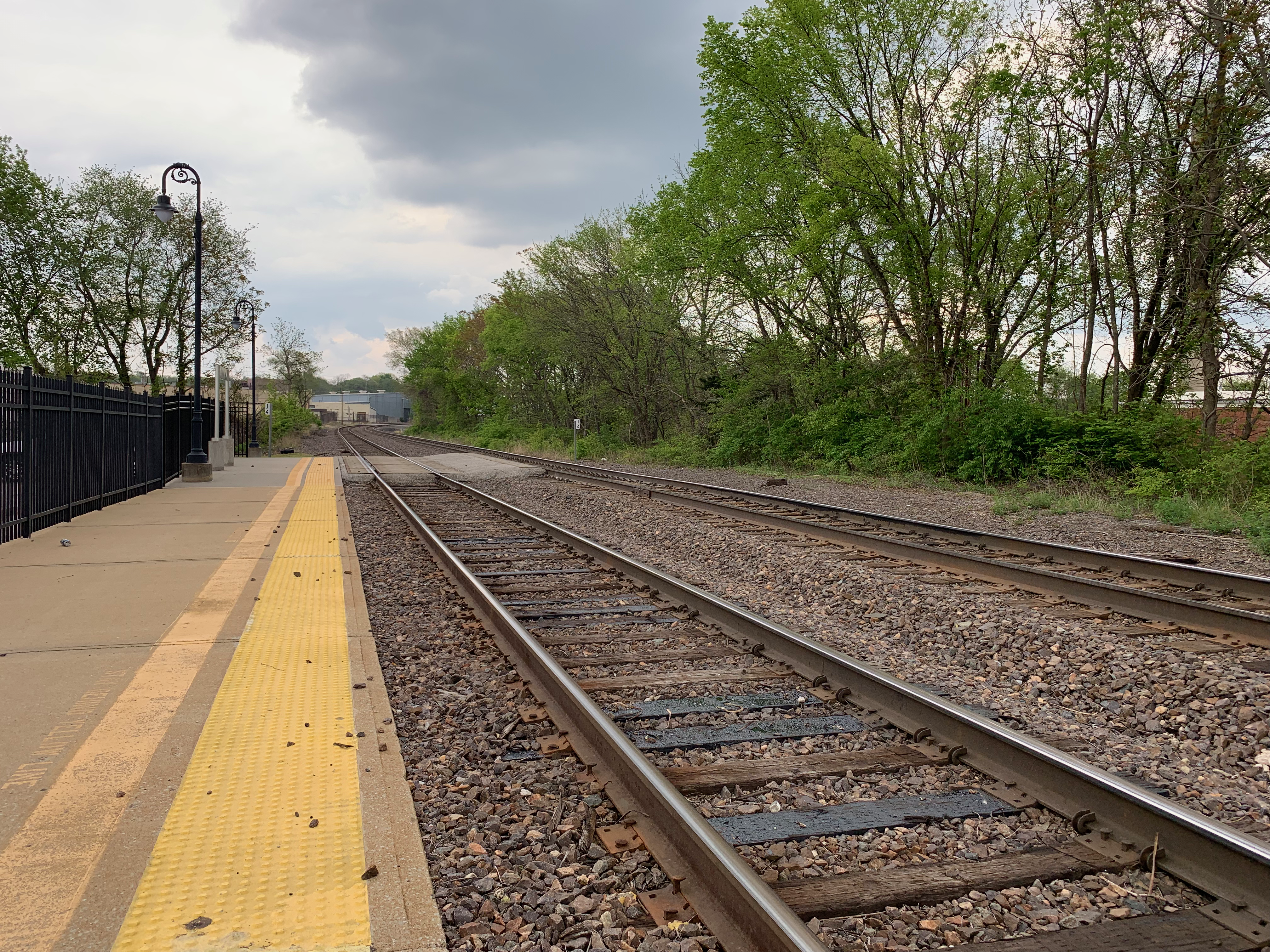
An empty platform under a gray sky.

As I waited a long Union Pacific freight train passed by the station on the further of the two tracks in front of the platforms. [train recording] It was carrying carriage upon carriage of double-stacked cargo containers that had come from one of the many ocean ports to the south and east of Kansas City, marked with the logos of a number of different cargo shipping companies including the Taiwanese Evergreen Group, whose container ship got stuck in the Suez Canal last year. At this point I was joined by a Salvadorean trainspotter who came down to the platform to take some videos of the train. We talked for a few minutes, or rather spluttered back and forth not speaking each other’s languages. I really need to properly learn Spanish one of these days.

“I happened to just meet a rather friendly Salvadorean gentleman who’s here for a conference. Charming. Oh, my Spanish is so terrible, and using French didn’t help. Train’s on time now, should be here in about eight minutes.”

Those eight minutes turned into 10 minutes as the River Runner arrived at 13:30 rather than 13:26, which by my book is alright when it comes to Amtrak delays.

[Sound of the Missouri River Runner arriving in Independence]

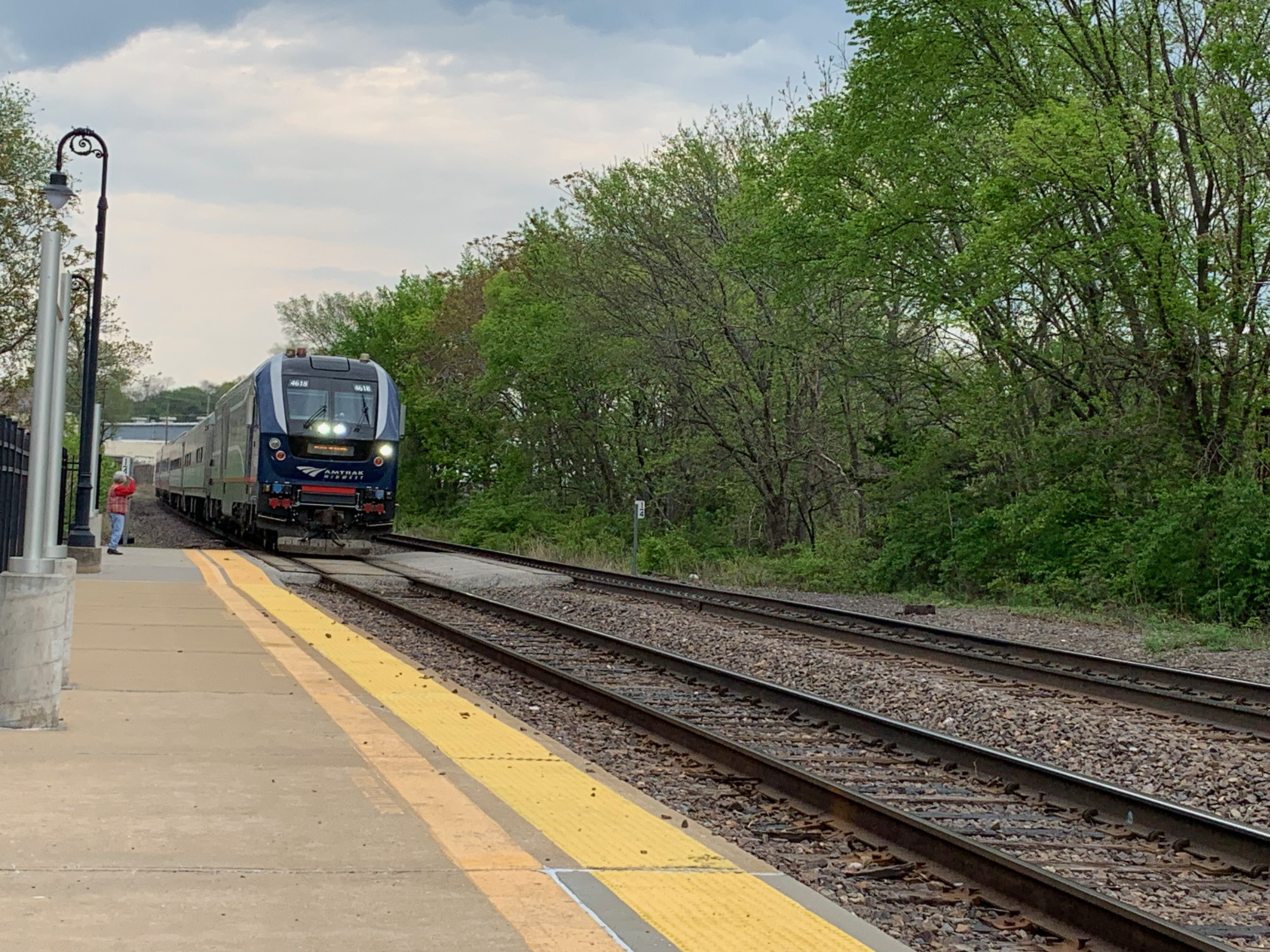
The Missouri River Runner approaches!

I let a handful of passengers disembark before telling the conductor my name, which he recognized from his passenger list, and boarded. The best thing about Amtrak’s service is even in coach on these state-run smaller services the seats really are quite comfortable. Plus, if you just want something to eat to keep you going, you’ll be able to find something in the café car. I was so thankful to buy a bag of really salty chips in there, my lunch for the day. There were probably about 30 other people on the train, most of them traveling into Kansas City from points east in Missouri, but some were on board going to the Draft.

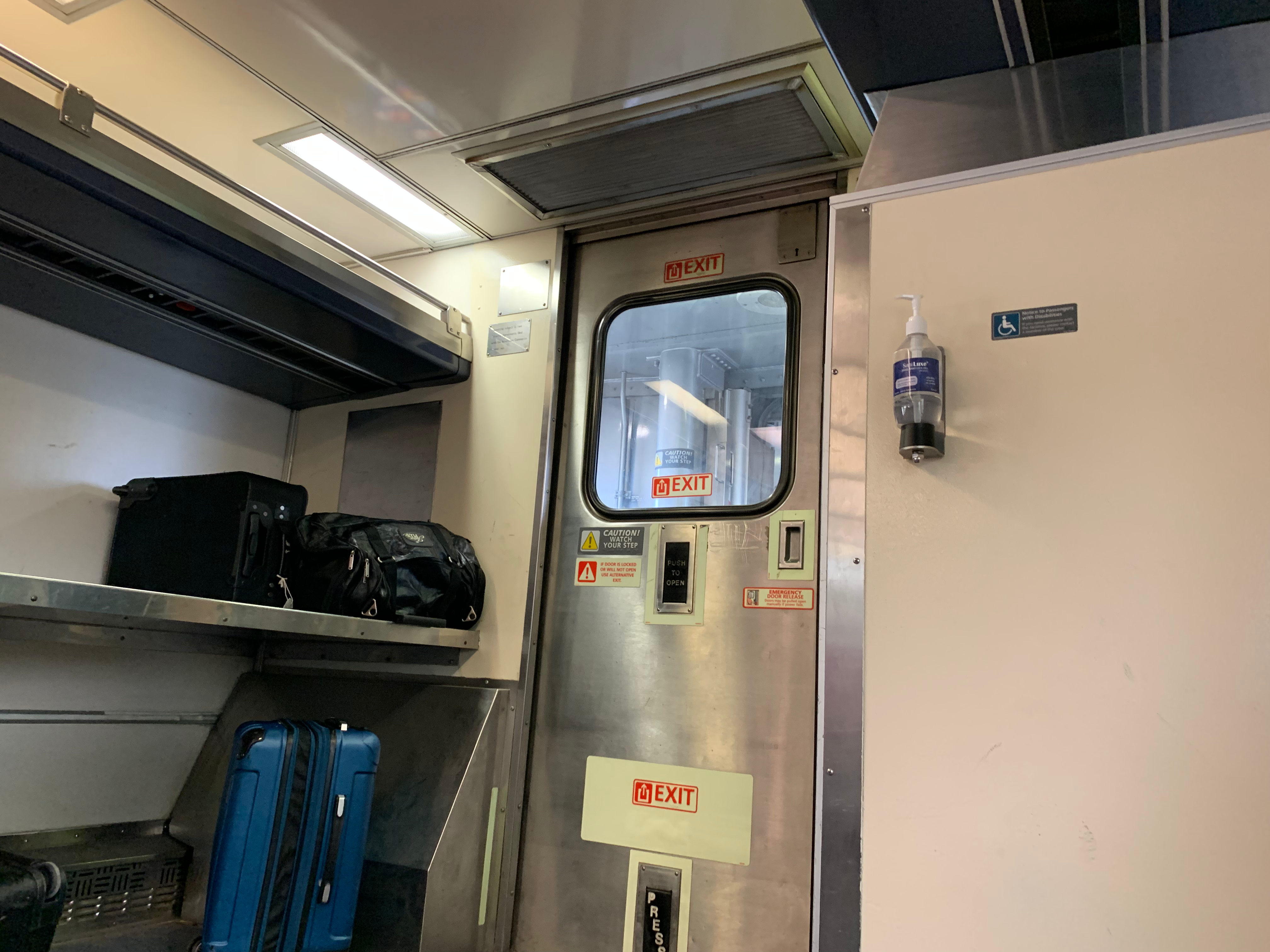
On board the River Runner in coach class.

[Missouri River Runner ambient noise]

This meant that once we arrived at Union Station 20 minutes later, the passengers who disembarked were a good mix of excited at seeing the station taken over by the NFL and frustrated that the station was closed off for its original use, to welcome rail travelers into Kansas City.

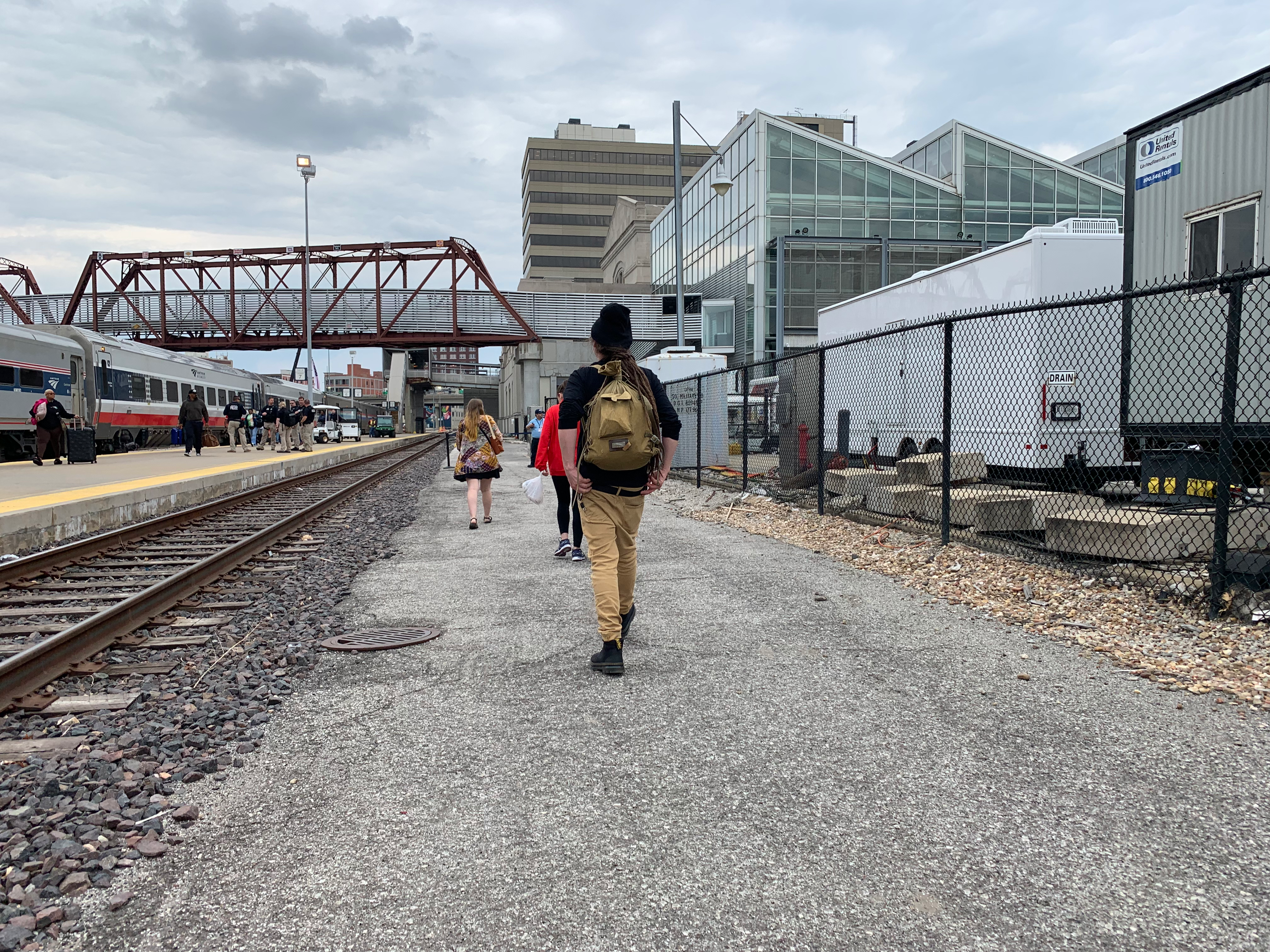
The Amtrak platform at Union Station was occupied by a force of about 10 Homeland Security officers, who stared at us emotionless as we disembarked. We were directed by the Amtrak conductors to walk down the platform towards its western end and then to use a gate in the fence separating the railyard from the parking lot beyond. In that parking lot were more Homeland Security officers, stern faced and resolute. They didn’t need to tell anyone not to cross them or try to enter the station, it was pretty clear that wouldn’t be received lightly. Despite the emails that Amtrak sent out every so often in the days before the trip about how the arrival procedure would go there was still some confusion among the passengers as to where we were being taken. I tried to help, having studied the plans as thoroughly as I could to make sure I did what I needed for this trip to happen without a hitch.

Arriving at Union Station walking from the platform to the shuttle trolley party bus

“Well, it’s going to 25th St, it’s south of here, it’s going down here, past Broadway, and to the left.”

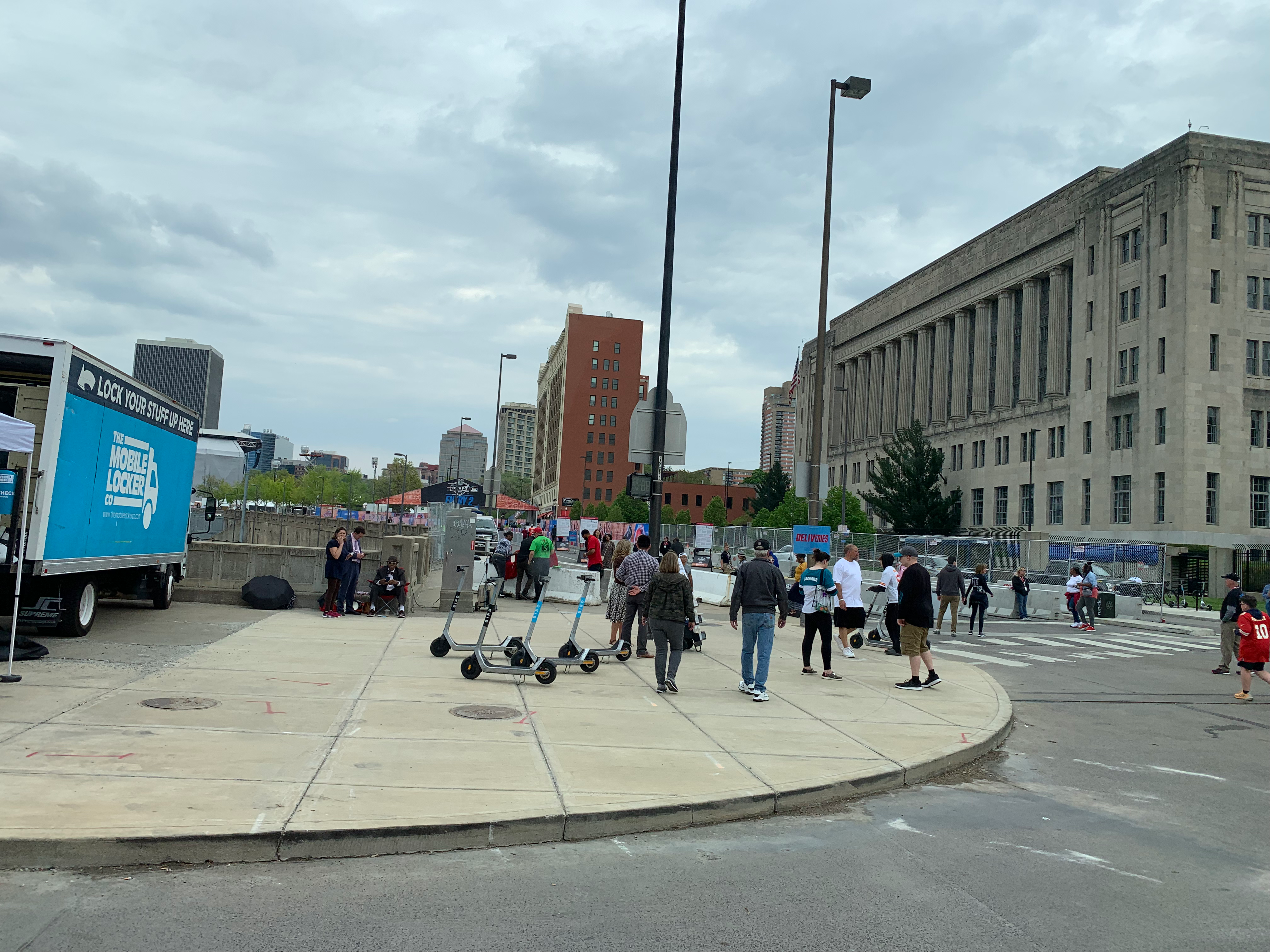
Amtrak Police officers then guided us towards a set of shuttles, in fact trolley party buses, that would take us to the drop off point at 25th and Jefferson, one block west of the IRS building’s Broadway entrance.

At this point, I should say that this whole idea began a few months earlier. I thought about going to the Chiefs’ Super Bowl Rally in February by train, catching the River Runner either in Lee’s Summit or Independence, again just to see what would happen when it got to Union Station, but on that cold, windy February Wednesday I forgot all about it and took the Main Street Max bus downtown with my Dad. On our return trip we got stuck in Midtown for a good two hours waiting for a southbound Main Street bus to pass us. A part of the plan, and the risk, of this Friday’s adventure would be seeing whether the Ride KC city buses would be running on schedule & on route or even running at all.

This time, I’d done more of my homework, so I knew if the buses weren’t running on time or at all, which in my experience as a former bus commuter in Kansas City is sometimes possible, I could be home in around 2 hours on foot. Sure, it’s a 6 mile walk south from 25th Street to my home in Brookside, but I had my best gym shoes on and lots of water available if needed.

Thankfully, I only had to wait for about 10 minutes before a southbound Main Street Max bus arrived at the stop on Broadway at 25th Street. I didn’t get any audio of this, my goal was to get on board and not be left behind or somehow make what was turning out to be the best possible situation into one that I’d come to regret.

I boarded my bus at 14:15 and was at my local stop without any trouble or problems. All that remained was a delightful walk home through the tree-lined streets of Brookside listening to the birdsong and fountains in my neighbors’ front yards.

[Audio from my walk home from the bus]

So, as it turned out, things worked out. One big difference I noticed between today and the Super Bowl rally a few months ago was the crowd control on Pershing Road and around Union Station all together was much stronger. I guess I could put it down to the NFL paying for stricter security than the City of Kansas City did, plus I read a story earlier this week that KCPD still owes the 350 officers who worked and managed the crowds during the Super Bowl Parade & Rally their overtime pay 73 days later. Not having thousands of people, myself included, walking down the middle of Pershing Road and Broadway to try to get out of that crowd that some have numbered up to 1 million people at the Super Bowl Rally really helped keep traffic flowing, and keep the public transportation network moving.

Far less chaotic on Pershing Rd. during the NFL Draft than it was during the 2023 Chiefs Super Bowl Rally.

I’m still frustrated, as were many of my fellow Amtrak passengers, that the Union Station organization sees itself less as a transportation hub, which the station was built for, and more as a big center for the city and a tourist attraction. I like all the things that Union Station has to offer, yet I think it would be better for our city if we increased our focus on the rail services that the station was built for and improved those services to be more frequent, and more useful for everyone in this metro. I’m glad that I chose to take a train into the station rather than try to get a train out of the station during the NFL Draft, for while I was able to disembark on the platform and board my city bus to go home all in the course of 20 minutes, the departing passengers were told to be at the platform 2 hours before their trains left, and were given trailers to wait in or else they’d have to sit outside in folding chairs with few amenities to speak of. It’s a solution, but it’s not great.

So, I’d consider Friday’s adventure to be a success. Truly, the only part of it that didn’t quite go to plan was my decision to leave home when I did, it took me far less time to be driven to Independence Station than I thought it would. Otherwise, I’m surprised to say it all worked. Would I do it again? Sure.

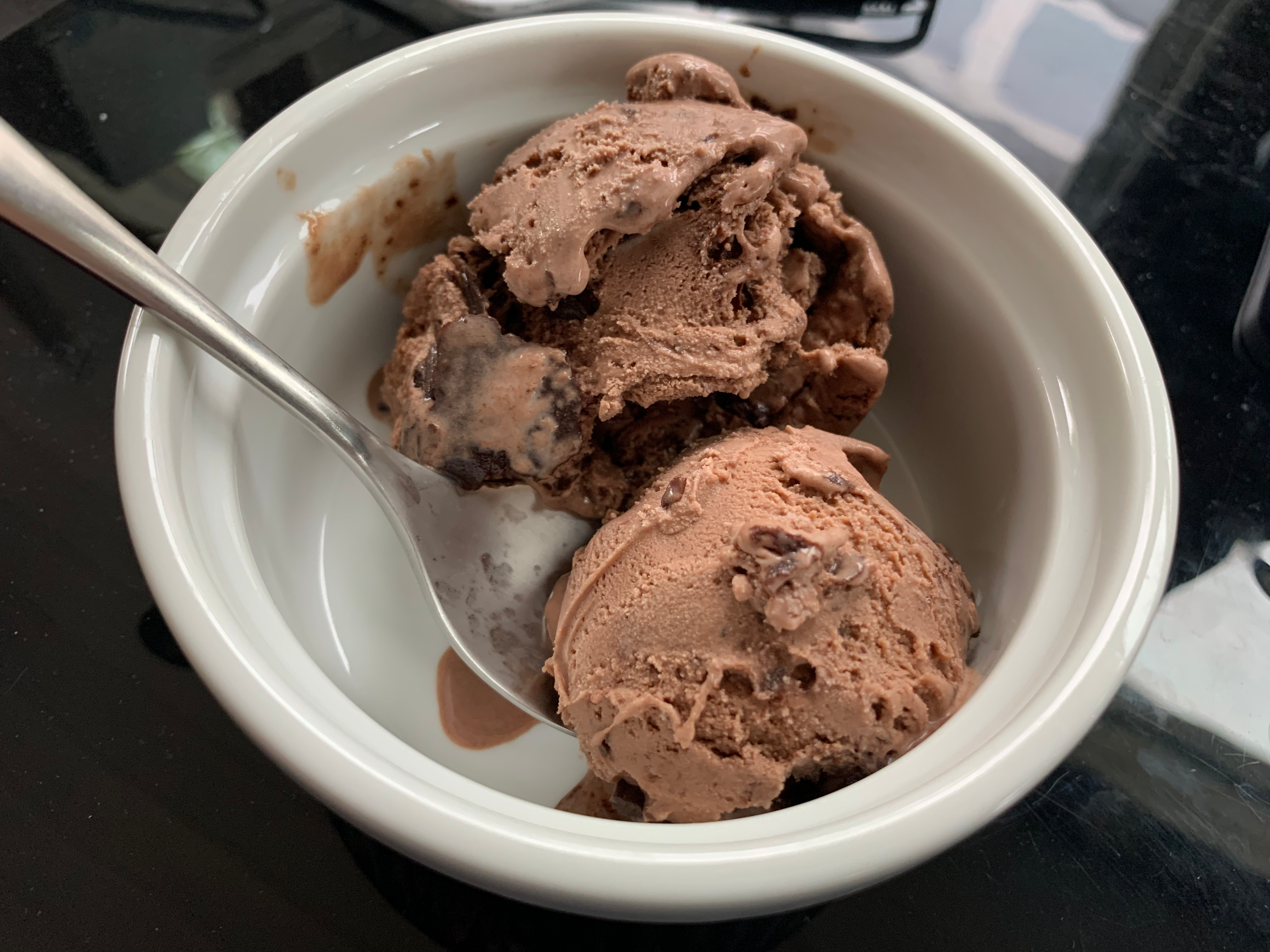
Some celebratory chocolate mudslide ice cream from the Tillamook Dairy in Oregon after the adventure was at an end.

The Dawn of Summer

What follows is an excerpt from my upcoming travelogue, whose working title is The Great American Basset Hound. No basset hounds were harmed, or have even at this point been involved in the writing of this excerpt, or indeed any other part of the upcoming volume. Enjoy!

                   -Seán Kane.

Friday 8 April 2016 came about two hours later than the previous day, as my alarm was set for the much more leisurely hour of eight rather than its far more rushed predecessor of six. I breakfasted with Kristiina in the empty hotel dining room, as the majority of our group had already left for their first meeting of the day at the International Crisis Group. Kristiina had chosen to not attend that particular talk, as she wanted to get some rest and get the most out of the main event of the day, a visit to the European Parliament. We had a quiet breakfast of waffles, frankfurters, and croissants, passing the time with small talk, the very nature of which seemed to be our way of avoiding thinking about our respective journeys that day: hers to London in the afternoon and mine to Annecy just before eleven.

I had everything well planned, and at the chosen time was ready to leave our hotel at Place de Sainte-Catherine for the journey across Brussels to Zuidstation/Gare du Midi. At around 09:45 I said goodbye to Kristiina, turned in my room key, and headed out the door, pulling my suitcase with briefcase mounted atop behind me, as the cobblestones did not work well with all four wheels. I felt a sense of excitement, a sense of anticipatory joy at seeing my parents again for the first time in four months. This was the longest stretch of time that I had been away from them in my life, the longest since we had hugged, or sat together, or ate together. Yet also I felt a pang in my heart, a longing for my friends who would be returning to London that afternoon. Perhaps the perfect possibility would have been if both my parents and my friends could be together, but at least in this instance that was not to be.

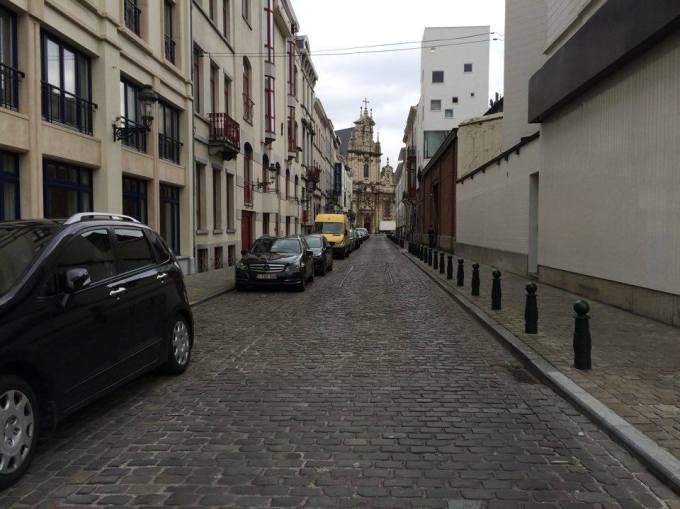
Sainte-Catherine Bruxelles

Looking towards Place de Sainte-Catherine in Brussels.

I walked through Place de Sainte-Catherine towards De Brouckère metro station, where I descended down the steps quite clumsily with my suitcase, briefcase, and umbrella in hand. At first I tried to use the fancy larger ticket gates, which are intended for those who have luggage and the handicapped, but I could not figure out how to make them work. Instead, I turned to the normal gates, and passed through fairly easily into the station proper. I was quite surprised to not see any soldiers in De Brouckère station that day, as there had always been at least two or three on patrol there every other time I had gone through that particular station. Soon though I was faced with a problem, as I had forgotten which metro line was the one to take to Zuidstation/Gare du Midi. Remembering that I had taken a direct train going to De Brouckère the day prior, I knew that I would find the proper train eventually, but still I was faced with a bit of an odd conundrum. Eventually though I came upon a bit of luck, and was soon on the T3 prémetro tram heading southbound.

To digress briefly, the public transport system in Brussels is a good model for what my city, Kansas City, could do. A system made up in part of trams (streetcars in American English), but equally reliant on buses and commuter rail could do wonders for Kansas City, bringing more people and business into the city itself, and quite possibly reducing the need for parking in places like downtown. The prémetro idea, namely having the trams move underground for part of their route and operate as a part of the metro alongside the subway lines is a smart way to better connect one’s varying modes of public transport, while saving money by allowing the local transport authority to avoid having to pay for heavy rail services like a subway. This will also reduce the need for private cars along the tram routes, equally leading to both more pedestrians and lower rates of road congestion within the city.

I quickly descended on the escalator, and went down a further set of stairs onto the platform, where the Tram 3 arrived about three minutes later. Boarding, I soon found myself hoping beyond hope that no one else would board and try to sit around me, as my bags were so big that I feared they would only cause trouble between my fellow passengers and I. Thankfully for me, that did not happen, and in large part due to the recent terror attacks in Brussels, the three stations (Bourse, Anneessens, and Lemonnier) between De Brouckère and Gare du Midi were closed. As a result, the journey only took a mere eight minutes, and as we passed along the single track between the darkened platforms at Lemonnier, I began to prepare myself mentally and physically for the journey up from the metro and into Gare du Midi. Then a sudden lurch came as the tram suddenly, and forcefully stopped in its tracks in the tunnel, whose darkness penetrated the hearts of all on-board, leaving everyone still, fearful of what was to come to pass. After a minute we started on our way again, with no reason given to what I assumed must have been some sort of animal moving across the tracks in front of the tram’s headlights, startling the driver into his sudden cessation of travel and apparent use of the emergency brake.

About two minutes later we arrived at Gare du Midi. I stood as the tram entered the station, taking my suitcase, briefcase, and umbrella firmly in hand, nearly falling over in the process as we came to a halt and the doors opened. I passed the people on the platform waiting to get on-board and walked up a short flight of stairs towards an escalator which took me into the shopping centre attached to Gare du Midi. I was surprised to find the ticket gates open, and anticipating that this crevice might merely be temporary, I slipped through, removing myself from the Brussels Metro into, as P.T. Barnum put it “The Land of Egress.” Having egressed into the mainline railway station, I began searching for a signboard which would tell me which platform I needed to go to to catch my first train, a Thalys train to Paris Gare du Nord, which was due to depart in about thirty minutes at 10:43.

Soon I found a screen hanging just above a large doorway leading onto the main concourse, which showed my train as departing from Platform 5B. Looking around, I found another sign, which pointed towards the international ticket office and Eurostar security lines as the site of the otherwise elusive Platform 5B. I walked down another long, dark corridor, which seemed to have been built with an antagonistic spirit towards the Sun above, yet hidden by the thick concrete of the platforms above. As I walked along my way I saw one final police checkpoint with two armed officers standing guard on the platforms above. My mind began to plan ahead, considering that it was entirely possible they would ask for my papers, thus I reminded myself where my passport and ticket were. In front of me was a man carrying two oversized suitcases, which attracted the attention, though only slightly, of the guards. However after a couple words they let the man pass, and it was my turn to step forward. To my surprise they completely ignored me, and I walked swiftly and smoothly through the checkpoint, heading up the ramp to the platform above.

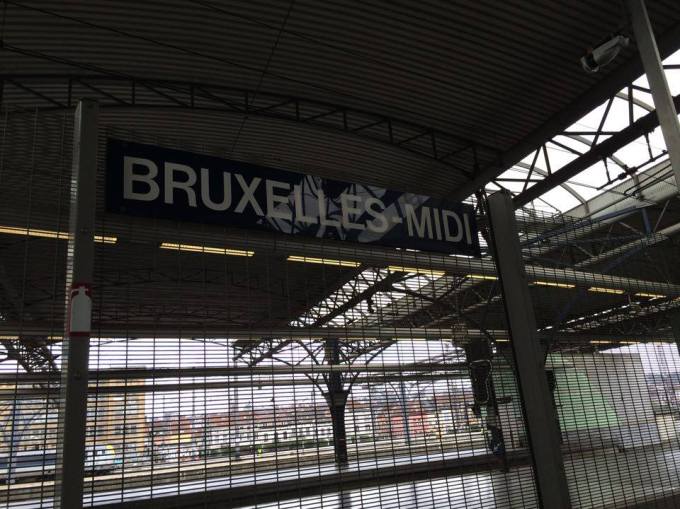
Bruxelles-Midi

Brussels-Midi Railway Station

The architecture of Brussels-Midi is quite interesting, different from some of the grand old railway stations in London and Paris, but truly a hub of activity for the railways of Belgium, the Netherlands, northwestern Germany, and northeastern France. Rather than have a grand long arched glass roof that is suspended between the two side walls of the platforms, the glass roof at this particular station is more like that at Kansas City’s Union Station, one which is made up of many smaller arches, thus giving the station ceiling more of a wave-like feel. The station itself does not necessarily have the charm of Paddington or Gare de Lyon, but it does have the practicality and methodical feel of much of post-war Brussels. At 10:23 on the dot my train arrived, its deep red paint matching the equally luxurious opera red interiors. I was surprised to see the train already filled with passengers, having not realised that Brussels was not the first stop on its route. Rather, this particular train had started in Cologne, then travelled through Aachen and Liège before arriving in the Belgian capital.

Initially I was scheduled to fly from Brussels to Geneva, meeting my parents in at the Swiss airport only two hours after their own flight from London had arrived at that lakeshore alpine city. However on Holy Tuesday, the 22nd of March, I awoke to some of the worst news one can ever wake up to. Two nail bombs had gone off at Brussels Airport in the departures hall, while a third bomb was detonated in Maelbeek metro station in the European Quarter of the city. In total, thirty-two people were killed by the ruthless barbarity of these extremists. As I readied myself for that day’s class, I kept a close eye on my TV, watching as more and more information arrived in London from the Belgian capital. Immediately, I began to reconsider my route from Brussels to Annecy, knowing that if the airport itself was bombed then the odds were pretty high that I would not be able to fly through that same airport two weeks later.

As it turned out, my intended flight did go out of Brussels, however I was not on it, and my ticket was cancelled. I did not want to step foot in that same hall where a mere two weeks prior such violence and sorrow was wrought. I did not want to walk amongst those ghosts of people who by right should still be warm to the touch, still laughing and smiling, playing and singing. I did not want to stand there and take in the macabre spectacle. I chose a different road to France, one with less sadness, with less pain.

After allowing for those passengers getting off in Brussels to do so, I boarded the train and took my place: Car 26, Seat 76. The seats on Thalys are perhaps the most comfortable seats on any train that I have yet travelled on, and I was in second class. At 10:43 on the dot our train began to move out of Brussels, heading south at high speed towards Paris. I spent the hour and twenty-two minutes that it took for us to arrive at Paris Gare du Nord writing the second half of my account of my previous two days in the Belgian capital, finishing the majority of the work in about an hour and ten minutes, thus giving me ample time to be ready to jump off the train and run to the metro station beneath Gare du Nord.

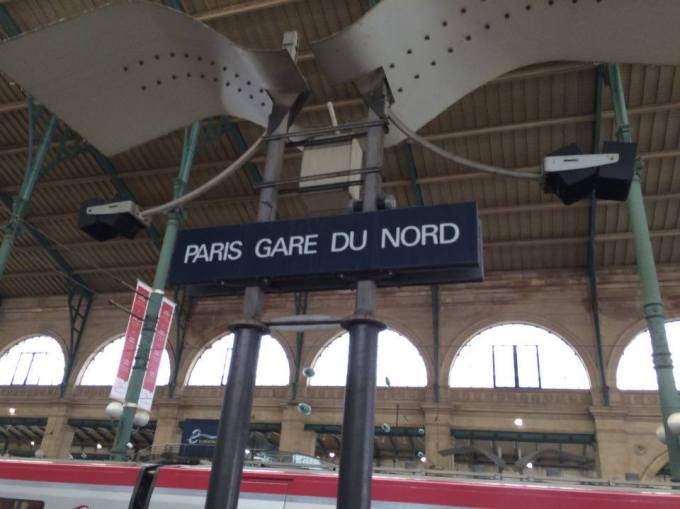
Paris Gare du Nord

“… run to the metro station beneath Gare du Nord.”

While I greatly appreciate the excellent service provided by SNCF, the French national railway company, I spent the better part of the next hour in a panicked rush. I had a mere forty-five minutes to transfer between Gare du Nord and Gare de Lyon. While this would not have been much of an issue had I been using one of the normal metro lines to get from A to B, I had to take the RER D line, a double-decker suburban line that only runs through Gare du Nord about once every twenty minutes. In short, I made it to my train on Platform 7 at Gare de Lyon with two minutes to spare, having just barely gotten on board the train before they closed the doors.

I had requested a seat on the upper level of the train, wanting to have a good view of the French countryside as I traversed that country from the plains around Paris in the north to the Alps in the south. I soon found my seat, No. 105 in Car 7, and soon met the gentleman sitting in No. 104. I figured he had a reservation for that seat, and forgetting my French, I somehow convinced him to get up and move to another seat about two rows back; though I have a feeling he simply wanted a row to himself. I quickly set my briefcase down on the seat next to mine, took out my iPad, portable keyboard, and headphones, and ticket, before removing my overcoat and placing it, my umbrella, and briefcase in the racks above my seat. As I sat down I realised my huge mistake, as I had originally intended to drop off my suitcase in the luggage racks at the end of the car, then drop off my briefcase, overcoat, and umbrella above my seat, then without taking anything out of my briefcase walk up to the café car and get lunch. However, with my iPad, keyboard, and headphones out in the open I figured I had might as well just bring them with.

I first walked towards the front of the train, but soon found myself at a dead end. Turning around, I walked through Cars 6, 5, and 4 before coming upon the Café in Car 3. By this point we were ten minutes out of Paris, and the line in the Café were at least ten people long with only one person working behind the counter. I took my place at the back of the line and waited for a good thirty minutes before ordering a Croque Monsieur and a bottle of Vittel water. Now walking back towards the front of the train, my sandwich on its plate balanced atop my electronics, the bottle and plastic cup in my right hand, whose fingers also had the highly important job of opening all of the doors between my seat and the café, I was stopped by a conductor who asked to see my ticket. “Il est à ma place,” I said, still slightly shaky on remembering my French.

“Comment?” he replied.

“Parlez-vous anglais?” I asked, accepting linguistic defeat. He nodded. “My ticket?” He nodded again. “It’s at my seat. voiture sept, place cent-cinq,” I said, switching back to French for the bit that I knew for certain how to say in that moment of intense hunger and mindlessness caused by the anxiety of my fast transfer.

“Ah, d’accord,” he said nodding and moving onto the next person. I breathed a sigh of relief and moved on through the three cars that were between my seat and I, at last returning to that place I sought out most of all at that point in time: my seat, where I enjoyed a delicious sandwich and watched three hours of a new BBC documentary on the House of Stuart’s time on the thrones of the Three Kingdoms of England, Scotland, and Ireland in the Seventeenth Century. It was at this point that I suddenly remembered that it was Friday, a day when I usually decline to eat meat, partially out of religious observance, partially out of consideration of my usually meat-filled diet and an attempt at improving my health. By this point I had had a frankfurter at breakfast, and a Croque Monsieur, which includes ham, for lunch. In that minute of realisation I thought of a new interpretation of the argument which I had used the Friday prior, that because it was the Liturgical Season of Easter, I could rejoice the Resurrection by eating meat on a Friday. Recognising the fact that this was quite a stretch of reasoning, I moved on and spent the next three hours moving my eyes back and forth between the documentary on my iPad and the fields, hills, and mountains that the TGV flew by at 300 kph (186 mph).

At 16:29 I at long last arrived in Annecy, a city, which to me appeared to still be in the Waterloo of its winter. I left my seat ten minutes prior to our arrival, and was down at the train door, ready and waiting our arrival at the platform when we at long last came to a halt and the door opened. I jumped out of the train, letting my suitcase and briefcase go ahead of me. Then rushing along the platform with the crowd, I soon saw my Mom’s red hair and my Dad’s old Cubs hat in the distance, standing behind a pillar out of the wind. I rushed up to them with a huge, broad smile on my face, and at long last was able to give them that much needed hug, that long sought-after embrace. Our Alpine Reunion had come. I was with my parents again.

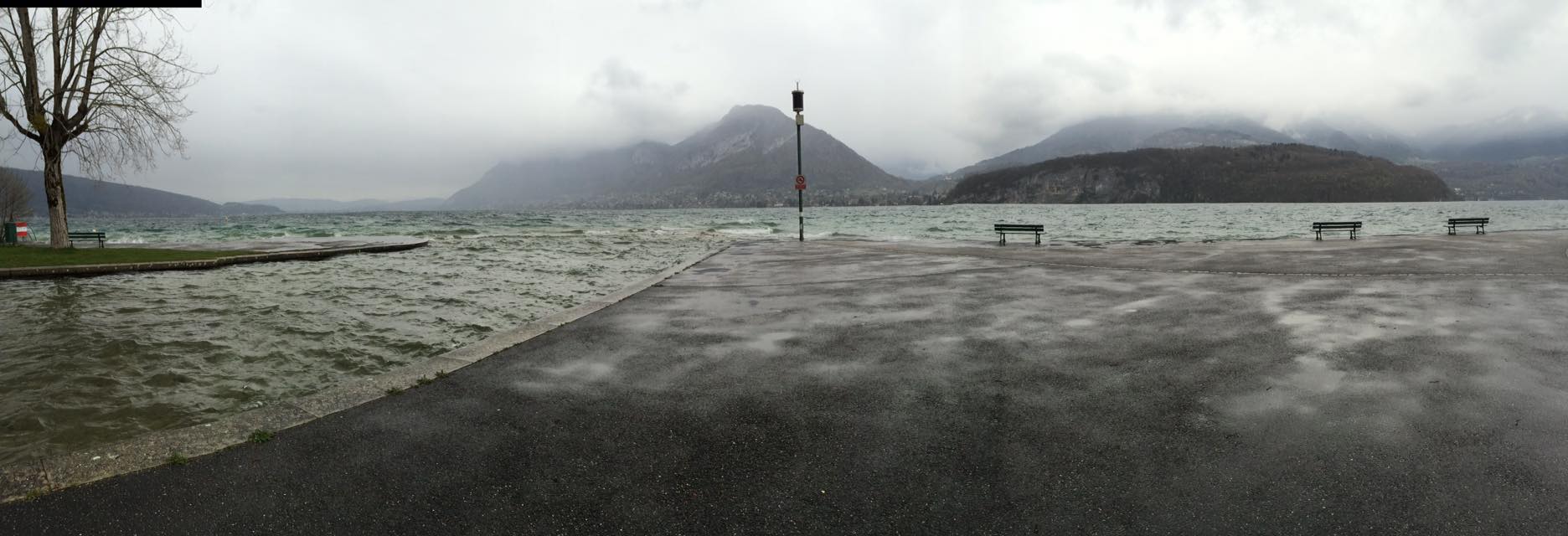
Lake Annecy 8 April 2016

Lake Annecy, “which to me appeared to still be in the Waterloo of its winter.”