Tag Archives: Rockhurst University

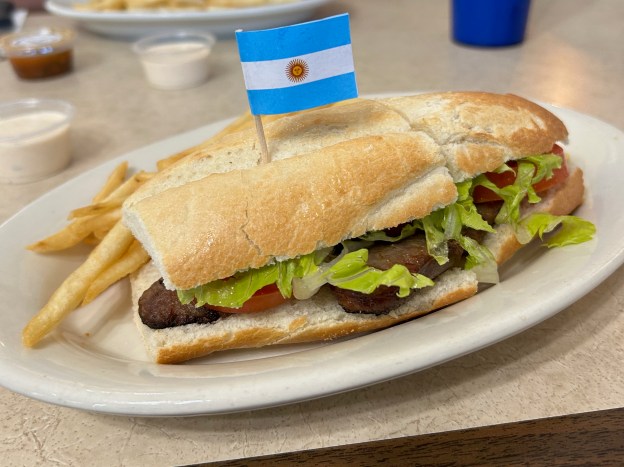
A choripán sandwich from Los Hornos Argentinian Flavors in Kansas City, Missouri photographed by the author just before it was eaten by the same.

On Language Acquisition

On Language Acquisition Wednesday Blog by Seán Thomas Kane

This week, how living in a culture is required to speak a language in depth.—Click here to support the Wednesday Blog: https://www.patreon.com/sthosdkane—Sources: [1] “A Letter from San Juan,” Wednesday Blog 3.29.[2] “The North American Tour,” Wednesday Blog 5.34.


This week, how living in a culture is required to speak a language in depth.


The languages which I speak are directly responsible for the ways my life has turned, its winding path a result of the words I use and the ideas they represent. Language is the voice of culture; it evokes the rich harmony of thought that comes from seeing things from certain points of view. At the University of Westminster, I was regularly in classes where there were maybe 10 or 20 languages spoken between each of the students, if not more. English remained our common language and the language of instruction, yet how many of us must have been switching between English and their own native language as they thought about the readings and topics in political philosophy and science which we discussed on a given day? Even then, my English is not the same as the King’s English, nor is it the same as the English I heard spoken when I drove through Alabama in July 2022. Language then reflects our individual circumstances of experience. Knowledge is gained through experience first and foremost, whether that experience be theoretical through books or practical through lived experience. I make this distinction because I often feel that when I’m reading a particularly well written book that I can actually imagine the characters as real people who I might meet in my life. The best TV shows and films are like that, their casts that we see regularly begin to seem like old friends who we look forward to visiting again and again.

Language acquisition is a lot like this for me. Today, I speak three languages: English, Irish, and French, and I can read Latin, Italian, Catalan, Spanish, and Portuguese and some Ancient Greek. I break my languages down into these two categories by their utility in my life. The handful which I can read are those which I’ve worked with in my historical capacity. I’ve spoken Italian and Spanish from time to time, yet those moments of elocution are few and far between. The same could be said for my German, though it’s now been five years since I last spoke that language in Munich, and at time of writing I can’t say that I’d be much use in remembering it today. This is even more true for my Mandarin, a language which I studied for a semester in between my two master’s degrees out of pure curiosity. I can remember the pronouns, a couple of verbs, and a noun or two but that’s about it. All this to say that I may know something about German and Mandarin yet it’s little more than a foundation for the future when I might be faced with a desire or need to learn the language properly.

I’ve been thinking lately that of any of these I need to work most on my Spanish, the most useful of these languages for me to speak here in the United States. I can understand Spanish fine yet speaking it remains a challenge. On Sunday evening after my shift I decided to reopen the Spanish course on the app Busuu––one which I used for Spanish before my March 2023 trip to the Renaissance Society of America’s annual meeting in San Juan, Puerto Rico––and try it out again.[1] That time I got through the A1 level before life got in the way, and I gave it up feeling frustrated with the process. I did not resume any online Spanish courses before my trip to Mexico last November for the History of Science Society meeting in Mérida, instead choosing the less preparatory method of winging it.[2] That worked with fits and spurts, my best Spanish conversations were in taxis with locals, though I was mostly thinking about how I would say things in French and then Hispanifying them based on my minimal knowledge of Spanish grammar. On Sunday, after I retired for the evening from my Spanish lessons on the app I realized what it was I missed so much in these apps: the human connection. Busuu prides itself on its crowd-sourced learning method; throughout the course learners are asked to submit spoken or written answers to the computer’s prompts which learners of other languages who speak the target language then correct. I like this system overall, and it does give this sense of community, yet I feel that it could go further.

After English, the second language I learned was Irish, my ancestral language. I started studying the Irish language when I was fourteen and have been focused on it to varying degrees for the last eighteen years. It really took until 2022 for me to connect with the language though, in spite of the fitful starts and stops because in that year I began to build a community around the Irish language. First on Zoom through Gaelchultúr, an Irish language school in Dublin, I met other speakers from across North America and beyond who like me were descendants of Irish immigrants old and new. I looked forward to seeing some of the same people term after term. Yet after returning to Kansas City, I began to look locally for Irish classes and came across the community that my friend Erin Hartnett has built at the Kansas City Irish Center. Through Erin I’ve met some really good friends and from our mutual appreciation for our ancestral language we’ve found a lot more in common from mutual histories to mutual appreciations for rugby. Without this community I would speak Irish but not terribly well. Now, not only do I speak Irish daily, but I also write in Irish every day. It has truly surpassed French as my second language, something I’m proud of yet not too concerned about when it comes to my Francophonic abilities.

French exists in a different sort of place for me than Irish. It’s not an ancestral language with deep family ties. Rather, it’s a language that I gravitated toward out of a fascination with French culture and history. I may have written here in the Wednesday Blog before that my first exposure to French came at sunset on a Sunday in February 2001 when my Mom put a “Learn French” cassette tape into the tape player in our family car when we were driving through the hills of northwestern Illinois toward Dubuque, Iowa. She and I were preparing for a trip to London and Paris that summer, the first European trip that I could remember, and she wanted to put in the effort for us to have some French before we arrived on the Eurostar from Waterloo Station at Paris-Gare du Nord. I didn’t like Paris much on that first visit, I found the language barrier to be too great for me to really feel a sense of connection with the place. On my next visit to France in March 2016 with three years of undergraduate French under my belt I found that I not only got the place more, but I appreciated the nuances of French culture more than I had as a child.

I owe a great deal to my undergraduate French professors M. Kathleen Madigan and Claudine Evans. It’s through their classes that I gravitated toward my career studying the French Renaissance. When I get asked why I chose to study the French I keep it simple and say it was a matter of pure convenience: I already spoke French, so I wouldn’t need to learn a new language (Spanish or Portuguese) to read my primary sources. That’s how I ended up studying André Thevet (1516–1590). I chose him because he happened to write about a sloth and for me the idea of being a sloth historian made me laugh. It’s as simple as that. I loved studying French in college, and even more teaching it with the online Beginner French course I built for the Barstow School in 2023 and 2024. I found that going through the same textbook I used a decade before I was not only teaching the students who in the future would go through my course, I was also renewing my own French education and learning things that I’d missed on my first go around. This is a critical point in language acquisition: few people are going to get a language on their first try, it’ll take multiple goes to understand what’s being said and to make oneself heard as well. It took me three tries to get Irish down, and the same is the case for Latin. Failure in the moment is merely a setback which can, and ought to be overcome in future endeavors. After all, remember that if we’re paying attention to our lives we’ll learn from our experiences.

I grew to really embrace a lot about the Francophonie to the point of paying Sling TV for access to TV5 Monde, France’s global TV channel which now broadcasts several different channels. I personally enjoy TV5 Monde Style, which tends to broadcast documentaries and cooking shows, though I don’t watch it as much as I might like. I read a lot of French books for my research, after all I work with source material that has largely only been written about in French and to a lesser extent in Portuguese. I am able to do what I do with those sources because I can read them and the secondary literature about them in French. All this made it all the easier for me to go to France and Belgium in the last several years and be able to switch from English to French as soon as I walked off the plane. I found when I was flying back to the United States in June 2024 after spending about a week speaking mostly French in Paris that I was consistently responding with the quick phrases “please, thank you, you’re welcome,” and the like bilingually with the French followed by the English as I’d heard so many people do in shops and the museums during that visit. It took me a while to get past doing this and just say things in English again after I returned.This then is why I think I’ve had so much trouble with learning Spanish. It’s the first language that I’ve given a big effort to learning outside of a classroom on my own. At least in the classroom you have fellow students around you to practice with. When you’re on your own you’re on your own, a wise-sounding craic which is to say that when alone you have no one else to talk with. I have friends here in Kansas City who speak Spanish, and I know all I have to do is ask, yet it’s finding the free time to sit down with them and work on it that I need to figure out. To truly gain a footing in a language one needs to immerse oneself in the culture. Apps and online learning will only take you so far. A classroom learner will blend into their own classroom idiolect of the language in that particular space where it exists in their life. Only if they move beyond classroom and begin to converse and live with people in places where that language is spoken will they begin to speak it in a manner which is more recognizable to native speakers.


[1] “A Letter from San Juan,” Wednesday Blog 3.29.

[2] “The North American Tour,” Wednesday Blog 5.34.
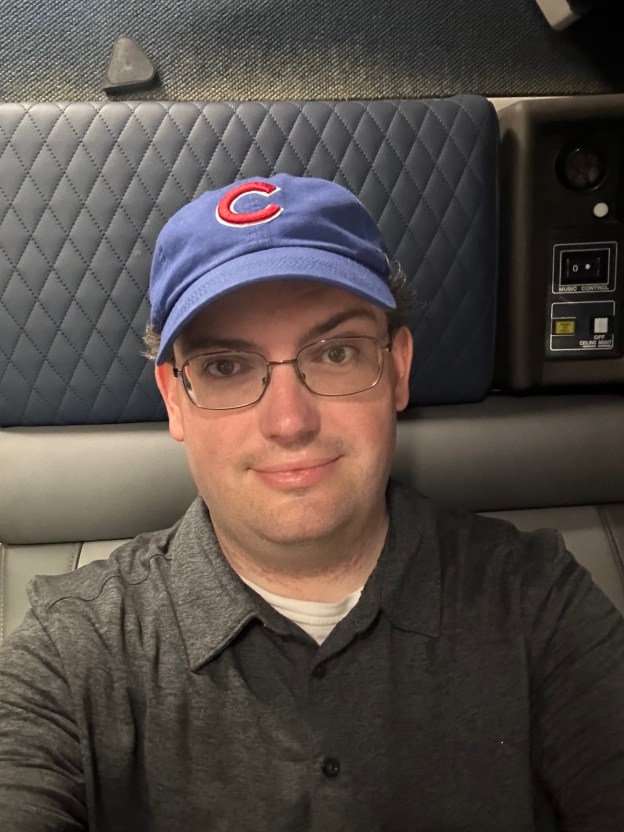

The author pulling a face at the camera.

On Writing

This week, some words about the art, and the craft, of writing.—Click here to support the Wednesday Blog: https://www.patreon.com/sthosdkane—Links in this episode:Patrick Kingsley, Ronen Bergman, and Natan Odenheimer, “How Netanyahu Prolonged the War in Gaza to Stay in Power,” The New York Times Magazine, (11 July 2025).John McWhorter, “It’s Time to Let Go of ‘African American’,” The New York Times, (10 July 2025).Bishop Mark J. Seitz, D.D., “The Living Vein of Compassion’: Immigration & the Catholic Church at this moment,” Commonweal Magazine, (June 2025), 26–32.“On Technology,” The Wednesday Blog 5.2.“Artificial Intelligence,” The Wednesday Blog 4.1.


This week, some words about the art, and the craft, of writing.


In the last week I’ve been hard at work on what I hope is the last great effort toward completing my dissertation and earning my doctorate. Yet unlike so much of that work which currently stands at 102,803 words across 295 U.S. Letter sized pages inclusive of footnotes, front matter, and the rolling credits of my bibliography I am now sat at my desk day in and day out not writing but reading intently and thoroughly books that I’ve read before yet now find the need for a refresher on their arguments as they pertain to the subject of my dissertation: that André Thevet’s use of the French word sauvage, which can be translated into English as either savage or wild, is characteristic of the manner in which the French understood Brazil as the site of its first American colony and the Americas overall within the broader context of French conceptions of civility in the middle decades of the sixteenth century. I know, it’s a long sentence. Those of you listening may want to rewind a few seconds to hear that again. Those of you reading can do what my eyes do so often, darting back and forth between lines.

As I’ve undertaken this last great measure, I’ve dedicated myself almost entirely to completing it, clearing my calendar as much as I see reasonable to finish this job and move on with my life to what I am sure will be better days ahead. Still, I remain committed to exercising, usually 5 km walks around the neighborhood for an hour each morning, and the occasional break for my mind to think about the things I’ve read while I distract myself with something else. That distraction has truly been found on YouTube since I started high school and had a laptop of my own. This week, I was planning on writing a blog post which compared the way that my generation embraced the innovation of school-issued laptops in the classroom and the way that starting next month schools and universities across this country will be introducing artificial intelligence tools to classrooms. I see the benefits, and I see tremendous risks as well, yet I will save that for a lofty second half of this particular essay.

I’ve fairly well trained the YouTube algorithm to show me the sorts of videos that I tend to enjoy most. Opening it now I see a segment from this past weekend’s broadcast of CBS Sunday Morning, several tracks from classical music albums, a clip from the Marx Brothers’ film A Night at the Opera, the source of my favorite Halloween joke, and a variety of comic videos from Conan O’Brien Needs a Friend to old Whose Line is it Anyway clips. Further down are the documentary videos I enjoy from history, language, urbanist, and transportation YouTubers. Yet in the last week or so I’ve been seeing more short videos of a minute or less with clips from Steven Spielberg’s 2012 film Lincoln. I loved this film when I saw it that Thanksgiving at my local cinema. As longtime readers of the Wednesday Blog know, I like to call Mr. Lincoln my patron saint within the American civic religion. As a young boy in Illinois in the ‘90s, he was the hero from our state who saved the Union and led the fight to abolish slavery during the Civil War 130 years before. Now, 30 years later and 160 years out from that most horrific of American wars I decided to watch that film again for the first time in a decade. In fact, I’m writing this just after watching it so some of the inspiration from Mr. Lincoln’s lofty words performed by the great Daniel Day-Lewis might rub off on my writing just enough to make something inspirational this week before I return in the morning to my historiography reading.

Mr. Lincoln knew what every writer has ever known, that putting words to paper preserves them for longer than uttering even the longest string of syllables can last. What I mean to say is they’ll remember what you had to say longer if you write it down. He knew for a fact that the oft quoted and oft mocked maxim that the pen is mightier than the sword is the truth. After all, a sword can take a life, as so many have done down our history and into our deepest past to the proverbial Cain, yet pens give life to ideas that outlive any flesh and bone. I believe writing is the greatest human invention because it is the key to immortality. Through our writing generations from now people will seek to learn more about us in our moment in the long human story. I admit a certain boldness in my thinking about this, after all I’ve seen how the readership and listener numbers for the Wednesday Blog ebb and flow, and I know full well that there’s a good chance no one in the week I publish this will read it. Yet I hold out hope that someday there’ll be some graduate student looking for something to build a career on who might just stumble across my name in a seminar on a sunny afternoon and think “that sounds curious,” only to then find some old book of my essays called The Wednesday Blog and then that student will be reading these words. 

I write because I want to be heard, yet I’ve lived long enough to know that it takes time for people to be willing to listen, that’s fair. I’ve got a growing stack of newspaper articles of the affairs of our time growing while my attention is drawn solely to my dissertation. I want, for instance, to read the work of New York Times reporters Patrick Kingsley, Ronen Bergman, and Natan Odenheimer in a lengthy and thorough piece on how Israeli Prime Minister Netanyahu “prolonged the War in Gaza to stay in power” which was published last Friday.[1] I also want to read John McWhorter’s latest opinion column “It’s Time to Let Go of ‘African American’”; I’m always curious to read about suggestions in the realm of language.[2] Likewise there are sure to be fascinating and thoughtful arguments in the June 2025 issue of Commonweal Magazine, like the article titled “’The Living Vein of Compassion’: Immigration & the Catholic Church at this moment” by Bishop Mark Seitz, DD of the Diocese of El Paso.[3] I’m always curious to read what others are writing because often I’ll get ideas from what I read. There was a good while there at the start of this year when I was combing through the pages of Commonweal looking for short takes and articles which I could respond to with my own expertise here in the Wednesday Blog. By writing we build a conversation that spans geography and time alike. That’s the whole purpose of historiography, it’s more than just a literature review, though that’s often how I describe what I’m doing now to family and friends outside of my profession who may not be familiar with the word historiography or staireagrafaíocht as it is in Irish. 

Historiography is writing about the history that’s already been written. It’s a required core introductory class for every graduate history program that I’m familiar with, I took that class four times between my undergraduate senior seminar (the Great Historians), our introductory Master’s seminar at UMKC (How to History I), and twice at Binghamton in courses titled Historiography and On History. The former at Binghamton was essentially the same as UMKC’s How to History I while the latter was taught by my first doctoral advisor and friend Dr. Richard Mackenney. He challenged us to read the older histories going back to Herodotus and consider what historians in the Middle Ages, Renaissance, Enlightenment, and Nineteenth Century had to say about our profession. Looking at it now, the final paper I wrote for On History was titled “Perspectives from Spain and Italy on the Discovery of the New World, 1492–1550.” I barely remember writing it because it was penned in March and April 2020 as our world collapsed under the awesome weight of the Coronavirus Pandemic. Looking through it, I see how the early stages of the pandemic limited what I could access for source material. For instance, rather than rely on an interlibrary loan copy of an English translation, perhaps even a more recent edition, of Edmundo O’Gorman’s The Invention of America, I instead was left working with the Spanish original that had been digitized at some point in the last couple decades. Likewise, I relied on books I had on hand in my Binghamton apartment, notably the three volumes of Fernand Braudel’s Civilization and Capitalism, in this case in their 1984 English translations. I wrote this paper and then forgot about it amid all the other things that were on my mind that Spring, only to now read it again. So, yes, I can say to the scared and lonely 27 year old who wrote this five years ago that someone did eventually read it after all.

What’s most delightful about reading this paper again is I’m reminded of when I first came across several names of fellow historians who I now know through professional conferences and have confided in for advice on my own career. The ideas first written in the isolation of lockdown have begun to bear fruit in the renewed interactions of my professional life half a decade later. What more will come of those same vines planted in solitude as this decade continues into its second half? Stretching that question further back in my life, I can marvel at the friendships I’ve cultivated with people I met in my first year of high school, now 18 years ago. That year, 2007, we began our education at St. James Academy where many of us were drawn to the promise of each student getting their own MacBook to work on. I wrote here in March 2024 about how having access to that technology changed my life forever.[4] So, in the last week when I read in one of my morning email newsletters from the papers about the soon-to-be introduction of artificial intelligence to classrooms across this country in much the same way that laptops in classrooms were heralded as the new great innovation in my youth I paused for a few moments longer before turning to my daily labor.

I remain committed to the belief that having access to a laptop was a benefit to my education; in many ways it played a significant role in shaping me into the person I am today. I wrote 14 plays on that laptop in my 4 years in high school, and many of my early essays to boot. I learned how to edit videos and audio and still use Apple products today because I was introduced to them at that early age. It helps that the Apple keyboard comes with easy ways to type accented characters like the fada in my name, Seán. Still, on a laptop I was able to write much the same that I had throughout my life to that point. I began learning to type when I was 3 years old and mastered the art in my middle school computer class. When I graduated onto my undergraduate studies though I found I could take notes far better that I could remember by hand than if I typed them. This is crucial to my story: the notes that I took in my Renaissance seminar at UMKC in Fall 2017 were written by hand, in French no less, and so when I was searching for a dissertation topic involving Renaissance natural history in August 2019, I remembered writing something about animals in that black notebook. Would I have remembered it so readily had I typed those notes out? After all, I couldn’t remember the title of that term paper I wrote for On History in April 2020 until I reopened the file just now.

Artificial intelligence is different than giving students access to laptops because unlike our MacBooks in 2007, A.I. can type for the student, not only through dictation but it can suggest a topic, a thesis, a structure, and supporting evidence all in one go. Such a mechanical suggestion is not inherently a suggestion of quality however, and here lies the problem. I’ve read a lot of student essays in the years I’ve been teaching, some good, some bad. Yet almost all of them were written in that student’s own voice. After a while the author’s voice becomes clear; with my current round of historiography reading, I’m delighting in finding that some of these historians who I know write in the same manner that they speak without different registers between the different formats. That authorial voice is more important than the thesis because it at least shows curiosity and the individual personality of the author can shine through the typeface’s uniformity. Artificial intelligence removes the sapiens from we Homo sapiens and leaves our pride in merely being the last survivor of our genus rather than being the ones who were thinkers who sought wisdom. Can an artificial intelligence develop wisdom? Certainly, it can read works of philosophy both illustrious and indescribably dull yet how well can it differentiate between those twin categories to give a fair and reasoned assessment of questions of wisdom?These are some of my concerns with artificial intelligence as it exists today in July 2025. I have equally pressing concerns that we’ve developed this wonderous new tool before addressing how it will impact our lived organic world through its environmental impact. With both of these concerns in mind I’ve chosen to refrain from using A.I. for the foreseeable future, a slight change in tone from the last time I wrote about it in theWednesday Blog on 7 June 2023.[5] I’m a historian first and foremost, yet I suspect based on the results when you search my name on Google or any other search engine that I am better known to the computer as a writer, and in that capacity I don’t want to see my voice as soft as it already is quieted further by the growing cacophony of computer-generated ideas that would make Aristophanes’ chorus of frogs croak. Today, that’s what I have to say.


[1] Patrick Kingsley, Ronen Bergman, and Natan Odenheimer, “How Netanyahu Prolonged the War in Gaza to Stay in Power,” The New York Times Magazine, (11 July 2025).

[2] John McWhorter, “It’s Time to Let Go of ‘African American’,” The New York Times, (10 July 2025).

[3] Bishop Mark J. Seitz, D.D., “The Living Vein of Compassion’: Immigration & the Catholic Church at this moment,” Commonweal Magazine, (June 2025), 26–32.

[4] “On Technology,” The Wednesday Blog 5.2.

[5] “Artificial Intelligence,” The Wednesday Blog 4.1.


On Servant Leadership

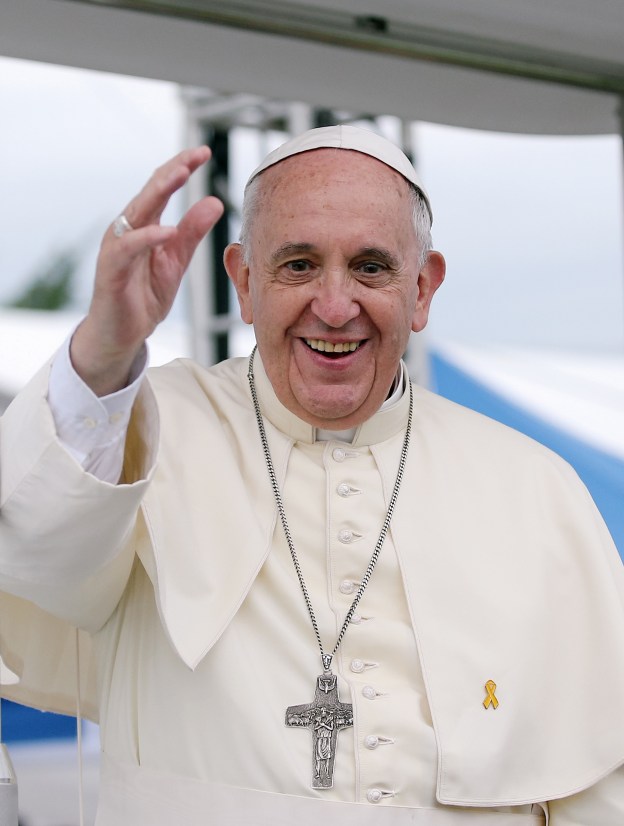
This week, in memory of His Holiness Pope Francis and of the revolutionary anniversaries in America and Ireland this week, some words on the humility necessary for the best sorts of leaders.—Click here to support the Wednesday Blog: https://www.patreon.com/sthosdkanePhoto: By Korea.net / Korean Culture and Information Service (Photographer name), CC BY-SA 2.0, https://commons.wikimedia.org/w/index.php?curid=34828249

Photo Credit: By Korea.net / Korean Culture and Information Service (Photographer name), CC BY-SA 2.0, https://commons.wikimedia.org/w/index.php?curid=34828249


This week, in memory of His Holiness Pope Francis and of the revolutionary anniversaries in America and Ireland this week, some words on the humility necessary for the best sorts of leaders.


Over the past weekend as we marked the 250th anniversary of Paul Revere’s Ride, the Battles of Lexington and Concord, the Siege of Boston, and the beginning of the American Revolution, I started to think about writing this week about that anniversary. I partook in the Veterans’ Rally on the Plaza here in Kansas City, which was part of the National Day of Action against Kings. During the hour walk to and from the event in Mill Creek Park I thought long and hard about what I would say, of my fascination with Paul Revere as a child, or about my first visit to Boston in 2002 when my parents & I walked the Freedom Trail with a family friend who I reconnected with on this most recent trip. Normally, at this point in April I’m more focused on the more recent revolutionary anniversary of the Easter Rising which began with the reading of the Proclamation of the Irish Republic in front of the General Post Office in Dublin. Perhaps I could blend the two revolutionary touchstones into something profound for our own moment; of the unrealized dreams and aspirations of both sets of revolutionaries.

Yet events of the following days have changed all that. I’m writing this now close to two hours after I heard the sad news of the death of Pope Francis. After a half an hour replying to messages from my parents and various friends who texted me the news over the night, I wrote my own brief message which appeared on my social media accounts:

This one feels different to me. Papa Frank was our pope: from the Americas, a Jesuit, and more open minded to the world. His Universal Synod will remain a testament to the man and his twelve years of service to our Church.

Francis’s pontificate marked my early adult years. He was elected at the height of my time as a student at Rockhurst University, when I was surrounded by Jesuit philosophy and spirituality, at a moment when his election seemed to match the optimism I felt in our world. Pope Francis remained a rock amid the tempestuousness of the years that have followed. His humility and humanity shone beyond either of the other two popes of my lifetime. Last summer, my European tour originally included nearly a month in Italy on the way to a dear friend’s wedding party. I’d planned to be in Rome for one Wednesday in the hopes of going into the Paul VI Audience Hall to see Pope Francis in person, even if I was way in the back of the room and wouldn’t be able to meet him. The Swiss & Italian portions of that trip didn’t end up happening, and I regret not getting to see the man in person.

Despite this, I felt that I knew Pope Francis on a personal level. He always struck me as another guy trying to make the best out of life. I’ve heard many people refer to him as the grandfather of the Church away in the Vatican keeping us in mind and in good humor. I like this image; it matches what I saw when he was interviewed by the American television networks. Like Voltaire, my mental image of Pope Francis is him with a smile on his face, an earnest and caring smile and perhaps with a joke in mind. Pope Francis was a leader I was willing to follow because he did so with intense humility. I was standing in the lobby of the Campus Ministry, Counseling, and Career Counseling offices at Rockhurst that afternoon of 13 March 2013 when Cardinal Tauran delivered the Habemus papam announcement from the balcony of St. Peter’s Basilica and announced that Cardinal Jorge Mario Bergoglio of Buenos Aires was our new Pope, Francis, a name chosen to commemorate the humblest of saints. That he asked us to pray for him, to help him in his pontificate was for me the first sign that this man was different.

The Catholic Church exists in a very different world today than it did a century ago. Then when only 150 years had passed since the eruption of the American Revolution and even less since the anticlerical outbursts of the French Revolution the relationship of the Church to democracy was more fraught. A century ago, fascists in Italy claimed they were acting in defense of tradition and of the Church to attacks from communism. We saw where that road led in the Second World War. A century ago, the Church emerged from the ashes of the Irish Civil War in a dominant position in the new Free State, a position it would hold through the founding of the Republic in 1949 and into my own lifetime. Here in America, Catholic voices led the chorus of the most extreme and anti-democratic factions in this country railing against anyone who opposed them, even their fellow Catholics.

I worried twelve years ago as we neared the end of the first decade of Pope Benedict XVI’s reign that the disconnect between the Church and our world would only continue, and that locally the voices of we liberals and progressives in the Church would remain a hushed minority. We received two new bishops in Greater Kansas City that were appointed by St. John Paul II in 2004; in January Archbishop Fred Naumann was appointed to lead the Archdiocese of Kansas City in Kansas where I grew up, and in May Bishop Robert Finn was appointed to lead the Diocese of Kansas City-St. Joseph, which covers the Missouri half of this metropolis. Both were far more conservative than their predecessors, and far more dogmatic. Bishop Finn closed a great many of the social justice ministries of the Diocese and alienated at least a quarter of the local Catholics. My own parish, St. Francis Xavier, often stood in sharp opposition to his leadership as the Jesuit parish remained welcoming and open to all. By the time Pope Francis was elected Finn’s leadership was crumbling under the weight of his inaction and obstruction with the abuse scandals, though Archbishop Naumann was only replaced in the last two weeks with the far more synodal and open Bishop W. Shawn McKnight, who previously led the Diocese of Jefferson City in central Missouri. I for one am hopeful that Archbishop elect McKnight will prove to be a better listener to the Catholics of his new archdiocese.

I remember the sun shining on the day when Pope Francis was elected. It was actually very similar to today, Monday, 21 April 2025, and my sense of a new dawn for our Church. The Sun was shining overhead, and the Spring birdsong was resounding around campus. I experienced many of the same things today. It’s profound to me how similar those two days are.

It did feel revolutionary in many ways when he was elected. He was the first Pope from the Americas, an Argentinian by birth. He was the first Jesuit pontiff, the first pope in a long time to be the child of immigrants. Pope Francis felt like he was one of us. Over the weekend I thought a great deal about what it takes to enact change and restore optimism and hope to a society such as ours which is so bereft of it. Pope Francis brought hope because he was one of us. The minutemen who stood up for their communities and their rights as citizens of a democracy 250 years ago at Concord were like us. The Irish Volunteers like so many of my great-grandparents’ siblings who stood up to British colonial rule a century ago and for better or worse kept fighting even after some liberty had been attained were like us. The people I saw on Saturday were mere ordinary people standing up not just for themselves but for all of us.

The true merits of a servant leader lie in their willingness to help everyone, not only their friends or fellows. Pope Francis was the Papa for all Catholics, especially those who disagreed with him and so loudly denounced his efforts at reform. He was the Pope who listened to us even when the bishops receiving his messages didn’t always heed them. I participated in the Synod on Synodality in the initial parochial stage when I was still in Binghamton; I spent an evening writing my own lengthy and heartfelt answers to the questionnaire, and when my parish’s report was published, I was excited to see some of my comments appear amid the harmonious chorus of like-minded people at my parish. Yet when the diocesan report was published, I was saddened to see how little of that chorus was heard, and at the one listening session I was able to attend several years into the Synod process I felt that as much as we in the laity heard each other that our local clerical leadership kept their ears closed.A servant leader listens to the people. They are approachable, open, and honest about their decisions. I’ve known many leaders who fit this bill: from the late Pope to many of my pastors down the years, to our Mayor Quinton Lucas, a man who I consider to be a friend. Servant leaders do great things as ordinary people. During my walk home from the rally, I remembered a scene from the second episode of the 2008 HBO miniseries John Adams, one of the touchstones of all millennial history buffs in this country. That scene showed a team of men and oxen pulling the cannons from Fort Ticonderoga past the Adams farm to the Dorchester Heights to the south of Boston. I rewatched this episode that afternoon and felt a upswelling of emotion at seeing something akin to what I saw on the Plaza that afternoon: ordinary people working together for a common cause to make life better for all of us. These are the extraordinary acts of ordinary people. That, dear reader, is servant leadership.


We, Irish Americans

This week, to conclude what I’ve been saying.—Click here to support the Wednesday Blog: https://www.patreon.com/sthosdkane—Sources:%5B1%5D “Signs,” Wednesday Blog 1.10.[2] “On Servant Leadership,” Wednesday Blog 6.15.[3] Percy Bysshe Shelley, “Ozymandias,” Poetry Foundation.


This week, what does it mean for my community to call ourselves Irish Americans?


When I was applying for universities for my undergraduate studies, I was thrilled that one university allowed me to write in my own answer for “race or ethnicity.” I took out my pen and wrote down “Irish.” That university, Rockhurst, is the one which I chose and attended throughout my undergraduate years, and it remains the one that I list today before the others. Rockhurst holds a special place in my heart because it is so intrinsically linked with the Irish American community here in Kansas City, and it is one of those anchors that’s tethered me to this community where I’ve been able to make my own impact and presence.

That adjective I chose to write however is perhaps more complicated. I am not Irish by birth but by descent, though one generation too far removed to qualify for Irish citizenship in that manner. Still, Irish is a better descriptor of me than the generic American white, a category which my people were only accepted into for the sake of preserving the flimsy-footed tableau that is racism in America. When I moved to London, I was surprised to be confronted with three categories of white to choose from rather than the monolith I was used to. I technically qualified for all three: I have both Irish and British ancestry, yet I am from a country other than those two. I marked the box for White Irish as long as I was living and studying there because it felt the truest to my nature. Yet again, I am not Irish per se; rather I am Irish American, a member of one of the larger camps within the diaspora created out of the centuries of trouble caused by English and later British colonialism in Ireland. In this perspective, my people are victims of colonization, yet here in America we are the colonizers. So, amid all these tangled webs of identity and nature what are we, Irish Americans?

It is notable to me that in France there is no particular legal sense of identifying oneself as anything other than French. Trevor Noah put this well when he spoke about an immigrant who was granted French citizenship by President Macron after a tremendous act of heroic bravery in saving the life of a child. Yet when I’m in France, I find that if people are confused about my name I go toward my heritage to explain why it’s not your typical Anglo-American name, that my family comes from Ireland instead. I hear a similar tone from the varied generations of nativists in this country, even in the writings of President Theodore Roosevelt, a man who I overall admire a great deal, who wrote in opposition to us persisting as “hyphenated Americans.” This country ought to be a melting pot where all of the immigrants and their descendants shed away their own national and ethnic trappings in favor of becoming one people with one common identity. Yet again, I find this perspective runs contrary to my own lived experience.

To be an Irish American means to remember the place where our ancestors came from, and to remember their struggles as they sought to live their lives first at home and later in this place their newly adopted home. To be an Irish American is to remember that we too were the immigrants not that long ago and to offer a warmer welcome to the newcomers than our ancestors often received. For me, to be an Irish American is to have roots in two countries, better reflecting the interconnected and global nature of our world. Yet at the end of the day, we are Americans. In Ireland, I refer to myself as “an American cousin,” with a slight nod to that infamous play of 1865. The Ireland that many of us know is the Ireland of our grandparents and great-grandparents, the Ireland of the revolutionary generation and the twentieth century when our families left to come to this country. The Ireland of 2025 is still the same country, yet it has grown with the last generations into something that many of us find incongruent with our expectations. It is less an island than ever before with more outposts of the global world on its shores.

Our experiences greeting this global world are different because we encountered it here in America rather than in Ireland. We relate to all the peoples of the Earth through our friendships, rivalries, and mutual circumstances with the other diasporic immigrant groups in this country. I’ve wondered for a long while, including in this outlet if we are slowly with each new generation becoming less Irish Americans and more deeply rooted in other tribes in this country. We tend to be more religious than our cousins in Ireland, and as there are less Catholic schools and parishes that are explicitly Irish are we then becoming Catholic Americans more than Irish Americans? Or are we contributing to a general secularization of that larger white American demographic resulting in both our ethnicity and our religion fading into the background of our identities as ordinary Americans trying to survive in an ever more chaotic world? The key here is that our community is diversifying between political persuasions and regional identities and an overall willingness to remain connected to the lives and histories and passions of our ancestors.

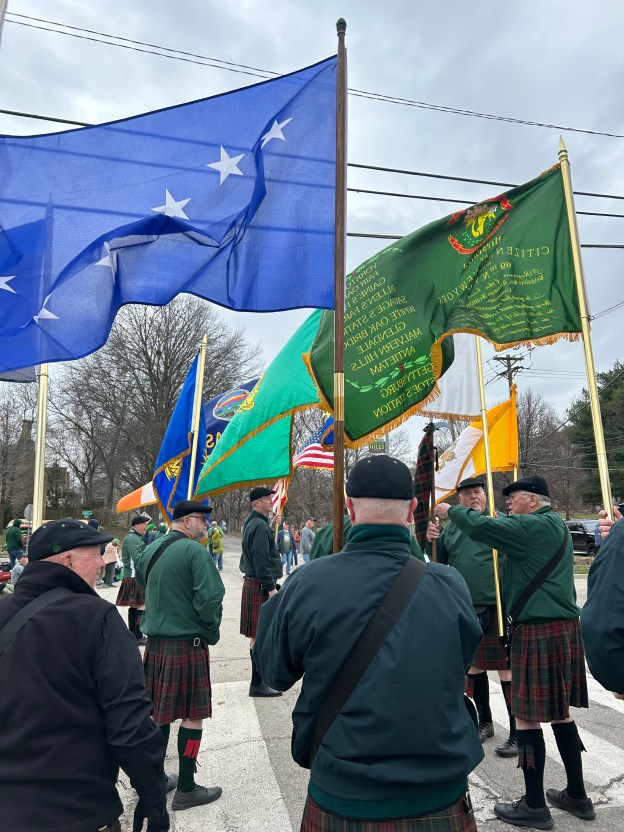
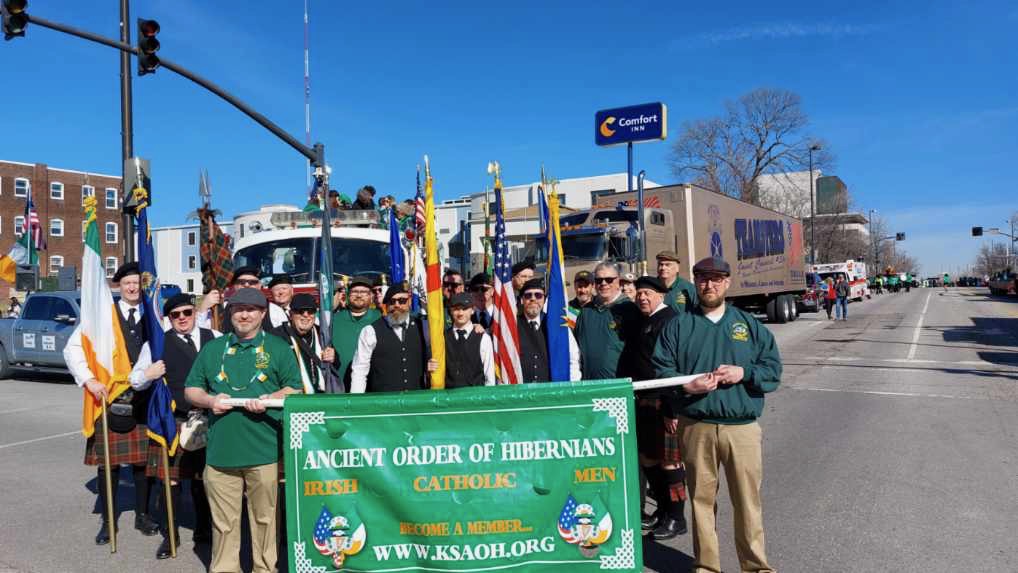
I for one have kept in touch with all of that because I believe it is intrinsic to understanding who I am. My Dad grew up under the same roof as his grandmother who came to this country from Mayo in 1920, and the fact that my parents chose to name me Sean demonstrated to me that this history was an important part of who I am even before I really began to understand what it all meant. For the record, I decided to add the fada to my name (Seán) when a little before my 10th birthday I learned that’s how it is spelled in Irish. I’ve devoted a great deal of time to learn the Irish language even though it’s not all that useful here in America because I know that it’s what my family once spoke, and in order to better understand them and by extension myself as well, I decided I ought to use one of my talents and learn it.This week we celebrated St. Patrick’s Day with our usual parades here in Kansas City. I marched in two this year, the warm-up parade on the Saturday before here in my neighborhood of Brookside and the big parade down Broadway in Midtown Kansas City on the holy day itself. Normally, I end the big parade and the holy day itself rather annoyed at how the old caricatures of Irishness and Irish Americanness persist along the route both in the parade and among the spectators. And while I did see some of that, I was more focused on marching with my brothers in the Fr. Bernard Donnelly Division of the Ancient Order of Hibernians (AOH). Many of us continued the celebration of our brotherhood and our common heritage later that day and it proved to be one of the better, and sunnier, St. Patrick’s Days that I’ve experienced in a long time. We, Irish Americans persist in our stubborn identity because we’ve built our communities in this country around our roots. It defines us distinctly from our fellow Americans, and with all good intentions demonstrates to our cousins across the water that we haven’t forgotten about them.


Three Ologies

This week, talking through three terms I’ve historically had trouble understanding: epistemology, ontology, and teleology.—Click here to support the Wednesday Blog: https://www.patreon.com/sthosdkane


This week, talking through three terms I’ve historically had trouble understanding.


A major turning point in my life came at the end of 2014 when I decided to drop my philosophy major to a minor and not take the final class that I needed to complete that major. The class in question was Continental Philosophy, and it remains one of those decisions that I regret because it closed some doors for me in the long run even while it seemed like a reasonable decision in the short term. A year later, now working on my master’s degree in International Relations and Democratic Politics at the University of Westminster, I was reminded daily that I really should’ve just taken that last class because so much of what we were studying was based in continental philosophy.

I initially pursued a triple major in History, Philosophy, and Theology and a double minor in French and Music at Rockhurst University. I was quite proud of the fact that up to that point in my seven completed semesters at Rockhurst that I’d been able to juggle those three majors and the two minors while still having an active and fulfilling social life on campus. I went into Rockhurst with several vague ideas of what I might want to do with these degrees when I was finished; notably I remember both considering doing a Ph.D., likely in History, and possibly going from Rockhurst either into the Jesuit novitiate or into a diocesan Catholic seminary to become a priest. The first four years of Catholic seminary is comprised of that philosophy bachelor’s degree, so it felt like a good idea to undertake that at Rockhurst and keep the door open.

Now ten years after I would’ve finished my undergraduate with that philosophy degree, I realize that even as I continued to consider holy orders that I may well have properly begun to close that door in my early twenties, not feeling that the priesthood was the right fit for me in spite of what many people have said. Even then, most of the other professions that I’ve considered have been shrinking in one way or another in my lifetime. It feels here as in so many other aspects of my life that I was born at a high point in our society’s capacity to consider the arts, humanities, and even the sciences and that as I’ve gotten older that capacity has diminished time and again. Even while I continue to be frustrated to remain in these wilderness years, I nevertheless continue to learn and to grow in my understanding of what is possible for me to do in my career.

In the last seven years I’ve reasserted myself as a historian first and foremost, settling into the Renaissance as my period of study in late 2017 and gradually shifting from considering the history of Englishwomen’s education to the history of translation to now the history of natural history. Yet all of these disciplines lie under the common umbrella of intellectual history. My manner of writing the history I craft tends to speak toward French notions of mentality and perception, while the economics I still occasionally encounter in my work speak to Max Weber’s notions of capitalism as a broader Cross-Channel enterprise including Brittany and Normandy alongside England, Picardy, Flanders, and the Dutch Republic. I’m beginning to try out a new method of writing history that draws on the natural sciences to better understand the animals and other natural things described by my Renaissance cosmographers and natural historians.

Amid all of this, three words continue to appear, three words which I have often had trouble remembering their meaning. These three are epistemology, ontology, and teleology. In spite of my training in Ancient Greek, I still have trouble keeping these three apart. They represent three central tenants of philosophy which help make sense of how we understand things. It may not sound like the strongest topic for a riveting podcast episode, but for those of you listening bear with me.

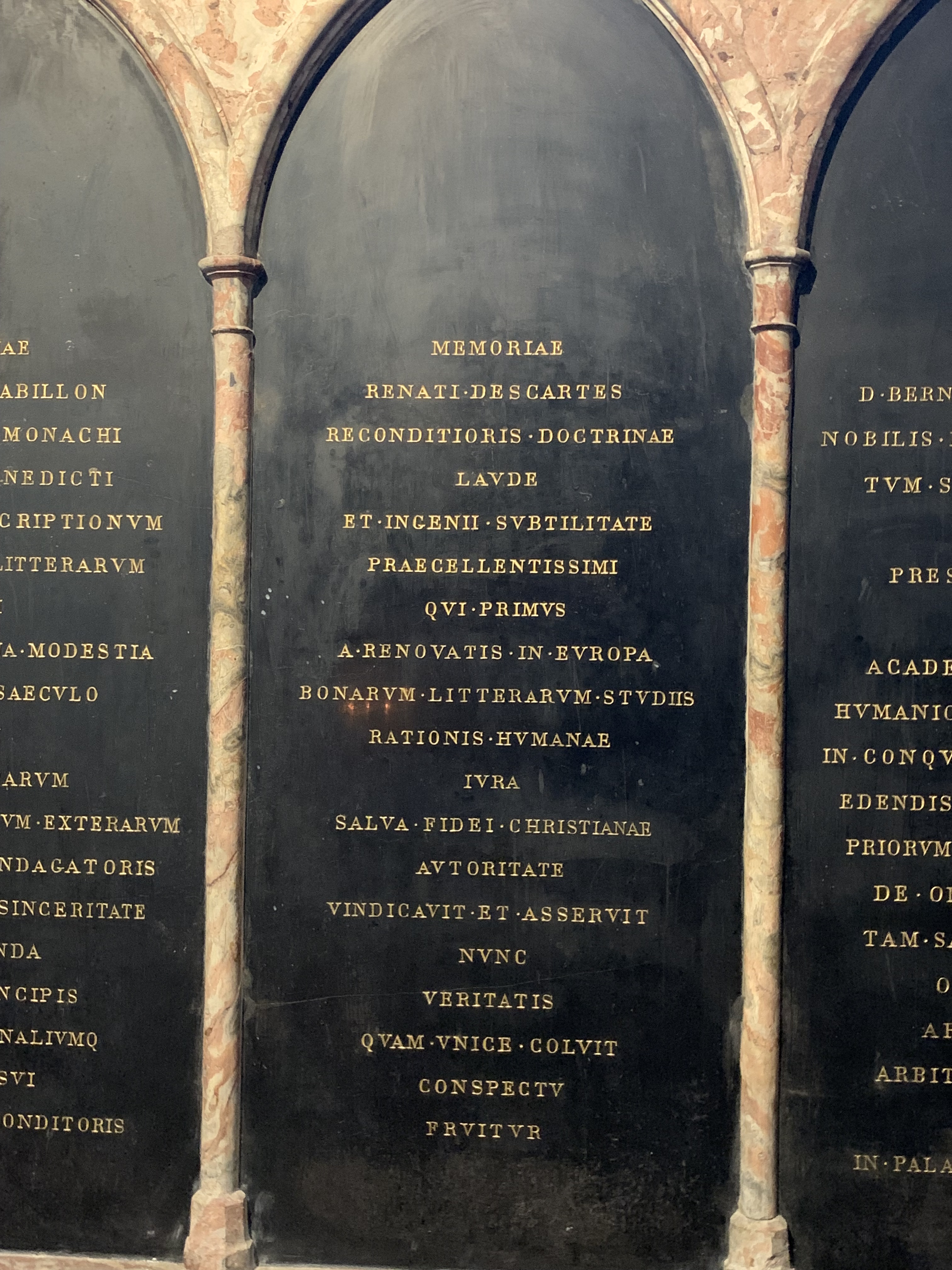
Descartes’s tomb, photo by the author.

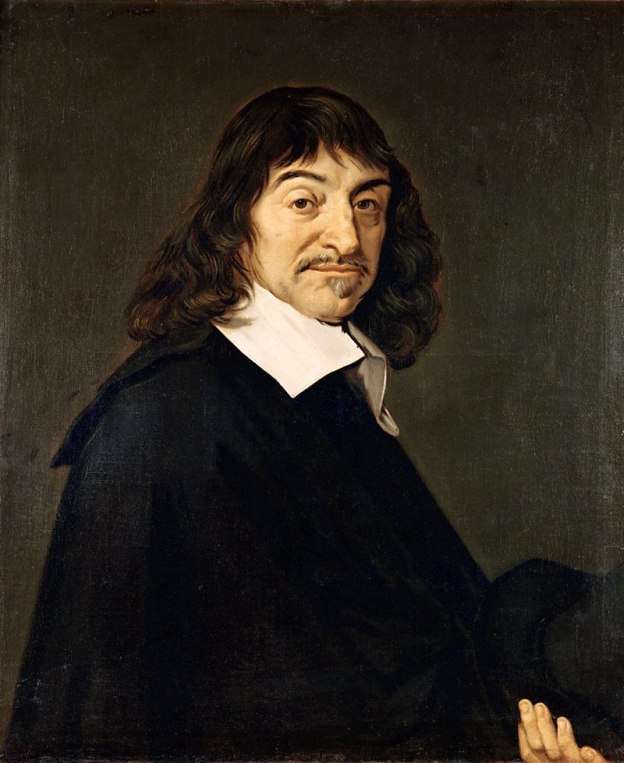
Epistemology is the theory of knowledge. It distinguishes things which are justified from mere opinions. This theory of knowledge considers propositions about facts, practices which form knowledge, and familiarity with an object thus allowing the subject to know it. This word episteme in Greek (ἐπιστήμη) translates into English as both knowledge and science. Science itself is a word which at its core refers to knowledge, for the root Latin verb sciō means “to know.” We know for instance that we exist because we can recognize our existence, in Descartes’s famous words “I think, therefore I am.” I made a point of visiting Descartes’s tomb in the Abbey Church of St. Germain-des-Prés when I was in Paris in October 2023 because so much of my own philosophy is Cartesian in its origins. I reject the principle that we could be living in a simulation on the grounds that based on what we can know and perceive we are not inclined to accept such a suggestion.

The second of these words is ontology, a branch of metaphysics dealing with the nature of being. This word derives from the present participle of the Greek to-be verb εἰμί. I stand by my assertion that the life we are living is real because we can recognize it in large part because the best explanation that I’ve found for the course our history has taken is reliant on us having the freedom to decide the courses of our own lives. This free will explains how a society can seem to take steps backward even while the chaos those retreats cause is to the society’s detriment. The method which I am developing in my research to understand the nature of historical animals using modern scientific research is ontological in character. I can test if this method will work by applying it to particular individual animals who appear in the historical record and determining their true character by a process of eliminating candidate species until the animal’s own species is determined. In this search for the nature of these animals I hope to prove that the historical past, before the development of the scientific method in the seventeenth century, is valuable to the natural sciences as a means of understanding the longer-term nature of other animals during the period in which human influence upon nature was growing toward the Anthropocene which we find ourselves in today.

I like to think of ontology in the linguistic context of how the copular to be verb appears in our literature. Think, for instance, of how God is identified in the Bible. In the story of the burning bush, the Divine is referred to as “I Am that I Am,” or rather the purest expression of existence. For this reason, when I was an undergraduate in my theology major, I began to refer to God as the Divine Essence owing to the root of essence in the Latin copular verb. English recognizes a far wider set of states of being than does Irish. Where in English I might say “I am sad,” in Irish I would say “sadness is upon me,” or “Tá brón orm.”

The third of these words is teleology. This is the explanation of phenomena in terms of their purpose rather than the manner of their invention. Τέλος (telos) is the Greek word for an end, an aim, or a goal. The purpose of something’s existence then is at focus here. I do question this idea that we have a specific purpose in life, perhaps because mine has not gone quite how I expected. In my Catholicism, the most teleological concept we retain is the idea of a vocation either to holy orders, marriage, or to the single life. The teleology at play here speaks to some sense of destiny which I feel stands in opposition to our free will. Perhaps there is some purpose to life, at its initial conception in the first moments that matter began to form in the void that became our Universe, yet I do not believe that I can perceive any intended influence beyond the flick of the first domino at the Big Bang. We may not even be sure that the Big Bang was the beginning of everything, after all there had to be energy to build up to cause such a tremendous explosion in the first place. In a theological view I would point to the Incarnation of Jesus as an example of telos in our history, I am a Catholic after all. My lingering question is where should that theological teleology interact with the other ways of knowing?

I’ve written here before about my view that belief and knowledge are two distinct yet interrelated things. One must believe in one’s senses to know, yet there are things in which one can believe without knowing which one cannot know without believing. The prime example of this is God; “I believe in One God,” it’s something I say every week at Mass in the Creed, “Credo in unum Deum,” in the Latin original of our Roman Missal. Yet God alone is a tremendous challenge to know because God is both paradoxical and far greater than the extent of my knowledge. For this reason, we had the Incarnation, as we recite in the Creed:

“I believe in one Lord Jesus Christ,

The Only Begotten Son of God,

Born of the Father before all ages.”

For God to be knowable God needed to come down to our human level in the person of Jesus, God the Son. This was Jesus’s telos, to be known, to be heard, and as we believe restore faith in God and cleanse humanity of original sin. Here there is a collision of belief and knowledge, where something clearly happened about 2,000 years ago because a new profusion of faith occurred, beginning in Judaea and spreading around the Mediterranean World in the Roman Empire and beyond to become Christianity. That new religion adapted to fit the cultures it encountered, so as to be more acceptable to its new converts. Today that collision continues in the Eucharist, the most sacred of all seven sacraments, in which we Catholics alongside our Orthodox brothers and sisters believe that God becomes flesh again in the sacramental bread and wine. Can we know that it happens? Not by any scientific measure, yet something does happen. That something is perceptible through belief, and it is the Great Mystery of the Faith that has kept me in the Catholic Church in spite of the ecclesiastical politics and divisions of our time.

My Irish Gaelic ancestors understood Christianity in their own way, aspects of which survive into the present day. That collision of belief and knowledge looks to some lingering folk belief, or superstition if you will, that I’ve inherited of particular days in the calendar when the worlds of the living and the dead could collide. We see this most pronounced in the old Gaelic calendar on Samhain, which developed through Catholicism into Halloween, the Day of the Dead, and All Souls’ Day around the beginning of November. I see All Saints’ Day fitting into this as well, after all the Saints are our honored dead all the same. Likewise, Bealtaine, the celebration of the coming of Summer at the beginning of May is also the Catholic celebration of the Crowning of Mary, something I attended at Rockhurst on several occasions.

What in all of this can I actually know? I know the stories that have survived from before St. Patrick and the coming of Christianity to my ancestors 15 centuries ago, even if those stories are Christianized in some way or another. I know this just as much as I know that Jesus existed in the first century CE because there are effects of these stories in the lives and histories that are remembered down the generations. If these stories have any teleology, it’s to teach us lessons about life that our ancestors learned so that we might not have to face the same trouble all over again. The folly of humanity is that we are resistant to having a clear purpose or end to our aims. Through our free will we know that there are always many options to choose between.I don’t know if I made the right choice in dropping that philosophy major at the last moment. In many respects, it was a poor decision. I learned from that experience and many others in my early life to stick with things until their conclusion. This learning is something that has been tested to grow beyond mere opinion through belief into something that is verifiable. When I look at my prospects in my doctoral program, I always decide to stick with it because I don’t yet know what my prospects will be like once I’ve earned it, something that I do know having 2 master’s degrees and a bachelor’s degree to my name. I have gained a great deal of epistemic experience through all these memories that have informed the nature of my character. Yet where they lead I cannot say, for the purpose of my life is something I continue to decide day by day.